The London and European lateral markets have seen continued churn in the last week, as firms have targeted funds, corporate, disputes and real estate talent, alongside further team moves on the continent.
Leading the City hires, Cleary Gottlieb has added funds partner David Christmas from US rival Fried Frank. A Legal 500 leading partner in private funds, Christmas advises fund managers, sponsors, financial institutions and family offices on fund formation across a spread of alternative asset classes, alongside experience in GP-led secondaries.
He joins after ten years at Fried Frank, where he made partner in 2018. He starts at the firm today (5 May).
King & Spalding has made a pair of hires into its London office, bringing over Goodwin private equity real estate partner Raymond Fang and Paul Hastings antitrust and competition partner Jade-Alexandra Fearns.
Fang joins the firm’s London real estate and funds practice after more than seven years at Goodwin. His practice spans cross-border real estate PE deals, including structured M&A, joint ventures and GP stakes, and secondaries.
The move follows a string of private capital exits for Boston-founded Goodwin. In October last year, it lost PE partner Tessa Agar to Mayer Brown, followed by PE tax partner Katie Leah to Skadden in January. Most recently, it saw a three-partner PE team move to Ashurst.
Fearns, meanwhile, joins the government matters and regulation practice group from Paul Hastings, where she arrived as a partner in 2022 after four years as special counsel at Proskauer. Her practice spans merger control, foreign investment, and national security filings across a range of jurisdictions, and includes advising clients on cartel defence, competition compliance and regulatory frameworks across industries, including energy, insurance and sport.
Herbert Smith Freehills Kramer has hired competition litigator Helen Fairhead. She will join the firm’s London office on 1 June from Norton Rose Fulbright, where she has spent the last 13 years, making partner in 2022.
Fairhead’s practice covers an array of contentious competition matters, with a particular focus on damages claims, and includes experience acting for both claimants and defendants in High Court litigation.
Taylor Wessing has hired disputes and investigations partner Jamie Humphreys from Cooley, where he served 11 years as special counsel. Humphreys specialises in product liability litigation, advising international clients across the full product lifecycle, with a particular focus on consumer products.
With Taylor Wessing’s now approved tie-up with Winston & Strawn set to go live between May and June, the period since the merger’s announcement last December has seen other notable hires including RPC head of commercial Jeremy Drew in February, and Travers Smith competition head Stephen Whitfield in March.
White & Case has hired energy infrastructure regulatory partner Simon Stuttaford into its City office from Castletown Law in Edinburgh. He joins the firm’s global project development and finance practice and energy group after nearly seven years as a principal at Castletown. His prior experience includes in-house roles at EnergySolutions UK and Horizon Nuclear Power, as well as two years as joint head of environment at DWF from 2015 to 2017.
Stuttaford has particular experience in the nuclear sector, where he has advised on contracting structures and related corporate matters.
Arnold & Porter has hired antitrust and competition litigation partner Nicola Chesaites. Qualified as both a barrister in England and Wales and an advocate in Belgium, she brings more than 17 years’ experience in competition damages litigation, EU litigation, and collective actions, in disputes across banking, trade, sanctions, pharmaceuticals and transport.
Chesaites previously practiced at Willkie before going freelance in 2025. Prior to this, she served six years at Quinn Emanuel, making partner in 2019.
Also in London, Proskauer has added Kos Vavelidis as a partner in its structured credit practice. He joins following three years as partner at DLA Piper, with time in New York and London, and previously worked as an associate in London at Paul Hastings and legacy Allen & Overy.
He brings experience advising transaction participants on a broad range of structured finance, derivatives, securitisation and asset-backed lending matters, with a particular focus on CLOs.
Morrison Foerster has made a trio of hires, bolstering its City technology transactions bench.
TMT partner Will Holder joins from Baker McKenzie, where he advised institutional investors on public and private M&A, leveraged buyouts and joint ventures, private equity and portfolio company transactions, notably in the music and fintech subsectors.
Corporate business transactions partners Mike Pierides and Oliver Bell join from Morgan Lewis, where Bell was a senior associate in the firm’s technology and outsourcing group.
Following seven years at the former firm, Pierides brings across experience in commercial and technology transactions, advising on outsourcings, data privacy and cybersecurity, strategic restructurings, and technology transactions in industries including AI, fintech, telecommunications and data centres.
Greenberg Traurig has hired M&A partner Robert Gray from Baker McKenzie. Gray joins Greenberg’s corporate practice after nearly 18 years at his former firm, where he made partner in 2021. His practice spans cross-border and domestic M&A, joint ventures and carve-outs, with a focus on agribusiness sectors involving CEE and the Nordics.
Duane Morris has hired a new City corporate head, corporate partner Simon Gamblin who joins from Clyde & Co in London.
Gamblin’s practice covers international and domestic corporate finance, including public and private M&A, cross-border joint ventures, restructurings, financings and PE transactions. He brings with him special counsel Ben Chalkley and senior associate Daniel Li.
Clyde & Co has also parted ways with London insurance disputes partner Mandip Singh Sagoo, who has moved to Norton Rose Fulbright. Prior to spending eight years as partner at the firm, Sagoo spent twelve at Mayer Brown, making partner in 2012. He specialises in advising insurers on claims involving financial institutions, warranty & indemnity and D&O.
For its part, Clyde & Co has hired aviation disputes senior associate Nick Roberts as a partner in London. He joins after just under seven years at Norton Rose Fulbright.
Eversheds Sutherlands has hired insurance partner Helen Hallan and corporate finance and M&A partner Chrissy Findlay.
Hallan spent the past eight years in-house, latterly as lead counsel for Canada Life’s Insurance arm, where she advised on a range of matters in bulk annuities, reinsurance and capital activity.
Findlay joins following almost two decades at Pinsent Masons. She advises financial services clients on M&A, restructurings, governance and strategic reorganisations, with a particular focus on banking, lending and payments.
DLA Piper has hired fund finance partner Rob McClean from Cadwalader, where he was a special counsel. McClean joined Cadwalader from Reed Smith in September 2024, and his practice focuses on advising financial institutions, investment banks and alternative platforms on fund finance matters.
Osborne Clarke has hired a pair of partners, bringing over tech, media and telecoms partner Justin Edgar from DWF and corporate real estate partner Philippa Rigby.
Edgar spent nine years at DWF, making partner in 2019, while Rigby spent a decade at Pinsent Masons, where she was a senior associate.
However, Osborne Clarke also saw the departure of equity capital markets and public M&A lawyer Ed Nisbet, who joined Shoosmiths in London after eight years at Osborne Clarke, where he became an associate director in 2021.
DWF has hired Jemma Brimblecombe as a partner in its professional indemnity team in London. Brimblecombe joins from Kingsley Napley, where she led the professional negligence practice, making partner in 2024.
Also in the City, Haynes Boone has hired arbitration partner Philipp Kurek from Signature Litigation, where he spent more than two years. Before that, he spent 14 years at Kirkland & Ellis, where he made partner in 2017.
Finally in London, TLT has added partner Fosia Solomou to its real estate practice. Solomou joins from Dentons, where she was senior associate, advising on commercial real estate transactions, including acquisitions and disposals and joint ventures.
In Edinburgh, Pinsent Masons has hired financial services litigation partner Stuart Murdoch. A regulatory, ESG and disputes specialist, Murdoch joins from DLA Piper, where he was co-head of its international financial services disputes and international funds ESG workstreams.
In Milan, McDermott Will & Schulte has welcomed a five-partner team from Italian firm Gitti & Partners.
The team is led by corporate and private equity partner Vincenzo Giannantonio who joins as office co-managing partner. His practice covers mid-market and sponsor-led transactions, with a focus on PE and growth capital investments.
Joining Giannantonio are corporate M&A and PE partners Giacomo Pansolli and Domenico Patruno, employment partner Elisa Mapelli, and Marco Blei, an intellectual property partner focusing on life sciences and tech.
In Paris, Morgan Lewis has added financial services regulatory partner Arnaud Grunthaler from Forvis Mazars Avocats.
Grunthaler, who spent just under two years at his previous firm, brings experience advising financial institutions and market participants on EU regulation and financial products, notably digital assets and fintech.
In Berlin, Dentons has added a seven-lawyer litigation and dispute resolution team from PwC Legal.
The team is led by partners Roman Dörfler and Martin Beckmann, who both served seven years at their previous firm, and includes two counsel, one senior associate and two associates. They bring experience in corporate and insolvency-related disputes, model declaratory actions and class actions, particularly in the areas of banking and capital markets law.
Dentons was also active in Glasgow, where the firm has hired construction partner Gordon Anderson from Addleshaw Goddard.
For its part, Addleshaw Goddard has recruited a tier one Legal 500 five-lawyer team to establish a public procurement and construction practice in the Warsaw office it acquired from Linklaters last February.
Joining from Polish firm Domański Zakrzewski Palinka, the team is led by partner Katarzyna Kuźma, and includes partner Tomasz Michalczyk, counsel Wojciech Hartung and two senior associates.
Both partners bring experience in public procurement and the delivery of complex investment projects, Kuźma advising public and private sector entities on the structuring of complex, public-sector involved projects with international aspects, and Michalczyk adding the contractor advisory piece, including in disputes proceedings.
In Spain, Garrigues has added labour and employment partner Jaime Silva Castañón in Madrid. He joins from Labormatters Abogados, where he spent four years as a partner, and has built a practice advising domestic and international companies undergoing employment litigation and collective disputes.
Finally on the continent, Latham & Watkins has appointed Alexander Stefan Rieger as managing partner of the firm’s German offices, based in Frankfurt. A Legal 500 next-generation partner for M&A, Rieger previously served as the firm’s regional chair of corporate in continental Europe, with clients including infrastructure and pension funds, insurance companies, PE investors and corporates. He joined the firm from Hogan Lovells in 2023.
The move comes as Latham expands its German offering, bringing over four partners from Freshfields last December.
In the Middle East, DAC Beachcroft has announced plans to open a new office in Dubai with a trio of insurance partners from Clyde & Co.
Michael Morris served 11 years at Clydes, most recently as a litigation partner and head of insurance for the Middle East. His practice focuses on commercial and professional liability claims.
Michael Ducker, formerly co-head of Clydes’ Middle East and Africa healthcare group, brings experience spanning healthcare and insurance, including medical malpractice, environmental matters and product liability.
Mark Beswetherick, a Legal 500 leading partner for dispute resolution in the UAE, was previously head of Clydes’ insurance and dispute resolution group in Dubai. With a practice spanning arbitration, international litigation and corporate investigations, he brings a particular focus on D&O liability, professional negligence and multi-jurisdictional insurance disputes.
DAC Beachcroft was also active in the UK, hiring lawyers’ liability and professional indemnity partner Will Sefton in Bristol. A Legal 500 leading partner for professional negligence in the South West, Sefton joins from RPC.
Finally, Simmons & Simmons has hired Reed Smith Asia-Pacific Investment Funds practice head Han Ming Ho in Singapore. Before his time at Reed Smith, Ho spent time as a partner at both Sidley Austin and Clifford Chance, where he established and led the firm’s Singapore investment funds practices.
[email protected]






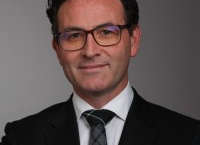

 Bertrand-Delfau (pictured) was on the sell-side but across the table was AXA Private Equity, which would later go on to become Ardian.
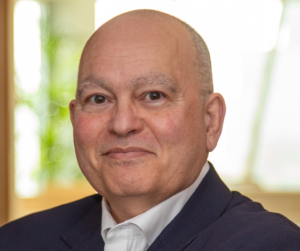 Daghlian (pictured) himself joined legacy SJ Berwin, which ‘owned the fund space’, in the mid-90s, when the firm began advising the then newly founded Coller Capital. ‘There were flashes of real brilliance,’ he says. ‘I knew this was interesting; no one else was doing this.’
 As the market matured through the 2000s, lawyers began moving between firms and jurisdictions, importing more developed US approaches into Europe.
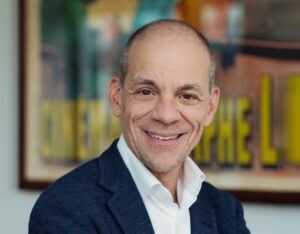 ‘The secondary universe is developing specialisms,’ Koffel (pictured) says, pointing to the ‘turbo-charged’ growth of GP-led deals across the market spectrum. That specialisation is feeding demand for lawyers.