In a market being reshaped by private capital, aggressive expansion by US firms and shifting strategies across the largest UK players, Europe’s top independents are holding firm.
Brushing aside years of economic and geopolitical instability and predictions of decline, leaders at some of Legal Business’s 2026 Euro Elite firms paint a picture of resilience and growth.
Here, they tell LB about the trends in their markets and why they won’t compromise on their independence.
Competition intensified
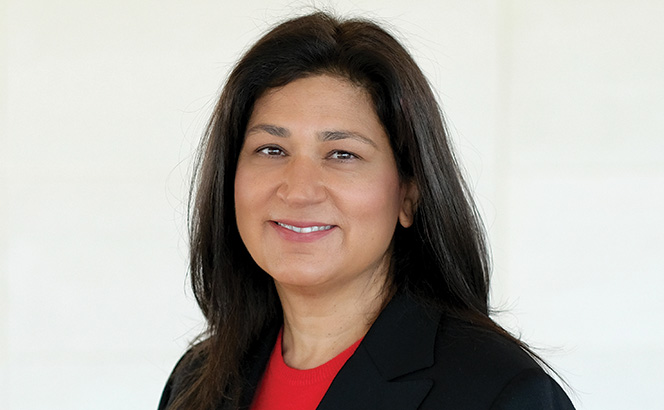
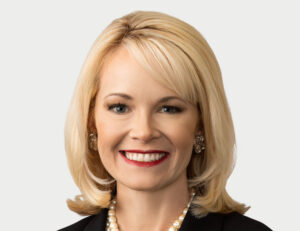
‘It’s changed a lot. It used to be a non-dynamic market, but Milan has become a “Little London” in many respects,’ says BonelliErede managing partner Eliana Catalano (pictured).
While US and UK firms have long been accustomed to a lateral market moving at breakneck pace, their continental rivals have been more insulated from such high levels of churn.
Now, however, Euro Elite leaders say the era of conservatism is over.
Hogan Lovells has added more than 50 lawyers in Italy over the past two years, while Ropes & Gray’s Milan launch last September is another example of international firms fuelling the city’s lateral market. And, in Italy at least, this movement is not purely between international firms; Ropes most recently added private equity partner Fabrizio Scaparro from Giovannelli & Associati, taking its total partner count in Milan to four, according to the firm’s website.
Gitti & Partners in Milan is the latest to feel the effects of US muscle in the market, with McDermott tapping the Italian independent for a five-partner, twelve-lawyer team led by the firm’s former co-managing partner Vincenzo Giannantonio earlier this month.
The same pattern is happening elsewhere in Europe. Last month Gibson Dunn launched an investment funds practice in Paris with the hire of a seven-lawyer team from Clifford Chance. Meanwhile, Ropes launched in the city in March 2025 with a three-partner hire, also from CC.
Gide Loyrette Nouel managing partner Jean François Levraud says ‘lateral hiring [in France] has become more targeted and strategic’, with firms focusing on strengthening key practices in high-value areas. He highlights his firm’s recent hire of a private equity team from Paul Hastings as evidence of the growth in key strategic areas.
Fellow French leader Darrois Villey Maillot Brochier has also been ramping up on the transactional side, luring a four-partner M&A team in Paris from Gide, led by Legal 500 Hall of Fame partner for M&A in France, Olivier Diaz.
Over in Germany, Alexander Ritvay, managing partner of Noerr, confirms ‘competition for top partners has also intensified’ in his market.
One recent standout move saw Latham & Watkins hire a four-partner private equity and M&A team from Freshfields, including the firm’s former global co-head of M&A, Markus Paul, in December.
Weil and Willkie Farr & Gallagher have also been making moves in Germany, with Weil raiding Latham for highly rated private equity duo Sebastian Pauls and Susanne Decker in October last year.
Meanwhile, Willkie’s 2024 launch in Munich was the prelude to a spate of hiring, with the firm bringing in an 11-lawyer restructuring team from Latham, led by heavyweight partners Jörn Kowalewski and Ulrich Klockenbrink in spring that year and, more recently, adding corporate partner Sebastian Häfele from Kirkland in December.
As in Italy, the country’s independent firms have not been spared as key US players ramp up their offerings. Milbank hired highly rated Frankfurt partner Jan Häller from Hengeler Mueller, while banking & finance partner Burkhard Jäkel left Gleiss Lutz to join Mayer Brown in Frankfurt in January this year.
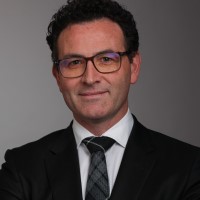
In Iberia too, Fernando Vives, executive chairman of Garrigues (pictured), characterises the market as ‘very active and dynamic’, with ‘movement across a wide range of practice areas’.
Among high-profile moves in Spain are Gibson Dunn’s recruitment of Armando Albarrán from Freshfields, ahead of its Madrid launch, alongside Gómez-Acebo & Pombo’s addition of Madrid-based litigation partner Rafael Murillo, formerly Freshfields’ head of litigation and arbitration in Spain. Meanwhile, Cuatrecasas’ March hire of DLA Piper’s co-head of Latin America tax, Amory Heine, in Santiago, Chile, underlines the reach of Iberian firms beyond Europe.
The private equity impact
Many of the most high profile moves across the continent have been driven by firms’ efforts to ramp up in lucrative areas like private capital, where relationships with buyout houses are seen as more portable than other clients.
In Italy, Catalano points out that ‘because private equity lawyers are traditionally attached to the PE operators they advise, they tend to feel more independent and are more willing to move.’
This dynamic is replicated across the market as international and independent firms alike try to make their play or grow market share, triggering significant movement in talent.
In Paris, Gide’s Frédéric Levraud describes private equity as ‘one of the main drivers of activity in the legal market… whether through growth investments, sector consolidation or business transformation’.
Recent developments underline the scale of its influence. Last summer, Blackstone announced plans to invest $500bn in Europe over the next decade, KKR has said it is mulling an office in Milan, while PitchBook forecasts that the ratio of PE-backed companies to public companies in Europe will reach a record 2.3x by the end of 2026.
‘There has been a huge change in the market over the last eight years because of the private equity impact,’ says Uría Menéndez managing partner Antonio Herrera (pictured). ‘The flows in the market, in terms of M&A deals, and the pricing of services have been very much influenced by the activity of private equity funds.’
Despite this interest, in the short-term the picture is more subdued. According to data from Dealogic, PE-backed acquisitions in Europe totalled $84bn in Q1 2026; a 44% fall from the previous quarter.
Filippo Troisi, co-managing partner at Legance in Italy, concedes that ‘it’s not the best time for private equity’. Despite this, though, he remains optimistic. ‘Private equity firms are sitting on a huge amount of dry powder, and the gap between asking and bid prices has narrowed compared with last year – both reasons for optimism,’ he maintains.
Holtrop also points to a shift in market dynamics: ‘There’s a little more realism among sellers. It also helps that private equity acquired a huge number of companies during Covid. We are four or five years down the road now, and I think there is some pressure on them to sell these companies.’
The US question
As evidenced by the moves referenced above, private capital and US firms are never too far apart. Kirkland & Ellis’ 2024 Frankfurt debut, Ropes & Gray’s 2025 office openings in Paris and Milan, and Gibson Dunn’s 2025 Zurich launch and planned 2026 Madrid opening underscore the continued expansion of US firms on the continent’s most profitable markets, with private equity linked to many of the moves.
Ritvay though stresses the positives of their growing interest. ‘US law firms are further intensifying what is already strong competition. However, this also creates opportunities for the leading independent European firms, particularly with regard to advising large corporate groups.’
Antonio Baena, who leads the international practice at Cuatrecasas, also sees the bright side: ‘US firms have raised the bar in terms of relationships with investment firms, transactional expertise, fees and attracting top talent among partners and associates alike,’ he says. ‘And they have also created new opportunities within the Spanish market.’
Levraud echoes this, arguing that independent firms are well-placed to capitalise on these new opportunities owing to their ‘strong European footprint’.
The magic circle – here to stay?
While the US firms’ continental love affair may be comparatively new, many UK rivals are going the opposite direction.
Linklaters recently announced the closure of its ten-lawyer Hamburg office having already withdrawn from Poland in 2025, demonstrating why less profitable markets can be challenging for firms with larger offices.
One former magic circle partner says that some of the firms’ ‘big legacy offices’ on the continent ‘no longer make much sense but are costly to exit.’ While another warns that high levels of investment in the US for UK firms could impact firmwide profitability, leading to ‘constant departures.’
Troisi (pictured) notes: ‘The UK firms that invested heavily in our market many years ago have now, in most cases, significantly downsized their presence in Italy.’
These firms have also borne the brunt of US raids, as evidenced by Ropes’ recruitment of Clifford Chance’s PE and finance team led by Fabrice Cohen, Thierry Arachtingi and Emmanuel Mimin for its Paris office.
Yet marquee hirings like Linklaters’ eight-lawyer restructuring and insolvency team from Darrois in Paris, led by François Kopf, show they can still assert themselves when the target is right.
Recent partner promotions also underline the UK firm’s continued commitment to Europe: Freshfields promoted 16 new partners in Europe in its biggest ever promotion round, up from 11 last year, Clifford Chance promoted nine partners this year out of 28, compared with seven in 2025, with Linklaters also making up more new partners this year than last, with 12 new European partners.
As Dennis Horeman, co-managing partner of De Brauw, puts it, the magic circle firms are ‘still on the continent and here to stay.’
‘Steady as it goes – in a very good way’
In general, law firm leaders described themselves as optimistic heading into 2026 and beyond. Ritvay points to a clear reason why, noting that last year ‘both the number and the size of transactions increased significantly. This trend continued in the first months of this year, and there remains considerable pent-up demand.’
The data supports that outlook. Figures from LSEG show global M&A reaching $1.2trn in Q1 2026 – the third consecutive quarter in which deal value has surpassed $1trn. Deals involving European targets totalled $347bn, up 23% from $281bn in the same period in 2021.
As a result, Troisi is optimistic about the Italian market, saying it is performing ‘very well’. He adds: ‘Italy and Spain were once part of the so-called PIGS countries. Now they have become almost the prince of the fairytale, as our economies are outperforming other European countries.’
Horeman strikes a similarly upbeat note: ‘The business is growing particularly well. We did not even see the kind of blip you sometimes get in January. It has been steady as it goes – in a very good way.’
Global uncertainty – a concern for all
No market exists in a vacuum though, and partners are quick to highlight the potential for continued geopolitical disruption to dampen activity, as well as the human cost that accompanies conflict.
‘The current global uncertainty remains a concern for all of us, first as human beings and also from a professional point of view,’ stresses Troisi.
Stephen Keogh, managing partner of Irish firm William Fry (pictured), suggests the ongoing situation in the Middle East may lead to parties ‘slowing the pace of active deals’. He adds that ‘oil price volatility, wider market impacts and ongoing supply chain disruption are making it unusually difficult to value companies across many sectors’.
Still, Baena notes that ‘the market’s fragility and unpredictability have allowed savvy decision-makers to seize opportunities and act strategically.’ However, he adds that if uncertainty persists in the coming months, ‘the new scenario will test investor resilience, delay a consolidated recovery and make future predictions difficult’.
Best friends?
But where does all of this leave the independents? The formal dissolution earlier this year of the ‘best friends’ network linking Gleiss Lutz in Germany, Chiomenti in Italy, Cuatrecasas in Spain and Gide in France has reignited debate over the durability of the model.
Attention has inevitably turned to another longstanding alliance between the UK’s Slaughter and May, BonelliErede, Bredin Prat, De Brauw and Uría, and whether such arrangements remain fit for purpose.
One European partner suggests the absence of a London firm was a key weakness in the former grouping. Even so, some remain sceptical that the best friends structure retains its relevance.
Members of the latter alliance, however, insist the model continues to deliver. ‘We have been doing cases with these firms for decades,’ says Horeman. ‘We work together on real transactions for real clients and when we do those deals we operate as one team – whether it’s M&A, litigation or anything else.’
Horeman (pictured) cites the firm’s work alongside Hengeler on mandates for European grid operator TenneT, including securing €9.5bn in equity funding last September and advising on the €3.3bn sale of a 25.1% stake in its German business to KfW, acting for the German state.
Herrera cites the non-exclusive nature of the agreement: ‘A best friends arrangement is, by nature, extremely flexible. But that also means each firm has to be very strong in terms of quality, market presence and leadership in its core areas.’
He points to the firm’s work alongside Macfarlanes advising Banco Sabadell on the proposed £2.65bn sale of TSB Banking Group last July as evidence of that flexibility.
Others favour a looser approach. Troisi says: ‘Our view has always been that, as an independent firm, we should fully embrace what that independence means… we have always preferred to maintain very good relationships with two or three top firms in every key jurisdiction. This allows us to serve our clients in the best possible way.’
Independent thought
Predictions of the demise of the independent firm have circulated for years, yet many continue to thrive.
The latest LSEG Q1 M&A rankings offer a useful snapshot. Uría tops the table for announced deals involving Spain, while in Germany, Gleiss Lutz and Hengeler rank second and third respectively, behind Freshfields. In deals involving Italy, Gianni & Origoni leads the pack, while De Brauw claims the top spot in Benelux.
As BonelliErede chairman Massimiliano Danusso (pictured) puts it, local knowledge remains a valuable commodity: ‘There is a strong belief that we understand the Italian market, inevitably, much better than any foreign firm coming into Italy.’
For Horeman it is also partly a question of pride: ‘Independence allows us to make our own decisions, which is motivating for the partner group.’ Vives says independence gives the firm ‘agility, cohesion and control’ and adds that it is important for the market that large firms have their key decisions taken in their domestic markets.
Herrera, meanwhile, argues that ‘homegrown’ independent firms continue to dominate the biggest mandates in Iberia: ‘They are generally the ones taking lead roles in the big-ticket deals, particularly for strategics. If you review the big transactions involving large Spanish and Portuguese multinationals predominantly, now and for the last 30 years, clients go to the likes of Garrigues, Gomez-Acebo, Cuatrecasas, and ourselves.’
In short, it’s fair to say that Europe’s legal leaders don’t see themselves losing their foothold anytime soon.
Euro Elite methodology
The Legal Business Euro Elite showcases 80 leading firms across Continental Europe, focusing on the most accomplished, consistent and highly regarded firms in key markets, as opposed to branches of international firms, UK/US firms or Swiss Vereins.
Inclusion in the Euro Elite is determined by aggregation, analysis and weighting of Legal 500’s existing jurisdictional rankings and research data, complemented by insight from the Legal Business team and Legal 500’s senior editors.
Photo by Fer Troulik on Unsplash

‘Our clients have gone from having a small number of people on the ground in the mid-2000s (when we established a dedicated PE M&A team in Asia) to now having hundreds,’ says Ian Ho (pictured right), co-head of Simpson Thacher’s Asia offices and its Asia private equity group, who is relocating from Hong Kong to Singapore to launch the office.
‘So you see Singapore operating as a financial services hub,’ she concludes.
Milbank corporate partner Maurice Conway (pictured right), who recently relocated from Hong Kong to Singapore, says: ‘The centre of gravity for Southeast Asia, the gateway for Southeast Asia, in a way, is Singapore now, and for India as well. Hong Kong is more seen as the gateway to the China-mainland work.’

Bertrand-Delfau (pictured) was on the sell-side but across the table was AXA Private Equity, which would later go on to become Ardian.
Daghlian (pictured) himself joined legacy SJ Berwin, which ‘owned the fund space’, in the mid-90s, when the firm began advising the then newly founded Coller Capital. ‘There were flashes of real brilliance,’ he says. ‘I knew this was interesting; no one else was doing this.’
As the market matured through the 2000s, lawyers began moving between firms and jurisdictions, importing more developed US approaches into Europe.
‘The secondary universe is developing specialisms,’ Koffel (pictured) says, pointing to the ‘turbo-charged’ growth of GP-led deals across the market spectrum. That specialisation is feeding demand for lawyers.