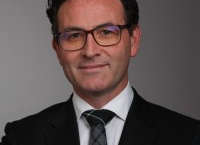
Freshfields private capital co-head takes UK leadership role

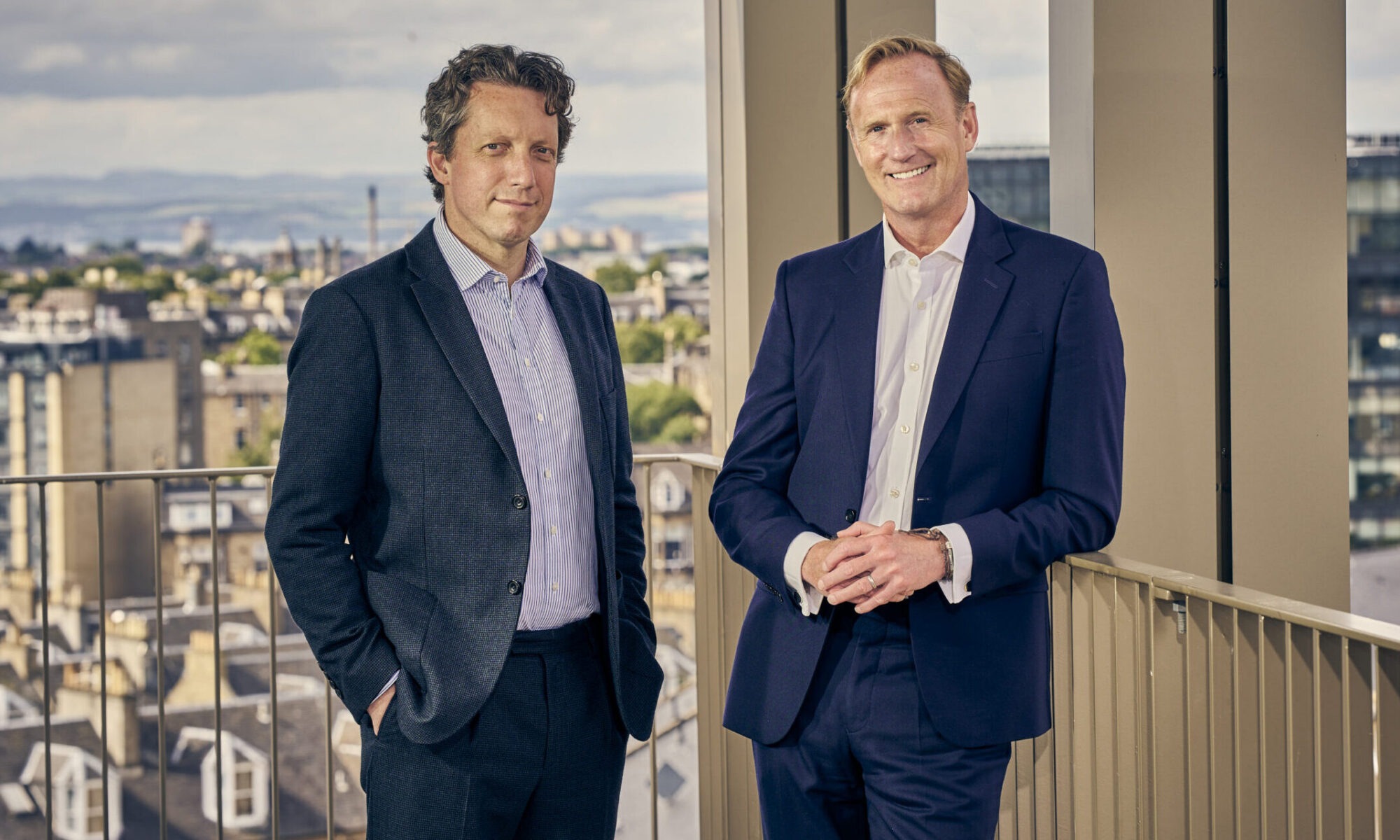
Freshfields has appointed a new UK managing partner, the firm announced today (14 May), with incumbent City chief Mark Sansom to step into a new role as global client partner.

The firm has appointed London private capital co-head Victoria Sigeti to the role. Sigeti, who joined the firm as an associate in 2010 before making partner in 2015, is a leading private equity partner, and has played a key role in shaping the firm’s expansion of its private capital offering.

In the Legal 500 Hall of Fame for high-value PE, Sigeti is currently one of the partners acting for Swedish buyout shop EQT on its potential acquisition of FTSE 100 company Intertek.

Both role changes will take effect immediately, and both Sansom and Sigeti will continue their client work.

Sansom, who took over as managing partner in 2023 from Claire Wills, will have responsibility to shape the firm’s client strategy across practices and sectors. The role, which LB understands is not part of the global leadership team, was not occupied, though current global managing partner Alan Mason did previously hold the post.

Commenting on her move, Sigeti said: ‘It is a privilege to be appointed as UK Managing Partner, building on the strong legacy of leadership in this role. London remains central to our global success, and I look forward to working with colleagues across the firm to continue delivering for our clients and investing in the next generation of talent.’

‘Leading Freshfields’ UK and Ireland business has been hugely rewarding. I’m excited to build on that experience in my new role, with a firmwide focus on deepening our client relationships and supporting the firm’s continued growth,’ Sansom said.

Sansom was one of the lead partners that acted for Mastercard when the credit card provider faced a potential class action in which over 46 million customers claimed damanges. Speaking to LB during 2024, when the case was very much still underway, he said, ‘We’ve had some good successes along the way that have reduced the value of the remaining claim hugely. It started at more than £17bn and is now worth well under a billion on our view.’

Reflecting on the litigator’s term, Freshfields senior partner Georgia Dawson added: ‘Mark’s appointment as global Client Partner reflects the importance we place on a strong, integrated client strategy at a global level, and I’m delighted he will be leading this work for the firm.

‘I would also like to thank Mark for the impact he has had as our UK and Ireland regional managing partner. I’m pleased to announce Victoria as his successor; her leadership experience and client focus make her exceptionally well placed to drive forward our UK business as a core part of Freshfields’ global platform.’

When Sansom took over as London managing partner in 2023, he told LB that the firm was particularly focused on nurturing its internal pipeline. Last month, the firm announced its largest ever promotion round with 43 partners, 11 of whom were in London, a slight increase from nine the previous year.


[email protected]

Life During Law: Freshfields’ London head Mark Sansom


Burness Paull passes £100m in turnover as PEP jumps by a quarter

Leading Scottish firm Burness Paull has reported double-digit growth across all key metrics for the 2025-26 financial year, with revenue crossing the £100m mark for the first time as PEP has jumped by a quarter.

The firm recorded turnover of £105.2m – a 12% increase year-on-year, up from £93.5m. Profit also rose 27%, up to £45.7m from £35.9m the previous year.

As a result of its strong performance, the firm issued an all-employee bonus, with all lawyers and staff receiving an additional payment worth 10% of their annual salary, on top of iindividual performance-related bonuses.

Profit per equity partner (PEP) also saw nearly 26% increase on the previous year, jumping from £676.5m to £851m.

This marked a significant improvement from the previous year, where PEP fell by 5.6%, according to last year’s LB100 table.

The firm attributed the strong performance to its 2025-2028 strategy, which it said ‘focuses on delivering and enhancing value for clients through the provision of the highest-quality advice and service on complex matters in core commercial service lines.’

Partner headcount also increased slightly, rising from 87 to 92. This number was buoyed by a series of hires and promotions over the year. Last June, the firm hired energy real estate partner Nicola Scott from Davidson Chalmers Stewart, where she had spent her final year as head of real estate.

This February, it added Pinsent Masons direct of knowledge Tim Dale, who joined in the newly created role of knowledge and client services partner.

Additionally, Burness Paull made five internal partner promotions effective at the start of the 2025-26 financial year. These included Rachel MacArthur, Daniela Pallucci and Colin Smith in corporate finance, alongside Nick Warrillow in commercial disputes, and Gemma Young in banking and finance.

It also made notable C-suite hires, appointing Ashurst chief technology office Noel Jordan as its chief operating officer, and Legal 500 EU and competition leading partner Tom Usher as a consultant. Usher joined from Macfarlanes, where he served eight years as partner before transitioning to a senior advisor role.

Notable mandates for the firm over the last financial year include advising Wood Group on the Scottish aspects of its £216m acquisition by Dubai-based Sidara, and EIG Asset Management LLC on the structuring of a £1bn global fundraise for Fidra Energy’s battery energy storage business.

The firm also advised Orsted A/S on the sale of its UK onshore assets as part of the sale of its €1.4bn European portfolio.

Managing partner Mark Ellis (pictured left) said in a statement: ‘Surpassing £100m turnover is a significant milestone. We are grateful to our people and delighted to reward everything that has been achieved with the 10% all-employee bonus.’

He continued: ‘We are ambitious and have outstanding talent across our business. Our position as a leading independent firm in a dynamic market and a fast-changing world provides the platform for further growth and success.’

Firm chair Peter Lawson (pictured right) added: ‘Cautious optimism in the M&A market and appetite from private equity led to our corporate team advising on large-scale, complex, multi-jurisdictional mandates where our expertise and market knowledge enable us to deliver significant value for clients.

‘Market volatility also saw our restructuring and insolvency team in demand, while our market-leading employment team continues to be sought after for advice around reforms introduced by the Employment Rights Act and the complex and evolving area of competing protected beliefs in the workplace.

‘Our strong financial performance is testament to our ambitious new strategy and commitment to clients, which supports our ambition to be the leading law firm operating in and from Scotland.’

Burness Paull currently employs 700 people, and operates from offices in Aberdeen, Edinburgh and Glasgow.

For the current financial year, the firm has promoted an additional five partners, in line with last year’s figures. These include one partner apiece across technology and commercial, restructuring, construction and projects, employment, and real estate, and include four women and one man, compared to three women and two men the previous year.

In a statement on the promotions, Lawson said: ‘These promotions reflect our commitment to investing in our people at all levels and maintaining a culture of excellence in which we drive standards and support career progression in a meaningful and supportive way.’

[email protected]

Burness Paull 2026 partner promotions in full:

Jo McLean, technology and commercial
Fiona Carlin, restructuring and insolvency
Kirstin Beattie, construction and projects
Lisa Byars, employment
Stuart Gardiner, real estate

[email protected]

‘Being a GC can be lonely’ – in-house lawyers open up about stress, isolation and burnout

‘Law is self-selecting, with very driven, ambitious people. Because it is so competitive, the whole system drives you to have a fear of failure, which is just not normal,’ says Richard Harris, chief legal officer at recruitment company Robert Walters.

Stress, high workloads and pressure are generally viewed as part and parcel of a career in commercial law. But while there has been increased awareness of how damaging these aspects of the role can be, attention has often focused on private practice, where demanding clients and high-pressure environments gave rise to the industry’s infamous culture of ‘all-nighters’.

But in-house lawyers say these pressures are just as present outside private practice.

For this article, Legal Business spoke to a host of in-house lawyers for Mental Health Awareness Week – and all pointed out the unique challenges that come with the in-house role.

In particular, they point to the difficulty of reconciling the inability to switch off that comes with being close to the business with a simultaneous feeling of isolation from it.

Michaela Berryman (pictured), head of legal for finance and strategic projects at insurer Howden Group Holdings, explains: ‘It’s the weight of being the person who is expected to have the answer, often on things that are just judgement calls, and there isn’t actually a clean answer. It’s a really distinct kind of isolation.’

She continues: ‘The kinds of mental health challenges that I’ve seen come up in in-house roles are your usual stress and burnout, but they’re compounded by that feeling of isolation.’

Matthew Wilson, chief legal officer at media production company Fremantle agrees.

‘Being a general counsel can be lonely. It can mean a tension between your role as a lawyer and a senior member of the business. GCs are increasingly looked at as business leaders in their own right, taking on broader responsibilities outside of legal. That can cause conflict between the different hats that you wear, and that is inherently stressful.’

Sleepless nights

‘I found myself burning out at times, having sleepless nights in terms of worrying about decisions that you’ve advised on, and worrying about what’s going to happen if things go wrong,’ admits Kulpash Patel (pictured), assistant GC for Europe at tobacco company Philip Morris International.

Reflecting on why this is, he suggests: ‘As lawyers, we are trained and conditioned to think about what could go wrong. We’re not trained or conditioned to think about what could go right! Very rarely do you ever hear a lawyer say, “this could be amazing, let’s go for it!” But we should!’

Ocado Group deputy GC Neil Laventure reiterates this point: ‘As lawyers, we tend to be overachievers. We tend to worry about getting things right, getting things done well and being responsive, perhaps more than other professions. So, I think we’re naturally predisposed to having issues.’

On the differences between private practice and in-house, Harris explains that while some historically perceived moving in-house as an easy option, times have changed.

‘It was very much seen as a lifestyle choice,’ he says. ‘I don’t think it was true then, and it’s definitely not true now. The demands on us as in-house lawyers are just slightly different from private practice.’

As evidence, he points to a previous in-house role when he was working on a transaction for the company. After working consistently long hours and coming home at midnight every night, he realised the stress had become too much when he was on holiday and found himself unable to connect to the Wi-Fi to read an important email.

‘I was so worried about it – I started to feel sick that I couldn’t get my work done, even though I was on holiday. I thought: “What the hell am I doing? This isn’t making me happy. This is incredibly stressful”.’

Lisa Ardley-Price, managing legal counsel at NatWest, agrees that it is important to find a role that allows balance. ‘When I was in private practice, there was an ‘always on’ mentality. But that doesn’t mean all the pressures of working as a lawyer go away when you move in-house. In-house is not a magic bullet. It comes with a very different way of working.’

She continues: ‘When I was working in private practice, I might be working on a couple of different transactions and I would be fully immersed in those. In-house is more of a daily juggling act – you have to be very agile in how you respond to different priorities.’

Boiling frogs

‘It’s like a boiling frog. You don’t realise what you’re doing to yourself. I know what it’s like to be that close to burnout, even if you don’t recognise it at the time,’ says Harris.

Like many of those spoken to for this feature, Harris was only able to identify the feeling of burnout in hindsight.

‘Sometimes you don’t realise that you’re on a downward slope until you crash and burn,’ says Patel. ‘At that point, you think: “maybe I should do something about this”. We need to seek help before that happens.’

On why this is an all-too-common experience for in-house counsel, Ardley-Price (pictured) explains: ‘I love being part of the client, rather than a service provider. But that can mean that at times it can be challenging to separate yourself from what’s happening internally, and it can be harder to say no.’

She continues: ‘You have to have a clear understanding of your capacity and priorities and set clear boundaries in that respect. Otherwise, there is a risk that you say yes to too much, and you stretch yourself too thin.’

Building resilience

Laventure agrees that getting the right balance is difficult, particularly when times are busy. ‘I now know how to set my boundaries – I have ways of decompressing and switching off.’

He adds that experience is also a huge factor in being able to protect his wellbeing in times of stress, explaining that it comes with experience. ‘When you think something’s a disaster, it tends not to be.’

Wilson agrees: ‘You build a certain resilience over time. As a result, you’re surprised less often. That sinking feeling in your stomach when something unexpected happens – I have that less often now than I did 10 years ago.’

Others say that asking for help has been transformative for their wellbeing at work.

Berryman explains that asking for help in times of stress has been both a professional and personal decision.

‘I’ve had periods where the demands of the role and life outside that role stacked up all at the same time. Asking for help was one of the most important professional decisions I’ve ever made.’

She continues: ‘We as leaders need to be cognisant that resilience is not infinite, and it isn’t the answer to a role or a culture that might be structurally or culturally harmful. The bravest thing I’ve seen senior lawyers do is leave, when leaving was the right call.’

Recognising the signs

With regards to the relationship between private practice and in-house, Ardley-Price explains: ‘Things are never going to change in terms of the private practice culture of high pressure and work hours unless client expectations and demands also change.’

She continues: ‘We need to ensure we’re being considerate of what we’re asking of our private practice lawyers; that we’re setting realistic deadlines and not putting people under unrealistic timescales or pressures.’

While attitudes and conversations around mental health in the workplace have evolved, all of those spoken to for this article say that there is still work to be done.

‘It’s gone from being small, one-to-one conversations, to being bigger, more open conversations – among teams, organisations and the industry, which I think has led to more supportive environments,’ says Wilson (pictured).

New initiatives, such as the GC Wellbeing Network, are providing alternative avenues for in-house counsel to address the unique issues that they face in their roles.

The network, which was founded in 2024, hosts a number of closed-door workshops throughout the year for senior in-house counsel to share their experiences and find tools and mechanisms to work through them. Earlier this month, it was recognised with the award for the Mental Health & Wellbeing Initiative of the Year at the Legal 500 UK ESG Awards.

Speaking with Legal Business last month, founder Steven MacGregor explained the need for a dedicated space for senior in-house lawyers to decompress and discuss the stresses of the job among peers.

‘What we try to create when we have the workshops is that we close the door, and there’s no photographs and no recording. You see the shoulders coming down, people can breathe, and it’s that safe space that they can share with their peers and learn about being a more effective leader.’

For Patel, being an advocate for mental health issues within his organisation and breaking the stigma around discussing this openly has been important in creating a safe culture for his team.

‘As I’ve moved into more senior roles, one of the things I’ve tried to do is to talk openly about mental health and try to raise awareness. Talking about it with more junior members of staff creates a safer environment, and reminds everyone that we are all human.’

On his own coping mechanisms, he notes the importance of learning to recognise ‘the signs and triggers’ and then acting on it.

‘Reaching out to someone you feel comfortable with and talking to them in a safe environment can help so much.’

[email protected]

A&O Shearman reshuffles executive board with three newly elected partners

A&O Shearman has reshuffled its leadership board for the first time since its 2024 merger, reducing the total size of the board from 11 partners to nine.

The board now includes six partners in addition to senior partner Khalid Garousha, global managing partner Hervé Ekué, and US chair Adam Hakki, who all retain their positions after they were appointed in 2024.

The total number of legacy Shearman & Sterling partners on the board has dipped from three to two in the reshuffle, while the geographic split remains similar. London representation is steady at three partners, while the US saw its share of board positions decline from four to three, with two partners on the new board based in New York and one in Dallas.

Continental Europe retained two positions on the board, while the current board has no partners from the firm’s Asia-Pacific offices.

Three partners were elected to the board for the first time: global AI group head David Wakeling, based in London, and finance partner Walter Uebelhoer, in Munich, from legacy Allen & Overy, and legacy Shearman & Sterling partner Alain Dermarkar, who serves as co-head of US private equity and co-head of M&A, based in Dallas.

Disputes partner Alice Englehart and capital markets partner Tim Conduit, both in London, and ESG partner Ken Rivlin in New York, were reelected to the board. All three partners were partners at legacy Allen & Overy before the two firms completed their merger in 2024.

Partners not reelected to the board include audit committee chair Parya Badie in London and senior partner for Greater China and financial institutions sector lead Roger Lui in Hong Kong, both from legacy A&O, as well as global co-head of real estate Lisa Brill and global co-head of capital markets Lona Nallengara, both in New York and both from legacy Shearman.

M&A partner Peter Myners in Luxembourg also did not retain his board position, after announcing on LinkedIn last week that he had decided to step back from his role on the leadership team.

[email protected]

A&O Shearman new board in full:

Khalid Garousha, Abu Dhabi
Adam Hakki, New York
Hervé Ekué, Paris
Tim Conduit, London
Alain Demarkar, Dallas
Alice Englehart, London
Ken Rivlin, New York
Walter Uebelhoer, Munich
David Wakeling, London

Law firms targeted by Trump executive orders gear up for court battle

Four US law firms targeted by the Trump administration are set to argue that the executive orders against them endanger the fundamental tenets of the adversarial justice system, as the firms’ fightback against US President Donald Trump continues.

The firms in question – Perkins Coie, WilmerHale, Jenner & Block and Susman Godfrey – remain engaged in litigation against the administration after President Donald Trump targeted them in executive orders issued last spring.

The cases have been consolidated into a single appeal, to be heard by a three-judge panel in federal court in Washington DC, with former US solicitor general and Legal 500 Hall of Fame litigator Paul Clement representing the firms.

The firms are set to face off against the administration tomorrow (14 May) in the US Court of Appeals for the District of Columbia Circuit, with Clement opposite Department of Justice (DOJ) deputy associate attorney general Abhishek Kambli.

According to a source familiar with the four firms’ argument, they will argue that the administration’s actions violate not just the law firms’ First Amendment rights to represent their clients, but their clients’ rights to representation.

LB understands that they will cite the US Supreme Court’s ruling in Legal Services Corp. v. Velasquez (2001), which held that government restrictions on lawyers’ activities violate the First Amendment, and that: ‘An informed independent judiciary presumes an informed independent bar.’

According to the source, the administration’s defence of the executive orders is likely to rest on the argument that the restrictions on law firms’ interactions with the executive branch are legitimate exercises of discretion over national security clearance.

However, the source said, the four firms will argue that the executive orders are punitive in nature, and that provisions relating to security clearances are not severable from the punitive nature of the orders as a whole.

On the severability point, in addition to a textualist argument based on the terms of the orders as written, the four firms are expected to cite the experience of Paul Weiss, which saw the order against it revoked in its entirety after it cut a deal with the administration to abandon its diversity, equity and inclusion policies in hiring, and to provide the equivalent of $40m in pro bono services to causes the administration supports.

Eight other firms subsequently reached similar deals with the administration, agreeing to provide a total of $940m in pro bono work. With the exception of Paul Weiss, none of the firms that made a deal with the administration was subject to an executive order restricting its activities.

Each of the four law firms that fought the executive orders in court won its initial case against the administration, with four federal judges – two appointed by Democratic presidents and two by Republicans – ruling to invalidate the executive orders.

The administration appealed, and the cases were consolidated, with Clement subsequently instructed by the four law firms. DOJ lawyers filed an unopposed motion to voluntarily dismiss the administration’s appeals on 2 March, but withdrew the motion the next day.

‘Hours after asking the court to dismiss its appeal, the Department of Justice has abruptly reversed course and moved to continue its defense of the unconstitutional executive orders,’ Perkins Coie said in a statement at the time. ‘It offered no explanation to either the parties or the court for its reversal. We remain committed to defending our firm, our people, and our clients.’

A range of organisations have filed amicus curiae briefs in support of the four firms in this case, ranging from The Law Society of England and Wales, which filed a brief alongside 19 other professional bodies across Europe, and Law Firm Partners United, the group established last year to allow partners at top 200 firms to organise in support of the rule of law.

[email protected]

A-list firms call the tune on Sony’s multibillion-dollar music catalogue acquisition

A line-up of elite law firms have advised on a multibillion-dollar music rights deal that has seen Sony Music Publishing acquire a portfolio of songs including hits by Fleetwood Mac, Beyoncé, Lady Gaga and Mariah Carey.

Simpson Thacher & Bartlett, Cleary Gottlieb, Kirkland & Ellis, and Latham & Watkins are among the firms advising on the agreement for Sony’s acquisition of the complete music rights portfolio of Recognition Music Group from funds managed by Blackstone, in a deal widely reported to be valued at $4bn.

The deal is being led by an investment partnership between Sony Music Group and Singaporean sovereign wealth fund GIC, which was announced earlier this year.

Simpson Thacher advised Sony on the deal, fielding a New York M&A team led by PE M&A co-head Marni Lerner and corporate partner Keegan Lopez.

Los Angeles-based firm Loeb & Loeb also handled M&A and corporate matters for Sony, including analysis of the music assets included in the purchase, with a team led by music industry group chair John Frankenheimer and corporate partner Allan Duboff, both of whom are based in LA.

Cleary provided antitrust counsel to the publisher, with a cross-border team led by partner Nicholas Levy, based in Brussels and London, New York partner Puja Patel and Washington DC partner Bruce Hoffman.

On the sell-side, Kirkland advised UK-headquartered Recognition Music Group, a portfolio company of alternative asset manager Blackstone, with a cross-border corporate team including New York partners Keri Schick and Peter Martelli, Guirgis Nasief in Los Angeles, and Gregory Scott and David Higgins in London.

Alongside them, Chicago-based partner Seth Traxler advised on technology and IP transaction matters, partners Vivek Ratnam and Mike Beinus in New York and James Seddon in London advised on tax-related aspects, and Washington DC partner Andrea Murino led on antitrust and competition.

Latham also represented Blackstone and Recognition Music Group, advising on the asset-backed financing aspects of the deal. The firm’s team was led by New York structured finance partner Graeme Smith.

The transaction will see Sony Music Publishing acquire music rights to Recognition’s entire catalogue of works, encompassing more than 45,000 songs including Bad Romance by Lady Gaga, Single Ladies (Put A Ring On It) by Beyoncé, Go Your Own Way by Fleetwood Mac and All I Want For Christmas Is You by Mariah Carey.

The deal follows Sony’s acquisition last year of a tranche of assets from Recognition Music Group, which was rebranded in March 2025 after Blackstone consolidated its Hipgnosis Songs Fund holdings.

Blackstone acquired the entirety of Hipgnosis Songs Fund from UK public investors for $1.58bn in July 2024, following an earlier $1bn purchase of management company, Hipgnosis Songs Management in 2021.

The asset manager’s longstanding adviser Kirkland led on the 2024 deal, with David Higgins, Seth Traxler and James Seddon all present.

Blackstone senior managing director Qasim Abbas said in a statement: ‘This transaction delivers a strong outcome for Blackstone and our investors and represents a further vote of confidence in music rights as an institutionally established asset class.’

[email protected] 

Ashurst EMEA energy and infrastructure M&A head set to join Vinson’s City base

Ashurst’s EMEA energy and infrastructure M&A head is set to join Vinson & Elkins, with news of the exit coming as the Anglo-Australian firm prepares to merge with Perkins Coie this summer.

Michael Burns, who is described as a ‘rainmaker’ by one former partner, will be departing after around 13 years at Ashurst.

He joined Ashurst as a partner in 2013, and is a Legal 500 leading partner for oil and gas in London, where the firm is ranked in tier 1.

He began his career at legacy Allen & Overy, and has developed specialist expertise advising strategics and private capital sponsors on matters relating to energy transition, digital projects including data centres, and transportation.

Mandates Burns has worked on include advising GIC on its strategic investment alongside Carlyle in Eneus Energy, to support the development of a 14GW+ pipeline of green hydrogen and green ammonia projects, and advising on multiple matters for Brookfield, including its acquisitions of East-West Pipeline, valued at $1.87bn in 2019, and Wireless Infrastructure Group.

At Ashurst, Burns is part of the firm’s specialist oil and gas team, which advises across all stages of the oil and gas life cycle, from financing and M&A to disputes and regulatory matters.

Energy and infrastructure is one of the three core pillars that Ashurst Perkins Coie will focus on when the merger goes live later this year after the deal was successfully voted through last month.

News of the hire comes after V&E’s head of London transactions, Ben Higson, told Legal Business last month that the firm wanted to expand further in the City.

The firm recently hired tax partner Ed Moberly to its transactions practice from Kirkland & Ellis in London as part of these plans, with Higson stating that the firm wanted to capitalise on its investment with additional hires.

‘In London, we’re in growth mode,’ he said. ‘There are two aspects to that. One is identifying where the growth areas are and the second is finding the right people to populate these areas.’

The Texas firm has also been expanding elsewhere, adding Melissa Raciti-Knapp from Freshfields in February as a project finance partner and launching a Brussels office with the hire of competition partner May Lyn Yuen from Hogan Lovells in March.

Since Ashurst’s intention to merge with Perkins Coie was announced in November there have been a number of departures from the firm. Capital markets partners Simon Bullock and Stuart Rubin moved to Baker McKenzie, while structured finance partner Tom Picton moved to Paul Hastings, and PE partner Markjan van Schaardenburgh left for DLA Piper earlier this month.

However, the firm has also added to its corporate and private capital team, hiring a three-partner team from Goodwin in March.

[email protected]

Euro Elite 2026: why continental independents are holding firm

In a market being reshaped by private capital, aggressive expansion by US firms and shifting strategies across the largest UK players, Europe’s top independents are holding firm.

Brushing aside years of economic and geopolitical instability and predictions of decline, leaders at some of Legal Business’s 2026 Euro Elite firms paint a picture of resilience and growth.

Here, they tell LB about the trends in their markets and why they won’t compromise on their independence.

Competition intensified

‘It’s changed a lot. It used to be a non-dynamic market, but Milan has become a “Little London” in many respects,’ says BonelliErede managing partner Eliana Catalano (pictured).

While US and UK firms have long been accustomed to a lateral market moving at breakneck pace, their continental rivals have been more insulated from such high levels of churn.

Now, however, Euro Elite leaders say the era of conservatism is over.

Hogan Lovells has added more than 50 lawyers in Italy over the past two years, while Ropes & Gray’s Milan launch last September is another example of international firms fuelling the city’s lateral market. And, in Italy at least, this movement is not purely between international firms; Ropes most recently added private equity partner Fabrizio Scaparro from Giovannelli & Associati, taking its total partner count in Milan to four, according to the firm’s website.

Gitti & Partners in Milan is the latest to feel the effects of US muscle in the market, with McDermott tapping the Italian independent for a five-partner, twelve-lawyer team led by the firm’s former co-managing partner Vincenzo Giannantonio earlier this month.

The same pattern is happening elsewhere in Europe. Last month Gibson Dunn launched an investment funds practice in Paris with the hire of a seven-lawyer team from Clifford Chance. Meanwhile, Ropes launched in the city in March 2025 with a three-partner hire, also from CC.

Gide Loyrette Nouel managing partner Jean François Levraud says ‘lateral hiring [in France] has become more targeted and strategic’, with firms focusing on strengthening key practices in high-value areas. He highlights his firm’s recent hire of a private equity team from Paul Hastings as evidence of the growth in key strategic areas.

Fellow French leader Darrois Villey Maillot Brochier has also been ramping up on the transactional side, luring a four-partner M&A team in Paris from Gide, led by Legal 500 Hall of Fame partner for M&A in France, Olivier Diaz.

Over in Germany, Alexander Ritvay, managing partner of Noerr, confirms ‘competition for top partners has also intensified’ in his market.

One recent standout move saw Latham & Watkins hire a four-partner private equity and M&A team from Freshfields, including the firm’s former global co-head of M&A, Markus Paul, in December.

Weil and Willkie Farr & Gallagher have also been making moves in Germany, with Weil raiding Latham for highly rated private equity duo Sebastian Pauls and Susanne Decker in October last year.

Meanwhile, Willkie’s 2024 launch in Munich was the prelude to a spate of hiring, with the firm bringing in an 11-lawyer restructuring team from Latham, led by heavyweight partners Jörn Kowalewski and Ulrich Klockenbrink in spring that year and, more recently, adding corporate partner Sebastian Häfele from Kirkland in December.

As in Italy, the country’s independent firms have not been spared as key US players ramp up their offerings. Milbank hired highly rated Frankfurt partner Jan Häller from Hengeler Mueller, while banking & finance partner Burkhard Jäkel left Gleiss Lutz to join Mayer Brown in Frankfurt in January this year.
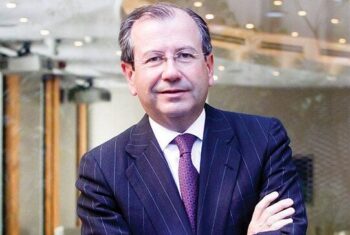
In Iberia too, Fernando Vives, executive chairman of Garrigues (pictured), characterises the market as ‘very active and dynamic’, with ‘movement across a wide range of practice areas’.

Among high-profile moves in Spain are Gibson Dunn’s recruitment of Armando Albarrán from Freshfields, ahead of its Madrid launch, alongside Gómez-Acebo & Pombo’s addition of Madrid-based litigation partner Rafael Murillo, formerly Freshfields’ head of litigation and arbitration in Spain. Meanwhile, Cuatrecasas’ March hire of DLA Piper’s co-head of Latin America tax, Amory Heine, in Santiago, Chile, underlines the reach of Iberian firms beyond Europe.

The private equity impact

Many of the most high profile moves across the continent have been driven by firms’ efforts to ramp up in lucrative areas like private capital, where relationships with buyout houses are seen as more portable than other clients.

In Italy, Catalano points out that ‘because private equity lawyers are traditionally attached to the PE operators they advise, they tend to feel more independent and are more willing to move.’

This dynamic is replicated across the market as international and independent firms alike try to make their play or grow market share, triggering significant movement in talent.

In Paris, Gide’s Frédéric Levraud describes private equity as ‘one of the main drivers of activity in the legal market… whether through growth investments, sector consolidation or business transformation’.

Recent developments underline the scale of its influence. Last summer, Blackstone announced plans to invest $500bn in Europe over the next decade, KKR has said it is mulling an office in Milan, while PitchBook forecasts that the ratio of PE-backed companies to public companies in Europe will reach a record 2.3x by the end of 2026.
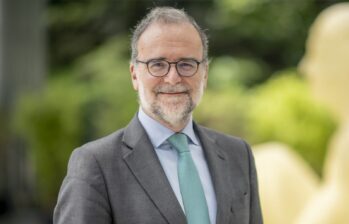
‘There has been a huge change in the market over the last eight years because of the private equity impact,’ says Uría Menéndez managing partner Antonio Herrera (pictured). ‘The flows in the market, in terms of M&A deals, and the pricing of services have been very much influenced by the activity of private equity funds.’

Despite this interest, in the short-term the picture is more subdued. According to data from Dealogic, PE-backed acquisitions in Europe totalled $84bn in Q1 2026; a 44% fall from the previous quarter.

Filippo Troisi, co-managing partner at Legance in Italy, concedes that ‘it’s not the best time for private equity’. Despite this, though, he remains optimistic. ‘Private equity firms are sitting on a huge amount of dry powder, and the gap between asking and bid prices has narrowed compared with last year – both reasons for optimism,’ he maintains.

Holtrop also points to a shift in market dynamics: ‘There’s a little more realism among sellers. It also helps that private equity acquired a huge number of companies during Covid. We are four or five years down the road now, and I think there is some pressure on them to sell these companies.’

The US question

As evidenced by the moves referenced above, private capital and US firms are never too far apart. Kirkland & Ellis’ 2024 Frankfurt debut, Ropes & Gray’s 2025 office openings in Paris and Milan, and Gibson Dunn’s 2025 Zurich launch and planned 2026 Madrid opening underscore the continued expansion of US firms on the continent’s most profitable markets, with private equity linked to many of the moves.

Ritvay though stresses the positives of their growing interest. ‘US law firms are further intensifying what is already strong competition. However, this also creates opportunities for the leading independent European firms, particularly with regard to advising large corporate groups.’

Antonio Baena, who leads the international practice at Cuatrecasas, also sees the bright side: ‘US firms have raised the bar in terms of relationships with investment firms, transactional expertise, fees and attracting top talent among partners and associates alike,’ he says. ‘And they have also created new opportunities within the Spanish market.’

Levraud echoes this, arguing that independent firms are well-placed to capitalise on these new opportunities owing to their ‘strong European footprint’.

The magic circle – here to stay?

While the US firms’ continental love affair may be comparatively new, many UK rivals are going the opposite direction.

Linklaters recently announced the closure of its ten-lawyer Hamburg office having already withdrawn from Poland in 2025, demonstrating why less profitable markets can be challenging for firms with larger offices.

One former magic circle partner says that some of the firms’ ‘big legacy offices’ on the continent ‘no longer make much sense but are costly to exit.’ While another warns that high levels of investment in the US for UK firms could impact firmwide profitability, leading to ‘constant departures.’
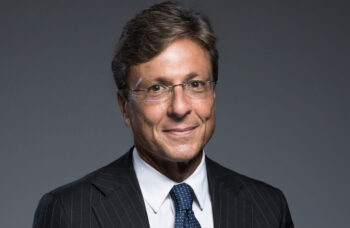
Troisi (pictured) notes: ‘The UK firms that invested heavily in our market many years ago have now, in most cases, significantly downsized their presence in Italy.’

These firms have also borne the brunt of US raids, as evidenced by Ropes’ recruitment of Clifford Chance’s PE and finance team led by Fabrice Cohen, Thierry Arachtingi and Emmanuel Mimin for its Paris office.

Yet marquee hirings like Linklaters’ eight-lawyer restructuring and insolvency team from Darrois in Paris, led by François Kopf, show they can still assert themselves when the target is right.

Recent partner promotions also underline the UK firm’s continued commitment to Europe: Freshfields promoted 16 new partners in Europe in its biggest ever promotion round, up from 11 last year, Clifford Chance promoted nine partners this year out of 28, compared with seven in 2025, with Linklaters also making up more new partners this year than last, with 12 new European partners.

As Dennis Horeman, co-managing partner of De Brauw, puts it, the magic circle firms are ‘still on the continent and here to stay.’

‘Steady as it goes – in a very good way’

In general, law firm leaders described themselves as optimistic heading into 2026 and beyond. Ritvay points to a clear reason why, noting that last year ‘both the number and the size of transactions increased significantly. This trend continued in the first months of this year, and there remains considerable pent-up demand.’

The data supports that outlook. Figures from LSEG show global M&A reaching $1.2trn in Q1 2026 – the third consecutive quarter in which deal value has surpassed $1trn. Deals involving European targets totalled $347bn, up 23% from $281bn in the same period in 2021.

As a result, Troisi is optimistic about the Italian market, saying it is performing ‘very well’. He adds: ‘Italy and Spain were once part of the so-called PIGS countries. Now they have become almost the prince of the fairytale, as our economies are outperforming other European countries.’

Horeman strikes a similarly upbeat note: ‘The business is growing particularly well. We did not even see the kind of blip you sometimes get in January. It has been steady as it goes – in a very good way.’

Global uncertainty – a concern for all

No market exists in a vacuum though, and partners are quick to highlight the potential for continued geopolitical disruption to dampen activity, as well as the human cost that accompanies conflict.

‘The current global uncertainty remains a concern for all of us, first as human beings and also from a professional point of view,’ stresses Troisi.
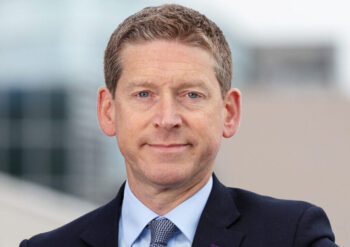
Stephen Keogh, managing partner of Irish firm William Fry (pictured), suggests the ongoing situation in the Middle East may lead to parties ‘slowing the pace of active deals’. He adds that ‘oil price volatility, wider market impacts and ongoing supply chain disruption are making it unusually difficult to value companies across many sectors’.

Still, Baena notes that ‘the market’s fragility and unpredictability have allowed savvy decision-makers to seize opportunities and act strategically.’ However, he adds that if uncertainty persists in the coming months, ‘the new scenario will test investor resilience, delay a consolidated recovery and make future predictions difficult’.

Best friends?

But where does all of this leave the independents? The formal dissolution earlier this year of the ‘best friends’ network linking Gleiss Lutz in Germany, Chiomenti in Italy, Cuatrecasas in Spain and Gide in France has reignited debate over the durability of the model.

Attention has inevitably turned to another longstanding alliance between the UK’s Slaughter and May, BonelliErede, Bredin Prat, De Brauw and Uría, and whether such arrangements remain fit for purpose.

One European partner suggests the absence of a London firm was a key weakness in the former grouping. Even so, some remain sceptical that the best friends structure retains its relevance.

Members of the latter alliance, however, insist the model continues to deliver. ‘We have been doing cases with these firms for decades,’ says Horeman. ‘We work together on real transactions for real clients and when we do those deals we operate as one team – whether it’s M&A, litigation or anything else.’
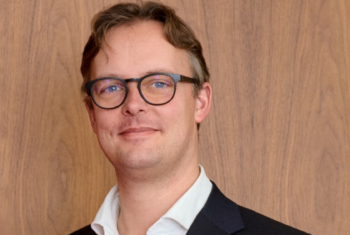
Horeman (pictured) cites the firm’s work alongside Hengeler on mandates for European grid operator TenneT, including securing €9.5bn in equity funding last September and advising on the €3.3bn sale of a 25.1% stake in its German business to KfW, acting for the German state.

Herrera cites the non-exclusive nature of the agreement: ‘A best friends arrangement is, by nature, extremely flexible. But that also means each firm has to be very strong in terms of quality, market presence and leadership in its core areas.’

He points to the firm’s work alongside Macfarlanes advising Banco Sabadell on the proposed £2.65bn sale of TSB Banking Group last July as evidence of that flexibility.

Others favour a looser approach. Troisi says: ‘Our view has always been that, as an independent firm, we should fully embrace what that independence means… we have always preferred to maintain very good relationships with two or three top firms in every key jurisdiction. This allows us to serve our clients in the best possible way.’

Independent thought

Predictions of the demise of the independent firm have circulated for years, yet many continue to thrive.

The latest LSEG Q1 M&A rankings offer a useful snapshot. Uría tops the table for announced deals involving Spain, while in Germany, Gleiss Lutz and Hengeler rank second and third respectively, behind Freshfields. In deals involving Italy, Gianni & Origoni leads the pack, while De Brauw claims the top spot in Benelux.

As BonelliErede chairman Massimiliano Danusso (pictured) puts it, local knowledge remains a valuable commodity: ‘There is a strong belief that we understand the Italian market, inevitably, much better than any foreign firm coming into Italy.’

For Horeman it is also partly a question of pride: ‘Independence allows us to make our own decisions, which is motivating for the partner group.’ Vives says independence gives the firm ‘agility, cohesion and control’ and adds that it is important for the market that large firms have their key decisions taken in their domestic markets.

Herrera, meanwhile, argues that ‘homegrown’ independent firms continue to dominate the biggest mandates in Iberia: ‘They are generally the ones taking lead roles in the big-ticket deals, particularly for strategics. If you review the big transactions involving large Spanish and Portuguese multinationals predominantly, now and for the last 30 years, clients go to the likes of Garrigues, Gomez-Acebo, Cuatrecasas, and ourselves.’

In short, it’s fair to say that Europe’s legal leaders don’t see themselves losing their foothold anytime soon.

[email protected]

Euro Elite methodology

The Legal Business Euro Elite showcases 80 leading firms across Continental Europe, focusing on the most accomplished, consistent and highly regarded firms in key markets, as opposed to branches of international firms, UK/US firms or Swiss Vereins.

Inclusion in the Euro Elite is determined by aggregation, analysis and weighting of Legal 500’s existing jurisdictional rankings and research data, complemented by insight from the Legal Business team and Legal 500’s senior editors.

Photo by Fer Troulik on Unsplash

Simpson Thacher, CMS lead as sports promoter Matchroom rings the bell on US investment

Simpson Thacher & Bartlett and CMS are advising as New York investment firm Bruin Capital takes a minority stake in global sports promoter Matchroom, in a deal that values the business at over £1bn.

For Bruin Capital, Simpson Thacher fielded a primarily London-based team, led by veteran dealmaker and co-head of European M&A James Howe and M&A partner Chris Vallance, with Caleb McConnell advising on tax aspects, and London and Brussels-based Étienne Renaudeau advising on antitrust and FDI.

CMS advised Matchroom Sport, also with a City-based team, led by corporate partner and co-head of media Paul Guite and corporate partner Ben McParland. Stephen Hignett advised on tax, Andrew Quayle on share incentives, and Russell Hoare on competition.

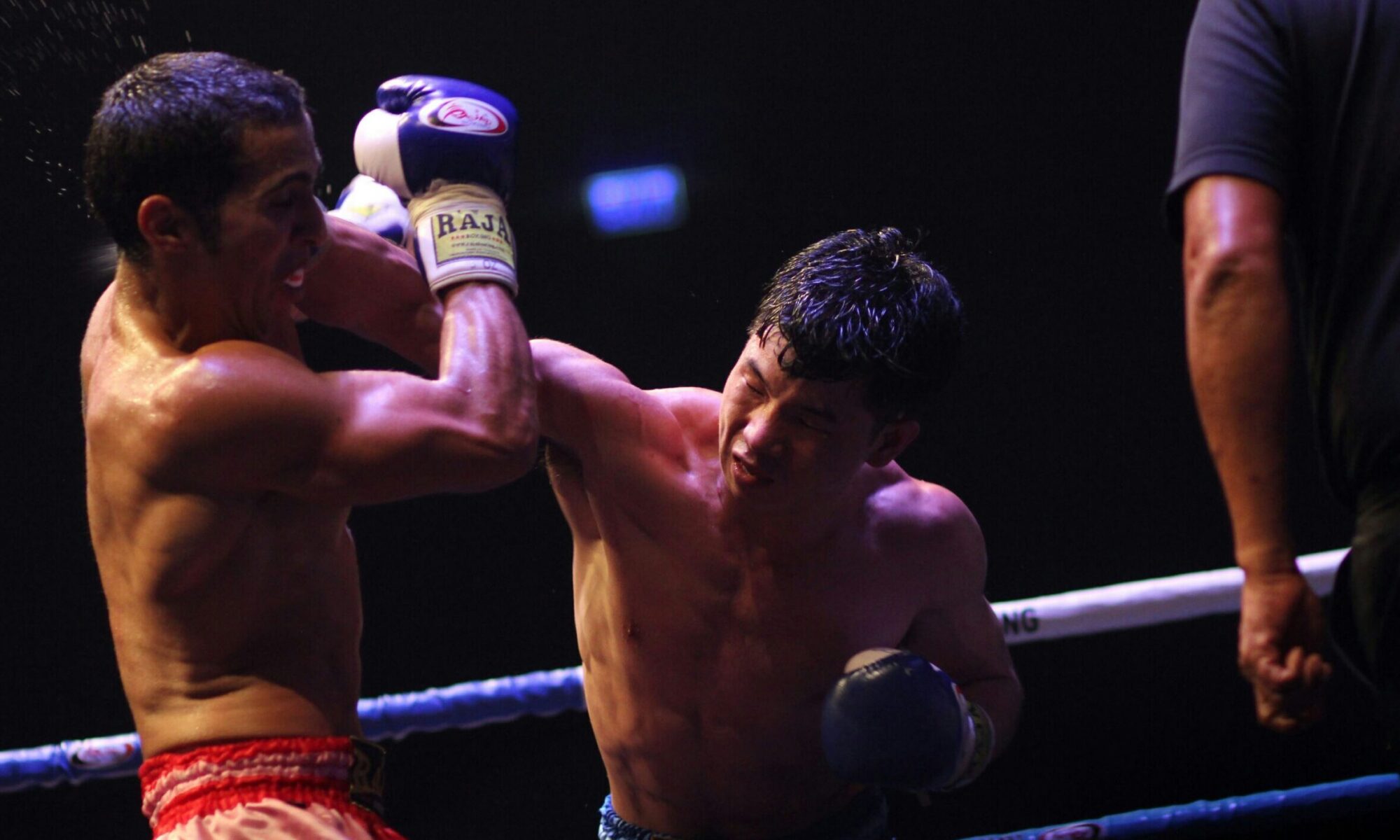
Matchroom, founded in 1982 by sports promoter Barry Hearn, is a global, multi-sport live events and sports rights platform. It owns, promotes and broadcasts events across darts, boxing, snooker, and online gaming, and includes stars boxer Anthony Joshua, darts prodigy Luke Littler and rugby player Henry Pollock within its talent agency.

In 2024, CMS advised the company on a minority investment from sports marketing agency Pitch International, with a team also led by Guite and McParland, and also including Hignett, Quayle, and Hoare.

On the buy side, Bruin Capital, a sports and entertainment focused investment and operating platform, is a long-standing client of Simpson Thacher, which has advised the investor on its portfolio transactions since 2020.

These include a flurry of investments in 2024, spanning Box to Box Films, the producer of Netflix’s Formula 1 documentary series Drive to Survive, virtual advertisement specialist Supponor, and sports talent agency AS1. Howe, Vallance, and Renaudeau advised on each of these transactions, with McConnell absent only on the Supponor acquisition.

In January this year, Howe, Vallance, and Renaudeau advised Bruin Capital in connection with the establishment of an investment vehicle that raised $1bn from investors led by 26North, founded by Apollo co-founder Josh Harris, and PE firm The Jordan Company.

Matchroom chairman Eddie Hearn said of the deal: ‘The opportunity for Matchroom in the United States and globally continues to grow. This partnership with Bruin gives us the ability to accelerate that expansion and build on the platform we have created.’

According to a statement from Matchroom, the Hearn family will retain majority ownership and continue to oversee the business, with Eddie Hearn serving as group chairman and Barry Hearn as founder and president. Bruin will join Matchroom’s board of directors.

[email protected]

Latham and Davis Polk gear up for $2bn Lime IPO

Latham & Watkins and Davis Polk are steering electric bike company Lime on its initial public offering on the NASDAQ, with the Uber-backed company hoping to list with a reported valuation of $2bn.

Latham is advising Neutron Holdings, Lime’s parent company, with a team led by Bay Area partnersTad Freese and Sarah Axtell.

Davis Polk is acting as counsel to the eight underwriters, including Jeffries and Goldman, with a team led by Northern California corporate partners Alan Denenberg and Beth LeBow.

Neutron Holdings filed its intention to list late last week with the Securities and Exchange Commission, with the Financial Times subsequently reporting the value of the listing.

Freese was previously vice chair of Latham’s corporate department and managing partner of the Bay Area office, and is a Legal 500 leading partner for large M&A deals. In 2020 he led the Latham team that advised Airbnb on its IPO, valued at $3.4bn at the time. More recently, the firm advised home security company Verisure on its €13.7bn listing on NASDAQ Stockholm – the largest European private equity-backed IPO.

Denenberg, who has been at Davis Polk for 25 years, has worked on over 75 IPOs over the past decade, and has advised underwriters across industries such as life sciences, industrials and technology. He is a Legal 500 leading partner for capital markets: equity offerings.

Lime was founded in San Francisco in 2017 and has been growing in popularity across urban centres. The company currently operates in around 230 cities, launching in 19 new metropolitan hubs in 2025. In the most recent financial year, Lime’s revenue grew 29% to $886.7m.

In May 2020 the company completed a $170m investment round with a significant stake contributed by Uber, as well as support from Alphabet and Bain. Goodwin advised Lime with Anthony McCusker, now the firm’s chair, acting as one of the lead partners on the matter. Lime is currently led by CEO Wayne Ting, a former executive at Uber.

Sarah Axtell, second lead partner for Latham on the IPO, was a partner at Goodwin at the time of the deal, moving to Latham in November 2020, though she is not listed among the partners who worked on the deal.

[email protected]

Quinn Emanuel founder John Quinn steps down

John Quinn, executive chairman and founding partner of Quinn Emanuel Urquhart & Sullivan, is stepping down after four decades leading the litigation firm he established in 1986.

The firm said in a statement: ‘John will remain a partner and retain a non-executive chair title, allowing him to focus on promoting the firm and client development activities.

‘Bill Burck and Mike Carlinsky will continue as co-managing partners, a position they have shared with John since 2022, running the firm day to day; they expect a seamless transition.’

Quinn stepped down as managing partner in 2022 to become executive chairman, handing operational leadership to Washington DC white-collar partner Burck and New York litigator Carlinsky.

LB understands that the Los Angeles-founded firm will not immediately replace Quinn as executive chair, and will evaluate in the near future whether to add a third member to its leadership team or to adopt a different leadership structure.

Read LB‘s exclusive interview with John Quinn from last month

‘We thank John for his tireless efforts over the last 40 years in building the world’s leading disputes firm,’ Burck and Carlinsky said in a statement. ‘John has been a great firm leader and lawyer, and it continues to be a privilege to be a part of this great firm.’

Under Quinn’s leadership, Quinn Emanuel has become the world’s largest litigation-only law firm, expanding to 33 offices globally and building a reputation for handling high-profile disputes and arbitration matters.

Most recently, it oversaw a victory in a trademark dispute for OpenAI against Open Artificial Intelligence and its founder, Guy Ravine.

It also drew national attention last year for representing Harvard University in its dispute with the Trump administration after the government moved to cut billions of dollars in funding tied to diversity initiatives.

The leadership transition comes after another strong financial year for Quinn Emanuel. The firm recently posted a 12.6% increase in revenue to nearly $2.8bn, marking its third consecutive year of double-digit growth. PEP increased 10.6% year-on-year to $9.5m.

[email protected]

‘The centre of gravity for Southeast Asia’ – why PE investment is making Singapore increasingly attractive

Last month, Simpson Thacher became the latest firm to open an office in Singapore, relaunching in the city-state after closing there over two decades ago.

The firm’s re-entry into the market reflects a resurging interest, driven in large part by high levels of private equity investment.

‘Our clients have gone from having a small number of people on the ground in the mid-2000s (when we established a dedicated PE M&A team in Asia) to now having hundreds,’ says Ian Ho (pictured right), co-head of Simpson Thacher’s Asia offices and its Asia private equity group, who is relocating from Hong Kong to Singapore to launch the office.

‘Private equity in Asia Pacific has transformed into a thriving sector, from a nascent market into what it is today,’ Ho continues.

Since 2020, at least ten other international firms have opened an office in Singapore, including Ropes & Gray and Quinn Emanuel in 2024, Baker Botts and Goodwin in 2022, and Orrick and Cooley in 2021.

The market has also seen a spate of notable lateral hires. Greenberg, which launched in Singapore in 2023, brought on a six-lawyer team last October, including Legal 500 investment funds leading partner Jek-Aun Long from Simmons & Simmons, as well as energy and natural resources partner Stella Bae from Ashurst, and M&A partner Kyle Oh from White & Case. The firm continued to expand with its hires of Goodwin M&A partner Chi Pan and Baker McKenzie APAC capital markets head, Ashok Lalwani.

Also making additions to its Singapore corporate teams last year was Sidley Austin, which hired M&A partner Alun Evans from A&O last May, and Baker McKenzie, which hired equity capital markets partner Alexander Stathopoulos.

Other notable moves include Hogan Lovells‘ hire of a three partner private equity team from Dechert in December 2024, which included Siew Kam Boon, who joined as head of private equity for the firm’s APAC offices, Thomas Kim, who now heads the firm’s investment funds practice in Singapore, and Timothy Goh.

‘Some international firms have found operating in Asia difficult. Firms would bring international lawyers over, but that model was discredited.’

Singapore’s political and economic stability have made it an attractive hub for investors, and since its launch in 1991 the Singapore International Arbitration Centre has been a strong centre for global dispute resolution.

Milbank finance and M&A partner Jacqueline Chan (pictured below) notes that Singapore’s geography makes it well placed for international firms working with clients across the APAC region:

‘Millbank uses Singapore as an international base to conduct its international role for transactions that cover all of APAC. From Singapore we see transactions that cover Indonesia, Malaysia, Vietnam, the Philippines and Thailand. A lot of those will not have a base in Singapore itself, but they are all largely executed from Singapore.’

‘So you see Singapore operating as a financial services hub,’ she concludes.
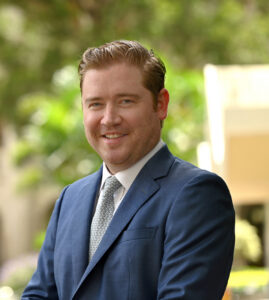
Many international firms have had offices in Singapore for decades now, including Milbank, which opened there in 1985. UK-headquartered firms have a long history in the city-state as well: Clifford Chance opened there in 1982, legacy Allen & Overy and Linklaters both opened there in the early 1990s, and Freshfields reopened in 2012 after closing its office five years prior. In 1980, Freshfields had become the first global law firm to open there.

Now, of the top ten largest firms in the world by revenue, nine have an office in Singapore, with Kirkland & Ellis the only outlier.

However, one senior partner at an international firm in Singapore says that, though it’s a popular choice for firms with Asian business, it can be hard for global firms to find their footing there:

‘Singapore is one of those jurisdictions that was very attractive to law firms, as it is seen as a dynamic financial market, so firms were trying to bring their brand names in and pick up work.’

They continue: ‘But some international firms have found operating in Asia difficult. It tended to be a situation where firms would bring international lawyers over, but that model was discredited.’

This is evident in recent closures. Last year, legacy McDermott Will & Emery closed its physical office there, which originally opened in 2021. Akin too, which opened in Singapore in 2012, is also winding down its Singapore office this year. Private funds partner Olivia Chung, who relocated to Singapore to lead Akin’s office in 2020, is understood to be returning to New York following the office closure.

This pressure is something that Ho, in relaunching Simpson Thacher’s newest office, is acutely aware of.

‘When we opened in the market in the late ’90s, it was for client-specific reasons and not a private equity play; private equity in Asia was not as prominent,’ he says.

Now, Ho says, by working with Simpson Thacher’s other offices in Asia, including Hong Kong, Beijing, and Tokyo, the firm can provide a strong APAC service to its clients.

‘The goal is to go as deep and as broad as we can with our top clients in the region and apply that approach to new clients. And to do that, you can’t operate in silos. We draw from our experiences and the expertise of our colleagues from across our Asia-Pacific offices and beyond,’ Ho says.

He adds: ‘Singapore plays a highly complementary role in how we execute our broader strategy. It’s not intended to stand alone – and it wouldn’t succeed if it did. Instead, we see Singapore as a synergistic hub that allows us to deepen our talent bench and scale the business. That scale is essential as our largest clients continue to grow and as we pursue new opportunities and relationships across the region.’

Simpson Thacher has historically relied on its Asian offices as connections the Southeast of the continent, where Singapore lies. However, as more private capital has moved into Southeast Asia, Ho says the firm is increasingly needed where its clients are:

‘We’ve always been successful at supporting our clients and Southeast Asia deals from outside Singapore. We know the work, who the key players are and, we understand the trends that are driving investment for our clients. Being on the ground enables us to even more rapidly tune into trends and shifts in risks and new opportunities.’

‘Being close to our clients is valuable and aligning our presence with where so much of the action is happening will be beneficial,’ Ho concludes.

‘There’s still a huge amount of dry powder in the region, that’s committed in the region’

The only comparable location to Singapore in the APAC region is Hong Kong – currently the only city outside of London and New York that houses all ten of the world’s largest firms by revenue.

However, partners in Singapore suggest that the two cities’ different locations means they service clients differently.

Milbank corporate partner Maurice Conway (pictured right), who recently relocated from Hong Kong to Singapore, says: ‘The centre of gravity for Southeast Asia, the gateway for Southeast Asia, in a way, is Singapore now, and for India as well. Hong Kong is more seen as the gateway to the China-mainland work.’



‘There’s always a role for both markets, and to a certain extent they do kind of complement each other,’ Conway adds.

Despite broader geopolitical uncertainty, partners in Singapore remain optimistic. Looking at the year ahead, Chan notes: ‘The market here is growing and the pie is just getting much larger with the growth in private equity, in investment firms which are moving into Singapore, and of economies, both in the region of Southeast Asia and beyond, which Singapore services.’

‘There’s still a huge amount of dry powder in the region, that’s committed in the region,’ she adds.

Ho agrees, noting how the Singapore office demonstrates his firm’s decision to prioritise clients across APAC: ‘We hope this sends a strong signal to the market about our long-term commitment to Asia. Expanding our presence reflects our conviction in our clients and the region’s potential. We recognise we can’t do that alone, which is why we’re investing in building out the team to support sustained growth.’

For other partners in the region, Simpson Thacher’s return to the Singapore market is further evidence of a vibrant legal scene.

One senior partner at an international firm says: ‘There are a lot of business opportunities in Singapore, and firms are fairly bullish.

‘Singapore is a small place, but it’s growing the pie for everyone in Southeast Asia. International firms believe the pie will grow bigger, as more clients are setting up business there.’

They conclude: ‘If a firm has Asian business, why wouldn’t they consider it?’

[email protected]

‘This is a wake-up call’ – what the insider trading scandal means for elite law firms

This week’s news that lawyers at some of the most prestigious firms in the US were involved in a decade-long insider trading scheme has raised questions over the safeguards firms have in place to protect client confidentiality and sensitive deal information.

According to an indictment released by the US Department of Justice this week, a total of 30 individuals have been charged in connection with the scheme – which prosecutors allege centred on the misuse of market-sensitive M&A information – and 19 have been arrested.

The indictment does not name the firms; however, the M&A deals cited in the breach indicate the involvement of lawyers who worked at Wachtell Lipton Rosen & Katz, Latham & Watkins and Goodwin.

According to DOJ prosecutors, New York lawyer Nicolo Nourafchan – who from 2013 to 2023 worked at law firms including Latham and Goodwin – sat at the heart of the scheme, accessing, as part of a wider network of lawyers, non-public information relating to pending acquisitions and providing it to traders in exchange for ‘kickbacks’.

One example cited in the indictment was Amazon’s proposed $1.7bn acquisition of iRobot in 2022, on which Goodwin advised the seller.

At the time, Nourafchan was employed by Goodwin, and, according to the indictment, ‘while on a ‘leave of absence’ from the firm, viewed confidential materials related to the deal.

In a statement, a spokesperson for Goodwin said: ‘We are deeply disappointed that a former employee is alleged to have violated the trust placed in him and misused confidential information as part of a broader criminal scheme affecting multiple law firms and their clients. We have been cooperating and continue to cooperate fully with law enforcement.’

A spokesperson for Latham added: ‘The former associate charged today has not been associated with our firm for five years, and the conduct as alleged would reflect a serious violation of our robust policies and procedures.’

‘It is reasonable to ask whether the apple barrel had cracks in it’

While the firms are not named explicitly in the indictment, the case raises broader questions around compliance, confidentiality and the reputational impact on law firms.

Market observers suggest this was a situation firms were always at risk of being exposed to. ‘There is so much information that people are privy to, with no oversight,’ one ex-City lawyer said.

Michael Evans, co-managing director at reputation consultancy Byfield, sums up the scale of the challenge facing law firms.

‘You can have really good systems in place, but if people are determined to circumvent processes and systems they will find ways,’ he says.

But he is quick to highlight both the scale and duration of the alleged crime. ‘This was not one moment of weakness. It spans a decade and roughly 30 deals. That can’t be explained away as one bad apple. It is reasonable to ask whether the apple barrel had cracks in it.’

The law firms linked with the indictment have been quick to respond, a move Evans sees as vital in damage limitation.

‘Anyone who thinks they might be touched should be getting ahead of conversations. A good first principle of stakeholder management is when you have a known issue you pick up the phone to key institutions,’ he says. ‘Transparency and speed regarding client and media questions about data security is key.’

Wachtell issued a statement on Wednesday (6 May) after the indictment was released, stating that ‘the former employee’ implicated in the case ‘has not been associated with the firm for over six years and the transaction involved dates back to 2019.’

But image control after the fact is only one consideration. One market insider noted that the incident is unlikely to be isolated and could suggest a broader culture of weak compliance controls within law firms. 

‘The fact that this type of activity has been widely rumoured in the market for years, and that law firms don’t take it seriously, suggests there is significant opportunity for this to happen,’ they say.

‘Firms will be trying to damp down the feeling that it is endemic behaviour at their specific law firm,’ they add. ‘But I doubt they are doing anything to ensure it doesn’t happen, or looking for evidence. Hear no evil, see no evil.’

‘It shows there is a systemic question to answer’

Barry Vitou, the head of HFW’s global investigations and white-collar team, says the scale of the indictment offers an indication that insider trading remains firmly within the DOJ’s enforcement focus.

Referring to a DOJ memo released at the beginning of President Trump’s second term, which outlined the prioritisation of ‘urgent threats’ to US security – including cartels, international money-laundering and digital asset fraud – Vitou said: ‘Some people thought that meant a lesser focus on more traditional white-collar offences, like insider trading.’

However, the case shows that the DOJ remained ‘active and focused’ on insider trading investigations,’ he said.

One legal market observer added a further dimension, highlighting the Trump administration’s sustained attack on law firms. 

‘Even if the reputational damage is deserved, the way this administration has conducted itself in the past will cause people to question the credibility of what the DOJ is saying. It has damaged its credibility greatly in the way it has tried to prosecute the President’s perceived enemies.’

Evans adds: ‘There is always a political dimension to which cases get pushed up to surface. This doesn’t change the fact that if wrongdoing is found, it shows there is a systemic question to answer.’

‘A wake-up call’

Longer term, reputational fallout will likely be limited, Evans believes.

‘Firms are remarkably resilient, but that is highly dependent on trusted relationships as well as outcomes,’ he says. ‘We might see clients asking for stronger contractual protections around data security, but they are unlikely to change firms.’

But he also sounds a note of caution. ‘If proven in court, this was a large-scale criminal enterprise running in parallel inside some of the most prestigious legal establishments in the world.’

‘That is a wake-up call.’

[email protected] 

Revolving Doors: US firms lead hiring as White & Case, Cleary, McDermott build across Europe

The London and European lateral markets have seen continued churn in the last week, as firms have targeted funds, corporate, disputes and real estate talent, alongside further team moves on the continent.

Leading the City hires, Cleary Gottlieb has added funds partner David Christmas from US rival Fried Frank. A Legal 500 leading partner in private funds, Christmas advises fund managers, sponsors, financial institutions and family offices on fund formation across a spread of alternative asset classes, alongside experience in GP-led secondaries.

He joins after ten years at Fried Frank, where he made partner in 2018. He starts at the firm today (5 May).

King & Spalding has made a pair of hires into its London office, bringing over Goodwin private equity real estate partner Raymond Fang and Paul Hastings antitrust and competition partner Jade-Alexandra Fearns.

Fang joins the firm’s London real estate and funds practice after more than seven years at Goodwin. His practice spans cross-border real estate PE deals, including structured M&A, joint ventures and GP stakes, and secondaries.

The move follows a string of private capital exits for Boston-founded Goodwin. In October last year, it lost PE partner Tessa Agar to Mayer Brown, followed by PE tax partner Katie Leah to Skadden in January. Most recently, it saw a three-partner PE team move to Ashurst.

Fearns, meanwhile, joins the government matters and regulation practice group from Paul Hastings, where she arrived as a partner in 2022 after four years as special counsel at Proskauer. Her practice spans merger control, foreign investment, and national security filings across a range of jurisdictions, and includes advising clients on cartel defence, competition compliance and regulatory frameworks across industries, including energy, insurance and sport.

Herbert Smith Freehills Kramer has hired competition litigator Helen Fairhead. She will join the firm’s London office on 1 June from Norton Rose Fulbright, where she has spent the last 13 years, making partner in 2022.

Fairhead’s practice covers an array of contentious competition matters, with a particular focus on damages claims, and includes experience acting for both claimants and defendants in High Court litigation.

Taylor Wessing has hired disputes and investigations partner Jamie Humphreys from Cooley, where he served 11 years as special counsel. Humphreys specialises in product liability litigation, advising international clients across the full product lifecycle, with a particular focus on consumer products.

With Taylor Wessing’s now approved tie-up with Winston & Strawn set to go live between May and June, the period since the merger’s announcement last December has seen other notable hires including RPC head of commercial Jeremy Drew in February, and Travers Smith competition head Stephen Whitfield in March.

White & Case has hired energy infrastructure regulatory partner Simon Stuttaford into its City office from Castletown Law in Edinburgh. He joins the firm’s global project development and finance practice and energy group after nearly seven years as a principal at Castletown. His prior experience includes in-house roles at EnergySolutions UK and Horizon Nuclear Power, as well as two years as joint head of environment at DWF from 2015 to 2017.

Stuttaford has particular experience in the nuclear sector, where he has advised on contracting structures and related corporate matters.

Arnold & Porter has hired antitrust and competition litigation partner Nicola Chesaites. Qualified as both a barrister in England and Wales and an advocate in Belgium, she brings more than 17 years’ experience in competition damages litigation, EU litigation, and collective actions, in disputes across banking, trade, sanctions, pharmaceuticals and transport.

Chesaites previously practiced at Willkie before going freelance in 2025. Prior to this, she served six years at Quinn Emanuel, making partner in 2019.

Also in London, Proskauer has added Kos Vavelidis as a partner in its structured credit practice. He joins following three years as partner at DLA Piper, with time in New York and London, and previously worked as an associate in London at Paul Hastings and legacy Allen & Overy.

He brings experience advising transaction participants on a broad range of structured finance, derivatives, securitisation and asset-backed lending matters, with a particular focus on CLOs.

Morrison Foerster has made a trio of hires, bolstering its City technology transactions bench.

TMT partner Will Holder joins from Baker McKenzie, where he advised institutional investors on public and private M&A, leveraged buyouts and joint ventures, private equity and portfolio company transactions, notably in the music and fintech subsectors.

Corporate business transactions partners Mike Pierides and Oliver Bell join from Morgan Lewis, where Bell was a senior associate in the firm’s technology and outsourcing group.

Following seven years at the former firm, Pierides brings across experience in commercial and technology transactions, advising on outsourcings, data privacy and cybersecurity, strategic restructurings, and technology transactions in industries including AI, fintech, telecommunications and data centres.

Greenberg Traurig has hired M&A partner Robert Gray from Baker McKenzie. Gray joins Greenberg’s corporate practice after nearly 18 years at his former firm, where he made partner in 2021. His practice spans cross-border and domestic M&A, joint ventures and carve-outs, with a focus on agribusiness sectors involving CEE and the Nordics.

Duane Morris has hired a new City corporate head, corporate partner Simon Gamblin who joins from Clyde & Co in London.

Gamblin’s practice covers international and domestic corporate finance, including public and private M&A, cross-border joint ventures, restructurings, financings and PE transactions. He brings with him special counsel Ben Chalkley and senior associate Daniel Li.

Clyde & Co has also parted ways with London insurance disputes partner Mandip Singh Sagoo, who has moved to Norton Rose Fulbright. Prior to spending eight years as partner at the firm, Sagoo spent twelve at Mayer Brown, making partner in 2012. He specialises in advising insurers on claims involving financial institutions, warranty & indemnity and D&O.

For its part, Clyde & Co has hired aviation disputes senior associate Nick Roberts as a partner in London. He joins after just under seven years at Norton Rose Fulbright.

Eversheds Sutherlands has hired insurance partner Helen Hallan and corporate finance and M&A partner Chrissy Findlay.

Hallan spent the past eight years in-house, latterly as lead counsel for Canada Life’s Insurance arm, where she advised on a range of matters in bulk annuities, reinsurance and capital activity.

Findlay joins following almost two decades at Pinsent Masons. She advises financial services clients on M&A, restructurings, governance and strategic reorganisations, with a particular focus on banking, lending and payments.

DLA Piper has hired fund finance partner Rob McClean from Cadwalader, where he was a special counsel. McClean joined Cadwalader from Reed Smith in September 2024, and his practice focuses on advising financial institutions, investment banks and alternative platforms on fund finance matters.

Osborne Clarke has hired a pair of partners, bringing over tech, media and telecoms partner Justin Edgar from DWF and corporate real estate partner Philippa Rigby.

Edgar spent nine years at DWF, making partner in 2019, while Rigby spent a decade at Pinsent Masons, where she was a senior associate.

However, Osborne Clarke also saw the departure of equity capital markets and public M&A lawyer Ed Nisbet, who joined Shoosmiths in London after eight years at Osborne Clarke, where he became an associate director in 2021.

DWF has hired Jemma Brimblecombe as a partner in its professional indemnity team in London. Brimblecombe joins from Kingsley Napley, where she led the professional negligence practice, making partner in 2024.

Also in the City, Haynes Boone has hired arbitration partner Philipp Kurek from Signature Litigation, where he spent more than two years. Before that, he spent 14 years at Kirkland & Ellis, where he made partner in 2017.

Finally in London, TLT has added partner Fosia Solomou to its real estate practice. Solomou joins from Dentons, where she was senior associate, advising on commercial real estate transactions, including acquisitions and disposals and joint ventures.

In Edinburgh, Pinsent Masons has hired financial services litigation partner Stuart Murdoch. A regulatory, ESG and disputes specialist, Murdoch joins from DLA Piper, where he was co-head of its international financial services disputes and international funds ESG workstreams.

In Milan, McDermott Will & Schulte has welcomed a five-partner team from Italian firm Gitti & Partners.

The team is led by corporate and private equity partner Vincenzo Giannantonio who joins as office co-managing partner. His practice covers mid-market and sponsor-led transactions, with a focus on PE and growth capital investments.

Joining Giannantonio are corporate M&A and PE partners Giacomo Pansolli and Domenico Patruno, employment partner Elisa Mapelli, and Marco Blei, an intellectual property partner focusing on life sciences and tech.

In Paris, Morgan Lewis has added financial services regulatory partner Arnaud Grunthaler from Forvis Mazars Avocats.

Grunthaler, who spent just under two years at his previous firm, brings experience advising financial institutions and market participants on EU regulation and financial products, notably digital assets and fintech.

In Berlin, Dentons has added a seven-lawyer litigation and dispute resolution team from PwC Legal.

The team is led by partners Roman Dörfler and Martin Beckmann, who both served seven years at their previous firm, and includes two counsel, one senior associate and two associates. They bring experience in corporate and insolvency-related disputes, model declaratory actions and class actions, particularly in the areas of banking and capital markets law.

Dentons was also active in Glasgow, where the firm has hired construction partner Gordon Anderson from Addleshaw Goddard.

For its part, Addleshaw Goddard has recruited a tier one Legal 500 five-lawyer team to establish a public procurement and construction practice in the Warsaw office it acquired from Linklaters last February.

Joining from Polish firm Domański Zakrzewski Palinka, the team is led by partner Katarzyna Kuźma, and includes partner Tomasz Michalczyk, counsel Wojciech Hartung and two senior associates.

Both partners bring experience in public procurement and the delivery of complex investment projects, Kuźma advising public and private sector entities on the structuring of complex, public-sector involved projects with international aspects, and Michalczyk adding the contractor advisory piece, including in disputes proceedings.

In Spain, Garrigues has added labour and employment partner Jaime Silva Castañón in Madrid. He joins from Labormatters Abogados, where he spent four years as a partner, and has built a practice advising domestic and international companies undergoing employment litigation and collective disputes.

Finally on the continent, Latham & Watkins has appointed Alexander Stefan Rieger as managing partner of the firm’s German offices, based in Frankfurt. A Legal 500 next-generation partner for M&A, Rieger previously served as the firm’s regional chair of corporate in continental Europe, with clients including infrastructure and pension funds, insurance companies, PE investors and corporates. He joined the firm from Hogan Lovells in 2023.

The move comes as Latham expands its German offering, bringing over four partners from Freshfields last December.

In the Middle East, DAC Beachcroft has announced plans to open a new office in Dubai with a trio of insurance partners from Clyde & Co.

Michael Morris served 11 years at Clydes, most recently as a litigation partner and head of insurance for the Middle East. His practice focuses on commercial and professional liability claims.

Michael Ducker, formerly co-head of Clydes’ Middle East and Africa healthcare group, brings experience spanning healthcare and insurance, including medical malpractice, environmental matters and product liability.

Mark Beswetherick, a Legal 500 leading partner for dispute resolution in the UAE, was previously head of Clydes’ insurance and dispute resolution group in Dubai. With a practice spanning arbitration, international litigation and corporate investigations, he brings a particular focus on D&O liability, professional negligence and multi-jurisdictional insurance disputes.

DAC Beachcroft was also active in the UK, hiring lawyers’ liability and professional indemnity partner Will Sefton in Bristol. A Legal 500 leading partner for professional negligence in the South West, Sefton joins from RPC.

Finally, Simmons & Simmons has hired Reed Smith Asia-Pacific Investment Funds practice head Han Ming Ho in Singapore. Before his time at Reed Smith, Ho spent time as a partner at both Sidley Austin and Clifford Chance, where he established and led the firm’s Singapore investment funds practices.

[email protected]

Akin hires four-partner Sidley private equity team across NY and London

New York City cityscape

Akin has hired a four-partner transatlantic private equity team from Sidley Austin, including a trio who previously worked together at Paul Weiss.

The group leaving includes three partners in New York, as well as London PE partner Jonathon Hamill.

The New York trio – Gerald Brant, Jeffrey Kochain and Brittany Harrison – have all been at Sidley since late 2023, when they joined the firm’s New York office from Paul Weiss.

The move marks a return to Akin for the US lawyers, who previously worked together at Akin immediately before joining Paul Weiss in late 2021. 

Brant will rejoin Akin as head of its US private equity practice.

Together with Hamill, the quartet advise private equity sponsors and their portfolio companies on a range of leveraged buyouts, joint ventures and mergers, and have a track record of work for Apollo. Kochain, Brant and Hamill were among the lead partners last year when Sidley advised Apollo portfolio company Evri on its merger with DHL.

London partner Hamill joined Sidley as a senior associate from Vinson & Elkins in 2021. He later spent almost a year on secondment at PE giant Apollo before returning to the firm and making partner in January 2024.

Sidley has been through a sustained period of targeted recruitment in London of late, most recently securing the high-profile hires of restructuring duo Philip Hertz and Melissa Coakley from Clifford Chance. The firm also added Latham’s former global real estate co-chair Jeremy Trinder in January and UK capital markets co-head James Inness last month.

The firm’s London PE bench was also strengthened earlier this year with the arrival of Sean Carney – a global co-head of the firm’s private equity and insurance practices, and a member of its executive committee – who relocated to the UK from Chicago.

Sidley’s London private equity team also includes practice co-head Ramy Wahbeh and Kaisa Kuusk, both of who moved over from Paul Weiss in 2023, and Adam Runcorn.

Sidley‘s London revenues climbed by almost a third in 2025, up 32% to hit $299m, enough to place it within the UK’s 40 largest law firms. That increase came against a 9% hike in global revenue to $3.74bn.

Akin has also been recruiting in London, most recently taking three restructuring partners from Weil Gotshal & Manges’ London office, including City restructuring co-head Neil Devaney. Last November, the firm also took on a pair of private equity partners from Ropes & Gray – Dan Oates and Angela Becker.

For more, see Sidley’s Galacticos – how the US firm went all-in on big names in London

[email protected]

A&O Shearman, McDermott, Paul Weiss become latest major firms to cut staff

A&O Shearman and McDermott Will & Schulte have become the latest firms to make job cuts, with Paul Weiss also letting some of its associates go.

A&O Shearman has made cuts to its business services ranks, including roles in its tech function as well as other support teams.

LB understands that the changes follow the completion of systems integration work at the firm, with roles supporting that process no longer deemed necessary.

It is also understood that no fee earner roles are affected. The firm declined to comment on the locations of the staff affected.

In a statement, an A&O Shearman spokesperson said: ‘Over the past two years, we have been investing significantly in our central business teams, as well as in technology and data, to deliver smarter and more consistent ways of working across a firm of our scale and ambition.’

‘That work has created new roles and reshaped others. In some areas this has meant limited and localized headcount reductions. Where that has been necessary, we are working closely to support affected colleagues,’ they concluded.

Meanwhile, McDermott is laying off a number of associates, with the move coming after the merger of McDermott Will & Emery and Schulte Roth & Zabel last year.

LB understands that the associates are being laid off at the firm’s US offices.

A spokesperson for the firm said: ‘McDermott Will & Schulte has made the difficult decision to separate from a small number of associates across the firm as we continue to align with shifting client needs.’

They continued: ‘We are grateful to the associates who are departing; their work has made a meaningful impact on our clients and the firm.’

‘As markets evolve, we remain focused on the areas where we lead, making disciplined decisions about how we invest and grow so we can stay at the forefront and help our clients do the same,’ they concluded.

Paul Weiss has also dismissed a number of associates. LB understands that the associates were all based in the US, and were dismissed following negative performance review.

A Paul Weiss spokesperson said in a statement: ‘There were no layoffs. These were performance based decisions based on the review process we conduct every year.

The redundancies at A&O Shearman are the latest in a line of business services reductions across major firms, with fellow magic circle firm Clifford Chance axing 10% of its business support staff in London last November.

Last month, Freshfields finished its redundancy round, impacting its business services hub in Manchester, where around 20 paralegal roles were cut.

Baker McKenzie has conducted the largest set of redundancies thus far, cutting 10% of its global business services team in February, which equates to around 600 roles.

The news comes as law firms have been ramping up the introduction of AI, with Freshfields and Anthropic launching a partnership this spring.

A&O Shearman has a long-running partnership with legal tech firm Harvey, after it became the first major law firm to integrate AI at an enterprise level in 2022.

[email protected]

Legal Business Awards 2026: which firms made the shortlist?

Freshfields, Herbert Smith Freehills Kramer and Slaughter and May are among the most-nominated firms for the Legal Business Awards 2026, with the shortlist revealed today (7 May).

The awards, which will be handed out on 29 September at London’s Grosvenor House, recognise the best of the best across the legal profession, with honours for the private practice lawyers, law firms, barristers and in-house lawyers operating at the top end of the legal market.

Freshfields is up for a total of 10 awards, including Disputes Team of the Year and M&A Team of the Year, while HSF Kramer is also in the running for 10 honours.

HSF Kramer global CEO Justin D’Agostino is on the shortlist for Management Partner of the Year, where he will compete against Sidley London managing partner Tom Thesing and Taylor Wessing UK managing partner Shane Gleghorn.

Slaughter and May has won spots on seven shortlists, recognising the firm’s strengths across capital markets, competition, finance and more. It will go head-to-head with Kirkland & Ellis in a number of those categories, with the US giant also securing places on seven shortlists.

New awards for 2026 include AI Initiative of the Year, which will identify the law firm demonstrating the most impressive deployment of AI, with the contenders including Cleary, Clifford Chance and Osborne Clarke.

Other new categories will recognise the most influential business services teams, the leading intellectual property and public sector practices, as well as a new client service award, which will go to the firm which received the highest scores from clients during the annual Legal 500 research.

This year, the firmwide awards will identify the International Firm of the Year, the UK Firm of the Year, and the Global London Firm of the Year, which will go to the US firm making the biggest strides in the capital, Elsewhere, a line-up of big-name KCs from chambers including Essex Court, 4 New Square and One Essex Court are in the running for Barrister of the Year.

The biggest names in the in-house legal community will also be recognised, including GC of the Year and In-house Team of the Year – with these shortlists set to be revealed in a separate announcement next week (14 May).

Latham & Watkins, BT, Burges Salmon and Freshfields were among the winners at last year’s awards, which were hosted by comedian Katherine Ryan. Latham took the award for International Firm of the Year, while Burges Salmon picked up the award for top UK firm.

View the shortlist for the Legal Business Awards 2026

McDermott hires HSF Kramer global energy lead

McDermott Will & Schulte has hired HSF Kramer’s head of global energy into its London office, in a move that comes less than a year after each firm completed its respective merger.

Lewis McDonald (pictured below right), who has been at HSF Kramer for over 20 years, has led the firm’s global energy group since 2018.

Recognised as a leading partner in Legal 500’s projects, energy and natural resources: oil and gas rankings in London, McDonald has significant experience working int he Asia Pacific region, beginning his career in Perth in 2001, before moving to London in 2005 and to Hong Kong and Singapore in 2008.

After five years at legacy Herbert Smith Freehills’ Singapore office, he moved to South Korea to launch the firm’s Seoul office in 2013, where he spent four years as managing partner, advising on notable deals such as Korea Gas’s $11bn investment in the Coral Floating LNG project in Mozambique.

McDonald then took on the role of head of corporate for HSF in Asia in 2016, and subsequently moved to Tokyo in 2017.

After taking on the role of global head of energy, McDonald then relocated back to London in 2019.

Energy has long been a key sector for HSF Kramer, and firm leaders have emphasised to LB the industry’s ongoing importance as the firm doubles down on the US after the merger between legacy HSF and legacy Kramer Levin & Naftalis that went live last June.

Analysis published by LB at the end of last year showed that HSF Kramer was among the firms with the most tier 1 energy rankings in UK Legal 500 research, in joint second place with Clifford Chance, behind only Linklaters. McDermott, by contrast, has only two energy rankings in the UK, in tier 5 for both oil and gas and renewables.

However, the picture is different in the United States, where HSF Kramer has no energy rankings, and McDermott has four.

Global head of McDermott’s transactions practice group, Harris Siskind, said of the move: ‘Energy markets are becoming more complex and interconnected, and clients are looking for clear, commercial advice across the full spectrum of energy and infrastructure.’

He continued: ‘Lewis brings a rare combination of sector depth and transactional experience that will help us guide clients through cross-border M&A and strategic investments with greater precision and confidence.’

On his move, McDonald said: ‘McDermott has the scale, platform and ambition to build a leading European Energy practice. I’m excited to join and support clients as they navigate complex global energy markets, drawing on the firm’s strength across traditional energy, renewables and private capital.’

Managing partner of McDermott’s London office, Aymen Mahmoud, added: ‘Lewis is a standout addition to our London team at a pivotal time for the energy sector.’

He continued: ‘His arrival reinforces our position in Europe and strengthens how we connect our London office with our US platform. For clients, that translates into seamless support across jurisdictions and across the full investment lifecycle.’

McDonald is set to start at his new firm in October.

HSF Kramer said in a statement: ‘We thank Lewis for his valued contribution to the firm and we wish him well.’

[email protected]

Inside the $240bn secondaries boom sparking a new private equity talent war

Proskauer’s co-head of secondaries, Bruno Bertrand-Delfau, first encountered the asset class as a senior associate in 2003.

A client wanted liquidity from a portfolio of assets, and the partner handed him the matter, seemingly uninterested in what they viewed as a small and strange transaction. ‘The partner was an expert in large public takeover mandates. He asked me to deal with it on my own, and so I did,’ he says. 

At that time, no one knew what these transactions were, and people were sceptical, Bertrand-Delfau recalls. Investors were wary about selling at prices set by sponsors rather than by the open market. ‘A common but dismissive joke in the industry was that secondaries were “M&A for dummies”,’ he explains.

But the matter’s complexity told a different story. The deal, the first large secondary transaction in France, proved tricky and dragged on for two years through multiple pieces of litigation as GPs and portfolio companies tried to block it, unsure about what it would mean for them. In the end, however, it proved to be a turning point for both the client and Bertrand-Delfau.

Bertrand-Delfau (pictured) was on the sell-side but across the table was AXA Private Equity, which would later go on to become Ardian.
‘This was a landmark transaction for Ardian, and one that marked the start of a long partnership,’ he tells LB.

Even though Bertrand-Delfau had worked opposite AXA, the deal was so arduous that the PE shop brought him in to advise on its behalf for the next transaction. More than two decades on, he is still advising Ardian, which last year raised the world’s largest secondary fund at $30bn. 

Ardian’s trajectory mirrors the wider market. A recent Jefferies report found secondaries hit record volumes in 2025, rising 48% year-on-year to $240bn, split roughly evenly between LP- and GP-led deals. Demand has been fuelled by new entrants, growing pools of dedicated capital and a push for liquidity as sponsors delay exits. 

Sponsors and asset managers have responded by building out secondary capabilities, with recent examples including investment bank Lazard last week acquiring British firm Campbell Lutyens, and EQT acquiring Jeremy Coller’s pioneering platform in January.

Law firms have been following suit. In recent weeks, Weil and Fried Frank have hired London secondaries partners from Kirkland, an early mover in the space. Weil added Charles Cooper-Isow to build on its recruitment of Simon Saitowitz last year, while Fried Frank added Rhett McPhie. A broader wave of hiring has seen Simpson Thacher, Freshfields and others deepen their benches through lateral moves since 2022. 

Starting out

The scramble for talent today is a far cry from how niche the practice once was. Early secondaries work sat awkwardly between funds and M&A, with few lawyers comfortable straddling both. 

‘M&A folks just didn’t understand funds and the funds people were all scared of M&A because they were geeks – fun geeks, though,’ recalls John Daghlian, now a senior funds consultant at Travers Smith. 

Daghlian (pictured) himself joined legacy SJ Berwin, which ‘owned the fund space’, in the mid-90s, when the firm began advising the then newly founded Coller Capital. ‘There were flashes of real brilliance,’ he says. ‘I knew this was interesting; no one else was doing this.’ 

In 2000, he advised Coller on its acquisition of a $1bn+ private equity portfolio from NatWest (now Bridgepoint), then the largest deal of its kind. Around the same time, Kate Downey—now head of Fried Frank’s European private equity funds practice—was advising Vision Capital on acquiring portfolios from struggling funds such as Morgan Grenfell. 

‘They had a rump set of assets that they needed to get rid of; they weren’t necessarily bad, but they weren’t liquid,’ Downey explains. ‘There was no playbook for this…but there was a lot of reward for creativity.’ 

These early transactions fed the perception that secondaries were tied to ‘zombie funds’—a characterisation Daghlian dismisses as a ‘great myth’, noting, ‘People don’t want to buy problems, however cheap they are.’ 

As the market matured through the 2000s, lawyers began moving between firms and jurisdictions, importing more developed US approaches into Europe.
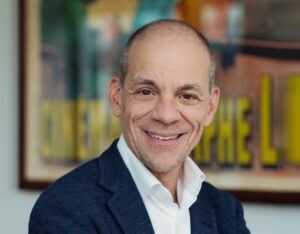
Daghlian moved to O’Melveny & Myers, while Downey (pictured) moved to Kirkland. ‘It opened everybody in Europe’s eyes to the wider market and showed there was a more developed way of doing things on the US side,’ says Downey. She adds: ‘The market had to grow up a bit after the financial crash.’

Banks also became active sellers, with Coller acquiring a £1bn portfolio from Lloyds in 2012 as part of post-crisis deleveraging. 

‘It was one of the first of a wave of managed funds-style transactions,’ says Paul Koffel, a partner at Coller. ‘Sponsors had moved beyond the stigma of not wanting secondaries and were aware of the need for liquidity, but it was a much more tactical way of defensive selling. Strategic selling came later.’ 

By 2017-18, the dynamic shifted again. GP-led secondaries became a commoditised business, with bigger transactions, more financing and a growing professionalisation of the market; these trends were further exacerbated by hikes in interest rates and the state of capital markets as a route to exit.

‘Top-tier GPs began to use these techniques to continue to own and manage prize assets through what is now broadly known as continuation vehicles (CVs),’ Bertrand-Delfau recalls. As these GP-led secondaries became mainstream, deal sizes began to climb and recourse to different financing options expanded, together creating repeat and scalable work for advisers. 

Looking forward

Recent macroeconomic conditions—higher interest rates, subdued exit markets and geopolitical instability—have reinforced the role of secondaries as a liquidity tool. The Jefferies report estimates that nearly 80% of the top 100 sponsors by AUM completed a continuation vehicle transaction in 2025. 

‘The secondary universe is developing specialisms,’ Koffel (pictured) says, pointing to the ‘turbo-charged’ growth of GP-led deals across the market spectrum. That specialisation is feeding demand for lawyers.
‘Prior to the interest rate rises of 2023, there were a handful of lawyers doing this work … suddenly all law firms needed this expertise to help clients access liquidity,’ says Theo Varcoe of Bishopsgate Search. 

The strategy is also spreading across asset classes. ‘The whole secondaries market is innovating again. That is part of the reason I unretired,’ Daghlian jokes. Credit GP-led secondaries have tripled in volume since 2024, while infrastructure and real estate are emerging as newer frontiers.

‘The infrastructure market has remained buoyant and pricing on exit has continued to be quite strong,’ Downey says, adding: ‘However, as pressures build on exit, the market sees infrastructure secondaries space as a viable solution and I don’t see that changing.’

Notable partner moves in the secondaries market since 2021

  • Aleks Bakic, Akin to Kirkland (London, 2022)
  • Jacqueline Eaves, Kirkland to Goodwin (London, 2023)
  • Ed Ford and Sacha Gofton-Salmond, Travers Smith to Simpson Thacher (London, 2023)
  • Timothy Clark, Goodwin to Freshfields as global co-head secondaries (New York, 2023)
  • Alex Chauvin, Ropes & Gray to White & Case (London, 2024)
  • Joanne Mak, Kirkland to Simpson Thacher (London, 2025)
  • Simon Saitowitz, Ropes & Gray to Weil (London, 2025)
  • Dan Drabkin, Clifford Chance to Sidley (New York, 2026)

[email protected]

DLA Piper promotes more than 60 partners as firm shifts to single leadership structure

DLA Piper has promoted 62 new partners globally, with the London and New York offices counting the most and second most new partners respectively, as the firm makes moves towards further integration after more than two decades as a verein.

The total number of promotions is down only slightly, from 65 last year, with a consistent spread across both regions and practices.

The US again saw the most promotions, with 24 – one up from 23 last year. Continental Europe was again in second place, though its number of promotions dipped from 20 to 14, and the UK was again third, with nine promotions this year compared with 12 last year.

In addition this year, six new partners were made up in Canada, and five in Australia.

Comparing promotions across practice areas, the firm’s corporate department again saw the highest number of new partners, with 20, up from 19 last year. Litigation was in second this year with 12 partners, down from 13 last year, while finance slipped from second place last year, with 12 new partners, to third this year, with eight.

The firm also promoted seven new partners in intellectual property and technology, five in real estate, four in regulatory and government affairs, and two each in employment, investment funds, and tax.

The promotions are the first new partners DLA has made up since the firm’s partners voted last month to approve plans to dissolve its long-standing Swiss verein structure and introduce a new global leadership structure, with a team led by Frank Ryan as global chair and global co-CEO and Charles Severs as global co-CEO. The global structure will sit above the firm’s US and international LLPs, which it will retain.

Commenting on the promotions, Ryan said: ‘Our new partners have the judgment, solutions-oriented mindset, and collaborative approach that clients expect of DLA Piper. They’ve earned the trust of clients and colleagues alike, and we’re proud to welcome them to the partnership.’

Severs added: ‘This is a special moment for each of our new partners, and we congratulate them on an important achievement. Their promotions demonstrate DLA Piper’s depth of talent across the world, the value and quality we offer our clients, and the continued evolution of our global firm.’

The promotions came into effect on 1 May.

[email protected]

DLA Piper new partners in full:

UK

  • Mark Briggs, litigation and regulatory, London
  • Liam Freeman, corporate, London
  • Ian Graves, real estate, Birmingham
  • Ben Collins, corporate, Leeds
  • Clare McLaren, corporate, London
  • Katie Palms, litigation and regulatory, London
  • Jonathan Paines, corporate, Manchester
  • Philip Povey, finance, London
  • Natalie Thorn, finance, London

US

  • DK Donghyun Kim, corporate, Atlanta
  • Lara Assaf, investment funds, Austin
  • Zac Loney, intellectual property and technology, Austin
  • Oriana Montani, real estate, Boston
  • Nick Beard, real estate, Chicago
  • Haley R. Curry, regulatory and government affairs, Dallas
  • Greg Young, finance, Los Angeles
  • Joseline Rodriguez, corporate, Miami
  • Maximilian Viski-Hanka, investment funds, Miami
  • Orley Granot, finance, New York
  • Dan Kagan, regulatory and government affairs, New York
  • Neal Kronley, litigation, New York
  • Carina Meleca, corporate, New York
  • Steven M. Rosato, litigation, New York
  • Dylan Caplan, corporate, Philadelphia
  • Rachel A.H. Horton, litigation, Philadelphia
  • Gina H. Lee, corporate, Raleigh
  • Kevin England, tax, San Diego
  • Joseph Davison, litigation, Seattle
  • Bianca Jean LaCaille, corporate, Seattle
  • Thomas E. Daley, regulatory and government affairs, Washington DC
  • James Patrick McGraw, corporate, Washington DC
  • Peter Shroyer, regulatory and government affairs, Washington DC
  • James Stewart, intellectual property and technology, Washington DC

Europe

  • Alexander Severance, litigation and regulatory, Aarhus
  • Diederik Schuurmans, corporate, Amsterdam
  • Péter Szajlai, corporate, Budapest
  • Conor McEneaney, intellectual property and technology, Dublin
  • Barry Noonan, real estate, Dublin
  • Nils Grunicke, employment, Hamburg
  • Dr Marcus P. Lerch, litigation and regulatory, Hamburg
  • Francisco Bachiller Ströhlein, corporate, Madrid
  • Hamza Akli, litigation and regulatory, Paris
  • Louis-Augustin Jourdan, tax, Paris
  • Nicoletta Alfano, finance, Rome
  • Emil Alexanderson, real estate, Stockholm
  • Anders Svensson Clark, finance, Stockholm
  • Paweł Turek, finance, Warsaw

Canada

  • Lee K. Axford, corporate, Edmonton
  • Rob D. McDonald, intellectual property and technology, Edmonton
  • François Tremblay, corporate, Montréal
  • Cristina Mihalceanu, intellectual property and technology, Toronto
  • Rosalie A. Clark, litigation, Vancouver
  • Tyson Gratton, corporate, Vancouver
  • Middle East and Africa
  • Adrianus Schoorl, litigation and regulatory, Dubai
  • Brian Malcomess, corporate, Johannesburg

APAC

  • Edward Eisdell-Moore, intellectual property and technology, Auckland
  • Allen Xu, intellectual property and technology, Beijing
  • KC Tai, litigation and regulatory, Hong Kong
  • Maddison Hardiman, corporate, Melbourne
  • Sarah Birkett, intellectual property and technology, Melbourne
  • Matthew Roberts, finance, Perth
  • Conor Dolphin, corporate, Sydney
  • Mitch Robertson, employment, Sydney