PEP passes $4m at Winston & Strawn in final financial results before Taylor Wessing merger

Winston & Strawn has posted steady growth in its final set of financial results ahead of its merger with the UK arm of Taylor Wessing, set to go live in May, with an 8% increase taking its top line to $1.37bn.

Profit per equity partner (PEP) was 15% to $4.05m – crossing the $4m mark for the first time, and up from $3.5m in last year’s results. Net income rose 6.4% to $436.5m, while average partner compensation climbed nearly 9% to $2.04m, and revenue per lawyer was up 8.3% to $1.48m.

The firm also increased its billing rates by 10% for a second consecutive year, with the number of clients billed up 2%, to 3,503, and a 0.6% to billable hours. Overall realisation improved from roughly 76% to 77.7%, while billing realisation, the collection rate on billed invoices, reached 97%.

These results were underpinned by a slightly higher share of revenue for transactional work, with the firm taking $687.8m from corporate and deal work, compared to $537.4m in litigation revenue. Both figures are up on the previous year, where they stood at $626.8m and $484.6m respectively.

High-value deals included advising long-standing client Chart Industries on its $13.6bn acquisition by energy tech company Baker Hughes Company. Notable disputes work included securing a settlement on behalf of Michael Jordan’s 23XI Racing and Front Row Motorsports in litigation against sports giant NASCAR over its charter system. The firm also saw final approval for the $2.78bn class action settlement it won from the National College Athletic Association (NCAA) for Division I athletes, ending the organisation’s long-standing compensation ban.

As the firm prepares for a transatlantic merger that will take combined headcount beyond 1,400 lawyers, Winston saw a slight reduction in personnel over the year, with total lawyers edging down from 932 to 928. Equity partner numbers also fell, down 7.5% to 108.

In London, headcount remained at roughly 30 pre-merger, as the firm added four partners in 2025.

In February, Adam Howard joined from Skadden to co-lead the firm’s capital markets and public company transactions practice, and structured finance partner Aparna Sehgal joined from Dechert, where she served as structured finance and real estate finance head. In June, financial innovation and regulation partner Yulia Makarova joined from Cooley and real estate finance partner Richard Semple joined from Goodwin in September.

However, the firm has seen some recent departures, with a total of 12 litigation partners leaving for King & Spalding across Dallas, Charlotte and Washington DC between February and March this year. They included former global co-chair of Winston & Strawn’s general litigation practice LeElle Slifer and Danielle Williams, former co-chair of the firm’s intellectual property practice and Charlotte office head.

They were followed in April by leveraged finance duo Jeff Cole and Brian Jansen, who joined King & Spalding’s Dallas office. Cole previously served as Texas office chair of Winston’s debt finance practice group.

The merger with Taylor Wessing, approved by partners in January, is expected to complete between May and June, and will create a combined firm with revenues of around $1.65bn. Taylor Wessing’s UK LLP reported a 15% increase in revenue to £281.5m for the year ending 30 April 2025.

In late March, Winston Taylor LLP was formally registered as an overseas limited liability partnership based in Delaware, according to Companies House filings.

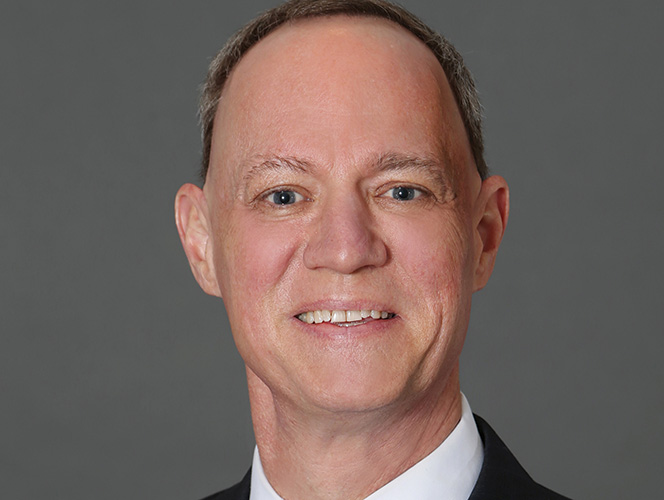
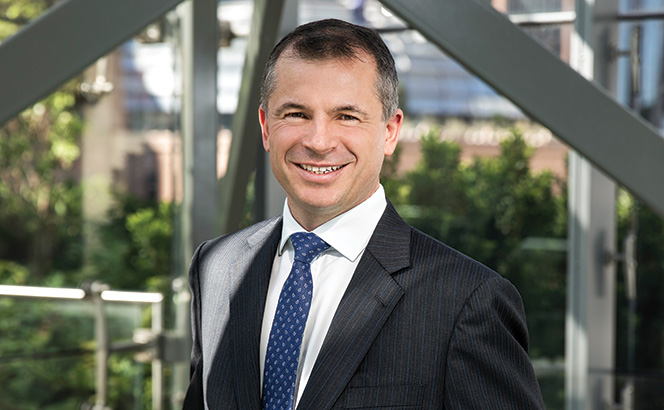
The merged firm will be led by Winston chairman Steve D’Amore (pictured) as chair, and Taylor Wessing UK managing partner Shane Gleghorn as Europe and Middle East managing partner.

[email protected]

Eversheds Sutherland promotes 25 to partner in 2026 round, as host of UK firms announce promotions

Eversheds Sutherland has made up 25 lawyers to partner across its business outside the US.

All of the promotions are in the firm’s EMEA partnership, with almost two-thirds (16) in offices across the UK.

The tally is marginally up on 2025, when Eversheds International promoted 23 new partners, but lower than its record round of 40 promotions in 2024.

Forty percent of the new partners are women, compared with 52% last year.

In the UK, Eversheds’ London office gained three new partners, while Cardiff and Birmingham each gained four partners apiece. Leeds and Manchester both gained two new partners, with one promotion in the Nottingham office.

Four of the promotions are in the Middle East, with continental Europe offices including Munich, Rotterdam, Lisbon and Sofia all gaining newly promoted partners.

By practice, corporate finance gained the most promotions, with seven new partners, litigation picked up six, with the remainder split across employment and pensions, commercial advisory and real estate.

The promotions, which come after Eversheds US made up six new partners from 1 January, will come into effect on 1 May 2026.

Chief executive Keith Froud (pictured) said: ‘Our newly promoted partners exemplify exceptional talent, deep client commitment and market-leading capability. Together, they reinforce our position as a firm that is powerful globally, strong locally, delivering seamless support to clients wherever they operate.’

‘My congratulations go to our 2026 cohort on this well-earned achievement for their outstanding contribution to our clients and our firm.’

News of Eversheds’ promotions comes as a host of UK firms have released details of their 2026 partner promotion rounds.

Fieldfisher has added 12 new partners across its offices in the UK and Europe, with London picking up the lion’s share with five new partners. The remainder are spread across Manchester, Dublin, Madrid, Hamburg, Brussels and Barcelona.

Meanwhile, Mishcon de Reya has promoted 14 new partners in the UK, including four in its employment team, and three in both its commercial real estate and dispute resolution practices. The firm has also promoted 16 lawyers to legal director and 28 to managing associate.

Elsewhere, Charles Russell Speechlys has made up nine to its partnership, spanning five across its UK offices, three in France and one in Italy. The majority of the promotions are in its private client practice, which gains six in new partners.

Other UK firms making promotions include Browne Jacobson, which has made up six new partners and promoted one new legal director, and Harbottle & Lewis, which has added three lawyers to its partnership and promoted two lawyers to a new legal director role.

[email protected]

Eversheds Sutherland International new partners in full:

United Kingdom

  • Chris Archer, corporate, London
  • Thomas Howell, corporate, Leeds
  • Griff Jones, corporate, Leeds
  • Thomas Plant, corporate, Birmingham
  • Rob Worsfold, corporate, Birmingham
  • Lis Highet, commercial, Nottingham
  • Laura D’Arcy, employment, Manchester
  • James Ellis, pensions, Birmingham
  • Jen Green, pensions, Cardiff
  • Sarah Lown, pensions, Manchester
  • Ray Hetherington, construction, Birmingham
  • Angharad Hurle, commercial dispute resolution, Cardiff
  • Karen Mitchell, real estate litigation, London
  • James Molland, construction, Cardiff
  • Fiona Hammett, core real estate, Cardiff
  • Chris Mullings, core real estate, London

EMEA

  • Adite Aloke, corporate, Dubai
  • Faris Al-Louzi, corporate, Riyadh
  • Thomas Farkas, commercial, Munich
  • Teresa Pessoa e Costa, commercial, Lisbon
  • Robbert Santifort, commercial, Rotterdam
  • Taoufik Yekhlef, employment, Rotterdam
  • Mostafa Ihab, commercial dispute resolution, Riyadh
  • Philip Kiossev, commercial litigation, Sofia
  • Emma George, core real estate, Dubai

Revolving Doors: Weil hires Kirkland secondaries partner as Orrick targets Cadwalader again

Weil has continued to build its European PE offering, bringing a secondaries-focused Kirkland & Ellis partner into its London private equity practice.

Charles Cooper-Isow has joined the firm after nearly four years at Kirkland, where he joined as a partner in 2022 after six years as an associate at Fried Frank. He brings particular expertise in secondaries, where he has experience advising sponsors and portfolio companies on a range of transactions.

Corporate chair Michael Aiello said: ‘Weil’s cross-border secondaries platform is growing rapidly with innovative lawyers like Charlie strengthening our best-in-class private capital platform in response to client demand for sophisticated secondaries advice and seamless multijurisdictional execution.”

Global PE group co-head Marco Compagnoni added: ‘We are delighted to be expanding our top-quality platform, with our existing star talent Simon Saitowitz now joined by Charlie, who further deepens our market-leading capability in complex secondaries deals and who strengthens our multidisciplinary Private Equity team, particularly on GP-led work.’ 

Saitowitz joined Weil from Ropes & Gray last April. Since then, it has made a raft of PE hires in Germany, including Sebastian Pauls, now co-managing partner of the firm’s German offices, who joined from Latham in October, and Kamyar Abrar, who rejoined in February as German PE cohead after six years at Willkie.

Orrick, Herrington & Sutcliffe has targeted Cadwalader again for its latest finance hires in London, with asset-backed securities specialists Suzanne Bell and William Bibby both set to join the firm as partners.

Bell, who is recognised by Legal 500 as a leading partner for securitisation, has been at Cadwalader for over 13 years, making partner in 2019. Bibby joined Cadwalader one year ago as a special counsel, leaving Linklaters as a managing associate after five years.

The pair are the latest lawyers to leave Cadwalader for Orrick after the firm brought over a team of nearly 40 lawyers last autumn, spread across offices in London, New York, Washington DC, and Charlotte. In London, this group included David Quirolo, a Legal 500 Hall of Famer for securitisation.

‘The integration of our new CLO team has exceeded our expectations by every measure – including continuing their streak of first-to-market transactions,’ said global structured finance group leader Leah Sanzari. ‘With Suzie and Will, we’re continuing to add top talent to help our clients pioneer the innovative financial products of the future.’

The departures come as Cadwalader approaches its merger with Hogan Lovells, with a partner vote due this spring, and, pending approval, completion expected for the summer.

Meanwhile, Proskauer has hired real estate finance partner Usman Khan from McDermott Will & Schulte. Khan spent almost three years at McDermott after joining in September 2023 from Kirkland.

With experience advising a range of private equity funds on real estate assets, Khan’s move reflects the latest within the real estate finance and PE market in London, which has seen higher traffic of late due to private capital’s increasing investment in the asset class.

“Usman’s addition marks an important step in the continued expansion of our Global Finance platform. His extensive experience across real estate finance, capital deployment and cross‑border matters strengthens our ability to support clients across complex credit situations,’ said global finance co-head Philip Bowden, who joined Proskauer from A&O Shearman in July 2024.

Also in London, Vinson & Elkins has grown its transactions practice with its hire of Kirkland tax partner Ed Moberly.

Moberly said of his move: ‘I was attracted to Vinson & Elkins because of its exceptional reputation for dealmaking, particularly its success with complex, large-scale energy and infrastructure projects, its longstanding commitment to London, and its focus on expanding its global transactions practice.’

Norton Rose Fulbright has hired economist Stephanie Pantelidaki as a non-legal partner and head of its transfer pricing for its EMEAPAC practice. Based in London, Pantelidaki joins from Baker McKenzie, where she spent the last four years as partner in the firm’s tax team.

Elsewhere in the City, Russell-Cooke has hired disputes partner Joel Leigh from Howard Kennedy, where he has spent the last twelve years.

Ahead of its transatlantic merger with Ashurst, which partners at both firms approved earlier this week, US firm Perkins Coie has announced it will open a representative office in Shenzhen.

The office will be led by chief representative and managing partner Bing Ai, and representative and litigation partner Wei Yuan. Both are currently based in the firm’s San Diego office. The opening is the firm’s first since it launched its London practice in 2024, and marks a return to China after it shuttered its offices in Shanghai and Beijing, also in 2024.

Also in China, Chinese-founded firm JunHe has hired Kirkland capital markets partner Ryan Choi in its Hong Kong office. Choi, who began his legal career as a trainee at JunHe in 2009, rejoins after eight years at Kirkland.

In Paris, Bird & Bird has hired a team of employment lawyers from Dechert, including partners Philippe Thomas and Thibault Meiers, as well as an associate. The departures leave Dechert with no employment partners in the French capital, according to the firm’s website.

Back in the UK, Clyde & Co has hired DAC Beachcroft legal director James Davies as a partner in Bristol. Davies, who’s practice focuses on defendant malpractice claims, will join Clyde & Co’s healthcare team.

Shakespeare Martineau has hired construction partner Jonathan Pawlowski from Howard Kennedy in London, while Freeths has hired Womble Bond Dickinson managing associate Christopher Stephens as a real estate partner in its Bristol office.

[email protected]

Sidley London revenue jumps by a third as firmwide PEP hits $6m

Revenue in Sidley Austin‘s London office climbed by almost a third year-on-year in 2025, rising by 32% to hit $299m.

The increase, which came against a 9% hike in global revenue to  $3.74bn, means the firm’s London office alone generated enough fee income to sit within the UK top 40 last year. London turnover for 2024 stood at $226.7m.

London managing partner Tom Thesing told LB that the scale of the turnover increase was rooted in a ‘broad based contribution from different practice areas and a diversified business model.’

‘There was a high level of activity across the board,’ he continued, noting transactional, regulatory, disputes and restructuring as key areas. ‘This base reflects the investment the firm has made into the London office.’

The firm serves more than 80% of its top 50 clients from its London office, with more than 90% of its top 50 London clients using two or more London practices in 2025. ‘It’s crucial that we can serve clients, regardless of whether they end up listing in New York, London or in Europe,’ said Thesing.

Since kick-starting a wave of City investment in January 2023, the Chicago-founded firm has added 26 lateral partners, and has made up 10 partners internally. The majority of the laterals have been in capital markets, private funds, and leveraged finance, where the firm hired a five-partner team from Latham & Watkins in 2024.

It has continued to add more partners from Latham, hiring high yield partners Scott Colwell and Patrick Kwak in October that year and finance partner Tania Bedi in December. Last April, Sidley brought London corporate co-chair David Stewart into the firm, also from Latham.

Globally, profit per equity partner (PEP) jumped 15.4% from $4.6 to $6m in 2025 – a significantly larger increase than last year’s 10.3% increase

Confirmation of the growth comes as Sidley prepares to introduce a new salaried partner tier in 1 June. Commenting on the new tier Thesing said: ‘We felt it was important to show the market we can develop and that we have a progression path that’s consistent with other firms in the market.’

Thesing said hiring would continue as the firm looks to bolster areas where there is rising client demand. ‘We’ve seen clients turn to us for matters surrounding international trade and sanctions in greater volumes that in the past,’ he said, noting ongoing geopolitical volatility.

Sidley has continued to make major hires in London into 2026, with restructuring duo Philip Hertz and Melissa Coakley joining from Clifford Chance last month. In addition, the firm added Latham’s former global real estate co-chair Jeremy Trinder in January and UK capital markets co-head James Inness last month.

The firm has also stayed active on its US home turf, bringing Cravath capital markets partner Scott Bennett into its New York office earlier this month.

‘The lateral market remains somewhat disrupted so we believe there will be more moves,’ Thesing said. ‘Where our clients are looking to grow their businesses, we will look to grow alongside them.’

The firm’s global partner promotions round, announced in December, saw three lawyers added to the partnership in London, in private equity, litigation and global finance. The firm promoted 29 partners globally, down from 38 in 2024.

[email protected]

Ashurst and Perkins Coie partners vote through 3,000 lawyer transatlantic merger

Paul Jenkins

Partners at Ashurst and Perkins Coie have voted through their transatlantic merger, with the union set to go live in July this year.

Ashurst Perkins Coie will be a globally integrated firm with combined revenues of approximately US$2.8 billion and 3,000 lawyers worldwide, with the deal bringing together Perkins’ established US offering with Ashurst’s Anglo-Australian presence.

The vote ends a decades-long hunt for an established footprint in the US for Ashurst, with the merged firm housing flagship hubs in Seattle, London, Sydney and New York.

The combined firm will focus on tech, energy and infrastructure and financial services and will be jointly led by Perkins managing partner Bill Malley and Ashurst CEO Paul Jenkins, who will become global co-CEOs.

Malley said: ‘Our partnership’s approval reflects a shared belief that combining to form Ashurst Perkins Coie will create a truly differentiated global legal platform – one with the scale, sector depth, and technological leadership to meet our clients’ increasingly complex, cross-border needs.’

Jenkins added: ‘This vote confirms the strong alignment between our firms and our joint ambition for the future. Through our extensive engagement with partners, our people, and clients since announcing our intention to combine, it has become clear that our two firms are a natural fit. Our complementary expertise across sectors and practice areas, together with our shared commitment to innovation, will deliver greater scale and global reach for our clients, while creating a compelling platform for top legal talent.’

The combination was announced in mid-November, around nine months after the pair started talking. It has been billed as a merger of equals with Ashurst reporting revenue of $1.319bn for 2024-25, compared with Perkins’ $1.259bn, and with profits per equity partner also relatively evenly matched at $1.8m for Ashurst and $1.9m at Perkins.

However, two-thirds of the combined firm’s lawyers will come from Ashurst, while Perkins’ revenue per lawyer figure of $1.18m is significant higher than Ashurst’s, which stands at $617,000.

Ashurst has long sought a US presence, holding talks with a number of firms in the past including Latham & Watkins. Legal Business reported in 2022 that the firm was once again on the hunt for a partner across the Atlantic, and other names that it has been linked with in the past include Sidley, Mayer Brown and White & Case, with more recent names touted including Sheppard Mullin and Nixon Peabody.

[email protected]

HSF Kramer leads on £1.4bn Ivy empire sale

Herbert Smith Freehills Kramer and Norton Rose Fulbright have taken the lead roles as Richard Caring sells a majority stake in his UK hospitality empire to Abu Dhabi-backed luxury lifestyle investor DIAFA, in a deal valued at £1.4bn.

The deal sees the UAE investor add some of London’s most recognisable high-end hospitality brands to its portfolio, including the Ivy restaurant chain, The Birley Clubs, including private members’ clubs Annabel’s and Harry’s Bar, and luxury restaurant portfolio Caprice Holdings, home to Sexy Fish, Scott’s and Balthazar.

HSF Kramer advised Caring’s hospitality group, fielding a London-based team led by senior corporate M&A partner Alex Kay, also including global head of tax William Arrenberg.

Norton Rose Fulbright advised the acquirers, with a team led by led by corporate partner and Legal 500 mid-market private equity leading partner Sophie O’Conner and corporate M&A and securities partner Nicolas Sirtoli in London, and corporate partners Zubair Mir and Shazi Askarpour in Dubai.

HSF Kramer has previously advised Caring, dubbed ‘the King of Mayfair,’ on multiple occasions, including on the 2022 sale of 25% of his business to Sheikh Hamad bin Jassim bin Jaber bin Mohammed bin Thani Al Thani (HBJ), the former Qatari prime minister and co-owner of the Maybourne Hotel Group, which runs Claridge’s Hotel. The firm also advised Caring when he rolled the majority of his shares of Soho House & Co Inc.’s common stock last August, when Soho House was taken private.

DIAFA is an affiliate of International Holding Company (IHC), chaired by Abu Dhabi royal Sheikh Tahnoon bin Zayed al-Nahyan, the United Arab Emirates’ national security adviser. Its portfolio includes global brand the Azumi Group, owner of restaurants Zuma and ROKA, since DIAFA acquired a 49% stake in Azumi last October, advised by White & Case.

Caring will remain as executive chairman of the group, according to a statement, working alongside DIAFA, led by group CEO Ravi Thakran, former chair of LVMH’s Asia business and founder of L Capital Asia, the private equity arm backed by LVMH and Groupe Arnault.

‘I am delighted to partner with the visionary DIAFA team, and I am confident that we will bring our world-class brands to new markets and continue to elevate our vision for hospitality to exciting new heights,’ Caring said. ‘DIAFA’s commitment to investing in exceptional luxury brands makes them the right partner, and I look forward to building something truly enduring together.’

Caring and Thakran will lead the next phase of global expansion, including the opening of Annabel’s in New York. The group is also expected to explore new openings in the United States and other international markets for the Ivy Brasseries.

[email protected]

Five law firms win appointments on FCA’s ‘skilled person’ investigations panel

FCA SIGN

The Financial Conduct Authority (FCA) and the Prudential Regulation Authority (PRA) have completed a refresh of their ‘skilled person’ investigations panel, with five major law firms appointed for four-year terms.

The panel is used by the financial regulators for independent reviews – known as s166 reviews – into the conduct and activities of regulated firms.

The panel is organised into 12 separate subject categories or ‘lots’, covering governance, risk management, financial crime, cyber risk, threat intelligence, and trade and transaction reporting, among others.

A line-up of leading accountancy, audit and management consultancy firms have been appointed, as well as five leading law firms.

Eversheds Sutherland has secured appointments on Lot A (client assets and safeguarding), Lot B (governance, accountability and culture), Lot D (conduct of business), Lot E (financial crime), and Lot J (information and communications technology and cyber risk and resilience management).

DWF has four appointments across governance, accountability and culture; controls and risk management frameworks; market abuse; and prudential.

The other three law firms on the panel are A&O Shearman with three lot appointments, Osborne Clarke with two, and Linklaters with one.

The Big Four accounting firms all secured numerous appointments, with PwC and KPMG being appointed to all 12 lots and Deloitte and Ernst & Young across 11.

The updated panel was effective from 1 April this year, and will run until 31 March 2030.

A&O Shearman and Eversheds Sutherland were also on the previous panel line-up, which was effective from 2022.

Commenting on the appointments, DWF head of regulatory consulting Harry Howe said:’ We are very pleased to be appointed to these panels and to get recognition for the depth and quality of our regulatory, risk and governance expertise. We look forward to supporting financial services firms and the regulator alike in the years ahead, whether through on- or off-panel appointments.’

[email protected]

Ropes & Gray adds new private equity partner as Milan office grows

Ropes & Gray has continued to expand in Italy with the hire of a new private equity partner into its recently launched Milan office.

Fabrizio Scaparro is joining from Italian firm Giovannelli & Associati – which he co-founded in 2013 – alongside PE counsel Paolo Pagani. 

He advises on a range of private equity deals, both domestic and cross-border, including leveraged buyouts and minority investments in public and private companies, acting for both financial sponsors and multinational corporates.

He also has experience in debt restructurings and IPOs. Prior to founding Giovannelli he spent time at firms including Simpson Thacher, Ashurst and Pavia & Ansaldo.

Giovannelli is currently ranked in Tier 3 for private equity in Italy by Legal 500, where Ropes is recognised as a firm to watch. 

Since Ropes launched its Milan office in September last year with a three-partner team from Latham & Watkins, led by the well-regarded Cataldo Piccarreta, the firm has also added corporate partner Alessandro Capogrosso from PedersoliGattai.

The hire of Scaparro means the office now has 13 lawyers, according to the firm’s website, including partners Giorgia Lugli and Luca Maranetto, who also joined from Latham.

Piccarreta, who is primarily based in London, said: ‘Fabrizio is very experienced with an impressive track record, and we are incredibly happy that he will lead, together with Giorgia, Alessandro and Luca, our private equity team in Milan. The arrival of Fabrizio and Paola adds further depth to the team’s capabilities.’

The hire is the latest in a series of European PE plays from Ropes, which saw the firm establish its first continental office in Paris early last year. Since it tapped Clifford Chance partner Fabrice Cohen to lead its French outpost, the US firm has made a total of five more partner hires in the city, with two more partners joining from Linklaters in February and a trio moving from Latham last month.

Ropes’ European PE practice is co-led by four partners across the London, Paris, and Milan offices, with John Newton and Libby Todd in London, Piccarreta and Cohen meeting weekly to ensure the offices act as a single platform. This focus on Europe reflects increasing flows of US capital, with the firm following clients including top-level sponsors, funds and PE houses investing in the continent.

‘When you look at who is acquiring and investing in Europe, it’s consistently a handful of global funds. You’ve got to be very aware of how they’re expanding and constantly trying to match it,’ Newton previously told LB.

The last two years have seen a number of firms establish or consolidate their presence in Milan, with Fieldfisher opening an independent office there in 2024 after cutting ties with its Italian partner firm, while Bird & Bird expanded with two finance partners from Hogan Lovells, which in turn recruited from Orrick and White & Case. Latham has been in the Italian city since 2008.

[email protected]

‘You don’t need to know the answers to everything’ – Monzo’s legal chief on AI, crisis control and staying curious

Stephanie Pagni, chief legal and administrative officer at Monzo, has always liked to keep her career moving, which makes the challenger bank a perfect destination for her.

After finishing her master’s in law in 1994, Pagni initially opted against a career in law, joining a trading desk at a derivatives boutique, before moving to SBC (now UBS) and then Credit Suisse in banking roles.

Only at Credit Suisse did she decide she wanted to qualify as a lawyer after all, convincing the GC that the bank should sponsor its own training contracts, a move that led her to legacy Allen & Overy to do a litigation seat.

‘I loved A&O. It was culturally a fabulous firm to work with, with amazing lawyers, very down to earth, talented, and smart. We ran some big cases, travelled all over the Middle East, had some really high-profile clients, and I enjoyed all the work we did in court.’

In 2005, she decided to move in-house and joined Barclays Bank, taking up a position as head of litigation at the global retail bank.

‘I knew in my heart of hearts that I would go back in-house one day, because I love being close to the business and helping support execution of the strategy,’ she tells LB.

The move ultimately led to 16 years at Barclays – a long stint that ‘felt like multiple careers, even though it was in one organisation.’ From consumer banking to the wealth management division, to investment banking, Pagni saw the gaps in her experience and gravitated towards the areas where she could learn the most.

‘I knew in my heart of hearts that I would go back in-house one day’

Her time spanned everything from the 2008 financial crash to the LIBOR investigations, which Pagni was directly involved in.

The investigations saw the banking industry come under intense scrutiny, with trust in the sector hitting rock bottom when, fresh from the financial crisis, it emerged that a number of major banks had been manipulating the London Interbank Offered Rate (LIBOR). In 2012, Barclays was fined £290m for its part in the rate manipulation.

‘It taught me a lot about crisis management. In common with the fallout for a number of other globally systemic banks at that time, there were multiple global regulators and prosecutors around the world, all investigating.’

She continues: ‘It was a period of intense scrutiny, with multiple investigations that took many years to resolve. The accountability rules changed, which prompted a cultural transformation in banks. It was a good thing for customers, because it became about refocusing on good outcomes and mission/purpose.’

Five years ago, Pagni made the switch from traditional banking to join fintech Monzo, which was only six years old at the time. Keeping the customer front and centre remains a priority for the bank, particularly as the industry shifts to adapt to digital banking.

‘When I got the call from Monzo, it just seemed like a natural transition and next challenge. I was watching them from the sidelines, and everybody had been increasingly impressed with their journey to make money work better for customers. It just seemed like the obvious next move when I got that call to join.’

‘We spend a lot of time researching the day-to-day customer pain points, then building great products and solutions to solve those. That co-creation creates deep emotional connection. It’s the first time I ever worked for a bank where customers talk about loving their bank.’

‘It was a really good test for me, that uncomfortable feeling where you step outside your comfort zone’

Monzo has been profitable since 2024 and in 2025 hit £1.2bn in revenue.

As well as the legal team, Pagni also oversees public policy and government relations, sustainability, and corporate governance at Monzo. Since joining in 2021, she has grown the legal team to more than 30 full-time lawyers, meaning she no longer has to get her sleeves quite as rolled up as when she first joined.

‘When I came here, that was one of the most enjoyable things about it initially. I was doing a variety of more detailed work I hadn’t done for some years, by virtue of having had a much larger team and having to lead through others. It was a really good test for me, that uncomfortable feeling where you step outside your comfort zone.’

AI is one area offering both in-house and firms plenty of opportunity to step outside their comfort zone, and Pagni doesn’t mince her words when she says the industry is ripe for an overhaul.

‘The long-term winners will be the firms that lean into business model change and transformation,’ she says, referring to how law firms need to adapt the way they work to focus more on outcomes than hours worked.

Pagni’s own team has enthusiastically adopted AI and been experimenting with Gemini, as well as their own internal AI large language models.

‘Lots of firms are using AI for productivity gains, and what I haven’t seen yet is how that translates into value for clients.’

‘Any new technology prompts a bit of a review of your entire business model, because if you’re starting to bill not on hours spent by individuals, but by outcomes on project and value add, then that does require a change in the way you’re measuring your internal value metrics as well.’

When it comes to hourly billing, Pagni is clear: ‘Hours spent is not how we measure our value or impact to our business, so it doesn’t really work for law firms or partners to use a misaligned metric output.’

‘Hours spent is not how we measure our value or impact to our business’

Pagni is open about the challenges she has faced keeping up with the company’s rapid growth and change in the still young digital banking world and believes lawyers need to be more confident with change and uncertainty.

‘Lawyers are taught to try to know the answers to everything. It’s a big psychological shift to say “it’s okay, you don’t need to know the answers to everything”. You need to approach the problem from first principles, be curious and work together. But industry and customer demands are moving so fast, which is what makes our work so exciting.’

She continues: ‘I say to the lawyers all the time: “I don’t know everything. I don’t know all the answers”. But provided we remain curious to learn and bring our problem-solving skills to bear to create opportunity for the business we are doing our role. We all also need to get comfortable with ambiguity given the pace of change is accelerating.’

Her enthusiasm and excitement for her work are tangible, and she maintains that this enthusiasm is the most important trait for anyone looking to start a career in law.

‘The number one thing is to enjoy the industry in which you’re working. And that’s why I say to even young lawyers now starting out, who are deeply immersed in the law, ‘Why do you want to practice in that area? What is it about that area that you love?’ If you’re interested in that business and the way that business is evolving, you’ll be a better lawyer because, ultimately, you should aspire to be a business partner who is great at navigating legal challenges.’

Pagni also stresses the importance of supporting her team and maintaining her own work-life balance while juggling a high-flying career in law.

She manages to squeeze in time for four dogs, tortoises and chickens, as well as reinvigorating an old disused vineyard in Italy alongside her role at Monzo and spending time with her family.

‘I love spending time with the animals. I just have a big affinity with nature. I find it a way to de-stress.’

Pagni’s tips for success:

‘The number one thing is to enjoy the industry in which you’re working. If you’re interested in that business and the way that business is evolving, you’ll be a better lawyer.’

‘Careers should be built with a long-term perspective in mind. There’s going to be a lot of evolution in your career. Some paths will seem lateral rather than upwards but all of your experience will be valuable in making you a better lawyer.’

‘I would encourage people to focus on getting the structure and their working pattern around their life needs which obviously evolve over time, because that also needs to work for the organisation and for the individual.’

‘Be hard on problems, not people. People need to bring their whole selves to work; it’s very important for people to feel comfortable.’

‘Stay curious and keep learning to stay relevant. Everything is changing rapidly and adaptability is a critical life skill.’

Career timeline

1994-1997: Sumitomo Bank Capital Markets & SBC/UBS

1997-2001: Credit Suisse Financial Products

2001-05: Senior Associate, Allen & Overy

2005-2009: Senior Legal counsel Global Retail and Corporate Banking Barclays Bank PLC

2009-2011: Head of litigation, Global Retail & Corporate banking, Barclays Bank plc

2011-14: Managing director litigation services corporate & investment banking, Barclays capital

2014-17: Managing director, global head of litigation & investigations, Barclays Bank plc

2017-21: General counsel, Barclays UK & Global Consumer Bank 

2021-25: Group GC and Co Sec, Monzo Bank

2025-present: Chief Legal and Administrative officer, Monzo Bank

Monzo – key facts

Size of legal team: 30

Total company revenue: £1.2bn in FY25

Employees worldwide: 3,821 FY25

[email protected]

Linklaters and Slaughters lead on £1.4bn takeover of FTSE 250 manufacturer Senior

Slaughter and May office

Linklaters and Slaughter and May have taken the lead roles on either side of a deal that has seen UK aerospace manufacturer Senior accept a £1.4bn takeover bid from a consortium led by Blackstone and industrial investor Tinicum.

The FTSE 250 company is being advised by Slaughters, with the firm’s team led by corporate partners Victoria MacDuff and Harry Hecht, and including competition partners Lisa Wright and Lorna Nsoatabe, pensions partner Phil Linnard, and banking head Ed Fife.

Opposite, private equity partner Alex Lehtinen and M&A partner Iain Fenn are leading the Linklaters team acting as counsel to the consortium.

Goodwin is also advising the consortium, while Freshfields is advising funds managed by Blackstone, with UK PE team head James Scott, who regularly acts for Blackstone, and M&A partner Kate Cooper leading. On regulatory matters, Blackstone is advised by a team from Simpson Thacher led by London and Brussels-based global antitrust and trade regulation co-chair Antonio Bavasso.

The deal is the latest example of a top UK-listed company being taken private, following asset manager Schroders, which was acquired by Nuveen for £9.9bn earlier this year, with Clifford Chance advising Nuveen and Slaughters again on the sell-side.

The recommended cash acquisition is being led by a newly formed company Zeus UK BidCo that is indirectly controlled by funds advised by Tinicum and Blackstone. Senior rejected a previous offer from PE house Advent, which, subsequent to Blackstone and Tinicum’s offer, ruled out launching a competing bid.

Tinicum recently acquired aerospace manufacturer AeroFlow Technologies, which it will place under common ownership with Senior as part of the deal, to help create ‘earnings resilience,’ the consortium said in a London Stock Exchange filing.

Senior CEO David Squires said: ‘BidCo’s offer recognises the quality of Senior, our talented people, our extensive breadth of products and capabilities and our strong growth prospects. In view of the intentions set out today, the Board has confidence that BidCo is committed to the growth of the Senior business, the continued focus on satisfying our customers, and the accelerated delivery of our strategic objectives.’

[email protected]

Trading places: Kirkland launches Phildaelphia transactions practice as Sidley hires Cravath ECM partner

Kirkland & Ellis has hired its first corporate partner into the Philadelphia office it launched last January. 

Private equity M&A partner Stephanie Haas joins from Dechert, where she has worked for a decade. Haas made partner at the beginning of 2024 and has experience advising sponsors on acquisitions, financings and restructurings across industries including tech, consumers and financial services.

‘Stephanie is a talented M&A attorney and the perfect partner to help us launch our transactional practice in Philadelphia, building on the success of our litigation team there,’ said Kirkland executive committee chair Jon Ballis.

The move signals a further push into the growing legal market in Philadelphia, and marks further expansion for Kirkland, which became the first law firm to cross $10bn in revenue in its most recent financial results, released last month.

In New York, Sidley Austin has hired capital markets partner Scott Bennett, former co-head of both the venture capital and growth equity practice and the digital assets practice at Cravath. Bennett, a Cravath lifer, who was at the firm for almost two decades and made partner in 2014, joins Sidley as head of technology capital markets.

He advises on public and private securities offerings and has particular experience advising high-growth companies and venture investors. His broader corporate practice also includes M&A, governance issues, and general strategic advice, across a range of sectors from energy to consumer products to transportation.

‘What stands out about Scott is not just the quality of his capital markets experience, but the breadth of his relationships and the platform-building potential he brings,’ said Sam Gandhi, global head of capital markets at Sidley and a member of the firm’s executive committee. ‘He has developed a strong following among venture-backed companies, investors, and underwriters.’

He concluded: ‘He is well positioned to help us capture the next wave of IPOs and growth-company relationships while driving meaningful cross-practice collaboration across the firm.’

Simpson Thacher has made a double partner hire to co-head its sports group. Michael Kuh and Eric Geffner join from Hogan Lovells and Sidley Austin, respectively. Joining alongside Kuh and Geffner will be Matthew Carpenter-Dennis, who arrives from the NBA where has been for a decade, most recently as vice president and assistant general counsel. He joins as a partner.

Geffner was at Sidley for four years and Kuh at Hogans for six. Kuh brings extensive experience in M&A, PE and financing, while Geffner advises on a range of matters including equity financing, sponsorship deals and licensing agreements. Kuh and Carpenter-Dennis will be based in New York with Geffner in Los Angeles.

M&A litigator Sarah Lightdale has rejoined Latham & Watkins in New York after spending over a decade at Cooley, where she made partner in 2019. Lightdale was at Latham as an associate and counsel from 2010 to 2016. Lightdale advises on the full range of contentious issues arising in M&A matters, from class actions to internal investigations. She has worked for clients such as NVIDIA and Cantor Fitzgerald.

Also active in New York was White & Case, which has hired partners Jennifer Cheng and Andrea Merediz Basham into its M&A practice. Cheng joins from Reed Smith, where she was global M&A chair, and ranked by Legal 500 as a leading partner for midmarket M&A, and Basham joins from Freshfields, where she was recruiting chair for the UK firm’s US offices.

McGuireWoods has also bolstered its capital markets practice with the addition of partners Alex Weniger-Araujo and Andrei Sirabionian from Loeb & Loeb, where they were both partners for five years.

They both bring experience representing issuers, underwriters and investors in a range of public and private securities transactions, with particular expertise guiding clients through special purpose acquisition company (SPAC) transactions and combinations.

The firm was also active on the West Coast, where it has hired a partner into its labor and employment team in Los Angeles. Leo Li, a litigation lawyer with expertise in defending employers in class action suits, joins from Chicago-founded firm Seyfarth Shaw. He joined Seyfarth in 2013 as an associate and made partner in 2021.

Clyde & Co has hired insurance defence partner Shaine Wasser, also in Los Angeles. Wasser makes the move from Kennedys, where she was a partner for four and a half years. She brings experience defending clients in general liability matters, with a particular focus on high exposure and catastrophic injury matters.

Akin has hired former Department of Justice (DOJ) civil fraud deputy director Colin Huntley as a partner into its office in Washington DC. Huntley spent 18 years at the DOJ, and has deep experience in matters brought under the False Claims Act.

On the East Coast, Reed Smith has expanded its New England footprint with a clutch of hires in the region, all from K&L Gates.

The firm added three new partners into the Boston office it launched last month, bringing in Jennifer Nagle, Robert Sparkes, and Kathleen Parker, along with several associates. Also joining is Loly Garcia Tor in Princeton, NJ. Nagle, Sparkes, and Tor bring experience in a range of disputes matters, in particular class actions, while Parker’s practice focuses on employment litigation.

Finally, Foley Hoag has launched a practice group focused on First Amendment cases with its hires of New York media partners Michael Grygiel and Kelly McNamee. Both join from Greenberg Traurig, where they were shareholders, alongside an associate. 

Grygiel will be the chair of the practice group. ‘Protecting a free and independent press is more necessary than ever, and few do it as effectively as Michael, Kelly, and Christina,’ Foley Hoag managing partner Hathaway Russell said. ‘We are proud to welcome this team, whose work in our new First Amendment practice group will build on Foley Hoag’s identity as a firm willing to advocate on major public policy matters.’

[email protected]

Gibson Dunn passes $4bn in revenue as PEP jumps 24%

Gibson Dunn has posted double-digit growth for 2025, with revenue rising 18% to $4.2bn, marking a near doubling of the firm’s topline over the past five years.

The result builds on a 16% increase in 2024, when revenue reached $3.6bn.

Net income also climbed 18%, while profit per equity partner (PEP) surged 24% to $8.89m, up from $7.2m last year.

The PEP boost came alongside a 4.6% reduction in equity partner numbers, although this came amid expansion elsewhere in the firm, with overall headcount up 6.4%, and the non-equity partner tier increasing by 17%.

The firm also continued its lateral push last year, adding a number of notable senior hires in London. These include A&O Shearman global real estate head Mark Manson-Bahr in June, Legal 500 employment leading partner Robbie Sinclair, also from A&O Shearman, in December, and Latham & Watkins energy M&A partner Simon Tysoe in October – also a Legal 500 leading partner, for oil and gas.

In March last year, the City office also added senior finance and restructuring duo Chris Howard and Presley Warner from Sullivan & Cromwell, where Howard had served as European restructuring head and Warner as head of the European credit and leveraged finance practice. 

In the US, 2025 saw a smattering of lateral hires, notably Fried Frank partner Duncan McKay, who joined to lead the fund finance practice in New York.

Gibson Dunn also focused on strengthening its European footprint through targeted additions. In September, the firm opened an office in Zurich, hiring UK silk Christopher Harris KC from 3 Verulam Buildings as partner-in-charge and co-chair of the firm’s international arbitration practice.

In January this year, it added heavyweight corporate lawyer Armando Albarrán, the former Freshfields head of corporate/M&A and capitals markets head in Spain, to launch a Madrid office for the firm.

The Madrid office, set to open later this year, will be the firm’s first in Spain and seventh in Europe, following last year’s launch in Zurich. It will join longstanding offices in Brussels, Frankfurt, Munich, Paris and London.

Revenue growth was underpinned by major transactional mandates in 2025, with the firm ranking ninth in the top 20 principal advisor list globally for full-year 2025, up from eleventh the previous year. In 2025, Gibson Dunn advised on 269 deals worth $280.8bn, according to LSEG data.

Notable mandates include advising SM Energy on its $12.8bn merger with Civitas Resources, with a corporate team led by Dallas partner Jeffrey Chapman and including partners Jonathan Whalen and Robyn Zolman, in Dallas and Denver respectively.

2026 has seen the transaction team move fast out of the starting blocks, securing a position advising on the $1.25trn combination of SpaceX and xAI, two companies privately owned by Elon Musk. The deal helped secure the firm the top spot for global M&A advisers in Q1 2026, per LSEG data.

The team was led by a roster of senior partners, including global M&A co-chairs Robert Little and George Sampas in Dallas and New York, alongside capital markets co-chair Hillary Holmes, who co-heads the Houston office.

[email protected]

Photo by Pedro Marroquin on Unsplash.

ESG Client Partner of the Year: the six names in the running

An intellectual property specialist, a regulated funds adviser and a white-collar crime expert – the definition of an ESG lawyer can span a wide and eclectic range of disciplines.

For the past three years, Legal 500 has recognised the lawyers leading the way in the ESG market, both through our London ESG ranking and the annual UK ESG Awards, which will take place in Mayfair on 30 April.

This year’s ceremony will include a new award for ESG Client Partner of the Year, which will go to the lawyer who received the most emphatic client endorsement during Legal 500’s 2025 research.

That research drew on more than 200 client referees, who delivered their verdicts on 135 individual lawyers from 41 firms.

The firms with the most feedback – Legal 500’s London ESG ranking

For this year’s awards, the six lawyers most frequently namechecked by clients have been recognised with a spot on our shortlist for ESG Client Partner of the Year. While the winner is, of course, a closely guarded secret until the big day, here’s a run-down of the names in contention, with a sample of what their clients think about them.

Laura Houët, CMS

Funds partner Laura Houët, who co-heads the ESG Task Force at CMS, is described by one client as ‘a godsend’. Her work for asset management clients includes advising on sustainability regulation and reporting, and she is lauded for ‘making complicated processes as straightforward as possible, enabling me to feel absolutely confident in the advice at all times. We work with many law firms and Laura stands head and shoulders above many other lawyers we work with.’

Helen Bowdren, Dentons

Dentons partner Helen Bowdren has a varied ESG practice covering a mix of transactional, advisory and contentious matters, including investigations, judicial reviews and statutory appeals. ‘Helen strikes the right balance between getting involved and delegating to her team so we get a cost-effective service,’ according to one client – ‘she knows her stuff and explains it very well to my non-legal colleagues.’

Sam Eastwood, Mayer Brown

Mayer Brown’s Sam Eastwood also has a wide-ranging practice, with an emphasis on white collar crime, investigations and anti-corruption. ‘Sam’s wisdom and experience are second to none,’ says one client. ‘He has a wealth of knowledge and is so engaging on his specialist topics. He is practical, straight to the point and thinks creatively. He has an exceptional network which he draws on to help us share ideas. He gets under the skin of what we do, and provides a level of detail that you do not see from many others.’

Stuart Neely, Norton Rose Fulbright

Business and human rights litigator Stuart Neely was only made up to partner at NRF in 2023, but is already recognised as ‘a stand-out partner in the ESG practice.’ As one client elaborates: ‘Stuart is impressive in his breadth and depth of knowledge, and thinks laterally and creatively. He is a pleasure to work with and is approachable and generous with his time.’

Ciara Cullen, RPC

Ciara Cullen, who leads the consumer brands and retail sector group at RPC, is an IP specialist and one of the driving forces behind the firm’s ESG Evolve programme. As one client says: ‘She is always ahead of the curve within the ESG space – an absolute pleasure to work with. She is extremely efficient at resolving challenging discussions around ESG by translating solutions into practical terms.’

Sarah Ellington, Watson Farley & Williams

Watson Farley’s Sarah Ellington – ‘a fabulous lawyer and so great to work with’ – is another disputes specialist on the shortlist, working with clients on risk management and ESG governance issues. ‘She is innovative and very hard-working,’ says one referee, ‘and is committed to her clients and her colleagues. She wants to use the law as a means to improve the lives of underserved communities, yet she is also an excellent corporate lawyer who is very devoted to her clients.’

For more information on the Legal 500 UK ESG Awards, or to enquire about attending/sponsoring, please contact Kylie MacKenzie.

Simpson Thacher passes $3bn mark with double-digit revenue and PEP growth

Simpson Thacher & Bartlett has grown its global revenue by 22.5% to reach $3.55bn, with profit per equity partner (PEP) and net income also seeing substantial rises during 2025.

The performance means the New York heavyweight has broken through the $3bn turnover mark for the first time, up from $2.9bn in 2024.

PEP also grew by double digits, up by 11.8% to $8.57m, while net income increased by more than a quarter, growing by 25.6% to reach $1.96bn.

The firm also saw its equity and non-equity partnerships increase, with equity partners up 12% to 229, and non-equity partners up by 34.4% to 149. Overall headcount increased by 18% to a total of 1,761 lawyers.

The firm has continued to grow into 2026 with moves including the launch of a Singapore office. Private equity partners Ian Ho and Anthony King – who are relocating from Hong Kong and New York respectively – will co-lead the office as well as the regional private equity practice, while private funds partner Tony Liu is also moving from Hong Kong to head the regional funds practice.

The trio will be joined by two new hires – Baker McKenzie M&A partner Theodore Heng and Latham & Watkins energy and infrastructure corporate partner Carolyn Wong.

In the US, key hires have included Kirkland & Ellis partner David Nemecek – described as one of the leading restructuring advisors in the world – to launch a new office in Dallas and a new capital structure solutions practice. His arrival was followed two further Kirkland partner hires – Christina Bae in Los Angeles and Jacob Ruby in Houston.

London hires over the year have included Kirkland corporate partner Nick Appleton and Cadwalader structured finance partner Richard Hanson.

Standout mandates during the year included a role on the Claire’s restructuring, advising JPMorgan Chase Bank as administrative agent for the asset-based lenders to Claire’s,

[email protected]

Elite firms line up as Pershing Square launches €55bn bid for Universal Music Group

Sullivan & Cromwell, White & Case and Benelux firm Stibbe are advising Pershing Square Capital Management on its €55bn bid to buy Universal Music Group (UMG), which is being advised by Freshfields.

The deal would see UMG – the world’s largest music label, home to megastars including Taylor Swift, Billie Eilish and Kendrick Lamar – merge with acquisition vehicle SPARC Holdings, set up by Pershing Square Capital Management, the US hedge fund founded by billionaire investor Bill Ackman.

Should the deal go ahead, the combined entity would move its listing from Amsterdam to the New York Stock Exchange, incorporate in Nevada, and be named ‘New UMG’.

White & Case is fielding a New York-based team led by former Pershing Square vice chair Stephen Fraidin and M&A partner Richard Brand.

Both partners recently joined from Cadwalader, Wickersham & Taft: Brand in early 2025 at the head of a four-partner M&A and shareholder activism team, and Fraidin in February this year.

Wall Street stalwart Cadwalader has been a key advisor to Pershing Square, with Brand and Fraidin both representing it on multiple matters during their time at the firm. Fraidin advised on both its acquisition of a 10% stake in UMG from French media company Vivendi and its IPO, both valued at $4bn.

For his part, Brand worked for the fund as far back as a decade ago, advising it in connection with Canadian Pacific Railway Limited’s $30bn proposed merger with Norfolk Southern Corp, which fell through in 2016.

Stibbe’s team is led by Amsterdam-based corporate partner Pieter Schütte.

Sullivan & Cromwell is also advising Pershing Square on the deal, with a New York-based team led by the firm’s co-chair Scott Miller and co-head of global M&A and corporate governance Melissa Sawyer. Corporate partners Lauren Boehmke and Ken Li also acted on the mandate, as well as tax partner Davis Wang.

Meanwhile, UMG has called in long-time adviser Freshfields, which most recently advised on the global merger control aspects of its $775m acquisition of Downtown Music in February this year.

The team was led by antitrust partners Thomas Janssens and Thomas McGrath in Brussels and Mary Lehner in Washington DC.

In a letter to UMG investors, Ackman pointed to a drop in UMG’s stock price since its Euronext listing in September 2021, and said: ‘Going forward, the company will follow governance and capital allocation principles and execute actions that will proactively address the issues that have led to the company’s historical share price underperformance.’

He listed several factors that led to underperformance, including the postponement of UMG’s US listing and what he called ‘uncertainty’ around an 18% stake held by French conglomerate Bolloré Group.

‘Notably, none of the above issues relate to the company’s execution of its music business,’ he said, ‘and importantly, all of the above issues can be addressed in a merger transaction.’

According to the letter, in the transaction, shareholders will receive a total of €9.4bn in cash (€5.05 per share) and 0.77 shares in New UMG for each share of UMG owned by a shareholder.

A new board of directors would also be established for the combined company, chaired by veteran entertainment executive Michael Ovitz, alongside two Pershing Square representatives and existing UMG board members.

The transaction would be subject to approval by UMG’s and SPARC’s boards of directors, a two-thirds vote in favor of the transaction by UMG shareholders in attendance at a meeting, and required regulatory approvals, and is expected to close by the end of the year, the letter said. 

[email protected]

Legora hits £100m in 18 months, sets sights on US headcount increase

Legal tech company Legora has reached £100m in annual recurring revenue (ARR) in 18 months – twice as quickly as rival Harvey, which took three years to reach the same milestone.

Last month, the company raised $550m in a Series D funding round to support its planned expansion in the US. It recently opened two new offices in Houston and Chicago, and chief revenue officer Patrick Forquer (pictured) told LB that the firm wants to surpass a headcount of 300 in the US by the end of the year.

‘The US is now our largest country by revenue,’ Forquer said, adding: ‘In the last year we’ve seen expansion into India, Africa and Australia alongside sustained momentum in core markets across Europe, the UK and the US.’

Since opening up to the general market in the autumn of 2024, Legora has reached 1,000 clients including White & Case, Linklaters and Cleary Gottlieb. Recently, it has added firms such as HSF Kramer and Pinsent Masons to its client list, alongside corporates like Barclays.

It expanded its presence in India and Africa with partnerships, including with South African firm Bowmans in March. In Australia, meanwhile, it opened an office in Sydney last November.

In a statement, co-founder and CEO Max Junestrand said that the level of growth is a reflection of how the industry is changing and how ‘AI is becoming core infrastructure for the profession.’

Speaking to LB, Forquer added: ‘We’re anticipating significant team expansion in the year ahead. Demand is strong so we’re constantly growing our headcount just to keep pace.’

Founded in Sweden in 2023, Legora offers a range of AI-enabled legal tech solutions, and is increasingly being used to enable new agentic, multi-step workflows which are shifting the nature of legal work, especially at the trainee and associate level.

‘The operating environment for law firms and in-house teams is changing rapidly, and we’re constantly thinking about the challenges they’ll face and what they’ll need next,’ Forquer said.

As of its latest funding round the company was valued at $5.5bn.

Growth has been aided by a Silicon Valley accelerator called Y Combinator, which previously worked with large companies such as Airbnb and Stripe.

Harvey, one of the other leading players in the legal tech space, was founded in 2022 and has also seen a large increase in scale driven by growing demand from law firms and in-house teams. Despite Harvey taking three years to reach $100m in ARR, its latest fundraising round saw it achieve an $11bn valuation.

Earlier this year, tech platform Wexler, which focuses on AI solutions for litigation – locating and organising facts from large document troves – began to diversify its customer base by targeting barristers’ chambers and insurance work.

[email protected]

‘What GCs increasingly reject is elegant analysis with no landing gear’ – how in-house teams are redefining value

Julie Duvivier (above left) is GC for France and Belgium at Klépierre, one of Europe’s leading retail real estate companies. Before joining in 2021, she also held senior legal roles at CDC Investissement Immobilier and Twenty Two Real Estate Group, after starting her legal career in private practice at Jones Day and Freshfields. Cassandre Mariton (above right) founded NextGenLegal Advisory to help in-house legal leaders to to build high-performing, efficient and influential teams. Her career spans both in-house and private practice, with spells at Aviva, Skadden and Cleary.

Over the past decade, what has most fundamentally changed in the role of in-house counsel?

Julie Duvivier: The centre of gravity has moved. Ten years ago, we were seen primarily as risk managers – often the people who slowed things down. Today, the expectation is different: help the business move, safely, and faster.

At Klépierre, legal isn’t only about protection. It’s about unlocking value, in lease negotiations and tenant relationships, the lifeblood of our business, as well as in transactions, partnerships, development projects, sustainability commitments, and innovation. Our role is to find the path that maximises opportunity while keeping risk within acceptable parameters.

Cassandre Mariton: I agree, and I would add that it is not only about what in-house lawyers do; it is about how legal departments position themselves within the organisation. If you want others to see you differently, you have to act differently.

Legal expertise is table stakes. The best in-house counsel do not stop at legal advice: they make it decision-ready: clear, contextualised, and executable. Advice becomes strategic when it becomes usable.

What did ‘transformation’ mean in practice for your team?

Julie: It started with a simple but uncomfortable question: why do we exist as a legal department beyond compliance? Not our tasks, our purpose. Working with Cassandre, we articulated that purpose clearly. And once your ‘why’ is explicit, you stop behaving like a reactive service and start operating like a strategic function. The team could name what they truly do: enabling Klépierre’s ambitions with pragmatic, business-oriented counsel.

‘What gets measured gets valued. What doesn’t becomes invisible’

Cassandre: And that is the key: Julie’s team did not stop at the ‘why’. Purpose without execution is philosophy. Purpose with operating discipline becomes performance. Transformation is not an org chart. It is an operating model: decision rights, governance, ways of working, tools, and the culture that makes them stick.

In 2026, this is non-negotiable: more regulation, higher expectations, and flat or shrinking teams. Transformation is not a nice-to-have; it is how you protect the business, and keep creating value. Julie and her team shaped their ‘why’; we brought the method and the pace. We simply helped reveal what was already there and turn it into something executable.

What’s the most challenging part of managing an in-house legal team compared to private practice?

Julie: Stakeholder complexity. In private practice, feedback loops are clearer: an external client, defined deliverables, a partner structure. In-house, you are embedded in a business ecosystem with competing priorities everywhere. Commercial wants speed. Development wants ingenuity. Finance wants predictability. Compliance wants control. And you need to help all of them succeed, simultaneously.

Cassandre: That’s the in-house reality: you’re surrounded by people who think in different languages – ROI, delivery, customer experience, timing. That’s why context is the human edge. Legal judgement becomes valuable when it is anchored in business reality: the economics, the operational constraints, the market dynamics. Law without context is correct, and sometimes irrelevant.

Julie: You can redesign processes, deploy tools, change the structure, but if you don’t bring the team along, you get compliance, not transformation.

One concrete example: instead of dense legal memos, we create visual one-pagers that tell a story – here’s the opportunity, here’s the risk landscape, here’s our recommended path, and here’s the business impact.

What made the real difference is that legal design wasn’t a one-shot workshop. We built it over time. Cassandre and her team come back regularly to run refresh sessions, bring new tips and techniques, and challenge us with new questions, so the learning curve stays steep, and the quality level keeps moving upward as our business needs evolve.

‘Purpose without execution is philosophy. Purpose with discipline becomes performance’

Internally, we also created a legal design committee within the legal team. It acts as a quality gate: it validates the clarity and usability of our outputs before they go to the business. That governance is what helps us maintain a consistent standard, at scale.

This committee also drives the continuous improvement of our knowledge library. Beyond validating individual documents, it identifies recurring needs and commissions new resources: a reminder memo on a frequently asked question, a new standard clause, a visual explainer for a regulatory change. The library grows because the demand grows, and that demand is itself a signal that the team has internalised the logic of producing clear, reusable outputs.

Cassandre: That’s exactly how transformation sticks: not by producing a few great documents, but by building a capability with rhythm, standards, and ownership. Refresh cycles plus internal peer validation turn legal design from an initiative into an operating standard. And once it becomes a standard, business partnering changes level: you’re not just clearer, you’re reliably useful.

What do you expect from external counsel today, and what do you no longer want?

Julie: I want partners who understand my business, not just the law. Don’t send me thirty pages unless it is truly necessary. Give me three options, the trade-offs, and a recommendation I can take to decision-makers. I value counsel who can say: ‘Given your objectives, here are three approaches, each with a different risk-reward profile, and here’s what it means operationally.’

What I no longer want is advice that is technically flawless but disconnected from how decisions are made and executed in real life. The pace is higher, the stakes are broader – ESG, governance, reputation, stakeholder pressure – and legal teams are expected to be both guardians and enablers. External counsel is at its best when it brings perspective: benchmark, pattern recognition across sectors, and the ability to anticipate what will matter tomorrow, not only what is true today.

‘If it cannot be adopted, it is not a solution, it is a document’

I would add one dimension that is becoming increasingly rare: I value counsel who genuinely give their opinion. Not a hedge, not a structured disclaimer — an actual view. When you consult a lawyer, you are not just buying legal analysis. You are buying judgement. The fear of liability has made many external lawyers cautious to the point of silence on the very question clients are asking: what would you do?

In practice, the risk of giving a clear, well-reasoned recommendation is far lower than the commercial risk of being perceived as unhelpful. The best counsel I work with know this.

That’s the counsel we need: decision-ready, not just legally sound. But I also need something that legal advice alone does not guarantee: implementation support that ensures adoption, ownership, and measurable impact across the organisation. Great advice is one thing. Implementing it across a complex organisation, driving adoption, clarifying ownership, embedding the right governance, and measuring impact is another discipline entirely.

Cassandre: And that is exactly where the profession is shifting, and where the market is expanding. Traditional external counsel remains indispensable, particularly for high-stakes litigation, complex transactions, and specialised regulatory interpretation. But in-house teams increasingly need something adjacent: a partner who helps turn advice into operating reality, what happens after ‘the answer’: how you operationalise it, scale it, and make it stick.

What in-house teams increasingly reject is elegant analysis with no landing gear. If it cannot be adopted, it is not a solution, it is a document. Adoption fails for cultural and operational reasons, not because the legal analysis is wrong.
That is why starting with purpose, then operating model, then measurement is so powerful: it creates the conditions where tools, processes and technology actually deliver.

Why is demonstrating value such a critical topic for legal teams?

Cassandre: Because every function is now measured in business terms. Finance shows ROI. Operations shows efficiency. Marketing shows acquisition and retention. Legal often struggles because its value is framed defensively –  ‘we kept you out of trouble’. That can position legal as a cost centre, and cost centres get squeezed.

Legal teams are not only protectors, but functions that influence strategy, drive transformation and support business growth. What gets measured gets valued. What doesn’t get measured becomes invisible.

Julie: At Klépierre, we are considered core business, and we communicate impact accordingly. Positioning matters as much as structure. At Klépierre France, my direct line to the head of France and my seat on the French management committee are not formalities, they are operational levers.

When legal is represented at that level, the conversations are different: earlier, more complete, more strategic. It means I can shape decisions before they are made, not just manage consequences after. That proximity to leadership is what transforms legal from a support function into a true business partner. That is why we don’t measure volume for its own sake, we measure what drives business outcomes.

And we did the exercise properly: we put our existing indicators on the table, rationalised them, refocused them, and turned them into a proactive decision tool.

We track lead times from drafting to signature (and key procedural timelines), because speed, when controlled, creates value. We monitor adoption metrics such as automation usage in leasing and the share of procurement contracts signed autonomously through standardised pathways. We also track digitalisation fundamentals, dematerialisation rates across leasing, real estate and transactions, and digital archiving, because scale requires traceability and disciplined data.

Finally, we connect legal to business-facing impact through indicators such as signed disposals value and annual external counsel fees, to steer resource allocation and performance, not just report activity.

Cassandre: And it changes internally too. Teams want to know their work matters. Measuring impact strengthens morale, attracts talent, and builds credibility for innovation. Metrics are not control; when chosen well, they are recognition.

If you had to give a blueprint, how should an in-house legal department organise itself?

Cassandre: Align with the business, geography, business lines, product lines. Structure reduces friction. But structure alone is not the answer. Performance comes from the operating model: governance, decision rights, workflows, and culture. You can have a beautiful org chart and still fail.

Julie: Clarity of roles is essential: no duplication, no gaps. We have deliberately worked to break down silos and foster genuine collaboration across the organisation. One concrete illustration: our team members are now invited to asset review meetings as full business partners, not just as validators at the end of the chain. That presence changed the quality of the conversations, and frankly, the quality of the decisions.

We’ve reinforced business partnering with clear ownership by value chain. Our business partners don’t just provide support, they own outcomes: intake, playbooks, templates, stakeholder rhythm, and continuous improvement. That’s how you build consistency and trust with the business.

‘The counsel we need is decision-ready, not just legally sound’

We have also made a deliberate choice to dismantle the ‘guardians of the temple’ reflex. Legal knowledge is not a competitive advantage when it is hoarded, it becomes one when it is shared. We also give teams meaningful autonomy on well-scoped legal questions. The goal is not to make everyone a lawyer: it is to make legal intelligence pervasive in the organisation.

Cassandre: That’s where business partnering becomes an operating model, not a title: clear ownership, standard ways of working, and continuous improvement. It also creates the right basis to deploy technology intelligently, not tools for tools’ sake, but automation where it reduces friction and frees time for judgement.

But the deepest lever is cultural. Tools and processes can be copied. A legal team that has genuinely internalised a business mindset: one that asks ‘how does this create value?’ before ‘what does the law say?’ cannot be replicated overnight. That cultural shift doesn’t happen by decree. It happens through repeated exposure: joint working sessions, shared language, feedback loops with the business, and leaders who model the behaviour they want to see.

Many legal leaders know they need to transform, but don’t know where to begin. Your advice?

Julie: Start with why. Define your purpose beyond compliance. Once that’s clear, everything flows: structure, processes, KPIs, and technology.

One practical piece of advice I would add: take the time to co-create the framework before you scale it. There is a temptation to move fast and speed matters but the teams that build sustainable transformation are those who invest upfront in genuine buy-in. Co-creation takes longer at the start. But a framework that people have shaped together is adopted, not just tolerated. That early investment in collective design pays back many times over in execution speed and team ownership.

And don’t do it alone. Transformation is demanding. It requires an external perspective and internal ownership, and a leadership posture that brings the team along.

There is also something leaders rarely say out loud, but which I have learned to name: one of the most underestimated barriers to transformation is the leader’s own unconscious doubt about the team’s capacity to change. If you do not genuinely believe your team can adapt, that hesitation shapes every decision: how you communicate, what you delegate, how much you invest in upskilling. Building confidence in the team’s capacity for change is not a soft skill. It is a strategic posture. And it starts by saying, explicitly: I believe you can do this.

Cassandre: And that confidence Julie describes, it is also what transformation ultimately produces. When a team sees its work matter, when legal becomes a language the whole organisation speaks, something shifts permanently.
So: start small but think in systems. Choose one high-impact area: a recurring transaction type, a critical business interface, a pain point everyone feels. Redesign it end-to-end, measure the impact, learn fast, then scale. And remember: if it can’t be adopted, it’s not a solution, it’s a document.

The next generation of lawyers expects purpose, growth, and continuous learning. When you upgrade the operating model, you upgrade the employee experience and that becomes your most powerful retention lever. Transformation is not just about performance. It is about meaning.

The legal profession is at an inflection point. The leaders who will define it are those who combine rigour with clarity, performance with meaning, and who have the courage to act before they are asked to.

Debevoise boosts City revenues by 41% as PEP breaks $6m

Debevoise & Plimpton‘s London office delivered standout growth in 2025, with revenue surging 41.2% to $267.9m, well ahead the firm’s global performance.

The results mark a sharp acceleration on 2024, when London revenue rose 12.9% to $189.8m.

The City results helped lift firmwide revenues by 8.7% to $1.76bn, while net income increased 12.5% to $904.9m. Profit per equity partner also rose by 12.5% to break through the $6m mark, up from $5.3m.

In the City – the firm’s second-largest office – revenue per lawyer jumped 28.4% to $1.49m, as lawyer headcount increased to 178 from 164. Partner numbers remained broadly stable, edging down slightly from 30 to 29.

The firm moved into new offices in London in 2025, taking three floors in the refurbished Northcliffe House, the former headquarters and printworks of the Daily Mail. Lateral investment in London also saw key hires including Goodwin private equity and M&A partner James Grimwood and Eversheds Sutherland insurance duo Hugo Laing and Rosamund Wood.

The firm was active on a number of high-profile mandates across both transactional work and disputes, with London particularly busy in its core strengths of private equity, funds and insurance.

A City team advised US private equity house CD&R on the financing aspects of its acquisition of a controlling stake in Opella, a France-headquartered consumer healthcare company valued at £16bn – one of the largest leveraged buyouts in Europe in the last 12 months.

In disputes, the firm also represented Hess in an arbitration against ExxonMobil and CNOOC, the Chinese state-owned oil and gas company, successfully clearing the barriers to Chevron’s $53bn acquisition of Hess.

The cross-border team included London-based international disputes resolution partner Samantha Rowe and then London co-head Lord Peter Goldsmith KC.

Lord Goldsmith retired from Debevoise this January 2026 after 18 years at the firm, latterly as London co-managing partner and chair of European and Asian litigation, and is now at Fountain Court Chambers.

[email protected]

Revolving Doors: Simpson Thacher launches in Singapore as Ropes, Clifford Chance build in Paris

Paris

Simpson Thacher & Bartlett has relaunched in Singapore, relocating senior partners alongside a pair of hires from Baker McKenzie and Latham & Watkins.

The office will focus on high-value cross-border transactional work, advising sponsors on private equity, funds, M&A, real estate, energy and infrastructure and digital infrastructure matters.

As part of the move, the firm has named partners Ian Ho and Anthony King co-heads of its Asia private equity practice, with both partners relocating to co-lead the new office, from Hong Kong and New York respectively.

They will be joined by M&A partner Theodore Heng from Baker McKenzie, energy and infrastructure corporate partner Carolyn Wong from Latham & Watkins, and Simpson Thacher private funds partner Tony Liu, who will relocate from Hong Kong to lead the firm’s regional funds practice.

King is a Simpson Thacher lifer of 22 years, and was based in Hong Kong for seven years before a move stateside in 2020. His practice centres on real estate private equity and asset-heavy M&A deals, representing clients like Blackstone, most recently on its acquisition of a majority stake in Japanese contract research organisation CMIC last year.

Ho is a seasoned corporate partner, with 21 years at the firm under his belt advising clients like Blackstone, Softbank, CVC and KKR on cross-border transactions in both the US and APAC.

Ian Ho said: ‘Singapore is a central hub for global investors and multinational businesses. Establishing an office here reinforces our longstanding commitment to clients whose most important regional and cross-border initiatives increasingly touch Singapore.’

The launch marks a return to Singapore for Simpson Thacher, which previously launched there in 1997, but shut up shop in 2003. The new office will be the fourth in Asia for the firm, which currently operates in Beijing, Hong Kong, and Tokyo, with around 100 lawyers in the region in total.

A period of high activity in Europe has continued, with Ropes & Gray leading the lateral market hires with a three-partner hire from Latham & Watkins in Paris, alongside a team of associates.

M&A and PE partners Gaeten Gianasso and Denis Criton both spent over two decades at their former firm, with Criton serving four years as global chair of the knowledge management committee. They will split their time between Paris and London.

M&A partner Michael Colle also joins, following 10 years at Latham, where he made partner in 2026. He will be based solely in Ropes’ Paris office.

The hires mark a further step in Ropes & Gray’s buildout in Paris, with the firm earlier this year adding a ten-lawyer team from Linklaters led by senior funds and tax partners Edouard Chapellier and Jonathan Abensour, following its launch last March with a three-partner team from Clifford Chance.

For its part, Clifford Chance picked up a pair of partners from Orrick, bringing over the firm’s Europe head Patrick Tardivy, a Legal 500 leading partner for large to mid-market M&A deals. Joining with Tardivy is energy and infrastructure partner Paul Loisel.

Also in Paris, Morgan Lewis has tapped Hughes Hubbard for a five-lawyer international trade and investigations team.

The team is led by partners Marie-Agnes Nicolas and Anne Gaustad-Hanken, supported by of counsel Mathieu Rossignol and two associates.

Nicolas represents multinational organisations in complex cross-border enforcement and regulatory matters including economic sanctions and ESG. Gaustad-Hanken advises multinational public and private corporations and senior executives in white-collar investigations, regulatory proceedings and sanctions before US and European authorities.

Both Nicolas and Gaustad-Hanken spent significant time at their former firm, 15 and 13 years respectively. Nicolas also served on the executive committee from January 2026.

Addleshaw Goddard has appointed Jérémie Paubel to lead its employment team in the French capital. He joins from Baker McKenzie, where he spent more than a decade, specialising in reorganisation projects and collective redundancies.

Finally in Paris, HFW has added global disputes and regulatory investigations partner Louis-Alexis Bret.

Bret joins from Amazon, where he served five years as principal legal counsel for logistics operations in Europe. Prior to this, he was an associate and then counsel at Clifford Chance.

In Germany, White & Case has hired co-chair of Taylor Wessing’s international tech, media and communications group Norman Roechert. He joins as partner in the global M&A and global technology industry group in the firm’s Berlin office.

Roechert was a Taylor Wessing lifer, spending 19 years at the firm, where he built a practice advising growth funds, financial sponsors, growth companies and founders operating in emerging technology such as AI, defence, tech, energy, transition and software for financial institutions.

The move marks the fourth partner exit since Taylor Wessing announced its merger with Winston Strawn in December last year.

In London, Eversheds Sutherland has hired DLA Piper’s City managing partner Ruth Hoy. Hoy previously led the firm’s intellectual property and technology (IPT) practice group in the capital. She joins as a partner in Eversheds’ IP disputes practice.

Her work sits across the retail, media, sport and entertainment sectors in the UK and Europe, where she specialises in urgent relief applications, including search orders.

Also making the jump to Eversheds is IP disputes lawyer Huw Cookson, who joins as a partner following four years at DLA, where he became a legal director in 2025.

Eversheds has also brought over fund finance partner Linn Mayhew, who joins the firm’s City office from Reed Smith.

In another major move, Ashurst has hired capital markets partner Jonathan Parry from White & Case. A Legal 500 Hall of Famer for mid-large cap equity capital markets work, Parry rejoins Ashurst after nearly a decade at W&C.

Ashurst global head of corporate Jason Radford said: ‘Jonathan is a proven leader in the ECM space, bringing deep experience advising both issuers and financial institutions across the full spectrum of public offerings. His track record of guiding clients through complex capital markets transactions, combined with his strong relationships, will be a tremendous asset to our platform and means we are well positioned to drive accelerated growth in this area.’

Also in the City, corporate partner Miroslav Tomo has left Kirkland & Ellis to join Willkie Farr & Gallagher’s corporate and financial services department and private equity practice group.

Tomo spent just under nine years at Kirkland, making partner in 2023. He was previously an associate at Linklaters.

His practice involves advising sovereign wealth funds and financial sponsors on cross-border public and private M&A, private equity and corporate transactions across numerous sectors, with a focus on real estate and infrastructure. His clients have included Blackstone, KKR, and Nordic Capital.

At Willkie, he will reunite with former colleague private equity partner Hamesh Khatkar, who joined from Kirkland last October.

Macfarlanes has tapped Baker McKenzie for London leveraged finance partner Nick O’Grady. O’Grady spent eight years as a partner at Baker McKenzie, joining from Ropes & Gray in 2018 after five years as an associate.

Alston & Bird has hired a pair of partners from DLA Piper, bringing partners Steven Krivinskas and Marcus Lovatt into its structured and warehouse finance team.

Krivinskas spent nearly 15 years at DLA, while Lovatt spent more than 16. Each brings experience advising financial institutions, credit funds, and other lenders on a range of funding and capital markets transactions, and each is individually recognised by Legal 500 in its securitisation ranking for London, Krivinskas as a leading partner and Lovatt as a next-generation partner.

Morrison Foerster has tapped Pallas Partners for senior complex litigation partner Susana Cao Miranda.

Miranda brings two decades of experience in commercial and financial litigation. She spent just under two years as a partner at Pallas, having joined from Linklaters in 2024 where she served seven years as partner. The role followed just under seven years as managing director and senior counsel at Goldman Sachs.

Her arrival comes after MoFo saw senior litigation partner Jonathan Wheeler depart for Pogust Goodhead in December.

Elsewhere, Dentons has added Jack Donelan as a corporate partner in London.

Donelan joins from Kirkland, where he spent more than nine years, making partner in 2022. He advises across the spectrum of corporate law, including M&A, leveraged buyouts, joint ventures and PE deals.

Finally in London, Cahill Gordon & Reindel added partner Shane McDonald in its European finance practice.

McDonald joins from White & Case, where he spent seven years as partner. He previously served in-house as senior vice president at Hudson Advisors, an asset management partner to the Lone Star Funds.

In Asia, Mayer Brown has added a partner duo from A&O Shearman in its Tokyo office.

Toshiro Mochizuki and Kana Morimura both joined the firm, following the earlier arrival of former A&O Shearman Japan head and legacy Shearman & Sterling Asia co-head Masahisa Ikeda, who was appointed Tokyo managing partner in February.

Mochizuki advises issuers and underwriters on global offerings, Securities and Exchange Commission governance, and other US securities law matters involving business combinations and mergers. Morimura focuses on disputes and investigations, advising on multi-jurisdictional regulatory probes, antitrust matters, as well as commercial disputes for Japanese companies operating globally.

Mochizuki has spent more than 13 years at A&O Shearman, joining legacy Shearman in 2012 and making partner in 2018. Morimura spent 15 years at A&O Shearman, joining legacy Shearman as an associate in 2011 and making partner in 2021.

Mayer Brown’s Tokyo office headcount now sits at 13, reflecting a concerted effort to rebuild its Asia offering in light of an uptick in investment activity in the region.

The departures of Mochizuki and Morimura leave A&O Shearman with seven partners remaining in Tokyo.

Elsewhere, Stephenson Harwood has drawn a senior corporate partner duo from Hogan Lovells in Hong Kong.

Veteran corporate and capital markets partner Sammy Li joins following nine years at Hogan Lovells, where he most recently served as head of corporate in Hong Kong. He brings a broad practice spanning IPOs and cross-border transactions, having previously held roles as Hong Kong chair at Paul Hastings and as an executive director at Morgan Stanley.

He is joined by Samson Suen, who was promoted to counsel at Hogan Lovells in January 2022 after joining as an associate from Paul Hastings in 2016.

‘The Hong Kong IPO market is very active, and we expect that to continue,’ said Evangeline Quek, Stephenson Harwood’s Greater China managing partner, commenting on the hires. ‘Sammy and Samson joining our team will provide a formidable offering as our clients build their growth strategies across the Asian economies.’

In the Middle East, Reed Smith has hired a corporate team from AlAmmar Law into the Riyadh office it launched last October.

The team is led by founding partner Mohammed Alammar and corporate partner Anmar Algharifi. The former has deep experience advising clients across the Kingdom and the Gulf Cooperation Council (GCC) on corporate matters, projects and infrastructure, real estate, investment funds, and finance. Algharifi advises on public and private M&A, joint ventures, capital markets, PE, and foreign investment matters.

The team will bring across its clients, which includes the Saudi Arabian government, and prominent financial institutions, private equity and real estate investors.

[email protected]

Skadden and Paul Weiss lead as Intel buys back $14bn Apollo stake in Irish semiconductor plant

Skadden and Paul Weiss have taken lead roles on Intel’s $14.2bn repurchase of Irish semiconductor plant Fab 34.

The deal will see Intel reacquire a 49% equity interest in the semiconductor plant, which had been sold to an Apollo-led joint venture for $11.2bn in 2024.

Skadden is acting for Intel alongside Eversheds Sutherland, which is handling tax advice on the sale.

The US firm’s team is led by corporate partners Christopher Bors and Sonia Nijjar in Palo Alto.

The team also includes U.S. energy and infrastructure partners Nike Opadiran and Aryan Moniri, antitrust partner Joseph Rancour, and Andrew Foster, the Hong Kong-based head of Skadden’s Asia-Pacific antitrust and competition practice.

Paul Weiss is advising long-term client Apollo on the deal, with Kirkland & Ellis acting as special legal counsel to Apollo’s independent board.

Both Skadden and Paul Weiss also advised Intel and Apollo on the original joint venture agreement.

Last year, the US Government bought a 10% stake in Intel worth $8.9bn, after which the company’s share price rose by around 5%.

In a statement, Intel CFO David Zinsner said: ‘Our 2024 agreement was the right structure at the right time and provided Intel with meaningful flexibility, enabling us to accelerate critical initiatives.’

He continued: ‘Today, we have a stronger balance sheet, improved financial discipline and an evolved business strategy. We appreciate Apollo’s continued collaboration to reach this outcome as we realign our capital structure with our long-term strategy.’