‘We are not an outpost’ – Mayer Brown City head on the firm’s plans for London

Mayer Brown increased its London revenue to $268.2m in 2025 – a 20% spike year-on-year, as the firm continued to scale its City offering through a targeted push into private capital.

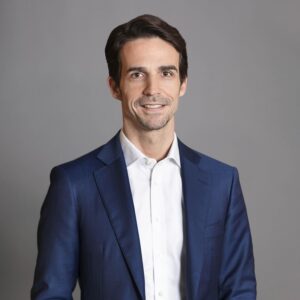
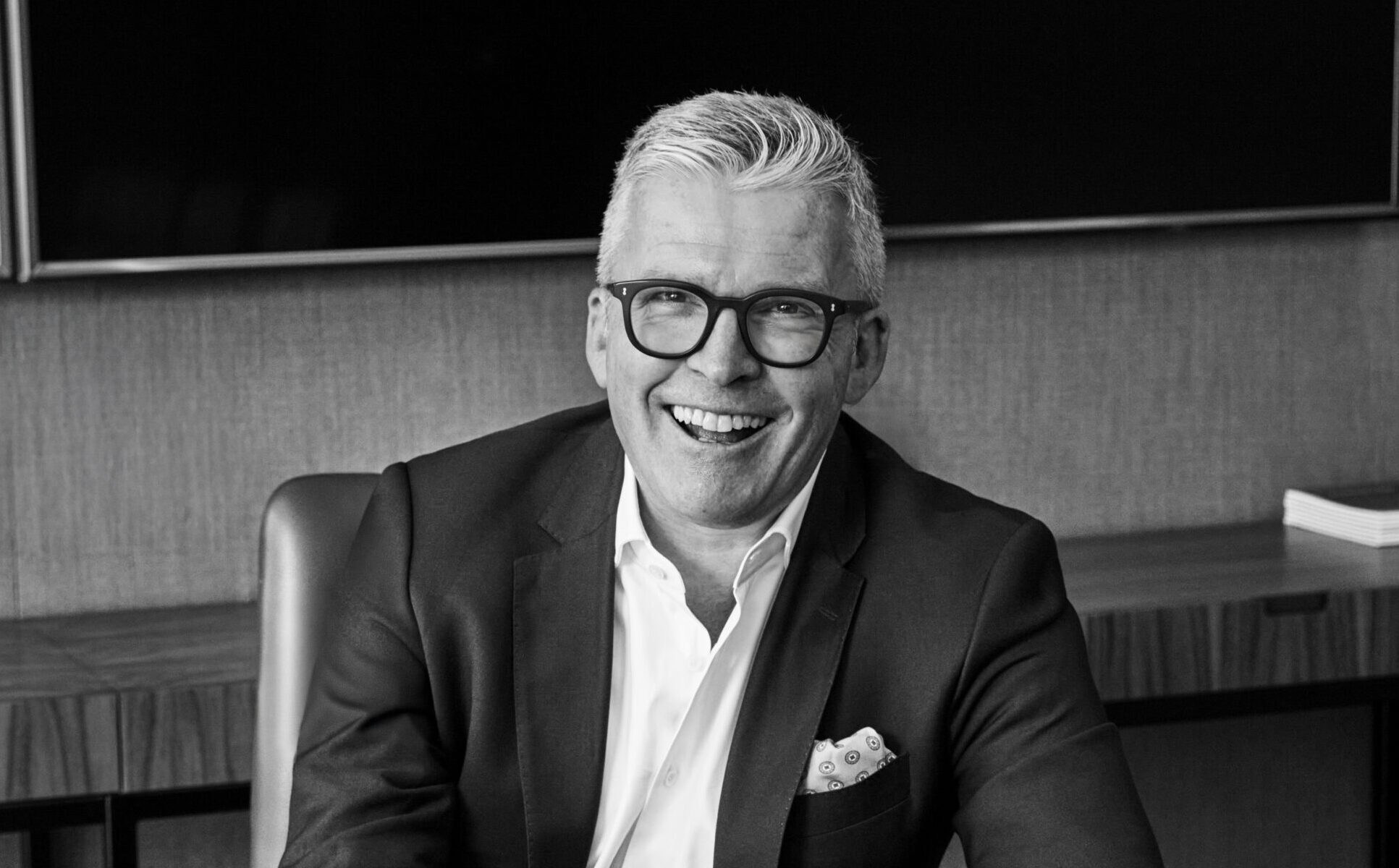
Speaking to LB, London managing partner Dominic Griffiths said the growth reflected a deliberate strategy to deepen relationships with core clients across jurisdictions.

‘We have established much deeper connections and work with large clients, in particular transatlantic clients,’ he said. ‘The defining factor of this office, together with the United States, is that we’re certainly not an outpost of a New York law firm. We are a global firm, obviously, with a huge concentration of lawyers and business in the US, but we also have developed very strong relationships in London and Europe.’

A key driver of growth has been a more focused investment strategy over the past two years. ‘Two years ago, and in particular, into 2024, we decided to double down on certain areas, called accelerated growth areas,’ explains Griffiths, citing private capital, private equity, and private credit. ‘It has been a very deliberate move by the firm to empower and give authority and autonomy to certain partners leading teams that are highly relevant in this regard.’

The firm has backed that focus with lateral hiring in these areas, recruiting eight partners across private equity, leveraged finance, structured finance, and energy in 2025.

These include Legal 500 securitisation Hall of Famer Chris McGarry, who joined from White & Case last January, private equity partner Mark Evans and finance partners David Miles and Philip Butler, who all joined from Dechert in July, where Butler was co-head of leveraged finance, and private equity partner Tessa Agar, who joined from Goodwin in October.

The results are beginning to show. Private equity deal volumes in the City rose 95% year-on-year, while active structured finance matters increased by 14.8%. Integration is visible too: over the past year, London and New York teams worked together on 96 matters.

Recent mandates led out of London included advising Blackstone and Bourne Leisure on their £1.6bn commercial mortgage-backed securities (CMBS) financing of Haven Group last August – one of the largest sterling-denominated European CMBS issuances since the financial crisis. Last September, the firm advised Standard Chartered Bank on the establishment of its landmark $3bn clean energy infrastructure CLO platform with Apollo.

Alongside transactional work, litigation continues to play a significant role in the practice. ‘Litigation is still 40% of our practice, both locally and globally,’ said Griffiths. In addition to its focus on banking litigation, the firm’s London office also achieved a victory for Samsung and Saipem in the Court of Appeal in a high-profile dispute over Part 26A restructuring plans proposed by Petrofac in connection with a joint venture for the delivery of a refinery project for Thai Oil.

‘Elite US-based law firms are seeing clients expand extensively into Europe. Our hiring is matching that’

Looking ahead, Griffiths said the firm would continue to prioritise investment in its core growth areas.

‘We’ve created an environment and we’ve got the talent here that is generating good income, so I expect that to continue on a similar trajectory,’ he said. ‘We’ll continue to concentrate on private credit and private equity, but also very specifically energy, infrastructure and projects.’

On the latter, Griffiths noted: ‘We’ve noticed that some other high-level, marquee firms are not treating those kinds of practice areas with such keen interest as we are. We love private equity, but we’re not a firm that insists that all of our lawyers are working for private equity sponsors; we’re more diverse in our focus.’

For Griffiths, that shift is also driving increased lateral hiring across the market: ‘For elite US-based law firms, us included, their clients are expanding their business extensively into Europe. The top four or five private credit and private equity houses have set up new divisions – both lending and acquisition – in Europe in a much, much bigger way over the last two or three years,’ he explained. ‘Our hiring is matching that demand from the client base.’

And in a market increasingly defined by vast firms, aggressive hiring, and merger speculation, Griffiths stressed sustainability and client-focused growth. ‘I don’t like the idea of just growing for the sake of growth,’ he said. ‘We will grow cautiously as well because we basically want to maintain legal excellence, which is one of the biggest defining factors of this firm.’

That focus, Griffiths said, is reflected in the firm’s client base, with around 25% of Mayer Brown’s London clients having worked with the firm for more than 10 years.

The firm has also been investing in AI, rolling out a mandatory firmwide generative AI training curriculum this April, as part of a broader technology investment strategy that includes the adoption of Harvey AI and Microsoft Copilot. The training programme is set to roll out to all Mayer Brown’s lawyers around the globe over the course of the year, covering areas including responsible use, scenario-based training for practice area use cases, and leadership training.

Griffiths pointed to the procedural benefits and client value that AI has already enabled. ‘Our private equity team, our corporate team in general, and our litigators, have been very successfully integrating AI into their practice and what they can provide to clients,’ he said.

However, he also sounded a note of caution on tech: ‘AI is a fundamental tool we can harness for our work and for our clients but we are aware of the pitfalls such as ‘hallucinations’ in the litigation world. It’s all about using AI responsibly and managing the output.’

[email protected]

‘Some of the best results we’ve ever had’ – Keystone passes £100m

Keystone Law has crossed the £100m mark with revenue growth of 17.9% for its last financial year, hitting £115.2m, up from £97.7m.

The results mean that Keystone has more than doubled its revenues in the last five years, up 109% from £55m in its 2021 results.

The firm also saw a 10.5% rise in revenue per principal, the firm’s partner-equivalent title, to £243,000 from £220k.

Adjusted profit before tax, meanwhile, jumped 20.6% to £15.3m, up from last year’s £12.7m.

‘These are some of the best results we’ve ever had,’ said CEO James Knight (pictured). ‘Not just because revenue is up strongly, but this year is notable in that everything is positive for Keystone: growth, earnings, revenue and recruitment. It is a strong set of results for us.’

Recruitment at the firm has continued apace. Recent additions include Linklaters corporate partner Denis Uvarov, who joined last April, and aircraft finance specialist Ilia Dvorkin, formerly head of structured and asset finance in Russia at A&O Shearman, who arrived in September. Growth has continued into 2026, with the firm’s hire of Ben Knowles, former international arbitration chair at Clyde & Co, who joined this February.

In total, the firm added 61 new principals during the financial year ending 31 January 2026, taking its total to 491, a 22% increase from last year’s figure of 455.

Knight said that the numbers show a firm that has transformed: ‘We started very much as an outlier, a quirky law firm that appealed to quirky individuals. We’ve since moved into mainstream acceptance.’

That shift has also changed the reasons lawyers join, Knight said: ‘Often now lawyers are joining us because the client wants them to take a step up. In the past, it used to be that clients wanted them to find a firm where they could charge less.’

In addition, Knight highlighted that many of the firm’s new principals had joined with ‘pod members’ – junior lawyers employed directly by the principals.

‘Nobody wants to bring in people on the hope and promise that they’re going to have the work,’ said Knight. ‘So it really does go to the confidence principals have when joining Keystone, that the work is there from day one.’

The market has responded positively to the results, with Keystone’s stock price up 8.4% from 475p per share at close on Tuesday (28 April) to 515p at time of writing (30 April).

[email protected]

Clifford Chance promotes nine in London, six across US offices

Clifford Chance

Clifford Chance has made up 28 lawyers in its latest promotion round, a slight decrease from 31 last year.

Women accounted for 10 of the 28 new partners, representing 35.7% of the cohort – broadly in line with last year’s 35.5% (11 out of 31).

London once again took the largest share of new partners, with nine promotions, down from 13 in 2025.

The firm’s US offices saw a notable uptick, with six partners promoted: three in New York, two in Houston and one in Washington, DC, in comparison to just one new US partner last year, in Washingon DC.

Continental Europe saw a more mixed picture. Paris accounted for three promotions, down from five last year, while Germany recorded three: two in Düsseldorf and one in Frankfurt. Elsewhere in Europe, Madrid produced two new partners and Brussels one.

The firm also maintained a strong international spread, with promotions across Asia Pacific including Hong Kong, Tokyo and Sydney, with the latter accounting for two new partners.

By practice, corporate transactions and advisory led the round with five promotions, followed by private equity with four. This is down significantly on last year, when corporate and global financial markets together made up a clear majority of promotions, accounting for 24 of 31 new partners, with 12 each.

Finance retained a strong share of promotions, but disputes was down from five promotions last year to two this year, with real estate up from one new partner to three this year.

Global managing partner Charles Adams said: ‘These promotions recognise lawyers who consistently operate at the highest level, delivering outstanding results for clients on their most complex, cross-border matters.’

Global senior partner Adrian Cartwright added: ‘Their appointments reflect the high standards we set for our partnership and our commitment to fostering an environment where exceptional talent can thrive.’

Promotions will take effect from 1 May 2026.

[email protected]

Clifford Chance partner promotions in full:

UK

  • Dan Bomsztyk, corporate transactions and advisory, London
  • Michael Gorrie, disputes, London
  • Benjamin Harding, funds and asset management, London
  • Oliver Clarke, funds and asset management, London
  • Craig Grant, private equity, London
  • Ben Redding, real estate, London
  • Chris Norman, restructuring and insolvency, London
  • Cameron Dwyer, tax, pensions, employment and incentives, London
  • Rebecca Trapp, tax, pensions, employment and incentives, London

US

  • Joclynn Marsh, corporate transactions and advisory, Houston
  • Kyle Kreshover, private equity, Houston
  • Benjamin Fisher, debt finance, New York
  • Eric Schaffer, private equity, New York
  • Hannah Richard, tax, pensions, employment and incentives, New York
  • Peter Hughes, project development and finance, Washington DC

EMEA

  • Gillis Waelkens, corporate transactions and advisory, Brussels
  • Caroline Scholke, antitrust and trade, Düsseldorf
  • Bahar Rahimyar, project development and finance, Düsseldorf
  • Georg Lübbehüsen, debt finance, Frankfurt
  • Pablo Murcia, corporate transactions and advisory, Madrid
  • Leonardo Fernández, structured finance, Madrid
  • Auriane Bijon, capital markets, Paris
  • Alice Dunoyer de Segonzac, disputes, Paris
  • David Gérard, real estate, Paris

APAC

  • Janet Fok, corporate transactions and advisory, Hong Kong
  • John Karantonis, private equity, Sydney
  • Rebecca Elgar, real estate, Sydney
  • Matthew Ball, capital markets, Tokyo

‘The goal is synergy’ – Luminance GC on LexisNexis tie-up

‘One of the things we are most focused on is being the best at contracting for large enterprises,’ said Luminance general counsel Harry Borovick (pictured), speaking of his company’s tie-up with LexisNexis, announced last week.

The legal AI provider faces stiff competition. Earlier this month, Legora announced that it had reached £100m in annual recurring revenue in its first 18 months, before making waves with a high-profile advertising campaign starring actor Jude Law.

Meanwhile, one of its closest competitors, Harvey, achieved an $11bn valuation in its latest fundraising round.

But Borovick believes that Luminance and LexisNexis together offer something special. The combination brings together Luminance’s AI software, which is trained on over 220 million legal documents, with LexisNexis Protégé, which holds a library of over 200 billion legal documents.

It will also allow Luminance customers to access Protégé, which can answer questions and provide insights on contractual issues. By providing access to both pieces of software, the alliance aims to support in-house legal teams throughout the decision-making process.

Borovick noted that the company’s in-house team was able to test the collaboration before it went live, providing direct feedback on what works for legal teams.

‘We were quite adamant that we didn’t want a generic search or research functionality in the same way that someone could get with a free-to-use AI tool or even premium tools which can’t deliver this depth of quality and trusted data,’ he said.

Borovick added that by joining forces with LexisNexis, in-house teams can solve problems with one piece of AI software: ‘There are lots of great products in the legal tech space and AI more broadly, but the thing is they all do slightly different things, so you often need to have 20 different subscriptions that don’t connect to each other.’

‘The goal here is synergising best-in-class products that customers already have, to get a better outcome,’ Borovick concluded.

The announcement comes as competition in legal tech is heating up. Last week, Freshfields announced a multi-year deal with Anthropic to provide firmwide access to Claude, at the same time as the firm continues its use of Google Gemini. For its part, Slaughter and May announced today (29 April) that it has adopted Harvey firmwide.

Meanwhile, firms including Hogan Lovells and Cadwalader have launched a ‘Global Tech Alliance,’ which aims to give law firms a more active role in the development of legal technology. With input from firms across Europe, the Americas and Asia, the alliance aims to collaborate on developments in legal AI, and share training and standards used within firms.

[email protected]

‘Be bold, be honest about it’ – GCs demand AI transparency from law firms

As artificial intelligence continues to transform both in-house and private practice legal teams, a new survey has found that GCs are increasingly expecting their law firms to be fully transparent about how they are using AI.

The findings come from a report by KPMG, which surveyed 468 GCs and senior legal leaders around the world across industries including financial services, TMT, consumer retail and leisure and healthcare.

Of the senior in-house lawyers surveyed, 82% said they expect their external providers to explain to them how they are using AI.

In addition, two thirds of respondents said they expect a greater focus on technology-enabled services from their external providers, as in-house teams look to external counsel to provide more than legal expertise.

The survey also found that tech advances are adding further pressure on the billable hour, with 87% of respondents saying that value or outcome-based pricing models are preferable to time-based pricing.

Introducing the report, KPMG Law global head Stuart Bedford said: ‘As more advanced agentic AI systems emerge –  capable of coordinating workflows, synthesising information and supporting complex analysis – the structure of legal work itself is likely to evolve.

‘Legal leaders will need to determine not only where AI augments legal judgement, but how these capabilities are governed, integrated and trusted across the enterprise.’

One GC speaking with Legal Business was emphatic that law firms need to be transparent with GCs where they are using AI. ‘They’re very shy in coming forward about it,’ they said. ‘I absolutely want transparency. I want them to celebrate it and tell me who they’re using, what they’re using, and how that’s going to lead to either a reduced cost or an increased service.’

Their advice to law firms: ‘Be bold, be honest about it.’

Many in-house teams have already begun redesigning their engagement model with firms, with major clients requiring law firms to specify which work has been completed using AI.

Last month, HSBC global head of legal external engagement, Stephanie Hamon, spoke with LB about how AI will soon become a requirement for panel firms at the FTSE 100 bank, while Monzo chief legal and administrative officer Stephanie Pagni discussed the need for firms to redesign the entire business model to focus on outcomes rather than hours worked.

The KPMG report also underlines how legal heads are now more broadly called on for strategic advice, with 92% of respondents reporting regular interactions with the board, and 75% regularly being asked to advise on non-legal issues. Earlier this year, the Association of Corporate Counsel found that more GCs than ever report directly to their CEO.

The survey canvassed GCs from across EMEA, the Americas and Asia-Pacific regions, with 61% of respondents based across EMEA.

[email protected]

Kirkland, Skadden, Freshfields elevate €29.4bn lift deal

Kirkland & Ellis, Skadden and Freshfields have taken lead roles on the merger of escalator and elevator companies, KONE and TK Elevator (TKE).

The €29.4bn deal will see Finnish publicly listed lift maker KONE purchase Germany’s TKE, currently owned by private equity firms Advent and Cinven.

Kirkland is advising Advent and Cinven on the deal, with M&A partners Adrian Maguire and Dan Clarke leading the deal in London, as well as Benjamin Leyendecker and Philip Goj in Munich. 

The team also includes debt capital markets partners Christopher Shield, Antoine Lebienvenu and Thomas Raftery, as well as tax partners Mavnick Nerwal and Sivanti Devakumar, and tech and IP partner André Duminy, all in London. Munich-based tax partner Michael Ehret also advised on the transaction.

Skadden advised KONE on the tie-up, with London corporate partner Sandro de Bernardini leading. The team also included corporate partner Sarah Knapp and global transactions head Lorenzo Corte, as well as antitrust partner Kenneth Schwartz, finance partners Pete Coulton and Zoe Cooper Sutton, white-collar defence and investigations partner Ryan Junck and tax partner Jisun Choi.

Also involved for Skadden were Brussels antitrust partner Giorgio Motta, as well as PE partner Jan Bauer and tax partner Johannes Frey, both based in the firm’s Frankfurt office. Antitrust partner Michael Sheerin in New York also advised.

Freshfields advised TKE on the antitrust aspects of the deal.

Finnish firm Hannes Snellman also acted for KONE on the deal, while Roschier advised TKE.

Advent and Cinven were reportedly considering listing TKE earlier this year in an IPO that would have valued the elevator company at around €25bn.

[email protected]

World class: new research showcases the international elite in key practice areas

More than 80 of the world’s leading law firms have been recognised in Legal 500’s latest worldwide rankings, drawing on extensive data to identify the top performers across key practice areas.

Now in their second year, the rankings highlight the leading firms across 11 major disciplines, from antitrust and arbitration to M&A and white-collar crime.

Since launching in April last year, the rankings have evolved to feature more firms operating at the top end of the world’s most influential markets, drawing on Legal 500’s extensive global coverage and data resources.

Unlike Legal 500’s submission-based research process, the worldwide rankings are compiled through the aggregation and weighting of existing jurisdictional data, supplemented by analysis from the senior editorial team.

Legal 500 worldwide rankings: by the numbers

Firms with the most Legal 500 worldwide rankings

The firm with the strongest representation is A&O Shearman, which is included in all eleven of the rankings – antitrust, arbitration, capital markets, corporate restructuring, data protection, energy, IP, M&A, private equity, tax and white-collar crime.

Latham & Watkins, DLA Piper and Baker McKenzie are featured in 10 of the 11 rankings, while magic circle firms Clifford Chance and Linklaters also put in a strong showing, with nine and eight spots respectively. Kirkland & Ellis also features, with eight rankings.

Where the worldwide ranked firms are based

While the vast majority of the world’s top firms are of course based in the US or the UK, the rankings do feature some of the best firms in other key global markets, such as France’s Gide, Germany’s Hengeler, Spain’s Garrigues and Cuatrecasas and Singapore’s Allen & Gledhill and Rajah & Tann.

New rankings for 2026: who made the cut?

Eighteen firms have won new spots in the rankings this year, with seven – Skadden, Sullivan & Cromwell, Latham, Gibson Dunn, Weil, Milbank and Ropes & Gray – all securing two new rankings.

Access the full worldwide rankings here

Kirkland swoops for Paul Weiss European M&A head

Kirkland & Ellis is set to boost its London bench with the hire of Paul Weiss’ head of European M&A, Will Aitken-Davies.

Aitken-Davies, who joined the New York firm’s ambitious London office from Linklaters in September 2023, is set to join Kirkland as a corporate partner in the City.

His practice focuses on private equity and infrastructure investor transactions, including acquisitions, carve-outs, and public M&A deals.  He recently played a key role on a transatlantic team from Paul Weiss advising Joe & the Juice on its minority investment from the Emirates International Investment Company.

‘Will is a trusted adviser to leading financial investors on sophisticated, cross‑border European transactions,’ said Jon A. Ballis, Chairman of Kirkland’s Executive Committee. ‘His arrival strengthens our market-leading team’s ability to support sponsors executing at scale across London and Europe.

Matthew Elliott, member of Kirkland’s Executive and corporate partner, added: ‘Will is a market‑leading dealmaker and a natural fit for our London private capital team. His diversity of experience leading European M&A for global sponsors and infrastructure investors will further enhance our ability to deliver integrated, top‑tier advice to private capital clients across London, Europe and the broader Kirkland platform.’

Aitken-Davies is ranked as a leading partner for high value private equity in the Legal 500 in London.

Aitken-Davies’ move comes less than three years after debt finance rainmaker Neel Sachdev led a team of high profile partner defections from Kirkland & Ellis to Paul Weiss, to launch the firm’s English law practice in London.

The bold City play saw Sachdev joined at Paul Weiss by a number of Kirkland partners including private equity partner Roger Johnson, debt finance partner Kanesh Balasubramaniam, and capital markets partners Matthew Merkle and Deirdre Jones.

Earlier this year, Kirkland & Ellis became the first law firm in history to make more than $10bn in revenue, riding a 20% increase to hit $10.56bn, up from $8.8bn last year.

Profit per equity partner (PEP) also rose by 20% to reach a record $11.1m, putting clear daylight between it and its closest rivals in the Global 100.

[email protected]

Weil London restructuring trio leave to join Akin

Akin has hired three restructuring partners from Weil in London, including City restructuring co-head Neil Devaney.

Devaney is joining Akin as head of London financial restructuring alongside fellow partners Lois Deasey and Matt Benson.

Devaney and Deasey are both individually recognised by Legal 500 in corporate restructuring and insolvency, where Devaney is a leading partner and Deasey is a next generation partner. Both Akin and Weil are ranked in the top tier for restructuring.

All three lawyers previously spent time at Akin, with Devaney having been a partner there from 2014 to 2019. Benson was a counsel at Akin before joining Weil as a partner in 2020, while Deasey made partner at Akin that year before following the pair to Weil in 2022.

The hires see Akin continue a streak of growth in London. Last November, the firm hired private equity duo Dan Oates and Angela Becker from Ropes & Gray, while this February it brought over leveraged finance partner Adrian Chiodo from Covington & Burling.

For its part, Weil has seen a spate of recent London departures, including a three-partner team led by private funds head Ed Gander which moved to Sidley last year, and finance duo Chris McLaughlin and Alastair McVeigh, who left for Sullivan & Cromwell earlier this year.

In late 2024, the firm also saw four New York restructuring partners leave for Latham & Watkins, including restructuring department co-chair Ray Schrock, who now chairs Latham’s restructuring and special situations practice.

The departures leave Weil with just four restructuring partners in London, according to the firm’s website, including senior European restructuring partner Andrew Wilkinson, who co-headed the practice alongside Devaney.

‘Neil, Lois and Matt are advisors that leading global credit investors consistently turn to,’ said Akin co-chair and restructuring partner Abid Qureshi. ‘They bring a cross‑border sophistication that enhances the integrated US–Europe restructuring platform that’s already central to who we are as a firm.

‘Their return strengthens our entire creditor‑side franchise, from restructuring to special situations, capital solutions and hybrid capital, and ensures we can serve the same clients seamlessly across jurisdictions and the full spectrum of stressed and complex capital structure work.’

London senior partner Barry Russell added: ‘Private credit has reached institutional scale in Europe, the Part 26A regime has reshaped the restructuring toolkit, and cross-border capital structures have made integrated creditor counsel essential.’

[email protected]

‘A glimpse into the future’ – Freshfields on how its Anthropic tie-up changes the game

In the wake of Freshfields’ landmark multi-year deal with Anthropic, Freshfields chief innovation officer Gil Perez and partner and co-head of the firm’s internal innovation and legal tech development lab Gerrit Beckhaus, explain why the firm is doubling down on its bet that frontier AI will fundamentally reshape legal services.

‘There is now an acceptance that technology is at the core of legal moving forward,’ says Perez. ‘So though a lot of firms have talked about it, not many have actually implemented it. There’s a lot of talk, no walk.’

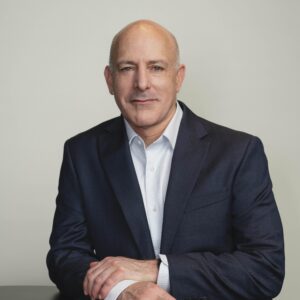
Beckhaus (pictured right) shares that conviction and wants Freshfields lawyers to view AI as central to their workflows: ‘The mindset we are trying to instil is that for any given task, you justify why you’re not using AI to help to solve it.’
He stresses that this is not about minimising lawyers’ agency: ‘It’s not just pressing a button and sending off the results, it’s helping lawyers to do better and more impactful work.’

The deal further deepens an existing relationship between the two companies, as Freshfields separately acts as external counsel for Anthropic.

The recently announced deal represents the first time Anthropic has entered into a strategic partnership with a law firm, underlining the mutual respect that underpins the collaboration.

Perez (pictured below) explains that the arrangement will create a blueprint that Freshfields can leverage beyond its work with Anthropic: ‘Our legal team will be working directly with Anthropic’s legal team to explore how we could collaborate and set up workflows between a law firm and Anthropic, when both parties are proficient in AI. We will get a glimpse into the future and be able to then parlay that to our clients.’

A second strand of the partnership focuses on product deployment. Freshfields has already rolled out Claude Opus and Claude Sonnet across the firm, and plans to do the same with Cowork, Anthropic’s agentic AI platform.

At the same time, the firm will gain access to Anthropic’s early-access programme, giving it visibility over products still on the future roadmap.



The announcement comes just one year after Freshfields’ partnership with Google, prompting questions in some quarters about whether there is unnecessary overlap between Google Gemini and Anthropic’s Claude, which occupy similar spaces in enterprise AI.

Beckhaus argues that this optionality is precisely what gives Freshfields its competitive edge in legal tech. Rather than locking lawyers into a single ecosystem, the firm has built a proprietary platform that allows professionals to choose the tools best suited to the task.

Asked whether lawyers and business staff can choose between Claude and Gemini, he confirms they can, adding: ‘And they can use others as well. Most legal tech AI tools don’t provide that capability to choose between models. You just use the applications and that’s it.’

Where AI comes in, the question of billing soon follows, with the perennial question being whether greater efficiencies will lead to lower legal fees.

Beckhaus believes that this framing misunderstands the impact of AI. In his view, the technology is not simply reducing the time spent on tasks, it is enhancing the scope and quality of the service. ‘It’s comparing apples with oranges,’ he says. ‘Because the end product I deliver to the client today, in the due diligence space as an example, is completely different from what we did in the past.’

‘In the past, based on the agreed scope of review, we identified documents in scope and threw out other documents out of scope, because there was a limited commercially feasible possibility to really analyse them,’ he explains. ‘Today, AI allows us to digest way more data and maybe identify more risk to be analysed and mitigated.’

That said, Beckhaus acknowledges that, in certain cases, clients with a higher tolerance for risk may choose a narrower scope of review for a lower fee: ‘Again in the example of due diligence, you decide on the scope, and the level of risk you are comfortable with,’ he says. ‘In general, we are using AI anyway. The question is do we just use it to support the manual review or are there even elements that can be done solely by AI.’

And while the firm is more focused on itself than its peers, there is a confidence that the partnerships with Google and Anthropic have put Freshfields in a strong position.

As Perez says: ‘It’s a year since we made our Google announcements and still no other law firm has come out and adopted it in the same way that we’ve done. By the way, I think they’re wrong. They should look into Google and start adopting it. We’re doing the same thing again with Anthropic, and I expect other firms to follow our lead. And hence, we’re ahead of the pack.’

[email protected]

Gibson Dunn boosts Paris with four-partner Clifford Chance funds team

Paris

Gibson Dunn has hired a seven-lawyer investment funds team from Clifford Chance in Paris, marking a significant expansion of its private capital capabilities in Europe.

The group includes three investment funds partners Xavier Comaills, Marie Préat and Elodie Cinconze, alongside tax partner Pierre Goyat. They are joined by of counsel Véronique de Hemmer Gudme, Benjamin Massot and Louis-Guillaume Cousin.

The team will launch Gibson Dunn’s investment funds capability in Paris – complementing existing teams in the US, London, Dubai and Hong Kong.

In addition to strengthening the US firm’s private capital capabilities, the team hire also represents a statement of intent for Gibson Dunn in Europe.

The firm hired Freshfields corporate partner Armando Albarrán in January to lead its new Madrid base, with the office formally opening on Monday (27 April). Last September, it opened in Zurich, with a new office led by international arbitration silk Christopher Harriss KC, who joined from 3 Verulam Buildings. The Spanish office is the firm’s seventh in Europe.

Commenting on the Paris hires, Gibson Dunn investment funds global chair Shukie Grossman said: ‘Paris is a critical hub for the European private capital ecosystem, and this team’s market-leading capabilities and deep client relationships enable us to support sponsors active across Europe and beyond. Together with our recent growth in London and Dubai, their addition will further reinforce Gibson Dunn’s position as a global powerhouse in the investment funds market.’

Comaills, who will lead the Paris team, is a Legal 500 Hall of Famer for private equity fund formation in France. He specialises in the formation and fundraising of private equity, infrastructure and private credit funds, as well as GP stake transactions across European markets. He joined Clifford Chance in 2013 from Ashurst, where he was a partner in the fund finance practice.

Préat, ranked as a leading partner by Legal 500, moved with Comaills from Ashurst to Clifford Chance as a senior associate, and was promoted to partner in 2023. Her practice focuses on advising sponsors and asset managers on primary fundraisings, secondary transactions, continuation vehicles and regulatory matters across private capital strategies.

Cinconze joins after eight years at Clifford Chance, where she made partner in 2024. She advises on the structuring and fundraising of pan-European private equity funds, with particular expertise in secondary transactions and continuation funds.

Goyat, a Legal 500 next-generation partner for transactional/corporate tax, spent nearly seven years at Clifford Chance, making partner in 2025. His practice focuses on the tax structuring of funds and advising on complex transactions, particularly in the energy, infrastructure and transport sectors.

Gibson Dunn has made a number of recent funds hires, notably including Duncan McKay, who joined from Fried Frank as head of fund finance in New York last November, and former DLA Piper investment funds co-chair James O’Donnell, who joined in London last March.

Paris has seen a series of high-profile partner moves in recent months, driven by the increasing interest of private capital clients in Europe. High profile moves include Ropes & Gray‘s March 2025 launch in the city with a three-partner team from Clifford Chance, as well as Latham & Watkins‘ hire of a four-partner energy and infrastructure PE team this February, also from CC.

Clifford Chance has also made hires in the French capital, bringing over a pair of partners from Orrick earlier this month.

Commenting on his team’s move, Comaills said: ‘Alongside London, Paris has become a central marketplace for primary and secondary transactions and GP stakes, notably in the infrastructure and healthcare sectors. Global sponsors increasingly require integrated counsel across Europe’s financial centers and favour European integrated platforms supported by a strong US fund formation capability. Gibson Dunn’s presence in the US and across those centers, combined with the strength of its global platform, makes it an ideal home for our practice.’

‘We are excited to bring our expertise to a firm so well positioned to deliver seamless cross-border support and contribute to the continued growth of an already world-class investment funds practice,’ he concluded.

[email protected]

‘I’ve learned not to take keyboard warriors seriously’ – Garden Court’s Oscar Davies on practising law in the culture war

As the fallout from last year’s For Women Scotland case reshapes equality law and fuels uncertainty across workplaces and courts, non-binary barrister Oscar Davies is building a practice that extends far beyond litigation.

Davies wears many hats: ‘educator,’ ‘activist,’ ‘thought leader’ – although they’d use none of these words to describe themselves: ‘too cringe.’

A five-year call junior at London’s Garden Court Chambers, they have developed a practice across employment, human rights, commercial, and housing law, centred on advocating for trans and non-binary people and other underrepresented communities.

But Davies doesn’t limit their advocacy to the courtroom. Advising MPs on rulings, delivering DEI training to local authorities, NGOs and law firms, and spearheading equality initiatives like FreeBar’s Visibility Project are just a few of the strings to their bow.

However, they are perhaps best known for their online presence, where, under the handle @nonbinarybarrister, they advocate on the front line of the culture war, translating fast-moving legal developments into short-form content to over 30,000 followers and counting across multiple platforms.

More than a barrister

Davies hit the mainstream five years ago after an innocuous post on X to celebrate their tenancy. The title ‘Mx’ Oscar Davies, which made them the first publicly recognised non-binary barrister in the UK, drew the attention of the media, with coverage in The Times and Reuters.

‘It was a time that wasn’t as violent about trans rights’ they recall, referring to an earlier period where protections were being clarified and expanded, such as in the landmark case Mrs R Taylor v Jaguar Land Rover Ltd [2020] which extended workplace protections to include non-binary and gender fluid identities.

‘I realised I had this platform where I could be useful to people,’ Davies says. ‘I could use social media to inform my community what these cases are about, and what their rights are, because otherwise the law can be so opaque.’

But this visibility, Davies acknowledges, comes with a clear set of conditions. They are highly aware of their ‘palatability’ to a general audience: white, male-presenting and highly-educated.

‘I like to leverage my privilege, and to use it to speak out,’ they say. ‘Because people wouldn’t listen as much if I were more obviously trans, or not white.’

For Davies, the role is less about personal branding than it is extending the function of advocacy: ‘I don’t need the validation. I don’t need to be on social media to be successful,’ they say.

What matters is reach: ‘Instead of helping one client, you can help thousands of people, which is kind of cool.’

Davies is undoubtedly riding high professionally. Most recently, they have been nominated for LGBQ+ Champion of the Year at the Legal 500 ESG Awards, building off their win in the same category two years ago. More broadly, instructions have surged, a book is on the horizon, and, with a consistently busy practice, they can avoid what they describe as the ‘the bread-and-butter work’ most junior barristers rely on.

But they are also aware that theirs is not a conventional path: ‘There is a degree to which the use of social media by lawyers is seen from a traditional perspective as uncouth, or looked down upon. But the reality is that my social media has also got me better work. It’s got me better instructions, has helped me position as an expert, and I’m only five years into my practice as a tenant.’

Demand in a hostile climate

But this trajectory, Davies clarifies, is inseparable from a deterioration in conditions for trans people.

‘The uptake in work is bittersweet,’ they say. ‘Because it is at the expense of trans people. It is the result of trans people facing more discrimination.’

The turning point, they suggest, was the UK Supreme Court’s decision in For Women Scotland Ltd v The Scottish Ministers last April, which held that references to ‘man’ and ‘woman’ in the Equality Act 2010 refer to biological sex rather than acquired gender under a Gender Recognition Certificate.

A year on, Davies has witnessed profound consequences, both personally and in the public sphere.

‘The impact has been severe and devastating,’ they say. ‘Both for trans people, but also for employers who don’t know what to do in terms of policies and feel like they’re in permanent threat of litigation.’

‘Many, many cases have arisen from it. So, in terms of clarifying the law, I think it is currently as clear as mud.’

Davies is currently co-counsel alongside Garden Court’s Amanda Weston KC and Jenn Lawrence, instructed by Trans Legal Clinic in an application to the European Court of Human Rights on behalf of Dr Victoria McCloud, Britain’s first transgender judge, challenging the Supreme Court’s ruling in For Women Scotland.

Davies sees the situation as produced by a combination of media narratives, political debate and legal outcomes, with media trigger topics like sports, predation and access to toilets now reinforced in law.

‘My community is basically in fight or flight mode at the moment because of this attack which seems to come from the media, the government at times and possibly the judiciary,’ they say.

‘It’s quite disheartening when the most senior judges in the country have had an effect which is leading to potentially more harassment and more discrimination,’ they conclude.

For Davies, it’s personal. As a non-binary person, they have faced harassment like being misgendered in court and having anti-trans activists turning up at their chambers.

And Davies does not expect the broader social and legal transphobia to let up anytime soon: ‘I don’t think we are at the trough yet,’ they say. ‘It going to get a lot worse before it gets better.’

The cost of visibility

For their part, Davies’ online advocacy is an attempt to shift the discourse; a recent series called ‘Myth Busters,’ for example, serves as an informed, evidence-based challenge to stereotypes.

But, as they put it, ‘social media is a strange game, one that always comes with a degree of risk,’ and backlash is often the price of far-reaching exposure.

Davies speaks candidly about the hate comments and ‘pile-ons’ they receive on their posts, framing them as part of the territory: ‘I’ve learned not to take keyboard warriors seriously. If they are spending so much time on my posts and comments, all they are doing is driving my content.’

In fact, accessing those beyond their own echo chamber is part of the point: ‘While some of the comments can be passionate and scary, I’m quite glad that I’ve managed to reach those people on the algorithm, because it means I am reaching people that would not usually digest such content.’

The sound of silence

Davies is largely positive about their professional counterparts, citing the support of their chambers and their surprise at the ‘openness’ of the profession.

‘Law as a profession is definitely less traditionalist than I thought before coming into it,’ they say.

However, they make clear that willingness to engage with the issues proactively is still far from universal. ‘It is a dangerous position to be in, to put your head above the parapet,’ Davies acknowledges. ‘And I wish that lawyers would do more to speak out on these issues.’

In a social landscape increasingly defined by legally constructed boundaries, Davies argues that silence in the profession is no longer a neutral position.

‘Ultimately these issues are human rights issues, which can affect anyone. Disability rights could be next; no one is safe in that regard.’

This, they suggest, places a particular responsibility on lawyers – not just to interpret the law, but to engage with how it is being used and shaped.

‘Legal professionals are those who have helped make the framework for what we have now – the Equality Act, the Gender Recognition Act – and so there is a degree to which we have a collective consciousness when there are human rights violations happening right in front of us.’

‘Some people choose to be wilfully ignorant of these issues. And I don’t really see that as justifiable when you’re a lawyer and have a knowledge of what’s right and what’s not. That is unforgivable.’

[email protected]

LB 100 duo take on Leigh Day in UK’s largest pollution group action

A pair of UK-headquartered firms is acting for the defendants on a river pollution claim billed as the largest ever brought in the UK, with the parties in the High Court today (27 April) for the first case management conference.

Leigh Day is representing residents and businesses surrounding the rivers Wye, Lugg, and Usk on the Welsh-English border on a collective action case against Welsh Water and Avara Foods, alleging that the companies have caused pollution in the rivers. International and environmental disputes partner Oliver Holland is leading for the claimants.

Pinsent Masons is acting for Avara, with product liability and regulation and commercial litigation partner Jacqueline Harris, from the firm’s Edinburgh office, and banking and financial services disputes partner Mike Hawthorne, in London, leading the case.

Henderson Chambers barristers were instructed by Pinsents, including Charles Gibson KC, Thomas Evans and Celia Oldham.

Avara, a poultry farming company operating in Herefordshire, supplies a number of well-known supermarket and restaurant chains including Nando’s, Tesco and McDonald’s. The claimants allege that the poultry units Avara operates in Herefordshire have polluted the rivers by releasing phosphorus from chicken manure, which has leaked into the waterways.

Kennedys is representing Welsh Water, with the claimants alleging that the utility company has released sewage into the rivers, which Leigh Day argues is the second largest source of pollution.

Head of Kennedys’ product liability and life sciences London team, Barnaby Winckler, is leading for Welsh Water.

Leigh Day states that over 4,500 local residents have joined the claim, making it the largest environmental pollution claim ever brought in the UK. LB understands that the number of claimants that has currently been reported to the court stands at 1,309.

In a statement, Holland said: ‘This first court appearance marks an important step in the Wye, Lugg and Usk pollution claim.’

He continued: ‘There has been a great deal of effort put in by the community and environmental campaigners to help drive the proceedings to this point, showing the strength of feeling from those involved about the state of the rivers. They feel that the government and regulators have not done enough to prevent the deterioration of these rivers, leaving court action as their only option to pursue environmental justice.’

‘We are hoping for a positive outcome, and to be able to look ahead to presenting our clients’ arguments in full to the High Court in due course,’ Holland concluded.

A spokesperson for Avara said of the hearing: ‘This case management conference is a procedural hearing and does not consider the merits of the case.’

‘The allegations are misconceived and reflect a misunderstanding of both our business and the wider factors affecting river health. We are confident in our position and believe the claim is unsupported by any proper scientific basis,’ they continued.

A Welsh Water spokesperson said: ‘We believe this case is misguided and risks diverting time and resources away from the shared goal of improving river water quality.’

‘Any financial penalties would directly reduce the funding available to invest in essential services and deliver the environmental improvements our customers expect,’ they concluded.

[email protected]

Photo by Rob Wicks on Unsplash.

Pinsent Masons takes pizza the action on Franco Manca rescue deal

Pinsent Masons has advised the operating company behind UK pizza chain Franco Manca on its CVA, with the restructuring set to result in the closure of 16 restaurants.

London restructuring partner Edward Smith, who joined Pinsents from Travers Smith in September last year, led the team, which also involved real estate partner Carl Scott.

Fulham Shore, which operates Franco Manca alongside Greek restaurant chain The Real Greek, confirmed the CVA in a statement:

‘Over the last two years under our current management, we have been making strong progress against several key performance indicators, with productivity, customer satisfaction, happiness ratings, loyalty and frequency improving significantly,’ said Fulham Shore CEO Khan.

‘However, even restaurant businesses that are doing all the right things from a customer and operational perspective are not immune to widely publicised pressures impacting the hospitality industry. This includes significant increases in NI and NLW in recent history, as well as a lack of business rates relief for the restaurant sector and disproportionately high VAT in the UK compared with Europe.’

He concluded: ‘As a result of these external cost pressures, we have to make sure that we are putting our business on a sustainable footing for long-term growth and development. This is why we have taken the difficult decision to undertake a CVA for Franco Manca, which will see a minority proportion of our restaurants closing where they are no longer sustainable in this cost environment.’

Fulham Shore was acquired by Tokyo-listed Toridoll for £93.4m in 2023, with Ashurst advising Toridoll’s financial adviser Peel Hunt on the transaction.

Pinsent Masons has built a significant retail restructuring practice in recent years. Last August, it advised the Poundland board on its major restructuring plan, with Slaughter and May advising Poundland owners Pepco Group and DLA Piper advising acquirer Gordon Brothers. In 2023, Pinsents acted for wilko administrators PwC following the hardware retailer’s collapse into administration.

[email protected]

Photo from Wikimedia Commons, under Creative Commons Attribution 2.0 Generic licence. Attribution: Daniel from Glasgow, United Kingdom – The streets of London.

Linklaters and Proskauer lead on £17.5bn financial advisory acquisition

Linklaters and Proskauer have taken the lead roles as financial advisory firm Shackleton Advisers acquires Hurst Point Group, in a deal set to create one of the UK’s largest independent financial planning firms, with combined assets under management of £17.5bn.

The deal marks the largest acquisition for UK-based financial adviser Shackleton, including both Hurst Point’s financial planning and investment management businesses. The combined entity will have 44,000 clients around the country and more than 850 employees, spread across 38 offices.

Linklaters advised Hurst Point and its majority shareholder The Carlyle Group on the sale, with a London-based team led by private equity and capital solutions partner Andrew Lynch and private equity partner John Tsui, as well as tax partner Jamie Coomber.

Lynch and Tsui previously acted for Carlyle in 2020, when Hurst Point, then known as Harwood Wealth Management, was taken private by the PE firm.

Proskauer is advising Shackleton, with a London team led by PE partner Adam Creed.

Creed also has a history working on deals involving Shackleton, including on the team that advised Lee Equity Partners on its June 2025 acquisition of a majority stake in the financial advisory firm, with Creed leading alongside fellow London PE partner Andrew Wingfield, on a team that also included London finance partner Barry Newman.

Under the terms of the deal, Carlyle will become a minority shareholder in Shackleton, while Lee Equity Partners will continue as the company’s majority shareholder.

Following the transaction’s completion, subject to regulatory approval, Shackleton non-executive chair Andrew Fisher and chief executive officer Paul Feeney will continue to serve in their respective roles at the combined business, while current Hurst Point CEO Andrew Westenberger will join the Shackleton executive committee.

Commenting on the deal, Fisher said: ‘The significantly increased scale of the Shackleton Group resulting from this acquisition will enhance our ability to invest efficiently in technology, propositions, and regulatory and compliance capabilities, for the benefit of clients, employees and shareholders.’

[email protected]

Simmons & Simmons promotes nine new partners, with a reduced focus on London

Simmons & Simmons office atrium

Simmons & Simmons has announced nine partner promotions across its global offices, with three based in London.

While the number of partner promotions is exactly in line with last year’s round, the geographic spread is much broader this year. Of the nine promotions last year, seven were London-based, with one promotion each in Hong Kong and Brussels. This year, the firm has elevated individuals across Bristol, Abu Dhabi, Frankfurt, Dublin, Singapore and Dubai, in addition to London.

The financial markets and real estate practice saw four partner promotions, while the financial services and tax department saw three partner promotions, compared to four in total across financial markets last year. Business services and the corporate and commercial practice areas saw one partner promotion each, while the disputes team had no new partners this year, down from four last year.

This year women make up 56% of those promoted, or five of nine, compared with 44%, or four, last year.

Senior partner Julian Taylor said: ‘Each of these new partners has demonstrated outstanding talent, drive and a deep commitment to our clients and to the firm; their promotions are thoroughly deserved.’

He continued: ‘I’m also very pleased that the firm has met its target that 50% of our promotions are women, and that we remain on track for women to represent 50% of all new internal and lateral partners annually by 2029.’

Global managing partner Emily Monastiriotis added: ‘Our internal partner promotions are one of the clearest expressions of who we are as a firm. They reflect our belief in developing exceptional people, our confidence in the future we are building, and our determination to grow with ambition, purpose and integrity.’

[email protected]

The new partners are:

UK:

  • Oliver Ward, financial markets and real estate, Bristol
  • Joanne Elson, corporate and commercial, London
  • Camilla Jessel, financial services and tax, London
  • Tristram Lawton, financial services and tax, London

International:

  • Diederik Wintershoven, financial services and tax, Abu Dhabi
  • Lena Eli, financial markets and real estate, Frankfurt
  • Karen Sheil, financial markets and real estate, Dublin
  • Edward Laird, financial markets and real estate, Singapore
  • Victoria Grundy, business services, Dubai

Freshfields concludes redundancies in Manchester, with around 20 paralegals axed

Around 20 paralegal roles from Freshfields’ Manchester business services hub were axed as a result of a round of redundancies announced in September last year.

LB understands that, after the redundancies completed in 2025 with approximately 20 paralegal roles cut, Freshfields has not planned any further cutbacks to its paralegal team in Manchester.

A spokesperson from Freshfields said: ‘As we’ve said previously, we continue to evolve our business to keep pace with a fast-changing legal market – investing in technology, building key skills in house and adapting our model to meet future client needs.’

‘Any changes that took place in 2025 were communicated directly with those affected at the time, and we do not provide breakdowns by team or location,’ they concluded.

Freshfields launched its Manchester office in 2015 as a base for its business services hub, which the firm stated aimed to deliver a ‘highly efficient service’ to clients.

The firm also operates a global support services hub in Bratislava, launched in 2022, which employed over 50 finance, HR and additional support staff.

Cuts to business services roles have increased over the last few years, as firms continue to grapple with how AI is changing workflows.

Most recently, Baker McKenzie announced cuts of up to 10% of its global business service roles, including positions in London and Belfast, following a review of its back office functions.

With over 6,000 business services staff employed across its global offices, the cuts could mean up to 600 people were made redundant by Bakers.

Clifford Chance was also revealed to be cutting around 10% of its business services roles within its London office last year. The firm reviewed around 550 roles across its finance, HR and IT departments, with roughly 50 redundancies expected as well as 35 role changes.

Additionally, Clyde & Co conducted a review of its support staff across the Asia Pacific region in December last year, and BCLP announced a ‘business modernisation programme’ last spring, that impacted around 8% of the firm’s global business population.

A number of firms operate specific business services centres outside of London and other regional hubs, including Freshfields in Manchester and Bratislava, Clifford Chance in Newcastle and A&O Shearman in Belfast.

These offices were set up in the last decade to boost productivity, but face increasing strain as AI continues to change how legal work is carried out.

Just yesterday, Freshfields also announced a multi-year partnership with Anthropic, which will see the firm expand its use of the company’s leading AI software Claude.

[email protected]

‘Overwhelming approval’ – DLA Piper partners approve new single leadership structure

Partners at DLA Piper have voted to approve the dismantling of the firm’s long-standing Swiss verein structure, in a move to strengthen its competitive edge.

The firm announced today (24 April) that partners at DLA Piper US LLP and DLA Piper International LLP ‘overwhelmingly approved’ the proposed single leadership structure.

The plan also introduces a new global holding entity and global leadership team, led by Frank Ryan as global chair and co-CEO and Charles Severs as global co-CEO, which would sit above its existing US and international LLPs.

Also on the leadership team are Austin-based transactional practices head John Gilluly and New York-based US disputes chair Loren Brown as vice chairs, Birmingham, UK-based Sandra Wallace and Chicago-based Rick Chesley as global co-managing partners, and Benjamin Parameswaran in Hamburg as international managing director for clients.

The firm first announced plans to unify the verein in March, citing a need for greater strategic alignment. At least 75% of the international partnership and a weighted 66% of the US partnership had to vote in favour of the overhaul.

Now approved, the changes are due to take effect from 1 May, and include a move to align partner compensation and incentive schemes, and firmwide use of the US calendar year-end from 1 January 2027.

‘DLA Piper already advises clients on some of the market’s most complex local and cross-border issues, but our ambition is to bring the full strength of our platform to the market,’ Severs said in a statement.

Ryan added: ‘This alignment strengthens our ability to invest in the lawyers, teams, and technologies that will reshape competition in major legal markets.’

In a March interview with LB, Ryan and Severs stressed that the new compensation system will make it easier to recruit and retain talent, a requirement for global law firms in an increasingly competitive talent war.

[email protected]

Fresh capital: Paul Weiss, White & Case lead as General Atlantic tops up Joe & the Juice with Abu Dhabi-backed investment

Paul Weiss and White & Case have taken the lead roles as Abu Dhabi-based Emirates International Investment Company (EIIC) has acquired a minority stake in Joe & the Juice, in a deal that values the Danish juice bar chain at $1.8bn.

Paul Weiss advised Joe & the Juice and its majority owner, US-based PE house General Atlantic, with a transatlantic team led by head of European M&A Will Aitken-Davies in London, global M&A co-chair Matthew Abbott and capital markets partner Timothy Cruickshank in New York, and capital markets partner Christopher Cummings, who splits his time between New York and Toronto.

London-based global tax co-head Timothy Lowe and tax partners Cian O’Connor and Rohit Pisal advised on tax. Also involved were antitrust partners Ross Ferguson in Brussels and Chad de Souza and Yuni Sobel in New York, and litigation department co-head Jessica Carey and litigation partners Staci Yablon and Lisa Velasquez in New York.

Danish firm Moalem Weitemeyer acted as co-counsel for Joe & the Juice, with a team led by firm founder and chair Dan Moalem, family offices and private clients team lead Sebastian Poulsen, tax partner Tobias Steinø, and M&A partner Thomas Enevoldsen.

EIIC, the investment arm of Abu Dhabi conglomerate National Holding, instructed White & Case, which field a Dubai-based team comprised of M&A partners Jan Jensen and Abdulwahid Alulama and local partner Adnan Bekdur.

Thomas Nørøxe, CEO of Joe & the Juice, said of the deal: ‘Joe & the Juice has scaled into a truly global brand, and we continue to see strong momentum across our markets. We are pleased to deepen our partnership with National Holding Group, as we pursue our international growth ambitions and bring the JOE experience to more customers around the world.’

General Atlantic – whose portfolio also includes consumer brands Shein, Depop and cosmetics label Too Faced – first acquired a $641m majority stake in the retailer from Swedish investment company Valedo in 2023, increasing its share from an initial minority investment in 2016 to 90%.

All three firms were involved on the deal. Paul Weiss and Moalem Weitemyer advised General Atlantic and Joe & the Juice respectively, while White & Case advised Valedo, with Jensen leading.

Paul Weiss recently advised General Atlantic on its 2024 acquisition of Actis, a global investor in sustainable infrastructure. Corporate partner Matthew Abbott also led on the deal.

Joe & the Juice, the health-focused sandwich, smoothie and coffee chain – known for its viral ‘Tunacado’ panini – operates more than 480 locations across 23 countries spanning North America, Europe, the Middle East and Asia.

According to its most recent financial report, the company brought in 3.3bn Danish krone in revenue in 2025 – roughly £380m – and opened 75 new locations, expanding into Mexico, Morocco and Turkey.

‘We have strong momentum across the business and we’re moving in the right direction towards our ambition of 1,000 stores within the coming years,’ CEO Nørøxe said in the report. ‘We’ve built a solid foundation – now it’s about accelerating from here.’

[email protected]

The art of the buyout: how clients rank London’s top private equity teams

When it comes to the top law firms advising the elite private equity shops, success is usually measured by two metrics: deal values and deal volumes.

But those are not the only metrics that matter. Behind the mega-deals and blockbuster years of activity lie the deep relationships that drive repeat business. And while PE was once synonymous with raised voices and uncompromising negotiators, more recently the emphasis has shifted toward lawyers who facilitate deals rather than fight them. 

Data gathered during Legal 500 research sheds light on the firms doing the best job of building these relationships, drawing on a range of key metrics to identify those most highly rated for their client service. (The following data is based on referee responses from Legal 500’s high-value private equity research.)

Commercial knowledge of the sector

Kirkland & Ellis is a fixture in the upper echelons of the private equity market, and topped the London Stock Exchange Group’s deal value rankings for PE-backed M&A in 2025, advising on almost 300 deals worth a combined $274bn, more than $100bn ahead of any other firm.

Legal 500 data underlines that expertise, with clients rating it as the top firm for commercial knowledge of the sector.

The firm’s practice includes three Legal 500 Hall of Fame partners – David Higgins (pictured), Matthew Elliott and Adrian Maguire – as well as two other leading partners, Stuart Boyd and Alvaro Membrillera.

Key mandates for the firm during 2025 included advising KKR on its acquisition of European healthcare company Karo from EQT for a reported $2.6bn and leading for Advent on its £3.56bn acquisition of British multinational Reckitt’s essential homes business.

Billing: transparency and value

For billing, Ropes & Gray is the top scoring firm for value, while Linklaters ranks top for billing transparency. Notable deals for the UK firm so far this year have included advising a Blackstone-led consortium on the £1.4bn takeover of FTSE 250 manufacturer Senior, and leading for Permira and Warburg Pincus on the £2.7bn sale of wealth management group Evelyn Partners to NatWest Group.

The firm’s work on the Evelyn Partners sale came after it acted for Permira, Blackstone, and portfolio company Adevinta on the sale of its Spanish business to EQT in mid-2025.

The firm’s financial sponsors practice is co-led by partners Alex Woodward and Ben Rodham. Woodward, a Legal 500 Hall of Famer and Linklaters lifer, has broad experience advising sponsor clients on all manner of transactions from restructurings to IPOs, and has strong relationships with both Carlyle and Hg. Other key names in the team include Legal 500 leading partner Tracy Lochhead and next generation partner Ben Suen, who was made up two years ago.

Overall client service

When considering all ten of the client service metrics that Legal 500 researches, US firm Willkie Farr & Gallagher comes out top, with strong showings for resourcing, efficiency and associate quality.

The team in London is led by European private equity practice chair Gavin Gordon, working alongside other key partners such as Claire McDaid and David Arnold.

According to Gordon (pictured), the firm’s model is to work with clients across the entire spectrum, from late stage growth through to large-cap deals. ‘This means our entire team are more experienced at staffing deals appropriately because the reality is on a small deal you can’t end up with a big-cap bill,’ Gordon says. ‘It doesn’t surprise me we come out ranked well for efficiency; this is something we do day to day. We are not learning on the job.’

This spectrum of deal size and complexity gives associates ample opportunities to take on different roles and responsibilities. ‘The experience associates gain in advising on a variety of deal sizes gives them a unique skillset when it comes to working on larger deals with compressed time frames and multiple work streams across a large team,’ Gordon explains.

At the very end of 2025, the firm advised on a deal which was effectively done in seven days between Christmas and New Year – Levine Leichtman Capital Partners’ sale of its Global Loan Agency Services business to Oakley Capital – an achievement Gordon puts down to the commitment of his team. ‘Being able to bring a team that’s motivated to deliver that sort of product to a client is not easy,’ he says. ‘You have to have people invested in our business to do this.’

‘Whenever you’re doing a deal, there is a potential client on the other side of the table,’ Gordon says. ‘We never want to be seen as an impediment to any transaction and finding solutions to complex issues is an easy way to demonstrate your skillset.’

[email protected]

Photo by Jakub Żerdzicki on Unsplash