
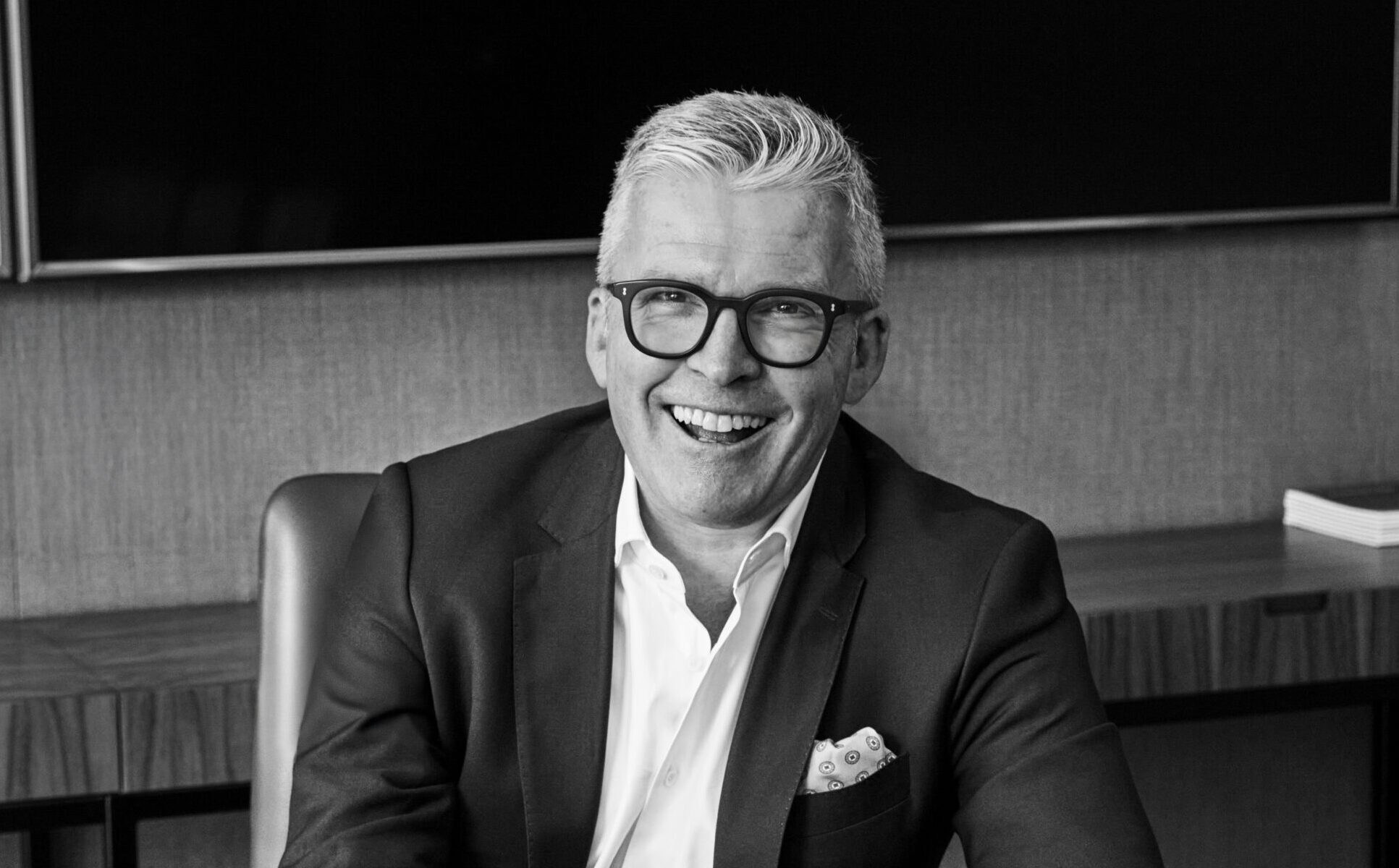
Mayer Brown increased its London revenue to $268.2m in 2025 – a 20% spike year-on-year, as the firm continued to scale its City offering through a targeted push into private capital.
Speaking to LB, London managing partner Dominic Griffiths said the growth reflected a deliberate strategy to deepen relationships with core clients across jurisdictions.
‘We have established much deeper connections and work with large clients, in particular transatlantic clients,’ he said. ‘The defining factor of this office, together with the United States, is that we’re certainly not an outpost of a New York law firm. We are a global firm, obviously, with a huge concentration of lawyers and business in the US, but we also have developed very strong relationships in London and Europe.’
A key driver of growth has been a more focused investment strategy over the past two years. ‘Two years ago, and in particular, into 2024, we decided to double down on certain areas, called accelerated growth areas,’ explains Griffiths, citing private capital, private equity, and private credit. ‘It has been a very deliberate move by the firm to empower and give authority and autonomy to certain partners leading teams that are highly relevant in this regard.’
The firm has backed that focus with lateral hiring in these areas, recruiting eight partners across private equity, leveraged finance, structured finance, and energy in 2025.
These include Legal 500 securitisation Hall of Famer Chris McGarry, who joined from White & Case last January, private equity partner Mark Evans and finance partners David Miles and Philip Butler, who all joined from Dechert in July, where Butler was co-head of leveraged finance, and private equity partner Tessa Agar, who joined from Goodwin in October.
The results are beginning to show. Private equity deal volumes in the City rose 95% year-on-year, while active structured finance matters increased by 14.8%. Integration is visible too: over the past year, London and New York teams worked together on 96 matters.
Recent mandates led out of London included advising Blackstone and Bourne Leisure on their £1.6bn commercial mortgage-backed securities (CMBS) financing of Haven Group last August – one of the largest sterling-denominated European CMBS issuances since the financial crisis. Last September, the firm advised Standard Chartered Bank on the establishment of its landmark $3bn clean energy infrastructure CLO platform with Apollo.
Alongside transactional work, litigation continues to play a significant role in the practice. ‘Litigation is still 40% of our practice, both locally and globally,’ said Griffiths. In addition to its focus on banking litigation, the firm’s London office also achieved a victory for Samsung and Saipem in the Court of Appeal in a high-profile dispute over Part 26A restructuring plans proposed by Petrofac in connection with a joint venture for the delivery of a refinery project for Thai Oil.
‘Elite US-based law firms are seeing clients expand extensively into Europe. Our hiring is matching that’
Looking ahead, Griffiths said the firm would continue to prioritise investment in its core growth areas.
‘We’ve created an environment and we’ve got the talent here that is generating good income, so I expect that to continue on a similar trajectory,’ he said. ‘We’ll continue to concentrate on private credit and private equity, but also very specifically energy, infrastructure and projects.’
On the latter, Griffiths noted: ‘We’ve noticed that some other high-level, marquee firms are not treating those kinds of practice areas with such keen interest as we are. We love private equity, but we’re not a firm that insists that all of our lawyers are working for private equity sponsors; we’re more diverse in our focus.’
For Griffiths, that shift is also driving increased lateral hiring across the market: ‘For elite US-based law firms, us included, their clients are expanding their business extensively into Europe. The top four or five private credit and private equity houses have set up new divisions – both lending and acquisition – in Europe in a much, much bigger way over the last two or three years,’ he explained. ‘Our hiring is matching that demand from the client base.’
And in a market increasingly defined by vast firms, aggressive hiring, and merger speculation, Griffiths stressed sustainability and client-focused growth. ‘I don’t like the idea of just growing for the sake of growth,’ he said. ‘We will grow cautiously as well because we basically want to maintain legal excellence, which is one of the biggest defining factors of this firm.’
That focus, Griffiths said, is reflected in the firm’s client base, with around 25% of Mayer Brown’s London clients having worked with the firm for more than 10 years.
The firm has also been investing in AI, rolling out a mandatory firmwide generative AI training curriculum this April, as part of a broader technology investment strategy that includes the adoption of Harvey AI and Microsoft Copilot. The training programme is set to roll out to all Mayer Brown’s lawyers around the globe over the course of the year, covering areas including responsible use, scenario-based training for practice area use cases, and leadership training.
Griffiths pointed to the procedural benefits and client value that AI has already enabled. ‘Our private equity team, our corporate team in general, and our litigators, have been very successfully integrating AI into their practice and what they can provide to clients,’ he said.
However, he also sounded a note of caution on tech: ‘AI is a fundamental tool we can harness for our work and for our clients but we are aware of the pitfalls such as ‘hallucinations’ in the litigation world. It’s all about using AI responsibly and managing the output.’
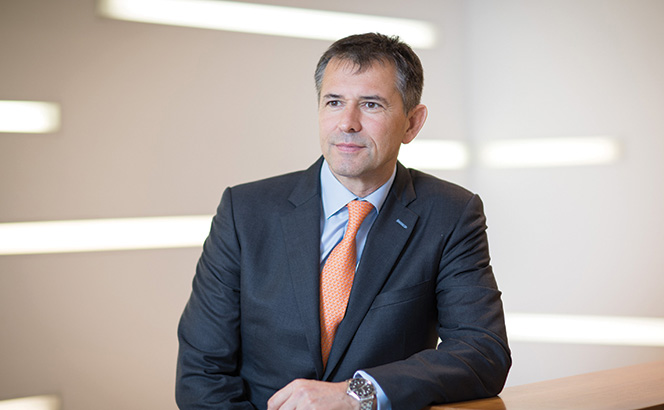







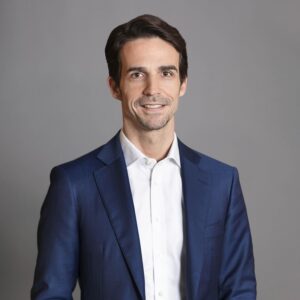 Beckhaus (pictured right) shares that conviction and wants Freshfields lawyers to view AI as central to their workflows: ‘The mindset we are trying to instil is that for any given task, you justify why you’re not using AI to help to solve it.’
 At the same time, the firm will gain access to Anthropic’s early-access programme, giving it visibility over products still on the future roadmap.







 Commercial knowledge of the sector
 Overall client service