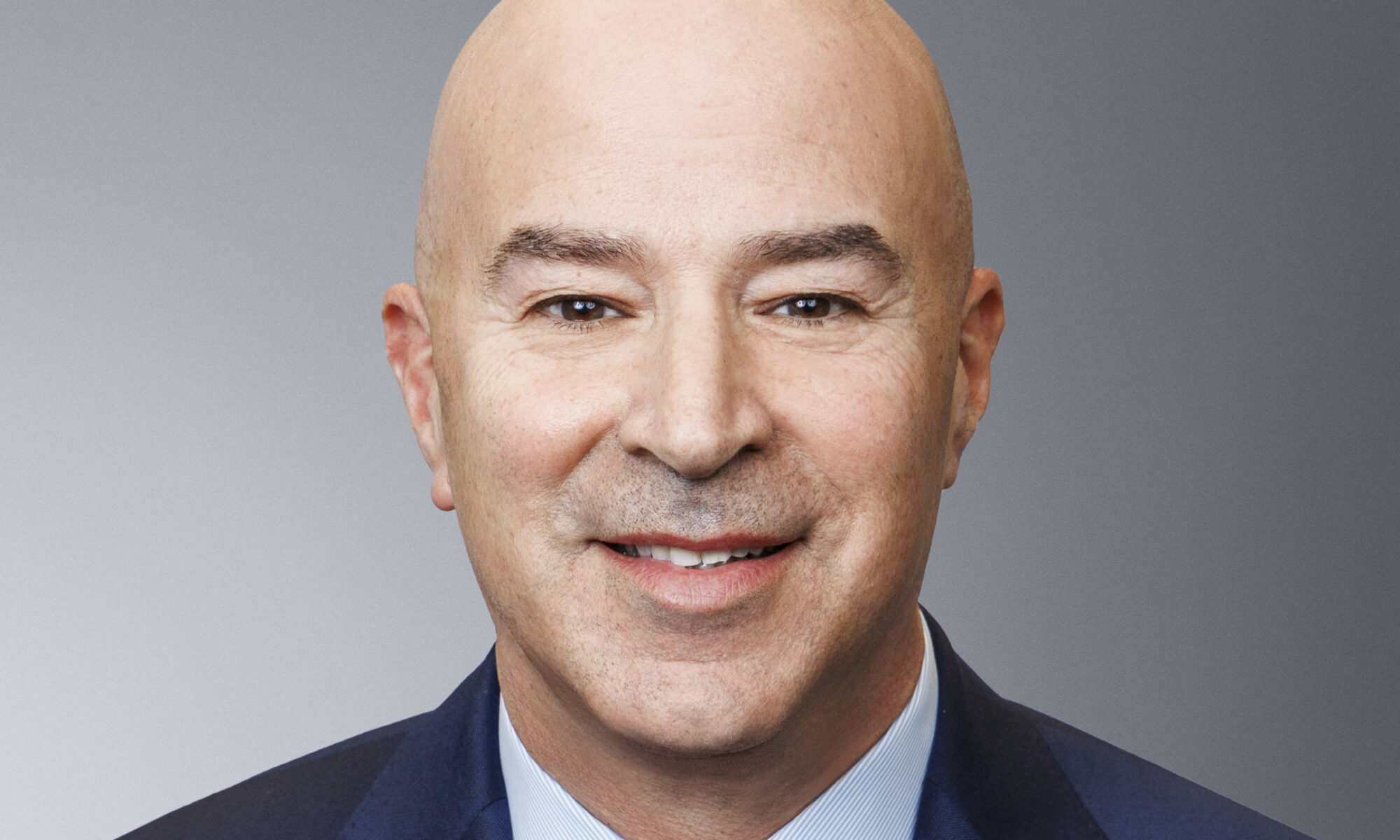
ESG Client Partner of the Year: the six names in the running

An intellectual property specialist, a regulated funds adviser or a white-collar crime expert – the definition of an ESG lawyer can span a wide and eclectic range of disciplines.

For the past three years, Legal 500 has recognised those lawyers leading the way in the ESG market, both with our London ESG ranking and the annual UK ESG Awards, which will this year take place in Mayfair on 30 April.

This year’s ceremony will include a new award for ESG Client Partner of the Year, which will go to the lawyer who received the most emphatic client endorsement during Legal 500’s 2025 research.

That research drew on more than 200 client referees, who delivered their verdicts on 135 individual lawyers from 41 firms.

The firms with the most feedback – Legal 500’s London ESG ranking

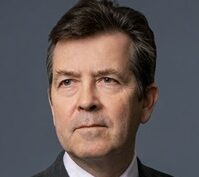
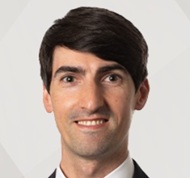
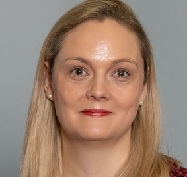
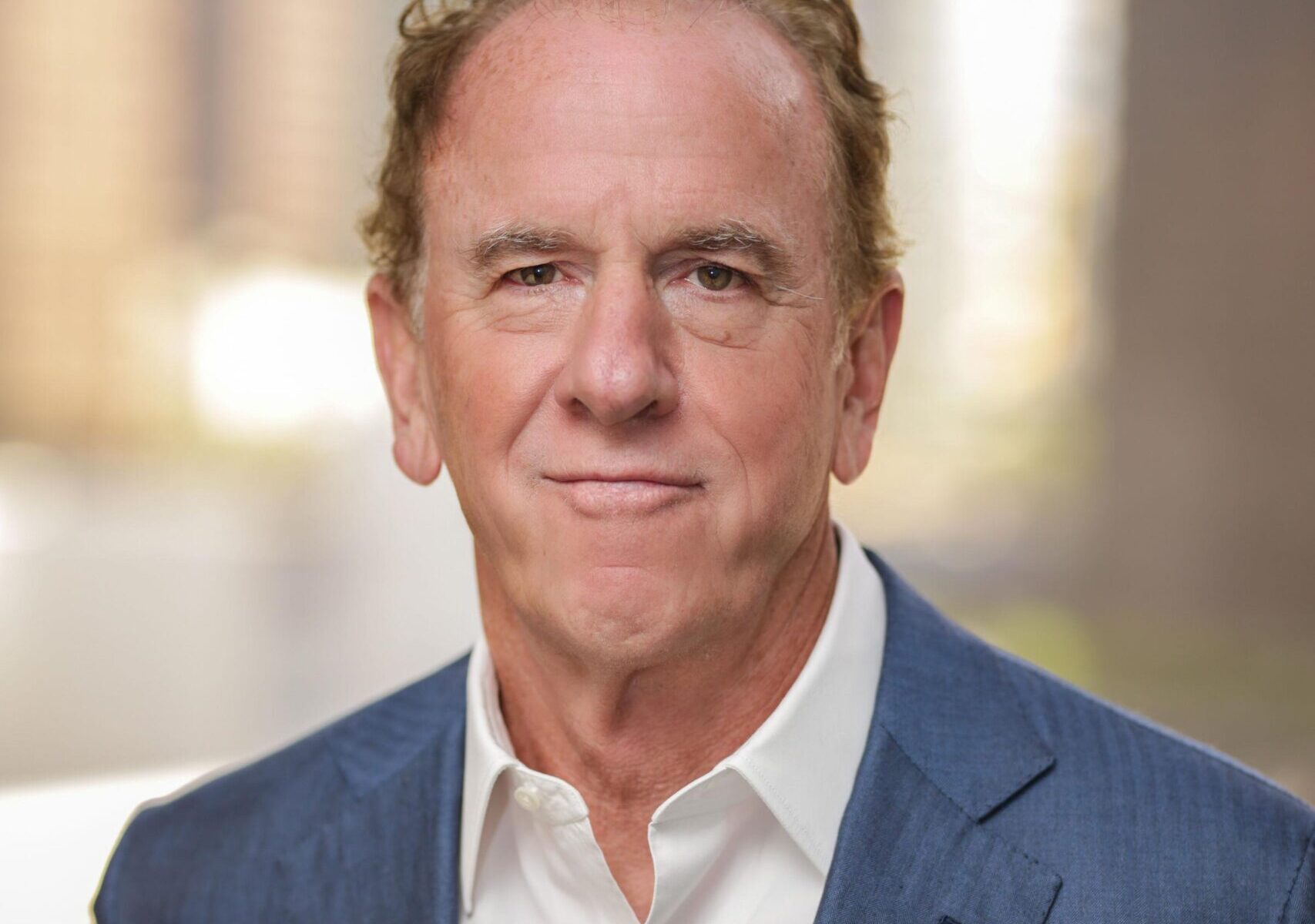
In terms of individual lawyers, the six who were most frequently namechecked by clients have been recognised with a spot on our shortlist for ESG Client Partner of the Year. While the winner is of course a closely guarded secret until the big day, here’s a run-down of the names in contention, with a sample of what their clients think about them.

Laura Houët, CMS

Funds partner Laura Houët, who co-heads the ESG Task Force at CMS, is described by one client as ‘a godsend’. Her work for asset management clients includes advising on sustainability regulation and reporting, and she is lauded for ‘making complicated processes as straightforward as possible, enabling me to feel absolutely confident in the advice at all times. We work with many law firms and Laura stands head and shoulders above many other lawyers we work with.’

Helen Bowdren, Dentons

Dentons partner Helen Bowdren has a varied ESG practice covering a mix of transactional, advisory and contentious matters, including investigations, judicial reviews and statutory appeals. ‘Helen strikes the right balance between getting involved and delegating to her team so we get a cost-effective service,’ according to one client – ‘she knows her stuff and explains it very well to my non-legal colleagues.’

Sam Eastwood, Mayer Brown

Mayer Brown’s Sam Eastwood also has a wide-ranging practice, with an emphasis on white collar crime, investigations and anti-corruption. ‘Sam’s wisdom and experience are second to none,’ says one client. ‘He has a wealth of knowledge and is so engaging on his specialist topics. He is practical, straight to the point and thinks creatively. He has an exceptional network which he draws on to help us share ideas. He gets under the skin of what we do, and provides a level of detail that you do not see from many others.’

Stuart Neely, Norton Rose Fulbright

One of the more junior partners on the shortlist, business and human rights litigator Stuart Neely was made up at NRF in 2023, but is already recognised as ‘a stand-out partner in the ESG practice,’ as one client elaborates: ‘Stuart is impressive in his breadth and depth of knowledge, and thinks laterally and creatively. He is a pleasure to work with and is approachable and generous with his time.’

Ciara Cullen, RPC

Ciara Cullen, who leads the consumer brands and retail sector group at RPC, is an IP specialist and one of the driving forces behind the firm’s ESG Evolve programme. As one client says: ‘She is always ahead of the curve within the ESG space – an absolute pleasure to work with. She is extremely efficient at resolving challenging discussions around ESG by translating solutions into practical terms.’

Sarah Ellington, Watson Farley & Williams

Watson Farley’s Sarah Ellington – ‘a fabulous lawyer and so great to work with’ – is another disputes specialist on the shortlist, working with clients on risk management and ESG governance issues. ‘She is innovative and very hard-working,’ says one referee, ‘and is committed to her clients and her colleagues. She wants to use the law as a means to improve the lives of underserved communities, yet she is also an excellent corporate lawyer who is very devoted to her clients.’

For more information on the Legal 500 UK ESG Awards, or to enquire about attending/sponsoring, please contact Kylie MacKenzie.

Simpson Thacher passes $3bn mark with double-digit revenue and PEP growth

Simpson Thacher & Bartlett has grown its global revenue by 22.5% to reach $3.55bn, with profit per equity partner (PEP) and net income also seeing substantial rises during 2025.

The performance means the New York heavyweight has broken through the $3bn turnover mark for the first time, up from $2.9bn in 2024.

PEP also grew by double digits, up by 11.8% to $8.57m, while net income increased by more than a quarter, growing by 25.6% to reach $1.96bn.

The firm also saw its equity and non-equity partnerships increase, with equity partners up 12% to 229, and non-equity partners up by 34.4% to 149. Overall headcount increased by 18% to a total of 1,761 lawyers.

The firm has continued to grow into 2026 with moves including the launch of a Singapore office. Private equity partners Ian Ho and Anthony King – who are relocating from Hong Kong and New York respectively – will co-lead the office as well as the regional private equity practice, while private funds partner Tony Liu is also moving from Hong Kong to head the regional funds practice.

The trio will be joined by two new hires – Baker McKenzie M&A partner Theodore Heng and Latham & Watkins energy and infrastructure corporate partner Carolyn Wong.

In the US, key hires have included Kirkland & Ellis partner David Nemecek – described as one of the leading restructuring advisors in the world – to launch a new office in Dallas and a new capital structure solutions practice. His arrival was followed two further Kirkland partner hires – Christina Bae in Los Angeles and Jacob Ruby in Houston.

London hires over the year have included Kirkland corporate partner Nick Appleton and Cadwalader structured finance partner Richard Hanson.

Standout mandates during the year included a role on the Claire’s restructuring, advising JPMorgan Chase Bank as administrative agent for the asset-based lenders to Claire’s,

[email protected]

Elite firms line up as Pershing Square launches €55bn bid for Universal Music Group

Sullivan & Cromwell, White & Case and Benelux firm Stibbe are advising Pershing Square Capital Management on its €55bn bid to buy Universal Music Group (UMG), which is being advised by Freshfields.

The deal would see UMG – the world’s largest music label, home to megastars including Taylor Swift, Billie Eilish and Kendrick Lamar – merge with acquisition vehicle SPARC Holdings, set up by Pershing Square Capital Management, the US hedge fund founded by billionaire investor Bill Ackman.

Should the deal go ahead, the combined entity would move its listing from Amsterdam to the New York Stock Exchange, incorporate in Nevada, and be named ‘New UMG’.

White & Case is fielding a New York-based team led by former Pershing Square vice chair Stephen Fraidin and M&A partner Richard Brand.

Both partners recently joined from Cadwalader, Wickersham & Taft: Brand in early 2025 at the head of a four-partner M&A and shareholder activism team, and Fraidin in February this year.

Wall Street stalwart Cadwalader has been a key advisor to Pershing Square, with Brand and Fraidin both representing it on multiple matters during their time at the firm. Fraidin advised on both its acquisition of a 10% stake in UMG from French media company Vivendi and its IPO, both valued at $4bn.

For his part, Brand worked for the fund as far back as a decade ago, advising it in connection with Canadian Pacific Railway Limited’s $30bn proposed merger with Norfolk Southern Corp, which fell through in 2016.

Stibbe’s team is led by Amsterdam-based corporate partner Pieter Schütte. Sullivan & Cromwell is also advising Pershing Square on the deal, while UMG has called in long-time adviser Freshfields.

The UK firm most recently advised UMG on the global merger control aspects of its $775m acquisition of Downtown Music in February this year. The team was led by antitrust partners Thomas Janssens and Thomas McGrath in Brussels and Mary Lehner in Washington DC.

In a letter to UMG investors, Ackman pointed to a drop in UMG’s stock price since its Euronext listing in September 2021, and said: ‘Going forward, the company will follow governance and capital allocation principles and execute actions that will proactively address the issues that have led to the company’s historical share price underperformance.’

He listed several factors that led to underperformance, including the postponement of UMG’s US listing and what he called ‘uncertainty’ around an 18% stake held by French conglomerate Bolloré Group.

‘Notably, none of the above issues relate to the company’s execution of its music business,’ he said, ‘and importantly, all of the above issues can be addressed in a merger transaction.’

According to the letter, in the transaction, shareholders will receive a total of €9.4bn in cash (€5.05 per share) and 0.77 shares in New UMG for each share of UMG owned by a shareholder.

A new board of directors would also be established for the combined company, chaired by veteran entertainment executive Michael Ovitz, alongside two Pershing Square representatives and existing UMG board members.

The transaction would be subject to approval by UMG’s and SPARC’s boards of directors, a two-thirds vote in favor of the transaction by UMG shareholders in attendance at a meeting, and required regulatory approvals, and is expected to close by the end of the year, the letter said. 

[email protected]

Legora hits £100m in 18 months, sets sights on US headcount increase

Legal tech company Legora has reached £100m in annual recurring revenue (ARR) in 18 months – twice as quickly as rival Harvey, which took three years to reach the same milestone.

Last month, the company raised $550m in a Series D funding round to support its planned expansion in the US. It recently opened two new offices in Houston and Chicago, and chief revenue officer Patrick Forquer (pictured) told LB that the firm wants to surpass a headcount of 300 in the US by the end of the year.

‘The US is now our largest country by revenue,’ Forquer said, adding: ‘In the last year we’ve seen expansion into India, Africa and Australia alongside sustained momentum in core markets across Europe, the UK and the US.’

Since opening up to the general market in the autumn of 2024, Legora has reached 1,000 clients including White & Case, Linklaters and Cleary Gottlieb. Recently, it has added firms such as HSF Kramer and Pinsent Masons to its client list, alongside corporates like Barclays.

It expanded its presence in India and Africa with partnerships, including with South African firm Bowmans in March. In Australia, meanwhile, it opened an office in Sydney last November.

In a statement, co-founder and CEO Max Junestrand said that the level of growth is a reflection of how the industry is changing and how ‘AI is becoming core infrastructure for the profession.’

Speaking to LB, Forquer added: ‘We’re anticipating significant team expansion in the year ahead. Demand is strong so we’re constantly growing our headcount just to keep pace.’

Founded in Sweden in 2023, Legora offers a range of AI-enabled legal tech solutions, and is increasingly being used to enable new agentic, multi-step workflows which are shifting the nature of legal work, especially at the trainee and associate level.

‘The operating environment for law firms and in-house teams is changing rapidly, and we’re constantly thinking about the challenges they’ll face and what they’ll need next,’ Forquer said.

As of its latest funding round the company was valued at $5.5bn.

Growth has been aided by a Silicon Valley accelerator called Y Combinator, which previously worked with large companies such as Airbnb and Stripe.

Harvey, one of the other leading players in the legal tech space, was founded in 2022 and has also seen a large increase in scale driven by growing demand from law firms and in-house teams. Despite Harvey taking three years to reach $100m in ARR, its latest fundraising round saw it achieve an $11bn valuation.

Earlier this year, tech platform Wexler, which focuses on AI solutions for litigation – locating and organising facts from large document troves – began to diversify its customer base by targeting barristers’ chambers and insurance work.

[email protected]

‘What GCs increasingly reject is elegant analysis with no landing gear’ – how in-house teams are redefining value

Julie Duvivier (above left) is GC for France and Belgium at Klépierre, one of Europe’s leading retail real estate companies. Before joining in 2021, she also held senior legal roles at CDC Investissement Immobilier and Twenty Two Real Estate Group, after starting her legal career in private practice at Jones Day and Freshfields. Cassandre Mariton (above right) founded NextGenLegal Advisory to help in-house legal leaders to to build high-performing, efficient and influential teams. Her career spans both in-house and private practice, with spells at Aviva, Skadden and Cleary.

Over the past decade, what has most fundamentally changed in the role of in-house counsel?

Julie Duvivier: The centre of gravity has moved. Ten years ago, we were seen primarily as risk managers – often the people who slowed things down. Today, the expectation is different: help the business move, safely, and faster.

At Klépierre, legal isn’t only about protection. It’s about unlocking value, in lease negotiations and tenant relationships, the lifeblood of our business, as well as in transactions, partnerships, development projects, sustainability commitments, and innovation. Our role is to find the path that maximises opportunity while keeping risk within acceptable parameters.

Cassandre Mariton: I agree, and I would add that it is not only about what in-house lawyers do; it is about how legal departments position themselves within the organisation. If you want others to see you differently, you have to act differently.

Legal expertise is table stakes. The best in-house counsel do not stop at legal advice: they make it decision-ready: clear, contextualised, and executable. Advice becomes strategic when it becomes usable.

What did ‘transformation’ mean in practice for your team?

Julie: It started with a simple but uncomfortable question: why do we exist as a legal department beyond compliance? Not our tasks, our purpose. Working with Cassandre, we articulated that purpose clearly. And once your ‘why’ is explicit, you stop behaving like a reactive service and start operating like a strategic function. The team could name what they truly do: enabling Klépierre’s ambitions with pragmatic, business-oriented counsel.

‘What gets measured gets valued. What doesn’t becomes invisible’

Cassandre: And that is the key: Julie’s team did not stop at the ‘why’. Purpose without execution is philosophy. Purpose with operating discipline becomes performance. Transformation is not an org chart. It is an operating model: decision rights, governance, ways of working, tools, and the culture that makes them stick.

In 2026, this is non-negotiable: more regulation, higher expectations, and flat or shrinking teams. Transformation is not a nice-to-have; it is how you protect the business, and keep creating value. Julie and her team shaped their ‘why’; we brought the method and the pace. We simply helped reveal what was already there and turn it into something executable.

What’s the most challenging part of managing an in-house legal team compared to private practice?

Julie: Stakeholder complexity. In private practice, feedback loops are clearer: an external client, defined deliverables, a partner structure. In-house, you are embedded in a business ecosystem with competing priorities everywhere. Commercial wants speed. Development wants ingenuity. Finance wants predictability. Compliance wants control. And you need to help all of them succeed, simultaneously.

Cassandre: That’s the in-house reality: you’re surrounded by people who think in different languages – ROI, delivery, customer experience, timing. That’s why context is the human edge. Legal judgement becomes valuable when it is anchored in business reality: the economics, the operational constraints, the market dynamics. Law without context is correct, and sometimes irrelevant.

Julie: You can redesign processes, deploy tools, change the structure, but if you don’t bring the team along, you get compliance, not transformation.

One concrete example: instead of dense legal memos, we create visual one-pagers that tell a story – here’s the opportunity, here’s the risk landscape, here’s our recommended path, and here’s the business impact.

What made the real difference is that legal design wasn’t a one-shot workshop. We built it over time. Cassandre and her team come back regularly to run refresh sessions, bring new tips and techniques, and challenge us with new questions, so the learning curve stays steep, and the quality level keeps moving upward as our business needs evolve.

‘Purpose without execution is philosophy. Purpose with discipline becomes performance’

Internally, we also created a legal design committee within the legal team. It acts as a quality gate: it validates the clarity and usability of our outputs before they go to the business. That governance is what helps us maintain a consistent standard, at scale.

This committee also drives the continuous improvement of our knowledge library. Beyond validating individual documents, it identifies recurring needs and commissions new resources: a reminder memo on a frequently asked question, a new standard clause, a visual explainer for a regulatory change. The library grows because the demand grows, and that demand is itself a signal that the team has internalised the logic of producing clear, reusable outputs.

Cassandre: That’s exactly how transformation sticks: not by producing a few great documents, but by building a capability with rhythm, standards, and ownership. Refresh cycles plus internal peer validation turn legal design from an initiative into an operating standard. And once it becomes a standard, business partnering changes level: you’re not just clearer, you’re reliably useful.

What do you expect from external counsel today, and what do you no longer want?

Julie: I want partners who understand my business, not just the law. Don’t send me thirty pages unless it is truly necessary. Give me three options, the trade-offs, and a recommendation I can take to decision-makers. I value counsel who can say: ‘Given your objectives, here are three approaches, each with a different risk-reward profile, and here’s what it means operationally.’

What I no longer want is advice that is technically flawless but disconnected from how decisions are made and executed in real life. The pace is higher, the stakes are broader – ESG, governance, reputation, stakeholder pressure – and legal teams are expected to be both guardians and enablers. External counsel is at its best when it brings perspective: benchmark, pattern recognition across sectors, and the ability to anticipate what will matter tomorrow, not only what is true today.

‘If it cannot be adopted, it is not a solution, it is a document’

I would add one dimension that is becoming increasingly rare: I value counsel who genuinely give their opinion. Not a hedge, not a structured disclaimer — an actual view. When you consult a lawyer, you are not just buying legal analysis. You are buying judgement. The fear of liability has made many external lawyers cautious to the point of silence on the very question clients are asking: what would you do?

In practice, the risk of giving a clear, well-reasoned recommendation is far lower than the commercial risk of being perceived as unhelpful. The best counsel I work with know this.

That’s the counsel we need: decision-ready, not just legally sound. But I also need something that legal advice alone does not guarantee: implementation support that ensures adoption, ownership, and measurable impact across the organisation. Great advice is one thing. Implementing it across a complex organisation, driving adoption, clarifying ownership, embedding the right governance, and measuring impact is another discipline entirely.

Cassandre: And that is exactly where the profession is shifting, and where the market is expanding. Traditional external counsel remains indispensable, particularly for high-stakes litigation, complex transactions, and specialised regulatory interpretation. But in-house teams increasingly need something adjacent: a partner who helps turn advice into operating reality, what happens after ‘the answer’: how you operationalise it, scale it, and make it stick.

What in-house teams increasingly reject is elegant analysis with no landing gear. If it cannot be adopted, it is not a solution, it is a document. Adoption fails for cultural and operational reasons, not because the legal analysis is wrong.
That is why starting with purpose, then operating model, then measurement is so powerful: it creates the conditions where tools, processes and technology actually deliver.

Why is demonstrating value such a critical topic for legal teams?

Cassandre: Because every function is now measured in business terms. Finance shows ROI. Operations shows efficiency. Marketing shows acquisition and retention. Legal often struggles because its value is framed defensively –  ‘we kept you out of trouble’. That can position legal as a cost centre, and cost centres get squeezed.

Legal teams are not only protectors, but functions that influence strategy, drive transformation and support business growth. What gets measured gets valued. What doesn’t get measured becomes invisible.

Julie: At Klépierre, we are considered core business, and we communicate impact accordingly. Positioning matters as much as structure. At Klépierre France, my direct line to the head of France and my seat on the French management committee are not formalities, they are operational levers.

When legal is represented at that level, the conversations are different: earlier, more complete, more strategic. It means I can shape decisions before they are made, not just manage consequences after. That proximity to leadership is what transforms legal from a support function into a true business partner. That is why we don’t measure volume for its own sake, we measure what drives business outcomes.

And we did the exercise properly: we put our existing indicators on the table, rationalised them, refocused them, and turned them into a proactive decision tool.

We track lead times from drafting to signature (and key procedural timelines), because speed, when controlled, creates value. We monitor adoption metrics such as automation usage in leasing and the share of procurement contracts signed autonomously through standardised pathways. We also track digitalisation fundamentals, dematerialisation rates across leasing, real estate and transactions, and digital archiving, because scale requires traceability and disciplined data.

Finally, we connect legal to business-facing impact through indicators such as signed disposals value and annual external counsel fees, to steer resource allocation and performance, not just report activity.

Cassandre: And it changes internally too. Teams want to know their work matters. Measuring impact strengthens morale, attracts talent, and builds credibility for innovation. Metrics are not control; when chosen well, they are recognition.

If you had to give a blueprint, how should an in-house legal department organise itself?

Cassandre: Align with the business, geography, business lines, product lines. Structure reduces friction. But structure alone is not the answer. Performance comes from the operating model: governance, decision rights, workflows, and culture. You can have a beautiful org chart and still fail.

Julie: Clarity of roles is essential: no duplication, no gaps. We have deliberately worked to break down silos and foster genuine collaboration across the organisation. One concrete illustration: our team members are now invited to asset review meetings as full business partners, not just as validators at the end of the chain. That presence changed the quality of the conversations, and frankly, the quality of the decisions.

We’ve reinforced business partnering with clear ownership by value chain. Our business partners don’t just provide support, they own outcomes: intake, playbooks, templates, stakeholder rhythm, and continuous improvement. That’s how you build consistency and trust with the business.

‘The counsel we need is decision-ready, not just legally sound’

We have also made a deliberate choice to dismantle the ‘guardians of the temple’ reflex. Legal knowledge is not a competitive advantage when it is hoarded, it becomes one when it is shared. We also give teams meaningful autonomy on well-scoped legal questions. The goal is not to make everyone a lawyer: it is to make legal intelligence pervasive in the organisation.

Cassandre: That’s where business partnering becomes an operating model, not a title: clear ownership, standard ways of working, and continuous improvement. It also creates the right basis to deploy technology intelligently, not tools for tools’ sake, but automation where it reduces friction and frees time for judgement.

But the deepest lever is cultural. Tools and processes can be copied. A legal team that has genuinely internalised a business mindset: one that asks ‘how does this create value?’ before ‘what does the law say?’ cannot be replicated overnight. That cultural shift doesn’t happen by decree. It happens through repeated exposure: joint working sessions, shared language, feedback loops with the business, and leaders who model the behaviour they want to see.

Many legal leaders know they need to transform, but don’t know where to begin. Your advice?

Julie: Start with why. Define your purpose beyond compliance. Once that’s clear, everything flows: structure, processes, KPIs, and technology.

One practical piece of advice I would add: take the time to co-create the framework before you scale it. There is a temptation to move fast and speed matters but the teams that build sustainable transformation are those who invest upfront in genuine buy-in. Co-creation takes longer at the start. But a framework that people have shaped together is adopted, not just tolerated. That early investment in collective design pays back many times over in execution speed and team ownership.

And don’t do it alone. Transformation is demanding. It requires an external perspective and internal ownership, and a leadership posture that brings the team along.

There is also something leaders rarely say out loud, but which I have learned to name: one of the most underestimated barriers to transformation is the leader’s own unconscious doubt about the team’s capacity to change. If you do not genuinely believe your team can adapt, that hesitation shapes every decision: how you communicate, what you delegate, how much you invest in upskilling. Building confidence in the team’s capacity for change is not a soft skill. It is a strategic posture. And it starts by saying, explicitly: I believe you can do this.

Cassandre: And that confidence Julie describes, it is also what transformation ultimately produces. When a team sees its work matter, when legal becomes a language the whole organisation speaks, something shifts permanently.
So: start small but think in systems. Choose one high-impact area: a recurring transaction type, a critical business interface, a pain point everyone feels. Redesign it end-to-end, measure the impact, learn fast, then scale. And remember: if it can’t be adopted, it’s not a solution, it’s a document.

The next generation of lawyers expects purpose, growth, and continuous learning. When you upgrade the operating model, you upgrade the employee experience and that becomes your most powerful retention lever. Transformation is not just about performance. It is about meaning.

The legal profession is at an inflection point. The leaders who will define it are those who combine rigour with clarity, performance with meaning, and who have the courage to act before they are asked to.


Debevoise boosts City revenues by 41% as PEP breaks $6m

Debevoise & Plimpton‘s London office delivered standout growth in 2025, with revenue surging 41.2% to $267.9m, well ahead the firm’s global performance.

The results mark a sharp acceleration on 2024, when London revenue rose 12.9% to $189.8m.

The City results helped lift firmwide revenues by 8.7% to $1.76bn, while net income increased 12.5% to $904.9m. Profit per equity partner also rose by 12.5% to break through the $6m mark, up from $5.3m.

In the City – the firm’s second-largest office – revenue per lawyer jumped 28.4% to $1.49m, as lawyer headcount increased to 178 from 164. Partner numbers remained broadly stable, edging down slightly from 30 to 29.

The firm moved into new offices in London in 2025, taking three floors in the refurbished Northcliffe House, the former headquarters and printworks of the Daily Mail. Lateral investment in London also saw key hires including Goodwin private equity and M&A partner James Grimwood and Eversheds Sutherland insurance duo Hugo Laing and Rosamund Wood.

The firm was active on a number of high-profile mandates across both transactional work and disputes, with London particularly busy in its core strengths of private equity, funds and insurance.

A City team advised US private equity house CD&R on the financing aspects of its acquisition of a controlling stake in Opella, a France-headquartered consumer healthcare company valued at £16bn – one of the largest leveraged buyouts in Europe in the last 12 months.

In disputes, the firm also represented Hess in an arbitration against ExxonMobil and CNOOC, the Chinese state-owned oil and gas company, successfully clearing the barriers to Chevron’s $53bn acquisition of Hess.

The cross-border team included London-based international disputes resolution partner Samantha Rowe and then London co-head Lord Peter Goldsmith KC.

Lord Goldsmith retired from Debevoise this January 2026 after 18 years at the firm, latterly as London co-managing partner and chair of European and Asian litigation, and is now at Fountain Court Chambers.

[email protected]

Revolving Doors: Simpson Thacher launches in Singapore as Ropes, Clifford Chance build in Paris

Paris

Simpson Thacher & Bartlett has relaunched in Singapore, relocating senior partners alongside a pair of hires from Baker McKenzie and Latham & Watkins.

The office will focus on high-value cross-border transactional work, advising sponsors on private equity, funds, M&A, real estate, energy and infrastructure and digital infrastructure matters.

As part of the move, the firm has named partners Ian Ho and Anthony King co-heads of its Asia private equity practice, with both partners relocating to co-lead the new office, from Hong Kong and New York respectively.

They will be joined by M&A partner Theodore Heng from Baker McKenzie, energy and infrastructure corporate partner Carolyn Wong from Latham & Watkins, and Simpson Thacher private funds partner Tony Liu, who will relocate from Hong Kong to lead the firm’s regional funds practice.

King is a Simpson Thacher lifer of 22 years, and was based in Hong Kong for seven years before a move stateside in 2020. His practice centres on real estate private equity and asset-heavy M&A deals, representing clients like Blackstone, most recently on its acquisition of a majority stake in Japanese contract research organisation CMIC last year.

Ho is a seasoned corporate partner, with 21 years at the firm under his belt advising clients like Blackstone, Softbank, CVC and KKR on cross-border transactions in both the US and APAC.

Ian Ho said: ‘Singapore is a central hub for global investors and multinational businesses. Establishing an office here reinforces our longstanding commitment to clients whose most important regional and cross-border initiatives increasingly touch Singapore.’

The launch marks a return to Singapore for Simpson Thacher, which previously launched there in 1997, but shut up shop in 2003. The new office will be the fourth in Asia for the firm, which currently operates in Beijing, Hong Kong, and Tokyo, with around 100 lawyers in the region in total.

A period of high activity in Europe has continued, with Ropes & Gray leading the lateral market hires with a three-partner hire from Latham & Watkins in Paris, alongside a team of associates.

M&A and PE partners Gaeten Gianasso and Denis Criton both spent over two decades at their former firm, with Criton serving four years as global chair of the knowledge management committee. They will split their time between Paris and London.

M&A partner Michael Colle also joins, following 10 years at Latham, where he made partner in 2026. He will be based solely in Ropes’ Paris office.

The hires mark a further step in Ropes & Gray’s buildout in Paris, with the firm earlier this year adding a ten-lawyer team from Linklaters led by senior funds and tax partners Edouard Chapellier and Jonathan Abensour, following its launch last March with a three-partner team from Clifford Chance.

For its part, Clifford Chance picked up a pair of partners from Orrick, bringing over the firm’s Europe head Patrick Tardivy, a Legal 500 leading partner for large to mid-market M&A deals. Joining with Tardivy is energy and infrastructure partner Paul Loisel.

Also in Paris, Morgan Lewis has tapped Hughes Hubbard for a five-lawyer international trade and investigations team.

The team is led by partners Marie-Agnes Nicolas and Anne Gaustad-Hanken, supported by of counsel Mathieu Rossignol and two associates.

Nicolas represents multinational organisations in complex cross-border enforcement and regulatory matters including economic sanctions and ESG. Gaustad-Hanken advises multinational public and private corporations and senior executives in white-collar investigations, regulatory proceedings and sanctions before US and European authorities.

Both Nicolas and Gaustad-Hanken spent significant time at their former firm, 15 and 13 years respectively. Nicolas also served on the executive committee from January 2026.

Addleshaw Goddard has appointed Jérémie Paubel to lead its employment team in the French capital. He joins from Baker McKenzie, where he spent more than a decade, specialising in reorganisation projects and collective redundancies.

Finally in Paris, HFW has added global disputes and regulatory investigations partner Louis-Alexis Bret.

Bret joins from Amazon, where he served five years as principal legal counsel for logistics operations in Europe. Prior to this, he was an associate and then counsel at Clifford Chance.

In Germany, White & Case has hired co-chair of Taylor Wessing’s international tech, media and communications group Norman Roechert. He joins as partner in the global M&A and global technology industry group in the firm’s Berlin office.

Roechert was a Taylor Wessing lifer, spending 19 years at the firm, where he built a practice advising growth funds, financial sponsors, growth companies and founders operating in emerging technology such as AI, defence, tech, energy, transition and software for financial institutions.

The move marks the fourth partner exit since Taylor Wessing announced its merger with Winston Strawn in December last year.

In London, Eversheds Sutherland has hired DLA Piper’s City managing partner Ruth Hoy. Hoy previously led the firm’s intellectual property and technology (IPT) practice group in the capital. She joins as a partner in Eversheds’ IP disputes practice.

Her work sits across the retail, media, sport and entertainment sectors in the UK and Europe, where she specialises in urgent relief applications, including search orders.

Also making the jump to Eversheds is IP disputes lawyer Huw Cookson, who joins as a partner following four years at DLA, where he became a legal director in 2025.

Eversheds has also brought over fund finance partner Linn Mayhew, who joins the firm’s City office from Reed Smith.

In another major move, Ashurst has hired capital markets partner Jonathan Parry from White & Case. A Legal 500 Hall of Famer for mid-large cap equity capital markets work, Parry rejoins Ashurst after nearly a decade at W&C.

Ashurst global head of corporate Jason Radford said: ‘Jonathan is a proven leader in the ECM space, bringing deep experience advising both issuers and financial institutions across the full spectrum of public offerings. His track record of guiding clients through complex capital markets transactions, combined with his strong relationships, will be a tremendous asset to our platform and means we are well positioned to drive accelerated growth in this area.’

Also in the City, corporate partner Miroslav Tomo has left Kirkland & Ellis to join Willkie Farr & Gallagher’s corporate and financial services department and private equity practice group.

Tomo spent just under nine years at Kirkland, making partner in 2023. He was previously an associate at Linklaters.

His practice involves advising sovereign wealth funds and financial sponsors on cross-border public and private M&A, private equity and corporate transactions across numerous sectors, with a focus on real estate and infrastructure. His clients have included Blackstone, KKR, and Nordic Capital.

At Willkie, he will reunite with former colleague private equity partner Hamesh Khatkar, who joined from Kirkland last October.

Macfarlanes has tapped Baker McKenzie for London leveraged finance partner Nick O’Grady. O’Grady spent eight years as a partner at Baker McKenzie, joining from Ropes & Gray in 2018 after five years as an associate.

Alston & Bird has hired a pair of partners from DLA Piper, bringing partners Steven Krivinskas and Marcus Lovatt into its structured and warehouse finance team.

Krivinskas spent nearly 15 years at DLA, while Lovatt spent more than 16. Each brings experience advising financial institutions, credit funds, and other lenders on a range of funding and capital markets transactions, and each is individually recognised by Legal 500 in its securitisation ranking for London, Krivinskas as a leading partner and Lovatt as a next-generation partner.

Morrison Foerster has tapped Pallas Partners for senior complex litigation partner Susana Cao Miranda.

Miranda brings two decades of experience in commercial and financial litigation. She spent just under two years as a partner at Pallas, having joined from Linklaters in 2024 where she served seven years as partner. The role followed just under seven years as managing director and senior counsel at Goldman Sachs.

Her arrival comes after MoFo saw senior litigation partner Jonathan Wheeler depart for Pogust Goodhead in December.

Elsewhere, Dentons has added Jack Donelan as a corporate partner in London.

Donelan joins from Kirkland, where he spent more than nine years, making partner in 2022. He advises across the spectrum of corporate law, including M&A, leveraged buyouts, joint ventures and PE deals.

Finally in London, Cahill Gordon & Reindel added partner Shane McDonald in its European finance practice.

McDonald joins from White & Case, where he spent seven years as partner. He previously served in-house as senior vice president at Hudson Advisors, an asset management partner to the Lone Star Funds.

In Asia, Mayer Brown has added a partner duo from A&O Shearman in its Tokyo office.

Toshiro Mochizuki and Kana Morimura both joined the firm, following the earlier arrival of former A&O Shearman Japan head and legacy Shearman & Sterling Asia co-head Masahisa Ikeda, who was appointed Tokyo managing partner in February.

Mochizuki advises issuers and underwriters on global offerings, Securities and Exchange Commission governance, and other US securities law matters involving business combinations and mergers. Morimura focuses on disputes and investigations, advising on multi-jurisdictional regulatory probes, antitrust matters, as well as commercial disputes for Japanese companies operating globally.

Mochizuki has spent more than 13 years at A&O Shearman, joining legacy Shearman in 2012 and making partner in 2018. Morimura spent 15 years at A&O Shearman, joining legacy Shearman as an associate in 2011 and making partner in 2021.

Mayer Brown’s Tokyo office headcount now sits at 13, reflecting a concerted effort to rebuild its Asia offering in light of an uptick in investment activity in the region.

The departures of Mochizuki and Morimura leave A&O Shearman with seven partners remaining in Tokyo.

Elsewhere, Stephenson Harwood has drawn a senior corporate partner duo from Hogan Lovells in Hong Kong.

Veteran corporate and capital markets partner Sammy Li joins following nine years at Hogan Lovells, where he most recently served as head of corporate in Hong Kong. He brings a broad practice spanning IPOs and cross-border transactions, having previously held roles as Hong Kong chair at Paul Hastings and as an executive director at Morgan Stanley.

He is joined by Samson Suen, who was promoted to counsel at Hogan Lovells in January 2022 after joining as an associate from Paul Hastings in 2016.

‘The Hong Kong IPO market is very active, and we expect that to continue,’ said Evangeline Quek, Stephenson Harwood’s Greater China managing partner, commenting on the hires. ‘Sammy and Samson joining our team will provide a formidable offering as our clients build their growth strategies across the Asian economies.’

In the Middle East, Reed Smith has hired a corporate team from AlAmmar Law into the Riyadh office it launched last October.

The team is led by founding partner Mohammed Alammar and corporate partner Anmar Algharifi. The former has deep experience advising clients across the Kingdom and the Gulf Cooperation Council (GCC) on corporate matters, projects and infrastructure, real estate, investment funds, and finance. Algharifi advises on public and private M&A, joint ventures, capital markets, PE, and foreign investment matters.

The team will bring across its clients, which includes the Saudi Arabian government, and prominent financial institutions, private equity and real estate investors.

[email protected]

Skadden and Paul Weiss lead as Intel buys back $14bn Apollo stake in Irish semiconductor plant

Skadden and Paul Weiss have taken lead roles on Intel’s $14.2bn repurchase of Irish semiconductor plant Fab 34.

The deal will see Intel reacquire a 49% equity interest in the semiconductor plant, which had been sold to an Apollo-led joint venture for $11.2bn in 2024.

Skadden is acting for Intel alongside Eversheds Sutherland, which is handling tax advice on the sale.

The US firm’s team is led by corporate partners Christopher Bors and Sonia Nijjar in Palo Alto.

The team also includes U.S. energy and infrastructure partners Nike Opadiran and Aryan Moniri, antitrust partner Joseph Rancour, and Andrew Foster, the Hong Kong-based head of Skadden’s Asia-Pacific antitrust and competition practice.

Paul Weiss is advising long-term client Apollo on the deal, with Kirkland & Ellis acting as special legal counsel to Apollo’s independent board.

Both Skadden and Paul Weiss also advised Intel and Apollo on the original joint venture agreement.

Last year, the US Government bought a 10% stake in Intel worth $8.9bn, after which the company’s share price rose by around 5%.

In a statement, Intel CFO David Zinsner said: ‘Our 2024 agreement was the right structure at the right time and provided Intel with meaningful flexibility, enabling us to accelerate critical initiatives.’

He continued: ‘Today, we have a stronger balance sheet, improved financial discipline and an evolved business strategy. We appreciate Apollo’s continued collaboration to reach this outcome as we realign our capital structure with our long-term strategy.’

‘We want to be bigger, better, everywhere’ – John Quinn on why Quinn Emanuel isn’t slowing down

‘I am yet to find a person who wants a wallflower or a potted plant for a litigator,’ says John Quinn, chair and founder of international litigation specialist Quinn Emanuel Urquhart & Sullivan.

Founded 40 years ago in downtown Los Angeles, the firm has built its reputation on an assertive, trial-ready approach, taking on the world’s largest financial institutions.

This mindset, Quinn argues, has been at the core of the firm’s success. He embraces the moniker of ‘most feared’ litigation shop, citing the firm’s growth from just four lawyers in 1986 to 1,300 across 34 offices today.

‘As a litigator, you cannot be bashful. It’s not a recipe for success in this area of practice,’ Quinn says.

The label ‘aggressive’ is also shrugged off: ‘It’s a ham-handed way of addressing the thought. The approach to any case must be strategic. This could mean it’s sometimes aggressive, sometimes modulated.’

Even so, the firm has been doing some introspection. It is currently undergoing a ‘refresh exercise,’ comprised of a website revamp, as well as surveys conducted internally with staff and externally with clients to understand market perceptions of the brand.

These listening exercises prompted reporting that the firm was considering a shift in tone, with its traditional brand perceived as too ‘aggressive’ for non-US audiences in particular.

However, Quinn maintains that the outcome of these surveys is yet to be determined, stressing that ‘it may turn out no change is necessary.’

For him, there is no evidence that the firm’s branding or positioning has been holding it back.

If anything,  the firm’s latest financial results underline this position.

PEP to write home about

Last month, the firm posted a 12.6% increase to its topline for the 2025 financial year, representing its third consecutive year of double-digit growth, with revenue of nearly $2.8bn.

Profit per equity partner (PEP) was up 10.6% year-on-year to $9.5m.

In the London office, led by co-managing partners Ted Greeno and Alex Gerbi, revenue in GBP rose 3% from 2024, hitting a new high of £227.1m, with the office’s profit margin climbing to 68%, up from 65% the previous year.

But John Quinn is not resting on his laurels: ‘We have a lot to be happy about and proud of in terms of what we’ve accomplished, but we also regard it as an unfinished project.’

Certainly, his ambitions are no more cautious than they were when the firm was smaller.  ‘Our goal is to continue to win more than our fair share of cases, win more cases that maybe we shouldn’t have won. It’s no one focus. We want to be bigger, be better, everywhere, in everything.’

‘It’s like that Hollywood movie, Everything Everywhere All at Once,’ he adds.

Practice focus

Two areas in particular continue to drive the majority of the firm’s work.

Quinn explains: ‘Our largest practice areas have been intellectual property, and by that I mean largely patent litigation, and finance-oriented litigation representing funds of all kinds: structured finance disputes, restructuring disputes, and insolvency and bankruptcy disputes. Those are our two largest practice areas, and that’s not going to change any time in the near future.’

Alongside these, other areas are gaining momentum. ‘We’re seeing our international arbitration practice do very, very well, as well as our antitrust and government regulatory practice,’ he says.

This year sees several major mandates for the firm. In October, it will represent Aabar Holdings in a multibillion-dollar shareholder group action against natural resources giant Glencore, led by London senior partner Richard East and solicitor advocate Julianne Hughes-Jennett.

This month, East and Hughes-Jennett are also in the High Court for the first-stage liability trial in the  Pan-NOx emissions litigation – one of the largest group proceedings ever brought in the UK.

Looking East

Geographically, growth is increasingly being shaped by global economic flows.

In Asia, Quinn is turning its sights on work from India, the world’s most populous country, with an estimated GDP growth rate of 8% for 2025-26. As he points out: ‘There’s no other country with an economy that size, growing like that.’

The country’s growing cohort of globally active entrepreneurs is central to the firm’s international strategy.

‘You have great wealth there,’ says Quinn. ‘In the past, [Indian businesses] have stayed in India because it’s such a large internal market. Now they’re reaching out and becoming increasingly cross-border and global.’

For disputes work, that shift has a clear consequence. ‘We’re disputes lawyers, and Indians are not afraid of disputes,’ Quinn says.

Crucially, for Quinn, the firm’s preferred venue for resolving disputes in Asia is the Singapore International Arbitration Centre.

Quinn Emanuel has been in Hong Kong for more than a decade. But, ‘rightly or wrongly, I think people view Hong Kong maybe a little bit differently,’ Quinn says, citing ‘questions in some people’s minds about whether it’s still a neutral forum’. Singapore, he adds, has been the ‘beneficiary of this attitude’.

That trend drove the firm’s launch in Singapore two years ago, following what Quinn saw as an ‘increasing market share moving to Singapore.’

Disputes being heard in Singapore come not only from India, but also from Thailand, Malaysia and the Philippines, as well as Singapore: ‘All very large economies,’ says Quinn, adding that ‘Singapore became important because India is important.’

The firm’s Singapore outpost began with one lawyer, Duncan Watson KC, and now has 11, Quinn says. ‘It’s been very successful,’ he adds.

China presents a parallel growth vector. The firm’s launch in Shanghai a decade ago was originally designed to support Western investment into China, work that has now largely fallen away.

‘That whole practice of representing Western companies in China has disappeared. Western companies are not investing in China,’ Quinn says.

As a result, the firm has changed tack. ‘Our practice has pivoted to representing Chinese companies wherever they are around the world – whether it’s Shein, or Alibaba, or Bank of China, or sovereign wealth funds, or pharmaceutical companies.’

‘The level of innovation, inventiveness, and ambition we’re seeing there is really extraordinary,’ Quinn adds. ‘So, we’re following those Chinese companies wherever they are, and in the disputes that they face, from IP to ESG and workforce issues.

‘If you’re a Chinese mining company and you buy a mine in Africa, you’ll face the same kinds of issues that you will if you’re a Canadian or American or Australian mining company. We do that kind of work for the latter and we will do it for the former.’

Two global cities

For all the expansion and international client approach, the firm’s geographic anchors remain unchanged.

‘There’s only two global cities: it’s London and New York,’ Quinn says.

London, in particular, continues to play an outsized role in the global disputes landscape.

‘It’s amazing to me the disputes that end up in London, the importance of English law, of English justice, as well as the very broad breadth of jurisdiction the English courts recognise and exercise,’ he says. ‘So, London is important globally in a way that no other city on the continent is. And I don’t see that changing.’

Of course, the pressure in the City is intense. Talent wars and expansion plays, particularly among US rivals such as Latham & Watkins and Kirkland & Ellis, ‘have driven salaries and compensation to a level we have never seen before,’ Quinn notes.

‘The US firms are more aggressive, because, firstly, they’re American, that is how we are. And two, they have the money. I am not sure the magic circle firms can compete, frankly.’

Quinn Emanuel is making plays of its own in the City. In November 2025, it added international arbitration practice co-head Andrew Savage from McDermott Will & Schulte, followed by financial and investigations disputes partner William Charles from Milbank in January this year.

‘We’re always looking for the best new talent,’ Quinn says. ‘We opened in London with primarily a finance-oriented practice, and now we have people who practice in many different areas, and there’s room for that to grow.’

The next chapter

At 72, Quinn is relaxed about the question of succession.

Stepping down as managing partner in 2022 to become executive chairman, he handed day-to-day leadership to Washington DC white-collar partner William Burck and New York litigator Michael Carlinsky.

‘It’s working very well,’ Quinn says.

While Quinn’s daughter is also a lawyer, there is no Succession-style dynastic handover in place: ‘We have younger people who are very respected in our firm, who are leaders, and very much have the reins of the leadership of the firm, and I remain involved. So far, so good,’ he says.

But on who might be the next John Quinn, he is unequivocal:

‘I am not going anywhere.’

[email protected]

Dentons spins off entire UK immigration practice to Vialto

Dentons is spinning off its entire UK immigration team, as the firm steps away from work in the practice area.

The team is moving to specialist global mobility firm Vialto, which was formed in 2022 by a carve-out from PwC backed by private equity house CD&R.

The group is led by senior lawyer Sarah Ingles Carlyle, who will join Vialto as a partner, alongside director Adam Sinfield and three other lawyers.

The hires are the latest in a series of expansive moves by Vialto, including the acquisition of a 30-strong US immigration team from Seyfarth Shaw late last year.

Vialto global immigration lead Sharan Kundi said in a statement: ‘Sarah will be joining Vialto as a partner, along with a broader team of specialist immigration lawyers – including director Adam Sinfield, who joins us as of 1 April – further bolstering our UK immigration capabilities.’

‘Sarah is an exceptional talent and we are very pleased that she, along with her team, have chosen Vialto as they take the next step in growing their practice. We’re excited to have the team join Vialto.’

‘Immigration is increasingly a key strategic focus for organisations globally. The addition of Sarah, Adam, along with the wider team, means we’re in the best possible position to help clients navigate uncertainty, manage evolving risks, and stay compliant, while unlocking the opportunities that come with working across borders.’

In a statement on the departures, a Dentons spokesperson confirmed that the firm will no longer be advising on immigration matters from the UK ‘except in specific circumstances’.

‘We thank Sarah, Adam and the team for their service and wish them well,’ the firm added.

The Dentons practice is currently ranked in tier 3 for business immigration in London by Legal 500, with Vialto in tier 1.

Ingles Carlyle has spent much of her career at the Big Four, starting out at PwC in 2010, before moving to Deloitte in 2011 and KPMG in 2018. She joined Dentons in 2021, where she has led a team with works with corporate clients, entrepreneurs and private individuals, advising on issues from UK sponsor licence applications to large-scale transitions.

The carve-out of Vialto from PwC in 2022 created a global mobility firm comprising nearly 6,000 immigration, tax and HR professionals. The firm, which has since grown to a headcount of around 7,500, handles large-scale immigration work for an array of top corporates across sectors such as tech, financial services and energy.

Its acquisition of the Seyfarth Shaw team – including that firm’s former co-chairs of immigration Mahsa Aliaskari and Jacob Cherry – saw it add to its headcount across offices in Atlanta, Boston, Houston, Los Angeles and New York.

That deal was followed by the hire of nine immigration advisers from San Diego firm Higgs Fletcher & Mack this January, including partners Donald Sheppard and Regina Knoll.

[email protected]

Photo by Luca Vavassori on Unsplash.

Linklaters makes up 37 new partners with London securing more than a third of promotions

Linklaters has promoted 37 lawyers to its partnership around the world, including 14 in London.

The number of City promotions is down slightly on 16 last year, although the overall total is up by nearly 9% from 34 last year.

The firm has also made up twelve partners across its offices in Europe, with seven in Asia and four in the US.

Litigation, arbitration and investigations and mainstream corporate are the two biggest beneficiaries, with seven promotions each.

A trio of London disputes lawyers have made the grade – managing associate Rebecca Dickie, counsel Elenor Parkhouse and managing associate Jason Sharlow-Wrest, whose practice focuses on competition damages claims and sports regulation.

Two London lawyers within the private equity team have also been promoted – managing associates Martin Arnal and Tom Gavin.

The firm’s Frankfurt office has seen the highest number of promotions across Europe, with four.

In the US, three lawyers have been made up to partner in New York, with experienced senior counsel Jonathan Gafni, who heads the firm’s US foreign investment practice, stepping up to partner in Washington DC.

In Asia, the majority of the promotions are in the Hong Kong office, with five in total.

Senior partner Aedamar Comiskey described the cohort as ‘an outstanding group of lawyers’.

‘They already play a key role in supporting our clients and will be instrumental in strengthening our global platform,’ she concluded.

The new partners are:

United Kingdom

  • Martin Arnal, private equity
  • Gareth Crimp, investment funds
  • Rebecca Dickie, litigation, arbitration and investigations
  • Tom Gavin, private equity and capital solutions
  • Julia Matthews, restructuring and insolvency
  • Fionna Ng, corporate
  • Aoife O’Reilly, global financial crime and MLRO
  • Elenor Parkhouse, litigation, arbitration and investigations
  • Rasha Sami, energy and infrastructure
  • Atish Shah, banking
  • Jason Sharlow-Wrest, litigation, arbitration and investigations
  • Emily Simmonds, investment funds
  • Tarini Wettimuny, leveraged finance
  • Sebastian Witte, capital markets

Europe

  • Atif Bhatti, intellectual property, Frankfurt
  • Matthieu Blayney, antitrust and foreign investment, Paris
  • Raquel Galvão Silva, litigation, arbitration and investigations, Lisbon
  • Kaan Gürer, antitrust and foreign investment, Duesseldorf
  • Lars Harzmeier, litigation, arbitration and investigations, Frankfurt
  • Leïla Juvin, tax and investment funds, Paris
  • Fredrik Löwhagen, antitrust and foreign investment, Madrid
  • Guillaume Malaty, structured finance, Paris
  • Martin Rojahn, capital markets, Frankfurt
  • Julia Rupp, private capital, Frankfurt
  • Adrien Timmermans, investment funds, Luxembourg
  • Jorge Toral, regulatory (public law) and projects, Madrid

US

  • Sara Arrow, litigation, arbitration and investigations, New York
  • Shruti Chopra, intellectual property, New York
  • Jonathan Gafni, US foreign investment, Washington DC
  • Janet Lee, executive compensation and employee benefits, New York

Asia

  • Samson Chan, mainstream corporate, Beijing/Shanghai
  • Roberta Cheung, restructuring and insolvency, Hong Kong
  • Douglas Doherty, banking, Hong Kong
  • Christian Felton, capital markets, Hong Kong
  • Michael Lamson, litigation, arbitration and investigations, Hong Kong
  • Xunming Lim, capital markets, Singapore
  • Queenie Tong, mainstream corporate, Hong Kong

[email protected]

Pinsent Masons promotes 23 new partners, with six in London

Pinsent Masons has promoted 23 lawyers to its partnership, with six in London – down slightly from 24 and eight last year.

Four of the six London partners join in energy and infrastructure – a trend that mirrors last year’s round, which also saw more than half of the new London partners working in this space.

Energy was also the best represented sector globally, with nine new partners total, with financial services in second with six new partners.

The promotions also included an additional 10 in other UK offices, five across EMEA and two in Asia Pacific. Last year’s round saw 24 partners promoted: eight in London, 10 across the rest of the UK and six across the rest of the world.

Speaking about the promotions, Pinsents senior partner Andrew Masraf said: ‘Our promotions recognise the talent shaping the future of our business. As we develop a truly global business in both outlook and operations, this year’s promotions bring deep technical excellence, commitment to collaboration, and the ability to help clients navigate their most complex challenges amidst fast changing global markets.’

In its latest financial year, the firm’s revenue grew 4.7% to a new high of £680m, though PEP remained roughly flat at £797,000.

Masraf previously told LB that the firm was targeting ‘untapped potential’ by adding a new retail, sports and hospitality sector to its industry focus mix, in a move that brings together existing expertise under one umbrella. Two of this year’s cohort join the partnership as members of this new sector – Ian Robotham in London and Scott Oxley in Leeds.

There will also be a focus on strengthening ‘the finance heartbeat from London,’ Masraf said. To this end, the firm made a pair of key hires in the capital last year, bringing across Nicholas Holmes from Ashurst as equity capital markets head and Dinesh Banani from Herbert Smith Freehills Kramer to lead the firm’s US securities practice.

The new partners are:

London:

  • Michael Freeman, energy
  • Fiona Ross, energy
  • Amy Stirling, energy
  • Sam Roberts, energy and infrastructure
  • Ian Robotham, retail, sport and hospitality
  • James Sullivan-Tailyour, financial services

UK regions:

  • Ben Brown, life sciences (Leeds)
  • Natalie Colaluca, financial services (Glasgow)
  • Rob Cunningham, professional and public services (Leeds)
  • Anna Flanagan, technology, science and industry (Belfast)
  • Kirstyn Gleeson, financial services (Edinburgh)
  • Christopher Graham, financial services (Leeds)
  • Stuart Newlands, energy and real estate (Glasgow)
  • Scott Oxley, retail, sport and hospitality (Leeds)
  • Craig Tordoff, real estate (Manchester)
  • Luke Whitehead, financial services (Birmingham)

Europe, Middle East, Africa, and Asia Pacific:

  • Julia Stubert, real estate (Munich, Germany)
  • Richard Ashmore, energy and infrastructure (Doha, Qatar)
  • Gregg Hammond, financial services (Dubai, UAE)
  • Themba Chauke, energy and infrastructure (Johannesburg, South Africa)
  • Emma Roberts, energy (Johannesburg, South Africa)
  • Wee Jian Ang, energy and infrastructure (Singapore)
  • Emma Lutwyche, technology, science and industry (Sydney, Australia)

[email protected]

Top sports boutique Northridge becomes latest firm to score private equity investment

Ropes & Gray and Shoosmiths have advised on a deal which has seen leading sports boutique Northridge Law take private equity investment, as the trends for external investment in the legal and sports sectors gather pace.

Northridge, which is ranked in the top tier of Legal 500’s London sport ranking, and counts the Football Association and Chelsea FC among its clients, has today (31 March) announced a minority investment from San Francisco private equity firm Cordillera Investment Partners.

The firm was founded in 2017 by a group of former Charles Russell Speechlys partners, and has carved out a strong reputation at the top of the sports market, advising on high-profile matters such as the sale of Chelsea FC in 2022 and Spotify’s commercial partnership with FC Barcelona the same year.

Founding partner Jonathan Ellis said the investment would allow the firm ‘to accelerate our strategic priorities, broaden and deepen our capabilities, expand internationally, and continue to invest in exceptional talent and innovative technology.’

Ropes advised Cordillera on the deal, led by private equity partner Shona Ha and tax partner Chris Agnoli, while Shoosmiths acted for Northridge.

Ropes has acted for Cordillera on several previous matters including its $10m investment in the Professional Triathletes Organisation last summer.

Northridge generated revenues of £13.3m for the 2024-25 financial year, up 12% on the previous year, the firm’s Companies House filings show, with operating profit of £6.3m.

Alongside Ellis, the firm was founded by Legal 500 Hall of Famer Ian Lynam, leading partners Jon Walters and James Eighteen and next generation partner Paul Shapiro.

‘Our focus has always been on building the ideal firm to advise the sports industry when the stakes are highest,’ Lynam said. ‘Northridge’s success stems from our focus – providing the best advice on the most complex matters in sport requires the kind of specialist expertise which can only be built by working in the industry every day.’

The 2022 sale of Chelsea FC to an investment group led by Todd Boehly and Clearlake Capital was a particularly high-profile mandate for the firm given the scrutiny surrounding Roman Abramovich’s ownership and the war in Ukraine.

It was completed on an ‘accelerated timeline under unprecedented scrutiny’, the firm said at the time of the deal, which also involved Simmons & Simmons and Pillsbury Winthrop Shaw Pittman.

Cordillera’s investment will see it take a seat on the firm’s board. The investment group focuses exclusively on what it terms ‘niche and non-correlated assets’; its strategy is to target small but diversified businesses which can offer large returns.

Interest in external investment in law has been growing in recent months, with Cohen & Gresser positioning itself to become one of the first US law firms to tap external capital, confirming that it is exploring ‘innovative’ structures with investment firms.

Last year the newly merged McDermott Will & Schulte also confirmed that it was considering its options around private investment, while stressing that any such moves were at preliminary stage.

Other recent deals involving football clubs have included Apollo’s investment in Wrexham FC, the football club owned by actors Ryan Reynolds and Rob McElhenney, on which Gibson Dunn and Latham & Watkins advised.

Latham also advised Apollo on its launch of a $5bn investment vehicle which subsequently acquired a majority stake in Spanish football club Atlético Madrid, with A&O Shearman leading for Apollo on that deal.

[email protected]

Photo by Virginia Marinova on Unsplash.

Spread of transatlantic firms in the mix on Unilever’s $45bn food business sale

Clifford Chance and Wachtell, Lipton, Rosen & Katz are advising Unilever as it agrees to combine its foods division with McCormick & Company, advised by Hogan Lovells and Cleary Gottlieb, in a deal valued at $45bn.

The proposed transaction would combine Unilever’s foods arm — which includes brands such as Knorr, Marmite and Hellmann’s — with McCormick’s portfolio, which includes Schwartz, French’s, Old Bay and Frank’s RedHot.

Unilever has turned to a cross-border team led by City-based Clifford Chance (CC) corporate partners Melissa Fogarty and Dominic Ross, alongside Wachtell partners Ben Roth and Jenna Levine in New York.

On the buyside, Cleary has assembled a transatlantic team led by New York corporate partners Glenn McGrory and Charles Allen, alongside London partner Dan Tierney. McGrory, a member of Cleary’s executive committee, co-leads the firm’s Americas M&A practice.

Hogan Lovells is also advising McCormick, with an M&A team led by London partners Tom Brassington and Caitlin Weeks, supported by antitrust partner Alice Wallace-Wright and London tax head Philip Harle.

Both Cleary and Hogan Lovells have worked with McCormick in the past, with Hogan Lovells’ Brassington and Weeks advising on its £536.7m takeover offer for Premier Foods in 2016, while Cleary’s Allen and McGrory advised on a range of transactions including its $4.2bn acquisition of Reckitt Benckiser’s food business in 2017.

Meanwhile, CC previously advised Unilever on its sale of The Vegetarian Butcher to Netherlands plant-based food brand Vivera last year.

Unilever CEO Fernando Fernandez explained the rationale behind the deal: ‘We are unlocking trapped value through a growth-led separation of Foods, creating a scaled, global flavour powerhouse,’ he said. ‘By combining Unilever Foods’ iconic leading brands and global reach with McCormick’s exceptional portfolio, category expertise and capabilities, we are establishing a focused, high-quality business with significant top line growth and value creation potential.’

McCormick CEO Brendan Foley added: ‘This transformative combination accelerates McCormick’s strategy and reinforces our continued focus on flavour. The Unilever Foods business is one we have long admired, with a portfolio that complements our existing business, capabilities and long-term vision.

‘Together, we will be better positioned to accelerate growth in attractive categories. This combination will create a diversified flavour leader with a robust growth profile that remains differentiated by its focus on flavouring calories while others compete for them,’ he concluded.

Under the terms of the transaction, Unilever will receive a 65% equity stake in the combined company, as well as $15.7bn in cash.

The combined company will be led by McCormick’s CEO Foley and chief financial officer Marcos Gabriel, with ‘senior management representation from Unilever Foods,’ Unilever said in a statement.

The deal marks ‘another decisive step to reshape Unilever into a simpler, shaper, higher growth company,’ according to the statement. Over the past decade, the group has steadily exited its legacy food categories through a series of high-profile disposals, placing greater emphasis on beauty, wellbeing and personal care.

Linklaters corporate team was heavily involved in these mandates. In December last year, the firm advised on a £6.9bn deal that saw Unilever’s The Magnum Ice Cream Company spun off as an independent publicly listed entity.

Prior to this, the firm advised on both the €4.5bn sale of Unilever’s tea business, including Lipton and PG Tips, to CVC Capital Partners in July 2022, and the €7bn sale of its spreads business to KKR in 2017.

[email protected] 

Sidley hits Clifford Chance for heavyweight restructuring duo as firm’s London hiring gathers pace

Sidley Austin is continuing its London hiring spree with the addition of two senior partners in Clifford Chance’s Tier 1 restructuring practice. The US firm is adding CC’s global co-head of restructuring and insolvency Philip Hertz and Melissa Coakley, who leads the firm’s London restructuring and insolvency team.

Hertz, who has been at CC since 2002, is a heavyweight in the restructuring market and has led on high profile mandates for clients including the Co-operative Bank, Autobar and British Energy plc. He also advised the senior lenders to Carillion and advised the Department for Transport on the impact of Covid-19 on the airline and airports sector, including in relation to the Virgin Atlantic restructuring plan. He is a Legal 500 Hall of Famer and has led the practice globally since 2016.

Coakley has been at CC since 2003, making partner in 2020. She has experience advising on a range of restructurings across sectors including telecommunications, oil and gas, retail and financial services.

The hires are the latest in a string of big name additions for Sidley in London, with the firm notably bringing in a clutch of partners from Latham & Watkins in recent times.

It hired Latham’s former global real estate co-chair Jeremy Trinder in January this year, following up with the hire of UK equity capital markets co-head James Inness earlier this month. Their moves reunited them with the five sponsor-side leveraged finance partners Sidley hired from Latham in 2024, led by Jayanthi Sadanandan and Sam Hamilton.

However, the firm had not made a significant restructuring hire in London since practice co-heads Mark Knight and Jifree Cader left to launch Davis Polk’s European offering in 2024.

Its London corporate restructuring practice is currently ranked in Tier 4 by Legal 500, and is now led by Kieran Sharma, who returned to Sidley in 2023 after a three-year stint as a director on the European investment team at Strategic Value Partners, an investment firm focused on distressed debt and private equity opportunities.

Globally, the firm’s restructuring group is led by Stephen Hessler in New York. He joined Sidley in 2022 after 18 years at Kirkland & Ellis, and is known for his decades of experience in complex Chapter 11 cases and out-of-court restructurings. In the US the firm counts JP Morgan Chase and US financial services company Cantor Fitzgerald as key clients.

Hertz and Coakley’s departures from CC come after the firm last year strengthened its US restructuring and insolvency practice with the hire of former Gibson Dunn co-chair David Feldman to lead the practice globally alongside Hertz.

A Clifford Chance spokesperson said: ‘We thank Philip and Melissa for their contributions to the firm and wish them well for the future.’

Sidley declined to comment.

[email protected]

How Pinsents’ forensic accounting partners doubled their billings

Pinsent Masons has been investing in its in-house forensic accounting team in recent years as the firm looks to retain some of the fees previously shipped out to external accountants and provide a more rounded service for clients.

Hinesh Shah (pictured left), a forensic accountant who was previously at PwC, joined the firm in 2019 and made partner in May 2024 – the same time that David Lister joined as a partner from EY. With Hayley Boxall, the head of the team who has been at the firm since 2006, the group now has a total of three partners and six associates.

Though Pinsents has had in-house forensic accountants for several decades, in the year to November 2025, the forensic accounting services (FAS) team doubled its billings. This includes matters run within the team, but also elements of work led by FAS partners on matters led by other teams. The FAS team sits in the Litigation, Regulatory and Tax department, but frequently aids colleagues in the corporate or disputes teams.

For the last five years the FAS team has worked in tandem with the civil fraud team advising the Danish Customs and Tax Administration (SKAT) on its £1.4bn cum-ex claim against defunct hedge fund Solo Capital, which SKAT lost in October last year. 

On a case that involves complex trading analysis and money tracing, having in-house forensic accountants who specialise in these areas allows the lawyers on the team to focus solely on the legal strategy.

In practice, however, the two are never completely separate. ‘A strategy can develop in isolation but every litigation factor will have numbers on a page, that’s where we start getting involved,’ Shah explained.

‘What our lawyers have seen is that there is always a sizeable chunk of financial analysis or quantum related work that we can do in-house before the experts get involved,’ Shah said.

Because the firm’s lawyers will be acting as litigators on potential matters, Shah or Lister cannot act as independent witnesses in the same way that an accountant from the big four would be able to.

Nevertheless, much of the work surrounding the expert’s report can be kept in house, meaning, Shah said: ‘We could keep a larger proportion of the revenues for the firm and ensure the experts we did have to engage acted proportionately.’

The firm is one of only a handful of top firms to have forensic accountants in-house. Others include Clifford Chance and Clyde & Co – but these, unlike Pinsents, don’t elevate their accountants to the level of partner.

For Shah, it was important to be able to get the title of partner, and with Boxall being made a partner in 2020, the year after Shah joined, Shah saw the firm was ‘serious’ about growing the team and embedding partners like him earlier in matters to better capture their value.

‘We have another associate joining in Scotland soon and we’re looking at building the disputes side to develop more bandwidth to support Hayley’s work as her skill set is different to David’s and mine,’ Shah said.

Building the team will help to free up Shah and Lister, as associates can shoulder much of the burden of compliance work arising from the new Economic Crime and Corporate Transparency Act – the new compliance framework, introduced in legislation in 2023 and brought into force in stages since – which has formed a sizeable part of the team’s workload over the last 18 months.

With a larger team, Shah and Lister will have more scope to be out in the market generating work directly from chief financial officers, finance directors, heads of compliance and internal audits. 

Pinsents’ forensic accountants also aim to seize opportunities that arise through their existing client work. For example, a client’s legal team that gets to know the FAS team through an M&A transaction may then turn to Pinsents for forensic accounting work.

As well as pitching their services externally, Shah and Lister are working to tap the potential of the firm’s 500-strong partnership, ensuring partners know which services the firm’s forensic accountants can offer, so the partners can market these services to their clients.

‘It is helpful for the lawyers to be able to offer our in-house services that can help them navigate those challenges with auditors or queries about internal investigations that have been done,’ said Shah. 

‘Auditors are getting more nervous now,’ Shah explained, adding that he believes the energy and infrastructure space is where there is likely to be government interest in enforcing the new ECCTA legislation, compared to already heavily regulated sectors like banking.

‘Auditors are being more strict and this is putting our clients under pressure,’ he added. ‘A lot of my work now is building those relationships so when they have an issue they have a direct line into me.’

[email protected]

Burford Capital stock price drops nearly 50% after US court overturns $16bn Argentina ruling

Burford Capital’s share price has dropped by nearly 50%, following a US appeals court’s reversal of a $16bn judgment against the Republic of Argentina.

The legal finance firm, which is listed on both the New York and London stock exchanges, saw its stock price drop from 589p per share at market open last Friday (27 March) to a low of 300p at 1:55pm – a decline of 49%.

Despite a slight recovery, the share price has remained low, trading at 314.6p at 1pm today (Monday 30 March).

On the NYSE, the loss was similar, as shares dropped from $7.92 per share at market close on Thursday evening to $4.13 by close the next day.

Burford said that it will pursue a ‘substantial write-down’ of its YPF asset, in line with its valuation policy, with the terms of the write-down to be determined.

The drop followed a Friday decision by the US Court of Appeals for the Second Circuit that overturned an earlier judgment against Argentina.

In 2023, the US District Court for the Southern District of New York ordered Argentina to pay more than $16bn in damages to former minority shareholders in Argentine energy company YPF, over Argentina’s 2012 renationalisation of YPF.

Argentina appealed the ruling, however, and on Friday the Second Circuit overturned it.

Burford was backing the shareholders in the litigation, and would have taken a share of the damages collected.

Commenting on the decision, Burford’s CEO Christopher Bogart said: ‘The Second Circuit decision is obviously very disappointing and a remarkable abandonment of the rights of minority NYSE shareholders.’

He continued: ‘However, we have always said that there was risk associated with litigating this case in the US courts, and unless plaintiffs can overturn this regrettable panel decision, investment treaty arbitration remains an entirely viable prospect.’

Burford said in a statement on Friday it expects YPF shareholders to appeal the decision, which may include taking the claim to the US Supreme Court.

US firm Sullivan & Cromwell has been acting for Argentina throughout the appeals process, with a team led by firm co-chair Robert Giuffra.

Burford’s chief development officer Travis Lenkner spoke to LB recently about private capital’s investment in law firms, noting that the fund has been speaking with partners about the future of external investment in law.

In a follow-up statement today, Bogart said: ‘Although the outcome was disappointing, we have always treated YPF as separate and apart from Burford’s core business.

‘Burford is run on a cash basis, and does not rely, or count on, cash from the YPF case to operate the business; YPF has always been additional to the core business, and we have repeatedly described it that way.’

He continued: ‘We have always presented the portfolio on an ex-YPF basis, and we have never relied on cash proceeds from YPF to fund or grow the core business.

‘The core business is healthy, growing well and has produced consistently high asset returns.’

[email protected]

Bigger than eBay and News Corp: running the data on Kirkland’s staggering scale

The world’s first $10bn law firm. The scale of Kirkland’s 2025 financial results defies easy comprehension, with the firm now generating more revenue than Linklaters, Freshfields and Clifford Chance combined.

That headline turnover figure emphasises just how far ahead of its competitors the firm has now moved, after first rising to the top of the Global 100 in 2018.

Here, we run the numbers to see how Kirkland stacks up against the rest of the top end of the global legal market.

Kirkland’s revenue rivals aren’t keeping up

Over the past decade, Kirkland has outpaced its competitors by a huge margin. The firm has now increased its revenues by almost 400% since 2014, rising from $2.15bn to $10.56bn in 2025.

Its nearest competitor, Latham & Watkins, has increased its revenue by less than 170% over the same period – though its 2025 figures are yet to be released.

The difference is even starker when compared to the other firms in the global top five by turnover, with DLA Piper and Skadden both posting revenue growth of less than 70% over the decade.

Ten-year revenue growth: the world’s five largest law firms

Bigger than any other two firms combined (excluding Latham)

Kirkland’s huge revenue now means it is bigger than the combined revenues of any other two firms, with the exception of Latham.

Those two firms stand so far ahead of the market in revenue terms that no combination of two other firms would come close to Kirkland – for example, a merger of DLA Piper and Baker McKenzie would create a firm less than three quarters the size of Kirkland.

While a recent rash of mergers has seen major law firms play for scale, even the biggest of those deals – Allen & Overy’s tie-up with Shearman & Sterling and Hogan Lovells’ proposed combination with Cadwalader – are still less than half the size of Kirkland.

Kirkland vs three hypothetical mega-mergers

Kirkland pips the Wall Street elite on PEP

As well as the sheer size of its top line, Kirkland is also now top by profit per equity partner (PEP), ahead of long-time first-place firm Wachtell Lipton Rosen & Katz, as well as other elite Wall Street players such as Davis Polk and Simpson Thacher.

While the difference is less stark than revenue, its most recent results saw Kirkland increase its PEP by 20% to $11.1m – a figure that equates to more than $30,000 a day, meaning the average Kirkland partner would earn more than the US annual median wage in less than two days.

Ten-year PEP growth: the most profitable Global 100 firms


The only Fortune 500 law firm

The sheer scale of Kirkland’s revenue pushes it into the territory where comparisons with other law firms begin to become inadequate.

By revenue, it is the only law firm currently large enough to rank in the Fortune 500, which ranks the largest US corporations by revenue and which last year had a threshold of $7.4bn for inclusion.

The firm’s 2025 turnover of $10.6bn would place it roughly 400th, ahead of household name brands such as eBay and News Corp, and just behind Airbnb, at around $11bn.

[email protected]

Mayer Brown rides 10% increase to break $2bn in turnover for the first time

Mayer Brown

Mayer Brown has posted a 10% increase to its topline, with revenue rising to $2.17bn, up from a more modest 3% last year, when turnover reached  $1.98bn.

Net income was up 19.2% to $762.5m, while profit per equity partner (PEP) increased 14.5% year-on-year to $3.196m. This increase in PEP came alongside a 4.1% increase in equity partner headcount, which rose to 239.

Meanwhile, a slight decline in lawyer headcount helped drive an 11.6% increase in revenue per lawyer (RPL), to $1.35m.

In the firm’s London office (pictured), revenue rose by roughly 20% year-on-year, reflecting a concerted push to scale the City offering.

In October, the firm advised alongside Slaughter and May and Hogan Lovells on Legal & General’s buy-in of Ford’s pension liabilities, in a deal valued at £4.6bn in total, with London partners Tom MacAulay in corporate and securities and Andrew Block on pensions and employee benefits leading.

Notable lateral hires into the office in the last year include a trio from White & Case, with structured finance partners Chris McGarry, who was a counsel at W&C, and Adam Farrell, both joining in January, and corporate trustee partner Kevin Ng following in May.

PE partner Mark Evans and finance partners David Miles and Philip Butler joined in July from Dechert, where Butler was previously co-head of global leveraged finance, and in November the firm hired Vinson & Elkins counsel Steven Wilson into its global energy group as a partner.

In Asia, headcount increased in Singapore, up to 41 lawyers, and Tokyo, up to 13. In Hong Kong, however, where the firm’s partnership split off in 2024 and reverted to its legacy name Johnson Stokes & Master, headcount was down slightly year-on-year, to 21.

The firm has continued to grow in Asia into 2026, including hiring Masahisa Ikeda as managing partner of its Tokyo office from A&O Shearman, where Ikeda previously served as co-Asia head at legacy Shearman & Sterling. Fellow A&O Shearman Tokyo partners Toshiro Mochizuki and Kana Morimura followed Ikeda to Mayer Brown this week.

[email protected]

‘The merger is working’ – HSF Kramer on its US corporate push

Ernest Wechsler, HSF Kramer’s US managing partner for corporate, is bullish about the firm’s growth prospects in the US.

Speaking shortly after announcing the hire of a three-partner M&A team from Paul Hastings in New York, he tells Legal Business: ‘The merger is working out even better than we hoped… I deal with inbound inquiries on almost a daily basis.’

Since legacy Anglo-Australian firm Herbert Smith Freehills merged with the US’s Kramer Levin in June 2025, the combined firm has been on a mission to bolster its ranks in the US.

Global CEO Justin D’Agostino told Legal Business last September that the firm was targeting the addition of around 20 lateral partners in the US across key practices such as corporate and energy. Six months later, the latest hires, who focus on energy, infrastructure and mining, mean it is already halfway there.

‘Energy and infrastructure is an area where legacy HSF is dominant in many of the global markets and we had been undersized in the US,’ notes Wechsler, who was head of corporate at legacy Kramer Levin. ‘To enhance the platform we had to broaden it out and deepen it in a number of areas, but also to add capabilities to create more synergies.

‘To proactively service the firm’s [mining] clientele that are global when they do business in the US, we need add this special talent.’

The firm had already added private equity partner Damian Petrovic from Schulte before the merger went live, with his recruitment adding synergies between his mining clients and legacy HSF.

Wechsler points to mandates including advising UK insurer Hiscox on a US acquisition and advising Third Point Investors on its combination with Malibu Life Reinsurance as examples of how the firm’s US corporate practice has been benefiting from the combination since it was announced. The complex Malibu Life deal involved a London-listed fund, an acquisition and an IPO and, according to Wechsler, is ‘something our team in the United States never would have seen [without the merger]’.

Looking ahead to further growth, Wechsler says there are likely to be more hires in M&A, private equity and restructuring, where legacy Kramer Levin was ranked Tier 1 for both corporate and municipal work. ‘Private equity and restructuring is strong in the US, both are being successful so it makes sense to continue to invest,’ he says.

The US practice is currently working with a ‘major private equity fund’ on a confidential matter, with Wechsler adding that ‘but for the combination, we would not be doing the transaction.’

HSF Kramer currently has US offices in New York, Washington DC and Silicon Valley, but leadership has made clear its ambition to add a base in Texas, a key location for energy and infrastructure, either through an additional tie-up or a team hire.

‘Legacy HSF is a dominant player in that market and needs to have the same level of resources [in the US],’ Wechsler says. He adds: ‘It’s hard to say we’re going to invest without thinking about Texas. The team from Paul Hastings have extensive experience in this area, and they will help lead the growth in this practice, be that in Texas or New York.’ In October, the firm advised investment manager PIMCO on its investment in a $2.3bn liquefied natural gas pipeline in Texas.

When the merger was announced, the rationale was clear: to service HSF’s global clients in the US and for Kramer to gain a global footprint. Since the merger went live, however, an additional pipeline of work has seen deals flowing from the firm’s Asian platform into New York.

‘The corridor between Tokyo and New York is very active,’ Wechsler confirms. ‘So we have partners locally liaising with clients on their time zone while we’re executing transactions in the US.’

Back in September, D’Agostino billed HSF Kramer as ‘the first transatlantic and transpacific law firm.’ ‘Being both transatlantic and transpacific has proved to be a real differentiator. It will take a bit of time, but we will be a firm which is truly balanced globally, with a third of our business in the US, a third in the UK and EMEA, and a third in APAC,’ he told Legal Business at the time.

As the firm approaches its first anniversary on 1 June, all new laterals will embark on a tour of the firm’s regional offices to aid integration and smooth service delivery for clients.

Earlier this month, HSF Kramer announced that its partnership had voted through a new integrated remuneration system, which will come into effect from the new financial year on 1 May.

On this, Wechsler says that from the beginning of merger talks legacy HSF made it clear a global profit pool was required. ‘This needs to have one global remuneration system, and when you add jurisdictions, the remuneration system needs to be able to address each of those.’

HSF Kramer US hires since merger announcement:

Jilan Kamal, Litigation – from US Attorney’s Office (April 2025)

Damian Petrovic, M&A – from Schulte Rother + Zabel (April 2025)

Kyle Ortiz, Restructuring – from Togut Segal & Segal (June 2025)

Brian Shaughnessy, Restructuring – from Togut Segal & Segal (June 2025)

Burr Eckstut, IP – from White & Case (September 2025)

John Elias, Anti-trust – from Department of Justice (October 2025)

David Pearl, Anti-trust – from Axinn Veltrop & Harkrider (March 2026)

Robert Leung, M&A – from Paul Hastings (March 2026)

Mike Huang, M&A – from Paul Hastings (March 2026)

Daniel Grossman, M&A – from Paul Hastings (March 2026)

[email protected]