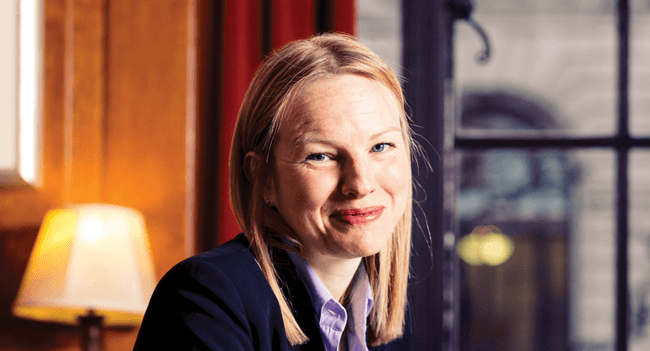
How to get to the top in M&A: leading female partners share their tips for success

For International Women’s Day Legal Business asked ten leading female M&A partners to share their tips for success for the next generation.


If you love what you do, stick with it. Be determined and take those opportunities—don’t wait for things just to happen to you. Make a plan and execute it.
Sally Wokes, Slaughter and May


If you find yourself as the only woman on a screen, use that platform to speak up and be vocal. Own the space and make your voice heard.
Claire Coppel, A&0 Shearman


Trust your instincts. Build strong relationships with people because, ultimately, that will win you work. Deep relationships allow you to know when someone needs you. Women excel at this—use that superpower to your advantage.
Kate Cooper, Freshfields


Lean into your job. It will be far more fulfilling if you choose an area you truly enjoy. If you can relate to it and it energises you, the challenges and stress will fade.
Annabelle Croker, A&O Shearman


If you’ve found something you enjoy, don’t opt out early. Focus on what’s in front of you—worry about next year when it comes.
Caroline Rae, Herbert Smith Freehills


Say yes to opportunities as they come. You never know which one will lead you to that promotion. Saying yes opens up doors you might not expect.
Fionnghuala Griggs, Linklaters


Look for a sponsor. Having someone with a reputable profile in the organisation who will back you and help open doors is incredibly powerful.
Katherine Moir, Clifford Chance


Work hard and enjoy it. If you enjoy what you do, people will want to be around you. It creates a virtuous circle—happiness helps you build better relationships.
Aisling Zarraga, Linklaters


You really have to want to do it. If your heart’s not in it, it will make things a lot harder in the long run. Don’t be driven by what others do—make sure you’re following your own path.
Lauren Honeyben, Freshfields


Always take the meeting. The support you provide to your clients between the deals is just as important, if not more important than the deal itself. Don’t count yourself out of the room because you’re not sure what you are going to say. Never shy away from an opportunity to build a relationship.
Melissa Fogarty, Clifford Chance

‘We need more women in the rooms where influential decisions are made’ – leading M&A partners have their say

Legal Business gathered some of the leading female M&A partners at UK origin firms in the City together ahead of International Women’s Day to discuss the reality of making it to the top in a practice that remains dominated by men. 

Clifford Chance partners Katherine Moir and Melissa Fogarty, Linklaters’ Aisling Zarraga and Finn Griggs, Slaughter and May’s Sally Wokes, HSF’s Caroline Rae, Freshfields’ Kate Cooper and Lauren Honeyben and A&O Shearman’s Annabelle Croker and Claire Coppel sat down with Georgina Stanley and Anna Huntley for a frank discussion about everything from imbalanced expectations, to the pros and  cons of being a role model and why there still aren’t enough women in the room where decisions are made, as well as sharing their tips for success. 

LB: How has gender diversity improved since you started your career in law? 

Melissa Fogarty: There’s a vast difference now in terms of the diversity of personalities you meet on opposite sides of M&A deals. When I started, I thought I had to play a specific role in negotiations, pitching, and relationship-building—shaped by the dominant figures of the time: confident, mostly male, larger-than-life.

Aisling Zarraga: I remember starting in the City in the ’90s, and having an accent immediately made you question, ‘Where do I fit in?’ Being a woman as well added even more chips on your shoulder. But that’s changed massively.

Katherine Moir: I agree that among law firms and corporate clients a lot has changed, but in some heavily male-dominated industries, I still often find myself the only woman in the room. It doesn’t faze me now. In some ways, it makes you stand out—which can be an advantage—but it can be intimidating for more junior lawyers.

Claire Coppel: I often feel a sense of responsibility to use my voice and make an impact as one of the only women in the room—or on the screen.

‘I still often find myself the only woman in the room. It doesn’t faze me now.’
Katherine Moir

LB: How do you respond to being the only woman in the room?

Kate Cooper: The reality is, when you say hi, often no one even has to ask your name—you stand out by default. You make a choice to embrace that spotlight and use it in a positive way, or you let it intimidate you.

Sally Wokes: You have to be proactive in using your voice—confidence, speaking up, and making yourself heard are still crucial attributes and skills. One real sign of progress in the past decade is the recognition that men and women often bring different strengths. Instead of ignoring those differences, we’re learning to embrace them and channel them in a positive way.

Caroline Rae: That said, there’s no question that you still have to be very resilient. I try to be honest with our female talent—resilience is still essential because, despite progress, the job is demanding and the world hasn’t changed that much.

LB: In your experience are there still different expectations placed on women in senior roles? 

‘The ‘double bind’—if you’re a successful woman, you can’t be a nice woman—always gets me. You don’t have to be a certain type of woman to be successful anymore, but that perception is not entirely gone.’
Finn Griggs

Finn Griggs: The ‘double bind’—if you’re a successful woman, you can’t be a nice woman—always gets me. You don’t have to be a certain type of woman to be successful anymore, but that perception is not entirely gone.

Wokes: We’re still often labelled differently to men— being called ‘aggressive,’ for example. The truth is, I don’t believe women are more aggressive than their male equivalents, but because it’s not as expected from them, it’s commented on.

Annabelle Croker: Women tend to be very team-oriented and inclusive, and there’s a much greater appreciation of those strengths now. Some people excel at mentoring, others at sponsorship, technical skills, or client relations—harnessing a broad range of skills in both men and women is what makes a team stronger.

LB – Do you feel a personal obligation to champion other women?

Rae: Yes, and it is important that we do but I don’t like the idea that it’s our responsibility to look after the women. Male partners should be just as invested in supporting and promoting female talent. It’s a shared responsibility.

Zarraga: Like the quote: ‘there’s a special place in hell for women who don’t support other women’ – I remember feeling incredibly guilty when I once had to admit that a female lawyer was not performing as well as her male peers.

Cooper: Ultimately, I think you have to be careful not to get dumped with too much just because you have more empathy in your little finger than eight male partners combined. Sometimes I worry that we’re expected to be the ‘soft’ or ‘maternal’ ones.

Honeyben: We do often hold ourselves to a higher standard, putting more pressure on ourselves to be everything to everyone—championing female associates, protecting our own teams. That can create unrealistic expectations and add extra weight to what we already carry.

Griggs: We must hold ourselves to the exact same standard because, otherwise, there’s a risk that people will think women only succeed because of diversity initiatives.

LB: How do you feel about being seen as a role model to the next generation?

‘I sometimes feel a bit cagey explaining ‘how I did it’ because, honestly, I don’t have all the answers’
Aisling Zarraga

Zarraga: I sometimes feel a bit cagey when explaining ‘how I did it’ because, honestly, I don’t have all the answers. My life isn’t a roadmap—everyone has to carve out their own path.

Moir: I still get trainees and juniors asking me how I balance it all, especially with wanting a family. I’m pretty sure the men don’t get approached asking: ‘Please help us and show us it can be done.’ I think we’ll continue to have that role for a long time because we’re still in the process of changing expectations.

Honeyben: Ultimately, we can’t just tell an associate: ‘this is how you do it.’ It’s a personal journey.

LB: How have attitudes towards work-life balance changed and how much impact has it had 

Moir:  It’s brilliant to see men being vocal about paternity leave, prioritising childcare and school events, etc. There was a time when I was the only one speaking up about it, but now the men are often saying it too, and it’s great to see that shift.

Fogarty: It’s fascinating how quickly the dynamic has shifted. It rolls off people’s tongues now that everyone has other commitments, and that’s a lovely change, but I do sometimes sit there thinking, I never would have had the courage to say that back in the day.

Croker: Shared paternity leave, COVID and the shift to working from home have gone some way towards levelling the playing field between men and women. It’s removed some of the traditional barriers and allowed everyone to have more flexibility.

Cooper: I completely agree. Pre-COVID, when I tried to work from home one day a week, I was seen as a beacon of adaptability. Post-COVID, that outdated view—where working from home was seen as something only mothers did to juggle laundry or family duties—is gone.

Rae: The new flexibility has been great. Returning from maternity leave is challenging but I hope the post-Covid approach makes it easier for our female associates when they come back to work. Honestly, I look back now and I’m not sure how we did it before.


LB: What about perceptions around having a family? 

‘You have to be careful not to get dumped with too much just because you have more empathy in your little finger than eight male partners combined.’
Kate Cooper

Zarraga: Before, if you went down the family route, people would question when you’d be able to return to a client facing role, or they’d assume you’d go for a role with steadier hours. Now, it’s more about wanting you to come back.

Fogarty: That said, the lack of a viable childcare system for the early years is a systemic issue in our country. That’s something we as women need to campaign for because, until we have affordable childcare that aligns with working life, women and men in all industries will continue to find that period very challenging.

Also, what alarms me is that some young women still worry about how focusing on their career might not be considered ‘attractive.’ I think that mindset is still there—the pressure for women to prioritise family over their career.

LB: How much balance do you think it’s possible to have as an M&A partner?


‘I think we will have achieved true diversity when the question ‘How do you do it?’ is no longer directed at women’
Melissa Fogarty

Wokes: The question everyone asks is ‘can you have it all?’, and the answer is it depends on what your ‘all’ is – it has to be realistic, taking account of the demands of the job. Once you’ve landed on that and made peace with it, you do feel you have balance. For example, I do have a hands-on role with my young children – but it doesn’t necessarily mean that would be everyone’s idea of a balanced life.

Coppel: We can never dictate the timetable of a deal. Having the right-sized deal team is important to maintain flexibility, and life has evolved beyond investment bankers having complete control. Now, where you can manage the project aspects of a deal, you can gain some of that control back.

Moir: I don’t think this is only an issue which affects M&A lawyers. This has become a more normalised model of working—combining work and family life, which might mean working late into the evenings but now we can do that from home.

Griggs: I was told to think of it as a work-life blend. I realised my life isn’t perfectly balanced all the time, but if I can look at the totality of it as a blend that works for me, then I’m okay with it.

Cooper: I find the concept of work-life balance to be a bit outdated, especially when it’s always levelled at women. No one’s asking Roger Federer how he balanced everything to become the best at what he does.

Fogarty: I couldn’t agree more, I think we will have achieved true diversity when the question ‘How do you do it?’ is no longer directed at women. That question carries an implication that it’s our responsibility to manage everything—to keep the house, be the parent, and do all the things society expects us to do. And if we’re working, somehow, we’re not keeping up with our ‘real’ responsibilities.

LB: Is there anything more clients could do to help advance women?

Coppel: The biggest difference clients make is promoting you and providing referral opportunities. I don’t think their demands will change, and nor should they – they have investors and other stakeholders to serve. But having clients who give you opportunities to lead—that was a game changer in my career.

Zarraga: If they can be your cheerleader, that’s incredibly valuable. I think it’s even more important for women than men to have that kind of backing. A supportive client relationship can be just as powerful as having a confident, seasoned mentor.

Croker: Fostering close relationships with clients is key. When you’re part of the flow of their work, the demands don’t feel as overwhelming and unexpected. It’s about building a sense of camaraderie and making the work enjoyable, even when the pressure is on.

LB: What steps can be taken to accelerate women’s influence in law and representation in leadership? 

‘When I was a trainee back in 2010, we used to joke that there were more ‘Richards’ in the team than female partners.’
Claire Coppel

Coppel: When I was a trainee back in 2010, we used to joke that there were more ‘Richards’ in the team than female partners. A lot has changed since then – this year our roster of London corporate partner candidates is all female.

Croker: If you look at the last five years, we’ve seen a sea change in female partner promotions. Getting more women into senior management positions—that’s the next challenge we need to crack.

Fogarty: It’s not just about getting women into management; it’s about soft power. That’s the real shift we need. We need more women in the rooms where influential decisions are made—the kind of influence that helps shape careers.

Honeyben: I do think progress has been made in recent years, including at the most senior levels which is encouraging. However, there is still more to do. The more role models there are in leadership positions (not only in your own firm but also others) are and the more people realise there isn’t only one way for a leader to be, then hopefully the younger generations will feel empowered and see it as more achievable.

Cooper: It is hard not to be impatient.  It’s happening, but realistically it will take another decade before we reach a point where you look up to leadership around the city in M&A and don’t see a group of many men and far fewer women.

Photo credit: Juan Trujillo Andrades 

Revolving Doors: DLA Piper makes lev fin play with A&O Shearman hire as partners from collapsed Memery Crystal move on

Leading the high-profile moves of recent weeks, DLA Piper hired A&O Shearman leveraged finance partner Gordon Houseman, who has joined the firm’s international finance practice.

Houseman, a Legal 500 next generation partner for London high-yield finance, has become A&O Shearman’s latest high-yield departure following a series of departures from legacy Allen & Overy, including former Legal 500 Hall of Famer high-yield partner Kevin Muzilla, who retired in the lead up to the A&O Shearman merger in May 2024.

With over a decade of advisory experience, Houseman advises organisations across various industries in debt and equity capital markets, specialising in high-yield bonds, Term Loan B, private credit, and corporate and acquisition financing, while also supporting restructuring and insolvency matters.

Elsewhere in the City, Latham & Watkins hired tax partner Serena Lee from Akin and EU and copyright partner Sophie Goossens from Reed Smith.

Lee, a Legal 500 next generation partner for London corporate tax, joins after eight years at Akin and had previously spent a year as a legal adviser at HMRC and three years as an associate at legacy Allen & Overy, where she also qualified. She has particular expertise in investment fund work.

‘Serena’s sophisticated transactional knowledge and technical expertise will be an invaluable asset to our clients,’ said Katharine Moir, global chair of the firm’s tax department in a statement.

Goossens has moved after nearly eight years at Reed Smith where she co-led the firm’s AI team and its games team. She joins Latham’s AI, communications and copyright practices and as a member of the firm’s technology industry group.

Prior to Reed Smith, her experience includes three years as a senior attorney at August Debouzy in Paris and a year as head of legal at Paris-based music production company Green United Music.

Ed Barnett, Latham’s London office managing partner said in a statement: ‘Sophie has built an impressive track record advising leading technology and media companies, making her a great addition to our practice in London and globally, as well as a tremendous asset to our clients.’

Proskauer hired M&A partner Sylvain Dhennin, who joins the firm after nearly a decade as a partner at Hogan Lovells. With experience advising private equity sponsors as well as financial institutions and corporate, Dhennin’s arrival sees the firm continue the private capital buildout of the last year, with hires including legacy Allen & Overy banking head Philip Bowden joining alongside Megan Lawrence last July, Cahill partners Jake Keaveny, Warren Newton, and Court Tisdale in September and October, and former A&O Shearman and Milbank partner John Goldfinch in November.

Jeremy Dennison rejoined Travers Smith after seven years in-house at midmarket PE house Livingbridge, where he was general counsel 2018-23 and partner and general counsel from January 2023. He left Travers as a senior associate in 2018 and rejoins as a partner in its private equity and financial sponsors (PEFS) group.

The firm also brought funds lawyer John Daghlian into its asset management sector group as a senior consultant.

Continuing its London expansion, Paul Weiss welcomed BCLP tax partner Kyle O’Sullivan to the firm. O’Sullivan joined BCLP in a vertical move in April last year following eight years as an associate at Slaughter and May. His practice covers UK corporate tax law, corporate financing and disputes with HMRC. He has notable experience in the energy sector.

Paul Weiss has grown rapidly in London since its English law launch in November 2023. Recent additions include Simpson Thacher capital markets partner Uma Sud and financial regulatory partners Prem Mohan and Revathi Raghavan who joined from Kirkland & Ellis.

Ashurst bolstered its securitisation offering with the appointment of Tauhid Ijaz from Hogan Lovells. Ijaz, who started his career at Clifford Chance, has joined after 26 years at Hogan Lovells. He advised on complex structured finance and securitisation transactions, including significant risk transfer, balance sheet management, consumer asset securitisations, and funding transactions for specialist funders.

Speaking to Legal Business, Ijaz said: ‘The market presents numerous opportunities, many of which Ashurst is actively pursuing. Tom Picton has been instrumental in developing the practice, and I am excited to join and contribute to its continued success.’

Greenberg Traurig hired banking and financial services partner Kevin-Paul Deveau from Reed Smith. Deveau brings experience in private credit, bespoke financing arrangements, acquisition finance, and fund finance. He joins the firm’s London and Middle East finance practices.

Deveau has moved after six years at Reed Smith and previously spent time at Dechert and Clifford Change in London as well as Blake, Cassels & Graydon in Toronto, where he began his legal career.

‘Kevin-Paul brings a breadth of multijurisdictional legal expertise that plays well to our strengths in global finance,’ Greenberg executive chairman Richard Rosenbaum said in a statement.

Orrick, Herrington & Sutcliffe hired a three-lawyer team led by restructuring partner Prav Reddy from Katten Muchin Rosenman. He joins after just under five years at Katten and previously spent 13 years at Charles Russell Speechlys.

Reddy advises office holders, creditors, debtors, PE funds, banks and distressed companies on cross-border restructurings.

‘Orrick is well known for its collaborative approach and innovative advice. I’m excited to join this entrepreneurial team and to continue building a distinctive offering for funds, financial investors and companies together’, Reddy said in a statement.

Harbottle & Lewis added private client disputes partner Charles Lloyd from Macfarlanes and reputation management partner Michael Yates from Taylor Wessing, with the pair set to join in April.

Lloyd, a Legal 500 Hall of Famer for contentious trusts and probate, arrives after nearly 25 years at Macfarlanes and brings experience in private client disputes, particularly international trusts and estates litigation.

Information litigator Yates joins after just under four years at Taylor Wessing and previously spent time at Lee & Thompson and Schillings.

Harbottles co-managing partner Tony Littner said in a statement: ‘Charles and Michael are perfectly placed to complement our existing practice groups and contribute significantly to our continued growth and success.’

The fallout from the collapse of Memery Crystal parent RBG Holdings continued, with Haynes Boone picking up Memery Crystal corporate partner Lesley Gregory.

Gregory brings experience across public and private M&A, and joins former colleagues including Nick Davis, who moved to Haynes Boone from Memery Crystal as London office co-head last month as part of a seven-lawyer hire from the defunct firm.

Keystone Law welcomed eight lawyers to its ranks including Kirkland restructuring partner Elaine Nolan, a Legal 500 leading partner for corporate restructuring and insolvency, and Memery Crystal duo, Carl Rohsler, a Legal 500 Hall of Famer for London gaming and betting, and Nick Alfillé, formerly head of Memery Crystal’s corporate team.

Nolan, who began her career at Weil, Gotshal & Manges, has moved after almost 17 years at Kirkland. She advises strategic investors, sponsors and insolvency practitioners, on national and international financial restructurings and insolvencies.

In a statement posted on LinkedIn, Nolan said she was excited to be working with fellow Kirkland alumni Gabe Harley, who moved to Keystone in September 2024 and that the pair would, ‘continue to advise on various restructuring matters, with a particular focus on retail and consumer mandates’.

The other new hires are London family law partner David Thompson, who arrives from Seddons; commercial property partner Jo Bewley, who arrives from BPE Solicitors; residential property partner Felicity Sergeant, who arrives from Streathers Solicitors; employment partner Emma Loveday-Hill, who arrives from Prettys; and corporate and commercial partner Daniel Rose, who was general counsel at Dorfman Family Office.

Hot on the heels of hiring a 25-strong team from Memery Crystal, Fladgate has turned to another collapsed law firm, Avonhurst, to pick up corporate partner Josh Swerner.

Swerner centres his practice on PE transactions, domestic and cross-border M&A, joint ventures and corporate advisory work. With stints as CMS and Linklaters on his CV, he arrives at Fladgate following five years at Avonhurst, which has ceased to trade according to its website.

Finally, outside London, DAC Beachcroft made a pair of vertical hires, bringing in Addleshaw Goddard construction legal director Thomas Hurst in Leeds and Bevan Brittan technology disputes senior associate Wesley O’Brien in Bristol. Both lawyers join DAC as partners.

[email protected]

Vertical progress: CMS corporate co-heads on their plans for the practice

While CMS is perhaps best-known for its top-tier reputation in the commercial property sector, its strengths as a corporate dealmaking machine can sometimes be overlooked.

Comprising more than 450 partners and over 1,400 lawyers around the world, in 2023-24 the global corporate practice contributed 29.6% of the firm’s total revenues of €1.957bn, second only to disputes at 29.9%.

The firm also consistently ranks in the global top 10 for M&A deal volume; last year advising on 453 announced transactions, according to London Stock Exchange Group data, putting it sixth place in the global rankings, up from seventh in 2023.

Announcing the firm’s financial results last year, managing partner Stephen Millar underlined the firm’s international identity and re-emphasised the importance of pursuing a ‘global’ strategy.

For corporate co-head Victoria Henry (pictured above), this identity is deeply rooted in her practice. ‘In corporate, more than half of our deals have an international element,’ she explains, adding that the firm broad coverage across Europe, where they have 50 offices across 26 countries, and the Middle East, where they have over 90 lawyers in six countries – as one of their most undersung assets.

‘Lots of firms talk about satellite offices, but where we are different is that we don’t just have two men and a dog there – we have proper teams that handle both international cross-border work and local matters, meaning we are truly embedded,’ she explains.

Away from Europe and the Middle East, fellow corporate co-head Dipesh Santilale (pictured right) points to Hong Kong and Singapore as key growth targets for the firm, particularly in the wake of US retrenchment from the region. ‘With certain US firms pulling back, we’re seeing significant growth opportunities for us in the region, and we are looking at similar growth opportunities across a number of jurisdictions,’ he states.

This January, the firm added to its Hong Kong base with the hire of former Morrison Foerster corporate partner Steven Tran, while other recent appointments to the Hong Kong office include funds partners Paul Moloney and Helen Wang, who joined from Mayer Brown in the latter half of last year.

There has been movement in the other direction, including former international private equity group head and Legal 500 leading partner Jason Zemmel, who left for McDermott in October, while the firm did also make some redundancies in corporate in 2023, with up to 19 lawyers losing their roles.

Henry explains: ‘We’d been flying high on the back of the merger [the 2017 combination of CMS, Nabarro and Olswang] in a positive way, which created a structure that kept growing. As the market paused and work levels stabilised, it allowed us to take a step back and assess where we were.’

‘It was never about the individuals, but about addressing structural needs,’ she adds. ‘It was a difficult process, but ultimately, it served as a catalyst for a more positive attitude within the group and an opportunity to feel refreshed. I feel like we’ve come out the other side now,’ she continues.

So, what does the other side look like? The corporate practice still boasts over 150 lawyers in the UK alone – a number Henry characterises as ‘not disproportionate when it comes to servicing a broad range of clients across all sectors on everything from venture capital investments to public markets and takeovers.’

‘It’s often challenging to convey that our approach is to look at the sectors as verticals,’ Santilale adds. Using the energy sector as an example, he elaborates: ‘For instance, we handled last year’s Equinor-Shell joint venture, creating the UK’s largest independent oil and gas company. At the same time, we also regularly support Equinor on a number of very interesting VC investments into new clean energy technologies.’

For Santilale, this vertical approach sets the firm apart from competitors who are becoming more ‘boutique-like, focusing on big litigation and large corporate deals.’ He continues: ‘For us, our increasing specialisation means we have the ability to differentiate ourselves by being able to provide those services and a wider range of services and sector expertise that others cannot.’

The firm’s current sector focus covers specialisms in energy and infrastructure, real estate, financial services, TMT, hotels, leisure and consumer, and looking ahead, sector convergence is a key strategy for the corporate team.

‘Our focus has been on identifying these and other exciting, high-growth areas where we can bring together our specialisms to present a more targeted offering that captures what we believe to be areas with significant growth potential in the market, and an already outstanding foundation of expertise within our firm,’ Santilale adds.

Henry concludes: ‘Over time, there will be a sharper focus on this as a way to further differentiate ourselves. However, we are committed to servicing a diverse client base and maintaining a high level of expertise across the board. Any refinement will be an organic development that reflects where the market is heading.’

‘Debunk assumptions by doing surprising things’ – Paul Weiss’s Nicole Kar on succeeding in City law

Ahead of International Women’s Day, Nicole Kar, global co-chair of antitrust at Paul Weiss, discusses thriving in the deep end and why there is still more room at the top for women in law.

Why did you decide to be a lawyer?

I’m naturally bookish and love a good argument. My parents called me a bush lawyer long before I knew what law was – I think my first argument was over pocket money! But there were no lawyers on either side of my family. My mother gave up her job when she had children and my father was in finance, so I was a bit of an anomaly.

Now, I also have my youngest sister, who’s a phenomenal employment lawyer, for a bit of company around the family dinner table when I get home to Australia.

What is your favourite thing about your job?

I love working with really smart people, both in the firm and clients, and learning about their markets. I love the challenge of solving a knotty legal problem and getting a deal cleared in difficult circumstances. I never stopped loving learning, and I’ve had the chance in the last year of understanding a lot more about the US legal system and US politics which has been fantastic.

What is your proudest professional moment?

As a junior lawyer in Australia, the client – a US entrant into the cinema market – asked me to represent them in the first arbitration under the Cinemas Code. It was daunting to be opposite a senior partner from another firm, but I gained a lot of confidence from the faith the client put in me. I dissected the facts and legal principles, constructed an argument, and we won: securing access to show films distributed by the US film majors.

I’ve always learned best by being thrown in the deep end – it’s not the best learning process for everyone, but I thrive when I’m confronted by something novel and untested.

What is a standout matter or deal you’ve worked on?

I recently worked on IBM’s $6.4bn acquisition of Hashicorp. While I’ve done a few software deals in the past, this one was on a much bigger scale and had much higher stakes. The client was a real pleasure to deal with – completely passionate about what they do and gave me the chance to see some incredibly clever software engineers in action. It was also great working with our US M&A team on such a consequential matter.

What is the biggest challenge you’ve overcome in your career?

I am fortunate to have an incredibly supportive husband who is also in law. He’s always helped with the children and understood the pressures of the job. When my son was a baby, he was quite poorly and, at the same time, the senior partner in my team had just retired. I was under a lot of pressure to return to work after only a few months of maternity leave and balancing home life with being a relatively new partner was tough.

What has been your worst professional moment and what did you learn from it?

Wow, I’ve had a few. I’ve made mistakes in my career that, at the time, I thought were career-ending – like sending an email to the wrong person or forgetting cases in a bundle for court. I’ve also had some bad moments when you lose in court or before an agency, despite you and your team being exhausted and fully believing in the arguments you were making and evidence you presented. The ability to pick yourself up, dust yourself off and go and win the next one is how you carve out a long career. I’ve been lucky enough to work alongside some incredibly clever and talented CEOs and M&A leads who’ve said to me, ‘If you’re winning all the time, you’re not doing the hardest deals’.

What are the key skills you need to succeed in City law and competition law specifically?

You need to stay curious throughout your career – about the law, how it evolves over time and why. In competition law specifically, it’s crucial to understand how markets work, why market failures happen and what the underlying economics tells you about a market. You need to remain flexible in terms of learning new things – for example I’ve had to retool to be able to advise on national security and foreign investment screening. You also need to be resilient, as it can be a hugely rewarding yet high-pressure job, especially when so much is at stake – including, in some cases, the CEO’s job. You have to feel very responsible for the human side of the clients you advise.

How much progress has there been in women in law since you started your career?

A lot. Many senior women in the City have shown that you can have a career and a vibrant family life. I’ve had strong female (and male) mentors in my time, as well as seen examples of how not to be. But we still have a way to go in hitting female lawyer representation at the senior levels of firms and in the ‘rooms where it happens’. We shouldn’t be complacent about this. It’s been great to join a firm where there are fantastic senior women in management and leading fantastic practices who say, ‘If you have a problem please call me, that’s what I’m here for’.

What still needs to improve and what’s holding it back?

Assumptions can still be made about your commitment or your availability if you have caring responsibilities. You need to debunk assumptions by doing surprising things – so taking that international client trip when you have small children or making weekend calls work. There can still be an assumption in business that we can’t make part-time or flexible working work, when in reality, you can – you just need to be open to experimenting.

We also need to think hard about how the private sector can reduce childcare as a barrier to women’s re-entry into the workforce, and I’m involved in charity projects aimed at lowering these barriers.

I’m also involved in our vacation scheme, which we’ve tried to make truly open from a social mobility perspective by paying for travel, accommodation and meals, ensuring we attract the best people to the firm, regardless of their economic background.

What advice do you have for aspiring young female lawyers?

Time in reconnaissance is never wasted. Learn what you can from those around you and from prominent role models, even if you don’t have the ‘perfect’ female mentor around you.

Also try to be kind to yourself – I’ve missed my fair share of date nights, friends’ birthdays and other things that are important to me.

We’re human beings – you don’t have to be perfect across every facet of your life and it’s okay to be imperfect. I’ve also been fortunate to have had help at home (and to be able to afford that) and since my family is in another hemisphere, I’ve never hesitated to ask for help when needed.  I’m certainly not superwoman nor do I pretend to be.

[email protected]

Payments, takeovers, and AI on the bill at the 2025 Legal Business Corporate and M&A Summit

Legal Business returned to the Queen Elizabeth II Conference Centre this Wednesday (5 March) for its 2025 corporate and M&A summit, welcoming over 150 delegates from across the legal profession, from top M&A partners and in-house counsel to representatives from the corporate and financial services worlds.

The event was sponsored by White & Case, KPMG Law, Datasite, Interpolitan, and Shieldpay, with panelists from additional firms including Baker McKenzie, Eversheds Sutherland, Orrick, Travers Smith, and Taylor Wessing.

KPMG Law’s head of corporate deals and structuring Kate Eades opened the day with a keynote speech covering the state of the market in 2024 and expectations for 2025.

Shieldpay chief executive officer Sophie Condie chaired the first panel, ‘When Payments Break M&A: Lessons on hidden deal killers & how to solve them’ – a discussion of the importance of robust payment systems to ensure deals do not fall at what Condie called the crucial ‘last hurdle’.

Condie was joined onstage by Ogilvy Wachtel founding partner Robert Ogilvy Watson, Orrick global emerging markets practice lead Shawn Atkinson, and Baker McKenzie associate Jacob Turner.

Next, Eades returned to the stage to chair ‘W&I Insurance: Understanding the growing impact of Warranty & Indemnity insurance in M&A deals’, alongside KPMG Law corporate deals and structuring partner Paul Kelly, London Stock Exchange Group group legal corporate head Will Slaiding, Lockton EMEA energy and infrastructure head Ross Lima, and Marsh private equity and M&A UK placement leader and transactional risk practice senior vice president Charles Sunley.

The participants discussed the growing popularity of warranty and indemnity insurance beyond PE and across M&A, the growing flexibility of W&I insurance offerings, and how it impacts the dealmaking process.

Next up was the first of the day’s three fireside chats, with Eversheds Sutherland partners Ceri-Ann McGraa and Jon Gill and Tech Universal Ventures group legal counsel Nehzan Ekkeri giving an overview of the state of the private capital market.

With trillions of dry powder to deploy and an exit environment that remains difficult, the panelists also noted higher levels of uncertainty around ESG than ever – and no sign of the 2025 M&A boom many in the sector hoped for.

After a short break for coffee, refreshments, and networking, the delegates returned to the conference hall for ‘Defence Dynamics: Navigating Takeover Threats and Activist Challenges’.

With White & Case partner Guy Potel as chair, the panel was a lively discussion of what happens in a takeover bid or an activist challenge, and how lawyers can help ensure corporates are prepared to navigate the issues that arise. In particular, the participants noted the requirements of the takeover code, the distinct dynamics of takeovers in the UK market, and the importance of communications both internally and in public.

The other panelists were The Takeover Panel deputy director general James Arculus, M&G head of corporate finance and stewardship Rupert Krefting, Citi managing director Sian Evans, and Lazard global technology managing director Keiran Wilson.

The final panel before lunch was ‘AI in the Due Diligence Process: How Technology is Shaping M&A’, with Datasite VP Sam Dormon joined by DAZN corporate and business affairs senior legal counsel Thomas Maw and corporate partners Tom Hartwright from Travers Smith and Jonny Bethell from Taylor Wessing.

The panelists discussed the increasing use of artificial intelligence as a tool in dealmaking, with some debate over how far large language models will allow corporates to handle elements of due diligence in house, and a focus on the overriding importance of trust in ensuring corporates have faith in their legal counsel’s use of the technology.

The delegates then broke from panels for lunch and networking, before they returned for another fireside chat on ‘M&A and Antitrust – Navigating the evolving merger control landscape’.

White & Case partner Michael Engel and Fingleton director Timothy Geer surveyed the regulatory landscape in the UK, US, and EU. Even with uncertainty in the US, they identified a general move away from the stricter environment of recent years and towards providing a ‘clearer path to yes’. At the same time, they argued that corporates still need to be ready to respond to politicised reviews.

Next, Legal 500 and Legal Business editorial director Georgina Stanley chaired a panel with White & Case partner Di Yu, Lawrence Stephens director James Lyons, Britton & Time Solicitors head of corporate and commercial Ki Pons, and Interpolitan Money vice president, head of legal services Daniel Dunne, titled ‘Mitigating Risk in Unstable Times: How Alternative Banking and Payment Solutions Drive M&A Success’.

The panelists discussed issues that can arise in payments and how to respond to them, with a focus on the importance of setting up a process as early as possible. They then discussed some of the biggest risks in the payments world, from data privacy to always evolving anti-money-laundering regulations.

The event concluded with the third and final fireside chat of the day, ‘The Team Behind the Deal: Legal Leadership in M&A’, with Legal 500 London editor Cameron Purse talking to Mila Trezza, executive coach and founder at Coaching Lawyers, on the importance of leadership skills in pulling together a successful M&A team.

After some quick closing remarks from KPMG Law’s Paul Kelly, the delegates moved on for a final networking session with drinks and canapes.

Thanks to all the attendees, sponsors, and panelists for an engaging and thought-provoking event covering some of the biggest issues in dealmaking.

[email protected]

Kirkland and Davis Polk among firms advising on Sycamore’s $10bn take-private of Walgreens

Kirkland & Ellis, Ropes & Gray, Debevoise and Plimpton, Latham & Watkins, Davis Polk & Wardwell and Bass Berry & Sims have all helped to guide private equity firm Sycamore Partners $10bn take-private acquisition of Walgreens Boots Alliance (WBA), which includes high street pharmacy chain Boots.

A Kirkland team led by New York corporate partners Edward Lee, Rachael Coffey and Daniel Wolf is advising WBA on the transaction. Ropes & Gray is advising WBA on the healthcare regulatory aspects of the deal.

Debevoise is advising Stefano Pessina, executive chairman of the Walgreens Boots Alliance Board of Directors, while a Davis Polk team led by New York corporate partners Brian Wolfe, Darren Schweiger and Michael Senders is advising Sycamore on the deal.

Tennessee-based law firm Bass Berry & Sims is acting as healthcare regulatory counsel to Sycamore, with a team led by partners Michael R. Hess, Dawn Perez-Slavinski, Jeanne Marie Evans, Mary Beth Fortugno and T. Stephen C. Taylor.

Latham is advising a range of banks and global investment firms acting as funding sources with a large team of more than 22 partners across offices in the US and London, including capital markets partners Michael Benjamin, Andrew Baker and Brittany Ruiz; and finance partners Alfred Xue, Jesse Sheff and Corey Wright.

Boots, as part of multinational health and beauty group Alliance Boots, was acquired by Walgreens in 2014 in a £5.6bn combination that created Walgreens Boots Alliance.

Alliance Boot’s majority owner PE firm KKR was advised by Simpson Thacher on the 2014 deal, while Walgreens was advised by Wachtell and legacy Allen & Overy.

Walgreens Boots Alliance’s chief legal officer is Marco Pagni, who was formerly general counsel of Alliance Boots. Pagni was appointed to his current role shortly after the WBA merger.

WBA shareholders will receive total consideration consisting of $11.45 per share in cash at closing of the transaction, which is expected to take place in the fourth quarter of 2025. WBA shares were trading 29% lower at $8.85 on December 9 last year, the day before the first reports of the mooted deal emerged.

The $11.45 per share price gives the company an equity value of around $10bn, or up to $23.7bn including aspects such as net debt, capital leases, and the firm’s opioid liability. The company’s portfolio of brands, including Walgreens and Boots, will remain unchanged.

Excluding Stefano Pessina and John Lederer, who recused themselves, the WBA Board of Directors has unanimously approved the proposed transaction. Pessina, WBA’s executive chair and largest shareholder, will keep a minority shareholding in the business as part of the deal.

Tim Wentworth, CEO of WBA, said in a statement: ‘While we are making progress against our ambitious turnaround strategy, meaningful value creation will take time, focus and change that is better managed as a private company. Sycamore will provide us with the expertise and experience of a partner with a strong track record of successful retail turnarounds.’

[email protected]

‘All the stars aligned for London’: Hogan Lovells closes in on $3bn mark as UK revenues rise 8%

Hogan Lovells has posted an 8.7% increase in global revenues to move within touching distance of $3bn, with profit per equity partner (PEP) up 12.1% to pass the $3m mark.

The international firm has announced turnover of $2.97bn (£2.32bn) for 2024, rising from $2.73bn in 2023, with UK revenues of $577m accounting for just under 20% of the total.

PEP rose from $2.74m to $3.07m (£2.4m), while revenue per lawyer inched up by 3% to $1.1m (£858,000) from last year’s $1.07m.

The UK revenue total of $577m is an 8% increase on $534m in 2023, and the firm has now seen UK turnover rise 22% over the past two years.

Speaking to Legal Business, CEO Miguel Zaldivar (pictured) described himself as being ‘super proud and super happy’ with the results. ‘2023 was our best-ever year, and when you beat your best-ever year by 9%, that’s a success,’ he said.

Touching on what had driven the success, Zaldivar picked out factors including US litigation, trade, and the firm’s strength in London.

‘London was also a big driver of our success – all the stars aligned for London,’ he said. ‘It wasn’t limited to one practice area: litigation in London had a great year, but also the transactional side, and our sweet spot, the regulatory practices.’

‘We had a record year in our litigation practice in the US, and that really drove profits up,’ he added. ‘Our global trade practice also accounts for our success story in 2024. The group had the busiest year ever – it is recognised in every market. As the oldest international firm in Washington, that deep bench of trade lawyers in the US drove a lot of work into the firm.’

Breaking down revenue by regions and practices area underlines strong continuity from the previous year.

Revenue from the Americas ticked up from 48% to 49%, with billings in the US up by approximately 14% from the previous year. EMEA’s contribution decreased slightly from 47% to 46% – while billings still rose 6% – and Asia-Pacific continued to account for the remaining 5%.

‘The type of firm we are is very different from others,’ explained Zaldivar. ‘Others claim to be global, but they’re really American, or they say they’re global but they’re really British. Our global DNA is quite unique.’

Meanwhile, the corporate finance practice held steady at 41%, global regulatory and intellectual property decreased from 31% to 30%, while disputes increased from 28% to 29%.

Notable mandates for the firm in 2024 included advising the Republic of Ghana on the restructuring of $13bn in outstanding Eurobond debt; acting for Walmart on its $2.3bn acquisition of VIZIO; successfully defending Vodafone in the long-running Phones4U competition law litigation; and advising BMW, General Motors, Honda, Hyundai, Kia, Mercedes Benz, Stellantis and Toyota on their joint venture to develop and operate a high-powered electric vehicle charging network across North America.

The firm also had its busiest year for global pro bono work, including securing a precedent-setting judgment in France’s Supreme Court for victims of human trafficking.

Zaldivar also said he believed the firm is well-placed to take advantage of shifts in the market caused by the Trump administration’s approach to government. ‘Some of our major clients in Europe and Asia are listening to the “America First” agenda and considering investing in America. We have a thousand lawyers in the US, in locations including Washington, New York, California, Texas, Florida, and Colorado, so I’m confident that the firm will play a vital role in the change happening in America.’

He also singled out London and a number of regions across the US as strategic priorities for the coming year.

‘We have critical mass and credibility in New York, but I would like to continue to add there. London remains the largest office, and we will continue to invest in growing London,’ he confirmed. ‘In the wider US, we will be opportunistic. We will look at Texas and California, and I always like additions in Washington.’

Zaldivar also highlighted the importance of the FRIS market – France, Italy and Spain – to the firm: ‘We combined the second, third, and fourth largest economies in Europe and decided to move upmarket to the very, very top.

‘We’ve done it in Paris – we’ve added high-end lawyers in capital markets, leveraged finance, private equity M&A and insolvency. We have done it in Italy. In Spain, we are number one in equity capital markets, but we can still add a little more.’

The firm was especially active in Italy last year, adding a 23-strong team of M&A finance lawyers from Orrick, a 13-strong team of restructuring and special situations lawyers from DLA Piper and a five-lawyer corporate and finance team from White & Case.

Last year, Hogan Lovells closed three offices in Johannesburg, Sydney and Warsaw. However, Zaldivar confirmed that there were no plans for further office closures or openings in 2025.

Simmons names international disputes head as new managing partner

Profile pic of Emily M

Simmons & Simmons has elected international head of disputes Emily Monastiriotis as the firm’s new managing partner, succeeding long-serving leader Jeremy Hoyland.

Monastiriotis, who will begin her four-year term on 1 May, joined Simmons as a partner in 2017, following previous stints at Mayer Brown and legacy Bond Dickinson. A member of the firm’s international executive committee, she was appointed international head of disputes in 2022, having previously served as the firm’s UK dispute resolution head.

Hoyland, who is set to continue as a partner at the firm and relocate to the firm’s Rome office in a new Europe-focused role, told Legal Business during an interview earlier this year that he had been supporting Monastiriotis and the other four candidates who ran to succeed him for the last two or three years, ahead of one of them eventually assuming the role.

For more, see ‘You’re never done’ – Simmons’ Hoyland on finding the firm’s identity and what’s next

During his 14-year tenure at the helm of the firm, profit per equity partner increased by 140% from £445,000 to £1.08m in 2024,  while revenue increased 136% from £243m to £574m and profit increased from £56.8m to £203.8m.

Senior partner Julian Taylor hailed the appointment in a statement, saying: ‘Emily is a highly effective, forward-thinking and inspiring leader who will bring a wealth of experience to the role of managing partner.

The four partners who stood against Hoyland for the managing partner role were international head of financial markets Mahrie Webb, TMT head Alexander Brown, UK and international tax head Darren Oswick, all of who are London-based, as well as Paris-based healthcare and life sciences sector group head Alexandre Regniault.

Monastiriotis added: ‘It’s a privilege to have been elected to this role by the partnership. Simmons has a strong foundation of sector-led, international growth thanks to the remarkable leadership of Jeremy Hoyland. I look forward to building on this by meeting our strategic priorities and continuing to innovate to deliver premium work for our global clients.’

[email protected]

Global 100 2024

Overview: G100 defy gloom to pass $150bn

While last year saw the Global 100 struggling against market headwinds, this year finds firms in much ruder health. But with transactional markets yet to make a full recovery, the legal sector could not rely on big deals alone – LB reports on how the world’s largest law firms beat the odds to hit new heights

Main table

Key financials for the top 100 firms

Late bloomer: how Paul Weiss made up for lost time on the global stage

In a year of standout performances, Paul Weiss has made more headlines than most with a new international strategy that has shaken up the market, as LB reports

Laws of attraction – how elite firms are ramping up their talent retention tactics

With the battle to recruit and retain star partners becoming ever more intense, the world’s top firms are going to new lengths to fend off the competition. From partnership and lockstep shakeups to spiralling pay packages, LB looks at the measures elite firms are taking to keep rivals at bay.

Methodology and end notes

The Last Word: Global vision

As part of our Global 100 survey, top lawyers share their thoughts on the global market

LB100 2024

Main table

LB’s 2024 ranking of the top 100 UK-headquartered firms in the world, ranked by revenue

Doubling up: LB100 firms set 10% growth benchmark as more than half pull off double-digit hikes

More than half of the UK’s 100 largest law firms posted double-digit revenue increases for the last financial year, with the group bouncing back from a jittery 2022-23 to drive total turnover to a new high of £37bn.

The LB100 ranked by PEP: firms push partner profits to new heights as associate pay debate rumbles on

The UK’s 100 largest law firms increased profit per equity partner (PEP) by an average of 13% during the last financial year, with near across-the-board hikes coming despite the rising costs of associate salaries.

Transatlantic firms outstrip peers on five-year PEP growth, LB100 data reveals

An analysis of five years of data highlights how large-scale UK-US mergers are driving up profitability at a much steeper rate than their more tightly focused peers.

A good time to be mid-tier: private equity interest on the rise as mid-market thrives

While the demise of the mid-market has been long forecast, this year’s LB100 numbers suggest it’s a good time to be a medium-sized law firm.

Client favourites: ranking the most highly recommended LB100 firms

New research drawing on the views of almost 80,000 law firm clients has revealed the LB100 firms that are most highly recommended by those using them, with Travers Smith, Lewis Silkin and Sacker & Partners among the top performers.

Off the hook: why Gen Z isn’t answering your calls

For senior lawyers who date back to the ancient days before the internet, the telephone remains an essential communication tool: immediate, efficient, and personal.

But for many younger lawyers – particularly the digital natives of Gen Z – the sound of a ringtone heralding an unscheduled call can feel intrusive, a disruption in a work environment increasingly shaped by asynchronous communication.

So as cold calls and quick words make way for Teams meeting requests and  instant messaging, Legal Business spoke to lawyers of all ages and attitudes to find our how communication etiquette in law is evolving, and whether, in an era dominated by digital tools, there is still a place for the spontaneous phonecall of old.

Intrusive or indispensable?

‘There’s a cultural shift happening,’ says Emma Geale, principal associate at Mills & Reeve. ‘With so many avenues for real-time communication now, the phone can feel quite intrusive. I would never say to someone: “I don’t care what you’re doing, you have to speak to me right now.”‘

‘Phonecalls still have a place – I don’t think anyone would argue that. But the way we use them is shifting,’ says Henry Nelson-Case, a six-year-qualified commercial lawyer who has worked at firms including Osborne Clarke, Pinsent Masons and Bevan Brittan. ‘If you see someone with their head down, clearly busy, you wouldn’t just walk over and interrupt them – you’d likely send an email saying, ‘When you have a minute, can you let me know?’ The same courtesy should apply to digital communication.’

While working in law is just as high-pressure and demanding as ever, it’s undeniable that a such a shift in attitudes to communication has taken place, driven by factors such as the rise of technology and the working-from-home revolution.

But has this shift resulted in a new generation of phone-shy juniors? Or is it just the case that the social skills required for a career in law have changed, with phones set to go the the way of the typewriter and the fax machine?

‘It’s your job to answer the call’

‘Being responsive to urgent requests is a crucial part of being a successful private practice lawyer,’ says Lewis McDonald, global co-head of energy at Herbert Smith Freehills. ‘If you’re uncomfortable being needed urgently, it’s something you may need to address.’

‘You should embrace the opportunity to be needed, win business, and help people,’ he adds. ‘After all, as a service provider, it’s your job to answer the call – both literally and metaphorically.’

‘You should embrace the opportunity to be needed, win business, and help people. After all, as a service provider, it’s your job to answer the call – both literally and metaphorically’ – Lewis McDonald

McDonald likens answering the phone to negotiation: ‘In negotiations, to be effective, you need to handle anything that comes your way and have a strategy for dealing with it on the spot.’

However, he acknowledges that effective communication doesn’t always mean providing immediate answers: ‘The art lies in maintaining credibility without being forced to respond on the spot. This doesn’t mean avoiding the call; it means you can take the call without feeling compelled to answer immediately – you can be very credible by saying nothing at all.’

Always on

Geale highlights one consequence of the rise of online communication – the modern-day ‘always on’ culture. ‘Juniors now feel the need to be ready to answer calls at any time, which creates anxiety around the expectation of always being available,’ she notes.

That is something that is increasingly recognised by senior lawyers too. ‘The reality is we all message more than we used to,’ observes Norton Rose Fulbright EMEA chair Farmida Bi (pictured). ‘That’s just how business has evolved.’

While acknowledging an ‘evolving etiquette’ around communications, McDonald encourages young lawyers to expect the unexpected – and build their skills to deal with such situations.

Millennials and Gen Z lawyers often feel unsettled when their phone rings unexpectedly, which is a shift from what’s familiar to my generation and the one before.

‘This reaction seems to stem from a strong desire for control. I would advise them to embrace a bit more flexibility and develop strategies for handling impromptu communications,’ he says. ‘While it’s important to manage how and when you engage, it’s also crucial to have the skillset to handle unexpected calls when necessary.

‘As a service provider, you won’t always have control over communication. It’s important to be adaptable and ready to handle situations as they arise.

Paul Hastings disputes partner Oliver Browne also notes the appeal of communication channels that offer scope for more considered interactions.

‘People aren’t as accustomed to instant dialogue anymore, because messaging provides a degree of control. But we need to recognise that we can’t go all the way – people can’t simply stop speaking to each other altogether.’

‘Text-based communication can often lead to misunderstandings – tone and meaning can get lost in translation’ – Oliver Browne

As a litigator, Browne also points to the critical importance of communication skills in dispute resolution: ‘Whether through arbitration or the courts, a great deal of emphasis is still placed on oral advocacy. The same applies to mediations and face-to-face negotiations. At some point, you have to engage in direct conversation – you can’t fully participate in these processes if you retreat into a world of text-only communication.’

Having said that, Browne is pragmatic about the realities of how day-to-day communication has changed. ‘I rarely call someone without giving them a heads-up first,’ he says. ‘Historically, when a phone rang, it was like saying, “Talk to me now, I don’t care what you’re doing.” People are more cautious about interrupting others these days.’

‘From the litigation perspective, what we are starting to see is the rise of multiple messaging formats being used – simultaneously.’, he adds. ‘A mixture of WhatsApp, text messages, and other text-only formats are increasingly being used as replacements for telephone calls.’

Bi argues there will always be a place for impromptu communication: ‘I don’t think we’ve lost spontaneous communication – there’s just more of a mix these days. As lawyers, it would be difficult to operate without spontaneous conversations; much of the work we do relies on it.’

She adds: ‘If I thought people weren’t communicating at all, I would be worried, but that’s not what I see. Even if it’s not all in person, there’s still a lot of talking going on.’

Muscle memory

So how can firms ensure their junior lawyers are developing their ‘on your feet’ communication skills, when spontaneous in-person interactions are much more rare?

For McDonald (pictured), training is key to ensuring these interpersonal skills are developed. ‘Handling impromptu requests is an important skill for service providers, and it’s beneficial to practice it. It’s essential for making people feel comfortable reaching out to you.’ He continues: ‘It’s a skill like a muscle – initially, it might feel uncomfortable, but with continued practice, it becomes easier, and you enhance your capability as a helpful professional.’

Browne notes that many firms now offer soft skills training to help junior lawyers develop networking skills, understand call etiquette, and refine their ability to engage in direct conversation – skills that ‘can no longer be taken for granted.’

Bi agrees: ‘Soft skills training is essential now. With less time in the office, young lawyers see less of the office etiquette and behaviour they need to model. Training can help to bridge that gap.’

Social skills, social mobility

Supporting lawyers to develop their communication skills – and also recognising that not everyone comes into a legal career with perfectly honed Oxbridge debating club chops – is of increasing importance for firms keen to position themselves as progressive employers; as Geale points out, there is ‘an inclusivity aspect to consider’.

‘For individuals who are neurodivergent or struggle with anxiety, there may be valid reasons why they won’t pick up the phone if it rings unexpectedly,’ she notes. ‘It all ties back to respecting different ways of working and acknowledging diverse work patterns. From a productivity standpoint, it’s about finding routines that work for you. Research shows that if you’re distracted, it can take an average of 23 minutes to regain focus.’

Nelson-Case also references the growing acknowledgment among law firms of the value of supporting diverse personality types.

‘Considering ways of working is high on the agenda for many law firms right now, particularly around attracting and retaining Gen Z talent,’ he says. ‘There’s a strong focus on wellbeing and ensuring the organisation is a people-centered place to work. Whether from a wellbeing, DE&I, or ESG perspective, firms are feeling the pressure to address these areas.’

‘An unexpected phone call can create a sense of anxiety due to its unpredictable nature’ – Henry Nelson-Case

Bi concurs on the inclusivity aspect: ‘Driving social mobility is important to all of us. Not everyone joining a firm like ours will have family members who worked in City firms, so being clear about expectations and best practices – especially for phone calls – creates a level playing field for everyone.’

McDonald agrees, noting that stress around real-time communication could signal deeper issues. ‘If receiving a call, even knowing you don’t need to respond immediately, causes significant stress, it might indicate a broader issue, such as clinical anxiety.’

Jakub Luczak, who secured a training contract at Shoosmiths while working as a client administrator at the firm, recently served as chair of the firm’s Mental Health and Wellbeing Champions network, a role which offered him particular insight into the issues for senior professionals to be aware of. ‘A good manager should seek to understand underlying factors including neurodivergence, disabilities, and personal working styles,’ he says. ‘Providing appropriate support is crucial – ensuring individuals don’t feel pressured to conform to a working style that doesn’t suit them as an individual.’

For Nelson-Case, clarity is essential: ‘If there’s a way of working that suits you, we need to be able to communicate that. In an organisation that truly supports its individuals and wants its talent to succeed, it should be listening and ensuring the environment is set up for people to thrive.’

Get with the times

Ultimately, the old school will have to move with the times, and in today’s tech-driven world, they will likely not have a choice.

‘As working patterns and tools evolve, the way we work needs to align and evolve with that too,’ says Nelson-Case. ‘Clients of these firms are creating and using new technologies, and they’ll expect their firm to do the same — keeping up with the times and embracing change,’ he continued.

Geale argues that the ‘do as I say’ approach is increasingly outdated. ‘Many senior professionals are reluctant to engage with new technologies, yet younger generations are left wondering how success can be sustained without them.’

But despite the cliches of a professional tethered to the past, as Browne notes, most law firms are alive to the need for change. ‘By and large, we are an adaptable profession. The shift toward text and message-based communication, along with the occasional video call, shows how people are adjusting to modern life. However, there needs to be recognition of the importance of maintaining interpersonal skills.’

And as Bi concludes: ‘Younger people entering the firm communicate differently, and I don’t think the answer is to make them revert to what we used to do. The reality is we all have to adapt – and that’s a good thing.’

[email protected]