
Sponsored by



While last year saw the Global 100 struggling against market headwinds, this year finds firms in much ruder health. But with transactional markets yet to make a full recovery, the legal sector could not rely on big deals alone – LB reports on how the world’s largest law firms beat the odds to hit new heights
Key financials for the top 100 firms
In a year of standout performances, Paul Weiss has made more headlines than most with a new international strategy that has shaken up the market, as LB reports
With the battle to recruit and retain star partners becoming ever more intense, the world’s top firms are going to new lengths to fend off the competition. From partnership and lockstep shakeups to spiralling pay packages, LB looks at the measures elite firms are taking to keep rivals at bay.
As part of our Global 100 survey, top lawyers share their thoughts on the global market

LB’s 2024 ranking of the top 100 UK-headquartered firms in the world, ranked by revenue
More than half of the UK’s 100 largest law firms posted double-digit revenue increases for the last financial year, with the group bouncing back from a jittery 2022-23 to drive total turnover to a new high of £37bn.
The UK’s 100 largest law firms increased profit per equity partner (PEP) by an average of 13% during the last financial year, with near across-the-board hikes coming despite the rising costs of associate salaries.
An analysis of five years of data highlights how large-scale UK-US mergers are driving up profitability at a much steeper rate than their more tightly focused peers.
While the demise of the mid-market has been long forecast, this year’s LB100 numbers suggest it’s a good time to be a medium-sized law firm.
New research drawing on the views of almost 80,000 law firm clients has revealed the LB100 firms that are most highly recommended by those using them, with Travers Smith, Lewis Silkin and Sacker & Partners among the top performers.

Gibson Dunn has set down a marker in London with the hire of high-profile Sullivan & Cromwell finance and restructuring duo Presley Warner and Chris Howard. Continue reading “Gibson Dunn takes heavyweight Sullivan & Cromwell duo in major London play”

Paul Weiss has reported its financial results, with revenue up 32% to $2.63bn from $2bn, nearly tripling last year’s 11% growth. Continue reading “Paul Weiss PEP soars to $7.5m as revenue sees double-digit growth”

Legal 500 launched its first US elite rankings today, with 158 lawyers from 89 firms ranked in New York, Chicago, and Washington DC. The new rankings highlight top lawyers across key US markets, focusing on those operating at the top of the market outside global elite firms.
Continue reading “Legal 500 spotlights top city lawyers in new US elite rankings”

BCLP has returned to growth after two years of declining turnover, posting a 2% increase in revenue – rising to $860m from $840.3m last year – with the firm also growing 12% in the UK.
Continue reading “BCLP revenue bounces back as McDermott breaks $2bn”

The Competition Appeals Tribunal (CAT) has approved a settlement of £200m in the long-running Merricks v Mastercard dispute. The tribunal’s ruling dismisses a challenge to the settlement from Innsworth Advisors, the litigation funder backing the claim, that held that the settlement was too low.
Continue reading “CAT approves £200m Merricks v Mastercard settlement”
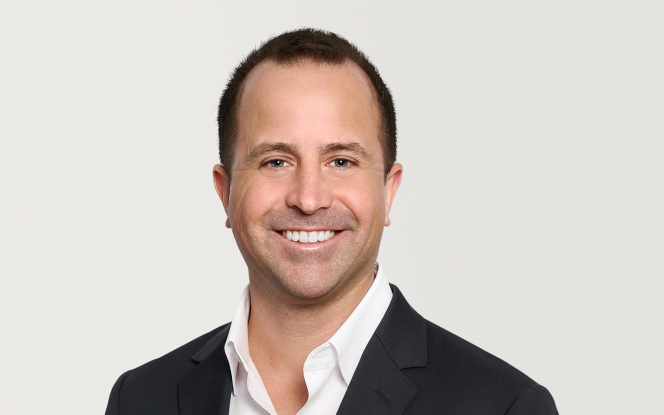
Freshfields has hired Latham & Watkins private capital M&A partner Matthew Goulding to launch its new Boston office, with additional hires expected in the coming months. Continue reading “Freshfields launches in Boston with Latham private capital M&A hire”

For senior lawyers who date back to the ancient days before the internet, the telephone remains an essential communication tool: immediate, efficient, and personal.
But for many younger lawyers – particularly the digital natives of Gen Z – the sound of a ringtone heralding an unscheduled call can feel intrusive, a disruption in a work environment increasingly shaped by asynchronous communication.
So as cold calls and quick words make way for Teams meeting requests and instant messaging, Legal Business spoke to lawyers of all ages and attitudes to find our how communication etiquette in law is evolving, and whether, in an era dominated by digital tools, there is still a place for the spontaneous phonecall of old.
Intrusive or indispensable?
‘There’s a cultural shift happening,’ says Emma Geale, principal associate at Mills & Reeve. ‘With so many avenues for real-time communication now, the phone can feel quite intrusive. I would never say to someone: “I don’t care what you’re doing, you have to speak to me right now.”‘
‘Phonecalls still have a place – I don’t think anyone would argue that. But the way we use them is shifting,’ says Henry Nelson-Case, a six-year-qualified commercial lawyer who has worked at firms including Osborne Clarke, Pinsent Masons and Bevan Brittan. ‘If you see someone with their head down, clearly busy, you wouldn’t just walk over and interrupt them – you’d likely send an email saying, ‘When you have a minute, can you let me know?’ The same courtesy should apply to digital communication.’
While working in law is just as high-pressure and demanding as ever, it’s undeniable that a such a shift in attitudes to communication has taken place, driven by factors such as the rise of technology and the working-from-home revolution.
But has this shift resulted in a new generation of phone-shy juniors? Or is it just the case that the social skills required for a career in law have changed, with phones set to go the the way of the typewriter and the fax machine?
‘It’s your job to answer the call’
‘Being responsive to urgent requests is a crucial part of being a successful private practice lawyer,’ says Lewis McDonald, global co-head of energy at Herbert Smith Freehills. ‘If you’re uncomfortable being needed urgently, it’s something you may need to address.’
‘You should embrace the opportunity to be needed, win business, and help people,’ he adds. ‘After all, as a service provider, it’s your job to answer the call – both literally and metaphorically.’
‘You should embrace the opportunity to be needed, win business, and help people. After all, as a service provider, it’s your job to answer the call – both literally and metaphorically’ – Lewis McDonald
McDonald likens answering the phone to negotiation: ‘In negotiations, to be effective, you need to handle anything that comes your way and have a strategy for dealing with it on the spot.’
However, he acknowledges that effective communication doesn’t always mean providing immediate answers: ‘The art lies in maintaining credibility without being forced to respond on the spot. This doesn’t mean avoiding the call; it means you can take the call without feeling compelled to answer immediately – you can be very credible by saying nothing at all.’
Always on
Geale highlights one consequence of the rise of online communication – the modern-day ‘always on’ culture. ‘Juniors now feel the need to be ready to answer calls at any time, which creates anxiety around the expectation of always being available,’ she notes.
 That is something that is increasingly recognised by senior lawyers too. ‘The reality is we all message more than we used to,’ observes Norton Rose Fulbright EMEA chair Farmida Bi (pictured). ‘That’s just how business has evolved.’
While acknowledging an ‘evolving etiquette’ around communications, McDonald encourages young lawyers to expect the unexpected – and build their skills to deal with such situations.
‘Millennials and Gen Z lawyers often feel unsettled when their phone rings unexpectedly, which is a shift from what’s familiar to my generation and the one before.
‘This reaction seems to stem from a strong desire for control. I would advise them to embrace a bit more flexibility and develop strategies for handling impromptu communications,’ he says. ‘While it’s important to manage how and when you engage, it’s also crucial to have the skillset to handle unexpected calls when necessary.
‘As a service provider, you won’t always have control over communication. It’s important to be adaptable and ready to handle situations as they arise.
Paul Hastings disputes partner Oliver Browne also notes the appeal of communication channels that offer scope for more considered interactions.
‘People aren’t as accustomed to instant dialogue anymore, because messaging provides a degree of control. But we need to recognise that we can’t go all the way – people can’t simply stop speaking to each other altogether.’
‘Text-based communication can often lead to misunderstandings – tone and meaning can get lost in translation’ – Oliver Browne
As a litigator, Browne also points to the critical importance of communication skills in dispute resolution: ‘Whether through arbitration or the courts, a great deal of emphasis is still placed on oral advocacy. The same applies to mediations and face-to-face negotiations. At some point, you have to engage in direct conversation – you can’t fully participate in these processes if you retreat into a world of text-only communication.’
Having said that, Browne is pragmatic about the realities of how day-to-day communication has changed. ‘I rarely call someone without giving them a heads-up first,’ he says. ‘Historically, when a phone rang, it was like saying, “Talk to me now, I don’t care what you’re doing.” People are more cautious about interrupting others these days.’
‘From the litigation perspective, what we are starting to see is the rise of multiple messaging formats being used – simultaneously.’, he adds. ‘A mixture of WhatsApp, text messages, and other text-only formats are increasingly being used as replacements for telephone calls.’
Bi argues there will always be a place for impromptu communication: ‘I don’t think we’ve lost spontaneous communication – there’s just more of a mix these days. As lawyers, it would be difficult to operate without spontaneous conversations; much of the work we do relies on it.’
She adds: ‘If I thought people weren’t communicating at all, I would be worried, but that’s not what I see. Even if it’s not all in person, there’s still a lot of talking going on.’
Muscle memory
So how can firms ensure their junior lawyers are developing their ‘on your feet’ communication skills, when spontaneous in-person interactions are much more rare?
 For McDonald (pictured), training is key to ensuring these interpersonal skills are developed. ‘Handling impromptu requests is an important skill for service providers, and it’s beneficial to practice it. It’s essential for making people feel comfortable reaching out to you.’ He continues: ‘It’s a skill like a muscle – initially, it might feel uncomfortable, but with continued practice, it becomes easier, and you enhance your capability as a helpful professional.’
Browne notes that many firms now offer soft skills training to help junior lawyers develop networking skills, understand call etiquette, and refine their ability to engage in direct conversation – skills that ‘can no longer be taken for granted.’
Bi agrees: ‘Soft skills training is essential now. With less time in the office, young lawyers see less of the office etiquette and behaviour they need to model. Training can help to bridge that gap.’
Social skills, social mobility
Supporting lawyers to develop their communication skills – and also recognising that not everyone comes into a legal career with perfectly honed Oxbridge debating club chops – is of increasing importance for firms keen to position themselves as progressive employers; as Geale points out, there is ‘an inclusivity aspect to consider’.
‘For individuals who are neurodivergent or struggle with anxiety, there may be valid reasons why they won’t pick up the phone if it rings unexpectedly,’ she notes. ‘It all ties back to respecting different ways of working and acknowledging diverse work patterns. From a productivity standpoint, it’s about finding routines that work for you. Research shows that if you’re distracted, it can take an average of 23 minutes to regain focus.’
Nelson-Case also references the growing acknowledgment among law firms of the value of supporting diverse personality types.
‘Considering ways of working is high on the agenda for many law firms right now, particularly around attracting and retaining Gen Z talent,’ he says. ‘There’s a strong focus on wellbeing and ensuring the organisation is a people-centered place to work. Whether from a wellbeing, DE&I, or ESG perspective, firms are feeling the pressure to address these areas.’
‘An unexpected phone call can create a sense of anxiety due to its unpredictable nature’ – Henry Nelson-Case
Bi concurs on the inclusivity aspect: ‘Driving social mobility is important to all of us. Not everyone joining a firm like ours will have family members who worked in City firms, so being clear about expectations and best practices – especially for phone calls – creates a level playing field for everyone.’
McDonald agrees, noting that stress around real-time communication could signal deeper issues. ‘If receiving a call, even knowing you don’t need to respond immediately, causes significant stress, it might indicate a broader issue, such as clinical anxiety.’
Jakub Luczak, who secured a training contract at Shoosmiths while working as a client administrator at the firm, recently served as chair of the firm’s Mental Health and Wellbeing Champions network, a role which offered him particular insight into the issues for senior professionals to be aware of. ‘A good manager should seek to understand underlying factors including neurodivergence, disabilities, and personal working styles,’ he says. ‘Providing appropriate support is crucial – ensuring individuals don’t feel pressured to conform to a working style that doesn’t suit them as an individual.’
For Nelson-Case, clarity is essential: ‘If there’s a way of working that suits you, we need to be able to communicate that. In an organisation that truly supports its individuals and wants its talent to succeed, it should be listening and ensuring the environment is set up for people to thrive.’
Get with the times
Ultimately, the old school will have to move with the times, and in today’s tech-driven world, they will likely not have a choice.
‘As working patterns and tools evolve, the way we work needs to align and evolve with that too,’ says Nelson-Case. ‘Clients of these firms are creating and using new technologies, and they’ll expect their firm to do the same — keeping up with the times and embracing change,’ he continued.
Geale argues that the ‘do as I say’ approach is increasingly outdated. ‘Many senior professionals are reluctant to engage with new technologies, yet younger generations are left wondering how success can be sustained without them.’
But despite the cliches of a professional tethered to the past, as Browne notes, most law firms are alive to the need for change. ‘By and large, we are an adaptable profession. The shift toward text and message-based communication, along with the occasional video call, shows how people are adjusting to modern life. However, there needs to be recognition of the importance of maintaining interpersonal skills.’
And as Bi concludes: ‘Younger people entering the firm communicate differently, and I don’t think the answer is to make them revert to what we used to do. The reality is we all have to adapt – and that’s a good thing.’

Prompted by the ongoing increase in class action claims, Hogan Lovells has strengthened its highly regarded competition litigation team with the addition of Andrew Leitch and Ed Coulson, a Legal 500-leading partner in competition litigation, both joining from BCLP.

Back in the summer of 2024, a history-making election victory handed the new Labour government a strong mandate for change.
However, delivering on popular yet expensive new policies – such as an above-inflation pay rise for public sector workers and an ambitious capital investment agenda – was subsequently complicated by the discovery of a £22bn ‘black hole’ in public finances.
As such, the Autumn Budget came with changes which have left many individuals and businesses feeling worse off – though others are spying new opportunities.
Continue reading “From farms to the FIG regime: top tax lawyers size up Labour’s first half-year”

Linklaters, Macfarlanes, Loyens & Loeff, Cravath, and IPG Law firm have advised on Ferrari Group’s €785m IPO – the first listing on Euronext Amsterdam in 2025.
Continue reading “Dealwatch: Linklaters, Macfarlanes, Cravath belt up for €785m Ferrari Group IPO”

Pinsent Masons has announced plans to open a new office in Shenzhen, marking another step in the firm’s ongoing expansion across the Asia Pacific region.

Addleshaw Goddard has today (18 February) confirmed plans to acquire Linklaters’ Warsaw office, marking the firm’s entry into the Polish market and its 20th office opening globally.
Continue reading “Addleshaws set to open in Poland with transfer deal for Linklaters’ Warsaw office”

‘It keeps me fully occupied, 24 hours a day. I do sleep, obviously, but I’m dreaming about stuff that I might want to do the next day.’
Edmund Reed, Travers Smith’s recently reappointed managing partner, describes the all-encompassing nature of his role with a smile. He is on a mission to demonstrate that his zest for the job remains undiminished after three and a half years navigating a challenging period for Travers, punctuated by some indifferent financial results and large swathes of partner departures.
Continue reading “From bellwether to perfect storm: can Travers pull through choppy waters?”

Memery Crystal’s parent company RBG Holdings is set to proceed with an ‘orderly winding down’, it announced today (17 February), after failing to appoint administrators within ten days of filing notice of intention to do so.
Continue reading “‘Orderly winding down’ for RBG as collapsed firm fails to appoint administrators”

As statements of intent go, Clifford Chance has kicked off 2025 with a strong message about its private capital ambitions. Continue reading “Chance moment: CC doubles down on private capital, but will flurry of hires pay off?”

Leading the leading lateral moves this week, Cadwalader has hired a trio of fund finance partners to its London office. Bronwen Jones arrives from Reed Smith, where she spent six years following two decades at Macfarlanes. She is joined by Douglas Murning and Matthew Worth, both joining from Ashurst.

White & Case has ramped up its intellectual property capabilities in London with a triple hire from A&O Shearman.
Continue reading “White & Case snaps up A&O Shearman IP trio as post-merger exits continue”