


Back in the summer of 2024, a history-making election victory handed the new Labour government a strong mandate for change.
However, delivering on popular yet expensive new policies – such as an above-inflation pay rise for public sector workers and an ambitious capital investment agenda – was subsequently complicated by the discovery of a £22bn ‘black hole’ in public finances.
As such, the Autumn Budget came with changes which have left many individuals and businesses feeling worse off – though others are spying new opportunities.
Regime change
Heading into the general election, and informed by a comprehensive economic breakdown published by the Office for Budget Responsibility in March 2024, then shadow chancellor Rachel Reeves had promised that there would be no plans to raise income tax, national insurance, VAT or corporation tax, leaving little manoeuvrability for potential tax rises.
 ‘We definitely saw a high level of engagement across our client base in relation to article coverage and reporting on Labour’s tax plans’, says Herbert Smith Freehills tax partner Casey Dalton (pictured), on attitudes in the lead-up to the election. ‘Businesses across all the different sectors were very keen to understand what Labour were planning to retain, and what they were planning to change.’
Labour made significant efforts to curry favour with major corporate and financial groups in the run-up to the election, refuting Conservative claims that the party would raise taxes and regulations with a promise to govern in a manner both ‘pro-worker and pro-business’.
And in October, ahead of the release of the Budget, Rachel Reeves once again underscored this point by convening the inaugural meeting of the British Infrastructure Taskforce, featuring key names from Lloyds, HSBC, and BlackRock.
Given this, from an early stage it was anticipated that the Budget’s content would be concentrated on changes to tax at the personal level. Law firms reported assisting executives and investors with options for their residence and business operations well in advance of the details being announced, driven to a significant degree by the pre-anticipated focus of the Budget.
 ‘Changes to personal taxation, including taxation of executives, high-net-worth and individual investors, were already well trailed in Labour’s manifesto or otherwise announced prior to the Autumn Budget’, recalls Skadden tax partner Jisun Choi (pictured. ‘The good news is that Labour shied away from some big-impact decisions in the UK such as a personal exit tax or withholding tax on UK dividends; no doubt, advised as just too radical and hurtful to inbound investment.’
Indeed, some of the more talked-about adjustments in the Budget came as an extension of tax policy initially established by the previous Conservative government. The government has chosen to build further upon the Foreign Income and Gains (FIG) regime, which was introduced in the Spring Budget, and which will affect an estimated 70,000 non-domiciled individuals living in the UK.
Under the old rules, prior to those announced in the Spring Budget, these foreign nationals were able to avoid paying UK tax on overseas income and gains. The new FIG regime amended this situation so that the exemption on overseas income would last only for the first four years of residency within the UK. Initial speculation on if, and how, Labour would adopt and amend the regime has now been resolved, with the Budget indicating that the new system is to be maintained, and expanded further.
 ‘What the Budget has done is create a pause for thought with non-doms who were leaving, or thinking of leaving,’ observes Ashley Crossley (pictured), the head of Baker McKenzie’s London wealth management department. ‘Firstly, there was a very nasty surprise in the Budget on the IHT exit tax. That has caused a lot of people to think about how even people who have left are going to maybe have a 1.8% tax charge on their structures.’
‘The second point was that they realised as well that by effectively crystallising income and gains in this year and bringing them through into next year, then they can benefit from the Temporary Repatriation Facility,’ Crossley adds.
That facility, which is set to come into effect as part of the FIG regime in April 2025, is intended to assist non-doms in the transition to the new regime, and will be available to those who previously claimed the remittance basis on foreign income. During the window it provides – which has been extended to three years after initial suggestions of only two – it will be possible to access a reduced flat tax rate of 12%.
‘The new FIG regime is quite internationally competitive,’ Crossley continues. ‘It could lead to quite a significant increase in corporate deal flow, as people come here to sell their offshore companies. It also gives a good opportunity for lots of new people. In addition, the next three years are going to be incredibly busy and hectic, as people take advantage of the Temporary Repatriation Facility.’
Carrying the can
This favourable aspect to the new system will surely be received positively by those feeling the impact of the new Budget elsewhere. Carried interest has long been a key issue for Labour, which promised to close the ‘carried interest tax loophole’ on its election manifesto. The Chancellor reiterated this language in her post-election fiscal speech in July, when she promised to ‘take action against the carried interest loophole’.
Carried interest, which is the share of profits paid out to fund managers when they exit investments, was previously taxed at the relatively low rate of 28%. From April 2025, the rate will increase to 32%, and will be reclassified as income rather than a capital gain, contributing to a slightly higher effective rate of taxation.
‘The government was right to try to focus on the carried interest area and to see what it could do, but I think unfortunately it took a sledgehammer to a nut’, says Crossley. ‘And while the actual rate that was announced was actually quite good, I think it’s what could be in the wings that’s the problem.’
‘If the government said it wasn’t going to do any more, and it wasn’t going to recharacterise receipts, I think you could find then that would probably be very positively received,’ he adds.
Betting the farm
Also making headlines on the personal tax front have been the changes affecting the agricultural community. Farmers have been seeing broader economic challenges due to the phaseout of government and EU subsidies, a new environmental tax on fertiliser, and the impact of increasingly volatile weather, but changes to inheritance tax in the Budget have become an even more high-profile flashpoint.
Under the new measures, qualifying agricultural and business assets over £1m in value will become liable for a tax rate of 20% (representing half of the 40% IHT rate), having previously been exempt. This threshold is higher for married couples and those in a civil partnership, for whom farms up to £3m could will remain exempt in reliance on different exempt amounts, but concerns remain that farmers will be forced to sell assets or break up farms because of the new measures.
 ‘I think we’re going to see some fragmentation, whether that’s because family members are being utilised to get the £1m allowance per person, or because they have to sell,’ predicts Phyllis Townsend (pictured), Baker McKenzie’s EMEA wealth management practice group lead. ‘It’s also very difficult because a lot of these agricultural and business assets are held in trusts.’
In the broader economy, major employers in the retail and hospitality sectors are also feeling somewhat more under pressure than might have been anticipated, given the pro-business election messaging. While the corporate tax rate remains at 25%, having been raised from 19% in 2023, groups which depend upon lower-wage labour have been particularly affected by the increase in the minimum hourly wage, as well as the higher costs from national insurance contributions.
‘Taking all those as a package, the government has created, I think, a dampening effect on the ability for businesses to grow and also invest for the future’, Crossley warns. ‘The only upside of that is the announcement in the Budget of the corporate tax roadmap which has given a lot more certainty.’
‘The announcement of rises in employer NICs clearly came as a surprise to businesses, and will certainly be impactful’, concurs Skadden’s Choi, while suggesting that the consistency on corporate tax will necessitate a new approach from HMRC.
‘While Labour has appeared to be attempting to steady the ship by giving token signals, such as no rises to the corporation tax rate, its policies on corporate taxation will be focused in the short term on revenue collection through enforcement,’ she adds. ‘The government will commit resources to HMRC to close the perceived ‘tax gap’ by addressing taxpayer non-compliance, rather than any wholesale reform of, or policy changes relating to, the corporate tax regime.’
 The new approach to tax compliance is also identified by a key theme by Skadden European tax counsel Kara Heggs (pictured). ‘The Budget certainly did not surprise with its “upping the ante” on compliance and collection – we were expecting to see a continued emphasis on audits, enquiries, and other enforcement actions by HMRC.’
However, the closer focus on collection is also bringing favourable aspects, as existing shortcomings in the tax regime are revisited. Heggs points to the potential implementation of a new requirement for multinationals to report information to HMRC on certain cross-border related party transactions as one way in which authorities are streamlining their risk assessments and enquiries.
‘We were pleased to see an announced review of the transfer pricing treatment of cost contribution agreements’, Heggs continues. ‘They have opened up US multinationals in particular to significant protracted enquiries in the UK and, in our view, dampened the UK’s attraction as an IP holding jurisdiction.’
Fair and balanced?
Taken as a whole, the Budget may be taken as relatively balanced, with areas of innovation generally tempered by caution. While this may be disappointing to some voters hoping for a more radical left-wing approach, it should be noted that Labour’s economic planning comes within an international landscape characterised by both increasing turbulence and increasing competitiveness.
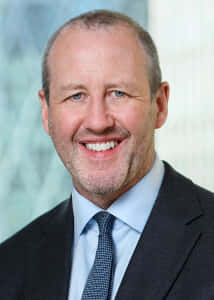 ‘Clients have been refining their strategies all year, first in light of the incoming Labour government, and then in light of President Trump’s recent win’, says James Anderson (pictured), the head of the European tax practice at Skadden. ‘Residence for executives is definitely being reviewed, as well as investment decisions at the corporate level, in light of possible US tax reform over the next couple of years, tariffs, and potentially a looming trade war.’
‘There are an increasing number of jurisdictions offering above-the-line tax incentives to encourage investment in their country, and all CFOs like those., Anderson adds. ‘The UK’s tax burden is going up as a result of the Budget and that is definitely influencing decisions on outbound human and financial capital.’
‘A lot of carried interest holders are non-doms, so they’re internationally mobile people, doubly impacted by the changes’, observes Bakers’ Townsend. ‘In Spain, for example, and Italy, there are quite good carried interest regimes, that can be combined with their other preferential regimes. So the UK must be careful that it doesn’t lose its carried interest holders to other jurisdictions.’
It is notable, then, that predictions in light of the Budget remain cautiously optimistic. Reading the policy as a statement of intent, Rachel Reeves appears to be demonstrating a willingness to commit to limited reform, much needed for the highly complicated UK tax regime, while emphasising a policy of stability crucial to reassure markets.
‘The Budget has created a much more positive view of the UK as an international market,’ says Crossley, indicating the repatriation facility as a key element likely to appeal to non-doms. ‘There are some really good planning nuggets in there for people to be able to stay if they want, and that’s quite dramatic because certainly in the market there’s been doom and gloom.’
This may sound like a qualified victory, but Labour will have little time to rest. The Budget may have been the first major hurdle faced by the new government, but long-term planners are already speculating on how future challenges will be met, and asking whether new policies – such as the capital gains tax – may be tightened at the midterm.
‘We have been encouraging clients to use this initial period to review and react to any increased audit activity, check supply chains for compliance, and plan for any global and UK Pillar Two changes’, says Skadden’s Anderson. ‘Clients are also alive to the UK’s compliance and policy focus on permanent establishments, cost contribution agreements, and transfer pricing.’
‘We’re also looking at round two of the transfer pricing, permanent establishments and diverted profits tax consultation in Spring 2025’, adds Skadden’s Choi. ‘We’re hopeful that, under the Labour government, HMRC proceeds with moving towards a single valuation standard under the corporate intangibles regime, thus opening up intangibles transactions comprehensively to advance pricing agreements.’
‘I think we are going to see some people leave, and obviously new people come into the UK. So, we’re going to see a shift in our client base,’ Townsend predicts. ‘Possibly four years is a bit short. Some clients will have nine tax years, because they will have structures that were not tax-motivated when they were set up, which may still offer them a deferral. But I do think the inheritance tax position will mean that they leave before doing ten tax years in the UK, whereas currently non-doms could stay longer, so we may see the UK become more transient.’
‘I think the biggest thing businesses should be doing is using consultations as a way of engaging with the process and getting early insight on how the changes announced in the Budget might impact them in practice,’ HSF’s Dalton concludes. ‘They might do that themselves directly, or in participation with advisors, or via industry bodies.’