
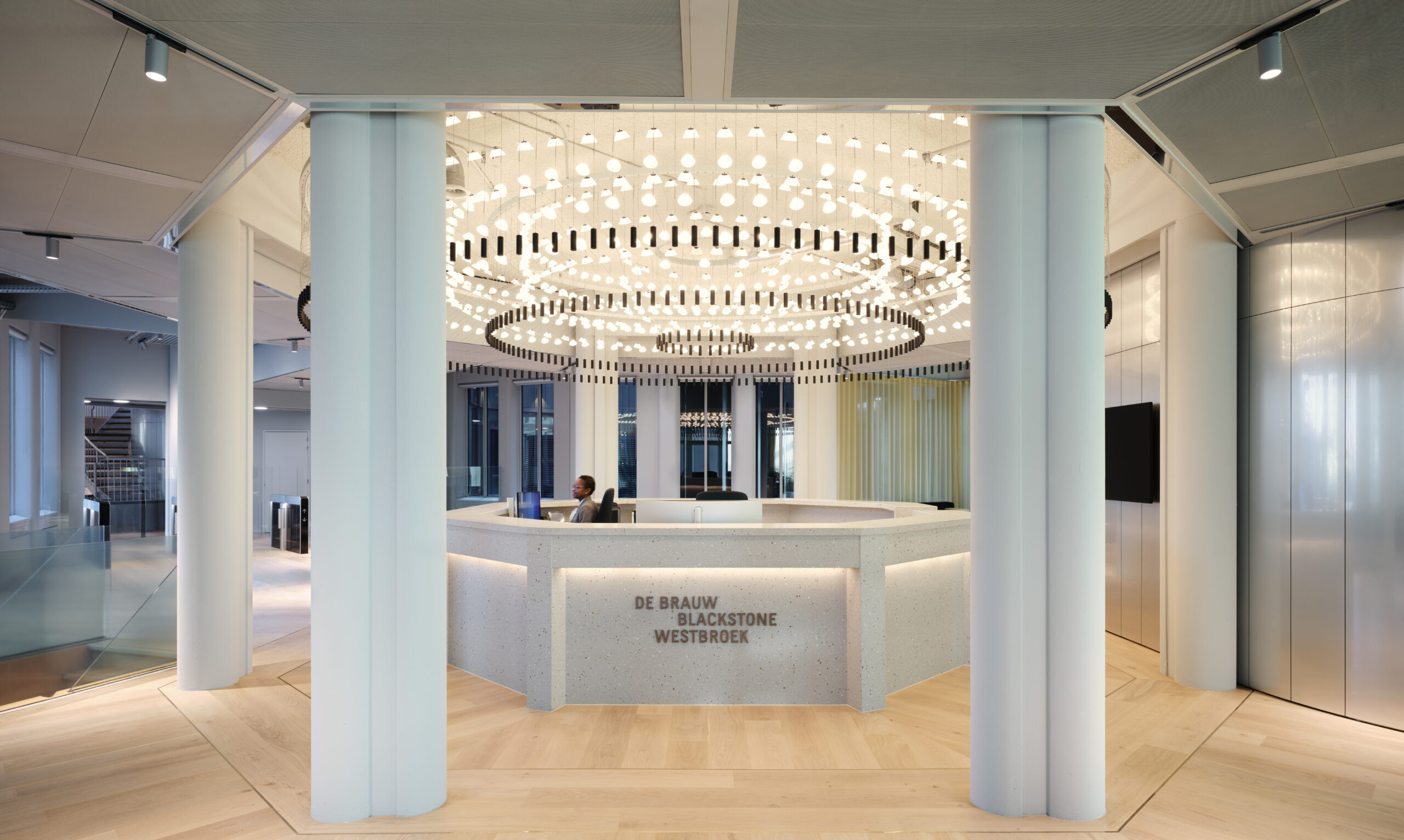
‘We want to be there for the issues that keep our clients up at night,’ says De Brauw Blackstone Westbroek co-managing partner Dennis Horeman. ‘Whatever legal support they need in those situations, we aim to provide it. It is simple to say, but delivering on that requires making some significant strategic choices.’
Horeman, a litigation partner by trade who became managing partner alongside Klaas de Vries in April 2023, says the firm has long been willing to make bold decisions to maintain its position in the European legal elite.
Historically, these decisions include opting against a merger with Linklaters in 2002 and consolidating its Netherlands presence into a single base in Amsterdam in 2005.
More recently, De Brauw opted to wind down its Shanghai office, but it maintains offices in London, Singapore and Brussels alongside Amsterdam. Horeman says maintaining an Asia presence through Singapore remains important, because ‘a significant part of our outbound and inbound work relates to Asia.’
Elsewhere, rather than pursuing aggressive expansion, the firm has focused on its ‘Best Friends’ network alongside Slaughter and May, BonelliErede, Bredin Prat, and Uría Menéndez.
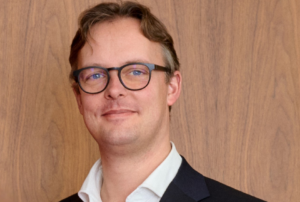
Horeman (pictured) is enthusiastic about the benefits: ‘We have been doing cases with these firms for decades,’ he says. ‘We work together on real transactions for real clients and operate as one team — whether in M&A, litigation or otherwise.’
The firm also partners with US firms, working with Davis Polk to advise AkzoNobel on its proposed $25bn all-stock merger with Axalta, and with Weil, Gotshal & Manges to advise a consortium of Advent International, FedEx, A&R Investments and PPF Group on a €7.8bn all-cash offer for InPost.
These mandates have helped ensure that De Brauw’s M&A practice remains near the top of the Dutch market and beyond. LSEG’s Q1 2026 league tables rank the firm fourth for deals involving the Benelux region by value ($5bn), behind Davis Polk, Freshfields and A&O Shearman.
The firm, which is broadly split evenly between corporate and disputes, also works on a slew of high-profile contentious mandates, including recently defending Salesforce in a major collective action before the Dutch Supreme Court, with a ruling expected in June.
Its strength across the board means that 17 of its 24 Legal 500 Netherlands rankings (71%) are in tier 1, including in commercial, corporate and M&A, all three dispute resolution rankings including commercial litigation, private equity, and EU and competition.
While De Brauw has yet to release its FY25 results, revenue reached €212.8m in 2024, up 10% year-on-year, and up 39.7% from €152m in 2015. Headcount has remained broadly static over the last five years, with partner numbers edging up from 52 in 2021 to 53 in 2026, while overall headcount fell 5% from 384 to 365 over the same period.
Horeman says this reflects a deliberate approach. The firm has sufficient depth to ‘consistently assemble the best possible team for clients, whatever the matter,’ while avoiding growth that risks outpacing the market or diluting its focus.
‘We are committed to high-end work,’ he adds. ‘If growth means taking on matters that don’t fit that proposition, we won’t pursue it.’
Backing partners
Strategy at De Brauw is guided by two principles: anticipating the future needs of top-end clients, a ‘central question’ for the firm, and prioritising the firm’s long-term interests. All major decisions are assessed against those two metrics.
It also includes backing key partners to build practices in response to changes such as the rapid growth of European private equity over the past decade: ‘As so often in law, this ultimately comes down to individuals,’ Horeman notes. ‘Lennard Keijzer was made partner around nine years ago,’ he says. ‘He went on to build a dedicated team within our broader M&A practice focused on these clients. Private equity teams are highly sophisticated and operate at considerable speed, so you need a group that is fully dedicated to that environment. It has required real focus and commitment to the market.’
Arbitration has also become a major strategic focus. In the firm’s November promotion round, three of six new partners had arbitration experience, and it holds a tier 1 Legal 500 ranking in the practice area.
Energy transition-related work is another key growth area, along with ESG. Horeman points to the promotion of public law specialist Jasper van Uden and the expanding regulatory focus of partner Martje de Vries Lentsch, and notes: ‘We’re seeing that a lot of public law work is needed to guide companies through the energy transition, the build-out of energy infrastructure, and related regulatory frameworks. It’s a huge societal shift.’
The firm has applied the same logic to emerging areas such as data protection and cybersecurity, where Horeman says it has scaled what was once ‘really a new practice’ into one that is now ‘among the leaders in the field in the Netherlands.’
The firm consistently prefers to promote from within, even when building new teams or branching into new practice areas. However, its most recent lateral hire, its 2023 recruitment of Nautadutilh IP co-head Anne Marie Verschuur, following the move of De Brauw’s then patent practice head Gertjan Kuipers to Hogan Lovells, shows that it can move swiftly and effectively in the lateral market when required.
Pro bono
Horeman is also proud of the firm’s pro bono practice, which ranks among the largest in Europe. Last year, its lawyers recorded more than 14,500 hours across 97 matters, with the firm targeting matters where it can ‘make a significant impact while building on the commercial practice we already have,’ says Horeman.
Recent highlights include a landmark 2024 ruling from the Court of Appeal in The Hague, which held that cutting off water to households with children is unlawful. Horeman notes that the case sat squarely within the firm’s sweet spot, combining its mass claims expertise with representation of a group with limited commercial power, in this instance, children, while offering the opportunity to deliver meaningful impact.
Beyond the benefits to culture and the outcomes of individual matters, Horeman sees a wider purpose. ‘Ultimately, what we are seeking to do through this approach is to support the rule of law in this country,’ he says, ‘which is a shared interest of large companies such as our clients, law firms, and society at large.’
That broader purpose, he suggests, underpins De Brauw’s position as one of the top firms in the European market, built on consistency over time, a finely tuned sensitivity for societal change and a disciplined focus on high-end client work.