

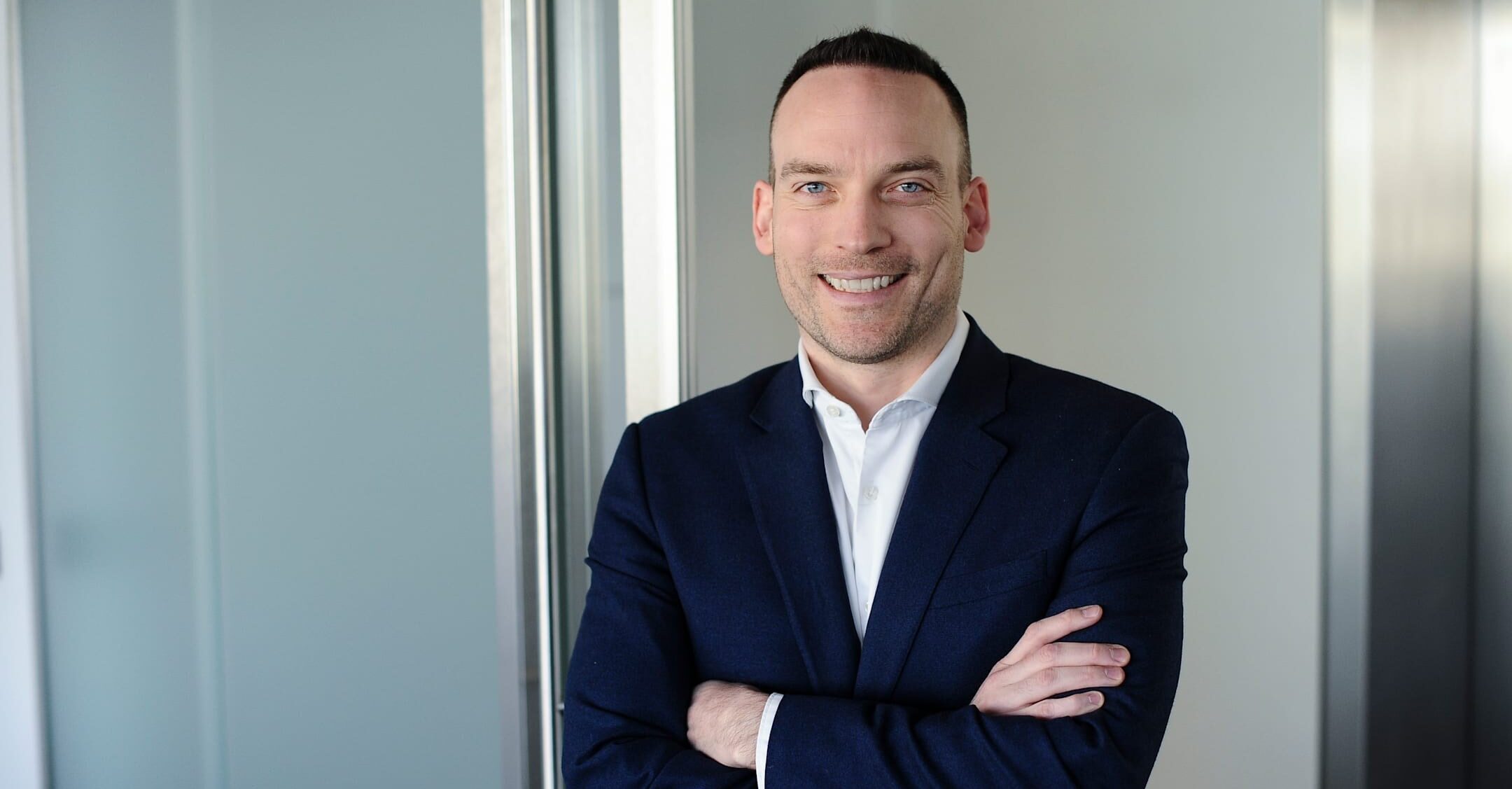
When Sam Cottman (pictured) became Travers Smith’s first full-time pro bono lawyer in 2020, tasked with bringing structure to a high-quality but fragmented practice, he was taking a step that dramatically shifted both his own role and the approach to pro bono work at Travers.
‘As a collective, nobody could say with confidence: this is what the whole firm does on pro bono, this is what is happening here, this is what is happening there. The work was very high quality, but it was happening in pockets, without the level of focus we have now,’ he says.
Prior to going full-time pro bono, he had spent 12 years as a disputes lawyer at the firm, where he qualified in 2008. Corporate law has its own pressures – but of a different kind to dealing with victims of domestic abuse or modern slavery.
Cottman, who became a partner in 2022, now sees life at its extremes on a daily basis.
‘There is an incredible amount of good in people; even those who’ve been treated very, very badly,’ he says. ‘I see a lot of bad, but I see a lot of good as well.’
Building pillars
Cottman’s first priority was to bring greater focus to the firm’s pro bono offering by organising it around four strategic pillars: climate, environment and sustainability, diversity, inclusion and social mobility, vulnerable groups, and rule of law.
Today every pro bono mandate undertaken by Travers Smith – around 100 a year – sits within one of those areas.
‘The structure was the culmination of looking back where we were already present, looking forward where we wanted to become a steering voice, and also leaving space for the unknown,’ he explains.
The focus brought by having a full-time partner has allowed the firm to take on ambitious projects.
Under the rule of law pillar, Cottman points to a major project with legal reform charity Justice examining the experiences of women and girls in prison, saying that across the lifespan of the project almost 70 lawyers were involved, and around 3,500 hours of research were contributed.
That work then led to another project looking at strip-searching and the powers around it. Cottman says this type of spillover is not rare, as projects often ‘just throw up the next thing and then the thing after that.’
Under the climate pillar, Cottman highlights the firm’s work with the Green Tech Legal Collaborative (GTLC) – a pro bono initiative founded by Imperial College London and Bloomberg in 2021, which also won ESG programme of the year at the 2024 Legal Business Awards.
The initiative supports start-ups emerging from Imperial that use green technology to address climate challenges as they seek to scale. Cottman says that GTLC has proved ‘very popular’ at the firm, noting: ‘For once, it gives you a positive way of thinking about climate change because they’re so innovative.’
Under the vulnerable groups pillar, Cottman references the firm’s work with the charities Justice and Care on compensation claims for victims of forced labour, sexual exploitation and domestic servitude.
The team has secured around £120,000 in total compensation for victims so far, with further claims ongoing. ‘These are some of the most extraordinary and fascinating interviews I’ve ever been in,’ says Cottman.
He also hails the effect that successful claims can have on victims: ‘Getting an award for £15,000 straight into your bank account is utterly life-changing.’
Cross-firm initiatives
Another clear example of the more structured approach to pro bono that Travers Smith’s department has taken under Cottman is the Domestic Abuse Response Alliance (DARA).
Launched in 2022, DARA is an 11-firm alliance that fast-tracks legal representation for domestic abuse survivors, allocating urgent cases across members through a central referral system.
The project is one of the most significant that Cottman has helped build, and he describes it as ‘a typical overnight success that took 13 years,’ tracing its origins back to his first domestic abuse pro bono case as an NQ in 2009, which he says lit ‘the flame’ of his passion for the work.
In 2016, Cottman helped launch a multi-firm family law clinic, before beginning work on a dedicated advocacy project in 2020. The following year was spent building the infrastructure, recruiting firms and securing funding, ahead of DARA’s launch in February 2022.
At launch, DARA had seven elite founding member firms: Travers itself, as well as Debevoise & Plimpton, Gibson Dunn, Hogan Lovells, Latham & Watkins, Reed Smith, and Slaughter and May.
The alliance has since grown to 11 firms, with Akin, DLA Piper, Eversheds Sutherland and Herbert Smith Freehills Kramer joining in subsequent years.
‘The nature of the area we’re in can be difficult, but the sense of purpose it gives you is pretty special’
Cases are referred by the National Centre for Domestic Violence and FLOWS to LawWorks, which administers DARA. They are then allocated to firms on a taxi-rank basis. Given the urgency of the matters, firms usually have around three to four hours to clear conflicts and accept the instruction. If they are unable to do so, the case passes to the next firm in the queue. Once accepted, the matter becomes that firm’s client relationship.
DARA’s operations committee, which includes a representative lawyer from each of the 11 member firms, meets monthly. At those meetings, Cottman explains: ‘We troubleshoot all of the cases and talk through what’s currently at court and check on capacity and generic issues that we’re encountering.’
The alliance recently placed its 350th case, a significant milestone – but one Cottman describes as still only a ‘drop in the ocean.’
To illustrate the type of matters DARA handles, Cottman tells LB about a case involving a 19-year-old woman who had received graphic death threats from her boyfriend after telling him she wanted to end the relationship.
‘I was actually on the phone with her when she was trying to get the police,’ he recounts. ‘The police were chasing him around London and she was very scared. I was trying to figure out how best to sort of protect her in that period when he was on the run and the police were 45 minutes away from her house, so that was a highly stressful afternoon.’
‘No perfect answer’ – dealing with emotional impact
The emotional impact of that work is part and parcel of pro bono practice. Cottman says the team takes steps to manage it, including building gaps into caseloads, holding case debriefs and making therapists and specialists available. But some impact is unavoidable. ‘There’s no perfect answer to this,’ he says.
That is particularly acute for Cottman now that he works full-time on pro bono matters. Previously, he says, he might have had a few weeks of commercial work between each pro bono case. That buffer no longer exists, and he concedes that the work can be challenging at times.
He mentions a case in which a girl started to be abused at the age of 10, a similar age to his daughter now. ‘That one was very difficult for me,’ he says. ‘It is quite sobering when you put it in that context.’
Nevertheless, he is clear that the good outweighs the bad.
With permission from the sender, Cottman shares an email sent to him and three other members of a Travers Smith pro bono team by a client the team supported on a civil and criminal matter:
‘All of my 12 years of commercial litigation never produced an email like that,’ he says. ‘It’s the kind of email that really makes you feel a sense of purpose and that you’ve deployed your skill set in a good way.’
‘The nature of the area we’re in can be difficult. But that sense of purpose, and a thank you like that, is pretty special.’