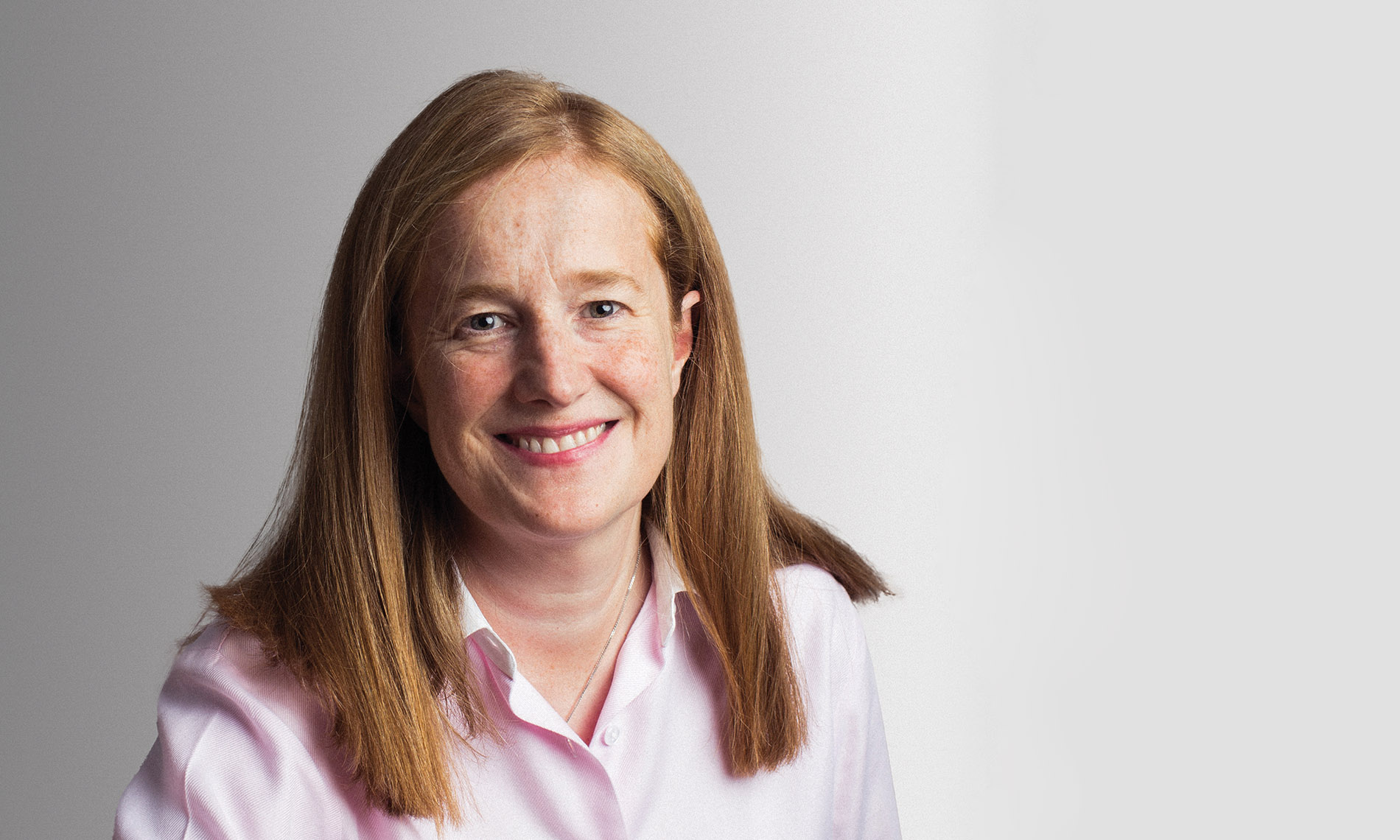
‘The Dallas market has shifted a lot,’ says Krista Hanvey (pictured), co-chair of the employee benefits and executive compensation practice at Gibson Dunn, and co-partner in charge of the firm’s Dallas office. ‘There’s a lot of competition, as we’re all going after the same Fortune 500 clients headquartered here.’
With a presence in Dallas since the 1980s, Gibson Dunn is part of an older guard of major US firms active in the city. Others include Sidley Austin, which entered through a merger with local firm Richards, Medlock and Andrews in 1996, Kirkland & Ellis and Reed Smith, which opened in 2018 and 2019 respectively through a clutch of local partner hires.
Over the last few years, more international firms have followed, with Simpson Thacher becoming the latest to announce a presence in the city, hiring Kirkland liability management partner David Nemecek in February to lead its capital structure solutions practice.

Meanwhile, Dechert announced a launch in January, with corporate partner Joanna Lin set to lead an office after joining from McDermott Will & Schulte as part of a 20-partner team hire that also saw the Philadelphia-headquartered firm launch in Chicago.
Latham & Watkins is widely expected to make its long-awaited entry in the city shortly. ‘There’s been a rumour for the last 12 years that Latham is coming to Dallas,’ observes one partner.
This rumour gained more traction in February this year, when the California-founded giant hired two partners in the city, recruiting litigators Taj Clayton and Scott Thomas from Kirkland and Winston & Strawn respectively.
However, Latham has not confirmed whether the hires will see it formally launch a new office in Dallas or whether they will be based in Houston. ‘Taj and Scott are just the kind of partners we want on our team, and their addition reinforces our deep connection and commitment to the vibrant Texas market and our big ambitions here,’ says Houston managing partner Nick Dhesi. ‘We are laser-focused on building the best team in this market and across our global platform to deliver outstanding results for our clients.”
Other major firms recently opening in Dallas include Paul Hastings, which launched in 2024 with its hire of an eight-partner finance team from Vinson & Elkins split across Dallas and Houston.
King & Spalding also launched in 2024, with its hire of Gibson Dunn trial lawyer Veronica Moyé, and has continued to expand this year with the addition of a total of 15 partners from Winston & Strawn, including 13 litigators and two in finance and restructuring, with all but three of the partners based in Dallas. Included among the number is Tom Melsheimer, now global head of trial at King & Spalding, described by one commentator as ‘one of the top trial lawyers in Texas, if not the top.’
A surging market
‘Everyone sees the same thing in Dallas,’ says Melsheimer. ‘A lot of business, a lot of opportunity, and a somewhat underserved legal market in terms of the big national firms.’
Many partners point to the sheer scale of the business opportunity in the city. The Dallas-Fort Worth (DFW) metroplex is home to 21 Fortune 500 companies, from homegrown success stories like 7-Eleven and Southwest Airlines to national brands like AT&T, which moved its headquarters in 2008. The Texas governor’s website lists seven corporate HQ relocations to DFW in 2024, of 24 to the state in total – the most of any metropolitan area in Texas.

On top of this, a range of major banks and financial institutions have increased their investment in Dallas, with Wells Fargo opening a new campus late last year, and Goldman Sachs, Bank of America, and Scotiabank all launching regional hubs.
Trey Cox (pictured), global litigation co-chair at Gibson Dunn and co-partner in charge of the firm’s Dallas office alongside Hanvey, summarises the effect of this: ‘As more Fortune 500 companies and financial institutions come into the market, top 50 firms follow. With the bigger companies and the bigger law firms comes a more sophisticated set of legal services consumers. Everyone benefits from that – primarily the clients.’
This activity is already having a visible effect on Big Law in Dallas, with corporate the most active lateral hiring practice area in Dallas in 2025, according to data from legal market intelligence provider SurePoint, with 21 corporate partner hires into top 100 firms, of 62 total.
‘Dallas presents a lot of potential for law firms to build on core industry practices’
Holt Foster, who joined Willkie Farr & Gallagher from Sidley to help launch the firm’s Dallas office in 2024, and now serves as office managing partner, explains the rationale for Willkie’s move in similar terms: ‘With so many Willkie clients moving to, or expanding operations in, Dallas, Willkie felt it was important to have boots on the ground with our clients – side by side – with a first in class team of local lawyers.’

He also highlights the diversity of the Dallas market, in contrast to energy-dominated Houston: ‘Dallas has a very diverse economy with many thriving business sectors – energy, real estate, finance, technology, healthcare – the whole gamut.’
He continues: ‘Dallas presents a lot of potential for law firms to build on core industry practices, as well as cross-marketing to new clients and industries.’
Scott Parel (pictured), Dallas co-managing partner and global private equity co-lead at Sidley, makes a similar point: ‘Dallas is a different market than Houston with different businesses and industries, and that requires a strategic approach,’ he says.
This surge in activity across a broad range of industries has fed and been fed by state policy. ‘Texas doesn’t have a state income tax,’ notes Dallas-based Major, Lindsey & Africa partner recruiting group director Dave Beran. ‘It’s perceived as a place that’s friendly for business. You could almost compare it to somewhere like Dubai.’
‘The Texas Stock Exchange has the potential to spread like wildfire’
Another development with major potential is the establishment of the Texas Stock Exchange (TXSE) – a burgeoning rival to the two major US exchanges, Nasdaq and the New York Stock Exchange (NYSE). TXSE received regulatory approval last September, and is targeting a 2026 launch, with its physical headquarters in Dallas.
‘A major indicator of the strength of the market has been the establishment of the Texas Stock Exchange,’ says Haynes Boone chair and firmwide managing partner Taylor Wilson. ‘That’s indicative of a thriving financial market, and it’s also attracting a lot of interest from major corporations.’
Angela Zambrano (pictured), Dallas office co-lead, executive committee member, and litigation global practice group co-lead at Sidley, concurs: ‘It’s exciting. It says a lot about Dallas and the State of Texas. We have felt the shift of businesses to Texas for several years, and these changes are reflecting what drew many to our state – a genuine desire to help businesses thrive for the benefit of their stakeholders and employees.’
Whether the exchange will be a success remains to be seen – and to take on established players like the NYSE and Nasdaq will be no easy feat. But partners believe there are reasons for excitement.
‘They are trying to disrupt the status quo by making a real effort to be business-forward,’ says Zambrano. ‘Given the size of the business community and the general “can do” attitude in this state, this has the potential to spread like wildfire.’
Litigation drivers
In addition to corporate work, firms are also investing heavily in disputes, with Latham and King & Spalding both focusing their recent hiring efforts on litigators, and Paul Hastings bringing in litigators Stephanie Clouston and Matthew Durfee from Winston & Strawn at the end of last year.
According to data tracked by SurePoint, litigation was the most active practice area for hires into top 100 firms in Dallas for the three years between 2022-24, with 26 hires in 2022, 19 in 2023, and 18 in 2024.  In 2025 it was the second most active practice area, with 16 hires.
King & Spalding’s Melsheimer (pictured) argues that this is driven by broader changes in the litigation world: ‘The cases are getting higher stakes and more challenging for defendants, there are bigger cases, and legal theories that allow for large recoveries, so companies are facing potential liability at a greater scale than perhaps ever before, and when they’re looking to their law firms, they want to be able to hire a firm that has a lawyer that has tried big cases. And with fewer and fewer cases being tried over the last 20 years, but the stakes of the cases that get tried being higher, there’s a shrinking pool of available talent.’
Here, too, the state’s business friendly policies are driving activity. Established in 2023 after decades of attempts, the Texas Business Court currently serves five jurisdictions across Texas, with a focus on high-value business disputes.
‘There’s a chance Texas becomes the new Delaware’
‘It’s a sea change in the litigation world,’ says Russell Lewis, Houston partner in charge at Baker Botts. ‘It’s driving a lot of these commercial disputes to the business courts.
It’s supposed to take some of the burden off the traditional courts, which are often quite backloaded. That backload in part is because of this influx of people and companies to Texas.’
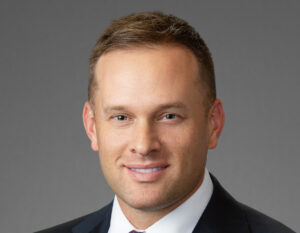
Collin Cox, Houston co-partner in charge at Gibson Dunn, concurs: ‘The business courts are another place where demand is expressing itself. It’s really exciting. It’s a great development for us.’
Mike Absmeier (pictured), co-managing partner at Houston disputes boutique Gibbs & Bruns, sees potential: ‘There’s a chance Texas becomes the new Delaware,’ he says, referencing the long-established dominance of the Delaware Court of Chancery in high-stakes corporate governance litigation.
If it happens, though, this will be in the future – partners note that the Texas Business Court has not yet generated a major increase in new claims.
How to open in Dallas
Texas is home to a thriving ecosystem of disputes boutiques, with smaller firms prominent in both Houston and Dallas.
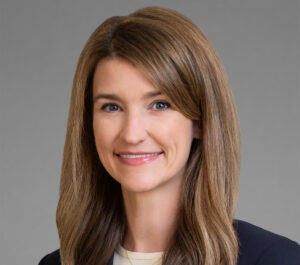
This means that, as elsewhere, some national and international firms see a boutique tie-up as a potential entry point to the market. But examples of success are relatively rare.
Ashley McKeand Kleber (pictured), Absmeier’s co-managing partner at Gibbs & Bruns, argues that boutique firms provide unique opportunities to develop talent, pointing to a culture where ‘young lawyers are given opportunities early, so it’s not a surprise for our clients or for judges to see young lawyers up and active in the courtroom or in depositions.’
Absmeier goes further: ‘I get inquiries about mergers all the time, but it’s not something we’re interested in. For us to merge, you’d need all our partners to say, “Heck yeah! Let’s change our name, leave our office, change our culture.” It’s not going to happen.’
‘With so many large blocks of attorneys moving in Dallas, Willkie felt the best strategy was to selectively target premier transactional partners’
Instead. many recent launches in Dallas have seen firms combine lawyers from a clutch of competitors – an approach that many argue makes it easier to integrate a new office into a firm’s existing culture.
‘In an effort to ensure we had a successful opening in Dallas, we studied the market for almost two years,’ says Willkie’s Foster (pictured).

Willkie announced its launch in May 2024 with a trio of hires from Haynes Boone, but also brought over four partners who had joined the firm since 2018 from Kirkland, Sidley, legacy Shearman & Sterling, and King & Spalding, with Foster joining that June, also from Sidley.
Since then, the firm has built out its office with hires from a range of firms, most recently including corporate partners Jesse Betts and Jessica Hammons from Akin and Nathan Meredith from A&O Shearman, all of whom joined the firm last July.
Foster explains the strategy behind this approach: ‘With so many recent firm mergers and large blocks of attorneys moving in Dallas, Willkie felt the best strategy was to selectively target some of the premier transactional partners in Dallas and build around them.
‘Opening in a market like Dallas comes with real challenges; the hardest part is building critical mass in an already tight talent market’
‘Now, almost two years into it, with 30 attorneys and growing, we feel that we picked the right approach for Dallas.’
Foster also notes issues for firms opening in Dallas: ‘While the diverse economy in Dallas makes it a very attractive destination for law firm expansion, it also presents some obstacles when trying to create synergies among lateral partners.’
Foster stresses that new hires must complement each other: ‘Building a new office by bringing together lawyers from various firms with significantly diverse practices can really create long-term obstacles for successful integration, cross marketing and market share, because there is no core theme among their respective practices,’ he says.
Sidley’s Parel, who joined his firm from Weil in 2013, alongside Zambrano, makes a similar point: ‘Opening in a market like Dallas comes with real challenges; the hardest part is building critical mass in an already tight talent market. But that’s also what makes it meaningful. When you’re able to assemble the right team in that environment, it signals long-term commitment and strength.’
The strategy is certainly popular: of the recent firms to open in Dallas, Willkie, Paul Hastings, and King & Spalding have all made prominent hires from a range of different firms – with many of these hires already noted as market-movers.
And partners are optimistic about the city’s future. ‘You don’t need a proof of concept to be in Dallas,’ says Melsheimer. ‘Texas generally and Dallas specifically are among the most thriving legal markets in the United States. Dallas makes all the sense in the world.’
[email protected]
‘The energy capital of the world’ – why the global and US elite are betting on Houston




 Commercial knowledge of the sector
 Overall client service

 The launch event was introduced by Eversheds Sutherland global co-CEO Keith Froud (pictured), who paid tribute to the growing influence of in-house counsel working in the key business centres across the North.