2025 was the year of the megadeal, with total global M&A values reaching $4.8trn – the second-strongest year on record – as a wave of blockbuster transactions helped to keep market confidence buoyant.
Competition authorities around the world played their part in this, with merger enforcement easing in the US and the UK Competition and Markets Authority (CMA) blocking no deals last year, according to a report by Simpson Thacher & Bartlett.
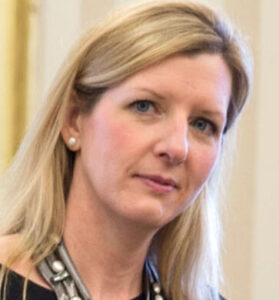
 Hogan Lovells partner Angus Coulter (pictured), the former head of the firm’s London competition team, describes the CMA’s current stance as ‘radically different’ to its historic approach.
‘You can get a green light for a deal in two or three weeks, which is great for our clients,’ he says.
Another senior competition partner at a global firm agrees, saying that ‘growth is the magic word’ for the CMA right now.
The organisation has faced scrutiny in recent years after it blocked Microsoft’s $69bn acquisition of US video game company Activision Blizzard, a decision which was later reversed amid criticism that the move risked discouraging investment in the UK.
The episode, described as ’embarrassing for the CMA’ by one senior partner, drew the authority into the spotlight and prompted a shift towards a more business-positive focus.
And further change is on the horizon, with the organisation currently consulting on reforming its panel system for Phase 2 investigations – the final stage of its merger review process before a decision is reached.
Proposed changes could see the panel of independent experts who review mergers replaced with a committee of individuals appointed by the board – a suggestion which has proved controversial among partners amid concerns that decisions could be exposed to lobbying efforts and government influence.
Other proposed reforms include extending the first phase of investigations to allow parties more time to resolve competition concerns; shortening the three-year market review process; and increasing its capacity to investigate algorithms as it continues to grapple with big tech.
So with megadeals still front and centre, including the upcoming merger of Warner Bros Discovery and Paramount, how will the CMA position itself for the future?
‘Political influence is much more overt than it was before’
The mood music from CMA CEO Sarah Cardell – who stepped into her role in late 2022 – has been ‘to focus on the deals that relate to the UK only and stop being the global policeman that goes after global deals,’ according to one partner.
Linklaters competition partner Jonathan Ford concurs, saying that in response to criticism, the CMA has aimed to demonstrate that it could ‘move fast and be more proportionate, particularly in response to their interventions in global transactions.’
Ford’s view is that this has been a positive move, particularly for clients. ‘The CMA appearing to evolve its approach over the last couple of years has actually made more clients ask questions as to whether there are deals that could be done, that may have been difficult in the past, and whether there are more opportunities in the UK.’
But not all partners are so positive, with some citing undue influence from government. One competition partner at an international firm says the CMA has become ‘an unpredictable organisation to deal with for clients.’
‘Political influence is much more overt than it was before,’ according to the partner. ‘These changes are making businesses and partners uneasy, because they are not based on competition law – the CMA is being told what to do by the government.’
Checks and balances
Alongside suggestions of government interference, the proposed reforms to the panel system are also providing cause for concern.
Linklaters’ Ford says the panel system serves as an important check on CMA leadership.
‘The concern with placing more responsibility in CMA leadership and the organisation without the independent panel is that you may lose that fresh pair of eyes. It is hoped that the new committee structure will take shape in a manner which helps mitigate these concerns,’ he notes.
He continues: ‘The independent panel was one of the few checks and balances we could point to in the UK, and losing it with no access to file, and a high hurdle of judicial review, makes it one of the regimes with the fewest checks and balances internationally against its peer groups.’
Coulter also has questions about the proposed reforms. ‘I don’t think that the decisions being taken at Phase 2 were wrong, or that they weren’t being taken efficiently.’
‘There is a nervousness amongst lawyers – what exactly will it be replaced with? Will it be a rigorous, independent decision-maker? Because we don’t know what the answer is yet.’
The CMA’s consultation on reforms is expected to close at the end of March this year.