Sponsored briefing: Integrating and exploiting technology in our business activities

RDS Partnership discusses how the covid-19 pandemic has played a significance in exploiting and integrating technology in the legal sector.

One of the main lessons learned from the global lockdown is the significance of integrating and exploiting technology in our business activities. This applies to the legal field as well, where lawyers have had to adjust to the new reality of making arguments in front of a monitor and looking at a camera, rather than addressing the judge face-to-face.

The courts in Malaysia have also adapted to the digital era by allowing virtual hearings and trials even during the initial stages of the pandemic. The legislative branch made a commendable move by quickly amending the Rules of Court 2012 to establish regulations and best practices for electronic communication in serving legal documents and remote communication technology in court proceedings. As a result, it is not surprising that while most of the world was on hold, the courts persevered in their duty to dispense justice.

Statutory interpretation whilst often perceived as elementary and trite, is frequently the key to unlocking the Gordian knot in disputes. A case in point was the recent Federal Court decision in Tan Kah Fatt & Anor,1 where the interpretation of the term “issue” under theDistribution Act 1958 was fundamental to the appeal. The Federal Court acknowledged that the standard canon of construction has always been that the courts should, in usual cases, begin with the literal rule and that the purposive rule only ought to be relied on where there is ambiguity. Nevertheless, the recent trend of decisions seem to have taken a markedly different approach. In this recent case the Federal Court cited the decision ofBursa Malaysia Securities Bhd2 in approval and held that the purposive rule of construction prevails over the literal rule of construction in the interpretation of a statute given section 17A of theInterpretation Acts 1948 and 1967.

The pandemic years also saw landmark decisions in the housing industry. Regulation 11(3) of the Housing Development (Control and Licensing) Regulations 1989(“HDR”) was declared ultra vires its parent law, the Housing Development (Control and Licensing) Act 1966(“HDA”), by the Federal Court in the case of Ang Ming Lee.3 This means that only the Minister of Urban Wellbeing, Housing and Local Government, and not the Controller of Housing, can make amendments to the sales and purchase agreement that is statutorily provided. The Court of Appeal supported this decision in the case of Bludream City Development Sdn Bhd,4 and the purchasers’ motion for leave to appeal to the Federal Court was dismissed. Another issue in the housing industry was the calculation of liquidated damages for late delivery of vacant possession, which was resolved by the Federal Court in the case of PJD Regency Sdn Bhd.5 The court ruled in favor of the homebuyers and held that the starting date for calculating liquidated damages was the date of the purchaser’s payment of the booking fee, and emphasized that the HDA should be interpreted in favor of the homebuyers as it is a social legislation. These decisions resulted in a surge of cases filed by homebuyers to claim liquidated damages alleging that their sales and purchase agreement (where the date for delivery of vacant possession exceeded the 36-month prescribed timeline) was void. This slew of cases before the Malaysian Courts for liquidated damages are currently awaiting the decisions of the Federal Court in the cases of Obata-Ambak Holdings Sdn Bhd6 and Vignesh Naidu.7

In the field of intellectual property, there were several important cases that reached the Federal Court. In Mohammad Hafiz bin Hamidun,8 the court clarified the meaning of “goodwill” and who owns it, stating that “goodwill” is a flexible asset that can be generated in various ways. In Ortus Expert White Sdn Bhd,9 the court reiterated principles on trademark comparison and held that disclaimers should not be disregarded in the comparison exercise.

Regarding parallel imports, the Federal Court’s decision in Guangzhou Light Industry & Trade Group Ltd10 narrowed the applicability of the defense of parallel importation, holding that goods intended for sale in a specific jurisdiction (outside Malaysia) may infringe trademarks if imported into Malaysia.

The YKL Engineering Sdn Bhd11 case provided guidance on patent invalidation and copyright subsistence. The case dealt with practical aspects of patent invalidation and held that that prior arts relied on to invalidate a patent must be specifically pleaded, failing which may result in the litigant being deprived the ability to rely on said prior art in the invalidation action. The court also held that copyright law does not require a work to be new or unprecedented, but rather that sufficient effort has been expended to make the work original.

The trend of copyright owners taking a proactive approach in enforcing their intellectual property rights can also be discerned from the case of The Football Association Premier League Limited & 1 other.12 In that case, the copyright owner had painstakingly taken steps to protect their intellectual property associated with the Premier League by registering the ASTRO and ASTRO Supersport’s logos, promos and other interstitials only for the defendant to screen Premier League matches at its restaurant bar on a set-top box without the requisite subscription. The High Court handed a judgment against the restaurant owner which serves as a reminder to the masses that copyright owners will not stand idle while their intellectual property is misappropriated.

On the topic of data protection, the Minister of Communications and Multimedia announced in August 2022 that a draft amendment bill to the Personal Data Protection Act 2010 has been prepared. The proposed amendments seeks to introduce, among others, a mandatory data breach notification obligations for data users, which will require data users to report data breaches within 72 hours, a new obligation on data users, where they will be required to appoint data protection officers and a new right to data portability for data subjects. Cybersecurity in Malaysia too may see some significant changes. It was announced in Parliament that a draft standalone Cybersecurity Bill to regulate cybersecurity matters in Malaysia is in the works and the Malaysian government aims to table the Cybersecurity Bill for parliament’s approval in July 2023.

Authors


Alex Choo Wen Chun
Senior Associate


Bahari Yeow Tien Hong
Partner
E:[email protected]


Lim Zhi Jian
Partner
E:[email protected]


  1. [2023] 2 CLJ 169
  2. [2022] 4 CLJ 657
  3. [2020] 1 MLJ 281
  4. [2022] 2 MLJ 241
  5. [2021] 2 MLJ 60
  6. W-02(IM)(NCvC)-1204-06/2021
  7. W-02(IM)(NCVC)-880-04/2021; W-02(IM)(NCVC)-881-04/2021
  8. [2021] 4 MLJ 878
  9. [2022] 2 MLJ 67
  10. [2022] MLJU 1135
  11. [2022] 6 MLJ 1
  12. [2023] 9 MLJ 16

Return to the Disputes Yearbook 2023 menu

Sponsored briefing: Artificial intelligence challenged by law and regulations: an odd legislative blank

Afrique advisors discuss both the challenges and opportunities that AI brings to the legal system in Morocco

Artificial intelligence (AI) and robotics are rapidly growing fields that have the potential to transform various industries and sectors, including law. They have become the most outstanding technological trends of our century.

The ongoing process of digital transformation is being accomplished in part with the use of AI, an interdisciplinary technology that aims to use large data sets (Big Data), suitable computing power, and specific analytical and decision-making procedures in order to enable computers to accomplish tasks that approximate human abilities and even exceed them in certain aspects.

We are now 70 years beyond their inception1 and we can recognise that we have made tremendous progress as we are no longer dealing with simple programs that can interact with humans, or programs that can treat small diseases. Now we are approaching the so-called “Strong AI” capable of autonomous thinking, adaptation and making decisions the same way a human being would.

Thus, the rapid growth of their use and their development is bringing new challenges, sometimes difficult to cope with for our society. This situation requires different legal treatment of these technologies, as robots and AI are likely to increase their interaction with humans in a wide range of areas. Morocco, like many other countries, is grappling with the legal implications of AI and the need to regulate its use.

Undoubtedly, the statutory law cannot avoid the evolution that AI and robotics have induced and they will certainly have a significant consequence on its classical notions (liability, property rights, intellectual ownership, data protection, etc.). Nowadays law-makers endeavour to understand these new systems in their relationship with the human being2, however, their interactions are sometimes ambiguous, as the AI systems increasingly aims to gain autonomy over the human being to shape their own identity in a symbiotic manner.

Such situation recalls the need to consider the legal status of the artificial intelligence, as an emerged issue that should interest the public policies.

Indeed, the broadening of artificial intelligence’s capacity and the purposes for which it might be used is not merely fraught with the opportunity but also with the potential danger. The following is a short assessment of the regulatory and legal challenges posed by AI.

I- AI and robotics: A blurred legal status

Given the current progress of AI and robotics technologies dominated by techniques of “Machine Learning” and “Deep Learning”, their capacity to learn autonomously from their own experiences, and their interactions with the environment in a unique and unpredictable ways, one could enquire whether it is sufficient to consider the basis surrounding the principles of the laws of persons and property in order to ascertain the status of AI among the summa divisio of the law.

Generally speaking, the summa divisio of law has a binary vision. First, there are persons: the subjects of law who have legal personality. At the opposite end of the spectrum, we have property which does not have the so-called “legal personality”. Indeed, property is appropriable by the persons entitled thereto. Individuals include natural persons (human beings) and legal persons (states, corporations, international organizations, NGOs, etc.). Anything that is not a person is legally a property. However, this does not necessarily pertain to robotics and artificial intelligence.

As the result of an IT programming activity that expresses a transcription of coded information, AI and robotics are, above all, creations of the mind. As such, they are by definition an intangible asset. Hence the recognition by the World Intellectual Property Organization (WIPO) of the possibility of filing patents related to AI reveals its intellectual property nature.

According to the WIPO Technology Trends Report (February 2019), since “the 1960s, inventors and scientists have filed patent applications for nearly 340,000 inventions pertaining to artificial intelligence”. Such statistics seem to be an assertion of the legal status of these intelligent entities as subject matter, and far from being deemed to be its subject3.

However, this position has been called into doubt following a lengthy battle initiated by Stephen Thaler4 before different national patent offices throughout the world.

In the above 2018 case, two European patent applications have been filed by Thaler5, with the particularity that these two patent applications is that both designate as inventor an AI algorithm called by its creator, “DABUS6.

At the time, the European Patent Office (EPO) had refused to grant the status of inventor to an intelligent machine on the grounds of lack of legal personality. The same position has been upheld by the European Patent Office7, the Intellectual Property Office of the United Kingdom and the Patent and Trademark Office of the United States. Nevertheless, the South African Patent Office and the Australian Federal Court8 decided to grant this AI the status of inventor, thus adopting a completely different position and turning all standards upside down.

This worldwide debate is a perfect illustration of the fact that AI is no longer just an end in itself, but rather a tool for creation – and sometimes the creator as well – capable of learning from the introduced data and developing into an autonomous decision maker beyond any human involvement. Indeed, creations generated by intelligent entities have become a widespread reality and it has been difficult to distinguish between human creations and those created by an artificial intelligence.

In the same vein, a well-known painting, “The New Rembrandt”, was created by an AI which was able to extract the secret of the Dutch painter based on his existing art works. Experts have stated that, had they seen the AI created painting in a museum, they would have thought it painted by Rembrandt himself9.

Another field of example in which the AI was considered equal to persons was the attribution of citizenship rights. In 2017, Saudi Arabia announced that robot Sofia, who identifies herself as a woman, was granted the Saudi citizenship. In the same year, Japan granted a residence card to the Shibuya Mirai bot cat under a special regulation10.

All these examples provide a perfect illustration of the evolution of AI from an owned property to a subject that acts within the summa divisio. A reality that science and scientists acknowledge, yet the legal realm is quite distant.

II- Emergina AI is a New Subject of Tort Liabilities

The previous lines reveal that AI can represent a crucial contribution to the enhancement of the human capabilities in terms of generated creations or in carrying out functions that were previously the exclusive preserve of humans. However, the other side of the coins is that these intelligent entities can be involved in causing accidents or damage as well. For instance, one of Google’s cars has been the cause of an accident before11. Damage was also caused by an AI-assisted medical diagnosis (IBM’s Watson)12.

Hence the need to consider the tort liability framework for damage caused by an AI or robot, whereby their conduct may bear implications from both contractual and extra-contractual liability perspectives.

In practice, these technologies involve many actors such as the programmer, the data provider, the platform owner and the user. However, the positioning of the users at the front line of the process often makes them the first rank liable.

One could wonder if such positioning legitimate, particularly considering the development of certain autonomous and cognitive functionalities (such as the capacity to learn from experience or to make near-independent decisions), which make these robots more likely to be considered as actors who interact with their environment and can significantly alter it13.

In such a situation, the issue of the legal liability in case of a damaging action by a robot is a key concern.

Scientists generally agree to classify AI as two categories: soft AI, which merely imitates a pre-established behavior that a human would have had in a given situation, and strong AI, which is endowed with a high degree of autonomy in making decisions and which is similar – thanks to the progress of cognitive sciences – to human behavior in its most particular features.

As a matter of fact, intelligent entities based on soft AI technology does not raise any problem, insofar as it is considered merely as a tool that performs tasks or carries out operations according to the instructions of its programmer or its user, and therefore corresponds to the definition of “things” under the scope of positive law.

Consequently, the application of the liability for “things in possession”, embodied in Article 88 of the Moroccan Civil Code14, which provides that “everyone must be liable for damage caused by things in their possession”, remains a suitable approach.

However, the notion of legal guardianship, based on the theory of risk management, seems to bring up further issues since Moroccan law draws a distinction between legal guardianship, which belongs to the owner of the thing, and ordinary material guardianship, which belongs to the person who has the power of direction and control at the time of the damage. Therefore, no one can deny that in such a context, the notion of guardianship and risk management must be interpreted differently.

Regarding technologies based on so-called strong artificial intelligence, the issue gets much more complicated, considering their emerging autonomy and the immateriality and unpredictability of their actions, as they can cause damage regardless of any control or influence by a human. Indeed, the solutions provided by the theory of risk management and guardianship of things, appear unable to justify the faulty contribution of any human.

Therefore, it follows that the increasing autonomy of robots brings us back to the legal nature of these machines, which vary depending on their type. The more an intelligent machine is autonomous, the less it can be considered a “thing” under human control and must bear the responsibility for the damage it causes, according to the terms of the theory of guardianship of things as it is conceptualized under Moroccan law.

It seems that the current statutory liability rules are no longer sufficient in this regard and new policies and regulation are required to clarify both the legal nature of these entities and also the liability system of the various actors for the actions or inactions of a robot which cannot be attributed to a human factor.

Actually, these two issues of positive law, relating to the legal status of intelligent entities and the liability regime applicable in case of damage or injury they cause, are in all likelihood inter-related insofar as each one has an impact on the other and indeed on other legal fields, in particularly intellectual property rights and the protection of personal data.

At this point there is no doubt that the established law is naturally applied, although not by choice. Nevertheless, it must be enhanced by new and specific responses by the legislature, whether by creating appropriate regulations or by adapting and modulating existing provisions.

Recalling ultimately that in terms of the connections linking law and technology, it is technology that leads the process, as expressed by an eminent author, La Paradelle, who once said: “It is not the philosophers with their theories, nor jurists with their definitions, but rather engineers through their inventions and discoveries that establish the law and, above all, the progress of the law”.

The main challenge is therefore for the legislators to address an effective regulatory approach that combines the prevention of potential risks along with the preservation of innovation and its progress.

Overall, AI presents both challenges and opportunities for the legal system in Morocco. While the lack of specific regulations may hinder the development of AI, it also provides an opportunity for the country to shape its legal framework in a way that encourages the responsible and ethical use of the technology. It is therefore crucial that policymakers in Morocco take a proactive approach to developing a legal framework that addresses the unique challenges and opportunities presented by AI.

Authors


Rabab Ezzahiri
Attorney at Law, Casablanca Bar Association and PhD Candidate


Maroua Alouaoui
Associate


  1. Chris Smith, “The history of artificial intelligence”, University of Washington, December 2006.
  2. Wolfgang Hoffmann-Riem, “Artificial Intelligence as a Challenge for Law and Regulation”, ResearchGate, January 2020.
  3. Ryan Abbott, Therefore I Invent: Creative Computers and the Future of Patent Law, 57B.C.L. Rev.1079 (2016).
  4. Philippe Schmitt, “Brevet DABUS et Intelligence artificielle : le 25 novembre 2019 n’est pas le jour de la singularité creative”. November 2019. Village des juristes. Available at: https://www.village-justice.com/articles/brevet-dabus-intelligence-artificiellenovembre-2019-est-pasjour-singularite,33059.html (Last accessed on April 13, 2023)
  5. EP 18 275 163 and EP 18 275 174.
  6. Matthieu Objois, Lucas Robin, Inventeurs IA “l’office européen des brevets remet les pendules à l’heure dans la décision DABUS”. Village des juristes. Available at: https://www.village-justice.com/articles/inventeurs-office-europeen-des-brevetsremet-les-pendules-heure-dans-decision,33546.html (Last accessed on April 13, 2023).
  7. EPO decision rejecting two patent applications naming a machine as inventor on 28 January 2020. Available at: https://www.epo.org/news-events/news/2020/20200128.html (Last accessed on April 13, 2023).
  8. Federal Court Of Australia, Thaler v Commissioner of Patents [2021] FCA 879.
  9. Andres GUADAMUZ, “L’intelligence artificielle et le droit d’auteur”, OMPI | Magazine, octobre 2017. Available at :L’intelligence artificielle et le droit d’auteur (wipo.int. (Last accessed on April 13, 2023).
  10. Atabekov, O. Yastrebo, “Legal Status of Artificial Intelligence Across Countries: Legislation on the Move”. European Research Studies, Journal, Volume XXI, Issue 4, 2018.
  11. LeBeau, Phil. “Google’s Self-Driving Car Caused an Accident, So What Now?” CNBC, 29 Feb. 2016, Available at: https://www.cnbc.com/2016/02/29/googles-self-driving-car-caused-an-accident-so-what-now.html. (Last accessed on April 13, 2023).
  12. Bensoussan, Alain, and Jeremy Bensoussan. “IA, Robot et Droit.” Lexing – Technologie Avancées & Droit : Théorie et Pratique, 2019, p. 139.
  13. Margaret A. Boden, “Computer Models of Creativity”, Association for the Advancement of Artificial Intelligence, 2009, p. 23.
  14. Moroccan Dahir – Code of Obligations and Contract, 12 September 1913.

Return to the Disputes Yearbook 2023 menu

Bench strength revisited

The resounding message is that London is still booming. Fears surrounding its status as a leading jurisdiction for disputes being adversely impacted by Brexit appear to have gone largely unfounded, with not only the established players, but less traditional disputes practices and boutiques thriving. Martin Davies of Latham & Watkins sums up the outlook across the board, commenting: ‘There is a growing fragmentation in the London litigation market with some of the winners being at opposite ends of the spectrum, ie the international top tier who can serve clients worldwide, and the more niche boutiques.’ Continue reading “Bench strength revisited”

‘A great year for growth and consolidation’: Keystone’s revenue up in the face of market-wide recruitment difficulties

Keystone Law has released its financial results for 22/23, reporting a positive 8% revenue increase since last year with a turnover of £75.3m in comparison to last year’s £69.6m. A breakdown of revenue earnings per principal also shows a promising 4% rise to £190k since January 2022.

Although revenue grew, cash generated from the business decreased by 7% from £10m to £9.3m. The figure given for profit before tax (PBT) is £8.4m, the same as 12 months ago, while adjusted PBT is up by 6% to £9.2m. Continue reading “‘A great year for growth and consolidation’: Keystone’s revenue up in the face of market-wide recruitment difficulties”

Revolving doors: Eversheds adds two partners as Kingsley Napley launches restructuring and insolvency practice

Eversheds Sutherland

Eversheds Sutherland has had a busy week, strengthening both its regulatory and energy and infrastructure finance practices with two senior hires.

Nicola Williams has re-joined Eversheds, after a decade long stretch at Welsh Water Legal, where she was the legal compliance director and company secretary. She has joined as a partner in the firm’s litigation and dispute management practice. Continue reading “Revolving doors: Eversheds adds two partners as Kingsley Napley launches restructuring and insolvency practice”

Ukraine war and currency take toll as PEP drops 20% at White & Case

Dipen Sabharwal

White & Case was another firm to post muted financials for the last year, as a bullish 2021 gave way to a 2022 struggling under the weight of a deal slowdown, inflation, high interest rates, supply chain disruptions, and geopolitical conflict.

Global revenue declined by 1% from $2.87bn to $2.83bn, and net income dropped by 11% to $1.09bn. Profit per equity partner (PEP), meanwhile, suffered a significant 20% drop from $3.5m to $2.8m. This took its PEP figure below the $3m mark crossed in 2020, and was the lowest figure reported since 2019 when it hit $2.6m. Continue reading “Ukraine war and currency take toll as PEP drops 20% at White & Case”

Revolving Doors: Goodwin elects new chair as firms add regulatory, M&A, litigation and IP expertise

In a novel lateral move, Fieldfisher has announced that cannabis regulatory pioneer Robert Jappie is joining its London regulatory team this month.

Jappie established the first department dedicated to cannabis law in the UK at previous firm Mackrell Turner Garrett in 2018. While in this position, Jappie advised CBD brands, licensed producers and medicinal cannabis companies on regulatory and commercial issues in the UK and Europe. Continue reading “Revolving Doors: Goodwin elects new chair as firms add regulatory, M&A, litigation and IP expertise”

Revolving doors: Another departure from Shearman as firms make moves in finance and real estate

Debt finance specialist Rahul Chatterji became the latest partner to leave Shearman & Sterling this week, with Linklaters announcing that he will join its Asia banking practice in May. Chatterji has experience in cross-border transactions, with a particular focus on India and Southeast Asia. He will move first to Linklaters’ London office, before relocating to Singapore later in the year.

The week also saw a flurry of hires in the real estate sector, with Legal 500 leading individual and disputes specialist Owen Talfan Davies moving to Withers from Fieldfisher, where he was a senior equity partner.

Jeremy Wakeham, head of the business division at Withers, explained the hire to Legal Business: ‘We’ve been looking to really grow our real estate disputes expertise. To do that, we wanted a heavy-hitting property disputes partner who could cover the whole gamut of real estate disputes, with a background in the bigger-ticket commercial disputes arena. And that’s what we have in Owen.’

The move follows the firm’s December hire of a team from Charles Russell Speechlys, led by partners Simon Ewing and Ruby Dalal, and further bolsters its real estate practice on the contentious side, which Wakeham believes will be increasingly busy.

‘You’re going to see more landlord and tenant disputes as tenants are going to look to reassess their requirements, and landlords look to shore up the investment value of their assets.’

Herbert Smith Freehills, meanwhile, has hired Ashurst’s head of non-contentious construction Matthew Bool into its real estate team. Recognised as a next-generation partner in the Legal 500, Bool has experience advising on procurement strategy, construction and property documentation, and development projects.

Elsewhere, transactional real estate partner Sarah Atkinson has joined Addleshaw Goddard from Greenberg Traurig. Atkinson has expertise in private equity transactions, including development finance and bond leaseback work. Her move follows the 2021 hire of Daniel Woolston, also from Greenberg Traurig, and Catherine Williams’ return to the firm in March after eight years at Shoosmiths.

Howard Kennedy has also grown its real estate practice with the hire of Huseyin Huseyin from Harold Benjamin. Huseyin’s practice sees him advise housebuilders and developers on residential mixed-use projects on greenfield and brownfield sites, and his hire signals the firm’s intention to expand in residential real estate.

Also in real estate, former Maples Teesdale real estate finance head Rohan Campbell has moved to Burges Salmon, along with of counsel Tom Farrell, who joins the firm as a legal director.

‘The chance to plug a pair of really good real estate finance lawyers into our wider built environment sector practice was a significant driver,’ banking and finance team lead Andrew Eaton told Legal Business.

‘There’s a big opportunity for us, particularly in the mid-market. Last year there was a big bump in deal flow, and we’re starting to see that come back. There’s still a desire on the part of clients to look for opportunities.’

Bryan Cave Leighton Paisner has also made moves in the area, expanding its corporate real estate and funds team with the hire of cross-border transactional specialist Luke Mines from Morrison Foerster.

Mines spent time at Linklaters and Reed Smith before moving to Morrison Foerster in 2019, and has experience advising clients both domestically and across Europe, where BCLP has extended its coverage in recent years, opening a French office in 2020 and building up in Germany in 2022.

‘Certainly the French and German offering here was a real draw to me’, said Mines. UK real estate group head Samant Narula echoed this point, and stressed the firm’s continued focus on real estate despite economic turmoil. ‘Volatility in the debt markets has meant that the volume of transactional work has decreased. But we’ve been in a good position because of our broad client base, who continue to be active in asset management and development. We know there’s a lot of money out there, ready to invest. So the key is patience. When the opportunities arise, clients will do deals.’

Elsewhere, Irwin Mitchell has hired commercial litigation and arbitration partner David Vaughan from Collyer Bristow. Previously head of both the litigation practice and the London office at Shakespeare Martineau, Vaughan is a chartered arbitrator with strong experience in multijurisdictional disputes.

Legal director Steve Downey has left Squire Patton Boggs to join TLT’s structured finance practice as a partner, which expanded in December with the hire of new team co-lead Mark Thomas, who also joined from Squire Patton Boggs.

Dechert has also continued to grow its global finance practice, bringing over structured finance specialist Aaron Scott from Paul Hastings. Scott has experience advising on matters relating to collateralised loan obligations, and his hire extends Dechert’s European offering, which also expanded in Munich with the hire of private equity partner Kai Terstiege from WilmerHale.

Finally, commercial outsourcing and tech partner Nathan Evans has moved from Harrison Clark Rickerbys to Fladgate, where he will extend its tech sector offering. Evans has experience advising clients from startups to established companies in areas including legal tech, fintech, and trade tech, on issues including digital transformation, platform development, and system support.

[email protected]

‘A choice to live up to your values’ – Seward and Rowey to take the helm of A&O’s US practice

Allen & Overy’s global litigation co-head Karen Seward (pictured) and project finance and infrastructure partner Kent Rowey have been appointed to co-chair US operations.

The pair will succeed US senior partner Tim House, the well-regarded litigator who has led the Magic Circle firm’s US practice since 2017. Seward and Rowey will take on their new roles on 1 May 2023 and will continue their client work alongside leadership responsibilities. Continue reading “‘A choice to live up to your values’ – Seward and Rowey to take the helm of A&O’s US practice”

International round-up: Reed Smith names new Asia-Pac managing partner as Holland & Knight bolsters US emerging technologies offering

Singapore cityscape, Marina Bay

Amid a busy week of non-domestic news, Reed Smith has been among the firms making headlines, appointing Singapore-based Prajakt Samant as its new Asia-Pacific managing partner.

Samant has succeeded Kyri Evagora, who had been in the role since July 2020, and who has relocated to the firm’s London office from Singapore. Continue reading “International round-up: Reed Smith names new Asia-Pac managing partner as Holland & Knight bolsters US emerging technologies offering”

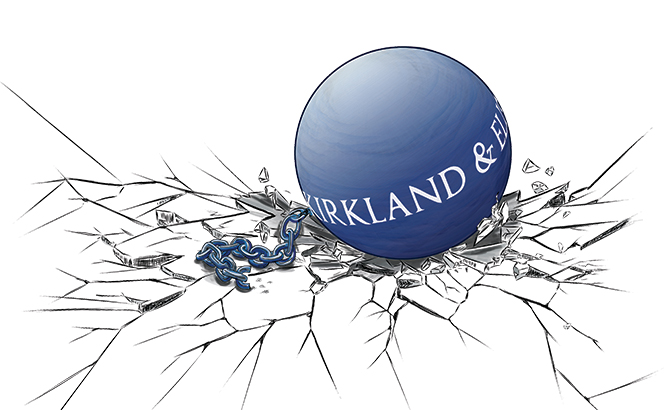
Feeling the chill? Kirkland reports just 8% revenue increase for 2022

riding on a Kirkland & Ellis wrecking ball

Often the bellwether for global law firm financials, the world’s highest-grossing firm, Kirkland & Ellis, has posted muted revenue and profit growth for 2022, with turnover up 8% and partner profits up just 2% – its slowest performance year-on-year for some time. 

Kirkland made major waves in the legal sector last year, when a 25% surge in revenue saw it become the first law firm to pass the $6bn revenue mark. Its 2022 financials show a further increase, though a more modest one, with a steady rise of 8% to $6.5bn. This more modest growth was also evident in PEP, which went up 2% to $7.5m, after jumping 19% to $7.4m in 2021. Revenue per lawyer, meanwhile, declined 5%, to $1.9m.   Continue reading “Feeling the chill? Kirkland reports just 8% revenue increase for 2022”

Revolving Doors: Weil loses two to Sidley as Latham hires Linklaters competition partner

City of London

Sidley Austin’s London office made a major play last week with the hire of two prominent energy infrastructure and private equity partners from Weil, Gotshal & Manges. James MacArthur has joined the firm’s global energy, transportation and infrastructure practice and will be followed shortly by his Weil colleague Ed Freeman.

MacArthur is ranked as a Legal 500 ‘Leading Individual’ in corporate and M&A and acts for corporate and PE sponsors on both European and global deals. Continue reading “Revolving Doors: Weil loses two to Sidley as Latham hires Linklaters competition partner”

What Next? Eversheds and Shoosmiths act as high street giant acquires beleaguered Cath Kidston

Next has bought Cath Kidston for £8.5m after the embattled fashion brand filed for bankruptcy. The vintage-inspired lifestyle and homeware brand, founded in 1993, first collapsed in 2020, resulting in the loss of 1,000 jobs and the closure of the majority of its UK stores.

Cath Kidston has now entered administration for the second time after struggling under the ownership of Baring Private Equity Asia, which sold the business last summer to distressed investor Hilco Capital. Continue reading “What Next? Eversheds and Shoosmiths act as high street giant acquires beleaguered Cath Kidston”