

‘Often when you put two businesses together, you’re looking for ways to streamline, and for ways to cut. For us, it’s the complete opposite – it’s all about growth and build,’ says HSF Kramer chair and senior partner Rebecca Maslen-Stannage, as she and CEO Justin D’Agostino set out the strategy for newly merged Herbert Smith Freehills Kramer.
Speaking to LB barely three months after the union between Anglo-Australian Herbert Smith Freehills and New York’s Kramer Levin went live on 1 June, she and D’Agostino are explaining the bold investment plan that sets out just how much they want to grow in the all-important US market.
With the US plans forming a crucial plank of the firm’s wider strategy, aptly named ‘Ambition’, the intention is for HSFK to ramp up its burgeoning US operations significantly beyond the c.120 partners the merged firm had at the time of the combination.
The plan includes a commitment to building up on the transactional side in particular in the US, with the firm aiming to bring in around 20 US partners across key practices such as private equity, bankruptcy and restructuring, as well as technology and energy.
Significantly, this figure does not include any efforts in Texas, where the firm is hoping to launch in order to capitalise on legacy HSF’s energy strengths.
As D’Agostino tells LB: ‘We’re going into the US market with a pre-agreed investment plan to hire around 20 new partners. That c.20 partners doesn’t include a Texas build. All options are on the table for us there. It could be anything from organic growth to looking for another law firm to combine with HSF Kramer.’
Emphasising how the HSF Kramer merger differs from other transatlantic unions, he reiterates Maslen-Stannage’s point : ‘We’re not going in with a pre-agreed cutting plan. This feels so successful because it’s about build.’
While Texas may be a way off, the duo are not wasting any time putting the wider investment plan into effect. Earlier this week the firm announced the hire of a new technology transactions partner in New York, with Burr Eckstut joining the freshly combined HSFK offices on Avenue of the Americas from White & Case.
Alongside the targeted increase in partner count, hiking US revenue is also high up on the agenda.
Financial results for each legacy firm’s final financial year put revenue at £1.358bn (up 4%) for pre-merger HSF and $467.2m (£344.8m and up 7%) for Kramer.
According to D’Agostino, on day one of the merger, the US became about 22% of the firm’s £1.7bn ($2.3bn) combined revenue. Over the next few years, the firm has ‘an ambition and an objective to get that to 30%.’
This figure is important because what both leaders are aiming for is balance. Billing HSFK as ‘the first transatlantic and transpacific law firm’, D’Agostino wants to maintain the differentiator gained through legacy HSF’s strong Asia-Pacific presence, while also building up the US and in key European markets such as Germany.
‘I’m not sure any of the other global law firms have our scale and depth in APAC,’ he says. ‘Very few would be able to claim that they have market-leading transactional and disputes capabilities in all the major financial centres – New York, London, Hong Kong and Singapore. But we do,’ he adds.
‘Being both transatlantic and transpacific has proved to be a real differentiator. It will take a bit of time, but we will be a firm which is truly balanced globally, with a third of our business in the US, a third in the UK and EMEA, and a third in APAC.’
Looking beyond geography to clients, future-proofing the firm’s success by targeting high growth industries is also a key focus.
‘If you were to place a bet on where you’re going to make the next $500m in fees, you would be looking at those sectors and gaining market share,’ explains D’Agostino. ‘ So that’s energy, that’s private capital – which is a big strategic priority – and it’s sectors like tech.’
This future-proofing is another reason why building out the merged firm’s energy practice is important.
‘The world’s appetite for energy is only growing as populations grow and as technology grows. And we are in that space in a very big way. Data centres is also an important new part of our Ambition strategy.’
With any merger, there is a risk that two plus two does not add up to four but, buoyed by the lack of overlap that meant they could hit the ground running, Maslen-Stannage says the benefits in terms of mandates and clients are already visible.
‘The complexity of any combination is real. You’re putting two firms, systems and cultures together. I would say we’ve only had one area of overlap, which was NY, which made it easier.
She adds: ‘We’re already ahead of our synergy targets. It’s coming through very quickly in terms of the client mandates that we’re winning. Suddenly there’s a surge in confidence and excitement among the partnership because we are able to go out and say ‘we can do any of your transactions anywhere in the world’ – particularly now in the US.’
D’Agostino adds: ‘It’s a big challenge to pull off a combination like this, but it’s actually lower risk and less difficult than trying to grow in the US by adding ones and twos and building out that way. What you get with a combination like ours is a functioning group that’s got history and chemistry from day one. They’re a profitable, successful firm already – this is about how we can collectively make it even more so.’
Although the firm has been financially integrated from day one, the leadership team have yet to tackle the thornier issue of integrating partner pay, with partners still currently paid according to each legacy firm’s pay structure. The project is on the agenda for the year ahead, with the ultimate ambition that all partners will be paid under a unified system, but it’s fair to say that management are not fazed by any challenges ahead in this regard.
D’Agostino stresses that the merger ‘is already proving to be a game changer’ and is confident in the firm’s ability to hit its new targets.
He concludes: ‘We were the last top-tier international firm that didn’t have scale in the US, but we’ve fixed that gap. Now we’ve got a plan, we’ve got a strategy. It’s deliberate, and the next phase is deliberate too.’

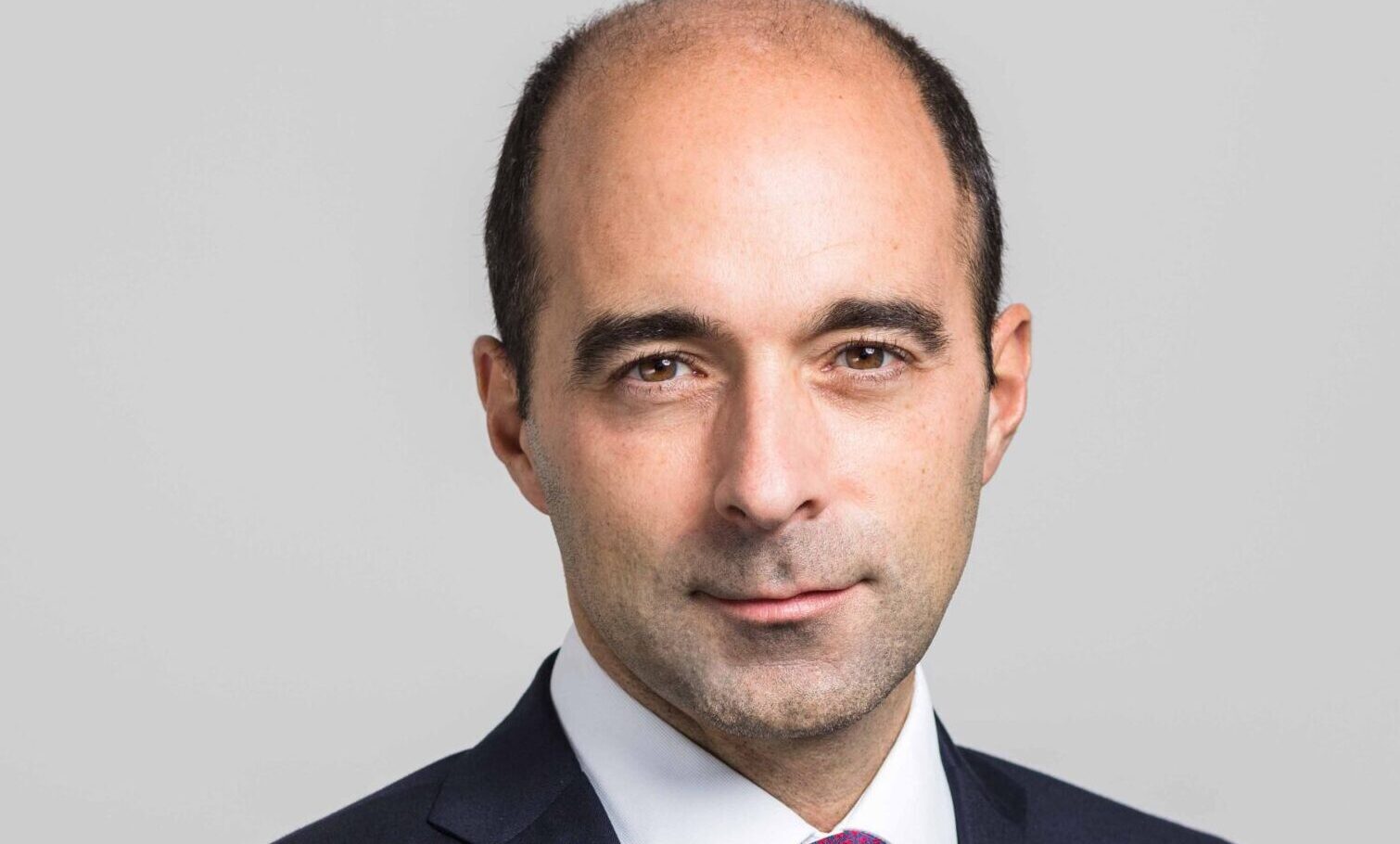

 Royo (pictured right) warns that ‘corporate counsel must be prepared to deal in a complex political and economic environment, which may impact current supply chains and increase pressure to the business due to new trade and export control restrictions.’
 In Thailand, Pajaree Thongvanit, head of legal for CIMB Thai, also cites “Trump 2.0” and the US president’s trade policies as the crucial trends in 2025 that ‘must be kept under close watch at all times.’ These developments are changing the global landscape entirely – socially, financially, and politically’, she warns.
 Fleur de Roos (pictured right), featured on our Netherlands 2025 GC Powerlist, agrees – she links increasing regulation to the diplomatic strains between Europe, the US, and Big Tech. ‘Following Mario Draghi’s report and Trump becoming president, we will see a regress of overcomplicated and layered EU regulation. The EU will try to simplify regulation to remain competitive, but will still hang on tight to its most important milestones, for example GDPR, to counter Big Tech’.
 Annemiek Meijvogel (pictured right), head of legal franchise for Inter IKEA Systems and corporate counsel in the Netherlands, observes that ‘regulatory changes are gaining momentum, and both the number of regulations and the complexity of requirements that need to be met by companies are increasing’.
 In Ecuador, Adriana Marcela Santiago Guerrero (pictured right), director of legal affairs for human resouces at Patterson-UTI International, points out that, while ESG principles have been a topic for the agenda for years now, many companies in the region still struggle with practical implementation.
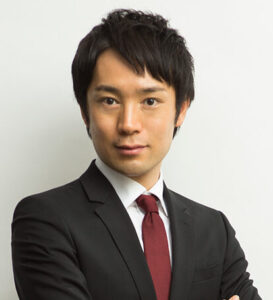 Takahiro Hasegawa (pictured right) of Uber in Japan believes that ‘one of the most significant trends [affecting in-house legal teams] is the rapid rise of generative AI’.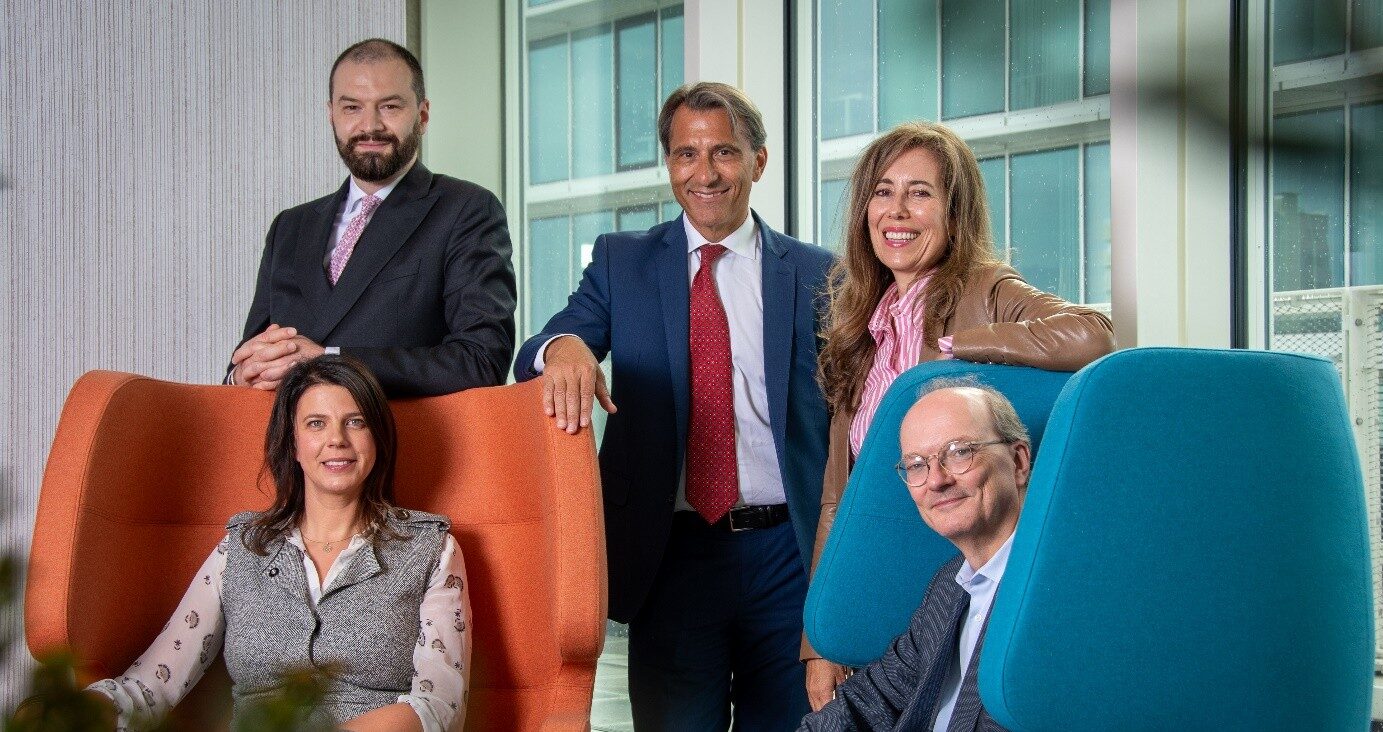




 ‘There’s no question that there’s a very significant investor interest in the legal sector now, in a way that didn’t exist 12 months ago,’ says Morley (pictured). ‘Over the next 12 to 24 months, I think you’ll see a steady uptick in deals, and likely some larger £100m-plus firms coming to market.’
 MacPherson (pictured) draws parallels with accountancy, which has seen private equity interest rapidly gather pace over recent years.