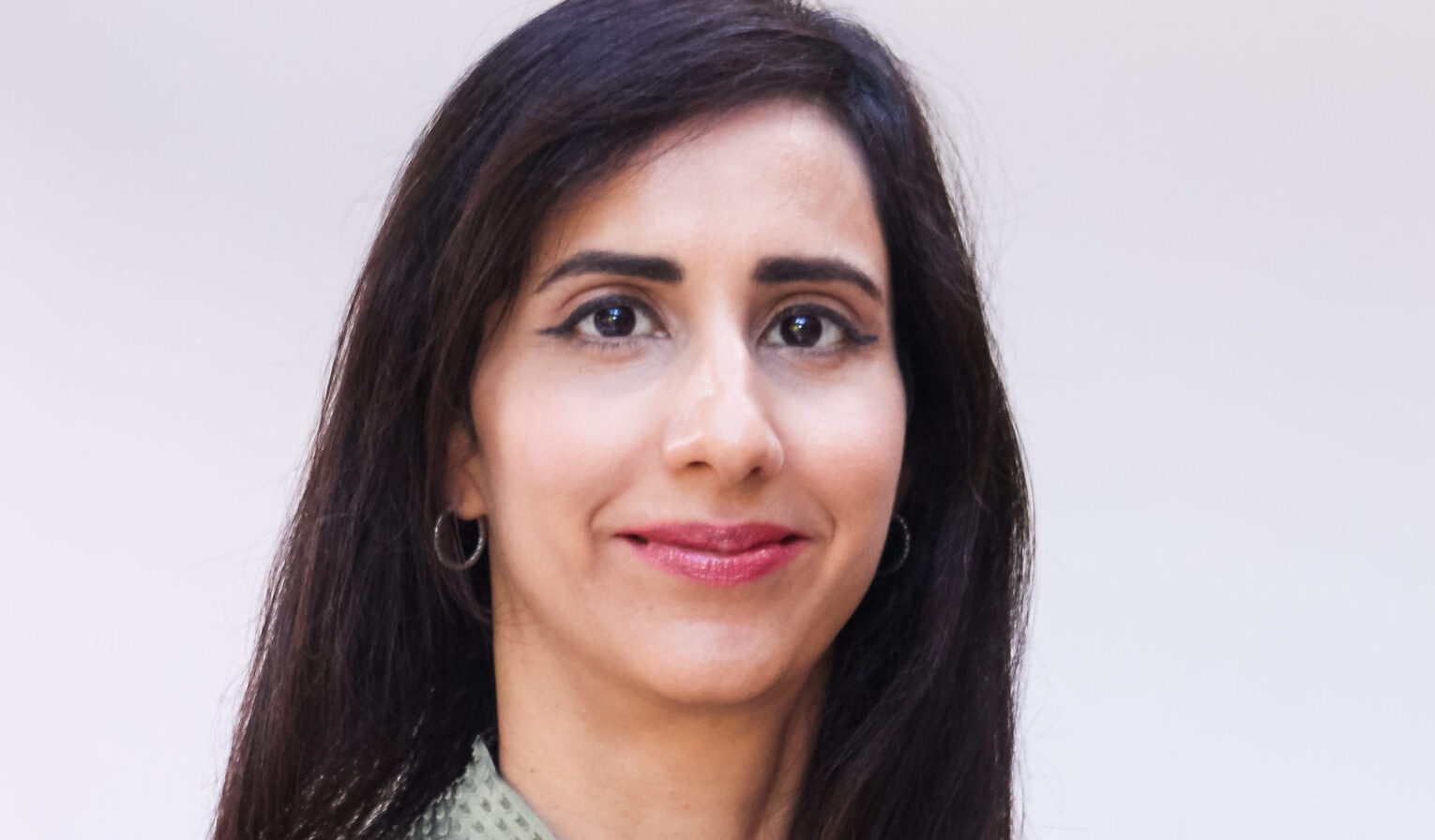
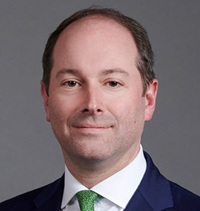
The path to partnership less travelled: Ashurst arbitrator Harsh Hari Haran

In the latest of a series of profiles spotlighting unconventional paths to partnership, Ashurst arbitrator Harsh Hari Haran looks back to his years practising in India and Singapore before joining Ashurst in 2018 and making partner this year

When you started your legal career as a litigator in India, did you ever imagine working for a firm like Ashurst?

To be honest, no. Since law school, my dream had been to become a senior advocate practising in the Delhi High Court and Supreme Court – senior advocates being the equivalent of KCs. But as you go through life, your perspectives change. When I was practising in Delhi and later in the Supreme Court, I at times felt dissatisfied with what I perceived to be delays in the judicial process.

To give you a flavour – the first case I argued was a first-instance appeal filed in 1987, which I ended up arguing in around 2012. But Delhi taught me a lot: You can sometimes come across counterparties who seek to abuse the judicial process and you really learn to think outside the box to try and get the best outcome for your client.

What drew you to arbitration?

In Delhi, I would drive to different courts, covering over 70km a day and spending more than three hours on the roads. I would leave the house at 7:30am and get home at 10 o’clock at night, six days a week. But in terms of actual legal work – how many letters I drafted, how many tasks I completed – my output was quite small.

After a couple of years, I started doing some domestic arbitration work, which really opened my eyes to the wider world of arbitration, and I decided that international arbitration was what I really wanted to pursue. So I began figuring out how to get there, and for me the logical next step was Singapore.

How was the move to Singapore?

I had a wonderful opportunity – and privilege – to be Tribunal secretary to the former Chief Justice of Singapore, Justice Chan Sek Keong, in two international arbitrations during my Masters. That’s when I really got my teeth into international arbitration.

Singapore was a big jump. I was in awe of some of my colleagues; how they could digest vast amounts of information in a very short period of time without missing any detail.

Moving country also led to a defining moment in life: I met my wife. She’s Italian and had also taken a leap of faith by moving out there. While we were standing in line to get our student visas, she cut in front of me. I was tempted to give her a piece of my mind, but then she turned around and I said to myself, ‘all right, maybe I’ll rein it in a bit’. Within six weeks, we started seeing each other, and we’ve been together ever since.

I loved Singapore. In my eyes, there’s no better place for a young couple to start their life together. We made great friends and I have really fond memories about my time there.

Does this mean you can speak Italian?

I did take Italian classes in Singapore and can understand a lot. But put it this way – our four-year-old speaks far better Italian than me.

Can you remember your first case in Singapore?

It was an arbitration – I was at a local firm, and we were acting against an international law firm in a construction dispute. They had filed an application for a partial award, relying on a recent judgment of the Singapore court. I was brought in at that stage with the specific task of trying to find a way around it.

Sometimes you can think as much as you want, but there isn’t a way outside the box – some things are just the way they are. That’s why I remember it – it was a very difficult task and one I knew I was going to fail at!

When did you decide that you wanted to become a partner?

Once I decided I wanted to move to London, partnership was always the goal. In any large firm, if you want to be a partner, you need to position yourself, understand what the business needs are, and identify the gap you can fill. That is what I’ve been doing for the past three years, which put me in a sweet spot to fill the role.

You also make your own luck, and there are elements that are outside of your control, but I never thought that making partner wasn’t achievable. You just need time and work, and I had both.

Do any mandates stand out from your career?

There are a few – including some losses too! If I had to pick one, I would pick the first case I handled at Ashurst. It was an adjudication, and I came up with a critical argument that involved looking at the case from a fresh perspective. We were successful and it was a significant win for the client.

When I was practising in the Delhi High Court as a junior lawyer, I did all sorts of things; any kind of civil dispute that came up – cases involving dishonoured cheques, divorce cases, and even some judicial reviews. From that you learn how to look at problems in different ways and I am grateful to my time in Delhi for that.

Have you had any mentors that have helped you along the way?

If I had to pick two, I’d choose two disputes partners here at Ashurst – Matthew Saunders and Simon Bromwich. They have been incredibly helpful and excellent mentors. They’ve not just helped me grow as a technical lawyer, but have also guided me in my ambitions, always willing to listen and chip in with good advice.

How did it feel when you became partner and how did you celebrate?

I was really delighted. I had been working towards it for a few years, and it always feels good when you end up achieving something you have worked towards. My wife, who is also a lawyer, made partner at the same time so we had a double celebration and a big party – it was a lot of fun.

[email protected]

The path to partnership less travelled: Freshfields disputes partner Joshua Kelly

The path to partnership less travelled: Travers Smith’s Elissavet Grout

Latham, BT, Burges Salmon and Freshfields among winners at Legal Business Awards

BT, Latham & Watkins, Burges Salmon, Freshfields and Sidley Austin picked up some of the big prizes at this year’s Legal Business Awards, which saw a host of top legal leaders flock to London’s Grosvenor House Hotel.

Award-winning comedian Katherine Ryan hosted the evening, handing out 27 prizes to firms, chambers, in-house legal departments and individual lawyers to celebrate their achievements over the last 12 months.

Legal Business editorial director Georgina Stanley introduced the evening.

This year, there were four coveted firm of the year prizes up for grabs: Boutique Law Firm of the Year, Regional Firm of the Year, International Law Firm of the Year and UK Law Firm of the Year.

Latham took the award for International Firm of the Year after an incredibly busy year that also saw it post record revenue of $7bn. Burges Salmon meanwhile picked up the award for top UK firm of the year after the Law Firm of the Year category was split into two.

Sidley picked up US firm in London of the Year.

Among the teams taking home the top practice area awards were Slaughter and May, which won in the competition category, Linklaters, which won in the corporate category, and Freshfields, which picked up commercial litigation team of the year.

Freshfields also continued its winning streak in the individual category, with managing partner Georgia Dawson picking up management partner of the year. Dawson is the first woman to take on the role in the firm’s 300-year history, and has spearheaded an aggressive growth strategy in the US.

Private practice lawyer of the year went to Des Collins, founder and senior partner at Collins Solicitors. The award recognises his work representing the victims of the highly publicised and long-running infected blood inquiry, which concluded last year. Collins worked tirelessly, offering many hours of free advice to the victims of one of the biggest scandals in NHS history.

The awards were judged by an esteemed panel of general counsel at leading companies, including VodafoneThree, DHL, Reach, Fremantle and Smith & Nephew, as well as former law firm managing partners.

BT picked up the award for in-house team of the year after an incredibly busy year defending numerous complex antitrust claims, including the collective action case Justin Le Patourel v BT, the first collective action competition case to go to trial in the UK, with damages of £1.3bn sought.

GC of the year went to Rolls-Royce’s Mark Gregory, while most transformative in-house team of the year was awarded to Low Carbon Contracts Company.

Chambers of the year was awarded to 4 New Square Chambers, with 7KBW highly commended. Barrister of the year was awarded to Jason Beer KC of 5 Essex Chambers for his role as lead counsel to the Post Office Horizon IT inquiry.

The charity partner for the event was Hand in Hand International, which helps to support some of the 400 million women and girls around the world living below the poverty line, by providing skills, education, training and resources to start their own businesses and generate jobs.

[email protected]

‘How much of a commitment are you willing to make?’ – why firms like Paul Weiss are bulking up DC antitrust

Earlier this month, Paul Weiss made waves in the Washington DC market with its hire of a three-partner antitrust team from A&O Shearman, led by global antitrust head David Higbee and including partners Ben Gris and Djordje Petkoski.

The hires were the latest moves in a practice that has been busier than ever in recent years, with the Biden administration overseeing a surge in regulatory scrutiny that encouraged firms to build their benches.

‘The antitrust market has been very active’, says Barry Nigro, global chair of Fried Frank’s antitrust and competition department. ‘It is a critical complement to any firm that wants to be active in M&A. While the market [this year] started slower than some were expecting, there’s a recognition that it will be very active, and antitrust will be a critical part of getting deals done.’

Higbee explains his move to Paul Weiss with reference to this high level of activity. ‘Dealmaking has been active, and at the same time, regulatory uncertainty is driving the need for sophisticated, commercial antitrust counsel’, he says. ‘In addition, most companies that aren’t currently pursuing deals are actively analysing strategic opportunities, which further fuels the demand for antitrust expertise to navigate potential regulatory challenges.’

It’s a position supported by Michael Keeley, chair of the antitrust practice at boutique firm Axinn, Veltrop & Harkrider, who says that antitrust looks set to remain busy across Washington, New York and California.

He points out: ‘There is a long-term trend towards more government intervention, in the US and elsewhere. M&A has picked up after a bit of a pause in the first quarter. The overall tide is rising in M&A, and that means more work in antitrust as well.’

An antitrust head at another top 100 US firm notes that lateral partner hiring in Washington DC, in particular in practice areas like antitrust that require high levels of interaction with government agencies, ‘comes in waves’ around changes in administration.

‘When there’s a change in administration, a lot of people come out of government and return to private practice’, they say. ‘You see a lot of moves at these moments, but then it gets quieter and it settles down into the more regular routine, where people get calls from headhunters and consider whether an individual move is right for them.’

‘Clients are willing to pay top dollar for the best people to represent them in merger reviews and bet-the-company litigation’

Stephen Springer, a managing partner in the Washington DC partner practice group at Major, Lindsey & Africa, explains: ‘Antitrust is a very natural fit for top M&A firms, because they have gigantic corporate practices that throw off a lot of work.’

Compared to other practices that may be more billing rate sensitive, he notes that antitrust ‘matters are often significant enough that clients are willing to pay top dollar for the best people to represent them in merger reviews and bet-the-company litigation.’

For Paul Weiss, the competition team hire comes after the firm saw a number of exits in Washington DC in the wake of the firm becoming the first to strike a deal with the Trump administration. These exits included the June departure of a four-partner team led by litigation co-chair Karen Dunn to form disputes boutique Dunn Isaacson Rhee.

While some in the market have speculated that the latest hires have been partly driven by a need for Paul Weiss to ‘backfill’ talent, others, including partners within the firm, support the assessment that they are unrelated, pointing out that the departing partners were general litigators not antitrust specialists. ‘Paul Weiss is a very substantial M&A firm’, says one partner. ‘It’s not surprising that they’re adding people in antitrust.’

Springer notes that the hires fit a pattern in the market: ‘Many New York firms have been in the DC market for some time, but their interest in making lateral acquisitions has dramatically increased over the last few years.’

A matter of commitment

A&O Shearman has seen a run of departures since it completed its transatlantic merger in May 2024. Notable US exits in the last year include global investigations and white-collar co-head David Esseks, who left alongside fellow litigation partner Gene Ingoglia in July, while US securities and shareholder litigation co-head Agnès Dunogué moved to Freshfields.

Other departures include US head of financial services regulatory Barbara Stettner, who left the firm’s Washington DC office for Sidley Austin in May, as part of a nine-lawyer move.

Higbee’s departure sees A&O Shearman lose its only Washington DC-based individual partner ranking for merger control in the US Legal 500. The firm still has one leading partner ranked for merger control, however, with New York partner Jessica Delbaum, ranked and well regarded by peers.

Rivals are divided over the significance of Higbee’s exit. ‘It’s not new or different’, says one antitrust head. ‘This happens, especially when law firms go through mergers.’

But another argues that the firm will need to rebuild the practice in Washington. ‘A&O Shearman has a big platform’, they say. ‘It’s a question of, how much of a commitment are you willing to make? If they’re willing to commit to it, the firm could be an attractive platform for someone to build a practice.’

‘We are always opportunistic about bringing in the best talent’

The question of commitment looms large for all firms given the amount of consolidation in the market. ‘There’s a growing concentration of M&A work in fewer and fewer firms, and that’s leading to a consolidation of antitrust work on those deals’, says Keeley.

Many predict this will drive work towards either top-tier global elite firms or highly specialised boutiques, leaving more mid-sized practices struggling.

‘We’re seeing more and more work at Axinn’, maintains Keeley, ‘as clients want to use us as a high-end and very large antitrust team alongside their M&A firm.’

For its part, Paul Weiss argues it is ready to meet the moment. ‘We are committed to investing in the practice and attracting the most talented lawyers to deliver exceptional results for our clients’, says global antitrust co-chair Scott Sher.

‘While we don’t comment on specific hiring plans, we are always opportunistic about bringing in the best talent.’

Washington DC antitrust partner hires January 2025-present

Name Firm Previous role Date
Kathy O’Neill Fried Frank Partner, Cooley March 2025
Rahul Rao White & Case Deputy director, Bureau of Competition, FTC June 2025
Marin Boney Freshfields Partner, Kirkland & Ellis May 2025
Andrew Forman Latham Deputy assistant attorney general, Antitrust Division, DOJ June 2025
Henry Liu Covington Director, Bureau of Competition, FTC July 2025
David Higbee Paul Weiss Global head of antitrust, A&O Shearman September 2025
Ben Gris Paul Weiss Partner, A&O Shearman September 2025
Djordje Petkoski Paul Weiss Partner, A&O Shearman September 2025
John Elias HSF Kramer Deputy assistant attorney general, Antitrust Division, DOJ October 2025

[email protected]

Firm favourites: the eight contenders for LB Awards Law Firm of the Year

Tonight (30 September), the legal profession’s finest will once again gather at the Grosvenor House Hotel to celebrate their achievements over the last year.

Eight firms have made the shortlist for the coveted Law Firm of the Year trophy – here’s what makes each of them a contender.

Burges Salmon

With revenue up nearly 50% since the launch of its ‘BAmbitious’ strategy in 2021, and revenue up from £163m to £178m in its most recent set of financial results, Burges Salmon has continued an impressive streak of growth, which has seen the Bristol-based firm become one of the UK’s most consistent performers.

The firm now counts among its clients names such as the Bank of England, Virgin, John Lewis, and Amazon, while recent highlight matters include its work on both the Covid-19 and Post Office inquiries, and its advice to US-based medical tech group AOTI on its $140m US IPO – the largest alternative investment market IPO since 2021.

Burges Salmon also retained its place on the FCA’s updated panel, which will run for four years from 1 April 2025 to 1 March 2029.

Cleary Gottlieb Steen & Hamilton

With eight nominations in total, in areas including competition, corporate, finance, and private equity as well as ESG, Cleary Gottlieb has had another strong year, recognised with 21 top-tier Legal 500 rankings in this year’s US guide – the fourth-highest of any firm – and advising on 64 deals worth $123.3bn in H1 2025, leaving the firm in tenth place by global deal value.

Recent work highlights include advising French broadcaster Canal+ on its £2.5bn IPO in December last year, while in March the firm also acquired generative AI product development company Springbok AI, significantly increasing its ability to integrate AI and data analytics into its workflows.

In September, the firm announced that Jeffrey Karpf will take over from Michael Gerstenzang as managing partner from 1 January 2026, with Gerstenzang to step into a newly created role as senior partner.

Freshfields

Freshfields has continued to make waves on both sides of the Atlantic, and the breadth of its success is evident in its LB Awards nominations, which see the firm listed for a total of eight nominations, from corporate, competition, and finance to restructuring, commercial litigation, and ESG.

While it no longer reports its financial results, the firm’s most recent LLP accounts showed revenue up 18%, passing £2bn for the first time. This included 26% growth in the US, where Freshfields has pushed for an aggressive buildout, with results including its first significant US transaction for Merck, advising the pharma giant on its $10bn acquisition of UK biopharma company Verona Pharma this July.

The year also saw the firm rebrand, dropping Bruckhaus Deringer from its name, and reappoint senior partner Georgia Dawson (pictured right), who is shortlisted for Management Partner of the Year.

The firm also made headlines in April with its decision to become the only top 20 firm to sign amicus briefs supporting Perkins Coie and other firms targeted by US President Donald Trump in executive orders.

Latham & Watkins

Of the eight firms up for Law Firm of the Year, Latham & Watkins stands apart from its competitors in terms of sheer size, with more than double the revenue of any other firm on the shortlist.

The firm has enjoyed yet another marquee year in 2024, with revenue reaching a record $7bn and partner profits exceeding $7m.

During the year it advised on 31 US IPOs, five of the top ten European take-privates, and three of the top five UK M&A deals, underlining its place at the top of the market on both sides of the Atlantic.

The firm also overhauled its remuneration structure to enable it to attract the very best talent – and the effort appears to be paying off, as evidenced by the recent eye-catching hire of star Wachtell dealmaker Zach Podolsky in New York.

Osborne Clarke

Osborne Clarke reported record international revenues of €547.5m this year, with UK profit per equity partner (PEP) breaking the £800,000 mark for the first time.

The results mean the firm has now grown its topline turnover by 72% in the last five years, and it is not resting on its laurels. The firm is investing heavily in a new international practice management and finance system that CEO Omar Al-Nuaimi (pictured) says will help drive more growth over the coming five-year strategic period.

The firm’s UK arm was a top performer last year, with revenue rising to a record high of £256.6m and PEP up nearly 5% to £806,000, with the UK team rewarded with a 5% profit share as a result.

OC is also up for two other awards – Marketing Initiative of the Year, for its work on its redesign of its flagship healthcare sector publication, and Legal Technology Team of the Year, for an innovative asset management platform developed for a major retail leasing client.

Russell-Cooke

With revenues of £56.1m and around 230 lawyers, Russell-Cooke is smaller than the other seven contenders, but a mix of commercial, not-for-profit, and private client work, combined with a deep commitment to responsible business, help the Holborn-headquartered firm stand out.

A turnover increase of 11.3% in 2024-25 means that the firm has now seen its top line grow by 55% over five years – considerably ahead of its growth strategy.

Recent work highlights include advising CNBC on a new central London lease and advising urban developer Bloom on its £21.5m acquisition of Poplar Business Park, while on the contentious front, the firm has successfully represented victims of the Grenfell Tower disaster and acted for Amnesty International at the Supreme Court in the headline-making case over the definition of ‘woman’.

Russell-Cooke’s commitment to diversity and inclusion runs through its partnership, with women making 46% of partners and 72% of all fee earners, and stories from LGBTQIA+ lawyers shared to foster openness and visibility.

Simpson Thacher & Bartlett

Simpson Thacher had a standout year for deal work in 2024, which also saw the firm nominated for corporate team of the year, finance team of the year, and private equity team of the year, alongside its firm of the year nod.

Work highlights included advising trophy private equity client Blackstone on a landmark $20bn partnership with UK insurer Legal & General, as well as representing JPMorgan in the high-profile bankruptcy cases concerning US fashion accessories retailer Claire’s.

The firm’s London presence has continued to grow, with real estate M&A partner Wheatly MacNamara taking over as office managing partner last October, succeeding private funds heavyweight Jason Glover, who had led the office since 2016.

Taylor Wessing

Shortlisted in five other categories – litigation, real estate, legal tech, marketing, and private client – Taylor Wessing had a strong year in 2024, moving a step closer to what UK managing partner Shane Gleghorn (pictured right) called its ‘ambitious but attainable‘ target of €1bn in revenue by 2028-29, with turnover up 10% to €619m (£526m).

The firm expanded in Europe with a strategic alliance with Italian firm Orsingher Ortu, announced in March, further extending its reach after it launched in Dublin in 2021.

Its real estate shortlisting was secured on the back of its successful advice to real estate developer Comer Homes on its planning appeal for the Mast Quay Phase II residential development in Greenwich, while other recent deal highlights include advising AI-driven retail solutions firm Rezolve AI on the establishment of its $1bn Bitcoin treasury programme and advising Vinted on its secondary share sale, which valued the company at €5bn.

Click here for more information about the Legal Business Awards.

Top firms in the game for record $55bn EA buyout

A raft of top law firms have scored lead roles as American video game company Electronic Arts (EA) has agreed to be taken private in a $55bn deal that is widely reported as the largest buy-out deal in history.

EA will be acquired by Saudia Arabia’s Public Investment Fund (PIF), Silver Lake and Affinity partners.

Kirkland & Ellis is advising the consortium, as well as serving as counsel to PIF with additional counsel from Gibson Dunn, and Wachtell, Lipton, Rosen & Katz is serving as counsel to EA.

Latham & Watkins serves as primary counsel to Silver Lake and co-counsel to the investor consortium on IP and gaming matters, while Simpson Thacher is also advsing Silver Lake, and Sidley Austin is advising Affinity Partners.

The team advising PIF for Kirkland includes New York M&A partners Maggie Flores, Sarkis Jebejian, and Jonathan Davis, as well as Miami M&A partner Lee Blum, and Riyadh-based corporate partners Kamran Bajwa, who founded the firm’s Riyadh office and leads its Middle East practice, and Noor Al-Fawzan.

Also involved in New York were debt finance partners Adam Shapiro and Conor O’Muiri, capital markets partners Josh Korff and Zoey Hitzert, executive compensation partners Scott Price and Matt Wood, and tax partners Dean Shulman and Sehj Vather.

The team also included antitrust and competition partner Stephen Mohr and international trade and security partner Ivan Shlager, both in Washington DC.

Gibson Dunn’s team included private equity practice group co-chair Richard Birns as well as corporate partners Andrew Kaplan, Kristen Poole, and Matthew Schwartz, all in New York.

Latham fielded a New York team led by corporate partners Michael Anastasio, Ian Nussbaum, and Charles Ruck.

Meanwhile, the Sidley team was led by global M&A and private equity group co-lead Perry Schwachman in New York, Chicago M&A and private equity partner Jonathan Blackman, and Washington DC regulatory partner William Levi.

Kirkland launched in Riyadh in autumn 2023, and has since made providing advice to PIF and its portfolio companies a core part of its strategy in the region.

Meanwhile, Simpson Thacher has advised Silver Lake on deals including its March 2024 acquisition of US sports and entertainment industry Endeavor Group Holdings, with a total enterprise value of $25bn, while Latham advised the firm on its majority investment in Intel’s US $8.75bn Altera business.

Firms to have advised EA in the past include Wilson Sonsini, which advised on deals including its $1.3bn acquisition of PopCap Games in 2011.

EA is responsible for top gaming franchises such as The Sims, EA Sports FC (previously FIFA), and Battlefield.

Shareholders are to receive $210 per share, which represents a 25% premium to the traded value of shares before talks leaked last Friday.

The deal is expected to close in the first quarter of the financial year of 2027, subject to regulatory approval.

[email protected]

LB Awards 2025: From top brands to the biggest banks – meet the In-House Team of the Year contenders

Next Tuesday (30 September), the great and the good of the legal profession will gather at the Grosvenor House Hotel to celebrate their achievements over the last year at the Legal Business Awards.

After another busy year for company legal departments, 10 teams across banking, finance, retail, sport, mining and real estate are in the running for the prestigious In-House Team of the Year category.

The work those teams have handled this year ranges from high-value mergers to  DE&I initiatives – here, we take at who’s in the running and why.

Crane carrying coalAnglo American

Over the last year, Anglo American’s legal team has played a central role in responding to the £34bn takeover bid by competitor BHP, as well as the fallout from such a high-profile approach.

After BHP gave up on its takeover ambitions in May 2024, the Anglo legal team refocused its efforts on the company’s new strategy, which included the divestment of its steelmaking coal and nickel businesses and the demergers of its diamond (De Beers) and platinum businesses.

While simultaneously juggling multiple divestment processes, the team has also been instrumental in assisting the copper and polymetallic Sakatti project in Finland, which is set to deliver minerals that support the green transition across Europe.

Banco Santander

Banco Santander’s legal team has been heavily focused on using artificial intelligence to increase efficiency, with AI solutions now deployed to analyse cross-border legal risks, provide quantifiable litigation reports and automate other repetitive tasks.

These systems have contributed to a 20% reduction in case resolution times as well as a 15% increase in internal client satisfaction resulting from the use of improved self-service tools – improvements which have also led to significant cost-savings.

The bank is also committed to diversity, equity and inclusion, with women making up almost 60% of its legal team. Initiatives aimed at fostering a more supportive environment include its ‘One Legal Team’ culture, which aims to help individuals feel part of a larger, unified team, and the the Mundo Santander programme, which allows lawyers to gain international experience by spending up to six months in different locations around the world.

Barclays and Tesco Bank

It has been a busy year for Barclays and Tesco Bank, which this time last year were two separate entities. On 1 November, Barclays UK finalised its acquisition of Tesco Bank’s retail business, bringing a range of personal banking products for four million customers into Barclays UK’s retail banking operation.

The legal teams on both sides were involved in the transaction from start to finish, playing a crucial role in the smooth integration of £8.3bn in consumer loans, £6.7bn in deposits, four million customers and 2,600 employees.

BT

Throughout 2024, BT’s legal team had its hands full defending numerous complex claims. In Le Patourel v BT, a claim was filed on behalf of 3.7 million BT customers alleging that the telecoms giant had abused its dominant market position by charging excessive prices for their fixed-voice services. This was the first collective action competition case to come to trial in the UK and was extremely high value, with damages of £1.3bn being sought.

After a collaborative effort from BT Legal’s litigation, competition, data and consumer teams, the claim was successfully defended, with the Competition Appeals Tribunal finding that BT’s prices did not breach of competition law.

The legal team also successfully defended an appeal brought by DAF Trucks in the landmark trucks cartel case, with the Supreme Court refusing DAF permission to challenge a multimillion-pound damages award to BT.

Goldman Sachs

Goldman Sachs earned a nomination for its Birmingham legal team, which has grown significantly since it was established in 2021, and now makes up 15% of the EMEA legal division’s total headcount.

The team was involved in notable mandates in 2024, including the first two private aircraft financings for private wealth clients in the EMEA region, the implementation of the EU Digital Operative Resilience Act in collaboration with the teams in Frankfurt and The Hague, and co-leading on the development of a new globalized client agreement for Transaction Banking (TxB) clients.

Newcastle United Football Club

Newcastle United FC (NUFC) has had a successful year both on and off the pitch, with the football team finishing fifth in the Premier League and qualifying for the Champions League, as the legal team worked on a raft of critical and sensitive issues, ranging from handling first-team player Sandro Tonali’s worldwide suspension by the Italian Football Federation, to supporting the club’s entry into multi-year partnership agreements with adidas and JD Sports.

Perhaps most notable was the team’s defence against a high-profile CAT claim from Sports Direct, which alleged that NUFC had breached the Competition Act 1998 by abusing its dominant position in failing to supply Sports Direct with a 2024-25 NUFC replica kit, and by its exclusive agreement with JD Sports, which the claim alleged had the effect of foreclosing Sports Direct from the market for NUFC’s replica kit.

The team was successful in its defence, with both the CAT and the Court of Appeal rejecting Sports Direct’s application for an interim injunction to require NUFC to supply it with replica kit for the 2024-25 season.

PepsiCo UK

The small but mighty team at PepsiCo UK has had a stellar year in 2024, executing major partnerships and sponsorship deals despite its small size – just three lawyers, a paralegal, and an administrative assistant.

The team was instrumental in the successful launch of PepsiCo’s first ever alcoholic product – a pre-mixed ready-to-drink beverage mixing Captain Morgan spiced rum and Pepsi Max. The team handled complex issues including trademark licensing and handling secret product recipes to deliver the product in collaboration with Diageo.

The year also saw PepsiCo’s Foods business win its bid to become a global sponsor for both the FIFA World Cup 2026 and the FIFA Women’s World Cup 2027, with the team forging a path through large-scale negotiations over a period of more than six months.

At the same time, the team expanded on its diversity and inclusion initiatives, offering both a four-week summer internship to three students from diverse backgrounds, and a new PepsiCo UK Employee Future Lawyers Programme, which offers family members of the company’s factory workers training and long-term mentorship from the company’s legal team, providing a pathway into the legal field.

Resolution Life

Another team which has had a busy year is the legal function at Resolution Life, led by chief counsel and head of strategic partnerships Claire Singleton, who is also in the running for the GC of the Year award.

Among the many achievements for the team last year, its acquisition by Nippon Life stands out. The Japanese insurer agreed a deal to acquire 100% of Resolution Life’s shares for $10.6bn, a deal which required the legal team to contend with a highly intricate transaction structure, and comprehensive due diligence and disclosure processes.

The deal was made even more complex by the combination of the company’s Australian operations with Nippon’s existing Australian business to form a joint venture.

A further key highlight was the successful listing of $500m in Tier 2 debt securities on LSE’s International Securities Market, while the legal team has also been busy finalising numerous reinsurance growth transactions and negotiating multiple bespoke fee deals with key relationship firms which have generated significant cost reductions.

Rightmove

The past 12 months have been eventful for estate property portal Rightmove, as huge legislative changes in both the property and digital space have kept new GC Emma Parr and her legal team busy.

Parr joined in April 2025, and her team has had much to contend with. Among some of the major changes were the introduction of the Renters’ Reform Bill, the Online Safety Act, and the Economic Crime and Corporate Transparency Act (ECCTA), all of which led to the largest overhaul of the company’s general terms & conditions to date.

The legal team has also been at the forefront of AI implementation, which has seen major efficiency gains across operations. Rightmove also aims to support the next generation of talent – despite having a small legal team of five, the company currently offers fully-funded training contracts to junior team members.

Rolls-Royce

Last year saw a continuation of Rolls-Royce’s multi-year transformation project as the company shifts its focus towards strategic growth in the areas of combat, transport and submarines.

The legal team – led by long-serving GC and corporate affairs director Mark Gregory (pictured) – has played a key role in various non-core disposals, including the sale of its naval propulsors business to Fairbanks Morse Defense. Other key projects have included the largest single contract the MoD has ever signed: the Unity contract, which will see Rolls-Royce support the Royal Navy’s nuclear submarine fleet.

Internally, the team has also undergone a transformation with a focus on improving efficiency and making the organisation more cost-competitive. The company has introduced a new and leaner organisational structure which will improve operational efficiency, while also introducing methods to improve contract profitability.

Click here for more information about the Legal Business Awards.

[email protected]

Revolving Doors: Eversheds hires in London and Frankfurt while Simpson Thacher and Cadwalader build in finance

Eversheds Sutherland has strengthened its tax department in London with the addition of Kevin Cummings from McDermott Will & Schulte. Cummings spent four years at the firm, including as head of UK tax, and before that was a tax partner at Deloitte for over five years.

Cummings focuses his practice on financial services and private capital, and brings experience across the entire range of domestic and international tax matters.

Global head of financial services at Eversheds, Matthew Allen, commented: ‘Kevin’s arrival is a timely and strategic addition to our financial services offering.’

The firm’s tax department recently welcomed tax partner Richard Johnson to its Leeds office in May of this year, while also hiring a number of tax partners across its Amsterdam and London offices in the last 12 months.

Paul Hastings has bolstered its antitrust practice with the hire of Sally Evans, who will sit in the firm’s London and Brussels offices. Evans joins the group after almost a decade in Kirkland & Ellis’ antitrust and competition team in London.

Evans is ranked as a Legal 500 leading partner in London’s EU and competition rankings, and will strengthen the firm’s capabilities in merger control, cartel investigations and compliance advice.

Of her move Evans said: ‘There is real momentum to the firm’s expansion in the UK and other markets across Europe, the Middle East and North America, so this is a brilliant opportunity to be part of a growing practice.’

Also hiring from Kirkland this week was White & Case, which brought on corporate partner Serra Tar. Tar is well versed in cross-border transactions in the renewables, power and gas sectors, and is particularly experienced in matters related to the energy transition.

Earlier this year, Henry Birch also departed from Kirkland & Ellis to join White & Case’s global mergers & acquisitions practice and global private capital industry group.

Winston & Strawn has hired real estate finance partner Richard Semple to its London office from Goodwin. Semple was a partner at Goodwin for five years and will bolster the group’s capability in real estate finance transactions.

Winston & Strawn London managing partner Nicholas Usher said: ‘Richard has a track record of advising on some of the most sophisticated real estate finance deals in the UK and European market. His experience with large-scale, cross-border loan portfolio acquisitions and financing structures will be a real asset to our clients, particularly those navigating the growing number of opportunities in distressed asset transactions and loan workouts.’

Elsewhere in the City, Simpson Thacher has hired investment funds partner Sam Brooks from Macfarlanes.

Simpson Thacher has significantly strengthened its funds practice over the last year, opening a new office in Luxembourg at the end of 2024 launched by funds partners Jean-Christian Six, Paul Van den Abeele and Yannick Arbaut. Earlier this month Joanne Mak, a partner specialising in secondaries transactions, joined the practice in London from Kirkland.

Simpson Thacher’s European managing partner Wheatly MacNamara said: ‘The addition of Sam, combined with the launch of out Luxembourg funds-focused office earlier this year, demonstrates Simpson Thacher’s commitment to supporting its global client base by providing top-tier legal services across the region.’

Squire Patton Boggs has bolstered its global structured finance group with the hire of Nathan Menon and Trish O’Donnell into its London and New York offices respectively. Both Menon and O’Donnell were partners at Reed Smith, with Menon joining the group as a director and O’Donnell joining as a partner.

Current global head of structured finance at the firm, Ranajoy Basu, joined the firm in July of this year from legacy McDermott Will & Emery, ahead of that firm’s merger with legacy Schulte Roth & Zabel in August. The department has experienced significant growth in the last 12 months, including in May with the addition of Monica Gogna, who joined the firm as global head of financial regulation from EY, bringing with her a team of four lawyers.

Elsewhere in London, Cadwalader has strengthened its leveraged finance and private credit practice with the hire of Andro Atlaga. Atlaga is well versed in international capital markets and cross-border leveraged finance transactions, with extensive experience in high-yield bond financings. He joins the firm from King & Spalding, where he was a counsel.

Disputes firm Stewarts has hired experienced silk Alex Verdan KC as its new head of children. Verdan joins the firm from barristers’ chambers 4PB, having spent 18 years there, brining with him extensive expertise in international childeren’s disputes. Verdan is currently ranked as a Tier 1 leading silk in the Legal 500 family: childeren and domestic abuse rankings for the London Bar.

Also at the London Bar, deputy senior clerk Katie Szewczyk has joined Brick Court Chambers after nearly 13 years at Fountain Court Chambers.

Outside of the capital, CMS welcomed partner Wayne Nash to its real estate disputes practice from Deloitte. Nash was at the big four accountancy firm for nearly three years, having joined at the end of 2022 from Shoosmiths in Manchester, where he was head of office.

Osborne Clarke has hired Andrew Eaton as a UK partner, strengthening its restructuring and insolvency practice. Eaton joins the firm from Burges Salmon, where he spent nine and a half years as a partner and head of restructuring and insolvency and banking and finance at the groups Bristol office.

Chris Oglethorpe has joined Freeths as chief people officer, as the firm’s former HR director Carole Wigley steps down from her position after 25 years at the firm. Oglethorpe joins the UK-wide firm from Gowling WLG, where he served as HR director for over ten years.

In Germany, Eversheds Sutherland hired Catharina Förster and Peter Junghänel as partners to its Frankfurt office. The duo will join the international firm on the 1 October from Goodwin, which earlier this year made the decision to wind down its German real estate practice and close its Frankfurt office. At the end of August Simmons & Simmons capitalised on the firm’s Frankfurt closure by hiring a team of four corporate real estate partners as well as a team of associates. 

Reed Smith has expanded in Asia with the hire of Etelka Bogardi, who previously served as Norton Rose Fullbright’s Asia head of fintech and financial services regulatory. Bogardi was at Norton Rose for eight years and previously worked as a senior counsel for the Hong Kong Monetary Authority (HKMA). She will start with the firm at the beginning of November.

Meanwhile in Hong Kong, Goodwin added Youjung Byon into its private investment funds practice. Byon was of counsel at Gibson Dunn before this, advising Asia-based private fund sponsors.

[email protected]

Why UK firms are bucking the trend to downsize in Asia amid HK IPO boom

When CMS picked up a nine-lawyer team from BCLP this August, it represented the end of the transatlantic firm’s foray into Asia.

BCLP’s offices in Hong Kong and Singapore are expected to close completely in the coming weeks, after the firm announced earlier this year that it would be pulling out of the region.

Meanwhile, this month K&L Gates confirmed that it would be closing its Beijing office and instead consolidating its China practice across Hong Kong and Shanghai.

And the pair are far from alone downsizing in Asia generally, and China/Hong Kong specifically. US firms including Proskauer, Latham & Watkins, Milbank, Paul Weiss, Skadden, Cleary Gottlieb, Dechert, Orrick, Perkins Coie, Sidley Austin, Weil Gotshal & Manges, Morrison & Foerster are among those to have closed offices in Asia over the last two years, citing sluggish markets, geopolitical concerns and regulatory challenges among the reasons. Others have downsized without closing their doors.

And yet for CMS, the BCLP team hire, which includes partners Glenn Haley, Wayne Ma and Ilan Freiman, who between them cover sectors including construction, real estate and infrastructure, represents an opportunity.

US firms pulling out is creating client demand and leaving some exceptional talent looking for a new home. We’ve been a beneficiary of that,’ says Adrian Bell, joint managing partner for Asia and the Middle East at CMS, referencing the recent BCLP hires.

And CMS is not alone in seeing other firms’ office closures opening doors and presenting opportunities for those deciding to stay.

‘With a number of firms pulling out of the region, I really see that as an opportunity, says Emily Monastiriotis, global managing partner of Simmons & Simmons. ‘We’re getting more referral work and carrying out largescale matters for the law firms that have withdrawn from Asia.’

And it’s not just referral work; as evidenced by CMS’s hires, there have also been opportunities to buy in displaced talent.

For firms like CMS and Simmons, partners stress that expansion in APAC is also about the growing business links between Asia and the Middle East, where many firms are currently piling into markets like Saudi.

‘Crucially, the point for me as to why Asia matters now is the strong connectivity between Asia and the Middle East. That business corridor is really growing,’ Monastiriotis says.

But, of course, Asia is a large market in and of itself. Ray Liu, partner and head of Dorsey & Whitney’s Beijing office, points out that roughly one tenth of the Global 500 companies are headquartered in Beijing alone.

Liu says that while the nature of the work has shifted, firms that adapted have continued to thrive. ‘We, like other international firms, initially did significant FDI work into China, representing US, UK and European companies establishing and expanding their presence there. This gradually evolved into helping Chinese companies go public in major global markets, expand overseas through FDI and M&A, and handle cross-border disputes and compliance. Today, at least 90% of our work is locally generated.’

Hong Kong rebound

Another boon for firms that have stayed the course has come in the form of a sharp rebound in the Hong Kong IPO market.

Research from KPMG showed the Hong Kong Stock Exchange to be the busiest global exchange in H1 2025, raising $13.9bn, comfortably ahead of second-placed NASDAQ, which raised $9.2bn. The figure represents a sevenfold increase from H1 2024.

Linklaters is one of the firms that has been reaping the benefits of this IPO boom.

‘We made a choice to invest in recruiting a Hong Kong IPO team because we thought strategically we’d see a return to that market, and that is exactly what we’ve seen,’ Paul Lewis, Linklaters’ firmwide managing partner, tells Legal Business.

The firm hired a four-lawyer team from Clifford Chance and Sidley Austin in July last year, including CC partner Christine Xu, who joined as head of Greater China ECM and led the team that advised on Chinese energy technology company CATL’s US$4.6bn HKEX debut – the largest IPO of 2025 to date.

Jonathan Hammond, Hong Kong partner and Simmons’ head of Asia explains that Asian companies that might previously have listed in the US are increasingly turning to Hong Kong instead.

‘Hong Kong is a great capital market to choose for your listing,’ he explains. ‘It’s got its international reputation, it’s got a pool of legal talent, it’s got financial adviser talent, and the banks are here.’

Asia remains, therefore, a place where many firms feel they can enjoy success. As Liu points out: ‘Law firms that are flexible, adaptable, and sufficiently localised will continue to thrive.’

New CMS partner Freiman echoes this, saying that while the strong local firms in markets such as China, Japan and Singapore increasingly ‘set the tempo’ of the local industry. There is still a place for international firms with the right structure:

You need to embed yourself so that you’re seen as contributing to the betterment of the business community in which you operate, rather than as an international firm flying in and taking all the goodies. The goal is to be both a local and an international firm.’

[email protected]

Betting big on the US: HSF Kramer chiefs on what’s next for their $2bn merger

‘Often when you put two businesses together, you’re looking for ways to streamline, and for ways to cut. For us, it’s the complete opposite – it’s all about growth and build,’ says HSF Kramer chair and senior partner Rebecca Maslen-Stannage, as she and CEO Justin D’Agostino set out the strategy for newly merged Herbert Smith Freehills Kramer.

Speaking to LB barely three months after the union between Anglo-Australian Herbert Smith Freehills and New York’s Kramer Levin went live on 1 June, she and D’Agostino are explaining the bold investment plan that sets out just how much they want to grow in the all-important US market.

With the US plans forming a crucial plank of the firm’s wider strategy, aptly named ‘Ambition’, the intention is for HSFK to ramp up its burgeoning US operations significantly beyond the c.120 partners the merged firm had at the time of the combination.

The plan includes a commitment to building up on the transactional side in particular in the US, with the firm aiming to bring in around 20 US partners across key practices such as private equity, bankruptcy and restructuring, as well as technology and energy.

Significantly, this figure does not include any efforts in Texas, where the firm is hoping to launch in order to capitalise on legacy HSF’s energy strengths.

As D’Agostino tells LB: ‘We’re going into the US market with a pre-agreed investment plan to hire around 20 new partners. That c.20 partners doesn’t include a Texas build. All options are on the table for us there. It could be anything from organic growth to looking for another law firm to combine with HSF Kramer.’

Emphasising how the HSF Kramer merger differs from other transatlantic unions, he reiterates Maslen-Stannage’s point : ‘We’re not going in with a pre-agreed cutting plan. This feels so successful because it’s about build.’

While Texas may be a way off, the duo are not wasting any time putting the wider investment plan into effect. Earlier this week the firm announced the hire of a new technology transactions partner in New York, with Burr Eckstut joining the freshly combined HSFK offices on Avenue of the Americas from White & Case.

Alongside the targeted increase in partner count, hiking US revenue is also high up on the agenda.

Financial results for each legacy firm’s final financial year put revenue at £1.358bn (up 4%) for pre-merger HSF and $467.2m (£344.8m and up 7%) for Kramer.

According to D’Agostino, on day one of the merger, the US became about 22% of the firm’s £1.7bn ($2.3bn) combined revenue. Over the next few years, the firm has ‘an ambition and an objective to get that to 30%.’

This figure is important because what both leaders are aiming for is balance. Billing HSFK as ‘the first transatlantic and transpacific law firm’, D’Agostino wants to maintain the differentiator gained through legacy HSF’s strong Asia-Pacific presence, while also building up the US and in key European markets such as Germany.

‘I’m not sure any of the other global law firms have our scale and depth in APAC,’ he says. ‘Very few would be able to claim that they have market-leading transactional and disputes capabilities in all the major financial centres – New York, London, Hong Kong and Singapore. But we do,’ he adds.

‘Being both transatlantic and transpacific has proved to be a real differentiator. It will take a bit of time, but we will be a firm which is truly balanced globally, with a third of our business in the US, a third in the UK and EMEA, and a third  in APAC.’

Looking beyond geography to clients, future-proofing the firm’s success by targeting high growth industries is also a key focus.

‘If you were to place a bet on where you’re going to make the next $500m in fees, you would be looking at those sectors and gaining market share,’ explains D’Agostino. ‘ So that’s energy, that’s private capital – which is a big strategic priority – and it’s sectors like tech.’

This future-proofing is another reason why building out the merged firm’s energy practice is important.

‘The world’s appetite for energy is only growing as populations grow and as technology grows. And we are in that space in a very big way. Data centres is also an important new part of our Ambition strategy.’

With any merger, there is a risk that two plus two does not add up to four but, buoyed by the lack of overlap that meant they could hit the ground running, Maslen-Stannage says the benefits in terms of mandates and clients are already visible.

‘The complexity of any combination is real. You’re putting two firms, systems and cultures together. I would say we’ve only had one area of overlap, which was NY, which made it easier.

She adds: ‘We’re already ahead of our synergy targets. It’s coming through very quickly in terms of the client mandates that we’re winning. Suddenly there’s a surge in confidence and excitement among the partnership because we are able to go out and say ‘we can do any of your transactions anywhere in the world’ – particularly now in the US.’

D’Agostino adds: ‘It’s a big challenge to pull off a combination like this, but it’s actually lower risk and less difficult than trying to grow in the US by adding ones and twos and building out that way. What you get with a combination like ours is a functioning group that’s got history and chemistry from day one. They’re a profitable, successful firm already – this is about how we can collectively make it even more so.’

Although the firm has been financially integrated from day one, the leadership team have yet to tackle the thornier issue of integrating partner pay, with partners still currently paid according to each legacy firm’s pay structure. The project is on the agenda for the year ahead, with the ultimate ambition that all partners will be paid under a unified system, but it’s fair to say that management are not fazed by any challenges ahead in this regard.

D’Agostino stresses that the merger ‘is already proving to be a game changer’ and is confident in the firm’s ability to hit its new targets.

He concludes: ‘We were the last top-tier international firm that didn’t have scale in the US, but we’ve fixed that gap. Now we’ve got a plan, we’ve got a strategy. It’s deliberate, and the next phase is deliberate too.’

JERA’s Angela Yuen on the energy transition, building a legal function and a ‘zero to 100’ deal with BP

Angela Yuen, deputy GC of Japanese energy powerhouse JERA, has built a career spanning private practice and in-house roles across Australia, Japan, and beyond. She talks us through establishing the JERA Nex legal department in London as its first GC, and her oversight of the landmark deal combining offshore wind assets with bp.

You’ve been at JERA for almost ten years. How did you end up in the running for the general counsel role at JERA Nex?  

It was a bit opportunistic, to be honest! In my role as deputy general counsel at JERA, I led global legal tech and innovation, overseeing legal functions across the company’s major subsidiaries. That included building out legal teams, recruiting talent, and aligning legal’s strategy and function with each business’s operational goals. 

As part of that, I worked closely with the original JERA NEX leadership team, helping shape the legal function from the ground up. It was exciting: being involved at a strategic level, seeing both the global and regional landscape, and working closely with a wide range of stakeholders 

When JERA NEX was established, I was initially tasked with helping recruit a general counsel. But as we progressed through the process and, especially during interviews, I realised this was a role I wanted to pursue myself. JERA NEX operates very much like a startup – we literally built the plane as we flew it. That meant no established systems, no large legal team– just a blank canvas. It called for someone hands-on, creative, and comfortable navigating fast-moving, unstructured environment. 

We had strong interest from major corporates like BP and Shell, but our CEO was looking for something different: someone entrepreneurial, ready to roll up their sleeves and build from scratch. 

After a while, the search wasn’t quite landing, and I started to seriously consider stepping forward. I had done a lot in LNG, and, for my own development, I wanted to focus more on renewables – that’s where I see the future – and London was always been on my list of places to live. 

So, I had conversations with our CEO, Natalie Oosterlinck, and the executive team. It turned out to be a great fit. I already had strong ties to HQ, which proved invaluable in setting up a new business. Those relationships meant I could hit the ground running, connect the dots globally, and start building something meaningful. 

Tell us deal about the deal to combine your offshore wind assets into a new with BP – it all happened very quickly, right?

Exactly. Last year was full of change. I’d just taken on the role of GC at JERA NEX, and the reason my family wasn’t with me was because the school year had already started. So we made a decision quickly. There was no time to search for schools or settle in gradually. I just dove straight in. 

At first, the deal was very exploratory. It was a small group involved, namely our Chief Investment Officer, CEO, me, and a few senior execs including our global CEO. Early conversations were at a high level with BP and advisors, asking – does this even make sense? 

But then it escalated fast, essentially from zero to 100. Within ten weeks we were signing. 

What can you share about the experience of working with BP and how the collaboration has evolved? 

Initially, I was a bit sceptical. This deal involved fully combining BP’s and our offshore wind assets into a new business. My hesitation was around culture. BP is a huge corporate with a very strong identity, and we were bringing in assets like Parkwind, our Belgian offshore wind business, which has a small, family-run feel. I was worried about the cultural clash. Plus, the offshore wind sector has had a tough time recently, with rising interest rates, volatile electricity prices, and procurement challenges. The industry is at an inflection point. Some oil majors that had shifted toward energy transition have reversed course, pulling back from renewables. And we’ve seen companies walking away from projects or consolidating portfolios. 

This was a strategic decision for us. Our goal is 20 GW of renewables by 2035. By combining our offshore wind assets with BP’s, we’re now looking at a total pipeline of around 18 GW globally. Much of that is still in development, but it’s a big step. We’re now almost halfway to our target. 

The fit turned out to be stronger than expected. BP brings scale — particularly in procurement, supply chain, and market access in places like the UK and Germany. We bring operational experience. We’ve delivered projects, secured leases, we know how to execute. 

So as long as the numbers worked, it really made sense. In terms of offshore wind asset size, it puts us in the top three or four players globally, just behind the likes of Ørsted and RWE. 

You’ve had to build a legal department from scratch, and quickly, too. What were your first priorities? And what comes next? 

That creative, blank-canvas aspect was a big part of what attracted me to the role. I liked the idea of building something new, rather than stepping into a major corporate with established systems and processes. 

I’ve had some experience with that before. When I joined JERA, it was at the very start of the joint venture. We had secondees from TEPCO and Chubu, and then Kenji Tagaya-san from JBIC, I came in as the ‘X-factor’ hire. Over the past nine years, I helped build the legal function there from the ground up. Japan is a very different landscape. That experience shaped a lot of my thinking, and I’ve brought that mindset with me to London. 

In the UK market, you take inspiration from HQ, but you also have to tailor it to the business. It has to be fit for purpose. So, the first step is understanding the business. What’s the ambition? What are the strategic goals? And then, identify the skill sets needed. 

Under legal, there are really three pillars: legal, compliance and governance. Governance was a top priority, so hiring a company secretary was one of the first moves. I also looked at existing capabilities, particularly within Parkwind, which has a strong and established legal team focused on offshore wind. That’s already about half of our business. 

The other half is onshore, and for that, we needed to look ahead. What’s the best path to reaching our 20 GW ambition? It won’t be through organic development alone; M&A will be critical. So, we needed legal talent with experience in driving organic growth. 

At the same time, compliance needed to be built out in parallel. You can’t treat any of the three pillars — legal, compliance, governance — as optional or secondary. They need to run in parallel. 

And of course, people are everything. I’m proud of the team we’re building. It’s small but tight-knit, and we’ve been very intentional about the culture: collaboration, creativity, psychological safety, and inclusion. We’ve built a diverse team, and from the beginning I’ve been clear: we need to be a high-performing unit that is efficient, effective, and deeply embedded in the business. 

Part of that means being flexible and agile, and that includes using legal tech. I’m passionate about legal tech and the digitalisation of legal functions. We shouldn’t just do things the same way because “that’s how they’ve always been done.” 

When I hire, I look for three qualities: curiosity, confidence, and creativity. I want people who’ll challenge the status quo and bring fresh thinking. It’s about doing things faster, better, and smarter. 

From Credit Suisse to the credit crunch: UBS’s Simon Croxford on a career of unprecedented moments

From the global financial crisis to the Credit Suisse rescue, it’s safe to say that UBS Investment Bank and EMEA GC Simon Croxford has had a front row seat for some of this century’s defining moments for the banking and finance industry.

Croxford, who has spent the last 25 years in senior in-house roles at UBS and Barclays, was in his second spell at UBS when the prospect of the acquisition of the bank’s faltering Swiss counterpart first emerged.

‘I was in Hong Kong at the time – I took a flight back to London pretty quickly. It was something we needed all hands on deck for.’

After reporting its biggest annual losses since the financial crisis, in early 2023 Credit Suisse saw its stock price plummet and, that March, its largest shareholder, Saudi National Bank, ruled out providing additional capital to stabilise the bank.

Just four days later, it was announced that UBS had agreed to buy the bank for three billion Swiss francs, a historic deal brokered by the Swiss government to enable it to take place without shareholder approval.

‘It was unprecedented; the first time that two systemically important financial institutions have come together,’ Croxford recalls.

While a deal of such scale presented many challenges, Croxford points to the unique benefits of bringing together two such significant organisations.

‘It’s very rare that you get a real look into what another organisation does. This was a situation where literally the minute the merger was completed in June 2023, we were able to access all areas and work out how they had done things that we had wondered about for years.’

‘We could tap into their experience – adopt the positives, mitigate the challenges and leverage their experience.’

‘It was unprecedented; the first time that two systemically important financial institutions have come together’

From an early age, Croxford was set on pursuing a career in the legal field, recalling the influence of an older cousin who went into human rights law. ‘I remember talking through some of the case studies that he was learning about – I was fascinated.’

Croxford studied a dual law degree, which included a French component that enabled him to study for two years at the Sorbonne in Paris.

‘I realised I wanted to work with different cultures, use my French and live abroad. Finance is one of those areas where you can really work with different countries, work globally, use languages, and since then I’ve never looked back.’

After his degree, Croxford got a job at Linklaters. While there, he once more got the chance to live in Paris, combining working and living abroad, which sealed the deal for him. He chose to qualify into the finance department and ultimately spent six years with the firm.

During this time, Croxford worked directly with a number of banks and their in-house teams and realised that his colleagues on the other side of the fence had a much broader role, beyond the pure legal.

‘I was doing work for banks as clients, and what was really interesting was that the in-house clients would come to you having already decided what deals they wanted to do – it was clear that there had already been a lot of discussions in the background.’

For Croxford, this was an eye-opener about the appeal of an in-house career, and helped him begin to understand how lawyers within companies can be most influential. ‘Your primary role as an in-house lawyer is being a partner to the business to help them structure things and solve problems.

‘I see the role of a good lawyer as going beyond just providing advice,’ he adds. ‘You provide direction, you provide certainty where there’s a lack of certainty, and you help the institution deal with crises.’

This blend of legal and commercial drove Croxford to start the 2000s with a move to the client side, and he secured a role at UBS, a client of Linklaters.

Croxford looks back on ‘four and a half very happy years’ at UBS, from shuttling around the globe, again to Paris, and then to Russia and various parts of Eastern Europe. He remembers working on big deals in emerging markets, before in 2005 moving to Barclays, where he ultimately stayed for 13 years.

The job at Barclays offered Croxford the chance to join an organisation that was in growth mode, with a much smaller investment bank that still had potential for more. ‘For me, it was an opportunity to be part of a growth story and to lead a team for the first time.’

‘I see the role of a good lawyer as going beyond just providing advice. You provide certainty where there’s a lack of certainty’’

Three years into the job, the US housing market collapsed, prompting the seismic shocks of the global financial crisis and leading to the downfall of many major financial institutions.

Croxford was working in the investment banking legal team in EMEA at the time. ‘It was something that in my lifetime the industry hadn’t seen before. Seeing the collapses of banks during the course of the year was really concerning. It was an incredibly intense time for the industry.’

‘We had to do a lot of hand-holding during that period, staying calm and providing direction where we could, he continues. ‘As we went through early to late 2008, we spent a lot of time reviewing our exposure to other financial institutions and preparing for various scenarios.’

The Lehman Brothers collapse was a pivotal moment for Barclays, with the British bank’s $1.75bn acquisition of Lehman’s North American investment banking and trading divisions transforming its US platform overnight.

‘A few of us were also brought into the work on acquiring Lehman Brothers’ North American business’, Croxford recalls. ‘For me, this brought mixed emotions given everything going on with institutions that had been such a constant part of our work life for years – but equally, it was a great opportunity for Barclays to grow its business into a key area for the organisation.’

Croxford’s time at Barclays also had a transformative impact on his career, seeing him grow his team to 30 people, move to Singapore and back, land his first general counsel role and see the investment bank grow into a much bigger division.

‘In my last three years at Barclays, I was the group centre GC, which essentially involved working on anything that was significant and strategic for the organisation,’ he explains. ‘We were undergoing a period of change, and I worked with senior management on a range of matters from the sale of Barclays’ longstanding Africa business to the ringfencing of our UK bank, from large enforcement and litigation matters to dealing with an activist investor.’

By the time Croxford left in 2018, the bank was ‘virtually unrecognisable from when I first joined’, he recalls. ‘I learned a great deal during this time – not only about how large financial institutions are managed and make decisions, but also about myself and how to deal with periods of challenge from a personal perspective.’

When the opportunity arose to move back to UBS, the decision was easy. Croxford had seen Barclays transform and was ready to go back to what he knew: investment banking, driven in large part by the opportunity to head the investment bank’s team globally.

The in-house blend of law and business has always kept Croxford fulfilled, but as he acknowledges, ‘it depends on the kind of lawyer you want to be.’

While not being a revenue earner, the influence to shape strategy for an organisation, as well as seeing deals through from start to finish, is something he would not trade back.

‘I’m really pleased that UBS does use our senior lawyers as true strategic partners. I know that when the bank is developing a strategy, we are at the table. It’s really important for legal to get involved, we don’t just provide legal advice. We have an ability to provide various other forms of value-add as well.’

Croxford’s tips for success:

– ‘Be intellectually curious and get comfortable outside your comfort zone.’
– ‘Be open to change and work with technology.’
– ‘Don’t be afraid to seize opportunities.’
– Be passionate about what you do.’
– Be flexible in terms of gaining new experiences.’
– ‘Be open minded and build a network.’

Career timeline

1994-2000: Associate, international finance department, Linklaters

2000-04: Lawyer, transactions legal EMEA, UBS

2005-10: Lawyer, IBD legal EMEA, Barclays

2010-12: Head IBD legal EMEA, Barclays

2012-15: General counsel, APAC, Barclays

2015-16: General counsel, investment bank EMEA, Barclays

2015-18: General counsel, group centre, Barclays

2018-present: General counsel investment banking and EMEA, UBS

UBS – key facts

Size of legal team: 1,000+
External legal spend: not disclosed
Preferred advisers/panel firms: not disclosed
Total company revenue: $48.6bn
Employees worldwide: 110,300

‘No playbook for a crisis’: the world’s leading GCs on steering companies through global disruption

Legal 500’s GC Powerlist series is the most comprehensive annual survey of the world’s top corporate counsel, with approximately 4,000 GCs, chief legal officers, legal directors and other senior in-house lawyers profiled across all corners of the globe each year.

This unrivalled platform provides extensive insight into the issues that are front of the mind for modern corporate counsel, from global supply chain breakdowns and rising economic protectionism, to international conflict and the return to a multipolar world order.

Whatever their opinions on the causes and catalysts, most are in agreement that the geopolitical environment in which they operate is now more volatile than at any other time in recent history, with the spectre of a declining international business environment looming large.

Here, a line-up of leading in-house lawyers offer their take on the issues that are top of their agenda, with insights drawn from more than 1,000 interviews.

‘Geopolitical and economic power games’

Dr Michael Stelzel, group general counsel and chief compliance officer of Hoerbiger in Austria, spoke of ‘extremely fast-moving sanctions regimes, combined with geopolitical and economic power games’, which force all companies who are global players to be ‘extremely aware of the latest trends and changes in the fields of public and regulatory law’.

To remain competitive in this environment, Stelzel (pictured right) believes that GCs must develop the ‘ability to adapt and implement new processes very quickly’, while leading from the front in a commercial sense as well: ‘[GCs] must innovate in how to make business on a global scale by also implementing local business’.

This dynamic shows no sign of slowing down. In Latin America, Alejandro Royo of Tetra Pak in Panama spoke of how he believes that ‘geopolitical tension worldwide will continue to increase in the future, and our region will not escape from its effects’.

Royo (pictured right) warns that ‘corporate counsel must be prepared to deal in a complex political and economic environment, which may impact current supply chains and increase pressure to the business due to new trade and export control restrictions.’

In an interview he gave at the start of the year, Brandon Yap, head of legal for Bouygues Construction in Hong Kong, agrees: ‘2025 is opening up to be a challenging year of much uncertainty globally’.

Yap raised concerns over the effects of US government policy, particularly tariffs and the ‘almost daily deluge of executive orders’. He argues that many countries are likely to retaliate, with the risk that ‘the impact [of this], which often is not contractually contemplated for, will have a domino effect on the Asia region.’

Madison Brackelmanns, general counsel of Suffolk Construction Company in New York,  pointed to the widespread impact  of the current US government on global trade: ‘I am sure all of my peers have an eye on significant policy changes coming from this Presidential administration’.

While tariffs are a risk to most industries, working in the construction sector Brackelmanns is particularly exposed, and she notes that ‘keeping abreast of these matters requires minute-to-minute attention to remain nimble and keep advice current.’

‘Be solutions-focused, be realistic’

In Thailand, Pajaree Thongvanit, head of legal for CIMB Thai, also cites “Trump 2.0” and the US president’s trade policies as the crucial trends in 2025 that ‘must be kept under close watch at all times.’ These developments are changing the global landscape entirely – socially, financially, and politically’, she warns.

From Brazil, Karina Close D’Angelo de Carvalho (pictured right), executive general counsel, Latin America for GE Aerospace, reports that the main external trends affecting her work are ‘the geopolitical impact of the decisions being taken by governments around the world’. To safeguard the company, she drills into her team that it is ‘critical that [they] are prepared to address the applicability of local laws in the different jurisdictions that we operate’.

But, as Brandon Yap points out, ‘there is usually no “playbook” or precedents to rely on’ when dealing with crises or uncertainty. ‘Solutions should come from working closely with management and key stakeholders to address the context of the crisis’, he advises. He also emphasises working with stakeholders to ‘map out pitfalls and potential commercial, procurement or legal workarounds’.

Yap’s own strategy includes a number of key considerations: ‘Firstly, there are the core pillars of active listening, building trust, and collective decision-making by consensus; secondly, I make sure my team is using the correct methodology to anticipate, be solutions-focused, be realistic, and provide feasible proposals; thirdly if there is disagreement, the team must be able to openly express views, look for positives rather than negatives, and seek solutions as a team.’

‘Companies and their legal teams need to navigate this regulatory tsunami with colleagues from other functions. No one can do it alone’

The worsening geopolitical environment was something which was consistently mentioned as a headache factor by GCs across the globe, but the next notable trend mentioned by our GC Powerlist alumni in 2025 is a more regional one.

While GCs across the globe are feeling the effects of the worsening geopolitical environment, in Europe, many GCs are frantically preparing for the ‘regulatory tsunami from Brussels and beyond’, as general counsel Juhani Ristaniemi of Outokumpu in Finland describes it. ‘Companies and their legal teams need to navigate this with their colleagues from other functions. No one can do it alone, nor will it take care of itself’, Ristaniemi concludes.

Fleur de Roos (pictured right), featured on our Netherlands 2025 GC Powerlist, agrees – she links increasing regulation to the diplomatic strains between Europe, the US, and Big Tech. ‘Following Mario Draghi’s report and Trump becoming president, we will see a regress of overcomplicated and layered EU regulation. The EU will try to simplify regulation to remain competitive, but will still hang on tight to its most important milestones, for example GDPR, to counter Big Tech’.

De Roos is watching the situation with interest: ‘It will be interesting to see whether the EU can achieve harmonisation in a more effective manner: this in itself is a challenge. One of the items we are keeping a close eye on in this regard is the further specification of the AML Regulation.’

Hyun-Soo Kim, general legal counsel Europe at Hyundai Motor Europe in Germany, has witnessed the pervasive nature of regulatory preparation across the corporate world in Germany. He argues that ‘everyone will agree that the regulatory environment will continue to evolve at a rapid pace’.

In terms of specific laws, Kim mentioned the EU’s Green Deal and the Corporate Sustainability Reporting Directive, but also the new digital regulations including the Digital Services Act and the Digital Markets Act. These ‘will impose additional requirements on companies’, he explains, ‘and it will no longer be enough to merely comply with new regulations and their requirements. It is vital to ensure alignment with all internal stakeholders, as these regulations could directly impact the company’s business strategy’.

Annemiek Meijvogel (pictured right), head of legal franchise for Inter IKEA Systems and corporate counsel in the Netherlands, observes that ‘regulatory changes are gaining momentum, and both the number of regulations and the complexity of requirements that need to be met by companies are increasing’.

Since it is ‘more difficult than ever to keep on top of significant new regulatory and legal developments’, Meijvogel argues that there is now a ‘strong need to gain better insight into all legislation that is anticipated’. And to get ahead of the regulation, close cooperation between legal and public affairs is key: ‘Legal counsel are more involved in the prioritisation of public affairs, advising during the legislative process and playing a bigger role in the implementation of new acts’, she says.

Environmental, social and governance (ESG) matters also continue to be a major focus for Powerlist GCs, despite the new US administration’s deregulation efforts and green policy retrenchment.

‘In many areas of the law we are seeing a paradigm shift’

Jennifer Steindler Darling, VP legal affairs and general counsel for North America at Hugo Boss, spoke of the conflicting priorities in the United States when it comes to ESG. ‘Despite the trend towards federal deregulation’, Darling explains, ‘ESG remains a very hot topic at the state level. I believe in many areas of the law we are seeing a paradigm shift, which requires in-house teams to be open to change on both a strategic and operational level’.

Esteban Buldú Freixa, legal director of Camper, who was featured in the Spain 2025 GC Powerlist, identified ESG regulation as one of the external trends most clearly defining his work in 2025. ‘One of the biggest challenges is to be able to identify the obligations of our company in terms of fulfillment of ESG policies’, Freixa explains. ‘The tsunami of regulations in the EU (and its transposition), as well as in other jurisdictions, is immense and complex – this makes it a huge challenge to identify and evaluate the impact on the company’.

In Ecuador, Adriana Marcela Santiago Guerrero (pictured right), director of legal affairs for human resouces at Patterson-UTI International, points out that, while ESG principles have been a topic for the agenda for years now, many companies in the region still struggle with practical implementation.

Now, ‘regulators and investors are paying closer attention to corporate sustainability practices, making it essential for in-house counsel to take a proactive role in integrating ESG considerations into business strategies’, she observes.

Floortje Jansen, general counsel of DAF Trucks in the Netherlands, describes how the regulators’ change of focus has led to a paradigm shift in how in-house teams visualise their role.

‘Previously’, she explains, ‘the regulator was focused on establishing rules for relationships between companies and parties. Now, the focus is much more on regulating the internal organisation within companies. This includes compliance regulations, regulations around corporate social responsibility (CSRD, CSDDD (ESG)), as well as data regulations.’

This new regulatory emphasis has a knock-on effect on the role of in-house counsel. According to Jansen, ‘it is shifting from an advisor involved in contracts to a project manager involved in the implementation of regulations and processes. The risk-based approach of new regulation shifts the internal focus from what needs to be done to what ‘risk-based approach’ meets stakeholders’ expectations’.

‘Proactive yet prudent use of AI is critical’

On a more positive note, AI continues to be a source of optimism for GCs the world over. Not only can it demonstrably make routine tasks quicker to complete, but also the potential downsides of AI adoption have not materialised to the extent that some feared. By and large, GCs have not experienced the shrinking headcounts that some expected. Many GCs look forward to the increasing efficiencies that it can bring, too.

Takahiro Hasegawa (pictured right) of Uber in Japan believes that ‘one of the most significant trends [affecting in-house legal teams] is the rapid rise of generative AI’.

According to Takahiro, AI ‘has quickly become an essential tool for enhancing efficiency. The effectiveness with which a company — and its legal department — adopts and integrates Gen AI will likely be a key factor in its success’ Key to doing this successfully is ‘identifying the tasks that Gen AI can handle well, delegating accordingly, and maintaining a clear understanding of its limitations’, advises Hasegawa.

Fumitaka Eshima, general counsel of UBS in Japan, agrees: ‘The use of AI is gaining increasing importance at work at a faster pace than expected, and we must keep it high on our agenda as in-house counsel. Proactive yet prudent use of AI is critical for any successful in-house legal team. We aspire to advance with, and take advantage of, developments in AI accordingly.’

Hogan Lovells builds in Brussels with Steptoe team hire

Hogan Lovells has bulked out its Brussels trade practice with a trio of hires from Steptoe LLP, bringing over the firm’s EU trade practice head Renato Antonini, as well as Eva Monard and Byron Maniatis (all pictured).

The trio arrived at Steptoe in October 2021 from Jones Day, where Antonini was head of the firm’s Brussels international trade practice.

A Legal 500 leading partner in the Belgium customs and trade ranking and former head of Steptoe’s Brussels office, Antonini brings over 25 years of experience to Hogan Lovells, advising corporates, sovereigns, and associations on trade remedies, sanctions, WTO disputes, and customs law.

Also listed as a next-generation partner in the Legal 500, Monard brings expertise advising on EU and WTO trade matters, sanctions, customs, and sustainability-driven trade barriers.

Previously an of counsel at Steptoe, Maniatis began his career at Hogan Lovells in 2012 before moving firms, now focusing on compliance, international agreements, and dispute settlement.

Commenting on the hires, Jonathan Stoel and Ajay Kuntamukkala, co-practice area leaders of Hogan Lovells’ global trade and investment practice, said: ‘These hires in Brussels reinforce our commitment to clients navigating international trade and investment issues in Europe and globally. Against a complex geopolitical backdrop, our team is uniquely positioned to handle the most challenging cross-border mandates.’

Antonini added: ‘Hogan Lovells offers a global platform with the strength and depth to handle the most complex trade and regulatory mandates that corporates face in the current geopolitical context. We are very excited to join a team with such an outstanding reputation and culture, and to work alongside respected colleagues in the firm’s Brussels office and beyond, to help clients navigate the rapidly evolving EU trade and global compliance landscape.’

The hires bring Hogan Lovells’ Brussels trade practice to a total of four partners, and follows other hires in Europe this year, including a five-partner Milan corporate finance team from White & Case in January.

A Steptoe spokesperson said: ‘We are recognized as one of the world’s top-tier international trade practices, which is what drew them to us a few years ago. They are good lawyers who did good work for our clients while they were with us.  We continue to attract other tremendous talent to the group, with significant growth this year, and we expect to have another record breaking year as the international trade environment continues to challenge and create opportunities for our clients.

[email protected]

Trading places: latest US moves for Linklaters, Clifford Chance and Ropes

Linklaters’ co-head of Americas energy and infrastructure has left the firm in a double departure to Akin.

Ron Erlichman (pictured), who is joining the US firm in New York, is moving with counsel Nick Atwood, who is making partner at Akin’s Washington DC base.

Erlichman is leaving Linklaters less than three years after joining from Sidley in late 2022. He co-headed the magic circle firm’s Americas energy and infrastructure practice alongside Marius Griskonis, who joined from White & Case in March 2023.

‘With rapidly growing power needs driven by AI, data centres and electrification, our energy and infrastructure practice continues to see increasing client demand across a variety of transactions’, Akin co-chair Abid Qureshi said in a statement. ‘Ron and Nick’s experience will be a great benefit to our clients as they are developing and financing the next generation of the energy economy.’

Akin has made a number of other hires in recent months, including infrastructure M&A partner Jason Wagenmaker – one of four partners who left Mayer Brown to establish Akin’s new office in Chicago.

Also in New York, Clifford Chance has hired private equity partner Andrea Gede-Lang from Fried Frank.

Global head of private equity Jonny Myers said in a statement: ‘Welcoming Andrea enhances our position as trusted and established advisors, delivering for private equity clients in every region. Her extensive experience in the US strengthens our ability to meet growing client needs locally and globally across the full private capital life cycle.’

Gede-Lang added: ‘I look forward to joining Clifford Chance and contributing to a dynamic, collaborative and truly global team. The firm’s growth and impactful work being done across the US makes this an inspiring time to join.’

Gede-Lang is the third PE partner to join the magic circle firm in New York in the last year, following the arrivals of O’Melveny & Myers duo David Schultz and Vince Ferrito last autumn.

The firm has set out its stall in private capital over the last year, with a clutch of hires in London, while also building in New York, bringing over partners including US M&A co-head Chang-Do Gong from White & Case in May 2024.

Ropes & Gray also made a corporate hire in New York last week, bringing in M&A partner Michael Brueck from Kirkland & Ellis.

Brueck brings broad expertise advising on transactions across a range of industries, with a particular focus on real estate and infrastructure deals. His time at Kirkland saw him advise life sciences company Danaher on a range of matters, including its $21.4bn acquisition of General Electric’s biopharma business in 2020 and its $9.6bn acquisition of cell and gene therapy manufacturing partner Aldevron in 2021.

His hire marks the second major M&A lateral into Ropes this year, with David Harris joining from Paul Weiss in January.

At the same time, Ropes has also seen a significant team exit, with intellectual property litigation chair Steven Pepe leading a 21-lawyer group to Sheppard Mullin. He joins in New York, alongside Kevin Post, who made partner at Ropes in 2014, and Matthew Shapiro, who was a counsel at Ropes.

Also moving are partners Jim Davis and David Chun in Silicon Valley, and 16 special counsel and associates who will be based across Sheppard Mullin’s offices in New York, Washington DC, Silicon Valley and Seoul.

Sheppard Mullin chair Luca Salvi said in a statement: ‘Given the changing competitive landscape in the current and future global environment, we believe that protecting IP assets is the core value of business in the future, and the addition of this group further solidifies the firm’s reputation as a global patent litigation powerhouse.’

The firm has been expanding its IP offering in recent years, making a trio of partner hires from Perkins Coie in June – David Fournier in Chicago and Allison Glasunow and Kourtney Mueller Merrill in Washington DC.

Elsewhere, Cadwalader’s recent exits have continued with the departure to Proskauer of a four-partner team led by leveraged finance head Ronald Lovelace and including Patrick Yingling, Jared Zajac, and Joey Polonsky.

The four partners join the firm in Charlotte, North Carolina, where they will launch a new office.

Proskauer chair Tim Mungovan said in a statement: ‘Charlotte is a critical market for our clients and for the future of global finance. Ron, Patrick, Jared and Joey have extensive experience in finance and they are widely recognized as market leaders. Their arrival will further strengthen the firm’s ability to deliver solutions across the full life cycle of finance – from origination to restructuring.’

Lovelace added: ‘It’s an honour for our team to join Proskauer’s best-in-class global finance platform. We are excited to expand the reach to Charlotte and pave the way for both the city’s and the firm’s continued growth in this sector.’

The departures come after an eight-partner CLO team left Cadwalader for Orrick earlier this month, with the partners based in London, Washington DC, and Charlotte, where Orrick will also establish a new presence.

Finally, Cooley’s antitrust and competition chair Ethan Glass has left the firm’s Washington DC office to become chief legal officer at residential real estate broker Compass. Glass joined Cooley in 2022 after nearly six years at Quinn, and has prior experience as an assistant chief and trial attorney in the Litigation III section of the US Department of Justice.

[email protected]

‘Saudi has placed its trust in the potential of women, and we’re delivering results’ – Badael legal chief Atheer Al BinAli

Atheer Al BinAli heads up the legal team at Badael –  a company which supports individuals to quit smoking by providing tobacco-free alternatives. Here, she discusses the scope of her role, the impact of Vision 2030 on business, and the rise of women in the Saudi legal profession  

What are your responsibilities as chief legal officer at Badael, and how your role has evolved with the company’s growth? 

From the outset, my role at the company has been strategic, with a strong focus on legal and regulatory leadership. I was tasked not only with steering the company through a complex regulatory environment, but also with building the legal function from the ground up. This meant designing the department’s structure, defining its mandate, and putting together a talented and powerful team capable of supporting the business through every stage of growth. 

My responsibilities span a wide range, from product classification and regulatory advocacy to managing cross-border legal matters and engaging with authorities both locally and internationally. At Badael, legal is not seen as a reactive function, but as a proactive partner in progress, driving compliance, enabling market entry, and contributing to the company’s long-term vision. 

With the rapid regulatory changes driven by Saudi Arabia’s Vision 2030, how do you ensure that Badael remains compliant and is able to adapt to new legal requirements? 

Vision 2030 has accelerated regulatory transformation across all sectors, including ours. At Badael, we stay ahead by maintaining direct and ongoing engagement with regulatory bodies and ensuring our legal and operational strategies are aligned with the latest developments. 

Compliance is built into the way we operate — from product design to market entry — allowing us to adapt quickly and effectively as new requirements emerge. This proactive mindset enables us to navigate change with agility and confidence. 

How do you align regional compliance efforts with global regulatory frameworks? 

Our approach is to build a regulatory foundation that is both locally rooted and globally aware. We benchmark against international best practices, especially in areas like product classification, labeling, consumer safety, and data protection. 

When entering new markets, we work with local counsel to localise our compliance efforts without compromising the standards we’ve set internally. This hybrid approach allows us to scale responsibly and maintain credibility with regulators and partners around the world. 

Vision 2030 encourages increased foreign investment. How have international partners responded to this initiative, and what challenges or opportunities have you come across when working on a cross-border basis? 

Vision 2030 has sent a clear message to the global community: Saudi Arabia is open for business, innovation, and partnership. International partners have responded with growing interest and enthusiasm, especially in sectors aligned with sustainability, health, and technological advancement. At Badael, we’ve seen this first-hand through increased dialogue with global stakeholders who view the Kingdom as a promising and evolving market. 

That said, cross-border collaboration always brings a degree of complexity, particularly when navigating regulatory inconsistencies, legal interpretations, and varying approval timelines. One of the main challenges lies in bridging the gap between local regulatory frameworks and global expectations. 

We’ve moved from the margins to the center of leadership conversations

But this is also where the opportunity lies. These collaborations allow us to co-create solutions, elevate standards, and push for greater alignment. With the right legal structure, clear communication, and shared vision, cross-border partnerships become not only possible, but also incredibly impactful. 

As a female leader in a traditionally male-dominated field, what has your experience been like, and how have you seen the legal profession evolve in Saudi Arabia? 

It has been a truly empowering journey. Being a woman in the legal profession in Saudi Arabia is no longer about breaking barriers — it’s about building new ones. Vision 2030 has been a game-changer, not only in diversifying the economy but in actively championing the role of women as vital contributors to the Kingdom’s transformation. 

We’ve moved from the margins to the center of leadership conversations. The legal profession, once dominated by men, is now witnessing a steady rise in the number of highly capable, ambitious Saudi women taking charge — in firms, in-house roles, and even on corporate boards. The Kingdom has placed its trust in the potential of women, and we’re delivering results that speak for themselves. 

Is there any advice you would give to other Saudi women aspiring to enter the legal sector or to leadership roles? 

Believe that you belong — not in the future, but right now. Vision 2030 has laid a solid foundation for Saudi women to lead, innovate, and make meaningful impact. Take up space, speak up, and don’t shy away from opportunities simply because the path hasn’t been walked before. 

Invest in your knowledge, stay curious, and surround yourself with people who challenge and uplift you. The Kingdom believes in your potential — now it’s your turn to believe in yourself. 

Herbert Smith Freehills Kramer kicks off US investment plan with first post-merger lateral

Herbert Smith Freehills Kramer has made its first US lateral hire since its transatlantic merger this summer, bringing in a new head of tech transactions in the States.

Burr Eckstut is joining the firm’s New York office from White & Case, where he has been a partner for just over three and a half years.

The hire comes after legacy Herbert Smith Freehills completed its merger with US firm Kramer Levin this June. The firms have since combined their New York teams in Kramer Levin’s offices at 1177 Avenue of the Americas.

Eckstut, who also previously worked at Covington & Burling and Bloomberg, is a technology and IP transactions lawyer with particular expertise in fintech, including blockchain, digital assets and financial markets..

His hire marks the beginning of a US investment plan to hire around 20 new partners in key strategic areas, with global CEO Justin D’Agostino telling Legal Business that the firm also intends to grow in private equity, bankruptcy and restructuring, as well as technology.

‘The expansion of our transactional capabilities is a key strategic priority and an important extension of our global platform,’ D’Agostino said.

This summer Herbert Smith Freehills announced its last financial results for the year leading up to the Kramer Levin merger, with revenue climbing 4% to £1.358bn and profit per equity partner up 8.6% to £1.428m.

Earlier this year Kramer also posted its best-ever financial results, with a revenue increase of 7.3% to $467.2m (£344.8m), meaning the merged firm is set to have combined revenue of around £1.7bn ($2.3bn), placing it on the fringes of the top 20 firms in the world by turnover.

US corporate co-chairs Howard Spilko and Ernest Wechsler said in a statement that Burr would be ‘a catalyst for our continued growth in tech-driven transactions.’

‘Many clients are navigating increasingly complex deals where IP rights, data, and technology are central to the value thesis. Burr understands these dynamics intimately and adds a valuable dimension to our practice.’

[email protected]

‘Anticipating problems is essential’: Maersk’s Hugo Cruz Maestri on sustainability, D&I and multinational projects

Maersk’s head of legal in the East Coast of South America on navigating crises, advancing sustainability and beating diversity targets

How do you manage legal issues during times of instability, and how do you ensure your strategy supports the company’s overall resilience?

I see periods of instability or crises as great opportunities for evolution and internal growth, especially in an area that deals with problems every day.

In a large company with mature work processes, the management of legal issues must be organised – you have to have control of data and numbers, have clear KPIs to be followed, and always be guided in achieving continuous improvement, reinforcing the company’s values.

The internal legal department, despite being a business support area, has to understand very well what activities are carried out by the company; its indicators, strengths and weaknesses, market details, and all this as a way to anticipate the risks that could happen, based on the business strategy designed by the company. Effective communication, on-site visits and close contact with business teams are also essential factors to bring technical or commercial knowledge to the legal team.

Of course, the legal strategy depends a lot on the business in which it is inserted; however, anticipating problems is essential aiming at the continuity and resilience of the organisation. The team has to focus on measures that reduce administrative and bureaucratic activities, allowing them to act on topics that can add even more value to the company.

In this aspect and in my particular case, working with internal innovation tools has been a very positive differential for the entire team, as it has brought more fluidity in the legal analyses and allowed us to have a clearer mapping of where we are and where we should focus our efforts.

What significant cases or transactions has your legal team handled recently?

Working in a multinational company like Maersk allows one to interact with different areas, teams, subjects, and transactions, both locally and internationally. As a global logistics integrator, the group’s business includes several areas of activity, ranging from legal advice on a labour issue to participation in significant mergers and acquisitions. We manage a robust portfolio with a few thousand judicial/administrative lawsuits.

70% of leadership positions are held by women and 80% of the entire local legal team is held by women

The legal department has also supported the company in projects for the acquisition and construction of port terminals, which require a lot of legal work. The total amount invested in the acquisition and construction tends to be close to R$2.1bn. In this same line of activity, the legal department supported the business in the renewal of operating authorisations for other terminals of the group, committing to make relevant investments for the coming years, as well as in financing operations that also totaled R$600m.

As we are a multi-jurisdictional team, we operate in other countries in relation to various investments made by the company, either through the acquisition of areas or companies, or through the construction and purchase of equipment for the organic growth of the business, such as warehouses and depots in Uruguay and Argentina.

Other important investments (in the order of R$100m) were also made by the company in Brazil in the ocean, logistics and services segment, with the start of docking its ships in Brazil, and with the implementation of new business units in Rio Grande, Salvador and Pecém.

I would like to say that investing ahead of demand is extremely important for the logistics chain. Maersk’s investments in Brazil aim to improve infrastructure at local ports and our presence in the interior and logistics of the country, addressing its needs. The legal team is prepared to support all of that.

How is Maersk embedding sustainability into its operations, and what role does the general counsel play in supporting these efforts?

Maersk’s mission is to promote a just, inclusive, economically viable, technologically agnostic, safe, and globally coordinated decarbonization of logistics in more than 130 countries where it operates. Maersk was one of the companies that joined the global sustainability pact, and that defined clear targets for reducing greenhouse gas emissions in its activities. The goal is to achieve zero emissions by 2040 and the company already has seven e-methanol-powered ships in operation worldwide, in addition to 17 more container vessels arriving between 2025 and 2027.

The company is also making investments in adapting its port terminals with a view to electrifying them and allowing them to supply electricity to the ships that are docked there, as well as building LEED-certified warehouses, which prove its commitment to the continuous reduction of pollutants.

In Brazil, the company has also been contributing to the government, in the search for the construction of a National Plan for Energy Transition at Sea. In this line, the role of the general counsel is to support all these initiatives of the group, through general legal analysis, identifying opportunities aligned with the group’s strategy and in contact with the authorities.

How does your department promote diversity and inclusion, and what initiatives have you found most effective?

Maersk is a great supporter in promoting diversity and inclusion policies, especially in a historically male-dominated sector such as transport and logistics, with ambitious targets in its annual report. One of them was to reach 40% of women in management positions by 2025.

To this end, it has implemented initiatives such as gender action plans, which seek to create career opportunities for women at all levels of the organisation; exclusive programmes for women aimed at accelerating the development of skills in the logistics segment; and inclusion at sea, which is focused on increasing female representation in the maritime sector, and promoting a safe and inclusive work environment on board ships.

As leaders, we support this great initiative and in the legal department in my area, we not only achieved, but far exceeded the goal desired by the company, where we have 87.5% of leadership positions held by women, and in total, 80% of the entire local legal team is held by women.

Revolving Doors: Hogan Lovells picks up Paul Hastings PE duo as Cadwalader hires from Katten

Hogan Lovells has bolstered its London private equity offering with the hire of real estate-focused PE partners Michael James and Edward Meadowcroft from Paul Hastings.

The pair join after more than a decade at Paul Hastings, and each brings experience across a range of PE real estate transactions, with James ranked as a Legal 500 leading partner in both commercial property: investment and industry focus: hospitality and leisure.

Hogan Lovells corporate and finance practice group leader James Doyle said: ‘Michael and Edward’s arrival reflects our ambition to be the firm of choice for private equity investors in this space. Their addition, alongside our recent team hires in Greater China, Singapore, Hong Kong, Germany, and Italy, demonstrates the deliberate investment we are making in our global Private Equity platform and broader private capital offering.’

Private equity and funds practice area leader Ed Harris added: ‘Private equity flows into real estate remain strong, even amid market volatility. Our clients are focused on complex, cross-border transactions in Europe, Asia, and the U.S., and demand for sophisticated sector-focused legal advice is accelerating. Michael and Edward bring exactly the expertise our clients need in this space.’

Hogan Lovells has made a raft of hires around the world recently, building its corporate and finance practice with laterals including Linklaters capital markets partner Phill Hall, who joined the firm in Singapore in April, and Dechert funds partner Michael Wong, who joined in Hong Kong last October with disputes partner Maria Sit.

The firm also hired a pair of M&A partners from Paul Hastings earlier this month, bringing over David Wang, Paul Hastings former Beijing and Shanghai office head, and Meka Mang in Shanghai and Beijing, respectively.

For its part, Paul Hastings has been through a period of volatility, with recent exits including London co-chair Mei Lian, who left for Linklaters in July, leveraged finance partner Peter Hayes, who also joined Linklaters in May, and high-profile infrastructure duo Jessamy Gallagher and Stuart Rowson, who left the firm for Freshfields in February, two years after joining from Linklaters.

At the same time, the firm has made a raft of hires in recent months, including a significant buildout in energy and infrastructure, with nine partners joining around the world, predominantly from White & Case.

Elsewhere, Cadwalader has hired private wealth partner Matthew Sperry from Katten. Sperry advises family offices, ultra-high-net-worth individuals, and trustees on complex and cross-border matters with a US angle. He will work across Cadwalader’s offices in London and New York.

The hire comes after departures from Cadwalader earlier this month, when the firm saw an eight-partner CLO team move to Orrick in London and the US, with the London exits including Legal 500 securitisation Hall of Famer David Quirolo.

Earlier this week, the firm also lost another four-partner team, with leveraged finance head Ronald Lovelace leading a team to Proskauer in Charlotte, North Carolina.

Back in London, Joseph Hage Aaronson & Bremen has hired construction disputes partner Ben Grunberger-Kirsh from Vinson & Elkins, while Forsters has hired Payne Hicks Beach modern family law team lead Sarah Williams as head of children in the firm’s family team.

Freeths has hired London-based Sushil Kuner as a partner and head of its financial services practice. Kuner joins from Gowling, where she was a principal associate, and she previously spent more than six years at the FCA.

TLT has appointed Amy McConnell as a partner in its FutureLaw team, which offers ‘advice beyond legal’ across areas including HR, regulatory, technology, data, and commercial. McConnell joins from Vodafone Group, where she was head of legal operations, commercial transactions and product.

Finally in the UK, Clyde & Co has hired partners Thomas Jordan and Jonathan Mitchell from DAC Beachcroft into its UK casualty insurance practice, in Bristol and Liverpool respectively.

Over on the continent, Linklaters has hired M&A partner Massimiliano Nitti from Italian firm Chiomenti, where he was co-head of the firm’s private M&A practice. Nitti joins as head of corporate in Italy, and will be based in the firm’s Milan office.

Aedamar Comiskey, Linklaters’ senior partner and chair said: ‘Massimiliano is another terrific addition to our global platform. He’s a leader in the Italian M&A market and working alongside our top tier global practice will help us deliver exceptional outcomes for our clients.’

Meanwhile, White & Case has hired George Gryllos as an antitrust partner in Brussels. Gryllos joins after more than two decades as a secretary at the General Court and the Court of Justice of the European Union (CJEU).

Pinsent Masons has hired funds partner Manfred Dietrich from Maples Group to lead its funds and asset management team in Luxembourg.

Elsewhere, Ashurst has hired finance partner Ouns Lemseffer from Clifford Chance. A Legal 500 leading partner in commercial, corporate and M&A, banking, finance and capital markets, and projects and public law, Lemseffer joins Ashurst as head of Morocco, with the firm set to launch a new office in Casablanca.

Also in the Middle East, Hunton Andrews Kurth Dubai managing partner and LNG project development specialist Patricia Tiller has moved to Bracewell, where she will join the global energy practice.

Finally, consulting firm Alvarez & Marsal has hired David Hicks from KPMG as global co-leader of disputes and investigations and financial crime practice leader. He will be based in Dubai until the end of February, when he will relocate to London.

[email protected]

‘I want to invest a billion dollars in a UK law firm’ – has private equity and law’s big moment arrived?

‘A few weeks ago, a former lawyer who is now an investor at a well-known large-cap private equity firm called me up. He’d been looking at investing in law firms and said: “David, I want to invest a billion dollars in a UK law firm, and you’re going to help.”’

David Morley, former senior partner of Allen & Overy and co-founder of strategic advisory firm Dejonghe & Morley, is better placed than most to know just how seriously private equity is looking at the legal sector.

And while PE’s interest in the legal sector has been much-hyped for many years,  a flurry of investment in the past year has added to a growing sense that a tipping point is approaching.

Notable recent deals have included CBPE investing in national firm HF, August Capital investing in Midlands firm Higgs, LDC taking a stake in virtual firm Harper James, and PE-backed consolidator Lawfront snapping up Trethowans on the back of five other law firm acquisitions since 2021.

Further afield, Dejonghe & Morley took an advisory role on a major deal in Sweden that saw PE fund Axcel combine six firms into AGRD Partners, creating a top-ten Swedish law firm by revenue. Axcel has made no secret of its plans to expand internationally, with the UK an obvious next step given the size of the market and the friendly regulatory environment.

‘There’s no question that there’s a very significant investor interest in the legal sector now, in a way that didn’t exist 12 months ago,’ says Morley (pictured). ‘Over the next 12 to 24 months, I think you’ll see a steady uptick in deals, and likely some larger £100m-plus firms coming to market.’

This view is echoed by Lee Minkoff, who heads up the professional services vertical at mid-market US private equity firm Renovus. ‘A few years ago there was a lot of talk about this happening, but not many deals were actually coming to market. Now, investment bankers are actively pitching law firms, being retained to sell them, and producing CIMs and pitchbooks to present to private equity investors like myself.

Minkoff says he has discussed deals involving firms valued at more than £100m, rising to as much as £300m, while also acknowledging the likelihood that even bigger transactions are in the works beyond his lower mid-market segment.

Others also have first-hand experience of how interest is ramping up. Gareth Hunt, who played a lead role on the Stifel team which served as underwriters to DWF’s £366m float in 2019, says that discussions are ‘happening inside some pretty big law firms with $1bn-plus revenue bases.’

Liam Brown, CEO of ‘new law’ pioneer Elevate – which itself has taken $60m in investment from venture capital firm Runway Growth Capital – says: ‘There’s real money going in — hundreds of millions of dollars in some cases.’

The $1bn dollar question

Outside of the UK, momentum is also gathering in the US, despite regulatory restrictions on external funding.

Arizona has allowed external investment via alternative business structures (ABS) since 2021, and KPMG is the most high-profile firm to have taken advantage of this, receiving approval February this year to launch its subsidiary KPMG Law US as an ABS; the first law firm owned by a Big Four firm to serve the US market.

Despite being restrained by the regulatory regime in the States, US law firms and lawyers are generally viewed as more entrepreneurial than their UK counterparts, leading to an expectation that the market will find a way to open up. As Natasha Harrison, managing director of Pallas Partners, which launched in 2022 with the backing of a litigation funder, puts it: ‘There’s a hunger and creativity – they are a different breed of lawyer for the most part.’

‘Some firms, when they hear what private equity does, say, “well we could do that ourselves.” Yes, but you haven’t, and you’re probably not going to’

Faced with the limitations on US law firms taking external capital, enterprising PE investors in the States are increasingly turning to a structure known as management service organisations (MSO), a corporate structure which separates the business and administrative functions of a law firm from its legal practice.

Crispin Passmore, former executive director at the Solicitors Regulation Authority and co-founder of Kingsley Napley’s strategic regulatory consultancy Stratify, explains a simplified version of the concept:

‘You take a law firm and, in effect, split it in two: the firm that practises law, and a back-office entity that provides services to it. The investment then goes into the service company, which then invests in delivering the back office that powers the law firm.’

This concept has been widely utilised in the healthcare and accounting industries, and while its use in the legal sector is still relatively rare, that is changing, according to lawyers advising on such structures.

‘Everything has changed this calendar year,’ says Nashville-based Holland & Knight corporate partner Josh Porte of the rise in popularity of the legal MSO.

Porte, who is leading on a number of MSO transactions for regional US law firms, says: ‘Some of these deals are really solid middle-market transactions. Significant equity and debt checks are being written.’

Minkoff adds that there are ‘eight and nine-figure MSO opportunities out there. One minority deal got done at a valuation that was rumored to be $1bn or higher.’

Minkoff adds that the use of MSO structures is more widespread than is publicly known, with some external investment in such structures taking place without the lawyers within those firms even being aware.

‘Some conversations I’ve had with law firm executives are along the lines of: if we do this, how confidential can it be? Does the market need to know? Do the attorneys even need to know?’ he says. ‘The answer is no – they don’t need to know. There have been multiple deals completed where public disclosure is very limited.’

The inevitable follow-up question is whether such structures will have relevance for the UK legal market. One comparable arrangement is Broadfield, a platform backed by US turnaround firm Alvarez & Marsal (A&M), which acquired the UK’s BDB Pitmans as the first member firm of a network of mid-market firms that is set to draw on back-office support from an A&M subsidiary, SHP Legal Services, in areas such as tech, operations and recruitment.

And it is a safe bet that any gathering momentum in the US will have a ripple effect on the UK. ‘The US will likely lead the charge,’ says Ellora MacPherson, chief investment officer at Harbour Litigation Funding. ‘When something happens in one jurisdiction, it’s usually only a matter of time before it spreads to another.

MacPherson (pictured) draws parallels with accountancy, which has seen private equity interest rapidly gather pace over recent years. ‘That’s exactly what we’ve seen in the accountancy sector – private equity activity started in the US and then moved into Europe.’

Analysis from Accountancy Europe underlines the speed at which PE moved in on the accountancy market, with transactions involving accountancy firms in Europe surging from around 10–20 deals a year from 2015–20 to 112 in 2023 and 192 in 2024.

One investor told LB that TowerBrook’s investment in US accountancy firm EisnerAmper in 2021 ‘opened the floodgates’, and since then, PE investment in accountancy has continued to grow in significance, with Cinven’s 2024 majority acquisition of Grant Thornton – reportedly valued at £1.5bn – a bellwether for the sector’s progress.

‘Investors are from Mars and law firms from Venus’

While there is plenty of evidence that PE is taking the legal sector seriously, one managing partner at an LB100 firm neatly crystallises one of the factors still holding investment in law back – a communication problem.

‘I spoke to someone from PE the other day just to see what they had to say. Their line to me was that people of your generation aren’t interested in the future just the here and now. It was fundamentally insulting.’

This is an issue Morley is familiar with. ‘Investors sometimes struggle to understand the dynamics of law firms – why decisions take so long, who’s really making them, and so on,’ he says. ‘They tend to favour spreadsheets and data, but put a spreadsheet in front of most lawyers and their eyes glaze over. It is often a case of investors being from Mars and law firms being from Venus.’

‘Sometimes I joke with my PE investors that they hold 15%, not 51%, of the company’

Major, Lindsey & Africa managing director Maurice Allen, a City law veteran of firms including Ropes & Gray, Clifford Chance and White & Case, also points to a clash of cultures.

‘Private equity is hands on. They tend to look at management and cutting costs they are going to be all over the business side.’

As Elevate’s Brown jokes: ‘Sometimes I joke with my PE investors that they hold 15%, not 51%, of the company.’

For those who are evangelists for the value of PE, one of the key attractions to bringing in external investors is their business expertise. As James O’Dowd, founder of professional services recruitment firm Patrick Morgan, puts it: ‘Many mid-sized firms are still run like partnerships of the 1990s. Investors see the opportunity to better manage cost, upgrade technology, and run the business with the same rigour as a consulting or accounting platform.’

MacPherson cautions, however, that the fear of being left behind might cause managing partners to make decisions in haste.

‘One managing partner has described this to me as “eat or be eaten”. While it may feel like that at times, the reality is the market cannot support that many buy-and-build strategies. Well-managed law firms with strong cultures focused on client service and delivery will continue to grow and thrive.’

Morley believes, however, that for the right law firm, private equity can be a perfect match.

‘Private equity brings expertise to the table. They bring insight, they bring pattern recognition – because they’ve seen this in other sectors – so they tend to have a good idea of what’s worth pursuing. They also bring focus and discipline. Some firms, when they hear what private equity does, say, “well we could do that ourselves.” Yes, but you haven’t. And realistically, you’re probably not going to.’

Ashurst opens in Casablanca: how firms are betting on an investment boom in Morocco

Ashurst has this week launched its first office in Africa, becoming the latest international firm to open in Morocco, as investment interest in the country grows aheads of it co-hosting the World Cup in 2030.

The firm is opening  with the hire of project finance and capital markets partner Ouns Lemseffer, who joins after 15 years at  Clifford Chance.

With investment into Morocco growing as it cements its position as a bridge between Africa and Europe, Legal Business spoke to local partners about the state of the market and the logic of opening in Casablanca now.

Legacy Allen & Overy became the first magic circle firm to open in the North-African country, with its 2011 launch seen by many as instigating a shift in the country’s legal market.

‘Hicham Naciri, A&O’s managing partner here in Morocco, was the first one to convince top clients to work differently here,’ Omar Zizi, an ex-A&O partner and now head of Al Tamini’s Casablanca office enthuses. ‘Twenty years ago, if someone sold a company, the agreement was extremely basic. Now, [in part] thanks to Naciri, [the market] became a lot more sophisticated.’

Other firms following suit include Clifford Chance and Baker McKenzie, which opened in 2012, as well as DLA Piper, which opened three years later in 2015, with firms keen to follow investors in using Morocco as a bridge between Africa, Europe and the wider world.

‘If you want to supply certain markets, Morocco is ideally positioned,’ says Omar Sayarh, Dentons’ managing partner in Casablanca. ‘Spain is only 14 kilometres away and we have bilateral agreements with the EU and a free trade agreement with the US. That’s why Chinese companies come to Morocco to manufacture products; they become Moroccan products and therefore can benefit from these agreements.’

Morocco has seen considerable rates of foreign direct investment (FDI) in recent years, spurred on by a stable political climate that encourages investment.

According to data from the Moroccan Foreign Exchange Office, the country has seen a 25% year-on-year increase in FDI in 2025, with Casablanca a hub for banking and finance work as well as M&A. Firms including Norton Rose Fulbright, DLA Piper, Bakers, Dentons and French firm Gide are among those ranking alongside local players in the Legal 500 rankings.

Lemseffer has a broad practice spanning banking and finance as well as capital markets, adding instant expertise for Ashurst in these areas, as well as experience in the energy & infrastructure sector. Examples of her work include last year co-leading the team advising the managers of Moroccan state-owned mining company, OCP, on its $2bn notes offering. ‘Ouns is a very, very good lawyer,’ Zizi says, ‘Very well know for her practice in project finance.’

In her new role as head of Morocco, Lemseffer says she will work closely with Ashurst’s team across ‘London, Paris and the Middle East to deliver the full spectrum of advice to clients who operate or invest in the continent.’

She adds: ‘Africa’s population is growing rapidly, and with the current trajectory showing no signs of slowing there are enormous opportunities for infrastructure and energy companies, banks and investors to deliver and finance the necessary investment to support this growth. Increasing investment into the continent is set to drive further demand for sophisticated, specialist legal advice.’

Commenting on her arrival, Ashurst’s co-head of projects & energy transition David Charlier, said:  ‘Ouns brings a deep understanding of the Francophone and sub-Saharan Africa markets which not only complements our existing capabilities but will also be invaluable as we set up a presence in Casablanca and capitalise further on the opportunities ahead.’

With the World Cup set to take place in Morocco in 2030, international firms are predicting a wave of infrastructure work. This expectation was one of the drivers for Zizi joining Al Tamimi to relaunch its Casablanca office last year, after the Middle Eastern leader cut ties with a local boutique.

‘We’re building railroads, airports and stadiums,’ Baker Mckenzie’s Morocco managing partner Kamal Nasrollah tells LB. ‘The country is undergoing major investments… we’re seeing a lot of activity in energy, infrastructure and cyber security.’

As a result, partners are unsurpised that Ashurst has decided to enter the market. ‘There’s always work to do, M&A, financing and dispute resolution.’ Zizi concurs: ‘The market is getting bigger.’

Nasrollah adds: ‘It means that the market is pretty energetic, and that there are things happening. We welcome the arrival of colleagues – It’s a good sign.’

CC did not respond to requests for comment. According to its website the firm has two partners in Casablanca following Lemseffer’s departure.

[email protected]