
Global London 2024 main table


Despite growth slowing amid a stuttering deal market in 2023, the Global London law firms have cut a swathe through the City over recent years, with their purchasing power enabling them to consistently acquire market share in London.
The Legal 500 rankings offer detailed insight into the scale and focus of this growth – as a group, the Global London firms have increased their number of top-tier Legal 500 rankings by almost 40% over the past five years – a stark comparison to the Magic Circle, where tier one rankings have remained flat. Continue reading “Pace-setters: how the fastest-growing Global London firms are rising up the L500 rankings”

Last month’s launch of Legal 500 EMEA 2024 featured rankings for 15,496 firms throughout the EMEA region, alongside the individual rankings of thousands of lawyers across multiple business practice areas. After crunching the numbers, our analysis revealed that the growth in both firm and individual rankings was consistent across all regions with countries from Africa, Europe, the CIS and Middle East all well represented. We’ve compiled our findings into various top ten charts focusing on firms and individuals.
Continue reading “Legal 500 EMEA: Which countries have seen the biggest rankings increases?”
In Brazil, in October 2023, according to data from the National Council of Justice, there were 84 million cases pending in the country’s courts. The Brazilian judiciary, for example, adjudicates, on average, four times more cases than similar institutions in European countries. Brazil has the highest number of lawyers per capita in the world. In 2022, according to a survey conducted by the Brazilian Institute of Geography and Statistics (IBGE), it was found that there is an average of one lawyer in Brazil for every 164 inhabitants. These data underscore the relevance and importance of carefully selecting the law firm that best serves the client’s interests, especially in contentious cases.
The Perdiz de Jesus Law Firm, established in 1995, stands out because of its commitment to excellence and dedication to its clients. It provides personalised client service and direct partner involvement. Ethics, dedication, and excellence are the core foundational principles on which it has built its reputation for its nimble advocacy. Perdiz de Jesus Attorneys focus is on meeting their clients’ needs and guiding them towards optimal resolutions to their legal issues. Continue reading “The Brazilian legal market”
Gabriel Dejarden, member of the executive committee of ECIJA, discusses the legal trends in the Dominican Republic, and the firm’s role in Latin America
What new legal trends or regulatory changes are you seeing emerge in the Dominican Republic?
Firstly, I would like to thank you for the opportunity to engage with you and your readers. In the proptech area, we are seeing efforts from the Dominican government to somehow regulate online marketplaces for short and long-term homestays and experiences. Our impression so far is that the aim of these new rules would be to ‘level the playing field’ with traditional hotels which are required to obtain permits from the Ministry of Tourism and other institutions to carry out their activities. It remains to be seen whether these platforms and/or their clients will also need to make new tax payments or observe new fiscal rules.
In the TMT sector, there has been talk for a while to tax online marketplaces and streaming services with VAT, which is 18% in the Dominican Republic. Such proposed measures have been referenced in budgets prepared by the Dominican government, but so far, no regulation or statute has been approved towards this end. We believe that such a measure could potentially be approved in the context of a comprehensive tax reform bill or a stand-alone regulation after a new presidential term begins on 16 August 2024. Moreover, it is worth mentioning in this area, that the Ministry of Industry, Commerce and Medium and Small Business together with the World Intellectual Property Organization recently commissioned and published the first diagnostic study of the local video game industry. This shows a clear intent from the government to diversify existing industries, create new jobs that provide higher added value and that would involve the payment of higher wages. The next step in this area could possibly be the creation of new regulations that would foster the growth of the video game industry, perhaps similar to the very successful tax incentives currently available for the movie industry. We also anticipate, given the study’s conclusions, that changes to the Dominican Republic Industrial Property statute might be on the horizon. Lastly, in this area it should be noted that the Dominican Republic government policy makers are paying attention to the recent trend to ‘nearshore’ the manufacturing of semiconductors found in automative parts, medical devices, manufacturing, and information technology. A leading study from the Information Technology & Innovation Foundation published on 29 January 2024, considers the Dominican Republic as ‘the most attractive business environment in Latin America’ and a ‘leading candidate for nearshored investments in advanced manufacturing activity particularly for electronics such as printed circuit boards and the assembly, test, and packaging of semiconductors’. We anticipate that policy-makers would likely try to channel these investments to our country through the existing and very successful Free Zone Regime under law 8-90, which among other incentives, exempts businesses from the payment of customs duties and income tax, which is 27% in the Dominican Republic.
In the labour area, we are seeing a firmer enforcement of the 80/20 rule, which requires that at least 80% of a company’s workforce be Dominican. Moreover, the creation of the health and security committees has become more important as employees are demanding their implementation and are frequently suing for damages when they are absent. Lastly on this aspect, it should be noted that the government is seeking the approval of a new law to govern teleworking and that we have seen more efforts from multinationals to ensure local labour compliance, perhaps motivated in part by the decision of the US Customs and Border Protection (CBP) to issue, for the first time, a Withhold Release Order against a major corporation operating in the Dominican Republic. To justify the measure, CBP acting commissioner Troy Miller asserted that ‘this Withhold Release Order demonstrates CBP’s commitment to protect human rights and international labour standards and to promote a fair and competitive global marketplace’.
In the tourism area, the government continues to encourage the creation of a new tourism pole in Pedernales in the Dominican Republic’s ‘deep south’. To this end, the government is creating new infrastructure, which already includes a new cruise port known as ‘Port Cabo Rojo’ and is set to include a new international airport, new roads, etc. The government is also seeking to create the ‘Corporación Turística Cabo Rojo’ a private corporation that will be in charge of developing and administering the services, hotel and commercial infrastructure of this new tourism area, including public and private investments.
In the financial services sector, a very interesting new development is the recent ratification by the National Congress of the Agreement for the Promotion and Protection of Investments signed by the OPEC Fund for International Development (OPEC Fund) and the Dominican Republic. This new instrument creates a new financing window for projects in our country through loans, equity participations and other forms of investments defined by the treaty. The agreement is to be managed by two representatives of the OPEC Fund and two representatives of the Dominican Republic government. It is also worth noting that the agreement contemplates the creation of an ‘investment ombudsman’, which shall be located at Prodominicana, the local government agency in charge of the promotion of foreign investment into the Dominican Republic.
What can you tell us about ECIJA, its Latin American Strategy and the different roles you serve within the firm?
ECIJA is the Ibero-American firm with the largest presence in Latin America and is a key player in the Dominican market.
We currently have 35 offices spread across 17 jurisdictions (Dominican Republic, Puerto Rico, Spain, Portugal, Mexico, Guatemala, Honduras, El Salvador, Nicaragua, Costa Rica, Panama, Colombia, Ecuador, Chile, Argentina, Uruguay, and Brazil), staffed by more than 1,000 attorneys. We speak more than 20 languages and aim to serve the sophisticated legal needs of businesses and individuals through a full-service practice. The firm has been recognised by leading international directories and magazines such as Chambers & Partners, Legal 500, IFLR 1000, Expansión and the Financial Times.
Our Santo Domingo office has represented clients in some of the most significant projects in the Dominican Republic, such as the local implementation of:
i. the acquisition of Flora Food Group by KKR (formerly Kohlberg Kravis Roberts & Co) for more than US$8bn; and
ii. the sale of the infusion therapies business by Pfizer to ICU Medical for US$1bn.
We have also represented the World Bank, the Central American Bank for Economic Integration, the International Labour Organization, and the European Union.
In terms of our Latin American strategy, the firm in essence aims to grow its presence in the region to eventually cover all Latin American countries. To streamline our growth, the firm has set up an internal governance structure which divides Latin America into two subregions: Northern Latin America (NOLA) and Southern Latin America (SOLA). The NOLA region is headed by Ricardo Chacón, managing partner of our office in Mexico, and the SOLA region by Gonzalo Gonzalez, managing partner of our offices in Ecuador. These leaders coordinate all our business planning and integration efforts within their respective subregions and help also define the firm’s overall strategy together with the firm’s 16-member executive committee. As a member of the executive committee, I have been tasked with various responsibilities over time, which have included the search of candidate firms to join ECIJA, and the organisation of the firm’s last annual partners’ meeting together with Alejandro Touriño, managing partner of our office in Madrid. At present the role includes the appointment to a subcommittee of the executive committee in charge of fostering relationships with law firms in the US.
I am personally very fond of this jurisdiction, as I completed my LLM in Georgetown Law, in Washington DC in 2003, and have remained in close contact with US colleagues throughout the years, thanks in part to the volunteer work I perform for the American Bar Association International Law Section. Moreover, given our firm’s geographic footprint, full-service capabilities, industry expertise and scale, we feel that we are uniquely positioned to assist US and other international firms with large regional mandates throughout Latin America and Iberia. We strive to seamlessly deliver a standardised high-quality product, through a single point of contact, using industry leading technology and legal project management tools. I share this role with other administrative duties I have within our firm’s Dominican office.
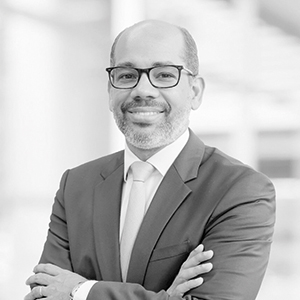
Gabriel Dejarden, partner and
member of the executive committee
ECIJA
Calle Rafael Augusto Sánchez Nº86
Torre Roble Corporate Center, First Floor
Suite 201d, Piantini, Santo Domingo
10148, Dominican Republic
T: +1 (809) 289-2343
C: +1 (829) 988-8888
E: [email protected]

Bofill Escobar Silva Abogados is a law firm with a decade-long history, comprised of attorneys renowned for their track record in resolving high-complexity domestic and international disputes. The firm is involved in several of the country’s most significant cases and holds a persistent presence across nearly every industry and sector of the economy.
Our focus lies in adding value when addressing challenging disputes. We are distinguished by our comprehensive and sophisticated approach to matters that span multiple legal domains; entail various and diverse conflicts requiring a coherent strategy; involve multiple legal entities on one or more sides of the issue; encompass laws from different countries; and present not only legal aspects but also economic, financial, and other questions necessitating integration of other areas of expertise into the strategy. Continue reading “A view from the Chilean legal market”

Mauricio Duarte from Legal Plus gives his insights into startups in Latin America, providing particular focus on the growing venture capital market in Guatemala
If you have heard of Duolingo, you might not know that the founder was born and raised in Guatemala. Like this successful company, there are multiple examples of successful startups in Latin America, such as Kavak, Rappi, Ualá, Hybrico, Osigu, CoreCode, Pacifiko, and more. Continue reading “The Latin American startup industry”

After a protracted and hotly contested legislative process, the forthcoming EU Corporate Sustainability Due Diligence Directive (CS3D) is set to become law having been formally approved by the EU Parliament during its plenary session on 24 April. It will represent the latest, and arguably the most significant, business and human rights law to emerge since the UN Human Rights Council adopted the UN Guiding Principles on Business and Human Rights (UNGPs) in 2011. CS3D is by no means alone, however, as various other stringent laws continue to emerge incorporating human rights related requirements into broader due diligence obligations concerning a range of issues such as conflict minerals, deforestation and battery supply chains.
Continue reading “Business and human rights laws: CS3D and other important developments”

From disruptive startup to a tech-enabled top 100 UK law firm, Keystone Law has grown rapidly over the last 20 years. As one of the longest-running consultancy model firms, its business model is now firmly established as a permanent fixture of the legal landscape. Despite its size and growth trajectory, many misconceptions about how the firm’s model and how it truly works still exist among solicitors. Here we speak with Mark Machray, Keystone’s director of growth and development, who explains what makes Keystone stand out among other fee-sharing firms and he dispels some of the myths.
If you think of Keystone as simply a platform, then it’s easy to understand why lawyers might think of it as a solitary way of working, but Keystone has so much more to offer than that. We have over 400 senior lawyers who regularly interact with each other, who by nature are entrepreneurial and see the benefit of developing strong relationships with colleagues. Continue reading “Dispelling the myths about Keystone Law”

Daniel Jacob, managing partner of independent specialist London City law firm Marriott Harrison, discusses opportunities in the innovation market to bridge the transatlantic gap.

On the face of it, things are going very well for US law firms in London. Last year, Cravath launched a London-based English law offering, Akin Gump’s London revenue jumped by 25% and Greenberg Traurig took on 15 new lawyers in London.
While London will continue to provide opportunities for US law firms – due to its position as a leading financial centre and its attractiveness for a global client base – acute disruptions are forcing leaders in US law firms to reconsider their international approach. Continue reading “US law firms in London must adapt their business strategy to account for new challenges and opportunities”


In conversation, we asked Daniel Jacob how Marriott Harrison is helping to bridge this gap working alongside international law firms to achieve their clients’ objectives
Our position as a leading London-based independent specialist for venture, growth equity, M&A, and buyout transactions has been earnt by our role as investor counsel to many of the world’s most recognised VC funds and PE houses, our pragmatic and responsive strategic advice delivered to founders and management teams, and our role as go-to firm for US and European law firms seeking local advice for their clients. Continue reading “Independent transactions specialists”


In the contest for the biggest legal story of the moment, the A&O Shearman merger may be more transformational for the firms involved, but it is fair to say it has not quite captured the imagination like Paul Weiss’s dramatic and audacious hiring spree in London.
‘The question is whether a firm can genuinely build an elite PE practice by lifting out the top guys from different shops,’ muses one US firm partner, on Paul Weiss’s bid to crack London. Continue reading “Market forces: Paul Weiss, Kirkland and the war for London talent”

We are providing more options for you to access your copy of Legal Business. Please see below for links to a limited version followed by a complete version. The complete version is only accessible to subscribers. Please make sure you are logged into the site to see the link.
Limited version Continue reading “Access your pdf edition of LB magazine – issue 319”
It is now well established that the original scope of the general counsel a decade ago, resides firmly in our memories. In fact, as change and uncertainty have become the only certainties in our lives, this role has evolved significantly.
This evolution does not come as a surprise, given today’s dynamic corporate landscape. In a world where companies face constant scrutiny and are expected to excel on multiple fronts, prominent concepts like ESG and Corporate Social Responsibility have compelled legal leaders to extend beyond their traditional legal obligations. They are now expected to take the helm in shaping the company’s brand image and actively participate in the decision-making processes of the business, thereby driving organisational growth.
In the intricate ecosystem of modern business, where brand reputation can determine success or failure, the role of the GC emerges as indispensable. They serve as guardians, protecting the intangible yet invaluable asset of brand reputation.
We had the opportunity to discuss this with Riccardo Guarino, the general counsel at IperalSupermercati.
GC: Could you tell us a bit about your career journey and how you arrived at your current role today?
Riccardo Guarino (RG): Of course. I am Neapolitan, born in 1993, and I graduated from the Federico II University in Naples.
During my studies I had the opportunity to do an internship in a leading law firm in Milan, which then offered me a position for legal practice. Afterwards, I worked with several structured law firms deepening several topics such as corporate law, compliance, governance, and M&A.
When I was just 29 years old, I was offered the opportunity to lead the legal department at Iperal. Now, at nearly 31, I am one of the youngest general counsel in Europe, especially considering the scale of the company.
My path has led me to explore a variety of issues, which are a plus for me because, from my point of view, the general counsel is a generalist who must be able to provide internal advice to the business, even without external support.
Talking about myself, I have always taken great care of my network and my free time has always been dedicated to deepening my knowledge and exchanging views with professionals, entrepreneurs, and colleagues. I founded the legal magazine ‘Ius In Itinere’, of which I am the editor. I am also a director of the master’s degree in business law at LUMSA University in Rome. This has been a key component of my career for me and is still crucial today. Continuous exchange and continuous learning are beneficial in any role.
GC: How, would you say, has the role of the general counsel evolved in the past few years?
RG: In recent years, there has been a shift from poorly structured legal departments that acted as the back office of external firms to in-house legal departments that function exactly like law firms.
Companies have come to realise that establishing an efficient legal department is beneficial not only during the structuring of processes, but also in subsequent stages, covering more than just typical processes such as ‘extraordinary transactions’.
This process reduces and keeps legal expenses under control, while increasing the compliance of companies that have a legal department that operates in continuity of action, always supporting all business functions.
We often talk about the legal department as a business partner, and I absolutely agree. At every decision-making stage, having a legal department that helps you structure the processes and carries out a risk analysis helps management to make informed choices.
Very often external lawyers provide legal opinions without knowing the industry context and this leads to confusion. The corporate lawyer serves as a genuine business partner, thinking like an entrepreneur and collaborating with them to determine the optimal path forward.
GC: How has the role evolved particularly in its relationship with other business functions?
RG: The relationship with other functions is always crucial to the success of the legal function. The idea that needs to be discarded and that is gradually being broken down, thanks to the training of the new generation of lawyers, is that corporate lawyers are not lawyers. They have legal skills but are managers acting in concert with corporate functions. They are not merely ‘controllers’ but an indispensable support ensuring the smooth functioning of everything. I always say that you should not be authoritarian but authoritative with colleagues.
GC: Can you share examples of successful partnerships or initiatives where the legal function played a key role in driving business growth or innovation?
RG: Sure. I could talk about the extraordinary transactions that took place in a unique manner that has enabled the company to earn (in this case save) thanks to my previous experience in a law firm. However, the most fulfilling moments come from the small but meaningful things. My industry is very regulated and controlled, and when, after structuring a process, training employees, and verifying with controls that the process was followed, we do not incur in sanctions, it makes it evident what is the real added value of the in-house legal.
GC: Are there any specific metrics or indicators you use to assess the contribution of the legal function to business outcomes?
RG: It is not easy to evaluate the performance of a legal function with unambiguous indices. The only important index is the trust that business functions place in you daily. If they call you, if they talk to you, if they feel supported, it means that the function is working.
GC: Can you provide examples of how legal considerations intersect with brand reputation management in your day-to-day responsibilities?
RG: The reputation of the company is as important as the business itself. One must always work in concert with the functions to structure each process in a compliant manner, always trying to work ethically. Compliance represents the ethics of the company, but it must always be supported by the management to be able to operate and shelter the company from reputational damage.
National and EU legislators are increasingly focusing on and enacting ‘ethical’ regulations, marking a significant cultural shift. Think of sustainability or consumer protection legislation. Companies must always be careful and try to balance business and ethics and are increasingly evaluated by the market and their customers for their impact and attention to common issues.
The companies that will survive this epochal change will be those that know how to evolve and adapt their business in an ethical manner, and in this situation the legal manager must be a change-maker.
GC: In the event of a crisis or reputational threat, what is the general counsel’s role in managing legal aspects and protecting the company’s brand reputation?
RG: Crisis management (of all kinds) is the most delicate part of the in-house lawyer’s role, but also the most exciting. Analysis, risk understanding and strategy, in concert with the functions concerned, is the best way out of a crisis. Good managers are ready and know that the worst can happen, and they need to be prepared for such moments.
It is always essential not to panic and to work together with the business functions. Every issue has a solution — it is simply a matter of finding it!
Riccardo Guarino, General counsel, IperalSupermercati
Sara Maggi, editorial – GC Powerlist


I wanted to go into sports. I was a sailing instructor, close to professional. But then I had knee issues, so I needed to change my plans last minute. I still do a lot of exercise, but I hate the gym. That’s how I relax, reflect, enjoy myself, and get energy. I do a lot of sport with my sons, who are all into sailing, biking, jogging, and skiing. I can still keep up with them on the bike, but in skiing I have no chance!
I never planned to be a lawyer. When I started my law course I focused on international public law – the United Nations, NATO and international treaties. I wanted to be a diplomat but there are two issues with being a diplomat in Belgium: one is that you need political connections, and the other is that you’re not so relevant in the international diplomatic community. I worked as an assistant professor at a university but found it a bit too quiet. So, I decided to do a trainee internship as a lawyer, and never stopped. At the time I went into law, we were still obliged to do military service. I did six months in a law firm while I was waiting to get called up, then I went back to the firm after my time in the army, and technically I haven’t changed firms since. It wasn’t by design – it was more the elimination of other options.
Continue reading “A&O’s Wim Dejonghe on mergers, money and his plans for life after law”

Established in 2000, Moneypenny is the world’s market leader for telephone answering, live chat, outsourced switchboard and customer contact solutions. Moneypenny handles more than 2 million legal calls and chats each year for hundreds of legal firms in the UK, including 80 of the Top 200, thanks to its dedicated team of legal receptionists.
Communication is key for law firms and in a busy marketplace, first impressions are crucial. The way inbound enquiries are answered gives clues as to a firm’s values, priorities and approach to service. Whether it’s dealing with existing clients, handling new business enquiries or speaking with other professional service providers, the human, friendly touch is vital. Continue reading “Outsourcing your firm’s first impression”

Eversheds Sutherland, Allen & Overy and Womble Bond Dickinson were among the major winners at the inaugural Legal 500 UK ESG Awards 2024, which welcomed more than 400 guests to the InterContinental London Park Lane on 24 April.
