Cooley London revenue jumps 17% to break £100m

Cooley‘s London revenue has crossed the £100m mark for the first time, in a record result for the US firm’s City office.

Revenue in the capital grew 16.7% year-on-year, from $94.5m last year to $110.3m.

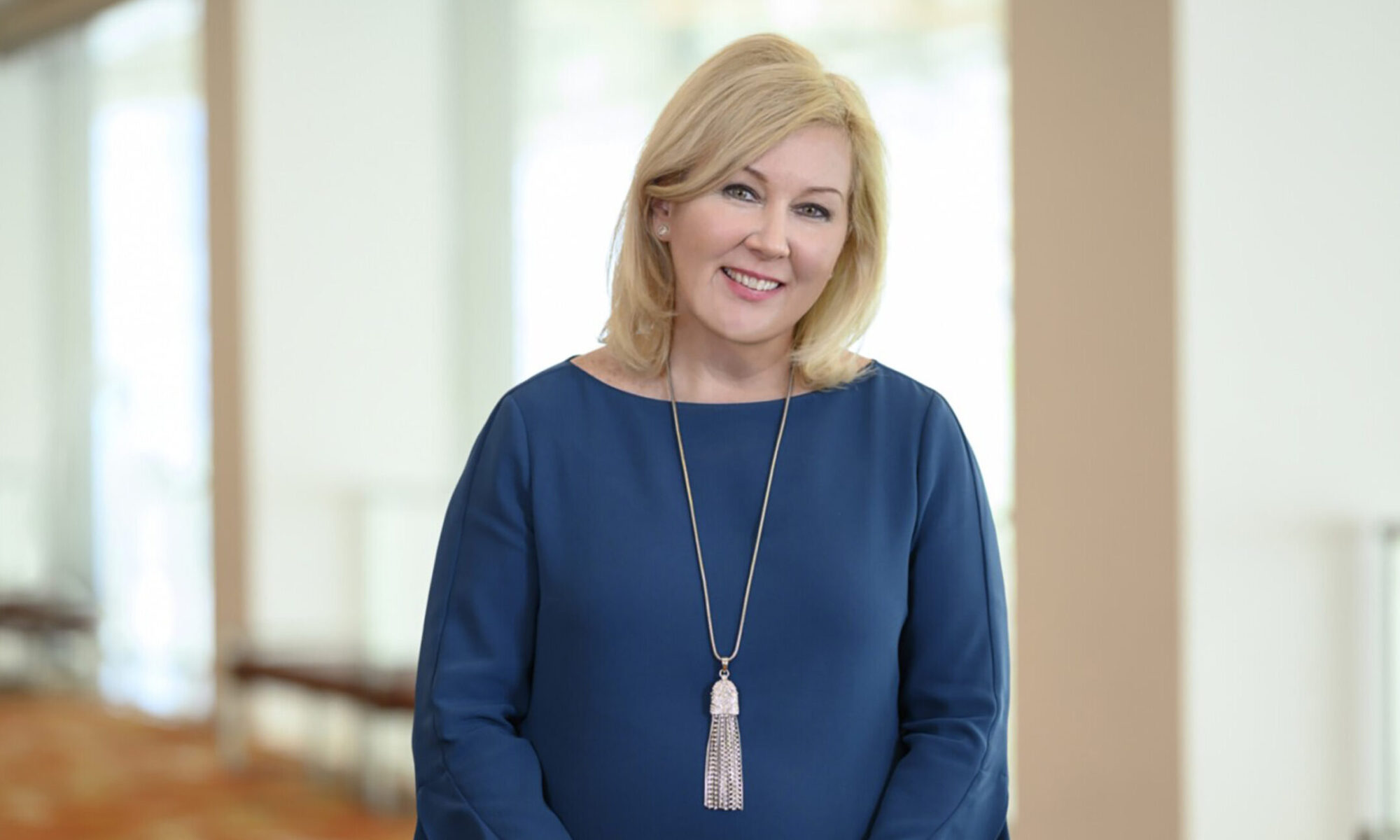
‘2025 was a transformational year for Cooley in London,’ said London co-managing partner Claire Keast-Butler (pictured right). ‘This included the strategic expansion of our emerging companies and venture capital practice, which makes it the City’s go-to destination in the space. The team had a stellar year, working on some of Europe’s landmark venture deals.’

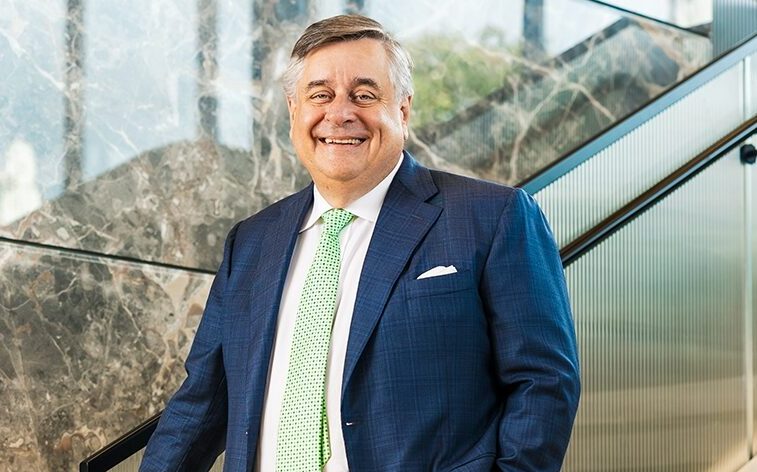
Her fellow London co-managing partner James Maton (pictured left) added: ‘The UK is Europe’s leading destination for innovative and high growth life sciences and technology companies, and their investors.’

Since the office launched in 2015 its headcount has almost doubled, with 103 lawyers in last year’s Global London table, including 35 partners.

Last year saw the firm make two lateral hires in London, bringing over tech M&A partner Jonathan Cohen from Ashurst in July, and financial services regulatory partner Charlotte Witherington from Taylor Wessing in November.

Globally, the firm’s revenue grew 10.3% to £2.4bn – a new record – while profit per equity partner climbed 18.3% to $4.57m. Revenue per lawyer hit $1.8m after 11.5% growth year-on-year.

Over the year, partners from Cooley’s London office advised on multiple $1bn-plus M&A deals in the tech and life sciences space, including AstraZeneca’s acquisition of cancer therapy company EsoBiotec, announced in March with a total consideration of up to $1bn.

In 2024, Cooley hired three partners in London – Angus Miln, Ali Ramadan, and Helen Pantelides, from Taylor Wessing, Goodwin and White & Case respectively – into its emerging companies and venture capital practice, a core practice for the office. The group now stands at eight partners following the promotions of Ella Donegan this year and Eric Davison last year.

Rita Sobral and Edward Turtle also made partner this year in the capital, with the former practising in M&A and the latter in product compliance and litigation.

Cooley won life sciences team of the year at the 2025 Legal Business awards for its work advising biopharmaceutical company Autolus Therapeutics on its collaboration with BioNTech, with a cross-border team across the firm’s offices in the US and London.

[email protected]

‘Complete integration of strategy and leadership’ – DLA Piper’s leaders on why they’re ditching the verein and going global

‘We’re trying to realise our untapped potential,’ says DLA Piper’s co-CEO and international managing partner Charles Severs (pictured right) as he frames the rationale behind the sweeping governance overhaul that is set to take the transatlantic firm closer to global integration than ever before.

Subject to partner approval, the firm is set to dissolve its long-standing Swiss verein structure and introduce a new global holding entity and governance team that will sit above its existing US and International LLPs. Severs and his fellow co-CEO Frank Ryan (pictured left) will serve as global co-CEOs, with Ryan additionally serving as global chair, and the firm will also move to align partner compensation and incentive schemes.

If approved, the overhaul will take effect from 1 May, with the firm also moving to a US calendar year-end from 1 January 2027. At least 75% of the international partnership and a weighted 66% of the US partnership must vote in favour of the overhaul, with the vote set to run over two weeks in April.

Talking to LB about the changes, Severs said that while the firm has already built a powerful international brand and client base, it has lacked the global alignment needed to fully capitalise on its scale.

‘We’ve built a global brand, built great clients and done great work but we haven’t done everything that we could have. Things like a single unified leadership team, or a compensation system that incentivizes across the whole firm for global behaviours. If we can drive quick decision-making and align incentives, then the opportunity for a firm like ours, compared to the mergers happening at the moment, is significant.’

New-York based Ryan said that having a global governance structure with leaders from across the business will ensure DLA operates more cohesively going forward.

‘This is a complete integration of strategy, of direction, of leadership. What’s important is that the roles we are creating are global roles. It won’t be each side of the institution managing its own business and then getting together, which is what the verein was. We had two businesses that came together effectively at times but they weren’t constantly looking at global opportunities through a single lens. And we’re going to get a chance to do that now. We’re optimistic about what that will yield.’

What won’t be happening as part of this overhaul is a single global profit pool, although the pair do not rule this out in the future. It will, however, usher in a new partner compensation and incentives model that will bring international partners closer to the system already in use in the US.

Severs had been considering compensation for the international partnership for months and had spent time looking at the system already in place in the US before the latest plans were announced to partners. A full consultation with partners on changes to partner credits will take place later this year.

‘There are certain things that the US currently do in terms of the comp process – the speed of it, the way they do a full review every two years – that we liked,’ he said. ‘I think where we’ll end up is a hybrid; both comp systems will change but it will be closer to the current US system than ours.’

‘We know the legal market isn’t standing still, but we believe that we can absolutely set ourselves apart’

Both Severs and Ryan are keen to stress that the new system will make it easier to stay competitive as well as to reward collaborative behaviour.

‘It’s going to be fairer, and it’s going to be more transparent, and it’s going to be simpler,’ said Severs.

Ryan continued: ‘We will have a comp system that rewards collaborative behaviour, no matter where that is around the world. It is designed to recruit and to retain the best talent in the world. One of the core things that we need to do is get people out of silos working together. It’s critical. And so your system, your compensation system, must reward people who do that. Must reward people who work together, who collaborate, who are entrepreneurial, but also bring others in. That’s the system we’re going to design. That’s the behaviour we’re going to reward.’

The proposed governance model would also formalise a global leadership team combining senior figures from both sides of the business. Under the plan, other members of the leadership group would include US vice chairs Loren Brown and John Gilluly, global managing partner Rick Chesley, deputy managing partner Sandra Wallace in Birmingham, and managing director for clients Ben Parameswaran in Hamburg.

Severs said that having a single leadership team focused on the interests of the entire firm would make it easier to act decisively, acknowledging that the the firm has not always been as joined up as it could have. ‘Having a single management team, making decisions for the benefit of the global firm will make it easier to do the right thing,’ he said.

In addition to greater alignment on strategy the firm will also be able to make investments on a global basis.

‘We will be aligned on investments and you’ll start to see us investing in talent on a global basis for the first time,’ said Severs. ‘It will show what we can achieve and the attractiveness of our platform to global talent. We’ll be creating investment pools for strategic investment in say talent or technology. I think one of the bellwethers for law firms in this world is, are you a destination for talent?’

While some international firms have been reconsidering the extent of their global expansion, Ryan said that DLA has no intention of retreating from its scale, or closing offices.

‘Our global reach and capabilities are a significant advantage to our clients,’ he said. ‘Having deep, deep, domestic expertise in this world is critical to being able to serve clients in this more fractured world, as globalisation is under pressure. We don’t think anyone’s positioned like we are to do that.’

Severs agrees, arguing that the overhaul should make it easier for the firm to succeed in an increasingly competitive legal market.

‘By ensuring that people are engaged and incentivised for their global performance we think our ability to do more work for existing clients and to get new clients and new work is accelerated. The reality is we know the legal market isn’t standing still but we believe that we can absolutely set ourselves apart, even in a market as fast moving as this, and that is exciting.’

[email protected]

[email protected]

The ‘football managers’ of the legal world – why real estate PE partners are in high demand

Real estate finance transaction private equity

Over the past 18 months, around 20 real estate private equity and real estate finance partners have switched firms in London.

The lateral moves come as firms bulk up their PE offerings in the City to capitalise on increasing investment in real estate assets by buyout houses.

Latham & Watkins has made the biggest play for talent in the space, adding a trio of finance partners from A&O Shearman earlier this year, including real estate finance partners David Oppenheimer and David Varne as well as high yield specialist Lucy Oddy.

The hiring, which comes as the firm also saw the departure of real estate finance partner Jeremy Trinder to Sidley in London earlier this year, complements its recruitment of real estate PE partner Jeremy Kenley last November from Gibson Dunn.

Explaining the motivation for his move Kenley said the decision made sense because of: ‘The natural alignment between Latham’s strength in private capital and my work for sponsors in private equity real estate.’

Kem Ihenacho, a member of Latham’s executive committee, explained the push to build capacity around real assets: ‘It’s a growing market. For a long time people just talked about private equity, but it’s much broader than that – infrastructure, growth equity, real estate, distressed assets, hybrid capital, and so on. There are so many elements to it.’

‘What we’ve been doing both in Europe and globally is investing in the talent with the right relationships and experience to capture a significant and increasing share of that market,’ he said.

Supply and demand

Latham is certainly not alone in its big play for talent. Other firms bulking up to meet demand for real estate experience include Hogan Lovells, which recruited former Paul Hastings partners Michael James and Edward Meadowcroft in September 2025, and Mayer Brown, which this year added Taylor Wessing real estate finance partners Mark Rajenbach and Victoria Butcher.

Meanwhile, Freshfields added David Seymour and Will Bryant from Ropes & Gray in July last year.

Speaking to Legal Business about the increase in demand, Seymour said:Amongst the leading City firms, there has been competition for talent. This is because it requires a fairly rare skillset of someone who sits between real estate and private equity, and understands the asset class across Europe and M&A.’

David Evans, who joined Fried Frank from Goodwin last September, agreed, saying: ‘The real estate-private equity cadre is still quite skinny. It’s like football managers – there’s only a limited pool of folks who can credibly do the job.’

Growth beyond London

Stephen Nicolas, who moved from Paul Hastings to Cleary Gottlieb Steen & Hamilton last October, said the trend to invest in real estate goes beyond private equity.

‘I don’t think the trend is specific to PE,’ Nicolas said.

‘I think there are various market participants, all of whom have a different view on returns, risks and investment profile, and it takes all of these different views to make the market. If the trend was solely PE driven I think the market runs the risk of becoming stagnant,’ he continued.

Noting an international demand for real estate expertise he said: ‘From my perspective it is a global trend – there are incredibly active markets around Europe and often investors chasing returns will head into Europe and beyond to achieve these.’

Siobhán Lewington, co-office managing partner at legal recruitment firm Macrae, added: ‘We have seen more interest from US law firms in investing in partners focusing on ‘real assets’ in London. There has been an increase in lateral partner movement in this area over the last six months and it’s driven by firms wanting to provide real estate capability for their private equity clients.’

A lasting trend?

Despite the intense competition for talent, firms are not yet finished with expansion plans.

On Latham’s future growth, Ihenacho said: ‘We’re not complacent at all. This is an incredibly competitive market. We’re very proud of the team we’ve built, and we will continue to grow our practice.’

Fried Frank’s Evans concurred, noting that one reason for joining the firm was the opportunity to grow the real estate PE team further in Europe.

‘Fried Frank has a market leading real estate practice in New York. Part of the appeal was to have a ready-made platform with a strong reputation in the corporate real estate space. I want to help grow a real estate practice in London that mimics its New York strengths.’

For Seymour, this is a smart move. ‘For firms that focus on private capital, having a strong bench in real estate is important to deliver what clients need, particularly given the increase in the complexity and cross border nature of transactions in the sector.’

Real estate finance and PE partner moves in London, 2025-present

Name New firm Old firm Date of move
Victoria Butcher Mayer Brown Taylor Wessing February 2026
Mark Rajbenbach Mayer Brown Taylor Wessing February 2026
Lisa Seifman Cahill White & Case February 2026
Jeremy Trinder Sidley Austin Latham & Watkins January 2026
David Oppenheimer Latham & Watkins A&O Shearman January 2026
David Varne Latham & Watkins A&O Shearman January 2026
Jeremy Kenley Latham & Watkins Gibson Dunn November 2025
Stephen Nicolas Cleary Paul Hastings October 2025
David Evans Fried Frank Goodwin September 2025
Michael James Hogan Lovells Paul Hastings September 2025
Owen Jones McDermott Tristan Capital Partners September 2025
Richard Semple Winston & Strawn Goodwin September 2025
Sudhir Nair DLA Piper Mayer Brown August 2025
Will Bryant Freshfields Ropes & Gray July 2025
David Seymour Freshfields Ropes & Gray July 2025
Mark Manson-Bahr Gibson Dunn A&O Shearman June 2025
Kevin Gilroy Akin King & Spalding February 2025
Aparna Sehgal Winston & Strawn Dechert February 2025
Danielle Hirsch Simmons & Simmons Morrison Foerster January 2025

[email protected]

Dentons CEO sets out plan to take the firm from ‘pre-teen’ to ‘young adult’

When Dentons announced more than a year ago that EY’s Kate Barton (pictured) would take over from Elliott Portnoy as global chief executive it marked the end of an era for the firm that still brands itself ‘the world’s largest global law firm’.

A highly visible leader, founding CEO Portnoy had held his role since the 2013 three-way merger between SNR Dentons, Salans and Fraser Milner Casgrain that created Dentons in its ultra-expansive global form. Along with founding chair Joe Andrew, he shepherded the firm through more than a decade of expansion, including the ill-fated union with Dacheng that ended in summer 2023.

Now, just over a year since Barton took the helm, Dentons is ready to move to the next stage of its development – to shift from what Barton calls ‘a pre-teen firm’ to ‘young adulthood’.

Leveraging global reach

Barton’s vision for Dentons is broad: ‘We want to be famous for global transactions, global advisory services, and global disputes,’ she says. ‘We want to not only be the world’s largest law firm in terms of countries covered – we want to dominate across those three areas.’

To achieve this, the firm has adopted a new sector strategy focused on seven key industries:

  • Consumer products and services
  • Energy and resources (split into energy and mining)
  • Financial
  • Industrials, transportation and infrastructure
  • Life sciences and healthcare
  • Technology, media and communications
  • Real estate

‘You can’t throw the baby out with the bathwater. We have 33 more countries than the next nearest law firm. That is a real differentiator’

Earlier this year, Dentons appointed global leads for each of these sectors, with the positions spread across the firm’s network of offices around the world.

Istanbul partner Doğan Eymirlioğlu leads consumer products and services, with Salt Lake City-based Stephanie Regenold and Santiago-based José Ignacio Morán leading the energy and mining arms of energy and resources, respectively.

New York-based capital markets regulatory team head Matt Yoon leads the financial sector, while industrials, transportation and infrastructure is headed up by Montréal-based partner Ilan Dunsky.

Jean-Marc Grosperrin in Paris leads life sciences and healthcare, and Washington DC-based US privacy and cybersecurity team lead Todd Daubert leads TMT.

Finally, the sector lead for real estate is London partner Alex Coulter.

The distribution of the global sector leaders reflects Barton’s aim for Dentons to capitalise on its scale.

Barton explains: ‘You can’t throw the baby out with the bathwater. We have 33 more countries than the next nearest law firm. That is a real differentiator. Before we disrupt that strength, I want to make sure we press that advantage.’

She does not rule out further expansion over her term – last March the firm announced a tie-up with Thailand’s Pisut & Partners, and Barton points to Japan as another market in which the firm would like to establish a presence.

As a verein, Dentons has a decentralised structure, with high levels of independence across different regions. It is an approach that some argue can cause friction, with some verein firms even needing to cut internal deals to coordinate client service.

But while some integration of Dentons’ existing operations may be on the longer-term agenda, Barton argues that her firm is already more connected than some realise.

‘We’re more integrated than people think,’ she says. ‘We have the joy of having all our European operations in a single partnership, and the UK, Ireland and the Middle East (UKIME) in another. We didn’t have that at the big four. We had region structures, but underneath it, France paid France and Italy paid Italy.’

Unique experience

Barton’s move from Big Four professional services to head a large law firm is an unusual one. She spent nearly four decades at EY, most recently as global vice chair of Tax, Law and People Advisory Services, with a seat on the global executive board.

As her comment on Dentons’ integration suggests, her experience gives her a unique perspective.

‘I’m very familiar with the playbook of running a large globalised business, managing clients, operations, profit pools, and member pools’, she says. ‘But I don’t want to presuppose that what worked for a Big Four firm is going to work for a law firm. I’ve seen what a more mature organisation can accomplish, but the key is making it work for Dentons.’

‘Leaders lead at the right time. Elliott and Joe were perfect to get this off the ground’

This summarises Barton’s approach to her leadership: build on what makes Dentons unique, while looking for opportunities to move it forward.

‘I’m very grateful to both Elliott and Joe,’ she says. ‘I want to commend them for the foresight of the concept of Dentons that I now get to take to the next level.

‘I think leaders lead at the right time. Elliott and Joe were perfect to get this off the ground and I know I have their unwavering support.’

Dentons – key stats

Total revenue: $2.75bn

Total partners: 2,145

Profit per equity partner (PEP): $906k

Number of offices: 172

Number of offices taken from the Dentons website. All other figures taken from the 2025 Global 100 table.

[email protected]

Revolving doors: Sidley raids Latham again as Fried Frank taps Kirkland for latest London hire

Sidley Austin has hired from Latham & Watkins again, as it brings over the firm’s former co-head of UK equity capital markets, James Inness.

After over 13 years at Latham, Inness will join former colleagues David Stewart and Vladimir Mikhailovsky, who both moved to Sidley’s London office last year.

More recently, Sidley also recruited Latham’s global co-chair of real estate Jeremy Trinder.

‘We are excited to have James join our growing London cross border capital markets offering – he is a stand out UK equity capital markets lawyer known to us and many of our partners and has a strong client following,’ said Sidley management committee chair Yvette Ostolaza.

‘Adding another strong equity capital markets partner in London was a strategic priority for the firm – we have significantly enhanced our capital markets practice and offering to clients following a number of other recent strategic hires,’ she continued.

Elsewhere in the City, Fried Frank hired M&A partner Rhett McPhie from Kirkland & Ellis, where he has spent the last five years. He joins alongside PE partner Nathan Pusey, who has moved to the firm from Morgan Lewis in New York.

Fried Frank managing partner and M&A and PE practice cohead Steven Epstein said of McPhie and Pusey’s hires: ‘Their arrival advances a strategic growth priority by continuing to deepen our asset management M&A capabilities to support the expanding needs of our client base.’

Also making moves this week was Gowling WLG, which has hired Guy Stevenson from Orrick to head its London financial services regulation team.

Stevenson, who has particular experience advising clients on regulatory authorisation for new business models and on launching and scaling their UK operations, joins after four years at Orrick, where he was a counsel.

Meanwhile, Kirkland & Ellis has also made moves in Europe, becoming the latest firm to bulk up its PE offering on the continent with its hire of Sebastian Heim.

Based across Munich and London, Heim will join Kirkland from Millbank, where he began his career 15 years ago. He is recognised by Legal 500 as a next-generation partner for PE transactions in Germany.

A number of US-headquartered firms have bulked up their European PE teams in recent months, with Latham recruiting a four-partner team from Freshfields last December and following up with a clutch of hires from Clifford Chance last month, Proskauer hiring a trio of partners from Hogan Lovells in Paris, and Weil bringing over Willkie’s Germany co-managing partner Kamyar Abrar.

Back in London, Taylor Wessing has expanded with three recent hires, with the addition of DLA Piper real estate tax partner Gemma Grunewald, Travers competition lawyer Stephen Whitfield and IP partner Henry Priestley, formerly of Russells. 

The hires mark the second, third and fourth partners to join Taylor Wessing following its decision to merge with Winston & Strawn, as RPC partner Jeremy Drew also joined the firm’s IP practice last month.

In the Middle East, Gibson Dunn has hired former Linklaters Saudi Arabia managing partner Waleed Rasrommani as a corporate and M&A partner.

Back in London DLA Piper has also made hires, as it brings in private equity partner Markjan van Schaardenburgh from Ashurst, as well as finance specialist Mark Brown, who left Linklaters in 2023 before taking a career break, and tax partner Gareth Amdor, who joins from Reed Smith.

DLA also grew elsewhere in Europe, as Cathrine Foldberg Møller is set to join its finance practice in Luxembourg from Simmons & Simmons.

For its part, Ashurst was also active, bringing Heidi Blomqvist into its London corporate team as a partner.

Blomqvist joins after more than a decade at White & Case, where she made partner this year. She brings experience advising corporate and PE clients on a variety of transactions in the energy and infrastructure space.

Also expanding in real estate are Bryan Cave Leighton Paisner, which brought former Gibson Dunn partner Claibourne Harrison to its London office, and Shoosmiths, which has hired Simon Collis from Steptoe.

Linklaters managing associate Jasmine Olomolaiye is moving to Foot Anstey in London, where she will join the investigations, corporate crime and sanctions team. 

Fieldfisher has hired investment funds partner Mark Shaw, who will join the firm’s London office from Pinsent Masons. 

Broadfield has made a series of hires in London, including swiping Pillsbury partner Gavin Watson, who will become the firm’s global head of energy and infrastructure.

The firm will also bring in private wealth partners Jonathan Kropman from JMW Solicitors and Katherine Forster, who was previously a legal director at Birketts.

Penningtons Manches Cooper has also expanded in London with the hire of personal injury and medical negligence partner Robert Dransfield, who spent just under 20 years at Stewarts.

In another exit from DLA, sports specialist legal director James Thorndyke will join Simons Muirhead Burton as a partner in the firm’s London office.

Wedlake Bell has grown its City team as it brings in divorce and family partner Rebecca Christie, formerly a senior associate at Fladgate.

DWF has hired former DAC Beachcroft partner Ian Plumley, who specialises in insurance and reinsurance.

Plumley will join the firm’s London office, bringing with him over 30 years of experience in the sector.

In Manchester, Addleshaw Goddard has hired real estate partner Kirsty Chalkley from Shoosmiths.

On the continent, McDermott Will & Schulte has expanded its Milan banking and finance practice with the addition of transactions specialist Andrea Giaretta, who joins as a partner from Freshfields, where he was a senior associate.

Pinsent Masons has hired Linklaters counsel Belén Lavandera as a partner in its employment team in Madrid, while in Geneva Charles Russell Speechlys has hired tax partner Frédéric Ney from Swiss firm Bär & Karrer, where he was a senior associate. 

In the UAE, Dechert has rehired financial services and investment partner Phillip Sacks from White & Case, where he has spent the last two years. As he returns to the firm, Sacks will serve as managing partner for Dechert’s Dubai office.

Finally, offshore firm Harneys has hired Katrina Edge as the head of its banking and finance practice in Jersey. Edge will join the firm after over 20 years at Ogier, where she most recently served as global head of banking and finance.

[email protected]

‘2026 will not be business as usual’ – the in-house forecast for the year ahead

‘It’s a really interesting time to be an in-house lawyer,’ begins Stephen Shapiro, group general counsel at Barclays.

The ‘fast-changing geopolitical and technological environment,’ as he puts it, means that the in-house role is in a constant state of evolution – one that comes with both potential highs and lows for general counsel.

The role of in-house counsel has already undergone significant transformation in recent years, ‘in response to geopolitical shifts, rapid technological innovation and economic pressure,’ notes Dorina Papadopoulou, secretary and manager of legal services at the state-owned Electricity Authority of Cyprus, the country’s main electricity provider.

Legal teams have faced ‘faster decision cycles, tighter budgets and higher regulatory expectations,’ explains Mahmoud S. Youssef, general counsel at Foodics, a Middle Eastern food tech company.

Looking ahead to this year, ‘2026 will not be business as usual,’ warns Line Kornmo Fjellheim, head of legal for Norway & Iceland at Coca-Cola Europacific Partners. ‘Geopolitical volatility, accelerated tech disruption, and mounting legislative pressure will redefine how organisations operate,’ she continues.

Companies will continue to be required to adapt quickly and stay ahead of new regulations, while maintaining successful and sustainable commercial growth, and it is in-house counsel that are, more often than not, finding themselves as the driving force behind this change.

As Fjellheim observes, ‘in-house teams must combine foresight with execution, helping the business stay ahead of legislative and geopolitical headwinds while spotting opportunities in disruption.’ 

‘In-house counsel will need to be open to change and will need to upskill quickly’

In-house teams are, therefore, becoming increasingly integrated within their organisations – rather than operating as ‘a standalone control function,’ as Hadi N. El Kadi, group chief legal officer at Dubai-based conglomerate Al Habtoor Group, puts it.

Gone are the days when legal teams were viewed purely as gatekeepers – ‘the in-house legal role has transformed from being a checkpoint to becoming a strategic driver of growth,’ Fjellheim explains. Papadopoulou agrees: ‘Legal departments are now more deeply involved in strategic decision-making, crisis management and governance structures’.  

This evolution not only requires greater legal responsibility, but also enhanced commercial acumen. General counsel are increasingly acting as true business partners. As Shapiro (pictured) points out, this development ‘offers significant opportunities in how in-house counsel can solidify their position as a trusted partner to business colleagues and stakeholders’. 

In practice, this means in-house counsel must bridge the gap between legal and business interests. Legal teams are ‘partnering with commercial teams to unlock new markets, navigate complex trade landscapes, and ensure business growth within regulatory boundaries,’ Fjellheim explains.   

It is a trend that shows no signs of slowing. ‘This evolution will accelerate in 2026 as organisations face heightened volatility and legislative pressure,’ continues Fjellheim. Companies will increasingly rely on legal teams not just for legal advice, but also for guidance that builds resilience and drives business forward. The in-house role ‘will continue to evolve towards greater integration with risk management, compliance, digital transformation and board-level governance,’ confirms Papadopoulou.  

And digital transformation is a key aspect of this competitive business landscape – it would be ‘remiss’ not to mention technology and AI, Shapiro acknowledges. In-house counsel play a critical role in ensuring companies stay ahead of technological developments, from both a regulatory and commercial perspective. Legal teams must have a ‘clear focus on governance, data integrity, and decision quality,’ El Kadi notes

Technological revolution within organisations must be ethical and compliant, in line with both local and regional regulations. Here, the in-house role is to ‘embed compliance into strategy, and ensure the organisation stays agile and competitive in a demanding global environment,’ Fjellheim says.  

Legislation around AI and similar tools is complex and rapidly developing, racing to keep up with the pace of adoption. Teams must balance these regulatory developments, while also navigating the use of new technology themselves.

This is no mean feat, Shapiro acknowledges: ‘In-house counsel will need to be open to change and will need to upskill quickly and adapt how they do their work on a daily basis’. Legal teams must incorporate legal tech into their day-to-day routine at an exponential pace: clients, colleagues and senior management are expecting work to be delivered faster and more efficiently with the new technology available, freeing up their lawyers to focus on more demanding and complex tasks.  

Rapid adoption of new tools and AI ‘brings with it both risks and challenges, but also great opportunities,’ Shapiro explains, ‘allowing lawyers to exercise skill and judgement while increasing the speed at which they can undertake some of the more routine jobs’. 

With less time spent on routine tasks, in-house counsel are better positioned to act as the integral function they have become. As organisations continue to navigate an unpredictable legal, business and regulatory landscape in 2026, ‘boards and executive teams are increasingly expecting legal leaders to translate regulatory, contractual, and geopolitical risks into commercial impact, scenario outcomes, and strategic tradeoffs,’ says El Kadi.  

In-house lawyers must cut through the volatility and complexity to act as true business partners and lead their organisations through both legal and commercial change.  

Paul Hastings restocks high yield with A&O Shearman partner and relaunches Brussels office

Paul Hastings has bolstered its UK and Europe offerings with a pair of partner hires this week, building its City high yield practice and relaunching in Brussels.

First, the firm has hired high yield partner Brad Weyland from A&O Shearman, in a move that sees it act quickly to plug the gap left by the departure of high yield chair Patrick Bright, who moved to Sullivan & Cromwell last month.

Weyland joined legacy Allen & Overy in 2021 from Latham & Watkins, where he was a counsel. His practice focuses on high-yield bonds, bridge loans and term loans for investment banks, private credit providers and corporates, with additional experience in restructurings and liability management matters.

After Bright’s departure, it was likely that Paul Hastings would act swiftly to secure a replacement to replenish its capacity in high yield as a cornerstone of its London finance practice, a person familiar with the move said.

Key players in Paul Hastings’ London finance practice are Ross Anderson, who co-chairs the office with corporate partner Matt Poxon, and Mo Nurmohamed who co-chairs the global finance practice.

Both Anderson and Nurmohamed are Legal 500 leading partners for acquisition finance, and both joined Paul Hastings from Latham in 2022.

Meanwhile, the firm has also relaunched its Brussels office with its hire of King & Spalding competition partner Salomé Cisnal de Ugarte. 

Cisnal de Ugarte spent just under five years at King & Spalding, where she was head of EU and EMEA antitrust and competition.

As antitrust enforcement continues to intensify across industries such as tech, pharma, energy and financial services, Salomé’s experience and reputation will enhance our ability to win mandates and advise our M&A and private equity clients in navigating increasingly complex, multi-jurisdictional regulatory scrutiny,’ said Paul Hastings chair Frank Lopez.

The moves comes amid a period of partner churn for the US firm’s London office, though revenue growth in the UK capital has been significant. Weyland is the 11th lateral hire over the last six months – but the firm has seen at least as many partners depart over the same timeframe.

European restructuring practice chair Will Needham left to join S&C alongside Bright last month, while high yield partner Ed Holmes left for Cadwalader last summer.

The firm’s remaining London high yield partners include Reena Gogna, who joined from Weil in 2024, and Max Kirchner, who joined from Proskauer in 2020.

During this same six-month period, the firm also added structured credit partner Thomas Picton from Ashurst, fund finance partner Jennifer Passagne from Haynes Boone and investment funds partner David Richardson from Simpson Thacher.

Despite the turbulence, Lopez is bullish about London, telling Legal Business last month that he aims to make the office the firm’s second biggest, after its New York headquarters.

Financial results released at the end of last month showed firmwide revenue had increased 20% year on year, to a new high of $2.68bn, with the London office accounting for 10% of this, up 25% to $272.4m.

[email protected]

What boards really want, AI in practice and leading through crisis: the takeaways from Enterprise GC 2026

More than 200 general counsel and senior in-house lawyers gathered at Syon Park this week for Enterprise GC, LB’s flagship two-day event focused on the biggest issues facing the profession.

From business transformations, geopolitics, Trump and tariffs to AI and crisis leadership, a roster of leading GCs gathered to discuss how their role is evolving.

The discussions reflected how rapidly the external environment is reshaping the demands placed on in-house legal teams, with a big-name line-up of panellists sharing their perspectives.

The event kicked off with a keynote speech by experienced CEO and chair Roger Flynn (pictured), who has worked in senior exec roles at the likes of Virgin Group, British Airways and the BBC, providing insights on what CEOs and boards really want from their top lawyers and how GCs can position themselves as true strategic advisors within their companies.

The first panel of the event was hosted by Trowers & Hamlins, with partner Simon Edwards joined by Pizza Hut UK CLO Lawrence Grabau, Keyloop GC Craig Duff, interim head of legal and company secretary at MOO Kelly Young and Mulberry Group director of legal compliance and company secretary Alison Beveridge.

The panel discussed everything from risk and compliance to ESG, AI and public affairs issues that are increasingly falling within the GC’s remit, and what it takes to manage these competing demands.

The first morning also featured a panel discussion hosted by Fried Frank on how to lead legal teams through a business transformation. The panel, comprising Starbucks EMEA GC Huma Allana van Reesch, Fremantle chief legal officer Matthew Wilson and Ricardo GC Harpreet Sagoo, discussed how GCs can maintain morale, credibility and performance during transformative events for their business.

After lunch, SSQ managing director Laura Field spoke to Reach group GC Nicki Schroeder, Eagle Club founder Lesley Wan and Nestle UK and Ireland GC Mark Maurice-Jones about the lessons they’ve learned during their careers, how to build influence with the C-suite and key leadership skills needed for the job.

The afternoon also saw a frank and open discussion between Smith & Nephew group GC Helen Barraclough and her go-to outside counsel, Reed Smith partner Ben Koplin (pictured), who examined the ins and outs of a productive adviser-client relationship and what GCs can do when expectations of external counsel are not being met.

The last panel of the day looked at how to handle multi-jurisdictional litigation, with Signature Litigation partner Sylvie Gallage-Alwis joined by Elisabeth Iung, global head of litigation, risks – insurance at L’Oreal in Paris and Hicham Khellafi, GC EMEA at Honeywell Industrial Automation.

Day Two kicked off bright and early with a breakfast fireside chat hosted by Walker Morris competition partner Sarah Ward, who was joined on stage by Daniel Quy, GC and director of compliance and ethics at Royal Mail and Alex Ohlson, GC at Stuntory Beverage & Food GB&I, who discussed how GCs identify emerging compliance risks, stay ahead of regulatory developments and embed a culture of compliance across the business.

The next session looked at how geopolitics, tariffs and Trump have impacted GCs. Gowling WLG of counsel Bernardine Adkins led the discussion with panellists including Lisa Lischak, division GC at DCC Technology and Meghan Foreman-Purves, head of legal for Europe and Asia Pacific at CIBC.

AI was of course part of the agenda, with a panel including E.ON GC Kirin Kalsi, IQVIA GC for EMEA and APAC Simon White and Legora deputy GC Emanuel Björn Bergquist offering insight from the coalface into how new technology is being adopted within legal teams.

Later, Axiom Law’s Lewis Bowman moderated a lively discussion featuring HSBC’s Stéphanie Hamon, Patron Capital GC Kendall Langford and Vodafone’s Ailsa Longmuir, who debated whether GCs really need to know what their law firms are using AI for and how this can be best communicated.

The afternoon featured a keynote speech from Sarah Wynn-Williams (pictured), former director of global public policy at Facebook, as well as a crisis management session featuring a heavyweight line-up including three GCs – Anglo American’s Kate Southwell, Rolls-Royce’s Mark Gregory and Elementis Global’s Hannah Constantine, who covered everything from cyber-attacks to unsolicited takeover bids.

The event was rounded off with two one-to-ones. Gowling WLG partner Ben Stansfield spoke to Hyundai head of legal Shaun Goodman about the realities of building a company-wide ESG framework, and how organisations translate ESG commitments into practical strategy.

The final conversation saw Legal Business reporter Theresa Hargreaves speak to Rio Tinto’s Chris Fowler, who discuss career opportunities beyond legal, such as his current role as COO for legal, governance and corporate affairs, as well as his experience of non-exec roles and what they can add to a GC’s CV.

For more information, please visit the event website.

[email protected]

Meet the female founders behind some of the UK’s top legal boutiques

‘The idea of having my decisions overridden or determined by a bunch of middle-aged men was so depressing that I just went and set up my own firm.’

Ayesha Vardag, celebrity divorce lawyer and founder of international family law firm Vardags, is explaining the moment that crystallised her decision to build a firm of her own.

Since launching the firm in 2005, it has developed into one of the country’s leading private client practices – ranked Tier 1 for family in The Legal 500 in London, Cambridge and Manchester, with Vardag herself recognised as a Hall of Fame partner.

While Vardag’s motivations for going it alone may differ from those of other female founders, she is part of a growing band of women who have chosen not to sit back and wait for the law firm model to evolve into something new.

Instead, they have chosen to create a new template: specialist, founder-led, and conflict-free boutiques with cultures they can shape for themselves.

‘I didn’t need a law firm infrastructure for what I do. It was like a deadweight’

The narrative around women in law has shifted markedly over the past two decades. Women now marginally outnumber men at associate level, flexible working has become mainstream for all genders, and overt sexism is far less tolerated.

Yet progress at the top remains slower. Solicitors Regulation Authority diversity data shows that only 32% of full equity partners are women, a figure that drops to 28% at the largest firms.

For International Women’s Day 2026, Legal Business spoke to the female founders behind a cluster of high-performing specialist firms — Alius Law, Pallas Partners, CM Murray, Manders Law and EMM, alongside Vardags — about why they chose to build firms of their own, and the structural pressures that continue to shape life at the top of the profession.

A light bulb moment

For Bree Taylor, it was a ‘light bulb moment’ that sparked the creation of her aviation and commercial litigation boutique, Alius Law, at the height of the Covid pandemic.

‘It wasn’t that I wanted to work from home,’ she says. ‘It was the fact that I didn’t need a law firm infrastructure for what I do. It was like a deadweight. What I was actually doing was bringing in revenue that was paying for a whole lot of stuff I didn’t need.’

Divested of management obligations and office infrastructure, she found her boutique model could work just as well: ‘We were pitching the same quality as before, but with people entirely focused on client work. We were conflict-free and super specialist.’

There can be a temptation to frame the stories of women striking out alone around flexibility, balance, and lifestyle accommodation rather than business decisions.

None of the female founders Legal Business spoke to accept this narrative, however. For them, building a boutique was never a retreat from long hours. Rather it represented a shrewd, competitive response to client demands.

Tamlyn Edmonds (pictured right), co-founder of Legal 500 Tier 1-ranked private prosecution firm Edmonds Marshall McMahon, saw a gap in the market when her specialist practice at the Department of Health began to merge with general crime as funding tightened.

‘There wasn’t a specialist firm doing it,’ she recalls. ‘I resigned; I had three small children at the time, so it was a big risk. I was the breadwinner, and we had no clients on day one,’ she says.

Pallas Partners founder Natasha Harrison saw a similar opportunity on the disputes side; explaining that she saw room in the market for a ‘high-end commercial litigation boutique with a strong presence in both London and New York.’

For Ayesha Vardag the motivation was to move family law away from any perception of being ‘high street’ and ‘low rent’.

‘I wanted to bring absolute legal rigour and top-level commercial structuring and savvy to the field, tailored to HNW individuals,’ she says. ‘That was my USP.’

While all of the women spotted different gaps in their respective markets, what united their intentions was a desire to build firms offering access to senior lawyers, deep expertise rather than scale, conflict-free mandates and transparent pricing.

And with boutiques on the rise more generally in the UK, it seems the broader market is moving in their direction.

Harrison (pictured right) observes: ‘smart, sophisticated clients are unpacking their legal services – using one firm for corporate, another for finance, and another for litigation, in each case best in class.’

Taylor goes further, ‘Boutiques are absolutely on the up. I can’t think of a time when I have seen so many clients actively seeking out boutiques. The story is always the same: it’s too difficult dealing with large law firms. Large fees. No leadership.’

Their numbers bear this out, with revenue growth at Pallas and Vardags significantly outpacing the LB100 average. At Pallas – – turnover hit £20m for the year to December 2024 – 39% on the previous year, while Vardags reported £21m for the year to March 2025, a 15% increase on 2024.

An alternative culture

But the motivations to form their own firms go beyond economic incentives. Autonomy and the ability to align culture with commercial strategy are recurring themes. And while none of the partners frame their move purely as a response to cultural sticking points, machismo, old boys’ clubs, a lack of accountability, and sexism are among the experiences cited from their earlier careers.

Harrison says: ‘I always say that I wanted to have the opportunity to build something from the ground up; to set the strategy, the culture, and grow organically.’

‘It’s a culture that is very different to the one that I grew up in at previous firms,’ she adds.

‘From having my own firm, I never for a moment thereafter felt held back’

For Mary-Ann Wright, launching family law boutique Manders Law allowed her to build a team that reflected the way she wanted to work.

‘You can’t be the best version of yourself if you are not authentic,’ she says. ‘And it’s difficult to be authentic if you don’t have the capacity to shape the influence and culture in an organisation.’

Her all-women team was not by design but has become an advantage.

‘It makes for a very comfortable space. We find that there is less ego, and we are all pretty good at active listening and understanding the challenges that women face in the profession.’

For Vardag (pictured right), independence offered control: ‘From having my own firm, I never for a moment thereafter felt held back,’ she says.

Taylor is similarly direct: ‘I bailed out – I’d had enough of many things. I wish I had done it sooner.’

Confidence building

Many of the founders interviewed spoke of grappling with self-doubt early in their careers, or referenced seeing a pattern in women around them describing both internal and external pressure to demonstrate competence more frequently than male peers.

Vardag remembers fighting for credibility in what was at that point a largely closed-off world: ‘I was scared that everybody would laugh at me and say what the hell is she doing here? I really had to fortify myself mentally.’

Her firm’s growth reflects the approach she adopted in response to those early pressures. “I don’t know what it is, but there’s some kind of stubbornness in me… I’ve never been easily cowed,” she says.

‘As your career progresses, you develop a much thicker skin’

For others, confidence took time to build. Harrison says: ‘I think if I did anything differently, it would probably have been to have more self-belief at the outset. Women tend to underestimate themselves.’

Edmonds offers a reason: ‘You do get judged as a woman; I feel far more than as a man. And so you have to deal with that and accept that. And yes, it gets to you sometimes, but as I’ve got older, it bothers me less.’

‘I think as your career progresses, you develop a much thicker skin,’ she adds.

For many of those interviewed, mentorship and visible role models helped counteract that uncertainty by providing a point of reference and emulation.

Taylor puts it simply. At a time when very few women held senior positions, the few that did showed what was possible: ‘the most help they gave me was just to be there and be them.’

‘If there are no women, then it is quite hard for women coming through to know how to handle certain things. When you see other women doing things and doing it successfully, you can pick up quite a lot from that,’ she adds.

For Wright (pictured right), a ‘netball team’ of fellow successful women sustains her, offering guidance, support and friendship.

But the support hasn’t come only from women, with many describing male colleagues as mentors and advocates during key stages of their careers.

As Clare Murray of CM Murray puts it: ‘There are some incredible empathetic, supportive coaching-type male leaders. Just as there are incredible empathetic supportive female leaders.’

The parental leave penalty

For several founders, experiences or observations in their early careers shaped how they approached building their own firms – particularly around parenting. Even though motherhood is no longer a career killer for women, it can still have corrosive effects.

Harrison says: ‘When I had my children, due to the culture I was working in at the time, I had to make huge sacrifices.’

‘Women will check themselves out of the game, because of a sense of what they ought to be doing’

Murray (pictured right) meanwhile talks of the ‘maternal leave penalty’; referencing how easily client relationships fall away or are diverted to others during long absences and are not then proactively reinstated or replaced on return.

While flexible and hybrid models are becoming increasingly embedded at large firms, cultural expectations at home have not shifted as quickly.

Vardag questions ‘why women are encouraged, by everything around them, to feel that they should be the default point when it comes to childcare – and not in a way that is cognisant of their need to make their way in the world.’

That pressure still shapes career decisions long before partnership discussions arise.

‘It is all there for the taking if you want it,’ Vardag says. ‘What is hardest is that women are made to feel guilty about wanting it relative to having a domestic role.’

And so, as seniority rises, Vardag says that ‘women will check themselves out of the game,’ – ‘not because nobody wanted them, but because of a sense of what they ought to be doing.’

For many founders, building their own firms created an opportunity for redress. Several say they have introduced formal support mechanisms – from designated return-to-work officers to structured client reintroductions – designed to prevent long-term career setbacks.

‘It is about creating a culture where women can thrive as both lawyers and parents,’ says Harrison.

What’s next

Looking ahead, the founders describe a profession that is slowly changing.

Edmonds points to the strong pipeline of female associates at her firm: ‘I’ve seen far more women and certainly junior women now coming into the profession. We have a huge number of female associates who are enormously talented and will definitely become partners,’ she says.

Murray (pictured) recognises a generational shift in attitudes. ‘Young women coming into the profession are confident in a way that I certainly didn’t feel; they are quite clear-sighted as to what they will and won’t tolerate, and what their expectations are in terms of family life and support,’ she says.

‘Many young women still feel vulnerable about potential consequences if they do speak up’

At the same time, she notes a more complicated reality. ‘It feels like young women are much more empowered – although it’s also clear that many also feel vulnerable about the potential consequences if they do speak up about unfair treatment and misuse of power. It’s important we have the standards, processes and effective leadership from the top to ensure we protect and support those young women (and also men) who do take a stand and speak up.’

Progress depends on what firms choose to do next. Many believe change will only come through consistency.

Harrison puts it succinctly: ‘It’s female leadership, it’s driving change organically, it’s mentoring women coming up,’ she says.

‘It’s individual, but it’s also cultural within firms. You have got to really believe in diversity, not just tick a box.’

For Taylor (pictured right), structural disadvantages remain at the fore:

‘It is really hard to effect change when you’re one woman. You have to almost make it your sole mission to go out and improve the lot for women in the profession. But you’ve somehow got your day job to do as well.’

And some old habits die particularly hard.

‘Mansplaining is still completely out of control in the legal profession,’ she concludes. ‘It’s tiresome.’

[email protected]

Freshfields takes headline role on £575m Telegraph acquisition

Freshfields is advising Axel Springer on its acquisition of the Telegraph Media Group (TMG), with Gibson Dunn advising TMG owners RedBird IMI on the deal.

Valued at £575m, the deal sees German-based media group Axel Springer take ownership of the Telegraph from RedBird IMI, a joint venture between private equity firm Red Bird Capital Partners and Abu Dhabi-based investment company International Media Investments (IMI).

The news comes after the Daily Mail and General Trust (DMGT) was in talks to acquire TMG, with a £500m bid accepted in November, with Slaughter and May advising.

DMGT’s bid faced scrutiny, however, with UK Culture Secretary Lisa Nandy issuing a public interest last month to refer the deal to regulators.

Freshfields leads for Axel Springer with a team led by London M&A partner Oliver Lazenby and antitrust partner Alastair Mordaunt, who is based across London and Hong Kong. 

Meanwhile, Gibson Dunn’s team is led by London-based corporate partner Robert Dixon and co-chair of antitrust and competition Ali Nikpay, based in London and Brussels.

Also advising from the firm’s London office are tax partner James Chandler, finance partner Kavita Davis and New York-qualified antitrust of counsel Ben Nunez. 

New York partners Richard Birns, who co-chairs Gibson Dunn’s private equity group, and Sean McFarlane also acted on the matter. 

Freshfields has worked with Axel Springer in the past, most recently advising KKR as a shareholder in the new corporate structure of Axel Springer in 2025.

The firm also supported Axel Springer in its acquisition of POLITICO in 2021.

Gibson Dunn has been acting for TMG and RedBird IMI throughout the acquisition process, including throughout the Daily Mail acquisition talks.

Earlier this week, the firm also advised All3Media and RedBird IMI on its combination with Banijay Group to form the world’s largest independent TV producer – a deal on which Birns also advised.

Previously, Gibson Dunn had advised RedBird IMI on its acquisition of All3Media, valued at £1.15bn in 2024, and its acquisition of AC Milan in 2022.

The sale of TMG has been ongoing since 2023, after RedBird IMI acquired the media company from Lloyds Banking Group and helped the Barclays pay off debts incurred throughout their ownership.

The previous Conservative government, however, blocked RedBird IMI’s ownership of TMG, due to concerns regarding the foreign state-backed investment in a national newspaper.

As such, RedBird IMI has not been able to convert the debt acquired into equity, requiring its sale.

As well as TMG and POLITICO, Axel Springer also owns media company Business Insider.

In a statement, Mathias Döpfner, CEO of Axel Springer, said: ‘More than 20 years ago, we tried to acquire The Telegraph and did not succeed. Now our dream comes true. To be the owner of this institution of quality British journalism is a privilege and a duty.’

[email protected]

Beyond New York and London: the must-have locations for the global elite

The term ‘global elite’ conjures up images of a group of cosmopolitan, international businesses, drawn from all of the world’s major financial centres.

The reality, however, is much more Anglocentric, and while the question of who qualifies as global elite is up for debate, it is undeniable that the world’s most financially successful law firms are those headquartered in the US or London.

In recent years, geographic priorities have shifted; the magic circle have doubled down on their US ambitions, while historically conservative Wall Street firms are waking up to the importance of a significant London presence.

But beyond the New York–London nexus, which locations are essential for firms aspiring to global elite status? And where do the world’s largest firms still have gaps to fill?


Hong Kong

There is only one location outside the US and UK where all of the world’s top 10 firms have offices – Hong Kong. While many firms have reassessed their presence in Asia in recent years, the former British colony remains essential for global law firms.

While there have been some closures in recent years, including Bryan Cave Leighton Paisner last year and Dechert in 2024, the global top 10 – Kirkland & Ellis, Latham & Watkins, DLA, Skadden, A&O Shearman, Gibson Dunn, Sidley, Ropes & Gray, Baker McKenzie and White & Case – all still have bases there.

Those 10 firms have an average of 60 lawyers based in HK, with Bakers being the largest at around 130, ahead of Latham on 83.


Beijing

While Hong Kong’s status as a gateway to China remains strong, Beijing has become more of a question mark in recent years, with a raft of US firms pulling out amid concerns over data privacy in China.

Despite this, nine of the global top 10 still have a base in the Chinese capital, with the only exception being Ropes & Gray.

These offices tend to be small, with most firms having fewer than 10 lawyers. The principal exception is Bakers, which in 2015 became the first firm to set up a joint operation partnership with a Chinese firm, and now has around 30 lawyers in the city.


Paris

In Europe, Paris boasts the strongest representation among global law firms, hosting nine of the top 10 and more than 1,000 lawyers collectively.

Most of the top 10 have had Paris offices for decades, with White & Case the oldest, having established a base in the French capital – its first international location – back in 1926.

More recent entrants include Kirkland, which opened in 2019, and Ropes, which filled a Paris-shaped gap in its office network last year with the hire of a three-partner Clifford Chance team.

The only firm in the top 10 that does not have a base in Paris is Sidley, which operates from the continent via offices in Brussels, Munich and Geneva.


Brussels

As the de facto capital of the European Union, Brussels is home to nine of the top 10 global firms, with Ropes again the exception.

Brussels’ status as the heart of EU competition law makes it particularly attractive for firms with global corporate ambitions, including firms that otherwise do not have a large global footprint, such as Slaughter and May, Travers Smith and Macfarlanes.

The global top 10 average around 50 lawyers in the city, with Bakers and DLA both having close to 100, while easy links to London mean many competition lawyers split their time between the two cities.


Singapore

Another major Asian financial centre, Singapore, is home to nine of the global top 10 – the notable exception being Kirkland & Ellis.

While the rest of the global top 10 have been established in Singapore for many years – with an average of around 30 lawyers in the Asian city-state – Kirkland is an outlier in that it has never opened in Singapore, instead servicing Southeast Asian clients from Hong Kong.

And as pressure on profits becomes ever more intense, where firms absolutely need to have boots on the ground – and where they can afford not to – will only come under greater scrutiny.

The markets where the world’s 10 biggest law firms have offices

    • Hong Kong: Kirkland, Latham, DLA, Skadden, Gibson Dunn, Sidley, Ropes, Bakers, White & Case, A&O Shearman
    • Beijing: Kirkland, Latham, DLA, Skadden, Gibson Dunn, Sidley, Bakers, White & Case, A&O Shearman
    • Brussels: Kirkland, Latham, DLA, Skadden, Gibson Dunn, Sidley, Bakers, White & Case, A&O Shearman
    • Paris: Kirkland, Latham, DLA, Skadden, Gibson Dunn, Ropes, Bakers, White & Case, A&O Shearman
    • Singapore: Latham, DLA, Skadden, Gibson Dunn, Sidley, Ropes, Bakers, White & Case, A&O Shearman
    • Frankfurt: Kirkland, Latham, DLA, Skadden, Gibson Dunn, Bakers, White & Case, A&O Shearman
    • Munich: Kirkland, Latham, DLA, Skadden, Gibson Dunn, Sidley, Bakers, A&O Shearman
    • Tokyo: Latham, DLA, Skadden, Sidley, Ropes, Bakers, White & Case, A&O Shearman
    • Riyadh: Kirkland, Latham, DLA, Gibson Dunn, Bakers, White & Case, A&O Shearman
    • Seoul: Latham, DLA, Skadden, Ropes, Bakers, White & Case, A&O Shearman
    • Abu Dhabi: DLA, Skadden, Gibson Dunn, Bakers, White & Case, A&O Shearman
    • Dubai: Latham, DLA, Gibson Dunn, Bakers, White & Case, A&O Shearman
    • Milan: Latham, DLA, Ropes, Bakers, White & Case, A&O Shearman
    • Shanghai: Kirkland, DLA, Ropes, Bakers, White & Case, A&O Shearman
    • Duesseldorf: Latham, DLA, Bakers, White & Case, A&O Shearman
    • Madrid: Latham, DLA, Bakers, White & Case, A&O Shearman
    • Sydney: DLA, Sidley, Bakers, White & Case, A&O Shearman

Trading Places: Cleary hires A&O Shearman capital markets duo as Freshfields tech M&A pair move to Covington

San Francisco, California

In New York, Cleary Gottlieb has hired equity capital markets co-head Ilir Mujalovic and capital markets partner Harald Halbhuber from A&O Shearman. 

Mujalovic, who was global co-head of US capital markets and global ECM, was a lifer at the firm, joining legacy Shearman & Sterling as an associate in 2003, and returning to the firm in 2014 after three and a half years at Bank of America Merill Lynch.

He is recognised by Legal 500 as a leading partner for capital markets: equity offerings, and joins Cleary as head of the firm’s equity capital markets practice.

Meanwhile, Halbhuber joined then-Shearman as a partner from Davis Polk in 2011.

‘The continued growth of our corporate practice in the US is a priority for us,’ said Jeff Karpf, Cleary managing partner since January. ‘Our world-class capital markets team has been at the forefront of precedent-setting transactions for decades, and adding Ilir and Harald’s deep knowledge and relationships further expands our ability to handle complex transactions for our clients.’

The departures are the latest in a string of exits for A&O Shearman: as of last October, more than 130 partners had left the firm since the merger between Shearman and legacy Allen & Overy went live in May 2024.

Covington & Burling has hired two leading tech M&A partners from Freshfields, including the UK firm’s US tech and life sciences transactions lead.

John Fisher, who served as head of Freshfields’ US technology and life sciences M&A group, joins Covington in Palo Alto, while Tomas Rua, who was a partner in the same group, joins in New York.

The pair joined the firm in 2020, with Fisher joining as part of a four-partner hire from Sidley Austin that launched Freshfields’ Silicon Valley office. Rua joined as an associate from Cleary, and made partner in 2024.

‘We partnered with John and Tomas as co-counsel on some of the most complicated and highly regulated tech M&A deals last year,’ said Covington corporate practice chair and M&A practice co-chair Catherin Dargan.

She continued: ‘They have established strong reputations for advising technology clients on some of the industry’s most intricate and strategically important transactions and will expand the work we already do with leading technology companies.’

Leading secondaries partner Robert Emerson has joined Latham & Watkins’ investment funds practice in New York.

Emerson joins Latham after three years at Goodwin, where he developed expertise on a range of liquidity solutions for private equity and investment funds, and led fundraises for domestic and foreign clients which scaled to over $15bn.

Simpson Thacher has added a partner each to its energy and infrastructure and capital markets practices in New York.

John Anselmi, who joins Simpson’s banking and credit practice, focuses his practice on financing project and infra transactions through banking finance, private credit and bonds, for sectors from liquified natural gas to data centres in regions across the globe.

Prior to the move he spent 23 years at Sullivan & Cromwell, most recently as a special counsel. He joins Simpson as a partner.

Keith Harden joins the firm’s capital markets practice, and brings expertise in structured finance and securitization, especially in real estate. Prior to the move, he was at Dechert for five years, becoming a counsel this January.

Cadwalader has hired two partners in its financial restructuring practice across New York and London.

Shai Schmidt, who is based in New York, joins from boutique Glenn Agre Bergman & Fuentes, where he spent five years, and Jakeob Brown moves across after nine years at Akin, where he was a counsel.

Orrick has hired Agatha Kluk as a partner in New York. Kluk, who advises founders, board members and investors across the tech ecosystem, joins from Perkins Coie, which acquired her boutique Kluk Farber Law in 2022.

Fried Frank has strengthened its M&A and private equity practices in its New York and London offices.

Nathan Pusey, who is based in the US, previously spent eight years at Morgan Lewis, while Rhett McPhie was a partner in Kirkland’s London office for five years.

McPhie’s practice is focused on secondaries and private capital sponsors and funds, and Pusey bring experience in asset management M&A.

DLA Piper has launched a new cross-border capital solutions practice with three partner hires from Akin.

Ranes Ramanathan and Alex Cushman join in New York, with Daniel Wayte joining in the London office. The team will focus on providing counsel on bespoke financing strategies across debt, equity and hybrid investment situations.

Ramanathan will lead the group and brings experience in restructurings and complex situations after co-leading Akin’s private credit and special situations practice.

In Washington DC, Steptoe has hired life sciences and antitrust litigator Jonathan Janow from US national firm Buchanan Ingersoll & Rooney, where he spent almost seven years.

Janow brings experience in high-stakes disputes in federal and state courts, with matters ranging from trade secrets to class actions.

Clifford Chance has also hired in antitrust in DC, with Stacy Frazier joining the firm after three years as the deputy general counsel at UnitedHealth group. Frazier bring in-house experience from Fortune 100 companies, where she managed a broad portfolio of antitrust issues from transaction to litigation matters.

O’Melveny has also grown its antitrust team with the hire of two litigators, who join the firm as partners.

Diana Aguilar joins the firm from the US Department of Justice, where she was a trial attorney in the Antitrust Division, and Lauren Weinstein joins from litigation boutique MoloLamken, where she made partner in 2020.

They join the firm’s San Francisco and Washington DC offices, respectively.

Finally, Philadelphia-headquartered firm Blank Rome has hired corporate and M&A partners Robert Zinn and Megan Wotherspoon into its Pittsburgh office from K&L Gates.

Zinn co-led K&L Gates’ corporate practice for 15 years and helped found its manufacturing and fintech industry groups, he is also a Legal 500 Hall of Famr lawyer for mid-market M&A.

Meanwhile, Wotherspoon was a firm lifer, at the firm for nearly two decades and making partner there in 2015.

[email protected]

HSBC’s Stephanie Hamon on how AI is becoming a must for panel firms

HSBC is making AI expertise part of its new selection criteria for law firms to win a spot on its coveted panel, in a bid to futureproof its external firm engagement model.

The bank’s 18-strong panel is expected to run for another three years. During this time, firms will need to demonstrate that they are embedding AI in their work and show how they are partnering with the bank, or risk losing their spot.

HSBC’s outside counsel engagement process is being led by Stephanie Hamon, who joined the bank as global head of legal external engagement in September last year, and has been tasked with examining and revising the entire lifecycle of the bank’s legal advisory outsourcing strategy.

Hamon told Legal Business that her priorities are to optimise and scale commercial management strategy and futureproof its engagement model.

She said: ‘How do we start anticipating and co-creating what the ecosystem is going to look like with AI enablement? Our view is that the landscape is going to change quite rapidly – and when I say rapidly, it’s not five or 10 years, it’s probably three.’

Over the next three years, an unofficial ‘natural selection’ process will take place, with firms required to demonstrate how they are embedding AI into their workflows.

‘We will see which of the vendors are really engaging with us on our transformation journey and engaging with the AI enablement. At the point in time where we’re considering refreshing our panel or renewing contracts, some firms will naturally have run themselves out of the competition,’ she said.

Hamon is clear that this cannot just be talk: the bank expects the firms to come up with real solutions that will save costs and introduce it to new and innovative technologies and AI-enabled solutions.

‘There’s been a lot of press around what firms say they’re doing – but we are yet to see a lot of that translating into reality,’ she said. ‘One way to get started is that we’re going to soon include AI-related questions in all RFPs. The idea is that it will be a potentially differentiating factor for firms to win the work.’

She continued: ‘The second is that it’s a way for us to say ‘tell us where you think AI could provide improvement or provide value in that transaction? Which tool would you be using? What is the use case? What would the benefits be?’ The firm that comes up with a compelling reply will win the work, because we want to try that with them. Quite quickly, it will become a selection criteria.’

Hamon and the bank’s chief legal officer Bob Hoyt worked together at Barclays between 2015-2019, during which time the bank completed its final global panel review. The duo’s approach was considered ambitious then, as it is now, with concepts such as effective fee arrangements over the traditional hourly billing model being introduced and continuing on now at HSBC.

Speaking with Legal Business at the end of last year, Hoyt referenced the bank’s ambition to bill 80% of its legal work on a fee arrangement removed from the hourly billing model. Hamon said that the bank is achieving this goal so far.

‘We are going to need our partners to embed more into our workflows and our ways of working.’

‘When it comes to capability, we will always need the deep expertise that law firms have, to an extent. But this is where AI can help in-house teams move up the value curve, because until recently, what made a good lawyer was the time they spent learning the black letter of the law. Now, with advancements in technology, we’ll be able to capture a lot more of that and access that knowledge.’

She added: ‘You could have a couple of scenarios whereby, for instance, from the get-go, you create a hybrid team, where in-house and external work together to design the answer and the solution. So our view is that we need to start co-creating the solution with our law firms.’

While the bank has not disclosed the firms on its panel, Linklaters has advised on a number of significant matters for HSBC in recent years, including the launch of its blockchain-based payment capability in Singapore last year, and the sale of its banking operations in Argentina in 2024.

Other firms that have recently advised the bank include Freshfields, Ashurst and Dentons, while earlier this year, Clifford Chance advised on the privatisation of Hang Seng Bank, its Hong Kong-listed subsidiary.

[email protected]

King & Spalding posts near-50% London revenue hike as PEP passes $7m mark

Tom Sprange QC

King & Spalding increased its London revenues by almost 50% during 2025, as global revenue and profit per equity partner also rose by double digits.

The US firm’s London office, which is led by disputes partner Tom Sprange KC (pictured), posted a 48% increase in City revenues to reach $148.2m – one year after passing the $100m mark for the first time.

Commenting on the results, Sprange KC said: ‘2025 proved to be a breakthrough year for the London office, reaping the benefits of a selection of strategic investments. We moved to our new offices in 8 Bishopsgate in May 2024 and have been expanding with top talent across our transactional, disputes and regulatory teams, at both senior and junior levels.’

‘This expansion, coupled with an emphasis on organic growth through promotions and our extensive trainee programme, laid the foundation for a stellar year,’ he added.

Since opening in London in 2003, the office has grown to 49 partners and 99 fee earners in total.

2025 saw a number of significant hires in London, including transactional tax specialist Russell Warren, who joined from Travers Smith, where he led the tax practice, and financial services litigation partner Jonathan Swil, who joined from A&O Shearman.

Those hires came on the back of a major team hire in 2024 which saw a 12-partner finance and restructuring group join from Cadwalader, led by London fund finance head Samantha Hutchinson.

The London hike comes as global revenue also climbed to $2.68bn, a 13% increase on 2024’s $2.37bn.

PEP growth was even steeper, climbing by 22% to $7.26m, a figure which puts the firm among the top 10 most profitable Am Law 100 firms.

Equity partner count dipped by 9% to 179, while its non-equity partner count rose by 11.1% to 360.

In total, the firm added 39 partners in 2025 across 12 offices worldwide. Major moves included the launch of a new office in Sydney led by Darren Gardner, the head of the firm’s global human capital and compliance team.

Why in-house counsel must lead ‘a fundamental shift’ to survive the digital transition

Dr Ahmed ElHadidi, former VP legal at Saudi National Bank, on how in-house counsel can stay ahead of the regulatory and technological curve of digitalisation, following the recent UNCITRAL Colloquium on Digital Trade and Finance at the United Nations Headquarters in New York

Regulation of digital assets continues to vary across jurisdictions. How can in-house counsel manage cross-border inconsistencies while still driving business growth? 

To manage jurisdictional inconsistencies while driving business growth, in-house counsel must transfer from a reactive compliance mindset to a proactive ‘legal architect role’, establishing a stable legal floor through a multi-layered analytical approach. This strategy involves conducting a meticulous conflict of laws analysis — categorising the asset’s nature, deal structure, and the corporate nexus of all parties — to choose a governing law that guarantees brilliant outcomes regardless of an asset’s technical location.

By aligning the governing law with the administrative platform’s jurisdiction, and adopting a ‘highest common denominator’ standard based on international benchmarks, in-house counsel can ensure that digital assets are born global, reducing the cost and time of entering new markets. 

In-house counsel can drive growth by utilising the power of private law to create a private legal ecosystem through robust master agreements that defines control and transfer even where local statutes are lagging. This approach is reinforced by implementing legal interoperability to anchor operations in high-certainty hubs, while serving emerging markets. Ultimately, by providing assets with a portable legal identity and engaging in proactive regulatory shaping, in-house counsel transform legal uncertainty into a managed commercial variable. The business can then pivot to new technologies and jurisdictions without requiring a total legal overhaul. 

And how can in-house counsel balance potential commercial pressure to adopt digital assets quickly with the regulatory uncertainty that still remains within the sector? 

To balance commercial pressure with regulatory uncertainty, in-house counsel should transfer from a ‘yes/no’ approach to a risk-tiered integration strategy.  By allowing low-risk pilot programmes in a controlled legal environment, the company gains experience while capping liability. This proactive stance demonstrates that legal is not a barrier to innovation, but a navigator seeking the most viable paths to execution. 

In-house counsel can further mitigate uncertainty by employing dynamic, adaptive clauses that provide pre-planned pivots during regulatory shifts and by adhering to the principle of functional equivalence. By ensuring digital transactions mirror the functions of traditional, well-regulated assets, the entity benefits from a safety net of established case law – even in the absence of specific digital statutes.  

In addition, infrastructure providers already licensed in modernised jurisdictions shift the regulatory burden to a specialised, regulated infrastructure provider, which reduces the direct risk for the company. ‎ 

The colloquium took a forward-thinking stance: with digital trade and secured transactions law evolving rapidly, what practical steps can in-house legal teams take to stay ahead of legislative developments? 

In-house counsel must establish a specialised legal tech watch unit of experts, with deep academic and practical experience, to monitor the rapid evolution of digital law. This unit should implement a dynamic legislation matrix to categorise global jurisdictions as ‘adopters’, ‘observers’, or ‘restrictive’, while bridging the tech-legal gap by assisting throughout the product development lifecycle. By collaborating during the coding phase, rather than reviewing a finished product, counsel can ensure that control and traceability features are built into smart contracts from the outset, guaranteeing they meet the highest standards for functional equivalence. 

What are some of the key challenges in-house counsel may face when operating in different technological environments? 

A primary challenge arises when digital assets move between different systems, such as from a ‘token-based’ model to a ‘registry-based’ system. This move can break the legal definition of a transfer and control unless contracts are strictly ‘technology neutral’. This fragmentation further complicates cross-border due diligence and the verification of ‘chain of title’, creating a risk of inadvertent non-compliance with anti-money laundering. 

Traditional legal remedies, like rescission or restitution, become physically difficult to enforce without backdoors built directly into the platform’s architecture that can bypass automated immutability. This complexity extends to litigation, where proving ‘causation’ or liability in an automated environment is more difficult than in paper-based trade. Finally, in-house counsel must mitigate the risk of lost or stolen private keys by drafting custody agreements that clearly separate ‘technical access’ from ‘legal ownership’. This ensures that the loss of a digital key does not legally equate to the permanent loss of the asset from the company’s balance sheet. 

As digital platforms increasingly support modern secured transactions, are there any opportunities or risks that in-house counsel should prioritise? 

The shift toward digital platforms for secured transactions presents a double-edged sword. In-house counsel can leverage this to drive significant corporate growth. By prioritising real-time updates to security interests, in-house counsel can reduce valuation gaps and increase borrowing capacity. Programmed automated enforcement also helps in avoiding multi-year litigation costs. And these platforms dissolve geographical barriers, allowing local assets to be verified and pledged to international lenders in global financial hubs. 

To manage the accompanying risks, in-house counsel must implement legal guardrails – starting with strict de-materialisation protocols to eliminate the dual-entry risk of conflicting physical and digital records. It is equally critical to prioritise ‘step-in rights’ and data portability clauses to protect the enforceability of security interests in the event of platform insolvency. To prevent cyber-risks, legal teams must also conduct thorough technical due diligence: the legal definition of ‘control’ must be sufficiently resilient to prevent unauthorised actors from un-perfecting or transferring collateral through a breach. 

Are there emerging asset classes or transaction structures discussed at the colloquium of which in-house counsel should be aware? 

In-house counsel must navigate through the emerging classes like digital negotiable instruments, verified carbon credits and programmable smart escrows. 

Digital platforms raise other legal questions – how can in-house counsel ensure that they are managing concerns such as data privacy and cybersecurity? 

In the evolving digital asset landscape, in-house counsel must view data privacy and cybersecurity as core legal liabilities and high-value assets. This begins with a ‘privacy by design’ approach: in-house counsel must ensure that privacy-enhancing technologies are integrated into the system architecture from day one, strictly limiting data collection to the minimum required for transactions. To secure these assets, legal teams must mandate multi-factor authentication for any individual with the authority to move or control digital assets. This mitigates the risk of unauthorised transfers that could lead to irreversible financial and legal loss. 

Beyond preventative measures, in-house counsel must be on the board of a multidisciplinary response team, with legal and IT experts, to manage the inevitable risks of the digital environment – including cyberattacks. Managing third-party risk is essential: in-house counsel should utilise specialised platform due diligence questionnaires to audit vendor security and negotiate contracts that include immediate notification duties, ensuring that any breach at the vendor level is reported within hours to allow a swift and coordinated legal and IT response. 

What are the main points that in-house counsel can take away from the colloquium? 

In-house counsel must lead a fundamental shift to survive the digital transition: from traditional possession-based legal frameworks to a control-based model. This requires a meticulous review of security agreements to replace outdated concepts, like physical delivery, with a definition of control centered on the ability to exclude others and execute transfers. In-housebcounsel must treat platform terms & conditions as private codes of law, scrutinising how these digital ecosystems handle critical issues, such as insolvency and dispute resolution between users, to ensure business continuity and legal certainty. 

To drive growth in this hybrid era, where assets like e-bills of lading exist in both paper and digital forms, in-house counsel must implement ‘single token protocols’ to prevent the risk of an asset being pledged twice. This strategy must be supported by guaranteeing interoperability, ensuring that digital assets remain portable across different platforms and recognised across various jurisdictions. Finally, while embracing automated enforcement, such as the ability to lock assets upon default, counsel must mandate a human-in-the-loop override to maintain the legal authority to pause automation whenever a legitimate dispute arises. ‎ 

Traitors and Big Brother producers recruit top firms for major media merger

Gibson Dunn, Macfarlanes, and Kirkland & Ellis have all taken roles as Traitors producer All3Media combines with European powerhouse Banijay Entertainment to form the world’s largest independent TV production group.

The deal will see All3Media, owned by RedBird IMI, a joint venture backed by private equity firm RedBird Capital Partners and Abu Dhabi-based IMI media group, unite with Banijay Entertainment to form a media giant.

Gibson Dunn is advisingAll3Media and its owner RedBird IMI, with a cross-border team led by New York-based private equity co-chair Richard Birns and partner Stefan dePozsgay, and includes London partner Will Summers, Paris partner Bertrand Delaunay, and Los Angeles-based Steve Tsoneff.

New York and Washington DC-based tax practice group co-chair Eric Sloan and London partner James Chandler are advising on tax aspects, and London-based European leveraged and acquisition finance head David Irvine and partner Kavita Davis are advising on financing.

Meanwhile, Paris-headquartered Banijay Group was advised by Darrois Villey Maillot Brochier, Macfarlanes, and BDGS Associés, with Kirkland advising on financing.

Macfarlanes’ team included M&A partner Harry Coghill, head of commercial Will Hedges, corporate partner Rosie Duckworth, and competition partner Malcolm Walton, all in London, as well as Brussels-based antitrust partner Foad Hoseinian.

Kirkland fielded a London-based team comprised of debt finance partners Evgeny Zborovsky and Philipp Engel, and capital markets partners Cedric Van den Borren and William Taylor.

The combined group – which will be called Banijay – will be jointly owned by Banijay Group and Redbird IMI, with each holding a 50% stake. The combined earnings will be consolidated into the wider Banijay Group, listed on the Amsterdam Stock Exchange.

Banijay Entertainment is home to hits such as MasterChef, Survivor, Pointless and Big Brother, with All3Media’s stable including The Traitors, Call the Midwife and Fleabag.

The group will encompass over 170 creative labels distributing content in nearly 25 countries.

Banijay Group CEO Francois Riahi commented: ‘This transaction represents a decisive step in Banijay Group’s strategy to reinforce its leading position in global entertainment.’

‘In all our businesses, we are leading consolidation, and this transaction is another demonstration of this in content production,’ he added.

The deal marks another major media combination after Paramount’s $108bn hostile bid to acquire Warner Bros Discovery, which is moving ahead after Netflix dropped its earlier $83bn bid last week.

Subject to regulatory approvals, the deal is set to close by autumn 2026.

[email protected]

‘Unprecedented success’ – Hogan Lovells breaks $3bn revenue barrier as Cadwalader vote nears

Hogan Lovells has posted a double-digit revenue hike for 2025 to reach almost $3.3bn, as the firm nears a partner vote on its planned merger with Cadwalader.

The 11% growth in revenue to $3.285bn comes against a near 15% hike in PEP to $3.52m, with the results coming after December’s news that the firm has agreed a tie-up with Cadwalader, New York’s oldest law firm.

The results mean the proposed union will create a firm with revenues just shy of $4bn, as Cadwalader’s turnover for 2025 stood at $616.8m – down slightly on last year’s figure of $638m.

Hogan Lovells attributed its record results during 2025 to an increase in demand from clients across highly regulated industries around the world.

The Americas were a particularly strong driver of growth, bringing in $1.6bn in revenue, meaning the region’s overall contribution to firmwide turnover edged up one percentage point to 50%. EMEA contributed 46% of revenue, on par with last year, while APAC equated to 4% – marginally down on last year’s figure of 5%. UK billings climbed 10% to reach $635.4m.

Billings in the US were up nearly 12%, with CEO Miguel Zaldivar telling Legal Business that New York brought in roughly $250m in fee income, with the firm’s performance in the US more generally aided by its strong governmental relations and regulatory experience.

By practice, transactional practices made up 42% of firmwide revenue, with – highlights including advising the Government of Ukraine on a landmark mineral rights agreement with the US, and acting for Oxfor Ionics on its $1.1bn sale to IonQ. Regulatory and IP matters contributed 30%, while disputes brought in 28%.

The overall growth at the firm took revenue per lawyer to $1.21m – 10% up on last year.

Zaldivar said: ‘The US had unprecedented success – every metric was incredible and it helped push up our results. In New York we had our second straight year of crossing $250m after the Stroock deal [the acquisition of a 30-strong team from Stroock & Stroock & Lavan in late 2023], and that shows that my goal of building New York into a real engine of the firm is achievable.’

‘I’m delighted with our performance globally – we’ve seen six years of a very consistent implementation of our strategy that everyone understands.

‘We shine at the intersection of business and government and we do it globally. We’ve got very solid financial foundations, but we remain humble. To win the race we have to stay the course.’

Zaldivar told LB that partners were on track to vote on the firm’s proposed union with Cadwalader in April or May, with the expectation that the merger will go live in July.

Partners from both firms are expected to retain their existing remuneration systems for two years, before moving to a single combined system.

Commenting on the ongoing discussions, Zaldivar said: ‘The chemistry between us is there. Some of these mergers are imposed from the top down, but I don’t want that. I want to have people informed, excited and to understand how well it’s all aligned with what I told the board when I was elected in 2019.

‘Only when partners feel they’ve been fully informed and briefed will we contemplate the vote, but we’re all done with due diligence and we’ve decided how we’re going to run the firm, so it should be April or maybe May. We’re still targeting July to go live.’

In addition to pursuing its merger, the firm is also pushing ahead with investment in new technology and AI, investing around 5% of its annual revenue in tech and digital innovation, including in its legal technology company, ELTEMATE.

For more, see Hogan Lovells Cadwalader: the data behind the biggest ever law firm merger

‘We will get through this’ – partners across the Middle East on business amid escalating conflict

After US and Israeli attacks on Iran this weekend prompted a wave of counter-strikes targeting the United Arab Emirates, Qatar, Bahrain, Kuwait and other Gulf states, law firms with staff in the region have been on high alert.

‘It has obviously been very difficult for all of us who are here,’ said CMS Middle East corporate head Graham Conlon, who is based in Abu Dhabi. ‘These are difficult, stressful times.’

The conflict in the Middle East escalated over the weekend, with targeted attacks killing the Iranian Supreme Leader Ayatollah Ali Khamenei and taking out much of the country’s military capabilities.

In retaliation, Iran launched counter-strikes on allies of Israel and the US in the Middle East, including the UAE, where many international law firms are based.

The majority of Iranian missiles and bomb-carrying drones were intercepted by UAE air defences, however Dubai International Airport and Fairmont the Palm were hit.

With safety concerns paramount, some international businesses in the region have been pulling their staff out of the country, while others are telling employees to work from home to avoid travelling into business centres.

Despite frightening scenes, law firm partners remain confident in the region’s resilience – while also striking a note of realism.

One partner at an international law firm in the UAE said: ‘The principle of the UAE being an entirely safe haven has been scrapped – but this is a one-off event. In the medium to short term, we’re more concerned. But no one’s ever made a lot of money betting against Dubai.’

‘The region always finds a way to respond to every crisis. The government is proactive about rising to challenges – it’s a credit to them,’ the partner concluded.

‘The principle of the UAE being an entirely safe haven has been scrapped’

One London M&A partner handling Middle East matters characterised the client response to recent developments as ‘resilient’.

‘Those who were considering deals are still pursuing them. There is sufficient momentum in boardrooms and investment committees and a confidence that deals will continue,’ he added. ‘The message from clients is business as usual.’

While international law firms are prevalent across the region, the volatility of the Middle East is a reality that those who are based there are well aware of – as one partner based in a global firm’s UAE office put it: ‘The region is not new to conflict.’

The partner added that the initial shock is already subsiding. ‘Out on the streets, the levels of traffic are starting to come back up, and there’s more people around,’ they noted. ‘I would describe it as a COVID-type scenario – work is continuing, and we will see how the next few weeks play out.’

CMS’s Conlon, who previously worked as managing partner for CMS’s Kyiv office at the outset of Russia’s invasion of Ukraine, said: ‘We will get through this. There’s a reason why firms have been investing in the Middle East, and that should carry on,’ he added.

‘Clients have been understanding of the circumstances, and for the most part we have been able to achieve both the objectives of upholding health and safety and delivering for our clients,’ he concluded.

White & Case, which has Middle East offices across Abu Dhabi, Dubai, Doha, Riyadh and Oman, is one of a number of major firms to have told staff to work from home.

A firm spokesperson commented: The safety and well-being of our people is our highest priority. We have instructed our people to work from home, following the guidance of local authorities to shelter in place. We have engaged our security protocols and are monitoring the situation in real time to ensure that our teams and our clients have the full firm’s support.’ 

A number of firms have been keen to stress that their offices remain open and fully operational, including Dentons, which confirmed that its UAE team is working remotely ‘in line with prevailing guidance’.

In a statement, Greenberg Traurig chair Richard Rosenbaum said the firm was ‘deeply committed to the region – we think of ourselves as a family and we are in it for the long term,’ adding that while the firm’s offices were remaining open, staff had been encouraged to work remotely as needed to ensure their safety.

Macfarlanes to open New York base led by former managing partner

Macfarlanes is set to open a representative office in New York this year, in a rare overseas push for the London-headquartered firm.

The office will open on 1 April, and will be led by Julian Howard, who served as managing partner from 2010 to 2022, and is currently a senior advisor.

It will open at 667 Madison Avenue, at a location that is already fitted out, and will initially house a small number of staff in the single digits, made up of members of the firm’s investor intelligence team.

There are no plans for the lawyers at the office to practice US law.

Howard has already relocated to the US, and has prior experience handling international operations for Macfarlanes, including as resident partner in Tokyo from 1992 to 1997.

‘The US leads the way globally as a source of institutional capital for private capital funds, for private capital AUM, for private wealth, and as a legal market’, said Damien Crossley, who will become senior partner at the firm this April when Sebastian Prichard Jones’ second term ends.

‘Opening a representative office in New York is consistent with our independent model and our strategic focus on the private capital and private wealth markets.’

Macfarlanes stressed in its statement that the move should not be taken as a move away from the strategy that has long seen it avoid international expansion.

‘The New York office will bring the firm closer to the US private capital and private wealth markets. It does not change the firm’s international model. The office will not practise US law,’ the firm said in a statement. ‘Macfarlanes will continue to practise only English and EU law from London and Brussels.’

Macfarlanes has only one other office outside of the UK, in Brussels, where it opened in 2017 with a trio of hires from King & Wood Mallesons.

The firm previously had an outpost in Johannesburg, but closed it in 2016 after its only partner Scott Brodsky left to join a client.

[email protected]

A safe haven in an unsafe world – how Ireland’s legal market is thriving amid global instability

When reflecting on the Irish market in 2025, the overwhelming consensus among law firm leaders is that the year was chaotic, but ultimately fruitful. 

As Arthur Cox managing partner Geoff Moore sums up: ‘Notwithstanding all of the craziness geopolitically, business continues to be really good, and we’ve had one of our best years yet’. 

This is a sentiment shared by William Fry managing partner Stephen Keogh. ‘The Irish economy and the Irish legal market have continued to be very strong,’ he says. ‘Comparative to instability seen elsewhere, it is a very easy place to do business’. 

Leaders at Ireland’s ‘Big Six’ – A&L Goodbody, Arthur Cox, Matheson, McCann Fitzgerald, Mason Hayes & Curran and William Fry – all agree that 2025 was a strong year for the domestic market, with international firms that have joined the Dublin fray in recent years also commenting on the draw of the Irish market for international opportunities. 

‘Ireland has emerged as a core part of many firms’ growth strategies’, says Pamela O’Neill (pictured), who took over as managing partner of Eversheds Sutherland’s Dublin office last September.

‘This reflects its strategic importance within the European legal landscape, its proximity to Europe and its long history and connection with both US law firms and the many US-headquartered companies in Ireland’. 

Adapting to change

While 2025 ended with firms feeling satisfied with how the year had gone, yet more geopolitical turmoil – driven in large part by US President Donald Trump’s threats of sweeping global tariffs – meant things started off on a less than ideal note. 

‘Ultimately, it was a tale of four months and eight months for us’, says A&L Goodbody managing partner David Widger. ‘Ireland is a very open economy and so we can be influenced by fluctuating external dynamics, and the impact of tariffs caused some uncertainty and slowdown in some practice groups early in the year, but the market recovered strongly and the rest of the year was very strong – and this has continued into 2026′.

Following Trump’s ‘Liberation Day’ announcement last April, the EU-US trade deal agreed in July set out a 15% tariff on all EU goods, down from the previously threatened 30%.

And while the US Supreme Court recently struck down the tariffs as unconstitutional, the uncertainty they sparked presented an unexpected bump in the road for Irish business.

Moore (pictured) continues: ‘We definitely saw the classic phrase of ‘when the US sneezes, the world catches a cold’ being exacerbated last year. Liberation Day and the application of tariffs spooked an awful lot of people, but actually the world just got on with things again.

‘Lots of uncertainty is just the new norm – the world’s got to continue to spin, and the world’s got to continue to do business,’ he sums up. 

Mason Hayes & Curran managing partner William Carmody and Matheson managing partner Darren Maher both also acknowledge the ever-present nature of uncertainty and volatility in the post-pandemic market. 

‘This volatility makes long-term planning increasingly complex, and Irish firms must demonstrate agility in advising on cross-border matters as both Ireland and Europe continue to adapt,’ Maher says.

With regards to specific sectors driving business activity, tech is unsurprisingly cited as a priority for firms, while regulatory work is also making up a large part of the flow of work for many practices. 

‘The strongest areas for firms continue to be those where regulation, investment and risk intersect,’ comments Carmody, while Widger adds that government investment in infrastructure has also created notable workstreams for firms. 

At William Fry, banking and finance co-head Padraic Kinsella highlights the impact of Ireland’s housing shortage on workstreams, with real estate finance mandates creating a lot of work in recent years. 

Others cite the pharma, cyber and food and beverage sectors as notably active, with clients benefiting from Ireland’s role as a bridge between the UK, EU and US markets. 

‘Ireland tends to have a huge amount of cross-border activity, both inbound and outbound, and we’re seeing more and more international private equity funds looking at Ireland,’ comments William Darmody, who heads up the Irish corporate team at UK firm Browne Jacobson, which launched in Dublin in July 2022. ‘There’s been a lot of UK funds especially looking to Ireland, so having a joined-up UK and Ireland offering has been very helpful’.

Market movement

One of the biggest stories of the year was the mooted combination of William Fry with Eversheds Sutherland’s Ireland arm, news of which first emerged in December 2024. 

Initial discussions explored the possibility of William Fry absorbing the entirety of Eversheds Sutherland’s near-50 partner operation in Ireland, but the talks ultimately faltered, with a full combination proving unachievable.  

By September, the outcome for William Fry was the acquisition of a twelve-lawyer, four-partner corporate team, while Eversheds retained 26 partners for a new, fully financially integrated Irish practice across its Dublin and Belfast bases.  

Other Eversheds Sutherland lawyers splintered off, finding new homes at firms including Beauchamps, Fieldfisher, Addleshaw Goddard, Dentons and Byrne Wallace Shields, with former Eversheds Sutherland Ireland managing partner Alan Connell now a senior partner in the tax department at Philip Lee. 

‘The more instability we see elsewhere in the world only serves to highlight how stable Ireland is’

Despite the upheaval, Eversheds remains fully focused on the Irish market, and is bullish on the benefits of its newly integrated offering. ‘Since the integration, our Ireland team has grown by over 10%’, states O’Neill, who previously led the disputes team before succeeding Connell as managing partner of the new Dublin team. ‘We are in growth mode in Dublin and Belfast, and hungry and ambitious for continued success’. 

Within the domestic Irish market, there is some sense of missed opportunity for William Fry, given a full combination could have created one of the largest firms in Dublin. Other sources characterise the fallout from the deal as ‘difficult’ and ‘unfortunate’, pointing in particular to the impact on more junior staff and trainees, some of whom were left adrift. 

However, this was by no means the only combination on the table in 2025. In January, domestic duo Byrne Wallace and LK Shields finalised a tie-up to create Byrne Wallace Shields, which with more than 200 solicitors is now snapping at the heels of the Big Six.

Later in the year, Fieldfisher announced its expansion into the Cork market through a merger with local firm Regan Wall, building on its existing presence in Dublin, and 2026 kicked off with Philip Lee also adding a Cork presence through a combination with BHK Solicitors 

‘It’s very possible we’ll continue to see smaller mid-market mergers into the future’, comments Widger, ‘not necessarily to become challengers to the bigger firms, but in order to be more efficient and economic, and ensure a better offering for a certain segment of the market’. 

Keogh (pictured) adds: ‘The cost of doing business as a law firm isn’t getting any cheaper, and it is becoming increasingly difficult for those smaller firms to absorb the costs of technology and employment, so that does often cause people to look at where they might find synergies with others’. 

The influx of international firms seen in the early 2020s has also now begun to cool, with the likes of Browne Jacobson and Addleshaw Goddard – which also moved into Dublin in 2022 via the acquisition of Eugene F Collins – now settled in the market following periods of expansion and recruitment. 

Money talks

One challenge all Irish firms face is the battle for junior talent, with the lure of London salaries and attractive in-house opportunities among the temptations for lawyers who have cut their teeth at domestic firms. 

As Moore states: ‘The draw of London is still a challenge, and anyone who tells you it’s not isn’t being truthful – the rates on offer can be quite compelling for somebody at the start of their career’. 

Keogh adds: ‘In the last few years, London firms have been very keen to hire young Irish solicitors at any level of experience, from newly qualified up. We do now have a sense that this might be starting to ease off at the newly qualified level, with the firms operating out of London more anxious to focus on those with a few more years’ experience under their belt’. 

The proportion of lawyers working in-house has also continued to creep upward, with 23% of practising lawyers in Ireland now holding in-house positions, up from 2,600 to more than 2,800, according to the most recently released figures.

‘It’s fair to say that the Irish market has, in the last few years, had more and more opportunities for those in private practice to move in-house’, comments Widger.  

However, Irish firms argue they have plenty to offer for those looking for a more balanced career. ‘You have to try and offer something different’, states Jeanne Kelly, one of the founding partners of Browne Jacobson’s Ireland practice and head of the firm’s EU data, privacy and cybersecurity practice. ‘You have to offer a decent place to work, but arguably just as important, you have to offer interesting work, and there’s plenty of that to go around’. 

Maher continues, ‘Maintaining the right work environment is critical – focusing on work/life balance and employee wellbeing to retain talent by creating conditions where lawyers feel supported, valued, respected and genuinely motivated to perform at their highest level. In a competitive market, firms must balance demanding client expectations with sustainable practices that attract and retain exceptional people’. 

Technology and teams

Joining geopolitics, consolidation and talent retention at the top of the agenda is, of course, AI. With Legora, Harvey and Microsoft Copilot now mainstays among many major law firms, the use of AI is moving into newer and more creative spaces. 

‘While some of the leading firms in the market had already adopted automation products, the focus has turned to generative AI products, especially at the higher end of the market’, comments Keogh. ‘That being said, firms are aware of the issues around confidentiality and other potential pitfalls, including the quality of the work generated, so everyone is at their own stage on the AI journey’. 

That sense of caution is echoed by Carmody (pictured), who adds, ‘Technology matters, but it doesn’t replace judgement. The firms that struggle in this space are those that try to do everything at once or treat technology as a shortcut rather than a support for expertise’. 

Expectations around AI usage are also increasing on the client side, with Ciarán Markey, disputes partner and one of the founders of Browne Jacobson’s Dublin office, commenting that ‘sophisticated clients have come to expect it as part of the provided service’.

Moore agrees: ‘Clients are looking at costs and budgets, and efficiencies that service providers might be able to provide through the use of technology. They’re looking for those efficiencies to be passed on’. 

As to what 2026 will hold in store, partners are prepared for more of the new norm – uncertainty. 

‘Geopolitical risk is now increasingly factored into business planning, and businesses are operating under the assumption that conditions can, and will, change’, comments Carmody. 

Such pragmatism only serves to underline the prevailing view among Ireland’s law firm leaders – that the market offers a safe haven in an unsafe world.

‘At a more macro level, Ireland and its economy will, if anything, become even more attractive to global players’, asserts Keogh. ‘The more instability we see elsewhere in the world only serves to highlight how stable Ireland is’.