Off the hook: why Gen Z isn’t answering your calls

For senior lawyers who date back to the ancient days before the internet, the telephone remains an essential communication tool: immediate, efficient, and personal.

But for many younger lawyers – particularly the digital natives of Gen Z – the sound of a ringtone heralding an unscheduled call can feel intrusive, a disruption in a work environment increasingly shaped by asynchronous communication.

So as cold calls and quick words make way for Teams meeting requests and  instant messaging, Legal Business spoke to lawyers of all ages and attitudes to find our how communication etiquette in law is evolving, and whether, in an era dominated by digital tools, there is still a place for the spontaneous phonecall of old.

Intrusive or indispensable?

‘There’s a cultural shift happening,’ says Emma Geale, principal associate at Mills & Reeve. ‘With so many avenues for real-time communication now, the phone can feel quite intrusive. I would never say to someone: “I don’t care what you’re doing, you have to speak to me right now.”‘

‘Phonecalls still have a place – I don’t think anyone would argue that. But the way we use them is shifting,’ says Henry Nelson-Case, a six-year-qualified commercial lawyer who has worked at firms including Osborne Clarke, Pinsent Masons and Bevan Brittan. ‘If you see someone with their head down, clearly busy, you wouldn’t just walk over and interrupt them – you’d likely send an email saying, ‘When you have a minute, can you let me know?’ The same courtesy should apply to digital communication.’

While working in law is just as high-pressure and demanding as ever, it’s undeniable that a such a shift in attitudes to communication has taken place, driven by factors such as the rise of technology and the working-from-home revolution.

But has this shift resulted in a new generation of phone-shy juniors? Or is it just the case that the social skills required for a career in law have changed, with phones set to go the the way of the typewriter and the fax machine?

‘It’s your job to answer the call’

‘Being responsive to urgent requests is a crucial part of being a successful private practice lawyer,’ says Lewis McDonald, global co-head of energy at Herbert Smith Freehills. ‘If you’re uncomfortable being needed urgently, it’s something you may need to address.’

‘You should embrace the opportunity to be needed, win business, and help people,’ he adds. ‘After all, as a service provider, it’s your job to answer the call – both literally and metaphorically.’

‘You should embrace the opportunity to be needed, win business, and help people. After all, as a service provider, it’s your job to answer the call – both literally and metaphorically’ – Lewis McDonald

McDonald likens answering the phone to negotiation: ‘In negotiations, to be effective, you need to handle anything that comes your way and have a strategy for dealing with it on the spot.’

However, he acknowledges that effective communication doesn’t always mean providing immediate answers: ‘The art lies in maintaining credibility without being forced to respond on the spot. This doesn’t mean avoiding the call; it means you can take the call without feeling compelled to answer immediately – you can be very credible by saying nothing at all.’

Always on

Geale highlights one consequence of the rise of online communication – the modern-day ‘always on’ culture. ‘Juniors now feel the need to be ready to answer calls at any time, which creates anxiety around the expectation of always being available,’ she notes.

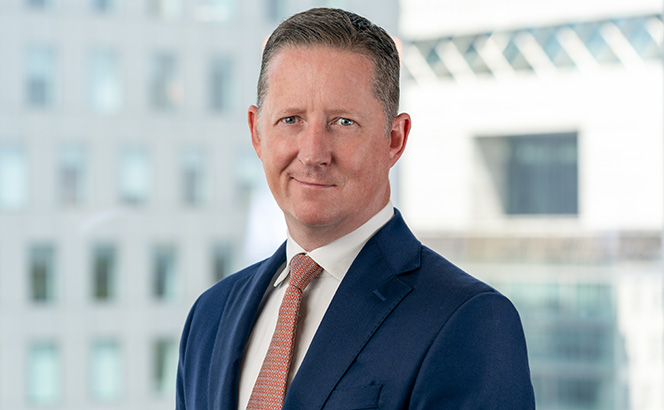
That is something that is increasingly recognised by senior lawyers too. ‘The reality is we all message more than we used to,’ observes Norton Rose Fulbright EMEA chair Farmida Bi (pictured). ‘That’s just how business has evolved.’

While acknowledging an ‘evolving etiquette’ around communications, McDonald encourages young lawyers to expect the unexpected – and build their skills to deal with such situations.

Millennials and Gen Z lawyers often feel unsettled when their phone rings unexpectedly, which is a shift from what’s familiar to my generation and the one before.

‘This reaction seems to stem from a strong desire for control. I would advise them to embrace a bit more flexibility and develop strategies for handling impromptu communications,’ he says. ‘While it’s important to manage how and when you engage, it’s also crucial to have the skillset to handle unexpected calls when necessary.

‘As a service provider, you won’t always have control over communication. It’s important to be adaptable and ready to handle situations as they arise.

Paul Hastings disputes partner Oliver Browne also notes the appeal of communication channels that offer scope for more considered interactions.

‘People aren’t as accustomed to instant dialogue anymore, because messaging provides a degree of control. But we need to recognise that we can’t go all the way – people can’t simply stop speaking to each other altogether.’

‘Text-based communication can often lead to misunderstandings – tone and meaning can get lost in translation’ – Oliver Browne

As a litigator, Browne also points to the critical importance of communication skills in dispute resolution: ‘Whether through arbitration or the courts, a great deal of emphasis is still placed on oral advocacy. The same applies to mediations and face-to-face negotiations. At some point, you have to engage in direct conversation – you can’t fully participate in these processes if you retreat into a world of text-only communication.’

Having said that, Browne is pragmatic about the realities of how day-to-day communication has changed. ‘I rarely call someone without giving them a heads-up first,’ he says. ‘Historically, when a phone rang, it was like saying, “Talk to me now, I don’t care what you’re doing.” People are more cautious about interrupting others these days.’

‘From the litigation perspective, what we are starting to see is the rise of multiple messaging formats being used – simultaneously.’, he adds. ‘A mixture of WhatsApp, text messages, and other text-only formats are increasingly being used as replacements for telephone calls.’

Bi argues there will always be a place for impromptu communication: ‘I don’t think we’ve lost spontaneous communication – there’s just more of a mix these days. As lawyers, it would be difficult to operate without spontaneous conversations; much of the work we do relies on it.’

She adds: ‘If I thought people weren’t communicating at all, I would be worried, but that’s not what I see. Even if it’s not all in person, there’s still a lot of talking going on.’

Muscle memory

So how can firms ensure their junior lawyers are developing their ‘on your feet’ communication skills, when spontaneous in-person interactions are much more rare?

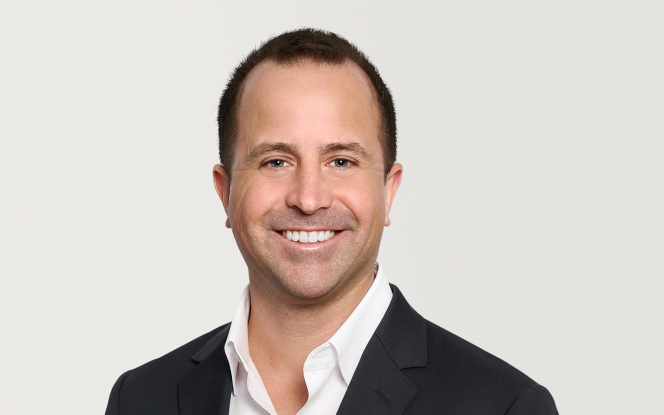
For McDonald (pictured), training is key to ensuring these interpersonal skills are developed. ‘Handling impromptu requests is an important skill for service providers, and it’s beneficial to practice it. It’s essential for making people feel comfortable reaching out to you.’ He continues: ‘It’s a skill like a muscle – initially, it might feel uncomfortable, but with continued practice, it becomes easier, and you enhance your capability as a helpful professional.’

Browne notes that many firms now offer soft skills training to help junior lawyers develop networking skills, understand call etiquette, and refine their ability to engage in direct conversation – skills that ‘can no longer be taken for granted.’

Bi agrees: ‘Soft skills training is essential now. With less time in the office, young lawyers see less of the office etiquette and behaviour they need to model. Training can help to bridge that gap.’

Social skills, social mobility

Supporting lawyers to develop their communication skills – and also recognising that not everyone comes into a legal career with perfectly honed Oxbridge debating club chops – is of increasing importance for firms keen to position themselves as progressive employers; as Geale points out, there is ‘an inclusivity aspect to consider’.

‘For individuals who are neurodivergent or struggle with anxiety, there may be valid reasons why they won’t pick up the phone if it rings unexpectedly,’ she notes. ‘It all ties back to respecting different ways of working and acknowledging diverse work patterns. From a productivity standpoint, it’s about finding routines that work for you. Research shows that if you’re distracted, it can take an average of 23 minutes to regain focus.’

Nelson-Case also references the growing acknowledgment among law firms of the value of supporting diverse personality types.

‘Considering ways of working is high on the agenda for many law firms right now, particularly around attracting and retaining Gen Z talent,’ he says. ‘There’s a strong focus on wellbeing and ensuring the organisation is a people-centered place to work. Whether from a wellbeing, DE&I, or ESG perspective, firms are feeling the pressure to address these areas.’

‘An unexpected phone call can create a sense of anxiety due to its unpredictable nature’ – Henry Nelson-Case

Bi concurs on the inclusivity aspect: ‘Driving social mobility is important to all of us. Not everyone joining a firm like ours will have family members who worked in City firms, so being clear about expectations and best practices – especially for phone calls – creates a level playing field for everyone.’

McDonald agrees, noting that stress around real-time communication could signal deeper issues. ‘If receiving a call, even knowing you don’t need to respond immediately, causes significant stress, it might indicate a broader issue, such as clinical anxiety.’

Jakub Luczak, who secured a training contract at Shoosmiths while working as a client administrator at the firm, recently served as chair of the firm’s Mental Health and Wellbeing Champions network, a role which offered him particular insight into the issues for senior professionals to be aware of. ‘A good manager should seek to understand underlying factors including neurodivergence, disabilities, and personal working styles,’ he says. ‘Providing appropriate support is crucial – ensuring individuals don’t feel pressured to conform to a working style that doesn’t suit them as an individual.’

For Nelson-Case, clarity is essential: ‘If there’s a way of working that suits you, we need to be able to communicate that. In an organisation that truly supports its individuals and wants its talent to succeed, it should be listening and ensuring the environment is set up for people to thrive.’

Get with the times

Ultimately, the old school will have to move with the times, and in today’s tech-driven world, they will likely not have a choice.

‘As working patterns and tools evolve, the way we work needs to align and evolve with that too,’ says Nelson-Case. ‘Clients of these firms are creating and using new technologies, and they’ll expect their firm to do the same — keeping up with the times and embracing change,’ he continued.

Geale argues that the ‘do as I say’ approach is increasingly outdated. ‘Many senior professionals are reluctant to engage with new technologies, yet younger generations are left wondering how success can be sustained without them.’

But despite the cliches of a professional tethered to the past, as Browne notes, most law firms are alive to the need for change. ‘By and large, we are an adaptable profession. The shift toward text and message-based communication, along with the occasional video call, shows how people are adjusting to modern life. However, there needs to be recognition of the importance of maintaining interpersonal skills.’

And as Bi concludes: ‘Younger people entering the firm communicate differently, and I don’t think the answer is to make them revert to what we used to do. The reality is we all have to adapt – and that’s a good thing.’

[email protected]

Revolving Doors: Hogan Lovells and Linklaters boost competition as Simpson Thacher snaps up US funds quartet

City of London

Prompted by the ongoing increase in class action claims, Hogan Lovells has strengthened its highly regarded competition litigation team with the addition of Andrew Leitch and Ed Coulson, a Legal 500-leading partner in competition litigation, both joining from BCLP.

Continue reading “Revolving Doors: Hogan Lovells and Linklaters boost competition as Simpson Thacher snaps up US funds quartet”

From farms to the FIG regime: top tax lawyers size up Labour’s first half-year

Back in the summer of 2024, a history-making election victory handed the new Labour government a strong mandate for change.

However, delivering on popular yet expensive new policies – such as an above-inflation pay rise for public sector workers and an ambitious capital investment agenda – was subsequently complicated by the discovery of a £22bn ‘black hole’ in public finances.

As such, the Autumn Budget came with changes which have left many individuals and businesses feeling worse off – though others are spying new opportunities.

Continue reading “From farms to the FIG regime: top tax lawyers size up Labour’s first half-year”

From bellwether to perfect storm: can Travers pull through choppy waters?

‘It keeps me fully occupied, 24 hours a day. I do sleep, obviously, but I’m dreaming about stuff that I might want to do the next day.’

Edmund Reed, Travers Smith’s recently reappointed managing partner, describes the all-encompassing nature of his role with a smile. He is on a mission to demonstrate that his zest for the job remains undiminished after three and a half years navigating a challenging period for Travers, punctuated by some indifferent financial results and large swathes of partner departures.

Continue reading “From bellwether to perfect storm: can Travers pull through choppy waters?”

Revolving Doors: Clifford Chance, Akin and Dechert bolster PE and finance teams in the City

Leading the leading lateral moves this week, Cadwalader has hired a trio of fund finance partners to its London office. Bronwen Jones arrives from Reed Smith, where she spent six years following two decades at Macfarlanes. She is joined by Douglas Murning and Matthew Worth, both joining from Ashurst.

Continue reading “Revolving Doors: Clifford Chance, Akin and Dechert bolster PE and finance teams in the City”

‘I’m going to continue using my voice’ – Irwin Mitchell’s Alison Eddy on her new D&I role

After stepping down as London managing partner following more than 12 years in the role, Alison Eddy – who won the Women in Law Lifetime Achievement Award at last year’s Legal 500 UK ESG Awards 2025 – has taken up a new role as the firm’s partner ambassador for inclusion.

She sat down with Legal Business to talk about her career, D&I, how much progress has been made, and how much still needs to be done.

In 1995 I was approached by Irwin Mitchell to help set up their London office. I was already doing medical negligence work. I got into it because trade unions offered their members free legal advice, and increasingly enquiries were coming in about medical negligence. I handled that, one of the other partners that I joined with did all the employment work, and the third did personal injury work. It wasn’t easy. I had five children aged between three and eleven, and there was no flexible working. Nobody talked about wellbeing, work life balance or diversity and inclusion. We went from the three of us in that office to now 450 people, with 60 partners.

Twelve years ago I was appointed London managing partner. I was the first female managing partner at the firm. We’ve got 23 offices nationally now, with ten regional lead partners looking after all those offices, and over 50% of those partners are women.

‘I had five children aged between three and eleven, and there was no flexible working’

In 2008, I helped set up the diversity and inclusion board. Of course, everyone’s got a D&I board now, but not many firms did back then. Some of us started saying we needed to be doing better at getting women into senior roles and attracting lawyers with diverse characteristics. Senior leaders bought into that. It’s impossible to make change unless senior leaders are committed to it. And the firm remains committed today – all seven of the networking groups we set up are still going.

We started out looking at the barriers for women. We looked at unconscious bias, lack of role models, all of that. One issue is in recruitment, obviously, and another is retention and promotion. What is it that prevents women from staying with the business as they move through their careers? One big issue is support for families, and we’ve been very good on family friendly policies. We’ve seen some really impressive results. 54% of our partners are women, 67% of our recent full equity promotions went to women, and we have one of the lowest gender pay gaps.

‘I see a danger in having too many silos – it risks being more exclusive than inclusive’

This is really about gender balance though – it’s no good having whole areas of the business that are all one gender. We have one of the lowest gender pay gaps in the legal sector, but the problem we have is that our admin roles, paralegals, apprentices, and PAs are predominantly women, and those are the lower-paid roles. We need to look at these roles and say, “Why aren’t we attracting more men?

People talk about intersectionality a lot more, and it’s obviously a good thing. I see a danger in having too many silos. I know of some businesses that have a group for everything – where we have IM Respect, our group for race and faith, other firms might have separate groups for Muslims, Hindus or Jews. I understand why, but it risks being more exclusive than inclusive.

People ask: “Why is diversity important?” There’s a social and business impact. It’s clearly the right thing to do, but there are also lots of business reasons – you get more perspectives on what you’re doing, you can better connect to a broad range of clients, and you’re more open to ideas and innovation.

If you have self-belief and work hard, you can succeed – you just need a bit of luck. Social mobility is one of the biggest issues for the legal sector. Schools and families need to enable children to have big dreams. Obviously not all kids are going to be suited to all careers, but an awful lot can happen with hard work, if you really want to do it. To that end, we do a lot of work with children and in schools, including with an organisation called Prime, to provide opportunities to those who may not otherwise have them. We also partner with the National Literacy Trust. Literacy is everything. Your life chances are incredibly enhanced if you have good literacy at a very early age.

‘Why is diversity important? It’s clearly the right thing to do but there are lots of business reasons too’

We as a profession have made an enormous amount of progress. Coming back to gender, for example: we celebrated the first 100 years of women in law in 2019. But actually, this progress didn’t happen over 100 years – most of it was in the last 30 years, and an awful lot of it has been in the last ten years.

I don’t sense any anti-D&I backlash at all. Nobody at UK law firms is questioning whether we should still have D&I boards or networking groups. Of course, there is this anti-woke thing going on in the wider culture. I really hate to see that. It’s all become weaponized, when it should just be about increasing social justice, about more equality and more humanity.

Although I have a new title, a lot of what I do hasn’t changed. I’ve always been out there talking about diversity, working within the firm and with other organisations to promote the cause. A senior person in the business having this role shows Irwin Mitchell’s commitment to fostering an inclusive culture and sharing ideas on how to have a more equitable legal profession.

The shortlist for the Legal 500 ESG Awards 2025 is out now – all the details of this year’s nominees, as well as how to attend, are available on the event website.

[email protected]

Client favourites: ranking the most highly recommended LB100 firms

New research drawing on the views of almost 80,000 law firm clients has revealed the LB100 firms that are most highly recommended by those using them, with Travers Smith, Lewis Silkin and Sacker & Partners among the top performers.

The findings are based on answers to a single question posed to Legal 500 referees as part of the research process for the annual L500 rankings – “on a scale of 0–10, how likely are you to recommend this firm?”

Of the hundreds of thousands of responses to this question, the firms ranked in the LB100 generated more than 77,000 responses, enabling the Legal 500 to re-rank them by a new Net Promoter Score (NPS) benchmark, a market research metric used to quantify client satisfaction.

NPS is calculated by taking the percentage of ‘promoters’ (respondents that score firms nine or 10) and subtracting the percentage of ‘detractors’ (those scoring firms six or less).

Looking at these NPS scores, the highest scoring firm in the LB100 is specialist pensions boutique Sacker & Partners with 82.9%, just ahead of Leigh Day (81.8%) and Scots firm Shepherd and Wedderburn (81.3%). 

The top five is rounded out by Wiggin (80.5%) and Lewis Silkin (80.2%), just ahead of the highest scoring top 50 firm – Travers Smith, on 80%. At the opposite end of the scale, the lowest scoring firm received an NPS score of just 46.9%.

Sackers senior partner David Saunders told Legal Business: ‘We are proud to top these rankings and immensely grateful to our clients for putting their trust in us. This demonstrates the continuing appeal of our specialist model and the strength of our deep bench of talented lawyers who combine technical expertise with a real understanding of wider market developments.’

Lewis Silkin joint managing partner Jo Farmer struck a similar note. ‘We think of our clients as part of our team – and think of ourselves as being part of theirs. We’re delighted to see that this approach is working well.’

Broader horizons: the top scoring international firms

Breaking down the LB100 into sub-groups of their closest peers offers insight into how similar firms stack up against each other.

Slaughter and May has emerged the highest scoring firm among the magic circle, with 79%, reflecting its position as the highest scoring UK firm for NPS in the Global 100, ahead of Linklaters and Clifford Chance.

Looking across all of the international firms within the LB100, the top-scoring firm is Bird & Bird on 79.1%, just ahead of HFW (78.2%) and Simmons & Simmons on 76.9%.

!function(e,n,i,s){var d=”InfogramEmbeds”;var o=e.getElementsByTagName(n)[0];if(window[d]&&window[d].initialized)window[d].process&&window[d].process();else if(!e.getElementById(i)){var r=e.createElement(n);r.async=1,r.id=i,r.src=s,o.parentNode.insertBefore(r,o)}}(document,”script”,”infogram-async”,”https://e.infogram.com/js/dist/embed-loader-min.js”);

Bird & Bird London head Phil Sherrell told Legal Business that the results offer independent verification of the firm’s own client satisfaction research.

‘The feedback chimes with the results of our own recent client listening programme, in which our clients emphasised the quality and consistency of our advice and service, as well as the business relationships that we form with them, as particular strengths.’

‘We’re really delighted that our clients have had such positive experiences working with Bird & Bird and are particularly proud to be ranked as the best performing international law firm. In the end though, it all comes back to people; our lawyers are curious, collegiate and commercial in the advice they give, and we think that’s why our clients love working with them.’

Under one roof – London firms stand out

Breaking down the scores by firm type, London-only firms have the highest average score, with 75%.

This puts the group ahead of international firms (with an average of 72.3%) and national and regional firms, which average 71.3%. According to Saunders, this result reflects the more joined-up service on offer at firms operating from just one office.

‘One of the key advantages of all being together under one roof is our strong and inclusive culture which allows us to share knowledge effectively and really tailor our service to meet our clients’ needs.’

The benefits of a closely-knit, single-office team are also cited by Travers managing partner Edmund Reed. ‘Our people enjoy working together across specialisms, with clients whose business they know very well,’ he says. ‘That gives our clients one extra important ingredient – our teams tend to know one another personally, and so we genuinely care about getting to the best solution for them.’

!function(e,n,i,s){var d=”InfogramEmbeds”;var o=e.getElementsByTagName(n)[0];if(window[d]&&window[d].initialized)window[d].process&&window[d].process();else if(!e.getElementById(i)){var r=e.createElement(n);r.async=1,r.id=i,r.src=s,o.parentNode.insertBefore(r,o)}}(document,”script”,”infogram-async”,”https://e.infogram.com/js/dist/embed-loader-min.js”);

‘Fresh perspectives’ – Gibson Dunn’s new London co-heads set out City plans

‘It’s exciting for people joining the firm because there is plenty of growth potential,’ says Rob Carr, one of the newly appointed co-partners in charge at Gibson Dunn in London, as he sits down with fellow office head Osma Hudda for their first interview since taking on their new roles.  Continue reading “‘Fresh perspectives’ – Gibson Dunn’s new London co-heads set out City plans”

International roundup: Reed Smith debuts in Atlanta with 15-partner team while Broadfield enters Hong Kong with Sidley trio

Reed Smith has opened a new office in Atlanta with a 15-partner team from Morris, Manning & Martin (MMM) and Greenberg Traurig. The new office will open with 37 lawyers in total, with the partners comprising 13 from Atlanta firm MMM and two Greenberg shareholders.

Continue reading “International roundup: Reed Smith debuts in Atlanta with 15-partner team while Broadfield enters Hong Kong with Sidley trio”