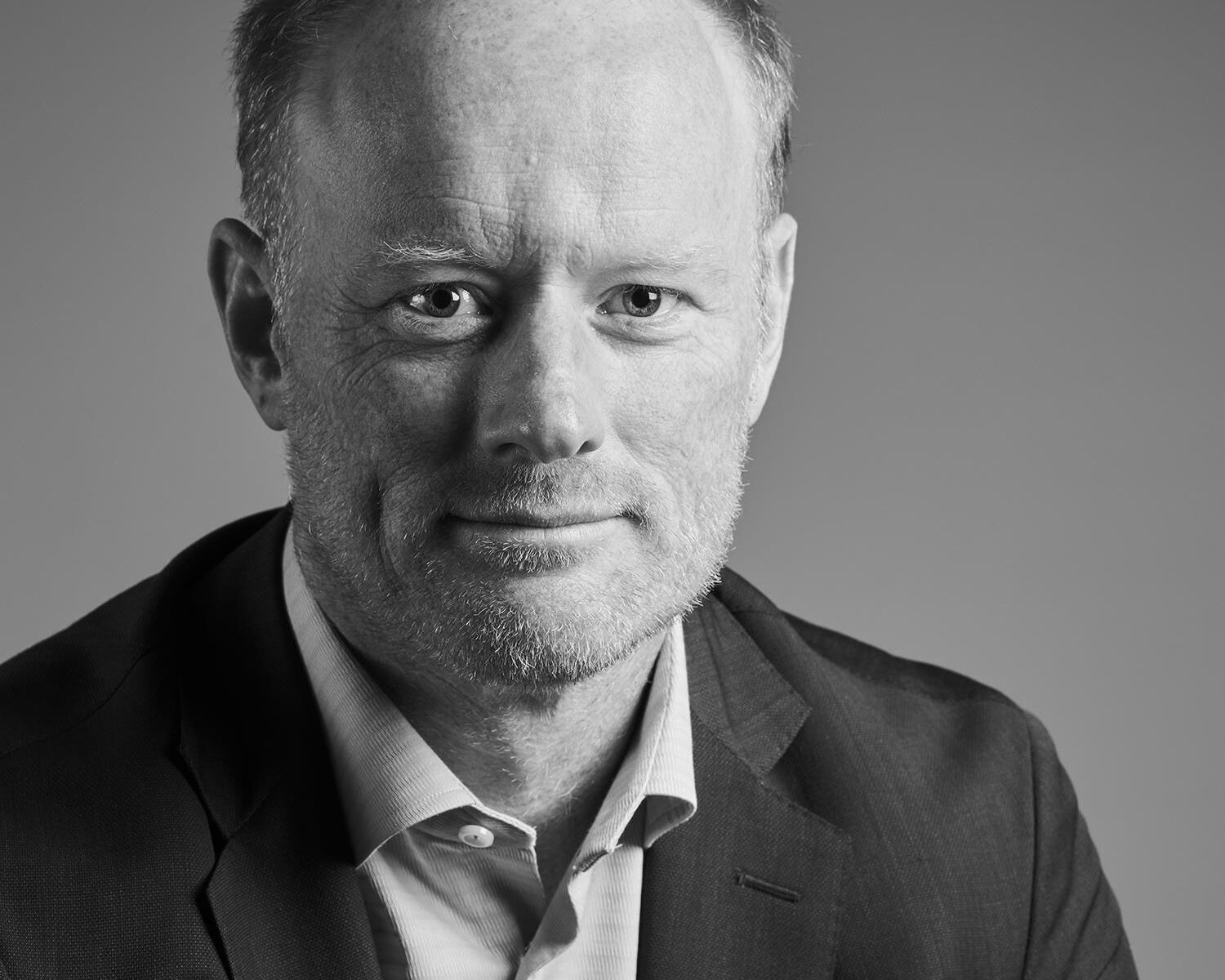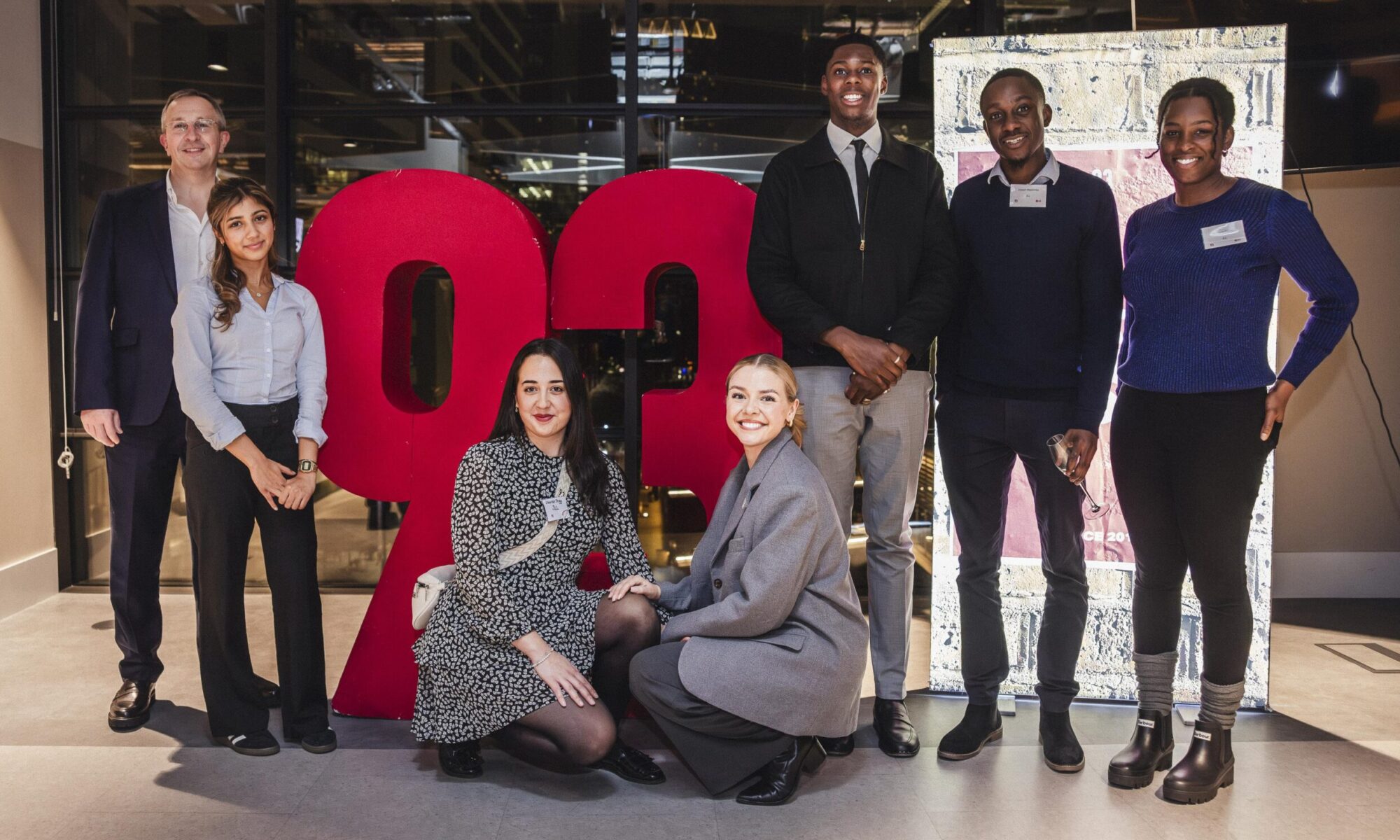
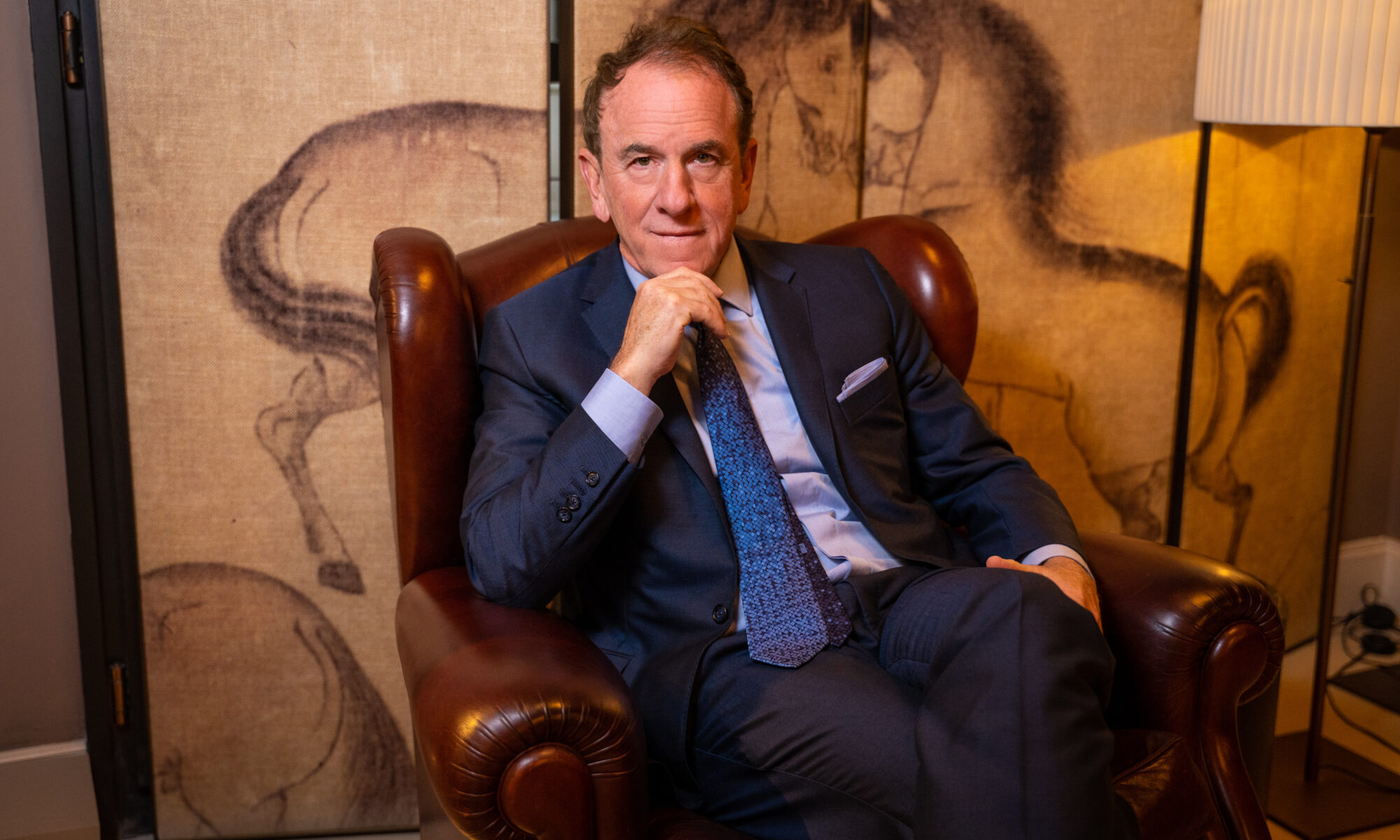
I actually considered joining the navy. I went down to the recruiter’s office in Claremont, California, the college town where I was living. This was when the Sixth Fleet of the US Navy was based in Piraeus. I was infatuated with all things Greek, and I was very keen to get to Greece. I told them if they could promise me I’d be based in Athens, I’d join. But they couldn’t guarantee that, so that’s as far as that got. There were a lot of lawyers in my family, so I always had it in the back of my head that law might be an option.
I always thought I’d like to be a litigator. When I was at Cravath in New York, they really needed corporate associates, so they talked me into it. I found that a very valuable experience. But I had a young child, and I didn’t really understand how people raised families in New York. Obviously they do, but that’s not what I was used to; I’m from Utah – wide open spaces and mountains. And I’d enjoyed my time in Los Angeles, where I had gone to college. So after two and a half years I moved back there to join a very small firm that has long since disappeared, with a Cravath alumnus, a guy named Bob Baker, who I’d been told was a really good lawyer.
After two or three months, Bob said, ‘Why don’t you and I start our own firm?’ At that point I was three years out of law school. We set up a firm called Baker & Quinn. It didn’t really work out. Although Bob was an outstanding lawyer, he wasn’t much of a marketer. And I was three years out of law school, and new in LA – I didn’t know anybody! We didn’t have enough work.
We developed a relationship with a smaller firm in Midtown New York, and when our firm didn’t work out I opened an office for them in LA. Over the course of a couple years I built that up, but it turned out the home office in New York didn’t generate much work for us. It was develop work, or starve – so we built a practice. It got to the point where there was no economic justification for the linkage with the firm in New York, and, on 1 January 1986, four of us left and started the firm that is now known as Quinn Emanuel.
‘People said to us, “You should open an office in London, because English gentlemen won’t sue banks”’
We never had the goal of trying to establish an international multi-office firm. That’s a different proposition altogether. It’s very different to set up a four-lawyer office in Los Angeles that’s prepared to take on anything to keep the wolf from the door. I’m sure you can establish that kind of startup firm. There’s plenty of room for it in the marketplace, if you’re prepared to work really, really hard, to do good work, and to be relatively inexpensive, which was our recipe at the time.
Why isn’t there another global litigation-only firm that’s been as successful as us? It’s a mystery to me. It’s always kind of astounded me. For us, it’s been such an obviously good business model.
The challenge all the full-service firms face is, how do they distinguish themselves? They all offer basically the same practice areas, and their message to the marketplace has to be, ‘We can do this, we can do that, we can do all of it, and we’re great at all of it.’ They’re all saying the same thing. In that type of market, it’s very hard to distinguish yourself. Whereas our message has always been very clear: ‘We only do one thing, and we’re the best at that.’ We’ve always been opportunistic. We didn’t have any preconceptions of what a law firm should look like.
If you’re a full-service firm, you can’t afford to be adverse to certain type of clients. We decided over 20 years ago that we wouldn’t represent any of the world’s major money centre banks. None of the major full-service firms would take cases adverse to those institutions, because they have transactional departments that very much want to do deals for those clients. Those firms are not in a million years going to sue the Goldman Sachs of the world. If you had a claim against one of those institutions, you often had a hard time finding a firm that had the expertise, the skill, the depth and the horsepower to take on the case. We made a deliberate decision to meet that need.
We were adverse to all those banks after 2008. We recovered over $50bn, and developed a lot of credibility. That was the genesis of our opening in London. People said to us, ‘You should open an office in London, because English gentlemen won’t sue banks.’
After we’d heard that a few times, Bill Urquhart, who has now sadly passed away, said that we should maybe look into that. And so we made trips over here, walking the streets of London. We thought: ‘This isn’t going to be hard. They speak English, they use common law, they use words like trial and disclosure.’ We thought, in our innocence, that we understood the marketplace. It took me a couple of years to realise I really didn’t have a clue. The legal culture is so different. We had the great good fortune to recruit Richard East and Sue Prevezer, then QC, now KC. And they built the office into the success it is today.
‘Amazon would hire us in a heartbeat if they could, they’d love to conflict us out. But you reach a fork in the road and you have to decide’
In our business, you need adversaries. We represent Google, Qualcomm, NVIDIA, Salesforce, and Samsung. We’re adverse to Apple, Amazon, Microsoft, and Facebook. Those are some pretty good adversaries. There are a lot of people who are unhappy with those folks. It’s a business decision – Amazon would hire us in a heartbeat if they could, they’d love to conflict us out. But you reach a fork in the road and you have to decide.
We did some work for Apple many years ago – we were engaged by a special committee of the board to run an investigation into backdating stock options. We delivered a report that basically exonerated Steve Jobs, and the folks at Apple said nice things about us. But at the same time, even as the investigation was going on, we were being approached by people asking whether we would take a case that’s adverse to Apple. By the time the investigation wound up, we had to make a decision, and we decided to be adverse to them.
Private ownership and investment in law firms is inevitable. There’s just too much revenue to be made. The opportunity is too good. The US has been slower than the UK and Australia in loosening the rules to enable that. But what we see in Arizona [non-lawyers being allowed to own law firms] is inevitable, and the Utah legislature is considering similar reforms. There’s no good reason why you shouldn’t have private investment in legal practices.
‘The full-service firms all say the same thing. Our message has always been very clear – we only do one thing, and we’re the best at that’
While litigation funding has been around for a long time now, and has sort of come into the mainstream, it’s still a relatively inefficient marketplace. The funders are more sophisticated than the law firms are, or even, God forbid, the clients, when it comes to understanding how to price those cases. It always amazes me how much demand there is. You can talk to any kind of fund – private equity, bond funds, you name it – they want to talk about litigation funding. It surprises me, because I feel I just don’t see that many great cases. But there must be a reason all that money is chasing claims. Part of the appeal is that asset managers are always looking for investments that are uncorrelated to the business cycle. And the track record, by and large, is pretty good.
The degree to which AI will make associates obsolete is vastly exaggerated. It’s going to have an impact one day, but I don’t even see the beginnings of that impact on the fundamental structure of firms. We’ve known for a decade that AI is better than diagnostic radiologists at reading film, X-rays, CT scans, MRIs. We’re still graduating radiologists – AI has just made them more efficient. They do a better job and they do it cheaper. The same thing will be true of law firms. There’s so much inertia. There’s too much economic reason for the status quo.
The firm is an unfinished project. It’s not about what you’ve done in the past. We’re still moving. We’re very focused on the Middle East and Southeast Asia, in particular Singapore. The world is a big place, and there are always new legal issues. Whatever laurels we have, there’s no place for resting on them.
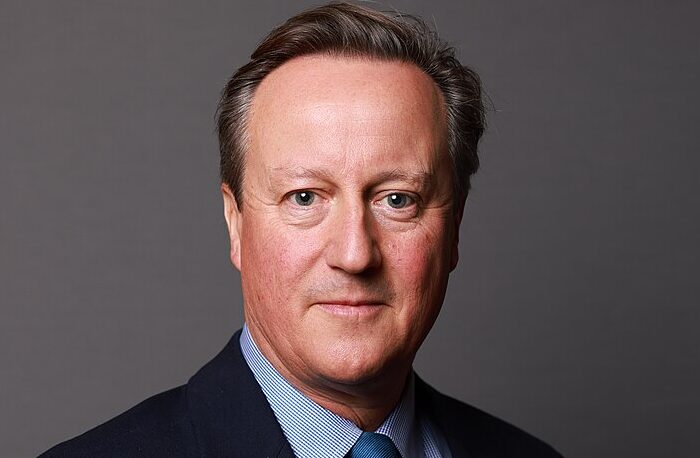

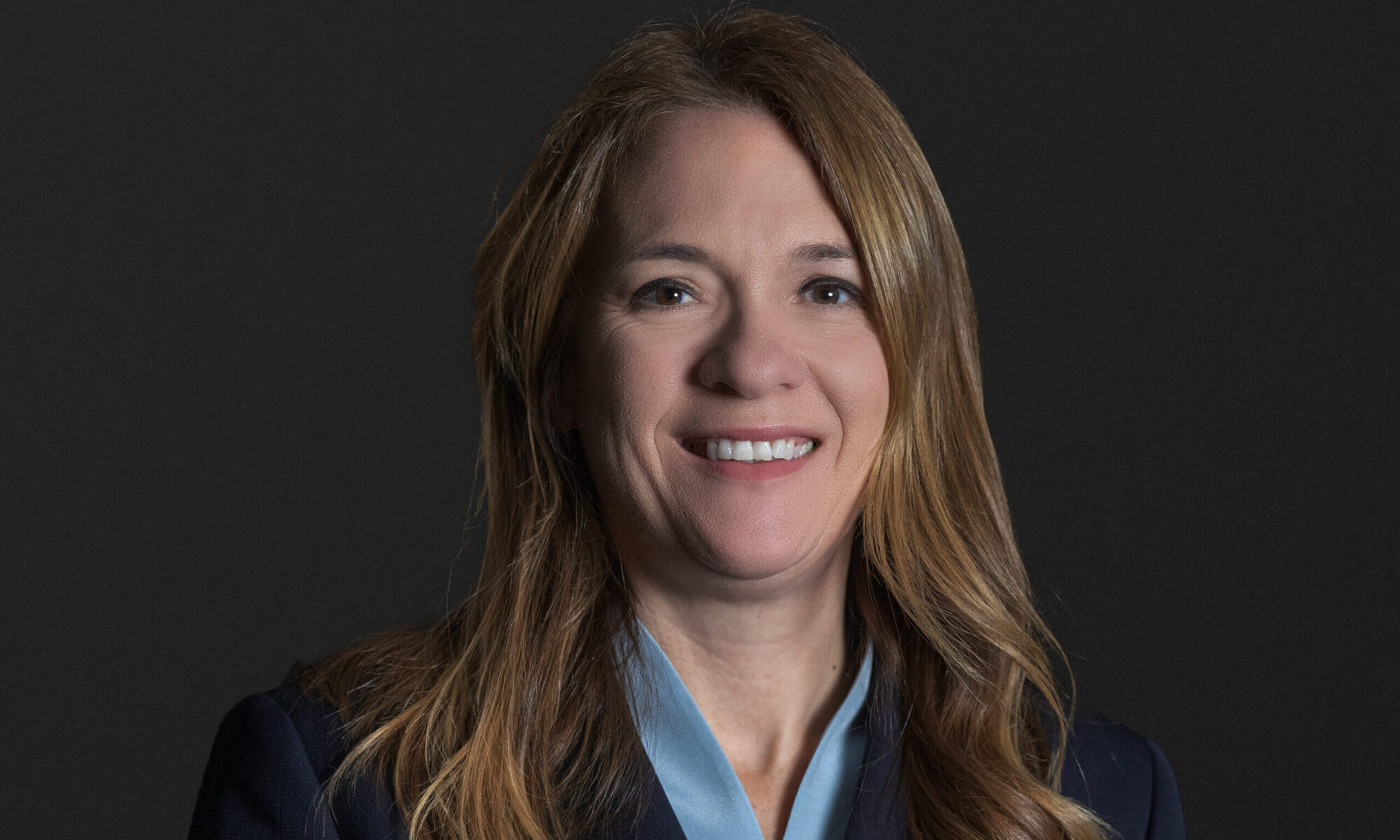
 ‘The growth has been tremendous, and we’re very proud of it’, said Meg Catalano (pictured), who last November became Kennedy’s first global managing partner based outside of the UK.
 ‘My taking the role of global managing partner, as someone from outside the UK, was a reflection of our strategy and vision’, said Catalano. ‘We’re not just a UK firm any more.’







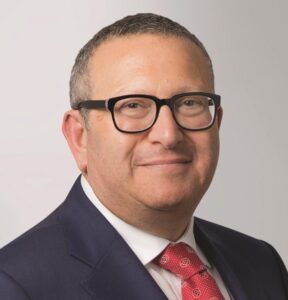




 Barbara Zapisetskaya, principal counsel (technology) at the European Bank for Reconstruction and Development (pictured right), also underlined the need for clarity when defining who has responsibility for driving AI adoption and implementing AI strategy, as opposed to the people responsible for ensuring AI use adheres to governance frameworks.
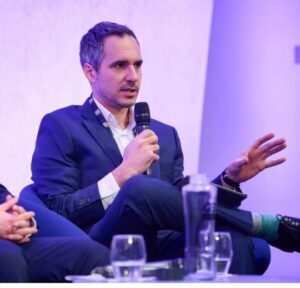
 In terms of the future direction of travel, Fountain Court barrister Jacob Turner (pictured right) – the author of Robot Rules: Regulating Artificial Intelligence – highlighted recent statements from Chancellor of the Exchequer Rachel Reeves and Prime Minister Sir Keir Starmer emphasising economic growth in discussions with regulators, and asked whether this implied a tension between regulatory scrutiny and productivity, while also noting that the strength of the heavily regulated financial industry shows that high regulation does not have to be synonymous with low growth.
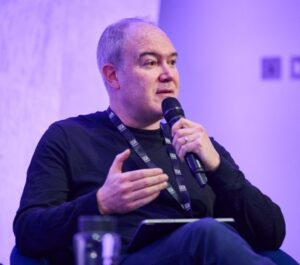 Matthew Wilson, chief legal officer at Fremantle (pictured right) pointed out that as AI’s impact is constantly evolving, lawyers are well-positioned within businesses to help navigate its uncertainties, including regulatory changes and ethical concerns. Alluding to the wider role that lawyers can and should play, he said: ‘If AI is, in the short term, going to replace 50% or more of what your lawyers are doing today, you probably aren’t set up right, and are not getting the right value from the team.’