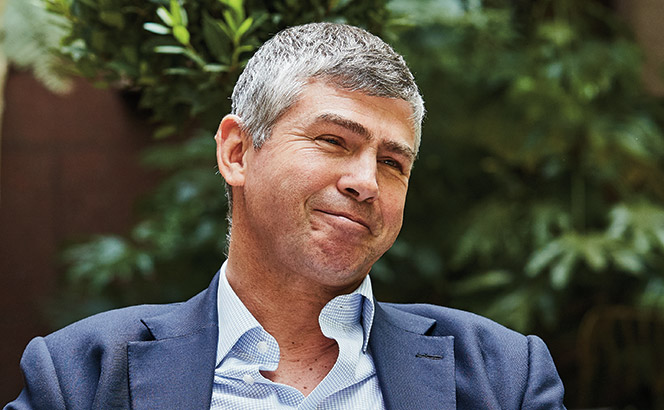
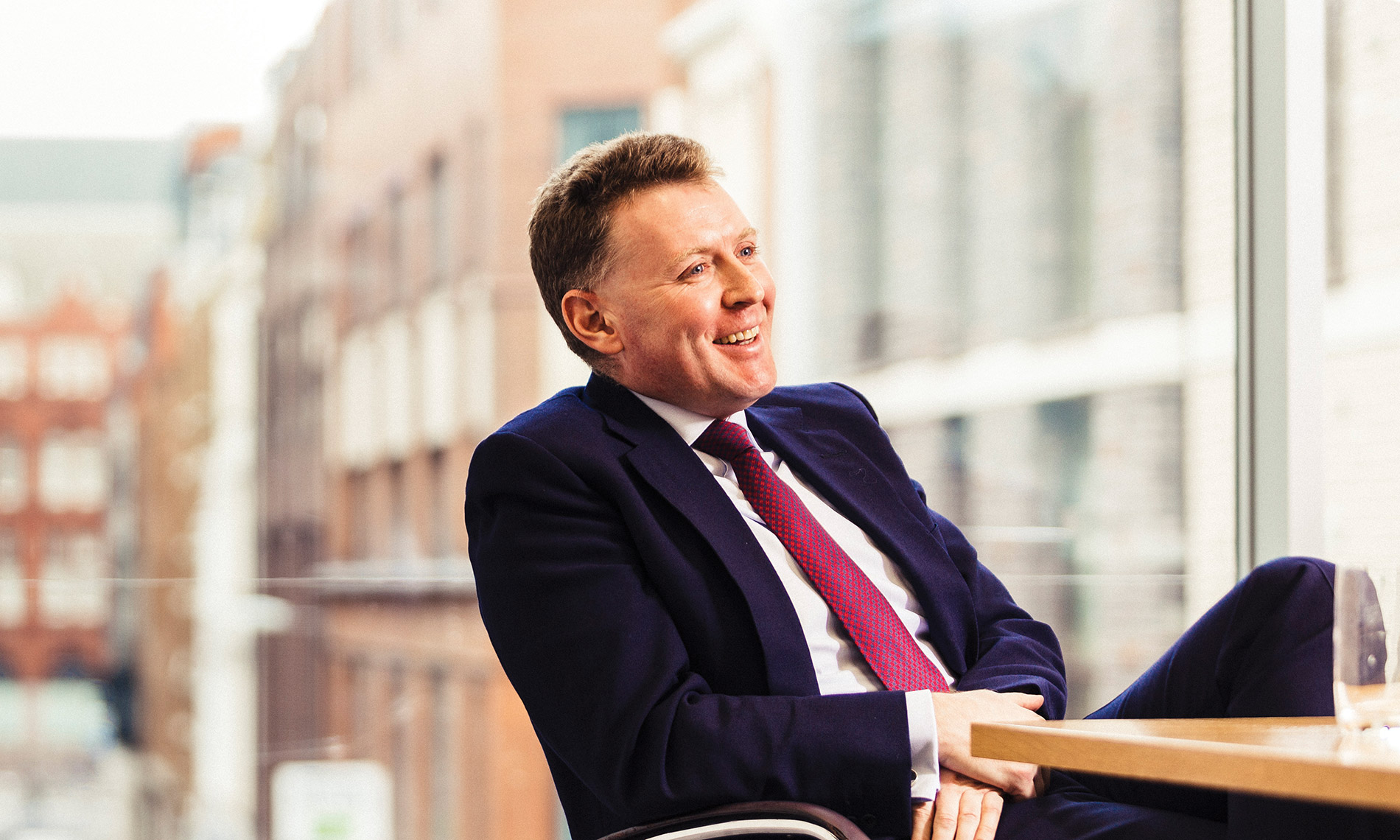
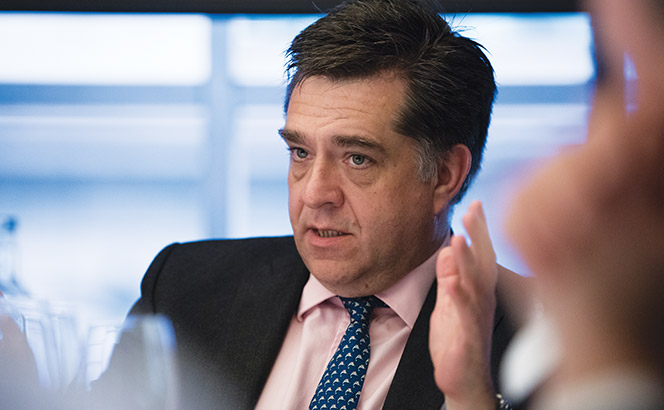
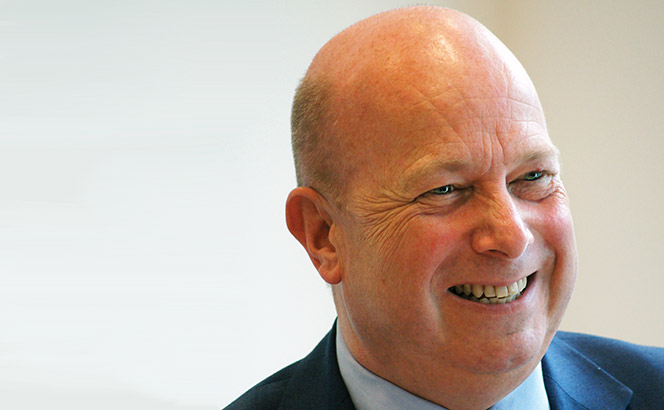
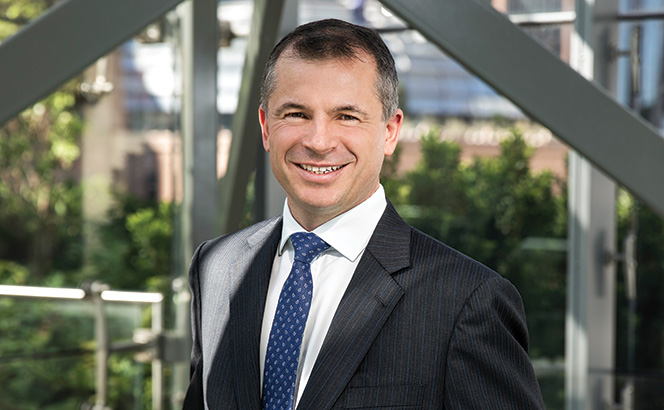
Luis-Xavier Hernández | General Counsel, Data, Privacy & Digital | Unilever

For GCs, the very first question you need to ask yourself is how much of a diverse and inclusive mindset you have as a leader. Only then can you successfully analyse how diverse and inclusive your current team is, both with respect to hard numbers but also in terms of its culture.

Luckily, I work for a company that is perhaps one of the most diverse in the world. This helps tremendously when looking at the composition of teams, but most importantly at the culture of the organization.

Diversity and Inclusion brings more value than most people think. Companies with successful D&I cultures grow faster, stronger and more sustainably. D&I attracts the best talent, it provides a much stronger management base that takes into account a more robust view of business, society, customers and consumers, and it allows you to contribute to positive change in society.  At the end of the day, we are here to leave a better place for the next generation. Embracing diversity and being inclusive will certainly contribute to that.

Luis-Xavier Hernández | Unilever

Deploying D&I policies on a global scale is one of the biggest challenges for any type of global corporation, particularly one with a footprint like Unilever’s. We have to understand that a diversity and inclusion agenda means respecting different cultures in different parts of the world. It is hard to come up with a rigid approach to certain metrics that may have varying degrees of relevancy in different parts of the world. You have to really understand and cater for that, because the main reason for having a diversity and inclusion agenda is to make sure that every individual in the company has the exact same opportunity to succeed as anyone else. To do that, you need to cater for realities and cultures in different places.

From my perspective, values rest on universal principles that should apply everywhere, like treating everyone in the organization with respect, providing equal opportunities no matter the gender, race, age, religion, sexual orientation or any personal beliefs.  Living and breathing these values makes us richer, stronger, and more united in every corner of our organization.

While it could be challenging to drive consistent metrics across regions with their own cultural characteristics and idiosyncrasies, I think the best way to reconcile that tension is to ensure that values are never compromised, no matter the circumstances.  That to me is a must and reflects the culture of your organization.

Better business in the digital sphere

As head of Unilever’s legal team overseeing data privacy and digital, I frequently find myself balancing the value of certain data related propositions with the complexity and cost required to execute them in a legally compliant manner.  It always comes down to finding that reasonable balance. What I have found helpful is to start our assessments by asking the question ‘what is the purpose of collecting personal data, in this case related to diversity and inclusion?’ This data point will lead to other relevant questions about proportionality and transparency but understanding the purpose works an effective gate and it’s definitely a strong start.

Most large organization have stats and metrics to measure their diversity and inclusion efforts, but few people realize how complicated and sensitive it is to process such information. When it comes to diversity and inclusion, most personal data is considered sensitive personal information, and for a good reason. The potential harm to the individual is heightened compared to other types of personal data, and as such organizations need to think very carefully about how such data is collected, used, and protected. The stakes are high.

From a data privacy perspective, the rules governing what sort of data organizations are permitted to hold will only get tighter. The entire ecosystem, from individuals to regulators and lawmakers, is taking more interest in use and misuse of personal data. That means we need to be ahead of the game and think through how and why we collect information. But there is an even more important question to be considered. The question of ethics.

Transitioning from what is legally required to what is ethically expected is a challenging but powerful journey that I think all players in this space should consider. It’s not only the right thing to do but also what most stakeholders would expect in these times. .

Ultimately, we want to be compliant with data protection laws while helping advance our D&I agenda, do the right thing for our employees, for the company, and for the whole ecosystem of partners, suppliers, customers, and consumers. I want to make sure that any information we collect is strictly necessary to achieve the ultimate purpose of advancing our D&I agenda and do something that is aligned with our corporate values and high ethical standards, while protecting individual privacy rights.

I think data and digital professionals will continue to face the challenge of finding the right balance between supporting legitimate business initiatives and remaining in compliance with the spectrum of regulations on a country-by-country basis – including sometimes outdated regulations.

Unilever is one of the leaders in the brand safety movement, which concerns itself with ensuring that our brands are presented to consumers in safe environments and of course a key part of this effort is holding media outlets and agencies accountable for that. It’s not as simple as it sounds though,  mainly because the digital space is formed of so many different players that it has become a complex, non-linear ecosystem. However, I believe that  all players but in particular the most influential ones have a degree of social responsibility to improve the digital ecosystem in the interest of millions of viewers who consume media and as a consequence advertising.

I have the privilege to serve as a board member of the Better Business Bureau National Programs Inc, a globally recognized organization that fosters consumer trust in advertising which is the reference point in the United States with regards to self-regulation and many other globally relevant programs. The BBB National Programs is a great example of an organization that really has the consumer interests at its heart. It truly stands for transparency and fairness in advertising. As such there is very much similarity in values between Unilever and the BBB National Programs and that’s why I accepted the board role without hesitation.

It has been a great experience being part of BBB NP’s board, it has given me an invaluable platform from which I can contribute my experience and passion for certain topics and perhaps shape in some way or form the strategic agenda of the organization. It has also given me an external perspective of the market place, consumers, and companies in many different industries. As GC, I have learned that having an external perspective of the world and the industry where your company operates is an invaluable enabler of a diverse vision. It also energizes me to continue to drive positive change.

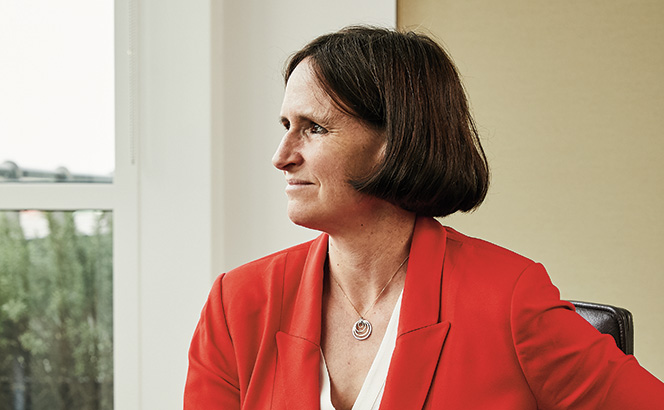
Anat Hakim | Senior VP, General Counsel and Secretary | Eli Lilly

Childhood in two cultures

I was born in Israel and my family moved to the United States when I was seven. I still have vivid memories of running in and out of bomb shelters during the 1973 Yom Kippur War. My father was drafted into the Israeli army and we didn’t see him for several months. My mom was pregnant with my brother and we moved in with my grandparents. Luckily, my dad survived the war and came home to us. My childhood was non-traditional in this way, and a few others, but in most other respects, it was a very happy one.

We came to the U.S. because my dad had the quintessential American dream. He used to draw outlines of America in the sand when we went to the beach in Israel and he was passionate in his belief that moving here would give him and his family a better chance at success.

We ended up in Skokie, Illinois, where I got my first taste of snow in the form of the blizzard of ’76. I didn’t know any English but picked it up and was fluent within a year. Though so many things were new and I often felt different in this new culture I was experiencing for the first time, I recall making friends and feeling accepted.

anat_hakim_eli_lilly
Anat Hakim | Eli Lilly

My parents worked their way up from the bottom. At first, we would spend many Saturdays picking through people’s garbage, for toys, furniture, whatever we could find that might be useful. For me, as a kid, it was fun and we often did it with one or two other families. I remember one time finding a game that someone had thrown out called “Don’t Spill the Beans,” which, to this day, I remember as one of my best Saturday finds!  We moved on from that life, when getting 50 cents to buy a treat from the neighbourhood ice cream truck was the highlight of my week, to a life that was ultimately more middle- to upper-middle-class, all through my parents’ sheer determination and hard work. That experience really set the stage for my own philosophy and approach to life.

Hard work and great mentors

When it comes to diversity and inclusion, one of the things that stands out in my mind is my parents. I was the only girl in the family, the oldest, with two younger brothers. My parents raised me to dream big and without any limitations or barriers. It was all wrapped up in the American dream: you’re here, you’ve got these talents, go for it. It never occurred to me that gender would or could be a barrier, so I had a lot of ambition and big aspirations.

While that is a great philosophy to instil in a young person, it does not mean there are no barriers. In my 27 years as a lawyer I don’t recall experiencing overt discrimination, but I always felt the need to be the hardest worker in the room to stand out.

Hard work alone isn’t enough, though, and I’ve also been really fortunate to find wonderful mentors—people like Arne Sorenson, now CEO of Marriott, and Sharon Barner, who is now general counsel of Cummins Inc. Sharon is one of those exceptional mentors who always supported and mentored women, and still does to this day. She was intentional about it; that, I learned, was key.

They and others at every firm and company where I’ve worked pushed me or pulled me along. And I know they helped me overcome bias of which I wasn’t always aware. Fast-forward to today, when, as a leader, I recognize the need to be intentional about helping and supporting others in their career journeys.

When you’re facing unconscious or conscious bias, hard work alone is not enough; you need people who are there advocating for you, helping you navigate. Leaders must make sure to be intentionally mindful of helping, supporting and recognising what the various people in your community and in your department need. I hope I can play the role for them that my mentors played for me—whether the people I’m advocating for are aware of my support or not.

Lessons in leadership

I like to read leadership and management books for fun; the subject has always fascinated me. Even so, I didn’t realize the true meaning of leadership until I went in-house. When I joined Abbott Laboratories in 2010, I was responsible for leading the patent litigation group globally. That was the first time I had a global team and really learned how to guide and empower others in their work. For me, a lot of what I did was (and still is) guided by instinct, but I also learned to develop and question my instincts by studying, listening to others, and watching what other leaders do well.

The most valuable skill of leadership that I learned is empathy. You don’t need power to be a leader. What marks you out as a strong leader is getting the right people in place who you trust and then handing power to them.  That’s when you get incredible results.

We have an incredibly diverse legal department at Lilly, and that type of empowering leadership tends to bring out the best in a diverse team. We encourage each person to bring their own experiences and skills to the table.

All the organizations where I’ve worked in-house, from Abbott to WellCare and now Lilly, have had strong representation among women and minority groups. It is something to be celebrated and it’s a continuous journey to progress on this front.

Even so, I have been struck by the exceptional and intentional commitment to diversity at Lilly, and the level of determination and focus starting at the very top of the organization.  It even struck me during my interviews for this job that people talked about bringing your whole self to work. That is something I have continued to strive for in the legal team.

Psychological safety

One of the first things I ask myself when I go to work somewhere is, ‘Is there a sense of psychological safety in this group?’ I am a big believer in creating a feeling of psychological safety within my teams. When you do that, people can be themselves—not only who they are now but who they’re becoming. They can disagree openly, and that leads to sharing. To me, psychological safety is reflected in a team that can openly disagree. That helps foster an environment where inclusion is a natural by-product because different viewpoints, experiences, and approaches are openly expressed. There is diversity of people’s experiences, people’s thoughts—and an atmosphere where everyone feels they can speak up. That’s how you get the best ideas and, ultimately, the best decisions.

When I reflect on what diversity brings to the table, I realize it’s about fostering a sense of inclusion. If you’re mindful of the fact that there is discrimination, that there is bias, and you’ve had to overcome it, you understand that you need to take concrete steps to build an inclusive culture, one that welcomes and supports differences. The result is a more creative, supportive and fun place to work.

Turning empathy into action

It’s been shown that companies with gender-diverse leadership deliver, on average, better financial performance than those with low numbers of women in senior positions. Lilly has been successful in boosting the number of women in leadership roles. Nearly half of our CEO’s leadership team is female.  Globally, women account for 50% of those in management roles globally, and our U.S. workforce is 29% minority group members.

Much of this progress stems from 2015, when Lilly began undertaking Employee Journeys—deep research into the lived experience of populations of Lilly employees. It involves a level of honesty and transparency you don’t often see in a major corporation.

We started with the Women’s Journey and have since used that experience and success to understand enablers and barriers for African Americans, Asians, Latinos and most recently LGBTQ employees. We’ve turned this understanding and empathy into action, so the organization can address unconscious biases to enable more career development opportunities for everyone. We have learned so much. We are just finishing up the fifth journey, for lesbian, gay, bisexual, transgender and queer employees.  This work has made a tremendous difference in our culture.

The Journeys represent a key element of Lilly’s approach to diversity and inclusion:  We treat it as a business challenge. Of course, D&I is about fairness, justice and so much more, but we don’t treat it as a “special case.”. We treat it as a business challenge that is as important as any other challenge the business may face.  And we’re transparent with our enterprise data.

How would you go about addressing a business challenge? You would be self-reflective, you would go out and benchmark, you would collect information, you would bring in the right stakeholders, you would invest in it. Those are all things we have done to improve D&I at Lilly. We are fortunate that our top leaders are consistently setting and stating publicly their expectations that we are going to have an inclusive culture, that we are going to hold leaders accountable, and that we will build inclusive and diverse teams.

In the legal department, we do a few other things that are unique to our team. We have partnered with Indianapolis area high school programs to strengthen diversity in the pipeline by exposing diverse students to the legal profession, and right now we’re looking at doing Lilly internships for law students. We also have some mentoring programmes for law firms and colleges, which helps us to empower earlier stage lawyers and law students and provide exposure to the opportunities that are available to them. We have also been holding fireside chats within the legal department, which give people on the team an opportunity to openly share their views on our culture and what aspects of it we can improve. We participate in pro bono activities and have also put our money where our mouth is, especially on the racial justice front. Lilly has committed over 25,000 employee volunteer hours and multiple internal initiatives over the next five years, and the Lilly Foundation has committed $25 million of community investment over the same time period. When we hire, we are mindful and intentional about considering a diverse pool of candidates – and ensuring a diverse panel of interviewers.

As General Counsel, I have a lot to live up to in meeting the D&I expectations of our leadership, but it is a thrilling challenge to take on. Diverse candidates bring strength to a team and people who have overcome adversity often make exceptionally strong leaders.

Reality bites as Mason Hayes posts 6% revenue drop in bellwether  for Irish  firms

Legal Business’ recent analysis of Ireland’s legal market warned against underestimating the resilience of the Irish, so Mason Hayes & Curran’s less-than-catastrophic 6% dip in turnover for a financial year defined by Covid-19 should come as little surprise.

Revenues at the full-service Irish firm fell to €80m as it acknowledged a substantial hit to both transactional and contentious workflows. In a statement, managing partner Declan Black (pictured) chalked up the fall in disputes work to ‘significantly reduced court hearings’. Overall however, he was ‘satisfied’ with the results and noted ‘professional services were comparatively insulated from the worst effects of the pandemic.’   Continue reading “Reality bites as Mason Hayes posts 6% revenue drop in bellwether  for Irish  firms”

Revolving Doors: International hires continue as firms increase Asia focus

Hong Kong illustration

Maintaining the international flavour of recent lateral hiring activity, Clifford Chance, Kirkland & Ellis, RPC and Reed Smith have all announced hires overseas this past week.

In Asia, G100 heavyweight Kirkland has strengthened its Hong Kong capital markets practice with the hire of partner Mengyu Lu, who arrives from Sidley Austin. Lu’s expertise lies in advising on IPOs, M&A and post-listing compliance matters. David Zhang, a partner in Kirkland’s Asia corporate group, described Lu as a ‘rising star’. He added: ‘We are confident that she will bolster our market-leading capital markets practice in Asia.’ Continue reading “Revolving Doors: International hires continue as firms increase Asia focus”

Guest comment: Whatever happened to the heroes?

Traditional leadership models suggest people hanker for a hero in time of crisis. That’s an unfamiliar and uncomfortable role for law firm leaders say Professor Laura Empson and David Morley

What do people look for in their leaders when crisis strikes – especially one as profoundly disconcerting, enduring and uncertain as the current Covid-19 pandemic? Continue reading “Guest comment: Whatever happened to the heroes?”

Akin Gump defies annus horribilis with 19% City revenue hike amid restructuring boom

starry sky over the City

It is often said that the legal industry excels in extreme market conditions and Akin Gump Strauss Hauer & Feld’s 2020 financial results bear testament to that, with the firm’s London office proving again bullish on the back of a stellar run of restructuring matters.

City revenue grew a pacy 19% to $149.2m from $125.1m last year meaning that the London office has bolstered its revenue 55% since 2017. These results are something of a return to form for Akin Gump’s City arm after a flat 2019 when turnover grew only 1%. They reflect the office’s wheelhouse of restructuring following the 2014 acquisition of 28 partners fronted by star restructuring veteran James Roome from the ill-fated Bingham McCutchen. Continue reading “Akin Gump defies annus horribilis with 19% City revenue hike amid restructuring boom”

Revolving doors: Frenetic recruitment continues as firms look abroad for additions

In what has been a fast-paced start to 2021, a host of firms including Hogan Lovells, Shearman & Sterling, Clyde & Co, Goodwin, Greenberg Traurig and HFW have contributed to a largely international set of lateral partner hires this past week.

Starting in the UK, Allen & Overy has lost a distinguished solicitor-advocate in the form of Matthew Gearing QC, who leaves to join heavyweight set Essex Court Chambers. Taking silk in 2014, Gearing QC was mainly based in A&O’s Hong Kong office where he co-headed the firm’s global arbitration group.   Continue reading “Revolving doors: Frenetic recruitment continues as firms look abroad for additions”

Comment: Depressing end to Weinstein gagging order narrative means closure for none

Zelda Perkins

The whimpering conclusion to the three-year saga that dragged City law into the middle of #MeToo could hardly have been more frustrating for everyone concerned.

The Solicitors Disciplinary Tribunal (SDT) said on Thursday (14 January) it had decided to stay proceedings against Allen & Overy employment veteran Mark Mansell (aka Solicitor Z) relating to a non-disclosure agreement drawn up for disgraced Hollywood producer Harvey Weinstein in 1998. The grounds – Mansell’s ill health meant that continuing with a trial posed a significant risk to his life.  Continue reading “Comment: Depressing end to Weinstein gagging order narrative means closure for none”

Acquisitions mask decline in organic growth as Knights releases Covid-hit  H1  financials 

David Beech

Listed firm Knights may have posted a robust 45% rise in 2021 half-year revenues from £31.9m to £46.2m, but acknowledged that without its slew of acquisitions turnover dropped in real terms from the same period last year by £4.8m (15%).

The results came after a year in which Knights opened in Leeds through the £20.1m buyout of Shulmans, while also establishing a south east presence through the acquisition of ASB Law in a deal worth up to £8.5m. The £8m purchase of Nottingham-based Fraser Brown in February 2020 marked the firm’s tenth acquisition since its listing in June 2018.   Continue reading “Acquisitions mask decline in organic growth as Knights releases Covid-hit  H1  financials “

Kennedys opens 36-strong Leeds office as TLT and Clydes expand overseas 

In an expansive start to the new year, UK firms Kennedys , TLT  and Clyde & Co have established new frontiers at home and abroad.

Kennedys has opened its 42nd global office, and its 12th in the UK, with a Leeds launch via the acquisition of Langleys’ insurance team. The new office will be headed up by David Thompson, formerly managing partner and head of insurance at Langleys. He will be joined by three other partners and 32 team heads, lawyers and staff from the insurance group.   Continue reading “Kennedys opens 36-strong Leeds office as TLT and Clydes expand overseas ”

Dealwatch: Sign of the times for advisers on Priory Group and vegan foods deals

Innovative, Covid-driven transactions have continued to emerge in recent months, with the first working week of 2021 proving no exception. As many embark on ‘Veganuary’ after the meaty excesses of the holiday season, a timely deal has been the acquisition by LIVEKINDLY Collective, a collection of plant-based food companies, of No Meat, Iceland Foods’ vegan meat alternative company.

Also topical, given the increasing challenges to mental health imposed by the pandemic, is a deal that sees Acadia Healthcare Company sell its UK business – which operates as The Priory Group – to Waterland Private Equity for £1.08bn. Continue reading “Dealwatch: Sign of the times for advisers on Priory Group and vegan foods deals”

New management roles unveiled at Macfarlanes as former leader Martin retires from partnership

Change is afoot at City leader Macfarlanes as Luke Powell has been lined up to succeed Julian Howard as managing partner, while the firm has appointed its first chief operating officer. At the same time, it was announced the much-admired former senior partner Charles Martin will retire from the partnership in April.

Sebastian Prichard Jones, Macfarlanes’ senior partner, announced the moves this morning (12 January). Continue reading “New management roles unveiled at Macfarlanes as former leader Martin retires from partnership”

Revolving doors: New year hiring spree continues with additions for international and UK players

Firms have doubled down on their recruitment efforts in the new year as the likes of Bryan Cave Leighton Paisner (BCLP), K&L Gates, Mishcon de Reya, Morrison & Foerster and Keystone Law all made hires.

Shakespeare Martineau, Burges Salmon, Lewis Silkin, McDermott Will & Emery, Gibson Dunn & Crutcher and Squire Patton Boggs were also active in the recruitment market in the past week. Continue reading “Revolving doors: New year hiring spree continues with additions for international and UK players”

Talking sheds – A&O’s former chief on why the personal touch is critical in a crisis

In March last year – as the Covid-19 crisis gathered pace – I wrote in Legal Business that if you’re a leader when an emergency happens, you need to act like one. I added that, as the leader, you are also communicator-in-chief.

Talking to leaders over the last few months, it’s striking how acting like a leader has meant adapting their style as this crisis has rolled on. A more approachable, informal and open approach that connects more personally with their people has become key. Continue reading “Talking sheds – A&O’s former chief on why the personal touch is critical in a crisis”

Quinn Emanuel defies crisis with striking 27% spike in City turnover

Richard East

Showing no sign of pandemic-induced slowdown, US-bred dispute resolution specialist Quinn Emanuel Urquhart & Sullivan has hiked London revenues by 27% to reach £127.4m.

There was further cause for cheer for the firm as profits shot up 34% to around £91m, putting the office’s profit margin at an impressive 71%. Continue reading “Quinn Emanuel defies crisis with striking 27% spike in City turnover”

Promotions latest: Global 100 players adopt mixed approach to new year partnership rounds as diversity tops agenda

The new year has kicked off with a number of large Global 100 firms revealing their latest partner promotion rounds – with the City and gender diversity receiving varying levels of attention. 

Norton Rose Fulbright yesterday (6 Jan) announced a bumper promotions round of 47 new partners, with eight in London. Although the total number is down slightly on the 53 announced a year ago, it does just beat the 2019 cohort of 46. Notably, 25 of the new partners are women – 53% of the total.  Continue reading “Promotions latest: Global 100 players adopt mixed approach to new year partnership rounds as diversity tops agenda”

Revolving doors: ‘Talismanic’ Dolman heads to Latham amid surge in City hires over holidays

Paul Dolman

The City hiring push scarcely abated during the holiday season, with a host of laterals announced just before and just after the break. The most significant was the announced departure of Travers Smith veteran and private equity star Paul Dolman for Latham & Watkins. 

The move marks the loss of one of Travers’ most high-profile corporate partners as well as one widely considered to be immovable after 23 years at the City stalwart. Dolman has been a Travers partner since 2006 and in 2019 was appointed co-head of corporate alongside the influential Spencer Summerfield, in addition to his existing role of head of private equity and financial sponsors.  Continue reading “Revolving doors: ‘Talismanic’ Dolman heads to Latham amid surge in City hires over holidays”

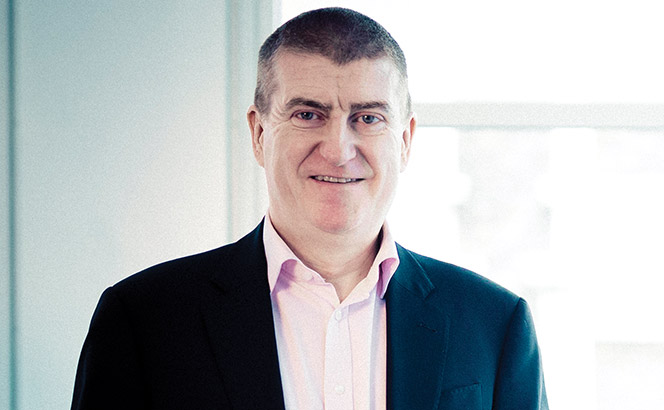
Nassib Abou-Khalil | Chief Legal Officer | Nokia

Many businesses have a diversity and inclusion (D&I) policy, but at Nokia, we prefer to think of inclusion & diversity. Inclusion is the foundation upon which diversity flourishes in an organisation. An environment where people feel they can be themselves and contribute to the best of their abilities is the surest way to attract more diverse candidates.

As Chief Legal Officer, I believe inclusion is fundamental. The first step is to ensure  people feel part of the team, to make them feel that they are valued, that they can contribute, that they can feel safe being who they are, and that they can bring the best of themselves to Nokia. If you don’t have that foundational belief in inclusion then diversity is just a statistic, and statistics without impact are meaningless.. Creating a safe space where our people  in every part of the organisation feel that they have a real chance to progress and be included is essential in encouraging diversity.

When I first took on the role of Chief Legal Officer, I’m sure everyone expected that I would appoint someone from my leadership team into one of the key roles in my organisation. Much to everybody’s surprise, I hired a person from elsewhere in the organisation. She joined my leadership team and created such a positive reaction in the team that when there next were open positions, the number of applications multiplied, and I had people from every part of the organisation apply. That sort of open environment encourages people to step up, apply for jobs and become more visible in the organisation by taking leadership roles.

Legal teams can be hugely influential in setting the inclusion and diversity agenda. The role we play in our companies, our influence, our ability to drive decisions, and the fact that we are involved in many discussions and embedded in the business in a significant way means we are uniquely positioned to influence the wider culture.

Coming Out for I&D

Corporate diversity initiatives are a journey that typically starts with tackling a particular issue, for example, improving gender diversity, before gradually broadening out to look at ethnic and racial minorities, people with disabilities, age gap issues, and other forms of diversity. I happen to be interested in all aspects of diversity, but being gay = I was keen on advancing I&D at Nokia to include our LGBT+ communities. One example of this work has been helping the Nokia LGBT+ employee resource group to launch the OUT Leaders programme. By stepping up as an ‘out’ leader and making myself visible within the organisation, I am helping to draw attention to the fact that you can be your authentic self and be included at Nokia. Shortly after we launched the initiative, I was appointed as Chief Legal Officer, which I see as a very positive message for both our leadership and the company.

However, I wanted the programme to become more than just one leader stepping out and speaking up. In the second phase of the programme, which we launched last November, we look at bringing something positive and giving opportunities to our leaders at Nokia by focusing on development, providing mentorship and networking opportunities, and creating the opportunity to design, develop and implement a project that will be sponsored by one of Nokia’s global leaders. Members of Nokia’s LGBT+ communities will join with external and internal people from our customer network, suppliers, the recruitment community, and some of our own senior figures to speak about what it means to be an ‘out’ leader and to develop your career. Hopefully, this will help the participants build their leadership skills and provide them with a mentorship opportunity from a senior leader in the organisation who will support them to develop and grow. It will also give them an opportunity to be visible in the organisation by profiling them in our internal communications, giving them an opportunity to develop and implement this project further.

Nassib Abou-Khalil | Nokia

As the project matures, it is moving from an aspirational idea to something that truly gives people in the LGBT+ community the tools and platform to succeed, to learn how to be a role model and to inspire others within Nokia. We want to cement the atmosphere that Nokia is an employer of choice for the LGBT+ community, that this community is encouraged to thrive within Nokia, and that Nokia takes the development of the LGBT+ community seriously.

I feel a responsibility toward the LGBT+ community. I have been fortunate enough to be successful in my career, but I also have lived some of the challenges that many LGBT+ people face, such as coming out in the workplace, to your family, to your friends. Granted, times have changed, and things have developed, but they haven’t changed that much. The struggles are still there. Things have improved, but we cannot speak of absolute equality. And when we look at the global workplace, I am even less sure that we have reason to be complacent. I felt a sense of duty and a sense of responsibility to be active in the LGBT+ space. That said, our LGBT+ initiatives are important for everyone. I want everybody in my team to feel that they can be their authentic self and contribute to their fullest capacity when they are contributing to the success of Nokia.

Going global

Businesses in Europe, and especially in the US, tend to have more I&D infrastructure. There are certainly more organisations – the likes of Diversity Lab and the Minority Corporate Counsel Association – to help advance the conversation. Typically, the major initiatives have been entirely focused on US companies, or the US offices of multinationals. The next step is to make sure we have truly global initiatives that acknowledge the different conversations happening at a local level. As a result, we are looking to work with Diversity Lab and pilot the Mansfield Rules 2.0 that can be measured based on our global operations. This will help us develop the playbook for this certification that applies to global businesses.

A year ago, we were the first multinational with a global presence to join the Minority Corporate Counsel Association. We are working to take some of our initiatives and export them outside the US, bringing them alive in a much more global scene. As with many of our initiatives, the objective is to partner with thought leaders, take established policies and frameworks, and see how we can work together to extend their reach.

Of course, this also applies to how we work with law firms. Given that we look at I&D from an inside-out perspective, I will be re-evaluating how we work with outside counsel and our panel firms. In my role as Chief Legal Officer, the immediate step for me is to develop measurable criteria that we expect our outside counsel to implement when they are working with us, and these will be around inclusion and diversity. We are thinking very hard about what exactly we will ask our law firms to do, and how we can measure it. Our aspiration is not just to talk about things, but to do things.

I am deeply grateful to both the MCCA and Diversity Lab for their support and partnership with Nokia and to the entire Nokia Legal and Compliance team for believing in and being committed to our I&D initiatives.

Louise Pentland | Chief Business Affairs & Legal Officer | PayPal

The business case for diversity has never been stronger, but we still need more progress on a global scale. Creating a workplace that’s committed to diversity, inclusion, equity and belonging is a journey that takes constant commitment, ongoing investment, and intentional action from everyone across an organization. Companies must focus not just on attracting a diverse slate of candidates, but also on retaining them and advancing them into executive, management, technical, and board roles.  Consistent demonstration of this commitment at the highest levels is necessary to set the tone and expectation throughout the rest of the organization.

For example, at PayPal, we’ve focused on building a diverse Board of Directors with years of experience and who provide a range of leadership perspectives. Our Board of Directors is currently 45% women and underrepresented ethnic groups. Our Employee Resource Groups (ERGs) also play an important role in ensuring we listen to the voices of all employees. We need to understand diverse experiences and ensure PayPal employees always feel supported, protected and included. By partnering with ERGs, we are better positioned to advocate for employees who are women, Black, Latinx and Hispanic, veterans, LGBTQ, specially-abled or disadvantaged. This diversity also strengthens our ability to innovate and to understand and better serve our customers.

Our work will never be complete – sustained advancements in diversity and inclusion require a consistent and holistic approach. It’s critical to our culture and to how we do business, and we’re committed to continuing to doing even more going forward.

Taking a stand

At PayPal’s core, we are a mission-driven, values-led organization. When something runs counter to our values, we must stand up, speak out and, importantly, take action. This naturally requires a strong partnership between the business and the Legal team. Given the recent proliferation of societal issues, and the rapid acceleration of innovation and technology, legal functions must be in lock-step with their partners – both across the business and in the public sector – to provide strategic counsel and identify risks. The success of this model can be seen in the many actions PayPal has taken over the past several years – from ensuring we pay equally across gender and ethnicity, to withdrawing from North Carolina in response to the passage of discriminatory laws against the LGBTQ community, to opposing discriminatory laws targeting immigrant communities, to taking stands on removing white supremacists and other hate groups from our platform.

Louise Pentland | PayPal

Recently, I’ve worked in close collaboration with PayPal’s leadership team to acknowledge and confront the systemic racism endured by our Black colleagues and customers for far too long. In response, PayPal announced a $530m commitment to support Black- and minority-owned businesses and communities through a multi-pronged initiative designed to help address the immediate crisis and set the foundation for sustained engagement and progress towards economic equality and social justice. As part of the program, PayPal committed $15m towards strengthening the company’s internal HR and D&I programs. Of this, $10m will be invested in university and high school recruiting, pro-bono engagements, public advocacy initiatives, and matching employee giving and volunteer hours. The remaining $5m will be pooled to be shared among PayPal’s Employee Resources Groups to help drive internal programming and community engagement aligned to the company’s mission to democratize financial services.

Building networks

Lack of diversity in leadership roles remains a challenge for the legal profession. Systemic racism is a topic on everyone’s mind right now and it’s more important than ever for us to do all we can to promote diversity and inclusion in the legal field. The benefits are clear – as companies diversify their workforces, they are able to serve more diverse customers. Diversity of thought and experiences allow us to uncover new ideas, challenge legacy processes and better solve customer pain points.

I’ve long been an advocate for mentorship and at PayPal, we’re constantly seeking innovative solutions to create better support systems and encourage greater connection. In developing the Women Luminaries Program in Singapore, for example, we set about to help address the gender diversity gap in technology. Through the program, we partnered with local universities to provide tuition scholarships, mentoring, internships, technical workshops and courses, and networking.

I came into this profession with no network myself, and without the privilege of personal or professional connections. In fact, I was the first in my family to go to college so my advancement as a lawyer has been a distinct combination of hard work, and mentors and sponsorsThe lack of diversity can, unfortunately, still be attributed to the fact that many people don’t have a network. I believe every lawyer with influence should be compelled to use their network to support under-represented lawyers, whether that’s introducing new law students to law firm partners, or advocating for diverse pipelines in law firms, or by simply serving as a mentor.

I believe it is important to not only ensure my own team is diverse, but that outside firms with which we work also have diverse representation. I am proud that the PayPal legal team has committed to the Mansfield Rule and for the 2019-2020 inaugural pilot, was one of only 13 legal departments to have earned the Mansfield Plus Certification. The primary goal of the Mansfield Rule is to increase the representation of historically underrepresented lawyers in legal department leadership by broadening the pool of women, racial/ethnic minorities, LGBTQ+ lawyers and lawyers with disabilities who are considered for leadership roles, open positions for lawyers, high-visibility work opportunities, and outside counsel hiring. This commitment went beyond our established annual diversity survey and extends it to each new matter. We have also created an internal Legal Diversity Council that meets regularly to discuss opportunities and initiatives, and to track our progress. We hope that PayPal’s commitment to important initiatives such as this encourages others to take similar action.


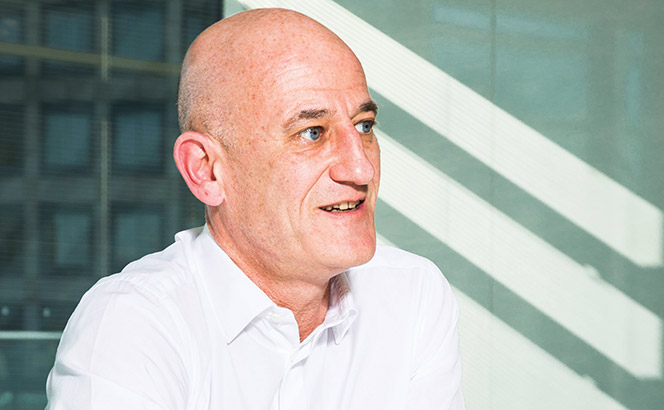
Jim Chosy | Executive Vice President and General Counsel | U.S. Bancorp

U.S. Bank is headquartered in Minneapolis, Minnesota, where the horrific killing of George Floyd occurred in June.  Immediately thereafter, conversation began within the bank and the law division about how we were feeling and what we needed to do. The tone was set at the top by our CEO, who highlighted the need for us to lead differently and better to address inequality.  Subsequently, the Bank announced multiple investments (over $100m) and initiatives to bridge gaps and address inequities.  Within the law division, we’ve launched a new program reflecting our commitment to racial justice and to standing against racism and working together with purpose to learn, grow, build community, and foster change within the legal team, the broader legal profession, and our communities. I feel a special responsibility in this as a corporate leader, a lawyer representing the legal system, and as a citizen of Minneapolis.

In-house legal departments have big role to play in positively influencing diversity with outside counsel.  Given our purchasing power, we’re able to drive change and I feel an obligation to do this with our law firms, which we consider an extension of our own in-house function. We do this in several ways, including participating in external initiatives, and through our internal Spotlight on Talent program.  We also request and measure diversity data from our law firms to help drive hiring decisions, and last year presented our first U.S. Bank “Invested in Diversity” award to one law firm, in recognition of its efforts and success with diversity.

Moving the needle on diversity and inclusion

One of the initiatives we have been closely involved with is Move the Needle (MTN), [a collaborative effort designed and funded with $4m to test innovative initiatives to create a more diverse and inclusive legal profession, facilitated by Diversity Lab]. I am proud to serve as a founding MTN general counsel and on the MTN Fund’s board of advisors.  The MTN concept is to test innovative diversity initiatives to create transformational change that has been lacking in the profession. Diversity Lab brought together five leading law firms, over 25 general counsel, and top community leaders to work together to develop new approaches to be tested over five years and hopefully serve as models for lasting change.

Importantly, the law firms have invested $1m each in the initiative, and have set aggressive, measurable and public goals in areas like recruitment, retention, work assignment, access to clients, and advancement to firm leadership.  Corporate departments support these firms along the way, backed by our significant collective legal spend. It’s no small thing for big law firms to commit (expose, really) themselves in this way, financially and with public accountability, and I commend them for their courage and bold thinking.  I’m excited about the prospects for MTN and hoping we can, actually, “move the needle” more so than in the past.

While we have a robust Diversity, Equity, and Inclusion (DE&I program) at U.S. Bank, we’re not where we want to be yet and need to keep working hard at it.  The program has several elements and we continually adjust it, keeping what works and discarding what doesn’t.  In terms of recent priorities, several originated with Diversity Lab.  For example, last year U.S. Bank was proud to be among the first companies to join the Mansfield Rule pilot for in-house legal departments which requires consideration of underrepresented groups for hiring and leadership roles and also outside counsel representation.  We just certified complete for the first year and have started the 2.0 version of the commitment.  We’ve also requested that members of our preferred outside counsel program, representing 40 or so of our deepest law firm relationships, agree to participate in the law firm version of Mansfield.  They also must have at least one diverse client team leader on our U.S. Bank account.  And I’m gratified to say that several firms adopted Mansfield in response to our specific request.

Talent spotting

I believe strongly in formal talent planning and mentorship or sponsorship as part of furthering diversity, and they’ve worked well for us.  At U.S. Bank, the law division participates in disciplined talent planning processes and also mentorship and sponsorship programs for professional growth and development over time.  The programs, some focused specifically on diverse employees, are not only good learning opportunities but they also drive retention and engagement.

We’re also involved with several talent pipeline efforts, such as law school internship, externship and fellowship programs and our own Pathways Summer Associate Program, a partnership with several preferred law firms to host diverse summer associates.  And we partner with outside counsel on the development of diverse, early-career lawyers.  For example, through our “Spotlight on Talent” program we invite preferred law firms to apply for the opportunity to showcase their diverse talent by conducting an in-person educational session for our entire department followed by meetings with our senior leadership and practice groups.  Afterwards, we work to create lasting relationships with the Spotlight “alumni”  with the goals of career advancement and engaging Spotlight associates on Bank matters.

Mentoring will certainly remain important as we re-adjust to a post-COVID world.  We’ll need to lean on each other and learn and grow anew as we navigate the future.  Some are concerned that economic difficulties caused by the pandemic will disproportionately impact women and people of colour within the legal profession.  However, I believe that most law firms and corporate departments fully appreciate the criticality of diverse and inclusive workplaces and have been finding creative ways to keep mentorship and other diversity efforts active during the pandemic and in a largely virtual environment.  We recognize that the new challenges brought on by this environment demand innovation and creativity, which diversity can help unlock.  But we do need to remain vigilant and make sure we don’t lose any of the progress we’ve made with diversity over time.