


‘We are in a period of transformation, not just within the legal industry, but within the world, and the role that the general counsel plays within the boardroom and the C-suite is evolving,’ said Nicole White, chief legal officer and corporate secretary at commercial real estate services firm Avison Young.
In May, Legal 500 and recently acquired Mondaq hosted the US In-House Counsel Celebration, in collaboration with the American Bar Association (ABA). The event celebrated in-house counsel who had made significant contributions to the in-house community.
Before the event kicked off, a panel of legal and executive leaders took to the stage to discuss what it means to be a legal leader in a world that is rapidly changing, covering everything from risk and geopolitics to the rapid expansion of AI.
The panel was hosted and put together by Jan Anne Dubin, CEO and founder of Jan Anne Dubin Consulting, a consultancy that works with law firms and corporate law departments on strategic initiatives and executive coaching.

Christina Martini (pictured right), global co-chair of Dechert‘s intellectual property practice, and a Legal 500 leading partner for noncontentious trademarks, summarised the significance of the current moment. ‘We’re at a significant inflection point in the industry, and in business and in the world,’ she said.
Panellists set about answering the question of how legal leaders can adapt to this new age, and discussed practical tips on how they can position themselves at the forefront of this transformation.
Crisis readiness
‘Where risk used to be more concentrated in certain types of businesses, now we have to understand all the risks,’ explained Dorri McWhorter, president and CEO of the Executives Club of Chicago, who joined the panel to offer the CEO’s perspective.
She continued: ‘It may differ for different types of businesses, but the themes are still there. Whether it’s cyber security, geopolitical risk, AI technology, all the risks are showing up in some way.’
What does this mean for GCs? ‘I’m relying on the general counsel to let us know how much of that risk is present here.’
 Compounding the problem, panellists said, is the pace at which legal teams are expected to operate. Amy Yeung (pictured right), head of ads, legal at PayPal pointed out that decisions are expected to be made in much shorter timeframes around much more complex issues.
Yeung explained: ‘Five years ago, organizations had the luxury of making decisions at a more deliberate pace. Today, leaders are navigating a constant stream of challenges — from supply-chain disruptions to geopolitical uncertainty — that require faster decisions and greater organisational agility.’
On how in-house counsel can stay on top of this, Martini said being prepared and really understanding the priorities of the business will be key:
‘Seeing around the corner is going to be a big theme. Understanding the business as a lawyer well enough that you’re able to prognosticate, I think the prognostication factor has become even more important because of how rapidly things are evolving.’
On how GCs can best do this, she added: ‘It’s important for them to really understand the landscape, not just the legal landscape, but the business landscape as well as the stakeholder landscape. That’s a critically important part of the decision making for a GC or CLO.’
At the start of the year, in-house professional body the Association of Corporate Counsel found that record numbers of legal heads were reporting directly to the CEO or top-ranking executives at their companies, with legal leaders increasingly seen as a strategic counterpart making decisions for the advancement of the business, and not only the gatekeepers of risk.
The GC as a strategic leader
As the role of the GC develops, so too does the skillset needed to take it on. Panellists discussed how legal can best engage with senior leadership and the C-suite to demonstrate they are a trusted advisor.
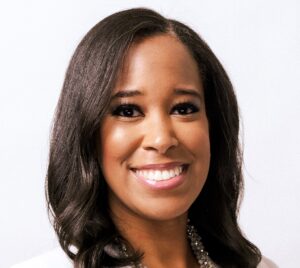 For White (pictured right) the solution is simple. ‘Risk is a spectrum,’ she said. ‘There will always be risks. The most important thing that a GC can do is to really help a board and its management team understand what is the spectrum of risk. The worst thing you can do is cripple the board or the management team by over saturating them with the world of possibilities.’
Naturally there is a tension in the board, as each stakeholder has a different set of priorities and is coming at a problem from a different perspective. For White, it is about understanding everyone’s priorities, finding where the conflicts are and helping them find common ground.
Martini agreed: ‘You don’t want to be the person who says “here’s the problem” but who doesn’t have the solution. It’s all about figuring out the business and understanding it, and given the context of the business and who the stakeholders are, what are the consequences if things go off the rails.’
For McWhorter, what she most values out of her GC is curiosity and the willingness to engage in an open discussion.
She explained: ‘Having that relationship to be able to know that the general counsel and the team is coming from a perspective of having that curiosity, that’s important. It’s allowing us to say, let’s continue to engage and ask questions, so that we can get to a right answer, versus coming with a predefined answer.’
AI
It is impossible to discuss the evolving role of the GC without speaking about the AI boom and the impact this is having on the way legal leaders work.
The impact of AI on private practice has been a hot topic of conversation. Earlier this year, Freshfields reached a landmark multi-year deal with Anthropic and legal tech specialists Harvey and Legora have continued their rapid expansion.
However, for in-house lawyers, not only are they exploring how AI can enhance their day-to-day, but they are also having to maintain oversight on how the technology is used across their organisation, with responsibility to ensure compliance with both internal policy and any relevant regulations.
From White’s perspective, GCs need to walk a fine line between ensuring the technology is being used compliantly, while making sure the opportunities it presents aren’t overlooked.
‘You have to find that delicate balance between allowing the organization to evolve with technology, figuring out how and where you can embrace it, while at the same time ensuring that you’re mitigating the risks that come with that,’ she said.
She continued: ‘We have to embrace this evolution that we’re seeing, and I think we’re hoping to be at the forefront of that, while ensuring that we’re moderating the path forward.’

Panellists however broadly agreed that AI governance shouldn’t stand in the way of AI deployment.
McWhorter (pictured right) struck a positive note: ‘As we continue to see the emergence of AI and all the different ways it will show up, this type of thinking, the risk thinking, will actually help us create productive tools.’
The key question, for her, is a simple one: ‘How do we keep people safe and make something better in the process of that?’
Yeung, who is highly experienced in technology transformation through senior legal leadership roles at a number of data and technology companies, explained that AI should be seen as an ‘operational efficiency.’
She said: ‘AI governance is no longer simply a compliance exercise; it is a strategic business capability. Data governance and data ethics sit at the centre of that effort because the choices organizations make today will shape both the long-term potential of these technologies and the trust required to deploy them at scale’
Leading through changing times
‘Be patient. You cannot expect change to happen overnight. Sometimes you have to be content with moving the needle,’ said White of the advice she would give her younger self.
As the world is rapidly changing, panellists agreed that focusing on key leadership lessons will stand in-house leaders who are trying to adapt in good stead.
McWhorter summed up the situation: ‘There’s so much happening, and there are so many challenges, people are stressed out, and under a lot of pressure coming from various different sort of market forces. As leaders we really need to lean in and understand what’s impacting our people.’
Photo by Brad Knight on Unsplash