Earlier this year, UK fintech Wise announced plans to switch its primary listing from the UK to the US, with the planned move coming only four years after the company made its debut on the London Stock Exchange.
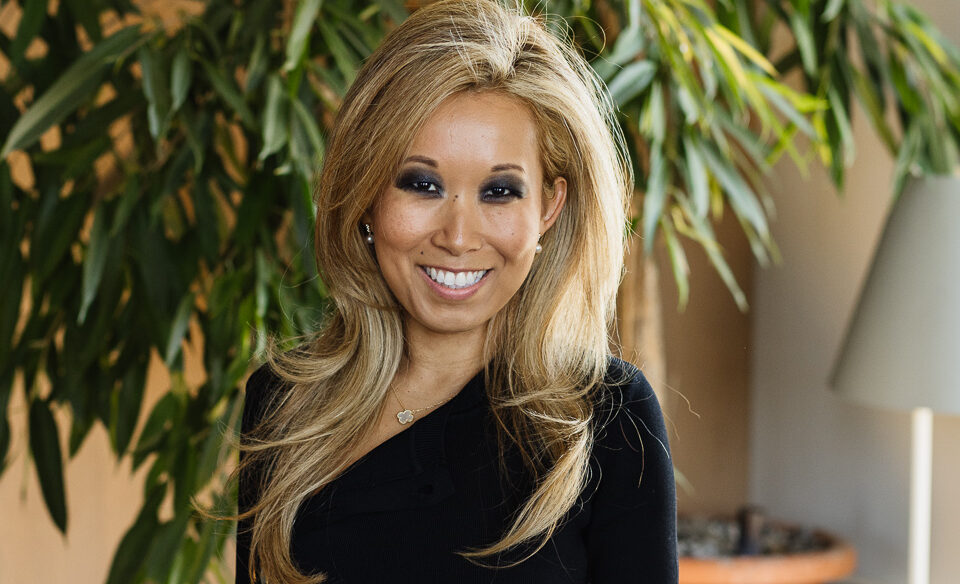
Jessica Winter, chief legal officer at Wise, oversaw the company’s first listing and is enthusiastic about the prospect of expanding in the US, albeit with the hope of a smoother process this time, having had to work on the London IPO entirely remotely during the global pandemic.
‘We had to do the whole thing from our bedrooms, because it was during the pandemic, end to end. It’s a testament to the people involved. We managed to build and forge new relationships, despite doing everything remotely.’
Wise was the first-ever tech direct listing in the UK, meaning that rather than having the stock price determined during the bookbuilding process, price discovery occurred on the day of listing, as shareholders sold to public buyers.
‘We were the first direct listing of a technology company in the UK, and we thought that was the most transparent way of coming to market. One of our core pillars is transparency. So rather than having the price decided before the day, the price was decided live on listing day.’
‘We had to do the whole thing from our bedrooms, because it was during the pandemic, end to end. It’s a testament to the people involved. We managed to build and forge new relationships, despite doing everything remotely.’
While the direct route was riskier, the rewards were high. After the first full day of trading, the company hit a nearly £8.75bn valuation.
Now, four years later, Wise has confirmed plans to move its primary listing to the US, in a bid to tap into new investment opportunities, while also maintaining a secondary listing in London.
‘We had to think long-term about what works best for Wise, and we had heard from our owners about liquidity challenges over the years. It was a combination of factors: the US being such a large capital market, but also the biggest opportunity in the world for our products today. Those factors combined helped us form that decision.’
News of the planned move came at a difficult time for the London Stock Exchange. Dealogic reported the weakest listing figures in three decades for the first half of 2025, while there has been countless press coverage about the decline of London’s position.
Winter though is emphatic about the importance of keeping a listing in London: ‘We are still demonstrating our commitment to the UK. We are still hiring here; over a fifth of our employee base is in London, and we will stay.’
‘We don’t confine decision-making to any one group of people; we try to empower as many Wisers to make decisions as possible’
Winter and her team are heavily involved in the listing process, and not just the legal and functional aspects.
‘We are inherently very inclusive at Wise, and we don’t think of ourselves as super hierarchical. We don’t confine decision-making to any one group of people; we try to empower as many Wisers to make decisions as possible. I encourage my team and myself to think of ourselves not just as the lawyers in the room, but the smart problem solvers in the room.’
Winter herself is well-placed to offer guidance, not only from her experience of the 2021 listing but also from the seven and a half years she previously spent in the corporate department at legacy Herbert Smith Freehills, where she kicked off her lifelong aspiration to work in law.
Winter tells LB that she has wanted to be a lawyer since she was three years old. ‘My grandmother was a lawyer, and I found that very inspiring. I would follow her around the house and take cast-off drafts of her legal documents and pretend they were mine.’
Growing up in the US, Winter studied liberal arts at Yale, before going on to take a master’s in Oxford and another at Stanford Law School as she moved to turn her aspiration into reality.
While she was passionate about the academic aspect of law, Winter found further satisfaction once she began working. ‘What I loved about being a lawyer was really crystallised after I started practising law,’ she says.
‘Some of the biggest lessons you learn in your career are from perceived failures’
Joining legacy Herbert Smith in 2010, she cites the successful listings of Just Eat and AIB as career highlights, while the unsuccessful Prudential takeover of AIA and, a year later, the failed G4S takeover of ISS, are up there with some of her career challenges.
‘Some of the biggest lessons you learn in your career are from perceived failures. These were two really big M&A transactions that didn’t end up happening. I learned so many lessons about the power and importance of communication. If you have conviction about a merger or a proposed transaction, you have to take the time to explain it to your stakeholders, to your employees, to your customers, to your shareholders and that helps to build a consensus on whether or not the deal actually happens.’
On how she handles disappointments like these, her advice is simple: ‘Eyes forward.’
At the beginning of 2018, Winter decided to take a position in-house at the insurance and asset management company Prudential, driven by the desire to gain a deeper understanding of the clients she was working for.
‘As a corporate lawyer, you already have privileged access into whichever company or industry you’re working for on a particular deal. And it stoked this curiosity in me, of wanting to get much closer to a company over a longer period of time than the typical six-month time horizon for a corporate transaction.’
After a brief stint at Prudential, she joined Wise in 2019 as head of corporate and has remained at the company ever since.
While still a fairly young company, Wise has gone from strength-to-strength since its inception in 2011, and Winter, a happy customer of the product, was keen to work for a tech company.
‘I saw the potential of Wise more than any potential pitfalls’
‘Even by the time I joined, we were a profitable company, still private, but they had figured out a way to grow really quickly while being financially sustainable. And that was really attractive. I saw the potential of Wise more than any potential pitfalls. Like others who have joined Wise over the years, I was also a fairly early customer and I was impressed by the product.’
The decision paid off, and Winter hasn’t looked back. In early 2022, she was made chief legal officer, and she now heads a legal function of 70 lawyers globally.
‘I’m almost surprised by how long I’ve been in fintech. The nice thing about financial services is that there is a huge variety. It’s a highly regulated industry. At the same time, you’re dealing with concrete customer problems, and we are so global. So, I can see the combination of these things staying interesting and rewarding for a long time to come.’
Throughout her career, having a strong team around her and a sense of community has kept her motivated and enthusiastic about her work. To foster this in her own team, Winter emphasises the importance of leading by example.
‘I’m almost surprised by how long I’ve been in FinTech. The nice thing about financial services is that there is a huge variety.’
‘I’m a really intentional leader. I like to lead by example. I want my team to know that what we’re doing is aligned to the mission and I’m staying close to the work. I set really high standards for the team because I set really high standards for myself.’
With her enthusiasm for Wise and her role in-house clear, Winter doesn’t believe there’s a right or wrong choice between working in-house or in private practice.
‘I highly encourage both private practice and in-house. If you’re starting out, try to find a way of enjoying the work, and the work itself becomes more interesting. Around the work you’ll build relationships and start building a community. So, gravitating towards the type of law you find interesting, the practice areas you actually enjoy and the people you like to work with.’
Winter’s tips for success:
‘To succeed in the legal field, it’s important to think about the law, and lawyering, as a practice. The law is a living thing and new laws get made all the time, especially at the boundary. To get there, we need to hone our practice, constantly improving our techniques and processes alongside innovation, teamwork, and creativity.’
‘You don’t need to be a certain mold of person when you walk through the door. You don’t need to be a paradigm of a tech founder. What you learn and what you can become at Wise is someone who is very curious who thrives on challenge and is capable of moving at pace. We give people the opportunity to develop those skills.’
Career timeline
2010-2017: Senior associate, corporate department, Herbert Smith Freehills
2018-2019: Senior lawyer, Prudential UK
2019-2022: Head of corporate, Wise
2022-present: Chief legal officer, Wise
Wise – key facts
Size of legal team: 70
External legal spend: not disclosed
Preferred Advisers/panel firms: Cooley, Gibson Dunn, Slaughter and May, Linklaters
Total company revenue: £1.21bn in FY25
Employees worldwide: over 6,500+ across 11 key locations







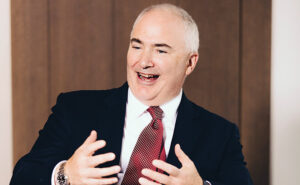
 Slaughter and May corporate and M&A co-head Simon Nicholls (pictured) also has faith in the strength of markets going into the new year, saying: ‘There’s a lot of assets looking for a home, and you need to find homes for them.’
 One area partners all agree is not in any danger of slowing down is the technology sector, and the data underlines this, with global tech M&A values up 66% to $1.08trn, making it the top-performing sector by some distance.
 Regardless of how the market shapes up, it’s clear that partners are excited for the year ahead.
 Interviews
 Features
 Data
Data News
News In-house
 Lateral moves
 Deals
Deals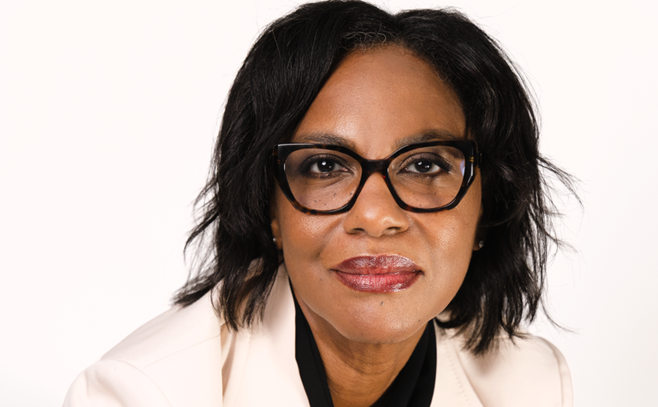

 Allen & Overy and Shearman & Sterling, 2024
 McDermott Will & Emery and Schulte Roth & Zabel, 2025
 Ashurst and Perkins Coie, 2025
 Clifford Chance, Rogers & Wells and Punder Volhard Weber & Axster, 2000
 Norton Rose and Fulbright & Jaworski, 2013
 Hogan & Hartson and Lovells, 2010
 DLA, Piper Rudnick and Gray Cary Ware & Freidenrich, 2005
 Dentons and Dacheng, 2015
 CMS, Nabarro and Olswang, 2016
 Herbert Smith and Freehills, 2012
 King & Wood Mallesons and SJ Berwin, 2013
 Honorable mentions