

Sullivan & Cromwell has long been known for its measured approach to lateral recruitment. When the firm hired A&O Shearman’s global financial services regulatory co-head Barney Reynolds in June this year, he became only the third lateral partner hire in London since 2013 – an Olympic-style recruitment cycle of roughly one every four years.
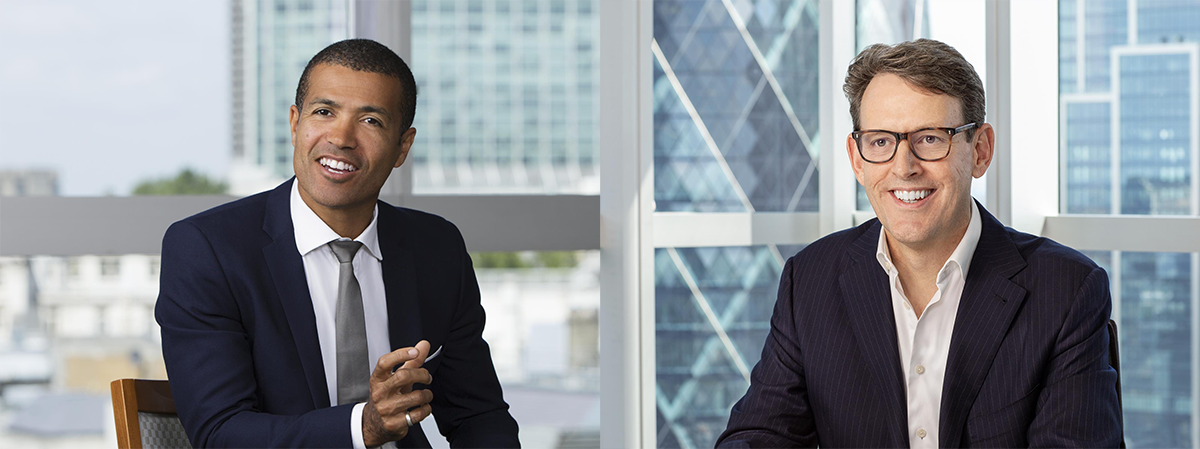
The news earlier this month (1 September) that it is bringing in not one but two City heavyweights – Kirkland restructuring partner Kon Asimacopoulos and former Weil London head Mike Francies – to kickstart a reboot of its London office is therefore a significant shift.
‘London is one of the two key financial markets in the world, and we’re underweight,’ explains S&C co-chair Scott Miller in an interview with Legal Business. ‘We’re six and a half times bigger in New York than London, but half of our clients are international, so we should have a higher weighting there.’
The realisation that the firm needed to grow in the capital was crystallised by a strategic review at the end of last year that came to a clear conclusion.
‘We determined that in order to satisfy our ambitions, we needed to be more aggressive,’ confirms Miller.
The decision to take a more aggressive approach, and the review that led to it, came after a busy period for the firm’s US bankruptcy practice, as Miller elaborates.
‘Over the past 24 to 36 months, our US restructuring practice has led the market, having worked on many of the largest US bankruptcies in that period. Building on that success, we need a strong London base, as the two markets are interrelated. We also need the broader private capital platform, since private capital both drives and feeds restructurings, particularly through private equity and private credit.’
At the end of September, S&C will have 18 partners and around 90 lawyers in its London office. In comparison, New York has 650 lawyers, of which 114 are partners. While London is the firm’s second largest office, it is clear that there is room for growth in comparison with its New York counterpart.
Part of the reason the firm has been slow to hire in the past is that it is very deliberate about adding to its partnership. As London managing partner John Horsfield-Bradbury, himself an S&C lifer, explains: ‘A significant number of partners at S&C have only ever worked here; it’s one of the things that makes it special.’
‘We’ve spoken to lots of people with excellent practices who were interested in joining us. But we decided that they weren’t a good fit because they didn’t think about the practice of law in the way we do.’
Miller explains that before Asimacopoulos and private equity partner Francies agreed to join, they met almost 100 S&C partners – a process that necessarily takes time and precludes the lightning growth seen from some of its peers.
‘We’re not looking to be Paul Weiss – going from zero to 200 in three months’, Miller explains. ‘I respect Paul Weiss. They run a great business. But having a team that size that isn’t integrated isn’t something we’d consider.’
So what is S&C’s endgame in London? According to Miller, the firm is less focused on numbers and more on outcomes: ‘The goal is market-leading practices in high-value, strategic work in restructuring and private equity, and what’s necessary to support that.’
This may not equate to Paul Weiss-level City expansion but, according to Miller, it’s ‘not insignificant. It’s not one partner in each of those areas.’
Making it clear that the days of one London lateral hire every four years are over, he says: ‘We’re looking to move fast. We want to build those practices and develop areas of strength.’
The desire to move quickly means their proven ability to build practices around them were key drivers for selecting Asimacopoulos and Francies as well as Reynolds.
‘We haven’t brought in people to do work that’s firm-generated, we’ve gone after people who are magnets for talent. Kon, Mike and Barney have all built teams. They’re all incredibly collaborative people,’ says Miller.
And while he isn’t setting numbers, he does have an idea of the growth required. ‘I think London should be 50% bigger than it is, maybe a bit more. We also want to grow in New York.’
Assuming no change in leverage, a 50% increase would bring the London office to 135 lawyers, including 27 partners. Headcount-wise, that would put S&C roughly on a par with Willkie and Covington, which currently sit about 10 places above 38th-placed S&C in the Legal Business Global London rankings.
By comparison, S&C’s New York peers including Skadden (254 lawyers), Milbank (203) and Cleary (152), currently sit 10th, 15th and 23rd respectively in the 2025 Global London table.
Miller is quick to clarify that it is not ‘growth for growth’s sake’, but rather because the dynamics and complexity of today’s global legal market mean that scale is increasingly necessary.
By way of example, he cites London partner Karan Dinamani, who joined from legacy A&O in early 2023. Dinamani heads up the firm’s European PE practice, which, while small, had the largest average deal size ($2.3bn) for completed European private equity transactions in 2024, according to data from Mergermarket.
‘Karan joined us to focus on private equity. He’s been phenomenally successful but it’s clear that he will be even more successful on a larger platform.’
In order to persuade more high-calibre partners to join, the firm realised it needed to present ambition and a clear plan. ‘If we had simply said, ‘Come join us, and together we’ll figure it out over the next 12 to 24 months,’ that wouldn’t have been an attractive proposition,’ says Miller. ‘Being able to lay out a clear vision – that we intend to grow, to do so in a more aggressive and forward-looking way, to build teams, to be successful, and to invest heavily – has been key to convincing people to join.’
With competition for top talent at a high after years of its rival US firms expanding rapidly, S&C realised that standing still is no longer an option in the capital. The firm itself saw restructuring partners Chris Howard and Presley Warner leave for Gibson Dunn in London earlier this year.
As Miller concludes: ‘Twenty-five years ago we were probably the largest US firm in London but, over time, we grew to not much bigger now than we were then. We were a successful practice, but stable. We had to grow. You can’t be stable and stay the same size in a market like London. You have to grow.’

















 That sentiment is echoed by others. ‘Earning while learning sold it for me,’ says Lewis Whittaker, a solicitor apprenticeship graduate at Browne Jacobson. His colleague Gee Bhamra adds: ‘I was really keen to learn on the job, and
 And it is not just about legal knowledge – it’s also about learning how to navigate a workplace, ask the right questions, and step up when it matters. As Tania Kahlon (pictured), early careers lead at Bevan Brittan, puts it: ‘The trajectory might be gentler at the start, but it ramps up quickly. The key is knowing when someone’s ready – and giving them the space to grow into that responsibility.’
 And before applying? ‘Do your homework on the firm,’ advises Bevan Brittan’s Dyer (pictured). ‘It’s not just about impressing them, you need to know what they’re offering you in return. It’s a two-way street.’