British American Tobacco announces new GC as company veteran steps down

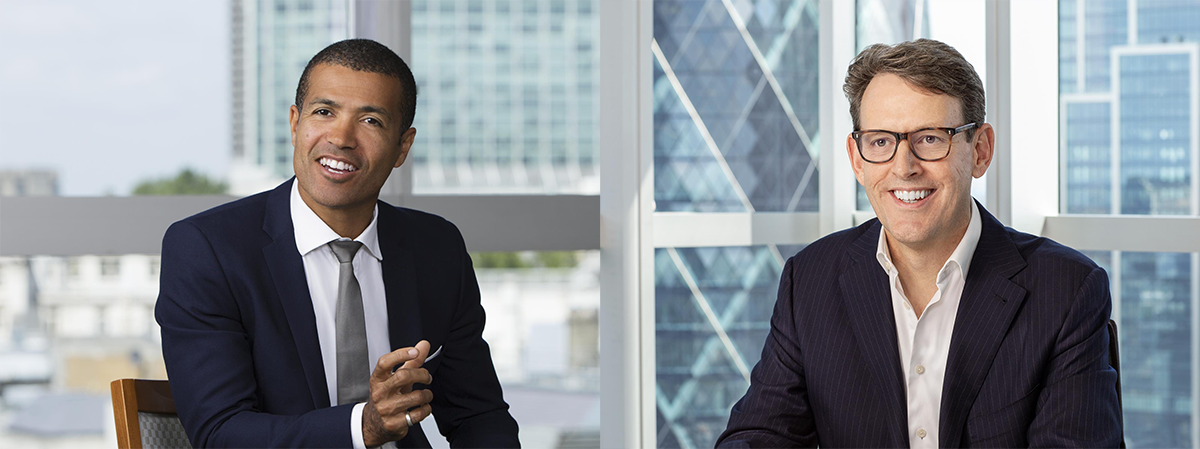
Paul McCrory has been appointed as the new director, legal and general counsel of British American Tobacco (BAT), following the announcement that current GC Jerome Abelman will step down from the position at the end of the year.

McCrory has been with the FTSE 100 tobacco company since 2006, where he started as group M&A counsel. Since then, he has held a number of senior legal roles, including assistant GC, group company secretary and most recently director, corporate and regulatory affairs.

Before his tenure at BAT, he spent seven years at then-Herbert Smith Freehills before leaving in 2005 to spend a year as corporate counsel at French bank Société Générale.

Jerome Abelman, who has held the position of GC for 11 years and has been with the company since 2002, is leaving his post on 31 December. McCrory will step into his new role on 1 January 2026, and will serve as director, legal and general counsel designate from 1 October this year.

In a statement, chief executive Tadeu Marroco said: ‘Jerry’s leadership has been at the forefront of BAT’s commitment to delivery with integrity. He has successfully navigated the Group through a series of strategic legal and regulatory matters across the globe while developing talented and diverse teams of legal, external affairs, and security professionals.’

He continued: ‘Paul brings close to two decades of legal and regulatory experience within BAT, and his appointment reflects the Group’s commitment to maintaining strong legal leadership aligned with our strategic priorities.’

Further changes to the management board include the appointment of current chief corporate officer Kingsley Wheaton to director, corporate and regulatory affairs, the position currently held by McCrory. He will take over this position on 1 October 2025.

The legal function at BAT has been kept busy in recent years. In March, the company’s Canadian subsidiary Imperial Tobacco Canada (ITCAN) agreed to pay an $8bn settlement in order to resolve all tobacco-related litigation in Canada, ending numerous ongoing legal battles which had been running since the 1990s.

In 2023, the company reached a settlement with US authorities to pay more than $635m over sanctions breaches relating to a subsidiary’s tobacco sales in North Korea between 2007 and 2017.

[email protected]

‘We’re ambitious in branching into new areas’ – Cleary targets expansion and continuity with new leadership

‘Internationalism has been part of Cleary from the very beginning,’ says Jeffrey Karpf, as he prepares to take the helm at Cleary Gottlieb Steen & Hamilton as its next managing partner.

Karpf, who has spent his entire 30-year career at Cleary, will succeed Michael Gerstenzang in January 2026, with Gerstenzang stepping into a newly created role as senior partner after nine years as managing partner.

‘Michael’s done a remarkable job leading us for almost nine years now. It’s been a period with challenges, but also strong growth and ambition, and that’s going to continue under my leadership,’ Karpf told LB.

Joining Cleary in 1994 and making partner in 2003, Karpf is a corporate and finance specialist, and his time at the firm has seen him lead on multiple major transactions, including some of the largest-ever acquisition financings and private placements.

Reflecting on the transition to managing partner, he said: ‘It is very exciting – it’s an honour to be asked by my partners to take on this role. Our visions are very closely aligned.’

On the firm’s future strategy, Karpf underscored the firm’s expansion both in the US and internationally across key specific practice areas: ‘We’re looking to maintain our financial growth and expand core practices, particularly with a focus on the US and New York. Our growth in London over the past several years has been very intentional.’

Cleary’s culture and identity have long been affiliated with a more global outlook than some of its US rivals, with the firm’s Paris office opening in 1949. ‘We’re more international than many of our competitors, that’s always been one of our strengths, and we’re going to continue to grow internationally.’

London has been a key focus for the firm, and while Karpf said this would continue, he stressed the importance of the firm’s wider European network. ‘In Europe, we have very strong practices in Brussels and Paris. In Italy we’re regarded as one of the top firms, and I don’t think that’s going to change.’

Cleary has already added 19 lateral partners this year, including a five-partner IP litigation team from Latham & Watkins across the firm’s three US offices in New York, Washington DC and the Bay Area.

Karpf said: ‘We’re ambitious in branching into new areas. If you look at the areas where we’re making partner hires, they’re in M&A, private equity, private funds, capital solutions and private credit, and antitrust litigation. The biggest focus is on these areas: private capital, private markets, and private restructuring.’

In June this year, the firm hired partner Rob Sharpe, a specialist in private equity, private funds, and M&A, into its EMEA tax practice in London.

Gerstenzang is set to remain at the firm in the new role of senior partner, and Karpf said is intended to ‘reinforce continuity, cohesion and collaboration.’

Karpf explained: ‘We have the benefit of Michael continuing as an ambassador of the firm, particularly in private capital and technology.’

Gerstenzang’s role will also allow him to continue his work on the firm’s innovation and integration of cutting-edge technologies. His tenure has been marked by record growth, with revenues of $1.49bn in the 2024–25 financial year, global expansion, and technology adoption, including a partnership with AI-powered legal tech company Legora and the acquisition of Springbok AI.

‘We’ve always been leaders when it comes to innovation and our application of AI and technology on behalf of clients, whether through ClearyX in M&A due diligence, or in litigation technology,’ Karpf said. Launched in 2022, ClearyX streamlines M&A due diligence and contract automation, enhancing efficiency and quality. The firmwide rollout of Legora saw around 1,500 participants on the first day, reinforcing how fast the firm has been to embrace new technology.

Looking ahead, Karpf highlighted three priorities: client service, innovation, and talent. ‘It’s always been in our DNA to bring the best expertise to bear for our clients. When a client calls me or another partner, we immediately think who are the best people at the firm, whether in the US, Europe, Asia, or Latin America. It’s part of our culture, not something financially engineered.’

Financially, he remains confident: ‘Last year was a record year in revenues and profits for us, and that’s growing this year on top of that. I see that in the level of demand for our services month after month this year. I’m incredibly optimistic about our trajectory.’

[email protected]

‘You can’t stay the same size in a market like London; you have to grow’ – S&C sets out aggressive plans to build

Sullivan & Cromwell has long been known for its measured approach to lateral recruitment. When the firm hired A&O Shearman’s global financial services regulatory co-head Barney Reynolds in June this year, he became only the third lateral partner hire in London since 2013 – an Olympic-style recruitment cycle of roughly one every four years.

The news earlier this month (1 September) that it is bringing in not one but two City heavyweights – Kirkland restructuring partner Kon Asimacopoulos and former Weil London head Mike Francies – to kickstart a reboot of its London office is therefore a significant shift.

‘London is one of the two key financial markets in the world, and we’re underweight,’ explains S&C co-chair Scott Miller in an interview with Legal Business. ‘We’re six and a half times bigger in New York than London, but half of our clients are international, so we should have a higher weighting there.’

The realisation that the firm needed to grow in the capital was crystallised by a strategic review at the end of last year that came to a clear conclusion.

‘We determined that in order to satisfy our ambitions, we needed to be more aggressive,’ confirms Miller.

The decision to take a more aggressive approach, and the review that led to it, came after a busy period for the firm’s US bankruptcy practice, as Miller elaborates.

‘Over the past 24 to 36 months, our US restructuring practice has led the market, having worked on many of the largest US bankruptcies in that period. Building on that success, we need a strong London base, as the two markets are interrelated. We also need the broader private capital platform, since private capital both drives and feeds restructurings, particularly through private equity and private credit.’

At the end of September, S&C will have 18 partners and around 90 lawyers in its London office. In comparison, New York has 650 lawyers, of which 114 are partners. While London is the firm’s second largest office, it is clear that there is room for growth in comparison with its New York counterpart.

Part of the reason the firm has been slow to hire in the past is that it is very deliberate about adding to its partnership. As London managing partner John Horsfield-Bradbury, himself an S&C lifer, explains: ‘A significant number of partners at S&C have only ever worked here; it’s one of the things that makes it special.’

‘We’ve spoken to lots of people with excellent practices who were interested in joining us. But we decided that they weren’t a good fit because they didn’t think about the practice of law in the way we do.’

Miller explains that before Asimacopoulos and private equity partner Francies agreed to join, they met almost 100 S&C partners – a process that necessarily takes time and precludes the lightning growth seen from some of its peers.

‘We’re not looking to be Paul Weiss – going from zero to 200 in three months’, Miller explains. ‘I respect Paul Weiss. They run a great business. But having a team that size that isn’t integrated isn’t something we’d consider.’

So what is S&C’s endgame in London? According to Miller, the firm is less focused on numbers and more on outcomes: ‘The goal is market-leading practices in high-value, strategic work in restructuring and private equity, and what’s necessary to support that.’

This may not equate to Paul Weiss-level City expansion but, according to Miller, it’s ‘not insignificant. It’s not one partner in each of those areas.’

Making it clear that the days of one London lateral hire every four years are over, he says: ‘We’re looking to move fast. We want to build those practices and develop areas of strength.’

The desire to move quickly means their proven ability to build practices around them were key drivers for selecting Asimacopoulos and Francies as well as Reynolds.

‘We haven’t brought in people to do work that’s firm-generated, we’ve gone after people who are magnets for talent. Kon, Mike and Barney have all built teams. They’re all incredibly collaborative people,’ says Miller.

And while he isn’t setting numbers, he does have an idea of the growth required. ‘I think London should be 50% bigger than it is, maybe a bit more. We also want to grow in New York.’

Assuming no change in leverage, a 50% increase would bring the London office to 135 lawyers, including 27 partners. Headcount-wise, that would put S&C roughly on a par with Willkie and Covington, which currently sit about 10 places above 38th-placed S&C in the Legal Business Global London rankings.

By comparison, S&C’s New York peers including Skadden (254 lawyers), Milbank (203) and Cleary (152), currently sit 10th, 15th and 23rd respectively in the 2025 Global London table.

Miller is quick to clarify that it is not ‘growth for growth’s sake’, but rather because the dynamics and complexity of today’s global legal market mean that scale is increasingly necessary.

By way of example, he cites London partner Karan Dinamani, who joined from legacy A&O in early 2023. Dinamani heads up the firm’s European PE practice, which, while small, had the largest average deal size ($2.3bn) for completed European private equity transactions in 2024, according to data from Mergermarket.

‘Karan joined us to focus on private equity. He’s been phenomenally successful but it’s clear that he will be even more successful on a larger platform.’

In order to persuade more high-calibre partners to join, the firm realised it needed to present ambition and a clear plan. ‘If we had simply said, ‘Come join us, and together we’ll figure it out over the next 12 to 24 months,’ that wouldn’t have been an attractive proposition,’ says Miller. ‘Being able to lay out a clear vision – that we intend to grow, to do so in a more aggressive and forward-looking way, to build teams, to be successful, and to invest heavily – has been key to convincing people to join.’

With competition for top talent at a high after years of its rival US firms expanding rapidly, S&C realised that standing still is no longer an option in the capital. The firm itself saw restructuring partners Chris Howard and Presley Warner leave for Gibson Dunn in London earlier this year.

As Miller concludes: ‘Twenty-five years ago we were probably the largest US firm in London but, over time, we grew to not much bigger now than we were then. We were a successful practice, but stable. We had to grow. You can’t be stable and stay the same size in a market like London. You have to grow.’

[email protected]

Big wins, crisis control and champagne-on-ice moments: GSK GC James Ford on 30 years at the pharma giant

James Ford on his leadership maxims, how he deals with the pressures of life as a GC and the highlights of three decades at GSK

James Ford joins the call with Legal Business from holiday in Florida. He has just helped his employer, multinational pharma and biotech giant GSK, secure a significant settlement after a long-running patent dispute over a covid mRNA vaccine. ‘That was week one of my holiday – but in this role some things can’t be completely delegated, and timing is rarely a choice!’ he jokes.

The settlement is a big win for Ford and GSK after two years navigating multiple court cases across Europe and the US. ‘It’s like a game of chess; you need to make your moves at the right moment,’ says Ford of the dispute. ‘If you go too soon, you may have played your hand and lose your leverage.’

It’s a long way from his first exposure to the legal profession at the age of 15, doing work experience in a high street law firm. ‘I grew up in rural Lincolnshire where my knowledge of future careers and possibilities was quite limited,’ reflects Ford, who admits that a large part of the initial attraction of law was the possibility of new experiences and a different life.

‘I knew that I didn’t want to live a parochial and quiet life and wanted “the bright lights” of a city environment. As I went through university, I saw the law as a route into an international life, even though I had no idea what it looked like,’ he recalls.

He gained his first experience of this life during the final seat of his training contract at Clifford Chance, which he spent in bustling Hong Kong. ‘‘It was a complete game-changer for me. I realised that living overseas in a dynamic international environment was within reach if you really wanted it. I found myself living in an apartment in Hong Kong at the age of 23 – it was an incredible and formative experience.’

‘It’s like a game of chess; you need to make your moves at the right moment, if you go too soon, you may have played your hand and lose your leverage’

Six years after joining CC, in 1995, Ford took a job at SmithKline Beecham, as it was then, and quickly realised that working in-house suited him more than a law firm.

‘When you’re a young lawyer in private practice, there’s a limit to how much responsibility you’re given. But when you’re in a large company, the limit is determined by what people think of your capability, and often what comes through the door of the business that you are a part of. Lessons in “ownership” come early in-house.’

Soon after joining, Ford was given the chance to live internationally with GSK and jumped at the chance. ‘A year and a half into it, they asked if I wanted to go and work in Pittsburgh. I’d barely heard of Pittsburgh.’

‘My wife and I had just had our first child five months earlier, but we went for it and flew out on a one-way ticket into the Pittsburgh winter. We didn’t know anybody at all, but it was a huge turning point in our lives.

‘We arrived for an 18-month secondment, which turned into a total of 13 years living and building my career in Pittsburgh, Philadelphia and the New York City area. I took the New York State Bar, and we all became US citizens. It was a total game-changer that I could never have predicted.’

His role at GSK has taken him beyond the US, with Ford also spending time in Singapore before relocating back to London. A year later in 2018 he was made group GC.

‘When you’re a young lawyer in private practice, there’s a limit to how much responsibility you’re given. But when you’re in a large company, the limit is determined by what people think of your capability’

With his career at the company now spanning 30 years, Ford is clear about the positives of working in-house, highlighting the exposure to the multiple problems that can hit a business; from cyberattacks, to bribery and corruption matters, through to liaising with healthcare professionals. ‘In my role I handle the legal and risk issues that can stem from macroeconomic and geopolitical forces that affect the group, it’s so broad. The clue’s in the word ‘general,’ he laughs.

He also appreciates working with other professionals beyond law. ‘It is stimulating and exciting when you work with smart people from a broad range of disciplines, backgrounds and skill sets. It would be easy to go through law school and adopt a blinkered view of the world. You cannot succeed in a multinational company by doing that.’

Working with all of these people and being part of a single company, understanding exactly how it works, sits well with Ford. ‘I realised early in my career that a strong link to purpose and a sense of ownership in a business that does good in society is important to me. I find it more inspiring than being in a business where the primary purpose is the practice of law.’

The breadth, unpredictability and the people may be what Ford most enjoys about his role now, but he acknowledges that first stepping up to the GC role is not without challenges.

‘From day one as GC, the rules change. Suddenly you don’t have anyone to delegate problems up to within the legal function. You can be sitting at home one day thinking things are going swimmingly, and the next day you’re facing what can feel like an existential crisis. You learn a lot of lessons from that experience, particularly the value in keeping calm and having a first-rate team around you.’

Despite these challenges, Ford is clear that the crowning highlight in a career of many highs has been becoming GC.

Other highs have included working on the successful demerger and subsequent listing of GSK’s consumer healthcare business Haleon in 2022.

Ford describes his leadership approach as pragmatic and flexible, as well as calm. ‘It’s never good if the GC is flapping away in a crisis,’ he quips.

This ability to stay calm has been tested over the years. ‘Going back quite a few years, I was leading negotiations on a very large acquisition. After weeks of negotiations, we got to the day of signing. The CEO was coming into New York to join the team. We were about to sign the deal in a matter of hours and then, out of the blue, it all fell over.’

‘I have a vivid memory of the documents being arranged on the boardroom table for signature, and champagne being brought in to celebrate the signature – moments before we received a call telling us the deal was off.’

After that deal fell through, Ford acknowledges that ‘it took quite a long time to recover’.

‘From day one as GC, the rules change. Suddenly you don’t have anyone to delegate problems up to within the legal function’

But he learnt a lot from the experience. ‘What I learned from that experience is that it’s a job. It’s not your life, and it can never be your life. It will be a big and important part of it, but you can’t be left with nothing when work is done. You have to protect yourself and work hard to keep your private life intact.’

It’s a lesson he passes on to the team around him, who continue to be a large motivator in his career.

‘You can’t overestimate the value a great team brings,’ he stresses. Ford sees fair and balanced leadership, bringing the team together and recognising individuals’ contributions as an essential part of his job.

‘It’s a balance of nurturing continuity with those you can trust and upgrading those that should be upgraded, and that includes developing the people that you have as well as sometimes replacing those that don’t fit the role. You need to bring the team together, so the team is cohesive, trusts each other and operates as a team rather than a collection of individuals.’

In the current climate, with pay wars between top private practice firms causing NQ salaries to soar, this sense of team is particularly important.

While Ford acknowledges that in-house departments find it hard to compete when it comes to compensation, he points out that there are other benefits that private practice can’t match.

‘There are a lot of benefits that come with working in-house. It could be equity, it could be better healthcare, it could be pension contributions and, these days, more flexible working. As you grow through your career, you realise that the overall financial package can be comparable to being in private practice at a certain point. It’s made up of many different things. However, the overall package is more than just financial – money on its own doesn’t buy happiness.’

‘It’s not your life and it can never be your life. It will be a big and important part of it, but you can’t be left with nothing when work is done’

For Ford, happiness is tied with maintaining a close relationship with his family. ‘This job requires a strong foundation at home. Whatever that means to you will be a very personal thing, but my wife has been my rock. and continues to be my best friend to this day. I am very close to my three children, all of whom live in the US, and try to spend time with them whenever I can.’

From where his legal journey began, at his local high street firm at fifteen, to a decades’ long career at one of the most recognisable pharma companies in the world, Ford reflects: ‘Although there will always be bumps along the way, it certainly hasn’t disappointed. I have done many different things and seen many different parts of the world. It’s been challenging, fulfilling and an opportunity to work with great people.’

And though the bumps are a part of corporate life – recent challenges include executive orders, tariffs and sanctions – as well as successes such as the recent patent settlement – the people and the work keep him at GSK. ‘When I joined I intended to stay for two years; tomorrow is my 30th anniversary – and still going strong.’

[email protected]

Ford’s tips for success:

‘Be open to change; embrace challenge and accept some instability. After all, how bad can it be – it’s a job!’

‘To be an authentic leader, show some vulnerability and don’t pretend you’re the smartest in the room.’

‘Be calm and be willing to make calls based on the information available to you.’

‘Keep perspective and carve out thinking time. These jobs can consume you and all of your time and often do. It’s not your life – it’s an important part of your life, but it’s not your life.’

‘Maintain a competitive mindset, but never at the expense of integrity.’

‘You should enter the legal profession with your eyes wide open. It is not for the faint-hearted. It can be mentally, emotionally and physically demanding. Maintaining balance, restoring your energy and developing resilience will be important.’

’To be happy and successful as an in-house lawyer, be curious about the business and industry you are in – keep learning. Be proud of what you do and the role you fulfill.’

James Ford – career timeline

1989-93: Clifford Chance, London and Hong Kong

1993-95: DLA Piper, London

1995-99: Senior legal counsel, GSK, London and Pittsburgh

1999-2001: Associate GC, GSK, Philadelphia

2001-06: Vice president and associate GC, corporate and transactions, GSK, London

2006-13: Senior vice president, GC and compliance officer, Consumer Healthcare, GSK, London

2013-14: Senior vice president (interim), Governance, Ethics & Assurance, GSK, London

2014-18: Senior vice president and GC, Global Pharmaceuticals, GSK, Singapore and London

2018-present: Senior vice president and group GC, GSK

GSK – key facts

Size of legal team: 300 (plus compliance, investigations and corporate security)

External legal spend: On average $100m+ per year

Preferred advisers/panel firms: Slaughter and May (primary corporate advisors)

Total company revenue: £31.4bn (2024)

Employees worldwide: 68,600

‘There’s significant capital flowing into Italy’ – Ropes makes Milan move with Latham team hire

Ropes & Gray has ramped up its European expansion with the launch of a new office in Milan, hiring a private equity team from Latham in a bid to capture a share of the increasing investment flowing into the country from buyout houses.

The trio of new partners will be split across Ropes’ London and Milan offices but all join from Latham & Watkins in Italy. Cataldo Piccarreta, who spent eight years’ in Latham’s Milan office will co-head Ropes’ European private equity practice and the Milan office from London.  Meanwhile, partner Giorgia Lugli and associate Luca Maranetto are moving across to  Ropes in Milan, with Maranetto making partner as part of the move.

The Italy launch comes after Ropes opened an office in Paris in March, with the hire of a three-partner team from Clifford Chance, its first on the European mainland.

Commenting on Ropes’ launch, the managing partner of one leading Italian independent said rumours had started in the summer, as the US firm sought to meet growing demand for local expertise. ‘Traditionally, American firms have been reluctant to open in Italy compared to other European countries,’ they added.

But, in 2024, Italy was the fastest growing of the top five markets in Europe, overtaking the Netherlands and doubling in size compared to 2023.

Confirming the firm’s motivation, Ropes co-lead of European private equity, John Newton, said: ‘When you look at who is acquiring and investing in Europe, it’s consistently a handful of global funds. You’ve got to be very aware of how they’re expanding and constantly trying to match it. If you look at Cataldo client history, it very clearly matches up with existing clients of Ropes & Gray.’

In 2023, Piccarreta, a Legal 500 Hall of Fame lawyer for private equity in Italy, led the team that advised on the acquisition of Italian pharmaceutical manufacturer F.I.S. by longstanding Ropes client Bain Capital. Piccarreta has also acted for EQT, another fund with which Ropes has deep ties.

‘The UK, French and Italian markets are seeing significant volumes of investment from major US and European funds,’ Newton said. ‘Now that we have offices in London, Paris, and Milan, we offer a highly credible platform for supporting clients across Europe.’

David Blittner, Ropes’ global head of private capital transactions, explained that the decision to enter Italy was driven by analysis of jurisdictions with increased capital flow combined with the right teams becoming available.

‘If you look at the way capital is flowing in Europe, there is a significant amount of capital going into Italy. It’s a jurisdiction that makes a lot of sense based on the capital and the investments being made. With London, Paris and Milan, we’ve got a very, very credible offering to cover our clients on a pan-European basis. We can say we are set up the same way that you’re set up.’

Blittner added that the firm will look to add ‘complementary’ hires opportunistically but did not confirm specific practices. ‘The team will have what is required to service our clients in a complete way,’ he added.

‘The [Italian] market has shown significant growth over the past couple of years,’ a Milan-based partner at a US firm said. ‘There’s tax incentives but it’s also private equity players realising that it makes sense to have a presence in individual jurisdictions if they want to be more active throughout Europe. The law firms are following suit and going where the clients are.’

The last 18 months have seen a number of firms establishing or consolidating their position in Milan. Last year, Fieldfisher opened an independent office in Milan after cutting ties with its Italian partner firm, while Bird & Bird recruited two finance partners from Hogan Lovells, which in turn recruited from Orrick and White & Case.

‘There’s been a lot of movement within local firms and international firms are now doing the same,’ the Milan-based partner said. ‘Obviously, additional players in the market increases the level of competition, but mostly we look at this as a good sign.’

Latham, which opened its Milan office in 2008,  has around 10 partners left following the exits, including local managing partner Stefano Sciolla, who also specialises in private equity. Sciolla has been in Milan for 15 years and is the global vice-chair of Latham’s M&A and private equity practice.

The office, which has served major private equity clients such as CVC Capital Partners, Apollo and The Carlyle Group, has three private equity partners left, including Sciolla, according to the firm’s website.

[email protected]

Latham and Paul Weiss score lead roles as Apollo injects €3.2bn into RWE joint venture

Latham & Watkins and Paul Weiss have scored major roles acting for Apollo as the private capital fund targets European energy infrastructure via a joint venture with German utility company RWE.

The American private equity group has committed €3.2bn to support RWE’s 25.1% stake in Amprion, one of four German companies that operates the country’s transmission grids. Latham and Paul Weiss are advising Apollo whilst Hengeler Mueller is advising RWE.

The Latham private equity infrastructure team was led by Frankfurt corporate partner Otto von Gruben, and included corporate partner Christina Mann and regional corporate department head for continental Europe Alexander Stefan Rieger, both also in Frankfurt, as well as New York corporate partner Gary Boss.

Advice was also provided on antitrust and FDI matters by Latham Germany deputy managing partner Max Hauser in Frankfurt and Düsseldorf and Hamburg partner Jana Dammann de Chapto. Hamburg partners Tobias Klass and Verena Seevers and New York partner Bora Bozkurt advised on tax, and Frankfurt and Hamburg partner Daniel Splittgerber advised on restructuring and special situations.

Munich partner Christian Jahn advised on finance, while Munich partner Anne Löhner advised on litigation.

Apollo also received advice from New York-based Paul Weiss partner Nadeem Waeen, who has an existing relationship with the PE house, having advised on their $11bn joint venture with Intel in June last year.

Hengeler Mueller acted for RWE, with a team led by corporate and M&A partners Thomas Meurer and Tobias Schneiders, and including corporate partner Hartwin Bungert.

Also advising were energy partner Jörg Meinzenbach, tax partner Gunther Wagner, employment partner Hendrik Bockenheimer, antitrust partner Markus Röhrig, and FDI partner Vera Jungkind. The firm previously advised RWE on its 2022 acquisition of the clean energy business of US energy company Con Edison.

In June, Latham acted for Apollo as it agreed to provide £4.5bn to EDF to finance the Hinkley Point C nuclear power station in south-west England. The firm regularly advises Apollo, and last October oversaw a €1bn investment in German residential real estate company Vonovia. The previous year, Apollo carried out two transactions with Vonovia, each worth €1bn, that Latham also acted on.

Latham’s PE strategy has seen the firm develop teams across a range of practices in core European markets to provide full coverage on major transactions.

Apollo’s president Jim Zetler said Apollo could invest up to $100bn in Germany over the next decade as the firm eyes opportunities in ‘infrastructure, defence, re-industrialisation and power generation’, the Financial Times reported.

The transaction is expected to close in the fourth quarter of 2025, subject to regulatory approval. RWE and Apollo will share dividends paid out by Amprion, but RWE is set to maintain operational control.

[email protected] 

Mishcon passes £100m profit mark as Signature posts 20% revenue growth

Mishcon de Reya has revealed its financial results for 2024-25, with topline turnover up 9%, from £302m last year to £330m.

Meanwhile, the firm increased its profit by 14%, crossing the £100m marker for the first time with profit of £110m, up from £97m last year. Mishcon has not reported profit per equity partner (PEP) since 2023, when it described the metric as ‘narrow, short term and misleading’.

The results mean the firm has almost tripled its revenue over the last decade, growing 183% from £116.7m in 2014-15.

‘I’m incredibly proud of what we’ve achieved this year,’ said managing partner James Libson in a statement. ‘We grew again by all measures – size, revenue and profitability – and undertook a breadth of work that was truly unique and impressive, from advising on Europe’s largest AI investment to winning major awards for our disputes practice and leading landmark cases across our departments.’

Notable mandates in the last year include the firm’s ongoing success acting for the Federal Republic of Nigeria in its bid to set aside an $11bn arbitral award issued against it and in subsequent appeals, as well as its successful representation of the joint administrators of London Capital & Finance and London Oil & Gas Limited in a £237m investment fraud claim.

On the transactional side, the firm advised self-driving car startup Wayve on its $1.05bn series C funding round, and payments fintech Sokin on Morgan Stanley Expansion Capital’s multimillion-dollar acquisition of a stake in Sokin.

Disputes boutique Signature Litigation has also released its financial results, with revenue up nearly 21% to £39.4m.

Meanwhile, the firm’s annual profit share, paid to all firm members under Signature’s co-operative model, rose to 17.7% from 16.6% last year.

CEO Kevin Munslow said in a statement: ‘We remain steadfast in our approach to building a business that continuously delivers on the aspirations of our members, sharing successes with all colleagues without discretion or variation.’

Founding partner Graham Huntley added: ‘We can only be proud that we have a co-operative system that continues to deliver our goals and economic benefits for everyone, without exception or discretion. It is particularly rewarding to see this generating growth and increased profitability across all of our offices.’

Signature’s London, Paris, and Gibraltar offices all posted double-digit growth, while the Frankfurt office, launched in July 2024, posted a profit within its first nine months.

Notable moves for the firm in recent months include its launch of a white-collar crime and investigations practice in London with its July hires of partners Mark Beardsworth and Duncan Grieve from Goodwin and Cadwalader respectively.

[email protected]

‘Getting the call’ – what good communication looks like to clients

GCs on how good communication increases the chances of a firm being instructed – and what the data tells us about who is best at it

‘The test for me has always been – how would I feel about picking up the phone to this person? If there’s any hesitation, then they’re not the right lawyer’, explains Matt Wilson, chief legal officer at Fremantle.

For general counsel, the choice of which external lawyer to turn to can come down to fine margins. And, with legal expertise taken as a given, the decision can often hinge on the more interpersonal elements of client service.

These fundamentals – from availability, to transparency and engagement – are factors that all clients are very much alive to, alongside other must haves, such as effective communication.

‘My best relationships with external lawyers have always been the ones where I look forward to talking to them’, says Wilson, who has led the legal team at media and entertainment company Fremantle since 2021. Whether he is looking for a ‘sounding board’ or for more detailed advice, Wilson’s preference is for a relationship ‘where they almost feel like a part of your team.’

Stephanie Lopes, chief legal officer at Volt, says she looks for advisers who are proactive in their communications. ‘Good communication underpins trust and efficiency. I value advisers who proactively update me, keep things moving, and don’t let deadlines slip. If I have to chase for updates, it erodes confidence.’

Lopes also stresses the need for clarity on costs. ‘Hidden costs or poorly explained bills damage relationships’.

Legal 500’s annual client research offers detailed insight into the firms that are doing the best job at meeting client expectations when it comes to communication. Drawing on thousands of scores from client referees canvassed as part of the Legal 500 rankings research, the data highlights the best performing firms for communication operating in London and across the UK.

Based on scores from UK referees, the top-scoring Global 100 firms include Katten, WilmerHale and Wilson Sonsini, while top performers among the 50 largest UK firms include Hill Dickinson, Withers and Freeths.

Among boutique firms – which can often outperform their larger peers on client service due to the agility afford by their size – high scorers include Alden Legal, Level Law and Bellevue Law.

One GC at an investment bank, who asked to remain anonymous, also underlined Lopes’ point about the importance of clear communication around billing. ‘Firms need to communicate more about bills and when there are overruns or out-of-scope work’.

The ability to build trusted relationships outside of work engagements is another area where effective communication can pay dividends.

‘In the transactional space, law firms need to get better about building meaningful relationships with clients beyond just the deals that they work on,’ the banking GC added. ‘This is not always easy, and takes real effort, but it puts them in a “trusted advisor” role so much more and increases the likelihood of getting the call on future engagements.’

And of course, the quintessential communication challenge for lawyers endures – a tendency to over-rely on legalese.

‘There are a lot of private practice lawyers who cannot get beyond legal technicalities – when I’m communicating with my CEO or CFO, they have limited interest in the law itself. Their interest is in the consequences, and mitigating risk,’ explains Lynton Boardman, interim GC at FTSE 250 chemicals company Elementis. ‘If lawyers can’t communicate in that kind of language, then that’s a real problem.’

[email protected]


All of the scores in this article are compiled from referee responses collected during Legal 500 research. Benchmark scoring for our other criteria (lawyer/team quality, and sector and industry knowledge) and other sub-criteria is also available – we can provide data on a worldwide, jurisdictional, country-by-country, office or practice area perspective, with the option to select comparator firms. If you would like to know more, please contact [email protected] – we welcome all feedback on our data and what insights you would like to see.

Latham, Wachtell and Freshfields steer $69bn Anglo American–Teck tie-up

Latham & Watkins, Wachtell Lipton Rosen & Katz, Canadian firm Stikeman Elliott, and Freshfields are advising on the merger between Anglo American and Teck Resources, creating a mining giant with an enterprise value of $69bn.

Canadian firm Torys and Johannesburg-headquartered Webber Wentzel are also advising Anglo American on the deal.

A Latham team led by New York and Orange County corporate partner Charles Ruck and London corporate partners Sam Newhouse and Ed Barnett, alongside New York-based public company and board representation practice vice chair Andrew Elken and London corporate partner Anna Ngo, is advising Anglo American.

The Latham team also includes Washington DC partner Paul Dudek advising on securities law, while London partner Helen Lethaby, Los Angeles partner Pardis Zomorodi, and Houston partner Christine Mainguy are advising on tax.

Torys and Webber Wentzel are understood to be advising Anglo American on regional matters connected with the transaction.

Wachtell, Stikeman and Freshfields are advising Teck. The Wachtell team is led by corporate partners Daniel Neff, also an executive committee member, and Mark Gordon.

The London-based Freshfields team is led by infrastructure and energy partner Jessamy Gallagher, alongside corporate partner Stephen Hewes.

The deal is expected to take around 12-18 months to complete and will create one of the world’s top five copper producers.

Anglo American is a longstanding client of Latham’s. Newhouse and Barnett, alongside fellow London corporate partner Emily Cridland, led the team that advised on the $3.775bn sale of its Australian steelmaking coal business to Peabody Energy. Wachtell advised Peabody’s board of directors on the transaction on that occasion.

The combined firm will be known as Anglo Teck and headquartered in Vancouver. The transaction is expected to deliver annual pre-tax savings of around $800m by the end of the fourth year after completion.

Under the terms of the deal Anglo American shareholders will own 62.4% of the combined company while Teck shareholders, who will receive 1.33 Anglo shares for each Teck share, will hold the remaining 37.6%. Anglo American shares rose by 9% on the news of the merger.

[email protected]

Skadden and Cravath take lead on $3.3bn Murdoch succession deal

Skadden and Cravath have advised on the settlement of the Murdoch Family Trust dispute and the related share offering, with the resolution of the long-running succession dispute announced by News Corp yesterday (8 September).

The settlement secures Lachlan Murdoch’s position as heir to Rupert Murdoch’s $60bn media empire. He will inherit control of Fox News, the Wall Street Journal, the New York Post, The Sun, and other outlets. The trusts also provide for Grace and Chloe, Rupert’s daughters with Wendi Deng.

The announcement marks the end of legal proceedings in Nevada concerning the Murdoch Family Trust, with News Corp stating that the trustee and beneficiaries had reached a mutual resolution. New trusts will be created for Lachlan, Grace and Chloe, while Murdoch’s other children, Prudence MacLeod, Elisabeth Murdoch, and James Murdoch, will cease to be beneficiaries of any trust holding News Corp shares.

As part of the settlement, trusts for the departing beneficiaries will sell around 14.2 million shares of News Corp’s Class B common stock in an underwritten public offering, with the selling stockholders to receive all proceeds.

Prudence, Elisabeth, and James will each receive approximately $1.1bn. In total, the three will exit with $3.3bn in value.

Skadden represented the remaining beneficiary trusts, while the departing beneficiaries were advised by Cravath and investment banking advisory firm Centerview Partners.

The New York based Skadden team included M&A partners Howard Ellin and Brandon Van Dyke, and tax partner Gavin White, alongside private clients/trusts and estates partner Amy Heller, and banking partner Tracey Chenoweth.

The Cravath team was led by partners Gary Bornstein on litigation matters and Matthew Ploszek on corporate matters.

The outcome follows a protracted family battle. Before the settlement, the trust granted equal voting rights to Murdoch’s four eldest children. Murdoch had previously sought to amend the structure to favour Lachlan, but Nevada courts blocked that effort after a challenge from the three remaining children.

For the 94 year old Murdoch, the deal ends decades of family tension. The Murdoch Family Trust was created almost 30 years ago after his divorce from Anna Torv. Its governance has been the subject of contention ever since.

Skadden’s role continues a long history with News Corp. In 2012, the company turned to the firm as outside counsel on a plan that split Murdoch’s empire into two public companies.

[email protected]

Trading places: Top Sullivan & Cromwell dealmaker decamps for Willkie in New York

Sullivan & Cromwell private equity group co-head Brian Hamilton (pictured) has left the firm’s New York office for Willkie Farr & Gallagher, in a high-profile departure that comes as S&C gears up for its London buildout.

Hamilton, who has left after almost 28 years at S&C, has experience advising on high-value PE transactions across a range of sectors, including advising Canadian activewear company Gildan on its $4.4bn acquisition of US clothing company Hanesbrands this August.

Willkie private equity practice group co-chair Jeffrey Poss said in a statement: ‘Brian brings decades of experience advising on high-profile, complex deals for a wide range of global clients. His commercial approach, significant experience, leadership skills, and commitment to excellent client service make him a tremendous addition to help lead our PE and M&A teams.’

Hamilton added: ‘I’m excited to join Willkie, a firm I have long admired for its strong position in the market and diverse capabilities across both private equity and M&A. I look forward to working alongside my new colleagues to advise our clients on their most sophisticated deals as we continue operating in a complex and constantly evolving deal environment.’

S&C saw another exit from its New York office last month, when M&A partner Lee Parnes left for Davis Polk after 10 years at the firm.

Across the Atlantic, the firm has made a trio of City hires in recent months, bringing over Weil PE heavyweight Mike Francies and senior Kirkland restructuring partner Kon Asimacopoulos last week, following its June hire of A&O Shearman financial services Barnabas Reynolds.

Meanwhile, Willkie has made a number of PE hires in recent months, including partners Jesse Betts and Jessica Hammons from Akin and Nathan Meredith from A&O Shearman, who all joined the firm’s Dallas office this summer.

Elsewhere, Simpson Thacher has hired banking and credit partner Elizabeth Kates into its Boston office.

The firm launched in Boston in May last year, and has since made a raft of hires, including most recently M&A partner William Lay, who joined from Kirkland & Ellis last month. Kates’s hire brings the firm’s Boston partner headcount to 11, according to the firm’s website.

In Washington DC, litigator Masha Hansford has returned to Paul Weiss as a partner five years after leaving the firm as a counsel to join the Department of Justice. While at the DOJ, Hansford worked as an assistant to the solicitor general, and argued nine cases for the federal government before the US Supreme Court.

Firm chair Brad Karp said in a statement: ‘We are delighted to welcome Masha back to the firm. Masha is a brilliant and accomplished advocate who has argued some of the nation’s most consequential appeals in recent years, and her addition will significantly enhance our ability to serve our clients on significant appellate issues.’

Paul Weiss has seen a raft of litigation departures since it became the first of a clutch of firms to strike a deal with the Trump administration, scrapping its diversity, equity, and inclusion (DEI) initiatives and pledging $40m in pro bono work to causes the administration supports in return for the rescission of an executive order issued against it.

These departures included litigation department co-chair Karen Dunn, who left in June alongside fellow partners William Isaacson, Jessica Phillips, and DC office head Jeannie Rhee to establish disputes boutique Dunn Isaacson Rhee.

Three more partners later left Paul Weiss for Dunn Isaacson Rhee, while former US attorney for the Southern District of New York (SDNY) Damian Williams also left after just six months at the firm, moving to Jenner & Block, one of several firms to have challenged the administration’s executive orders against it in court.

Also in DC, Arnold & Porter has hired Sidley Austin telecom and internet competition co-chair Rick Beckner as a partner. The firm also brought in Lisa Re, former assistant inspector general for legal affairs at the Office of the Inspector General in the US Department of Health and Human Services, as a partner in its life sciences and healthcare regulatory practice.

Beckner brings a wealth of expertise in regulatory and appellate matters in the telecoms, tech, and energy sectors, including appearances before federal agencies and the Supreme Court. He joined Sidley as a partner in 2009 after spending three years as a deputy assistant attorney general in the Justice Department’s civil division.

In New York, Ashurst has hired Rossie Turman as a partner in its global loans team. Turman joins from US national firm Lowenstein Sandler, where he was international finance chair since joining from Skadden in 2020.

Turman is the third New York finance partner Ashurst has hired in recent months as the firm doubles down on its US ambitions; Joe Gianni joined from Norton Rose Fulbright in July and Fried Frank special counsel Nick Allen joined as a partner in June.

Finally, Goodwin has hired Eric Tan as chief digital and technology officer. Tan will work out of the firm’s Silicon Valley office and report to chief operating officer Mary O’Carroll.

[email protected]

DWF puts revenue up 8% in final year under CEO Knowles

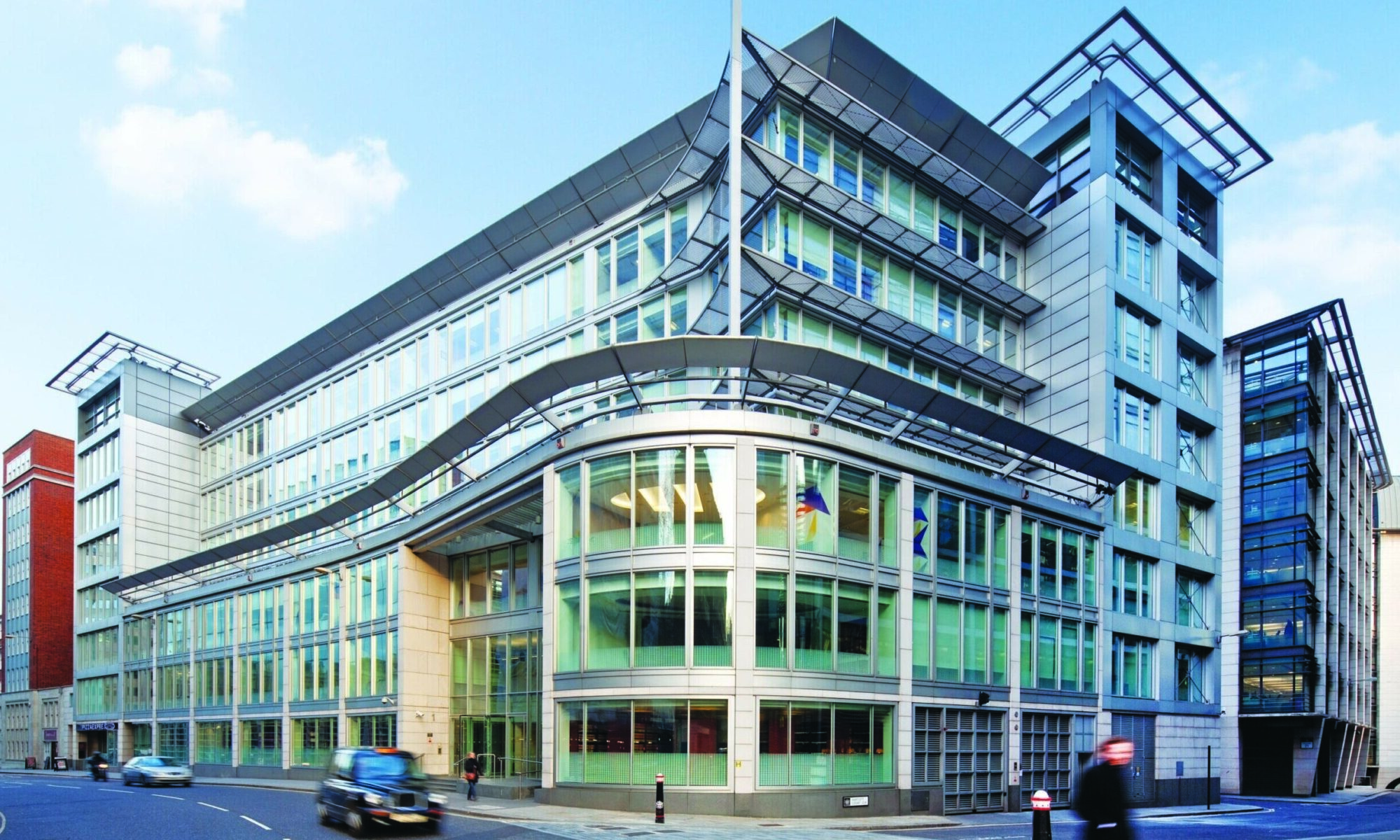
20 Fenchurch Street (aka the Walkie Talkie)

DWF has announced its financial results for the year ending 30 April 2025, reporting an 8% increase in group net revenue to £466m, up from £434m the previous year.

The firm did not disclose profit or profit per equity partner (PEP) in its release, but the topline growth continues the firm’s upward trajectory under outgoing CEO Sir Nigel Knowles.

Knowles stepped down in August this year, after overseeing a 60% rise in revenues and more than a trebling of profitability over his five-year tenure. The change in leadership came after the firm appointed former EY UK & Ireland chair Steve Varley as independent non-executive chair in July 2024.

The firm’s new CEO Matthew Doughty, who stepped into the role on 1 August, said in a statement: ‘This is another strong performance for our business, demonstrating the value of our integrated legal and business services offering and the trust our clients place in us. These results are a credit to our colleagues around the world, whose dedication ensures we continue to deliver exceptional outcomes for our clients.’

The firm has acted on various high-profile deals in 2025, including the acquisition of two landmark office buildings in Warsaw, a major water infrastructure project in the north west of the UK, and the $50m sale of renowned jeweller Fabergé.

Doughty added: ‘We are entering the new financial year with confidence, backed by strong first quarter growth. This confidence is underpinned by continued investment in technology, global expansion and our responsible business agenda.’

DWF made headlines for being the first law firm to list on the LSE’s main market in March 2019. However, its time as a publicly traded law firm was relatively short-lived, as the firm delisted after being taken over by mid-market private equity house Inflexion in October 2023, to become the largest UK law firm owned by PE.

In April the firm launched a redundancy consultation in order to cut costs in its commercial and central services divisions.

At the same time, 2024-25 saw the firm continue its international expansion. It completed its acquisition of Australian claims management business Proclaim in September 2024, adding 320 colleagues across nine jurisdictions to its claims management and adjusting arm.

The firm also snapped up a 62-strong insurance litigation team, including nine partners from Australian firm Hall & Wilcox’s London team, and integrated a further 28 lawyers, including nine partners, from the insurance and civil litigation practice of Canadian firm Bélanger Sauvé into its Canadian business Whitelaw Twining.

[email protected]

Orrick takes eight-partner UK/US finance team from Cadwalader ahead of North Carolina launch

Orrick is hiring an eight-partner finance team from Cadwalader, including four partners each in London and the US, with the Stateside hires set to open a new North Carolina base for the firm.

The City quartet, who specialise in collateralised loan obligations (CLO), is led by David Quirolo, a Legal 500 Hall of Famer for securitisation who has spent more than a decade at Cadwalader after joining from Ashurst in 2014.

He will be joined at Orrick by three other London partners – Claire Puddicombe (also formerly of Ashurst), Daniel Tobias and Alex Collins, who is ranked by Legal 500 as a next generation partner.

The partners making the move in the US are Washington DC managing partner Gregg Jubin and a trio of capital markets and CLO partners in Charlotte, North Carolina – Nathan Spanheimer, Joseph Beach and Skyler Walker.

According to a source familiar with the matter, Spanheimer, Beach and Walker will open a new office in Charlotte for Orrick, further extending the firm’s East Coast reach after it launched in Miami in July.

The hires will see Orrick add significant heft to its London finance bench, coming after the departure of a four-lawyer team to Dechert in June, including partners Sushila Nayak and James Jirtle.

The exits for Cadwalader, meanwhile, come on the back of the departure of a 13-strong team to King & Spalding in summer 2024. That team included Legal 500 fund finance leading individual Samantha Hutchinson as well as partners Mathan Navaratnam, Nathan Parket, Sukhvir Basran.

The firm’s London office also recently saw the departure of securitisation and structured products partner Richard Hanson, who left in July just nine months after joining from Morgan Lewis. However, that same month Cadwalader hired leveraged finance partner Edward Holmes from Paul Hastings.

A Cadwalader spokesperson said: ‘We wish our departing colleagues well. Cadwalader remains on track to have one of its best years in the firm’s history and we continue to be bullish on our growth strategy.’

Orrick declined to comment.

[email protected]

The legal AI frontrunners: a beginner’s guide to Harvey and Legora

AI-powered tech has been taking the legal industry by storm in recent years, with the big two players, Harvey and Legora, seemingly announcing a new partnership with major law firms every other week.

Both companies have raised millions of dollars in funding and have developed their own highly sophisticated AI-powered platforms to supercharge lawyers’ output.

But what is it that they offer – and which firms have signed up to use their services? For armchair observers who have not yet had first-hand exposure to the companies leading the tech revolution, here, LB presents a beginner’s guide.

Legora

Founded in Sweden in 2023, Legora is an AI-powered legal workspace built on Microsoft Azure’s infrastructure and large language model (LLM) services.  Formerly known as Leya, it rebranded in February this year before going on to launch in the UK and US in March.

The platform includes features such as tabular review, which transforms folders full of contracts, agreements, or case files into an organised, interactive grid. With each document appearing on a separate row, users are able to extract key data points and spot inconsistencies at a glance. The company has also recently launched a new ‘Workflows’ feature, which helps lawyers build, run, and evolve complex legal processes, automating multi-step tasks like due diligence, document analysis and legal research.

Early deals with law firms saw Legora partner with Goodwin in the US in March, before announcing a partnership with Cleary Gottlieb in May. Early adopters in the UK include Bird & Bird.

Legora have also just announced a new strategic partnership with Deloitte Legal UK to develop pre-built solutions and custom workflows.

In May, Legora secured $80m in a Series B fundraising round, reaching a $675m valuation less than two years after founding.

‘Legora’s long-term vision is to be in the hands of every elite corporate and commercial lawyer,’ said CEO and co-founder Max Junestrand. ‘Legora is built to pair human judgement with AI velocity – enabling junior lawyers to take on higher-value work sooner, supporting senior partners in delivering exceptional client outcomes, and helping in-house teams work more efficiently and consistently.’

Harvey

Launched in 2022, Harvey is a generative AI platform, built on OpenAI’s GPT LLM, which was built specifically for law firms and in-house legal teams. Founded by former O’Melveny & Myers associate Winston Weinberg, Harvey uses customised large language models to handle tasks such as legal research, contract review, drafting, and due diligence.

The platform can query and analyse large document sets, generate citation-backed answers from case law, and is fully integrated with legal tools such as LexisNexis and iManage.

With two $300m fundraising rounds during the first half of 2025, Harvey is now valued at around $5bn, and has recently announced new partnerships with Latham & Watkins and Willkie Farr & Gallagher.

‘We want to be the trusted AI platform for the world’s leading law firms and we are honored that, after extensive evaluation, Latham has chosen to deploy Harvey at scale across the business,’ said CEO Winston Weinberg in the company’s press release announcing the partnership.

What difference can these platforms make?

Efficiency and a focus on giving lawyers more time to work on more interesting and high-value matters are generally touted as the main benefits of both AI platforms. As Junestrand says: ‘the most immediate impact when lawyers start using Legora tends to be in high-volume, document-heavy workflows such as contract review, due diligence, and regulatory checks.’

As clients continue to seek greater transparency and better value for money from their legal advisers, better use of technology is one way to bridge the gap.  ‘We know legal workloads are only increasing – more documents, tighter regulation and sharper client demands mean lawyers will never run out of work,’ says Junestrand. ‘Our mission is to keep them ahead of the curve, with a platform that expands and evolves to meet their current and future needs.’

At Harvey, the company emphasises the integration levels and fact it was built specifically for the legal market as key differentiators. ‘Harvey was designed with a legal brain, legal data, and legal reasoning by lawyers, for lawyers, to do everything from drafting and comparing contracts to wholescale review and analysis across tens of thousands of documents,’ says Jackie Karmel, Harvey’s head of EMEA. ‘Using generative AI, lawyers can now produce work outputs and products with a couple of clicks, even taking away the burden of lawyers having to know how to prompt AI.’

Who’s partnered with who? Key law firm clients of Harvey and Legora

Harvey Legora
A&O Shearman Addleshaw Goddard
Al Tamimi (MENA) AGP (Norway)
Anderson Mori (Japan) Araoz & Rueda (Spain)
Ashurst Arendt & Medernach (Luxembourg)
Bär & Karrer (Switzerland) BAHR (Norway)
Barros & Errazuriz (Chile) BCLP
BonelliErede (Italy) Bird & Bird
Bowmans (South Africa) Born Advokater (Sweden)
Carey (Chile) Cescon Barrieu (Brazil)
CMS Cleary Gottlieb
Cuatrecasas (Spain) CMS
Gleiss Lutz (Germany) Cyril Amarchand Mangaldas (India)
Gowling WLG Deloitte Legal UK
Heuking (Germany) Dentons
Latham & Watkins DWF
Lewis Silkin Fondia (Finland, Sweden, Estonia, Lithuania)
Macfarlanes FromCounsel
McCann FitzGerald Goodwin
Mori Hamada (Japan) Harbottle & Lewis
O’Melveny & Myers HPP Attorneys (Finland)
Ogletree Deakins id est avocats (Switzerland)
Orrick Jeantet (France)
Paul Weiss Lindahl (Sweden)
PPU (Chile) LKS (India)
Reed Smith Mannheimer Swartling (Sweden)
Schoenherr (Austria) Mishcon de Reya
Vinson & Elkins Morais Leitão (Portugal)
Wilkie Farr & Gallagher Pérez-Llorca (Spain)
Wilson Elser Quinz (Belgium)
Honigman (US) RocaJunyent (Spain)
A&L Goodbody (Ireland) Taylor Wessing
Wong Partnership (Singapore) TLT
Waselius (Finland)
Wardyński & Partners (Poland)
Webber Wentzel (South Africa)

*accurate at the time of publication

Revolving Doors: Ropes restocks in PE as Slaughters sees double partner departure

September is here, summer is over and this week’s Revolving Doors has a flurry of moves as partners everywhere return to their (new) desks.

Ropes & Gray has strengthened its London office with the hire of private equity partner Cataldo Piccarreta from Latham & Watkins. Piccareta, who has led on deals for funds including EQT and Bain Capital, is set to join after eight and a half years at Latham, primarily in the firm’s Milan office.

Prior to joining Latham in 2017, he spent four and a half years at legacy Italian firm Gattai Minoli Partners, including as the firm’s London head, and has also worked at the now-defunct Dewey & LeBoeuf and Simmons & Simmons.

His arrival comes after a series of departures from Ropes’ London private equity practice. Helen Croke joined White & Case in June, while PE real estate duo David Seymour and Will Bryant joined Freshfields in July.

Elsewhere in the City, Slaughter and May has seen a rare double partner exit as finance partner Oliver Wicker and M&A partner Paul Mudie are set to leave.

The pair, who were both made up to partner in 2016, are departing after almost two decades apiece at Slaughters. ‘We thank them for their contribution to the firm and wish them well for the future,’ the firm said in a statement.

Addleshaw Goddard has launched a tax disputes and investigations practice after tapping Pinsent Masons for a five-strong team led by partner and Pinsents tax and investigations head, Steven Porter.

Paul Concannon, head of tax and structuring at Addleshaws, said that the new practice ‘significantly enhances our tax and disputes offerings, addressing a key gap in our capabilities.’

Addleshaws has also bolstered its real estate practice with the hire of CMS partner Amit Unadkat, who brings extensive experience advising private equity firms on real estate transactions.

Meanwhile, Shoosmiths has appointed former DLA Piper global co-CEO Simon Levine as a strategic board adviser.

Levine spent 20 years at DLA, with just under half of that in the firm’s top job.  His appointment comes shortly after Shoosmiths declared it was targeting international expansion through strategic combinations in core European hubs and with representative offices planned in New York and San Francisco.

 Commenting on his appointment and the firm’s plans, Levine said: ‘Shoosmiths is already delivering for clients at the highest level, and it’s now poised to take that success onto a bigger stage.’

Eversheds Sutherland has made a number of hires in London. The firm has hired M&A lawyer Kashif Siddiqui as a partner in its corporate finance practice. Siddiqui was most recently head of legal at former Poundland owner Pepco Group. Martin Corrigan joined from Latham as a structured finance partner and Karishma Brahmbhatt joined Evershed’s global privacy and cybersecurity practice from A&O Shearman.

In addition, James Holden and John Lurie have joined the firm’s construction team as partners. Holden was a partner in White & Case’s international arbitration practice, while Lurie served as principal counsel and regional head of legal for EMEA at US construction and projects company Bechtel Corporation.

Corporate partner Helen Johnson has joined Baker McKenzie‘s M&A team in London following 16 years at CMS, where she led the firm’s retail practice. In addition to retail, Johnson brings experience in M&A, joint ventures, private equity, fundraisings, IPOs and takeovers.

Lewis Silkin has hired two partners to its IP and immigration teams with Scott Foster and Rose Carey joining the respective teams.

Two overseas firms have planted flags in London, with US outfit Michelman & Robinson and German tech specialist YPOG both launching offices

LA- headquartered law firm Michelman Robinson has made its debut with a ten-strong corporate crime and investigations team, including four partners: Lily Dou and Polly Sprenger join from Addleshaw Goddard, John Gibson from Cohen & Gresser and Ruth Paley, who was most recently at Eversheds. Sprenger, Gibson and Paley are all lateral hires while Dou, a certified accountant, worked as a forensic accounting director at Addleshaws.

Meanwhile, Berlin-headquartered tech law firm YPOG has launched in London with a seven-strong tech team from Withers led by James Shaw. The team created tech boutique JAG Shaw Baker, which was taken over by Withers in 2018.

Elsewhere, Herbert Smith Freehills Kramer has made two hires in EMEA, with the addition of corporate partner Mohammed Al Eshaikh in Riyadh and competition, regulation and trade partner Laurence Bary in Paris.

In China, Hogan Hovells has hired Paul Hastings corporate partner David Wang and PE fund formation and investment transactions partner Meka Meng in what James Doyle, the firm’s head of corporate and finance described as a ‘significant step forward in our strategy to grow our offering in Greater China’.

Wang, who has moved to the firm’s Shanghai office, managed Paul Hastings’ Shanghai office and Beijing offices for more than 15 years, while Meng, based in Beijing, has moved after just under 20 years at Paul Hastings.

Turning to Europe, Clyde & Co has opened an office in Rotterdam, its first in the Netherlands, following a merger with domestic insurance boutique Stadermann Luiten Advocaten and the hiring of disputes partner Frits van der Woude from the Amsterdam-based Kennedy Van der Laan. In total, the office will comprise 17 lawyers.

Back in the UK, Squire Patton Boggs has added four partners to a range of practices across its UK offices. Miles Robinson has joined the litigation team in London from Mayer Brown, corporate partner Partho Chaudhuri has joined the Birmingham team from Deloitte, Deborah Polden has joined the Leeds litigation practice from Eversheds, and Chris Roberts has joined the Manchester restructuring practice from DLA Piper.

Foot Anstey has bulked out its London private client and corporate practices with the hires of partners Fiona Campbell-White and Matt Spencer, from Wilsons and Kingsley Napley respectively.

Finally, Brabners has hired partner Ben Lamb into its Yorkshire real estate team from Leeds firm Clarion.

[email protected]

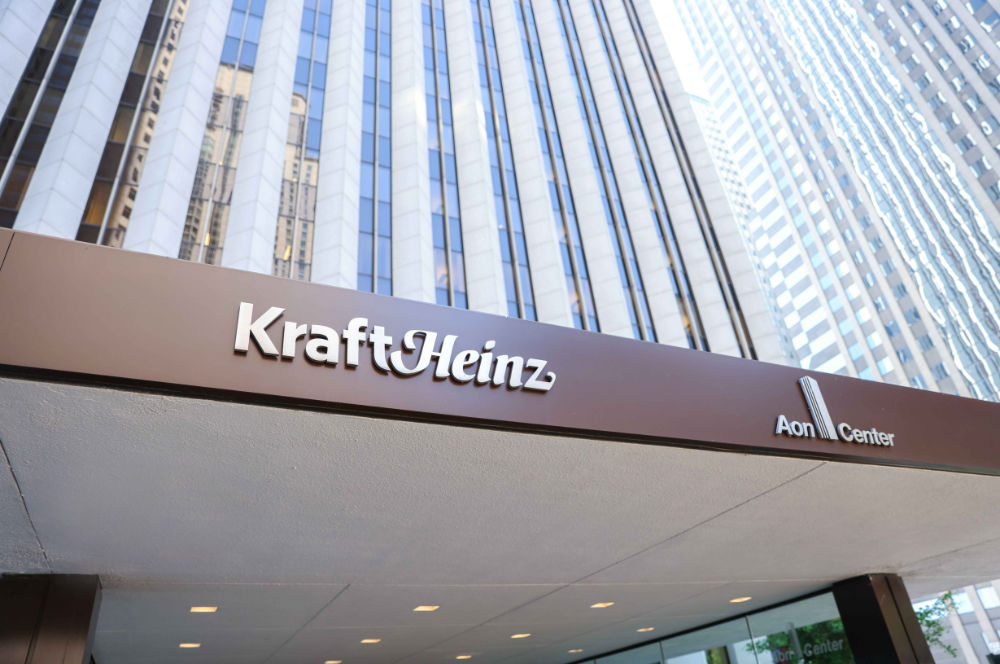
Paul Weiss and Skadden lead on Kraft Heinz split

Paul, Weiss and Skadden have picked up lead roles in the separation of The Kraft Heinz Company just 10 years after the historic merger between the leading American food manufacturers.

The transaction sees the merged entity split back into two separate publicly traded companies through a tax-free spin-off. Each of the companies will focus on growing separate brands, with one part housing brands including Heinz, Philadelphia and Kraft Mac and Cheese, and the other including brands such as Kraft Singles and Lunchables. The new companies are yet to be named.

Kraft Heinz chair of the board Miguel Patricio said in a statement: ‘By separating into two companies, we can allocate the right level of attention and resources to unlock the potential of each brand.’

The Paul Weiss team was headed by a trio of partners from the firms New York office, global M&A co-head Jeffrey Marell, M&A partner Stan Richards and co-chair emeritus of the firm’s tax department Jeffrey Samuels.

Also involved were corporate partners Carmen Lu in New York and Mohammed Alvi in Los Angeles, tax partners Robert Killip in New York and Cian O’Connor in London, London-based global antitrust practice co-chair Nicole Kar, New York executive compensation partners Matthew Friestedt and Jarrett Hoffman, and global IP and technology transactions co-head Claudine Meredith-Goujon, also in New York.

Marell has worked with Kraft Heinz before, leading the team that advised the company on the 2021 sale of its natural cheese business to an affiliate of French dairy products corporation Groupe Lactalis for a total consideration of $3.3bn. Also involved in that transaction were Meredith-Goujon and Hoffman.

The firm also previously acted for Kraft Heinz in a stockholder derivative action lawsuit, winning a dismissal in July last year.

Skadden, meanwhile, fielded a team from its New York office, with M&A partners Brandon Van Dyke and Kyle Hatton leading, and support from tax partner David Rievman and banking partner Janine Jjingo.

Skadden has also previously advised Kraft Heinz, with a Germany-based team assisting the food and beverage giant on its acquisition of an 85% stake in German spice company Just Spices, which completed in January 2022.

Heinz Company and Kraft Foods Group merged in 2015 in a deal valued at $60bn, with Cravath representing Heinz, Sullivan & Cromwell representing Kraft, and Kirkland & Ellis representing 3G Capital and Heinz.

The separation is expected to be completed in the second half of 2026.

[email protected]

Role scorers: the law firms on the biggest deals of a record £3bn Premier League transfer window

The summer transfer window has seen Premier League clubs splash record amounts of cash on new players, with total spending exceeding £3bn.

And with deals to be done, lawyers have been in the thick of the action, with specialist sports boutiques including Centrefield, Level and Onside Law among the firms stepping up to advise.

Total transfer fees paid by clubs in English football’s top division hit £3.1bn for this summer’s window, far surpassing the previous record of £2.36bn set in summer 2023.

‘It’s been a record-breaking window for us as well,’ Matthew Bennett, a partner at Centrefield told Legal Business. The Manchester-based boutique advised on deals worth almost £1.8bn across 30 countries, including some of the highest profile transfers on deadline day.

The British transfer record was broken twice this summer, both times by Liverpool FC, first with their £116m signing of Germany international Florian Wirtz from Bayer Leverkusen this June.

Travers Smith took a lead role on that deal, working alongside German law firm Seitz Partners to advise the Wirtz family on the UK legal issues connected with the transfer.

The Reds then signed Swedish striker Alexander Isak from Newcastle United for £125m on the final day of the transfer window, a deal that Legal Business understands Centrefield advised on.

Centrefield declined to comment on specific transfers, though the firm announced earlier this summer that it had advised England defender Trent Alexander-Arnold on his move from Liverpool to Real Madrid, with Spain’s Laffer Abogados also playing a role.

Bennett pointed to the dominance of the ‘powerhouse’ top-flight of English football as a key factor behind the record spend, with more than £1bn spent on transfers from one Premier League club to another, a trend which has been rising year-on-year in recent seasons.

Another key factor has been the influence of the profit and sustainability rules (PSR), which were introduced to prevent clubs spending more than they earn, but have also led to more sales as clubs look to balance the books.

‘In addition to volume, there’s a greater degree of complexity which is heavily influenced by PSR; the structure of deals, the timing of appeals, loans with options and obligations to buy – that adds a layer of complexity that didn’t exist five years ago.’

The complex nature and time-sensitivity of the deals makes the sector fertile ground for specialist boutique firms. London firm Level, which was co-founded by Daniel Lowen in 2017, acted on more than 250 deals across the window.

Lowen highlighted the importance of the sector-specific knowledge that boutiques have. ‘We’re aware of what arrangements certain clubs will accept and issues parties can push on,’ he said. ‘Where the firm is involved in deals from an early stage, a close forensic look can add commercial value to the transaction and improve the position of all parties involved.’

Jonathan Hyman, a managing associate at Level, added that there is an increasing trend of lawyers, accountants, tax specialists and other professional services advising on football matters. ‘With increasing money spent on transfers fees and agencies, everyone is of the understanding that it is sensible to have lawyers look at the paperwork,’ he said.

One of the other factors have has increased spending in the Premier League this year is the new £6.7bn domestic television deal with Sky and TNT Sports. ‘The revenues generated by the broadcasting deal puts the Premier League head and shoulders above the other major leagues in Europe,’ Bennett said.

Liverpool were the top spenders among Premier League clubs this summer, with a total outlay of around £450m. Intellectual property boutique Brandsmiths was involved in another of the club’s big summer deals, advising Dutch defender Jeremie Frimpong on his £29.5m transfer from Bayer Leverkusen, fielding a team led by Manchester-based partner David Seligman.

Alex Clarke, senior associate at Onside Law, noted that Liverpool’s relatively quiet transfer window last summer had allowed them to ‘effectively do two summer’s spending in one’, while still complying with PSR.

Onside, which was founded in 2005 and is ranked in the top tier for sport by Legal 500, is another boutique that acted on a number of high profile deals this window.

Co-founding partner Oli Hunt advised alongside Clarke on Manchester City midfielder Jack Grealish’s loan deal to Everton, which included a £50m option to buy. Hunt also advised on the transfer of Jobe Bellingham from Sunderland to Germany’s Borussia Dortmund, continuing a longstanding relationship with the Bellingham family after advising Jobe’s brother, England star Jude Bellingham, on his £88.5m move to Real Madrid in 2023.

[email protected]

‘We’re not complacent – we’re not done’: Latham stakes its claim as leader of the PE pack

The City private equity recruitment market has shown no signs of slowing down for the summer, with major moves including White & Case’s hire of Helen Croke from Ropes & Gray, Morrison Foerster taking two partners from Herbert Smith Freehills, and Sullivan & Cromwell this week announcing its surprise hire of ex-Weil heavyweight Mike Francies.

Latham & Watkins made one of the biggest recent splashes, bringing in White & Case dealmaker Ross Allardice to add further heft to its sizeable London team.

In addition to its strength in London, the US firm – one of just four firm ranked in Legal 500’s top-tier for high value PE deals – argues that the breadth of its platform across Europe gives its a clear edge over its rivals.

‘We’re in a unique position between the magic circle and European-heritage firms on the one hand, and the US-heritage firms on the other’, says global corporate department vice chair Tom Evans (pictured above right).

‘We have a group of 17 partners in London who do nothing but private equity work, but we also have partners in key European markets who do the same thing – as well as partners who are specialists in a range of key practices in their local markets, who are literate in high-value multijurisdictional PE deals,’ he adds.

Evans – who has now been at the firm for over 11 years after joining from Clifford Chance with fellow PE partner Kem Ihenacho (pictured above left) in 2014 – argues that it is this profile that makes Latham unique: its combination of PE expertise across key European markets and capabilities across those local matters.

Legal 500 private equity rankings in UK, US, and core European markets

Of all the firms ranked in Legal 500’s top two tiers for high-value PE deals in London, only Latham also has tier 1 rankings for PE in the US, Germany, France and Italy.

Kirkland & Ellis comes closest to matching it, with top-tier rankings in the US, France and Germany, and while the magic circle firms do have well established presences across core European markets, Freshfields is the only UK-heritage firm with a US ranking for PE.

Evans argues that rival firms have a struggle on their hands to replicate Latham’s profile: ‘European markets are tougher, there’s not the same dealflow as there is in the US or London, so talent is more concentrated.’

Latham has built its offices around practices that support high-value transactional work. Antitrust, for example, is increasingly recognised as a must-have for firms doing top deal work. ‘The deals that are happening now are increasingly challenging’, says Evans. ‘Antitrust issues come to the surface very early, and navigating regulatory hurdles is a key part of the process.’

This applies equally to more narrow areas that are unique to local markets. ‘The diversity of legal systems in Europe presents an interesting challenge for investors’, says Evans. ‘If you think just about labour issues as an example – works councils in France and across the continent, defined benefits pensions schemes in the UK, reclassification issues and difficulties with equity grants in a number of jurisdictions – it’s become imperative to have specialist expertise that is private equity and private capital literate, in-depth, and across jurisdictions.

‘Working with external counsel, who may take a more or less conservative view on an issue, risks adding an unnecessary layer of friction for client’s deals.’

Ihenacho, former private equity and investment funds practice vice chair and current member of the firm’s executive committee, agrees: ‘The major advantage that we have is that our colleagues in places like Madrid and Milan have a deep understanding of the local market, but they also speak the language of private equity.’

‘We’re always hungry’

Latham has placed its bet on what kind of firm works best, favouring large scale and broad coverage, without the need to rely on relationship firms in local markets for crucial deal-related matters, but avoiding the temptation to set up a completely full-service offering in all markets.

‘You don’t have to do everything in every jurisdiction’, says Ihenacho. ‘But you do have to have the specialist, PE-literate expertise in place to meet challenging client needs, now and in the future.’

The results of this approach are underlined by deal data. Latham ranked first in LSEG’s 2024 ranking of legal advisors by total European PE deal value, with 179 deals worth a total of $84.3bn, and 23% market share. The firm also ranked second in LSEG’s H1 2025 ranking of legal advisors for M&A deals with any UK involvement.

Looking ahead, Latham aims to maintain its position with coverage across the ever-broader world of private capital. ‘We’re expanding not just in pure private equity, but across the wider private capital universe, in areas like special situations, private credit, infrastructure finance, and alternative liquidity opportunities’, says Evans. ‘As the breadth of products available to clients increases, the opportunity to offer more and more to our clients is huge.’

The firm’s growth will include both internal promotions and lateral hires. Evans says: ‘We’re always hungry to meet with people who share our culture and will succeed on our platform.’

In particular, he points to infrastructure, technology, healthcare and life sciences as key growth sectors, as well as energy transition, financial services, and data centres.

And while Latham is satisfied with its results, the firm knows that it needs to keep moving to stay on top. ‘We’re not complacent’, says Ihenacho. ‘We’re not done.’

[email protected]

Trading places: Quinn New York arbitration head leaves for Brick Court as McDermott makes first post-merger laterals

New York City, US, cityscape

Quinn Emanuel New York international arbitration practice head Mark McNeill has left the firm to become a barrister at Brick Court Chambers in London, the set announced today (3 September).

McNeill spent six years as a partner at Quinn after joining from then-Shearman & Sterling’s London office in 2019, where he made partner in 2010 after joining as a counsel in 2007. His prior experience includes three years at the Office of the Legal Adviser for International Claims and Investment Disputes in the US Department of State, where he represented the US in investment arbitrations, as well as working on the negotiation and drafting of investment treaties.

‘I am hugely excited to be joining this leading set and look forward to continuing my international arbitration practice alongside some of the finest commercial barristers at the Bar’, McNeill said in a statement.

Latham & Watkins has hired asset management partner Thomas Lee into its New York M&A and private equity practice. Lee joins from Fried Frank, where he made partner in 2023 after joining as an associate from Kirkland & Ellis in 2019.

New York managing partner Marc Jaffe said in a statement: ‘Tom is among a select group of top-tier lawyers practicing in the niche asset management M&A and GP liquidity solutions space, and we are thrilled to welcome him to Latham. His technical skills and commercial approach will integrate well with our market-leading M&A, private equity, asset management, and investment funds teams both in New York and across the firm.’

Also in New York, McDermott Will & Schulte has hired leading finance partner Ira Schacter. Schacter joins from Cadwalader, where he spent over 40 years, including most recently as global co-head of the firm’s corporate, M&A, and securities practices.

He joins McDermott’s transactions practice group, where he will head up a new vertical in financial services, which will see the firm establish itself as a ‘go-to counsel for clients operating at the intersection of private equity, hedge funds, insurance, and financial services’, McDermott said in a statement.

McDermott global transactions practice group head Harris Siskind said: ‘We’re moving quickly to identify areas of growth for clients, and we see a hybrid future of lending, especially in an environment where banks are no longer rivals to private credit.’

He continued: ‘This evolving market landscape spans multiple industries. In the age of AI and rising demand for digital infrastructure, Ira’s arrival will help to position us as the partner of choice as banks and private credit firms embark on co-financing the future.’

Schacter is only the second lateral partner to join McDermott since it finalized its merger on 1 August, with the combination between legacy firms McDermott Will & Emery and Schulte Roth & Zabel completing less than three months after it was first announced.

Earlier in August, the firm hired Mintz cross-border asset recovery practice chair Dan Pascucci into its San Diego office.

Schacter is the latest in a series of departures from Cadwalader’s finance practice in recent months. Real estate finance practice co-chair Bonnie Neuman led a 14-lawyer team to Sidley in April, including partners Melissa Hinkle, Nick Brandfon, and Molly Lovedale. While restructuring partners Ingrid Bagby and Michele Maman left for Haynes & Boone in June.

Baker McKenzie has hired Jenny Liu as a transactional partner, working across the firm’s offices in New York and Palo Alto. Liu joins from Willkie Farr & Gallagher, where she made partner in 2022, and has experience across a range of private equity and strategic M&A transactions.

Elsewhere, Weil has hired IP litigators Chris Henry and Gaby LaHatte from Latham. Henry made partner at Latham in 2022, and joins Weil in Boston; LaHatte, a counsel at Latham, joins Weil as a partner in the firm’s San Francisco office.

On the West Coast, Arnold & Porter continued its expansion with two more hires from K&L Gates, bringing over labour and employment partner Stephanie Wright Pickett in Seattle and litigation partner Paul Sweeney in Los Angeles.

The firm launched its Seattle office last month with a clutch of hires from K&L Gates, including litigator Pallavi Mehta Wahi, who joined the firm as its new chair of Western US strategic growth.

Finally, Fenwick has hired another partner into the Boston office it launched in April, bringing over corporate partner David Horne from California-headquartered Gunderson Dettmer.

A startup and venture capital specialist, Horne is the sixth partner to join Fenwick’s office, which launched with a trio of IP partners from Cooley, and followed up in June with the hire of Jim Hauser, also a corporate partner at Gunderson Dettmer.

[email protected]

Gibson Dunn to launch Swiss base led by leading arbitration silk

Gibson Dunn & Crutcher is launching a new office in Zurich led by leading international arbitration silk Christopher Harris KC, following his move over from the Bar earlier this year.

Harris, whose move to Gibson Dunn from 3VB was announced in late July, will head the new outpost as partner in charge, and will also serve as co-chair of the firm’s international arbitration practice and the judgment and arbitral award enforcement group.

The move strengthens Gibson Dunn’s wider European presence, marking its sixth European base alongside Brussels, Frankfurt, Munich, Paris and London.

The firm said that the new Zurich base would serve as a strategic hub for clients facing cross-jurisdictional legal challenges across areas including arbitration, banking and finance, private equity, M&A, white-collar defence and regulatory enforcement.

Harris is highly ranked  by Legal 500 for public international law and international arbitration, and has more than two decades of experience acting in high-value investor-state and cross-border disputes before major arbitral institutions. He is also ranked for his capabilities in energy and banking & finance.

His recent cases have included representing the Republic of Kazakhstan in a successful challenge of an investor-state arbitral award, while last year he was reappointed for a second three-year term as as the UK member of the ICC’s International Court of Arbitration.

Gibson Dunn chair and managing partner Barbara Becker said that Harris’ dual qualification as a UK barrister and Swiss-admitted lawyer made him the ideal lawyer to lead the firm’s new office.

Christopher brings a distinctive blend of advocacy and market insight. His track record in high-stakes international arbitration and cross-border disputes makes him a natural steward for the  office.’

Gibson Dunn’s most recent expansion saw it move into Riyadh and Abu Dhabi during 2023 on the back of large team hires from White & Case and legacy Shearman & Sterling. The US firm also made a high-profile double hire in London with the addition of Sullivan & Cromwell finance and restructuring duo Presley Warner and Chris Howard.

Gibson Dunn is the latest international firm to expand into Switzerland, following Squire Patton Boggs, which opened an office in Geneva in 2024 led by commodities and shipping partner Kate Sherrard. The practice focuses on international trade, dispute resolution and sanctions.

In late 2022, US employment specialist Littler Mendelson entered the Swiss market via the acquisition of Zurich practice LEL Lawyers.