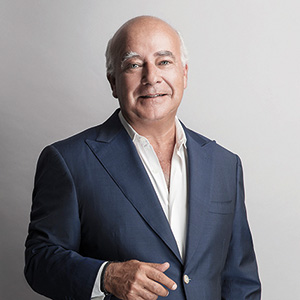
Euro Elite 2023: Germany – The centre holds

The German legal market has again proven its ability to thrive in the face of challenge, as law firms continued their trajectory of growth in 2022. With the largest firms reporting a 7% increase in profit after a tumultuous year, German independents are demonstrating renewed confidence in their own resilience.

After the uncertainty of Covid-19 brought major moves to a halt, the legal market is finding itself back in motion, with spin-offs and mergers becoming a more regular occurrence, though major consolidations have failed to materialise in 2022. However, many firms report difficulties in finding junior lawyers to join their ranks across practice areas. Paired with shifting client expectations that demand a more holistic approach and, as Gleiss Lutz co-managing partners Michael Arnold and Alexander Schwarz put it, ‘a demand for more integrated services rendered by law firms to clients’, firms face an increased need to demonstrate adaptability. ‘This need will also change the search profile for law firm staff in the future. In addition to traditional lawyers, the need for new professional fields is growing strongly. Summarised in one expression: “the future-ready lawyer”,’ says Elisabeth Lepique, one of the managing partners at Luther. Continue reading “Euro Elite 2023: Germany – The centre holds”

Euro Elite 2023: Iberia – Back on track

The past three years have been nothing but challenging for Portugal and Spain. The neighbours, whose economies are hugely reliant on the hospitality and tourism sectors, were hit hard by the series of lockdowns imposed to battle soaring rates of Covid-19 infection in 2020. But fast forward to 2023, and the outlook has shifted significantly.

Emerging from what could understatedly be described as a turbulent period in 2020, with a 10.8% economic downturn, the Spanish legal sector has successfully regained its footing and competitive outlook. While the pandemic made economic constriction inevitable, it has also heralded an opportunity for significant year-on-year growth. Continue reading “Euro Elite 2023: Iberia – Back on track”

Euro Elite 2023: Ireland – Slight return

While Ireland’s competitive legal market has enjoyed a buoyant period post-Covid, fresh challenges have emerged to challenge this optimism. Ireland has not been insulated from the overheated recruitment market and is as alive as global peers to reversals wrought by the cost-of-living crisis, the war in Ukraine and a slowing of deals as concerns over interest rates and inflation continue to gather pace.

However, Declan Black, Mason Hayes & Curran’s managing partner, predicts high single-digit revenue growth for the 2022 calendar year, even as it comes on the back of a 2021 banner year for much of the Irish market at large. ‘Corporate transactions are down from the 2021 peak and that has spread through the western world,’ he says. ‘Valuations have tumbled amid concerns over interest rates and inflation. Deals have slowed down.’ That said, he points to real estate, financial services, contentious, regulatory and data regulatory as areas of sustained growth. Continue reading “Euro Elite 2023: Ireland – Slight return”

Sponsored briefing: Looking ahead: What does 2023 hold for Portugal?

In past years, Portugal was on the radar for all the wrong reasons, primarily due to the accrued debt problem, but also due to the consequences of the lack of structural projects or investment. Now things seem to have changed and 2023 looks like a promising year.

Not only is Portugal the furthest European country from the war in Ukraine, but it is also one of the countries least impacted by that war, as it does not depend materially on Russian gas and has other sources of supply. As a consequence, energy prices have not climbed as much as in the rest of Europe and Portugal seems to be one place where energy prices will be more attractive in the future. Continue reading “Sponsored briefing: Looking ahead: What does 2023 hold for Portugal?”

Sponsored briefing: Q&A with Nuno Galvão Teles, managing partner of Morais Leitão

What do you see as the main points that identify Morais Leitão as a leading firm in the Portuguese legal market?

One of our key points of recognition has always been the innovation in legal advisory and the significance of being a full-service firm. We regularly advise across many areas and sectors and take on multidisciplinary projects, thus establishing future trends and models while covering all grounds. The main challenge in our very competitive market, with new entrants and a geographical disadvantage, is to continue providing in-depth legal advice while remaining economically sustainable. In order for this kind of approach to be effective, we privilege internal innovation. From project and knowledge management to legal tech, from legal design to AI, we pioneer an innovative approach to procedures and content that produces real benefits for the client, both in terms of the output and of the process that leads to it. Continue reading “Sponsored briefing: Q&A with Nuno Galvão Teles, managing partner of Morais Leitão”

Sponsored Spotlight: Insurance, reinsurance and insurance regulatory – Unrivalled expertise

The ever-changing legal and economic environment for insurers calls for experts with a solid background and comprehensive expertise in the field of insurance law, as well as a solution-oriented approach to the client’s needs.

The insurance practice of Prager Dreifuss can look back on a longstanding tradition and unrivalled expertise in advising and representing insurers and reinsurers in all aspects of insurance law, and fields one of the largest insurance teams in Switzerland. The team is led by Christoph K. Graber who has repeatedly been named as a ‘Thought Leader’ and as Switzerland’s ‘most highly regarded practitioner’ in leading insurance law rankings. Continue reading “Sponsored Spotlight: Insurance, reinsurance and insurance regulatory – Unrivalled expertise”

‘With economic downturn, the need to pull the trigger on claims intensifies’ – leading City litigators look at the key disputes trends for 2023

‘Disputes arise when there is disruption, and it seems to me there’s just about every type of disruption at the moment.’

With this, Julian Copeman, a disputes partner at Herbert Smith Freehills neatly summarises market expectations for 2023. It is going to be a busy year. Continue reading “‘With economic downturn, the need to pull the trigger on claims intensifies’ – leading City litigators look at the key disputes trends for 2023”

No personal best this year for Hogan Lovells as turnover and profits decline

As the financial reporting season kicks off once more, Hogan Lovells has today (22 February) reported a 7% drop in revenue to $2.43bn as PEP fell 8% to $2.28m.

This represents a $174m reduction to the firm’s top line and looks likely to set the mood for many Global 100 players as market forces continue to take their toll. The results mark a disruption to Hogan Lovells’ purple patch, following on from last year’s 13% revenue increase to $2.61bn and eye-catching 26% hike in PEP to $2.48m, as well as a solid showing on a three-year track. Continue reading “No personal best this year for Hogan Lovells as turnover and profits decline”

Time to shine – top tips for standout Legal Business Awards 2023 submissions

Could it be your year? Nominations are now open for the most prestigious showcase of talent in the industry, the Legal Business Awards 2023.

The event will take place on Tuesday 19 September 2023 at The Grosvenor House Hotel, Park Lane, London. You have until 10 March to provide submissions in any of the categories open to teams or individuals. Continue reading “Time to shine – top tips for standout Legal Business Awards 2023 submissions”

Revolving Doors: Travers and Shearman exodus continues as US firms pick up the talent

City of London

Once a rare phenomenon, exits from Travers Smith have picked up pace in recent weeks, with the latest departures announced this week being those of Ed Ford and Sacha Gofton-Salmond to Simpson Thacher & Bartlett. Partners at Travers since July 2021 and July 2022, respectively, Ford and Gofton-Salmond will bring to Simpson Thacher with capabilities in the private equity secondaries market.

Jason Glover, managing partner of Simpson Thacher’s London office and head of its European funds team commented: ‘Simpson Thacher has a multifaceted private funds practice in Europe and the addition of Ed and Sacha will further enhance our ability to provide clients with the flexibility needed to meet an evolving market.’

Continue reading “Revolving Doors: Travers and Shearman exodus continues as US firms pick up the talent”

‘Game-changers’– why in-house counsel must take ownership of ESG

‘You are all climate lawyers now.’ So declared John Kerry, the US special presidential envoy for climate, at the General Assembly of the 2021 American Bar Association hybrid annual meeting in Chicago. Fast forward to 2023, and the veracity of this statement far exceeds even Kerry’s predictions. Continue reading “‘Game-changers’– why in-house counsel must take ownership of ESG”

‘There are landmines out there for companies’– corporate crime issues to stay on top of in 2023

2022 may have disappeared into the rear-view mirror but the economic and geopolitical strife and uncertainty that came with it have carried over into 2023. Amid the ongoing war in Ukraine, soaring inflation and energy costs and increasing scrutiny of their processes, businesses continue to face challenges that threaten both their balance sheets and their reputations. Continue reading “‘There are landmines out there for companies’– corporate crime issues to stay on top of in 2023”

Action stations

The world has been turned on its axis over the last few years of unprecedented economic, social and geopolitical disruption. Emerging trends and ongoing developments continue to take the real estate market by storm, and preparation will be the key to success for general counsel and senior in-house lawyers to combat these headwinds. Continue reading “Action stations”

Get ready to be more enterprising than ever

As we face another few weeks of inclement weather that has somehow seemed to drag on longer even than the usual UK winter, thoughts inevitably turn to sun loungers, warmth and sandy beaches. Alluring as a spring holiday seems right now, whatever you do, don’t book your getaway for the week including the 24th and 25th April.

It’s hard to believe that Enterprise GC is once more nearly upon us and that this will be the sixth year of Legalease’s marquee, two-day general counsel event at the Hilton London Syon Park. Anyone who has attended in past years will know that I’m not exaggerating when I say that this is the only must-attend GC networking event of the calendar – more than 100 senior speakers and guests can’t be wrong.

While no two Enterprise GCs are ever the same, one thing is certain: each event is bigger, better and more business-critical than the last. Expect thought-provoking debates on the in-house counsel’s increasingly crucial role in promoting diversity, equity and inclusion; the rewards and pitfalls as Gen Z lawyers infiltrate the workplace; the future of the billable hour; the perennial and thorny question of legal tech; and a whole lot more.

But back to this, the winter edition of IHL. Our cover feature is a must-read for all of us grappling with the ever-pressing ESG (environmental, social and governance) landscape as enforcement and litigation risks loom large. Here we discuss the concerns in-house counsel need on their agenda this year and explain why you need to start shaping the conversation.

Elsewhere, we have our usual insightful Perspectives pieces, this time featuring two prominent individuals who were recognised for their outstanding contributions at the Legal Business Awards 2022.

Sharon Blackman, Citi’s managing director and general counsel tells of her continued elation at beating five other nominees to be named GC of the Year after being recognised for her committee work, not to mention her OBE in June 2021 for services to the financial services sector.

Apart from recounting a fascinating career that has seen her cut her teeth as an equity derivatives lawyer at Abbey National, Blackman engages on the importance of bringing up the junior lawyers around you so that they are equipped to deal with whatever might come their way.

Meanwhile Jelena Madir, general counsel of Gavi, the Vaccine Alliance, which won the Most Transformative In-House Team award, retells a globetrotting, if occasionally fraught, career that thwarted a dream job in private practice at Shearman & Sterling when the bottom fell out of the market in 2008. Nevertheless, the reversal no doubt prepped her for the upheaval of being the GC of a vaccine company in 2020 and coping with being under-skilled and understaffed as a legal department supporting the production and distribution of Covid-19 vaccines around the world.

Finally, this issue offers our usual incisive market reports, this time on the particularly topical issues of real estate and corporate crime. There’s a lot to unpack before we all get together again for Enterprise GC in April.

Rick Sinkfield, chief legal officer, chief ethics & compliance officer, Laureate Education, Inc.

My personal experience, and certainly the experience of my family, really shows the positive impact education has made when it comes to gaining opportunity. I do not mind sharing that only one of my grandmothers was able to attend teaching school, and that was under very dire conditions during segregation in the United States.

My grandmother faced legal and de facto restrictions on her ability to travel within the U.S. and never could barely imagine traveling outside its borders, yet within a couple of generations, her grandson became the chief legal officer for a company that, at one stage, spanned 30 countries.

This really shows that in the span of just 50 to 60 years, education can change your family situation. Even more inspiring is, if you can replicate this thousands, or hundreds of thousands of times – you can change society.

Such massive change can seem like a daunting task. But you have to start with one family at a time, one institution at a time. That is how society can move forward.

Making it affordable

As a company, Laureate has always been on a mission to create opportunity for its students, faculty and community. We believe that access to affordable, quality education is essential to increasing opportunity.

Although the history of our company has been global, we now work in Mexico and Peru, where we educate a combined total of about 380,000 students. Many of the countries that Laureate has operated in have suffered from vast inequality. There is this nexus that the more people you bring into the economic livelihood of a community, you will, by definition, promote and expand diversity.

Laureate is a for-profit company, so unless we can deliver quality educational experiences to our students, the students won’t come. We know very well that our services have to be affordable. Moreover, our institutions have to be of a certain quality as well.

We know people get educated not just for the value of that education, but for what that education can really do for them in their lives. So, it is important to ensure that our students get a return on investment.

There is this nexus that the more people you bring into the economic livelihood of a community, you will, by definition, promote and expand diversity.

For example, when we were operating in Brazil, our universities had some of the highest enrollments for minorities and women. But, diversity in the Brazilian legal profession was lacking. A group of local lawyers started a program  to encourage Black, or Afro-Brazilians, to join the legal profession. As a company, we were very quick to partner with this program to get our graduates additional training and to give them the best chance to compete in this highly competitive profession.

There is the social aspect of education, but there is also the economic aspect. The two are interrelated and that is why we focus on quality and affordability. Different markets have different needs. The US market is the most expensive market in the world; this model does not work for other countries. So we adapt. Some countries offer very little financing for non-public education, so that is a huge driver for us to make things affordable.

Leveling the playing field

When it comes to building a more diverse and inclusive legal profession, the first barrier is the difficulty of getting positive exposure to who lawyers are, what they do, and what are the many avenues that a career in law can provide.

There are a lot of good people trying to make the profession more inclusive. But the profession, by its very definition, is designed to be exclusive. You have to take difficult entrance exams and professional exams. It’s all designed to make entering the legal profession even harder.

So, when people make it through law school the question is not who gets to become a lawyer, but who stays a lawyer? Retention is an area that often gets overlooked. People have to ask: are diverse lawyers getting the same exposure and making it to the higher ranks of management?

It is important that diverse lawyers do get the opportunity to move up the corporate ladder. If you do not have diversity in the people who make laws and the people who enforce laws, you will get unequal results. One group will be favored over the other – and we have seen that happen time and time again in countries around the world, not just in the United States.

Institutions are made up of people, and if you want institutions to grow and enterprises to be effective, then people have to be happy.

My legal team has always been diverse. At one point, my group was about 75% women and that was across lawyers and non-legal staff. I am very proud of that, because it has been in countries where the barrier for women to achieve senior leadership roles is even higher than in the United States.

In the past, we have also intentionally focused on diversity among our interns so that we are training the next generation of diverse lawyers. That includes diversity in gender, race and economic disenfranchisement. Interestingly, when you focus on economic disenfranchisement, you can end up impacting other cleavages of inequality.

You are welcome too

Institutions are made up of people, and if you want institutions to grow and enterprises to be effective, then people have to be happy. People are speaking up now. They are saying that their beliefs, goals and wellbeing should not be separate and subservient to some corporate or institutional goal that they did not help to define.

An interesting example, which I think is going to become more common generally, is gender identifiers in your email signature block. This is a strong social shift that I can see taking place at universities. Universities tend to be ahead of everybody because they have young kids who are cementing change.

A few years ago, I attended a planning meeting at a large U.S. university. As we went around the room all of the students, faculty and administrators introduced themselves, while also sharing their pronouns: he/his/him, her/she/hers, they/them, etc. Now, I have seen this shift happening within corporate circles and in business meetings.

I never had to grapple with feeling shut out due to my gender identity, but over time I have realized that what is important is the community. If people are telling you they do not feel welcome, you need to listen. If I introduce myself using gender pronouns, I am signaling to others in the community that they are welcome.

This is a critical pivot in worker management and corporate behavior. The key is to listen and try to make the workplace an environment where everybody can excel on their merits and performance. You cannot sustain a world in which people are forced to work in ways that they believe are antithetical to their very existence, to their very being.

If colleges and workplaces are willing to have the tough conversations, we are moving in a positive direction to building more diverse, equitable and inclusive workplaces.


Harvey Anderson, chief legal officer and corporate secretary, HP Inc.

I’m a proud alumnus of Marquette University and during my time there, I was enrolled in the Educational Opportunity Program (EOP) that motivates and mentors first generation college students. Although I was studying Engineering at the time, EOP’s director, Dr. Arnold Mitchem, changed my life by inspiring me to pursue a career in policy – and the rest is history.

There is no excuse

The numbers tell the story here. 2020 American Bar Association research shows that 37% of US lawyers are female, 5% are Black, 5% are Hispanic and 2% are Asian. We have a lot of work to do to increase diverse representation in the law. There’s no excuse. We must break down barriers and lay an open pathway that attracts, welcomes and cultivates diverse talent.

The lack of intentionality compounded with ineffective processes are the biggest barriers that I see. Clients haven’t historically demanded diverse talent. Recruiting firms, driven by client requests, go to the same networks that don’t necessarily include diverse talent pools.

However, the tide is turning, due to the demand for diversity from many organizations, especially after the 2020 racial equity movement.

Being intentional

Diversity, equity and inclusion have to be part of a company’s core values. At HP, we believe in the power of diversity to drive innovation. This means diversity in thought, background and experience, as well as the traditional dimensions of diversity. This has led us to assemble one of the most diverse board of directors in tech. We even went as far as testifying in front of the California State Senate to support legislation that would require diversity in corporate boards. We also have a very diverse executive leadership team, with 53% total minorities and 30% women. Together, they make up the backbone of our DE&I infrastructure that propels us to make meaningful progress over time.

At HP, we believe in the power of diversity to drive innovation. This means diversity in thought, background and experience, as well as the traditional dimensions of diversity.

A tangible example is how our leaders have rallied behind our ambition to become the world’s most sustainable and just technology company. As part of that, we set some of the most ambitious DE&I goals in the tech industry – such as to achieve 50/50 gender equality in leadership by 2030 and meet or exceed labor market representation for racial ethnic minorities in the US– and launched an inaugural Racial Equality and Social Justice Task Force.

Working towards a better future

Diverse leadership matters. It creates a domino effect, where everyone becomes more intentional at hiring and retaining talent. It also fosters a mindset of change to eliminate processes and policies that have historically held underrepresented groups back. In other words, we must affirmatively adopt processes that reduce unconscious bias and create a more inclusive and welcoming environment. It’s a journey, not a destination.

Last year in my legal organization, we started requiring 50% of our candidates to be diverse. One of the ways we make that happen is by partnering with organizations like the Black General Counsel 2025 Initiative (BGC) and the National Bar Association. Ultimately, we want to be certified by Diversity Lab under the Mansfield Rule. When candidates are interviewing, we intentionally put together a diverse panel to get a well-rounded perspective.

Internally, we remain committed to creating a sense of belonging for all of our employees. This requires paying attention to a host of small and large practices to retain the talent we want and need.

Externally, the legal department has a ‘holdback’ program, which has been in place since 2017, and it requires our US-based law firm partners to maintain minimally diverse staffing on HP matters. The compliance rate doubled from 46% at launch to nearly 100% today.

While we’re proud of our progress, we are constantly evaluating opportunities to push the envelope.

Where we all belong

My vision is to build a workplace that has a strong sense of belonging and inclusion so we can help our business reach its full potential. This means DE&I must be a business imperative, not a ‘nice-to-do’. It will require all of us to step up, become change agents and question the language we use, the assumptions we carry and the seemingly benign processes we use that may actually work against our goals.

Finally, in our efforts to find the best talent, we must refrain from only looking at a portion of the total talent pool. We believe, as shown by many studies, that diversity improves business outcomes. It’s not a zero-sum game. When we champion diversity, we all succeed in the long run.

Ernest Tuckett, co-founder of the Black General Counsel 2025 Initiative, and vice president, associate general counsel, Verisign

I have had mentors that saw valuable qualities in me that I did not see in myself.

I have been very fortunate in my career. I spent many years at a law firm before making the leap to in-house counsel and, during my journey, I ended up meeting mentors who saw leadership potential in me.

They foresaw that I had the ability to take on stretch assignments outside of my focused disciplines, and roles as an executive leading teams. Over my career, I have led  a number of legal teams in leadership roles including as General Counsel for the Americas region of a chemical company and in my current role reporting to the General Counsel of a global public company.  I believe I have made good on all those opportunities that my mentors and managers have entrusted to me. I am so grateful to all the folks who have seen something in me and supported me for opportunities and promotions and hired me into leadership roles. This is one of the reasons that I am passionate about giving back and helping others on their career paths. It was a driving impetus for me co-founding the Black General Counsel 2025 Initiative (www.blackgc2025.com).

Labor of love

It all started in the summer of 2017, at the annual convention of the National Bar Association. During an event of the Commercial Law Section, I was asked to give a presentation about the ‘State of Diversity in the In-house Bar.’ In the talk, I challenged the Black general counsel in the audience to set an aggressive goal and work together to increase the number of Black GCs in Fortune 1000 and other large companies.

In the audience at the time was April Miller Boise, then general counsel of Meritor and now general counsel of Eaton Corp., both Fortune 1000 companies. Together, we founded the Black General Counsel 2025 Initiative. The Initiative is a labor of love to help other talented lawyers receive the benefit of mentoring and networking. Our primary aim is to draw attention to the talented Black leaders in the legal profession who are ready now for top level general counsel roles.

Our initiative creates a strong network by connecting current and former Fortune 1000 general counsel with aspiring Black legal leaders. The Advisory Council has developed a list of the key skills required to secure a top-level general counsel role. Through the Initiative, we share general counsel job opportunities with various corporations, and we create connections with executive recruiters who lead those searches. This gives the members of the cohort of the initiative a chance to put their names in the hat and be considered when opportunities arise. We currently have a cohort of 41 legal leaders in the initiative.

The community created by the Initiative is also a good resource for recruiters or anyone who wants to find diverse talent. One of the hardest parts of moving up the corporate ladder is knowing about opportunities. High-level jobs are rarely advertised, and we rely on our network to help make these job openings known to the lawyers in the cohort and in the Black legal community generally.

Meaningful mentors and the power of networks

Mentoring is so important to grooming future leaders in the corporate world, and this is especially true for underrepresented groups, such as women and racial minorities. Not every lawyer will get the chance to become a general counsel, but when selecting the pool of people who will get exposure to opportunities to expand their leadership skills and qualify for general counsel roles, we need to strive to make sure there is diverse talent in that pool.

Having a mentor and a champion in my hiring manager and first boss at DuPont was a game changer for me, and that is why I tell everyone that mentors are so important. Various mentors in my career have helped me see my own leadership potential and they have guided me through some low moments when my confidence was shaky and I could not envision myself doing bigger things.

Mentoring is so important to grooming future leaders in the corporate world, and this is especially true for underrepresented groups, such as women and racial minorities.

I have given back by mentoring many others. I am proud to say that a number of my mentees and former direct reports are now general counsel and/or hold leadership positions in national and international corporations.

Networks are powerful resources. Networks include a wide variety of people at all different levels from a cross-section of areas who have some common connection to us and provide a bridge to opportunities and to other people who can do the same. Strong networks include people who will put our name forward for opportunities. It is critically important that rising attorneys have networks that include people who will help them move along their career paths.

One of the simplest ways to create more diversity is to make sure that people not traditionally thought of when discussing future leaders are intentionally included. Building a network of Black rising leaders, as we strive to do in the Initiative, creates a pipeline of diverse talent for leadership positions. Providing diverse talent with a realistic road map on how to become general counsel will inspire more lawyers from different backgrounds to prepare themselves and aim for leadership positions.

In the right direction

When thinking of ways to help increase diversity, we all have to start somewhere, so do not despise small beginnings. If your efforts enable you to hire even one or two diverse employees, that will make a difference. People tend to gravitate to the places where they can find allies and people who look like them. In my own career, I have seen that employing diverse talent leads to more diverse talent in the workplace. When an organization has diverse lawyers, especially at the leadership level, they attract other diverse employees to the organization. Most people in underrepresented groups do not want to be the ‘only one’ at their company on in the department.

There is a past history of women and minorities being excluded from professional opportunities. The current statistics demonstrate that the number of women and minority executives in Fortune 1000 companies remains low. Ultimately, we need professional diversity initiatives aimed at trying to address any lasting effects of the past exclusion of underrepresented groups. Our goal should be trying to level the playing field for everyone in the future.

Having major corporations and law firms engage in intentional effort to find diverse talent when opportunities arise will go a long way towards making the profession more equitable.

Overall, many companies and law firms state that having a diverse team is critical to them performing at their optimal level, based on various studies supporting this conclusion. There is evidence that the legal profession is trying to create more opportunities for underrepresented groups. Over the years, we have seen improvements for some groups but, for others, including Black professionals, improvement has been lagging.

Having major corporations and law firms engage in intentional effort to find diverse talent when opportunities arise will go a long way towards making the profession more equitable. The Black General Counsel 2025 Initiative is striving to do our part to answer the common question of “where is the diverse talent?” In addition to the 41 members in our cohort, our website (www.blackgc2025.com) has two lists of current and former general counsel which include more than 200 names of Black lawyers who are or have been general counsel of a range of companies. One of those two lists is the Fortune 1000 and Global 1000 Black GCs.

I ask recruiters, CEOs, and hiring managers to visit our website and contact us when looking to find diverse talent for a GC or other legal leadership search, and for board director positions as well.

The Black General Counsel 2025 Initiative plans to help increase the number of Black GCs by focusing on:

  • Identifying all current and former Black GCs in the Fortune 1000 and other large companies
  • Setting forth ideal core criteria to be a successful GC
  • Using the criteria to identify ‘ready now’ Black GC candidates
  • Connecting Black GCs and ready now candidates to new GC opportunities and to executive search professionals who focus on GC recruitment
  • Connecting ready now candidates and new Black GCs to each other, and to mentors and advisers, to help with their searches and career paths