
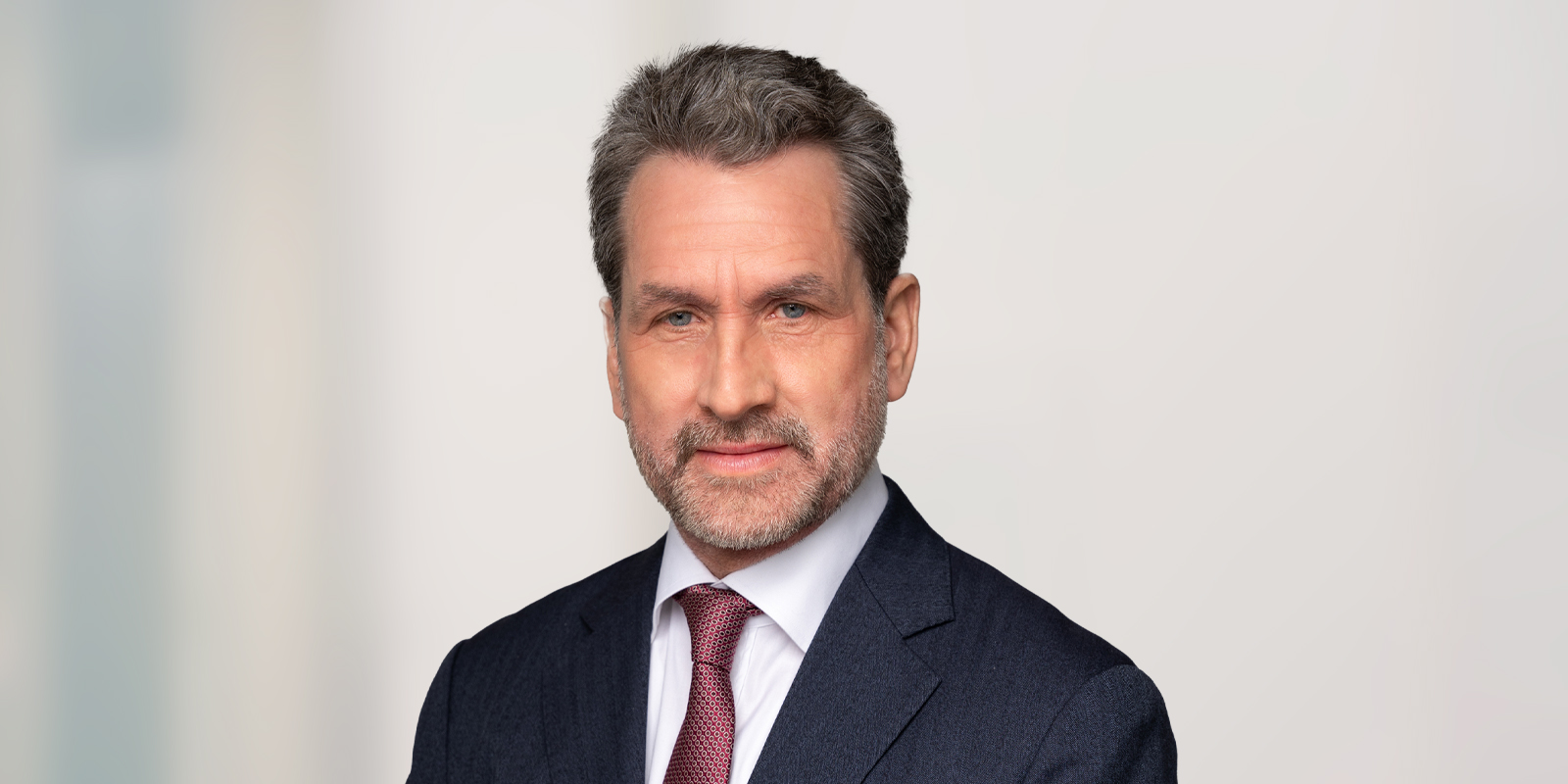
‘When you start a new practice, there are a tremendous amount of variables,’ says Jake Keaveny, head of European capital markets at Proskauer. ‘You need to put together the right team, the right clients and a little bit of luck for everything to fit together and all the pieces to work.
When Keaveny joined the firm in September 2024 to launch the practice, Proskauer had never worked on a high yield deal in London. Little more than a year later, it had advised on ten, including recently advising the banks on Spanish engineering company Gestamp Aotomocion’s €500m notes offering, as well as advising the financing sources on Platinum Equity portfolio company Urbaser’s €2.7bn syndicated financing in July.
Proskauer’s London leveraged finance team now counts some 25 lawyers, including seven lender-focused partners. Of those, two are high yield specialists: Keaveny, and Court Tisdale, who moved with him from Cahill.
‘Proskauer wanted to build off its longstanding relationships with the direct lending funds,’ says Keaveny. ‘What they didn’t have in Europe is syndicated finance, which is always run through the investment banks. They’re not necessarily investing long-term – they underwrite debt and sell positions to the market. That’s a very different model. We came to the firm to help bring those relationships over.’
‘Being able to say you’re top five on high yield gives you a lot of credibility on other products’
To do so, one thing was crucial: face time with clients. ‘Proskauer did not have this practice in Europe in the past,’ says Keaveny, ‘So we quickly wanted to get in front of clients to let them know the team we had and the investment made so there wouldn’t be questions about the brand in this space.’
‘There were a lot of market participants to get in front of out of the gate,’ he continues. ‘We met with all of the investment banks, and also let the sponsors and their law firms know what we had built. They wanted to understand the level of investment, do we have a deep enough bench to do the work? We had to show them. Then someone had to say, “Okay, we’ll give you a shot.” The first ones are the most important, because then you can build the reputation.’
Their efforts have been a success, according to Keaveny: ‘Almost all of our legacy clients have followed us one by one.’
The push in high yield is part of an ambitious plan by Proskauer to grow its offering across the breadth of the finance space in London – an effort that also saw the firm hire Philip Bowden, former global co-head of banking at legacy Allen & Overy, in July 2024.
Keaveny explains the strategy: ‘We want to be able to cover leveraged finance as a whole. If a sponsor decides they want to do a high yield bond, or a syndicated term loan, or direct lending, we have to be able to cover it. We have to be completely agnostic, to be able to follow the sponsor whatever direction they go.’
The underlying rationale is simple: to build the firm’s syndicated lending and high yield capacities to match its depth in private capital.
‘If you’d have asked me seven or eight years ago, I’d have said for large-cap deals you just need to focus on loans and high yield,’ says Keaveny. ‘But the last five years have shown that you need direct lending too – in a big way. Ideally, you’d have about a third each in direct lending, loans, and high yield. And the covenants that govern those deals are becoming more and more similar.’
This overlap creates further opportunities, according to Keaveny: ‘Being able to say you’re top five on high yield gives you a lot of credibility on other products, as everyone knows the key covenants across products derived from the high yield market. Getting past that hurdle allows us to credibly invest money in other areas.’
‘By having early success we’re giving firm management ammo to provide more support’
Keaveny explains that these opportunities also feed back to the firm’s longstanding strength in private capital work. ‘The firm has always had a great platform in direct lending, and now we’re moving more into the large-scape space. We’re focused on growing market share across the board.’
A year in, the London team’s performance has been strong enough to ensure further commitment. ‘By having early success we’re basically giving firm management ammo to provide more support and go out into other areas,’ says Keaveny. ‘It allows us to keep growing.’
What form would this growth take? Keaveny says the firm does not need to prioritise City hires: ‘We’re at a good spot. We still have growth plans, but we’re hiring on a more strategic basis.’
Continental Europe is a possible area of expansion, as a significant portion of the work the London-based team handles is Euro-denominated, and involves clients based on the continent.
‘Having more of a local market presence outside London is something we’ll continue to evaluate,’ says Keaveny, pointing to the firm’s existing offering in Paris as evidence of growth on the continent.
Having the right people in the right place will be important to a firm that wants to compete at the top level amind growing consolidation across the industry.
Still, Keaveny is confident: ‘We really can wait for the right people.’







 Earlier this year
 Yen Sum (pictured), the global chair of Latham’s private capital practice, says the expansion of its CLO capabilities is the latest step in a




 CLLS chair and former Simmons & Simmons senior partner Colin Passmore (pictured) had been hopeful that the government would listen to the concerns raised by the industry, and said that he was ‘very, very pleased’ by the news.



 ‘Ultimately, bribery is bad for business,’ says Sidley London white collar partner Sara George (pictured) about why US President Donald Trump’s move earlier this year to halt prosecutions under the Foreign Corrupt Practices Act could hinder rather than help companies.
  A raft of legislative changes from the Economic Crime and Transparent Act 2023 has created new sources of work. ‘We’ve seen a real uptick in compliance work coming out of the “failure to prevent fraud” offence (FTPF),’ says Joanna Dimmock (pictured), who joined Dentons from Paul Hastings in February, before pointing out that ‘it will be interesting to see how quickly that first prosecution comes to court.’
  Utilising firmwide platforms has become increasingly important for maintaining activity, as Latham & Watkins partner Pamela Reddy (pictured) explains. ‘We have really deep relationships with corporate counsel – if they have an issue, they’ll pick up the phone to their trusted adviser.’ In her view, these ties generate enforcement work with agencies such as the SFO or the CPS, but also filler work, such as due diligence for major deals.
 ‘The SFO has lawyers, accountants and investigators working [together] for the prosecutors – you should have the same for the defence,’ Sprenger (pictured) says.