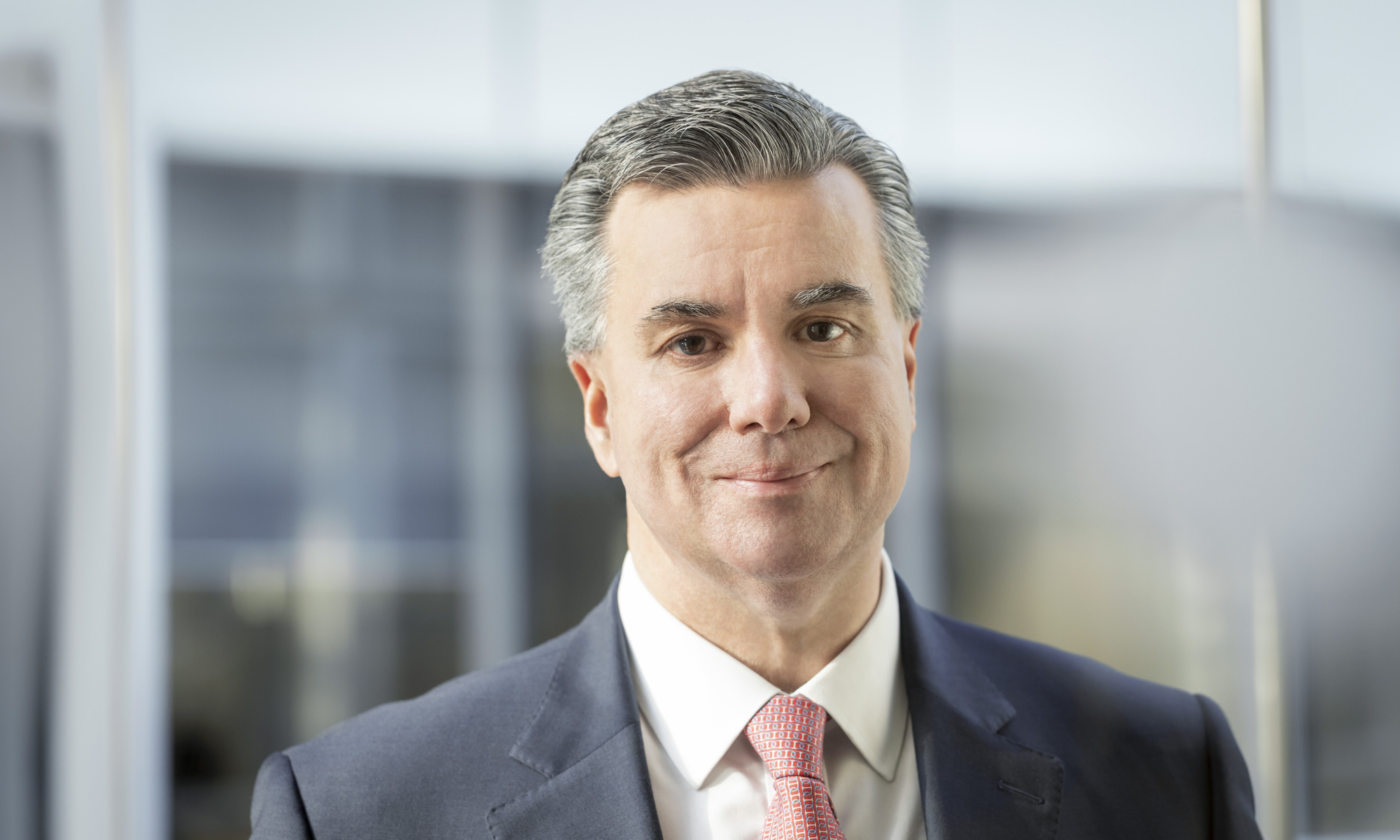
Ex-Clifford Chance partner exits Arsenal in board shakeup

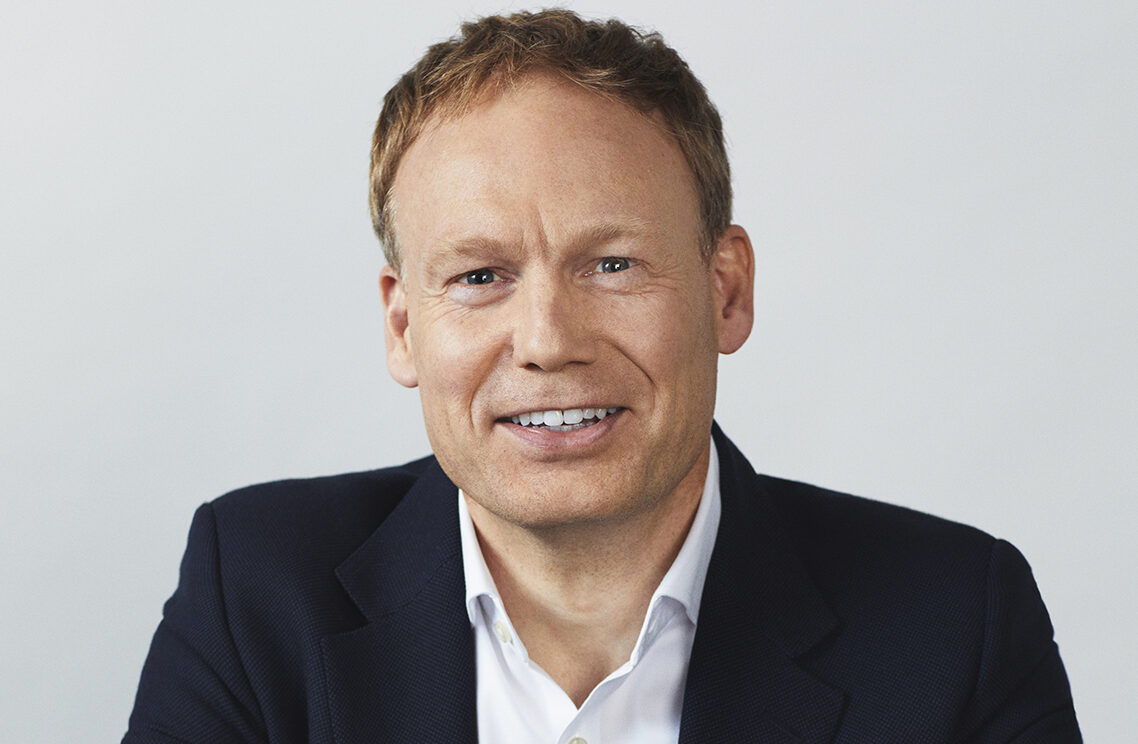
Arsenal executive vice chair and former Clifford Chance partner Tim Lewis has parted ways from the North London football club, as part of a shakeup of the board which has seen the club install a new chief executive.

Lewis, a corporate M&A lawyer by trade, was made a director at the club in 2020 and held a dual role with both Clifford Chance and Arsenal until he left the firm in 2022 after 12 years as partner. He was promoted to executive vice chair the following year.

In 2007 Lewis advised Stan Kroenke and KSE (Kroenke Sports & Entertainment) on their investment in Arsenal, a deal which led to a long standing relationship between Kroenke and Lewis who became the American owner’s go-to adviser.

Over the next decade Lewis acted for Kroenke as he bought out several other owners who held shares in the Gunners. Most notably, Lewis advised Kroenke on his 2018 acquisition of 30% of the club’s shares from Russian-Uzbek businessman Alisher Usmanov, alongside fellow Clifford Chance M&A partner Katherine Moir.

Lewis became a non-executive director in July 2020. Soon after, the club embarked on a series of financial reforms, including restructuring its outstanding stadium debt with a loan from KSE.

During his time at Clifford Chance, Lewis worked on high-profile deals, including advising Shell on its £1.2bn offer for Cove Energy in 2012, and Madame Tussauds, Legoland and London Eye owner Merlin Entertainment on its 2019 take-private, completed for just under £6bn.

Arsenal co-chair Josh Kroenke said: ‘We would like to thank Tim for his continued dedication and commitment to Arsenal in a period of transformational change for the club. He has played a pivotal role and ensured we are in a great position to continue to deliver our strategy in our ambition to win major trophies.’

The departure has seen managing director Richard Garlick become chief executive officer with immediate effect, and KSE representatives Kelly Blaha and Otto Maly join the board as non-executive directors, alongside producer and director Ben Winston.

[email protected]

LB Awards Law Firm of the Year 2025 – why Freshfields is a contender

Of the UK-heritage firms in the running for Law Firm of the Year at the LB Awards, Freshfields stands out as this year’s sole representative from the magic circle.

The firm has been making waves on both sides of the Atlantic, and its recent successes have been recognised with no less than seven other nominations for this year’s awards, from corporate, competition and finance to restructuring, commercial litigation and ESG.

This April it made headlines as one of the largest firms to sign the amicus brief supporting Perkins Coie, which had been targeted by President Donald Trump. That decision to take that stance – led by senior partner Georgia Dawson, who is shortlisted for Management Partner of the Year – set the firm apart from many other international peers who had cut deals with Trump.

Another major development during the year was the move to rebrand and drop Bruckhaus Deringer from its name, while the firm has also poured resources into US expansion, launching in Boston with the hire of Latham & Watkins private capital M&A partner Matthew Goulding on the back of the recruitment of two other senior Latham M&A partners in early 2024.

London M&A partner Kate Cooper described the US M&A team as ‘top of the market’, telling Legal Business: ‘We knew if we could get that transatlantic connection stronger, we could supercharge the growth of the firm.’

And the numbers speak for themselves. While the firm no longer reports its financials in line with other UK law firms, its most recently published results saw revenue up 18% to pass £2bn for the first time, driven in part by 26% growth in the US.

The firm this year handled its first significant US transaction for Merck, advising the pharma giant on the $10bn acquisition of UK biopharma company Verona Pharma, while other major US matters have included advising Google’s parent company Alphabet on its $32bn acquisition of cybersecurity firm Wiz.

But the firm has not lost focus of its home territory and is, according to London managing partner Mark Sansom, ‘doubling down on London’. In the firm’s latest round of partner promotions, the largest share (36%) was in London, and these additions have been supplemented by strategic lateral recruitment, including bringing in ex-Linklaters infrastructure duo Jessamy Gallagher and Stuart Rowson from Paul Hastings.

The firm is positioning itself to take advantage of macroeconomic changes as the ebb of public funds turns into a flow of private capital, and a steady stream of transactional work has driven the firm to seventh place in LSEG’s global M&A rankings for the first half of 2025, after working on 104 deals worth $166.7bn to place seventh, above White & Case, Paul Weiss, Cleary and all of its UK-based peers.

And while many firms are introducing non-equity partner tiers, Freshfields has stuck to its all-equity model as it attempts to retain its identity amid rapid growth – a key reason that Cooper has remained a Freshfield lifer. ‘It’s exciting,’ she says, ‘it feels like you’re at the forefront of something.’

Law Firm of the Year: full shortlist of contenders

Burges Salmon
Cleary Gottlieb Steen & Hamilton
Freshfields
Latham & Watkins
Osborne Clarke
Russell-Cooke
Simpson Thacher & Bartlett
Taylor Wessing

The LB Awards will take place on 30 September – for more information, see legalbusinessawards.com.

[email protected]

Bird & Bird builds new nest in Lisbon with eight-strong team hire

Bird & Bird has announced the launch of a new office in Lisbon, marking the international firm’s first base in Portugal and further strengthening its Iberian offering.

The new office, the firm’s twenty-first in continental Europe, will open with a two-partner, eight-lawyer team joining from local firm Sérvulo & Associados. The group, led by partners Ana Rita Paínho and Sofia Carreiro, will work across practice areas including IP, TMT, life sciences, corporate, M&A, employment and litigation.

Commenting on the opening, the firm’s head of the Iberian region Coral Yáñez said: ‘Portugal is a key player in the European economy, known for its significant trade activities. By capitalising on cross-border business synergies, key industry sectors, and the success of our Madrid office, opening in Lisbon is a natural step in cementing our reputation in the Iberian market.’

Paínho, who has been at Sérvulo & Associados since 2019, is a Legal 500 leading partner for intellectual property in Portugal. A specialist in life sciences and technology, media, and telecoms, she has experience advising on issues relating to trademark and patents, including in software, e-commerce, and data protection. Carreiro has been at Sérvulo since 2008, and focuses on corporate transactions and M&A.

Bird & Bird CEO Christian Bartsch told Legal Business: ‘This founding partner group is just the start. We want to be a major player. We’re celebrating twenty successful years in Madrid, and we’re very much following that model – growing thoughtfully and purposefully – and led by our clients.’

The Lisbon launch follows a string of recent international office openings by the firm, including Tokyo in September last year and Riyadh in May this year. The Portuguese team is expected to work closely with colleagues in Madrid to provide a unified Iberian platform.

Paínho commented: ‘We are looking forward to opening a new Bird & Bird office in Lisbon. Having worked with Bird & Bird for many years, there is a strong synergy between our client work and the firm’s vision to be the leading international law firm guiding organisations through a world being shaped by technology, innovation and regulation.’

The office’s exact opening date is still to be confirmed, but is expected to be within the next month.

[email protected]

‘Our growth has been phenomenal, but we’re still us’ – why Russell-Cooke is a contender for Firm of the Year

An eye-catching mix of commercial, not-for-profit and private client work, combined with a deep commitment to responsible business, helps Russell-Cooke stand out in the Law Firm of the Year category at the Legal Business Awards.

With revenues of £56.1m and around 230 lawyers, the Holborn-headquartered firm is significantly smaller than the other seven on the shortlist for the award, but as managing partner James Carroll puts it: ‘It’s great that there is still place in the awards for a firm that is London-focused and full of homegrown talent.’

A turnover increase of 11.3% during 2024–25 means the firm has now seen its top line grow by 55% over five years – all of which has been achieved organically, and tracking considerably ahead of the firm’s growth strategy.

‘There’s no sign of it stopping,’ says Carroll of the firm’s growth, which he puts partly down to the autonomy that partners are given at the firm. ‘People enjoy their jobs; they enjoy being successful,’ he says. ‘And if you let them get on with it, by and large, they thrive and, in turn, deliver for their clients.’

Recent work highlights have included advising CNBC on a new lease in central London and advising urban developer Bloom on its £21.5m acquisition of Poplar Business Park, while on the contentious front, the firm has successfully represented victims of the Grenfell Tower disaster and also acted for Amnesty International at the Supreme Court in the headline-making case over the definition of ‘woman’.

Carroll stresses that revenue growth has not come at the expense of principle.  The firm is one of the few in the LB100 still handling legal aid work, despite the impact on the firm’s top line. ‘If our revenue is a bit lower because we maintain our commitment to public funding, access to justice, and the values we hold dear – so be it,’ he says.

Commitment to diversity and inclusion runs through the partnership. Women comprise 46% of partners and 72% of all fee-earners, while stories from LGBTQIA+ lawyers are shared to foster openness and visibility, while the firm has also been carbon-neutral since 2019 through an offsetting scheme, and this year introduced a firmwide volunteering programme.

The consistent message at Russell-Cooke is that business success and principled action are not mutually exclusive.

In the words of Carroll: ‘The growth has been phenomenal, but we’re still us.’

Law Firm of the Year: full shortlist of contenders

Burges Salmon
Cleary Gottlieb Steen & Hamilton
Freshfields
Latham & Watkins
Osborne Clarke
Russell-Cooke
Simpson Thacher & Bartlett
Taylor Wessing

The LB Awards will take place on 30 September – for more information, see legalbusinessawards.com.

[email protected]

Top firms advise on €3.1bn IPO in European listings revival

Latham & Watkins, Linklaters and Weil, Gotshal & Manges have scored lead roles as security company Verisure announces plans to raise over €3.1bn in an IPO on Nasdaq Stockholm, a move which signifies growing confidence in the European listings market.

Verisure, which provides home alarm systems, is owned by US private equity firm Hellman & Friedman, a longstanding client of Latham’s.

Latham advised Verisure and Hellman & Friedman, with a London team including UK equity capital markets co-head James Inness, corporate partner Mark Austin, and London corporate co-chair Mathew Schneider. Also involved were PE partners David Walker, Katie Peeks, and Huw Thomas, who co-chairs London corporate alongside Schneider.

Weil is acting as an independent adviser to management at the private equity-backed company, with a London team led by corporate partners Max Oppenheimer and Sarah Flaherty.

Linklaters is advising the banks, which include JP Morgan, Barclays, BNP Paribas, and Bank of America, with a team led by global equity capital markets co-head Pam Shores, who splits her time between New York and London, Stockholm corporate partner Charlotte Levin, and London corporate partner James Wootton.

Swedish firm Vinge is acting as Swedish counsel to Verisure.

Swiss-headquartered Verisure, first backed by Hellman & Friedman in 2011, could reportedly receive an enterprise valuation of €20bn, making it one of the largest European IPOs in recent years.

Latham has acted for Hellman since at least 2013 when it advised on the acquisition of technology company Scout24, and continues to act for the PE house, advising it on its investment in Italian AI company TeamSystem in July. Weil also advised Verisure during its acquisition by Hellman.

The planned listing is the latest sign of a resurgence in the European listings market. Last year, IPO proceeds on the continent more than doubled from $7.79bn to $16.63, according to a report from White & Case.

Several other companies are reportedly preparing European listings, including Deutsche Borse governance and data analyics unit ISS Stoxx. Meanwhile, classifieds business Swiss Marketplace Group will launch on the SIX Swiss Exchange, with trading set to begin on Friday.

Capital raised from the listing will help refinance Verisure’s outstanding debt, as well as to fund its acquisition of Mexican security services company ADT Mexico.

[email protected]

GC Pulse 2025: just under half of GCs still at the starting line for legal tech


GC Pulse 2025, a survey of more than 150 GCs conducted by Legal Business in association with Thomson Reuters, has revealed that a significant gap remains in legal tech awareness across companies.

While 15% of respondents to the survey are actively implementing a selected vendor solution, and a further 30% describe themselves as ‘advanced’ on their journey, a striking 40% say they are still ‘only just becoming aware’ of the problems technology could solve.

In other words, just under half of GCs canvassed for the report remain at the start of their legal tech journey.

Michael Daubenmerkl, Commercial and Trademark Attorney at W.L. Gore & Associates, emphasised why legal tech adoption matters: ‘Lawyers are regularly among the highest-paid individual contributors in organisations, and expectations around value creation and risk mitigation are high,’ he said.

‘Enabling faster response times and self-service functions are areas where the impact [of legal tech] is most visible.’

The survey also revealed a notable division when it came to securing buy-in for legal tech, both from the wider company and within the legal team.

While one-third (32%) of GCs said they find it easy or very easy to secure approval for technology purchases. An equal proportion (32%) said they found  it ‘difficult’ or ‘very difficult’ to gain approval, with some respondents adding that management is often more likely to greenlight proposals from functions such as sales or procurement. Eighty percent of respondents said they expect to spend up to 20% of legal budget on tech solutions – up from 68% lat year.

Michael Hartleben, GC at German grid component manufacturer, Trench Group, said that clarity of message can aid those experiencing pushback: ‘What makes it easier is to ignore all other functions and look at a purely legal business case…think about how the use of the tool will increase legal transparency, especially on costs and efficiency.’

Max Freeman-Inglis, head of legal operations at Alliance Pharma simplified the matter further still: ‘Time is the biggest priority,’ he said. ‘…the first metric senior management or the C-suite looks at is time.’

The survey also highlighted the difficulties GCs face in implementing new tech solutions within their legal teams.  Almost one third (32%) of respondents said they find it ‘difficult’ or ‘very difficult’ to introduce new legal tech, with the same percentage finding the opposite to be true. This is slightly up on last year’s figure of 27%, suggesting that progress is being made but still highlights the need for strong change management plans.

Demonstration of value and ‘early wins’ are the key to winning potential refuseniks within the team over, said Christian Georg, senior legal counsel at Norwegian company Elkem ‘Those who stick with it tend to realise it has real potential for their work.’

‘‘The more you expose lawyers to these tools and encourage them to use them, the more they start thinking, “maybe this isn’t so bad,”’ added Daubenmerkl.  ‘These tools are already reshaping the profession.’

The survey also canvassed GCs on matters including their top investment priorities, AI usage and investment. It found  that the perception of AI as a reliable legal resource has nearly doubled within the GC community, with 40% of respondents now expressing trust in the technology, compared to 21% last year.

————————————————————————————

Further insights, data and analysis can be found in the GC Legal Tech Pulse 2025 report, produced by Legal Business in association with Thomson Reuters. It offers a comprehensive look at how in-house legal teams are embracing technological change, drawing on a survey of over 150 general counsel and senior lawyers. Access the full GC Pulse report here and click here to watch a webinar discussion of the report’s findings.

LB Awards Law Firm of the Year 2025 – why Taylor Wessing is a contender

Shane Gleghorn

Taylor Wessing’s claim to be named Law Firm of the Year at this year’s Legal Business Awards is underlined by its shortlistings in no less than five other categories, with its litigation, real estate, legal tech, marketing and private client teams all in the mix for honours.

The firm’s strong year saw it move a large step closer to its ‘ambitious but attainable‘ target to become a €1bn firm by 2028–29, with global revenues up 10% to €619m (£526m).

Much of that momentum was driven by the firm’s UK business, which saw revenues rise 15% to £283.7m, with growth now standing at 80% since 2020. UK PEP also surpassed £1m, climbing 20% to £1.1m.

UK managing partner and global co-chair Shane Gleghorn believes the firm’s success is down to ‘focus and disciplined investment in core sectors and practice areas’.

He told LB: ‘Our tech expertise has seen us become the top-ranked firm for AI transactions [based on PitchBook data]. We have the largest IP practice in Europe and we are the most active international firm in the Unified Patent Court.’

Gleghorn also highlighted the firm’s expanding global footprint,  including a strong contribution from the firm’s the Dublin office, which he said has ‘become a market-leading force since it launched in 2021.’ He also pointed to the strategic alliance with Italian firm Orsingher Ortu, announced this March, which means Taylor Wessing now has a presence in each of the five major European economies.

The firm also impressed the awards judging panel across a range of other categories, with its nomination in the commercial litigation category down to its role as as global counsel to Pfizer in patent litigation over the BioNTech COVID-19 vaccine.

The real estate shortlisting was secured on the back of successfully advising real estate developer Comer Homes on its planning appeal for the Mast Quay Phase II residential development in Greenwich, while the firm’s private client team has been front and centre of a series of high-value cases, including successfully defending the first-ever appeal in a trust arbitration.

Other recent deal highlights have included advising AI-driven retail solutions firm Rezolve AI on the establishment of its $1bn Bitcoin treasury programme, and advising Vinted on its secondary share sale, which valued the company at 5bn.

Law Firm of the Year: full shortlist of contenders

Burges Salmon
Cleary Gottlieb Steen & Hamilton
Freshfields
Latham & Watkins
Osborne Clarke
Russell-Cooke
Simpson Thacher & Bartlett
Taylor Wessing

The LB Awards will take place on 30 September – for more information, see legalbusinessawards.com.

[email protected]

Paul Weiss picks up Washington antitrust team as A&O Shearman exits continue

the white house

A&O Shearman’s global antitrust head David Higbee has left the firm to join Paul Weiss in Washington DC, in one of the highest profile US departures for the firm since the completion of its merger in May 2024.

Higbee is joining Paul Weiss alongside fellow antitrust partners Ben Gris and Djordje Petkoski. Between them, the trio advise on matters including merger control, government and internal investigations, and complex litigation, with their experience spanning industries from energy, to technology, life sciences and defence.

‘David, Ben and Djordje are antitrust stars, and we’re thrilled they are joining our firm,’ Paul Weiss chair Brad Karp said. ‘Their arrival further strengthens our market-leading global antitrust capabilities.’

Corporate department chair Scott Barshay added: ‘I have worked closely with David for many years, and this trio is among the best in the business. I could not be happier that they have decided to join Paul Weiss and that David and I will now be working together as partners.’

Higbee joined then-Shearman & Sterling in 2017 after more than a decade at legacy Hunton & Williams, which included time spent as Washington DC managing partner and global competition practice vice chair.

A Legal 500 leading individual for merger control, Higbee previously spent four years in the US Department of Justice (DOJ), including as deputy assistant attorney general and chief of staff in the antitrust division. He will co-lead Paul Weiss’s global antitrust practice alongside Nicole Kar in London and Washington-based Scott Sher.

Petkoski also made the move to legacy Shearman from legacy Hunton in 2017, while Gris joined in 2018 after nearly 12 years at the Federal Trade Commission (FTC), including as assistant director of Mergers II. Their hires will take Paul Weiss to 28 competition partners globally.

The moves are the latest departures from A&O Shearman, which had already seen more than 100 partner exits between the time the merger was announced in May 2023 and January this year.

More recent US moves saw securities and shareholder litigation co-head Agnès Dunogué leave the firm for Freshfields in July.

At the same time, the firm has also made some hires in the US since its union, including capital markets partner Michael Kim, who joined in April from Morgan Stanley, and restructuring partner Ned Schodek, a former Shearman alum who re-joined from legacy Schulte Roth & Zabel in New York in May ahead of that firm’s merger with McDermott Will & Emery.

In April, A&O Shearman also announced its launch in Chicago, hiring Mayer Brown energy and infrastructure partners Paul Astolfi and Katy McNeil.

For its part, Paul Weiss has seen a clutch of exits in Washington DC in recent months since it became the first of nine firms to strike a deal with the Trump administration in March. These include former litigation department co-chair Karen Dunn, who left alongside three other partners to establish disputes boutique Dunn Isaacson Rhee, which has since welcomed more partners from the firm.

The New York firm is now building out its ranks in DC, recently bringing in litigator Masha Hansford, who rejoined the firm earlier this month after five years at the DOJ.

Commenting on his move to Paul Weiss, Higbee said: ‘Joining Paul Weiss represents an exceptional opportunity to build on the firm’s already stellar reputation in the antitrust arena.

‘Today’s antitrust environment demands counsel who can anticipate enforcement trends and develop creative solutions. Paul Weiss’s collaborative culture and commitment to excellence provide an ideal platform for serving clients in their most challenging antitrust matters.’

An A&O Shearman spokesperson said: ‘We thank David, Ben, and Djordje for the contribution they have made to the firm and wish them all the best for the future.

[email protected]

Revolving Doors: Orrick swoops for Gibson Dunn oil and gas duo as Addleshaw secures lawtech leader

As London is gripped by autumn’s blustery arrival, law firm partners continue to be swept into new firms and practices.

In a headline move for the energy sector, Orrick has recruited Anna Howell, Gibson Dunn’s oil and gas co-head, alongside long-time colleague and counsel Mitasha Chandok, who is joining as a partner.

Howell will lead Orrick’s global oil and gas practice, with the pair bringing 16 years of joint experience advising majors and private equity funds on complex cross-border energy transactions.

Their arrival brings Orrick’s tally of hires into its global energy and infrastructure platform to 14 in 2025. Among these were a clutch of hires from A&O Shearman, with Matthew Nesburn, Jeff Quinn-Cane, and Chase Armbrust joining the firm in Santa Monica, Seattle, and Houston respectively.

Addleshaw Goddard has welcomed back Lee Hughes, who rejoins as a disputes partner after several years at the Bar. Hughes brings experience in criminal defence, public inquiries, professional disciplinary proceedings and regulatory matters, bolstering AG’s global investigations practice.

The firm also added Chris Tart-Roberts as a partner in its finance and projects group. Tart-Roberts joins from Macfarlanes, where he spent over a decade leading the firm’s lawtech practice.

Derivatives specialist Joseph Wren has joined Simmons & Simmons as a partner after 14 years at Travers Smith. Wren’s clients include major private equity and private credit firms, alongside global financial institutions and asset managers.

Pinsent Masons made a double hire into its finance and restructuring practice, recruiting Edward Smith in London and Seyavash Rahnema in Dubai. Smith joins from Travers Smith, bringing 25 years of experience advising on high-profile restructurings across sectors, while Rahnema arrives from Norton Rose Fulbright, with over a decade of expertise in banking and finance.

Reed Smith has welcomed M&A and private equity partner Andrew Houghton from Proskauer into its global corporate group. The firm also hired A&O Shearman counsel Jieni Ji, who joins its Hong Kong and Shanghai offices as a partner in its global regulatory enforcement group.

Meanwhile, McDermott Will & Schulte has picked up real estate finance expert Owen Jones from PE real estate firm Tristan Capital Partners.

Keystone Law has announced a seven-partner intake from a range of firms, with notable hires including aircraft financing specialist Ilia Dvorkin, who headed A&O Shearman’s structured and asset finance practice in Russia, as well as Gateley commercial property partner Vijay Patel.

Also joining the firm are commercial property partner Aaron Burgess from Burgess Okoh Saunders, property litigation partner Nick Martyn from RWK Goodman, DWF construction and engineering senior associate James Grinstead, family lawyer Lucy Marks, who previously led boutique firm Marks Law, and Jacqueline D’arcy, who was a solicitor at Druces and joins Keystone as a residential property partner.

Kingsley Napley has hired private client partner Paul Davidoff from New Quadrant Partners to lead its international tax desk, while Bird & Bird has recruited Charles-Henri Caron from Hogan Lovells as a partner in its life sciences and healthcare group.

BCLP has significantly strengthened its global antitrust practice with the arrival of Christine Graham to its competition and trade team in London. Graham arrives from US firm Cooley, where she was special counsel.

Collyer Bristow added Shoosmiths’ Karen Mortenson as an employment partner, while Burges Salmon expanded its projects group in Edinburgh with the arrival of Lillian Mackenzie. Mackenzie joins the firm from DLA Piper, where she was head of the UK projects practice.

Finally in London, CMS has boosted its infrastructure, construction and energy disputes team with its hire of A&O Shearman counsel Sunil Mawkin. Mawkin joins CMS as a partner, and brings over a decade of experience working on high-value, complex construction and energy disputes across global markets, with specific expertise throughout Asia Pacific.

In Europe, Squire Patton Boggs has hired German PE veteran Robert Bastian in Frankfurt. Bastian joins the firm’s growing practice after more than 12 years as partner and head of private equity at Dentons.

In the Middle East, Greenberg Traurig has hired real estate and hospitality lawyer Louisa Lynch from Pinsent Masons in Dubai, while also adding a four-lawyer project finance team from Norton Rose Fulbright, led by Nicholas Kramer and Angela Croker. Kramer takes on the role of head of construction and projects for the Middle East, while Croker becomes head of UAE project finance.

Finally, Ward Hadaway has added several partners across its UK offices, including partners Chris Green, Sabina Kauser, Joanna Lee-Mills and Natalie Owen in Birmingham across the commercial, employment and housing practices, real estate partner Richard Bradbury in Manchester, and real estate partner Tom Wills, and public funding partner Alexander Rose, both in Newcastle.

[email protected]

Freshfields to cut back Manchester paralegal ranks with redundancy round

Freshfields has become the latest major law firm to announce job cuts this year, with up to 19 paralegal roles in Manchester set to be made redundant.

The news comes just over a decade after the magic circle firm launched in Manchester, a move which saw hundreds of support jobs transferred to the new base in northwest.

A Freshfields spokesperson said: ‘We’re proposing to continue evolving our business to keep pace with a fast-changing legal market – investing in technology, building key skills in-house and adapting our model to meet future client needs. We have communicated with our colleagues affected by these proposals and are focused on supporting our teams throughout.’

Other firms to have announced job cuts this year include BCLP, which this May said it was undertaking a ‘business modernisation programme’ that would impact approximately 8% of its global business services population, while in April, DWF conducted a consultation with 108 employees in in its commercial services and central services divisions.

In January, CMS placed up to 15 junior roles in its London real estate team under review, while DLA Piper restructured its UK IT team at the start of the year after switching to a fully cloud-based operating model.

When Freshfields originally announced its intention to open in Manchester back in 2015, it said its focus was on delivering a ‘highly efficient service’ to clients, with ‘more repetitive legal work’ set to be handled by a sizeable workforce of paralegals in the city.

Advancements in technology in recent years – in particular the rise of new artificial intelligence-powered services – have meant that routine work, often traditionally carried out by paralegals, has come under scrutiny.

Efficiency and a focus on giving lawyers more time to work on more complex matters are generally touted as the main benefits of AI, with high-volume, document-heavy workflows such as contract review, due diligence and regulatory checks now a simpler proposition thanks in large part to new technology.

[email protected]

British American Tobacco announces new GC as company veteran steps down

Paul McCrory has been appointed as the new director, legal and general counsel of British American Tobacco (BAT), following the announcement that current GC Jerome Abelman will step down from the position at the end of the year.

McCrory has been with the FTSE 100 tobacco company since 2006, where he started as group M&A counsel. Since then, he has held a number of senior legal roles, including assistant GC, group company secretary and most recently director, corporate and regulatory affairs.

Before his tenure at BAT, he spent seven years at then-Herbert Smith Freehills before leaving in 2005 to spend a year as corporate counsel at French bank Société Générale.

Jerome Abelman, who has held the position of GC for 11 years and has been with the company since 2002, is leaving his post on 31 December. McCrory will step into his new role on 1 January 2026, and will serve as director, legal and general counsel designate from 1 October this year.

In a statement, chief executive Tadeu Marroco said: ‘Jerry’s leadership has been at the forefront of BAT’s commitment to delivery with integrity. He has successfully navigated the Group through a series of strategic legal and regulatory matters across the globe while developing talented and diverse teams of legal, external affairs, and security professionals.’

He continued: ‘Paul brings close to two decades of legal and regulatory experience within BAT, and his appointment reflects the Group’s commitment to maintaining strong legal leadership aligned with our strategic priorities.’

Further changes to the management board include the appointment of current chief corporate officer Kingsley Wheaton to director, corporate and regulatory affairs, the position currently held by McCrory. He will take over this position on 1 October 2025.

The legal function at BAT has been kept busy in recent years. In March, the company’s Canadian subsidiary Imperial Tobacco Canada (ITCAN) agreed to pay an $8bn settlement in order to resolve all tobacco-related litigation in Canada, ending numerous ongoing legal battles which had been running since the 1990s.

In 2023, the company reached a settlement with US authorities to pay more than $635m over sanctions breaches relating to a subsidiary’s tobacco sales in North Korea between 2007 and 2017.

[email protected]

‘We’re ambitious in branching into new areas’ – Cleary targets expansion and continuity with new leadership

‘Internationalism has been part of Cleary from the very beginning,’ says Jeffrey Karpf, as he prepares to take the helm at Cleary Gottlieb Steen & Hamilton as its next managing partner.

Karpf, who has spent his entire 30-year career at Cleary, will succeed Michael Gerstenzang in January 2026, with Gerstenzang stepping into a newly created role as senior partner after nine years as managing partner.

‘Michael’s done a remarkable job leading us for almost nine years now. It’s been a period with challenges, but also strong growth and ambition, and that’s going to continue under my leadership,’ Karpf told LB.

Joining Cleary in 1994 and making partner in 2003, Karpf is a corporate and finance specialist, and his time at the firm has seen him lead on multiple major transactions, including some of the largest-ever acquisition financings and private placements.

Reflecting on the transition to managing partner, he said: ‘It is very exciting – it’s an honour to be asked by my partners to take on this role. Our visions are very closely aligned.’

On the firm’s future strategy, Karpf underscored the firm’s expansion both in the US and internationally across key specific practice areas: ‘We’re looking to maintain our financial growth and expand core practices, particularly with a focus on the US and New York. Our growth in London over the past several years has been very intentional.’

Cleary’s culture and identity have long been affiliated with a more global outlook than some of its US rivals, with the firm’s Paris office opening in 1949. ‘We’re more international than many of our competitors, that’s always been one of our strengths, and we’re going to continue to grow internationally.’

London has been a key focus for the firm, and while Karpf said this would continue, he stressed the importance of the firm’s wider European network. ‘In Europe, we have very strong practices in Brussels and Paris. In Italy we’re regarded as one of the top firms, and I don’t think that’s going to change.’

Cleary has already added 19 lateral partners this year, including a five-partner IP litigation team from Latham & Watkins across the firm’s three US offices in New York, Washington DC and the Bay Area.

Karpf said: ‘We’re ambitious in branching into new areas. If you look at the areas where we’re making partner hires, they’re in M&A, private equity, private funds, capital solutions and private credit, and antitrust litigation. The biggest focus is on these areas: private capital, private markets, and private restructuring.’

In June this year, the firm hired partner Rob Sharpe, a specialist in private equity, private funds, and M&A, into its EMEA tax practice in London.

Gerstenzang is set to remain at the firm in the new role of senior partner, and Karpf said is intended to ‘reinforce continuity, cohesion and collaboration.’

Karpf explained: ‘We have the benefit of Michael continuing as an ambassador of the firm, particularly in private capital and technology.’

Gerstenzang’s role will also allow him to continue his work on the firm’s innovation and integration of cutting-edge technologies. His tenure has been marked by record growth, with revenues of $1.49bn in the 2024–25 financial year, global expansion, and technology adoption, including a partnership with AI-powered legal tech company Legora and the acquisition of Springbok AI.

‘We’ve always been leaders when it comes to innovation and our application of AI and technology on behalf of clients, whether through ClearyX in M&A due diligence, or in litigation technology,’ Karpf said. Launched in 2022, ClearyX streamlines M&A due diligence and contract automation, enhancing efficiency and quality. The firmwide rollout of Legora saw around 1,500 participants on the first day, reinforcing how fast the firm has been to embrace new technology.

Looking ahead, Karpf highlighted three priorities: client service, innovation, and talent. ‘It’s always been in our DNA to bring the best expertise to bear for our clients. When a client calls me or another partner, we immediately think who are the best people at the firm, whether in the US, Europe, Asia, or Latin America. It’s part of our culture, not something financially engineered.’

Financially, he remains confident: ‘Last year was a record year in revenues and profits for us, and that’s growing this year on top of that. I see that in the level of demand for our services month after month this year. I’m incredibly optimistic about our trajectory.’

[email protected]

‘You can’t stay the same size in a market like London; you have to grow’ – S&C sets out aggressive plans to build

Sullivan & Cromwell has long been known for its measured approach to lateral recruitment. When the firm hired A&O Shearman’s global financial services regulatory co-head Barney Reynolds in June this year, he became only the third lateral partner hire in London since 2013 – an Olympic-style recruitment cycle of roughly one every four years.

The news earlier this month (1 September) that it is bringing in not one but two City heavyweights – Kirkland restructuring partner Kon Asimacopoulos and former Weil London head Mike Francies – to kickstart a reboot of its London office is therefore a significant shift.

‘London is one of the two key financial markets in the world, and we’re underweight,’ explains S&C co-chair Scott Miller in an interview with Legal Business. ‘We’re six and a half times bigger in New York than London, but half of our clients are international, so we should have a higher weighting there.’

The realisation that the firm needed to grow in the capital was crystallised by a strategic review at the end of last year that came to a clear conclusion.

‘We determined that in order to satisfy our ambitions, we needed to be more aggressive,’ confirms Miller.

The decision to take a more aggressive approach, and the review that led to it, came after a busy period for the firm’s US bankruptcy practice, as Miller elaborates.

‘Over the past 24 to 36 months, our US restructuring practice has led the market, having worked on many of the largest US bankruptcies in that period. Building on that success, we need a strong London base, as the two markets are interrelated. We also need the broader private capital platform, since private capital both drives and feeds restructurings, particularly through private equity and private credit.’

At the end of September, S&C will have 18 partners and around 90 lawyers in its London office. In comparison, New York has 650 lawyers, of which 114 are partners. While London is the firm’s second largest office, it is clear that there is room for growth in comparison with its New York counterpart.

Part of the reason the firm has been slow to hire in the past is that it is very deliberate about adding to its partnership. As London managing partner John Horsfield-Bradbury, himself an S&C lifer, explains: ‘A significant number of partners at S&C have only ever worked here; it’s one of the things that makes it special.’

‘We’ve spoken to lots of people with excellent practices who were interested in joining us. But we decided that they weren’t a good fit because they didn’t think about the practice of law in the way we do.’

Miller explains that before Asimacopoulos and private equity partner Francies agreed to join, they met almost 100 S&C partners – a process that necessarily takes time and precludes the lightning growth seen from some of its peers.

‘We’re not looking to be Paul Weiss – going from zero to 200 in three months’, Miller explains. ‘I respect Paul Weiss. They run a great business. But having a team that size that isn’t integrated isn’t something we’d consider.’

So what is S&C’s endgame in London? According to Miller, the firm is less focused on numbers and more on outcomes: ‘The goal is market-leading practices in high-value, strategic work in restructuring and private equity, and what’s necessary to support that.’

This may not equate to Paul Weiss-level City expansion but, according to Miller, it’s ‘not insignificant. It’s not one partner in each of those areas.’

Making it clear that the days of one London lateral hire every four years are over, he says: ‘We’re looking to move fast. We want to build those practices and develop areas of strength.’

The desire to move quickly means their proven ability to build practices around them were key drivers for selecting Asimacopoulos and Francies as well as Reynolds.

‘We haven’t brought in people to do work that’s firm-generated, we’ve gone after people who are magnets for talent. Kon, Mike and Barney have all built teams. They’re all incredibly collaborative people,’ says Miller.

And while he isn’t setting numbers, he does have an idea of the growth required. ‘I think London should be 50% bigger than it is, maybe a bit more. We also want to grow in New York.’

Assuming no change in leverage, a 50% increase would bring the London office to 135 lawyers, including 27 partners. Headcount-wise, that would put S&C roughly on a par with Willkie and Covington, which currently sit about 10 places above 38th-placed S&C in the Legal Business Global London rankings.

By comparison, S&C’s New York peers including Skadden (254 lawyers), Milbank (203) and Cleary (152), currently sit 10th, 15th and 23rd respectively in the 2025 Global London table.

Miller is quick to clarify that it is not ‘growth for growth’s sake’, but rather because the dynamics and complexity of today’s global legal market mean that scale is increasingly necessary.

By way of example, he cites London partner Karan Dinamani, who joined from legacy A&O in early 2023. Dinamani heads up the firm’s European PE practice, which, while small, had the largest average deal size ($2.3bn) for completed European private equity transactions in 2024, according to data from Mergermarket.

‘Karan joined us to focus on private equity. He’s been phenomenally successful but it’s clear that he will be even more successful on a larger platform.’

In order to persuade more high-calibre partners to join, the firm realised it needed to present ambition and a clear plan. ‘If we had simply said, ‘Come join us, and together we’ll figure it out over the next 12 to 24 months,’ that wouldn’t have been an attractive proposition,’ says Miller. ‘Being able to lay out a clear vision – that we intend to grow, to do so in a more aggressive and forward-looking way, to build teams, to be successful, and to invest heavily – has been key to convincing people to join.’

With competition for top talent at a high after years of its rival US firms expanding rapidly, S&C realised that standing still is no longer an option in the capital. The firm itself saw restructuring partners Chris Howard and Presley Warner leave for Gibson Dunn in London earlier this year.

As Miller concludes: ‘Twenty-five years ago we were probably the largest US firm in London but, over time, we grew to not much bigger now than we were then. We were a successful practice, but stable. We had to grow. You can’t be stable and stay the same size in a market like London. You have to grow.’

[email protected]

Big wins, crisis control and champagne-on-ice moments: GSK GC James Ford on 30 years at the pharma giant

James Ford on his leadership maxims, how he deals with the pressures of life as a GC and the highlights of three decades at GSK

James Ford joins the call with Legal Business from holiday in Florida. He has just helped his employer, multinational pharma and biotech giant GSK, secure a significant settlement after a long-running patent dispute over a covid mRNA vaccine. ‘That was week one of my holiday – but in this role some things can’t be completely delegated, and timing is rarely a choice!’ he jokes.

The settlement is a big win for Ford and GSK after two years navigating multiple court cases across Europe and the US. ‘It’s like a game of chess; you need to make your moves at the right moment,’ says Ford of the dispute. ‘If you go too soon, you may have played your hand and lose your leverage.’

It’s a long way from his first exposure to the legal profession at the age of 15, doing work experience in a high street law firm. ‘I grew up in rural Lincolnshire where my knowledge of future careers and possibilities was quite limited,’ reflects Ford, who admits that a large part of the initial attraction of law was the possibility of new experiences and a different life.

‘I knew that I didn’t want to live a parochial and quiet life and wanted “the bright lights” of a city environment. As I went through university, I saw the law as a route into an international life, even though I had no idea what it looked like,’ he recalls.

He gained his first experience of this life during the final seat of his training contract at Clifford Chance, which he spent in bustling Hong Kong. ‘‘It was a complete game-changer for me. I realised that living overseas in a dynamic international environment was within reach if you really wanted it. I found myself living in an apartment in Hong Kong at the age of 23 – it was an incredible and formative experience.’

‘It’s like a game of chess; you need to make your moves at the right moment, if you go too soon, you may have played your hand and lose your leverage’

Six years after joining CC, in 1995, Ford took a job at SmithKline Beecham, as it was then, and quickly realised that working in-house suited him more than a law firm.

‘When you’re a young lawyer in private practice, there’s a limit to how much responsibility you’re given. But when you’re in a large company, the limit is determined by what people think of your capability, and often what comes through the door of the business that you are a part of. Lessons in “ownership” come early in-house.’

Soon after joining, Ford was given the chance to live internationally with GSK and jumped at the chance. ‘A year and a half into it, they asked if I wanted to go and work in Pittsburgh. I’d barely heard of Pittsburgh.’

‘My wife and I had just had our first child five months earlier, but we went for it and flew out on a one-way ticket into the Pittsburgh winter. We didn’t know anybody at all, but it was a huge turning point in our lives.

‘We arrived for an 18-month secondment, which turned into a total of 13 years living and building my career in Pittsburgh, Philadelphia and the New York City area. I took the New York State Bar, and we all became US citizens. It was a total game-changer that I could never have predicted.’

His role at GSK has taken him beyond the US, with Ford also spending time in Singapore before relocating back to London. A year later in 2018 he was made group GC.

‘When you’re a young lawyer in private practice, there’s a limit to how much responsibility you’re given. But when you’re in a large company, the limit is determined by what people think of your capability’

With his career at the company now spanning 30 years, Ford is clear about the positives of working in-house, highlighting the exposure to the multiple problems that can hit a business; from cyberattacks, to bribery and corruption matters, through to liaising with healthcare professionals. ‘In my role I handle the legal and risk issues that can stem from macroeconomic and geopolitical forces that affect the group, it’s so broad. The clue’s in the word ‘general,’ he laughs.

He also appreciates working with other professionals beyond law. ‘It is stimulating and exciting when you work with smart people from a broad range of disciplines, backgrounds and skill sets. It would be easy to go through law school and adopt a blinkered view of the world. You cannot succeed in a multinational company by doing that.’

Working with all of these people and being part of a single company, understanding exactly how it works, sits well with Ford. ‘I realised early in my career that a strong link to purpose and a sense of ownership in a business that does good in society is important to me. I find it more inspiring than being in a business where the primary purpose is the practice of law.’

The breadth, unpredictability and the people may be what Ford most enjoys about his role now, but he acknowledges that first stepping up to the GC role is not without challenges.

‘From day one as GC, the rules change. Suddenly you don’t have anyone to delegate problems up to within the legal function. You can be sitting at home one day thinking things are going swimmingly, and the next day you’re facing what can feel like an existential crisis. You learn a lot of lessons from that experience, particularly the value in keeping calm and having a first-rate team around you.’

Despite these challenges, Ford is clear that the crowning highlight in a career of many highs has been becoming GC.

Other highs have included working on the successful demerger and subsequent listing of GSK’s consumer healthcare business Haleon in 2022.

Ford describes his leadership approach as pragmatic and flexible, as well as calm. ‘It’s never good if the GC is flapping away in a crisis,’ he quips.

This ability to stay calm has been tested over the years. ‘Going back quite a few years, I was leading negotiations on a very large acquisition. After weeks of negotiations, we got to the day of signing. The CEO was coming into New York to join the team. We were about to sign the deal in a matter of hours and then, out of the blue, it all fell over.’

‘I have a vivid memory of the documents being arranged on the boardroom table for signature, and champagne being brought in to celebrate the signature – moments before we received a call telling us the deal was off.’

After that deal fell through, Ford acknowledges that ‘it took quite a long time to recover’.

‘From day one as GC, the rules change. Suddenly you don’t have anyone to delegate problems up to within the legal function’

But he learnt a lot from the experience. ‘What I learned from that experience is that it’s a job. It’s not your life, and it can never be your life. It will be a big and important part of it, but you can’t be left with nothing when work is done. You have to protect yourself and work hard to keep your private life intact.’

It’s a lesson he passes on to the team around him, who continue to be a large motivator in his career.

‘You can’t overestimate the value a great team brings,’ he stresses. Ford sees fair and balanced leadership, bringing the team together and recognising individuals’ contributions as an essential part of his job.

‘It’s a balance of nurturing continuity with those you can trust and upgrading those that should be upgraded, and that includes developing the people that you have as well as sometimes replacing those that don’t fit the role. You need to bring the team together, so the team is cohesive, trusts each other and operates as a team rather than a collection of individuals.’

In the current climate, with pay wars between top private practice firms causing NQ salaries to soar, this sense of team is particularly important.

While Ford acknowledges that in-house departments find it hard to compete when it comes to compensation, he points out that there are other benefits that private practice can’t match.

‘There are a lot of benefits that come with working in-house. It could be equity, it could be better healthcare, it could be pension contributions and, these days, more flexible working. As you grow through your career, you realise that the overall financial package can be comparable to being in private practice at a certain point. It’s made up of many different things. However, the overall package is more than just financial – money on its own doesn’t buy happiness.’

‘It’s not your life and it can never be your life. It will be a big and important part of it, but you can’t be left with nothing when work is done’

For Ford, happiness is tied with maintaining a close relationship with his family. ‘This job requires a strong foundation at home. Whatever that means to you will be a very personal thing, but my wife has been my rock. and continues to be my best friend to this day. I am very close to my three children, all of whom live in the US, and try to spend time with them whenever I can.’

From where his legal journey began, at his local high street firm at fifteen, to a decades’ long career at one of the most recognisable pharma companies in the world, Ford reflects: ‘Although there will always be bumps along the way, it certainly hasn’t disappointed. I have done many different things and seen many different parts of the world. It’s been challenging, fulfilling and an opportunity to work with great people.’

And though the bumps are a part of corporate life – recent challenges include executive orders, tariffs and sanctions – as well as successes such as the recent patent settlement – the people and the work keep him at GSK. ‘When I joined I intended to stay for two years; tomorrow is my 30th anniversary – and still going strong.’

[email protected]

Ford’s tips for success:

‘Be open to change; embrace challenge and accept some instability. After all, how bad can it be – it’s a job!’

‘To be an authentic leader, show some vulnerability and don’t pretend you’re the smartest in the room.’

‘Be calm and be willing to make calls based on the information available to you.’

‘Keep perspective and carve out thinking time. These jobs can consume you and all of your time and often do. It’s not your life – it’s an important part of your life, but it’s not your life.’

‘Maintain a competitive mindset, but never at the expense of integrity.’

‘You should enter the legal profession with your eyes wide open. It is not for the faint-hearted. It can be mentally, emotionally and physically demanding. Maintaining balance, restoring your energy and developing resilience will be important.’

’To be happy and successful as an in-house lawyer, be curious about the business and industry you are in – keep learning. Be proud of what you do and the role you fulfill.’

James Ford – career timeline

1989-93: Clifford Chance, London and Hong Kong

1993-95: DLA Piper, London

1995-99: Senior legal counsel, GSK, London and Pittsburgh

1999-2001: Associate GC, GSK, Philadelphia

2001-06: Vice president and associate GC, corporate and transactions, GSK, London

2006-13: Senior vice president, GC and compliance officer, Consumer Healthcare, GSK, London

2013-14: Senior vice president (interim), Governance, Ethics & Assurance, GSK, London

2014-18: Senior vice president and GC, Global Pharmaceuticals, GSK, Singapore and London

2018-present: Senior vice president and group GC, GSK

GSK – key facts

Size of legal team: 300 (plus compliance, investigations and corporate security)

External legal spend: On average $100m+ per year

Preferred advisers/panel firms: Slaughter and May (primary corporate advisors)

Total company revenue: £31.4bn (2024)

Employees worldwide: 68,600

‘There’s significant capital flowing into Italy’ – Ropes makes Milan move with Latham team hire

Ropes & Gray has ramped up its European expansion with the launch of a new office in Milan, hiring a private equity team from Latham in a bid to capture a share of the increasing investment flowing into the country from buyout houses.

The trio of new partners will be split across Ropes’ London and Milan offices but all join from Latham & Watkins in Italy. Cataldo Piccarreta, who spent eight years’ in Latham’s Milan office will co-head Ropes’ European private equity practice and the Milan office from London.  Meanwhile, partner Giorgia Lugli and associate Luca Maranetto are moving across to  Ropes in Milan, with Maranetto making partner as part of the move.

The Italy launch comes after Ropes opened an office in Paris in March, with the hire of a three-partner team from Clifford Chance, its first on the European mainland.

Commenting on Ropes’ launch, the managing partner of one leading Italian independent said rumours had started in the summer, as the US firm sought to meet growing demand for local expertise. ‘Traditionally, American firms have been reluctant to open in Italy compared to other European countries,’ they added.

But, in 2024, Italy was the fastest growing of the top five markets in Europe, overtaking the Netherlands and doubling in size compared to 2023.

Confirming the firm’s motivation, Ropes co-lead of European private equity, John Newton, said: ‘When you look at who is acquiring and investing in Europe, it’s consistently a handful of global funds. You’ve got to be very aware of how they’re expanding and constantly trying to match it. If you look at Cataldo client history, it very clearly matches up with existing clients of Ropes & Gray.’

In 2023, Piccarreta, a Legal 500 Hall of Fame lawyer for private equity in Italy, led the team that advised on the acquisition of Italian pharmaceutical manufacturer F.I.S. by longstanding Ropes client Bain Capital. Piccarreta has also acted for EQT, another fund with which Ropes has deep ties.

‘The UK, French and Italian markets are seeing significant volumes of investment from major US and European funds,’ Newton said. ‘Now that we have offices in London, Paris, and Milan, we offer a highly credible platform for supporting clients across Europe.’

David Blittner, Ropes’ global head of private capital transactions, explained that the decision to enter Italy was driven by analysis of jurisdictions with increased capital flow combined with the right teams becoming available.

‘If you look at the way capital is flowing in Europe, there is a significant amount of capital going into Italy. It’s a jurisdiction that makes a lot of sense based on the capital and the investments being made. With London, Paris and Milan, we’ve got a very, very credible offering to cover our clients on a pan-European basis. We can say we are set up the same way that you’re set up.’

Blittner added that the firm will look to add ‘complementary’ hires opportunistically but did not confirm specific practices. ‘The team will have what is required to service our clients in a complete way,’ he added.

‘The [Italian] market has shown significant growth over the past couple of years,’ a Milan-based partner at a US firm said. ‘There’s tax incentives but it’s also private equity players realising that it makes sense to have a presence in individual jurisdictions if they want to be more active throughout Europe. The law firms are following suit and going where the clients are.’

The last 18 months have seen a number of firms establishing or consolidating their position in Milan. Last year, Fieldfisher opened an independent office in Milan after cutting ties with its Italian partner firm, while Bird & Bird recruited two finance partners from Hogan Lovells, which in turn recruited from Orrick and White & Case.

‘There’s been a lot of movement within local firms and international firms are now doing the same,’ the Milan-based partner said. ‘Obviously, additional players in the market increases the level of competition, but mostly we look at this as a good sign.’

Latham, which opened its Milan office in 2008,  has around 10 partners left following the exits, including local managing partner Stefano Sciolla, who also specialises in private equity. Sciolla has been in Milan for 15 years and is the global vice-chair of Latham’s M&A and private equity practice.

The office, which has served major private equity clients such as CVC Capital Partners, Apollo and The Carlyle Group, has three private equity partners left, including Sciolla, according to the firm’s website.

[email protected]

Latham and Paul Weiss score lead roles as Apollo injects €3.2bn into RWE joint venture

Latham & Watkins and Paul Weiss have scored major roles acting for Apollo as the private capital fund targets European energy infrastructure via a joint venture with German utility company RWE.

The American private equity group has committed €3.2bn to support RWE’s 25.1% stake in Amprion, one of four German companies that operates the country’s transmission grids. Latham and Paul Weiss are advising Apollo whilst Hengeler Mueller is advising RWE.

The Latham private equity infrastructure team was led by Frankfurt corporate partner Otto von Gruben, and included corporate partner Christina Mann and regional corporate department head for continental Europe Alexander Stefan Rieger, both also in Frankfurt, as well as New York corporate partner Gary Boss.

Advice was also provided on antitrust and FDI matters by Latham Germany deputy managing partner Max Hauser in Frankfurt and Düsseldorf and Hamburg partner Jana Dammann de Chapto. Hamburg partners Tobias Klass and Verena Seevers and New York partner Bora Bozkurt advised on tax, and Frankfurt and Hamburg partner Daniel Splittgerber advised on restructuring and special situations.

Munich partner Christian Jahn advised on finance, while Munich partner Anne Löhner advised on litigation.

Apollo also received advice from New York-based Paul Weiss partner Nadeem Waeen, who has an existing relationship with the PE house, having advised on their $11bn joint venture with Intel in June last year.

Hengeler Mueller acted for RWE, with a team led by corporate and M&A partners Thomas Meurer and Tobias Schneiders, and including corporate partner Hartwin Bungert.

Also advising were energy partner Jörg Meinzenbach, tax partner Gunther Wagner, employment partner Hendrik Bockenheimer, antitrust partner Markus Röhrig, and FDI partner Vera Jungkind. The firm previously advised RWE on its 2022 acquisition of the clean energy business of US energy company Con Edison.

In June, Latham acted for Apollo as it agreed to provide £4.5bn to EDF to finance the Hinkley Point C nuclear power station in south-west England. The firm regularly advises Apollo, and last October oversaw a €1bn investment in German residential real estate company Vonovia. The previous year, Apollo carried out two transactions with Vonovia, each worth €1bn, that Latham also acted on.

Latham’s PE strategy has seen the firm develop teams across a range of practices in core European markets to provide full coverage on major transactions.

Apollo’s president Jim Zetler said Apollo could invest up to $100bn in Germany over the next decade as the firm eyes opportunities in ‘infrastructure, defence, re-industrialisation and power generation’, the Financial Times reported.

The transaction is expected to close in the fourth quarter of 2025, subject to regulatory approval. RWE and Apollo will share dividends paid out by Amprion, but RWE is set to maintain operational control.

[email protected] 

Mishcon passes £100m profit mark as Signature posts 20% revenue growth

Mishcon de Reya has revealed its financial results for 2024-25, with topline turnover up 9%, from £302m last year to £330m.

Meanwhile, the firm increased its profit by 14%, crossing the £100m marker for the first time with profit of £110m, up from £97m last year. Mishcon has not reported profit per equity partner (PEP) since 2023, when it described the metric as ‘narrow, short term and misleading’.

The results mean the firm has almost tripled its revenue over the last decade, growing 183% from £116.7m in 2014-15.

‘I’m incredibly proud of what we’ve achieved this year,’ said managing partner James Libson in a statement. ‘We grew again by all measures – size, revenue and profitability – and undertook a breadth of work that was truly unique and impressive, from advising on Europe’s largest AI investment to winning major awards for our disputes practice and leading landmark cases across our departments.’

Notable mandates in the last year include the firm’s ongoing success acting for the Federal Republic of Nigeria in its bid to set aside an $11bn arbitral award issued against it and in subsequent appeals, as well as its successful representation of the joint administrators of London Capital & Finance and London Oil & Gas Limited in a £237m investment fraud claim.

On the transactional side, the firm advised self-driving car startup Wayve on its $1.05bn series C funding round, and payments fintech Sokin on Morgan Stanley Expansion Capital’s multimillion-dollar acquisition of a stake in Sokin.

Disputes boutique Signature Litigation has also released its financial results, with revenue up nearly 21% to £39.4m.

Meanwhile, the firm’s annual profit share, paid to all firm members under Signature’s co-operative model, rose to 17.7% from 16.6% last year.

CEO Kevin Munslow said in a statement: ‘We remain steadfast in our approach to building a business that continuously delivers on the aspirations of our members, sharing successes with all colleagues without discretion or variation.’

Founding partner Graham Huntley added: ‘We can only be proud that we have a co-operative system that continues to deliver our goals and economic benefits for everyone, without exception or discretion. It is particularly rewarding to see this generating growth and increased profitability across all of our offices.’

Signature’s London, Paris, and Gibraltar offices all posted double-digit growth, while the Frankfurt office, launched in July 2024, posted a profit within its first nine months.

Notable moves for the firm in recent months include its launch of a white-collar crime and investigations practice in London with its July hires of partners Mark Beardsworth and Duncan Grieve from Goodwin and Cadwalader respectively.

[email protected]

‘Getting the call’ – what good communication looks like to clients

GCs on how good communication increases the chances of a firm being instructed – and what the data tells us about who is best at it

‘The test for me has always been – how would I feel about picking up the phone to this person? If there’s any hesitation, then they’re not the right lawyer’, explains Matt Wilson, chief legal officer at Fremantle.

For general counsel, the choice of which external lawyer to turn to can come down to fine margins. And, with legal expertise taken as a given, the decision can often hinge on the more interpersonal elements of client service.

These fundamentals – from availability, to transparency and engagement – are factors that all clients are very much alive to, alongside other must haves, such as effective communication.

‘My best relationships with external lawyers have always been the ones where I look forward to talking to them’, says Wilson, who has led the legal team at media and entertainment company Fremantle since 2021. Whether he is looking for a ‘sounding board’ or for more detailed advice, Wilson’s preference is for a relationship ‘where they almost feel like a part of your team.’

Stephanie Lopes, chief legal officer at Volt, says she looks for advisers who are proactive in their communications. ‘Good communication underpins trust and efficiency. I value advisers who proactively update me, keep things moving, and don’t let deadlines slip. If I have to chase for updates, it erodes confidence.’

Lopes also stresses the need for clarity on costs. ‘Hidden costs or poorly explained bills damage relationships’.

Legal 500’s annual client research offers detailed insight into the firms that are doing the best job at meeting client expectations when it comes to communication. Drawing on thousands of scores from client referees canvassed as part of the Legal 500 rankings research, the data highlights the best performing firms for communication operating in London and across the UK.

Based on scores from UK referees, the top-scoring Global 100 firms include Katten, WilmerHale and Wilson Sonsini, while top performers among the 50 largest UK firms include Hill Dickinson, Withers and Freeths.

Among boutique firms – which can often outperform their larger peers on client service due to the agility afford by their size – high scorers include Alden Legal, Level Law and Bellevue Law.

One GC at an investment bank, who asked to remain anonymous, also underlined Lopes’ point about the importance of clear communication around billing. ‘Firms need to communicate more about bills and when there are overruns or out-of-scope work’.

The ability to build trusted relationships outside of work engagements is another area where effective communication can pay dividends.

‘In the transactional space, law firms need to get better about building meaningful relationships with clients beyond just the deals that they work on,’ the banking GC added. ‘This is not always easy, and takes real effort, but it puts them in a “trusted advisor” role so much more and increases the likelihood of getting the call on future engagements.’

And of course, the quintessential communication challenge for lawyers endures – a tendency to over-rely on legalese.

‘There are a lot of private practice lawyers who cannot get beyond legal technicalities – when I’m communicating with my CEO or CFO, they have limited interest in the law itself. Their interest is in the consequences, and mitigating risk,’ explains Lynton Boardman, interim GC at FTSE 250 chemicals company Elementis. ‘If lawyers can’t communicate in that kind of language, then that’s a real problem.’

[email protected]


All of the scores in this article are compiled from referee responses collected during Legal 500 research. Benchmark scoring for our other criteria (lawyer/team quality, and sector and industry knowledge) and other sub-criteria is also available – we can provide data on a worldwide, jurisdictional, country-by-country, office or practice area perspective, with the option to select comparator firms. If you would like to know more, please contact [email protected] – we welcome all feedback on our data and what insights you would like to see.

Latham, Wachtell and Freshfields steer $69bn Anglo American–Teck tie-up

Latham & Watkins, Wachtell Lipton Rosen & Katz, Canadian firm Stikeman Elliott, and Freshfields are advising on the merger between Anglo American and Teck Resources, creating a mining giant with an enterprise value of $69bn.

Canadian firm Torys and Johannesburg-headquartered Webber Wentzel are also advising Anglo American on the deal.

A Latham team led by New York and Orange County corporate partner Charles Ruck and London corporate partners Sam Newhouse and Ed Barnett, alongside New York-based public company and board representation practice vice chair Andrew Elken and London corporate partner Anna Ngo, is advising Anglo American.

The Latham team also includes Washington DC partner Paul Dudek advising on securities law, while London partner Helen Lethaby, Los Angeles partner Pardis Zomorodi, and Houston partner Christine Mainguy are advising on tax.

Torys and Webber Wentzel are understood to be advising Anglo American on regional matters connected with the transaction.

Wachtell, Stikeman and Freshfields are advising Teck. The Wachtell team is led by corporate partners Daniel Neff, also an executive committee member, and Mark Gordon.

The London-based Freshfields team is led by infrastructure and energy partner Jessamy Gallagher, alongside corporate partner Stephen Hewes.

The deal is expected to take around 12-18 months to complete and will create one of the world’s top five copper producers.

Anglo American is a longstanding client of Latham’s. Newhouse and Barnett, alongside fellow London corporate partner Emily Cridland, led the team that advised on the $3.775bn sale of its Australian steelmaking coal business to Peabody Energy. Wachtell advised Peabody’s board of directors on the transaction on that occasion.

The combined firm will be known as Anglo Teck and headquartered in Vancouver. The transaction is expected to deliver annual pre-tax savings of around $800m by the end of the fourth year after completion.

Under the terms of the deal Anglo American shareholders will own 62.4% of the combined company while Teck shareholders, who will receive 1.33 Anglo shares for each Teck share, will hold the remaining 37.6%. Anglo American shares rose by 9% on the news of the merger.

[email protected]

Skadden and Cravath take lead on $3.3bn Murdoch succession deal

Skadden and Cravath have advised on the settlement of the Murdoch Family Trust dispute and the related share offering, with the resolution of the long-running succession dispute announced by News Corp yesterday (8 September).

The settlement secures Lachlan Murdoch’s position as heir to Rupert Murdoch’s $60bn media empire. He will inherit control of Fox News, the Wall Street Journal, the New York Post, The Sun, and other outlets. The trusts also provide for Grace and Chloe, Rupert’s daughters with Wendi Deng.

The announcement marks the end of legal proceedings in Nevada concerning the Murdoch Family Trust, with News Corp stating that the trustee and beneficiaries had reached a mutual resolution. New trusts will be created for Lachlan, Grace and Chloe, while Murdoch’s other children, Prudence MacLeod, Elisabeth Murdoch, and James Murdoch, will cease to be beneficiaries of any trust holding News Corp shares.

As part of the settlement, trusts for the departing beneficiaries will sell around 14.2 million shares of News Corp’s Class B common stock in an underwritten public offering, with the selling stockholders to receive all proceeds.

Prudence, Elisabeth, and James will each receive approximately $1.1bn. In total, the three will exit with $3.3bn in value.

Skadden represented the remaining beneficiary trusts, while the departing beneficiaries were advised by Cravath and investment banking advisory firm Centerview Partners.

The New York based Skadden team included M&A partners Howard Ellin and Brandon Van Dyke, and tax partner Gavin White, alongside private clients/trusts and estates partner Amy Heller, and banking partner Tracey Chenoweth.

The Cravath team was led by partners Gary Bornstein on litigation matters and Matthew Ploszek on corporate matters.

The outcome follows a protracted family battle. Before the settlement, the trust granted equal voting rights to Murdoch’s four eldest children. Murdoch had previously sought to amend the structure to favour Lachlan, but Nevada courts blocked that effort after a challenge from the three remaining children.

For the 94 year old Murdoch, the deal ends decades of family tension. The Murdoch Family Trust was created almost 30 years ago after his divorce from Anna Torv. Its governance has been the subject of contention ever since.

Skadden’s role continues a long history with News Corp. In 2012, the company turned to the firm as outside counsel on a plan that split Murdoch’s empire into two public companies.

[email protected]