Sponsored briefing: Doing business in Iraq

When considering business opportunities in Iraq, it’s important to acknowledge the potential for economic growth and the favourable investment environment. Iraq stands out as the fastest-growing Arab country, attracting the attention of global investors.

An indication of Iraq’s progress is its successful hosting of the Khaleeji 25, a prominent international event. This achievement has directly contributed to the country’s economic advancement, enticing a significant influx of foreign investors who recognise the vast array of opportunities across various sectors. Furthermore, Iraq has fostered collaborative partnerships by concluding multiple contracts with foreign investors and countries, emphasising its commitment to attracting external capital and stimulating economic expansion. Continue reading “Sponsored briefing: Doing business in Iraq”

Pride Month 2023: ‘I was told that I needed to tone my “gayness” down in order to be successful’

Allen & Overy DE&I ambassador Justin Farrance on the challenges still facing the City law LGBTQ+ community and how social media can drive change.

You use social media as a key platform for advocating for LGBTQ+ representation – what led you to start doing this? Continue reading “Pride Month 2023: ‘I was told that I needed to tone my “gayness” down in order to be successful’”

Pride Month 2023: ‘Most clients don’t care whether you’re black, pink, green, red with blue spots, LGBTQ+ or not – they just want someone to win the case’

Old Square Chambers’ employment and discrimination barrister Robin White talks to Amy Ulliott about transitioning at the Bar, the need for visible role models and why the official gender recognition process needs to change

Did you find it easy to come out at work, and were there any particular barriers that you faced? Continue reading “Pride Month 2023: ‘Most clients don’t care whether you’re black, pink, green, red with blue spots, LGBTQ+ or not – they just want someone to win the case’”

Revolving Doors: Global 100 firms lead on international hires

There was a strong international slant to last week’s round of lateral partner appointments, with firms making key hires in the US, UAE, Australia, and Hong Kong.

In the US, Bryan Cave Leighton Paisner (BCLP) has hired a six-partner team of IP lawyers, led by Song Jung, alongside corporate partner Jeffrey Haidet from Dentons. Jung joins as global chair of patents, having previously founded the global intellectual property and technology group at Dentons. Standout matters for Jung include advising on the G Chem v SKI trade secrets case, which was settled for $1.8bn. Haidet was Dentons’ US chair, and advises national and multinational companies on financial structuring, joint ventures, mergers and acquisitions, transactions, strategic alliances, and industry consolidation. Continue reading “Revolving Doors: Global 100 firms lead on international hires”

Dealwatch: ‘Heading back in the right direction’ – positive mood continues for public M&A as UK elite line up on big-ticket deals

Briefcase

In the first half of June, the UK economy suffered another blow. Global soda ash producer, WeSoda, made the decision to pull out of its $7.5bn London IPO, citing a lack of investor demand, leading to criticism of UK investors for being unduly conservative and tight-fisted with their cash.

However, there is a glimmer of hope on the horizon in the public M&A arena, in the form of some recent promising, high-value transactions. Continue reading “Dealwatch: ‘Heading back in the right direction’ – positive mood continues for public M&A as UK elite line up on big-ticket deals”

‘An excellent foundation from which to build’: Clifford Chance appoints new office managing partner in New York

Less than two weeks after Clifford Chance revealed the opening of a new office in Houston, the firm has announced the appointment of long-time CC real estate lawyer Ness Cohen as managing partner for its New York office, while also continuing to serve as real estate practice leader of the Americas.

Speaking to Legal Business, Cohen said: ‘The firm decided that it would make sense to have a New York office manager generally, especially with New York being one of our largest offices and also with our growth ambitions in the US.’ Continue reading “‘An excellent foundation from which to build’: Clifford Chance appoints new office managing partner in New York”

‘Our strategy is targeted and curated, and 100% client-centric’: Freshfields continues US hiring spree

Freshfields Bruckhaus Deringer

Following the recent hires of David Sewell and Damian Ridealgh to its New York office, Freshfields has announced six new partner hires across the US.

Heather Lamberg and Tina Sessions have joined the firm’s antitrust team in Washington DC and Silicon Valley. Lamberg, who previously worked at Winston & Strawn and Shearman & Sterling, advises on a range of antitrust cases, from class actions to criminal cartel investigations. Sessions, meanwhile, moves from Wilson Sonsini and advises on business-critical disputes with competitors and enforcement authorities, focusing on the technology sector. Continue reading “‘Our strategy is targeted and curated, and 100% client-centric’: Freshfields continues US hiring spree”

‘I want the firm to be more ambitious and more confident’: Stephenson Harwood rebounds with double-digit revenue growth

Eifion Morris

Stephenson Harwood has reported an 11% rise in turnover to £228m from £206m for 2022/23, the firm’s highest-ever revenue. It comes after the firm reported largely flat financials for the year 2021/22.

This time around, profit per equity partner (PEP) is up 6% to £725,000 from £685,000 in 2021/22. The firm has added 22 equity partners, with 11 lateral hires and 11 internal promotions over the last year, while four partners have retired from the partnership. Continue reading “‘I want the firm to be more ambitious and more confident’: Stephenson Harwood rebounds with double-digit revenue growth”

GC Summit Singapore 2023 Keynote Speech: Lily Tsen

Thank you, Joe, Ben, and The Legal 500 team for inviting me to give this keynote address to the 2023 Legal 500 GC Summit, here in beautiful Singapore.  

Good morning to every one of you. I am Lily Tsen, the regional general counsel for the Asia Pacific region of Amcor Flexibles – a global leader in developing and delivering responsible packaging solutions. 

 It is an absolute honour and privilege to be amongst such esteemed and brilliant legal minds. I am fortunate and humbled to have been recognised in the 2019 and 2022 GC Powerlists for Southeast Asia, and more recently in the inaugural Green Southeast Asia Legal 500 GC Powerlist for 2023. 

When I was asked to give this keynote address, my immediate reaction was why me?  And what do I talk about?  I can assure you that this address is certainly not focused on me; rather, it is focused on you, your power, and your potential.   

 I want to start by showing you this picture produced by The Myers-Briggs Company.  Some of you may have seen it before in a different context. What do you see?  I will give you a few moments.   

I can probably guess what you see – a strange land mass floating in the sky; to the right, you see a boy fishing; to the left, you see a romantic couple; you see birds, clouds, butterflies, and a hot air balloon. You also see some mountains and trees. You see all these things – so what? 

 As lawyers, we tend to state what is in the picture, focusing on objective details, the reality, and the specifics; what is here, what is now, and what is realistic. This perspective is largely as a result of both the traditional schools under which we have been trained, and traditional expectations. 

 As in-house lawyers, leaders, influencers, and team members, how do we see, inspire, and engage – not only ourselves – but our teams, organisations, and broader communities, with imagination?  To see the big picture and anticipate the future?  This is the challenge and the opportunity for evolution, that we all need to embrace.  And I have no doubt that we have all been on that journey.   

Who amongst us can remember our principals telling us to “stay within the guardrails of what you have been asked to deliver”; we have been conditioned to give the client what they request because they are always right. “Don’t be too creative because creative lawyering won’t win in court”, and “keep working on your attention to detail” are very familiar statements that governed our training years. 

This is all well and good if we continue to live by the traditional belief that our role as lawyers is to advocate for our clients, and zealously represent their instructions.  But that is not who we are, nor is that who we want to be. To continue to be this would be to impair what I truly believe is a vital community organ. 

Whether we like it or not, as general counsel and in-house lawyers, we as the connective tissues across our organisations.  We hear about issues at various points in the evolution of a matter – be it a change in regulation, litigation, M&A deal, or employee dispute – and work with stakeholders (each of whom bring their unique perspectives) to create solutions. That is not all. We are also entrusted, in confidence with what I would call “special” information.  But again, you’re probably asking – so what? 

I remind you of the saying, “With knowledge comes power, and with power comes great responsibility”. This, my friends, is who we are.  As general counsel and in-house lawyers, we are all charged with the responsibility to hold firmly onto our moral compass, and ensure it continues to work, so that it can always display the “True North”.  This is, of course, in addition to being an enabler and strategic business partner, aligned with core business activities and goals. This responsibility must also be carried out while providing clear, concise, pragmatic, and commercially astute legal advice which aligns with our stakeholders’ appetites and tolerances for risk in a language which non-legal eagles, across cultures, can understand.   

Communicating with these non-legal eagles can be challenging, and at times it can feel like they are pecking right at the glass of our compass to the extent that it might break. However, I implore you to stand firm, and remain true to the values that are important to you and your team.   

Whether it is — 

  • Striving to achieve more with less -which we are all constantly challenged to do – through the introduction of alternative sourcing solutions. 
  • Giving yourself and your team the much-deserved space needed to rest, develop and grow.  
  • Advocating for the adoption of meeting norms to help set the boundaries as to who should attend meetings, and when.
  • Fighting for a rewards and recognition program which would give your teams the meaningful recognition which they want and deserve – this could simply be by insisting on time during senior management meetings to highlight the great work your team is doing. 
  • Championing investment in diversity, equity and inclusion initiatives that would benefit your organisation and the community as a whole – such as a women’s leadership development program.   

— You play an instrumental role in connecting the dots, not only legally, but from the perspective of an entire enterprise.  I implore you to use your knowledge, power, and spheres of influence to help others to see – and imagine – beyond the immediate picture; to be the agents of the change you want to see. 

Thank you for listening.  I look forward to meeting you through the course of this summit. 

‘Carveouts are here to stay’: green energy deals dominate as major players see signs of a bounceback

Briefcase

Early 2023 has been a rough time for deals. In our 2023 Deals Yearbook, for instance, citing Dealogic, we noted a decline in both the volume and value of deals. Q1 2023 saw just 601 deals totaling $19.6bn in the UK, while globally there were 9,400 deals worth a little under $591bn. This marks the lowest UK Q1 since 2009, and the lowest global Q1 since 2012.

Recent weeks, though, have seen an uptick in multibillion-dollar activity. And, while it is certainly too early to declare that we are out of the woods, the mood among corporate lawyers has lifted: more ‘cautious optimism’ than ‘doom and gloom’. Continue reading “‘Carveouts are here to stay’: green energy deals dominate as major players see signs of a bounceback”

Sustainable finance hub Singapore

David Koehne (DK): What climate commitments has the government of Singapore made to date and which interventions is it implementing?

Lee Kee Yeng | Co-Head of ESG & Public Policy Practice | Allen & Gledhill

Allen & Gledhill (AG): The Singaporean government recognises that climate change is an existential challenge for Singapore. There is a need to protect Singapore against the impact of climate change and contribute to global efforts to mitigate carbon emissions.

Singapore’s efforts towards mitigating climate change have seen steady progress over the years. With respect to emissions, Singapore pledged to reduce its emissions intensity by 36 per cent, in line with the Paris Agreement. In 2020, the government further committed to peak emissions goals by 2030 and 2050; while in 2022, it announced its ambition to achieve net zero emissions by or around mid-century. Overall, Singapore aims to halve its 2030 peak greenhouse gas emissions by 2050, with the aim of achieving net-zero emissions “as soon as viable in the second half of the century”.

To achieve this goal, there has been a whole-of-nation and whole-of-government push towards climate change and sustainability, which has intensified in the last two years. Notably, the government launched a whole-of-nation initiative under the Singapore Green Plan 2030, advancing the agenda on sustainable development. New initiatives under the plan include requiring all new car registrations to be cleaner-energy models from 2030, and aiming for at least 20 per cent of schools to be carbon neutral by 2030 “for a start”, with the rest of the schools to follow.

Another focus of Singapore’s climate mitigation efforts is using less carbon-intensive fuel and improving energy efficiency through transformations across society. The government has implemented several initiatives, such as a carbon tax; the Energy Conversation Act, requiring energy-intensive companies to implement mandatory energy management practices; a green building rating system for evaluating a building’s environmental impact and performance; and an initiative by the Land Transport Authority that aims for 100% clean-energy public transport.

Singapore also takes a whole-of-government approach towards mitigating climate change. Apart from various ministries and government agencies introducing policies, across sectors, which work hand-in-hand to mitigate climate change, in 2021, the government launched its GreenGov.SG initiative, under which the public sector itself would strive to attain ambitious sustainability targets in carbon abatement and resource efficiency and be a positive influence and enabler of green efforts.

DK: What is the role of green finance in achieving the government’s domestic climate goals?

Elsa Chen | Regional Co-Head of Competition & Antitrust Practice and  Co-Head of ESG & Public Policy Practice | Allen & Gledhill

AG: The Singapore government sees green finance to be critical in accelerating the greening of the economy, which is imperative for the net zero transition.

The Monetary Authority of Singapore (MAS) launched its Green Finance Action Plan in 2019 on becoming a leading global centre for green finance. The intention is also to develop a green finance ecosystem in Singapore to serve Asia, with four key priorities:

  1. Strengthening the financial sector’s resilience to environmental risks;
  2. Developing green financial solutions and markets for a sustainable economy;
  3. Harnessing technology to enable trusted and efficient sustainable finance flows; and
  4. Building knowledge and capabilities in sustainable finance.

The Singapore government also announced in the Budget 2022 that the public sector will issue up to $35 billion of green bonds by 2030. Related to this, MAS introduced in June 2022 the Singapore Green Bond Framework, which sets out guidelines for public sector green bond issuances that are aligned with internationally recognised market principles and standards. This Framework comes ahead of the issuance of Singapore’s first green bond to fund infrastructure projects that meet the new framework criteria.

MAS also launched the Green and Sustainability Linked Loan Subsidy Scheme, which aims to support corporates of all sizes, based onshore or offshore, to obtain green and sustainable financing. This includes subsidising the cost of engaging independent service providers to validate sustainability-linked loans, among other green finance products. The grant also encourages banks to make green finance products more accessible to small and medium-sized enterprises.

More broadly, Singapore is building a comprehensive ecosystem for green and transition finance to facilitate Asia’s net zero journey, which includes initiatives to build capabilities in environmental risk management in the financial sector through climate stress tests; provide grants to defray the costs of issuing green and sustainability-linked loans and bonds; support industry efforts to build the infrastructure for a liquid and transparent voluntary carbon credit market in Asia; and deploy technology to address data challenges, such as through an ESG registry to maintain provenance of green certifications and an ESG disclosure platform to allow listed companies to upload corporate sustainability data in a structured and efficient manner.

DK: What sorts of accountability and reporting mechanisms has the government introduced for green products? Are they effective?

Adrian Ang | Partner in the Financial Services Department and co-head of both the firm’s FinTech Practice and  ESG & Public Policy Practice I Allen & Gledhill

AG: On accountability, the Green Finance Industry Taskforce (GFIT) issued a detailed implementation guide for climate-related disclosures by financial institutions, which sets out best practices. The guide focuses on board/management oversight, policies and procedures crucial to managing environmental risk in a systematic and consistent manner, risk identification and assessment criteria, and monitoring. It also considers different approaches for individual sectors.

MAS also published the environmental risk management guidelines in 2020 for banks, insurers and asset management companies to promote the transition to an environmentally sustainable economy. It additionally published information papers in 2022 on a thematic review conducted by MAS in 2021 on selected banks, insurers and asset managers, and highlights emerging and good practices, identifying areas where further work is needed. MAS recognised that institutions are at varying stages of putting in place the relevant risk management processes, and stressed that they must push ahead to set tangible targets to address environmental risk with urgency and ambition.

The banking industry in Singapore has also undertaken its own initiatives to enhance the implementation of responsible financing across the banking sector in Singapore. The Association of Banks in Singapore published guidelines for green financing in the country. They require companies to strictly comply with ESG disclosures when they finance, and provide the principles of financing for issuing green bonds.

DK: How has Singapore developed as a regional green finance hub?

Sophie Lim | Co-Head of ESG & Public Policy Practice | Allen & Gledhill

AG: As a regional finance hub, Singapore has sought to leverage its existing professional services infrastructure to develop further opportunities in green finance. According to MAS, there will be approximately US$200 billion in green investment opportunities in ASEAN by 2030. Over recent years, the government has actively cemented the position of Singapore as a regional green finance hub, developing capabilities in environmental risk management and assessment, strengthening sustainability disclosure practices among both listed and unlisted companies, promoting the issuance of green bonds, and creating a carbon exchange.

MAS introduced the Sustainability Bond Grant Scheme in 2017, which has now been expanded to include social and sustainability-linked bonds. Reflecting Singapore’s status as a hub for foreign financial institutions in developing green finance capabilities, there have been green, social and sustainability bonds issued in Singapore by foreign issuers.

DK: And are there any interesting examples where the jurisdiction has managed to make a tangible impact regionally?

AG: Yes, both in connection with thought leadership and in carbon services and trading.

A well-functioning market for carbon credits is important to support carbonisation efforts. Today, more than 70 carbon services and trading firms use Singapore as a base to serve the region and engage in carbon market activities. The Singapore government is working to develop Singapore as an international carbon trading and services hub with Singapore-based global carbon exchanges such as Climate Impact X and AirCarbon Exchange, and to develop the larger ecosystem by anchoring key activities such as project development, financing and certification in Singapore.

In terms of thought leadership, various public and private players in Singapore are active in conducting research on the development of green finance in Singapore and the region, which positions Singapore as a leader in the region on green finance efforts. The Collaborative Initiative for Green Finance in Singapore has published reports to establish baseline standards for green finance in Singapore, outlining opportunities for green finance, and proposing various recommendations.

DK: What does the future hold for green finance in Singapore? Are there any obstacles, and what would you like to see the government doing that it isn’t currently?

AG: Singapore is an established financial hub in Asia and has tremendous potential to become a hub for green financing in Asia. It has the infrastructure, commitment and thought leadership to do so. This is particularly so with the strong government commitment behind green financing, which is one of the pillars of the Green Plan 2030.

Potential challenges which apply to green financing globally would also be expected in Singapore, such as: transparency of the quality of projects or financial instruments for green investments; burden of reporting in the green bond market; and lack of access for SMEs to the process of issuing green bonds.

However, the Singapore government is already taking steps to address these challenges. In terms of transparency and reducing the reporting burden, and to combat greenwashing, the government is developing analytical tools and providing expertise in identification and assessment of green projects’ risks.

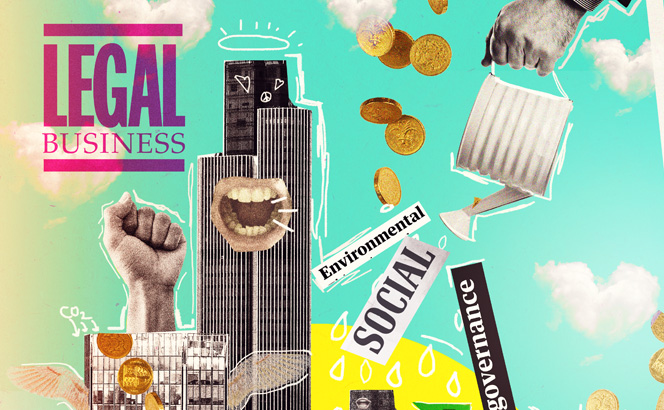
ESG Colourwashing – why leadership with integrity is necessary to combat corporate hypocrisy

In his soon to be published article, ‘ESG Colourwashing: Combating Modern-day Corporate Hypocrisy’, which Timo co-authored in conjunction with his colleague and former student Klemen Kreča, he describes how consumers and investors are increasingly demanding the introduction of sustainable practices and, in turn, even though they may not be “born-believers” as regards the creation of sustainable value, corporations are introducing Environmental, Social and Governance (ESG) factors into corporate decision-making. As ESG has become the new benchmark of corporate sustainability, this has meant, unfortunately, that corporate hypocrisy is rife. Some companies may try to avoid ESG implementation costs by simply sugar-coating the status quo or wilfully creating false impressions about their underlying business models and their actual efforts to integrate sustainable practices.

Anna Bauböck (AB): How can implementing ESG criteria create value for companies, and is it beneficial for all industries and business models?

Timo Spitzer (TS): The implementation of ESG criteria, ie economic, social and governance policies, creates both direct as well as indirect benefits for the company. Direct benefits include a boost in employee morale (improvement in both efficiency and productivity), attraction of better talent, enhanced returns, decreased costs (mostly due to better energy consumption) and easier access to government funding.

Furthermore, due to changing consumer and investor preferences, the implementation of ESG criteria can also lead to indirect benefits such as, among others, increased consumer loyalty, higher revenue, better equity and debt financing opportunities as well as reduced market volatility.

Nevertheless, not all industries and business models are alike. Certain industries such as coal mining are simply inherently unsustainable, while other industries may see only small benefits compared to the still considerable costs of implementing ESG criteria into day-to-day business operations.

AB: Why is the appearance of ESG compliance potentially more lucrative for companies than actually implementing ESG principles?

TS: The implementation of ESG principles comes with significant costs. For most companies, such costs may already be outweighed by the direct benefits, and even further enhanced by the indirect benefits, such as gaining favour from sustainability orientated investors and consumers. However, this may also create a moral hazard when for some companies, the direct benefits of ESG implementation may not outweigh the costs of implementation, or at least not right away. For such companies it may be more beneficial to simply create false impressions about having incorporated ESG metrics into the business model, thereby still gaining indirect benefits, whilst not having to bear any of the associated costs. This is called “ESG colourwashing”, when companies claim to promote sustainability goals, eg social progress, equality, environmental awareness, and diversity, while in reality they are merely sugar-coating the status quo in order to win over consumers and investors who want to support ESG principles.

AB: Why are ESG disclosure rules not enough to prevent companies from colourwashing their ESG credentials?

TS: Disclosure obligations are based on the idea that under full market transparency consumers and investors will be able to ensure companies are ESG compliant. However, ESG colourwashing is not a case of informational asymmetry, where better informed market players could easily penalise non-conforming companies, but rather a case of intentional deceitful action. Companies are wilfully trying to misrepresent their business model to obtain financial gain from consumers and investors.

It is naïve to think that a company that is actively trying to deceive consumers will be stopped just because it has to disclose information. Disclosure laws cannot prescribe for all scenarios, and companies will still be able to find ways to circumvent such laws. Moreover, disclosure obligations are hindered by various drawbacks: i) only certain market participants are bound by disclosure obligations; ii) obligations are triggered only in limited situations; iii) disclosure is often accompanied by enormous bureaucratic burdens; iv) the actual reporting requirements may be shrouded in uncertainty; v) companies often need to hire expert consulting firms, which further drives up their costs; and vi) disclosure standards are not universal means, creating an uneven playing field in a globalised market.

AB: What are some of the problems with existing regulatory actions and enforcement systems?

TS: The European Union is currently leading the charge in combatting ESG colourwashing, and not only through mandatory disclosure obligations. The existing consumer protection legislation and even ex ante labelling mechanisms provide for a system well equipped to combat ESG colourwashing, at least in theory. The issue the EU is facing is not a lack of relevant disclosure regulation, but even more so weak enforcement and poor coordination and harmonisation among its Member States.

The Unfair Commercial Practices Directive (UCPD) and the Comparative Advertising Directive (CAD) form the foundation of the EU’s consumer protection legislation. The UCPD is a fall-back for instances where more specific laws do not exist. It applies to implicit green claims (images, colours, types of package or even smells or sounds used for promoting products and suggesting environmental characteristics), as well as other sustainability claims. Even retail investment services are subjected to the UCPD, insofar as they are not more specifically regulated by the Distance Marketing of Consumer Financial Services Directive and of course the very comprehensive Markets in Financial Instruments Directive (MiFID II) and the Markets in Financial Instruments Regulation (MiFIR).

Nevertheless, in practice the existing system faces a severe lack of harmonisation and coordination. The ex-post enforcement mechanisms under the UCPD are sluggish, poorly organised and unrecognised on an EU-wide level, and it often lacks the required technical expertise.

That being said, with appropriate amendments to these laws, most of the aforementioned issues could be mitigated. Harmonising or, better yet, unifying enforcement measures on an EU level could ensure effective ex-post control. Complementary efforts could also be considered, eg supplementing the UCPD with such mechanisms as coordinated pre-approval systems of green claims and an accreditation system of green labels. These measures could help establish appropriate ex-ante control and technical/scientific expertise.

AB: In your opinion, what are some possible solutions to prevent ESG colourwashing and penalise companies and persons who indulge in it?

TS: One possibility is to improve or expand on the existing regulation with a lesser focus on disclosure obligations and an increased focus on consumer protection laws, competition laws, general fraud doctrines, ex ante screening mechanisms and even private enforcement actions under securities laws.

Alternatively, we could alter the premise entirely and pursue a top-down approach. The CEO must set the corporate standard by creating a culture of corporate sustainability, whilst the in-house counsel must ensure both legality and legitimacy of the business model, acting as part of the moral compass.

AB: You suggest that a company-based top-down approach could be beneficial or even more effective than external regulatory measures. Could you please tell us more?

TS: There is no such thing as a perfect regulatory system which prevents any and all problems from arising. Moreover, any law or regulation is most effective when the subjects adopt it as their own. That is to say, they abide by it not because they have to, but because they genuinely want to. Colourwashing is inherently linked to the question of integrity, or, to be frank, the lack thereof of those who practice it.

A culture of sustainability, ie can best be shaped by the Chief Executive Officer (CEO) acting as corporate role model for employees. To facilitate this, companies could and should, with governmental support, adopt corporate codices to underline the importance of sustainability-led governance and set the overall values of the company. In this respect all relevant stakeholders should be taken into account, as well as the overarching societal impacts of the business model. Such internal policies could be further bolstered by a corporate leadership model, whereby all relevant stakeholders are included within a special governance board established within the company to promote sustainable corporate governance. This entity, led by the CEO, could prove to be the key to preventing the company from indulging in illegal and/or illegitimate practices, such as colourwashing. In fact, this internal mechanism may prove to be significantly more effective than external regulatory measures.

AB: What do you see as the role of the legal department in the prevention of ESG colourwashing?

TS: Companies could provide for an expanded role of the legal department when publicly supported by the CEO. The legal function could serve as part of the company’s moral compass, supporting the CEO in ensuring that corporate hypocrisy is not tolerated anywhere within the company. In-house lawyers can, in this manner, demonstrate, support and facilitate accountable leadership within the company and safeguard compliance with both laws and uniform global ethics, even when no one is watching.

In its expanded role, the legal department should fully assess corporate behaviour not only within the remit of applicable law, including consumer protection, competition, and anti-fraud laws, but also against a uniform code of global ethics and traditional moral values such as honesty, fairness, and commitment to inclusion, thus limiting the potential exposure of the company. In practice, the corporate framework and especially the CEO must provide the legal department with the necessary autonomy to raise concerns vis-à-vis commercial decisions that might constitute ESG colourwashing and corporate hypocrisy. At the same time, the CEO should expand the mission of the legal department to also assess other matters of importance, such as strategic, HR and budgetary matters.

AB: The European Commission is currently drafting a potential Directive on Sustainable Corporate Governance. What can be expected from this?

TS: The potential Directive on Sustainable Corporate Governance represents an extension of the European Green Deal and aims to further stimulate the integration of sustainability considerations into companies’ strategies and decision-making processes. The drafting phase has given a glimpse into what can be expected. The European Commission is exploring the possibility of expanding the directors’ duties of care to require directors to consider the environmental and social ramifications of the business model. Furthermore, the proposal could include a so-called due diligence duty, whereby corporates would be obliged to implement adequate processes for preventing, mitigating, and accounting for human rights and environmental impacts in both companies’ operations as well as supply chains. The European Commission is also considering introducing appropriate measures to align directors’ remunerations with long-term objectives of the corporation. For example, their remuneration may be linked to the company’s sustainability metrics or vary depending on achieving various non-financial targets. Lastly, the European Commission aims to alter the composition of boards of directors, making it necessary to involve environmental and human rights experts.

It remains to be seen how this initiative will develop in practice. In any case, regulation can never replace the need for corporate leaders acting with integrity and making sustainable business decisions.


Revolving doors: Freshfields unveils multiple hires in US amid busy week for London firms

Amid a hectic start to June for lateral hiring, Freshfields has had a busy week, having added four new partners to both its London and New York practices. Derivatives and structured products specialist James Duncan will join the firm’s global transactions practice in London from Shearman & Sterling, following the news of its merger with A&O.

Duncan will advise the firm’s existing corporate, financial institution, financial sponsor, and private capital clients on cross-border transactions, strategic equity solutions and equity financings. Continue reading “Revolving doors: Freshfields unveils multiple hires in US amid busy week for London firms”

‘Our clients led us to Houston’: Clifford Chance launches energy-focused Texan office as part of US expansion plans

Clifford Chance has opened a new office in Houston, bolstering its global energy and infrastructure practice in the US.

The firm has hired seven Houston-based partners to join the office, including Jonathan Castelan and Trevor Lavelle, who both join from Latham & Watkins. However, at this stage, Clifford Chance was unable to confirm the names of the remaining five partners or the firms they are moving from. Continue reading “‘Our clients led us to Houston’: Clifford Chance launches energy-focused Texan office as part of US expansion plans”