Former Paul Hastings London head joins White & Case in double partner move

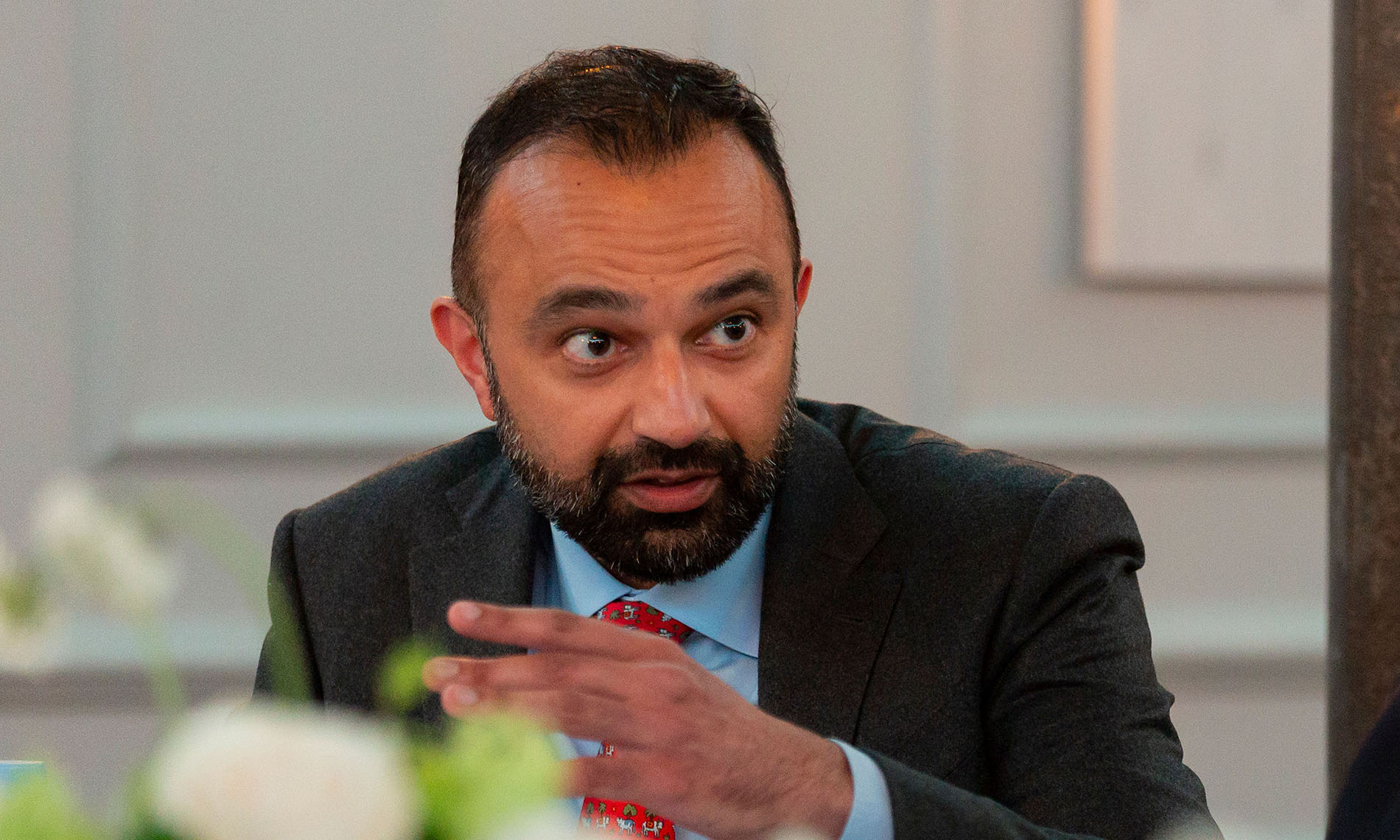
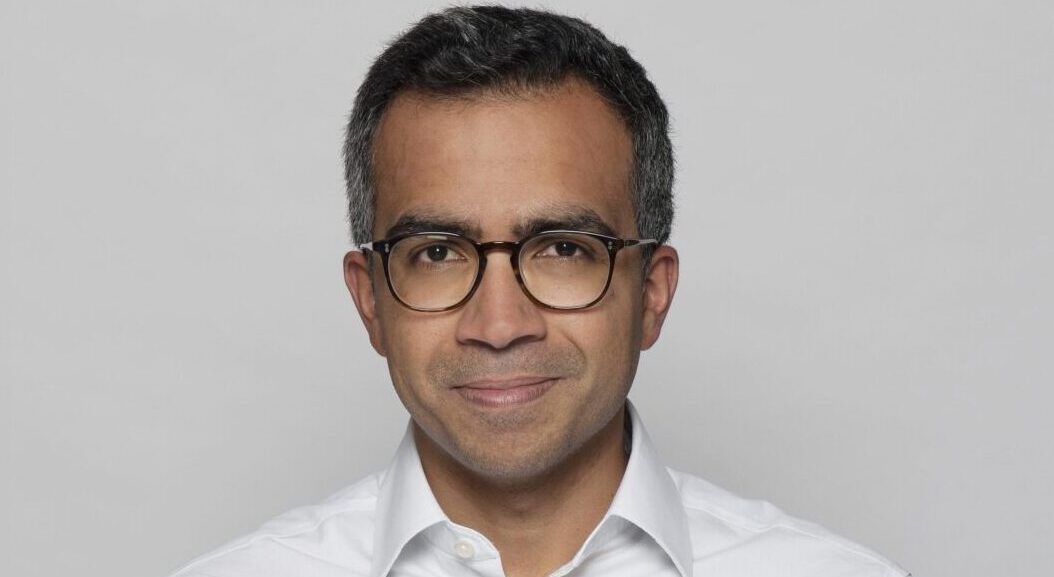
Paul Hastings has seen two more senior departures in London, with White & Case recruiting a tax duo including former City chair Arun Birla.

Birla, who also held the role of global second managing partner, was chair of the US firm’s London office from 2018 to October 2022.

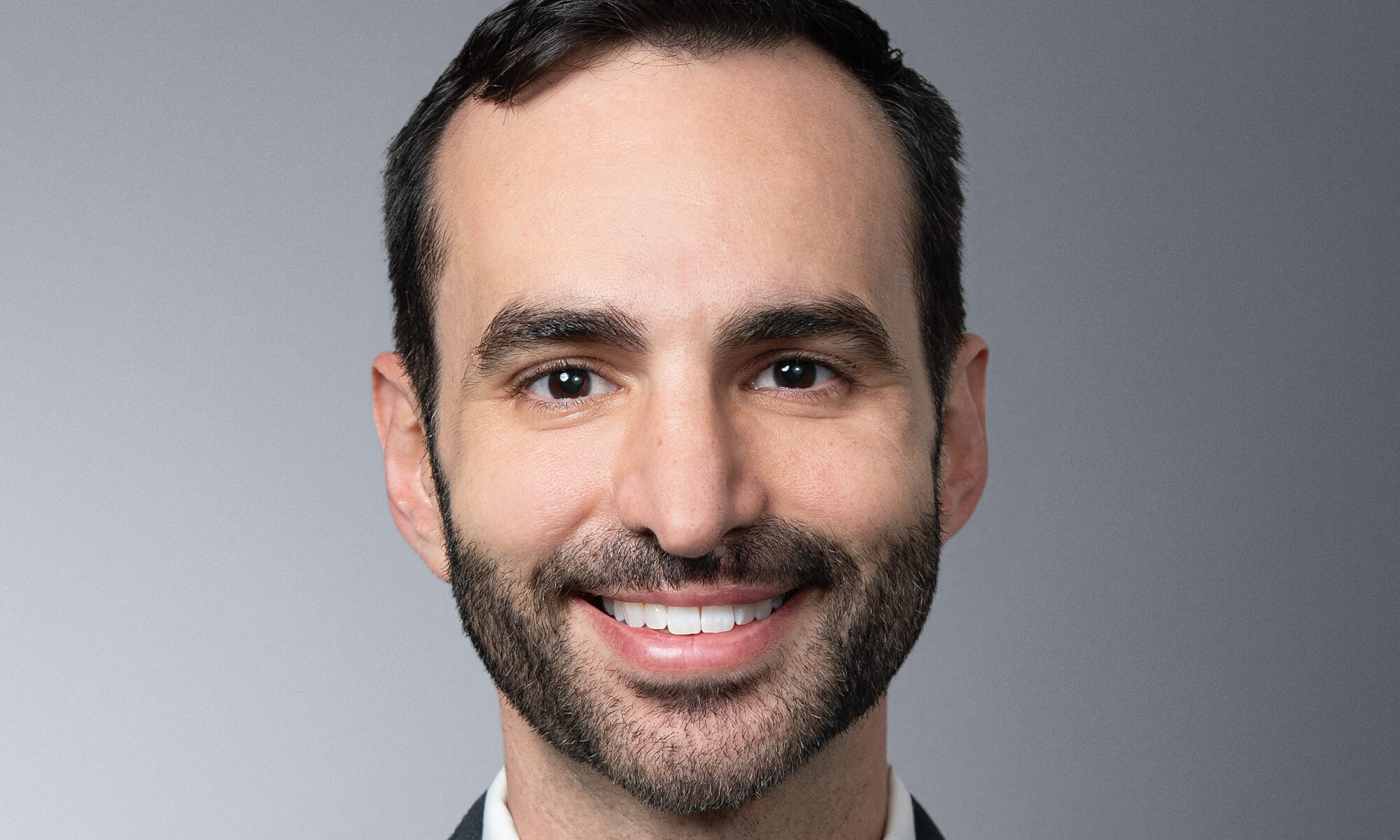
He is moving to White & Case alongside fellow tax specialist Jiten Tank, with both of them having spent over 15 years at the firm.

Birla’s move marks another exit of a London leadership figure for Paul Hastings, on the back of London co-chair Mei Lian’s departure to Linklaters this summer.

After succeeding Birla in late 2022, Lian had co-chaired the London office alongside fellow finance partner Ross Anderson, who is now sole London chair.

Both Birla and Tank have significant experience of handling the tax aspects of cross-border M&A, private equity and finance transactions, while Tank also brings with him particular experience of securitisations.

The latest departures for Paul Hastings come after real estate finance partners Miles Flynn and Rehan Hanif joined Milbank yesterday (13 October). Flynn had spent nearly 17 years at the firm, while Hanif joined from Kirkland & Ellis in 2023. Other notable recent exits include infrastructure partners Jessamy Gallagher and Stuart Rowson, who left for Freshfields in February after just two years at the firm.

In a statement, Paul Hastings said: ‘We wish Arun and Jiten well. Revenue in London is projected to be up 20%-25% this year and 70% over the past two years. We intend to continue to build in London at the top of the market, including in UK tax.’

In the US, the firm has bolstered its tax platform with a series of laterals over the past year, including Sherrie Xie from Kirkland & Ellis in New York and Alex Farr from McDermott Will & Schulte in Dallas, as well as two partners in Washington DC – Daniel Nicholas from Weil Gotshal & Manges and real estate investment trust specialist Christopher Mangin from Vinson & Elkins.

It is understood that the firm intends to build a strong UK tax platform to complement its UK and global transactional practices.

Sang Ji, the head of White & Case’s global tax practice said: ‘Arun and Jiten bring a unique and differentiated combination of deep expertise in transactional and tax structuring, commercial acumen, strong client relationships and a stellar reputation in the market.’

White & Case also added to its London tax team earlier this year with the hire of Latham & Watkins partner Catherine Hill.

[email protected]

Revolving Doors: Proskauer, Mayer Brown and Pinsents hire in PE as A&O Shearman loses German arbitration head

Martin Graham has joined Proskauer’s private equity and M&A team in London, returning to private practice after 18 years at Oaktree Capital Management, where he was most recently a managing director.

Graham has experience leading investment teams across a range of PE strategies, with expertise in distressed debt investing, structured equity, hybrid capital, direct lending, M&A, restructuring, and more.

‘Martin understands how to manage risk and deliver results in a dynamic deal environment and will help us provide the insight and execution our clients need,’ said Steven Davis, head of Proskauer’s private equity and M&A transactions group – Europe, and head of the London office.

Across the capital, Mayer Brown has added Tessa Agar to its corporate and private equity team in London. Agar, who works with clients ranging from technology firms to healthcare companies, joins Mayer Brown from Goodwin where she spent nearly nine years and made partner in 2022.

Pinsent Masons has made a double hire this week, with ECM partner Nicholas Holmes joining from Ashurst and Dinsesh Banai moving over from Herbert Smith Freehills Kramer to lead its US securities practice.

Holmes will lead Pinsent’s ECM team having previously held the same role at Ashurst. Banai, who spent six years at Sullivan & Cromwell before joining legacy HSF in 2010, has a practice that spans both equity and debt capital markets. He will work with Holmes to advise on IPOs, as well as with Pinsents’ banking and finance team to advise on US facets of international financial mandates.

Tax partner Katie Leah has joined Skadden in London, leaving Goodwin after 12 years after joining the partnership there in 2019. Leah advises on tax aspects of PE transactions, real estate and capital markets in the UK, US and on cross-border matters.

Meanwhile, Ashurst has bolstered its disputes capabilities as Harriet Jones-Fenleigh joins the London team from Norton Rose Fulbright, where her practice focused on commercial and financial disputes.

A Legal 500 leading partner in banking litigation: investment and retail, Jones-Fenleigh spent five years as a barrister at Fountain Court Chambers before joining NRF in 2013.

Morgan Lewis has added Christian Tuddenham from Jenner & Block. Tuddenham, who represents financial institutions across the globe in commercial litigation cases, deepens Moran Lewis’ disputes offering.

Morrison Foerster has strengthened its fintech offering with the hire of Joshua Kaplan, a financial services and technology partner from Wilson Sonsini. Prior to his five years at Wilsons, Kaplan held in-house roles at fintech company Checkout as well as Merrill Lynch in London.

Finally in London, Charles Russell Speechlys has hired Libby Elliott into its corporate, restructuring and insolvency team. Elliott joins from Interpath Advisory, where she was a managing director, and previously spent time as a partner at Stephenson Harwood and Dentons, before joining KPMG in 2019.

In Scotland, Tom Usher has joined Burness Paull from Macfarlanes as as senior adviser. Usher brings with him over three decades of UK and EU competition law experience.

On the continent, A&O Shearman has lost the head of its German arbitration practice after Anna Masser left the firm to establish boutique firm Manner Masser alongside fellow arbitration specialist Simon Manner, who established his boutique firm Manner Disputes last year, which is merging into Manner Masser.

Herbert Smith Freehills Kramer has expanded its Italian offering as Emanuela Da Rin joins the firm’s Milan office to lead its banking and finance practice. Da Rin joins from leading Italian firm BonelliErede where she spent 20 years covering a broad range of mandates including debt finance, corporate and acquisition finance and restructuring. This new team, comprising of Da Rin, a counsel and three associates will support the firm’s existing finance partner in Milan, Simone Egidi.

BonelliErede has added three partners to its Milan headquaters, with the arrival of Maria Cristina Storchi, Andrea Novarese and Francesco Pirisi. Storchi  joins the firm’s M&A partice while Novarese and Pirisi both join the restructuring and banking and finance team. All three move across from  Italian firm Gatti Pavesi Bianchi Ludovici.

In the Middle East, CMS has hired Gabriella Savastano as a partner in its banking and finance practice in Dubai, where she will act on regulatory matters such as conduct of business, regulatory compliance and anti-money laundering. Savastano returns to CMS after a brief spell at Linklaters, where she was head of financial services regulation in Dubai.

Also in Dubai, Clyde & Co has hired Janet Gooi, a tax lawyer who will lead the firm’s tax offering in the region. Gooi will join Clydes as a partner from Al Tamini where she spent seven years advising PE groups, investment funds and high-net-worth individuals.

Finally, Weil has added another Latham lawyer to its Frankfurt practice as it continues to build out its PE practice, hiring two former Latham partners last week. Andreas Holzgreve, who was an associate at Latham for six years, joins Weil as a partner.

[email protected]

Revealed: The UK’s top general counsel 2025

Heavyweight GCs including HSBC’s Bob Hoyt, Vodafone’s Maaike de Bie, BT’s Sabine Chalmers and BAE Systems’ Ed Gelsthorpe are among more than 100 high profile in-house names recognised in the latest UK GC Powerlist.

The Legal 500’s GC Powerlist UK: 2025, which offically launched yesterday with a reception at Kennedys’ City headquarters, includes 122 of the most senior in-house lawyers in the UK.

General counsel, chief legal officers and heads of legal at some of the biggest and most dynamic legal teams in the country have made the grade for inclusion in this year’s Powerlist, which recognises the legal leaders who have made particularly significant contributions to their company or industry sector over the last year in the eyes of peers, the private practice partners they instruct and the L500 GC Powerlist research team.

Running legal teams that range in size from single digits to seven hundred, the Powerlist includes GCs from a range of industry sectors.

Those in the financial services sector fared particularly  well, with 20 legal chiefs from banks, asset managers and fintechs making the grade –  nearly 20% of the full list.

Among the heavyweights returning to the list are HSBC chief legal officer Hoyt, UBS investment bank and EMEA GC Simon Croxford and Group GC at Barclays, Stephen Shapiro. New additions from the financial services sector include Aberdeen GC Rushad Abadan, Volt’s CLO Stephanie Lopes and Metro Bank’s Stephanie Wallace.

Thirteen tech company legal heads have made it onto the list this year, while insurance and consumer goods are also well-represented with 12 and 10 GCs included respectively. New additions include Capita GC Claire Denton,  QBE Europe’s CLO Alexandra Smith, as well as Spencer Collins, CLO at Arm.

Women make up slightly more than half of the list, with 63 of the 122 places. They also make up just over half of the 55 new additions to the list, with the 28 new female Powerlisters including ITV GC Kyla Mullins, GC of the Sizewell C nuclear project Sharmila Sylvester and Klarna CLO Boudien Moerman.

Many of the GCs included  are from some the biggest companies in the world. Some 35 of those on the Powerlist work at companies that reported global revenues of at least £10bn in their latest financial reports, while four are from companies posting revenue of at least £50bn: Citi, PepsiCo, The Walt Disney Company and Unilever.

Sharon Blackman OBE, managing director and global head of services legal at Citi and Maria Varsellona, CLO at Unilever, also appeared on the previous UK Powerlist, but Joanne Averiss, GC Europe, Africa, Middle East and Pakistan at PepsiCo and Nicola Burns at the Walt Disney Company were new additions this year.

Forty three of the GCs work at FTSE 100 companies, 77 work at companies listed on the LSE, with the Powerlist also including GCs from companies listed on the NYSE, NASDAQ and the SIX Swiss exchange.

Other well known legal heads on the 2025 Powerlist include BP’s Michael Sosso, Carlyle’s Heather Mitchell, Centrica’s Raj Roy, Coca-Cola Europacific Partners’ Clare Wardle, Compass Group’s Alison Yapp, Diageo’s recently appointed head Randall Ingber, and E.ON UK’s Kirin Kalsi.

Click here to see the full UK GC Powerlist 2025, including interviews with many of the GCs on the list

[email protected]

The $3bn McDermott Will & Schulte merger: four things the data tells us

The headline figures for the McDermott Will & Schulte merger speak for themselves – combined revenue of $3bn, and more than 1,750 lawyers across 27 offices in the US and Europe.

But behind those top-level numbers, Legal 500 data offers deeper insight into the rationale behind the merger, key areas of strength, and also, perhaps most importantly – what clients think. Here are five key data takeaways.

Schulte was punching above its weight in the US 

In its US homeland, pre-merger McDermott Will & Emery had 47 rankings, with seven top-tier rankings.

While Schulte was significantly smaller, with just two US offices compared to 16 for McDermott, the firm had 20 US rankings, including two top-tier rankings, including the jewel in its crown – alternative/hedge funds.

Merging with Schulte gave McDermott its London top-tier debut

And that strength in hedge funds is what Schulte really brings to the table in the UK.

While legacy McDermott had a total of 18 London rankings, ranging from corporate tax to M&A and capital markets, none were higher than tier 3.

Schulte had just four London rankings, but its top-tier hedge funds team has brought a market-leading practice to the merged firm.

Schulte was also the clients’ top choice for funds

Legal 500 data also offers unique insight into what clients think about the service they get from firms, and the figures underline the premium service that Schulte’s hedge funds team offers.

The practice is a clear leader across almost all client service metrics, receiving the highest scores for seven of the ten metrics that Legal 500 asks clients about – industry/commercial knowledge; quality of partners and quality of associates; efficiency; profile in the sector; billing transparency and value for work done.

McDermott also places among the top five highest-scoring firms for a number of metrics, including acquisition finance – value for work done, international arbitration – profile in the sector, and high yield – communication and matter management: high yield.

McDermott is bigger in Europe than you think

McDermott has 35 rankings across Europe – 17 in Germany, 12 in France, four in Italy and two in Belgium. Its best rankings include a top-tier ranking for healthcare and life sciences in France, and area in which it is also ranked in tier two in Germany.

The firm also has tier 2 rankings for tax in France and Italy, and its most prominent practitioners on the continent include two tax Hall of Famers – Niels Dejean in Paris and Carlo Maria Paolella in Milan.

[email protected]


The client satisfaction scores in this article are compiled from referee responses collected during Legal 500 research. Benchmark scoring for our other criteria (lawyer/team quality, and sector and industry knowledge) and other sub-criteria is also available. If you would like to know more, please contact [email protected].

A&O Shearman’s hard reset: 170 partner departures and counting

More than 170 legacy Allen & Overy (A&O) and Shearman & Sterling partners have left or retired since the two firms’ merger was announced in May 2023, with more than a third of these exits taking place in the US, according to Legal Business research.

Departures tracked by LB from Companies House filings and other data show that 130 partners have left since the union went live in May 2024. This means that around one in six of those who were partners at the firm when the merger went live, have since gone.

The overwhelming majority of these are from legacy A&O, with 101 exits from the UK-headquartered firm since May 2024, plus an additional 29 from the Shearman partnership.

Figures in the LB Global 100 2024 show this represents around 16% of the c.800-strong partnership when A&O Shearman was created, with a similar percentage leaving from each legacy partnership.

Eighty partners have left since the start of 2025, three quarters of which (61) are ex-A&O. Of the additional 50 partners to have left since May 2024, 40 were ex-A&O.

Significantly, 113 partners have left since September 2024, when A&O Shearman announced that it would be cutting 10% of its global partnership. 

This equates to two-thirds of the 170 departures tracked since the merger was announced and 86% of those tracked since it went live in May last year.

This volume outpaces the 10% figure by some measure, with the exits also including a number of well-regarded partners and former practice heads, such as antitrust specialist David Higbee in Washington DC, who recently quit for Paul Weiss with two other partners.

Regional breakdown

Breaking down the exits by region shows a sharp concentration in London and the US, mirroring the footprint of the legacy partnerships.

With 34 departures since the merger completed, London has seen more exits than any other city around the world, accounting for more than a quarter of all departures since May 2024. Some 26 of these exits came from the legacy UK firm’s London HQ.

The proportion of departures rises in the US, with legacy A&O seeing 38 partners leave since the union across the pond – more than a third of its total.

Overall, there have been 55 US departures from the combined A&O Shearman since the merger – meaning the US represents 42% of all 130 exits since the deal went live.

New York has seen 31 departures, the overwhelming majority of which (26) are legacy A&O, with Washington DC seeing 17 departures – nine ex-Shearman (including Higbee), and eight from legacy A&O. The remaining exits are in other offices in the US.

Destination firms

Although individual remuneration packages are not known, at least 75 partners leaving since May last year have taken up roles at other global 100 firms, with 66 joining firms with higher average PEP than the $2.6m figure reported by A&O Shearman for the 2024-25 financial year.

The main beneficiaries have been rival UK and US firms, including Orrick, Proskauer and Paul Weiss. Other departees have joined smaller firms, gone in-house, retired or are not currently practising.

Practice area trends

Looking at the exits by practice, with 25 departures, the banking and finance practice has seen the highest number of partner exits since the merger went live, with a further nine partners leaving in capital markets.

At 17 exits, corporate and M&A has also seen a significant number of departures, with many joining US firms in Europe. Sixteen disputes partners have left, including arbitrators, while regulatory and restructuring practices have seen seven exits apiece.

A&O has never provided any practice or geographic breakdown of its planned partnership cuts.

The scale of partner exits over the period since May 2024 significantly outstrips the merged firm’s close rivals such as Freshfields and Linklaters in London and globally.

Commenting on the moves one former partner said: ‘Partner exits are always inevitable when two different firms with different ethos merge.’

A legal recruiter added: ‘There’s always a bit of internal sorting and any time there’s a merger there’s instability. A big merger like that requires at least a few years to sort out.’

It hasn’t all been exits though. Since the merger went live, A&O Shearman has also added a steady stream of new partners globally. The firm has made 25 lateral partner hires worldwide since May 2024 and has also promoted 73 to its partnership – 40 in May 2024 and a further 33 in May 2025.

A&O Shearman declined to comment.

*All infographics based on data from May 2024

Ranking progress – how many women have made the grade to secure a UK L500 ranking this year

Women now make up 43% of all individual lawyer rankings in the UK Legal 500 Solicitors research, according to new analysis .

Seven years after the L500 set out its intention to improve gender representation in its UK rankings, the latest research includes 5,700 rankings for women across the Hall of Fame, Leading Partner, Next-Generation Partner and Leading Associate tables. 

The female rankings are included within the recently launched 2026 UK Solicitors research, which went live earlier this month, and show women now hold 46% of the individual rankings outside London and 40% of total rankings in London.

Some 270 more women were ranked in the 2026 guide compared to the 2025 guide, driven in large part by additions to the rankings outside London, which accounted for more than 180 of the additional female rankings. 

In London, the practice areas with the most ranked women include family (including the newly separated children and divorce and financial remedy rankings) and immigration, with the clinical negligence: claimant rankings taking the top spot, with women holding 82% of all individual lawyer rankings.

Several London practices saw notable improvements in the most recent research, with both the clinical negligence: defendant and Islamic finance rankings seeing a 10% increase in ranked women, compared to last year’s research. In total, 36 of the London practice areas ranked within the 2026 research now have more than 50% of individual lawyer rankings going to women.  The number of women recognised also increased significantly for premium M&A in London, with women now holding nearly 40% of the individual rankings. 

Outside London, the female to male split is now 46:54, with 11 of the 14 regions covered in the research seeing an increase in female representation. The South East comes out on top with 54% female representation within the rankings, with practice rankings across the North, the East Midlands and East Anglia all achieving more than 50% representation. 

The increase in female representation follows a concerted push by researchers to increase the number of deserving womem in the UK rankings via  law firm submissions and partner interviews.

[email protected]

Trading places: latest US partner moves for HSF Kramer, Latham, Orrick and more

HSF Kramer has bolstered its Washington DC antitrust group with a senior hire from the US Department of Justice.

John Elias (pictured), a deputy assistant attorney general in the Antitrust Division, is making the move to private practice after nearly two decades at the DOJ, bringing with him expertise in the full spectrum of antitrust matters.

HSF Kramer US executive partner Paul Schoeman cited growing client demand for antitrust expertise, both domestically and internationally, adding: ‘John’s experience at the DOJ litigating critical antitrust matters and shaping the agency’s policies will be a tremendous asset to clients as they navigate an increasingly challenging regulatory environment.’

The hire brings the Washington DC office’s partner headcount to four, according to the firm’s website, and follows the hire of Burr Eckstut from White & Case, who joined the New York office last month as head of US technology transactions.

The move is the latest in a DC antitrust market that has been busy of late, with major recent moves including Paul Weiss’s hire of a three-partner team from A&O Shearman, led by global antitrust head David Higbee and including partners Ben Gris and Djordje Petkoski.

In another move in the practice area, Latham & Watkins antitrust partner Makan Delrahim has left the firm to become chief legal officer at Paramount Skydance Corporation, the media company formed after Skydance completed its acquisition of Paramount in August.

Delrahim joined Latham in April 2022, and previously served as an assistant attorney general in the DOJ’s Antitrust Division, from September 2017 to the change of administration in January 2021.

He will step into his role on 6 October, replacing general counsel and acting chief legal officer Stephanie Kyoko McKinnon, who will continue as GC.

The hire comes after Latham represented Skydance Media on its acquisition of Paramount.

‘We thank Makan for his many contributions to our firm and to our clients, including Paramount Skydance’, a Latham spokesperson said. ‘We wish him all the best and look forward to continuing to work with him in his new role.’

Also in the US capital, Arnold & Porter has hired Bree Raum as a senior policy advisor in its legislative and public policy practice. Raum has more than 25 years’ experience engaging with Congress and federal agencies on energy, environment, and energy transition matters, and joins from industrial gas and chemicals supplier Air Products, where she most recently served as executive director, government affairs for the Americas.

Elsewhere, Brown Rudnick litigation and dispute resolution practice group co-chairs Michael Bowe and Lauren Tabaksblat have left the firm to establish litigation boutique Brithem. The duo joined Brown Rudnick in 2020 from US national firm Kasowitz, and have experience in disputes ranging from short-selling to civil rights.

Tabaksblat said in a statement: ‘Brithem is devoted to the art of trial lawyering and using that art to make a difference. Our name is not on the door because the firm is about our clients, not us. Our first love is being courtroom advocates who deliver results for clients and make a difference.’

Also joining the firm are Quinn associates Valerie Ramos and Andrew Sutton, who join as partners, as well as former Supreme Court clerk Joseph Masterman as of counsel, and a clutch of other personnel, for a total headcount of 13 legal professionals. The firm aims to have at least 20 lawyers in Q1 of 2026.

Bowe commented: ‘Big Law is drunk on leverage and billables that deliver little bang for the buck. Smart consumers of legal services know better, want an alternative, and love supporting a firm that is also heavily committed to combating child abuse, human trafficking, discrimination, and other injustices.

‘The AI revolution will only augment our proven ability to take on big fights leanly. Today, big is not better. It’s just unnecessarily more expensive.’

Elsewhere, Orrick has officially confirmed the full details of the large collateralised loan obligations (CLO) team it has hired into multiple offices across the UK and the US. The team comprises 37 lawyers in total, including partners Mike Gonzales in Washington DC and Doug Arborlo in Charlotte, in addition to the eight partners previously reported. The Charlotte hires will see the firm open a new office in the city.

Orrick chair Mitch Zuklie said in a statement: ‘The addition of this world-class team positions our firm uniquely to advise our private credit and banking clients as they innovate on private debt solutions. It advances multiple strategic priorities, including growing our London office and scaling our finance practice with a team of remarkable quality.’

He continued: ‘We are truly excited to enter the Charlotte market, long a centre of financial innovation and home to many valued clients. We look forward to collaborating with this team to continue to build around our shared vision of the future of the debt finance market. We will look back on this move as a game-changer for our clients and our firm.’

[email protected]

Caught on camera: the Legal Business Awards in pictures

Latham & Watkins, Linklaters and Burges Salmon were just some of the firms who went home from this Tuesday’s Legal Business Awards with a trophy to put up on display on the office mantelpiece.

Hundreds of lawyers were out in force for the ceremony, which once again took place at London’s Grosvenor House Hotel, hosted by comedian Katherine Ryan – and as always, guests were dressed to impress.

From the big winners to the evening’s entertainment, and from the glamorous hosts to the dancefloor shapes, relive a selection of highlights from the night via the slideshow below (all the details of who won what, and why, are here).

Client feedback hits record high in new Legal 500 rankings

Nearly 1,200 law firms have secured a place in the new Legal 500 UK rankings, which were revealed yesterday (1 October) after months of research into legal markets across the country.

The rankings are based on extensive legal market research across England, Wales, Scotland and Northern Ireland, drawing on detailed submissions from law firms, thousands of firm interviews, and record levels of feedback from referees, with more than 180,000 referees contacted.

Response rates for London referees saw a double-digit increase this year, with rising by almost 12% to a new record high of more than 31,000.

The UK guide includes around 10,000 practice rankings, almost 50% of which are in the London. The rankings feature almost 1,200 unique firms, with almost 700 of those ranked in the London guide.

New additions this year include an energy and projects ranking for Wales, with Eversheds Sutherland recognised as the top-tier firm in that market, while the London private client chapter expanded this year, with new rankings for family: children and family: divorce and financial remedy seeing Charles Russell Speechlys, Farrer & Co and Payne Hicks Beach all securing top-tier spots in both.

As well as the practice rankings, over 13,000 lawyers achieved individual rankings, including almost 2,000 members of the prestigious of Hall of Fame.

Once again, Pinsent Masons has the most practice rankings across the UK, while CMS and the newly merged Herbert Smith Freehills Kramer are tied for the top spot in London.

Eversheds Sutherland, DLA Piper, Addleshaw Goddard, and CMS round out the top five nationally, while in London, CMS and HSFK are followed up by DLA Piper, Pinsent Masons, Norton Rose Fulbright, Clifford Chance and Eversheds Sutherland.

Pinsent Masons also secured the highest number of top-tier rankings across the UK, while Clifford Chance has maintained its position as the firm with the most tier one rankings in London.

For questions about the new rankings or to request changes, please visit legal500.com/faqs.

Revolving Doors: Latham boosts London life sciences as Weil hires German PE partners

Latham & Watkins has hired intellectual property and life sciences partner Lydia Torne to its office in London.

Torne, who is a Legal 500 next generation partner for life sciences and healthcare, joins from Simmons & Simmons where she has been a partner since 2021, having joined the firm in 2008.

‘We’ve followed her career for some time and have been consistently impressed by her exceptional skills in global licensing,’ said Robbie McLaren, global vice chair of Latham’s healthcare and life sciences industry group. ‘Transactional activity in life sciences remains robust, with an increasingly complex mix of licensing and M&A. Lydia’s deep experience and outstanding track record further strengthen our global practice, following the recent arrival of Kate Hillier in the Bay Area.’

Torne’s expertise extends to regulatory compliance matters, clinical trials and supply chain requirements.

Dan Ornstein has joined Ashurst’s employment practice in London, after also leaving Simmons & Simmons after five years. Ornstein advises on labour disputes and employment-related litigation in courts and tribunals, with a particular focus on the financial services sector.

Prior to joining Simmons & Simmons he spent 11 years as a partner at Proskauer, where he was co-head of the international labor & employment group.

Mishcon de Reya has hired corporate partner Phil Robinson who specialises in venture capital and technology within the innovation economy. Robinson, who joins Mischon from Withers, has a practice that focuses on supporting high-growth businesses through financing rounds, restructurings, US flips and exit strategies.

He is developing a founded-focused practice designed to provide tailored support to the founders themselves and not just their companies.

Watson Farley & Williams has hired Kumar Tewari to head the firm’s real estate finance practice in London. He joins from Katten Muchin Rosenman where he spent almost eight years and was head of banking for EMEA. Tewari previously spent almost 10 years working in-house in the banking industry, completing seven years at Lloyds Banking Group.

Elsewhere in London, residential conveyancing partner Simon Main has joined Cripps from Streathers (West End), bringing with him experience in high-value freehold and leasehold acquisitions and dispositions, as well as landlord and tenant matters. Main had been at Streathers for nine years, qualifying as a partner in 2021.

Gustina Singgih has joined Charles Russell Speechlys as a corporate partner in London, as the firm aims to strengthen its cross-border corporate and commercial capabilities. Singgih trained and practised as an associate at White & Case in London before moving in-house for a decade. She joins Charles Russell Speechlys after completing five years as deputy general counsel at engineering company Babcock International.

CRS has also hired Annapaola Negri-Clementi to its Milan office where she joins as a corporate partner with a focus M&A, fintech and financial markets. She joins from Pavesio e Associati with Negri Clementi where she was a named equity-partner. Negri-Clementi also has a well-developed art practice and is a recognised name in the Italian art world.

In Germany, Weil, Gotshal & Manges has added two Latham partners to its European private equity practice. Sebastian Pauls will join as co-managing partner of Weil’s German offices, replacing Gerhard Schmidt who departs after holding the post for over two decades. He will work alongside co-managing partner Britta Grauke, who also heads the firm’s German litigation practice.

Joining the firm alongside Pauls is Susanne Decker, who joins the firm’s Frankfurt office, where she will advise international PE firms on cross-border M&A transactions.

Meanwhile in Paris, Gibson Dunn has hired Dorothée Griveaux into its infrastructure practice. Griveaux joins the firm as partner from Dentons.

Finally, Broadfield (formerly BDB Pitmans) has made several hires across London and New York.

In London, David Ramm joins from Cromwell & Moring to lead the corporate team, James Duncan joins from Winckworth Sherwood as a private equity and funds partner, and Paul Cole joins from Clyde & Co as a real estate partner.

In New York, former New York State Department of Financial Services general counsel Daniel Alter joins as a partner focusing on disputes involving virtual currency and governance, while former assistant US attorney Edward Smith joins as a partner in commercial and bankruptcy disputes, and Maya Uchima joins from Dentons’ venture technology and emerging growth companies group.

[email protected]

The path to partnership less travelled: Ashurst arbitrator Harsh Hari Haran

In the latest of a series of profiles spotlighting unconventional paths to partnership, Ashurst arbitrator Harsh Hari Haran looks back to his years practising in India and Singapore before joining Ashurst in 2018 and making partner this year

When you started your legal career as a litigator in India, did you ever imagine working for a firm like Ashurst?

To be honest, no. Since law school, my dream had been to become a senior advocate practising in the Delhi High Court and Supreme Court – senior advocates being the equivalent of KCs. But as you go through life, your perspectives change. When I was practising in Delhi and later in the Supreme Court, I at times felt dissatisfied with what I perceived to be delays in the judicial process.

To give you a flavour – the first case I argued was a first-instance appeal filed in 1987, which I ended up arguing in around 2012. But Delhi taught me a lot: You can sometimes come across counterparties who seek to abuse the judicial process and you really learn to think outside the box to try and get the best outcome for your client.

What drew you to arbitration?

In Delhi, I would drive to different courts, covering over 70km a day and spending more than three hours on the roads. I would leave the house at 7:30am and get home at 10 o’clock at night, six days a week. But in terms of actual legal work – how many letters I drafted, how many tasks I completed – my output was quite small.

After a couple of years, I started doing some domestic arbitration work, which really opened my eyes to the wider world of arbitration, and I decided that international arbitration was what I really wanted to pursue. So I began figuring out how to get there, and for me the logical next step was Singapore.

How was the move to Singapore?

I had a wonderful opportunity – and privilege – to be Tribunal secretary to the former Chief Justice of Singapore, Justice Chan Sek Keong, in two international arbitrations during my Masters. That’s when I really got my teeth into international arbitration.

Singapore was a big jump. I was in awe of some of my colleagues; how they could digest vast amounts of information in a very short period of time without missing any detail.

Moving country also led to a defining moment in life: I met my wife. She’s Italian and had also taken a leap of faith by moving out there. While we were standing in line to get our student visas, she cut in front of me. I was tempted to give her a piece of my mind, but then she turned around and I said to myself, ‘all right, maybe I’ll rein it in a bit’. Within six weeks, we started seeing each other, and we’ve been together ever since.

I loved Singapore. In my eyes, there’s no better place for a young couple to start their life together. We made great friends and I have really fond memories about my time there.

Does this mean you can speak Italian?

I did take Italian classes in Singapore and can understand a lot. But put it this way – our four-year-old speaks far better Italian than me.

Can you remember your first case in Singapore?

It was an arbitration – I was at a local firm, and we were acting against an international law firm in a construction dispute. They had filed an application for a partial award, relying on a recent judgment of the Singapore court. I was brought in at that stage with the specific task of trying to find a way around it.

Sometimes you can think as much as you want, but there isn’t a way outside the box – some things are just the way they are. That’s why I remember it – it was a very difficult task and one I knew I was going to fail at!

When did you decide that you wanted to become a partner?

Once I decided I wanted to move to London, partnership was always the goal. In any large firm, if you want to be a partner, you need to position yourself, understand what the business needs are, and identify the gap you can fill. That is what I’ve been doing for the past three years, which put me in a sweet spot to fill the role.

You also make your own luck, and there are elements that are outside of your control, but I never thought that making partner wasn’t achievable. You just need time and work, and I had both.

Do any mandates stand out from your career?

There are a few – including some losses too! If I had to pick one, I would pick the first case I handled at Ashurst. It was an adjudication, and I came up with a critical argument that involved looking at the case from a fresh perspective. We were successful and it was a significant win for the client.

When I was practising in the Delhi High Court as a junior lawyer, I did all sorts of things; any kind of civil dispute that came up – cases involving dishonoured cheques, divorce cases, and even some judicial reviews. From that you learn how to look at problems in different ways and I am grateful to my time in Delhi for that.

Have you had any mentors that have helped you along the way?

If I had to pick two, I’d choose two disputes partners here at Ashurst – Matthew Saunders and Simon Bromwich. They have been incredibly helpful and excellent mentors. They’ve not just helped me grow as a technical lawyer, but have also guided me in my ambitions, always willing to listen and chip in with good advice.

How did it feel when you became partner and how did you celebrate?

I was really delighted. I had been working towards it for a few years, and it always feels good when you end up achieving something you have worked towards. My wife, who is also a lawyer, made partner at the same time so we had a double celebration and a big party – it was a lot of fun.

[email protected]

The path to partnership less travelled: Freshfields disputes partner Joshua Kelly

The path to partnership less travelled: Travers Smith’s Elissavet Grout

Latham, BT, Burges Salmon and Freshfields among winners at Legal Business Awards

BT, Latham & Watkins, Burges Salmon, Freshfields and Sidley Austin picked up some of the big prizes at this year’s Legal Business Awards, which saw a host of top legal leaders flock to London’s Grosvenor House Hotel.

Award-winning comedian Katherine Ryan hosted the evening, handing out 27 prizes to firms, chambers, in-house legal departments and individual lawyers to celebrate their achievements over the last 12 months.

Legal Business editorial director Georgina Stanley introduced the evening.

This year, there were four coveted firm of the year prizes up for grabs: Boutique Law Firm of the Year, Regional Firm of the Year, International Law Firm of the Year and UK Law Firm of the Year.

Latham took the award for International Firm of the Year after an incredibly busy year that also saw it post record revenue of $7bn. Burges Salmon meanwhile picked up the award for top UK firm of the year after the Law Firm of the Year category was split into two.

Sidley picked up US firm in London of the Year.

Among the teams taking home the top practice area awards were Slaughter and May, which won in the competition category, Linklaters, which won in the corporate category, and Freshfields, which picked up commercial litigation team of the year.

Freshfields also continued its winning streak in the individual category, with managing partner Georgia Dawson picking up management partner of the year. Dawson is the first woman to take on the role in the firm’s 300-year history, and has spearheaded an aggressive growth strategy in the US.

Private practice lawyer of the year went to Des Collins, founder and senior partner at Collins Solicitors. The award recognises his work representing the victims of the highly publicised and long-running infected blood inquiry, which concluded last year. Collins worked tirelessly, offering many hours of free advice to the victims of one of the biggest scandals in NHS history.

The awards were judged by an esteemed panel of general counsel at leading companies, including VodafoneThree, DHL, Reach, Fremantle and Smith & Nephew, as well as former law firm managing partners.

BT picked up the award for in-house team of the year after an incredibly busy year defending numerous complex antitrust claims, including the collective action case Justin Le Patourel v BT, the first collective action competition case to go to trial in the UK, with damages of £1.3bn sought.

GC of the year went to Rolls-Royce’s Mark Gregory, while most transformative in-house team of the year was awarded to Low Carbon Contracts Company.

Chambers of the year was awarded to 4 New Square Chambers, with 7KBW highly commended. Barrister of the year was awarded to Jason Beer KC of 5 Essex Chambers for his role as lead counsel to the Post Office Horizon IT inquiry.

The charity partner for the event was Hand in Hand International, which helps to support some of the 400 million women and girls around the world living below the poverty line, by providing skills, education, training and resources to start their own businesses and generate jobs.

[email protected]

‘How much of a commitment are you willing to make?’ – why firms like Paul Weiss are bulking up DC antitrust

Earlier this month, Paul Weiss made waves in the Washington DC market with its hire of a three-partner antitrust team from A&O Shearman, led by global antitrust head David Higbee and including partners Ben Gris and Djordje Petkoski.

The hires were the latest moves in a practice that has been busier than ever in recent years, with the Biden administration overseeing a surge in regulatory scrutiny that encouraged firms to build their benches.

‘The antitrust market has been very active’, says Barry Nigro, global chair of Fried Frank’s antitrust and competition department. ‘It is a critical complement to any firm that wants to be active in M&A. While the market [this year] started slower than some were expecting, there’s a recognition that it will be very active, and antitrust will be a critical part of getting deals done.’

Higbee explains his move to Paul Weiss with reference to this high level of activity. ‘Dealmaking has been active, and at the same time, regulatory uncertainty is driving the need for sophisticated, commercial antitrust counsel’, he says. ‘In addition, most companies that aren’t currently pursuing deals are actively analysing strategic opportunities, which further fuels the demand for antitrust expertise to navigate potential regulatory challenges.’

It’s a position supported by Michael Keeley, chair of the antitrust practice at boutique firm Axinn, Veltrop & Harkrider, who says that antitrust looks set to remain busy across Washington, New York and California.

He points out: ‘There is a long-term trend towards more government intervention, in the US and elsewhere. M&A has picked up after a bit of a pause in the first quarter. The overall tide is rising in M&A, and that means more work in antitrust as well.’

An antitrust head at another top 100 US firm notes that lateral partner hiring in Washington DC, in particular in practice areas like antitrust that require high levels of interaction with government agencies, ‘comes in waves’ around changes in administration.

‘When there’s a change in administration, a lot of people come out of government and return to private practice’, they say. ‘You see a lot of moves at these moments, but then it gets quieter and it settles down into the more regular routine, where people get calls from headhunters and consider whether an individual move is right for them.’

‘Clients are willing to pay top dollar for the best people to represent them in merger reviews and bet-the-company litigation’

Stephen Springer, a managing partner in the Washington DC partner practice group at Major, Lindsey & Africa, explains: ‘Antitrust is a very natural fit for top M&A firms, because they have gigantic corporate practices that throw off a lot of work.’

Compared to other practices that may be more billing rate sensitive, he notes that antitrust ‘matters are often significant enough that clients are willing to pay top dollar for the best people to represent them in merger reviews and bet-the-company litigation.’

For Paul Weiss, the competition team hire comes after the firm saw a number of exits in Washington DC in the wake of the firm becoming the first to strike a deal with the Trump administration. These exits included the June departure of a four-partner team led by litigation co-chair Karen Dunn to form disputes boutique Dunn Isaacson Rhee.

While some in the market have speculated that the latest hires have been partly driven by a need for Paul Weiss to ‘backfill’ talent, others, including partners within the firm, support the assessment that they are unrelated, pointing out that the departing partners were general litigators not antitrust specialists. ‘Paul Weiss is a very substantial M&A firm’, says one partner. ‘It’s not surprising that they’re adding people in antitrust.’

Springer notes that the hires fit a pattern in the market: ‘Many New York firms have been in the DC market for some time, but their interest in making lateral acquisitions has dramatically increased over the last few years.’

A matter of commitment

A&O Shearman has seen a run of departures since it completed its transatlantic merger in May 2024. Notable US exits in the last year include global investigations and white-collar co-head David Esseks, who left alongside fellow litigation partner Gene Ingoglia in July, while US securities and shareholder litigation co-head Agnès Dunogué moved to Freshfields.

Other departures include US head of financial services regulatory Barbara Stettner, who left the firm’s Washington DC office for Sidley Austin in May, as part of a nine-lawyer move.

Higbee’s departure sees A&O Shearman lose its only Washington DC-based individual partner ranking for merger control in the US Legal 500. The firm still has one leading partner ranked for merger control, however, with New York partner Jessica Delbaum, ranked and well regarded by peers.

Rivals are divided over the significance of Higbee’s exit. ‘It’s not new or different’, says one antitrust head. ‘This happens, especially when law firms go through mergers.’

But another argues that the firm will need to rebuild the practice in Washington. ‘A&O Shearman has a big platform’, they say. ‘It’s a question of, how much of a commitment are you willing to make? If they’re willing to commit to it, the firm could be an attractive platform for someone to build a practice.’

‘We are always opportunistic about bringing in the best talent’

The question of commitment looms large for all firms given the amount of consolidation in the market. ‘There’s a growing concentration of M&A work in fewer and fewer firms, and that’s leading to a consolidation of antitrust work on those deals’, says Keeley.

Many predict this will drive work towards either top-tier global elite firms or highly specialised boutiques, leaving more mid-sized practices struggling.

‘We’re seeing more and more work at Axinn’, maintains Keeley, ‘as clients want to use us as a high-end and very large antitrust team alongside their M&A firm.’

For its part, Paul Weiss argues it is ready to meet the moment. ‘We are committed to investing in the practice and attracting the most talented lawyers to deliver exceptional results for our clients’, says global antitrust co-chair Scott Sher.

‘While we don’t comment on specific hiring plans, we are always opportunistic about bringing in the best talent.’

Washington DC antitrust partner hires January 2025-present

Name Firm Previous role Date
Kathy O’Neill Fried Frank Partner, Cooley March 2025
Rahul Rao White & Case Deputy director, Bureau of Competition, FTC June 2025
Marin Boney Freshfields Partner, Kirkland & Ellis May 2025
Andrew Forman Latham Deputy assistant attorney general, Antitrust Division, DOJ June 2025
Henry Liu Covington Director, Bureau of Competition, FTC July 2025
David Higbee Paul Weiss Global head of antitrust, A&O Shearman September 2025
Ben Gris Paul Weiss Partner, A&O Shearman September 2025
Djordje Petkoski Paul Weiss Partner, A&O Shearman September 2025
John Elias HSF Kramer Deputy assistant attorney general, Antitrust Division, DOJ October 2025

[email protected]

Firm favourites: the eight contenders for LB Awards Law Firm of the Year

Tonight (30 September), the legal profession’s finest will once again gather at the Grosvenor House Hotel to celebrate their achievements over the last year.

Eight firms have made the shortlist for the coveted Law Firm of the Year trophy – here’s what makes each of them a contender.

Burges Salmon

With revenue up nearly 50% since the launch of its ‘BAmbitious’ strategy in 2021, and revenue up from £163m to £178m in its most recent set of financial results, Burges Salmon has continued an impressive streak of growth, which has seen the Bristol-based firm become one of the UK’s most consistent performers.

The firm now counts among its clients names such as the Bank of England, Virgin, John Lewis, and Amazon, while recent highlight matters include its work on both the Covid-19 and Post Office inquiries, and its advice to US-based medical tech group AOTI on its $140m US IPO – the largest alternative investment market IPO since 2021.

Burges Salmon also retained its place on the FCA’s updated panel, which will run for four years from 1 April 2025 to 1 March 2029.

Cleary Gottlieb Steen & Hamilton

With eight nominations in total, in areas including competition, corporate, finance, and private equity as well as ESG, Cleary Gottlieb has had another strong year, recognised with 21 top-tier Legal 500 rankings in this year’s US guide – the fourth-highest of any firm – and advising on 64 deals worth $123.3bn in H1 2025, leaving the firm in tenth place by global deal value.

Recent work highlights include advising French broadcaster Canal+ on its £2.5bn IPO in December last year, while in March the firm also acquired generative AI product development company Springbok AI, significantly increasing its ability to integrate AI and data analytics into its workflows.

In September, the firm announced that Jeffrey Karpf will take over from Michael Gerstenzang as managing partner from 1 January 2026, with Gerstenzang to step into a newly created role as senior partner.

Freshfields

Freshfields has continued to make waves on both sides of the Atlantic, and the breadth of its success is evident in its LB Awards nominations, which see the firm listed for a total of eight nominations, from corporate, competition, and finance to restructuring, commercial litigation, and ESG.

While it no longer reports its financial results, the firm’s most recent LLP accounts showed revenue up 18%, passing £2bn for the first time. This included 26% growth in the US, where Freshfields has pushed for an aggressive buildout, with results including its first significant US transaction for Merck, advising the pharma giant on its $10bn acquisition of UK biopharma company Verona Pharma this July.

The year also saw the firm rebrand, dropping Bruckhaus Deringer from its name, and reappoint senior partner Georgia Dawson (pictured right), who is shortlisted for Management Partner of the Year.

The firm also made headlines in April with its decision to become the only top 20 firm to sign amicus briefs supporting Perkins Coie and other firms targeted by US President Donald Trump in executive orders.

Latham & Watkins

Of the eight firms up for Law Firm of the Year, Latham & Watkins stands apart from its competitors in terms of sheer size, with more than double the revenue of any other firm on the shortlist.

The firm has enjoyed yet another marquee year in 2024, with revenue reaching a record $7bn and partner profits exceeding $7m.

During the year it advised on 31 US IPOs, five of the top ten European take-privates, and three of the top five UK M&A deals, underlining its place at the top of the market on both sides of the Atlantic.

The firm also overhauled its remuneration structure to enable it to attract the very best talent – and the effort appears to be paying off, as evidenced by the recent eye-catching hire of star Wachtell dealmaker Zach Podolsky in New York.

Osborne Clarke

Osborne Clarke reported record international revenues of €547.5m this year, with UK profit per equity partner (PEP) breaking the £800,000 mark for the first time.

The results mean the firm has now grown its topline turnover by 72% in the last five years, and it is not resting on its laurels. The firm is investing heavily in a new international practice management and finance system that CEO Omar Al-Nuaimi (pictured) says will help drive more growth over the coming five-year strategic period.

The firm’s UK arm was a top performer last year, with revenue rising to a record high of £256.6m and PEP up nearly 5% to £806,000, with the UK team rewarded with a 5% profit share as a result.

OC is also up for two other awards – Marketing Initiative of the Year, for its work on its redesign of its flagship healthcare sector publication, and Legal Technology Team of the Year, for an innovative asset management platform developed for a major retail leasing client.

Russell-Cooke

With revenues of £56.1m and around 230 lawyers, Russell-Cooke is smaller than the other seven contenders, but a mix of commercial, not-for-profit, and private client work, combined with a deep commitment to responsible business, help the Holborn-headquartered firm stand out.

A turnover increase of 11.3% in 2024-25 means that the firm has now seen its top line grow by 55% over five years – considerably ahead of its growth strategy.

Recent work highlights include advising CNBC on a new central London lease and advising urban developer Bloom on its £21.5m acquisition of Poplar Business Park, while on the contentious front, the firm has successfully represented victims of the Grenfell Tower disaster and acted for Amnesty International at the Supreme Court in the headline-making case over the definition of ‘woman’.

Russell-Cooke’s commitment to diversity and inclusion runs through its partnership, with women making 46% of partners and 72% of all fee earners, and stories from LGBTQIA+ lawyers shared to foster openness and visibility.

Simpson Thacher & Bartlett

Simpson Thacher had a standout year for deal work in 2024, which also saw the firm nominated for corporate team of the year, finance team of the year, and private equity team of the year, alongside its firm of the year nod.

Work highlights included advising trophy private equity client Blackstone on a landmark $20bn partnership with UK insurer Legal & General, as well as representing JPMorgan in the high-profile bankruptcy cases concerning US fashion accessories retailer Claire’s.

The firm’s London presence has continued to grow, with real estate M&A partner Wheatly MacNamara taking over as office managing partner last October, succeeding private funds heavyweight Jason Glover, who had led the office since 2016.

Taylor Wessing

Shortlisted in five other categories – litigation, real estate, legal tech, marketing, and private client – Taylor Wessing had a strong year in 2024, moving a step closer to what UK managing partner Shane Gleghorn (pictured right) called its ‘ambitious but attainable‘ target of €1bn in revenue by 2028-29, with turnover up 10% to €619m (£526m).

The firm expanded in Europe with a strategic alliance with Italian firm Orsingher Ortu, announced in March, further extending its reach after it launched in Dublin in 2021.

Its real estate shortlisting was secured on the back of its successful advice to real estate developer Comer Homes on its planning appeal for the Mast Quay Phase II residential development in Greenwich, while other recent deal highlights include advising AI-driven retail solutions firm Rezolve AI on the establishment of its $1bn Bitcoin treasury programme and advising Vinted on its secondary share sale, which valued the company at €5bn.

Click here for more information about the Legal Business Awards.

Top firms in the game for record $55bn EA buyout

A raft of top law firms have scored lead roles as American video game company Electronic Arts (EA) has agreed to be taken private in a $55bn deal that is widely reported as the largest buy-out deal in history.

EA will be acquired by Saudia Arabia’s Public Investment Fund (PIF), Silver Lake and Affinity partners.

Kirkland & Ellis is advising the consortium, as well as serving as counsel to PIF with additional counsel from Gibson Dunn, and Wachtell, Lipton, Rosen & Katz is serving as counsel to EA.

Latham & Watkins serves as primary counsel to Silver Lake and co-counsel to the investor consortium on IP and gaming matters, while Simpson Thacher is also advsing Silver Lake, and Sidley Austin is advising Affinity Partners.

The team advising PIF for Kirkland includes New York M&A partners Maggie Flores, Sarkis Jebejian, and Jonathan Davis, as well as Miami M&A partner Lee Blum, and Riyadh-based corporate partners Kamran Bajwa, who founded the firm’s Riyadh office and leads its Middle East practice, and Noor Al-Fawzan.

Also involved in New York were debt finance partners Adam Shapiro and Conor O’Muiri, capital markets partners Josh Korff and Zoey Hitzert, executive compensation partners Scott Price and Matt Wood, and tax partners Dean Shulman and Sehj Vather.

The team also included antitrust and competition partner Stephen Mohr and international trade and security partner Ivan Shlager, both in Washington DC.

Gibson Dunn’s team included private equity practice group co-chair Richard Birns as well as corporate partners Andrew Kaplan, Kristen Poole, and Matthew Schwartz, all in New York.

Latham fielded a New York team led by corporate partners Michael Anastasio, Ian Nussbaum, and Charles Ruck.

Meanwhile, the Sidley team was led by global M&A and private equity group co-lead Perry Schwachman in New York, Chicago M&A and private equity partner Jonathan Blackman, and Washington DC regulatory partner William Levi.

Kirkland launched in Riyadh in autumn 2023, and has since made providing advice to PIF and its portfolio companies a core part of its strategy in the region.

Meanwhile, Simpson Thacher has advised Silver Lake on deals including its March 2024 acquisition of US sports and entertainment industry Endeavor Group Holdings, with a total enterprise value of $25bn, while Latham advised the firm on its majority investment in Intel’s US $8.75bn Altera business.

Firms to have advised EA in the past include Wilson Sonsini, which advised on deals including its $1.3bn acquisition of PopCap Games in 2011.

EA is responsible for top gaming franchises such as The Sims, EA Sports FC (previously FIFA), and Battlefield.

Shareholders are to receive $210 per share, which represents a 25% premium to the traded value of shares before talks leaked last Friday.

The deal is expected to close in the first quarter of the financial year of 2027, subject to regulatory approval.

[email protected]

LB Awards 2025: From top brands to the biggest banks – meet the In-House Team of the Year contenders

Next Tuesday (30 September), the great and the good of the legal profession will gather at the Grosvenor House Hotel to celebrate their achievements over the last year at the Legal Business Awards.

After another busy year for company legal departments, 10 teams across banking, finance, retail, sport, mining and real estate are in the running for the prestigious In-House Team of the Year category.

The work those teams have handled this year ranges from high-value mergers to  DE&I initiatives – here, we take at who’s in the running and why.

Crane carrying coalAnglo American

Over the last year, Anglo American’s legal team has played a central role in responding to the £34bn takeover bid by competitor BHP, as well as the fallout from such a high-profile approach.

After BHP gave up on its takeover ambitions in May 2024, the Anglo legal team refocused its efforts on the company’s new strategy, which included the divestment of its steelmaking coal and nickel businesses and the demergers of its diamond (De Beers) and platinum businesses.

While simultaneously juggling multiple divestment processes, the team has also been instrumental in assisting the copper and polymetallic Sakatti project in Finland, which is set to deliver minerals that support the green transition across Europe.

Banco Santander

Banco Santander’s legal team has been heavily focused on using artificial intelligence to increase efficiency, with AI solutions now deployed to analyse cross-border legal risks, provide quantifiable litigation reports and automate other repetitive tasks.

These systems have contributed to a 20% reduction in case resolution times as well as a 15% increase in internal client satisfaction resulting from the use of improved self-service tools – improvements which have also led to significant cost-savings.

The bank is also committed to diversity, equity and inclusion, with women making up almost 60% of its legal team. Initiatives aimed at fostering a more supportive environment include its ‘One Legal Team’ culture, which aims to help individuals feel part of a larger, unified team, and the the Mundo Santander programme, which allows lawyers to gain international experience by spending up to six months in different locations around the world.

Barclays and Tesco Bank

It has been a busy year for Barclays and Tesco Bank, which this time last year were two separate entities. On 1 November, Barclays UK finalised its acquisition of Tesco Bank’s retail business, bringing a range of personal banking products for four million customers into Barclays UK’s retail banking operation.

The legal teams on both sides were involved in the transaction from start to finish, playing a crucial role in the smooth integration of £8.3bn in consumer loans, £6.7bn in deposits, four million customers and 2,600 employees.

BT

Throughout 2024, BT’s legal team had its hands full defending numerous complex claims. In Le Patourel v BT, a claim was filed on behalf of 3.7 million BT customers alleging that the telecoms giant had abused its dominant market position by charging excessive prices for their fixed-voice services. This was the first collective action competition case to come to trial in the UK and was extremely high value, with damages of £1.3bn being sought.

After a collaborative effort from BT Legal’s litigation, competition, data and consumer teams, the claim was successfully defended, with the Competition Appeals Tribunal finding that BT’s prices did not breach of competition law.

The legal team also successfully defended an appeal brought by DAF Trucks in the landmark trucks cartel case, with the Supreme Court refusing DAF permission to challenge a multimillion-pound damages award to BT.

Goldman Sachs

Goldman Sachs earned a nomination for its Birmingham legal team, which has grown significantly since it was established in 2021, and now makes up 15% of the EMEA legal division’s total headcount.

The team was involved in notable mandates in 2024, including the first two private aircraft financings for private wealth clients in the EMEA region, the implementation of the EU Digital Operative Resilience Act in collaboration with the teams in Frankfurt and The Hague, and co-leading on the development of a new globalized client agreement for Transaction Banking (TxB) clients.

Newcastle United Football Club

Newcastle United FC (NUFC) has had a successful year both on and off the pitch, with the football team finishing fifth in the Premier League and qualifying for the Champions League, as the legal team worked on a raft of critical and sensitive issues, ranging from handling first-team player Sandro Tonali’s worldwide suspension by the Italian Football Federation, to supporting the club’s entry into multi-year partnership agreements with adidas and JD Sports.

Perhaps most notable was the team’s defence against a high-profile CAT claim from Sports Direct, which alleged that NUFC had breached the Competition Act 1998 by abusing its dominant position in failing to supply Sports Direct with a 2024-25 NUFC replica kit, and by its exclusive agreement with JD Sports, which the claim alleged had the effect of foreclosing Sports Direct from the market for NUFC’s replica kit.

The team was successful in its defence, with both the CAT and the Court of Appeal rejecting Sports Direct’s application for an interim injunction to require NUFC to supply it with replica kit for the 2024-25 season.

PepsiCo UK

The small but mighty team at PepsiCo UK has had a stellar year in 2024, executing major partnerships and sponsorship deals despite its small size – just three lawyers, a paralegal, and an administrative assistant.

The team was instrumental in the successful launch of PepsiCo’s first ever alcoholic product – a pre-mixed ready-to-drink beverage mixing Captain Morgan spiced rum and Pepsi Max. The team handled complex issues including trademark licensing and handling secret product recipes to deliver the product in collaboration with Diageo.

The year also saw PepsiCo’s Foods business win its bid to become a global sponsor for both the FIFA World Cup 2026 and the FIFA Women’s World Cup 2027, with the team forging a path through large-scale negotiations over a period of more than six months.

At the same time, the team expanded on its diversity and inclusion initiatives, offering both a four-week summer internship to three students from diverse backgrounds, and a new PepsiCo UK Employee Future Lawyers Programme, which offers family members of the company’s factory workers training and long-term mentorship from the company’s legal team, providing a pathway into the legal field.

Resolution Life

Another team which has had a busy year is the legal function at Resolution Life, led by chief counsel and head of strategic partnerships Claire Singleton, who is also in the running for the GC of the Year award.

Among the many achievements for the team last year, its acquisition by Nippon Life stands out. The Japanese insurer agreed a deal to acquire 100% of Resolution Life’s shares for $10.6bn, a deal which required the legal team to contend with a highly intricate transaction structure, and comprehensive due diligence and disclosure processes.

The deal was made even more complex by the combination of the company’s Australian operations with Nippon’s existing Australian business to form a joint venture.

A further key highlight was the successful listing of $500m in Tier 2 debt securities on LSE’s International Securities Market, while the legal team has also been busy finalising numerous reinsurance growth transactions and negotiating multiple bespoke fee deals with key relationship firms which have generated significant cost reductions.

Rightmove

The past 12 months have been eventful for estate property portal Rightmove, as huge legislative changes in both the property and digital space have kept new GC Emma Parr and her legal team busy.

Parr joined in April 2025, and her team has had much to contend with. Among some of the major changes were the introduction of the Renters’ Reform Bill, the Online Safety Act, and the Economic Crime and Corporate Transparency Act (ECCTA), all of which led to the largest overhaul of the company’s general terms & conditions to date.

The legal team has also been at the forefront of AI implementation, which has seen major efficiency gains across operations. Rightmove also aims to support the next generation of talent – despite having a small legal team of five, the company currently offers fully-funded training contracts to junior team members.
Rolls-Royce

Last year saw a continuation of Rolls-Royce’s multi-year transformation project as the company shifts its focus towards strategic growth in the areas of combat, transport and submarines.

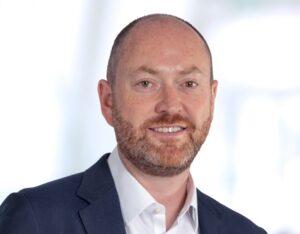
The legal team – led by long-serving GC and corporate affairs director Mark Gregory (pictured) – has played a key role in various non-core disposals, including the sale of its naval propulsors business to Fairbanks Morse Defense. Other key projects have included the largest single contract the MoD has ever signed: the Unity contract, which will see Rolls-Royce support the Royal Navy’s nuclear submarine fleet.

Internally, the team has also undergone a transformation with a focus on improving efficiency and making the organisation more cost-competitive. The company has introduced a new and leaner organisational structure which will improve operational efficiency, while also introducing methods to improve contract profitability.

Click here for more information about the Legal Business Awards.

[email protected]

Revolving Doors: Eversheds hires in London and Frankfurt while Simpson Thacher and Cadwalader build in finance

Eversheds Sutherland has strengthened its tax department in London with the addition of Kevin Cummings from McDermott Will & Schulte. Cummings spent four years at the firm, including as head of UK tax, and before that was a tax partner at Deloitte for over five years.

Cummings focuses his practice on financial services and private capital, and brings experience across the entire range of domestic and international tax matters.

Global head of financial services at Eversheds, Matthew Allen, commented: ‘Kevin’s arrival is a timely and strategic addition to our financial services offering.’

The firm’s tax department recently welcomed tax partner Richard Johnson to its Leeds office in May of this year, while also hiring a number of tax partners across its Amsterdam and London offices in the last 12 months.

Paul Hastings has bolstered its antitrust practice with the hire of Sally Evans, who will sit in the firm’s London and Brussels offices. Evans joins the group after almost a decade in Kirkland & Ellis’ antitrust and competition team in London.

Evans is ranked as a Legal 500 leading partner in London’s EU and competition rankings, and will strengthen the firm’s capabilities in merger control, cartel investigations and compliance advice.

Of her move Evans said: ‘There is real momentum to the firm’s expansion in the UK and other markets across Europe, the Middle East and North America, so this is a brilliant opportunity to be part of a growing practice.’

Also hiring from Kirkland this week was White & Case, which brought on corporate partner Serra Tar. Tar is well versed in cross-border transactions in the renewables, power and gas sectors, and is particularly experienced in matters related to the energy transition.

Earlier this year, Henry Birch also departed from Kirkland & Ellis to join White & Case’s global mergers & acquisitions practice and global private capital industry group.

Winston & Strawn has hired real estate finance partner Richard Semple to its London office from Goodwin. Semple was a partner at Goodwin for five years and will bolster the group’s capability in real estate finance transactions.

Winston & Strawn London managing partner Nicholas Usher said: ‘Richard has a track record of advising on some of the most sophisticated real estate finance deals in the UK and European market. His experience with large-scale, cross-border loan portfolio acquisitions and financing structures will be a real asset to our clients, particularly those navigating the growing number of opportunities in distressed asset transactions and loan workouts.’

Elsewhere in the City, Simpson Thacher has hired investment funds partner Sam Brooks from Macfarlanes.

Simpson Thacher has significantly strengthened its funds practice over the last year, opening a new office in Luxembourg at the end of 2024 launched by funds partners Jean-Christian Six, Paul Van den Abeele and Yannick Arbaut. Earlier this month Joanne Mak, a partner specialising in secondaries transactions, joined the practice in London from Kirkland.

Simpson Thacher’s European managing partner Wheatly MacNamara said: ‘The addition of Sam, combined with the launch of out Luxembourg funds-focused office earlier this year, demonstrates Simpson Thacher’s commitment to supporting its global client base by providing top-tier legal services across the region.’

Squire Patton Boggs has bolstered its global structured finance group with the hire of Nathan Menon and Trish O’Donnell into its London and New York offices respectively. Both Menon and O’Donnell were partners at Reed Smith, with Menon joining the group as a director and O’Donnell joining as a partner.

Current global head of structured finance at the firm, Ranajoy Basu, joined the firm in July of this year from legacy McDermott Will & Emery, ahead of that firm’s merger with legacy Schulte Roth & Zabel in August. The department has experienced significant growth in the last 12 months, including in May with the addition of Monica Gogna, who joined the firm as global head of financial regulation from EY, bringing with her a team of four lawyers.

Elsewhere in London, Cadwalader has strengthened its leveraged finance and private credit practice with the hire of Andro Atlaga. Atlaga is well versed in international capital markets and cross-border leveraged finance transactions, with extensive experience in high-yield bond financings. He joins the firm from King & Spalding, where he was a counsel.

Disputes firm Stewarts has hired experienced silk Alex Verdan KC as its new head of children. Verdan joins the firm from barristers’ chambers 4PB, having spent 18 years there, brining with him extensive expertise in international childeren’s disputes. Verdan is currently ranked as a Tier 1 leading silk in the Legal 500 family: childeren and domestic abuse rankings for the London Bar.

Also at the London Bar, deputy senior clerk Katie Szewczyk has joined Brick Court Chambers after nearly 13 years at Fountain Court Chambers.

Outside of the capital, CMS welcomed partner Wayne Nash to its real estate disputes practice from Deloitte. Nash was at the big four accountancy firm for nearly three years, having joined at the end of 2022 from Shoosmiths in Manchester, where he was head of office.

Osborne Clarke has hired Andrew Eaton as a UK partner, strengthening its restructuring and insolvency practice. Eaton joins the firm from Burges Salmon, where he spent nine and a half years as a partner and head of restructuring and insolvency and banking and finance at the groups Bristol office.

Chris Oglethorpe has joined Freeths as chief people officer, as the firm’s former HR director Carole Wigley steps down from her position after 25 years at the firm. Oglethorpe joins the UK-wide firm from Gowling WLG, where he served as HR director for over ten years.

In Germany, Eversheds Sutherland hired Catharina Förster and Peter Junghänel as partners to its Frankfurt office. The duo will join the international firm on the 1 October from Goodwin, which earlier this year made the decision to wind down its German real estate practice and close its Frankfurt office. At the end of August Simmons & Simmons capitalised on the firm’s Frankfurt closure by hiring a team of four corporate real estate partners as well as a team of associates. 

Reed Smith has expanded in Asia with the hire of Etelka Bogardi, who previously served as Norton Rose Fullbright’s Asia head of fintech and financial services regulatory. Bogardi was at Norton Rose for eight years and previously worked as a senior counsel for the Hong Kong Monetary Authority (HKMA). She will start with the firm at the beginning of November.

Meanwhile in Hong Kong, Goodwin added Youjung Byon into its private investment funds practice. Byon was of counsel at Gibson Dunn before this, advising Asia-based private fund sponsors.

[email protected]

Why UK firms are bucking the trend to downsize in Asia amid HK IPO boom

When CMS picked up a nine-lawyer team from BCLP this August, it represented the end of the transatlantic firm’s foray into Asia.

BCLP’s offices in Hong Kong and Singapore are expected to close completely in the coming weeks, after the firm announced earlier this year that it would be pulling out of the region.

Meanwhile, this month K&L Gates confirmed that it would be closing its Beijing office and instead consolidating its China practice across Hong Kong and Shanghai.

And the pair are far from alone downsizing in Asia generally, and China/Hong Kong specifically. US firms including Proskauer, Latham & Watkins, Milbank, Paul Weiss, Skadden, Cleary Gottlieb, Dechert, Orrick, Perkins Coie, Sidley Austin, Weil Gotshal & Manges, Morrison & Foerster are among those to have closed offices in Asia over the last two years, citing sluggish markets, geopolitical concerns and regulatory challenges among the reasons. Others have downsized without closing their doors.

And yet for CMS, the BCLP team hire, which includes partners Glenn Haley, Wayne Ma and Ilan Freiman, who between them cover sectors including construction, real estate and infrastructure, represents an opportunity.

US firms pulling out is creating client demand and leaving some exceptional talent looking for a new home. We’ve been a beneficiary of that,’ says Adrian Bell, joint managing partner for Asia and the Middle East at CMS, referencing the recent BCLP hires.

And CMS is not alone in seeing other firms’ office closures opening doors and presenting opportunities for those deciding to stay.

‘With a number of firms pulling out of the region, I really see that as an opportunity, says Emily Monastiriotis, global managing partner of Simmons & Simmons. ‘We’re getting more referral work and carrying out largescale matters for the law firms that have withdrawn from Asia.’

And it’s not just referral work; as evidenced by CMS’s hires, there have also been opportunities to buy in displaced talent.

For firms like CMS and Simmons, partners stress that expansion in APAC is also about the growing business links between Asia and the Middle East, where many firms are currently piling into markets like Saudi.

‘Crucially, the point for me as to why Asia matters now is the strong connectivity between Asia and the Middle East. That business corridor is really growing,’ Monastiriotis says.

But, of course, Asia is a large market in and of itself. Ray Liu, partner and head of Dorsey & Whitney’s Beijing office, points out that roughly one tenth of the Global 500 companies are headquartered in Beijing alone.

Liu says that while the nature of the work has shifted, firms that adapted have continued to thrive. ‘We, like other international firms, initially did significant FDI work into China, representing US, UK and European companies establishing and expanding their presence there. This gradually evolved into helping Chinese companies go public in major global markets, expand overseas through FDI and M&A, and handle cross-border disputes and compliance. Today, at least 90% of our work is locally generated.’

Hong Kong rebound

Another boon for firms that have stayed the course has come in the form of a sharp rebound in the Hong Kong IPO market.

Research from KPMG showed the Hong Kong Stock Exchange to be the busiest global exchange in H1 2025, raising $13.9bn, comfortably ahead of second-placed NASDAQ, which raised $9.2bn. The figure represents a sevenfold increase from H1 2024.

Linklaters is one of the firms that has been reaping the benefits of this IPO boom.

‘We made a choice to invest in recruiting a Hong Kong IPO team because we thought strategically we’d see a return to that market, and that is exactly what we’ve seen,’ Paul Lewis, Linklaters’ firmwide managing partner, tells Legal Business.

The firm hired a four-lawyer team from Clifford Chance and Sidley Austin in July last year, including CC partner Christine Xu, who joined as head of Greater China ECM and led the team that advised on Chinese energy technology company CATL’s US$4.6bn HKEX debut – the largest IPO of 2025 to date.

Jonathan Hammond, Hong Kong partner and Simmons’ head of Asia explains that Asian companies that might previously have listed in the US are increasingly turning to Hong Kong instead.

‘Hong Kong is a great capital market to choose for your listing,’ he explains. ‘It’s got its international reputation, it’s got a pool of legal talent, it’s got financial adviser talent, and the banks are here.’

Asia remains, therefore, a place where many firms feel they can enjoy success. As Liu points out: ‘Law firms that are flexible, adaptable, and sufficiently localised will continue to thrive.’

New CMS partner Freiman echoes this, saying that while the strong local firms in markets such as China, Japan and Singapore increasingly ‘set the tempo’ of the local industry. There is still a place for international firms with the right structure:

You need to embed yourself so that you’re seen as contributing to the betterment of the business community in which you operate, rather than as an international firm flying in and taking all the goodies. The goal is to be both a local and an international firm.’

[email protected]

Betting big on the US: HSF Kramer chiefs on what’s next for their $2bn merger

‘Often when you put two businesses together, you’re looking for ways to streamline, and for ways to cut. For us, it’s the complete opposite – it’s all about growth and build,’ says HSF Kramer chair and senior partner Rebecca Maslen-Stannage, as she and CEO Justin D’Agostino set out the strategy for newly merged Herbert Smith Freehills Kramer.

Speaking to LB barely three months after the union between Anglo-Australian Herbert Smith Freehills and New York’s Kramer Levin went live on 1 June, she and D’Agostino are explaining the bold investment plan that sets out just how much they want to grow in the all-important US market.

With the US plans forming a crucial plank of the firm’s wider strategy, aptly named ‘Ambition’, the intention is for HSFK to ramp up its burgeoning US operations significantly beyond the c.120 partners the merged firm had at the time of the combination.

The plan includes a commitment to building up on the transactional side in particular in the US, with the firm aiming to bring in around 20 US partners across key practices such as private equity, bankruptcy and restructuring, as well as technology and energy.

Significantly, this figure does not include any efforts in Texas, where the firm is hoping to launch in order to capitalise on legacy HSF’s energy strengths.

As D’Agostino tells LB: ‘We’re going into the US market with a pre-agreed investment plan to hire around 20 new partners. That c.20 partners doesn’t include a Texas build. All options are on the table for us there. It could be anything from organic growth to looking for another law firm to combine with HSF Kramer.’

Emphasising how the HSF Kramer merger differs from other transatlantic unions, he reiterates Maslen-Stannage’s point : ‘We’re not going in with a pre-agreed cutting plan. This feels so successful because it’s about build.’

While Texas may be a way off, the duo are not wasting any time putting the wider investment plan into effect. Earlier this week the firm announced the hire of a new technology transactions partner in New York, with Burr Eckstut joining the freshly combined HSFK offices on Avenue of the Americas from White & Case.

Alongside the targeted increase in partner count, hiking US revenue is also high up on the agenda.

Financial results for each legacy firm’s final financial year put revenue at £1.358bn (up 4%) for pre-merger HSF and $467.2m (£344.8m and up 7%) for Kramer.

According to D’Agostino, on day one of the merger, the US became about 22% of the firm’s £1.7bn ($2.3bn) combined revenue. Over the next few years, the firm has ‘an ambition and an objective to get that to 30%.’

This figure is important because what both leaders are aiming for is balance. Billing HSFK as ‘the first transatlantic and transpacific law firm’, D’Agostino wants to maintain the differentiator gained through legacy HSF’s strong Asia-Pacific presence, while also building up the US and in key European markets such as Germany.

‘I’m not sure any of the other global law firms have our scale and depth in APAC,’ he says. ‘Very few would be able to claim that they have market-leading transactional and disputes capabilities in all the major financial centres – New York, London, Hong Kong and Singapore. But we do,’ he adds.

‘Being both transatlantic and transpacific has proved to be a real differentiator. It will take a bit of time, but we will be a firm which is truly balanced globally, with a third of our business in the US, a third in the UK and EMEA, and a third  in APAC.’

Looking beyond geography to clients, future-proofing the firm’s success by targeting high growth industries is also a key focus.

‘If you were to place a bet on where you’re going to make the next $500m in fees, you would be looking at those sectors and gaining market share,’ explains D’Agostino. ‘ So that’s energy, that’s private capital – which is a big strategic priority – and it’s sectors like tech.’

This future-proofing is another reason why building out the merged firm’s energy practice is important.

‘The world’s appetite for energy is only growing as populations grow and as technology grows. And we are in that space in a very big way. Data centres is also an important new part of our Ambition strategy.’

With any merger, there is a risk that two plus two does not add up to four but, buoyed by the lack of overlap that meant they could hit the ground running, Maslen-Stannage says the benefits in terms of mandates and clients are already visible.

‘The complexity of any combination is real. You’re putting two firms, systems and cultures together. I would say we’ve only had one area of overlap, which was NY, which made it easier.

She adds: ‘We’re already ahead of our synergy targets. It’s coming through very quickly in terms of the client mandates that we’re winning. Suddenly there’s a surge in confidence and excitement among the partnership because we are able to go out and say ‘we can do any of your transactions anywhere in the world’ – particularly now in the US.’

D’Agostino adds: ‘It’s a big challenge to pull off a combination like this, but it’s actually lower risk and less difficult than trying to grow in the US by adding ones and twos and building out that way. What you get with a combination like ours is a functioning group that’s got history and chemistry from day one. They’re a profitable, successful firm already – this is about how we can collectively make it even more so.’

Although the firm has been financially integrated from day one, the leadership team have yet to tackle the thornier issue of integrating partner pay, with partners still currently paid according to each legacy firm’s pay structure. The project is on the agenda for the year ahead, with the ultimate ambition that all partners will be paid under a unified system, but it’s fair to say that management are not fazed by any challenges ahead in this regard.

D’Agostino stresses that the merger ‘is already proving to be a game changer’ and is confident in the firm’s ability to hit its new targets.

He concludes: ‘We were the last top-tier international firm that didn’t have scale in the US, but we’ve fixed that gap. Now we’ve got a plan, we’ve got a strategy. It’s deliberate, and the next phase is deliberate too.’

JERA’s Angela Yuen on the energy transition, building a legal function and a ‘zero to 100’ deal with BP

Angela Yuen, deputy GC of Japanese energy powerhouse JERA, has built a career spanning private practice and in-house roles across Australia, Japan, and beyond. She talks us through establishing the JERA Nex legal department in London as its first GC, and her oversight of the landmark deal combining offshore wind assets with bp.

You’ve been at JERA for almost ten years. How did you end up in the running for the general counsel role at JERA Nex?  

It was a bit opportunistic, to be honest! In my role as deputy general counsel at JERA, I led global legal tech and innovation, overseeing legal functions across the company’s major subsidiaries. That included building out legal teams, recruiting talent, and aligning legal’s strategy and function with each business’s operational goals. 

As part of that, I worked closely with the original JERA NEX leadership team, helping shape the legal function from the ground up. It was exciting: being involved at a strategic level, seeing both the global and regional landscape, and working closely with a wide range of stakeholders 

When JERA NEX was established, I was initially tasked with helping recruit a general counsel. But as we progressed through the process and, especially during interviews, I realised this was a role I wanted to pursue myself. JERA NEX operates very much like a startup – we literally built the plane as we flew it. That meant no established systems, no large legal team– just a blank canvas. It called for someone hands-on, creative, and comfortable navigating fast-moving, unstructured environment. 

We had strong interest from major corporates like BP and Shell, but our CEO was looking for something different: someone entrepreneurial, ready to roll up their sleeves and build from scratch. 

After a while, the search wasn’t quite landing, and I started to seriously consider stepping forward. I had done a lot in LNG, and, for my own development, I wanted to focus more on renewables – that’s where I see the future – and London was always been on my list of places to live. 

So, I had conversations with our CEO, Natalie Oosterlinck, and the executive team. It turned out to be a great fit. I already had strong ties to HQ, which proved invaluable in setting up a new business. Those relationships meant I could hit the ground running, connect the dots globally, and start building something meaningful. 

Tell us deal about the deal to combine your offshore wind assets into a new with BP – it all happened very quickly, right?

Exactly. Last year was full of change. I’d just taken on the role of GC at JERA NEX, and the reason my family wasn’t with me was because the school year had already started. So we made a decision quickly. There was no time to search for schools or settle in gradually. I just dove straight in. 

At first, the deal was very exploratory. It was a small group involved, namely our Chief Investment Officer, CEO, me, and a few senior execs including our global CEO. Early conversations were at a high level with BP and advisors, asking – does this even make sense? 

But then it escalated fast, essentially from zero to 100. Within ten weeks we were signing. 

What can you share about the experience of working with BP and how the collaboration has evolved? 

Initially, I was a bit sceptical. This deal involved fully combining BP’s and our offshore wind assets into a new business. My hesitation was around culture. BP is a huge corporate with a very strong identity, and we were bringing in assets like Parkwind, our Belgian offshore wind business, which has a small, family-run feel. I was worried about the cultural clash. Plus, the offshore wind sector has had a tough time recently, with rising interest rates, volatile electricity prices, and procurement challenges. The industry is at an inflection point. Some oil majors that had shifted toward energy transition have reversed course, pulling back from renewables. And we’ve seen companies walking away from projects or consolidating portfolios. 

This was a strategic decision for us. Our goal is 20 GW of renewables by 2035. By combining our offshore wind assets with BP’s, we’re now looking at a total pipeline of around 18 GW globally. Much of that is still in development, but it’s a big step. We’re now almost halfway to our target. 

The fit turned out to be stronger than expected. BP brings scale — particularly in procurement, supply chain, and market access in places like the UK and Germany. We bring operational experience. We’ve delivered projects, secured leases, we know how to execute. 

So as long as the numbers worked, it really made sense. In terms of offshore wind asset size, it puts us in the top three or four players globally, just behind the likes of Ørsted and RWE. 

You’ve had to build a legal department from scratch, and quickly, too. What were your first priorities? And what comes next? 

That creative, blank-canvas aspect was a big part of what attracted me to the role. I liked the idea of building something new, rather than stepping into a major corporate with established systems and processes. 

I’ve had some experience with that before. When I joined JERA, it was at the very start of the joint venture. We had secondees from TEPCO and Chubu, and then Kenji Tagaya-san from JBIC, I came in as the ‘X-factor’ hire. Over the past nine years, I helped build the legal function there from the ground up. Japan is a very different landscape. That experience shaped a lot of my thinking, and I’ve brought that mindset with me to London. 

In the UK market, you take inspiration from HQ, but you also have to tailor it to the business. It has to be fit for purpose. So, the first step is understanding the business. What’s the ambition? What are the strategic goals? And then, identify the skill sets needed. 

Under legal, there are really three pillars: legal, compliance and governance. Governance was a top priority, so hiring a company secretary was one of the first moves. I also looked at existing capabilities, particularly within Parkwind, which has a strong and established legal team focused on offshore wind. That’s already about half of our business. 

The other half is onshore, and for that, we needed to look ahead. What’s the best path to reaching our 20 GW ambition? It won’t be through organic development alone; M&A will be critical. So, we needed legal talent with experience in driving organic growth. 

At the same time, compliance needed to be built out in parallel. You can’t treat any of the three pillars — legal, compliance, governance — as optional or secondary. They need to run in parallel. 

And of course, people are everything. I’m proud of the team we’re building. It’s small but tight-knit, and we’ve been very intentional about the culture: collaboration, creativity, psychological safety, and inclusion. We’ve built a diverse team, and from the beginning I’ve been clear: we need to be a high-performing unit that is efficient, effective, and deeply embedded in the business. 

Part of that means being flexible and agile, and that includes using legal tech. I’m passionate about legal tech and the digitalisation of legal functions. We shouldn’t just do things the same way because “that’s how they’ve always been done.” 

When I hire, I look for three qualities: curiosity, confidence, and creativity. I want people who’ll challenge the status quo and bring fresh thinking. It’s about doing things faster, better, and smarter.