In-house moves: Carlsberg GC leaves after 25 years at the helm, with changes at The Sun, Jefferies and more

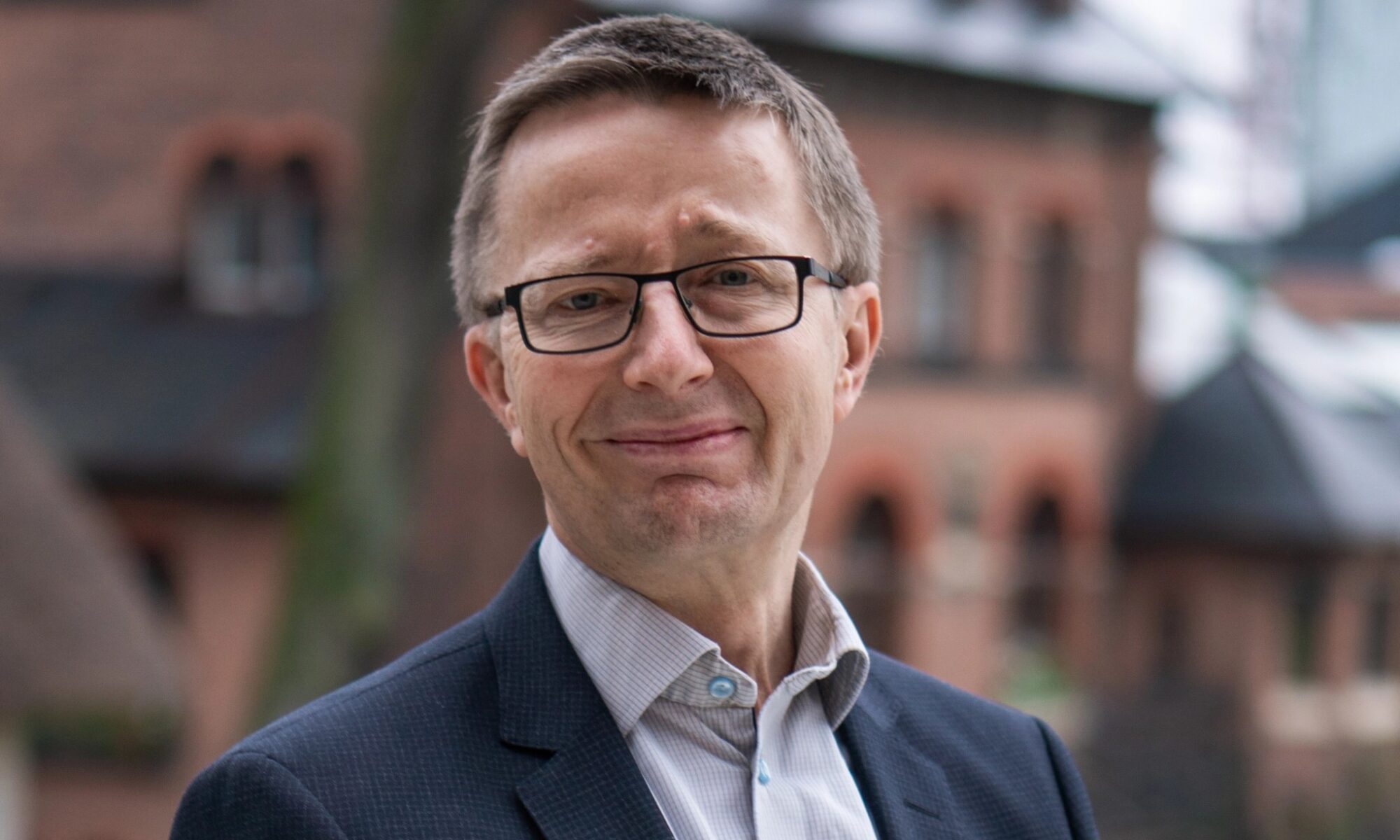
Long-serving GC at leading Danish brewer Carlsberg Group, Ulrik Andersen (pictured), is leaving his role after 25 years as group GC.

Andersen has spent 28 years in total at Carlsberg, joining in 1998 and becoming GC in 2001. In his time there he saw the group through a number of major strategic acquisitions, including its acquisition of British soft drinks producer Britvic, which completed last year for £3.3bn.

Before joining Carlsberg, Andersen spent time at a range of firms, most recently at leading Danish firm Gorrissen Federspiel.

In a post on LinkedIn, Andersen said: ‘Having served as General Counsel for a quarter of a century, it has been a privilege to work with so many talented colleagues and to contribute to Carlsberg’s journey. I feel deeply privileged to have been part of Carlsberg’s journey during defining moments in the company’s history.’

Andersen will remain in his position until a new GC is appointed, which is expected in the second half of 2026.

Back in the UK, former Deliveroo GC Chantelle Zemba has joined Swedish fintech Trustly as global chief legal officer.

Zemba joins the payment services provider after nine years at Deliveroo, having joined in 2016 on secondment from Norton Rose Fulbright, and staying at the popular online food delivery company first as head of corporate and compliance and since 2019 as general counsel.

Jefferies EMEA and APAC GC Daniel Winterfeldt has departed after five years in the position. Before joining the global investment bank, Winterfeldt worked in private practice, including as a partner at Simmons & Simmons, CMS, and Reed Smith.

Alongside his practice, Winterfeldt founded the InterLaw Diversity Forum in 2008, a network that now comprises of over 9,500 members and supporters, dedicated to promoting inclusion in the legal sector.

Elsewhere, the UK’s largest private hospital operator, Circle Health Group announced that Mehdi Erfan has joined the group as general counsel.

Erfan joins after 13 years at Ramsay Health Care, which also provides private hospital and healthcare services. Before that he was head of legal at the Department of Health.

CEO of Circle Health, Paul Manning, said: ‘Mehdi is an exceptional talent, and I am delighted to have him with us for the next chapter of Circle’s story. His wealth of experience, knowledge and insight will prove invaluable, and I look forward to having his support as we look to become more competitive commercially and operationally.’

Adam Cannon, legal director at The Sun, has departed after over six years in the role. Cannon initially joined News UK, the group which owns the title, in 2016 as a senior legal counsel. Before that Cannon was at the Telegraph Media Group and Associated Newspapers.

Oliver Doherty, director of legal (NGN and news broadcasting) at News UK, has taken over leadership of the team, assisted by Enfys Jenkins, who joined News UK as senior legal counsel – editorial (The Sun newspaper) this month, from Simons Muirhead Burton.

Also in the UK, Shawbrook Group‘s long-serving GC Daniel Rushbrook has retired from his position, and has been replaced by deputy GC Sam Foskett.

Rushbrook has served in the top legal role since 2011, and before that worked at Linklaters and Macfarlanes. His departure follows shortly after the group’s IPO in October last year, valued at £1.92bn.

Sam Foskett has taken over leadership of the legal function. Foskett joined the British retail and commercial bank in 2014, and has progressed through a number of legal positions, most recently serving as deputy GC. Before moving in-house he worked in private practice at Travers Smith and CMS.

Further senior legal leadership changes in the UK include the departure of Ian Cokayne from Grant Thornton to join accountancy firm Gravita. Cokayne spent the last 12 years at Grant Thornton, progressing to GC in 2023.

Finally, in the US, video game developer Epic Games has hired Reggie Davis as general counsel. The company is known for creating and distributing games such as Fortnite, Rocket League and Unreal Tournament.

Davis joins the game developer from Qualia Labs, a digital real estate closing platform, where he spent five years as chief legal officer. Davis has previously worked in senior legal positions at DocuSign, Zynga Game Network and Yahoo!.

[email protected]

From start-up to $75bn valuation: Revolut’s legal chief on a ‘once-in-a-lifetime’ role

Tom Hambrett first heard about Revolut while travelling. He had left his job at Herbert Smith Freehills in Sydney in 2017, and while in Mexico, interviewed for a role as its first in-house lawyer.

After becoming the two-year-old company’s 23rd employee, he relocated from Australia to London to help build what would become one of the UK’s most successful fintechs.

Now, almost a decade on, he is chief legal officer of a company valued at $75bn.

‘When I joined Revolut, we had less than six months of cash runway, so it was very much a big bet and a risk to jump into something that was unproven, unstructured, and growing quickly – but that also had big ambitions.’

After six years in the corporate team at HSF, focusing on equity capital markets and M&A, Hambrett had already decided he wanted to move in-house. With his sights set on companies in the financial services and technology space, the vacancy at the fast-growing fintech came at just the right time.

‘There was definitely an element of ‘this may not work out’, but it was invigorating and exciting,’ he recalls.

In the years since, the company has gone from strength to strength, becoming a household name, with more than 70 million customers and operations in markets across Europe, America, Mexico, Brazil, Australia, Singapore, Japan and New Zealand. Revenues grew by 72% to $4bn in 2024, and at the end of last year, the company completed a share sale valuing it at $75bn.

Hambrett looks back on his achievements at the company with pride. ‘It’s always challenging building anything for the first time – building an in-house legal team from scratch, having never done it before, is going to require a lot of self-development,’ he says. The rewarding thing about doing it from the beginning is that you can design it in a way that fits into the wider organisation.’

And Hambrett has done exactly that; going from having sole responsibility for not only legal but also customer support, sponsorships and marketing, to building a team of nearly 300 lawyers spread across London, Singapore, Japan, India, and Australia, to name a few.

‘There was definitely an element of “this may not work out”, but it was invigorating and exciting’

The combination of excitement, hard work and developing a team is more than enough to keep Hambrett motivated. ‘I love the diverse nature of the problems that I get to solve every day, and I love the colleagues that I get to work with,’ he says. ‘There’s no substitute for that hard work and that feeling that everyone is on the same team, driving towards the same outcome. The power of a single goal is really important.’

These motivators have remained constant throughout Hambrett’s career. He explains that he became ‘hooked’ on the fast-paced corporate environment at HSF, which he joined in 2011, a year before the merger of Australia’s Freehills and UK firm Herbert Smith.

‘My time at HSF was really exciting,’ he recalls. ‘I had access to big-ticket matters and deals with blue-chip clients. It was a fantastic learning experience.’

His time in private practice also equipped him with the fundamentals to succeed. ‘It’s really important to get training at a top-tier firm and to work with the best clients, to understand how they structure their engagements with lawyers, what they want to get out of dealing with those lawyers, what they expect in terms of the advice and the service.’

He stayed with the firm for six years before deciding to go in-house.

‘There is never a dull moment. The privilege of being in this role is that I have the opportunity to always be at the pointy end of the work that we do.’

These days, his time is occupied with the group’s ongoing application for a UK banking licence. While the Prudential Regulation Authority (PRA) granted the fintech a restricted licence in July 2024, the full licence remains pending after a significant delay.

‘The bank application process is very unique because of the size and the scale of Revolut. It’s a big process; it’s a big application. It involves a lot of interaction and engagement with multiple regulators. It’s a once-in-a-lifetime process – I can’t think of any UK bank with truly global banking ambitions.’

The UK banking licence remains a priority for the group and means that the platform operates under a number of restrictions in the UK at the moment.

‘What I’ve realised is that there are always going to be stressful periods’

While that process continues, the fintech has been busy opening its new global HQ in Canary Wharf, and last year announced plans to invest £3bn in the UK and create 1,000 high-skilled jobs over the next five years.

‘It’s a big commitment, but it’s our biggest market, and it’s our home – it’s where we started. We’ve made a huge investment in the UK with new offices, with our employees, and with future products that we’re looking to roll out throughout the UK or from the UK.’

In addition to his legal role, for the past five years Hambrett has also been one of the twenty partners at the group involved in executing the product strategy.

‘We meet frequently – we all report directly into the CEO and the founder of Revolut,’ he explains. ‘Throughout the year, we run structured sessions ensuring that the long-term product strategy is being executed, ensuring our people initiatives and talent retention programmes are effectively managed, and ensuring that the culture and the values that the partnership is entrusted to uphold and demonstrate through our own conduct and performance are being adhered to. It’s a fantastic opportunity – I’m very privileged to be a part of this.’

Among the highs have been a number of stressful moments. While the ‘incredibly chaotic and unstructured’ early days are long behind him, Hambrett acknowledges that with such a huge and growing operation, it’s hard to avoid the stress that comes with it.

‘What I’ve realised after almost a decade at Revolut is that given the size and scale that we are, and the ambition that we hold, there are always going to be challenges and stressful periods. It’s how you engage with these moments that defines you and your team’s value.’

The high levels of public and media scrutiny that have come over the years have also been a big learning experience for Hambrett.

‘There’s a lot of pressure and stress around the media scrutiny over the company’s financial performance, and the comings and goings of employees or former executives. Revolut is such a big brand, and it’s such an exciting company for people to talk about. So, when you’re in the spotlight, there’s a lot of scrutiny.’

‘It’s not just 9-5. This is all-encompassing, and it requires 100% commitment’

‘It’s always difficult when you receive negative feedback that you don’t want to hear,’ he adds. ‘It’s always hard to process that, and so I remove the emotion, and I look at how I can find something useful from this scrutiny. How can I improve myself and improve the organisation, so that we can actually turn something that’s potentially negative into a learning opportunity.’

And there have been many highs. While financial success and global expansion are undeniable markers of success, Hambrett also finds the development of his team as especially rewarding.

‘We implemented a trainee programme where junior paralegals and qualified lawyers could train with us. They’ve then gone on to roles at impressive firms, like Latham & Watkins, Norton Rose Fulbright and Baker McKenzie, and then come back to us as post-trainee lawyers with a wealth of experience working on a range of matters.’

For those looking to succeed within legal, Hambrett stresses the importance of finding an industry that is both exciting and interesting, and then diving in head-first. ‘It’s not just 9-5. This is all-encompassing, and it requires 100% commitment – and for you to be fully engrossed in what you’re doing.’

[email protected]

Career timeline

2011-17: Solicitor, equity capital markets and M&A department, Herbert Smith Freehills

2017-18: Senior counsel, Revolut

2018-20: Director, Revolut

2020-21: Senior director, Revolut

2021-present: Partner & chief legal officer, Revolut

Revolut: key facts

Size of legal team: 240

External legal spend: £20m

Preferred advisers/panel firms: Latham & Watkins, A&O Shearman, Baker McKenzie, Linklaters, Cravath Swaine & Moore, Davis Polk

2024 revenues: $4bn (£3.1bn)

Employees worldwide: 10,500

The Epstein files: the Big Law connections

The release of the Epstein files has revealed the huge scale of Jeffrey Epstein’s sprawling network of personal and professional contacts, with lawyers and law firms featuring prominently in much of the communications – many of which reveal relationships that went beyond just legal advice.

While many of the references to law firms are in the context of informal conversations, and inclusion in the files is not an automatic indication of wrongdoing, the files provide rare insight into interactions that would not normally see the light of day.

From favours, gifts, career advice and off-the-books efforts to help Epstein with a range of legal and reputational issues, some of the most notable references to law firms and lawyers are detailed below.


Former Paul Weiss chair Brad Karp

Former Paul Weiss chair Brad Karp, who stepped down from his leadership role following days of headlines scrutinising his connections to Epstein, is mentioned in hundreds of documents within the files.

Karp’s email communications with Epstein paint a picture of a relationship sustained over several years from the mid-2010s up to the months before Epstein’s arrest and death in custody in 2019.

The emails include Karp thanking Epstein in 2015 for a ‘once in a lifetime’ evening, enquiring about work experience for his son with film director Woody Allen in 2016, and mulling an invitation to lunch with Epstein and former Israel prime minister Ehud Barak the same year.

In 2018, Epstein and Karp discussed the shock resignation of Latham & Watkins managing partner Bill Voge, and debated whether Kathy Ruemmler – then a litigation partner at Latham, and herself a contact of Epstein’s – would be suitable as a successor.

And in 2019, Karp (pictured right) reviewed drafts of a letter to the New York Times defending Epstein’s 2008 plea deal, and a court filing that has been widely reported to show Epstein’s legal team arguing against the reopening of the plea deal.

That plea deal had been struck by Epstein in 2008, and saw the financier serve less than 13 months in custody after being convicted of procuring a child for prostitution and soliciting a prostitute.

‘The draft motion is in great shape,’ Karp wrote on 3 March 2019.

In a statement announcing that he would be succeeded as Paul Weiss chair by M&A partner Scott Barshay, Karp said: ‘Recent reporting has created a distraction and has placed a focus on me that is not in the best interests of the firm.’

In an earlier statement, Paul Weiss had specified that Karp met Epstein ‘through his representation of the former chairman and CEO of Apollo Global Management, a significant firm client.’

‘During the course of that representation, which spanned several years, Karp never witnessed or participated in any misconduct. Karp attended two group dinners in New York City and had a small number of social interactions by email, all of which he regrets.’


Goldman Sachs GC and ex-Latham partner Kathy Ruemmler

Another long-term Epstein contact from the world of law is Goldman Sachs general counsel Kathy Ruemmler, a former partner at Latham and head of the firm’s white-collar defence group.

Ruemmler’s departure from Goldman was announced last week after the files revealed extensive communications with Epstein, described by her in emails as ‘wonderful Jeffrey’ and ‘Uncle Jeffrey’.

On Christmas Day 2015, Epstein instructed his assistant Lesley Groff to ‘please organize Kathy’s first class trip to Geneve and wherever,’ and in a subsequent email to Groff, Ruemmler wrote: ‘Jeffrey is just being wonderful Jeffrey.’

Their relationship also appears to have involved gifts, with mentions in the files of flowers delivered to Ruemmler in 2015 and bags from Prada and Hermes bought for her the next year.

This aspect of the relationship also appears to have extended across the duration of their correspondence. In a January 2019 email to Epstein, Ruemmler wrote: ‘Am totally tricked out by Uncle Jeffrey today! Jeffrey boots, handbag, and watch!’

Ruemmler also discussed her career choices with Epstein, again on multiple occasions.

One exchange, dated 30 September 2014, appears to show Ruemmler and Epstein discussing how different political factions viewed Ruemmler. The conversation occurred five days after then-US attorney general Eric Holder resigned from his post.

Ruemmler stepped down as White House counsel that June, and was widely reported to have been a potential candidate to replace Holder before she withdrew from consideration the next month.
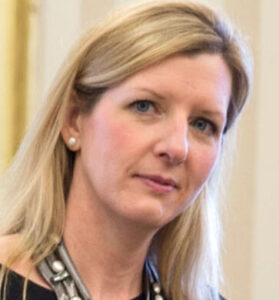
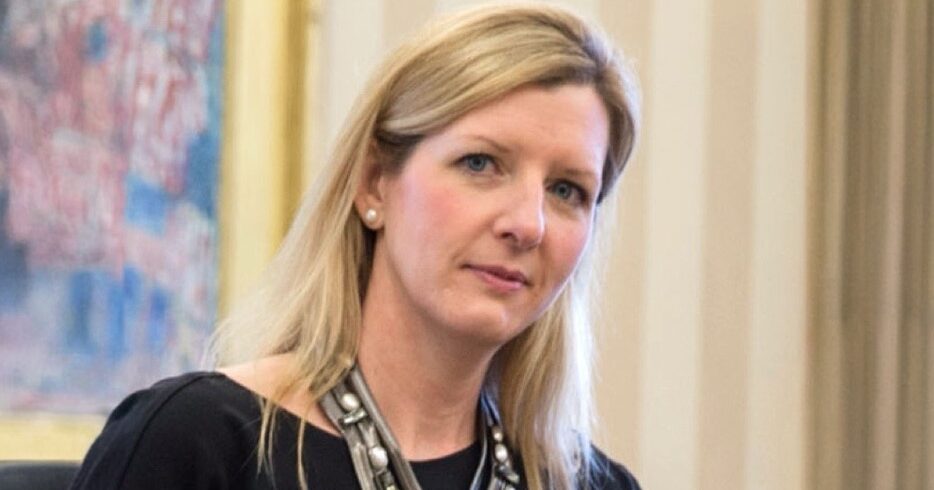
These discussions continued after Ruemmler’s (pictured right) return to private practice.

In 2016, she forwarded Epstein an email from Steve Immelt, then chief-executive at Hogan Lovells. Immelt offered a meeting with Michael Davison, then global head of litigation at the firm, and now its deputy CEO.

Ruemmler shifted her conversation with Immelt to the matter of her compensation, and forwarded the email to Epstein.

‘Good,’ Epstein replied, ‘however in writing would be best.’

Ruemmler did not leave Latham until 2020, and was never a partner at Hogan Lovells.

Epstein and Ruemmler appear to have discussed another potential career move for Ruemmler in March 2019, just months before Epstein’s arrest that July.

In an exchange with the subject line ‘goog,’ Epstein sent Ruemmler an email advising her on how to set out her compensation expectations, stating: ‘tell him that google is going to come back with a comp offer, they already offered you the position.’

Ruemmler never worked at Google, according to her LinkedIn. She rejoined Latham after her time at the White House, and stayed there until she moved to Goldman.

The files also show that Ruemmler discussed Epstein’s legal and reputational troubles with him. The day before the 2019 ‘goog’ exchange, Ruemmler emailed Epstein regarding potential advisers who could ‘quarterback’ Epstein’s response to his mounting reputational issues.

Earlier correspondence also shows that Ruemmler reviewed an op-ed Epstein considered submitting to the Washington Post defending his plea deal. The op-ed was never published.

Ruemmler will leave Goldman by the end of June. In a statement, CEO David Solomon said: ‘Throughout her tenure, Kathy has been an extraordinary general counsel, and we are grateful for her contributions and sound advice on a wide range of consequential legal matters for the firm.

‘As one of the most accomplished professionals in her field, Kathy has also been a mentor and friend to many of our people, and she will be missed. I accepted her resignation, and I respect her decision.’


Former Linklaters arbitration co-head Matthieu de Boisséson

The files also include a series of emails from 2015 between Epstein and arbitrator Matthieu de Boisséson – who at the time was co-head of international arbitration at Linklaters – in relation to a dispute involving French model scout Jean-Luc Brunel.

In 2015, Brunel, whose modelling agency had been founded with financing from Epstein, took legal action against him, alleging that he had lost business as a result of reputational damage stemming from Epstein’s actions.

That April, de Boisséson contacted Epstein via email, saying: ‘Jean-Luc has suggested that we meet to talk about the present situation, and perhaps explore the conditions of a way out.’

De Boisséson specified in the messages that he was acting in a personal capacity and that he was ‘not willing to act as a lawyer but just as a friend,’ adding: ‘I do not want any fees neither from JL nor from you.’

The two men arranged to meet, and Epstein offered to pay de Boisséson’s travel expenses, for which de Boisséson said he was ‘grateful.’ Days later, de Boisséson emailed both Epstein and Brunel to summarise his meetings with both men, and again recommended that they reach ‘a fair settlement.’

A Linklaters spokesperson confirmed to LB that the firm has never acted for Epstein or Brunel.

De Boisséson left Linklaters in 2016 after spending less than three years at the firm. He has since been operating as an arbitrator from London set Littleton Chambers, although his membership of the chambers is currently suspended pending a full investigation. De Boisséson has repeatedly denied any wrongdoing.

In a statement to LB, he said: ‘I have never been a friend of Mr Epstein, and I reserve my rights against any alleged association with Mr Epstein or Mr Brunel’s wrongdoings.’


Kirkland & Ellis partner Jay Lefkowitz

The files also provide details on the connections between Epstein and Kirkland & Ellis – which advised Epstein on the non-prosecution agreement (NPA) that was part of his 2008 plea deal – and litigation partner Jay Lefkowitz.

The files include a June 2013 letter sent by Kirkland to Epstein, signed by Lefkowitz, setting out a $50,000 retainer.

The letter reads: ‘We are very pleased that you have asked us to represent you in connection with the effort in Florida by private litigants to unwind the NPA.’

The emails also show that Lefkowitz invited Epstein to his son’s bar mitzvah in 2011, and include an email from Epstein’s assistant Groff the same year, which shows that Epstein allowed Lefkowitz to ‘fly out to the Hamptons with his wife for their anniversary.’

[email protected]

Taylor Wessing recruits RPC rainmaker in first hire since merger announcement

Fresh from securing partner approval for its merger with US firm Winston & Strawn, Taylor Wessing has made its first lateral hire in London, bringing in RPC rainmaker Jeremy Drew as a partner in its IP practice.

Drew joins after 19 years at RPC, where he was a retail and commercial partner and, until earlier this year, head of the firm’s commercial division. He also served on its board for 15 years.

This followed eight years at Ashurst, where from 1997 he was a partner in the IP and commercial practice.

During his career he has built a practice spanning IP, sports, technology, and retail and consumer matters, as well as corporate governance, earning recognition as a leading partner in Legal 500 for the latter two areas.

In a statement, Drew said: ‘I’m very pleased to be joining Taylor Wessing’s IP, regulatory and digital practice. I look forward to working with my new colleagues, developing the team and enhancing Taylor Wessing’s market-leading IP capabilities, to help clients navigate their most complex IP and commercial challenges.’

Drew has long advised retail magnate and Newcastle United owner Mike Ashley, one of RPC’s most significant longstanding clients. The firm has also represented Ashley’s Frasers Group — owner of Sports Direct, House of Fraser and luxury fashion retailer Flannels, among other brands — on a series of high-profile commercial disputes and strategic mandates.

Speaking to LB previously, Drew said of the relationship: ‘I’ve dealt with Mike Ashley for 14 years. I’ve had a good working relationship with that group. Challenging but good.’

The hire comes as Taylor Wessing prepares to complete its merger with Winston & Strawn in May 2026, following partner approval in late January. The tie-up will create a firm with more than 1,400 lawyers and revenues of around $1.65bn, with Winston’s 2024 revenues of $1.27bn (£950m) boosted by Taylor Wessing’s UK turnover of £284m.

Shane Gleghorn, Taylor Wessing’s UK managing partner, who will serve as the Europe and Middle East managing partner of the combined firm, said of Drew’s hire: ‘His arrival significantly strengthens our market-leading IP practice and reinforces our commitment to building an unrivalled IP powerhouse. Jeremy’s multi-faceted expertise and significant client relationships will create substantial opportunities across our practices and sectors internationally.’

The firm has also seen some pre-merger departures. Since the deal was announced, Taylor Wessing has seen three partner exits in London, with real estate partners Mark Rajbenbach and Victoria Butcher leaving for Mayer Brown, and head of contentious trusts Emma Jordan for Stephenson Harwood, all earlier this month.

An RPC spokesperson said: ‘We can confirm that Jeremy Drew will be leaving the RPC partnership. We thank him for his contribution to the success of the firm and wish him well in his future endeavours.’

[email protected]

‘It’s always best to avoid death by a thousand cuts’ – what GCs think about the Brad Karp-Epstein firestorm

‘Even with the developments over the last few days, I’m still not sure the firm is getting it right. With these things, it’s always best to avoid death by a thousand cuts – no one comes out of it looking good.’

So says one leading GC of this week’s news that Paul Weiss litigator Brad Karp is set to stay on as a partner at the firm, despite stepping down as chair, after the extent of his ties with late sex offender Jeffrey Epstein were revealed in emails released by the US Department of Justice.

The days following the release of the files have shone an uncomfortable light on senior figures in a host of professions – and the law is no exception.

While a number of lawyers are referenced in the files, including Goldman GC Kathryn Ruemmler,  Karp’s ties to Epstein have been a particular focus.

Although the emails do not indicate that Karp was involved in any wrongdoing, they do demonstrate that he maintained communications with the disgraced financier for years after his 2008 conviction for procuring a child for prostitution and soliciting a prostitute.

Five days after the files were released, the scrutiny became too intense, and Paul Weiss announced that M&A partner Scott Barshay would take over as chair from Karp, who said in a statement:  ‘Leading Paul Weiss for the past 18 years has been the honour of my professional life. Recent reporting has created a distraction and has placed a focus on me that is not in the best interests of the firm.’

While some may argue that Paul Weiss should have acted faster, or handled it differently, for this article Legal Business spoke to a number of GCs to get their views on both the firm’s response and their expectations of law firms in similar circumstances. None of those spoken to are clients of Paul Weiss.

‘The firm’s responsibility in this situation is to be proactive, transparent about what they did and didn’t know, and hold their hands up and apologise’

‘What I would like to see is more proactive transparency ahead of time,’ says one GC. ‘When it’s known that there’s the potential for information around associations or other kinds of reputational issues to come out, firms need to be proactive with it.’

The GC continues: ‘Part of being proactive is owning the responsibility and communication and being transparent around what they’ve done internally to review the information.’

Another GC agrees that firms should be open when something has gone wrong. ‘The firm’s responsibility in this situation is to be proactive, transparent about what they did and didn’t know, and hold their hands up and apologise where appropriate.’

Although Paul Weiss never advised Epstein, one GC suggests that Karp’s links with the disgraced financier could cause longer-term reputational damage, but only if it emerged that there was a broader cultural issue at the firm.

Talking generally about the impact of reputational damage on firms, they say: ‘Whether there is broader long-term damage to the firm really depends on whether the issue was an individual going rogue, or whether the conduct was a product of the culture at the firm, which will always come out. If you’ve worked closely with a firm, you’ll generally have a good feel for which it’s likely to be.’

However, another GC suggests: ‘From an in-house perspective, a situation like this triggers reputational risk for the firm as a whole, not just the individual. Whether fair or not, clients tend to view law firms as institutions that reflect shared judgement and values.’

A third GC agrees, pointing out that even if the misconduct is not linked directly to the firm, the fact that Karp was in the top management role at Paul Weiss makes it more significant.

‘It raises questions about the ethics, culture, and leadership selection, and whether this event has prompted any reforms,’ they say. ‘Resigning as chairman should not be the end of the matter – if you want to reassure clients that you have a strong ethics culture, then I would expect to see a further statement on reforms and implementation.’

‘It raises questions about the ethics, culture, and leadership selection, and whether this event has prompted any reforms’

Overall, GCs canvassed for this article believe law firms finding themselves under public scrutiny need to think more carefully about client perception and factor that into their public response.

‘From a business standpoint, firms need to be extremely mindful that clients will reassess relationships quickly in the current political and cultural environment. A statement like the ones we’ve seen won’t suffice, especially given the gravity of the underlying situation. Clients want to see a response that reflects an awareness of broader stakeholder concerns, but these statements seem to only reflect on legal exposure.’

[email protected]

Sullivan & Cromwell makes double partner hire from Paul Hastings in London

Sullivan & Cromwell has hired two practice heads from Paul Hastings, as the New York firm pushes ahead with the latest stage of its City buildout.

Will Needham, chair of Paul Hastings’ European restructuring practice, and Patrick Bright, chair of the firm’s high-yield financing practice, are both set to join S&C, which has been on an aggressive recruitment push in recent months.

Needham is joining as co-head of restructuring alongside Kon Asimacopoulos, the former Kirkland partner who kicked off the Wall Street firm’s expansion drive when he joined in September alongside former Weil London head Mike Francies. Similarly, Bright is set to take up a role as head of high-yield.

S&C’s City expansion has picked up pace since January, with the firm bringing in finance duo Chris McLaughlin and Alastair McVeigh from Weil in late January, in a move that reunites the pair with Francies.

Bright and Needham have both also worked at Weil in the past, with the former a partner there until 2022, while Needham spent three years there as an associate between 2011 and 2014, before joining KKR until his move to Paul Hastings.

The pair handed in their notice at Paul Hastings earlier this week.

The hires come almost a year after Gibson Dunn hired Sullivan & Cromwell’s high-profile finance and restructuring duo Presley Warner and Chris Howard.

Warner was head of the US firm’s European credit and leveraged finance practice and spent almost 14 years at Sullivan, whilst Howard led the firm’s European restructuring practice and is recognised in the Legal 500 Hall of Fame for restructuring and insolvency.

Before bringing in Francies and Asimacopoulos, S&C had taken a very conservative approach to hiring in London. Between 2013 and September 2025, the firm only made three lateral hires.

Since then, it has made eight in the capital, including private equity partner Aprajita Dhundia and tax partner Ian Ferreira, who both joined from Kirkland in December.

The most recent hire before Francies and Asimacopoulos was the June 2025 addition of former A&O Shearman global financial services regulatory co-head Barney Reynolds.

Needham’s departure from Paul Hastings comes after last year’s exit of London co-chair Mei Lian, who co-led the firm’s European restructuring practice alongside him.

Lian left for Linklaters last autumn, and was followed by financial restructuring partner David Shennan, who joined Linklaters as counsel.

Paul Hastings’ London restructuring team now comprises three partners – Helena Potts, Jessica Ling and Tom McKay.

Potts, a former partner at Latham & Watkins and legacy Shearman & Sterling, has been at the firm since 2023, while Ling and McKay joined from Akin and Shearman respectively in 2024.

Meanwhile, Bright’s departure comes after fellow high-yield finance partner Edward Holmes left for Cadwalader last summer. The firm’s remaining partners on the high-yield front include Max Kirchner and Reena Gogna.

Earlier in the month, Paul Hastings hired David Richardson, a funds partner from Simpson Thacher & Bartlett.

Paul Hastings’ London revenue has grown 20% year on year and 100% over the last three.

[email protected]

Goldman Sachs GC Kathy Ruemmler steps down amid Epstein files fallout

Goldman Sachs chief legal officer and general counsel Kathryn Ruemmler (pictured) has resigned from her position following the recent revelations over her ties to Jeffrey Epstein.

Ruemmler, who joined Goldman in 2020 and was promoted to GC a year later, has faced renewed scrutiny as the extent of her relationship with the convicted sex offender was brought to light in the latest release of the Epstein files.

She is also a former partner at Latham & Watkins, where she led the white-collar defence and investigations practice, and also previously worked in the White House as counsel to President Barack Obama.

On Ruemmler’s departure, Goldman Sachs CEO, David Solomon, said: ‘Throughout her tenure, Kathy has been an extraordinary general counsel, and we are grateful for her contributions and sound advice on a wide range of consequential legal matters for the firm.

‘As one of the most accomplished professionals in her field, Kathy has also been a mentor and friend to many of our people, and she will be missed. I accepted her resignation, and I respect her decision.’

Ruemmler will step down at the end of June.

As scrutiny over her role mounted in recent days, Solomon had expressed his support for Ruemmler, describing her in a statement as ‘an excellent general counsel, saying she was ‘widely respected and admired at the firm’ adding that she ‘has always had the support of the entire leadership team and the board.’

The statements came after the latest release of Epstein files revealed extensive contact between Ruemmler and Epstein.

After a Christmas Day 2015 message in which Epstein asked his assistant to organise a trip for her, Ruemmler wrote in a subsequent email: ‘Jeffrey is just being wonderful Jeffrey… I adore him. It’s like having an older brother!’

The files also revealed that Ruemmler had reviewed a draft article in 2018, which was never published, but which Epstein was considering submitting as an op-ed to the Washington Post.

The article defended the plea deal that Epstein had struck with prosecutors in 2008, which saw him serve less than 13 months in custody after being convicted of procuring a child for prostitution and soliciting a prostitute.

Ruemmler also messaged Epstein in March 2019, a few months before his arrest and subsequent death in custody, saying ‘I am worried about you’, adding ‘will need to throw real money at the problem.’

Documents are being periodically released by the US Department of Justice following the passing of the Epstein Files Transparency Act at the end of last year.

Ruemmler’s resignation comes shortly after it was announced last week that long-serving Paul Weiss chair Brad Karp would be stepping down from his leadership position at the firm after his communications with Epstein were also brought to light. He remains a partner at the firm.

[email protected]

Revolving Doors: Latham, Proskauer, Weil build PE teams as US stays focused on Europe

Paris

Latham & Watkins has again hit a magic circle firm in Europe for a clutch of private equity partners, hiring a four-partner energy and infrastructure-focused team from Clifford Chance in Paris.

The team is led by PE and M&A partner Benjamin de Blegiers, who has experience advising funds such as EQT and Dovista (VKR Group) on acquisitions of energy and infrastructure companies across Europe, and is recognised by Legal 500 as a leading partner for M&A in France.

Joining de Blegiers is private equity and M&A partner Alexandre Namoun, finance partner Daniel Zerbib, and public law and regulatory partner Gauthier Martin.

Latham has been expanding its M&A and PE offering in Europe, hiring a four-partner team from Freshfields across Frankfurt and Munich last December, including the magic circle firm’s former global M&A co-head Wessel Heukamp.

Proskauer has grown its Paris office as well, with the addition of three PE partners from Hogan Lovells.

The team includes Matthieu Grollemund, recognised as a Legal 500 leading partner in private equity: venture/growth capital in France, Hélène Parent and Pierre-Marie Boya. 

The move follows the firm’s hire as a partner of restructuring lawyer Laura Bavoux in Paris last week from French firm Franklin, as well as last November’s City hires of Sean Darling from Ropes & Gray and Andrew Payne from Linklaters in Singapore.

Hogan Lovells, which is engaged in talks on its combination with New York firm Cadwalader, has now lost nine partners since its merger announcement at the end of last year.

Cadwalader has seen seven departures itself, one of which moved to Proskauer in the US.

Also on the continent, Weil, Gotshal & Manges has re-hired PE M&A partner Kamyar Abrar, after he spent six years as Germany co-managing partner at Willkie Farr & Gallagher.

Based in Frankfurt, Abrar rejoins Weil as the co-head of its PE practice in Germany.

Weil too has been growing its European PE practice, hiring two partners from Latham in Germany last October, including Sebastian Pauls as co-managing partner of its German offices.

In Munich, Gibson Dunn has hired restructuring partner Leo Plank, who joins the firm after nearly 20 years at Kirkland & Ellis.

Plank said of his move: ‘I’m excited to join Gibson Dunn at a pivotal moment for the restructuring market, as companies confront the need to rethink their capital structures and business models.’

Over in London, Squire Patton Boggs has expanded its global financial services practice with the addition of William Liu, who joins from K&L Gates.

Liu follows Heather Rees, a finance partner at Squire, who also moved from K&L Gates last October.

Wedlake Bell has hired Legal 500 charities and not-for-profit Hall of Famer Jonathan Brinsden, from Broadfield Law in London.

Brinsden is joined by Broadfield legal director and charities lawyer Ben Brice, who will retain the same position at Wedlake.

Los Angeles-headquartered firm Michelman Robinson has expanded its London office with the addition of commercial litigation partner Sukhi Kaler.

After nearly a decade at CMS, Kaler joins Michelman’s new London office, which opened in June last year.

Keystone Law has hired former Clyde & Co international arbitration chair Ben Knowles in London. With expertise in the oil and gas sector and Middle East disputes, Knowles brings with him over 30 years of experience in the international disputes sector.

Also making moves in London is UK firm Freeths, which has hired former head of corporate at Gateley Zum Mohammed to bolster its mid-market M&A practice in the capital.

Back in Europe, Jones Day has hired antitrust partner Sarah Blazek from Noerr in Munich, who brings with her experience before German authorities and the European Commission.

In Bucharest, Eversheds Sutherland has hired international arbitration partner Luminita Popa, who spent 18 months at her own boutique firm Popa Legal after leaving Romanian firm Suciu Popa, where she was managing partner.

Finally, in APAC, DLA Piper has hired Weil’s former Asia managing partner Charles Ching, who focuses on PE and M&A, as well as ECM partner Sherlyn Lau from Sidley Austin.

Ching, who has spent over ten years at Weil, practices across the US and Asia, while Lau will be based in DLA’s Hong Kong office.

[email protected]

Latham readies for Dallas launch with double hire as Kirkland opens in Nashville

Latham & Watkins has hired two Dallas disputes partners ahead of a long-awaited office launch in the city.

The firm has hired litigators Taj Clayton and Scott Thomas, from Kirkland & Ellis and Winston & Strawn respectively, with Clayton joining as chair of the firm’s litigation and trial department in Texas.

Both were based in Dallas at their previous firms. Their hires are widely expected to signal Latham’s move into the city, although the firm declined to comment on whether an office launch was imminent.

In a statement, chair and managing partner Rich Trobman described them as ‘among the market’s foremost litigators’, adding that they will enhance the firm’s ‘Texas and global litigation capabilities’.

The California-bred firm already has Texas bases in Houston, which opened in 2010, and Austin, where it launched in 2021 with a trio of hires from DLA Piper and Wilson Sonsini. According to the Latham website, the firm now has around 140 lawyers in Houston and 40 in Austin.

Houston managing partner Nick Dhesi added: ‘Taj and Scott have sophisticated practices that intersect seamlessly with our strengths across not only litigation but also M&A, capital solutions, and private equity, further enabling us to quickly assemble and deliver the right team of legal advisors for our clients’ most important and challenging legal and business matters.

‘Bringing Taj and Scott on board reflects our connection and commitment to the vibrant Texas market.’

At the same time, Kirkland & Ellis is expanding its US footprint with the opening of an office in Nashville, Tennessee led by a quartet of litigation partners.

The four partners leading the new base – Tara Blake, Matt Smith, Paul Rosenblatt and Travis Swearingen – have all joined Kirkland since the start of 2025, and previously spent time at Butler Snow. Blake left Butler Snow for King & Spalding in September 2024 before joining Kirkland last May.

They will be joined at the office – Kirkland’s 22nd worldwide – by ‘a number of additional partners and associates,’ the firm said in a statement.

Jon Ballis, chair of Kirkland’s executive committee said: ‘Nashville offers an ideal environment for our continued growth by enhancing our ability to attract exceptional legal talent in a vibrant and growing city with talented lawyers and a strong law school community.

‘We’re excited to open our doors in the Music City with a terrific group of lawyers across our litigation and transactional practice areas.’

Litigation partner and executive committee member Andrew Kassof added: ‘Our launch in Nashville is part of our aggressive nationwide growth strategy in litigation, which we intend to continue in 2026.’

The litigation-focused launch follows Kirkland’s Philadelphia opening last January, when it hired a five-lawyer mass tort team from Skadden led by partner Allison Brown.

Kirkland’s website currently lists 15 lawyers in Nashville, including 11 partners. In addition to the four announced to be opening the Nashville office, these include three partners who split their time between Nashville and Chicago, and one, litigator Amy Pepke, who also works out of Houston.

The partners listed only in Nashville are litigators Susanna Moldoveanu and Katelyn Ashton, who joined from Butler Snow last July and this January respectively, and transactional employment and labour partner Kayla Garcia, who joined Kirkland as an associate from Jones Day in 2020.

[email protected]

Rio Tinto chief legal officer to depart after failed merger talks with Glencore

Rio Tinto chief legal, governance and corporate affairs officer Isabelle Deschamps (pictured) is set to leave the company after five years in the role, with departure set for mid-2026 at the latest.

Her departure comes less than a week after plans fell through for what would have been the mining company’s most significant transaction to date.

At the start of the year, news broke that Rio Tinto was in preliminary merger talks with fellow FTSE100 mining giant Glencore, set to create the world’s largest mining company in what would have been one of the largest mergers of all time, valued at $260bn. 

Last week, however, the talks fell through, with Glencore citing Rio Tinto’s desire to retain both the chairman and chief executive officer roles in the combined company, and arguing that Rio Tinto’s offer did not adequately value Glencore’s copper business.

Deschamps joined Rio Tinto in 2021 from Dutch chemicals company AkzoNobel, where she served as GC for three years. Before that she spent six years in various legal roles at Unilever, after more than 16 years at Nestle UK, including nearly a decade as head of legal and company secretary.

She will remain in her role until mid-2026, at least, and Rio Tinto has not announced a replacement.

Simon Trott, chief executive at Rio Tinto said: ‘Since joining in 2021, Isabelle has helped lay the foundations for a stronger Rio Tinto, supporting future growth and reinforcing our commitment to doing mining the right way. I thank Isabelle for her ongoing contribution.’

Of her departure, Deschamps commented: ‘It has been a privilege to serve Rio Tinto. I am proud of the progress we have made in strengthening governance, and supporting business development and key partnerships, as the business delivers against its strategy.’

During her tenure, Rio Tinto completed a number of significant transactions, including its acquisition of Arcadium Lithium, completed last year and valued at $6.7bn. Linklaters picked up the lead advisory role on the transaction, while Australian law aspects were handled by Allens.

In 2022, it acquired Hill, a Canadian mineral exploration company, for $3.1bn, advised by Canadian firm McCarthy Tétrault and Sullivan & Cromwell.

Deschamps’ departure marks the fourth FTSE100 legal leadership departure since the start of the year. At the end of January, veteran Legal & General GC Geoffrey Timms retired, to be replaced by Maria Alvarez-Scott.

Last week, Unilever CLO Maria Varsellona left the consumer packaged goods giant for the top legal role at Rolls-Royce, replacing outgoing GC Mark Gregory.

[email protected]

Slaughters and Clifford Chance lead as Schroders agrees to £9.9bn takeover

Magic circle duo Slaughter and May and Clifford Chance have claimed the lead roles on a surprise deal which has seen the over 200-year-old Schroders agree to a takeover by US asset-manager Nuveen in a deal worth £9.9bn.

Slaughters is acting for the historic London asset manager, while Clifford Chance is advising Nuveen and its parent company TIAA.

Clifford Chance’s team is led by corporate partner Nicholas Rees, who is the firm’s relationship partner for Nuveen, which manages around $1.4trn public and private assets around the world. David Pudge and James Bole, both corporate partners at the firm, also have lead roles.

In addition, partners Simon Crown and Jennifer Storey are advising on financial regulatory and antitrust matters respectively.

The firm is also acting as counsel to Nuveen on the deal’s financing aspects, with a team led by London partners Nick Kinnersley and Richard Day as well as partners Thomas Critchley and Jason Ewart in New York.

On the other side, Slaughter and May’s team is led by senior partner Roland Turnill and a trio of corporate partners: James Cook, Richard Hilton, and Hemita Sumanasuriya.

The deal team is being supported by a range of partners on the following matters: Phil Linnard on incentives and employment, Nick Bonsall and David Shone on financial regulation, Lisa Wright and Jonathan Slade on competition, Charles Cameron on pensions, and Dominic Robertson on tax.

Slaughters has a history of advising Schroders, and in October last year the firm provided counsel as the asset manager brought Cazenove Capital back under its full control, a deal which both Cook and Hilton worked on. Cook also advised Schroders in 2022 as it embarked on a majority acquisition of Greencoat Capital for an enterprise value of £358m.

Similarly, Clifford Chance’s Rees has previously acted for Nuveen in its €540m joint venture with Global Student Accommodation in December 2024, and its acquisition of renewable energy specialist Glenmont Partners in 2021.

The recommended cash offer by Pantheon LLC, a new subsidiary of Nuveen, itself a retirement savings group, will create one of the world’s largest asset managers with almost $2.5trn of AUM.

Despite the new ownership, Nuveen has said that the Schroders identity will remain independent and that it is a ‘pre-eminent financial institution with a deep-rooted history and strong brand.’ London will also continue to remain Schroders’ largest office, Nuveen said.

The deal is expected to complete in the final quarter of 2026, subject to customary regulatory approvals.

[email protected]

‘The legal function is designed to enable business, not block it’: Pia Ullum, Dell Technologies

From navigating the complexities of global IT services to helping steer one of the world’s largest technology companies through rapid digital transformation, Pia Ullum, vice president of legal at Dell Technologies, has spent more than two decades shaping what modern in‑house leadership looks like.

Today, Ullum’s remit spans EMEA, India and Canada, while she also oversees the legal dimension of Dell’s global partner strategy and programmes – reflecting both the scale of Dell’s reach and the trust she has built as a strategic partner to the business. But the journey began far from the technology world.

‘First and foremost, legal is designed to enable the business, not block it’

Ullum trained in private practice before moving into IT in 2004, taking on senior roles at CSC (now DXC) and later Dell. Yet from the earliest stages of her career, she challenged the stereotype of legal as a function that slows things down. 

‘First and foremost, the legal function is designed to enable business, not block it,’ she says. ‘That starts with understanding the company’s priorities and risk appetite.’ This alignment is something she actively builds, not something she waits to be invited into. Regular dialogue with decision‑makers is central, as is ensuring that legal advice comes framed in business terms. 

‘I make sure our advice is focused on impact and solutions, not just compliance. When you do that consistently, legal is seen as a partner in driving growth.’ Ullum is intentional about how the legal function shows up within the business. Rather than delivering advice anchored solely in rules or formal compliance obligations, she consistently ensures that her team frames their guidance in terms of commercial impact and practical pathways forward.

For her, legal’s value lies in clarifying how the business can progress safely and effectively, not in highlighting barriers. This approach, rooted in solutions and strategic relevance, is one she applies rigorously.

And when legal advice is presented through that lens time and again, she notes, the function naturally evolves from being perceived as a checkpoint to being recognised as a genuine partner in driving growth. 

‘Even when we don’t have all the answers, communication matters’

Over the years, Ullum has led teams through significant organisational and technological change, from large‑scale transformation programmes to the current era of AI acceleration. Her leadership philosophy rests on three cornerstones: transparency, clarity of vision and fostering adaptability. 

‘Communication and transparency are critical – even when all answers are not available,’ she says. Without that, uncertainty fills the vacuum. With it, teams feel anchored. She encourages her team to concentrate on what they can influence, which creates direction even in ambiguous phases. And she places great value on cultivating curiosity within her team, encouraging them to experiment with new tools, explore emerging technologies and adopt an interactive, learning‑driven mindset. ‘Celebrating an exploratory mindset, trying new tools, embracing technology and learning through experimentation helps maintain momentum and confidence during transformation.’

For her, transformation is not simply a process to be managed but an opportunity to rethink how legal delivers value. By celebrating this exploratory approach, she helps the team maintain both momentum and confidence during periods of significant change. It is this openness to innovation, she believes, that enables legal to evolve alongside the business rather than react to it. 

Like many seasoned legal leaders, Ullum sees AI and automation as ushering in a decisive shift in the nature of legal work. ‘AI will take on repetitive, low‑risk tasks, freeing us for high‑risk, complex and ethical decisions,’ she says. But that requires more than technical know‑how. It requires judgment.

In her view, the future of the legal function will demand a combination of strong critical thinking, greater conviction in working with data, and the ability to collaborate closely with technology teams. Just as crucial will be adopting a businessaligned decisionmaking mindset, ensuring that legal guidance consistently supports strategic objectives as the function operates ever more squarely at the intersection of law, technology and commercial strategy.

‘Legal is increasingly operating at the intersection of law, business and innovation’

Embedding legal in the business strategy, Ullum is clear-eyed about the importance of connecting legal advice to the company’s overall mission. ‘Each function has its responsibilities, but ultimately we are all here to support the company strategy and transformation,’ she says.

Dell’s legal department uses the enterprise strategy to shape its own priorities – a framework that drives decision‑making, resource allocation, as well as the way legal support is delivered. ‘How we spend time, how we deploy resources, it all ties back to the organisation’s strategic goals.’

The impact of a modern GC hinges not just on technical expertise, but on the relationships they build. For Ullum, the foundation of those relationships is curiosity and commercial understanding. ‘Making a real effort to understand our business partners’ priorities and challenges goes a long way,’ she says. ‘If you’re genuinely interested in solving business issues alongside your colleagues, trust builds naturally.’

That trust is what earns legal a seat at the table. ‘When advice is framed as enabling informed risk‑taking, not avoiding risk altogether, legal becomes a true strategic partner.’

As Dell continues to evolve at the pace of technological change, Ullum’s approach reflects a modern vision for the inhouse function: commercially grounded, technologically fluent and deeply connected to the business it supports. Her focus on curiosity, clarity and strategic partnership underscores not just how legal can keep up with transformation, but how it can help lead it.

Across continents, transformations and technologies, one theme has remained consistent: the belief that legal should help the business move forward, not hold it back. 

And for Ullum, that principle continues to define her leadership. 

Inside Ropes & Gray’s calculated European PE expansion

Every Monday, at 11am, the four co-heads of Ropes & Gray’s European private equity practice meet in London. The US firm marked 15 years in the City in December but, until 2025, did not have any presence in continental Europe. This changed last year when the firm launched in both Paris and Milan within six months. 

The firm gave a further indication of its ambitions late last month, when it added a 10-lawyer team from Linklaters in Paris, as well as hiring the Swedish former GC of key client EQT, Paul Dali, in London.  Demonstrating the growing appeal of its nascent European practice, the firm also closed a  £3.2bn deal advising EQT on its purchase of Coller Capital. 

‘As a global private equity firm, Europe is at the heart of our clients’ investment ambitions. We’re committed to growing our presence and capabilities in the region to help them succeed,’ says John Newton, one of the firm’s European PE co-heads, explaining that the continent was a market the firm could not ignore.

Now, at the start of every week, Newton and fellow London-based PE co-head Libby Todd are joined by their European counterparts – Fabrice Cohen, who joined from Clifford Chance in Paris, and Cataldo Piccarreta, who moved across from Latham in Milan but is based primarily in London. 

‘The weekly meetings serve as a touchpoint for ensuring we operate as a genuinely integrated European platform – we discuss live matters but also pipeline opportunities that we want to flag to clients,’ Todd explains. ‘It’s multiple locations, but it’s one platform,’ London managing partner Rohan Massey adds. 

According to Todd, while the openings reflect client demand the firm had to wait until it found the right partners. ‘Clients wanted the depth of relationship and consistency of service they received from us in the US and UK, replicated in continental Europe. But we had to be patient. It only made sense in making the move if we found the right talent – the Paris and Milan teams are best-in-class.’

Piccarreta (pictured), first came to the firm’s attention through some common clients. ‘Ropes saw an opportunity and we started discussions and there was a complete overlap in terms of clients. Some sponsors are important clients for me and for the firm, so this was an easy decision for everyone,’ Piccarreta said. Bain is  a longstanding client of Piccarreta.

The client synergies were similarly clear for Cohen, too. In his former role, Cohen was the relationship partner for Partners Group in Paris, a key client of Ropes in the US.

‘Immediately, we’re working with a lot of key clients that are the same and therefore the synergies are obvious and the European platform is immediately efficient,’ he says. 

But the opportunities to cross-sell are also evident, with Cohen hoping to introduce Permira, an existing client of his, to the firm’s wider network. These cross-selling opportunities have expanded further with the arrival of Edouard Chapellier and Jonathan Abensour, a funds and tax partner from Linklaters in  Paris respectively, as the pair have a deep relationship with French private equity house Ardian.

While clients wanted the firm to have lawyers on the ground across Europe to bring local insight, Cohen reiterates the importance of viewing Europe as one single offering: ‘What we’re seeing is that our clients are internally less organised by jurisdiction, and more by the practices and verticals they cover. They would like their advisers to do the same,’ he says.  

In Italy, a large driver of the maturing private equity market is sole-founders looking to monetise their assets. ‘Italy is a place where you need Italian speakers to do this,’ explains Piccarreta, who has opened more than 30 matters since joining in September. ‘One needs the soft skills as sometimes there is a cultural clash [between the founders and private equity]. This is our role now as lawyers, to speak both languages, not just Italian and English but to understand the perspective of the local people and of clients and investors… the most successful bids are built on trust, sometimes it takes years to complete a deal.’ 

While Dali will be based in London, in addition to solidifying the firm’s overall connection with Swedish PE powerhouse EQT, he also provides  local knowledge of the Nordics, which remain a fertile area for private equity. ‘If you look at the pan-European perspective, [Nordic] funds are still growing,’ Dali says. ‘It’s an interesting trend compared to other parts of Europe, where assets under management for mid-market PE are generally flatter.’

While Dali doesn’t bring a book of clients with him, he returns to private practice with significant expertise in fund M&A and a wealth of contacts at GC level across Europe. ‘Paul is extremely well connected in EQT and in Europe and can bring new skills to our platform,’ Newton comments. ‘He has a track record leading negotiations for EQT in their acquisitions of other funds (Dali advised on EQT’s acquisition of secondaries fund Coller Capital) and we believe these skills can be accretive as we see more consolidation in the market.’

For Piccarreta and Cohen, launching new offices for such an established US firm was an enticing proposition. ‘It’s rare you have a firm opening in Paris,’ Cohen says, adding that the last big US firm to open in the French capital was Kirkland & Ellis seven years ago. ‘It’s an opportunity to create an office at the top of the French market and leave a legacy for the next generation.’

There’s no doubt the European expansion also helps reinforce the firm’s PE practice in London too. Ropes has seen no fewer than five partners leave across PE and real estate PE over the last year in London, most notably Hall of Fame partner Helen Croke left for White & Case last summer. 

It’s clear that the firm is still very much in growth mode on the continent. Cohen says Ropes is still looking to add partners in infrastructure, finance and regulatory to meet the needs of France’s infra-focused market. Meanwhile, in Milan, the office has continued to grow with the addition of corporate partner Alessandro Capogrosso and antitrust counsel Jacopo Figus Diaz, who join from local Italian firms Pedersoli Gattai and Legance respectively.

‘With the firm’s transactional focus, we’re looking to grow the number of corporate partners in Paris, says Cohen.  ‘The individual and culture will be essential since we are a people business so we won’t grow for its own sake but rather be opportunistic and selective.’

The London office will also grow in 2026, says Massey, ‘There’s no doubt about that. It will grow by headcount and revenue.’

Looking ahead, an opening in Germany could also be on the cards further down the line. ‘Germany is the largest economy in Europe,’ says Piccarreta, ‘so naturally we will consider it. Spain is an interesting market too but I like that at Ropes the firm doesn’t make theoretical strategies, it is about the concrete opportunities available instead.’

[email protected]

Seal of approval: the LB100 firms with the strongest client recommendations

New data has revealed the LB100 firms that clients most strongly recommend, with Leigh Day emerging as the top-scoring firm and Freshfields rising sharply up the rankings this year.

The findings are drawn from the responses to the question: ‘On a scale of 0–10, how likely are you to recommend this firm?’, which is posed to all Legal 500 referees, enabling a Net Promoter Score (NPS) to be calculated for each firm.

NPS is a client satisfaction metric calculated by taking the percentage of ‘promoters’ – respondents that score firms nine or ten out of 10 – and subtracting the percentage of ‘detractors’ – those scoring firms six or below. Respondents who score firms seven or eight are considered ‘passives.’

Based on an analysis of almost 90,000 responses for the UK’s 100 largest law firms by revenue – which was carried out for the first time last year – Leigh Day scores most highly, with an NPS of 87.2%.

The claimant-side disputes firm sits ahead of TMT and IP specialist Wiggin on 84.4%, with Scots firm Shepherd and Wedderburn in third on 84.3%.

Other firms to make the top 10 include Slaughter and May, Travers Smith and last year’s top-scoring firm, pensions boutique Sackers.

Among the firms to have most significantly improved their NPS scores since last year’s research, Freshfields is the sharpest climber, with its NPS score increasing by more than 12% from 65.8% to 77.9% this year.

Other firms to have increased their scores by more than 7% on last year include RPC, DWF and northwest firm JMW.

Freshfields London managing partner Mark Sansom (pictured) put the firm’s increased scores down to its focus on ‘building trusted, long-term relationships’

‘We’re investing in our people, technology and global platform so we can stay ahead of the challenges our clients are dealing with,’ he said. That commitment to high-quality, collaborative service is what drives us every day.’

Looking at just the magic circle firms, Slaughter and May scores above its larger peers with an NPS of 82.8%. This marks the second year in a row that Slaughters has topped the City’s elite, and comes on the back of it also being identified as has having the best-quality partners, based on Legal 500 data.

When comparing NPS scores by geographic breakdown, London firms once again score the highest on average, with almost half of the top 20 firms being single-office London firms, with an average NPS score of 79.2%.

Alongside Wiggin, Travers and Sackers, the highest scoring London firms include Harbottle & Lewis and Farrer & Co.

Regional firms have the second highest average NPS score with 76.5%, followed by international (75.8%) and national (73.3%). The strongest showings from regional firms include northern firm Ward Hadaway, Guildford’s Stevens & Bolton and Scotland’s Morton Fraser MacRoberts.


This article is based on data gathered through Legal 500’s annual research programme, which captures millions of data points each year. LB100 firms not featured in this ranking did not receive a sufficient number of referee responses for the data to be considered statistically robust. For more information on our methodology and our other data products, please contact [email protected].

Ex-Paul Weiss chair and Goldman GC reviewed documents defending Epstein in last months of his life, files show

Former Paul Weiss chair Brad Karp and Goldman Sachs GC Kathryn Ruemmler both reviewed documents that defended convicted sex offender Jeffrey Epstein as he faced mounting scrutiny in the last months of his life, the Epstein files have revealed.

The files, released at the end of last month by the US Department of Justice, contain a wealth of communications between Epstein and both Karp and Ruemmler, extending to the months before Epstein’s July 2019 arrest and his death in custody that August.

On 2 March 2019, Epstein emailed Karp saying: ‘have letter to editor NYT ready to rock’, and asking Karp who the letter ought to be directed to.

Four minutes later Karp replied, noting four editorial staff members at the New York Times and advising Epstein to send the letter by email, adding: ‘The draft looked strong.’

Two days later, the NYT published ‘Jeffrey Epstein’s Attorneys: A Fair Plea Deal‘ – an open letter signed by Kenneth Starr, Martin Weinberg, Jack Goldberger and Lilly Ann Sanchez, identified in the letter as ‘Jeffrey Epstein’s current and former lawyers’.

All four were on Epstein’s legal team for the 2008 plea deal. Starr, the former US solicitor general, was well-known for his role in President Bill Clinton’s 1998 impeachment, but was not practising at a law firm at the time of the letter’s publication. Weinberg was a sole practitioner, while both Goldberger and Sanchez had founded their own firms – Goldberger Weiss and The LS Law Firm.

The letter defended Epstein’s 2008 plea deal, which saw the financier serve less than 13 months in custody after being convicted of procuring a child for prostitution and soliciting a prostitute.

It stated: ‘The number of young women involved in the investigation has been vastly exaggerated, there was no “international sex-trafficking operation” and there was never evidence that Mr. Epstein “hosted sex parties” at his home.’

On 3 March 2019, Karp also emailed Epstein with comments about a ‘draft motion’ – a discussion which Bloomberg has reported as relating to Epstein’s continued efforts to ensure his plea deal was not reopened.

‘The draft motion is in great shape,’ wrote Karp. ‘It’s overwhelmingly positive. Truly.’ He continued: ‘I particularly liked the argument that the “victims” lied in wait and sat on their rights for their strategic advantage, knowing you were in prison, before they came forward.’

In a statement released last week, Paul Weiss referred to Karp’s communications with Epstein as ‘a small number of social interactions by email, all of which he regrets’, and that Karp ‘never witnessed or participated in any misconduct.’

Paul Weiss also specified that Karp originally met Epstein through his representation of Leon Black, the former chairman and CEO of Apollo Global Management, ‘a significant firm client.’

Karp stepped down from his role as chair of Paul Weiss last week, though he remains a partner at the firm. In a statement, he said: ‘Recent reporting has created a distraction and has placed a focus on me that is not in the best interests of the firm.’ He has been succeeded by M&A partner Scott Barshay.

The Epstein files also show that Ruemmler (pictured right), then a partner at Latham & Watkins, sent edits to another draft article, which was never published, but which Epstein was considering submitting as an op-ed to the Washington Post.

Ruemmler sent her edits in a 16 December 2018 email with the subject line: ‘My edited version.’

‘Sweetheart deal!,’ begins the op-ed. ‘So goes the attack on the resolution of a long-ago federal investigation involving our former client – and now-friend – Jeffrey Epstein.’

It continues: ‘Jeffrey was subjected to an aggressive federal intrusion into what would typically be considered a quintessentially local criminal matter in south Florida.’

‘Our nation faces vitally important challenges, many involving the treatment of women and basic human dignity. Voices are rightly being raised speaking truth to power, especially about women in the workplace. But Jeffrey, an exemplary employer, has long since been called to account by the criminal justice system for his misdeeds of yesteryear.’

Subsequent emails show Epstein discussing with Ken Starr who the article should be authored by.

Ruemmler also corresponded with Epstein on 30 November 2018, two days after investigative reporting was published in the Miami Herald which shed new light on the allegations against Epstein, his trial, and the plea deal.

The precise context of Ruemmler and Epstein’s interaction here is unclear from the files, but Epstein emailed Ruemmler on 29 November saying that ‘friends’ were encouraging him to ‘say something so they can use it to defend themselves, but that he thought ‘quiet is best’.

In a reply from Ruemmler to Epstein, she says: ‘The problem is always the same – girls were teenagers. Doesn’t matter that they were prostitutes – it’s the age… I understand the instinct of your friends, but nothing short of a full and complete mea culpa is worth doing, and legally you can’t do that – at least not now.’

Ruemmler also communicated with Epstein in March 2019, saying ‘I am worried about you’, adding ‘will need to throw real money at the problem.’

Ruemmler left Latham in 2020. She spent a year as global head of regulatory affairs at Goldman Sachs before moving into her current position as chief legal officer and general counsel. She sits on the firm’s management committee, and also serves as chair of its firmwide conduct committee.

In a statement last week, Goldman Sachs CEO David Solomon said: ‘Kathy is an excellent general counsel and we benefit from her advice every day. Kathy has always had the support of the entire leadership team and the Board and is widely respected and admired at the firm.’

Approached for comment this week, global head of communications Tony Fratto said: ‘All our prior statements about her stand. The team here is focused on our business.’

[email protected]

Browne Jacobson names new senior partner as DEI champion Green steps down

Browne Jacobson has appointed a new senior partner, following Caroline Green’s decision to step down after seven years in the role.

Disputes partner Jonathan Tardif (pictured above right) will take over from Green this April after being elected by the firm’s equity partners.

A Legal 500 leading partner for commercial litigation, Tardif currently heads up the firm’s business and professional risk department from its Nottingham headquarters, and also serves on the firm’s executive committee.

He joined Browne Jacobson in 2012 after stints at UK firm Geldards and Eversheds, and as senior partner, will work alongside managing partner Richard Medd (pictured above right).

Green will remain at the firm and will continue to lead the retail and supply chain sector group.

She will also maintain her involvement in setting and delivering the firm’s DEI strategy in her roles as executive DEI sponsor. Her work in this area has seen her win accolades, including being named Social Mobility Champion of the Year at the 2025 Legal 500 ESG awards.

The firm has also topped the Social Mobility Employer Index for four of the past five years, and has been the top ranked law firm for social mobility for each of those five years. The index is a benchmarking tool established by the Social Mobility Foundation in 2017 that celebrates organisations leading the way in creating inclusive workplaces which are accessible to individuals from all social backgrounds.

‘I’m very pleased to be handing over to Jonathan from 1 April,’ said Green. ‘His commercial acumen, collaborative approach and genuine commitment to our values will serve the firm exceptionally well.

‘I’m incredibly proud of what we’ve achieved since 2019 – transforming our culture, embedding diversity, equity and inclusion into everything we do, and positioning the firm at the forefront of society’s biggest issues. Jonathan is a great person to build on these foundations.

‘The two-month transition will ensure continuity for all stakeholders, and I’m particularly excited to focus more time on transforming our retail and supply chain practice, where there are tremendous opportunities for growth as well as continuing to lead our DEI journey.’

‘I see this role as a great privilege and responsibility – an opportunity to serve our colleagues, clients and the firm’s strategic interests,’ Tardif said in a statement.

Tardif added: ‘I want to recognise Caroline Green’s extraordinary contribution. Caroline has been transformational to our approach in so many areas, but I would like to single out her role in diversity, equity and inclusion during her tenure as senior partner. I’m delighted that she will continue to drive this critical agenda in a dedicated DEI leadership role, and I’m committed to supporting and amplifying this work across the firm.’

Medd, who has been managing partner since November 2019, said: ‘Jonathan’s election demonstrates the confidence our equity partners have in his leadership and strategic vision. His track record of delivering outstanding results for clients and developing high-performing teams positions him well to follow Caroline as senior partner.’

Last year Browne Jacobson posted turnover of £137m for 2024-25, a 16% increase on the previous. The firm has enjoyed steady and consistent growth over the past decade, rising over 130% from £58.9m in 2014-15.

The firm has also been building up its presence in London, with recent hires including K&L Gates real estate partner Christian Major and Eversheds Sutherland partner Phil James, who has joined to co-lead the firm’s international data, privacy and cybersecurity group.

[email protected]

‘A roller coaster ride’ – the twists and turns ahead for real estate in 2026

After a turbulent few years for UK real estate, with post-pandemic trends presenting fresh challenges for the commercial property market, partners working in the sector are finding new reasons for optimism.

With the UK’s ambitions to become a global leader in AI unlocking £100bn for digital infrastructure investment, the data centre surge is creating huge opportunities for real estate practices, while significant activity is also being driven by renewed interest in high-grade offices and retail spaces.

But while all of this is welcome news for commercial property partners, the sector is not totally out of the woods yet, with soft markets for secondary office stock and concerns over a potential ‘AI bubble’ serving as cause for caution.

So will these concerns shake the foundations of the sector? Or is 2026 set to be a good year to be a real estate lawyer?

‘AI is here to stay’

Victoria Landsbert, the co-head of White & Case’s global real estate group, is confident about the prospects for work driven by the AI boom. ‘Whether pricing [for data centres] will stay quite as buoyant as we’ve seen, I’m not sure, but AI is here to stay,’ she says.

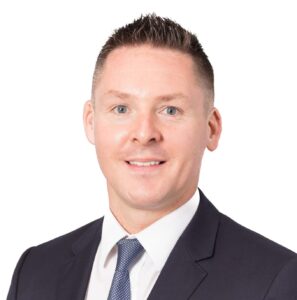
Recently, Landsbert (pictured right) was part of the White & Case team which advised Cathexis Holdings on the sale of Yondr, a hyperscale data centre operator, to DigitalBridge and La Caisse – which, with a value of $5.74bn, was one of the biggest deals of the year.
One issue that real estate partners are cognisant of is the delicate balance between demand for data centres and their environmental impact. ‘They’re seen as critical infrastructure,’ says Landsbert. ‘There needs to be a balance between the environmental landscape and environmental controls, and ensuring things are powered as sustainably as possible, while servicing the needs of the globe for these technologies.’

Others concur, with CMS real estate co-head Chris Rae describing the issue as ‘a question of balance – and a question of location.’

New technologies mean that you can be more agnostic about where you construct, including regional locations. Usually you see development of clusters, say two or three data centres within a sort of proximity to each other,’ Rae adds.

Rae, who is based in Glasgow, has been front and centre on a number of significant developments in Scotland last year, including advising Lloyds Bank on the asset management and lease surrender of its Edinburgh data centre, as well as acting for Clydesdale Bank on the managed sale and leaseback of its two Glasgow data centres.

Rae (pictured right) says that widening the net across the UK can mitigate the environmental impact of data centres.

‘The main drivers are speed to delivery of capacity, locations with faster power connections, easier planning, proximity to end-users and interconnectors, ideally some existing infrastructure, including fibre – you can then be more relaxed about where,’ he says.

‘That’s really important, because it doesn’t then mean that it’s all about the South East so much anymore,  where power supply, timeframes for connection, and availability or use of water can be particular issues,’ Rae concludes.

UK still a safe bet

With the data centre boom at the forefront, Linklaters real estate head Andy Bruce says the UK market has grown more appealing to international investors.

‘We have noticed a real uptick in the last quarter of the calendar year – typically on investment deals. I’ve seen this in the new instructions coming in over the last few months,’ he says.

Linklaters real estate counsel Jack Shand adds that investors are well-prepared for market volatility. ‘Investors are coming in really, really well informed, and the business plans and investment strategies are increasingly sophisticated, critically analysed and stress-tested,’ he says.

The magic circle firm’s team has been handling some big mandates with big names, including advising BlackRock on a joint venture to acquire and develop data centres across the UK and Europe, while the firm also acted on the other side of the Yondr deal to White & Case, acting for DigitalBridge.

Looking to the international markets, Bruce (pictured right) says: ‘For real estate, the Middle East remains a very active region for us as a firm – you can transport the real estate expertise that we have on investment and development in the UK and apply it with our Saudi colleagues to a Saudi law situation, and help bring international best practice to a market.’

Julian Pollock, who jointly leads the real estate investment practice at HSF Kramer, cites the UK’s appeal as ‘a very safe investment’.

‘A lot of the money coming into the UK, whether that is private capital money or sovereign wealth money, is coming from the US, the Middle East and Asia,’ he says. ‘The UK is still deemed to be a very safe investment for real estate, and on the matters that I’m dealing with at the minute, the sources of money are often international – more so than actual UK investment.’

Major mandates that HSF Kramer handled for international investors last year included acting for Canada Pension Plan Investment Board on its joint venture with US company Kennedy Wilson to invest in UK single-family rental housing, as well as advising a sovereign wealth fund on a £1.2bn joint venture with The Grosvenor Estate.

Other deal highlights for the firm included advised Shaftesbury Capital on Norges Bank Investment Management’s £570m purchase of a 25% stake in the Covent Garden estate.

One area attracting renewed interest is Canary Wharf, which after losing several big names from its distinctive skyline over the last decade, is regenerating as a residential centre.

HSF Kramer is advising on all aspects of the Canada Water Masterplan, which will see the creation of 3,000 new homes, 1 million square feet of retail property and 130 acres of parks and woodland in areas within close proximity of Canary Wharf.

The area once touted as ‘Wall Street on the Thames’ is attracting renewed interest from major financial corporations including Visa, which is relocating its European office headquarters to the docklands, and JPMorgan Chase, which is constructing a new skyscraper in the area to house 12,000 of its staff.

Bruce says interest in this part of London will be beneficial to London as a whole, citing a recent ‘purple patch’ for new lettings.

‘I think Canary is going places. Their vacancy rates are low, and they’re using their capital well to refurbish their buildings – and the Square Mile isn’t big enough to hold everyone,’ Bruce adds.

Only the best will do

One key post-pandemic trend has been the widening gap in interest between A-grade spaces and secondary real estate, as companies wake up to the need to attract their staff into more luxurious facilities.

One firm that has been active in the high-end City scene is Taylor Wessing, which last year advised Park Tower Hotel in Knightsbridge on its £348m refinancing, as well as a refinancing for Arlington House properties, located behind the Ritz Hotel.



UK head of planning and energy Alistair Watson (pictured right) acknowledges that while things are tough in the capital, it’s tougher still across the country.

To address this, Watson makes the case for a more relaxed approach to regulation.

‘Most of the growth [in 2025] came from the proliferation of planning policy papers and initiatives from the UK Government,’ he says. “Build, baby build” – three easy words for the Government to say, given it relies upon the private sector to create space and place.’

For Landsbert, the inconsistencies stem from consumer demand. ‘High-end retail is an experience – a lifestyle experience. Secondary retail is still in the doldrums – but I think high-end hotels will be interesting in 2026.’

For Rae, the extremes of real estate are becoming the standard. ‘The real estate sector has been a roller coaster ride,’ he says. ‘I think everyone needs to accept that the new normal is very much a faster pace of change.’

Top UK trio lead as NatWest snaps up Evelyn Partners for £2.7bn

Linklaters, Macfarlanes and Slaughter and May have picked up the lead roles on the £2.7bn sale of wealth manager Evelyn Partners to NatWest.

Slaughters is acting as lead counsel to NatWest, which is acquiring the business from Permira and Warburg Pincus.

Linklaters is advising Permira and Warburg Pincus, while a team at Macfarlanes is acting for longstanding client Evelyn.

Permira’s interest in Evelyn dates back to its 2014 acquisition of the regional businesses of wealth manager Tilney, which merged with Smith & Williamson in 2020 – when Warburg Pincus became a minority investor – before rebranding as Evelyn in 2022.

The acquisition by NatWest will create one of the UK’s leading private banking and wealth management businesses, combining Evelyn’s £69bn of assets under management with NatWest’s £59bn.

The Slaughters team advising NatWest included partners and associates across its corporate, financial regulation, tax, pensions, employment and incentives, competition, tech, data and IP and financing groups.

Key partners included corporate trio David Watkins, Nick Pacheco and Tom Peacock, alongside financial regulation head Jan Putnis and tax partner Dominic Robertson, a Legal 500 leading partner for corporate tax and tax litigation.

The Linklaters team advising Permira and Warburg Pincus was led by Legal 500 Hall of Famer Alex Woodward and corporate partner Chris Boycott, working with employment and incentives partner Bradley Richardson, tax partner Jamie Coomber, and Brussels-based global antitrust partner Neil Hoolihan.

The role for Linklaters comes after the firm advised Permira, Blackstone and portfolio company Adevinta on the sale of its Spanish business to EQT in mid-2025, while in 2024, Woodward led for Warburg Pincus on its £520m acquisition of a majority stake in United Trust Bank.

The team at Macfarlanes is being led by M&A partner Tom Rose, working alongside tax partner Jeremy Moncrieff, head of the rewards practice Robert Collard, pensions partner Faye Jarvis and commercial partner Rosie Duckworth.

Rose also led the firm’s team advising Evelyn in 2024 when it sold its professional services business – which was rebranded as S&W – to Apax Partners.

[email protected]

Trading places: McGuireWoods and Morrison Foerster swipe Perkins Coie partners for Seattle launches

Perkins Coie has seen a swathe of litigation partners leave this week, including from its Seattle home office, as the firm heads towards its merger with Ashurst.

Over 20 partners have left to McGuireWoods and Morrison Foerster, with each firm launching an office in Seattle.

Former chair of business litigation at Perkins, Ulrike Connelly, leads a team of eight partners to McGuireWoods, where she joins as managing partner of the firm’s recently announced Seattle office.

Connelly, who has been at Perkins for over 15 years, will also take on the role of co-chair of business litigation at McGuireWoods.

Six partners join Connelly: Eric Wolff, Mack Shultz, Todd Rosencrans, Christopher Ledford, Daniel Ridlon and Monique Wirrick, as well as former judge Abdul Kallon.

15 partners are also moving to Morrison Foerster from Perkins, including ten in Seattle and two in San Diego. The team is led by litigation partner Brendan Murphy, who has spent nearly 20 years at Perkins, and David Perez, himself a partner for 14 years.

Also moving to MoFo in Seattle are litigation partners Zachary Davison, Mallory Gitt, Laura Hill, Megan Houlihan, Michelle Maley, Matthew Mertens, Gregory Miller, Eric Weiss, Christian Marcelo and Jillian Sommers.

Ray Hartman, Jacob Speckhard and Tara McGrath will also join MoFo from Perkins, located in its San Diego office.

Perkins, founded in Seattle before expanding across the US and internationally, announced its merger with Ashurst last year, and is expected to vote on the combination this spring.

Over in New York, Ropes & Gray has hired four restructuring partners from Fried Frank.

Led by Rachel Strickland, who will serve as global head of restructuring for Ropes, the team includes Daniel Forman, Andrew Mordkoff, and Andrew Minear.

In Houston, investment funds partner Ivana Rouse has joined Sidley Austin from Latham & Watkins, where she spent seven years in the firm’s corporate team.

Also adding to its finance practice is Haynes Boone, which has hired fund finance partner Perry Hicks into its Charlotte office. Hicks joins from Mayer Brown, where he has spent the last five years as partner.

The hire sees the firm rebuild in Charlotte after last month saw three finance partners exit as part of Paul Hastings’ launch in the city.

Cozen O’Connor has hired five insurance litigators, including three partners, from Faegre Drinker into its Philadelphia and Dallas offices this week.

Susan Engeland leads the team moving to Dallas, accompanied by Matt Sapp, as well as two associates, while Frederick Marczyk joins the Philadelphia office.

Seward & Kissel has hired John Benson as head of maritime finance from Watson Farley & Williams.

Benson, who is recognised as a Legal 500 leading partner for shipping finance, joins after 20 years at Watson.

Back in Seattle, UK based Clyde & Co opened in the city through a merger with local insurance and litigation firm Forsberg & Umlauf.

Clyde, which holds a tier 1 ranking in Legal 500’s advice to insurers US guide, brings in a team of twelve partners from Forsberg.

The combination continues Clyde’s US expansion via locally-led mergers, which have enabled the firm to open offices in LA, New York, and as of last year, Dallas.

[email protected]

Baker McKenzie to cut business services ranks by up to 10% after global review

Baker McKenzie is set to cut hundreds of business services roles around the world, including positions in London and Belfast, following a review of its back office functions.

In a statement, the firm said it had undertaken a ‘careful review of our business professionals functions, aimed at rethinking the ways in which we work’, including its use of AI and a desire to increase efficiency, and that it was now ‘proposing a series of changes to how we operate and deliver important business services.’

It is understood that the firm expects the review to result in a headcount reduction of no more than 10% across its business professional ranks.

Bakers employs around 12,500 people across 77 offices, around half of which are business services staff, meaning that cuts of 10% would equate to as many as 600 roles.

The firm’s statement added: ‘Subject to consultation processes in applicable jurisdictions, some roles will likely be phased out, while others will evolve.’

We have not taken decisions around these proposed changes lightly, but felt it was necessary to deliver on our long-term plans. We appreciate the valuable contributions our impacted colleagues have made to the firm and will be supporting them.’

The firm has services centres in London and Belfast, both of which support high-volume, large-scale projects including document review, due diligence and legal research, alongside marketing and administrative roles.

It also has a large business services centre in Manila, which was established in 2000 to support the firm’s global offices in IT, HR, operations and marketing, and is one of the global firm’s largest bases.

Bakers saw turnover rise by 3.4% to $3.4bn in 2024, a smaller increase than many of its peers, with the rest of the world’s top 10 largest law firms all posting double-digit revenue increases. Profit per equity partner rose by 6% during 2024 to $2.1m.

The review marks the second major round of back office cuts for the firm in recent years, which in 2018 launched a three-year review of business services staff in a drive to improve profitability. In June 2019, the firm cut at least 46 London roles, and placed another 33 at risk.

Other major law firms have also restructured their back office teams in recent months, with Clifford Chance reviewing over 500 roles across areas including finance, HR and IT at the end of last year. The review was expected to see 50 redundancies, as well as role changes for up to 35 others.

Other firms cutting jobs include BCLP, which announced in May 2025 that it was undergoing a ‘business modernisation programme’ that would impact approximately 8% of its workforce.

[email protected]