
Mishcon de Reya and Hogan Lovells are to face off as King & Wood Mallesons (KWM) issues a claim against Goodwin Procter over several private equity hires made by the US firm. Continue reading “Mishcon and Hogan Lovells line up as KWM takes case against Goodwin Procter over PE team”
GCs are seizing the day (from their advisers)
Can anything truly threaten the premier league of global law firms? Certainly the going has been more challenging since the banking crisis for all sections of the legal industry, whether you are betting on ‘flight-to-quality’ or ‘more-for-less’, but overall the world’s top 100 commercial law firms look no nearer to an existential threat. AI? The accountants? New Law providers? The former reflects a genuine force set to substantially change the industry, though it is not apparent whether that will come at the expense of high-end law firms. The latter two players have yet to come near to living up to the fanfare made for them. Continue reading “GCs are seizing the day (from their advisers)”
Taught leaders

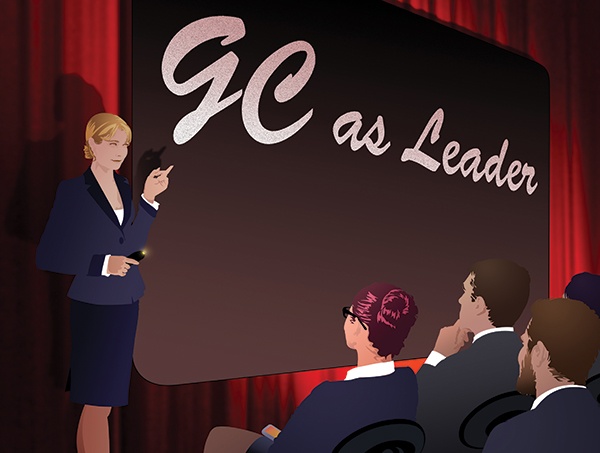 In 2012 the MBA degree established itself as the most popular subject of postgraduate education in the US, accounting for more than a quarter of all enrolments according to the US Department of Education. Along with the usual diet of macroeconomics, management theory and financial accounting, MBA programmes have ensured that those who seek to carve out a corporate career focus on one quality above all others: leadership.
The art of leadership in Asia
‘Becoming an in-house lawyer has not traditionally been a desirable career path for Asia’s top graduates,’ says Amy Ng, general counsel for the Asia-Pacific region at global real estate company CBRE. ‘But we are seeing a lot of change now in the number of people leaving private practice to work for a business.’
The next step

 Are in-house counsel ready to be business leaders? It seems a strange question to have to ask given the level of education and training of most in-house lawyers and the dramatic expansion of the size and responsibilities of legal teams over the last 15 years.
Significant matters – Autumn 2016
Panel roundup
Unilever is currently carrying out an informal review of its panel firms, after the existing roster expired in June 2016. Led by operations legal director Saswata Mukherjee, the last panel review began in February 2014 and constituted the company’s first formal panel arrangement.
Nabarro drops out of European alliance as three-way merger talks continue
Nabarro is to lose its seat in the five firm Broadlaw Group as a consequence of its merger plans with CMS Cameron McKenna and Olswang.
Continue reading “Nabarro drops out of European alliance as three-way merger talks continue”
Addleshaws mulls delaying salary reviews again as divisions told to halve travel costs
Senior management at Addleshaw Goddard is putting further cost-cutting measures in place, with talks to delay staff salary reviews further, while division heads have been told to cut UK travel costs by 50%.
Allen & Overy fills finreg gap with Herbert Smith Freehills Bradbury
Six months after financial regulatory head Bob Penn quit for Cleary Gottlieb Steen & Hamilton, Allen & Overy (A&O) has replenished the ranks with the hire of Herbert Smith Freehills (HSF) partner Nick Bradbury. Bradbury returns to the Magic Circle after moving to HSF from Freshfields Bruckhaus Deringer in 2015.
Continue reading “Allen & Overy fills finreg gap with Herbert Smith Freehills Bradbury”
The new order

Having seen Legal & General’s shares initially tumble on the Friday morning immediately after the UK’s vote to leave the EU – like so many financial services businesses – general counsel Geoffrey Timms is concerned that the business impact of Brexit could become a self-fulfilling prophecy. ‘Markets are emotional rather than factual. We can talk ourselves into trouble. There’s this end-of-the-world view online. Britain is still in a good place. Yes, the government has to fight uncertainty, but so does Europe. One hopes common sense will prevail.’
Keep calm and…
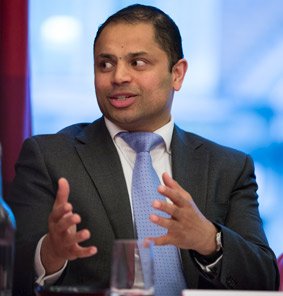
In his recent book, The Inside Counsel Revolution, Harvard Law professor and former General Electric legal chief Ben Heineman argues that the core mission of global corporations should be the fusion of high performance with robust integrity and sound risk management.
New tools, new challenges

It is possible artificial intelligence will change all our working life immeasurably in the next 20 years. It might put us all out of work; nobody knows. Even if it did happen in 20 years’ time, it is of no use to me in the way that I do my job right now and not much use to you as in-house lawyers to know what might happen. What is important is to understand what is possible now, what you can do with it and what the dangers are of trying to implement technology without thinking through what you are trying to get out of it. I will give some hard-earned experience picked up at the dirty end of a lot of technology projects.
Home House truths
Should you tweet? How do you relate to the mysterious breed of co-workers called millennials? How should lawyers navigate the rampant office politics of a major plc when they make the move in-house? Continue reading “Home House truths”
Soft law, hard sanctions
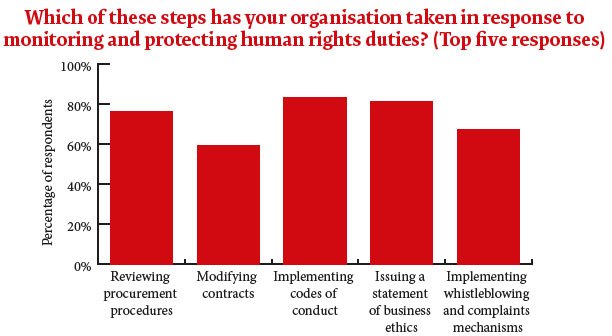
 It turns out that the next risk front facing business and promising to reshape the role of general counsel is a piece of legislation notorious among lawyers for having no teeth and little direct liability for companies.
Ready for anything

 Days after the August bank holiday weekend, the former head of the
British Civil Service, Gus O’Donnell, returned to Whitehall to catch up with former colleagues and host a live broadcast titled The Leavocrats on Radio 4.
Artificial bad, intelligence good
Paul Gilbert argues that AI has become a marketing gimmick that
obscures the shortcomings of legal teams.
The words ‘artificial intelligence’ bother me. I want to have a little rant about the words, but I also want to challenge the way in-house lawyers approach technology. On the words, I can legitimately stand accused of using ignorance as a shield for my laziness, but what bothers me is not that artificial intelligence isn’t clever and potentially useful, but that it sounds like the marketing kids have got hold of the dressing up box again. Continue reading “Artificial bad, intelligence good”
The governance dilemma
Stefan Stern forecasts that GCs will be forced to address a renewed
attempt to fix what ails governance in UK plc
Who knew that the staid term ‘corporate governance’ could create so much excitement? That Latinate phrase seems designed to reassure: ‘governance’ suggests order, calm, and mastery. But the chaps in the boardroom – and they still are mostly chaps for all the progress on appointing women directors – had better brace themselves for an interesting few months. Continue reading “The governance dilemma”
Perspectives: Geoffrey Timms
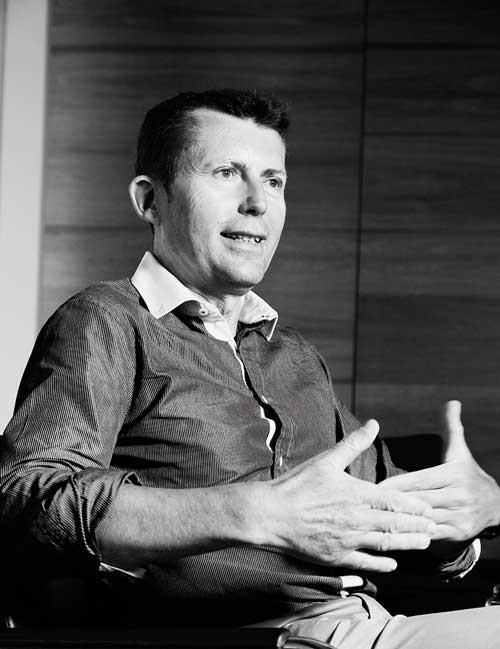
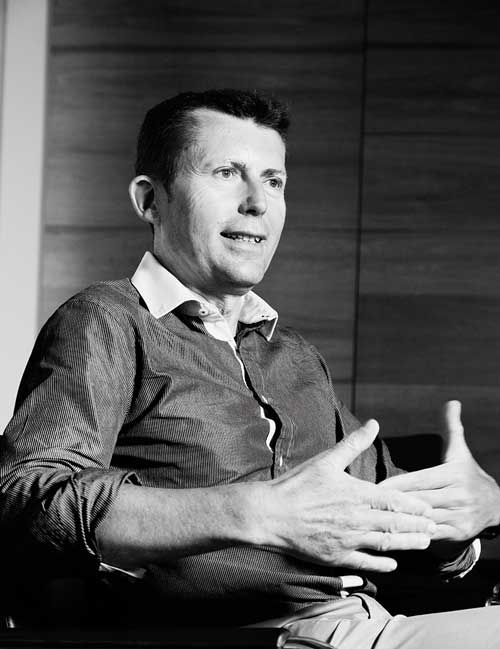 I’ve been lucky. I didn’t always want to be a lawyer. I used to party a lot; I liked going out. I always have done. In my twenties my girlfriend suggested I do something with my life instead of faffing around. She binned me.
Perspectives: Geoffrey Timms
I’ve been lucky. I didn’t always want to be a lawyer. I used to party a lot; I liked going out. I always have done. In my twenties my girlfriend suggested I do something with my life instead of faffing around. She binned me.
Getting real – the seven deadly sins of risk factors

 It is a sporting truism that it is far harder to be axed from the England football squad than it is to be included in the first place. Unfortunately, a similar tendency is apparent with risk factors in public listings of securitisation transactions. While this is true across a range of issues, it is particularly true with risk factors relating to geopolitical events and concerns. Of course, the travails of the financial markets since 2008, the unique nature of the Scottish independence referendum and the shock of the Brexit vote have given much to consider in this respect.
Continue reading “Getting real – the seven deadly sins of risk factors”