A&O Shearman has filed its first set of accounts as a merged firm, shedding light on the financial implications of the tie-up, including a sharp hike in partner capital contributions and a near-£200m pension deficit.
The LLP accounts – which cover the 12 months after legacy Allen & Overy and Shearman & Sterling’s transatlantic union went live on 1 May 2024 – include specific details about Shearman’s pension deficit, a factor widely cited as a stumbling block in the US firm’s attempts to get a merger through.
While pre-merger accounts for the 2023-24 financial year show legacy A&O had a pension surplus of £22m, the latest accounts for 2024-25 reveal that the combined firm now has a surplus of £27.8m and a deficit of £220.3m, equating to a net defined benefit pension deficit of £192.5m.
Shearman’s pension liabilities were reported to have been a sticking point in the firm’s earlier merger talks with Hogan Lovells, which were called off in early 2023.
The latest LLP accounts also state that between May 2025 and April 2026, contributions of $20.1m are expected to be made to the unfunded retirement plan for former Shearman partners.
The merged firm’s LLP accounts also highlight a surge in partner capital contributions over the last financial year, with the total paid in by partners more than doubling to £421.3m, up from £208.9m in A&O’s last year pre-merger.
Prior to the tie-up, A&O had approximately 600 partners, while Shearman had around 170. The increase in partner numbers, combined with the merged firm’s move to an all-equity partnership model, will have significantly contributed to the rise in capital contributions.
One partnership expert suggested a number of other potential factors. ‘They could need a financial buffer – partner capital allows them to do that. Something as significant as a merger like this would have cost the firm a lot of money. They have lots of offices around the world that have to be integrated,’ they said. ‘There’s also the tax cost of the merger – it may have resulted in a tax charge arising, and between US and UK firms this can be quite significant.’
Another expressed surprise at the size of the increase. ‘Firms generally try to keep capital relatively stable – it’s a huge capital contribution; doubling it is massive.’
Looking beyond pensions and capital contributions, the accounts state that revenue at the combined firm rose by 33% over the year to £2.86bn, up from £2.15bn, marginally down from the £2.9bn headline figure A&O Shearman announced earlier this year. Profit before tax nudged up from £1.046bn to £1.081bn.
Breaking revenue down by geography, the Shearman merger helped to drive Stateside turnover from £280.1m to £706.6m, meaning the US now accounts for 25% of firmwide revenue, up from 13%.
The firm saw strong growth in the UK over the year, with revenues up 20% from £818.7m to £981.4m, while the APAC and Middle East & Africa regions both saw revenue rise 16% over the year. Continental Europe was the slowest growing region at 9%.
Operating costs also increased, largely due to a combination of higher staff headcount and salaries, as well as costs associated with the merger.
Driven in large part by the growth delivered by the Shearman merger, average employee headcount rose 15% from 6,077 to 6,961, and with it, total staff costs increased from £858.6m to £1.08bn, a 26% hike. Other operational expenses grew by 17.8% to £446.4m, up from £379m in 2024.
Other details contained in the accounts include pay to ‘key management personnel’, which comprises the senior partner and managing partner, the heads of the main global practice groups and the support directors. Collectively, this group took home £43.6m in their share of the profit and salaries.
This equates to an rise of 164% from last year’s equivalent of £16.5m, although it is understood that this relates in part to the larger size of the management team in the wake of the merger.
A&O Shearman is now led by senior partner Khalid Garousha, global managing partner Herve Ekue and US chair Adam Hakki; Garousha and Hakki also co-chair the firm’s board and executive committee.
The board comprises the senior partner and managing partner, six independent and elected partner directors, and up to four co-opted members.
A&O Shearman board in full
- Parya Badie, London, insurance and capital markets partner, chair of the audit committee
- Tim Conduit, London, energy and infrastructure partner
- Roger Lui, Hong Kong, financial institutions sector lead and global co-head of the banking sector
- Peter Myners, Luxembourg, M&A, corporate and private capital partner
- Ken Rivlin, New York, co-head of the environmental and climate law group and co-head of the international trade group
- Alice Englehart, London, disputes partner
- Lisa Brill, New York, co-head of real estate.
- Lona Nallengara, New York corporate, finance and regulatory partner
A&O Shearman executive committee in full
- Diana Billik, Paris, US securities partner, regional co-head of US capital markets and global ECM
- David Broadley, London, corporate finance partner, global co-head of M&A
- Denise Gibson, London, debt finance partner, UK managing partner and co-chair of the London executive committee
- Astrid Krueger, Germany head of private equity
- David Lee, London, global co-head of energy, natural resources and infrastructure
- Doreen Lilienfeld, New York, employment partner, co-managing partner of the US.
- Vicki Liu, Hong Kong, finance partner, co-managing partner of Greater China and managing partner of Hong Kong
- Stephen Lloyd, London, global co-head of private equity
- Fredric Sosnick, New York, global co-head of restructuring
Additional reporting by Kate Peacock.





 Earlier this year
 Yen Sum (pictured), the global chair of Latham’s private capital practice, says the expansion of its CLO capabilities is the latest step in a



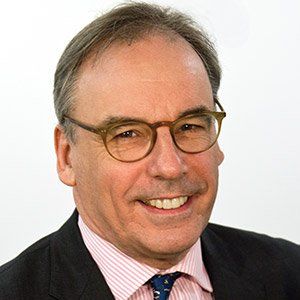 CLLS chair and former Simmons & Simmons senior partner Colin Passmore (pictured) had been hopeful that the government would listen to the concerns raised by the industry, and said that he was ‘very, very pleased’ by the news.