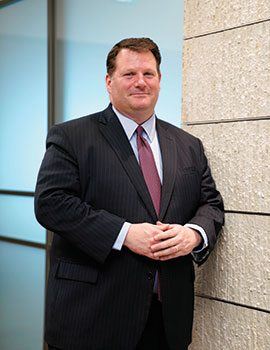
Eric Dale, Chief Legal Officer, Nielsen

Working at a dotcom was the first time I really got inside a business and became part of the leadership team – and obviously the dotcom era was a moment in time that was incredibly instructive for people to understand what a bubble looks like.

Some things were very different to my role now at Nielsen, and some things were very similar. It was more of a start-up environment, the legal department was much smaller, and it was largely a US-driven company. Nielsen is a much larger department, and it’s a much larger, global company. That said, the fundamentals are pretty consistent across the board. You’re trying to help grow the company, do so in an ethical, compliant way, and you’re continuing to try and be creative as you address issues.

In legal services, I think there are certain consistencies and evolutions. Technology is very different now to when I was in-house last time, and I think technology will likely be very different five, ten, 15 years from now.

If you’re in a small organization, the opportunity to have a broader role is greater. As an organization grows, things tend to get a little more siloed and remits tend to narrow a bit. But on the other hand, CEOs for the last decade or so have really begun to see that general counsel with certain skillsets and temperaments can add value in areas beyond the traditional scope of work assigned to a GC or CLO.

One thing I’m seeing in other companies – and have experienced myself here at Nielsen – is that the remit of the general counsel tends to be expanding. For instance, I joined Nielsen as the CLO and had responsibility for the legal department. Since then, my remit has expanded to include security, corporate social responsibility, government relations and public policy, as well as enterprise risk management. The job is becoming broader (which I happen to like) and I think boards and CEOs are recognizing that a GC may bring a host of skills that extend beyond simply running a legal department.

I don’t know exactly what I expected when I became general counsel at Nielsen, but it is different. In a law firm, you’ve got a large portfolio of clients, but once you go inside, you have one client. It can be a large, complicated client, which Nielsen is – with around 45,000 people spread across the globe in more than 100 countries, and multiple businesses in various legal and regulatory regimes.

You get much more involved in the business of the company in a leadership role. The kinds of things that cross your desk are incredibly diverse, and as diverse as private practice was, this is much more so.

Another key difference is that as outside counsel you try really hard to develop close relationships with your clients, but there’s a certain distance that you’re never going to be able to overcome, regardless of how good you are. Ultimately, you give advice and then the client takes that advice as an input and makes a business decision. When you’re inside, you give that same advice, but you live with that decision. You can’t walk away, so you have to own it from a perspective that’s not simply about what the law is, but what the company’s risk analysis is, what the business’s objectives are, and a whole host of other factors that you need to synthesize.

I’m not sure that the GC’s skills are going to be radically different ten years from now.

The hierarchy of a corporate structure is much more defined than the hierarchy of a partnership. That colors a lot of how I think about my own behaviors. For instance, when I speak to people, I know that often they are hearing the chief legal officer, they’re not necessarily just hearing a colleague. So trying to think not only about the matter that I’m discussing with them, but also their frame of reference, is a little different than in the past.

In a law firm, they have partners and associates. I initially analogized my position at Nielsen as me being a partner and the rest of the department being associates. I quickly learned that this was a poor analogy! A better analogy is more along the lines of being a managing partner in a law firm and that there are a lot of other partners, as well as associates. At Nielsen we have really smart, accomplished, independent lawyers who have great judgement and can run with matters often with little-to-no input from me – they know how to reach out to me, and I view my role as largely to help them do their jobs and clear obstacles and work through issues when they want a sounding board. That’s a very different dynamic than the frame of mind I came in with.

I read everything when I took the job at Nielsen – I read books, I read articles, I talked to people who were current GCs and former GCs, and there were a lot of themes that came out of that research. First of all, you really need to get to know the business. Second, you really need to develop relationships with people that you’re going to be working with, both vertically and horizontally in a matrix organization. Third, you need to recognize that the breadth of the practice is significant. You can’t be an expert in everything, but you have to have a good working knowledge in a lot of areas. I’d encourage people to go as broad as they can in their current position, whether in-house or in law firms, to make sure they really understand the dynamics that exist beyond their specialty.

I’m not sure that the general counsel’s skills are going to be radically different ten years from now. GCs are always going to have to know the business very well to be effective. They’re going to have to develop strong relationships with executives and with business leaders, and developing leadership skills is going to be critically important. Finally, where GCs are going to excel or not is in having great judgement and being able to communicate their thoughts into a rationale for what they’re discussing. Technology and tools will change over time, but those are just ways to do our job – the skills are going to be the constant.

I think in the future, routine work will be technologized and repetitive jobs will go away – and go away could mean offshore, it could mean go to non-traditional legal service providers, but it’ll likely not be done in-house or by law firms.

People use the word innovation a lot these days, and it means a lot of different things. People naturally think of innovation as connected to technology, and a potential value is that you can create data from experience, which can help from a consistency perspective. At Nielsen, we’ve tried different technologies and software from time to time, and we’ve also worked to create and implement processes to help make our work more efficient and more consistent. We’ve created model forms, knowledge management databases, and certain practices and policies which, coupled with training, teach our department and our internal clients how to accomplish their goals in a more streamlined fashion. We’ve also engaged RFPs in select areas, which has helped reduce costs significantly during a time when, as a company, our revenue has grown – which is a big win.

I think, in future, the pendulum will probably swing back and forth about whether legal departments grow or more work is outsourced but, by and large, my guess is that more work will be insourced. I think it’s ultimately more cost effective to have insourced work, and as you start to focus on paying for the highest value work – it comes back to judgement and expertise – you’ll go outside for that if you happen not to have that in-house, and you’ll pay for that. But you won’t pay for the lower-end work. You’ll either take that in or, more likely, you’ll outsource it to third parties who can do it more efficiently than a law firm.

Voices of Experience

There are certain privileges held by those looking to take on a general counsel role in today’s world. Thanks to the information age, even those outside a suitor organization are able to easily discover facts and figures about their prospective company, and can access a wide range of materials to help them prepare for a new position. General counsel and would-be general counsel now have the troves of knowledge gathered by generations past at their fingertips.

Things weren’t always so easy.

‘I knew nothing. It’s kind of funny. I had been an appellate and supreme court litigator, I had been in government and had run a big office – so I had management experience. But I hadn’t spent one hour working for GE, not one hour. I met Jack Welch [former chairman and CEO], he interviewed me for 30 minutes and offered me the job. The company had 340,000 employees; I had not met one,’ recalls Ben Heineman of his appointment as general counsel of GE in 1987.

‘Welch didn’t know what he wanted. He knew that he wanted to reshape the legal function, but he didn’t know exactly what that meant. When he offered me the job, I said, “I don’t know anything about GE, I’m not a business lawyer.” And he said, “Well, you’ll figure it out.” I was truly driving the car and changing the wheels at the same time.’

To the wise professional, the perspectives of those general counsel whose careers stretch back beyond the current state of things offer more than historical fascination: they are a rich source of insight into how the role of the general counsel has transformed over years past, how it will transform in the years to come, and how the general counsel coming into the role today can best ensure their success in advising their businesses.

Wealth of experience

We talked to those battle-tested, long-serving GCs about their experiences making the transition: the war stories from getting established within the business to reflections on what might be done differently if given the chance.

The best heads are better than one

On arriving at GE, Heineman set about surrounding himself with ‘the best’:

‘I knew one really important thing. I knew I had to get great people – I had done that all my life. I hired great people very fast and Welch supported them. The first person I hired was one of the leading tax lawyers in the country. He made a huge difference and was beloved by the business people. I then hired a world-class and very famous litigator; a very famous person to lead environmental safety. What Welch liked was the fact that I was bringing a ton of new talent into the company. I was the first person to actually hire people from the outside on a consistent basis, I basically blew up the legal organization and over the first five or six years, it was transformed. And that was critical to my credibility – it wasn’t me, it was my super-talented partners.’

In contrast, after more than 20 years in-house with DuPont, Tom Sager went into the general counsel role in 2008 with his eyes open – not least with regard to the company’s extensive litigation docket, having spent over a decade as chief litigation counsel. But, like Heineman, he talks of the benefits of leveraging fresh perspectives in order to have a transformative impact. One particular case from the late 1990s and early 2000s springs to his mind as a striking example, not only of leveraging the best talent, but also ensuring that talent is diverse.

‘We were dealing with lead paint litigation. We had a fairly strong team of defendants: we had ARCO [Atlantic Richfield Co], Lead Industries Association, and Sherwin-Williams. These were big players, and there was a mindset that said “We’re going to fight all these cases to the death”. I said to myself, “Well, that’s all well and good, but you’re only going to win so many, and then you’re going to be in more of a hurt because there’ll be some cases in which you’ll lose, and then, as we say in the US, the price of poker goes up,”’ recalls Sager.

‘So we got a team of diverse, talented people – Dennis Archer, who was the president of the ABA, mayor of Detroit, and a world-class guy; Benjamin Hooks, who was a civil rights icon; and several others. We got in a room and I said, “We don’t want to roll over, but how do we go about addressing the problem?” They came up with this idea of creating the Children’s Health Forum, which was designed to do three things: drive education with respect to inner-city families whose children were possibly exposed to the lead paint poisoning, remediation and then medical testing. Dr Hooks, at the age of 78, agreed to chair the Forum and he traveled the country to engage with primarily black inner-city mayors.’

DuPont was eventually dropped from the lawsuit in Rhode Island.

Learning to listen

Hiring talent is only as effective as the partnerships that allow organizations to capitalize on that pool and, like any good partnership, they should flow in all directions around the business. When Mark Ohringer began his first tenure as general counsel at Heller Financial, Inc in 2000, he believes he missed an opportunity to build relationships with those around him.

‘I should have gone on a bit more of a listening tour and gone to the heads of the business. I had already been in the department when I became GC and I probably thought that I knew what everybody wanted. But I should have put myself on their calendar for half an hour and checked that,’ explains Ohringer.

‘It puts a line in the sand: “New sheriff in town, I want to understand what you want as my client, and let’s have a discussion – tell me anything, how can I help you, and how can I be a good colleague?” I think I would have been more formal about going around business people and the people running the corporate functions. Particularly listening and not talking so much.’

Blowing the comfort zone wide open

The general counsel’s office has evolved from a silo to an intersection of cross-departmental collaboration, responsible for leading teams that include an assortment of internal and external specialists. The role has come down from the ivory tower to the corporate thoroughfare, meaning the leap from specialist to generalist is all the more critical. While cultivating a network of experts remains important, the GC must be able to view matters through a broad lens, regardless of background (and comfort zone), as Sager learnt the hard way at DuPont.

‘I turned down a commercial lawyer assignment that didn’t thrill me at the time, and that was probably one of the biggest mistakes I made,’ he says.

‘I did not spend time enough to know how the businesses are challenged and how they meet their profit objectives, and everything that they must deal with. Had I known that and taken that assignment outside my comfort area, it would have made me even an better general counsel.’

Private Practice Perspective: As much as things change, they stay the same

Jonathan Polkes, co-chair of Weil’s global litigation department and a member of the firm’s management committee, has been recognized as one of the top securities and white-collar defense attorneys in the United States. In this Private Practice Perspective, Polkes unpacks the qualities and traits that, in his experience, have been a hallmark of standout GCs, while also considering what constitutes a true business partner in the context of in-house counsel.

While the role of the general counsel has clearly evolved and expanded in recent years, the core qualities, traits and competencies for those who succeed and thrive in these roles has not. In collaborating with leaders of large global financial institutions and public companies over the last three decades, I have had the opportunity to partner with GCs of different leadership styles, experience levels and professional backgrounds. But, irrespective of their differences, all had their own distinct point of view while being highly agile and responsive to change. All could leverage advice from their teams and outside counsel to distil complex legal issues into plain language for the primary stakeholders at their organizations. And all prioritized building the best, brightest and most diverse teams possible.

I routinely work with general counsel who are under the gun – whether their companies are ensnared in a cross-border investigation or facing nasty securities fraud allegations. When the stakes are high, it is more important than ever that the GC has a firm sense of the value of the case to the company – financially and reputationally. These are not times to vacillate or second guess. At the same time, if there are key developments that suddenly change the complexion of the case and its value proposition, the stellar GCs I’ve had the privilege to work with always respond to that change immediately and effectively.

Given the scope and complexities of these cases, our firm works with GCs to make the underlying issues as succinct and digestible as possible. The business decision makers at sophisticated global companies need things distilled for them. What will this cost? What are the reputational risks? What are the best and worst options for resolution? How will this impact our brand or our operations six, 12, 18 months down the road? At Weil, we partner with GCs to sift through the immense amount of data and cut through all the noise to isolate the essential issues at the heart of the case. Having that clarity of mind and keen business judgement has always defined the best GCs.

In today’s marketplace, the battle for the best talent has grown into full-fledged warfare. Again, the GCs I’ve worked with embrace competition. They always surround themselves with a diverse team of people who are at least as smart as they are. There has been positive culture dialogue and developments surrounding diversity, certainly, over the past three decades – but needing the best people will always be key. And hiring the best people means hiring and retaining diverse talent.

As strategic business partners with our GC clients, Weil aims to mirror all these attributes. And while the role of outside counsel has changed along with that of the GC, we know that the qualities and standards governing our practice, client service and teamwork will never change.

Jonathan Polkes Co-Chair of Global Litigation Weil, Gotshal & Manges LLP

He did, however, accept another stretch assignment, which stood him in good stead over the years.

‘After four years of being a labor and employment lawyer, I was asked to be a lobbyist for DuPont in Washington, which was as foreign as it could possibly be. That assignment was painful at first but, over time I began to appreciate the value of being a representative of the corporation, because it exposed me to the issues that were challenging DuPont broadly, how one prepares to advance legislation or defeat it, and how to build coalitions and networks.’

Counseling the counsel

The experienced general counsel we spoke to have put in the years to develop the comprehensive scope and alliance-building skills necessary to succeed at leading the legal organization in top corporations. So what advice can older hands give to those navigating less familiar waters for the first time?

The right counsel for the job

‘The most important question is: does your skillset align with the needs of the corporation? I was a litigator, and we had a lot of serious litigation, so that led to my appointment. If your corporation is in a growth mode, then they’re probably looking for somebody who’s more versed in the core area of M&A deals and cross-border transactions,’ observes Sager.

‘General counsel will always have to put out the fires – that’s a given – and you need to be skilled in that. But increasingly, the general counsel is viewed as a part of a senior leadership team, and with that comes responsibilities – some way beyond knowing how to defend a litigation or handle an investigation or a crisis.’

Whatever skillset or background today’s GCs bring to the table, they will quickly discover that the role has evolved beyond individual expertise into a broad-based, proactive and strategic position. And although there is no fixed blueprint for becoming GC, let alone succeeding in the position, experienced past and present holders of the title agreed that there are a set of qualities that aspiring legal leaders should possess.

Communication skills

General counsel must bridge the gap between the legal and business mindsets, and also overcome any outmoded preconceptions that business colleagues might harbor about the dreaded ‘department of no’.

‘I was truly driving the car and changing the wheels at the same time.’

‘Lawyers tend to talk too much and write too much, and for business you need to be very succinct. Nobody has the same attention span that they used to – they’re used to these little sound bites on their mobile phones, and you can’t hand a business person a 25-page brief,’ explains Mark Ohringer, general counsel at Jones Lang LaSalle since 2003.

Horizon spotting

‘We used to sponsor a NASCAR driver by the name of Jeff Gordon, and my CEO Chad Holliday showed us this picture of Gordon in his car, circling and making a turn in one of these races,’ says Sager.

‘“You have to help us anticipate the curves”, Holliday used to say. They might create an opportunity or risk for the corporation, and you can’t be effective if you’re not thinking along those lines.’

Most of the general counsel we spoke to agreed that GCs need to be particularly attuned to all kinds of change, including societal and political developments that are ostensibly unrelated to business.

‘There are new kinds of risks that never existed before,’ says Ohringer. ‘Cyber risk, social media – none of that existed when I started practicing 25 years ago, and now they’re enormous.’

GCs need to be particularly attuned to all kinds of change.

A keen eye trained on the distant horizon will assist not only in managing and mitigating risk, but in planning for worst-case scenarios. GCs can be useful in bringing together the various siloes within an organization to design future crisis response, and ensure coordination between internal and external specialist resources.

‘A terrorism situation, a natural disaster, all these things keep happening. Are we ready as a company? Because if we’re not, there can be really bad legal risks, and that’s why the lawyers have a ticket to think about it. Those kinds of things didn’t used to happen so much and now they’re pretty much commonplace, so you need to make your response ordinary course of business. Nobody should be surprised when these things happen anymore,’ Ohringer explains.

Strength of character

When times get tough, fault lines often appear around the general counsel if they are not properly negotiating what Ben Heineman has called the ‘partner-guardian tension’.

Much has been written in recent years of the importance of effective partnership between organizations and their lawyers. The office of the general counsel has matured from the in-house approximation of the partner-associate-business ‘client’ model, to a deeper and more strategic enmeshment in the fabric of the business. So far, so value-add. But GCs must have the independence of mind to walk a line.

‘You have to have that partnering relationship with the CEO and the business leaders, but at the end of the day, your real job is being guardian of the company, which requires a certain amount of independence,’ explains Heineman. ‘There’s a certain tension between these two roles: if you are just a nay-sayer – just a guardian, protecting and risk averse – you’ll be excluded from meetings, you won’t be part of the team, and you won’t be able to play a business as well as legal role. But if you’re an inveterate yay-sayer and just do what they tell you to do, you’re going to get indicted.’

‘If you’re an inveterate yay-sayer and just do what they tell you to do, you’re going to get indicted.’

These are blunt words from a veteran GC, but necessary ones.

‘I think, sometimes, this idea that the lawyer should be part of the strategy may have actually gone a little too far,’ echoes Ohringer. ‘Big companies have had some terrible things go wrong; and how come the legal function didn’t help? It may have been too protective of the company.’

‘As all this evolves, lawyers have to not get sucked into the business too much. They need to understand it in order to do their jobs, but there’s still a need to maintain some independence. I always said I should not be the last one at the bar at night after business meetings – these are not my friends and I have to keep a little separate, because if they do something wrong, I represent the company, not them.’

We look next to today’s crop of newer recruits, and examine how they are rising to the challenges faced by the modern general counsel – and what advice they give to those currently eying the job.

Amy Sandgrund-Fisher, General Counsel, Clinton Foundation

I’ve been in-house at many different organizations, from a huge pharmaceutical company, to big public-facing non-profits, to a tech start-up. I’ve been lucky to work for a variety of excellent leaders and general counsel, and I believe that has given me a leg up in this role. That diversity of experience helped me learn the flexibility required for this role and how to handle the different types of issues I regularly tackle here.

I didn’t always want to work in-house – when I came out of law school I wasn’t sure what I wanted to do – but when I got married and started thinking about starting a family, I felt if I wanted to continue to be a lawyer and practice actively, in-house was the best route to go. I had watched women leave large firms to go in-house for years. I think in-house roles have always been perceived as better for women, because there are more development and promotional opportunities and a better work-life balance. In reality, my experience has been that being in-house is a better place for both women and men – and especially for working parents. Those development and promotion opportunities do tend to happen in a much more fluid way in-house.

Now, as general counsel, I see my role more than anything as a problem-solver. The biggest leap into this role required relying on my judgement and having the confidence to back myself. I had been an employment lawyer for almost 20 years before I became a general counsel, and it was tricky to take the confidence I had in my judgement as an employment lawyer, and transfer it to other legal areas. It only took a couple of days, though, to see that, even with my focus on employment law and my varied career, I’ve had exposure to all kinds of different legal and business matters.

To get that exposure, it was key to work at different organizations with different risk appetites, different business models and different types of leadership. Exposure to a diversity of legal problems and problem-solvers prepares you for a job like this. Given my own experience, my advice to attorneys looking to move into a GC role is to take chances and to not hesitate to try different organizations and different types of roles, and don’t get stuck. Being at one place for too long can make it hard to have the flexibility and exposure you need to take on a role like general counsel.

As for other challenges in coming to this role, one that stands out above the rest is giving legal advice to the former President of the United States for the first time! In terms of the wow factor, you can’t beat that.

Beyond that, moving from a fast-paced technology startup to the Foundation has been a challenging transition. Adjusting my pace of work and the way I think about risk assessment to a much more careful and deliberate approach took some adjustment. Even though every place has to manage reputational risk, managing it at the Clinton Foundation is different from most others.

Probably what prepared me best for that aspect of this role was working at the Metropolitan Museum of Art. The Museum is also a public-facing institution that gets an enormous amount of press, so the risk appetite there is pretty similar to that of the Foundation. The way in which the legal department at the Met thought about issues and how they might play out at the Museum was quite similar to the way that we think about issues here: first, of course, is what is the right thing to do? Then we start thinking about if we get media coverage, what would it look like, what would it mean for the roles of the principals, how would this reflect on board members? Those are questions that a tech startup or a big pharma company wouldn’t necessarily be thinking about in the same way.

One of my goals is to make sure those individuals see a path forward for their careers.

About 80% of the work I do at the Foundation is typical general counsel work, ranging from board governance matters to reviewing partnership agreements and large contracts, weighing in on compliance issues, advising on legal matters in foreign countries, working with outside auditors, HR-type issues, as well as being a member of the senior leadership team. The other 20% is special because we are the Clinton Foundation: I might be working with our communications team responding to media requests, or managing issues that are specific to our particular board leadership, the Presidential Center and work around the President’s legacy.

I’m proud to be working for the Foundation and to get to see the work it does up close and through the legal lens. Whether it’s helping small shareholder farmers in Africa, fishermen and women in South America, or folks struggling here in the US, all the programs that the Foundation runs are incredibly important, and getting to be a part of them is rewarding. Right after I started here, the massive hurricanes hit in Texas, Florida and the Caribbean. The legal department supports the Foundation’s work in the Caribbean which includes helping to coordinate aid, working with Caribbean countries in their efforts toward alternative power solutions and distributing medical supplies to devastated areas. Even being a small part of that has been very, very gratifying.

The legal department at the Foundation is a very strong and diverse group, and many of the members of the department have been at the Foundation for quite a while. One of my goals is to make sure those individuals see a path forward for their careers. I’ve benefited from working for several strong leaders who took a keen interest in my development as a professional. I’m looking for ways to do the same for my colleagues at the Foundation. When you’re in a small team at a relatively flat organization, it can be hard to help individuals figure out how to develop themselves and what the right next career steps are. I think that being an excellent people manager is becoming a very important role for general counsel – really understanding who’s on your team, where they’re looking to go, and how you can help them get there. We all want to have high-performing teams that make important contributions to the organization. Getting there is not something they teach you in law school.

Luckily for me, I have a partner in the Foundation’s HR department. We have a strong mentoring program here and other learning opportunities to help employees at the Foundation develop career-wise. As general counsel, I view it as my job to make this in-house legal team a great place to work. That means making sure the work is interesting and challenging, that the team is diverse and that individuals can see a path forward for their careers, and that they can balance their work life with all the other things that they need and want to spend their time on.

The other thing I’ve been thinking about is the use of metrics. We haven’t used them a lot in the legal department at the Foundation (although of course the Foundation uses them to measure the work we do around the world), but it’s something I’m looking at more closely to make sure that the legal department is spending the most time on the work that’s most important to the Foundation. One thing I learned working in the start-up world is that understanding the work qualitatively, and quantitatively, even in the legal department, is part of the good management of the group.

No matter what your practice, getting international experience is incredibly important. I think it is great advice for all in-house attorneys these days to get international exposure. Whether it’s doing an international deal, working on setting up entities internationally, or working on an employment law issue or lawsuit internationally – anything that gets you out of your US jurisdiction to see how different it can be to practice in other places is a good start. Just knowing what questions to ask if you are going to be doing business in Japan, or Malawi or Colombia will put you a step ahead of colleagues without those experiences.

Brian Israel, General Counsel, Planetary Resources

For the eight years prior to joining Planetary Resources, I was in-house counsel with the US State Department, in the Office of the Legal Adviser. I spent the first couple of years handling international arbitration matters on behalf of US investors involved in disputes with foreign governments. I then spent six and a half years working on international technology matters – partnerships for the development of technology, for regulation of advanced technologies including outer space, and I also was responsible for international environmental matters, including in the Arctic.

I came to the State Department with a bit of an unusual background for an international lawyer, having focused on IP and technology law as much as international law. Because of my IP background and my comfort and facility with technical subject matter, a lot of the State Department’s work involving science, advanced technology, and innovation policy accreted to me over the years, and I was able to handle a lot of international technology transactions over the course of my time there.

Planetary Resources recruited me as its first general counsel a little more than a year ago. I think that they’d seen me in action in the years in which I was the US representative to the United Nations Outer Space Legal Subcommittee, and in space policy circles, crafting legislation for the next generation of commercial space activities. I had wanted to go in-house at a technology company, and this was a particularly compelling opportunity because the team is just extraordinary – it’s an exquisite collection of professionals and colleagues working on a very difficult world-changing mission.

I think I was as interested in space as any young person with a pulse, but compared to many I work with, it wasn’t a primary passion. I am more generally interested in technology, technological innovation and the research and development process – and space resource utilization, as a next frontier within the next frontier, is particularly interesting in this regard. And in that sense, working with a team of talented engineers and scientists on really hard problems – particularly ones that present difficult questions with regard to regulatory and economic dimensions, in addition to the technical dimensions – is quite satisfying.

Very few days have gone by in the last year when I haven’t done something entirely new to me – if not entirely new, period! But the leap was not as much as I expected, and actually eight years as an in-house counsel at the State Department turned out to be pretty good training. At the State Department, I found myself fielding questions that no one had ever thought about on quite a regular basis and I had to do something with them, so I found the pace of the GC role familiar. I think it uses a lot of the same muscle groups that I had developed in guiding large, international partnerships and transactions through to completion. In the past those might have involved governments, and the form might have been a treaty, but it was a similar skillset, a similar set of dynamics and similar challenges that arose, which felt very transportable to complex corporate transactions.

Very few days have gone by in the last year when I haven’t done something entirely new to me.

I feel strongly that the role of the general counsel, particularly in a technology company, requires enough of an understanding of the company’s technology to understand how to optimize legal transactions to facilitate research and development, rather than constrain it. I feel like I’ve had good success in doing that and working very closely with our technical teams to understand their needs, their interests and what the pain points are, and also to help them to understand the legal landscape and to craft creative legal solutions that dispense with things that might have placed drag on the innovation process.

I think that it’s quite important for the GC to be able to understand the technology and the business well enough to be able to provide legal advice not in isolation, but that integrates an understanding of the business and technical dimensions as well. The general counsel doesn’t need to be able to design the spacecraft (and probably shouldn’t!) but they do need to understand the key points of what challenges the engineers are facing, and where there are legal solutions that can mitigate some of those challenges.

On the practice management side, necessity is the mother of invention. Being a GC of a company at this stage, there is so much to do in any one day, across so many different things, that you need to be quite creative in managing work flow. I’ve taken advantage of the very talented software developers at Planetary Resources to create systems and workflows to manage how we handle non-disclosure agreements, for example. Part of it is process design, part of it is a little bit of back-end automation, but things like that make a difference not only in preventing me from becoming a choke point, but I think also have served the users of those documents well.

For some things, like funding rounds, you need the horsepower of a large firm to move with the speed and quality that we need. But also, in a startup that has big world-changing mission and vision relative to the size of its budget for outside counsel, I’ve had to be quite creative and sparing with what I do in-house versus what is outsourced. I’ve done some experimentation to figure out what’s possible, and whether we can do more with less. One example is that I’ve experimented with preparing some patent applications in-house, and worked with patent counsel to refine, finalize and file them – which is a large work burden in-house, but enables us to file for more patents than we would otherwise.

I’ve had to be quite creative and sparing with what I do in-house versus what is outsourced.

There seems to be smaller practitioners, even solo practitioners, with sterling credentials who have experience both with the very top firms and also in-house, who are providing services at comparatively approachable rates. There are all kinds of software platforms springing up too, that connect in-house legal departments with those people, who are harder to find. I can’t say whether that’s a trend yet, but it’s certainly interesting, because as a GC in a startup who is doing lots of different things on lots of different fronts, you have to be quite creative on how to stretch the budget for outside counsel. Anything that allows us to get the same level of quality for less is quite attractive, and something we will probably explore.

A fun part of the job is the chance to be a pioneer in determining how the international legal framework applies to space resource utilization and how the national legal frameworks plug into that, and that fits very well with my background. Right now, for example, I’m in The Hague at something called Track 1.5 diplomacy, where representatives of governments, academic institutions, companies and NGOs come together outside of a formal treaty-making process to try and develop a set of building blocks that might later be injected into a law-making process. But that’s a rather small percentage of what I do day-to-day. I do more in the realm of either corporate transactions, IP, contracts, export controls, as well as labor and employment law. There’s quite a lot of Delaware corporate law, for example, which makes it challenging to stay on top of, but ultimately makes for more certainty in the answers.

The general counsel of a company as innovative as Planetary Resources needs to see himself or herself as an integral part of that innovation engine. It’s too easy as a lawyer to be quite conservative and risk averse in ways that can choke the innovation process, so it’s incumbent on the GC to have a very good understanding of where the risks and opportunities are, and to have excellent judgement in balancing that to enable the rate of innovation that our investors expect, without taking on undue amounts of risk.

David Yawman, General Counsel, PepsiCo, Inc

I started out at a big Wall Street firm. I received excellent training, and worked on different matters for different clients, but I aspired more than anything to work for one single client.

I was just a fourth-year associate when I transferred into PepsiCo, which was nearly 20 years ago – so I’ve essentially had a career within a company. When I joined, the law department had a reputation for insourcing as much of the work as possible, and that was critical to me because I needed to continue to learn.

That’s really been my story for nearly 20 years – PepsiCo is a place where if you do your current job really well, we will let you do something different, even if you don’t theoretically have the experience from a subject matter perspective. I’ve had the opportunity to do a lot of different things internally that I don’t think I ever would have gotten if I had gone to the open market. So it’s been a good learning environment for me, and it’s in the DNA and the culture of PepsiCo to allow that to happen.

I’ve had the benefit of being at the company for a long time, so I think I have a good understanding of the business, the organization, the risk profile and the risk tolerance. But in taking the role of general counsel, the biggest learning curve for me was the necessity to really lift my perspective from any one particular part of the company, to an overall perspective – a broader view. The decisions that I’m involved in now definitely impact different parts of the company, and making sure that I understand and appreciate the multifactorial element of any one decision across the global business is really important.

Currently, I oversee the company’s worldwide compliance and ethics, public policy and government affairs, and legal functions. I often find myself cross-checking what impact there may be in any one of those departments, even when the issue doesn’t squarely fit within that particular department, in order to ensure that I’m not missing a potential impact of a decision made in one part of the company on another part of the company.

It’s hard for me to concede that anybody would be prepared, on day one, to handle all the various aspects of my role. No matter what background anybody would have, there’s going to be learning that would have to happen after you get into the role. I’m biased, but the benefit of having worked at PepsiCo for so long has meant not having to learn so much about the business, which can be very difficult to get to by itself. My time is very much pulled into matters that are global in nature, rather than the detailed parts of the business, but fortunately I have been able to learn the business from the ground up.

I do think that legal services, at the most critical moment, is a judgement-oriented deal.

I would love to be able to tell you about some Thomas Edison-like moments during my first 100 days in the job in which I have innovated and invented something that’s new and novel! I can’t say that I’ve done that. But what I would say, having practiced law for 25 years, is that there’s been ongoing, continuous improvement. You’re constantly finding ways to do things a little faster, a little quicker, a little bit more insightfully. Certainly the sharing of information and the storing of knowledge is an important part of what we do, and the things that we’ve invested in within the legal team are really around information preservation, as well as enabling more efficient flow of work.

Thinking about the evolution of legal services, I’m not sure that there’s some big cliff or huge step upwards, whether in-house or in private practice. I certainly anticipate that efficiency models will continue to come to bear. For example, possible technologies that are rooted in artificial intelligence, or that are driven to figure out how big volumes of work can be carried out more cost-effectively, or even some predictive models around the magnitude of risks in the litigation environment. I anticipate people will get faster doing what they do and there will be attempts to be more predictive about trying to quantify risks. But I do think that legal services, at the most critical moment, is a judgement-oriented deal. My mind doesn’t go to innovation or models that will ultimately provide answers, my mind goes to models that will help provide information that ultimately will inform the judgement that lawyers have always historically had to bring to bear.

The role of my team is to mitigate risk for the company. When you get into mitigating risk from a business leader’s perspective, that means doing something different or allocating money, time or resources. A lot of times, lawyers are very good at highlighting the risk, and saying that it’s a ‘big risk’ or that it’s a ‘material risk’, but I think in order for us to really effectively influence, assist and counsel our business clients, we actually have to be willing – and a little bit more evolved in our ability – to put a value on that risk, so that a business leader can ultimately weigh it against the value of the resources, time or energy that he or she might have to place in order to mitigate that risk. I push our lawyers here internally to be innovative in their ways of thinking about risk and how to put a value on that risk, which really is at the core of helping advise our business around making actionable decisions.

Frankly, a lot of the best moments for me are successes that are unseen – knowing that we helped advise or guide the business client to avoid a risk, so that the risk never manifested. In some ways, those are instances of secret successes that make a difference.

General counsel ultimately have to become masters of different vectors of influence.

The general counsel is certainly one of the go-to counselors for the CEO and the board, but it’s not just on the law, it’s on a whole broader series of topics – whether it’s ethics, public policy, corporate citizenship, even geopolitical risks. It’s the wearing of these multiple hats that has really evolved over the past decade – going from just being a legal adviser to being an ethical watchdog, dealing with rule of law matters in developing markets and ultimately being involved in protecting the corporate reputation. At its core, there’s still a fiduciary duty that the general counsel has to the shareholders, but the role has certainly broadened. Candidly, I almost view the title of general counsel as being unduly narrow as a description of the full role.

General counsel ultimately have to become masters of different vectors of influence. When I look to the north, I see a CEO and a board and the shareholders, and I have to influence them on the things that matter most to them. When I look to the south, I lead multiple functions, and I’ve got to ensure that there’s the right talent and skills and that I can grow the team individually as well as overall. To the west, I see my peers, and whether it’s head of human resources or the chief financial officer, I need to be able to understand their perspectives on things in order to collaborate. To the east, I see a lot of external parties, from government officials, to NGOs, to competitors and industry groups that I also have to engage.

In the past, some individuals would be good at one of those vectors and maybe two, maybe three. But now, I don’t think there’s any one of those vectors against which the general counsel can afford to be ineffective.

One’s ability to influence is rooted in having substantive subject matter competence as well as personal character – which means that you are trustworthy, and you live by a certain level of principles. Across each one of those vectors, I need to be substantively competent in the issues that any one of those groups cares about. And then I need to be good at the point of contact, just as a personal proposition: I have the character, my word is good, I carry through on my commitment with truth and honesty. And then you’ve just got to ultimately work hard and be humble enough to learn from and listen to everyone you come into contact with. Hopefully, over the course of time, with some intentionality about learning across each one of those groups, you develop both that sense of character and competence.

Hazel-Ann F. Mayers, General Counsel, Simon & Schuster

When I was growing up, there was a TV show called The People’s Court, and I fell in love with the law through watching that show. My parents would tell you that when I was three or four, we used to watch The Paper Chase, and I said I wanted to be a lawyer even then! But I actually did not plan on going in-house when I started practicing law. In fact, my path to becoming a GC is a result of being willing to try new areas of the law, being flexible and, at various points in my career, expressing an interest in taking on more responsibility.

I started my career as a litigation associate at a big New York law firm, where I spent some time working on labor and employment matters. I found myself enjoying them a great deal – in part because the legal team was smaller than a typical commercial litigation team and I had more client interaction. I left my first firm and joined another large firm known for employment matters. After being there for a year, I joined Viacom Inc., a client of the firm’s, as a litigation counsel. While at Viacom, I worked with a strong set of attorneys (both in-house and outside counsel), and they continued to train me and mentor me.

Fast-forward to December 2005, when Viacom and CBS split into two separate companies. I transitioned to CBS Corporation, expanding my skillset by taking on new responsibilities in the compliance realm, and ultimately becoming the corporation’s chief compliance officer in 2009.

After six years in that role, I was promoted to GC at Simon & Schuster, a CBS business unit. I didn’t have much experience in the publishing industry, and also I was six months pregnant with my second child when I started in the position! I did not hesitate in making the transition though, because I welcomed the opportunity to partner more consistently with a defined set of business clients. I also wanted a better understanding of the business from the operational side, which I would not necessarily gain from a seat in corporate. And, both my S&S CEO and CBS Corporation GC were very supportive as I got up to speed with my new responsibilities.

My experience and background in litigation and compliance serve me well, as I’m used to jumping head first into trying to develop a subject matter expertise in the context of a litigation – for me, that keeps things interesting. I applied that same skillset in getting up to speed on issues that affect Simon & Schuster and the publishing industry as a whole. I’m one who learns by doing and it was very important to me to get a sense of what it’s like to see a manuscript proposal before it’s even acquired, and to understand how it becomes a book and ends up in the hands of a customer, or digitally on a customer’s e-reader.

There is a significant transactional component to my role. When I’m drafting an agreement, I’m mindful that it could be years from now when there’s an issue about its interpretation, so it’s not just about clarity in the moment, but creating language that in the long term does not have ambiguity and does not expose the company to risk. I find my litigation background to be helpful in this regard, as well as in advising the clients about potential pitfalls.

A mastery of a legal specialty might get you into this role, but it’s certainly not going to keep you in it.

As general counsel, I manage the legal and contracts departments and our team handles much of the day-to-day agreement drafting and review, manuscript vetting, and general counseling and advice. When we work with outside counsel, we base those decisions on counsel’s areas of expertise, their fit, their ability to develop favorable and flexible rate structures, and our focus on ensuring that we work with a diverse pool of lawyers.

General counsel are becoming increasingly adept business leaders and strategists. There are many aspects of the role that go beyond traditional legal advice and expertise. A mastery of a legal specialty might get you into this role, but it’s certainly not going to keep you in it. You have to be able to articulate legal advice in a comprehensible and succinct way, to weigh, balance and forecast risk, and to understand business strategies and implications – which frequently present in ways that are not obvious. Sometimes, the general counsel’s role is viewed as limited to providing legal advice for the c-suite, but you also must work with other people at all levels in your organization and learn the ins and outs of your business. Otherwise, you are not getting the full perspective that you need to be a strategic partner.

You need a certain mindset in order to think strategically. Part of that is about possessing some financial acumen and a better understanding of business concepts. It is also about being willing to step outside of your comfort zone. If you are a lawyer who is interested in the legal substance, but not operations or marketing or how deals are negotiated or the factors that might impact into your business, then a GC role is likely not for you.

Obviously, we lawyers also have to set an ethical tone and lead by example. One consideration for me (particularly as a former CCO) is: how do you do that in way that does not feel too prescriptive? One of my mentors described it as being mindful of overly medicating a patient – we must consider ways in which we can embed ethics into business practices without making colleagues feel like they’re being hammered over the head by Legal.

If I could speak to my younger self, I would tell her to trust her instincts.

Honestly, EQ is a big component of that as well. It’s about the ability to relate to people. One of the ways in which you can learn is by being an approachable person; you then are a partner and a collaborator, so people don’t feel they are running to the principal’s office every time they talk to the legal department. Business teams need to feel that they’ve got someone who’s going to sit down with them and figure out how to get from point A to point B in the most effective way. When you read the newspapers and you see situations where things have gone awry, sometimes it may be about a lawyer’s advice not being followed, but other times it’s because in-house lawyers have become siloed.

If I could speak to my younger self, I would tell her to trust her instincts and to know that she has good judgement – which is a critical component of being a strong lawyer. I’m a first-generation American (my parents are from Barbados), and I’m also a woman of color. Sadly, as I pursued my law degree, I didn’t know many attorneys of color and I didn’t see many in high positions in the legal community either. As I look back and think over my career, there have been several points where I have thought about not raising my hand, not giving my opinion, or doubted myself out of fear. I definitely had to affirmatively say to myself: ‘Trust yourself. You’ve got this.’ That attitude has served me well.

At Simon & Schuster, and at the CBS corporate parent level, we have internal committees and policies that are focused on areas of diversity and inclusion. We have a law department committee that’s charged with focusing on the diverse outside staffing of matters and, along with other internal committees, we focus on ensuring that a diverse pool of candidates is considered for our open positions.

It’s important for people to share their experiences, and that’s one way that I have been able to grow and blossom both as a person and an attorney: by spending time talking to people with more experience about the legal profession and their personal journey. I’m acutely aware that I did not have the opportunity until I was in college and law school to be exposed to people of color who were in the legal profession. So, I stay in touch with the next generation – at all stages of their paths. Future generations (particularly diverse individuals) must have a lifeline to those who came before them. That can be through mentoring and sponsorship, and also by providing a realistic picture about what life as an attorney is like. Each person should have someone who dreams bigger for her than she can dream for herself. That’s worked for me and I hope I do that for others.

Unpacking the Present

New entrants into the world of the in-house counsel have a unique vantage point: they are a blank slate, and while they can enjoy the benefit of decades of experience and cascading knowledge of long-serving general counsel, they can also bring fresh perspectives to the table.

The newly-minted general counsel will often straddle the boundary between experience of an already established career and the unfamiliarity of a new one. But despite that, the groundwork for the general counsel role begins early in the legal career, even if they don’t know it at the time.

Amy Sandgrund-Fisher, who became general counsel of The Clinton Foundation in 2017 after nearly 20 years as an employment lawyer, found that her experience working in-house with many different companies served her well in making the leap.

‘To get that exposure, it was key to work at different organizations, with different risk appetites, different business models and different types of leadership. Exposure to a diversity of legal problems and problem-solvers prepares you for a job like this,’ she explains.

‘Given my own experience, my advice to attorneys looking to move into a GC role is to take chances and don’t hesitate to try different organizations and different types of roles, and don’t get stuck. Being at one place for too long can make it hard to have the flexibility and exposure you need to take on a role like general counsel.’

Digging in

Of course, all the preparation in the world can’t replace a thorough and candid conversation with senior leaders and function heads upon arrival at the business. This is done to glean a clear understanding of how they view the role, its parameters, any gaps that need to be filled, and any necessary points of continuation – or divergence – from the predecessor. In particular, such conversations can be just as necessary for internal promotions as for external hires, in order to align the vision of the c-suite with that of the new arrival in terms of scope.

‘People make assumptions and they’re not necessarily true. A lot of times there’s probably not a common understanding of things like that – foundational aspects of the job,’ warns Mark Ohringer, general counsel of Jones Lang LaSalle.

Our newer general counsel all understood that their value to the business is directly proportional to their understanding of the business. If the general counsel wants their team to provide actionable advice, then this must be grounded in acute insight into the issue in the context of the business itself, at the most granular level possible.

Those new to the company, and especially those new to the sector, all reported investing significant time and energy into gaining a thorough understanding of their new business – including scouring annual reports, rounds of meetings and tours of the shop floor.

Throughout this process, our interviewees were quick to advise the importance of asking even the simplest of questions, not only because it adds granularity to the GC’s grasp of the business, but because it could also benefit the organization.

‘Oftentimes, including a fresh perspective causes people to rethink and re-evaluate things, which is never a bad thing,’ explains Hannah Lim-Johnson, general counsel of Kelly Services.

Governance

The next step on the road to orientation in the GC role is adjusting to new obligations relating to governance and the board. Those with a corporate secretarial background have an edge here initially, but for many, being a direct line to the board, with the attendant educational, counseling and fiduciary responsibilities, is a new and absorbing dimension to even a longstanding in-house career.

‘It’s really hard to overestimate how much time and effort goes into board and governance issues. That continues to surprise me, even four years into the role,’ says Tim Murphy, general counsel of Mastercard.

‘Getting the narratives right to the board, not just on my own things, but helping the company do that well overall so that we have effective meetings and get good conversations – boy, it’s time-consuming. You’ve got to make sure you’re resourcing for it, because it can take over your role.’

Learning to function as the board’s lawyer, as opposed to a mere ad-hoc dispensary of advice, requires an ability to both find the right tone for engagement with the board and earn the trust required for developing robust and durable relationships with its members. Those with the benefit of being introduced via a sound succession plan have a leg up. Those without will have to put in significant face-to-face time to build a rapport strong enough to reach their potential.

In addition, finding an equilibrium between acting as a manager of the business – and the juggling act that this entails – with the independence needed for advising the board is a challenge that will be new to most first-time general counsel.

The personal touch

Newcomers looking to acclimatize to the general counsel role will be well-served by a knack for relationship building. Intra-business relationships will be fundamental in maintaining trust within the business and developing a knowledge base from which to operate within the new environment. This, in turn, is the ticket to a full appreciation of the culture at the top echelons, which the general counsel must negotiate.

‘I didn’t realize how complex the landscape could be, and I’m talking about relationships with the senior leadership and the board itself, the significant players who were truly in the inner circle,’ recalls Tom Sager, former general counsel of DuPont.

‘Be sensitive to your landscape. There’s always the political side: who’s in and who’s out in terms of their relationship with the CEO. What is their tenure?’

Private Practice Perspective: More than just a lawyer

David Lender is co-chair of Weil’s global litigation department and a member of the firm’s management committee. He has more than 20 years of experience trying and litigating complex international commercial disputes in state and federal courts around the country, as well as in arbitration proceedings. In this Private Practice Perspective, Lender extols the virtues of balancing effective lawyering with business judgement when it comes to successful in-house practitioners, while providing his views on how they can best incorporate outside counsel within their departments.

Any general counsel of a large global business knows that being a great lawyer and manager of your in-house team is not enough in today’s marketplace. As many of the GCs profiled for this feature point out, top in-house lawyers are expected to make business decisions. They are part of the key strategic executive teams and decision makers in their organizations.

That makes it an incredibly dynamic and exciting time to be a GC. The general counsel I work with all have a specific and detailed understanding of their industries, business operations, marketplace forces and competitive factors. Constant absorption and recall of this information is critical to their ability to fulfill their expected roles, both in developing and executing corporate strategy.

As outside counsel, our team at Weil partners with clients to delve deeply into these business issues. Our roles have expanded with our clients, and we clearly need to match their level of sophistication on industry and business matters. No longer is being a strong advocate enough. Over the past several years, I have needed to become an expert on topics that typically require advanced degrees in engineering or business – not law. I’ve had to understand the mechanics and technology behind wind turbines for an important patent trial, the wholesale grocery market for a large antitrust trial, and the syndicated real estate loan business for another multibillion-dollar dispute. It’s a host of different challenges. As with GCs, we as outside counsel can only understand what is at stake if we understand the client’s business, the value of IP, and the cost of losing exclusivity over a patent, among countless other considerations.

Part and parcel with knowing the business and the stakes is moving lawyering beyond risk analysis. Both in-house and outside counsel will always need to provide excellent substantive legal analysis and advice. Now, in addition, we – our GC clients and our firm as outside counsel – need to use that analysis to help recommend business decisions. Not only ‘this is the fact pattern and these are the areas where we have exposure’ but also ‘even with the indemnification in place, the reputational and collateral risks associated with continued litigation warrant resolving this matter now.’

Gone are the days of corporate executives merely looping in legal for the greenlight at the end of a project. There has been a beneficial fusion of the legal and business teams. And while we still have to be the analytical voice that looks most critically at risk and the legal questions that ultimately need to be resolved, we are also now expected to state our point of view with regard to corporate strategy. For all these profiled GCs and anyone new to the in-house role, that hopefully makes for deeper relationships with your outside counsel and the practice of law even more rewarding.

David Lender Co-Chair of Global Litigation Weil, Gotshal & Manges LLP

Solid relationships with the c-suite, and a commensurate understanding of its challenges and priorities, will inform the GC’s ability to add value to the company at the strategic level. But looking around as well as up is a prerequisite for gaining an appreciation of the company at the grassroots level, as discovered by James Zappa in those first months after arriving at CHS from 3M:

‘I spent a tremendous amount of time with my direct colleagues and the board of directors, but I should have done more to get to know the business unit leaders. They are the people who are most important to the operating rhythm of the company and to the risk management practices. Most employees in the company will look to their business unit leaders for guidance relating to culture, appropriate behavior and day-to-day leadership, and had I accelerated my learning and meeting those people, I think I would have known more about the company earlier.’

Developing all types of relationships is essential for achieving that delicate balance between ‘business professional’ and ‘company guardian’ – but just as the role has expanded in recent years, the GC’s sphere of influence has extended further, even to outside the organization.

David Yawman, general counsel of PepsiCo, characterizes the role as achieving mastery of ‘different vectors of influence’.

‘When I look to the north, I see a CEO and a board and the shareholders, and I have to influence them on the things that matter most to them. When I look to the south, I lead multiple functions, and I’ve got to ensure that there’s the right talent and skills and that I can grow the team individually as well as overall. To the west, I see my peers, and whether it’s head of human resources or the chief financial officer, I need to be able to understand their perspectives on things in order to collaborate. To the east, I see a lot of external parties, from government officials, to NGOs, to competitors and industry groups that I also have to engage.

‘In the past, some individuals would be good at one of those vectors and maybe two, maybe three. But now, I don’t think there’s any one of those vectors against which the general counsel can afford to be ineffective.’

Navigating the needs of, and pressures imposed by non-company stakeholders – what Mastercard’s Tim Murphy dubs the ‘external ambassadorship’ component of the GC role – requires a skillset that is even further evolved from the ivory-tower lawyer of yore.

‘If you can give a good speech in a TED Talks style in front of 200 economists in a leading country and come off as pretty compelling, you’re adding value to your firm. The best skill you can ever get anywhere in life is public speaking,’ he explains.

Talent contest

When Ben Heineman started at GE in the late ‘80s, he had 33 direct or dotted-line reports. He fired 30 of them within the first three years.

‘The most important thing that a new GC does is to assess the talent that is in the legal department immediately and determine whether or not they keep those people. Creating your team is one of the first paths, do not wait on personnel,’ he says.

Hired from outside the company with a brief to create change, Heineman was keen to build the legal organization from a blank state. Compare this with the approach taken by Ford’s Bradley Gayton, a company ‘lifer’ with already-established relationships within the company. Gayton took a softer line with the talent around him.

‘Having grown up here, the relationships that I had were now different when I became general counsel. I sat on the operating committee of the office of the general counsel with my peers, all of whom were very talented and any one of them could reasonably have expected that they would be GC,’ says Gayton.

‘So part of this job on day one was re-recruiting my peers, and acknowledging just what incredible lawyers and leaders they are, and reaffirming that all the fantastic work we had done as a leadership team was going to continue.’

Looking around as well as up is a prerequisite for gaining an appreciation of the company.

No doubt, the incoming general counsel’s approach to talent will be influenced by the condition in which they find their new department. But the GC should curate the department according to the new reality, and not old models, as Eric Dale learned at prominent data company Nielsen, which he came to from 13 years in private practice.

‘I initially analogized my position at Nielsen as me being a partner and the rest of the department being associates. I quickly learned that that was a poor analogy! A better analogy is more along the lines of being a managing partner in a law firm and that there are a lot of other partners as well as associates’.

Team members who are not micromanaged but are empowered, independent decision makers and are fully credited for their contribution, are fundamental to developing what Tom Sager calls ‘collaborative intelligence’ – a willingness to raise issues and reach out to others about problems, rather than cover them up out of fear of criticism. He quotes former US Secretary of State and retired US Army general Colin Powell: ‘The day soldiers stop bringing you their problems is the day you have stopped leading them.’

Thinking diversely

The concept of ‘diversity of thought’ has permeated the corporate landscape, and legal teams, like other business teams, have woken up to the fact that finding the best talent means looking at all talent available; seeking it out if it does not arrive at the door easily.

The new general counsel could do worse than to take a leaf out of Bradley Gayton’s book when he was building out the legal team at Ford. As the company’s first black general counsel, he has considered the topic in much detail.

‘I think about it in terms of diversity of our office, and then I am also thinking about the pipeline to law school. And there, what we’re thinking about is both late-stage pipeline, maybe people already in college, and we’re thinking about early-stage pipeline, so: should we be thinking about helping kids in sixth grade in debate club?’ he says.

‘And then the thing we’re giving a great deal of consideration to in the office is: should we use the “Mansfield Rule” as a way to recruit, which says you should ensure that 30% of the applicant pool you’re going to put through the funnel is diverse, because then, when you pick the best candidate, you stand a good chance of driving diversity. It’s not a quota system – you don’t only pick people from a diverse pool – you just make sure that the applicant pool is significantly diverse. I’d say we’re mid-level stage of considering what does that look like, how would we implement it, and having really good discussions about that.’

General counsel are in a unique position to drive diversity in the wider general profession – ‘the east’ in terms of David Yawman’s vectors of influence. The competition between external law firms gives in-house teams leverage to select for those whose values align with their own. If firms want to win the business, they will have no choice but to adapt.

PepsiCo has devised practical steps to encourage diversity among law firm partners, launching an outside counsel diversity initiative under the leadership of Yawman’s predecessor Tony West [now at Uber].

Those with the benefit of being introduced via a sound succession plan have a leg up.

‘We demand a lot of metrics from outside firms and then, through a weighted formula that we’ve created, we ascribe a diversity index score to each firm [within peer group – Big law, large firm, small-medium firm]. We are disinclined to provide new business to those firms that have a diversity index score below the median in terms of diversity within the US population of the firm, and particularly for those people working on matters for PepsiCo,’ explains Yawman.

‘In 2017, roughly 85% of new matters that we placed with outside firms in the US went to those firms with diversity scores above the median. We’re trying to put our money where our values are in terms of driving the legal profession to be more diverse, rooted not just in providing individuals with opportunities, but believing that there are better legal services on a qualitative basis when you have a more diverse team.’

Back at Ford, meanwhile, Gayton is applying his thoughtful and nuanced approach to promoting diversity among Ford’s external network, that doesn’t rely on a stats-focused system of measuring diversity metrics.

‘You can tell me that you have three women on your team, but what I really want to know is: what are you doing to develop them? Are they on track to be partner? What kind of work do they have? I’d almost rather that instead of five women doing low-level work, you’ve got two, but they are two that you’re really invested in and I can see that they really have good assignments that will build meaningful expertise over time. This is part of the challenge isn’t it?’ he reflects, adding:

‘We’re going to identify a handful of alliance partners and really work to understand this issue with them, so that we can go beyond the list of top-line numbers.’

A vocal proponent of diversity in the law, Tom Sager has a Minority Corporate Counsel Association award named in his honor. According to him, achieving, maintaining and promoting diverse teams, particularly within the wider profession, continues to be a struggle for general counsel, as with other business leaders.

‘This is a slow process and the gains are incremental – in fact, the numbers may keep regressing depending on the state of the economy. So I remind everybody in this space to celebrate the successes: we’ll have some setbacks, but it pays to persevere,’ says Sager.

‘The whole commitment to diversity can change overnight with a change in leadership – in the corporation or in the law firm – so you’ve got to get the culture built in.

‘Create a culture and this is part of your strategic direction, because some people think it’s no big deal, but I’m telling you, those that understand this and drive it are going to be far more successful than competitors that don’t.’

Driving strategy

Once the new general counsel has established a penetrative understanding of the business and assembled a team of their choosing, the more substantial value-add can begin: bolstering the company’s strategic direction, and then helping rather than hindering the progress toward achieving the goals of the business.

‘A lot of times, lawyers are very good at highlighting the risk, and saying that it’s a “big risk” or that it’s a “material risk”, but I think in order for us to really effectively influence, assist and counsel our business clients, we actually have to be willing – and a little bit more evolved in our ability – to put a value on that risk,’ says Yawman.

The GC should curate the department according to the new reality, and not old models.

‘[That means] a business leader can ultimately weigh [the risk] against the value of the resources, time or energy that he or she might have to place in order to mitigate that risk.’

Practically, this can manifest in many areas. A number of our interviewees describe how a sound apprehension of company strategy can help to appropriately color the day-to-day activity of the legal team, and ensure they are furthering strategic goals both now and in the future, while taking care not to stifle potential opportunities.

But in-house teams can add even more value if they view potential legal problems as opportunities to create competitive advantage. At Mastercard, Tim Murphy and his team took the challenge of complying with the recent GDPR data privacy regulation in Europe into an opportunity, by creating an innovative data anonymization venture. At healthcare giant McKesson, GC Lori Schechter’s team formed a cross-company task force to brainstorm ideas to tackle the US opioid crisis, which resulted in a white paper shared with legislators.

But, counsels Murphy: ‘You need to tell your colleagues that [leaning into the company’s strategy] is a priority and you need to get their buy-in and acknowledgement, so when you are successful it doesn’t look like a random walk, it looks like very important strategic work, which it in fact is. In-house lawyers need to be selling their services and their value.’

Another essential tool for demonstrating value in the profit-and-loss-focused corporate world is managing to metrics, and general counsel who have not viewed legal work through this lens would be well-advised to start.

‘For lawyers, it is really hard, and a lot of lawyers resist it. But at the end of the day, if you push hard enough, I think every legal function can find a metrics-based scorecard to measure themselves. That’s really powerful because it speaks the language of business,’ adds Murphy.

Innovation

Much has been written and said about the supposed intransigence of lawyers, and their tendency to fight the tides. But the general counsel we spoke to were all concerned with embracing change and innovation within their departments. Much of the innovation being enacted or contemplated centered around adopting new technology and processes to enhance efficiency, such as contract, knowledge or risk-management systems, many involving artificial intelligence.

But Jones Lang LaSalle GC Mark Ohringer advises less-experienced GCs to avoid rushing into changes without a full consideration, not only of what the legal department could achieve, but of what business leaders really need and want.

‘Do you want a very industrialized and efficient law department? That could mean asking the business to do more self-service, for example with contracts. But maybe they don’t want to do it; that may not be the smartest thing to do if that’s taking them off the street from selling or doing other more high-value-add jobs,’ he explains.

‘The best skill you can ever get anywhere in life is public speaking.’

Instead, he says, the GC should gauge the appetite of the business for wholesale transformation before implementing any innovation plans. He warns that while creative thinking could enhance productivity, business colleagues might not be comfortable with entirely new ways of engaging with the legal function, such as offshoring or outsourcing arrangements. Maintaining an interface that looks coherent with a more traditional way of working might be more effective in some circumstances, for example.

‘What innovative things can you do behind the scenes that make it more effective for the legal team to deliver their services, but when a business person calls, a lawyer is still answering the phone? Which I think a lot of business people want and deserve. That’s very different from having some kind of central legal function based in Mumbai and all the bid people are calling and getting different people – which may be fine for some companies and not fine for others, or fine for some parts of the law department and not fine for others,’ he says.

New might not always be better. But this is very different to adopting a head-in-the-sand approach to innovation, he stresses.

‘You need to know how cool you could be – but then check it out first.’

Ohringer’s own legal team, for example, has leveraged the skills of data scientists within the company to mine existing company data for patterns of behavior that could be red flags for fraud, bribery or other ethics violations.

The general counsel we spoke to were all concerned with embracing change and innovation.

‘It’s exciting to me, and the data guys like it because it’s fun for them. It wasn’t so obvious for them and it’s not really what they got hired for, but they can add a lot of value for the company,’ he explains.

The Jones Lang LaSalle team has also hired a graphic designer to work on presentations and documents, in recognition of the fact that when training documents and other reports look visually appealing, people actually read them: ‘I’m always amazed when law firms come to give presentations. They’ll put up a slide that’s got very tiny print, and is full of words, and somebody’s talking and you don’t know whether to listen to that person or read the slide. It’s a mess.’

In many cases, the general counsel we spoke to were new enough in their post that they had yet to formulate transformative plans for the legal function. But all backed the notion of keeping abreast of technological and societal developments as key to keeping the legal organization agile and poised to add value – something to think about sooner rather than later for a new GC shaping their legal department.

Bradley Gayton, General counsel, Ford Motor Company

I have spent my entire career here at Ford, and it’s a special story that I’m really proud of.

I grew up in Syracuse, New York, and I went to undergraduate law school in Buffalo. My wife was a year behind me in law school. We looked at law firms in Buffalo, Rochester, Syracuse – it’s a beautiful part of the country and we really had a desire to stay there. But as you scanned the major law firms at the time, I don’t believe there were any black partners, there were very few women, and I couldn’t identify any gay or lesbian partners. We therefore concluded it was not likely that I would be successful in any of these firms if others that looked like me had failed to achieve success. So I didn’t even look for a job in the area where I grew up and wanted to live. But we did see a diversity of lawyers achieving success in places like New York, Philadelphia and Washington DC. And so that’s where we decided that I would look for a job.

It only happened to be that Ford was at a Black Law Students Association job fair, and I was intrigued by the company and in-house practice. Up until that point I had really only thought about going to a law firm.

After my second year at law school, I clerked at Ford for the summer, and when I went back to law school in my third year, I was given an offer of full-time employment, contingent on finishing law school and passing the bar. I vividly remember taking the bar exam on the Wednesday and Thursday, taking the weekend off and starting work the following Monday.

The thing that attracted me to the idea of being in-house at Ford was that it was the size of a good law firm. Today, globally, there are 620 in the legal office, but at that time it was significantly larger. Ford’s legal department handled its work predominantly in-house, and the idea of being able to see the issues from inception to conclusion and then living with the business consequences is what intrigued me, as opposed to working on discrete issues – where you may not understand the business imperative.

The way I’d describe the company and the way the legal office is run, is that it’s as close as I’m ever going to get to an entrepreneurial experience inside a company. The company has always been very innovative and very open to new ideas and new thoughts, and there has always been a keen focus on talent development. The intellectual challenges here are just so rich, I also had the opportunity to take on new assignments every three or four years within the legal office, and I have continued learning and growing – so I’ve stayed.

Being the assistant general counsel was helpful in taking on the general counsel role, in part because I was also the corporate secretary. So I wasn’t getting to know the board for the first time when I became general counsel – I understood the governance requirements and the CEO and board responsibilities at that level, so that bit of the transition was quite natural.

Having grown up here, the existing relationships that I had changed when I became general counsel. I sat on the operating committee of the office of the general counsel with my peers, all of whom were very talented and any one of them could reasonably have expected that they would be GC. So part of this job on day one was re-recruiting my peers, and acknowledging just what incredible lawyers and leaders they are, and reaffirming that all the fantastic work we had done as a leadership team was going to continue.

And then relationships with the rest of the c-suite were a little different. As corporate secretary, you’re helping to facilitate the needs of the c-suite, and so moving to become their peer was a great opportunity to interview them about their perceptions of the office. I tried to take on what I perceived to be misperceptions about the risk appetite of the office, and asked the question, ‘How have your business imperatives been constrained by the legal advice you have received?’ My objective was to understand the real barriers they’re dealing with as they’re trying to advance their business objectives, and what are the barriers that are perceived which we could eliminate.

I’m fiercely competitive and so are our lawyers, and innovation is a big part of that.

When I found out about getting the GC job, there were three things I did: I told my wife over lunch that day, I started re-recruiting my peers, and then I took time to sit down and come up with a transition plan. I had the privilege of having two and a half months where I had overlap with David Leitch, our former general counsel, and in that period of time I focused on developing external relationships. I’d done a fairly good job of establishing networks as I moved up, but that peer group isn’t all moving up to general counsel at the same time. The general counsel role is so unique that it is just so helpful to have other GCs to call on, because there isn’t anybody on your team who’s experiencing the same thing that you’re experiencing. That network of GCs is just so important to be able to tap into to bounce ideas around some of the challenges you are facing.

I also spent time getting ‘boot camps’ by going to different law firms, based on their expertise, to go deep in areas of the law where I hadn’t practiced before. I also started to spend time with senior folks at law firms so that I could develop a crisis management plan. My instinct was that I needed to find a good set of lawyers that could really help me if I had a crisis – lawyers that are battle-tested and have been through crisis before, so that a team would be already in place should the need arise.

I rise at 4:30am every day thinking, ‘How am I going to beat my competition?’ I’m fiercely competitive and so are our lawyers, and innovation is a big part of that. I think of it in three phases – now, near and far. I draw a circle for ‘now’, I draw a bigger circle around it and I call that ‘near’, and I draw an even bigger circle around ‘near’ and I call it ‘far’. I obviously have to spend time in all three areas, but where my most significant value can come from is thinking about the ‘far’, because if we can anticipate both where the law is going and where the business is going, we can identify solutions that are out in the far and then try to bend them back to today. If I can reach out toward the future in how I’m thinking and bring those solutions back to today, the curve that comes back is my competitive advantage – that’s how we can contribute to beating the competition.

What that practically means is that in the now, I am using firms that are using AI for e-discovery. But as I think about the far, we also have a team of people thinking about how artificial intelligence can actually be used to write patent applications. We’re in the process of exploration about what that could look like, and there’s a number of tech firms who are experimenting in this space, so we spend time with them, considering issues like, do we do we enter into things like a joint development or joint venture agreement with them to more fully explore it together?

We are also considering artificial intelligence solutions in the contracts space – not just in terms of writing basic agreements, but is there a way to use AI to really help evaluate the aggregate risk that we have in our contracts portfolio, and is there a way to help people make good choices about the trade offs they’re making when they’re negotiating contacts? Which vendor to go with, what jurisdiction is going to govern, indemnity provisions – there’s all kind of trade offs people make when they’re negotiating contracts, but can AI help optimize results for us relative to our total portfolio of contracts?

In the future, I do think that the way we work will be very different. Just imagine a technology-enabled practice that has more virtual reality to it. It’s not that we’ll be interacting with holograms necessarily, but it could be that we shorten the distances between each other globally. Why isn’t there the technology to support better video interface so that it feels as if people are appearing in the chair across from me so that we can have a much more human interaction than say, the telephone or low-definition video? I think that will help in relationships with law firms, but I also see it being really beneficial in courtrooms as well – in interactions with witnesses and judges. I see ultimately advances there where the level of pro bono work we’re all doing to provide people with access to justice will be technology-enabled, and will be able to help more people to get access to justice.

Lori Schechter, General Counsel, McKesson Corporation

When I was in private practice, I represented McKesson in a number of significant litigation matters. About 2010, the general counsel approached me and asked me if I would ever consider going in-house, because the head of the litigation group was planning to retire. I hadn’t been thinking about going in-house, so the question came to me out of the blue. I was very flattered to be asked, but I didn’t think that was the right move for me at that point. But he kept talking to me over the course of the next year, trying to intrigue me on the notion and finally, in 2012, I came on board as head of the litigation team and associate general counsel.

I had to really get a deep understanding of McKesson, because even though I’d represented the company in multiple cases beforehand, I really could not have imagined the rest of the issues and products and services the company was involved in until after I came on board. It was certainly a learning curve to understand all the different ways that McKesson was adding value to the healthcare system.

For me, that was a great opportunity to feel like I could be a student again in a way I had not been for so many years, because I had become so familiar with so much of the work I was doing, it became second nature. Now I was in a great position where I could learn and develop new knowledge and new skills.

In June 2014, I became general counsel a little bit unexpectedly. I learned in the middle of June that the GC was leaving the company and that I, along with two of my colleagues, would be interviewed as the potential replacement. Two weeks later, I became GC and she was gone. It was a fast transition, but a wonderful opportunity for me to add value at a level that I had not known beforehand. As daunting as my two weeks’ notice was, I could really dive in and help the decision-making for a much broader audience than I had been facing before.

One of the first things I had to do was meet with a variety of people to make sure I had the full breadth and understanding of what my role would entail. The general counsel organization that I head up is not just a legal department, it’s also the compliance department, the public affairs group, the corporate secretary function, and I had soon also formed a legal operations function. So initially it was a deep dive into making sure I understood the roles, responsibilities, goals and priorities, and really got to know the people who would be on my leadership team even better and understand what their teams were working on.

I was helping the company digest what it would mean to be much more of a global enterprise.

But then obviously I was now also a member of the executive committee of the company, and I had responsibilities towards our board of directors. On a daily basis, I was managing a variety of legal and business issues, working with the business leaders from across the company, working with the HR team and the leadership team to help drive employee engagement and career development, dealing with outside counsel and the like. My world had expanded dramatically.

All of this was happening at a time of great transition for the company itself, which was about to go global. We had just acquired Celesio, a public company with employees and operations in multiple countries across Europe – countries that McKesson had not ventured into before. So at the same time as I was digesting the organization that I was going to run, I was helping the company digest what it would mean to be much more of a global enterprise with distinct regulatory landscapes in Europe and all of the new issues that we would be facing. On top of all that, over the previous three years there had been significant changes in the healthcare world globally – our customers and suppliers in our traditional markets were undergoing massive consolidation and disruption, and government oversight was increasing everywhere. So my transition to becoming general counsel was really at a transition point for the whole healthcare environment as well.

If I were to advise anybody else who was about to make a transition similar to mine, the two things that come to mind are agility and prioritisation. When I started, the issues were constantly changing and the challenges we were facing and decisions we had to make were accelerating at a pace that I don’t think we had seen in the three years before I became general counsel. In light of that, I really do think it requires nimbleness and an ability to move from one issue to another with a keen sense of how one has to prioritize.

When I came to the company, I had always understood that the mission of the general counsel organization was to be trusted advisers that the company would turn to for help in mitigating and managing legal, reputational and competitive risk arising from existing laws or laws we were seeking to advance or change in some way. But as we began to see the landscape changing, I was very much inspired to start thinking about forward-looking values that my organization could contribute. I changed the mission statement to be a vision statement, and in addition to the important role of mitigating risk, I really started thinking about whether there were more active and strategic ways that we could help the company. We thought about ourselves not just as the team that got called when the company wanted to tackle a difficult issue, but we wanted to be the team they called when they wanted to innovate in what they were doing or think about new ways that they could add value to the healthcare system.

We wanted to be the team they called when they wanted to innovate in what they were doing.

In the course of that, over the last three years we’ve done a number of things to demonstrate to the company that when we have a seat at the table, we can help them think about new ways to deliver value to our customers and our shareholders. We’ve been brainstorming about innovative processes and technologies, like having a standardized process for how the businesses will enter into contracts – a contract library that will reduce contract review time and improve how quickly our businesses can enter into contracts with their customers and their suppliers.

Another example is when, over a year ago, some folks on my team thought it would be a great idea to form a task force across the company to bring together subject matter experts from a variety of different areas to help brainstorm possible solutions to the opioid crisis that the US is facing. People from the law department, the public affairs department and the compliance departments started working with some of our business leaders, including some that are doctors and pharmacists with a deep knowledge of the different points that a patient navigates when seeing a doctor, dealing with insurance companies, dealing with pharmacists and so forth.

Over the course of many months, they published a white paper, which they’ve now shared with legislators. It contains ideas for ways we could change laws, or get better training or tools to help pharmacists or doctors manage some of the tough issues that the opioid epidemic has created. The company has made a number of recommendations, some of which have been adopted or touted as good ideas by state and federal legislative policy makers. Most recently, we helped the company form a foundation dedicated solely to addressing issues surrounding the opioid epidemic. Having a legal team that understands what it takes to put a foundation together and the expertise across the team is another way of transforming what the general counsel organization can do going forward.

Being a part of advancing ideas like these has been an incredibly rewarding part of what my team has been able to participate in, and I do think it stems from the fact that we all got together and embraced changing the role of our organization from just risk mitigating to being risk mitigating plus value adding.

James Zappa, General Counsel, CHS

I spent the first 10-12 years of my career working as a labor and employment specialist. Then, I spent about five years in private practice, before I finally moved in-house. I had found out pretty early on that I valued the long-term relationships and the business engagement that comes from working inside a company, so when the opportunity came up to work in-house at 3M Company, I took it. At 3M, I spent a number of years as a labor and employment lawyer, but then was asked in 2008 to take a general counsel role for the company’s consumer segment. After that, I spent seven years working in business roles and had terrific opportunities to move into international legal leadership roles as well as become the company’s chief compliance officer.

On assuming the general counsel role at CHS in 2015, the biggest learning curve was the responsibilities relating to governance and the board of directors. I had board committee assignments in prior roles, but being the board’s lawyer where you have to advise on their responsibilities and fiduciary duties to the company, represents a very different challenge. I had to learn how to walk the line of: yes, I’m part of the management team, but I also have very clear and important responsibilities as the counsel for the company. How to navigate those dual roles was a big part of that overall governance-related learning curve.

Our board is comprised of 17 people. You’re building relationships that are not just task-based, only requiring attention as and when an issue comes along; you’re there all the time. I’m responsible for educating and counseling them, and I’m aware that board members must learn quickly – it’s not like there’s an orientation period in which one can get up to speed. This in itself is a big challenge.

One time stands out as being particularly challenging for me in this role. CHS is a cooperative, governed and owned by more than 600,000 farmers and ranchers across the US. We were going through a process to amend the membership provisions of our cooperative, and I was on the front line of the communication strategies relating to the change because they were governance-related changes. I was actually communicating with the members, and a lot of them were quite vocal in their views about how things should be. Our owner members are passionate about CHS and they are willing to share their views, which is terrific. At the same time, figuring out how to be an effective communicator with an audience of owners was very different to my prior experience and, frankly, I learned and got better over time by having communications that didn’t go so well.

I also lead on compliance and government affairs. In that latter space, the big challenge is that government affairs and lobbying activities are a very different sort of world than most corporate lawyers are dealing with. There’s a system of how things work and the rules that operate in that system are all very different than the rules of the courts, where lawyers are traditionally trained, or rules of transactions, where lawyers spend a lot of their time. I’ve had to spend time as a student of my government affairs team, having them explain to me why their strategy on a given issue is the way that it is, how things work and how the role is done in a way that drives the company’s reputation forward.

Project and process management is going to be more and more important for in-house counsel.

The compliance area is much more comfortable for me, because I was the chief compliance officer in a prior role. I believe it’s a wonderful training ground for general counsel, because compliance is very, very important, but also because it is based on process and systems. General counsel need to get more familiar with how processes are built and operated, and the role of systems in managing risk.

Project and process management is going to be more and more important for in-house counsel. I am asked on a regular basis to take responsibility for a project or for an initiative – and that’s not just negotiating a contract or a transaction. It involves a number of other skills around establishing how are we going to move from the objective to the goal, the steps of the process, what process tools should we be using, how do we want to communicate change management issues to people – and, again, that’s a skillset that needs to be built.

With hindsight, the advice I would give to myself is to be more proactive at building relationships with the level of leaders below my c-suite peers. I spent a tremendous amount of time with my direct colleagues and the board of directors, but I should have done more to get to know the business unit leaders. They are the people who are most important to the operating rhythm of the company and to our risk management practices. Most employees in the company will look to their business unit leaders for guidance relating to culture, appropriate behavior and day-to-day leadership, and had I accelerated my learning and meeting with those people, I think I would have known more about the company earlier.

As general counsel, we’re going to have to get even more involved in understanding the business – and not just where the business is, but the strategies of the business and where the business is going. We’re going to have to be more familiar with the markets, the customers, the competitors and the products of our company than we ever have been in order to be effective at being proactive in our advice, and to be strategic in the issues the company is facing.

I think that globalization is going to have an impact on the role of the general counsel.

You need to be very open to any opportunity that comes your way that doesn’t fit in the narrow model of business lawyer for a company or law firm lawyer. If there’s an opportunity to take on a project, or to be part of a project team that is completely unrelated to what you do day to day – my advice is to take that opportunity. If there’s an opportunity to go to a new area of law, even if it’s for a limited time, take it, because you’ll have to stretch your skillset and your way of thinking and you’ll have to learn new ways of working, not only with other people, but just working in new areas. I’ve never taken an assignment where at the end of it I said, ‘Boy, I wish I hadn’t done that.’ It’s always been, ‘I’m so thankful someone gave me the opportunity to do something different.’

Looking to the future, I think that globalization is going to have an impact on the role of the general counsel. We have not seen the final stages of globalization yet. Because of this, I think there is going to be an increase not only in the risk profile that companies take on, but in the complexity of managing risk within the business. That’s something that I think relates very directly to the general counsel’s role.

As well as that, I think that people who want to be general counsel need to get more global in their perspective. I don’t mean necessarily living outside your home country, but I think having that global perspective and being able to understand and value the differences in cultures, and being able to be inclusive in how you work with people, whether they are next to you or whether they’re 5,000 miles away – that’s a skillset; it’s not just your nature.

As the workforce keeps changing – its composition, generations, geographies, working in one building versus working remotely – we have to be better at building relationships. I don’t mean being good communicators, like being able to give a good speech or a good talk, I mean the fundamentals of building relationships with people who might be very different from me in age, or in how they approach their work. At the same time, these relationships are going to be harder to build, because it won’t just be someone next to me or down the hall anymore – they are going to be far away geographically and culturally.

Hannah Lim-Johnson, Chief Legal Officer, Kelly Services

When I started my career, I didn’t have any preconceptions of where things would lead. I clerked for a year then headed to the New Jersey attorney general’s office, where I cut my teeth on labor and employment cases, while spending a lot of time on my feet in court. I enjoyed the role – the cases were stimulating – it was a great place to learn, to make mistakes and to develop my style.

After leaving the government, I took the road less travelled and joined a large class action shop in New York City, focusing on plaintiff’s side work, where I helped litigate the ‘MTBE MDL’ environmental contamination cases. I represented a number of states and municipalities across the US in recovering groundwater clean-up costs from the refiners and additive manufacturers – and felt a little like Erin Brockovich. The experience was a turning point in my career, where I was forced to think strategically about large pieces of litigation from the opposite side. I can’t replace those three years on ‘the dark side’ with any other experience, and they continue to shape the way I view smart litigators and a good litigation strategy.

After leaving the firm, I joined Tyco International’s law department. Tyco had just hired a new general counsel, Judy Reinsdorf, and she was building out a new department. The company was still wrestling through the morass of litigation brought on by the missteps of its former CEO, Dennis Koslowski (imprisoned in 2005 for fraud). The company was in a dynamic time and undergoing significant change. I had outstanding mentors, both in the business and within the law department, and my time at Tyco fostered my interest in continuing my career in-house. It was an exciting time to be an in-house lawyer at Tyco, and it felt a little like Christmas every day as we worked through enormously complex issues with an exceedingly talented and dedicated team.

I left Tyco to lead the litigation department (and later the compliance function) for The ADT Corporation – a spinoff of Tyco – in 2012. At ADT, I worked hard to achieve cost reductions through in-sourcing and initiated a legal cost recovery program, yielding significant seven-figure checks to the company every year. I reported to the board’s audit committee in my role as chief compliance officer, and enjoyed the unique perspective of wearing both the litigation and compliance hats. The experience helped me think more tactically, and gave me a bird’s eye view of our enterprise. I enjoyed implementing risk mitigation measures to address operational gaps, and it was exciting to be part of the solution.

After ADT was sold to Apollo Global Management, I took a position with PSEG as its deputy general counsel, chief litigation counsel and assistant corporate secretary. Though my time there was brief, it helped prepare me for the general counsel’s office at Kelly Services.

I joined Kelly Services in the fall of 2017, and it has been exciting to join one of the most recognized and trusted brands in the workforce solutions space. Though Kelly has been in business for more than 70 years, it is constantly evolving: the past year alone has brought a new CEO, a focused go-forward strategy, and a more connected, energized culture.

My most significant challenge has been learning the industry and the workforce solutions space, and I have been spending the majority of my first six months listening, processing, learning, and understanding.

Kelly has a diverse full-time and part-time talent pool, and I strongly believe that an organization will not yield the best result or reach the best decision unless there’s engagement from differing backgrounds and perspectives. I just joined Kelly’s diversity and inclusion committee, and am excited about the company’s initiatives in this space. We impact the lives of those we’re able to touch, and our employees make up the fabric of our commitment to doing the right thing, always.

Kelly is also looking at the future of work. The company is evaluating technology as a tool to secure efficiencies in connecting people to work, and I am currently evaluating an electronic contract review platform that will increase service levels and support to my internal clients. Kelly is examining the benefits of utilizing artificial intelligence and machine learning, and implementing the use of bots, so we can serve our customers and talent more effectively in a highly competitive and evolving marketplace.

It’s important that the general counsel’s office evolves in lockstep with ongoing changes to technology. Technology introduces tremendous advantages that often carry inherent, but manageable risks. Our team is vigilant and disciplined in keeping abreast of developments, and educating our internal and external clients about the legal implications of tech in their business.

It’s important to closely partner with our business as opposed to acting as just a legal adviser, and in-house attorneys need to be business partners that are integrated into the decision-making process.

I believe that the most important quality for a general counsel is judgement. We’re in this office to make difficult decisions, and having a deep knowledge of the law and regulations isn’t enough anymore – it’s building influence and offering real commercial solutions. Lawyers are traditionally trained and valued for their technical expertise, but in-house attorneys and GCs really need to learn how they can best add value to the organization by understanding context.

Getting to the GC’s office may involve taking different roles along the way. Remaining in one functional area may not necessarily be the best route. If you have the ability, try different areas: jumping from litigation to compliance, to the corporate secretary’s office, taking on an expat assignment or even taking a business role – these are all experiences that help prepare you to become an effective general counsel.

Whatever role you’re in, don’t be afraid to ask questions. Joining a new company and a new industry has a lot of challenges. People at Kelly have been generous with their time, helping me to accelerate the inevitable learning curve that comes with joining a new company. But when you join a new organization, make sure that you’ll have access to the support and resources you’ll need to become effective. If you don’t have those tools or resources available, or you don’t feel secure in asking questions, failure is certain. And don’t be afraid to ask the simple questions. Oftentimes, including a fresh perspective causes people to rethink and re-evaluate things, which is never a bad thing.

Susannah Stroud Wright, Chief Legal Officer, Credit Karma

Becoming general counsel was actually not anything I ever planned. What led me here was a series of jumping on opportunities and being willing to take a few risks along the way.

After law school, I clerked for a judge, then I was at a law firm for a couple of years, and then I went to the District Attorney’s office. I always wanted to be a trial lawyer, and I really loved the criminal side of law. I thought I would be a prosecutor for the rest of my career.

But then, in 2008, my husband founded a software startup, and the condition of the investment was to relocate to Silicon Valley from Atlanta. We had to move at 30 days’ notice, which meant I had no opportunity to even register to take the California bar, much less study and pass it!

So we moved, and I got a position at Gibson Dunn. They did not have a strong presence in white-collar criminal defence and internal investigations in the Bay Area, and so I was very focused on that as well as a number of general litigation matters. I ended up really loving that experience, especially what I was doing on the white-collar and the internal investigations side. Over time, about half my job became advising clients on the effectiveness of their compliance programs and even helping them establish compliance programs.

One day, I received a call from a recruiter asking if I’d be interested in creating the compliance department at this new solar energy startup that was backed by Elon Musk. I absolutely loved it. l was at Solar City for three or four years and then, when the acquisition by Tesla happened, I was asked to take over and lead and create a formal compliance department for Tesla.

I don’t think I would have made a move if there was not that level of innovation and excitement here.

In the spring of 2017, once again a recruiter contacted me, this time about compliance for Credit Karma. I wasn’t quite sure that I wanted to make a move from Tesla but then, out of the blue, Kenneth Lin, Credit Karma’s CEO, asked if I would be interested in making a move to become their chief legal officer. I decided to take yet another leap of faith and do something that I had not done before.

On one side, as anyone coming into a new role will say, there’s an intense learning curve in getting to know the company. How does it operate? What are the specific challenges they face? What are all those different ways people do things? How are things structured that might be different from what you’re used to? And on top of all that, because it was my first time coming in to lead an established legal and compliance team, I had to get to know the team and what people were focused on and how I could best help.

Those are all challenges in any in-house role, but fintech is a highly regulated space, and we are in a hypergrowth period at the company. I was very fortunate to have worked with two companies previously that were both extraordinarily innovative and doing something very disruptive, and which were also going through hypergrowth phases. That was actually fairly familiar and it’s something I find very exciting – I don’t think I would have made a move if there was not that level of innovation and excitement here. I encourage myself and my entire team really to embrace the change, embrace the idea that we’re doing things people have not done before, and recognize that this presents really interesting challenges and once-in-a lifetime opportunities for attorneys and compliance professionals who are figuring out how do we do these things in a legal and compliant way.

The first thing that I have focused on has been really ensuring that we all, as a team, have an innovative mindset. A lot of folks in legal and compliance departments get a bad name as the ‘department of no’, where you’re trying to stop things or shut things down. What I’ve been very much encouraging my team to do when someone comes to you very excited about an idea, instead of having a knee jerk reaction of: ‘Oh we need to put the brakes on’, is to think: ‘How can I be a really great partner? This is an interesting idea, let me look into it, how can we make this happen in a legal and compliant way? What can we do to embrace that change, to walk with our business partners and help manoeuvre around potential landmines or blocks, so that we’re really in it together?’ Rather than setting up an environment where business partners feel that they have to push against legal and compliance or try to avoid us because we’re going to get in the way.

I see a lot of my role as being one of educating, be it our members, our regulators, our external business partners and others, about what it is we’re doing. Most of the consumer protection regulations in existence line up very perfectly with what we’re trying to do, and so that makes it fairly easy from that standpoint – we are trying to help people make sense of something that has traditionally been really complicated and confusing, and give people transparency and clarity in making financial decisions.

It’s important to not be afraid to ask what may seem like stupid questions.

As far as looking at the current regulatory regime, oftentimes many of these laws were put into existence decades ago, well before anyone even thought about fintech, and before any of these things were even possible. How do we make sure that we are abiding by the spirit of the law? There’s much that is in a gray area, and that is actually really fun and interesting to think about – how do we set things up to make sure that we’re doing the right thing now and in the future?

Companies need people who understand the business inside and out, and the industry. They need people who understand how many of these complicated regulatory regimes intersect, and who can help navigate where laws are under development, or where there’s not a lot of consistency and clarity. People who can sit back and take a holistic view and help guide their executives and board on the ethical way to go, the safe way to go, and also make sure that we’re providing plenty of opportunities for the company to innovate, be creative and try things that are new.

I would say the other side of it is seeing your entire legal and compliance department as a business unit in itself, and thinking about how you can make sure that you’re building the right team, that you have ways of evaluating what the team is doing and how much value you are providing to your business partners. How you function with legal operations is another big area, and having that business sense and applying it to the entire legal and compliance function is critically important.

I think if I could go back and tell myself anything as I took on this role, it would be to trust myself even more and realize that everyone, especially in the tech space, is learning a lot as they go. There’s not a hard and fast playbook, and there’s not going to be a lot of tried and true lessons that they can plug and play. It’s important to not be afraid to ask what may seem like stupid questions. Really get in and be willing to roll up your sleeves and – especially if you’re working in the tech space – dig in and understand the technology. Don’t assume that anyone has already looked into something and don’t necessarily take something at face value. There may be a way of doing something that people have not thought of yet, or a different approach in how you design your products that could completely get rid of any potential legal risk. Just really focus on that creativity. That would be my advice – just be comfortable with the fact that no one has one this before and so it’s fine if you don’t necessarily know all the answers off the bat.

The GC of Tomorrow

The legal function might not traditionally be associated with the phrase ‘competitive edge’, but many of the general counsel we spoke to are aiming for exactly that. In the here and now, the pressure is on for GCs to be watching competitors, hoping to learn from their successes and mistakes, while also thinking about how to get to the answers to tomorrow’s questions before anyone else.

‘I think of it in three phases – now, near and far. I draw a circle for “now”, I draw a bigger circle around it and I call that “near”, and I draw an even bigger circle around “near” and I call it “far”,’ explains Gayton.

‘I obviously have to spend time in all three areas, but my most significant value can come from thinking about the “far”, because if I can anticipate both where the law is going and where the business is going, we can identify solutions that are out in the far and then try to bend them back to today. If we can reach out to the future in how I’m thinking and bring those solutions back to today, the curve that comes back is my competitive advantage – that’s how we can contribute to beating the competition.’

Developing a nose for the future is especially demanding in today’s world, given the constantly shifting sands of technological capability, societal norms and geopolitical activity (and the subsequent struggle of regulation to keep up). Some sectors might be steering the waves, while others are drowning in them, but all are operating in an environment where little can be taken for granted.

‘The job is harder than it’s been because of those things and I think we need new models and approaches to addressing them – because trying to do it alone isn’t likely to be successful,’ says Tim Murphy, general counsel of Mastercard.

While the challenges are unprecedented, our GCs were full of insights into the future of legal services for both in-house and private practice.

Thinking global

Collaborative efforts, such as building a peer network of general counsel outside the corporation, can provide traction for dealing with the day-to-day. This has always been a common feature of the general counsel’s armory. However, it was common to hear from those interviewed that general counsel increasingly need to think beyond their immediate geographic environment and cultivate a truly global perspective.

‘Not only is the business climate more global, but our regulations around the world are becoming much more collaborative and sharing more, and so are all of our customers. Social media takes an issue that you might think is a local issue, and can make it a global issue pretty quickly,’ says Gayton.

‘You can’t be myopic in terms of solving these issues thinking that they’re simply local – you’ve got to understand the likely global ramifications. Being able to have a global view and understand how to navigate globally and lead a global team and engage with law firms and martial troops together to resolve global issues is critical.’

That means creating and capitalizing on opportunities to experience unfamiliar perspectives and build international relationships, through travel, international deals, setting up international entities or working on international litigation.

‘Being able to understand and value the differences in cultures, and being able to be inclusive in how you work with people, whether they are next to you or whether they’re 5,000 miles away – that’s a skillset; it’s not just your nature,’ adds James Zappa, general counsel of CHS.

At the margins

Like all business leaders, general counsel are no longer strangers to efficiency drives. Creative efforts to position the legal function as a generator of revenue, instead of just a cost center, do not exempt them from needing to demonstrate maximum productivity, on top of adding value. It seems natural to assume that alongside a growing use of systems that track and document workflow, attempts to streamline legal functions will continue well into the future.

‘There will be segmentation. The lower, repetitive work will be commoditized and the margins will be lean,’ says Tom Sager, former general counsel of DuPont.

Private Practice Perspective: An Eye to the Future

Michael Aiello is chairman of the over 600-lawyer corporate department at Weil, Gotshal & Manges LLP and a member of the firm’s management committee. He regularly represents companies in connection with mergers, acquisitions and divestitures involving public companies. In this Private Practice Perspective, Aiello considers the evolving business and technological context within which GCs operate, as well as how this could affect the optimal skillset required for the future.

At Weil, we are privileged to represent sophisticated clients in their most important matters. Having worked with general counsel for more than 20 years, I have watched as their roles and responsibilities have grown, considerably, in number and complexity. Our GC clients possess an unmatched level of legal sophistication and business acumen. They make decisions that influence the reputation and brand of their companies on a daily basis; they evaluate complex legal and business issues to mitigate risk; and work with executive leadership teams to spot strategic growth opportunities.

Given the speed of change in business and technology, the GCs of the future will have to prioritize what they need to focus on today, what can wait until tomorrow and what may not merit their attention at all. This is not easy. Any experienced professional knows that an issue can seem inconsequential at first blush, but actually may hold some key reputational risk. And, as the GCs in this report have noted, the push to drive efficiency continues, requiring more delegation and outsourcing than ever before.

So how can a GC know which issues require their complete and immediate attention? To make these calls in real time, GCs and their outside counsel must have a strong working knowledge of the corporate organization, the board structure and the competitive landscape. In-house counsel are well-situated to address the majority of business decisions. However, there always will be extraordinary business matters where outside counsel is needed.

As an M&A lawyer who handles boardroom issues for a living, I regularly work with GCs on these sensitive c-suite matters. They look to our firm to provide broad-based commercial judgment. Although our most acquisitive client may pursue two or three deals in a year, lawyers in the corporate department at Weil are handling that number of transactions in any given week. Seasoned outside counsel are important strategic partners to their clients, offering key market knowledge and business judgement.

For Weil, this has meant living and breathing our clients. Our partners attend board meetings for clients free of charge to better understand key structural and governance issues so that we can provide clients the most informed counsel. We provide regular trainings for our clients’ in-house teams across all layers of the organization. We follow the news and trends of their industries on a daily basis.

In the future, I see an even deeper embedding of outside counsel with their GC counterparts. The need for interconnectedness will only grow as companies reduce the number of outside counsel with whom they engage and chief legal officers become involved in more diverse aspects of corporate management.

The general counsel of the future – including those who are featured in this report – should have the highest standards and loftiest expectations for their outside counsel. It is our job to see three or four steps beyond the present to help guide you toward the future.

Michael Aiello Chairman of Corporate Weil, Gotshal & Manges LLP

‘It requires a lot of forethought, a lot of knowledge around process, a lot of thought around what is the lowest appropriate level to delegate this work and leverage the contribution of non-lawyer practitioners who can bring immense value in areas such as compliance, ethics, risk management, governance, procurement, crisis management and diversity.’

The word on everyone’s lips, of course, is ‘automation’, which Sager (and many others) believes will displace some in-house professionals. During his own tenure at DuPont, the bankruptcy team shrank from five members to a single paralegal.

‘It starts with some methodology (and it may be Six Sigma) that maps and processes, to understand the steps, understand where inefficiencies or duplication occur, and put in a system which may be facilitated by technology to ensure that process takes hold,’ he explains.

Ford is already using artificial intelligence for e-discovery, and is considering its application in writing patent applications, as well as in evaluating risk in the company’s contract portfolio. Gayton’s appetite for tech-based applications goes further than most, as he imagines virtual reality tools shortening geographical distances, not only in business meetings, but in courtrooms, widening access to justice. But for now, AI-enabled contract management is within the grasp of many in-house practitioners, as evidenced from our sample of general counsel.

Outside of the realm of technological solutions – although certainly enabled by them to some degree – is the growing range of options for streamlining routine work, which has led many, such as Mastercard, to consider shared services as an option in handling work traditionally handled by the in-house team.

‘Now, at Mastercard, if you do a non-disclosure agreement with us, it’s done by staff in the shared service function – and that shared service function has all sorts of automation and it tracks, in a very rich way, timelines and response rates and so on,’ says Murphy.

The future of legal services

While such initiatives are indicative of the diversifying internal marketplace for legal solutions, the external marketplace for non-traditional solutions is also flourishing, as alternative legal services providers, such as on-demand legal professionals, are taking a foothold and challenging law firms for many types of work.

‘We are seeing a trend for law firms to provide one-stop-shops for professional services – not just legal advice, but also things like financial management, media and political consulting – and clients are increasingly coming to expect that,’ says Tom Johnson, general counsel of the Federal Communications Commission.

‘Developing a nose for the future is especially demanding in today’s world.’

‘The reality is that the problems affecting corporations and other organizations are not always neatly pigeon-holed as a legal problem, and that’s becoming increasingly true as the world is more becoming more interconnected, as people are becoming more socially conscious, and as information is much more public on a real-time basis through 24-hour news cycles and social media. Law firms are going to be increasingly called upon to expand their traditional skillset.’

The need for law firms to employ lawyers with multiple specialisms, or even non-lawyers, could impact the professional and ethical norms of the legal practitioner, mirroring the in-house partner-guardian tension highlighted by Ben Heineman.

‘It used to be common ground that attorneys did not see themselves as ordinary business people – they saw themselves as officers of the court with a solemn responsibility towards the judicial system as well as to their clients,’ says Johnson.

‘It’s a good thing that lawyers hold themselves to those high professional expectations, but the model is getting to be tested by some of the new trends towards increasingly global professional services organizations.’

The word on everyone’s lips, of course, is ‘automation’.

If true, this could mean that in-house lawyers are ahead of their private practice peers in negotiating this tension, having walked a similar line for many years. Some believe that for the in-house community, things might be about to come full circle.

‘I expect that, given the brand reputation issues that companies are running into, there will be a greater emphasis on the role of the GC as that internal watchdog, and how their level of responsibility to the owner or the board or whomever is the controlling entity, informs the things that they need to know,’ explains Hannah Gordon, general counsel of the San Francisco 49ers.

But any distancing from the business would seem to be at odds with the seeming proliferation of non-legal responsibilities – and their attendant risk profiles – being absorbed into the GC role.

Subsequently, how law firms adapt to a changing legal marketplace, drew some novel ideas from the GCs we spoke to.

AI-enabled contract management is within the grasp of many in-house practitioners.

‘I do wonder if we will move away from the very hierarchical law firm model that exists today to one that’s a bit flatter, with more risk that sophisticated clients have to accept. If you don’t have a typical pyramid where you’re paying for review after review after review of work, that could work just fine for a sophisticated law office like ours with sufficiently large numbers, where what you could use in the moment is another junior lawyer,’ says Gayton.

‘I don’t necessarily need the law firm partner’s review of that lawyer’s work, because I have the equivalent of that here. But the law firms would have to be comfortable with the fact that we’d take that risk.’

Business in society

It was Ben Heineman who coined the phrase ‘business in society issues’ – a concept encapsulating the effects of businesses as corporate citizens: ‘The company can get seriously impaired or seriously improved if it does appropriate actions as a citizen, as well as a business performer’.

As the recent sexual harassment scandals spanning numerous sectors have shown, all organizations must be cognizant of the sudden and incalculable damage that can be wreaked by perceived bad conduct, whether or not that conduct amounts to a substantive legal or compliance violation.

These issues, among others, demonstrate the imperative for future general counsel to act with integrity and a keen sense of their responsibility as an ethical guardian for the company, as an influencer in terms of company culture and, at times, as an external ambassador.

‘I do wonder if we will move away from the very hierarchical law firm model that exists today.’

‘We’ve seen how incredibly destructive some of these divisive cultural issues can be if they’re not managed the right way,’ explains Murphy.

However the position and the market might evolve, at the core of the role of the general counsel will continue to be sound and nuanced judgement, at times straying into delicate matters that might be tangential to the usual delivery of legal advice.

Our conversations with those at the top of the corporate legal tree supported the view that whatever technological or efficiency-based innovation is around the corner, there will no substitute for the general counsel to steep themselves in the training, experiences and tools that build that balanced view – and subsequently, retain it.

Hannah Gordon, General Counsel, San Francisco 49ers

My path here was intentional, although the irony is I really was not a huge sports fan growing up. I really fell in love with it in college, and pretty immediately started working in sport. In a lot of ways, I’ve grown up in the business, so part of what I fell in love with was the business of sport as well as the game of football. I worked in sports media and communications before going to law school, and I entered Stanford with the goal of returning to sports.

My 1L summer, I asked the Raiders, for whom I had been a PR intern in college, if I could come back as a law clerk, which they were very gracious in allowing me to do. I went to law firm Akin Gump for my second summer, because I knew that partner Dan Nash did a lot of work for the National Football League (NFL). I worked at Latham & Watkins after I graduated, and then at the NFL League office in New York. The 49ers’ EVP of football operations, Paraag Marathe, got to know me from my work at the League, and he asked me if I would interview for a position they had just created here – which was director of legal affairs. There were a lot of people, including my own family, who said: ‘Oh that’s so nice to hear you’re going to interview – you’re never going to get that job!’

The team’s executive vice president, Patty Inglis, had created the position with a plan in place to groom me to eventually become the general counsel. The role grew as I created our external affairs department. Shortly thereafter, we added a risk management department. Last year, we aligned a number of departments to create our community impact team, which is a conglomerate of the 49ers Foundation, community relations, 49ers Prep (which runs free youth football camps and flag football leagues), our STEAM education program (where we invite in 60,000 kids a year to get them excited about science, technology, engineering, arts and math through football), external affairs, fan engagement, and the 49ers Museum.

My role as general counsel felt like a natural evolution. It was really the beginning of my time at the 49ers where the learning curve was the sharpest. There was so much I was doing on the business side that was unfamiliar to me. My first few months, I didn’t know if I would make it every day. I was here 10 hours a day – but I was growing.

Inglis and I were building the infrastructure of the legal department with things like a contract management system, while working to get Levi’s® Stadium built – so that was a really intense couple of years.

I received a lot of very good advice along the way to becoming general counsel from Inglis and other general counsel, such as to learn the business underlying each contract and therefore draft or negotiate a better agreement, and how to hone those contract-drafting skills.

The struggle is in trying to step back and think strategically for the future.

Like many GCs, the struggle is in trying to step back and think strategically for the future, while not completely suffocating in the fires you need to put out every day. A lot of it is risk management, especially now in the current business environment – looking at the risk profile of various business decisions and determining what’s best for the organization both from a brand and revenue standpoint. As general counsel, we have a particular lens for seeing potential downsides and evaluating their likelihood and severity.

As a general counsel, more of your role becomes about leading other people than about being a really expert attorney in a traditional, technical sense. It becomes more about soft skills and your ability to manage and lead attorneys and non-attorneys alike. My advice to people who want to become general counsel would be to develop the ability to teach and lead others, and to communicate with and influence peer departments in the business. We don’t do a good enough job in training lawyers in those skills.

My proudest moment was during a challenging and difficult time in the business, and somebody who was in a position of power asked me: ‘What would you do if you were me?’ I think that’s ultimately the goal – it’s our role as the counselor, the consigliere, to develop that trust.

Another proud moment would be the opening of the Levi’s® Stadium. We put so much blood, sweat and tears into that, and it was a group effort of literally thousands of people – from architects, to financiers, to construction workers, to lawyers, to salespeople. You have this incredible communal feeling of hard work that pays off in a physical thing that you can actually see.

The difficult moments, when there’s turnover or change, where human livelihoods and families are involved – those are the most challenging moments in football. It can also be tough when public perception does not match the reality inside an organization. Thankfully I enjoy what I do, so it doesn’t diminish my love of the game, but that doesn’t mean that there aren’t hard days. When you’re having a tough season, it is hard on everyone, although obviously hardest on the players and coaches.

We do a lot of work at the intersection of football and science. One of the things that I didn’t foresee before I came to work here was how many software agreements we would enter into – there are a lot of really interesting companies that we partner with.

When I think about real innovation, a lot of that is just the everyday problem-solving that lawyers do.

Even though the world is moving very fast in terms of technology, I don’t think the skills that we as in-house counsel have to exercise have changed that much. It’s about your skills at client service, at understanding the big picture, and then being able to communicate to others, particularly non-lawyers, what that big picture is and how the pieces fit together. And then, of course, having really excellent contract and drafting skills, strong negotiation skills, and being a good issue spotter.

Legal departments are often viewed as cost centres, but that’s unfair, because the deal doesn’t close without a lawyer doing the contract. We limit losses – both in business deals and in litigation. As general counsel, we struggle on that side of innovation – how do we demonstrate our value in a world that’s very based on metrics? That’s why a lot of us use things like contract management systems, to show how many contracts we’re turning out, and how quickly we’re turning them out.

When I think about real innovation, a lot of that is just the everyday problem-solving that lawyers do. That’s where I think lawyers are actually more creative than often people give them credit for.

Looking forward at the role of general counsel, I expect that, given the brand reputation issues that companies are running into, there will be a greater emphasis on the role of the GC as that internal watchdog. I’m always wary of the word ‘compliance’ because I think it has this connotation that you’re a paper pusher, whereas I think what really is required of the role is excellent judgement and ethics. People are going to be looking for a GC who has a strong moral compass and an ability to read situations and pick up on things – to not just make sure that you’re following things by the book, but that there is not something that is actually ripping at the fabric of the organization, even if you have checked all the technical boxes.

It will be interesting to see how much more independence the GC role ends up having. The extent that it’s subordinate to some other executive roles may limit its ability to be the check in the balance of powers – so it will be interesting to see that evolve.

Ben Gross, Chief Strategy Officer, Genius

After I finished law school, I got very interested in cities and urban policy and I started working for the City of New Haven. There was a large, environmentally contaminated, abandoned site in my neighborhood and I got interested in trying to develop it. I worked on the site for about three years – first while I was working for the City of New Haven and then when I was a fellow at NYU School of Law, at the Furman Center, which is an urban policy think-tank. But really, I knew that this real estate project was the kind of entrepreneurial project I wanted to do.

I had known the founders of Genius through friends, and then after a couple of years, they were basically like, ‘Hey! We’ve got a million problems, want to come work here?’ It was a much smaller company at that point, about 15 people. We were also just beginning the process of liaising with the music publishers who administer the rights for songwriters – and who are our core strategic partners. That was not anything I had experience with at the time, but the founders and I knew each other well, we trusted each other and we liked working with each other, and they wanted me to give it a shot.

But of course, at the time, I knew very little about the music industry, or what really running a company looked like, and so there was a ton to learn. I joined right as the NMPA [National Music Publishers’ Association] was (rightfully) cracking down on copyright violations with lyrics. We were in the process of formalizing our licensing relationships and introducing ourselves to critical partners like music publishers and songwriters, so it was important to get out there and really let everyone know that we were trying do the right thing, that we wanted to be collaborators, that we wanted to be creative together and make what we do good for everybody in the equation.

The experience I had doing the development project in New Haven was some of the most valuable experience I had coming in to Genius. There were a ton of legal dimensions – environmental clean-ups, deals with the state, zoning negotiations, etc – but I always had to have the bigger picture in mind as well, which gave me a sense of what it meant to make a whole project work.

I think it’s definitely possible to wear many hats responsibly.

I learnt the importance of real relationships and talking and meeting – getting to know your counterparties. It just can’t be underestimated how important that is and how valuable and satisfying it is to realise that you’re dealing with interesting, talented people on the other end and that you can hopefully work together to do cool stuff.

My first title was actually general counsel, but my role immediately went beyond the job description because a company of 15 people doesn’t traditionally have a general counsel. So at the beginning, I was also running finance, HR and facilities operations. Over the years, and as the company has grown, I’ve helped establish key roles at the company, like managing our sales organization. I no longer oversee these departments – we’ve got much more talented folks managing HR, finance, facilities, and sales now! Now I focus on our core general strategic relationships – with our board, investors, music industry publishers and labels, and streaming services like Spotify. It had become all-consuming, so recently we hired a terrific director of business and legal affairs, reporting to me – and so legal is back in my orbit.

It’s important to me that I’m not the only person reviewing deals that I’ve been instrumental in creating, because that means that I’m too close to them. I definitely want other eyes on them and it’s always been that way; it’s always a collaborative process. But I think it’s definitely possible to wear many hats responsibly. I don’t think it’s wise to have a lawyer in an ivory tower who is in some world of abstraction, weighing in. We’re all realists to the point where we know that there isn’t just an answer that exists in an abstract space for questions of risk – you need more information and you need to trust your team to be able to handle that kind of complexity, and not fear that if your lawyer is too involved in the business side of things that they’ll somehow be compromised. I think it’s really the contrary – they will be better informed and will be able to make better decisions.

We have a company value here, which is to be skeptical of experts – and really don’t devalue your own ability to figure stuff out, and think there’s a monopoly on special knowledge. The way we operate here is really not attaching any mystery to the law or to contracts – when somebody wants to get a contract signed at Genius, they read it and they negotiate it and a lawyer doesn’t touch it until the point person at Genius feels that they understand it and feels good about it. The person who is trying to make a deal knows the most about what’s important to them and the company as a whole, and there’s no reason they can’t understand what they’re agreeing to, what they’re trying to get out of it and what the scope should be. I think it’s important that folks who have specialized training ultimately backstop this stuff but, at least in my world, there’s a trend towards the broadening of engagement with things that people typically think of as the work of lawyers.

The most important thing has always been to really be connected to the company’s mission.

In my mind, the most important thing has always been to really be connected to the company’s mission. When you’re trying to build your company and your business and establish what you’re going to be in the world, I think it’s really important that everybody – especially the folks who are empowered to say no to things and who are trying to manage risk – really understand what the company is trying to do and value that, and are not just taking the standard nervous lawyer approach.

At Genius, we’re always trying to innovate in the products we’re creating – we’re creating new formats. Annotating lyrics was new and, more recently, we have our Song Stories product, which tells you a story about a song as you’re listening to it. The experience is inspired by the Instagram or Snapchat story experience, but is built around a song. We’re super-excited about bringing the Genius experience to streaming services and all the places people listen to music. Trying to figure out the partners and the right structure of a deal, and making it scalable, takes some amount of thinking and creativity from all sides. Our legal team is constantly forced to be creative and think about products that have never been done before.

In the digital space, so much of the innovation that’s going on is around collaboration and the creative use of content that might be coming from lots of different sources. That inevitably means figuring out how to work together with other creative people and other creative companies, and that is going to require legal organizations that are built for that, and are part of that beyond simply being lawyers reviewing contracts – it’s going to take creativity.

For a lawyer that wants to be a creative and productive presence in an in-house role, I think the more aspects of the business you can expose yourself to – for us, that means technology, music, video production – the more useful you’re going to be. For folks who are interested in emerging companies, the more entrepreneurial activities you can engage in, the more you really get a sense of what it means to try to build something from scratch, which is an invaluable experience for a lawyer.

Aimie Killeen, General Counsel, Cardtronics

I worked for nine years with Ashurst (formerly Blake Dawson, and Blake Dawson Waldron before that when I joined in 2004) in Sydney, Australia. I spent the first year thinking I wanted to be an IP/IT lawyer, and I was actually contemplating leaving the law to study engineering. But I had a wonderful mentor who said to me, ‘The law is a big place, Aimie. There is a space for you here, you’re just not in the right pond.’ She helped me navigate moving within the firm – notwithstanding that was outside the usual process – and I spent some time in the banking and finance team. As soon as I got there, I was in my pond and I loved what I did. I spent the next eight or so years as a transactional banking and finance lawyer.

I went on secondment a couple of times – at RBS, Perpetual Trustees and Qantas – and each time I decided in-house wasn’t for me. I liked the purity of what I was doing, I liked the breadth of the work, and I worked for lots of partners. But then I got involved in a transaction in which Canadian ATM owner DirectCash Payments Inc was acquiring Customers Ltd, a publicly-listed company in Australia. The CEO at DirectCash was a very interesting character – I thought he was quite different in the way that he came at problems from quite obtuse angles. I spent 12 months working for him in private practice following the transaction, and then he asked me to work for him. I thought I could learn a lot from working directly with him, and that’s how I came to end up working in-house.

DirectCash was acquired by Cardtronics, and I fully expected that at the end of that process I’d be going home to Australia to find a job. But I got a phone call from the CEO of Cardtronics after we had signed the deal, and he said, ‘I’d like you to think about becoming our GC’. I think the most flattering place to be hired is from the opposite side of the table, and that is what happened. Cardtronics is a Nasdaq-listed plc and I’m an Australian-qualified lawyer, so it was something I thought long and hard about. I’ve never been one to shy away from a challenge, so I ultimately thought: why not?

I’m not qualified to advise on US, Canadian or UK law, so I have outside counsel and teams of local lawyers in the UK, the US, Australia and Canada. And to be candid, in the general counsel role, you can never be an expert. Somebody asked me once, ‘Why do you think the title is general counsel?’ And I said, ‘Because I spend my day counseling people generally!’ Really it’s about putting together the experts with the business when and where it’s needed.

When I first went in-house, I went from being an expert in everything related to debt financing and knowing all the market trends, to being asked questions about employment law and occupational health and safety that were completely outside my expertise set – businesses are dynamic, and there are a broad range of issues that cross your desk every day.

I very quickly realized that you have to get comfortable with no longer being an expert, and you’re going to know a little about a lot, instead of a lot about a little. I think to be successful in the GC role, you’ve got to be adaptable and you’ve got be prepared to think about things in ways you might not have contemplated before. You have your external firms to help you, but ultimately the business thinking around the risk has to come from you, so I think that adaptability is the core trait for successful GCs.

But it did take me a little bit of time to get to that place. As a banking and finance lawyer, I would feel like I had let someone down if I couldn’t give them the answer, because I’m supposed to be the expert in that field. But you can never have all the answers when you’re in-house. I carried a bag of insecurity around for the 12 months or so following the move in-house, and it took sitting down with the CEO I was working for and him saying to me, ‘You’ve got to check that bag – you don’t need to carry it around with you. We know you won’t have the answers immediately and the sooner you get comfortable with that, the better you will be.’ And really from that conversation forward, I checked that bag every day at the door, and trusted my judgement. Now I really enjoy getting the practical problems from the business and helping them try and solve those.

You have to get comfortable with no longer being an expert, and you’re going to know a little about a lot.

One of my proudest professional moments was when we announced the acquisition of CashCard by DirectCash in Australia on what was Friday Canadian time, Saturday Australian time, and DirectCash to Cardtronics before markets opened on the Monday. What seemed like an impossibility had become a reality. It took an enormous amount of effort from a very talented team, and was the culmination of a long sale process on the DirectCash side and acquisition process on the CashCard side. The difficult thing about being in a sale process is that you never know if the sale is going to go through, so you have to run the business and do the right thing for shareholders irrespective of what’s going on with that process, but you’re always mindful of it. That was a really interesting professional experience to have, especially as I had a daughter who was between one and two years old at that time, and I was flying around the world with her and my husband, trying to keep two sensitive transactions confidential.

I’m now in the process of building a team of internal lawyers who want to get their hands dirty on the work and don’t want to push everything externally. It’s very important that we know our business because our externals will only do as a good a job as the instructions that we give them. As an in-house team, if a matter has got business elements attached to it, you are the expert. If you engage with that mindset, the externals can help you produce a document which works. If you give something to an external without that context and without that input, you end up with poor outcomes. You’ve got to have a team of internal lawyers who want to get across the detail and understand the business drivers and business levers so that they can articulate what is it we as a business are trying to achieve in the context of the ask.

I wouldn’t say we have a formal panel of externals – I’ve just started recalibrating. The Cardtronics use of externals was very haphazard; there was no rhyme nor reason to it, so we’re going through a process of rationalizing who our externals are. But it’s not a hard and fast set of rules about who we can and can’t use.

In terms of innovation, my personal view is that you inherently need a person’s brain to run around all the various rabbit holes, and I’m not sure that you can really get to a place where that’s replaced by AI. I don’t think you can replace the lawyer in the dialogue when you’re sat around trying to figure out how the business can structure something which is efficient, compliant and workable from a business perspective.

That said, there are things that make our lives a lot easier. I’m in the process of getting a cloud-based document management system implemented. The expectations of the business are that the legal team produces high-quality documents, we have version control, and without a proper tool it’s very difficult to do that when you’re working in and across teams within the business.

We’re going to standardize as much of our business process as we can, including documentation, so that we can partner with the business to say, ‘Let us build a tool for you, but once we give it to you, we need you to work within its parameters; we’re not going to customize for every deal that we do.’ We need to have a legal team that can spend its time on the more complicated things and the more standardized business-as-usual deals get done on standard, approved paper.

But I’m a paper girl. I like to talk to people and I don’t like email, I prefer conversations over electronic dialogue, so I’m old-fashioned in that sense. I want my people more engaged with the business: talking to the business leaders, being on the calls, understanding what’s coming, being ahead of the ball rather than being reactive. Quite a lot of business incubates, so if we know that it’s incubating, we can be ahead of that curve. But you can only be ahead of that curve if you get out of your office, understand who the key business drivers and dealmakers are and get engaged with them so that you know what’s coming.

Michael Stein, General Counsel, Live Ventures

I graduated law school during the dotcom boom and quickly determined that I wanted to be part of that excitement. But by the time I got to Silicon Valley, it was 2001 and the bubble was crashing. I landed on my feet in 2005 at DLA Piper, where I spent almost half of my career, culminating in a partnership in the corporate group. While at DLA, my practice focused primarily on representing public companies in SEC reporting and corporate governance matters, and M&A and capital markets transactions.

Early on, I had a sense of wanting to go in-house: I viewed an in-house role as being more than a transactional lawyer; you delved deeper into the business and the position required you to become more practical and solutions-oriented, more of a decision-maker, in my mind. I secured my first in-house position at Caesars Entertainment, which was the perfect transition for me. Caesars’ global legal department was comprised of many lawyers from large law firms and had a general counsel with a strong presence and sense of team and practicality. While at Caesars, I practiced primarily in areas in which I was most comfortable, including SEC reporting, corporate governance, and capital markets (equity and debt) and M&A transactions. I worked closely with the finance and treasury departments, advising them on legal issues relating to Caesars’ more than $20bn of debt, and advised Caesars Interactive Entertainment on various corporate matters and acquisitions. At the same time, I was able to learn how in-house practice differs from that of a law firm.

Next, I was presented with the opportunity to become deputy general counsel at Everi Holdings. Going from a large company to a smaller one presented new learning experiences for me. I became much more intimately involved with the board and senior management and had to deal with a much broader set of legal and business issues. I was also directly responsible for managing more people, including lawyers and non-lawyers. In addition to advising the board and senior management directly on issues with which I was intimately familiar, such as SEC reporting, corporate governance, and debt-related legal issues, I also played a large role in managing litigation and advising the company on issues relating to human resources, intellectual property, and customer and vendor contracts. My role at Everi also allowed me to work with senior management to implement and improve various business processes throughout the company.

In early 2016, just as I was getting married, I received a call from DLA, offering me the opportunity to return to the Washington DC area as a partner in their corporate practice. I accepted the partnership and the chance to return to my home state of Maryland. While my return to DLA presented me with a plethora of challenging and complex legal issues in a short period of time (including representing a private-equity backed company in a $400m raise, immediately followed by a $500m IPO and a $3bn refinancing of the company’s debt), my law firm experience was exactly as I recalled. With my first baby on the way, maintaining the ever-elusive work-life balance was even more difficult. On top of that, I yearned to re-embrace the different challenges provided by an in-house role. The opportunity at Live Ventures allowed my family to return to Las Vegas and was exactly what I was seeking – a general counsel role with a small-but-growing public company.

Soft skills play a much larger role in-house than they do as outside counsel.

Live Ventures is a public holding company that operates multiple businesses in different industries, including two retailers (Vintage Stock and ApplianceSmart) and a carpet manufacturer (Marquis Industries). Understanding a company’s business is crucial to any in-house role, and Live has three of them. Our subsidiaries operate independently and often with wide latitude, so the biggest challenge is integrating myself with senior management, both here at corporate and with our operating companies. I need to ensure that the business people know that I’m here to help and advise in any way I can, including navigating the challenges of being part of a growing public company.

For those considering going in-house, I suggest that you round out your legal skillset. At a firm like DLA, you’re focused on mergers and acquisitions or capital markets transactions, for example, and if you have an issue regarding a commercial lease, you reach out to a real estate colleague. At Live, I’ve worked on more commercial real estate leases in the past few months than I had in my entire career. So if you’re at a large law firm, it’s really about trying to find that odd project, embrace it, and try and use it to your advantage to learn something new. I know it’s challenging with the way larger firms are structured, but I think that broader skillsets translate better for in-house positions.

The other challenge, particularly for the general counsel role, is learning how to manage people – both up and down the organization chart. It’s not something they teach you in law school or at a law firm, but soft skills play a much larger role in-house than they do as outside counsel. Oftentimes, for me, applying appropriate soft skills presents the most challenging part of the role. You can’t talk to HR the same way you talk to opposing counsel, or the same way you talk to your own outside counsel, or the same way you speak to your CEO and CFO.

Also, ivory-tower-thinking doesn’t have a role in-house. It’s almost as if you’re apologizing to a business person, and saying, ‘Look, I’m sorry we’re talking about this in this manner but unfortunately we are talking about a theoretical legal issue here, and this is something that may come up down the road depending on what direction the company takes.’

In-house practice is very different from firm practice – you must be practical and find solutions.

Law school teaches you how to analyze issues, research, and write memos, but there’s very little practical training. Law firms provide some of that practical training – teaching you how to draft documents and negotiate, for example. In-house practice is very different from firm practice – you must be practical and find solutions; you are an adviser of risk and counselor to the business team. A lot of outside counsel claim they are practical and business-oriented, but the reality is the business team does not want to be negotiating every word and obscure provision where there is little risk. Finally, you must be able to communicate in a crisp and precise manner, using language the business team understands. Long emails and memos are not going to make you a successful in-house lawyer.

At Live Ventures, we don’t have a panel. Selection of outside counsel is relationship-driven: relationships developed by senior management, the board and myself. I learned a long time ago that you hire the lawyer, not the firm. A firm may have a great reputation, but if the lawyer’s not practical and helpful and is unable to communicate in a concise manner, then the firm’s reputation doesn’t matter. It always amazes me that lawyers think they are building relationships by billing their clients .1, .1, .1 every time they touch a matter. I see those bills and cringe, because that tells me that the outside counsel does not view us as a collaborative partner – we are simply a revenue source. Alternative fee arrangements are something we now look at on every new project – and we expect our legal counsel to do the same.

I believe companies that can continue to bring work in-house will do so (although some companies have taken steps in the opposite direction). I think the larger, elite law firms are appropriate for larger, more complex companies, and bet-the-company transactions regardless of a company’s size. But those of us working in smaller, budget-conscious companies who come from a sophisticated outside counsel practice can leverage our own expertise in-house and our own relationships. Elite firms serve a purpose, but I think there are plenty of lawyers who have previously practiced at those firms, yet bring the same capabilities and quality advice at a much better rate; these are the lawyers we seek out.

Tim Murphy, General Counsel, Mastercard

I joined Mastercard in 2000 and initially spent seven years in our law department. Then, I spent seven years or so in a series of business roles – I was chief of staff to our chief operating officer doing strategic work, financial planning and sales planning. It was a senior staff role, which is often how lawyers can move effectively from the legal function to the business side. From there, I went to run our North America markets, and for the first time I had a P&L and actual account responsibility, which is a bracing challenge for anybody, but particularly somebody coming from a legal background. Because I was deep in that market and understood some of our challenges, I was asked to take on the role of chief product officer, which tested me in a whole new way.

One of the strengths of Mastercard’s culture is that it seeks to move people around and give them diverse responsibilities, and I really was the beneficiary of that. I joke that I was qualified for exactly none of the jobs I had except for the first one! And in a strange way, all that moving around made me better qualified to be the general counsel.

So, coming back into a legal role did not feel like a significant leap, because I had both wide-ranging previous experience in legal and risk management, as well as having spent seven years with a lot of access to the board of directors and helping to drive the company’s business strategy. In the product organization I had been given the opportunity to manage a relatively large team, and so the opportunity to come back into the law organization and drive a focused transformation agenda was very exciting.

It goes without saying that in the GC role you need to really make sure you put on your risk management hat. That isn’t to say that I didn’t feel accountable for risk management in my business roles, but there’s a special accountability here, and trying to be intentional about flexing that muscle, consulting widely with people and using my business experience to advise on legal risk was a key part of my initial agenda as GC. These were all an important part of coming back in to the law department.

One of the things that I’ve found is that as in-house lawyers, we need to always be selling, meaning that we can’t take for granted that our colleagues understand or appreciate the critical work we do. Business people tend to communicate simply and crisply, whereas lawyers can, at times, go on forever. Just being able to talk to my own legal teams about things like simplicity of communication, managing to metrics and leaning into the company’s strategy has been a pleasure to bring to the department. You need to tell your colleagues it’s a priority: you need to get their buy-in and acknowledgement, so when you are successful it doesn’t look like a random walk, it looks like very important strategic work, which it in fact is. That is so foundational, but it so often doesn’t happen. In-house lawyers need to be selling their services and their value.

In-house lawyers need to be selling their services and their value.

We’ve really worked hard on a metrics-based scorecard of things we wanted to achieve – some strategic and some tactical. It is such a natural instinct for business leaders – every business leader manages to a P&L or some sort of balanced scorecard of hard numeric metrics. For lawyers, on the other hand, it is really hard, and a lot resist it. But at the end of the day, if you push hard enough, I think every legal function can find a metrics-based scorecard to measure themselves. That’s really powerful because it speaks the language of business, and it’s a great way of demonstrating value to your board, your CEO and others.

We are shifting a significant portion of our work from lawyers to a shared service function with our finance team. Now, at Mastercard, if you do a non-disclosure agreement with us, it’s done by staff in the shared service function, and that shared service function has all sorts of automation and it tracks – in a very rich way – timelines and response rates and so on. It has allowed us to use knowledge in entirely different ways. We are revamping all of our customer-onboarding systems to make them much more digital- and user-friendly, we’re bringing mobile-based solutions to all compliance requirements, and we’re really trying to show up as a mobile first, digital savvy organization. If Mastercard is going to grow 10, 15%, I want to be able to support that growth, but at the same time grow our expenses only by a very small fraction of that 10, 15%.

In a legal department, it’s very easy to revert to: I’m a service organization and I will do what the business brings me. That’s reactive. We have a critical role in driving company strategy: understanding that strategy, figuring out the components of it, influencing it, and finding ways for legal and policy and other things to not only enable the strategy, but to advance it.

‘I’ll give you an example. We’re increasingly seeing that good privacy policies are a competitive differentiator. In light of GDPR, my legal team has created a groundbreaking venture called Trūata – which is a method of anonymising data so that it can be used appropriately while protecting consumer privacy, consistent with the new regulations. It came about because lawyers went to the business and said, ‘Look, we have to do this but, by the way, we can get a competitive advantage if we do it well. Let’s drive this thing.’ This is an example of how, if you’re just an order-taker, marking up contracts, then you’re not doing all that you can do.

I think that there is growing demand for the GC to be a trusted adviser to boards. The GC must be the keeper and the guardian of the company’s ethics and its culture, including in areas well beyond its traditional remit. Being part of those conversations, always doing the right thing and absolutely insisting on good ethics and compliance are so important. We’ve seen how incredibly destructive some of these divisive cultural issues can be if they’re not managed the right way.

The GC must be the keeper and the guardian of the company’s ethics and its culture.

It’s really hard to overestimate how much time and effort goes into board and governance issues. That continues to surprise me, even four years into the role. Getting the narratives right to the board, not just on my own things, but helping the company do that well overall so that we have effective meetings and get to good conversations – boy, it’s time consuming. You’ve got to make sure you’re resourcing for it, because it can take over your role.

In my job, I could do nothing but government outreach and it still would be really hard to cover everything I need to. This aspect of the job is that important and demanding. Given the choppy geopolitical waters, it has never been more important to make sure you’re not just stuck in the office, but you’re out there talking to governments and stakeholders, you’re advocating and being an ambassador for the firm. The reality is that there are only a few people in an organization who can really get top engagement, and demands on GCs are increasingly high as a result.

In terms of the role of the GC going forward, I do think new skills may be needed on the external ambassadorship side. If you can give a good speech in a TED Talks style in front of 200 economists in a leading country and come off as pretty compelling, you’re adding value to your firm. The best skill you can ever get anywhere in life is public speaking. It’s not rocket science; being comfortable in a public role can be learned.

The world is going through enormous change, not just in technology, but also geopolitics. For multinational firms, from a regulatory and public policy standpoint, the future is going to be harder. Norms that have been around since the Second World War are really changing: Alliances are fracturing, we’re seeing trade issues; we’re seeing nationalism on the rise; prevalent data privacy issues. Societies are looking for private companies to take positions on social issues that are enormously complicated. So the job is harder than it’s been because of those things and I think we need new models and approaches to addressing them. Trying to do it alone isn’t likely to be successful. Being a GC, not in a steady state, or even in a growth state with known paradigms, but in a state where all the paradigms are being thrown up is difficult, and we need to do more work on our tools.

Jon Allison, General counsel, Root Insurance company

Root Insurance Company gave me my first general counsel position, apart from an opportunity I had for a year back in the dotcom days for a startup called eGovNet. There, I also marketed, I did procurement work – but it was a small enough organization that ‘general counsel’ was really a plank of what I did.

Before that, I’ve spent probably two thirds of my professional career in and around government. I’ve worked as chief of staff to the Governor of Ohio, handling regulatory agencies, and then outside of government, either with my own consulting firm or as a law firm partner. Throughout that time, I’ve had opportunities to work either directly with or for the insurance industry – Root is the third insurance company that I’ve worked for. I did the government affairs work for State Auto Insurance all over the US, and I was in senior management on the operational side of the business at managed healthcare plan CareSource.

Now I’m at Root Insurance, I am the first and only general counsel (the team is just me) for a rapidly growing personal auto insurance company, learning to wear many hats and to manage everything that comes at me every day.

The business of insurance is highly regulated, and the fact that I have been a regulator in the past, have worked with regulators for decades, and have an appreciation of the big challenges and opportunities of a regulated industry is probably the greatest strength that I brought to this role.

The learning curve for me has been primarily on the corporate transactional side, but fortunately the company already had relationships with some terrific outside corporate counsel, who continue to assist. Getting up to speed and understanding the twists and turns and history of the company, and being able to put that into context to give really good advice has also been a learning curve.

The other part of the learning curve is around privacy and security. It’s not that I was unaware of restrictions in the law around privacy and security – having worked for insurance companies, and certainly working for a managed healthcare plan where health information is involved, I’ve had to be aware of the risk – but that’s another place where I’m getting up to speed.

I will always do my best to make sure we err on the side of saying yes to innovation and opportunity.

The primary reason for me coming back to the law was the excitement of working for a startup that really is disrupting the auto insurance business. To be with Root almost from the ground up at this stage of my career seemed to be a very exciting chance to take.

We are a mobile-only personal auto insurance company. All of the policies that we sell are through a mobile device app that our customers download, and we use telematics data gathered from the customer’s smartphone in order to assess their driving. Along with other insurance rating factors, we then decide whether to offer them a quote and to help us price that quote.

I think it’s fair to say that we are, by our very nature, innovative, disruptive and focused on growing our footprint. We are always investing and innovating in our core technology and, as a general counsel in a regulated startup, I interact very regularly with our product team as they contemplate options for improving our app. They often have questions for me about how that functionality will work, and how we will describe that functionality back to our customers.

There’s an opportunity at a company like Root to work with some very bright software engineers, marketers, data scientists – folks who have significant IQs, but they haven’t been in the workforce that long because they’re young. I’m very proud of the work that they do, and I see every day I work with them as an opportunity to not only answer their legal questions, but also to use my experience to help them think about how to frame those questions, and to always make certain that we are looking at any problem or opportunity through the lens of our customer. If I had any moment of pride in my first four months, it would be that I have built the trust of this team, many of whom had never worked for a company that had a general counsel or any in-house legal staff at all.

Certainly, when I’m able to see what they’re doing with AI and large amounts of data, they are providing me an opportunity to learn a lot. They see unlimited business opportunities with the technology, and when they come to me with an idea, they are appreciative that I am going to hold the line with compliance, but that when there are gray areas, I will always do my best to make sure we err on the side of saying yes to innovation and opportunity. Sometimes that means taking some risk in gray areas of the law – for many people, their experience with auto insurance is via a relationship with an agent. In a business model where the agent is not present and we are doing our best to completely serve our customers through an app, many of the insurance laws have not yet caught up.

Because Root Insurance Company is so disruptive, I will look to use what I’ve done in the past with government affairs work to shape public policy going forward. It’s my agenda to work with regulators and to look for opportunities to make sure that the laws contemplate and permit our business model, ultimately for the benefit of the consumer.

Revolving doors: Freshfields insolvency veteran heads for the Bar as BCLP and 2Birds beef up global ranks

Freshfields Bruckhaus Deringer

It has been another busy week on the lateral market, with Freshfields Bruckhaus Deringer seeing other departures and a raft of international firms growing their ranks in Europe and the US.

Freshfields’ restructuring and insolvency partner Nicholas Segal will leave the Magic Circle firm after 12 years to start a new career at Erskine Chambers in September after completing the formalities to join the Bar. Continue reading “Revolving doors: Freshfields insolvency veteran heads for the Bar as BCLP and 2Birds beef up global ranks”