Pre-float DWF hires GC as another litigation funder lists and Burford secures $1.6bn

London Stock Exchange Finance

DWF has appointed a group general counsel (GC) ahead of its touted London Stock Exchange (LSE) listing early next year.

Litigation finance, meanwhile, has attracted more investor cash after Australian funder Litigation Capital Management (LCM) rose £20m on listing and Burford Capital secured £1.6bn in funding for new litigation investments.  Continue reading “Pre-float DWF hires GC as another litigation funder lists and Burford secures $1.6bn”

Deal watch: Busy year-end as Japanese group buys Swiss power grid and Malaysian funds invest in Battersea

City deal teams are having a busy run-up to Christmas, with Baker McKenzie, Freshfields Bruckhaus Deringer, Addleshaw Goddard and Linklaters leading on two multibillion-dollar deals.

Bakers’ London private equity head David Allen and corporate partner Jannan Crozier led a team advising Hitachi as the Japanese conglomerate acquired 80.1% of Swiss giant ABB’s power grid division for around $6.4bn. Continue reading “Deal watch: Busy year-end as Japanese group buys Swiss power grid and Malaysian funds invest in Battersea”

Watson Farley management get second term as half-year revenue comes in flat

Lothar Wegener and Chris Lowe

Watson Farley & Williams (WFW) has re-elected its management duo for a further five years.

Chris Lowe and Lothar Wegener (pictured right to left) have been re-elected as the UK firm’s managing partners for a second term, beginning 15 January next year. The pair have held the roles since January 2014, with WFW’s revenue up 60% over the last five years, one of the strongest performances among a top 50 UK practice. Continue reading “Watson Farley management get second term as half-year revenue comes in flat”

LLP accounts: Linklaters posts fall in profits as top earner doubles income at Macfarlanes

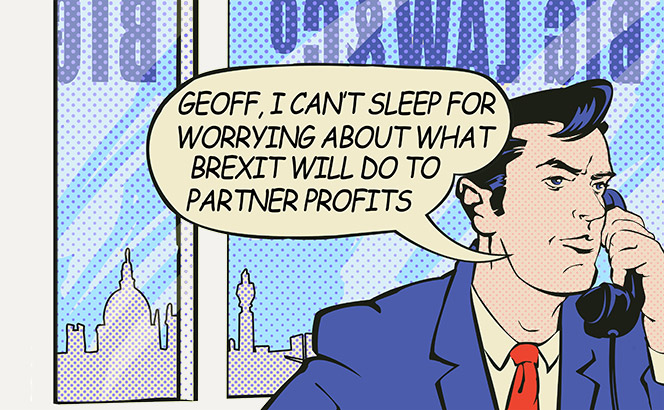
brexit phonecall

Operating profits at Linklaters dipped 1% to £472.3m, while Macfarlanes’ highest-earning partner brought home almost £4m in 2017/18, the two firms’ LLP accounts showed this week.

In a mixed bag of financial results, the fall in profits at Linklaters came despite a 6% rise in turnover to £1.51bn. The operating profit figure reported is more than £200m lower than the £676.2m pre-tax profit the firm posted in July . Continue reading “LLP accounts: Linklaters posts fall in profits as top earner doubles income at Macfarlanes”

A&O opening Fuse tech lab for third round as it partners on £1.2m AI legal services project

Fuse by Allen & Overy

Allen & Overy (A&O) will open its technology incubator space Fuse to a third group of companies from early next year, as it partners with a University of Oxford AI project.

The firm announced today (December 13) that applications to enter Fuse will be welcomed from companies until 25 January. A selection pitch to the firm will follow in February before successful applicants move into the space shortly after. Both early stage and mature companies can apply, joining Fuse for about six months. Continue reading “A&O opening Fuse tech lab for third round as it partners on £1.2m AI legal services project”

Slaughters lifts associate salaries alongside performance-related bonuses

Slaughter and May office

Slaughter and May has increased its salary rates for newly qualified (NQ) associates by £3,000, with junior associates also seeing an increase alongside performance-related end-of-year bonuses.

All associates from NQ to 18 months post-qualification (PQE) will enjoy salary increases, with NQs seeing their pay increase to £83,000 from £80,000. Pay for associates 6 months after qualification will see their pay go up £2,000 to £86,000, while associates one year and 18 months post-qualification will see their pay go up by £1,000 to £89,000 and £93,750 respectively. Continue reading “Slaughters lifts associate salaries alongside performance-related bonuses”

Comment: Women redefining City law – a few teachable moments and the odd necessary evil

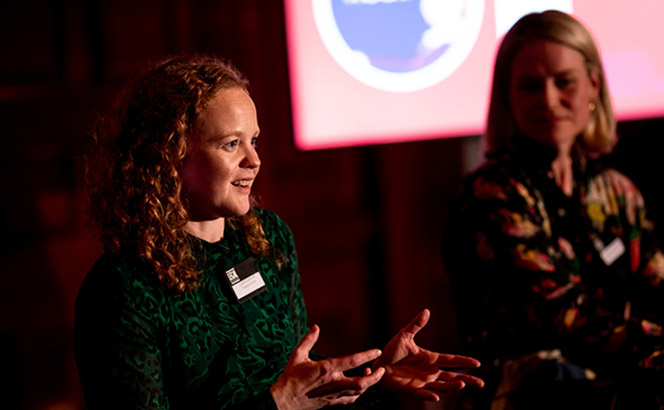
Lucie Cawood

When high-profile GCs still talk of being mistaken for a PA (as BT’s Sabine Chalmers was not that long ago), it’s a reminder of how much more progress needs to be made to clear the path to the top for women in law.

Yes, there has been improvement over the last ten years. According to the panel of female partners and in-house speakers taking part in last month’s Legal Business/Freshfields Bruckhaus Deringer reception championing women in law, the grip of the boy’s club in the City is loosening. Slowly. Continue reading “Comment: Women redefining City law – a few teachable moments and the odd necessary evil”

Life during law: Leona Ahmed

Leona Ahmed

My dad was born in Kashmir and was in the Pakistani Air Force, posted to Turkey. India and Pakistan were separating and he decided he wouldn’t go back. He moved to the UK and met my mum at night school. She worked in a biscuit factory when I was a kid and was all about, ‘You’re going to do better than this.’

I didn’t start working life as a lawyer. I’m Asian and started in retail – freshly-squeezed orange juice and health food products. My dad wasn’t impressed. He was first generation here and said: ‘This is a fantastic country with great opportunities, I did not come here for you to be another Asian shopkeeper.’ Continue reading “Life during law: Leona Ahmed”

Under the influence – how pressure to climb the ladder can corrupt in-house counsel

Being risk savvy and commercially aware is the equivalent of ‘leaning in’ for today’s in-house lawyer. Can one do this and retain the mantle of professionalism? Or rather, how can one do that? That is the central concern of our book, In-House Lawyers’ Ethics: Institutional Logics, Legal Risk and the Tournament of Influence. We interviewed dozens of in-house lawyers and surveyed 400, mainly from business but also from government and the third sector, to shed light on the ethical dimensions of in-house practice and risk management. Our central lessons? Organisations matter. Individual lawyers matter. Ideas about the in-house role and professionalism matter. Talking about professionalism and good decision making openly and frankly matters.

The usual academic analysis of in-house lawyers dwells on concerns that in-house counsel are business people first and lawyers a distant second, but we think other questions are more important and useful. In particular, we are interested in how in-house roles and practitioner mindsets about those roles influence their ethical inclination. When we work with in-house teams using the tools in our book, they are often astonished at the different views they and their colleagues have about what in-house lawyers should be like; how they draw on ideas of professionalism; and how to deal with ethical dilemmas. Gordon Gekko can be lurking in the most surprising of places. Continue reading “Under the influence – how pressure to climb the ladder can corrupt in-house counsel”


Client profile: Matt Wilson, Uber

Matthew Wilson

‘I wrote my own resignation letter twice in the first six months,’ Matt Wilson, Uber’s associate general counsel (GC) for Europe, the Middle East and Africa, says. ‘I didn’t hand it in either time, but it was close.’

A frank, but not surprising, admission. Wilson has, in the view of one peer, had one of the most difficult jobs in the GC community since he became the ridesharing company’s first domestic UK lawyer back in 2015. Continue reading “Client profile: Matt Wilson, Uber”

City horizons: The Legal Business view on the profession for you to cut out and keep

brexit phonecall

On occasion, we are asked to give our house view at partner conferences and the like. Undertaking one such gig last month for a top-50 UK law firm while the government unhelpfully melted down in the background, I put down some notes on the outline questions the law firm asked me to address before the conference. Obviously, I was not reading my notes in front of the audience in a two-way Q&A and did not stick to the script, but with a little scrubbing up and the identifying information removed, the notes seemed a decent compilation on the kind of topics that Team LB is frequently asked to opine on.

***

Continue reading “City horizons: The Legal Business view on the profession for you to cut out and keep”

The Simmons interview: What to worry about

Colin Passmore

Legal Business: Simmons seems to have come out of a period of malaise. What have been the primary drivers for that growth over the last two years?

Jeremy Hoyland, managing partner: Most of that has been driven by the sectors, so [opening in] Ireland is not because we’re interested in the domestic market. We’re interested because it’s an important market for banks and funds. Continue reading “The Simmons interview: What to worry about”

Legal tech focus: Is Kira the real deal?

Noah Waisberg

AI contract analysis system Kira has been on a trying journey. Having landed $50m in funding, Hamish McNicol and Thomas Alan assess how much longer that journey could last

Noah Waisberg recently threw a diamond into an audience of more than 1,000 people. It was the annual Legal Geek legal tech conference in London. Public Enemy’s Don’t Believe the Hype blared as he took the stage. Continue reading “Legal tech focus: Is Kira the real deal?”

Legal tech focus: Slaughters’ tech ally Luminance makes impact but battle for City elite wages

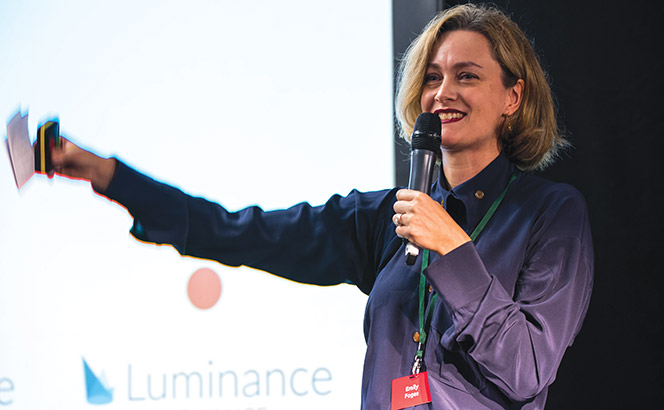
Emily Foges

Luminance has shot to prominence unlike any other UK legal tech start-up. But Hamish McNicol finds there is still plenty to do to break into the top of the profession

‘We’re changing things to the extent Excel changed the way accounting is done,’ Luminance chief executive Emily Foges proclaims. ‘You can’t imagine doing anything financial without it.’ Continue reading “Legal tech focus: Slaughters’ tech ally Luminance makes impact but battle for City elite wages”

The GC (re)defined: Beyond the cookie cutter

Angelique de Lafontaine

What is it like to work as a lawyer in a fast-paced, risk-laden, tech-driven ‘disruptive’ company? How do general counsel (GCs) find the right level of resource in a company where legal is viewed as anathema to impatient entrepreneurs? When is a lawyer not a lawyer?

These are the questions we put to senior in-house figures we gathered from a broad range of early-stage or fast-moving, disruptive companies in our round table with Morrison & Foerster. Continue reading “The GC (re)defined: Beyond the cookie cutter”

The GC outlook: more for more and more to come

Alex Novarese

As a long-term observer of the legal profession, I view the development of GCs with an oxymoronic mix of admiration and cynicism. Admiration because common claims about the dramatic improvements in the calibre and size of the talent pool in the in-house profession are that rarest of beasts: a received wisdom that turns out on inspection to be largely true. Cynicism because those strides are often mixed with unwillingness to tackle the ethical and practical implications that come with increased clout.

Neither does much commentary account for the complex, love-hate relationship between GCs and law firms or the powerful impact of the career incentives that in-house counsel face on the development of the legal industry. Continue reading “The GC outlook: more for more and more to come”

PRIME and the rise of the tick-box ‘solution’

Social mobility Banksy-style

The sheepish evasion now emanating from the once-lauded social mobility project PRIME is an abject lesson in what ethically ails the modern profession. Flashy initiatives, heavily promoted and then… nothing. Because the truth is that large commercial law firms confronted with all manner of social dilemmas have developed an increasingly unhealthy reflex response of reaching for gestures to give the facsimile of action with at best minimal focus on tangible results.

As you can see in Thomas Alan’s piece this month, the lack of rigour and quantifiable results emerging from PRIME, the most celebrated response to a social affairs issue to ever emerge from the commercial UK profession, is an ominous sign for an industry that purports to be getting more progressive. Continue reading “PRIME and the rise of the tick-box ‘solution’”

Whatever happened to PRIME? – Drift sets in for once lauded diversity project

Social mobility Banksy-style

Thomas Alan assesses the initially lauded, now forgotten social inclusion initiative

‘Forgive my ignorance, can you tell me what you mean by PRIME? What is it exactly?’ asks one partner at a top-25 UK law firm, a partner charged with responsibility for overseeing apprenticeships at a firm with membership to that same cross-industry group. Continue reading “Whatever happened to PRIME? – Drift sets in for once lauded diversity project”

Pharma just the tonic for US firms leading on Boston Scientific’s £3bn bid for BTG

Laurence Levy

An array of City and US firms have landed roles advising on Boston Scientific’s buyout of British healthcare firm BTG in the latest bumper deal in the pharmaceutical sector. Allen & Overy (A&O), Shearman & Sterling, Travers Smith, White & Case, and Arnold & Porter Kaye Scholer were all called upon to advise on the deal, continuing a spate of takeovers in the UK healthcare market.

Shearman acted as lead counsel for longstanding client Boston Scientific, with a team headed by New York corporate partner Clare O’Brien alongside London-based veteran Europe and Middle East M&A head Laurence Levy. City firm Travers worked alongside Shearman, with partner Mahesh Varia advising on share option schemes, while Arnold & Porter Washington DC antitrust partner Michael Bernstein was also drafted in by Boston Scientific. Continue reading “Pharma just the tonic for US firms leading on Boston Scientific’s £3bn bid for BTG”