Power hungry: how big tech’s demands are supercharging the energy market

‘Clients in the tech space are more interested in energy than they’ve ever been, and clients in the energy and infrastructure space are taking a greater interest in tech.’

The energy sector is in sharp focus right now, and as Herbert Smith Freehills Kramer global energy co-head Lewis McDonald notes, its convergence with big tech is a key factor behind that.

According to a recent report by Goldman Sachs, demand for power for data centres is expected to accelerate by 175% from 2023 to 2030, as tech giants race to build capacity to support the rise of AI.

This has set the stage for a lively lateral market, as top law firms position themselves to take advantage. Paul Hastings has been among the busiest firms of late, hiring a team of nine energy and infrastructure partners around the world, while other notable moves have included former Linklaters infrastructure heads Jessamy Gallagher and Stuart Rowson landing at Freshfields after two years at Paul Hastings, and Jones Day recruiting ex-Eversheds Sutherland duo Michelle Davies and Rob McNabb from EY Law.
‘The scale is simply massive’

‘The biggest change has been the rise of data centres and the pressure it’s putting on the system,’ says HSFK’s McDonald (pictured right). ‘It’s been bubbling away for some time, and in the last 12 months it’s become a really big issue, and a really big opportunity.’

Sebastien Bonneau, a digital infrastructure specialist in McDermott Will & Schulte’s London office, puts it into numbers: ‘Ten years ago, a 10 megawatt (MW) data centre was considered large, and a 15-25 MW facility was very large. Today, a typical campus consists of several buildings, each ranging from around 30 MW to 100 MW – and we’ve seen some as high as 1.5 to 3.5 gigawatts in the US for a single campus. The scale is simply massive.’

This enormous demand for power forms a large part of an energy market that is staggering in its size. ‘In the last twelve months, more than $2trn was spent globally on energy transition technologies across the board,’ says McDonald. ‘In the same time period, less than $1trn was spent on conventional fuels.’

The question that now needs to be addressed, according to Hillary Holmes, who co-leads Gibson Dunn’s capital markets practice group and Houston office, is where the energy is going to come from to power the exponential growth of technology. ‘We went through the industrial age, and now we’re in the computer age, and we don’t yet know what we’re going to need for that.’

As McDonald and others note, this convergence of priorities has seen many firms bring together energy and infrastructure expertise with their tech practices to more effectively cater to clients spanning both sectors.

‘Data centre expertise can’t be housed in one person – it’s ten different types of practice, so you need ten different lawyers’

This view of ever-greater overlap between tech and energy is core to the strategy of not just HSF Kramer, but Ashurst, which recently announced a transatlantic merger with Perkins Coie to form a 3,000-lawyer, $2.7bn global firm.

The two firms set out the combination of the two sectors as central to the pitch for the merger, citing the convergence of tech, energy and infrastructure, and financial services.

‘The digitalisation of everything has had a huge impact in the energy space,’ says Michael Burns (pictured right), global energy industry co-chair at Ashurst. ‘One of the exciting journeys we’ve been on over the last few years has been working with practices that we might not have worked with as much in the past. As an example, today our digital team are a fundamental part of our offering in the energy sector.’

McDonald points to a trend of ‘energy projects integrated with tech projects, where you’re generating energy and delivering it all the way to bits at the end.’ To capture the full value available from advising on such a project, a law firm must be able to cover the needs of tech, investment, and traditional energy clients across a range of disciplines, from finance and development through construction, permitting, and more.

‘Data centre expertise can’t be housed in one person, because it’s a multidisciplinary function,’ says Holmes. ‘It’s ten different types of practices, so you need ten different lawyers, and you need them to work as one unit.’ To this end, many firms, Gibson Dunn included, are organizing their lawyers into teams and groups focused on data centre work.

Energy: top firms for client service

Every year, Legal 500 gathers hundreds of thousands of scores from clients on a range of criteria, providing detailed insight into the service they get from their law firms. The top-scoring firms for some of the headline metrics are highlighted below.

‘Staying the course’ – still room for oil and gas

Big tech’s enormous appetite for power makes it the perfect investor to fund large-scale projects. And this ready source of capital makes investment more attractive to other investors too.
Sovereign wealth funds and pension funds have been pumping money into energy and infrastructure, while top private equity houses have also doubled down on the sector, with Brookfield closing a record $30bn infrastructure fund in late 2023, and BlackRock acquiring Global Infrastructure Partners in 2024.

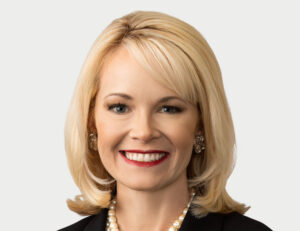
Conventional power majors are also in on the action. Holmes (pictured right) notes: ‘We have clients that have traditionally been in the oil and gas space who are taking advantage of the fact that they have access to a lot of land and regulatory expertise, and the ability to build lots of infrastructure quickly and efficiently, to leverage that towards data centres.’

The ongoing importance of oil and gas majors has been another major trend. Chris Strong, corporate partner at Vinson & Elkins, does not mince words: ‘A major trend over the last 12 months has been reality setting in around the energy transition,’ he says.

‘It’s going to be a longer transition than people thought it would be a few years ago. We’re going to need hydrocarbons for longer than people were thinking or hoping we would, and that’s just a reality that people are going to have to adapt to.’

He continues: ‘Clients that might not have been interested in investing in hydrocarbons a year ago are now more willing to. The old supermajors stayed in hydrocarbons, banks are more willing to invest, and a lot of investment funds that had been pulling away from hydrocarbon investment are also now much more willing to invest.’

In this environment, it is crucial that firms maintain a presence in conventional power. ‘Staying the course is important,’ says Ashurst’s Burns. ‘We haven’t made any strong negative moves on oil and gas.’

Biggest energy sector deals in 2025

Deal Value Law firms
Macquarie’s sale of Aligned Data Centers to a consortium comprising the AI Infrastructure Partnership, MGX and Global Infrastructure Partners $40bn Kirkland & Ellis (for the consortium), Latham & Watkins (for Macquarie)
Constellation Energy’s acquisition of Calpine $26.6bn Kirkland (for Constellation), White & Case (for Calpine)
Acquisition of a 45% stake in Sempra Infrastructure Partners by a KKR-led consortium, alongside CPP Investments Approx. $10bn Kirkland (for CPP), Sullivan & Cromwell (for Sempra), Simpson Thacher (for KKR), Milbank (for the lenders)
Cenovus Energy’s acquisition of MEG Energy $5.7bn Paul Weiss (for Cenovus), Latham (for MEG)
Diamondback Energy’s acquisition of Double Eagle $4.1bn Kirkland (for Diamondback), Vinson & Elkins (for Double Eagle)

It ain’t easy being green

This shift in sentiment has been accompanied by a shift in policy, perhaps most pronounced in the United States. ‘It’s very clear that in the US, the focus is on fossil fuels,’ says Strong, noting the high number of administration staff that have backgrounds in the fossil fuel industry.

‘There’s less willingness to provide subsidies to renewables,’ he concludes.

Katie Williams (pictured right), a projects partner at Ashurst, notes that a heavy reliance on subsidies is not unusual for a sector so defined by new and novel technologies. ‘You can’t just build and switch on new technologies overnight,’ she says. ‘Development, construction and commissioning takes time and money, and investors need to be comfortable with how certain risks (including with respect to new technology and offtake revenues) will be addressed or otherwise mitigated; sometimes this needs the support of government.’

This also means some reallocation of assets. ‘Different buckets of capital need to find their right home,’ says Burns, ‘and we have seen a changing of focus and strategies which are resulting in more of the right types of assets ending up in the right hands.’

‘Europe is the major economy that’s still clinging the hardest to net zero’

At HSF Kramer, meanwhile, McDonald sees opportunities even in distress: ‘Issues with support for renewables in the US are causing businesses operating in that space to think about how they structure or restructure,’ he says.

‘Through the merger we have a large bankruptcy practice, and we’re trying to join up those capabilities to our broader energy capabilities, to make sure we can support those clients as well.’

For Alex Msimang, who served as managing partner of V&E’s London office for 13 years, and recently moved to Baker Botts alongside fellow projects partner Nadine Amr, this process of reallocation also presents opportunities around the world. ‘There’s a theme of localisation,’ he says. ‘In regions like Africa and Latin America, you have more homegrown companies buying and investing in the energy space.’

In Europe, meanwhile, while changing energy needs are not as prominent a topic as they were a year or two ago, energy security remains a concern. ‘There’s no doubt that the switching off of Russia as an energy source in Europe has heightened the importance of energy from sources in Africa and the Middle East,’ says Msimang.

Still, the question of how long clean energy policy can be sustained looms. ‘Among the major economies, Europe is the one that’s still clinging the hardest to net zero,’ says one London-based partner. ‘That’s caused rapid increases in prices for consumers and industry, and that’s driving some industry out.’

[email protected]

Gibson Dunn and Latham score roles on Apollo’s investment in Wrexham Football Club

Gibson Dunn and Latham & Watkins have advised on a deal that has seen private equity giant Apollo take a stake in Wrexham AFC, the football club owned by actors Ryan Reynolds and Rob McElhenney.

Wrexham, Reynolds and McElhenney were advised by Gibson Dunn, which fielded a team led by New York corporate partner Stefan dePozsgay.

The firm’s team also included US-based capital markets co-chair Stewart McDowell, with London corporate real estate partner Sean Tierney handling UK real estate and stadium finance aspects. Fellow City partner Rob Dixon advised on UK corporate aspects, working alongside employment partner James Cox.

Other US partners on the deal included Pamela Endreny (tax), Kate Napalkova and Melissa Farrar (regulatory), while Brussels partner Attila Borsos led on the competition front.

Latham advised Apollo Sports Capital (ASC), a new investment vehicle launched by Apollo earlier this year, fielding a cross-border team led by New York corporate partners Justin Rosenberg, Salvatore Vanchieri, and Tracey Zaccone, alongside London sports partner Patrick Mitchell and London corporate partner Hector Sants.

Real estate matters were handled by London partner Quentin Gwyer and Chicago partner Robert Fernandez, who worked with global tax chair Katharine Moir and competition partner David Little, who splits his time between London and Brussels.

The deal comes after ASC recently acquired Spanish football club Atlético Madrid, in a deal reportedly valued at more than €2bn.

The role for Latham also follows the firm’s recent involvement on investments in Brentford FC and Rangers Football Club.

The deal will see majority shareholders Reynolds and McElhenney remain in control of the club, but the investment from Apollo Sports Capital provides fresh funding for the stadium redevelopment.

Earlier this year, Wrexham sold a minority stake to the US-based Allyn family through Red Dragon Ventures LLC, a joint venture between the American family and Wrexham’s two owners, a deal which Gibson Dunn also advised on.

[email protected]

Goodwin boosts City private equity with Paul Hastings trio

Goodwin is set to hire private equity partners Anu Balasubramanian, Jamie Holdoway and Chetan Sheth from Paul Hastings, as the firm continues to expand its PE practice in the City.

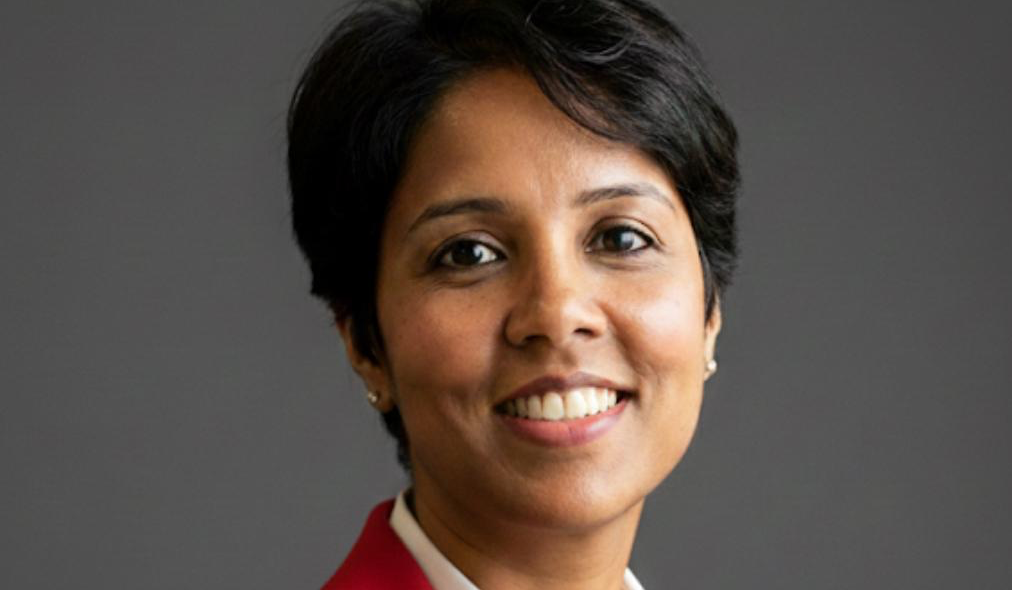
Balasubramanian (pictured), who has more than two decades of experience in the practice, has been a partner at Paul Hastings since the summer of 2018.

She will join as Goodwin’s chair of European private equity, working with the M&A, debt finance and private investment funds teams in London, Paris, Munich, Brussels and Luxembourg.

Balasubramanian is a Legal 500 Hall of Famer for mid-market PE deals, and currently heads Paul Hastings’ City PE practice. She joined Paul Hastings after spending five years at DLA Piper, having previously worked at both Kirkland & Ellis and Ashurst. 

Anthony McCusker, Goodwin’s chair, said: ‘Continuing to invest in our London and European private equity capability is core to our global Goodwin 2033 strategy, which sees us providing excellent legal counsel and strategic business advisory to clients across the private equity ecosystem, from fund formation, to growth, buyout and portfolio transactions. Anu has an outstanding reputation in the market.’

In the seven years she has spent at Paul Hastings’ London office, Balasubramanian has advised PE clients such as Abry Partners, Oakley Capital and Francisco Partners. With experience in complex leveraged buyouts, corporate M&A and portfolio advice, she also featured as a Legal Business deals ‘alpha’ in both 2023’s Alphas Revisited and the original 2018 feature.

Holdoway made partner at Paul Hastings in 2022, and has also worked on multiple deals for Abry Partners, including most recently as part of a team, led by Balasubramanian, that advised on the PE house’s acquisition of AA Ireland.

Sheth, whose PE practice spans exits, divestures and public M&A, joins Goodwin after 18 months at Paul Hastings where he made partner this summer. Prior to this, Sheth spent three years at Skadden as counsel.

A spokesperson from Paul Hastings said: ‘We wish them well.’

The hires represent the latest additions to Goodwin’s PE practice this year, after the firm added Travers Smith leveraged finance head Matthew Ayre and Kirkland & Ellis partner Tom Roberts this summer.  Other additions in London over the past two years include Ian Keefe, George Weavil and Jacqueline Eaves.

Meanwhile, Paul Hastings has seen number of exits and additions to its City base. Those leaving include former London co-chair and Legal 500 restructuring and insolvency leading partner Mei Lian, who departed for Linklaters and infrastructure partners Jessamy Gallagher and Stuart Rowson, who left for Freshfields in February after two years at the firm. The duo had previously co-headed Linklaters’ global infrastructure practice.

Elsewhere, the firm recently added high-profile finance partner duo Corey Wright and Lisa Collier from Latham in New York, and, since April, has recruited around nine energy and infrastructure partners into its offices around the world, largely from White & Case.

Meanwhile, in London, the firm has added five partners in six weeks, as it moves to build up in practices including tax and funds.

New additions in November include tax partners Jenny Doak and Catherine Richardson, who joined from Weil and Cadwalader respectively, structured finance partner Thomas Picton, who moved across from Ashurst,  with Jennifer Passagne joining from Haynes Boone.  Stephen Diosi joined from Mishcon de Reya this month as London head of remuneration and incentives.

The London office is on track to increase revenue by around 20% year-on-year in 2025, a growth rate that is expected to take the office’s revenue up around 70% over two years.

[email protected]

End of the merger: King & Wood Mallesons to split into two

APAC firm King & Wood Mallesons is to split in two, with the China and Australia partnerships set to separate 14 years after the merger of King & Wood and Mallesons Stephen Jacques.

The partnerships will formally split on 31 March 2026, at which point the China business will return to practising as King & Wood, with the Australia partnership practising as Mallesons.

Following the split, King & Wood will comprise the firm’s offices in mainland China, Hong Kong, Japan and the US, while Mallesons will be made up of five offices across Australia and a base in Singapore.

The decision comes after the two firms combined in March 2012 in a deal that created a 2,100-lawyer Asia-Pacific giant, before going on to agree an ill-fated union with legacy UK player SJ Berwin in late 2013. The UK arm of the business subsequently collapsed into administration in January 2017. 

Announcing the split earlier today (9 December), the firms said the decision to separate reflected the two partnerships’ differing strategic priorities and future aspirations.

In a statement, KWM said that all client work would continue on a business-as-usual basis, with joint matters unaffected. Going forward, the pair will work together on a non-exclusive basis.

KWM global chairman Wang Junfeng said: ‘This development reflects the different strategic horizons of our firms. We thank the Australian firm for the years of teamwork and partnership. We sincerely appreciate the long-term support and trust shown by our clients. We will continue to put clients first while striving for excellence in everything we do.’

‘We remain committed to our international strategy and will continue to expand our geographic coverage through both organic growth and collaboration with other leading firms globally. King & Wood’s Hong Kong office, the largest law firm in Hong Kong by number of lawyers, will continue to take on a strategic role in this effort.’

Renae Lattey, chief executive partner for Australia, said: ‘We thank the partners and colleagues of KWM China for their professionalism, collegiality and friendship over the past 14 years. Mallesons is a trusted and respected brand with nearly two centuries of legal excellence and 50 years of international experience and relationships. We will continue to build on this proud legacy as we become the only top tier independent firm operating from Australia with the flexibility to collaborate more broadly with global elite firms to meet the needs of our clients and our people here, across the region and around the globe.’

Following the collapse of legacy SJ Berwin in 2017, KWM maintained a limited European presence, and in July 2023, reached a formal cooperation agreement with Eversheds Sutherland that saw KWM agree to refer all international work to the firm, with Eversheds agreeing to refer any clients in need of PRC legal counsel to KWM. 

KWM lawyers in London, Frankfurt, Milan and Dubai subsequently transferred over to Eversheds, while Addleshaw Goddard took on a 13-partner team in Madrid.

In a statement, Eversheds Sutherland confirmed that its cooperation agreement with KWM’s China arm was not impacted by the news of the split, and would ‘continue to operate as it has done historically.’

Elite US duo advising Paramount on $108bn hostile bid for Warner Bros

Cravath, Swaine & Moore and Latham & Watkins are advising Paramount as the media conglomerate launches a $108.4bn hostile bid to acquire Warner Bros.

Also involved are Cleary, which is advising the special committee of the board of directors of Paramount Skydance in connection with the offer, and Cahill, which is acting as counsel to the bridge agent and the lead arrangers of the debt financing for the bid.

The bid sees Paramount offer $30 per share in cash to acquire all of the outstanding shares of Warner Bros Discovery (WBD), and calls on WBD shareholders to reject the $83bn takeover deal that WBD agreed with Netflix last week.

The Paramount offer is for the entirety of WBD, including the Global Networks segment, home to a raft of US cable and European free-to-air channels, including CNN, TNT Sports, and Discovery

Global Networks is not included in Netflix’s purchase offer.

The Cravath team is being led by presiding partner Faiza Saeed and fellow corporate partners Daniel Cerqueira and Claudia Ricciardi in New York.

Other partners on the firm’s team include Alexander Greenberg and Minh Van Ngo (M&A); Andrew Pitts and Daniel Haaren (capital markets); George Zobitz (banking); Lauren Angelilli and Andrew Davis (tax); Jonathan Katz (executive compensation and benefits); Sasha Rosenthal-Larrea (intellectual property); Andrew Finch and Noah Joshua Phillips (antitrust); Elad Roisman (regulatory); John White and Michael Arnold (corporate governance); and Matthew Morreale (environmental).

The Cleary team advising the special committee, meanwhile, includes Americas M&A co-lead Paul Shim and M&A partner Kelsey Nussenfeld, both in New York.

Finally, Cahill is fielding a team from New York, including corporate department co-chair Jim Clark, executive committee member and finance partner Joe Slotnick, strategic committee member and finance partner Ted Lacey, and finance partner Tristan Manley.

The press release announcing the bid states: ‘Paramount’s strategically and financially compelling offer to WBD shareholders provides a superior alternative to the Netflix transaction, which offers inferior and uncertain value and exposes WBD shareholders to a protracted multi-jurisdictional regulatory clearance process with an uncertain outcome along with a complex and volatile mix of equity and cash.’

‘The Paramount offer for the entirety of WBD provides shareholders $18bn more in cash than the Netflix consideration. WBD’s Board of Directors recommendation of the Netflix transaction over Paramount’s offer is based on an illusory prospective valuation of Global Networks that is unsupported by the business fundamentals and encumbered by high levels of financial leverage assigned to the entity.’

Skadden has been advising Netflix on its bid, which values WBD at $27.75 per share, with a team led by M&A partners Kenton King and Sonia Nijjar fom the Palo Alto office and Lauren Kramer in New York.

Debevoise & Plimpton and Wachtell Lipton Rosen & Katz have been acting as legal counsel to WBD.

On the Paramount bid, Centerview Partners and RedBird Advisors are acting as lead financial advisers to Paramount, while Bank of America Securities, Citi and M. Klein & Company are also acting as financial advisers.

[email protected]

Paul Weiss London push continues apace with eight new partners

Paul Weiss has made up eight new London partners in a 28-strong promotions round, as the firm continues the rapid build-out of its English law practice.

The promotions, which are effective as of 1 January next year, also include 16 new partners in New York, three in Washington DC and one in Tokyo.

With almost a third of the cohort based in London, the announcement cements the UK as the firm’s primary area of investment outside of its US heartlands.

In London, the latest partner class includes two tax lawyers and two competition specialists, with the other four promotions spread across corporate, M&A, finance and funds.

They join the 44-partner City practice led by debt finance partner Neel Sachdev and PE partner Roger Johnson, whose headline-grabbing move from Kirkland & Ellis in August 2023 was the firm’s first decisive move in the rapid build-out of its London platform.

Before their arrival, Paul Weiss had just three London partners, all practising US law. As of January 2025, its London lawyer count had risen to 215, placing the firm in 13th spot in LB’s Global London rankings, between Goodwin and Sidley.

The near-300% year-on-year headcount increase came on the back of an intensive period of lateral recruitment, which included a number of Sachdev and Johnson’s former colleagues at Kirkland.

The firm also last year introduced a non-equity partnership tier for the first time, bolstering its ability to compete for up-and-coming talent with peers already operating similar models.

Announcing the promotions, chairman Brad Karp said: ‘Our new partner class reflects the best of Paul, Weiss – extraordinary talent, unwavering commitment to our clients and our community, and a deep dedication to collaboration across practices and geographies.’

London partner promotions in full

  • Marco Bagnato (corporate finance)
  • Jamie Chambers (tax)
  • Lauren O’Brien (antitrust)
  • James Parkinson (antitrust)
  • Rohit Pisal (tax)
  • Hein Visser (M&A)
  • Hannah Wilson (investment funds)
  • Matthew Wilson (corporate finance)

[email protected]

Links, Skadden and A&O scoop roles on $9.2bn ice cream deal as Magnum splits from Unilever

Linklaters and Skadden have advised on a $9.2bn deal that has seen The Magnum Ice Cream Company (TMICC) spun off from Unilever as an independent entity.

TMICC is now listed on the London, New York, and Amsterdam stock exchanges, with the Dutch listing valued at €7.93bn ($9.2bn) when it debuted today, with stocks trading at €12.20 per share.

This valuation makes TMICC the world’s largest ice cream company, with full ownership of brands including Magnum, Ben and Jerrys, Walls and Cornetto.

Linklaters worked with Unilever as it set up the TMICC business, and throughout the separation and demerger process before it was publicly listed this morning (8 December).

Corporate partner Charlie Turner said: ‘The separation was two years in the making: creating a new company, the world’s largest ice cream company, from the bottom up. This required legal and operational separation from Unilever across 80 countries. It was an enormous and challenging undertaking.’

He continued: ‘The purpose of the triple-listing was to ensure shareholders can hold and trade their shares across the same three markets on which Unilever securities are currently traded.’

The magic circle firm’s team was led by corporate partners Turner and Michael Fanner in London, Netherlands national managing partner Guido Portier and capital markets partner Alexander Harmse in Amsterdam, and corporate capital markets partners Mike Bienenfeld and Igor Rogovoy in London.

Leading on the tax side were partners Chris Smale in London and Michelle Lo in New York.

Skadden, meanwhile, provided independent board advice to TMICC in connection with the spin-off. The elite US firm also advised TMICC on the purchase of Unilever’s Portuguese ice cream business from Unilever and the Jerónimo Martins Group.

The Skadden team was led by corporate partner Denis Klimentchenko and capital markets head Danny Tricot, alongside global transactions head Lorenzo Corte and international white collar defence and investigations practice head Ryan Junck, working with New York-based tax co-head and London tax partner Jisun Choi.

Linklaters has handled a series of major mandates for Unilever in the past, including its €4.5bn sale of tea business ekaterra to CVC Capital Partners, which completed in July 2022, and the €6.8bn sale of its spread business to KKR in 2017, with Turner and Fanner each involved on both deals.

A&O Shearman advised JPMorgan Chase and Morgan Stanley, which acted as financial advisors to Unilever and TMICC, supporting both banks with the listings across all three stock exchanges.

London partners James Roe and Jeff Hendrickson led on English and US law respectively, while Tim Stevens in Amsterdam led on Dutch law.

The demerger was announced in March 2024, as a part of Unilever’s ‘growth action plan’, and was completed on Saturday (6 December).

Unilever stated it will focus on its remaining four business groups across beauty and wellbeing, personal care, home care and nutrition.

In a press release, TMICC’s CEO Peter ter Kulve said: ‘Now, as an independent listed company, we will be more agile, more focused, and more ambitious than ever.’

He added: ‘We aim to lead the frozen snacking revolution, shaping new occasions, innovating new products and fresh ways to delight people around the world.’

TMICC’s London and Amsterdam’s listings are now live, while its New York public offering will debut at 9.30am EST.

[email protected]

Sidley assists as law firms line up for £350m Ipswich Town FC takeover

Sidley Austin is among a quartet of firms that advised as Ipswich Town FC changed its majority ownership last week, in a deal that values the club at £350m – the highest valuation for any Championship club in history.

The majority share of Gamechanger 20 Ltd, the club’s parent company, was acquired by Portman Holdings LLC – a group comprised of investments from the Three Lions fund and Clara Vista Partners, alongside previous majority shareholder ORG Portfolio Management.

ORG has managed funds for the Arizona Public Safety Personnel Retirement System (PSPRS) and acted as Ipswich’s majority shareholder since PSPRS first bought the club in 2021.

PSPRS reduced its stake in the club in March 2024, selling a minority stake to US private equity firm Bright Path Sports Partners, which focuses on investing Native American capital into the sports sector.

Three Lions, run by US investors and football club owners Berke Bakay and Brett Johnson, first invested in Ipswich in 2021, and increased its investment in March 2024.

Clara Vista first bought into the club in 2024, and its investment in Portman Holdings comes on top of this original investment. As part of the deal, Clara Vista head Bob Gold will join the board of Gamechanger.

Sidley advised Clara Vista on the deal, with a team led from Los Angeles by M&A and PE partners Daniel Belke and Mark Castiglia, and also including London-based PE partner Adam Runcorn.

In the summer, Sidley advised Premier League side Crystal Palace on the sale of a £190m stake in the club to New York Jets owner Woody Johnson, and in October it advised leading Italian club Juventus on a £150m bond issuance.

David Watson, an M&A partner at US firm Thompson Hine, advised ORG on the sale of its majority ownership position, though it will retain a stake in Gamechanger 20.

Andrew Lehrer, a US-based sports attorney who set up Lehrer Law in 2021, advised Three Lions, while LB understands that national law firm Birketts had a role advising Gamechanger 20, with corporate partner Alexandra Nelson leading.

Singer-songwriter Ed Sheeran, who is a lifelong fan of the club, bought a 1.4% stake in the club through Gamechanger 20 in August 2024. Sheeran is not on the board and the investment is passive, and he retains his current holdings, alongside Bright Path and Three Lions.

Music specialist boutique Bray & Krais, run by Legal 500 music Hall of Famers Richard Bray and Mark Krais, advised Sheeran on the investment.

Ipswich won back-to-back promotions in 2023 and 2024 which took the club from League 1 to the Premier League, before being relegated back down to the Championship last season. At the time of writing Ipswich are fourth in Championship.

[email protected]

Revolving Doors: A&O Shearman builds in Riyadh as Kirkland, Paul Hastings, and more make flurry of City hires

Kirkland & Ellis has strengthened its London antitrust and competition practice this week with a double partner hire from Weil.

Nafees Saeed and Chris Thomas join as partners, the former after more 12 years at Weil, making partner in 2024, and the latter after serving six years as counsel at the firm.

Matthew Elliot, Kirkland corporate partner and executive committee member said: ‘Nafees and Chris bring unique skill sets and insights to our business. Both have strong track records advising private capital clients on all aspects of competition law, and we are excited to welcome them to our fully integrated London and Brussels antitrust & competition team.’

Also active in London was Paul Hastings, which has expanded its London bench with its hire of partner Stephen Diosi.

Diosi joins from Mishcon de Reya, where he spent ten years as head of the firm’s employment incentives team. He is ranked as a Legal 500 leading partner for employee share schemes, and brings 25 years of employment law expertise advising on issues including employee share plans, management incentive plans, and executive remuneration arrangements.

‘Our London office continues to see remarkable demand across our transactional practices, and this growth is matched by the need to provide clients with sophisticated advice in compensation and other supporting areas on their most complex matters,’ Paul Hastings chair Frank Lopez said.

The hire comes after the firm brought on four London partners in November: funds finance partner Jennifer Passagne from Haynes Boone, tax partners Jenny Doake and Catherine Richardson from Weil and Cadwalader respectively, and structured finance partner Thomas Picton from Ashurst.

Citing similar demand, Gibson Dunn has bolstered its City employment offering with its hire of A&O Shearman partner Robbie Sinclair.

A Legal 500 leading partner for employment, Sinclair joins Gibson Dunn’s labour and employment practice group, where he will advise on a range of employment matters, with a focus on litigation, crisis management and investigations.

Sinclair brings with him almost twelve years of employment law experience at legacy Allen & Overy, making partner in 2019 and remaining in post following the completion of the firm’s merger with legacy Shearman & Stirling in May 2024.

Osma Hudda, co-chair of the London disputes group and co-partner in charge of the London office said: ‘Client demand for business protection, investigations, and employment litigation continues to rise in the UK, US, and other key markets.’

She added: ‘Building on the strong performance of our transactional practices in London, we are executing a focused expansion of litigation and investigations bench. Robbie’s practice sits exactly at that intersection and squarely meets client demand.’

Elsewhere, Goodwin has brought White & Case fast-growth practice head Emmie Jones into its technology M&A team in the latest finance-related hire for the tech-focused US firm.

Jones brings experience advising founders, growth investors, private equity sponsors, and corporate venture capital providers, on matters across the full investment cycle.

She joined White & Case’s PE team in 2018 from Macfarlanes, where she made partner in 2013.

The move follows a series of hires into Goodwin’s PE and finance offerings in London and across Europe. In summer the firm brought on Travers Smith leveraged finance head Matthew Ayre as a partner in London, just weeks after it hired leveraged finance partner Tom Roberts from Kirkland.

Also in London, Addleshaw Goddard has hired Nicholas Queree as a partner into its global investigations team.

Queree joins from Slaughter and May, where he was senior counsel, and brings expertise across government and internal investigations, sanctions and regulatory advisory and global investigations.

Michelle de Kluyver, partner and head of global investigations at AG, said: ‘Corporate criminal enforcement risk is expected to rise sharply, driven by sweeping reforms under ECCTA that lower the threshold for corporate criminal liability and introduce new corporate offence.

‘Nick’s experience in navigating these challenges – combined with AG’s established reputation in investigations – positions us to deliver strong support to clients facing high-stakes regulatory scrutiny.’

The hire sees AG continue to build out its global investigations practice. Last month it hired Morgan Stanley corporate advisory lawyer Ross McCartney as a legal director, and in August it launched a dedicated tax disputes and investigations arm led by partner Steven Porter, who joined from Pinsent Masons with four other lawyers. 

AG has also strengthened its European real estate offering, tapping a private equity firm for a senior in-house hire.

Farhod Moghadam joins as a partner in the London real estate investments team. This follows 14 years in-house as a senior advisor and lead counsel to Patron Capital, with experience structuring and executing complex private equity real estate transactions across the UK and Europe.

Also in London this week, DLA Piper has hired Pinsent Masons partner Oliver Crowley into its investment and funds practice. He brings experience advising on pension funds, development finance institutions, and fund managers on private market strategies and regulatory frameworks.

Jon Kenworthy, Global Co-Chair of DLA Piper’s Corporate Group, said: ‘Our cross-border investment management & funds capability is a strategic priority for the firm, where we see significant cross-border activity and growth. Oliver’s appointment will support our growth in the sector and allows us to further develop our offering to clients.’

Baker McKenzie has bolstered its global transactional capabilities in London with its hire of partner Elisabeth Mosley into its energy and infrastructure team.

Moseley joins from McDermott Will & Schulte, having joined the firm in 2017 from Clyde & Co, and made partner there in 2024. She has experience advising clients including national and oil companies, financial institutions, suppliers and manufactures on cross-border transactions in the energy sector, particularly in Africa.

Finally in London, Freshfields has hired private funds and secondaries specialist Nick Kagan as a partner in its private capital group. Kagan joins from Debevoise, where he was a counsel.

In the Middle East, Hogan Lovells has hired Eversheds Sutherland head of M&A for Saudi Arabia Walid Salib into its corporate and finance team in Riyadh.

Prior to Eversheds Sutherland, Salib was Saudi Arabia M&A head at Freshfields. His practice includes public and private M&A, strategic joint ventures, corporate structuring and restructuring, capital markets-related M&A, and obtaining Saudi merger control clearances.

Hogan Lovells first opened an independent office in the region last year, joining a growing number of firms looking to Saudi Arabia, spurred on by ambitious initiatives in the Kingdom such as its Vision 2030 programme.

Also in Riyadh, A&O Shearman has strengthened its corporate practice, hiring Hassana Investment Company general counsel Shaima Bakhsh as a partner.

Hosam Ibn Ghaith, managing partner of A&O Shearman’s Riyadh office, said: ‘Shaima brings a rare combination of board‑level insight and execution experience in the Kingdom. Her arrival strengthens our on‑the‑ground capability in Riyadh and enhances how we help clients navigate Saudi Arabia’s fast‑moving corporate landscape.’

The firm was also active in London, hiring Louise Batty as an employee equity incentives and executive remuneration partner. Batty rejoins the firm from Skadden, where she spent five years as a counsel after leaving legacy Allen & Overy in 2020.

Also active in the Middle East was Morgan Lewis, which hired Victoria Ferres and Sami Ben Dechiche in Dubai. Ferres joins from A&O Shearman, where she was a counsel, while Ben Dechiche was previously an associate at Simmons & Simmons.

Ferres specialises in financial services regulation, while Ben Dechiche specialises in funds.

In Europe, Orrick has hired a four-lawyer M&A and private equity team from Norton Rose Fulbright in Munich, including the firm’s head of corporate, M&A and securities for Germany, Michael Prüßner.

Also joining as a partner is Benjamin Schikora, who was a counsel at NRF.

Meanwhile in Hamburg, DWF has opened an office with a team from various German boutiques. The team comprises three partners, a further eight fee earners, and five business services staff.

The combined team will be be led by Marco Remiorz, who joins from  German firm ASD, with partners Phillip Hartmann and Niels Witt from SKW Schwarz, a second independent German firm.

Matthew Doughty, CEO of DWF Group said: ‘Germany is an important territory for DWF. It is the largest economy in Europe and the largest legal and insurance market in the EU.’

Finally, in Paris, White & Case has added tax partner Cyril Valentin from Freshfields, where he spent the previous 25 years.

[email protected]

Goodwin COO: ‘I want to disrupt not just scale a law firm’

When Goodwin’s Silicon Valley-based chief operating officer, Mary O’Carroll, first received a call about the firm she had no interest, dismissing law firms as ‘dinosaurs’.

With a background at tech companies including Google and IronClad, O’Carroll met with around 40 people before she was finally convinced to join Goodwin in August 2024. 

Before joining she needed to believe that the partnership was truly bought into the change she wanted to enact. ‘I had no interest in running or simply scaling a law firm. I want to disrupt a law firm,’ she explains.

O’Carroll spent 13 years at Google where she cut her teeth and built the tech giant’s legal operations team. Here, she embraced the ‘move fast and break things ethos’ of the West-coast tech culture that she is now putting in action at Goodwin.

‘At Goodwin, it’s a culture of continuous improvement, launch and iteration,’ she says, ‘We want to move fast, whereas I think some firms just aren’t ready for that mindset.’

According to O’Carroll, while all firms know they must embrace tech and AI with open arms, most partnerships don’t really want the disruption genuine change brings. She says she has puzzled over why the Goodwin partnership seems to be different; the firm focuses on modern industries such as tech and life sciences, but O’Carroll thinks it might have more to do with its Boston heritage making it scrappier, with more to prove. 

Certainly, Goodwin’s commitment to change is evident in its recent hires. In addition to bringing in O’Carroll, Chris Grant joined in London in May this year from HSBC to lead a team devoted to rethinking pricing and client value, viewing services from the client’s perspective. Meanwhile, this September, the firm hired Eric Tan in Silicon Valley as its chief digital and technology officer from a Californian tech company. Anthony McCusker, the firm’s chair, previously told LB that the firm is seeking to become ‘not just a vendor but a strategic partner.’

The firm’s most recent results, for the financial year ending 30 September, suggest the strategy is paying dividends. Revenue soared to a record high of $2.7bn as the firm moves to ‘operationalize what it means to be an elite, industry-built law firm’, according to McCusker.

In the months since O’Carroll joined, she has been looking at every function of the business and assessing what needs to change to become an ‘elite firm of the future’.  ‘It’s not about tweaking around the edges,’ she says. ‘If we had a fully blank sheet of paper, how would we create this from scratch?’

The traditional attorney review processes is one example of change. ‘When you have 500 to 1000 people – you think, we’re still doing it that way?’ she says.

Her aim is to have development managers gather feedback from clients and partners on a continual basis to create a culture of real-time feedback. ‘Right now associates know where they stand by their [billable] hours, but that is not really a measure of performance. The question is can we get to a place where we measure performance by impact.’

Like many other firms, O’Carroll has also been focused on rethinking the billable hour as a way to better align with client incentives. The firm now uses alternative, more bespoke pricing about 20% of the time, with technology and automation allowing lawyers to focus on more strategic work. ‘You’re going to start to see associates and partners doing more strategic work […] there’s going to be a lot we can push down to technology and supervised business professionals,’ O’Carroll explains.

One of Tan’s briefs, O’Carroll explains, is to focus on better utilising the vast troves of data within the firm. ‘If we unlocked all the knowledge that is inside the firm, how valuable would that be? It can also be anonymised, reused and leveraged across to clients to surface trends and insights,’ she adds.

By her own admission, O’Carroll is impatient. Though pleased with the work over the last year, this has only been laying the foundations to prepare for bigger changes ahead.

‘Law firms are probably not going to exist in the same way even five years from now,’ she says. ‘The future is what excites me and keeps me up at night, because there will come a time where we wake up and the AI works – like really works – where I have confidence in the answers and it is truly saving eight hours a day.’

This is a win, win, win situation, O’Carroll says. ‘It’s a win for clients because the price will go down, it’s a win for firms because profitability should go up even though prices go down, and it’s a win for lawyers because they use their brains on what they went to law school to do.’

But given this will apply to all firms, what, if anything, is going to give Goodwin an edge over every other law firm tooling up for this arms race? ‘To transform a law firm you need three things. You need the partnership to be bought in, you can’t go in thinking you’re going to win them over, they’re either bought in or they’re not. You need leadership that has a strong vision with a clear direction of travel, and with our Goodwin 2033 strategy we have that. And then you need a team that can execute change,’ O’Carroll says. ‘Very few firms have one, never mind all three, of those things.’

She views the biggest threat as coming from AI start-ups because ‘they are not encumbered by the traditional law firm business model’. They might not have the breadth, platform or reputation of well-established firms, ‘but to think no one can disrupt you because you’re the incumbent is foolish. They’re starting with the right model and we’re starting with the wrong one, it’s the classic innovators dilemma,’ she adds, referring to the 1997 book of the same name by Clayton Christensen. ‘We are well positioned. I only joined because I thought we are set up to succeed.’

Just because the partnership is bought in does not mean that O’Carroll is against ruffling a few feathers. ‘We need to tell them more change is coming our way,’ she says.

[email protected]

DAC Beachcroft in fresh talks to sell claims business to PE

DAC Beachcroft is exploring a potential sale of its claims business to private equity investors.

The firm is talking to investors about selling its 1,000 person Claims Solutions Group (CSG), which operates across 12 locations in the UK and deals mostly in volume insurance litigation on behalf of insurers and corporate clients. According to the most recently filed Companies House accounts revenue for CSG stood at £84.8m for the year to April 2024.

Discussions come more than two years after RollonFriday reported that the firm was in exclusive talks with mid-market private equity fund Limerston Capital to buy the business. However, by that June, the firm had reportedly rolled back on the sale.

Legal Business understands that discussions with private equity houses have resumed in recent months, with buyout firms including HIG being linked with the potential sale, according to sources. It is understood talks with HIG are no longer ongoing.

A spokesperson for DAC Beachcroft said: ‘We continue to explore options to enhance the long-term investment into CSG. CSG continues to operate in a very dynamic market. We are constantly assessing those markets and adapting our strategy to ensure that we are able to invest in the future of CSG in a way that enhances its overall offering and benefits our clients.’

In 2015, the Solicitors Regulation Authority granted permission for the CSG to become an Alternative Business Structure (ABS) which allows law firms to receive external investment.

Private equity investment in law firms has been a long touted topic but momentum has gathered recently.

Last month, international law firm Cohen & Gresser announced that it is using investment bank KBW Stifel to explore selling a stake in the business to investors. The same month, McDermott Will & Schulte expressed its willingness to explore private investment, while stressing that any such moves were at preliminary stage.

Other notable deals in recent years have included CBPE investing in national firm Horwich Farrelly, August Capital investing in Midlands firm Higgs, LDC taking a stake in virtual firm Harper James, and PE-backed consolidator Lawfront snapping up South England firm Trethowans on the back of five other law firm acquisitions since 2021.

Earlier this week, leading off-shore law firm Walkers agreed a deal with private equity house Vitruvian Partners to jointly run its fiduciary services business, Walkers Professional Services.

In the US, a number of firms have been exploring alternative structures called management service organisations (MSOs) to get around rules which have previously limited the viability of external investment by restrictions on non-lawyer ownership. By dividing the business into the law firm and a back office MSO firms would be able to take external investment into the MSO without breaching existing rules.

While some partners have raised concerns about the compatibility of incentives between law firms and PE houses, many remain interested in exploring possibilities with some arguing that insurance firms in particular could be ripe for investment.

One senior partner at an international law firm said: ‘There are segments of the market for whom this could be transformational, maybe a DAC Beachcroft or Kennedys, where there are insurance panels over multiple years that provide a certainty of revenue that can be commoditised – that’s attractive for private equity.’

[email protected]

One of the best-paid roles in law: Apple appoints new general counsel

Apple has recruited Meta’s chief legal officer Jennifer Newstead as its new general counsel, following the retirement of current postholder Kate Adams.

Newstead will join the multinational tech giant on 1 January next year, joining as senior vice president before stepping into the GC position in March.

She is a former partner at Davis Polk in New York, and has also held a number of senior legal positions in government, most recently as legal adviser of the US Department of State, a role she held for just over a year between leaving Davis Polk and joining Meta in 2019.

She was previously special assistant to the president and associate White House counsel, as well as general counsel of the Office of Management and Budget.

Adams is retiring after eight years as general counsel. Before joining Apple at the end of 2017, she was GC at Honeywell, while she is also a former Sidley partner. She will stay with the company until the end of next year while the role is transitioned to Newstead.

The top legal position at Apple is one of best-remunerated in-house roles in the legal industry. According to an SEC filing, Adams’ total compensation in 2024 was $27.18m, including a salary of $1m and stock awards of $22.16m.

In addition to Adams’ departure, Lisa Jackson, vice president for environment, policy and social initiatives, is retiring at the start of 2026. Her government affairs responsibilities will be briefly transferred to Adams before falling under the remit of Newstead, whose full title will be senior vice president, general counsel and government affairs.

Speaking of Newstead’s appointment, Apple CEO Tim Cook stated: ‘We couldn’t be more pleased to have Jennifer join our team. We are also pleased that Jennifer will be overseeing both the legal and government affairs organisations, given the increasing overlap between the work of both teams and her substantial background in international affairs.’

Speaking of her new role, Newstead said: ‘I have long admired Apple’s deep focus on innovation and strong commitment to its values, its customers, and to making the world a better place. I am honoured to join the company and to lead an extraordinary team who are dedicated each and every day to doing what’s in the best interest of Apple’s users.’

Firms which are known to have worked with Apple in recent years include Freshfields, Gibson Dunn & Crutcher and Kirkland & Ellis.

[email protected]

US trio advise as Netflix buys Warner Bros studios for $83bn

Three top US law firms are advising as Netflix agrees to buy Warner Bros Discovery (WBD), in a transaction valued at nearly $83bn – one of the biggest deals of 2025.

Skadden is advising Netflix on the deal, while Debevoise & Plimpton and Wachtell are acting as legal counsel to WBD.

The cash and stock transaction values WBD at $27.75 per share.

The Skadden team is being led by M&A partners Kenton King and Sonia Nijjar fom the Palo Alto office and Lauren Kramer in New York. Washington DC partners are advising on antitrust matters, including antitrust/competition department head Steven Sunshine and partner Joseph Rancour.

Also involved are Los Angeles banking partner Leila Sayegh, capital markets partner Michelle Gasaway in Los Angeles and Houston, labour and employment partner Ryne Posey in Los Angeles and Palo Alto, and Palo Alto-based West Coast executive compensation and benefits practice head Page Griffin.

Palo Alto partner Ken Kumayana is advising on IP and technology matters, while West Coast tax group head Nathan Giesselman, also in Palo Alto, is advising on tax.

The Debevoise team advising WBD is led by New York M&A partners Jonathan Levitsky, Gordon Moodie, Katherine Durnan Taylor, and Erik Andrén.

Several other New York partners are also supporting on the deal, including M&A partners John Love, Jeffrey Rosen, and William Regner, finance partners Jeffrey Ross and Ramya Tiller, capital markets partners Matthew Kaplan and Benjamin Pedersen, tax partners Peter Schuur and Erin Cleary, and IP and technology transactions partner Henry Lebowitz.

Executive compensation partner Simone Hicks is also advising on the deal, from the firm’s Washington DC office.

Debevoise previously advised WBD on its strategic alternatives review in 2025, which included handling the ongoing separation of WBD and Discovery Global, which is set to become a publicly traded company by Q3 of 2026.

Of the partners advising WBD on the Netflix acquisition, nine were also on the team that advised on the strategic alternatives review: Kaplan, Schuur, Ross, Pedersen, Levitsky, Durnan Taylor, Andrén, Tiller, and Hicks.

The firm also handled a €1.5bn senior notes offering for WBD in 2024. Kaplan and Pedersen also led this deal.

Wachtell has also worked for WBD in the past, including on its separation from Discovery Global in October this year.

Meanwhile, Skadden worked with Netflix when it acquired The Roald Dahl Story Company in September 2021, which was reportedly valued at over £500m.

Netflix will acquire WBD’s film and television studios, as well as streaming services HBO and HBO Max. The deal will give the streaming giant control over the rights to franchises including Harry Potter and Batman.

Paramount and Comcast were also reported to be interested in WBD, after it announced its split from Discovery Global this July.

The transaction is expected to close in 12-18 months, after Discovery Global completes its transition to become publicly traded.

[email protected]

External investment trend continues as offshore leader seals private equity deal

Offshore law firm Walkers has agreed a deal with private equity house Vitruvian Partners to co-invest in its corporate services business, as the influence of external capital in the legal sector continues to grow.

Walkers is partnering with Vitruvian to jointly run and grow Walkers Professional Services (WPS), a subsidiary company of the firm which provides corporate fiduciary services.

Though the terms of the deal are confidential, Walkers global managing partner Ingrid Pierce (pictured) told Legal Business that the firm considers the equal partnership between Walkers and PE house Vitruvian to be a ‘market first’ when it comes to receiving external investment.

‘We consider it a first, working hand in glove [with Vitruvian] for our mutual Walkers and WPS clients – of which there are many,’ she said. ‘It would be quite a different experience for our clients which are on both sides of the business if it wasn’t a partnership.’

The capital injection is designed to create ‘accelerated growth’ for WPS and allow the business to enter new markets and invest in innovation.

Pierce said that Walkers had been considering investment opportunities in WPS for some time, as part of a push to grow the business in response to client demand for integrated services across key areas.

But Pierce emphasised the importance of partnering with the correct firm: ‘In Vitruvian we found a firm that is culturally aligned and places importance of looking after its clients and people,’ she said.

Pierce said that Walkers ‘doesn’t have any plans’ to take external investment in the law firm itself, but highlighted that ‘the market is moving and evolving very quickly.’

WPS, established a decade ago, is the firm’s second fiduciary services business after it sold the first, Walkers Management Services, to Intertrust in 2012. Walkers launched WPS in 2015 after clients expressed demand for the return of such services, and it currently has over 300 employees across eight locations including the Cayman Islands, Ireland and Dubai.

In a statement announcing the deal, Vitruvian partner Luuk Remmen said that the investment would ‘support the roll-out of best-in-class technology for WPS, as well as the expansion of its service offering, and its presence in new markets, accelerating growth and innovation across the board’.

Other offshore law firms have previously entered into arrangements with alternative capital providers to grow their fiduciary  services business. In 2023 Harneys sold Harneys Fiduciary global private equity firm Hillhouse. Ogier also agreed a management buy-out of its fiduciary business with private equity firm Electra Partners (now Epiris), a deal which closed in 2014.

Walkers was advised on the transaction by Paddock Capital Markets, RSM and a team from Skadden which was led by private equity group co-head and London office head Richard Youle, UK corporate practice co-head Katja Butler, London IP and technology transactions practice head Deborah Kirk and European counsel Tori Sellwood.

Vitruvian Partners was represented by Alvarez & Marsal and Freshfields.

The completion of the transaction is subject to regulatory approval.

[email protected]

Thirty firms win roles in revamped £820m government legal panel – with three new appointments

The Crown Commercial Service (CCS) has announced its final legal panel, worth up to £820m, with a total of 30 law firms making the cut – including three that did not have roles on the previous panel.

This year saw a shake-up to the formula, with the former legal services, rail legal services, and trade law panels replaced by a single panel to cover more than 60 legal specialisms.

The panel will be used by all central government departments, and was created by CCS in partnership with the Government Legal Department, the Department for Business and Trade and the Department for Transport.

It will run for three years, with the option to extend by a further 12 months, and is currently due to end on 29 September 2028. The previous panels were in place from 2021.

This year, the panel has been divided into five separate lots, with Lot 4, covering trade law, split into three separate sub-categories: trade and investment negotiations, international trade disputes and international investment disputes.

The remaining lots are core legal services (Lot 1), major projects and complex advice (Lot 2), finance and high risk/innovation (Lot 3) and rail legal services (Lot 5).

The estimated maximum value of each lot ranges from £275m for core legal services to £30m for trade and investment negotiations.

Which firms won roles?

While the rail legal services lot contains the same firms from the 2021 rail panel, the other panels include notable changes.

Most significant is the new international investment disputes lot, worth £90m, which has no analogue in the 2021 trade panel.

Among the seven firms appointed to this lot are A&O Shearman, Eversheds Sutherland and Herbert Smith Freehills Kramer.

A&O Shearman did not appear on the previous panel at all. Eversheds Sutherland and HSF Kramer, meanwhile, did not appear on the previous trade panels, but were each appointed to the 2021 panel under other categories.

HSF Kramer has further broadened its portfolio of government work with appointments to four lots in total, with showings in major projects and complex advice, finance and high risk/innovation, and international investment disputes, in addition to its existing place in the rail legal services.

As well as A&O Shearman, Trowers & Hamlins and Brodies also won roles on the panel after not being included in 2021, with one lot for each firm.

Of the returning firms, Dentons has been awarded a place on six of the seven lots, the most of any other firm. TLT, Ashurst and Herbert Smith Freehills Kramer were appointed to four lots each, while Burges Salmon, DLA Piper, Hogan Lovells and Clifford Chance were each appointed to three lots.

Among the firms not reappointed to any lot are BCLP, McDermott Will & Schulte, WilmerHale, Simmons & Simmons, and Howes Percival.

A number of internationally headquartered firms were also taken off of this year’s trade panel.

In addition, the Nuclear Decommissioning Authority (NDA) has also announced its new £5m legal panel earlier this week. The NDA is a non-departmental public body which leads the clean-up of hazardous materials and highly-radioactive waste at the UK’s earliest nuclear sites. The panel will run for one year and five months, until the end of March 2027.

Nine firms were awarded spots: Addleshaw Goddard, Burges Salmon, Dentons, DLA Piper, DWF, Gowling WLG, Mills & Reeve, Pinsent Masons and TLT.

[email protected]

Crown Commercial Service panel:

Lot 1: Core legal services

Lot 2: Major projects and complex advice

Lot 3: Finance and high risk/innovation

Lot 4a: Trade and investment negotiations

Lot 4b: International trade disputes

Lot 4c: International investment disputes

Lot 5: Rail legal services

  • Addleshaw Goddard
  • Ashurst
  • Burges Salmon
  • Dentons
  • Eversheds Sutherland
  • Herbert Smith Freehills Kramer
  • Linklaters
  • Osborne Clarke

Hargreaves Lansdown hires Direct Line GC as new chief legal officer

Hargreaves Lansdown has appointed a new head of legal, hiring Direct Line GC Angela Yotov as chief legal officer and company secretary.

She will join the company in May, replacing Craig Diamond, who was appointed interim CLO in March of this year. Diamond has been at the company since 2014 and has held the head of legal role since 2015.

Yotov has extensive experience in the financial services sector, and joins the UK-based investment platform from Direct Line. She joined the insurance company in February of this year, and stepped down in July, after Aviva completed its £3.7bn acquisition of Direct Line.

Before this, Yotov served as group GC at banking group Close Brothers for nearly six years. Before that, she spent more than three years as GC at peer-to-peer lender RateSetter, after nearly a decade as legal counsel for Barclays’ investment bank and wealth and investment management divisions.

In March, Hargreaves Lansdown was taken private by a consortium of private equity firms including CVC Capital Partners, Nordic Capital and a subsidiary of Abu Dhabi’s sovereign wealth fund, in a transaction valued at £5.4bn.

In a statement on Yotov’s hire, interim CEO, Richard Flint said: ‘We’re extremely fortunate to have someone of Angela’s calibre joining the team, with her deep experience in organisations delivering and leading through change both in the public and private sectors.’

He continued: ‘Angela has managed complex regulatory environments in financial services, while building and developing high-performing teams.’

Flint was made interim CEO in August, following the departure of Dan Olley, who left shortly after the acquisition.

Of her move, Yotov said: ‘I am delighted to be joining Hargreaves Lansdown as Chief Legal Officer and Company Secretary at such an exciting time for the business. As the UK market leader in its sector, Hargreaves Lansdown has built a strong reputation for integrity, innovation, and putting clients first. It’s a privilege to be part of a company that has an important purpose, making it easy for people to save and invest for a better future.’

[email protected]

‘A slippery slope in one direction’ – white collar partners raise concerns over plans to cut jury trials

White collar partners have warned of the ‘slippery slope’ facing the UK criminal justice system, following the news that jury trials will be scrapped for crimes that carry a likely sentence of less than three years.

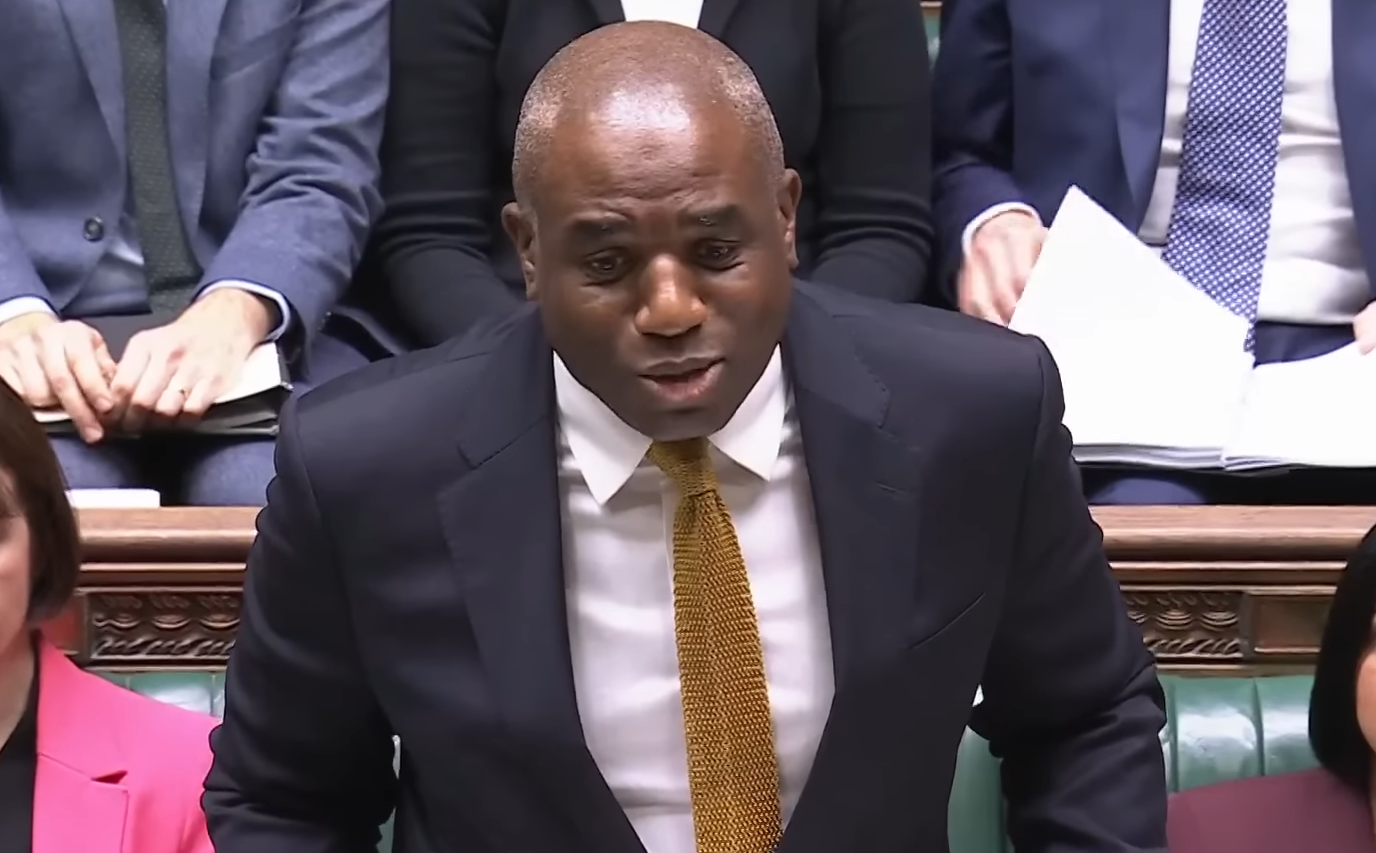
The move, announced by justice secretary David Lammy yesterday (2 December), is aimed at reducing the backlog of cases in courts across England and Wales, and will also apply to ‘exceptionally technical and lengthy’ fraud and financial cases.

The backlog, which currently sits at just under 78,000, is expected to reach 100,000 by 2028. While the measures are less radical than previously expected, with earlier reports suggesting that it would extend to crimes with a likely sentence of up to five years, partners have expressed concerns over their implications.

White & Case London white collar head Neill Blundell warned that the move could mean that ‘the fairness of the process would be prejudiced’, and said other measures could be taken to address the backlog.

‘It’s a slippery slope in one direction,’ he said. ‘Once you go down that route, there’s an erosion of fairness in the process. There are other areas which could be concentrated on first, such as investing in court infrastructure, increasing judges’ sitting days, and improving training for prosecutors on presenting cases. All of these issues have come about as a result of vast underfunding over an extended period of time.’

With regard to technical fraud and financial crime cases, Lammy stated that ‘they place undue pressure on jurors to sit for months – a significant interference with their personal and professional lives.’

However, Mishcon de Reya white collar crime and investigations head Johanna Walsh disagreed with removing juries for such cases, pushing back on the suggestion that they are ‘too complex’ for juries to deal with.

‘In terms of the big Serious Fraud Office cases that I’ve defended, it is clear from the calibre of the notes coming from the jury that they have a good understanding of the issues, no matter how complex,’ she said.’ Lawyers need to be able to – and can – distil those issues so that they are understandable for juries.’

Walsh concurred with Blundell that other options should be considered. ‘Better resourced prosecutors, more judges, better availability of courts, would all help to reduce the backlog,’ she said. ‘Robust case management, particularly of the prosecution in complex financial crime cases, is really important.’

Kingsley Napley white collar and financial crime head Louise Hodges, who chairs the City of London Law Society’s committee on corporate crime and corruption, agreed with the view that juries are capable of dealing with complex cases, adding that they also help to ensure fair treatment for ethnic minority defendants.

‘The empirical evidence demonstrates that juries are representative, effective and capable of handling complexity, and they remain the one stage at which minority ethnic defendants do not face disproportionate outcomes,’ she said. ‘Any restriction on this right must be supported by compelling evidence and we have seen none. Both the causes of the current backlog and the solutions to resolve it lie elsewhere.’

Announcing the plans in Parliament, Lammy said that serious offences such as rape, murder and robbery would still be heard before a jury, but that removing juries from hearing non-serious offences could speed up the process by 20%.

However, Walsh asserted that ‘delay is embedded in the criminal justice system’.

‘The delay is already baked into the system – what is required is better resourcing at all stages from investigation through to trial,’ she said. ‘I can’t see that removing the right to trial by jury will address this.’

The reforms follow a review of the courts conducted by former senior judge Sir Brian Leveson. The first part of his recommendations was released this July, with the second half expected by the end of the year.

[email protected]

‘Status quo is not an option’ – leading fin reg lawyers gather to debate future enforcement challenges

Private practice litigators, barristers and in-house lawyers gathered in the City’s Minster Building for Legal Business and Legal 500’s annual Financial, Regulatory and Disputes summit on 1 December.

The half-day event, sponsored by 3 Verulam Buildings (3VB), Dentons and Penningtons Manches Cooper, covered a range of issues, including the rise of UK class actions, an increasingly assertive Financial Conduct Authority (FCA) and the ins and outs of Upper Tribunal Proceedings.

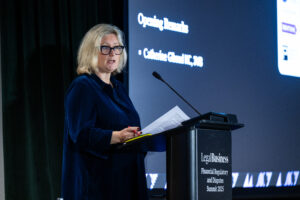
Commercial litigator Catherine Gibuad KC, of headline sponsor 3VB, opened the morning with an overview of the current state of affairs in enforcement proceedings in the financial services space, outlining some recent significant decisions made by the Supreme Court, particularly those relating to fiduciary duties.



Dentons then kicked off the first panel, with an engaging session titled ‘Navigating Class Actions: Strategies and Challenges in Defending UK Collective Litigation’. The session, which was moderated by London disputes partner Tom Leyand, explored the group litigation landscape in the UK, including some of the limitations when it comes to delivering justice. He was joined by fellow disputes partners Tom Hanson and Felicity Ewing, who leads Dentons’ financial services disputes team, to discuss successes in collective action cases since the UK competition regime was introduced.

Ten years on from the introduction of the regime, the trio considered whether the UK competition regime has evolved as the government intended and whether it enables claimants to receive fair compensation. They also briefly addressed some of the recent public disputes between funders and law firms, when outcomes have not aligned with expectations.

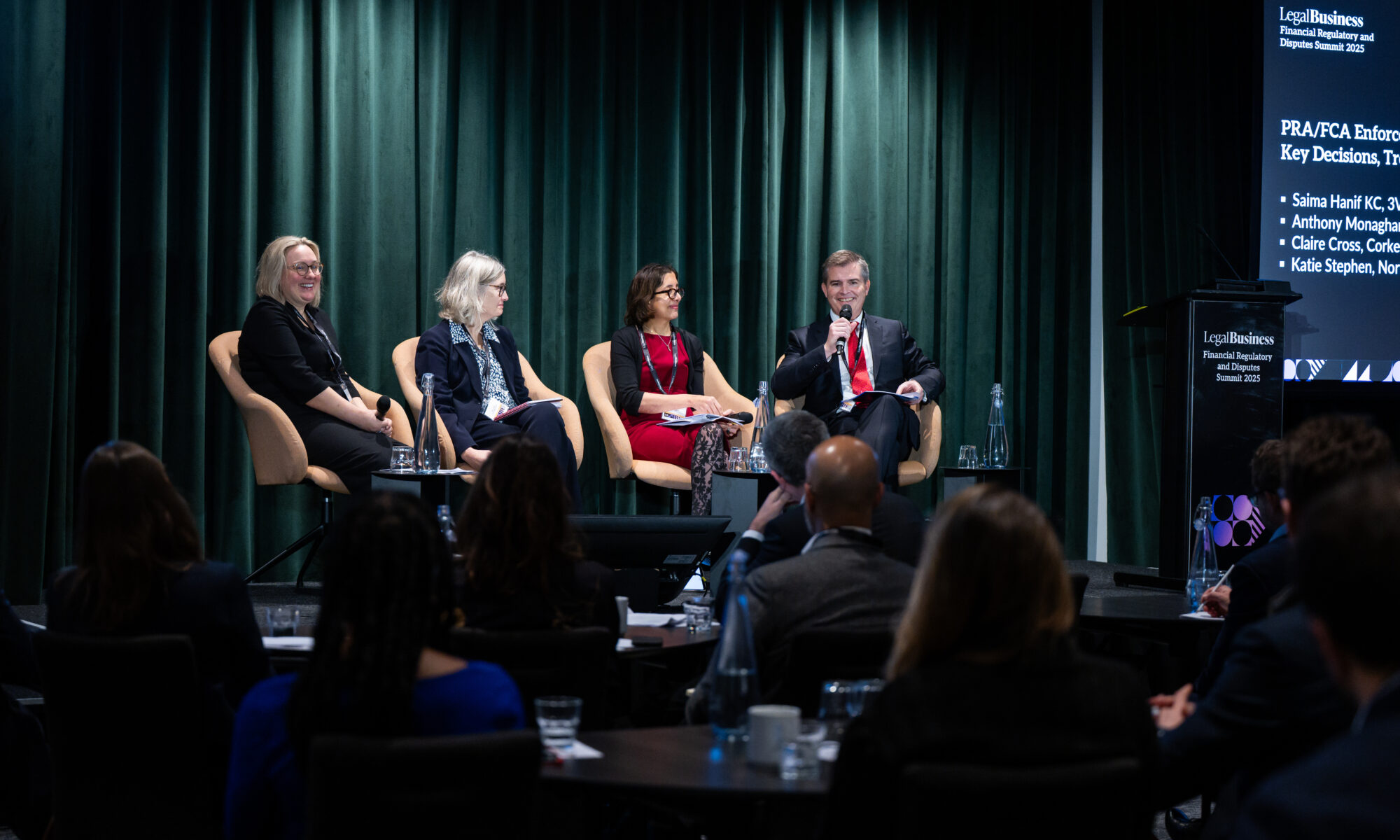
The session was followed by a lively debate chaired by 3VB’s Saima Hanif KC titled PRA/FCA Enforcement in 2025 – Key Decisions, Trends and Future Outlook. Hanif was joined on stage by Anthony Monaghan, director of retail and regulatory investigations at the FCA, Claire Cross, a white collar partner at Corker Binning and Katie Stephen, co-head of Norton Rose Fulbright’s contentious financial services group.Hanif moderated an animated discussion that started with Monaghan setting out the regulator’s more assertive and expedited approach to investigations, as well as the increased intervention powers granted to the regulator through VREQs and OIREQ interventions.

The group moved on to discuss non-financial misconduct and some of the inconsistencies in firms’ approaches to these issues. The session ended with discussion around what’s next on the horizon, with market abuse, ESG, consumer duty and crypto all flagged as topics to watch over the coming years.

Following a short coffee break, Penningtons took to the stage for a discussion titled ‘Beyond Compliance: Delivering Better Outcomes and Protections for Consumers’. The session saw managing associate Sarah Mant moderate a panel that included disputes partner Michael Brown, employment partner Tom Walker and senior disputes consultant Teja Picton-Howell.The session kicked off by looking at the impact of non-financial misconduct in the boardroom, with Walker discussing the recent focus on psychological safety in the workplace and how this should be driven from the top down, with Picton-Howell then moving to discuss the Consumer Duty Regulation and Brown outlining some of the upcoming changes to the Financial Ombudsman Service (FOS) and the FCA, particularly in relation to the UK’s financial redress scheme.

After Penningtons, headline sponsor 3VB returned to the stage, with Adam Temple leading a fireside chat with Kingsley Napley financial service partner Jill Lorimer on the ‘Nuts and Bolts of the Upper Tribunal Proceedings’. The discussion covered everything from privacy applications for those subject to FCA enforcement, through to the FCA’s shifting approach to disclosure and its obligation to call relevant witnesses.

The final session saw Legal Business editorial director Georgina Stanley joined on stage by reputation counsel Byfield’s joint managing director Michael Evans. The fireside chat explored the reputational risks financial institutions face from litigation and regulatory investigations. From how to handle sensitive non-financial misconduct claims, through to the challenges posed by ever-faster legal reporting driven by AI and greater transparency, Evans talked through some of the common PR mistakes companies make when facing a crisis and how to do it better, emphasising the importance of being prepared.

To conclude the morning, Gibaud KC returned to the stage, offering final reflections on the sessions of the day and highlighting why ‘status quo is not an option’ when it comes to enforcement in the financial services space.

[email protected]

‘Nobody really understood what I was going through’ – the in-house push for better IVF support

‘Nobody really understood what I was going through, and they were nervous to discuss it with me.’

This is an all too common experience of women going through IVF, and while many people are aware of what IVF does, there’s little knowledge of just how extensive and invasive the procedure really is. This, coupled with the hectic schedule of life as a general counsel, leaves many women feeling alone, during what is already an emotionally taxing time.

That’s why a women’s GC network has released a report outlining what employers can do to support employees going through IVF.

The report, ‘In Vitro Fertilisation – A compassionate guide for Employers.’ was compiled by The Eagle Club, a women-only forum for GCs and C-suite members around the world, founded by Lesley Wan.

Eighteen members of the group, many of whom have undergone IVF themselves, drafted the guide, which outlines the side effects of the treatment, logistical impacts, and potential policy points for companies to consider.

The initiative has been shared among the group, whose membership totals more than 500, with each member encouraged to share the report with their companies in an effort to push for dedicated IVF policies.

From blood tests, hormone medication, and egg collection to the often-disappointing news couples face, the changes are aimed at supporting employees navigating the challenging journey, without requiring them to disclose personal information on their progress.

‘It was very stressful to manage all the work and meetings without telling my manager what was going on’

A common difficulty that several GCs who have undergone IVF mentioned is juggling medical appointments with the demanding nature of their role.

‘GCs are in a unique position that their presence and advice are often needed on an ad hoc and urgent basis,’ says one GC. ‘IVF policies should ensure that managers and colleagues understand how time-consuming IVF treatments are and that GCs might not be present all the time.’

Another explains: ‘GCs end up involved in so many different things and are often brought in on time sensitive situations. It can leave you feeling you’re letting your stakeholders/internal clients down by being more absent.’

Appointments throughout the process ‘can range from every few days to twice a day, often with little/no advance warning,’ the report explains, with the bulk of the regular appointments in the 10 to 14-day period leading up to egg collection.

Without any considerations in place, employees are left in a difficult position, having to either juggle a busy work schedule with frequent hospital appointments or disclose personal information to their managers and colleagues about their progress in the IVF process.

‘I needed a great deal of flexibility to be able to arrive late, duck out during the day or take days off on short notice over each round of IVF,’ shares one GC. ‘I didn’t need this to be forever, but as needed. It was disappointing that in order to achieve this, I needed to explain the IVF process and what particular stage I was at to several people. With a policy in place, I would not have had to do so.’

Another GC explains that while her company had generous fertility benefits when she was going through IVF, there were no dedicated IVF policies in place, leaving her feeling that she should not bring up the topic with her manager: ‘It was very stressful to manage all the work and meetings, with having to take 2-3 hours almost every second day to go to the hospital without telling my manager what was going on.’

‘The support an initiative such as this offers will be invaluable to anyone who is dealing with this silently’

While GCs often found that their companies and managers were supportive once they discovered what the GCs were going through, the report recommends implementing policies from the outset, which will give employees peace of mind that their employer will support them.

Among a number of suggested policies, the report recommends flexible working arrangements, time off for medical appointments, a flexible approach to sick leave, a phased return to work after treatment, and limited or no work-related travel around key times.

Other key points include various health insurance and private healthcare options that can cover, in whole or in part, the costs of IVF.

Furthermore, the report suggests any policy relating to IVF should be gender-neutral, to recognise that most partners will also need to attend regular hospital appointments to support their spouse, and can also be involved in the process through sperm collection and shared disappointment after an unsuccessful round.

‘As someone who went through multiple cycles for almost a decade, during most of my senior career to date, I can’t express how much I welcome this report’ shares one GC. ‘The support that an initiative such as this offers will be invaluable to anyone who is dealing with this silently.’

Another GC, who went through four rounds of IVF explains: ‘Having an IVF policy in place will encourage employees to confide in their managers and colleagues, which will certainly reduce the stress of feeling that you have to be present all the time for work.’

Since the report’s launch, GCs have been sharing the report widely. One GC says that she has already shared the guide with both current and former employers, with an overwhelmingly positive reception. ‘The Head of HR of my current company already said that this was a great initiative and she would review the guidance and discuss internally whether the company should implement an IVF policy.’

‘We can only have change if we talk about things more. It’s still sometimes regarded as taboo’

Another GC has shared the report with the employee relations and human resources teams at their company, a multinational tech business, with the teams confirming that the report will be shared with external consultants as part of a global benchmarking review exercise.

The report has also gained traction outside the in-house environment. A managing associate at a large international firm spoke with Legal Business about the positive impact a report like this will have. She explains that while solid policies are already in place at a number of firms, including hers, being able to speak about these policies is one of the best solutions.

‘We can only have change if we talk about things more,’ she says. ‘It’s still sometimes regarded as a taboo, and I think the more we can talk about it, and the more that men feel that they can talk about it, the better. It is such a game changer to say okay, look, these are some steps forwards that we should be thinking about everywhere and as a whole.’

[email protected]

A&O Shearman’s first post-merger accounts reveal scale of pension deficit and partner capital injections

A&O Shearman has filed its first set of accounts as a merged firm, shedding light on the financial implications of the tie-up, including a sharp hike in partner capital contributions and a near-£200m pension deficit.

The LLP accounts – which cover the 12 months after legacy Allen & Overy and Shearman & Sterling’s transatlantic union went live on 1 May 2024 – include specific details about Shearman’s pension deficit, a factor widely cited as a stumbling block in the US firm’s attempts to get a merger through.

While pre-merger accounts for the 2023-24 financial year show legacy A&O had a pension surplus of £22m, the latest accounts for 2024-25 reveal that the combined firm now has a surplus of £27.8m and a deficit of £220.3m, equating to a net defined benefit pension deficit of £192.5m.

Shearman’s pension liabilities were reported to have been a sticking point in the firm’s earlier merger talks with Hogan Lovells, which were called off in early 2023.

The latest LLP accounts also state that between May 2025 and April 2026, contributions of $20.1m are expected to be made to the unfunded retirement plan for former Shearman partners.

The merged firm’s LLP accounts also highlight a surge in partner capital contributions over the last financial year, with the total paid in by partners more than doubling to £421.3m, up from £208.9m in A&O’s last year pre-merger.

Prior to the tie-up, A&O had approximately 600 partners, while Shearman had around 170. The increase in partner numbers, combined with the merged firm’s move to an all-equity partnership model, will have significantly contributed to the rise in capital contributions.

One partnership expert suggested a number of other potential factors. ‘They could need a financial buffer – partner capital allows them to do that. Something as significant as a merger like this would have cost the firm a lot of money. They have lots of offices around the world that have to be integrated,’ they said. ‘There’s also the tax cost of the merger – it may have resulted in a tax charge arising, and between US and UK firms this can be quite significant.’

Another expressed surprise at the size of the increase. ‘Firms generally try to keep capital relatively stable – it’s a huge capital contribution; doubling it is massive.’

Looking beyond pensions and capital contributions, the accounts state that revenue at the combined firm rose by 33% over the year to £2.86bn, up from £2.15bn, marginally down from the £2.9bn headline figure A&O Shearman announced earlier this year. Profit before tax nudged up from £1.046bn to £1.081bn.

Breaking revenue down by geography, the Shearman merger helped to drive Stateside turnover from £280.1m to £706.6m, meaning the US now accounts for 25% of firmwide revenue, up from 13%.

The firm saw strong growth in the UK over the year, with revenues up 20% from £818.7m to £981.4m, while the APAC and Middle East & Africa regions both saw revenue rise 16% over the year. Continental Europe was the slowest growing region at 9%.

Operating costs also increased, largely due to a combination of higher staff headcount and salaries, as well as costs associated with the merger.

Driven in large part by the growth delivered by the Shearman merger, average employee headcount rose 15% from 6,077 to 6,961, and with it, total staff costs increased from £858.6m to £1.08bn, a 26% hike. Other operational expenses grew by 17.8% to £446.4m, up from £379m in 2024.

Other details contained in the accounts include pay to ‘key management personnel’, which comprises the senior partner and managing partner, the heads of the main global practice groups and the support directors. Collectively, this group took home £43.6m in their share of the profit and salaries.

This equates to an rise of 164% from last year’s equivalent of £16.5m, although it is understood that this relates in part to the larger size of the management team in the wake of the merger.

A&O Shearman is now led by senior partner Khalid Garousha, global managing partner Herve Ekue and US chair Adam Hakki; Garousha and Hakki also co-chair the firm’s board and executive committee.

The board comprises the senior partner and managing partner, six independent and elected partner directors, and up to four co-opted members.

A&O Shearman board in full

  • Parya Badie, London, insurance and capital markets partner, chair of the audit committee
  • Tim Conduit, London, energy and infrastructure partner
  • Roger Lui, Hong Kong, financial institutions sector lead and global co-head of the banking sector
  • Peter Myners, Luxembourg, M&A, corporate and private capital partner
  • Ken Rivlin, New York, co-head of the environmental and climate law group and co-head of the international trade group
  • Alice Englehart, London, disputes partner
  • Lisa Brill, New York, co-head of real estate.
  • Lona Nallengara, New York corporate, finance and regulatory partner

A&O Shearman executive committee in full

  • Diana Billik, Paris, US securities partner, regional co-head of US capital markets and global ECM
  • David Broadley, London, corporate finance partner, global co-head of M&A
  • Denise Gibson, London, debt finance partner, UK managing partner and co-chair of the London executive committee
  • Astrid Krueger, Germany head of private equity
  • David Lee, London, global co-head of energy, natural resources and infrastructure
  • Doreen Lilienfeld, New York, employment partner, co-managing partner of the US.
  • Vicki Liu, Hong Kong, finance partner, co-managing partner of Greater China and managing partner of Hong Kong
  • Stephen Lloyd, London, global co-head of private equity
  • Fredric Sosnick, New York, global co-head of restructuring

[email protected]

Additional reporting by Kate Peacock.