Ashurst restocks PE with three-partner Goodwin team as Perkins merger nears

Ashurst has sought to bolster its private equity capabilities with a team hire from Goodwin, as the firm looks towards its planned merger with Perkins Coie later in the year.

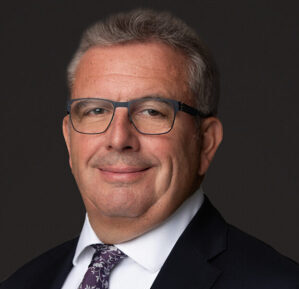
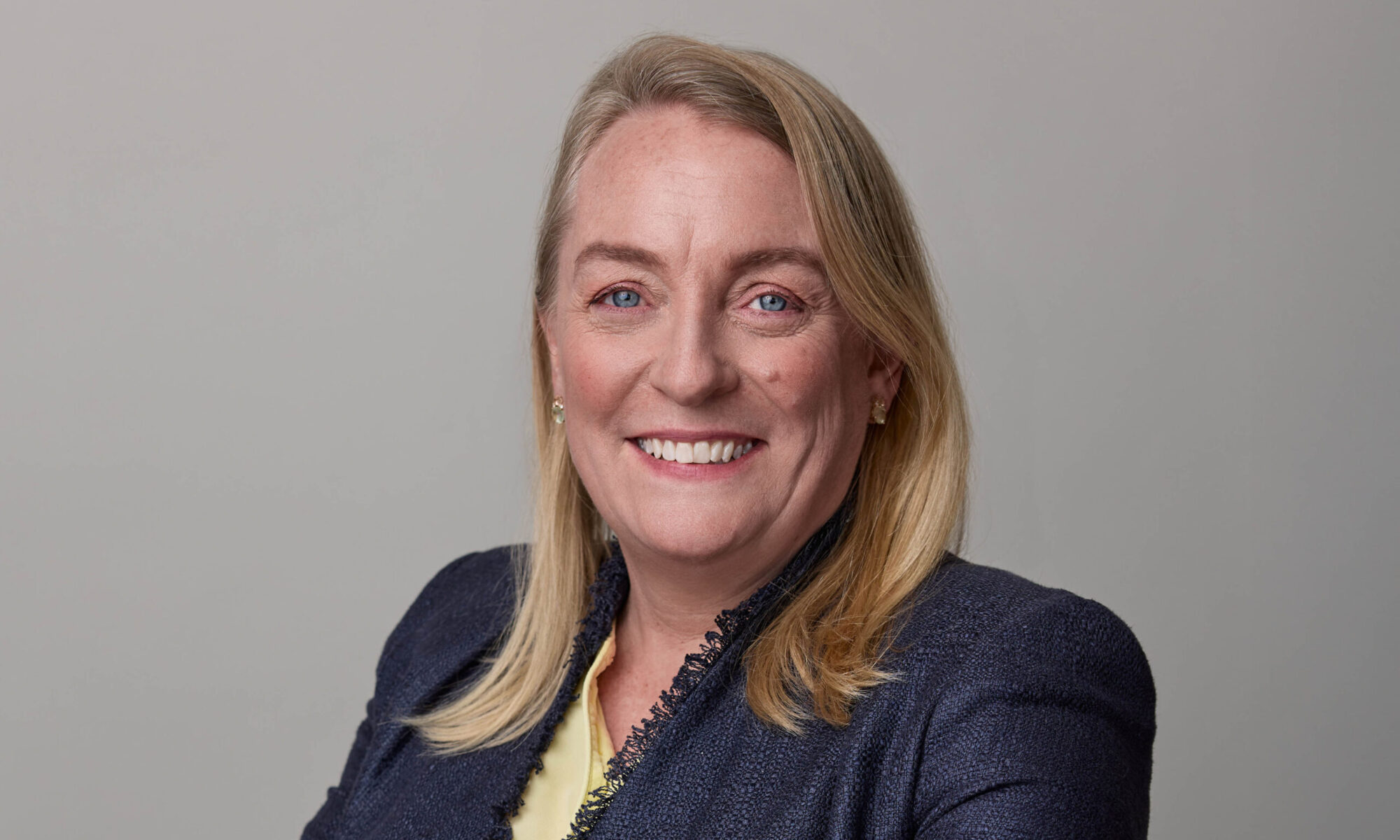
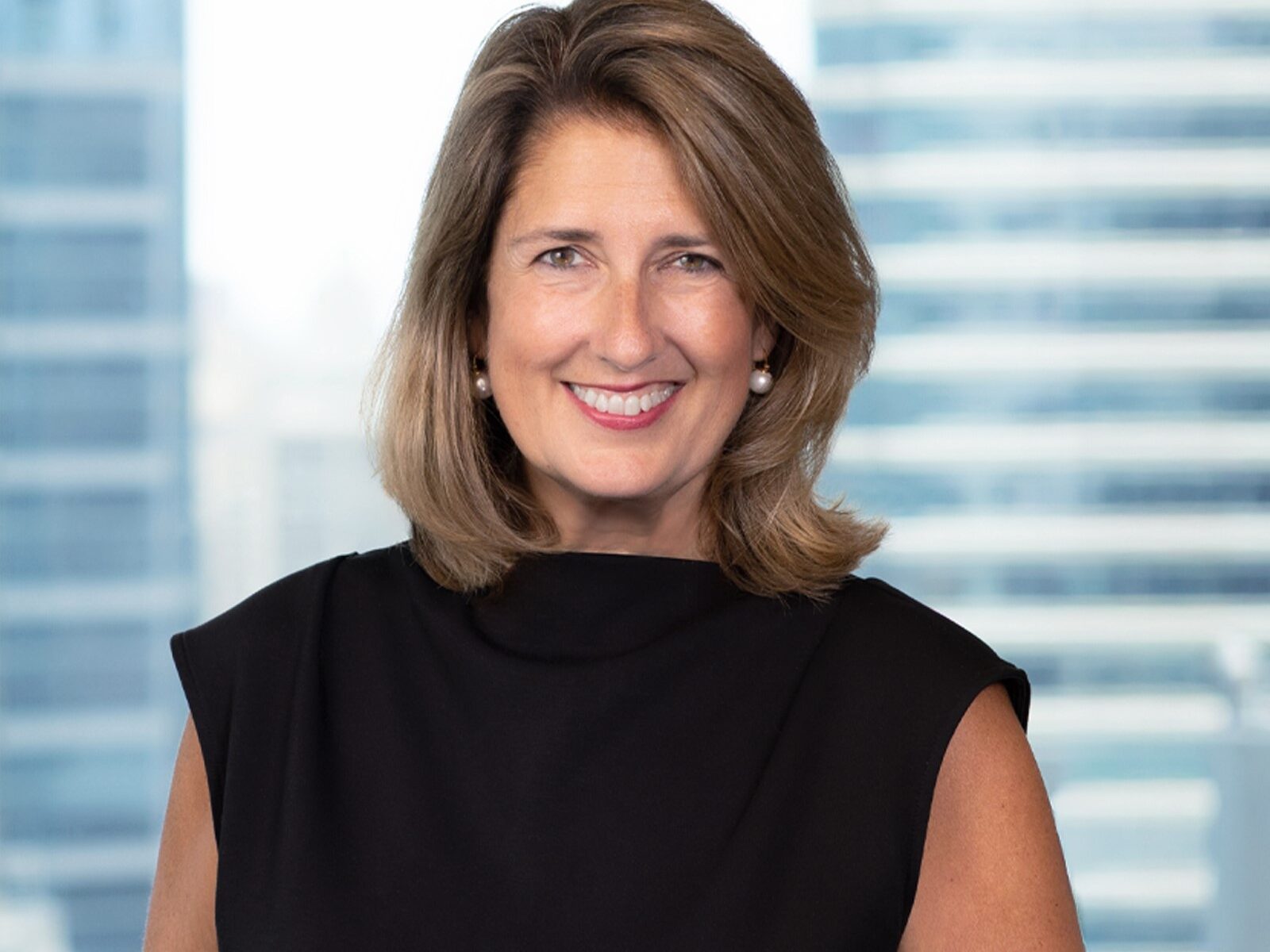
Partners Ian Keefe (pictured middle) and George Weavil (pictured left) move to Ashurst from Goodwin – the firm they joined in November 2024 from Travers Smith, where they had spent over 15 years each. The third partner, Michael Miranda (pictured right), spent a decade at Goodwin and left the firm last year.

All three partners are joining Ashurst’s private capital team in London.

Keefe and Miranda bring extensive experience in cross-border PE transactions, with Keefe focusing on providing advice to management teams across the life-cycle of sponsor-backed transactions, and Miranda adding expertise in growth capital investments and technology. Weavil strengthens the firm’s sponsor-side bench, with his main roster of clients being alternative asset managers, institutional investors and corporates.

The firm’s head of corporate Jason Radford said of the hires: ‘The timing reflects the significant opportunities we see in the market. George, Michael and Ian each offer expertise across the full range of sponsor-backed transactions, making them a natural fit to accelerate our growth in this space.’

Radford said the firm will be targeting the full range of PE mandates, from leveraged buyouts and growth investments through to exits and portfolio company work, as well as alternative asset managers, founders and management teams across the UK and continental Europe.

‘It is a great piece of news for Ashurst,’ one legal recruiter told Legal Business. ‘Hiring in the private equity space is difficult and there is always going to have to be a compromise in teams you can attract. Though they left after just over a year, and that doesn’t look great, Ashurst believes they’re good lawyers and that Goodwin, with its American rates, simply wasn’t the right platform.’

At the end of last year, Goodwin hired a three-partner PE team from Paul Hastings, fronted by Legal 500 mid-market PE Hall of Famer Anu Balasubramanian.

Meanwhile, Ashurst, which was previously known for having a leading private equity practice in the city, has been adding to its bench.

Earlier this month the firm brought Heidi Blomqvist into its partnership from White & Case, where she was a counsel. Blomqvist is an infrastructure M&A lawyer, a key area of focus for the firm.

Her hire followed Amy Barker, who joined Ashurst as a partner last November from Linklaters, where she was a managing associate, and Christy O’Connell, who joined in June from Cleary, where she was a counsel.

Commenting on the hires of Keefe, Weavil and Miranda, Ashurst CEO Paul Jenkins said: ‘The European private equity market is entering a new phase of growth, as firms look to deploy capital in increasingly sophisticated transactions. This trio strengthens our capability to deliver advice on these integrated, cross-border matters.’

The firm lost its tier 1 Legal 500 ranking for mid-market PE in the 2023 research, and dropped to tier 3 in the 2025 research, where it remains. Further back, its private equity capabilities suffered a major setback when global head of corporate Stephen Lloyd left the firm in 2013 and when former leader Charlie Geffen quit for Gibson Dunn alongside Mark Sperotto in 2014.

After a challenging period in which Ashurst saw declines in both revenue and profit per equity partner (PEP) in 2015 and 2016, the firm stabilised, returning to consistent growth and breaking £1bn in revenue for the first time last year. But its PE challenges continued. In 2024, it saw the departure of global PE co-head David Carter and Braeden Donnelly, who both headed to O’Melveny & Myers.

Since its planned merger with Perkins Coie was announced in November, Ashurst has seen a handful of departures. PE partner Markjan van Schaardenburgh left for DLA Piper earlier this month, and capital markets duo Simon Bullock and Stuart Rubin headed to Baker McKenzie last November.

If partners approve it this spring, the merger will create a top 20 firm in Ashurst Perkins Coie, with combined revenue of $2.7bn. The recruiter noted that: ‘Although the merger gives Ashurst very little additional finance capability, on the M&A side it does give them access to large American corporates on the West coast, though it will still be a challenge to translate these to mandates in the UK.’

Speaking about the synergies of the merger, Ashurst’s Radford said the combined corporate platform – that will fuse Ashurst’s focus on M&A, energy and infrastructure and ECM work with Perkins’ leadership in the technology business space – will create ‘a premier, tech-enabled, full-service practice with true transatlantic depth.’

Perkins counts major corporates including Amazon and Boeing among its key clients. However, it is still involved in ongoing litigation with the US government after the administration targeted the firm with an executive order attacking its hiring practices last year.

The US firm first opened in London in summer 2024, setting up an office under former White & Case PE partner Ian Bagshaw, who returned to big law after leaving his firm in 2021.

[email protected]

Pinsents and Freshfields in the mix as Danone eats up Huel for €1bn

Pinsents Masons has advised nutritional drink brand Huel on its sale to French food and beverage company Danone for €1bn, with Freshfields acting for the acquirer.

Pinsents has acted as counsel to the brand – best known for its protein meal replacement drinks lauded by time-poor professionals – from its initial funding round in 2018 to this final exit.

On the sale, the firm advised founder Julian Hearn, who established the company in 2015, as well as the senior management team and lead Huel investor Highland Europe.

The London-based team was led by retail and consumer head Tom Leman and private equity partner Ben Elliott. Also involved were tax partner Peter Morley and competition partner Alex Stratakis, who is dual-qualified in the UK and the EU.

Commenting on the closure of the deal, Ben Elliott said: ‘To have advised a business from its earliest investment round all the way through to an exit on this scale is a privilege and a clear sign of the strength, resilience and ambition we see in innovative, high‑growth consumer brands.’

He continued: ‘Huel’s journey reflects the promise inherent in the UK’s VC ecosystem and is a study in how businesses can scale globally, attract world‑class institutional capital, and reach landmark outcomes without leaving the UK.’

Meanwhile, Freshfields advised Danone, also with a London-based team, with M&A partners Sundeep Kapila and Andy Robinson leading, and support from tax partner Peter Clements and people and reward partner David Mendel.

Freshfields has previously advised Danone on a range of matters across jurisdictions, including its 2011 acquisition of the baby food and nutrition business of the Wockhardt Group, and an international trade receivables securitisation transaction, with a team involving New York finance partner Jerome Ranawake.

Pinsents, which is ranked in tier two in Legal 500’s Retail & Consumer ranking, has advised on a number of notable deals in this space, including the sale of sportswear brand Sweaty Betty to US footwear manufacturer Wolverine in 2021 for £300m.

This latest acquisition is part of Danone’s Renew strategy, which sees the French-listed company deepen its reach into the market for food and beverage products with a health slant.

Last year, Danone acquired a Belgian brand, The Akkermansia Company, that is known for its focus on state-of-the-art biotics.

[email protected]

Wexler looks to barristers and investigations as legal tech startup prepares for Series A funding

Litigation legal tech platform Wexler is diversifying its client base towards barristers’ chambers and investigations, as the startup looks towards a new funding round and US growth.

The ‘fact-finding’ technology that helps disputes lawyers establish the facts of a case is beginning to see uptake among barristers, according to co-founder and CEO Gregory Mostyn (pictured). ‘We have a large barristers’ chambers as a client which we will hopefully announce soon as well as a few more in the pilot phase,’ he said. ‘We see strong growth in that sector.’

In September, the company raised $5.3m in seed funding, at the same time as it unveiled Wexler Real-Time, a live fact-checking tool. Though Mostyn told Legal Business there are ‘imminent’ plans for a Series A funding round, the CEO explained that Wexler didn’t necessarily require additional capital, but that another raise would accelerate the company’s already rapid growth.

Mostyn’s focus is now pivoting from product development to rollout, as Wexler looks to grow market share and tap new markets. ‘We have a deep and detailed product but we want to double down on our go-to-market, especially in the US,’ he said.

This extends to an aim to crack the domestic US market, with Mostyn referencing ‘national US firms, as well as global firms with offices in London.’

The platform’s revenue grew by 15x in 2025 and is on track to grow 2.5x by the close of Q1, Mostyn said.

Clifford Chance was Wexler’s first major law firm client, with the magic circle firm committing last March to extend its partnership after a six-month pilot. Since then, Wexler has added Addleshaw Goddard, HSF Kramer and Goodwin as clients – with more on the way.

‘We’re working with some really large firms under NDA at the moment, which we’ll be announcing soon,’ Mostyn said.

Mostyn, whose father is a retired high court judge, co-founded the company with CTO Kush Madlani, and together they developed the platform to extract relevant facts from troves of documents and arrange them in a narrative.

‘LLMs are not good at this kind of temporal reasoning or understanding, sequencing events or noticing an inconsistency because someone was aware of a fact before they said they were,’ Mostyn explained.

Last month, US AI company Anthropic launched a new plugin for its Claude model for tasks that have seen more focus in the legal tech space such as document review, creating some anxiety that a widely accessible, and currently free, tool may begin to rival the focused legal tech firms.

For Mostyn, however, Wexler’s strength is that it is a ‘bespoke and custom’ tool to solve a particular pain point rather than a more general platform, and others in the legal tech space argue that a platform designed for legal offers advantages that a plugin for a general model cannot.

‘But nonetheless,’ Mostyn said, ‘It’s not a niche solution, it is the core exercise of a disputes lawyer.’ There are several other companies targeting disputes work, including Clearbrief in the US and Crimson in the UK, which is currently a part of A&O Shearman’s legal tech incubator, Fuse.

‘New entrants to the market is a good sign, there’s validation in the market,’ Mostyn said.

Mostyn is also confident that Wexler offers a product that provides distinct benefits. Madlani created Wexler by joining multiple LLMs to operate in sequence in what Mostyn called an ‘iterative’ process.

‘We have a fact extraction pipeline,’ said Mostyn, ‘which rationalises and elucidates facts from these complex datasets.’ As part of this process, Wexler’s platform deliberately includes 10-15% more items in the ‘fact-bank’ of a case than a human would pick out, to avoid any omissions of material that might be important to a case.

On top of this, Wexler has ambitions beyond legal, too. ‘We are interested in any areas you need a factual matrix,’ said Mostyn, referring to insurance and investigation work. ‘Facts are the engine that powers the rest of the products.’

[email protected]

Freshfields and Hengeler lead on UniCredit’s €35bn Commerzbank takeover bid

Freshfields and Hengeler Mueller have taken lead roles on UniCredit’s €35bn takeover bid for Commerzbank, an approach which has been met with resistance from the German bank.

Freshfields is advising Italy’s UniCredit, with global managing partner Rick van Aerssen leading the firm’s team alongside fellow Frankfurt corporate partner Sabrina Kulenkamp.

Elite German firm Hengeler is acting for Commerzbank, which has released a statement saying that the offer ‘has not been aligned with Commerzbank’ and ‘is not coordinated with us’, adding that ‘the exchange ratio expected in the announcement does in fact not include a premium for our shareholders.’

Hengeler’s team includes three corporate partners, Hartwin Bungert and Christian Strothotte in Duesseldorf and Daniela Favoccia in Frankfurt.

Bungert has a longstanding relationship with Commerzbank, having advised on the bank’s 2009 merger with Dresdner Bank, as well as on talks over a potential merger with Deutsche Bank a decade later.

Freshfields has worked with UniCredit on a number of matters in recent years, including advising the bank on the refinancing of a €350m credit facility for German-listed space and technology company OHB.

The role is a coup for Freshfields’ Germany team, which recently saw a number of senior departures, including a four-partner private equity team which quit to join Latham & Watkins last year.

The bid by UniCredit is an attempt to bring Commerzbank to the negotiating table by raising the Milan-based bank’s stake to the 30% threshold under German takeover law. UniCredit currently holds 26% in direct shares and a further 4% in swaps. The bank said that the move signals an ‘openness for dialogue’.

[email protected]

Passing judgement: how clients rate London’s top commercial litigation teams

In the London commercial litigation market, securing a role on a high-stakes dispute can keep a practice busy for many months, and sometimes years.

As such, building a reputation as a go-to firm for major cases can anchor a disputes practice for the long haul. And with technical ability taken as read at the top end of the market, client service is often the differentiator as to whether firms win or lose the brief.

Drawing on anonymised client feedback gathered by Legal 500, Legal Business has analysed which premium commercial disputes departments make the strongest impression on clients. (The following data is based on referee responses from Legal 500’s premium commercial litigation research.)

Quality of associates

Bird & Bird comes out as the highest scoring firm for associate quality, ahead of Travers Smith and Clifford Chance.

Sophie Eyre (pictured), who co-leads the firm’s international dispute resolution group alongside Jonathan Speed, attributes this to two deliberate features of the practice: deep sector expertise at junior level and intentionally lean teams.

Rather than operating a broad disputes pool, Bird & Bird channels associates into sector groups as they progress, allowing them to build specialist knowledge early. The result, Eyre says, is that ‘associates become the market‑leading lawyers in that particular sector,’ a distinction she considers especially valuable given the soaring cost of commercial litigation in the City. ‘For clients, anyone can be a good litigator. It’s being a good litigator with the sector expertise that makes the difference.’

This structure also accelerates responsibility. Associates ‘are able to run cases at an earlier stage, rather than being a cog in a large wheel,’ she explains. That approach was reflected in a recent win in the Commercial Court, in which all claims against five Bird & Bird clients were dismissed in a wide-ranging fraud case brought by the ultra-high-net-worth Montezemolo family over €50m invested in an online fund.

The team – led by Eyre, alongside senior associate Matt Pack (who was subsequently promoted to legal director), associate Stephen Allen and a trainee – illustrated the model in practice.

For Eyre, this level of autonomy is a key reason the firm retains its talent. ‘We do not haemorrhage associates to other firms,’ she says. In fact, she claims the opposite is true: ‘There are a lot of associates clamouring at our door, particularly from the magic circle.’

Tom Sprange QCQuality of partners

King & Spalding’s commercial litigation team is also highly rated, ranking top for partner quality, ahead of Hogan Lovells and Macfarlanes in second and third.

The group is co-led by London managing partner Tom Sprange KC (pictured) and Sarah Walker, and its 12‑partner bench includes four silks – an asset Sprange sees as a defining advantage. ‘Clients like the fact that the people who have the case on the first day are the same all the way through to the final closing arguments,’ he says.

Fellow disputes partner Sarah Walker says of the feedback: ‘We’re very hands-on; we are very much on the front line. Clients have access to partners all the time, and that is the value to them.’

Sprange notes how the role has evolved: ‘When I first started, partners were very grand. They didn’t get their hands dirty. I think that has completely flipped around.’

The firm added to its bench of London litigators last year with the hire of A&O Shearman partner Jonathan Swil, and secured successful results in a series of high-profile matters. Among them was a decade-long $325m oil trading fraud dispute brought by Farahead Group Holdings and its owner John Fredriksen against – among others – King & Spalding clients Steven Kelbrick and his company Attock Oil.

The case was notable as one of the first instances of a defendant in a fraud claim successfully countersuing the original claimant. King & Spalding will continue to advise Kelbrick as he now pursues damages, with a hearing scheduled for April.

Appropriate resourcing

Heavy-duty cases often require large teams, making appropriate resourcing critical to delivering the level of service clients expect.

On this metric, Clifford Chance receives the highest scores from clients, just ahead of Travers Smith and Hogan Lovells.

CC’s UK commercial litigation team, which includes 30 partners and 130 associates, is led by solicitor advocate Jeremy Kosky (pictured), who describes the firm’s approach to resourcing as ‘simple’.

‘We build teams with the right blend of senior insight and specialist expertise to give our clients’ advantage – with clear accountability and efficient delivery that is consistently of the highest standard,’ he says.

In 2025, the team secured victories in some of the largest claims to go through the courts, including multibillion-dollar recoveries for aircraft lessors following the detention of aircraft after the Russian invasion of Ukraine, and the defence of ING Bank in a €200m sanctions dispute. The firm has also continued its defence of Glencore in the largest active stock-drop securities class action in the UK market.

Overall client service

Taking all metrics together – from team quality to value, billing and efficiency – to give an overall client service score, Travers Smith comes out as the highest scoring practice, followed by Hogan Lovells and CC.

Of the 15 most closely watched commercial disputes recorded in the Solomonic database, which monitors the UK’s most significant and high-profile cases, Travers is leading on three. These include representing Hewlett Packard Enterprise (HPE) in its high-profile fraud claim arising from its acquisition of Autonomy. Having won on liability, in 2025 the High Court assessed HPE’s losses at more than $1bn, making it one of the largest fraud cases heard in the UK.

Travers also represented Glencore’s former chairman, Tony Hayward, in investor claims related to the 2011 IPO. The claims against Hayward were settled, with remaining proceedings listed for autumn 2026.

The firm’s 44-lawyer dispute resolution department is led by Heather Gagen, who puts the client endorsement down to its ‘personalised’ and ‘bespoke hands-on service’ for clients.

‘I think our ability to read people empathetically is what puts us apart,’ she says. ‘As a firm and as a partner group, we are low ego. We collaborate with and listen to our clients, understanding what they want and how that might change over the course of a long-running mandate.’

Gagen also emphasises the full-service firm’s integrated approach to contentious work, citing a further 37 lawyers who do contentious work in their respective practice areas, and often collaborate with the disputes team.

‘That is one of our strengths,’ she says. This structure ensures clients ‘have access to market-leading practices across the whole of the rest of the firm.’

[email protected]

Kirkland becomes world’s first $10bn law firm as PEP hits $11m

Kirkland & Ellis has become the first law firm in history to make more than $10bn in revenue, riding a 20% increase to hit $10.56bn, up from $8.8bn last year.

Profit per equity partner (PEP) also rose by 20% to reach a record $11.1m, putting clear daylight between it and its closest rivals in the Global 100.

Latham & Watkins, its closest competitor in revenue terms, last year reported PEP of $7.1m, while other comparable US peers such as Davis Polk, Simpson Thacher and Paul Weiss all have PEP in the $7m-$8m range.

Kirkland has now more than doubled its revenue over the last five years, up from $4.83bn in 2020, while PEP has grown by nearly 80% over the same period.

In total, the firm added more than $1.75bn to its top line during 2025 – a figure equivalent to the entire revenue of a global top 40 law firm, and larger than Cleary Gottlieb, Debevoise & Plimpton and Eversheds Sutherland.

The firm’s staggering performance has been driven in large part by Kirkland’s  pre-eminence in big-ticket M&A and private equity, with the firm taking the top spot on LSEG’s list of principal advisers by deal value for 2025, with 745 deals worth a combined total of $830bn.

It also came second in the UK, acting on 85 deals worth a total of $81.7bn.

M&A intelligence platform Datasite ranked two Kirkland partners in its top ten PE dealmakers in North America. New York corporate partner Maggie Flores ranked seventh, acting on seven deals worth a total of $52.9bn, while Texas-based executive committee member Andrew Calder ranked eighth, handling two deals worth $51.9bn.

Major roles for the firm during the year included advising an acquiring consortium on the $55bn purchase of US video game company Electronic Arts – the largest take-private in history – while it also acted for Kimberly-Clark on its $49bn acquisition of Tylenol maker Kenvue, the former consumer healthcare division of Johnson & Johnson.

The firm’s 20% PEP increase came despite a modest increase in equity partners, up 3.8% to 595, with total partners up 9% to 1,823.

Compensation for non-equity partners – of which the firm has 1,228, comprising around two-thirds of its total partnership – increased by 15.6% to $960.47m. The firm increased its non-equity partner ranks by 11.3% during the year.

Revenue per lawyer also increased by double digits, up almost 11% to $2.55m. Net income grew by 25% to $6.62bn, giving the firm a profit margin of 62.7%.

Significant developments during 2025 included a launch in Philadelphia with the hire of a five-partner mass tort team from Skadden, while other notable hires include Latham global real estate practice head Michelle Kelban, who joined in October.

Earlier in the year it also picked up a Boston-based M&A team from Skadden, which in October led for Avidity Biosciences on its $12bn acquisition by Swiss pharmaceuticals company Novartis.

The firm did also see a number of departures over the year, with notable exits in London including restructuring partner Kon Asimacopoulos, who left in September to take a new role as co-head of Sullivan & Cromwell’s London office.

More recently, financial restructuring heavyweight David Nemecek, regarded as a market leader for his work for distressed companies, left to head up a new capital structure solutions practice for Simpson Thacher in Dallas.

However, the firm has continued to grow into 2026, launching in Nashville in February with a four-partner litigation team.

[email protected]

‘We needed more flexibility’ – Georgia Dawson on reshaping Freshfields for the future

‘We are future-proofing our business to meet a transformative time, protecting what defines us, evolving where we need to and ensuring we remain a destination for our global clients and talent,’ Georgia Dawson tells Legal Business, three months into her second five-year term as Freshfields senior partner.

Even before she became the first female senior partner of a magic circle firm back in 2020, it was clear to Dawson that Freshfields Bruckhaus Deringer (as it was then known) needed to change to secure a position in the global elite.

‘We needed to move more quickly, look at new opportunities, and evolve the firm for the future,’ she recalls. ‘The firm is 280 years old, and it’s been successful over a long period of time, but the question became: what are we, as the current generation of partners, going to do to evolve the firm? What should the priorities be? So we developed a strategy around a few different areas.’

Five years on, the change she has already presided over is far-reaching. From a rebrand that saw the firm drop Bruckhaus and Deringer from its name, to ramping up investment in the US, through to her personal involvement in the firm signing an amicus brief supporting firms targeted by US President Donald Trump’s executive orders – a move which set Freshfields apart within the global top 20 – Dawson has been busy.

‘You have to reward and incentivise the whole machine’

Recently, she has been particularly busy driving through a sweeping overhaul of the firm’s partner compensation system that takes Freshfields further away from traditional lockstep than ever before, in a bid to ensure it remains an attractive destination for the best lawyers.

The overhaul ties in with two of the three core planks of Freshfields’ strategic priorities – empowering its people and growth.

‘What has made us successful and will continue to make us successful is having bright, able people who can pivot,’ says Dawson. ‘We need to hire people who can deal with what now feels like the new normal, whether that’s changes in regulation around AI, or unpredictable government behaviour or conflict. We need to make sure that we’re hiring people who don’t have a fixed mindset and can grow and evolve.’

She is transparent that the firm’s ambitions to hire and to keep the very best talent has required changes to its remuneration structure, with profit per equity partner (which stood at around £2.3m for 2024-25) still some way behind the $5m average for the world’s top 10 firms.

The overhaul, voted through by partners in the autumn, is intended to make it easier for Freshfields to compete for the strongest partners at the top end, while also ensuring it doesn’t lose future stars.

‘You need the firm’s infrastructure to support the strategy,’ explains Dawson. ‘If it doesn’t, you’ve got a misalignment, you’re trying to pull in one direction on the strategy, and your machine just doesn’t keep up.

‘Sticking with something that doesn’t support your strategy doesn’t make sense. The key question for us was: did our then existing system allow us to attract and retain the best partners? If not, what were our options?’

‘We’re doing this to attract and retain all of the talent we have’

With nothing off the table at the discussion stage, the overhaul has been wide-reaching. Partners have voted in a new salaried partner tier that is already making it easier to promote and hire in new partners and, crucially, simplifies the process for the newly named ‘compensation committee’ to move pay for individual partners up or down.

Significantly, the overhaul gives the firm what one partner describes as ‘total flexibility’, removing the notion of a top-of-lockstep hard cap on potential earnings for stars in priority areas like the US or particularly competitive practices such as private capital.

Explaining the motivation for the overhaul, Dawson says: ‘We needed more flexibility than we had. We had a partner consultation that was entirely open, transparent and robust, to talk about a range of different options. We debated it all. We’ve tried to come up with something that’s efficient, fair and where partners have a good sense of the rationale behind the overall approach.’

Although she would not be drawn on the detail, partner profit shares will be assessed based on their contributions across collaboration, leadership and clients. ‘We’re doing this to attract and retain all of the talent that we have. Our partners work with and rely upon a massive group of partners and colleagues, and you have to reward and incentivise the whole machine, otherwise nobody can perform at their best.’

‘We’ve designed it to provide more certainty, clarity of pathway and fair compensation relative to that balanced scorecard contribution.’

Since the new remuneration system has been approved, the firm has seen a spate of partner exits, particularly in Europe, but Dawson, like other partners inside the firm, is confident that it provides the flexibility Freshfields needs to compete.

‘The US was where we needed to create scale’

With remuneration dealt with, the firm can return to focusing on evolving the rest of its business around its strategic priorities.

‘We’re focusing on three pillars of growth, empowerment and efficiency,’ she says . ‘The growth piece is the client and client service piece; empowerment is our people proposition; and efficiency is the firm’s infrastructure, data, technology and innovation.’

While Freshfields no longer releases financial results during the summer reporting season, its LLP accounts for 2024-25 show revenue grew by 6% during the year to £2.25bn, while net profit dipped slightly.

Over the longer term, however, global revenue has increased by more than 40% between 2021 and 2025, with the US – the geography the firm has prioritised most to compete at the highest level globally – seeing revenue soar by 172% to £473.3m over the same period.

‘The US was the region where we needed to create scale and bring in skills that we didn’t have, so that we could create as strong a platform there as we have everywhere else,’ says Dawson. ‘If you go back six years, we had two locations in the US – New York and Washington DC. Today, we have six, and we’ve almost tripled our headcount.’

The firm opened in Boston last year, having already opened in San Francisco and Silicon Valley, alongside a services centre in North Carolina.

Significantly, for a firm that has faced accusations that European partners may not always have been in complete support of the scale of investment in the US, there is now evidence of some client relationships transferring to Europe. Examples include the firm’s German practice last year advising BASF on the sale of its coatings business to Carlyle.

With the transactional side of the business already significantly enhanced through hires such as the 2024 recruitment of Latham private equity partners Neal Reenan and Ian Bushner, and a host of other hires across its now network of offices, the growth priority across the Atlantic will be on the disputes side going forward as it moves to replicate what it has in London in the US.

‘Will there still be growth? Yes, but will it be at the same pace and scale? Possibly not,’ confirms Dawson. ‘Now it’s about building out the bench in particular areas. There’ll be some additions on the transactional side, but I would definitely expect more on the disputes side. We have a large investigations and disputes practice in London and I’d want us to build something similar in the US.’

Growth is also evident in the practices and sectors the firm has put at the heart of its strategy: TMT, life sciences and, of course, private capital. Over the last five years, revenue from the tech sector is up by 231%, private capital is up 71% and life sciences is up 65%. While the firm is aiming for cross-practice work for these clients, it advised on more than $500bn of transactions across its key sectors in 2024-25.

‘From a practice group perspective, we chose a few areas where there is significant demand from clients for legal services on a global basis – to play to our footprint strength. We’ve tried to really double down on technology; while other focus areas include life sciences, as well as private capital,’ she says.

‘We need to learn new approaches and think differently’

Staying competitive requires more than growth, though, and Dawson is clear that the efficiency part of the strategy is increasingly important for firms wanting to boost profitability and remain relevant.

Freshfields was one of a number of firms to make job cuts last year, with up to 19 Manchester paralegal roles impacted in a business services overhaul that is also seeing the firm investing in new technology including AI.

Dawson says of the efficiency drive: ‘We’ve been looking at our business services. How do we run the firm? What are all the systems that we need? And trying to modernise that to make sure we’re best in class. So it’s been a pretty comprehensive overhaul.’

‘[On the technology front] things are changing so quickly. We’re trying not to be too conservative, so we’ve got a whole bunch of pilots of different technology and AI products. We’ve got a partnership with Google so that we can accelerate our learning and collaborate with them, and we have our lab that continues to produce incredible products.’

‘So we’re looking at, how do we further evolve those products? How do we scale them? How do we use them in a way that’s helpful for clients?’

She acknowledges that the impact of AI on in-house legal teams and future demands for external advice is something firms cannot afford to underestimate. It’s one of the reasons Freshfields is part-way through a large-scale client listening exercise looking at expectations around service delivery and pricing.

‘How do we deliver and price things in a way that leaves clients feeling like it was a positive experience because Freshfields was by their side?’ she asks.

‘The legal industry was ripe for disruption 10 years ago. AI is going to disrupt all businesses, including the legal industry,’ she says. ‘I don’t see that disruption has to be a negative though – it’s about how we respond. We are continuing to work on the business model; we’ve been moving away from the hourly rate towards more alternative fee arrangements and fixed fees for the last five years. We need to learn new approaches and think differently.’

‘It’s about accelerating the pace of change’

Speaking to Dawson earlier this month, it’s clear she is aware that the firm’s ability not only to think differently about the market and itself but to implement the changes needed to evolve will be critical for its future success.

As such, she has no plans to rest on her laurels, and her focus for the next five years is very much to build on the strategy she set out back in 2020,

‘It’s about accelerating the pace of change. In some areas, it’s about polishing and refining what we’re doing and fine-tuning; in others, learning from the successes and the mistakes of the last five years,’ she says. ‘I’m a competitive person, I have reasonably high standards and we’re not where I want us to be yet, so we’re going to be pushing on.’

‘We need to make sure that the firm is resilient, sustainable and that people see this as the best possible platform for them,’ she concludes.


White & Case boosts PEP by 10% as firm pushes towards $5bn revenue goal

White & Case has posted an 8.5% revenue increase for 2025 to reach $3.6bn, as the firm continues to progress toward its target of $5bn by 2028.

Profit per equity partner (PEP) jumped 10% to $4.4m over the year, while revenue per lawyer (RPL) climbed 6% to $1.4m.

While the picture is broadly positive, growth across all three metrics was slightly slower than last year, when RPL rose 10%, revenue grew 12.5%, and PEP surged 27% to pass the $4m mark for the first time.

‘If you take a five-year look, our progress is clear,’ said vice chair of the firm Oliver Brettle (pictured). ‘Global revenue is up 51%, PEP is up 46% and RPL is up 29%, so we’re hopeful that we’re well on our way to achieving our strategic goal of $5bn.’

In London, the firm achieved record revenue, with turnover in the capital climbing to approximately $584m, an increase of 5.5%. Over five years, the increase stands at $187m, or 47%.

UK growth was driven by similar factors as firmwide, said London office executive partner Inigo Esteve, including private capital – an area that the firm has prioritised, setting up a global private capital industry group last summer, led by New York-based global private equity head Oliver Brahmst, and Emily Brown and Gareth Eagles in London.

Notable deals for the London office in the last year included advising the underwriters on Scotland-headquartered FTSE 100 energy company SSE’s £2bn equity placing, and advising Deliveroo on its acquisition by DoorDash, completed last October for £2.9bn.

Brettle said the firm’s strategy consists of three pillars focusing on key areas of growth: ‘US capabilities, running a strong business through greater financial discipline and modernisation, and building a collaboratively cohesive culture.’

The firm’s global presence is key to its strategy, Brettle explained, with half of its revenue last year coming from cross-border matters. ‘We have 43 offices in 29 countries across six continents. We have that reach, and making sure that we realise the value and the benefit of that whole firm is an incredibly important part of our strategy.’

Yesterday, LB revealed that last year the firm made changes to its performance evaluation criteria. Partners are assessed on financial results, client engagement and collaboration.

Towards the end of March, partners will find out how these updated criteria interact with the firm’s partner credit system – revised in October 2024 – to affect their share of the equity.

Last summer, the firm hired Legal 500 Hall of Fame partner Helen Croke from Ropes & Gray, though prominent PE partner Ross Allardice departed to Latham & Watkins soon after.

White & Case also lost a total of eight energy and infrastructure partners around the world to Paul Hastings since George Kazakov and Din Eshanov left the firm in the spring.

However, towards the end of the year the firm picked up tax duo Arun Birla and Jiten Tank from Paul Hastings, where Birla was a former London head.

[email protected]

RPC leads as UK car park operator NCP goes into administration

RPC has picked up the lead advisory role on the collapse of one of the UK’s largest car park operators.

National Car Parks Limited (NCP), which manages approximately 340 car parks nationally and employs 682 people, has gone into administration, with PwC’s Zelf Hussain, Rachael Wilkinson and Toby Banfield appointed as joint administrators.

RPC is a regular adviser to Japanese-owned NCP and is now advising PwC as administrator. Nigel Collins, corporate partner and head of the Japan desk at the firm, is leading on the matter. Collins is ranked as a leading partner in the Legal 500 M&A: Lower Mid-Market Deals, £100m-£750m for London.

He is a long-term adviser to NCP and has been advising the group on its ongoing restructuring and previously went on secondment to its executive team in 2023.

NCP has been struggling with reduced demand since the COVID-19 pandemic.

PwC’s Hussain said: ‘NCP has faced a challenging trading environment over several years, with changing consumer behaviours impacting volumes, and a high fixed cost-base leading to trading losses.’

He continued: ‘Our priority on appointment is to ensure continuity of service while we undertake a detailed review of the business.’

All parking sites will remain open and staff in their posts as the administrators explore options for the company going forward.

In 2017, the company was sold by the Macquarie European Infrastructure Fund II to Park24, a listed Japanese strategic buyer.

[email protected]

Photo by Sean Nufer on Unsplash.

CMS promotes 54 to partnership as 13 UK lawyers make the grade

CMS has promoted 54 lawyers to its partnership this year, down slightly from 56 the previous year, with the UK gaining 13 new partners.

The new partners are based in 29 cities across 21 countries around the world, with women making up 52% of the global cohort, up from 48% last year.

The total of 13 new UK partners is down 41% on last year’s equivalent figure of 22, with London gaining six new partners this year, compared with 13 last year.

The new London partners are Ben McParland in corporate and private equity M&A, Jennifer Louch and Ruth Jones in corporate and M&A, Hayley Stevenson in insurance and reinsurance, Michaela Potter in dispute resolution and Alasdair Lamb in TMT.

CMS UK senior partner Charles Currier said: ‘Congratulations to all our new partners. Each has demonstrated a commitment to exceptional client service, cross-border collaboration and a drive to innovate.’

CMS chair Pierre-Sebastien Thill added: ‘CMS’s success is built first and foremost on our people. Each has earned the trust of clients and colleagues alike, exemplifying the quality, ambition and international mindset that define CMS.’

Europe’s share of the total promotions increased, driven by additional promotions in several key regions. Germany saw seven promotions (up from three), while France saw five (up from four). Norway saw the third highest number of promotions of any country in Europe, with four, up from one last year.

CMS’s most recently announced financial results saw the firm break the €2bn mark in global revenue for the 2024 calendar year, off the back of strong performances in disputes, finance and energy work.

The promotions come as CMS UK is gearing up for a change in leadership in April this year. The firm’s managing partner Stephen Millar is set to step into the executive partner role previously held by Duncan Weston, with Adrian Bell, currently co-head of infrastructure, construction and energy disputes and Asia & Middle East managing director, set to take over from Millar.

Millar has held the UK leadership role since May 2016 and led the firm through the tripartite merger with Olswang and Nabarro in 2017.

The new partners are:

UK

  • David Turner, construction, Manchester
  • Ben McParland, corporate/private equity M&A, London
  • Jennifer Louch, corporate/M&A, London
  • Luke Chapman, corporate/M&A, Sheffield
  • Ruth Jones, corporate/M&A, London
  • Michaela Potter, dispute resolution, London
  • Abbie Harley, employment, Edinburgh
  • Charlie Denham, energy and infrastructure, Aberdeen
  • Oliver Ellington, finance, Manchester
  • Hayley Stevenson, insurance and reinsurance group, London
  • Rebecca McGladrigan, real estate, Edinburgh
  • Nicola Insley, real estate – planning, Aberdeen
  • Alasdair Lamb, technology, media and telecommunications, London

Europe

  • Cornelia Kreuth, corporate/M&A, Vienna
  • Wolfgang Hellsberg, banking and finance, Vienna
  • Catherine Matton, real estate, Brussels
  • Youri Musschebroeck, public law, Brussels
  • Anna Tanova, technology, media and telecommunications, Sofia
  • Karmen Sinožić, commercial, data protection, Zagreb
  • Fanny Fabrega-Digby-Smith, tax, Paris
  • Vincent Lorieul, competition and EU, Paris
  • Stéphanie Riou-Bernard, tax, Paris
  • Frédéric Roux, tax, Paris
  • Olivier Teixeira, tax, Paris
  • Artur Baron, corporate/M&A, Duesseldorf
  • Thorsten Hemme, technology, media and communications, Cologne
  • Alexander Hoffmann, banking and finance, insurance, Cologne
  • Berrit Roth-Mingram, corporate/M&A, Frankfurt
  • Jonas Singraven, employment, Stuttgart
  • Anne Waßmuth, banking and finance, insurance, Stuttgart
  • Dominik von Zehmen, corporate/M&A, Frankfurt
  • Péter Bibók, dispute resolution, Budapest
  • Robin Svara, employment, Monaco
  • Jenny Noordermeer, banking and finance, Amsterdam
  • Fleur van Assendelft de Coningh, employment and pensions, Amsterdam
  • Niels Koene, employment and pensions, Amsterdam
  • Christina Elisabeth Lavold, corporate/M&A, Oslo
  • Kristian Aksland, real estate, Stavanger
  • Ida Grøstad, labour and employment, Oslo
  • Linn Cathrine Jøsendal, intellectual property, Stavanger
  • Artur Bednarski, finance/restructuring, Warsaw
  • Agnieszka Starzyńska, life sciences and healthcare, Warsaw
  • Peter Plachy, dispute resolution, Bratislava
  • Eva Ceca, employment, Madrid
  • Jerker Christensen, dispute resolution, construction, Stockholm
  • Maxence Carron, dispute resolution, arbitration, Geneva
  • Yoann Lambert, dispute resolution, Geneva
  • Kateryna Chechulina, finance, Kyiv

South America, Africa, and Asia

  • Fernanda Muniz Borges, labour and employment, São Paulo
  • Karine Evangelista Araújo Oliveira, banking and finance, São Paulo
  • Sandra Chicoma, aviation, Lima
  • Zeus Ombeva, dispute resolution, Nairobi
  • Jacinta Ngumo, corporate and commercial, Nairobi
  • Amy Wen Wei, dispute resolution, Hong Kong

[email protected]

A&O Shearman, HSF Kramer and E.ON among contenders for Legal 500 ESG Awards

The shortlist for this year’s Legal 500 UK ESG Awards has been unveiled, with A&O Shearman, Herbert Smith Freehills Kramer and Norton Rose Fulbright among the firms securing the most nominations.

The awards, now in their third year, recognise ESG initiatives across the legal profession, spanning private practice, in-house and the Bar, highlighting initiatives covering sustainability and neurodiversity to social mobility and ESG client work.

A&O Shearman leads the field with 10 shortlistings, including a double nomination for disputes counsel Alastair Livesey and senior associate Josh Little, who co‑chair the firm’s London LGBTQ+ network, and a shortlisting in Best Internal Support Network, one of several new categories this year.

The firm is also prominently featured in the practice awards, which cover ESG sectors such as clean energy, sustainable finance, and business and human rights.

HSF Kramer has a total of nine shortlistings, including two categories that are new this year – ESG Client Service Firm of the Year, which recognises the law firms ESG practice that received the highest client service scores in Legal 500 research, and Green Ambassador of the Year – one of two nominations for Silke Goldberg, the firm’s global head of ESG/sustainability.

The Green Ambassador of the Year category will recognise one standout individual drawn from Legal 500’s Green Ambassadors research, which identifies the lawyers leading client work supporting decarbonisation and the green transition.

Womble Bond Dickinson and Norton Rose Fulbright both have seven nominations, with NRF disputes partner Stuart Neely among a six-strong shortlist for ESG Client Partner of the Year, which will recognise the partner with the strongest client endorsement during Legal 500’s 2025 ESG research.

Other firms with multiple nominations include RPC, Linklaters, DLA Piper and Shoosmiths, while in-house contenders include Monzo chief legal officer Stephanie Pagni, Haleon assistant GC, sustainability & ESG Rebecca Danby and E.ON UK general counsel Kirin Kalsi, all of who are in line for ESG: In-house Champion of the Year.

Energy giant E.ON has a total of five nominations, with the company’s legal team also represented across categories including Disability/Neurodiversity: Champion of the Year and Environmental/Sustainability Initiative of the Year.

From the Bar, nominees include Fountain Court’s Philip Ahlquist, Church Court’s Creanna Dodson and Bar Council Chair Barbara Mills KC of 4PB, with Garden Court’s Oscar Davies – the winner of 2024’s LGBTQ+: Champion of the Year award – once again nominated in that category.

The winners will be announced on 30 April at the awards ceremony at InterContinental London Park Lane.

Visit the awards website to view the full shortlist. For sponsorship enquiries and table sales, please contact [email protected].

White & Case revamps partner assessment as pay decisions loom

White & Case partners are set to learn how changes to performance evaluations will reshape their pay, as the firm moves to better reward top contributors.

A revamp of partner evaluation criteria, introduced late last year, means partners will now be assessed on three areas: financial results; client engagement and collaboration with other partners.

The simplified system replaces a previous framework based on seven criteria.

All three criteria, each of which comprises a number of metrics, are underpinned by partners’ ability to demonstrate that they are ‘living the White & Case values’.

The upcoming remuneration round will also see partners learn how they have been assessed against a revised partner credit system, introduced in October 2024, that is intended to better reward both collaboration and hours spent on client work.

The changes added an ‘execution partner’ category to existing credit criteria including ‘inventory partner’, ‘matter partner’ and ‘origination partner’.

The new execution partner credit will only apply to matters opened since it was introduced, meaning that its initial impact will be gradual.

Partners inside the firm told LB that White & Case’s merit-based pay system remains unchanged. However, as remuneration is reviewed by the firm’s leadership team and compensation committee around March each year, equity partners have yet to learn how the revamp will affect their profit share.

The rejig appears to have been well-received by many partners, with some telling LB that it fairly rewards those putting in the hours and collaborating with colleagues.

One partner said: ‘The changes are long overdue. The new system is a much more sophisticated and fair way of recognising people’s contribution.’

They continued: ‘The focus on collaboration is a really good thing. If you want to have bigger relationships, they have to be multi-partner relationships – and you have to incentivise people to deliver on those.’

Partner profit distributions are dependent on their position on a 27-rung pay scale, with equity share increasing or decreasing based on performance. The higher a partner is on the scale, the bigger the gap between each rung.

Another partner at the firm said of the system: ‘There is no gravitational force pulling you up the ladder. You have to justify every step.’

‘We expect them to hit the ground running’ – Reed Smith ships up to Boston with hire of 12-strong team

Reed Smith is launching an office in Boston, with a 12-lawyer team featuring partners from seven firms including White & Case, Goodwin and Weil.

The hires are part of a drive by the firm to grow in private equity, M&A, finance and fund formation, with expertise concentrated in key Boston sectors of financial services, funds and life sciences.

The lateral hires include financial services regulatory specialist Grant Butler, who joins from K&L Gates, and Goodwin private equity partner Matthew Hacker.

Two of the hires are from White & Case – funds partner Omar Hemady and financial services regulatory specialist Claudette Druehl, who is stepping up to partnership from a counsel role.

The new additions also include Morrison Foerster finance and digital assets partner Ian Hohmeister, who advises on venture and growth transactions, and McDermott Will & Schulte employment litigator Jim Nicholas.

The firm has also secured the hire of Kevin Sullivan, the former co-chair of Weil’s US private equity practice, who joins as a senior strategic adviser.

‘Our opening in Boston was in response to client demand,’ Reed Smith global managing partner Casey Ryan (pictured) told Legal Business. ‘Clients with whom we have deep and long relationships were asking us when we could be there.’

The firm expects to announce further hires soon, said Ryan, and plans to use the office to build relationships with new clients as well as servicing existing ones.

‘We hired a lot of talented partners with busy practices,’ she said. ‘We expect them to hit the ground running.’

Boston has seen a spate of activity in recent years, with partner hires into top 100 firms doubling between 2022 and 2024.

Firms that opened in the city recently include Freshfields, which hired Latham & Watkins private capital M&A partner Matthew Goulding to launch its office there last February, Paul Hastings, which launched in April 2024 with a pair of PE partners from Sidley, and Simpson Thacher, which followed in May with its hire of Skadden funds partner Kenneth Burdon.

The Massachusetts capital is just one of many US cities seeing more interest from top national and international firms as the consolidation of big law intensifies. But it also has unique appeals, with firms drawn by its prominent private capital and funds industries and its thriving life sciences sector.

For its part, Reed Smith has been in what Ryan calls ‘growth mode,’ with office launches in Atlanta last January, Denver in February, and Riyadh in October. The Boston office will be the firm’s 34th globally, and its 21st in the US.

‘We’re in the middle of a four-year strategic plan, and we’re progressing very well,’ said Ryan, who took the helm of the firm in March 2023, and won re-election for a second term last July. ‘Part of that plan was growth, including the addition of some new offices where we needed them.’

The launch was also the result of the right talent becoming available at the right time, Ryan explained: ‘You have to match the client opportunity with the talent. You can have demand, but if you don’t have the right talent, you won’t be able to launch an office and make a success of it.’

The firm is now aiming to consolidate in its existing markets. In a world of ever-increasing scale, Ryan believes Reed Smith is big enough to compete. ‘We’ve got 34 offices around the globe, and we have a strong presence in key markets,’ she said. ‘We’re focused on making sure we have deep enough benches of talent to do the sophisticated work we’ve been doing for our clients.’

Part of the strategy is operational improvements, with Ryan pointing to increased use of technology as a key area. ‘We’re encouraging our legal and professional staff to use more technology, and we see a high level of uptake on the innovation front,’ she said.

‘There’s so much going on in the legal landscape right now,’ she continued. ‘Firms need to be more nimble than they’ve ever needed to be.’

[email protected]

Slaughters makes up City trio in streamlined partner promotions round

Slaughter and May office

Slaughter and May has promoted three new lawyers into the firm’s partnership – a 50% decrease the last year, and the smallest cohort since 2019.

Simon Bartle and Mark Gulliford have become partners in the firm’s real estate and projects practice, and Jack Dickie has made partner in competition. The trio have been at the firm 16, 14 and 11 years respectively.

Since 2019, when the firm only made up two partners, each year’s promotion class has seen five or more lawyers promoted, with the largest class in the period elected in 2023, when 10 lawyers joined one of law’s most traditional partnerships.

Last year the firm promoted six new partners across competition, infrastructure, investigations and disputes, corporate, and restructuring and insolvency.

‘I am delighted that we have elected three new partners. They each bring valuable expertise and perspective and will make strong contributions to our clients and the firm,’ Slaughters senior partner Roland Turnill said.

Last year the firm elected M&A partner David Johnson as its second-ever managing partner, with Johnson succeeding Deborah Finkler, who had been in post since 2022, on 1 August.

Johnson was been elected for a standard five-year term, in line with Turnill, who began his five-year term in May 2024.

Slaughters is one of the last firms to stand by the traditional lockstep model of partnership, as competitors modify their locksteps to be better able to win and retain talent in the world’s most competitive legal markets.

The firm remains prestigious, and last year it scored highest with clients for partner quality among any firm, according to client satisfaction data compiled by Legal 500.

Slaughters also rarely sees partner departures, though corporate partner Mark Zerdin did move to Paul Hastings last month, exiting after 23 years at the firm.

Last month, the firm took the lead role on the sell-side as US asset manager Nuveen announced its planned acquisition of Schroders. The deal, worth just shy of £10bn, will see Slaughter and May take £23.5m in fees, with Clifford Chance billing Nuveen’s parent company £14.3m.

Bartle, Gulliford, and Dickie will officially join the partnership from 1 May.

[email protected]

‘We’re not private equity’ – Burford Capital on the future of private investment in law firms

‘You can invest in a single firm then make acquisitions while streamlining the back office, enhancing the margins and in five years, sell that to a new, larger private equity sponsor. That’s a very traditional approach. And it is no criticism of that approach, but we’re not private equity investors.’

Travis Lenkner (pictured) the chief development officer at Burford Capital, originally a traditional litigation funder, described the firm’s equity investments as ‘passive.’ Allowing lawyers to maintain control is a key part of its pitch.

Burford made its first equity investment in a law firm in 2020, taking a 32% stake in PCB Litigation, which merged with Byrne and Partners a year later, to form PCB Byrne.

‘We’ve been public that it’s an investment that has performed well,’ Lenkner added. The investment is a ‘minority stake,’ Lenkner said – a far cry from Inflexion’s £342m wholesale takeover of DWF in 2023.

Burford retains its original investment in PCB Byrne and receives its returns from being a partner in the alternative business structure (ABS) – the model that allows UK law firms to onboard external capital.

Private investment in law firms has moved up the agenda significantly in recent months, with the key question being when external investment will break in to big law proper. But many have raised concerns, in particular about how PE’s sharp elbows might dig in to law’s traditional culture.

For years, Burford has been pitching its quieter, less eye-catching form of equity investment – and it seems to be gaining traction.

‘Private equity has become a shorthand for all types of investment in law but this doesn’t fully capture the change that is happening,’ Lenkner told Legal Business. Burford believe there is a growing recognition that law, like accountancy, is a business that is trending towards becoming a more traditionally capitalised industry or profession.

‘Candidly, I don’t know why this realisation has taken so long,’ Lenkner said. ‘We view equity investments in law firms as the next step in the financialization of the legal profession.’

‘Five years ago, we weren’t having these conversations’ 

Though external investment in the legal sector in the UK has been possible since 2007, with the first ABC licences issued in 2011, uptake has been slow, and has tended to focus on regional firms that offer consumer facing services, or smaller firms that can be combined.

In Sweden last summer, PE house Axcel rolled six firms together, and has made clear its intention to expand internationally.

‘Magic circle, silver circle and top 25 firms are not talking about this type of consolidation, but they’re all trying to figure out where they sit in an industry that is being rearranged,’ Lenkner explained.

The last 18 months has seen firms ‘right at top of the pyramid’ reaching out to Burford to explore options. ‘These conversations are a new thing,’ Lenkner added. ‘Five years ago we weren’t having these conversations.’

Burford – which is listed on both the London and New York stock exchanges – aims to support the ambitions and strategic goals of existing leadership with capital that remains largely in the background. Burford invests capital from its balance sheet, meaning the firm is not required to wind up investment or exit at a set date.

Lenkner is open about the fact that many of the calls he fields from senior partners at major firms are exploratory, as firm leaders fulfil their ‘fiduciary obligation’ to understand the options on offer in the market.

Though many firms at the top are well capitalised businesses, the traditional partnership structure makes it difficult to enact the ‘enterprise thinking that is common for corporate,’ whether this relates to investment in new technology or geographic expansion.

‘Executive committees of firms are having “buy-versus-build” conversations about tech and similar things, but to the extent those have capital requirements attached to them, then you’re back to a conversation of how to finance it,’ Lenkner said. ‘I think if you’re forward thinking, or maybe just current thinking, equity is a part of that discussion.’

Towards the end of 2025, Cohen & Gresser announced that it was using the investment bank KBW Stifel to explore selling a stake in its business to investors, and McDermott Will & Schulte expressed its openness to explore taking private investment.

However, McDermott chairman Ira Coleman stressed that any such talks were exploratory and speculative.

Similarly, Lenkner doesn’t believe big law’s take up of external investment is going to happen overnight. ‘I don’t think these firms will necessarily transact tomorrow.’ he said, ‘but that doesn’t mean that one or two won’t.’

But firms are beginning to explore the idea, and Burford will remain patient. ‘I do think it is the future,’ Lenkner said. ‘We are at the point in the market development where the talk outpaces action, but that is healthy and good.’

[email protected]

Addleshaws partners approve plan to extend top of pay ladder to £3m

Partners at Addleshaw Goddard have voted ‘overwhelmingly’ to extend the top of the firm’s partner pay ladder, in a change that will allow top earners to receive close to £3m a year.

The move comes after LB reported last December that the firm was exploring how to better reward star partners and recognise individual performance.

The firm operates a modified lockstep compensation system with partners paid according to their number of points. Following a partner vote, the top end of the points ladder has now been extended by one third.

With the firm’s most recent LLP accounts showing that its highest paid partner received £2.16m last year, the change means that partners at the top of the lockstep can now receive pay of around £3m.

The change comes less than 18 months into the firm’s AG2030 strategy – an ambitious plan for the firm outlined by managing partner Andrew Johnston (pictured) when he won an uncontested election to become the firm’s next managing partner in November 2023.

Under the strategy, the firm’s headline goal is to double revenue to £1bn by 2030.

In a statement, Johnston said: ‘We are making strong progress delivering on our AG2030 strategy, with real momentum behind our financial performance, international expansion and ability to build and retain exceptional client relationships. It is, therefore, important that we now futureproof our ability to both retain and attract the highest quality partner talent across our markets.’

‘By stretching the upper end of our equity ladder we are creating headroom to reward those partners who deliver the highest levels of performance and who are making a very material contribution to our business. We are making AG more competitive across all of our markets.

‘By moving the dial on partner compensation we are sending a clear signal of our ambition. This is about ensuring we can compete toe-to-toe on remuneration and meet the long-term expectations of our highest performing partners and lateral hires as we drive forward our AG2030 strategy,’ he concluded.

The firm’s results last summer showed five consecutive years of double-digit revenue growth, with turnover up to £550.9m – enough to see it enter LB‘s Global 100 for the first time.

In conversation with LB this January, Johnston maintained that a US merger is not part of his plan for Addleshaws, setting the firm apart from a spate of recent transatlantic tie-ups.

But the firm has not shied away from investment. It moved into a new London headquarters at 41 Lothbury last year, as well as moving into new offices in Dublin and Glasgow, moves which saw the firm increase its spend on building improvements, office equipment, and refurbishments by 14% year on year, according to its LLP accounts.

Addleshaws has also pursued international expansion, notably acquiring Linklaters’ office in Warsaw, in a deal that completed last April which saw it establish a presence in Central and Eastern Europe for the first time.

[email protected]

Goodwin UK revenue up 13% in second consecutive year of double-digit growth

Goodwin‘s UK revenue has seen a second consecutive year of double-digit growth, with turnover climbing by 12.7% to £226.4m, as the firm continues to focus its UK offering on transactional work in its core sectors.

Growth was down slightly from last year’s increase of 15.2%, but up significantly on the 5.2% recorded in calendar year 2023 and the 2.8% in 2022.

Since 2021, when the firm posted £161.3m, Goodwin has increased its UK revenue by just over 40%.

‘We’re doubling down on private equity, tech, life sciences, real estate, healthcare and investment funds and each of those industry sectors are well represented here in the UK,‘ said Ajay Pathak, a private equity partner and co-chair of the London office.

During 2025, the firm welcomed ten new lateral partners into its London office, notably including a three-partner PE team from Paul Hastings in December. The team was led by Anu Balasubramanian, a Legal 500 Hall of Famer for mid-market PE deals, who joined Goodwin as its chair of European PE.

Other hires included Travers Smith leveraged finance head Matthew Ayre and Kirkland & Ellis PE partner Tom Roberts, who both joined in July, and most recently patent partner Colm Murphy, who joined from Cooley at the start of this year.

‘It’s clear that the transactional parts of the practice – private equity, life sciences, tech and real estate – are driving lots of opportunities for those complex mandates,’ said David Mardle, Pathak’s fellow co-chair.

London is currently the firm’s third largest office by headcount, beyond New York and Boston, ranked 12th in last year’s Global London table with 227 lawyers and 68 partners.

Goodwin also maintains an office in Cambridge, with Mardle being one of four partners who split their time between London and Cambridge.

‘In recent years we’ve bolstered our secondary capabilities, our private funds capabilities, and we’ll continue to look at those areas where we feel we can meaningfully bring on board laterals,’ Pathak said.

‘We’re trying to be disciplined in how we grow the practice. It’s not about just growing headcount. It’s about creating an environment where we can do more complex, more broader scope mandates, which drive up productivity,’ Mardle added.

Globally, the firm’s revenue hit $2.7bn after 11.7% year-on-year growth. Net income rose 16.6%, and profit per equity partner climbed 17% from $3.62m to $4.24m, crossing the $4m mark for the first time.

These latest results are for the calendar year 2025-26, which the firm reports in-line with the rest of the market, despite its financial year running for the 12 months to 30 September. LB reported these results in October.

[email protected]

In-house moves: Finance & Leasing Association hires first GC, as Slaughters EU fin reg head leaves for Barclays

Former KPMG UK general counsel Jeremy Barton (pictured) has been appointed as GC of the Finance & Leasing Association (FLA) – the first to hold the title at the trade association.

Barton stepped down from his role at KPMG at the end of 2023. He has extensive in-house experience, particularly in the consulting space, having earlier held positions at The Boston Consulting Group, Ernst & Young Global and Andersen Global.

The role is new to the FLA, a UK-based trade body for the asset, consumer, and motor finance sectors, and has been implemented to strengthen its legal, regulatory, and governance capabilities.

‘We’re pleased to welcome Jeremy Barton as our new General Counsel,’ said FLA CEO Shanika Amarasekara MBE. ‘His extensive experience across professional services and his deep understanding of governance and regulatory issues make him an outstanding addition to the team. Jeremy’s insight and steady judgment will be invaluable as we support our members through a rapidly evolving landscape.’

Barton added: ‘I am delighted to be joining the FLA at such a pivotal moment for the consumer, motor and asset finance sector. The FLA plays an important role in shaping policy, supporting high standards, and representing the industry’s voice. I look forward to working with members and stakeholders to help the sector respond confidently and constructively to regulatory change.’

In Paris, Slaughter and May’s head of EU financial regulation Sabine Dittrich has joined Barclays as managing director, head of government and regulatory policy and relations, Europe.

Dittrich spent the last three years as head of EU financial regulation at the firm in London, where she was a senior counsel, leaving for Barclays in January.

Before that, she spent 11 years at Swiss bank UBS in a range of senior legal roles across regulatory intelligence, EU public policy, and wealth management.

Elsewhere in London, defence tech startup UFORCE has appointed Tom Dallas McSorley as general counsel.

McSorley has deep experience in the sector, having spent the last two and a half years at NATO’s Defence Innovation Accelerator for the North Atlantic (DIANA), a NATO organisation established in 2022 to support developers of innovative dual-use civilian and military technologies across the alliance.

McSorley began his career at Arnold & Porter in Washington DC, and previously held in-house positions at Elon Musk’s SpaceX and AI and machine learning defence developer Rebellion Defense.

Also in the UK, Shazadi Stinton has joined Trustpilot as chief trust officer after four years at FTSE 250 money saving platform MONY Group, formerly MoneySuperMarket Group, where she held the position of group GC.

Before joining MONY Group, Stinton worked at water company Severn Trent for 13 years, where she held a number of senior in-house legal roles. In her new role at TrustPilot, she will be responsible for content integrity, fraud prevention, and legal and governance frameworks.

Meanwhile, insurance group Howden has hired Christopher Dalrymple as group chief legal officer from global (re)insurance company Alleghany Corporation.

Dalrymple spent over two decades at Alleghany in a number of senior legal roles, including GC, and remained in position when the company was acquired by Berkshire Hathaway in 2022. Dalrymple began his career at now-defunct New York-headquartered firm Dewey Ballantine.

Howden group chief operating officer David Shalder said: ‘After a long and careful search, I am delighted that in Chris we have found an incredibly well-respected legal leader with sharp commercial acumen, deep insurance and reinsurance experience and a proven track record of leading through transformation and growth, including taking companies public. I’m very much looking forward to working with him as we continue to build Howden and continue our growth trajectory.’

Finally, US retail giant Walmart has appointed Erin Nealy Cox as its next executive vice president of global governance, chief legal officer, and corporate secretary.

Cox spent the last four years at Kirkland & Ellis, where she was a partner in the government, regulatory and internal investigations practice group.

She brings extensive experience across government and private practice, having served as the United States attorney for the Northern District of Texas between 2017 and 2021, and previously as assistant US attorney for the Northern District of Texas between 1999 and 2008.

‘To lead Global Governance for a company of our scale and complexity, you need a leader who has thrived in the most demanding environments,’ said Walmart president and CEO John Furnier. ‘Erin is exactly that leader.’

He continued: ‘She brings a rare combination of legal strategy and operational rigor that will be essential as we continue to navigate the new era of retail, while staying true to our purpose of helping people save money and live better.’

Cox succeeds Rachel Brand, who spent nearly eight years as CLO before stepping down in January, and now serves on the boards of both Indian digital payments company PhonePe and Walmart de México y Centroamérica.

Cox will begin her new role on 13 April of this year.

[email protected]

Macfarlanes kicks off UK firm partner promotions with smallest round since 2020

Sebastian Prichard Jones

Macfarlanes has become the first of the major UK firms to announce its partner promotions this year, with four new partners in London – its smallest round in six years.

The four new partners are Alex Evans in disputes, Hannah Kalveks in private client, Ryan Moore in finance, and Kirti Tiwari-Mehta in employment. Their promotions are effective from 1 April.

‘We continue to see exciting opportunities for growth right across our practice areas, and I am delighted to welcome our new partners,’ said senior partner Sebastian Prichard Jones (pictured). ‘They come from a combination of areas of traditional strength and more recent growth, and I am confident that our new partners will the drive the business forward in the future.’

The number of promotions is down to nearly half of last year’s, when Macfarlanes made up nine partners in the City in its largest round since 2019.

This year saw the firm promote its smallest number of new partners since 2020, when it made up just two new partners.

Known for its cautious approach to overseas expansion, Macfarlanes’ London office remains by far its largest, with its only other base, in Brussels, launched in 2017 with three partners from King & Wood Mallesons.

However, this year the UK firm will open a representative office in New York, in a move to bring it closer to US private capital and private wealth markets.

The move comes at a time of transition, with senior partner Jones due to step down when his term ends on 31 March. He will be succeeded by Damien Crossley, head of the firm’s tax practice.

Macfarlanes has continued to post strong financial results, with double-digit revenue growth last year bringing its turnover to £371.4m, while profit per equity partner crossed the £3m mark for the first time, with an increase of nearly 9% to operating profit.

It has also been involved on a number of high-profile deals already this year, advising European TV producer Banijay Group on its combination with Traitors producer All3Media earlier this month, and advising longstanding wealth management client Evelyn Partners on its £2.7bn acquisition by NatWest, announced last month.

[email protected]

Cooley London revenue jumps 17% to break £100m

Cooley‘s London revenue has crossed the £100m mark for the first time, in a record result for the US firm’s City office.

Revenue in the capital grew 16.7% year-on-year, from $94.5m last year to $110.3m.

‘2025 was a transformational year for Cooley in London,’ said London co-managing partner Claire Keast-Butler (pictured right). ‘This included the strategic expansion of our emerging companies and venture capital practice, which makes it the City’s go-to destination in the space. The team had a stellar year, working on some of Europe’s landmark venture deals.’

Her fellow London co-managing partner James Maton (pictured left) added: ‘The UK is Europe’s leading destination for innovative and high growth life sciences and technology companies, and their investors.’

Since the office launched in 2015 its headcount has almost doubled, with 103 lawyers in last year’s Global London table, including 35 partners.

Last year saw the firm make two lateral hires in London, bringing over tech M&A partner Jonathan Cohen from Ashurst in July, and financial services regulatory partner Charlotte Witherington from Taylor Wessing in November.

Globally, the firm’s revenue grew 10.3% to £2.4bn – a new record – while profit per equity partner climbed 18.3% to $4.57m. Revenue per lawyer hit $1.8m after 11.5% growth year-on-year.

Over the year, partners from Cooley’s London office advised on multiple $1bn-plus M&A deals in the tech and life sciences space, including AstraZeneca’s acquisition of cancer therapy company EsoBiotec, announced in March with a total consideration of up to $1bn.

In 2024, Cooley hired three partners in London – Angus Miln, Ali Ramadan, and Helen Pantelides, from Taylor Wessing, Goodwin and White & Case respectively – into its emerging companies and venture capital practice, a core practice for the office. The group now stands at eight partners following the promotions of Ella Donegan this year and Eric Davison last year.

Rita Sobral and Edward Turtle also made partner this year in the capital, with the former practising in M&A and the latter in product compliance and litigation.

Cooley won life sciences team of the year at the 2025 Legal Business awards for its work advising biopharmaceutical company Autolus Therapeutics on its collaboration with BioNTech, with a cross-border team across the firm’s offices in the US and London.

[email protected]