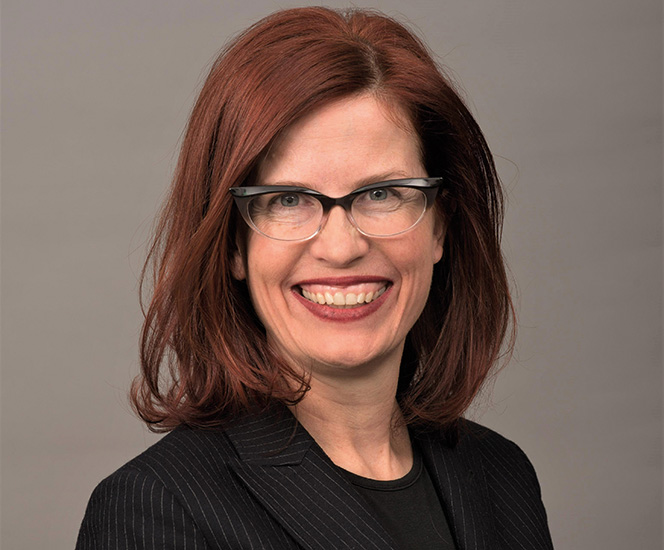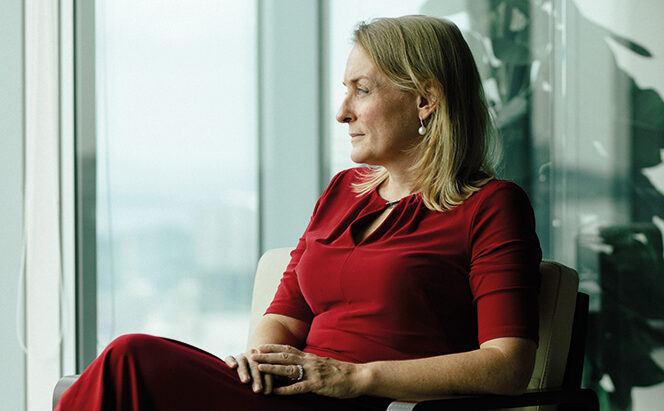
‘Why would I rip up an amazing strategy that’s put us in such a strong position?’ asks Simmons & Simmons new managing partner Emily Monastiriotis.
Previously international disputes head before replacing veteran leader Jeremy Hoyland in the top job earlier this month, Monastiriotis is trying to balance her commitment to the firm’s longstanding strategy with a desire to put her own stamp on things.
Her immediate solution is to enhance what is already there rather than start again. Short-term aims include growing and globalising client relationships, leading the pack when it comes to AI and tech, and addressing global gaps in the firm’s sector focus, including a new push on energy & infrastructure.
As it stands, the firm’s sector focus is built around four pillars: asset management and investment funds (AMIF), financial institutions (FI), healthcare and life sciences (HLS), and TMT, which, between them, account for more than 80% of Simmons’ firm-wide revenue.
Now Monastiriotis, a specialist in construction disputes, is mulling the potenial of adding a new fifth sector, either formally or informally. Such a move would ‘bring together the skillsets’ of recent hires in the energy, construction, and infrastructure industries, following the additions of partners including non-contentious construction partner Marianne Toghill from Clifford Chance, and private equity infrastructure specialist Waltter Kulvik from Eversheds Sutherland, in October 2024.
‘If you ask clients what they associate with Simmons, they would [already] say that HLS, AMIF, FI, energy, construction and infrastructure and TMT are our core sectors,’ she says of the firm’s areas of focus.
For all sectors the focus is to leverage relationships across practices and offices. ‘Institutionalising clients is where the big prize is,’ Monastiriotis notes, adding: ‘I’m looking to really grow those client relationships, deliver on our clients’ most complex problems and make full use of our global network. We need to ask ourselves why do people come to Simmons?’
Globalising client relationships and boosting revenue will be key if the firm is to retain its position in LB’s global 100 revenue ranking, where it currently sits at number 87 between Gowling WLG and Lewis Brisbois. It’s a goal that Monastiriotis describes as ‘absolutely key’ for the firm, despite insisting that chasing specific targets is ‘not the way to go’.
During her predecessor’s 15-year tenure, he oversaw revenue growth of 136% from £243m in 2011 to £574m in 2024 against a 141% increase in PEP from £445,000 in 2011 to £1.07m, having taken up the managing partner post in the wake of a failed merger with Mayer Brown, a host of partner departures and a drop in both revenue and profits.
Monastiriotis is effusive about Hoyland, who is set to take up a new role in Italy: ‘He’s got this incredible intuition. He sees a problem before it even turns into one and already knows the solution. And he’s great at bringing you into the conversation and making you feel part of the decision-making process.’
While Hoyland was at the helm, Simmons opted out of pursuing large US mergers and Monastiriotis is clear that a ‘big mega merger’ is not something she has any appetite for either.
This does not mean she wouldn’t consider a smaller US tie-up though. She describes the recent HSF Kramer Levin combination as an ‘interesting’ model and ‘one that makes sense from the outside looking in’. ‘There’s an interesting piece around niche mergers with the US firms. I think that could potentially be interesting,’ she adds.
Her focus for now though is squarely on building and strengthening Simmons’ current offering: ‘Making sure that we’re capitalising on our strengths is far more important than trying to add some revenue in the US,’ she insists.
As part of her role, Monastiriotis will be working closely with Penny Miller, the firm’s global financial services regulatory head, who will take up a newly created position as UK head in September.
The move will bring the UK in line with the rest of Simmons’ global network, as it was previously the only country without a local head, with Hoyland combining the duties. Monastiriotis believes splitting the role will enable her to take a more global approach.
Just as important to Monastiriotis’s plans as globalising clients is making use of new technology. Simmons acquired the regulated legal engineering firm Wavelength in 2019 and, more recently in 2023, launched Percy, a generative AI tool developed and used internally.
Describing fostering a deeper and broader use of AI at the firm as ‘maybe my number one priority’ she is bullish in her tech ambition: ‘I’m told we’re market-leading, but that’s not enough for me. I want to be way ahead of the market.’
Simmons in a nutshell
Number of offices: 22 (including Riyadh office set to open summer 2025)
Asia: Hong Kong, Tokyo, Shanghai, Beijing, Shenzhen, Singapore
Europe: Frankfurt, Düsseldorf, Munich, Dublin, Milan, Luxembourg, Madrid, Amsterdam, London, Bristol, Cambridge
Middle East: Dubai, Saudi Arabia
US: San Francisco
Financial results 2023-24
Turnover: $719.2m; PEP $1.35m
Sectors as % of turnover (LB estimates):
Financial institutions: 32%;
Asset management and investment funds: 28%;
Healthcare and life sciences: 10%;
TMT 10%
L500 Rankings:
Total number of L500 rankings global – 156
Total number of L500 rankings UK – 54
Total number of T1 rankings UK – 5
Number of ranked individual lawyers: UK and global – 160

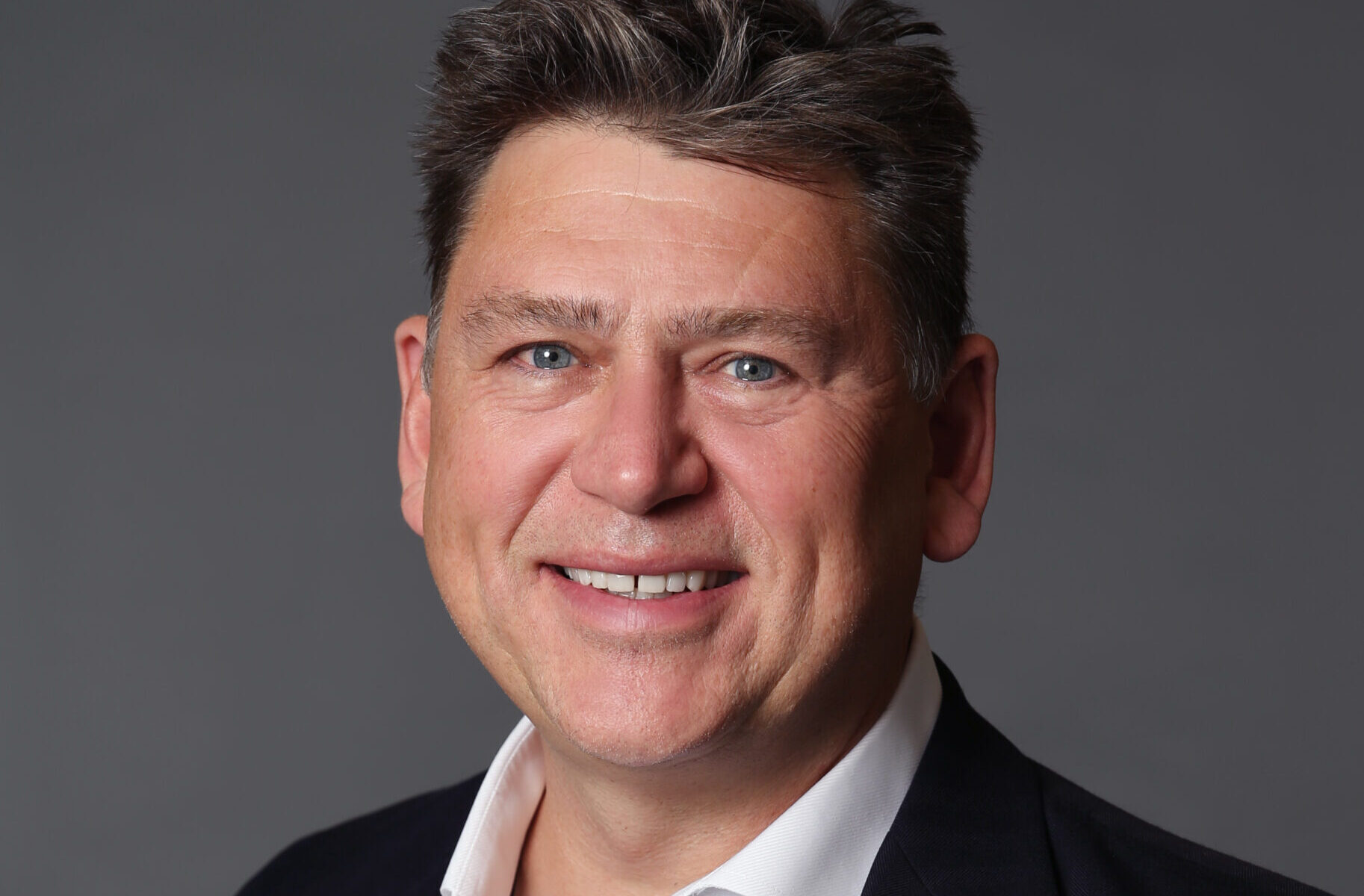
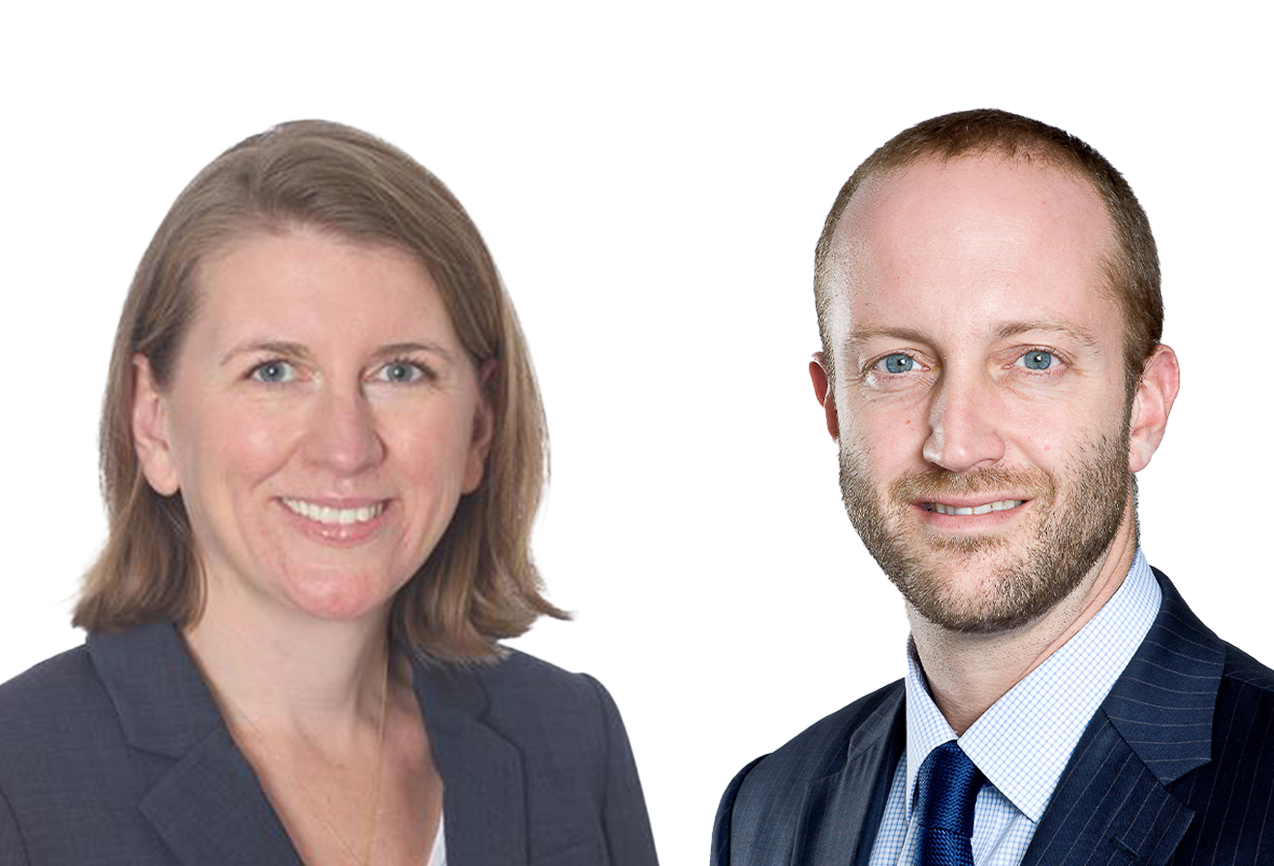
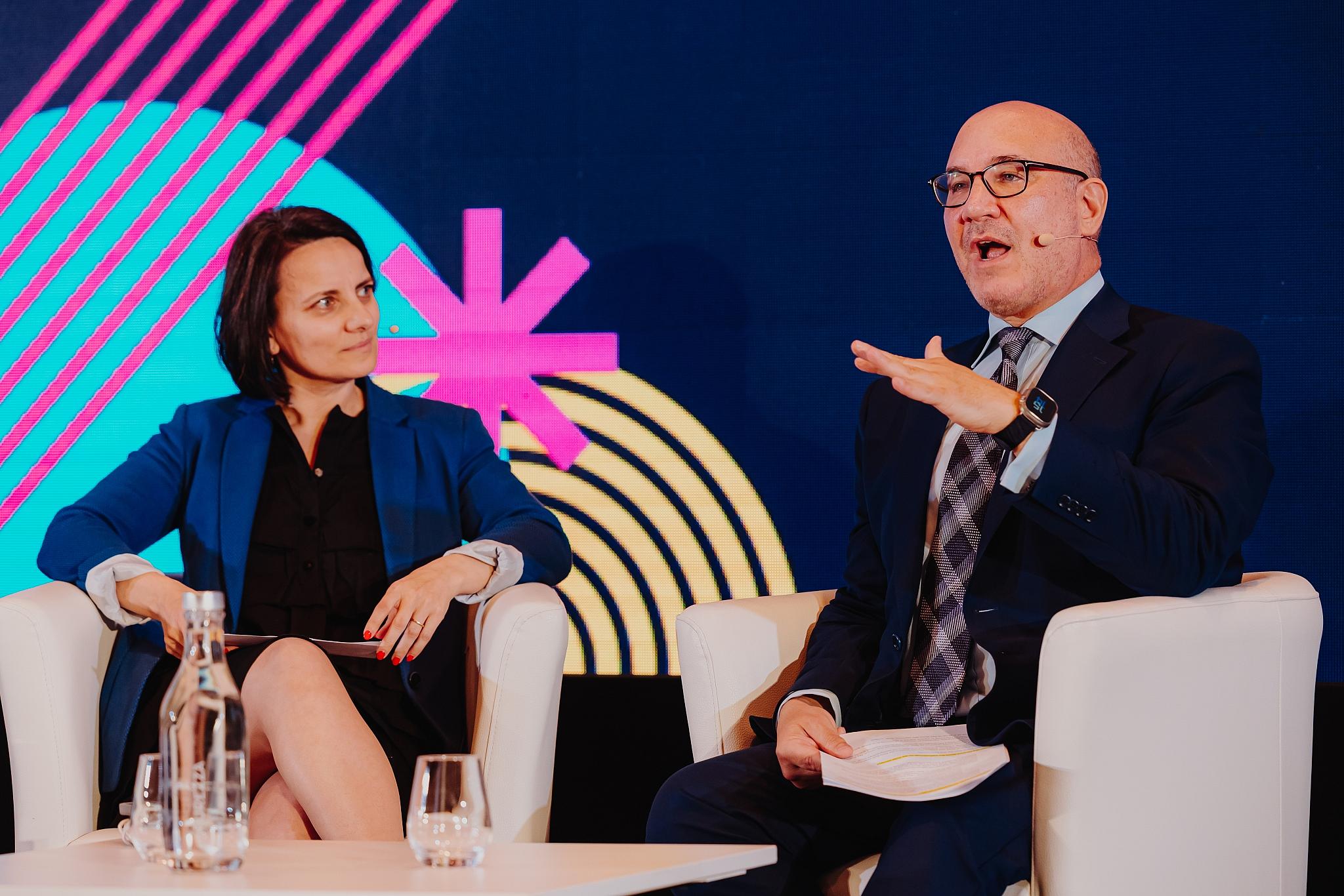
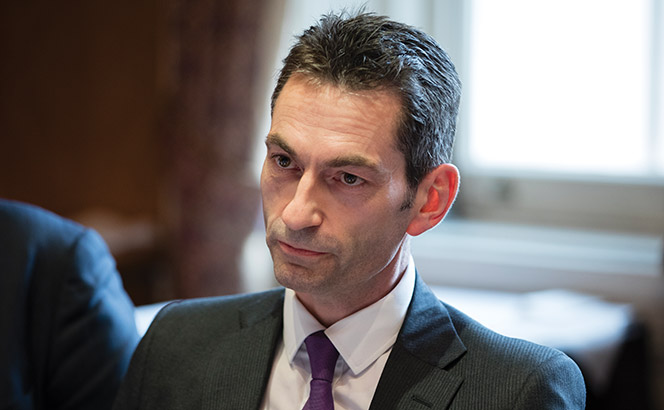
 ‘The growth of the market as a whole has slowed, but a few of us are still very much in growth mode’, adds Sidley London managing partner Tom Thesing (pictured right), whose firm placed 14th following a year in which it made headlines with the hire of a team of leveraged finance partners from Latham & Watkins led by Sam Hamilton and Jay Sadanandan.