
Latham & Watkins has promoted 40 new partners around the world, the firm announced today (30 October), with seven promotions in London – more than double last year’s number.
The total of 40 partners is up 67% on last year’s figure of 24, while the seven London partners mark an increase of more than 130% on last year’s three.
Of the seven, five join the firm’s core corporate and finance practices. Chris Cox and Harriet Stephenson join the M&A and private equity practice, Tamryn Gallagher and Julie Van der Meersche join the banking and private credit practice, and Jonathan Ritson-Candler joins the capital markets practice.
The remaining two London promotions are Brett Carr, joining the emerging companies and growth practice, and Calum Docherty, joining the data and technology transactions practice.
Across the rest of Europe the focus remains fixed on transactions, with Paris, Milan, and Frankfurt each welcoming a new partner in the M&A and private equity practice.
The bulk of the promotions were once again in the US, with eight partners made up in New York, six in Washington DC, four in Boston, eight across the firm’s California offices, and two each in Chicago and Houston.
Across the board, Latham has promoted 30 lawyers into the partnership across the US, up from 17 last year.
This year’s round saw the firm make up no partners outside of the US and Europe, in comparison to last year, when it made up one partner each in Riyadh and Tel Aviv.
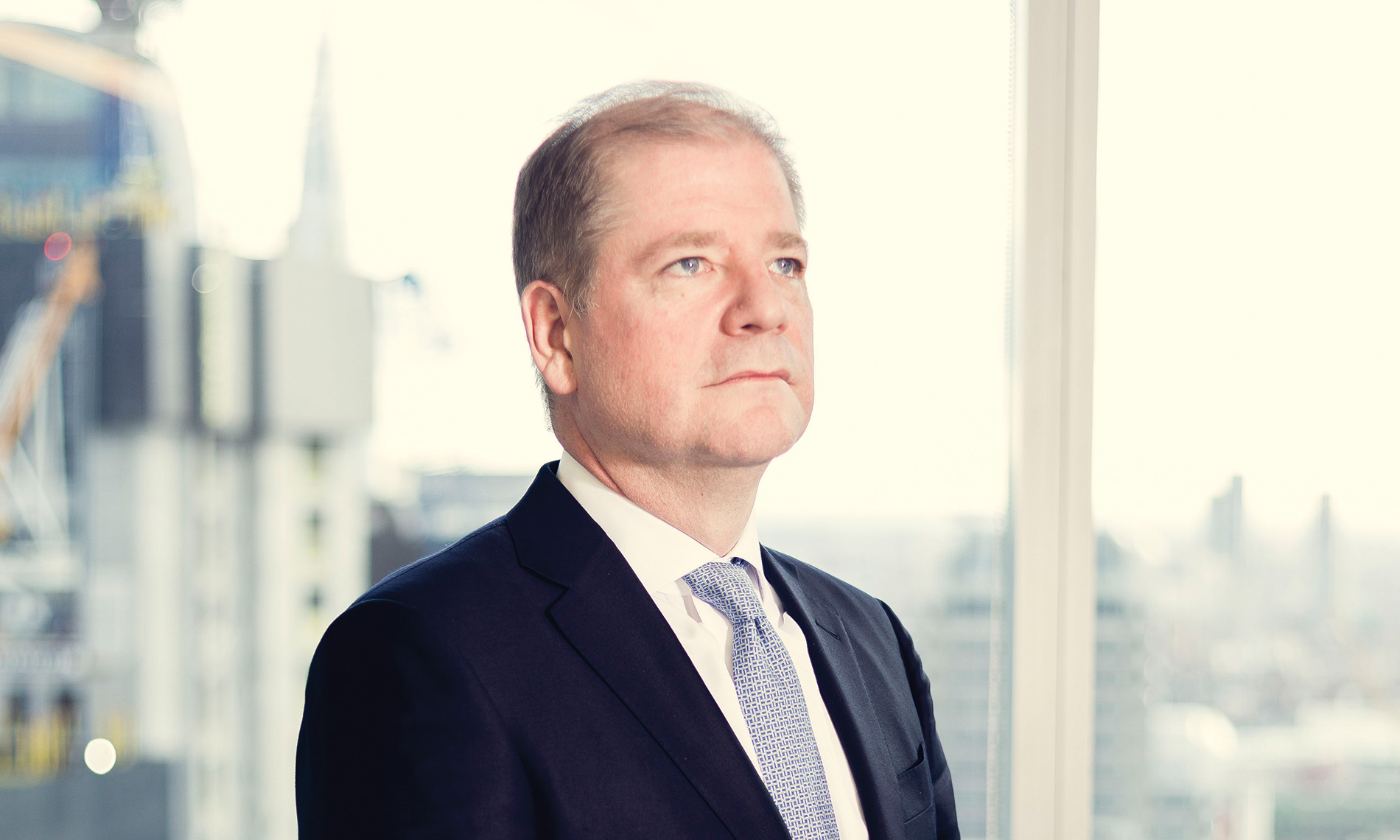
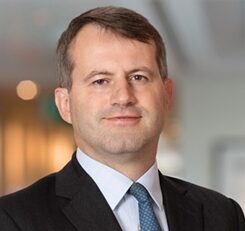
‘Today is an important and exciting day for our firm as we recognize and celebrate an amazing group of lawyers,’ said chair and managing partner Rich Trobman (pictured).
‘They have contributed significantly to the growth, success, and culture of Latham, and their promotions highlight the incredible depth of talent we have at our firm.’
The promotions are effective as of 1 January 2026.
The firm has also promoted 56 associates to the role of counsel, up from last year’s figure of 27. Earlier in the year, the firm promoted 19 counsel to the partnership, five of which were in London.
The announcement follows recent promotions by McDemott, which made up 74 partners in its first post-merger round, and White & Case, which made up 45.
The new partners are:
Europe
- Brett Carr, emerging companies and growth, London
- Chris Cox, M&A and private equity, London
- Calum Docherty, data and technology transactions, London
- Tamryn Gallagher, banking and private credit, London
- Jonathan Ritson-Candler, capital markets, London
- Harriet Stephenson, M&A and private equity, London
- Julie Van der Meersche, banking and private credit, London
- Michael Colle, M&A and private equity, Paris
- Andrea Stincardini, M&A and private equity, Milan
- Dominik Waldvogel, M&A and private equity, Frankfurt
United States
- Shane Alexander, banking and private credit, Los Angeles
- Savannah Burgoyne, white collar defense and investigations, Washington, D.C.
- Shannon Cheng, M&A and private equity, Orange County
- Shanta Chirravuri, M&A and private equity, New York
- Michael Cromer, real estate, New York
- Abigail Friedman, transactional tax, Washington, D.C.
- Daniel Gherardi, securities and M&A litigation, Bay Area
- Ryan Gold, capital markets, New York
- Brad Guest, M&A and private equity, Washington, D.C.
- Robin Gushman, antitrust and competition, Bay Area
- Alisa Hand, executive compensation, employment and benefits, New York
- Mike Hart-Slattery, investment funds, Washington, D.C.
- Clayton Heery, M&A and private equity, Houston
- Deborah Hinck, data and technology transactions, Boston
- Christian Hollweg, emerging companies and growth, San Diego
- David Johnson, antitrust and competition, Washington, D.C.
- Sandy Kugbei, capital markets, New York
- Lauren Lefcoe, M&A and private equity, Bay Area
- Anne Malinee, complex commercial litigation, Washington, D.C.
- Kaj Nielsen, capital markets, New York
- Samuel Niles, capital markets, Boston
- Alice Parker, M&A and private equity, Houston
- Harris (Hai) Pham, banking and private credit, Los Angeles
- Nathan Sandals, complex commercial litigation, Boston
- Will Schildknecht, connectivity, privacy and information, Los Angeles
- Samuel Steinman, real estate, New York
- Jennifer Tian, investment funds, Chicago
- Laki Triantafylidis, M&A and private equity, Boston
- Aida Vajzovic, real estate, New York
- Michael Zucker, transactional tax, Chicago























 Pinsent Masons saw revenue rise by 4.7% to a new record high of £680m over the year, a result senior partner Andrew Masraf (pictured) described as cause for celebration – while also acknowledging the scope for improvement.
 National firm Blake Morgan, which has six offices across the UK, boosted PEP by 8% to £349,000 in 2024-25, against a 4.6% increase in revenue; however managing partner Mike Wilson (pictured) said PEP could have been higher still, but for the firm’s strategy of investing profit back into the business.
 At Hogan Lovells, which put in one of the strongest performances of the international firms, with PEP up 9.1% to £2.4m, global corporate and finance head James Doyle (pictured) stressed the importance of adaptability in a fast-changing marketplace.