I’ve always had a strong work ethic. My brother is severely mentally disabled and we were extremely close growing up. That experience gives me profound gratitude for the opportunities I’ve been given and, I like to think, deep responsibility to make the most of them. I think that’s where my drive comes from; in part, at least, a sense I was doing this for both of us.
I gain huge satisfaction from hard work because I know what I’m capable of. Rightly or wrongly, I’ve always believed I could be successful if I work harder than the next person. I’ve been lucky, but I hope I’ve created some luck too.
I never imagined I’d find myself here at Freshfields some 21 years later. I always thought I would do something entrepreneurial and commercial. At university in Edinburgh, a few of us set up a stocks & shares club with money from student loans, and from there developed a business plan for a student financial website – it was basically a precursor of a quasi-student wonga.com. I see now you can square that circle in law.
When I came back to university from my Erasmus year in Aix-Marseilles, I realised everyone else had been busy applying for training contracts while I had been preoccupied planning an overland trip from London to Nairobi for charity. I panicked because I hadn’t thought about what I wanted to do, beyond doing an internship at Lazard. The perceived wisdom at that time was that you qualified as a lawyer, did two years, then went and did something more interesting. Either I’ve never found anything more interesting due to a lack of imagination on my part, or the law just became more interesting for me.
I could well imagine myself in the toolbox company or multi-discipline world I envisaged growing up when it’s time for me to call it a day at Freshfields. I don’t imagine it will be any time soon, but I’d love to see myself doing something that my peers, colleagues and clients look at and go ‘that’s really cool’. Perhaps not as a lawyer; more like a COO or CEO for a spin-out from one of our clients. That’s why I really enjoy having a broad portfolio of interests outside the firm that allow me to use all the skillsets I’ve developed and learn some new ones I can deploy for our clients’ benefit.
I sometimes wonder if some partners hit the end of their law firm careers and think their skillsets will be transferable, but then find themselves frustrated because they’re not. I hope I’m sufficiently humble to have realised I’m not going to be relevant or interesting unless I have a diverse set of skills.
Right now, I’m a non-executive director of a firm in the creative industries, which I love doing, where I learn a tremendous amount from the chair and the executive. I’m also a member of a few philanthropic organisations and think tanks, like The Royal United Services Institute (RUSI), which deals with defence and security. These roles challenge me in different ways, and that’s the point.
I used to describe being a private equity lawyer as the ultimate backstage pass – you can get into any situation, any conversation or investment. Then I saw my byline published by a fantastic alumna who went to join one of our clients with the addition that they’d heard my line on this, and decided they’d rather just be in private equity itself. That was fabulously humbling, in a good way. I don’t use that phrase so much anymore.
I’ve always wanted the profession (and firms) to be ruthlessly meritocratic and straightforward. That’s always appealed to my sense of fairness. But, in order to have a ruthless meritocracy, people need to have the same opportunities and you need to look for raw talent. We are now much better at identifying and being open to talent in all its forms and bringing that through. It’s the right thing to do for us, our clients, the industry and our communities. I want to ensure that people get at least the same opportunity as I did to come into this career and feel comfortable within it too; that’s equally if not more important. There remain barriers and prejudices in areas you wouldn’t expect them to be in our industry. I’m extremely disappointed by that.
Somebody who has been instrumental to my career in many ways is Chris Bown [the founder of Freshfields’ private equity practice and now senior adviser at CVC], who has been a mentor to me the whole way through and remains so. What’s been so powerful about Chris’s interventions is that he is very permissioning, saying: why don’t you speak to them about this or that. Ask the question, why not?
I’ll never forget one of my first deals – helping Aston Martin with a capital raise. I’d never seen the factory. So I asked and a few of us went. Seeing the production line, the component parts and the client’s reaction to our interest in their business taught me an important lesson. Get out from behind your desk. Challenge your own assumptions.
Dare to ask the question – what happens if you press the infamous red button?
There are many career highs, but one of them was definitely getting the call from CVC on my first day as a partner to say: ‘we’re selling Formula One’ – the stars aligned that day. More recently, I was in the room when the bell was rung as CVC listed on Euronext. Watching the share price tick up and seeing the response from people in the room was hugely exhilarating after more than three years’ work on our part.
My low was writing an email to a client where I agreed with their view of a closing account figure, and then added that he also needed to consider X and Y. He ran with his number, and the transaction proceeded, but it was out by about £75m; at which point they said the number had been confirmed by Freshfields. It was really, really, really sweaty.
My learning was that I did that because I was too eager to please and didn’t want to be too direct. Over the years, I’ve tried to become more direct and straight with people. More honest. There’s a joke about what an English person says, what they mean and what’s heard, and those three things are always different. In law, clarity matters. With people, there’s huge benefit in just being straightforward.
When that mistake happened, the partner just said: ‘good luck with that’. I don’t think that would happen now. I think it’s great that the industry has evolved and become so much more supportive.
When I was starting out I was given huge quantities of rope, with which, in all honesty, I probably hanged myself on occasion. Lessons were learned the hard way. I do sometimes worry that we don’t give people enough opportunity to fail now; the opportunity to fully learn. If you don’t give people the opportunity to be allowed to fail, for it to be safe to fail and not failsafe, then I worry they won’t push themselves or test themselves.
I’m now intensely focused on supporting the next generation by creating an environment where people are inspired, encouraged to aspire, and are empowered to seize this amazing opportunity.
I don’t proactively seek out management roles, but I do like leadership. It’s an interesting distinction. There are lots of different types of leadership and leader. Sometimes you need to be the visionary leader, which is ‘this is the strategy, this is what we’re trying to achieve’. Sometimes you need to be the directive leader – ‘this is what we need to do and this is how we’re going to do it’. Sometimes you need to be the servant leader, which is ‘this is what I’m doing, and I would encourage you to do the same as me’, or ‘this is what I’m doing for you as a servant of the firm, please follow me or come with me’.
If I had just one piece of advice to my younger self it would be to calm down. In every capacity. And also, let things break sometimes. Let things go wrong. When I was a senior associate, the thought of something going wrong on my watch was literally world-ending, but I now realise you sometimes you need to let things go wrong. Partly because you need people to learn from that experience, and partly because out of the wreckage you can actually build something better. Let the train hit the buffers.
My tips for success would be to be inquisitive and be permissioning. We’re all very quick to typecast ourselves and say, ‘this is my lane’. But sometimes you need someone to hold a mirror up to you and say ‘you are no longer the person you were, and I give you permission to be the person you have become’. You need to be that person.
I’m an outdoors person. We live in Wiltshire, in the middle of nowhere. I love to get off the train and kick everything else away. My family is absolutely everything. We have four children, two dogs and 11 chickens; then there are about 1,300 sheep in the field next door. I can’t always be at the carol concert or at pick-up from school, but I make sure that when our children do have me they have my undivided attention. That we do something fun together.
You could say my hobby is farming. I’ve always been drawn to rare cattle breeds, but they make a terrible mess. There are often sheep in the next door field. I’ve delivered lambs, which is hard work but amazing. It’s not quite Clarkson’s Farm at home, but it’s not far off and it’s all the mayhem that goes with that. Which I love.
I’m quite practical. You have to be quite handy. I made my wife a table from a walnut tree that came down in my parents-in-law’s garden for her wedding present. It’s very simple, with a waxed finish suspended in a cradle made from oak.
How do I have the time? I work extremely hard during the week, but my weekends are non-negotiable unless it’s absolutely critical.
I will proactively dream up things that I’m going to do at the weekend to restore, refresh, and get perspective, because if you do this job seven days a week, you’ll go absolutely mad. Making toy boats with the children, messing about with a go-kart, refurbishing an old Land Rover, creating ‘rooms’ in the garden or delivering lambs is a little bit of a world away from what I do day-to-day. Just saying.
I hope I’ve developed a level of emotional intelligence that I’ve come to realise is especially valuable in our profession. If I have any particular strength in that area, I owe it to my brother who taught me what it is to communicate; to listen, to observe, and to understand in ways that have shaped who I am, both personally and professionally. And I consider that one of my greatest privileges.










 ‘We were looking at how we go through the next tier, up to around 25th. We looked at the competitors between 50 and 25 – it’s a very crowded legal services market and a lot of the firms looked fairly similar. We wanted to differentiate Gateley in some way, make ourselves look different, and therefore potentially make ourselves look more compelling, both internally and externally.’
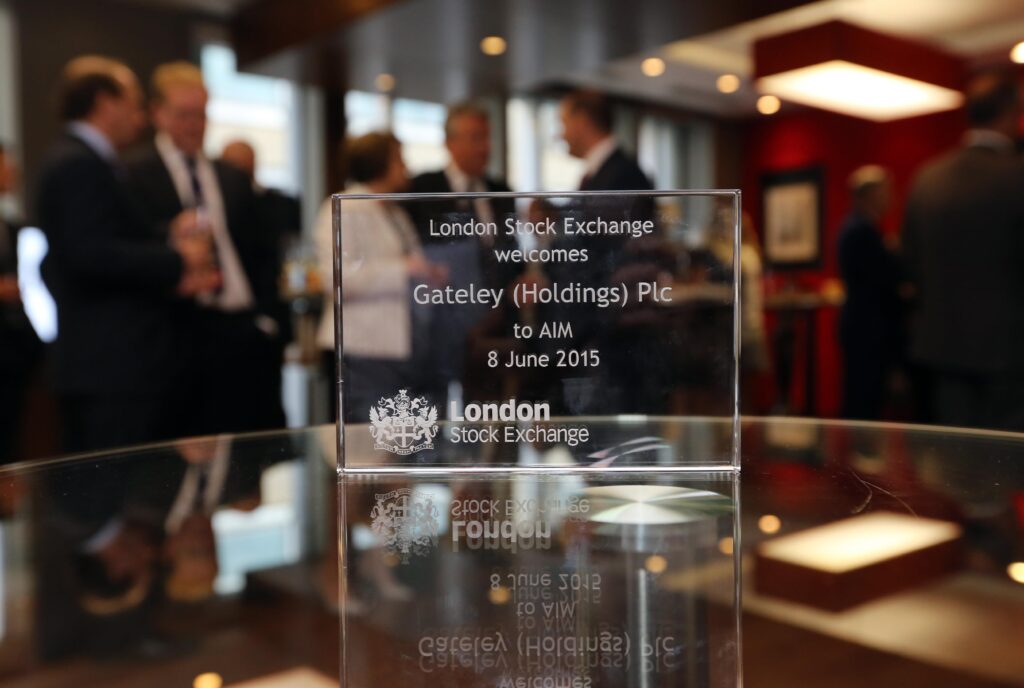 Some of the money will also be available for lateral team hires, in the vein of the six-lawyer corporate team Gateley recruited from Clyde & Co led by partners Nora Al Muhamad and Darren Harris in March this year as part of what Waldie refers to as a ‘reboot’ of the firm’s Dubai operations.