
Sponsored briefing: The calculation of individual dismissals under Directive 98/59/EC

In these turbulent times we are experiencing in the workplace, with a constantly changing legislative framework, the Spanish legal landscape was recently altered by the judgment handed down on 11 January 2020 by the Court of Justice of the European Union (CJEU), on collective redundancies (case C-300/19).

Whereas, just before the summer, news was appearing in the Spanish general press and specialised media of local court rulings rendering null and void terminations of employment contracts, where they were based on loss of business linked to Covid-19, now, this judgment handed down by the CJEU in Luxembourg has opened a new possibility for rendering null and void individual dismissals, linked to a tightening of the criteria used to calculate collective redundancy thresholds, under Directive 98/59/EC on the approximation of the laws of the member states relating to collective redundancies. Continue reading “Sponsored briefing: The calculation of individual dismissals under Directive 98/59/EC”


Sponsored Briefing: Keep it simple

VdA

Many of us were caught in the making of transactions when the Covid-19 outbreak started or, at least, hit Europe causing a complete shutdown in many countries or started them while confined at home experiencing the sudden and unexpected demise of the economy.

While assessing the business impacts of the pandemic in ongoing transactions and those initiated while navigating new unchartered waters, lawyers, vendors and purchasers started pondering the legal impacts of this ‘new normal’ on transactions agreements and how risk-sharing provisions would operate in this context and its aftermath. Following the 2008 financial crisis, lawyers submerged on discussions on how provisions in their legal systems would operate, namely on supervening change of circumstances affecting contracts, and if the lessons then learned, carved in jurisprudence and scholars’ extensive essays, would apply to transactions generated prior or in the midst of the pandemic. The same amount of time and consideration was dedicated to the discussion on how effective (more or less) standardised risk-sharing provisions would operate in transactions preceding this Covid-19 crisis but not yet completed and how such provisions should play out in acquisitions signed and concluded while we still are besieged by the virus. Provisions on representations and warranties, interim management periods, material adverse change, force majeure, hardship and others were (are) again revisited. Continue reading “Sponsored Briefing: Keep it simple”

UK offshore report: Staying afloat

‘Anyone who says they’re not struggling would be lying,’ says Tim Pearce, global managing partner of Bedell Cristin, referring to the Jersey market. ‘Every sector of the economy and every business has struggled or suffered as a result of Covid, though businesses have struggled in different ways. Some financially, others socially. Others are struggling in terms of pure management. But for us, and indeed for the offshore industry as a whole, we’ve weathered the storm OK so far.’

Pearce’s cautiously optimistic outlook reverberates throughout the discussions with partners across the Bailiwicks of Jersey and Guernsey in the Channel Islands archipelago and the Isle of Man in the Irish Sea to the north – the jurisdictions collectively known as the Crown Dependencies. Unlike the UK, domestic property is booming, buoyed by numerous factors. ‘In times of crisis, people invest in what they know,’ says Pearce. ‘People are looking for safe havens right now and property in all of our offshore jurisdictions is benefiting from that.’ Continue reading “UK offshore report: Staying afloat”

Caribbean offshore report: End of the storm?

The Caribbean’s offshore financial centres have faced their fair share of challenges in recent years thanks to the increased international scrutiny of the tax haven environments, the impact of falling oil prices and the business interruption caused by the seemingly endless cycle of hurricanes, which sees the region bear the brunt of the ever-pervasive impact of climate change. Add to that a global pandemic, and there’s certainly the potential for a substantial economic disaster.

While the Covid-19 infection numbers for the Caribbean as a whole have remained low thanks to quick action by the local governments to close borders, enact temporary lockdowns and implement testing and contact tracing methods, the primary impact of the coronavirus pandemic on the Caribbean is undoubtedly on tourism. For Bermuda, the British Virgin Islands (BVI) and the Cayman Islands (Cayman), the tourism industry contributes 28%, 52% and 70% of the average GDP respectively and figures suggest that, at worst, 2020 could see a 71% reduction in the number of international visitors. Continue reading “Caribbean offshore report: End of the storm?”

Letter from Iberia – Despite global meltdown, local lawyers remain upbeat

For most, May 2019 will feel like a lifetime ago, and Iberia is little different. When Legal Business last visited its legal market, the major talking point was the impact of highly-regarded dealmaker Juan Picón’s move from DLA Piper to Latham & Watkins the year before.

Less than 12 months later on 14 March 2020, the Spanish government imposed a national lockdown in response to the Covid-19 crisis. On 29 March, it was announced that, beginning the following day, all non-essential workers were ordered to remain at home for the next 14 days. It quickly became the case that Spain became one of Europe’s worst-affected countries, being the second country after Russia to record half a million cases of the disease. Continue reading “Letter from Iberia – Despite global meltdown, local lawyers remain upbeat”

The Global 100 Overview: Unstoppable forces

In Legal Businesslast Global 100 issue, we reported on a ‘relatively benign’ 2018/19 for the world’s top 100 law firms compared to the tumultuous three years that preceded it. The headwinds caused by increased protectionism in the US and ongoing acrimony between the UK and Europe had subsided somewhat after firms recovered from the initial shock of an infamous 2016. The result was an industry enjoying a sustained period of serious growth and momentum.

2020, however, brought an abrupt end to this period of plenty. If a global health pandemic that plunged the world’s largest economies into self-imposed lockdown was not challenging enough, there was also a drama-laden US presidential election. And buried amid this chaos, it is easy to forget the UK is marking the anniversary of Boris Johnson’s landslide electoral victory of last December, which mandated a potential no-deal exit from the European Union. At the time of writing, chances of a deal appear no better than 50/50. Continue reading “The Global 100 Overview: Unstoppable forces”

The Global 100: Analysis – What’s the deal with DLA?

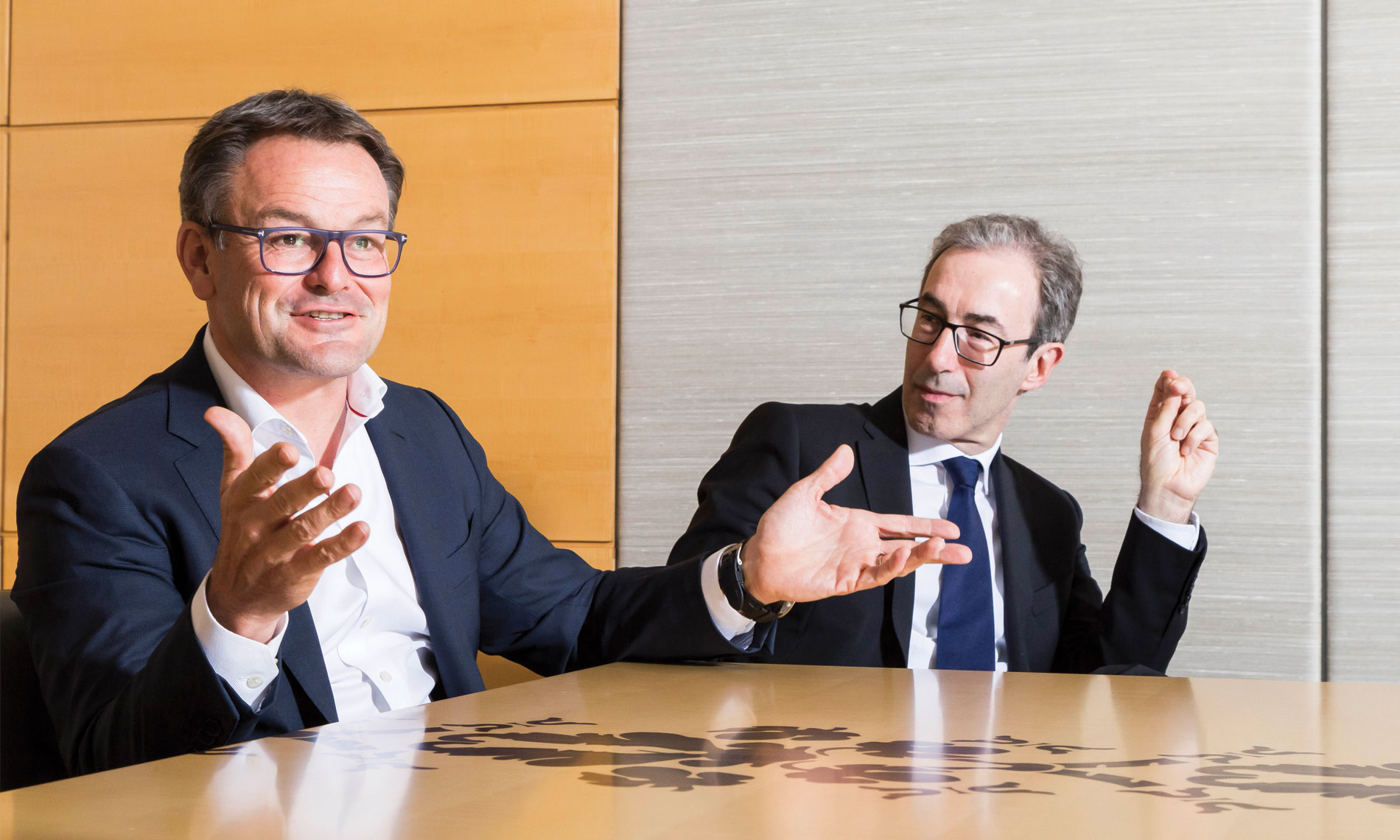
‘The whole place didn’t collapse, did it?’ So quips Simon Levine, almost six years since he took on the leviathan challenge of succeeding Sir Nigel Knowles as global co-chief executive and managing partner of DLA Piper. Nevertheless Levine, characteristically self-deprecating and garrulous, especially in light of the firm not being razed to the ground, has clearly never shaken off the stigma of the succession being likened by Sir Nigel himself to Manchester United’s legend Sir Alex Ferguson stepping down. As if taking over from a man acclaimed for shaping DLA into what was once the world’s largest law firm over 18 years was not daunting enough. ‘I didn’t want to go the way of Moysey,’ said Levine at the time.

It is rare for opinion to be unanimously glowing about a law firm leader, but it was about Knowles, who in May became chief executive of listed law firm DWF in what may be perceived as arguably an even bigger challenge than what lay before him at DLA. Continue reading “The Global 100: Analysis – What’s the deal with DLA?”

Failings in Beckwith prosecution undermine #MeToo fight and muzzle regulator

The High Court ruling in November that overturned the Solicitors Disciplinary Tribunal (SDT)’s finding against ex-Freshfields partner Ryan Beckwith has sent shockwaves reverberating around the profession.

In the unlikely event that the substance of the ruling has escaped anyone, the Queen’s Bench Division’s judgment reversed the SDT’s October 2019 findings that Beckwith’s drunken sexual activity with an intoxicated associate breached Principles 2 and 6 of the Solicitors Regulation Authority (SRA)’s code of conduct, reversed his £35,000 fine and quashed the £200,000 costs order. Continue reading “Failings in Beckwith prosecution undermine #MeToo fight and muzzle regulator”

Not a roaring start to the 2020s but bravery is key

art deco-style 2020s airship in London

The ink was barely dry on our cover feature at the start of this year – an upbeat look at how the UK profession will evolve through the 2020s following a bruising decade – when a global pandemic hit. Despite an apocalyptic lockdown year, the piece – ‘The vision thing’ – has aged well and makes for interesting reading in the context of what has happened. But any optimism to be gleaned from our predictions for a resurgent legal profession over the next decade has been tempered in the current climate.

But as the Roaring Twenties came to an abrupt end in 1929 with the Wall Street Crash, so can we hope that this decade can work in reverse. It has started with a crisis but law firms, hardened by more than a decade of conditioning and resilience, are better placed to pick themselves up and dust themselves down. Continue reading “Not a roaring start to the 2020s but bravery is key”

Global 100 European M&A focus: Riding a black swan

‘What has happened to us?’ An M&A veteran shakes his head incredulously, having uttered the now ubiquitous phrase: ‘stay safe’ to conclude a Zoom call with Legal Business.

This time last year, rainmakers could hardly have imagined being forced into a neverending merry-go-round of video conferencing, let alone ending each conversation with something reminiscent of a BBC Crimewatch catchphrase. Continue reading “Global 100 European M&A focus: Riding a black swan”

Life During Law: Samantha Mobley

My family story is not one of generations of lawyers. My great grandfather was a coal miner in Wales.

I went to school in South Africa and grew up in the apartheid era. My parents moved there when I was a small child and I had always wanted to move back to the UK. I applied to read law at Bristol University and I’ve never regretted it. I worked at the Albion pub in Clifton to pay some of my way through university. Continue reading “Life During Law: Samantha Mobley”

The Global 100 – Core Stats

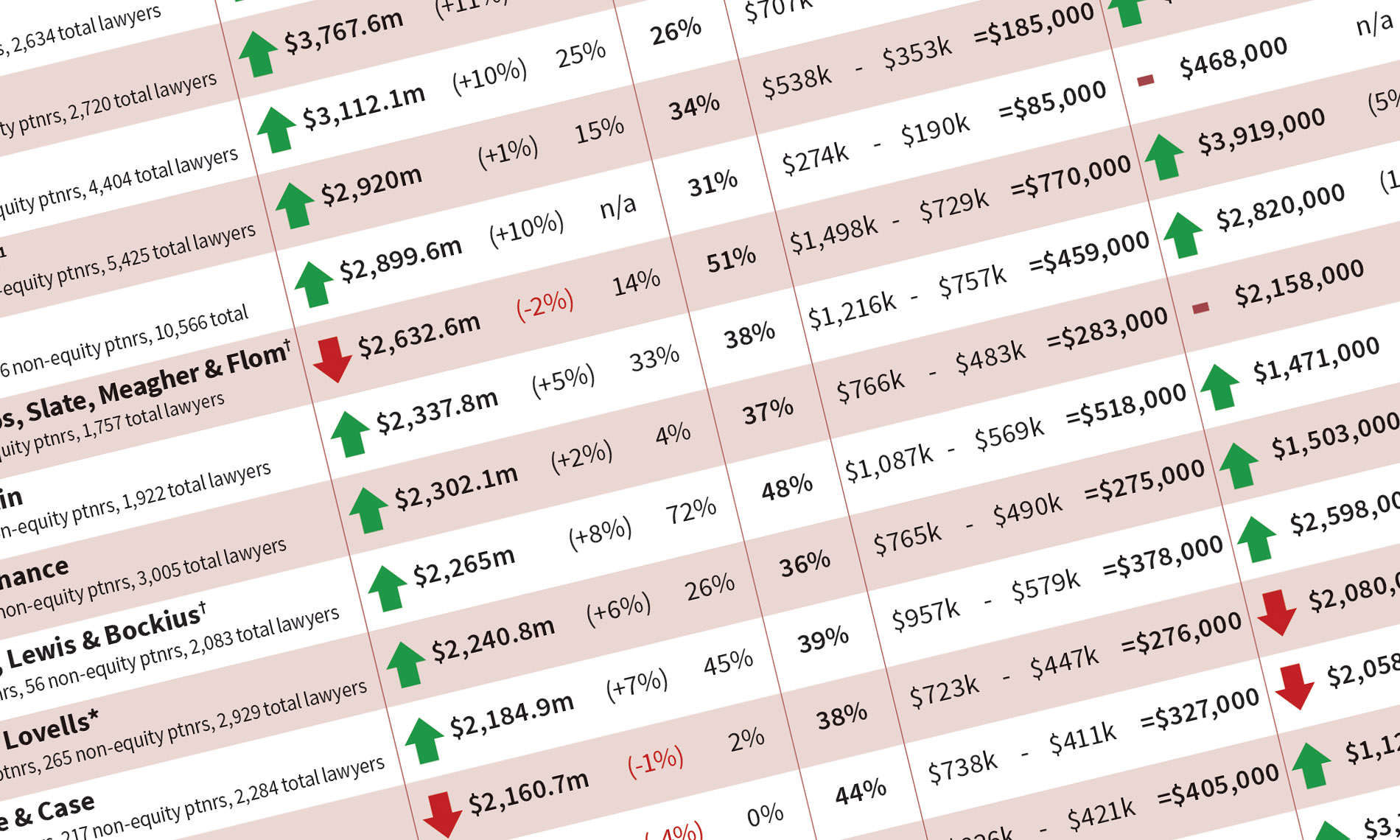
Top 10 firms by revenue change

Top ten firms by PEP change

Global 100 averages

Revenue and PEP growth across the Global 100

Return to Global 100 menu

The Legal 500 View: The gender agenda: the rankings and firms making progress on diversity

Caroline Edwards

Legal 500 editors Georgina Stanley and Ben Wheway take an in-depth look at gender diversity in the latest Legal 500 London rankings

‘Institutional male dominance is hard to shift – it isn’t enough to want to change; sometimes these things are structural,’ says Travers Smith disputes partner Caroline Edwards (pictured) of the difficulties women lawyers can face trying to build their profile in the legal market and the directories that reflect it, including The Legal 500. Continue reading “The Legal 500 View: The gender agenda: the rankings and firms making progress on diversity”

Sponsored practice area spotlight: Insolvency and restructuring: Combining unique skills to achieve a successful outcome

Prager Dreifuss

Insolvency and restructuring proceedings are intricate and complex. Practitioners must be able to combine legal knowledge, in particular in the areas of litigation, finance and transactions, with strategic, tactical and managerial skills to deliver positive results.

Prager Dreifuss has extensive experience and a longstanding tradition in insolvency and restructuring matters. In the wake of the financial crisis, we combined our finance and bankruptcy knowledge which enabled us to assist in complex project financing, also lately in a major multinational commodity project. Our attorneys regularly represent creditors, some of which are banks, hedge funds or other financial institutions, in large national and international insolvency and restructuring proceedings, whether in registering or purchasing claims or in enforcing disputed claims vis-à-vis bankruptcy administrators and before courts. Assisting clients in the recognition and enforcement of foreign judgments in Switzerland and abroad is a key feature of our daily practice. Frequently and increasingly, we are retained by creditors in enforcing claims (awards, bonds) against sovereigns. Continue reading “Sponsored practice area spotlight: Insolvency and restructuring: Combining unique skills to achieve a successful outcome”

Sponsored briefing: The pandemic and Portuguese capital markets

VdA

In 2019, our article in Legal Business ended as follows: ‘Therefore, with the benefits of a renewed legal and regulatory framework and of an environment where low interest rates facilitate access to funding, 2020 is likely to follow in line with the current year, promising continued intense activity and diversity’. In January 2020, VdA organised an international conference on sustainable finance, where we discussed the growing relevance of ESG factors with key players.

However, unpredictably, by March 2020 it was clear that our prediction of ‘continued intense activity and diversity’ was beginning to make little or no sense, as the Covid-19 pandemic reached Portugal (and the world). By the end of March, an unprecedented legal moratoria regime was enacted and subsequently extended until the end of September 2021. Very dark clouds were on the horizon for those looking for funding or refinancing, and on top of the legal moratoria regime, force majeure and material adverse change clauses became hot topics of discussion. Continue reading “Sponsored briefing: The pandemic and Portuguese capital markets”