Lee Saunders, editor at Nishlis Legal Marketing, takes a closer look at Israel’s dynamic and robust legal market
With more lawyers per capita than any other country and with over 110 international law firms with an Israel Desk, Israel is home to one of the most dynamic and robust legal markets. The two largest law firms have a little over 400 lawyers, the eight largest law firms have more than 200 lawyers and the top 20 law firms have over 80 lawyers, all in all, Israel’s top-20 law firms contain 5% of all the lawyers in Israel.
Diversity
With respect to gender equality, Israel’s 70,000 lawyers are split almost equally between male and female. In fact, Israel has four female Supreme Court judges – surpassing the number in the UK, whose own first female president, Baroness Brenda Hale, was appointed only in 2017. By then, Israel was about to start on its third female president, with its first, Dorit Beinisch appointed in 2006. Furthermore, by this point, Israel had already appointed two female Ministers of Justice: Tzipi Livni – serving three times – and more recently, Ayelet Shaked in 2015.
Innovation in the Start-Up Nation
The country is an attractive destination, mostly due its principal export: the innovation of its hi-tech sector. Israeli start-ups raised a record monthly figure of over US$1.2bn in January 2021, according to press releases from the companies and their investors. Israeli tech companies raised a record US$10bn+ in 2020, according to IVC-ZAG, up from US$8.3bn raised in 2019, and US$6.4bn in 2018.
In many instances, financing rounds by tech companies that facilitate remote working and healthcare and cyber security, have been boosted rather than hampered by the Covid-19 pandemic. For example, in response to the Covid-19 pandemic, organisations around the world had to quickly mobilise and move to remote work platforms. Israel is at the forefront, with respect to the cyber industry.
Opportunities in the Middle East and North Africa
It is technology that has been at the forefront of recent exciting developments with the United Arab Emirates (UAE) and Morocco. Last year’s landmark agreement formalising ties between Israel and the UAE has investors and entrepreneurs flush with genuine excitement and in October, Israel and the UAE announced the creation of a new trilateral fund – the Abraham Fund – with the US, potentially worth more than US$3bn. In addition to cyber, defense, healthcare, AI, while in the field of smart transportation, Israel’s Mobileye announced a strategic partnership with the UAE’s Al Habtoor Group (AHG) to begin setting up the infrastructure to test autonomous vehicles in Dubai. After the UAE, Morocco became the fourth country in recent months to normalise relations, opening up opportunities in food, agri-tech and desert agriculture, as well as solar and wind energy.
Israel Law Firm Rankings Table 2021*
* Disclaimer – the table was derived from size, quality of work (according to The Legal 500 rankings) and cross-border capabilities.
While much of the country works from home we are providing more options for you to access your copy of Legal Business. Please see below for links to a limited version followed by a complete version. The complete version is only accessible to subscribers. Please make sure you are logged into the site to see the link.
Despite starting the financial year by reducing partner drawings in response to the pandemic as well as other cost-cutting measures, Reed Smith has unveiled a respectable set of results that saw global revenue rise to over $1.3bn.
There was an in-house flavour to this week’s recruitment round, while Addleshaw Goddard, Davis Polk, Paul Hastings and Faegre Drinker Biddle & Reath all made key partner hires.
In a Supreme Court judgment with potentially profound implications on the future of the gig economy, it was held that Uber drivers are workers entitled to full employment rights.
Taking the helm of a global law firm is no small feat at the best of times, much less so amid a global pandemic. However Hogan Lovells’ chief executive Miguel Zaldivar and his deputy Michael Davison, who assumed their roles last summer, had cause for cheer as the pair revealed a solid set of financial results, including a 31% surge in profit per equity partner (PEP) to $1.97m from $1.5m in 2019.
Cooley’s London office has suffered a 4% revenue drop following the loss of its intellectual property team amid a striking 25% surge in PEP to $3.2m and strong financials globally.
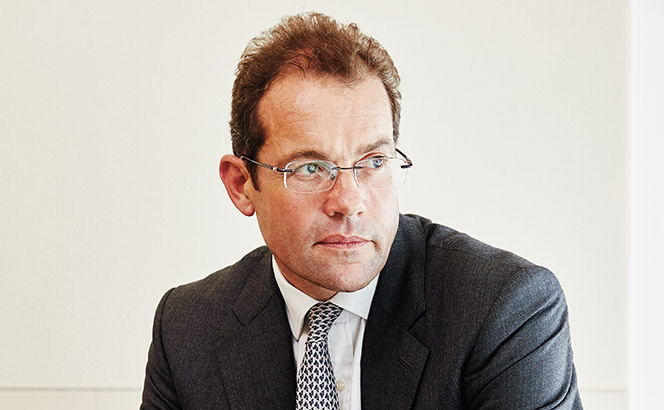
Charlie Jacobs, senior partner, chairman and rainmaker of Linklaters has taken the road less travelled for outgoing law firm leaders, landing himself the role of co-head of investment banking at JP Morgan.
The audacious move will see Jacobs (pictured), who in January announced he was leaving the Magic Circle firm in October after 30 years, replace banking industry stalwart Ed Byers as he is promoted to the solely client-facing role of vice chair of UK investment banking. Jacobs will join existing co-chair David Lomer in the dual role. Continue reading “Diversity guaranteed in Linklaters senior partner race as Jacobs takes JP Morgan role”
Allen & Overy (A&O) has made a significant US leveraged finance play by hiring a partner from White & Case, as a host of firms added to their benches internationally.
White & Case has traversed the pandemic minefield to reveal its strongest City financial results yet, with the London office increasing revenue by 18% in 2020 to $397m from $337m in 2019.
For quite some time now the legal profession has acknowledged that more needs to be done to develop female talent, and there has been much discussion about women in the law. Having those conversations is a great start, but the practical piece is often missing. We wanted to develop a programme that would have a real impact on the lives and careers of female attorneys. What we have started with Finnegan FORWARD, and what we will continue to develop over the coming months, is a set of tools and resources that will help women advance their careers.
As science and engineering professionals, we are aware that women in STEM-related areas of law face a number of obstacles to career progression. Therefore, we were interested in finding ways to move the needle when it comes to our diversity and inclusion initiatives.
When we sat down to plan the Finnegan FORWARD initiatives, we wanted to make sure our female attorneys were given a clear path to partnership. The first step was to identify the practical barriers women face in the legal profession. One consistent challenge female attorneys face, both within their firms and when developing relationships with clients, is how to best market themselves. As a generalisation, women tend to downplay their experience. If a female attorney is not, for example, comfortable listing her relevant experiences or is not certain that her experiences are relevant to a particular matter, it can result in her being missed in a pool of candidates. It takes conscious effort to routinely think about everything you’ve done and been exposed to, but that is a helpful practice if you want to be more visible within a firm.
No one in this firm is ever going to overlook a qualified female attorney, but they may not see that there is a suitably qualified attorney available. We are encouraging women to put their hands up for a role on the team so that they are best positioned to get more opportunities within the firm.
Junior lawyers may sometimes assume that because they haven’t worked on a particular type of matter for 20 years they don’t have the necessary experience for a particular matter; and not every lawyer knows how to best present their experience and expertise in a particular area and how it may be beneficial to a team. Often, clients want lawyers who have approached problems from a variety of angles and who bring new and creative solutions to the table. At Finnegan FORWARD, we run programmes that help lawyers better understand how to interpret the experience they have and what qualifies as experience for a particular matter.
The other big issue we wanted to address is how female lawyers can improve their visibility with clients. Successful lawyers have inevitably developed a book of business – they have clients who have worked with them before and who trust them. These relationships of trust are foundational to a partner’s practice, and helping lawyers form those reputations is an important to their career development. We are working hard to make sure our more junior female attorneys have opportunities to network, or to spend time with mentors who can help them along that path. We are also helping female attorneys carve out a niche practice, whether by helping them publish and gain a reputation as subject matter experts, or by nominating them for awards that highlight their strengths and offer them the same exposure and recognition as our male attorneys receive.
The reason we are committed to this is to help women, but as with all D&I initiatives, the positive outcomes go far beyond that. Clients want to see diverse teams because they know those teams deliver better results. We have a large talent pool to draw on, which is great for our partners, and we are putting together more diverse, stronger teams.
As a firm, Finnegan tends to be very collaborative when it comes to business development. We also like to keep an open dialogue with our clients or potential clients about how we can do things better together. This is particularly true when it comes to D&I; GCs and legal teams have been on this journey far longer than law firms so we welcome their ideas and perspectives.
Private equity heavyweights gained major mandates as the bidding war for Signature Aviation took a riveting twist, while the US-driven special purpose acquisition companies (SPAC) craze looks set to take off outside the States.
The eight minute and forty-six second murder of George Floyd that we all witnessed in 2020 opened America’s eyes to acknowledge systemic racism. The aftermath reignited conversations around racism, discrimination, and implicit bias in the workplace. The legal profession has used this time as an opportunity to train staff and attorneys, reaffirm policies against workplace discrimination, and increase diversity initiatives. These acts are indeed necessary. But behind the cloak of formal policies remains the deep-rooted implicit bias and microaggressions directed toward black attorneys every day, especially when it comes to staffing cases and providing opportunities to take on lead roles in important matters.
There is no doubt that systemic racism and implicit bias exist in the legal profession. Several years ago, for example, a study conducted by the consulting firm, Nextions, provided empirical evidence of implicit bias against black attorneys. Two versions of a legal memo containing the same number of errors were circulated to law firm partners participating in the study. The only difference between the memos was that the participants were told that one was drafted by a white associate and the other a black associate. The exact same memo averaged a 4.1/5.0 rating for the white associate’s memo accompanied with encouraging comments such as “generally good writer but needs to work on …,” “has potential,” and “good analytical skills.” The black associate’s score? He averaged only a 3.2/5.0 rating accompanied by more negative feedback: “needs lots of work,” “can’t believe he went to NYU,” and “average at best.”
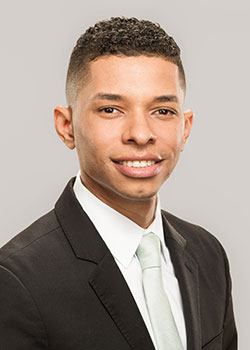
Aaron Gleaton Clay | Associate | Finnegan
Is this same implicit bias diminishing black attorneys’ role on cases? Opportunities to lead and try cases or argue motions before courts are critical for any attorney’s professional development and advancement. And while these opportunities are hard to come by for younger associates, in large part because senior and more experienced partners are slated, or because such decisions are largely driven by client demands, these opportunities seem even rarer for black attorneys, especially young, black associates. As a law clerk at both the federal district and appellate court levels, I witnessed how black attorneys were rarely given a speaking role in motions hearings, trials, or oral arguments. Some of this I attributed to the alarmingly low numbers of black attorneys in major U.S. law firms. Indeed, in 2020, the National Association for Law Placement (“NALP”) reported that only 5.1% of associates and only 2.1% of partners in U.S. law firms are black. These numbers were worse for black women who made up only 3.04% of associates and 0.8% of partners! But even with these low numbers, I wondered if there was more to the story. Why is it that black counsel has a “seat at the table” but not a lead, speaking role? Is it not important to provide these opportunities to black attorneys who not only need the experience but can add value to the case? Does the court or the jury take notice of this disparity? If so, what can we do to fix it?
To answer some of these questions, I interviewed the Honorable Gerald Bruce Lee, retired U.S. District Judge of the United States District Court for the Eastern District of Virginia, for his view from the court’s perspective. Over the course of his more than 25 years on the federal and state benches, as well as his prior experience as a trial lawyer, Judge Lee has encountered more than his fair share of attorneys and firms and has seen first-hand how younger, and arguably more knowledgeable, attorneys are “benched,” particularly black attorneys. In his view, “systemic racism is the answer; it remains a problem.”
We must “be very conscious of systemic racism that exists,” Judge Lee said, and “we have to end the ‘mirrortocracy.’” In other words, we must stop choosing to only work with someone who looks like us. Judge Lee suggests that firms and partners “pick a black associate that you want to work with and put that person to work. Give them the same coaching and mentorship that you would give someone that looks like you,” he said. Not just on one case either, he said, “work with them on 10 cases and see what happens.”
And “it’s not just for social justice reasons,” Judge Lee added. “We are creators, we are innovators, and we can think outside the box, and you need to give us a chance to do that and improve the quality of work that is being done and to create the results that are being attained.” Judge Lee said that judges “think young, black associates have ideas” because “young, black associates have had to improvise and have had to learn how to think creatively on their feet.” To him, “it seems that to have someone as gifted and talented as some of these young, black associates are, who have overcome many obstacles and have many good insights, and not to use them is like wasting resources that you’ve acquired.” He asked, “Why would you waste resources? Put your resources to work.”
Judge Lee “enjoys seeing young, black lawyers come into court who are doing more than carrying a briefcase” because he knows that “if the black attorney’s name is on the brief, then there has been some opportunity for the lawyer to communicate to the partner about the brief.” But many black lawyers are not being given a chance to argue cases, which contributes to a lack of preparedness and the professional development they need to become partners. Judge Lee is not alone in his eagerness, noting that “black and white judges want to see young, black associates at the podium, questioning witnesses, and arguing motions.” “It is time to get your black attorneys off the bench and in the field. What better time than now to acknowledge that you are going to fully use your black associates and partners?,” he asked.
Giving black attorneys more leading roles in the courtroom can also have a positive impact on the case. Judge Lee emphasized that “the days of all white judges and juries are over.” When asked what effect black attorneys have on the jury or the court, Judge Lee said, “the first thing it adds is talent and resources,” but he added that “it could also make a difference in how the jury reacts to the trial.” For example, he said, “if a jury sees a black lawyer sitting there and there are minorities in the jury and they only see that person pass paper, then they know that person is ‘window dressing.’” And from the court’s perspective, he said, having black attorneys in lead roles can also “make a difference in how I view the case from the standpoint of how it was managed and the case was being presented.”
I asked Judge Lee for any final advice for black attorneys looking for opportunities to improve and expand their skill set. He suggested that we continually seek out the work we want and “be persistent.” As a young lawyer, Judge Lee always told himself that the answer “no” was just “the beginning of the conversation, not the end of the conversation.” If partners or clients turn you down the first time, he said, use that as an opportunity to follow up again until they say “yes.” Eventually, he said, “they’ll get tired of you and give you the work.” Use that opportunity to thrive.
Quinn Emanuel Urquhart & Sullivan has reinforced its considerable disputes strength with a senior hire, as a host of firms focused on London for their partner recruitment.
Those familiar with Simpson Thacher & Bartlett’s modus operandi will barely know what’shit them this month as the usually conservative New York outfit launched a European restructuring practice and announced a Brussels office within a couple of days of each other.
The addition of a London restructuring practice to serve Europe is something of a coup coming as it does at a time when market commentators are predicting an uptick in distressed transactions on the back of the coronavirus downturn. Perhaps even more importantly, the move deprives Freshfields Bruckhaus Deringer of one of the most influential partners of its heavyweight restructuring team in the form of Adam Gallagher. A partner since 2007, Gallagher will be joined by James Watson, a partner at Kirkland & Ellis since 2017 and a fellow Freshfields alumnus. Continue reading “‘Watch this space’: Simpson Thacher belies cautious reputation with European restructuring and antitrust push”
Successful professional people are notoriously reluctant to take on the mantle of leadership. Increasingly, there are excellent reasons why they should, say Professor Laura Empson and David Morley
‘If you always do what you’ve always done, you’ll always get what you’ve always got.’
It’s a phrase that carries a useful message in the context of leadership – particularly in professional services. Because high-achieving professionals would, by and large, prefer to stick with what they’ve always done, very successfully. That is what makes them reluctant leaders. Continue reading “Guest comment: Calling all the reluctant leaders”
Gibson, Dunn & Crutcher has responded to the ever-increasing demand for environmental, social and governance (ESG) capabilities with the launch of a specialised practice fronted by a team of its lawyers out of the US and London.
The new offering – aimed at providing clients with holistic advice on corporate responsibility, risks and opportunities – will be led by London partners Susy Bullock and Selina Sagayam, Dallas senior of counsel Ronald Kirk, Los Angeles partner Perlette Jura, and Washington DC partners Elizabeth Ising and Michael Murphy. Continue reading “Gibson Dunn embraces zeitgeist with launch of transatlantic ESG practice”