Revolving doors: Stephenson Harwood lands former A&O partner in restructuring push

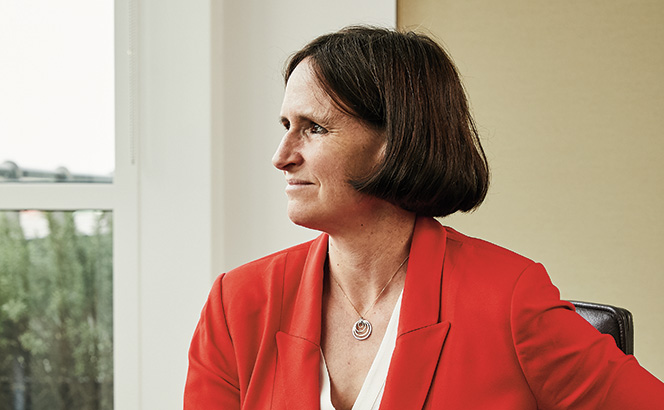
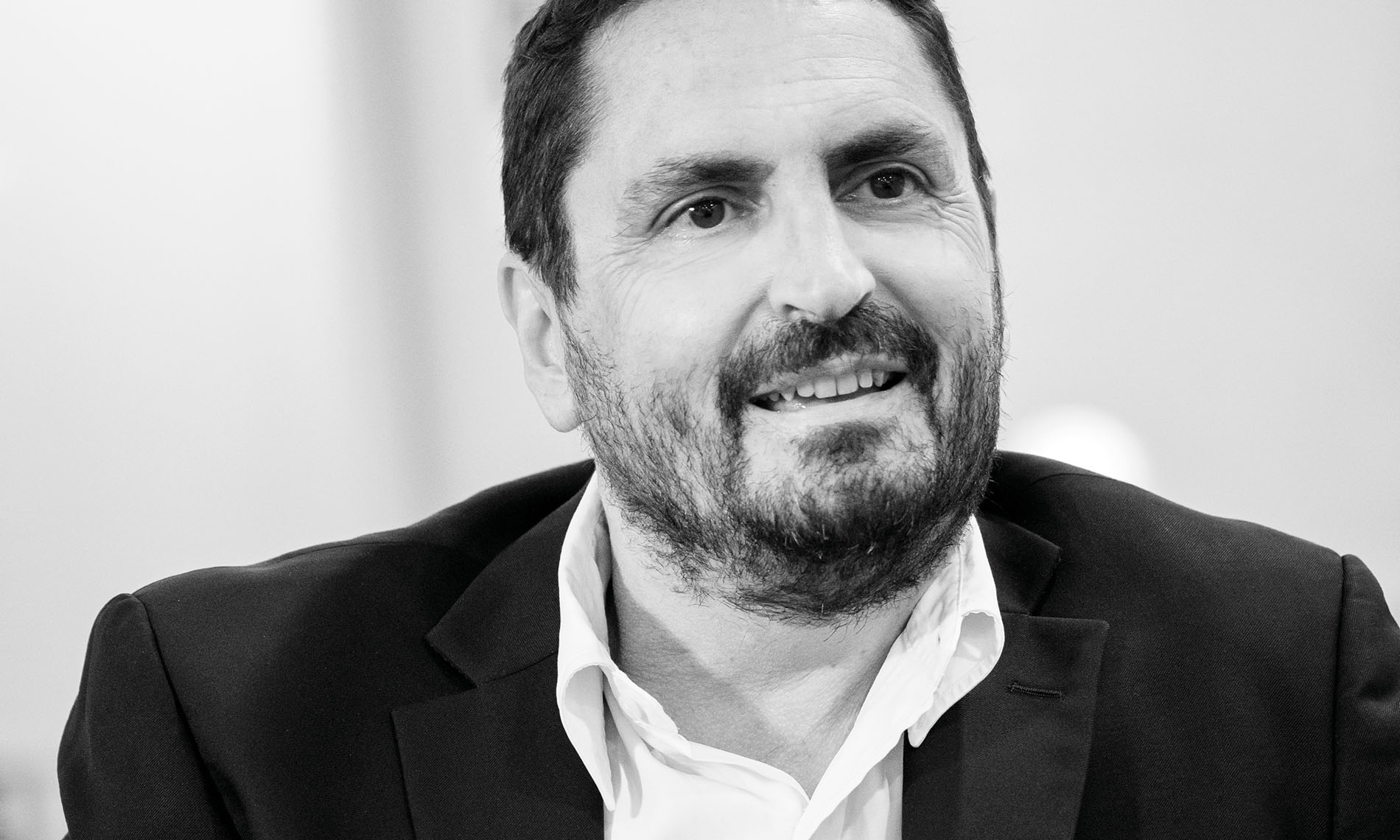
Stephenson Harwood has made a significant addition to its restructuring practice, hiring former Allen & Overy partner Tim Crocker in London. A non-contentious finance expert who left A&O last year, Crocker has over 20 years’ experience advising clients on complex debt restructurings and insolvencies.

Tammy Samuel, head of finance at Stephenson Harwood, said Crocker’s hire was in line with an expected uptick in restructuring as governments gradually remove pandemic state support. She commented: ‘For many businesses, the coming months and years will be crunch time, when they need to critically assess the changes they might need to make in order to ensure their long-term success. That’s where the experience and understanding of specialists like Tim will really come into its own, and why R&I – on both the contentious and non-contentious sides – is something we’re actively looking to grow at the firm.’ Continue reading “Revolving doors: Stephenson Harwood lands former A&O partner in restructuring push”

Dealwatch: Latham and Linklaters bet on £2.2bn William Hill disposal as £1.2bn easyJet rights issue flies

While it could hardly be said to have slowed down over summer, the deal market has nevertheless ramped up since the beginning of September with easyJet’s £1.2bn rights issue and Caesars’ £2.2bn disposal of William Hill’s international business among the more high-profile recent transactions.

Latham & Watkins and Linklaters won lead roles as 888 Holdings agreed to acquire the international business – the non-US assets – of William Hill at an enterprise value of £2.2bn. Continue reading “Dealwatch: Latham and Linklaters bet on £2.2bn William Hill disposal as £1.2bn easyJet rights issue flies”

Revolving doors: Shoosmiths calls up Telefónica GC as post-summer recruitment spree begins

Edward Smith

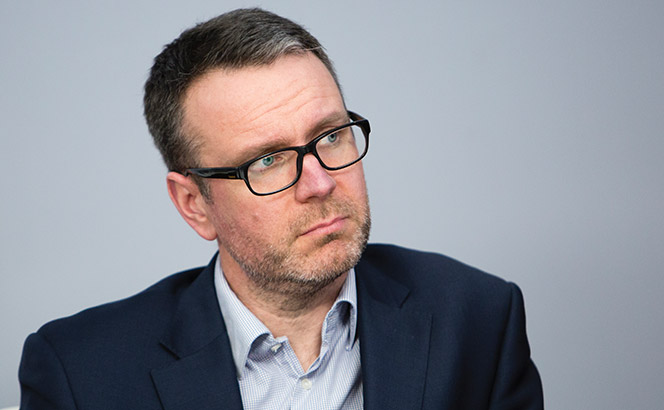
Headlining a hectic week of partner recruitment, Shoosmiths has landed in-house veteran and former Telefónica UK general counsel Ed Smith as a commercial partner.

It marks a return to private practice 20 years after leaving Freshfields Bruckhaus Deringer for Smith (pictured), who will link up with Shoosmiths in October. A well-respected in-house leader, Smith left the telecoms giant in July just as the £31bn merger between parent company 02 and Virgin Media was being finalised. Continue reading “Revolving doors: Shoosmiths calls up Telefónica GC as post-summer recruitment spree begins”

Guest comment: ESG, the war for talent and the GC

Evangelos Apostolou of the EMEA and Asia-Pacific In-House Counsel group at Major, Lindsey & Africa discusses why demand for ESG-ready in-house talent will continue to grow.

For many, the environmental, social and governance (ESG) movement, which is estimated to move past $50trn of assets globally by 2025, represents a generational opportunity to use the power of capital markets to transform the world. Perhaps even to save it. However, for others, ESG proponents naively confuse philanthropy with the fiduciary duty to maximise return on investment. Continue reading “Guest comment: ESG, the war for talent and the GC”

Guest post: Social mobility – does it still pay to be privileged in the law?

Research from the Bridge Group found that among ten leading City law firms 53% of partners attended independent schools and that those from lower socio-economic backgrounds took a year and a half longer on average to make partner. In addition, Covid-19 has revealed and compounded existing inequalities in wealth, race, gender, age, education and geographical location.

Three Travers Smith partners reflect on their experiences of social mobility and offer advice to aspiring solicitors. Continue reading “Guest post: Social mobility – does it still pay to be privileged in the law?”

Revolving doors: Sidley makes triple acquisition among spate of senior City hires

It was a significant week of expansion for Sidley as it made a trio of eye-catching partner hires in London. Private equity partners Dan Graham and Paul Dunbar and finance partner Emilie Stewart have all joined from Vinson & Elkins, marking a serious investment in the City.

Graham focuses on advising private equity funds on wide range of transactions while Dunbar’s practice spans private equity M&A, real estate private equity, distressed asset transactions and non-performing loan acquisitions. Meanwhile, Stewart concentrates on cross-border financing deals, also with a focus on real estate private equity. Continue reading “Revolving doors: Sidley makes triple acquisition among spate of senior City hires”

Middle East Focus: Light on the horizon

Far from immune to the global crisis – but making concerted strides towards immunity in some instances – the Middle East and North Africa region (MENA) has fared similarly to the rest of the world over the last year. That is to say that the universal impact of the pandemic has been felt across MENA, although the paths that the various countries have taken have been disparate.

Middle East

Early lockdowns in several countries helped to contain the number of coronavirus cases, and a number of success stories emerged from the region with Israel and the United Arab Emirates (UAE) – numbers one and two, respectively – frontrunners in rolling out their vaccine programmes. While distinct, both countries have adopted an agile approach to sourcing and distributing the vaccine. Continue reading “Middle East Focus: Light on the horizon”

The Client profile: Ahmed Badr, GoCardless

Ahmed Badr did not want to be a lawyer. A self-professed ‘huge geek’ at school, he was never happier than when sat a computer doing some programming or web design. ‘You would never find me playing football,’ he reflects.

Initially, Badr studied medicine, which he admits ‘was more of a family thing than a me thing’. His dad was a doctor, his mum was a nurse, which led a young Badr to feel compelled to the same fate. But he soon he realised he had no interest in it, and opted to do a business degree instead. Continue reading “The Client profile: Ahmed Badr, GoCardless”

Life During Law: Adam Plainer

I didn’t want to be a lawyer. My father wouldn’t let me go to RADA. Acting is what I wanted to do but people from Leeds in 1984 didn’t go to acting school. My favourite uncle said: ‘You’re going to be a lawyer’. So I jumped on a conveyor belt and ended up becoming one.

My father was a taxi driver and mum was a housewife. All our holidays were in Blackpool, St Anne’s and Scarborough. Now everyone’s only allowed to go to those places. Continue reading “Life During Law: Adam Plainer”

In memory of Stephen J Doggett

It is with tremendous sadness that we learned that our former colleague and friend, Stephen J Doggett, passed away on 8 August after a two-year battle with a rare form of cancer (synovial sarcoma). He was just 40.

Like many legal journalists and law firm consultants of his generation, Stephen (or SJD as he affectionately became known) cut his teeth researching The Legal 500 in the regions. But it soon became clear that he was an exceptional talent, combining a razor-sharp, analytical mind with a gentle, unflappable and unquestionably generous nature – bringing all these qualities together to make him a highly respected legal commentator and, more importantly, a unique and much-loved human being. Continue reading “In memory of Stephen J Doggett”

Time to stop sneering at the leaders recognising the value of humanity

It is hard to introduce a column on female leaders without sounding trite or – as a woman – vaguely condescending to those featured. In a blatant attempt to side-step this quandary, I will start with an admission of guilt. In our haste to speak with the new wave of non-male leaders for our cover feature, we had all but neglected to speak to any men. ‘Well, I bet you’ve never had that problem before!’ correctly guessed more than one industry contact as we belatedly, and sheepishly, canvassed them for some token male views.

Meeting many of the new leaders over Zoom, some for the first time, has been an energising experience. Even allowing for the inevitable professional veneer, there is a sense of genuine dynamism among this new cadre of women at the upper echelons of law, and much enthusiasm about their impact on the future of the industry. Continue reading “Time to stop sneering at the leaders recognising the value of humanity”

Women leaders: Women of the revolution

‘There’s finally a new wave of senior leadership and it’s in the form of smart women. Whatever the reason, I think it’s great that we have a number across the City right now.’
Natasha Harrison, deputy chair and managing partner of Boies Schiller Flexner

‘I don’t like the gender divide. Everyone should be treated equally. There are a lot of good male leaders out there too. It would really piss me off if I thought I was only appointed because I’m a woman.’
Female London law firm leader Continue reading “Women leaders: Women of the revolution”

Nordics: Northern Lights

Much like the rest of the world, the Nordic market couldn’t escape the consequences of the coronavirus pandemic. However, the virus seemingly kept the Nordics in its periphery, while the rest of Europe felt the brunt of the impact. Average GDP across Norway, Sweden and Denmark in 2020 fell by roughly 3% (the wider EU GDP fell by 6.1%) with the biggest impact, unsurprisingly, on the tourism industry (Iceland, a nation heavily reliant on its tourism, saw a GDP drop of 6.6%). However, the predictions for 2021 show GDP growth across all three of the main Nordic countries, with 3.7%, 3.4% and 3% growth predicted respectively.

‘The Nordics have suffered less than many other European countries in the course of the pandemic,’ states Roschier’s managing partner Mikko Manner in Finland. ‘It has been forecast that during the second quarter of 2021, most restrictions will be eased due to vaccinations, and the Nordic economies will be able to start a swift recovery, with economic activity reaching pre-crisis levels later this year.’ Continue reading “Nordics: Northern Lights”

European Super League: Caught offside

It was the football story of the year – eclipsing even Lionel Messi’s move to PSG and football not quite coming home – almost beyond belief in its audacity. On Sunday 18 April, The Times broke a story that 12 leading clubs from England, Spain and Italy had agreed to break away from UEFA’s Champions League competition and launch their own independent format: The European Super League (ESL).

To say the proposals were unpopular is a gross understatement: the following 48 hours of football coverage on all networks was a non-stop barrage of condemnation from fans, players and pundits alike. Former Manchester United captain Gary Neville captured the mood of many when he attacked the 12 clubs live on Sky in a red-faced rant that accused them of arrogance and greed. Continue reading “European Super League: Caught offside”

The Legal 500 IP: Validity in the opposition

A cursory glance at The Legal 500’s IP coverage – which was recently split into a distinct patents table alongside a trade mark, copyright and design table – makes for a head-scratching read. In a legal discipline that attracts sophisticated, technical expertise, fortune favours the innovative as much as the who’s who of the City elite, or indeed the prestigious US names that are continually encroaching on London territory in the corporate space.

But even within this diverse, cutting-edge practice area, comprising teams as unique as the clients instructing them, there is much contention as to which approach fits best in a rapidly changing environment. Continue reading “The Legal 500 IP: Validity in the opposition”

Southern and Eastern Europe: A long recovery

As with many global sub-regions, southern and eastern Europe (SEE) is slowly emerging from a period of stark economic slowdown as a result of the Covid-19 pandemic, with regional economies affected in a variety of ways. This ranged from tourism-reliant nations such as Croatia and Greece that faced an unprecedented plunge during 2020, relying on EU relief and revived capital spending intervening to restore growth, to Romania, whose resource-rich economy suffered from a decline in industrial production, only to recover during Q3 2020 after foreign trade and investment – particularly from Germany – resumed in earnest.

Although granular policy details have differed, governments have intervened to prevent the spread of Covid-19, while also seeking to protect key economic sectors and also balancing consumer demands and differing political situations. A number of SEE countries faced elections during the pandemic, a situation that has broadly favoured incumbents. Both the Romanian and Bulgarian governments returned, albeit facing a significant loss of support and ongoing questions over their futures, while control of the Cypriot House of Representatives shifted to the conservative opposition. Continue reading “Southern and Eastern Europe: A long recovery”

Croatia – ups and downs

Having enjoyed steady economic growth following its accession to the European Union (EU) in 2013, Croatia saw an abrupt halt to its development in 2020. With a projected 10% drop in GDP, the depth of the economic trough appears similar to that of the 2008 financial crisis, though optimism remains that this downturn will be shorter as mitigatory factors, particularly Covid vaccines, begin to make themselves felt.

Aside from the global economic impact faced by most countries as a result of the pandemic, Croatia was perhaps most affected by the affect on the tourism sector, which naturally suffered considerably. However, continued progress on vaccinations and the creation of the EU’s Green Pass have bolstered expectations the sector will soon recover (although a similar pre-vaccine reopening of the tourist economy last summer led to a dramatic surge in infections). Continue reading “Croatia – ups and downs”

Romania – bounceback

Romania has seen buoyant growth in recent years, with its economy upgraded to ‘emerging market’ by FTSE Russell in 2019. Gabriel Zbârcea, managing partner at Ţuca Zbârcea & Asociaţii, explains: ‘Until the coronavirus outbreak, business was flourishing in Romania: 26% more deals in 2019 as compared to 2018 with a value of €5bn; also real estate investments went past the €1bn line in 2019, standing 7% higher than in 2018.’

‘2020 has been an interesting year financially,’ says Răzvan Stoicescu, deputy managing partner of Muşat & Asociaţii. ‘We did see a slowdown during Q2 of 2020, but things picked up during the second half of the year and have been on a positive trend. However, since neither us nor our clients have gone through a situation of such a magnitude before, the process was not without challenges. For example, switching abruptly from what was essentially a direct contact way of working for our profession, to virtual meetings, unpredictable schedules and remote work was taxing even if ultimately manageable.’ Continue reading “Romania – bounceback”