
Gross Law Firm discuss how multi-nationals corporations will face litigation in Israel despite contractual foreign jurisdiction clauses Continue reading “Sponsored briefing: Everything is Justiciable in Israel”
Sponsored briefing: The 4 Eras of Corporate Governance

There are four major eras of corporate governance. The dawn of corporate governance goes back to the 1930s when US corporations first began selling stocks to a wider set of owners, and we have seen many changes in the decades since. Continue reading “Sponsored briefing: The 4 Eras of Corporate Governance”
Revolving doors: Boies Schiller bounces back with arbitration hire as Simmons takes Stephenson Harwood real estate duo

Boies Schiller Flexner has announced that arbitration specialist Timothy Foden will become the third partner in its heavily reduced London office, taking the first steps to rebuild after a recent exodus.
Previously at Lalive, Foden has a wealth of experience representing clients in investor-treaty and complex commercial arbitrations in the mining and energy sectors, and regularly represents clients opposite sovereign states. Continue reading “Revolving doors: Boies Schiller bounces back with arbitration hire as Simmons takes Stephenson Harwood real estate duo”
Dealwatch: City players drill down on Siccar Point Energy sale as US elite act on IFS and WorkWave deal

Significant deals in the pharmaceutical, energy and software space have got the market talking over the last week, as City and US giants scored major mandates.
Ithaca Energy is acquiring Siccar Point Energy, best known for operating the Cambo oil and gas field in the North Sea, for $1.5bn. The buyer will pay $1.1bn up front, with the potential for $360m of additional payments dependent on future developments and commodity prices. Continue reading “Dealwatch: City players drill down on Siccar Point Energy sale as US elite act on IFS and WorkWave deal”
Revolving doors: Kirkland snaps up A&O antitrust partner as Deloitte loses TMT trio
The appetite for competition, tech and disputes partners is the theme of this week’s recruitment round up.
Kirkland & Ellis bolstered its antitrust and competition practice with the hire of Alasdair Balfour from Allen & Overy. Balfour brings 25 years of experience in merger control, foreign investment, antitrust conduct investigations and litigation, and a focus on securing merger control clearances. His arrival goes some way to recoup the departures of two antitrust partners to US competitors this year, following Sarah Jordan’s move to Goodwin in January and Annie Herdman to Ropes & Gray in March. Continue reading “Revolving doors: Kirkland snaps up A&O antitrust partner as Deloitte loses TMT trio”
Revolving Doors: White & Case expands transatlantic banking offering as Squire Patton Boggs builds out data protection team

White & Case has announced additions to its banking and finance practice on both sides of the Atlantic. Paul Yin joins the London team from Skadden, where he was European counsel and specialises in acquisition, real estate and general corporate financings, while the Boston office welcomed the arrival of Jessica Ball and Jessica Shearer. The pair move over from Proskauer Rose and will join the US private credit and direct lending practice.
Eliza McDougall, regional section head of Americas banking, said: ‘Their arrival comes at a time when the private debt markets are placing a premium on the highest quality of financing advice. Bringing these partners on board further strengthens our market-leading capabilities, while supporting the continued growth of our practice.’ Continue reading “Revolving Doors: White & Case expands transatlantic banking offering as Squire Patton Boggs builds out data protection team”
‘Continuing our growth story’: Noerr sees 9% growth as revenue reaches €297m

Noerr has continued its recent trajectory of growth by posting a global top line of €297m across 2021, up by 9% from the €271.6m recorded a year earlier.
The Munich-headquartered Euro Elite outfit, which attributes its success to mandates from listed companies, German and international private equity companies and large family-run companies, saw even stronger growth within Germany, generating revenues of €277.3m, a 10% improvement on previous figures. Continue reading “‘Continuing our growth story’: Noerr sees 9% growth as revenue reaches €297m”
‘Buffeted from both sides’: City partners react as Clyde & Co and BLM finalise merger

With partners from Clyde & Co and BLM recently voting through their £700m merger, observers have offered conflicting views on what the tie-up means for the market.
Legal Business broke the news on 18 March that a partnership vote was imminent, and Clyde confirmed on 28 March that the vote had passed, with the combination to go live in July 2022.
Paul Hastings toasts quarter century in London with 41% City revenue surge
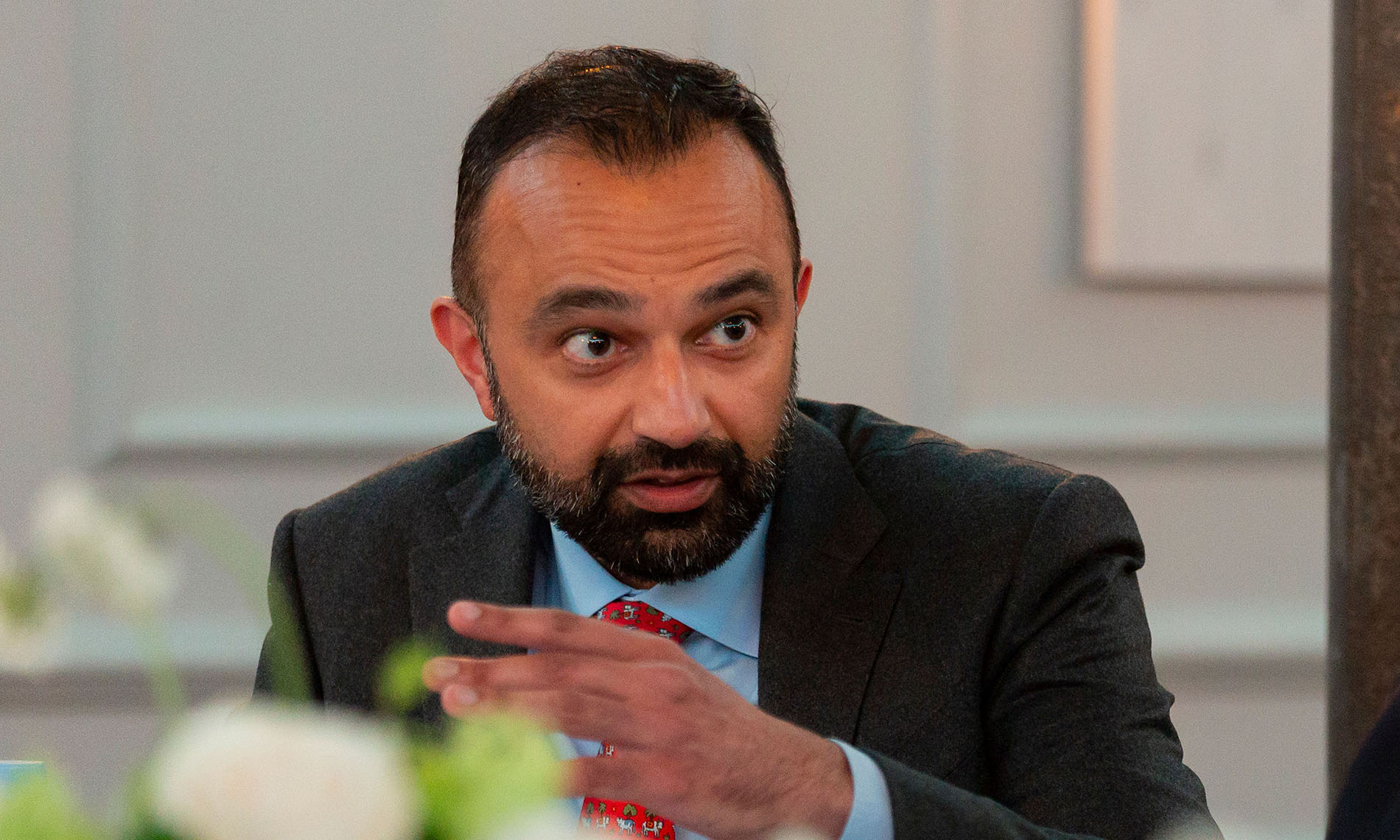
In what the firm is hailing as ‘its best financial year ever’, Paul Hastings has posted an eye-catching 41% growth in City turnover from $108.6m to $157.2m.
Globally, Paul Hastings did not fare much worse, with worldwide turnover jumping 20% from $1.31bn to $1.57bn. This was accompanied by a 21% hike in profit per partner (PPP), which grew from $3.9m to $4.7m.
Continue reading “Paul Hastings toasts quarter century in London with 41% City revenue surge”
‘Still much progress to be made’: Freshfields reveals modest improvements in pay gap stats

Freshfields Bruckhaus Deringer is the first of the Magic Circle to share its pay gap statistics for 2021. Despite steady improvements, the firm acknowledges there is still much more to be done.
The report revealed that on average men are paid 52% more hourly than women, on a median basis the difference is 13%. This is a modest improvement from a 55% mean and 17% median gap in 2020.
Dealwatch: Simpson Thacher and Kirkland lead on EQT’s €6.8bn BPEA deal as Freshfields and HSF jump aboard Stagecoach offer

EQT’s €6.8bn acquisition of Baring Private Equity Asia (BPEA), Cinven’s $2.6bn buyout of BESP and Pan-European Infrastructure III’s (PEIF III) £595m cash offer for Stagecoach Group Plc have kept advisers busy in recent days, as private equity deals continue to drive the M&A market.
Stockholm-headquartered EQT reached an agreement to buy Baring Private Equity Asia (BPEA) for €6.8bn. The consideration includes 191.2 million new ordinary EQT shares, valued at €5.3bn, and €1.5bn in cash.
Revolving doors: Addleshaw launches three new offices while Freshfields competition partner departs for MoFo

Addleshaw Goddard has announced the launch of three new European offices this week, opening a new Luxemburg base and adding two new German offices.
The Luxemburg office will be led by Fieldfisher’s former head of corporate and banking, Richard Ledain Santiago. Santiago, who joined Fieldfisher in 2018 from Allen & Overy, will focus on funds and funds finance work. Continue reading “Revolving doors: Addleshaw launches three new offices while Freshfields competition partner departs for MoFo”
Latham becomes the first $5bn law firm club member as revenue soars 27%

Latham & Watkins has become the first law firm to break the $5bn revenue barrier as turnover spiked 26.7% to $5.489bn in the 2021/22 financial year.
Profit per partner also saw a comparable 26% surge to $5.71m from $4.52 last year. Continue reading “Latham becomes the first $5bn law firm club member as revenue soars 27%”
Clyde & Co and BLM to merge with partner vote imminent
Clyde & Co and BLM are at an advanced stage of merger discussions, with both sets of partnerships due to vote on a tie-up before the end of March.
Legal Business understands that there is significant confidence that the deal will be green-lit. Continue reading “Clyde & Co and BLM to merge with partner vote imminent”
Dentons, DLA and Bakers to sever ties with Russia offices as A&O and CC wind down

Baker McKenzie, DLA Piper and Dentons have taken a different course to most international law firms, separating from their Russia practices and leaving independent firms behind, rather than closing the offices entirely as a response to Russia’s continued invasion of Ukraine.
All three firms operate under a Swiss verein structure, which enables the different offices to maintain financial and regulatory independence from one another and allows for quick mergers and demergers. Continue reading “Dentons, DLA and Bakers to sever ties with Russia offices as A&O and CC wind down”
Revolving doors: three in two out for Linklaters as Cooley bolsters transatlantic competition practice
Linklaters has lured three lawyers from US firm Vinson & Elkins to its leveraged finance practice in its home market, London. V&E’s former City head of finance and M&A Noel Hughes has joined, alongside fellow partner Giacomo Reali and Christianne Williams, who was counsel at V&E.
Hughes focuses on advising on high-yield bonds and leveraged buyouts across a broad range of industries, both in the European and US markets while Reali, who speaks six languages, advises on high-yield debt transactions, bridge financings and preferred equity investments with a particular focus on the Italian market. Continue reading “Revolving doors: three in two out for Linklaters as Cooley bolsters transatlantic competition practice”
‘Record revenues’ for Garrigues as turnover breaks €400m barrier
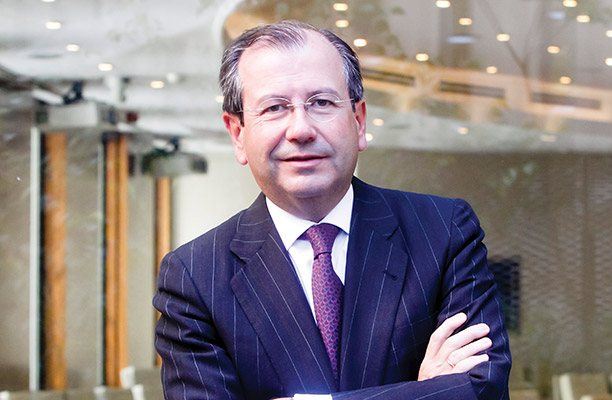
Garrigues has seen a 7% rise in revenue for the 2021/22 financial year, enabling it to become the first Iberian law firm to post revenues in excess of €400m.
The Madrid-headquartered firm, which in total billed €414.2m throughout the year, has largely the success of its domestic offering to thank for this uptick. The Spanish practice, which spans 18 offices, generated €361.4m – an increase of 7.4% compared with the previous year.
Continue reading “‘Record revenues’ for Garrigues as turnover breaks €400m barrier”
Akin Gump, Freshfields and Latham latest to withdraw in Moscow as mass exodus ensues

Akin Gump, Latham & Watkins and Freshfields Bruckhaus Deringer are among the latest international firms to shut down or suspend operations in Moscow, as pressure to take action has mounted in light of Russia’s sustained invasion of Ukraine.
The news came after Linklaters and Norton Rose Fulbright announced their intentions to withdraw from Moscow in recent days. Continue reading “Akin Gump, Freshfields and Latham latest to withdraw in Moscow as mass exodus ensues”
‘Dramatic expansion’: Goodwin’s London turnover spikes 63% amid lateral bonanza

The London office of Goodwin has seen revenue soar 63% in 2021/22 amid a surge in lateral hires over the year, the firm’s latest financial results reveal.
The City arm reported turnover of $161.8m, up from $99.1m last year. This striking gain follows the firm’s bullish revenue growth of 72% between 2015 and 2021. Continue reading “‘Dramatic expansion’: Goodwin’s London turnover spikes 63% amid lateral bonanza”
Deal watch: Global London elite turns out for KKR’s Refresco buyout and Macquarie’s Roadchef acquisition
The private equity boom has shown no signs of slowing down in recent weeks, with the London offices of US firms taking the lead on noteworthy acquisitions in the logistics, food & drink, and infrastructure sectors.
Skadden, Simpson Thacher and Latham & Watkins advised on the acquisition by KKR of a majority stake in independent beverage contract manufacturer Refresco. The deal will see existing investors PAI Partners and British Columbia Investment Management Corporation (BCI) retaining a minority stake in the company. Continue reading “Deal watch: Global London elite turns out for KKR’s Refresco buyout and Macquarie’s Roadchef acquisition”