
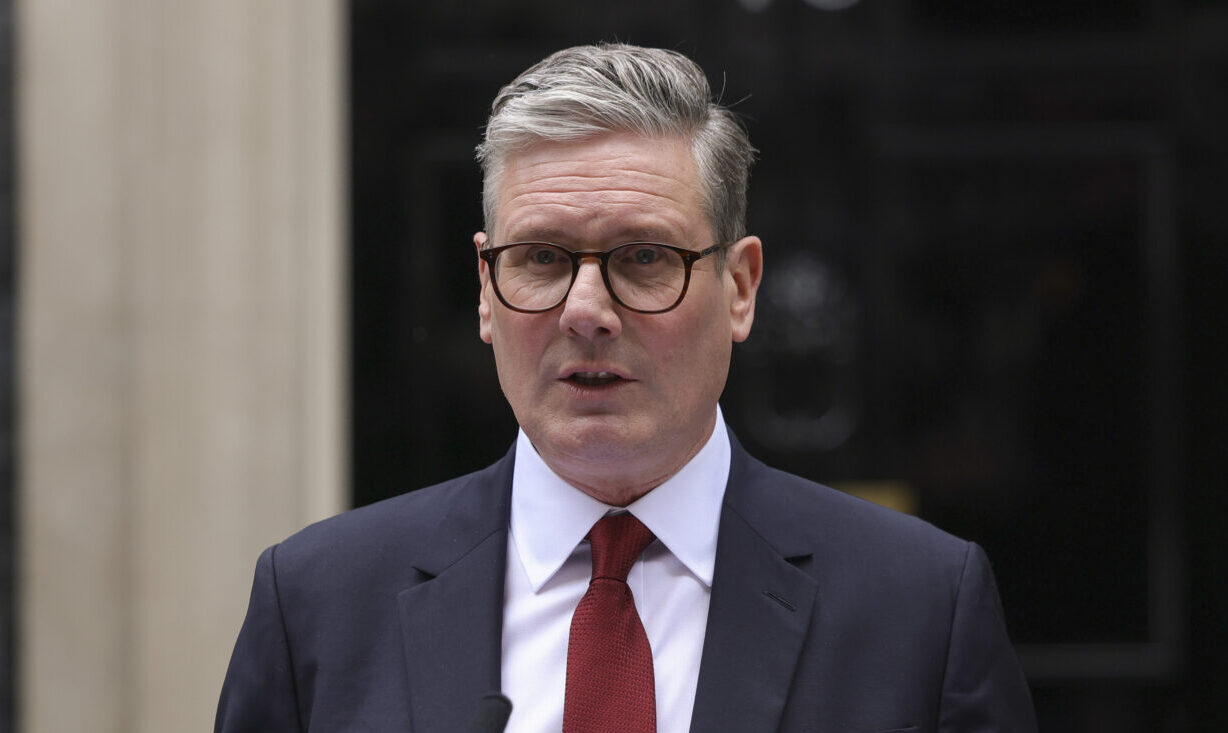
Following Keir Starmer’s resignation as leader of the Labour Party this morning (22 July), the UK is set for its sixth prime minister since 2019.
While lawyers across the country are already well accustomed to political instability, news of Starmer’s decision raises further questions about business confidence, investment flows and the prospects for dealmaking.
LB spoke to a range of City partners to gauge their initial reaction to the news.
Lost potential?
As the first lawyer to be elected as prime minister since Tony Blair, Starmer – a human rights barrister who rose to become director of public prosecutions – stepped into the role of PM two years ago amid a degree of optimism from the legal profession.
As such, the manner of his departure has come as a disappointment to some.
One partner at a UK firm said: ‘It feels like a shame that someone who had a lot of potential – and someone who we, as lawyers, wanted to see succeed – hasn’t made the most of an opportunity with such a huge majority.’
Despite Labour sweeping to victory little more than two years ago, winning 411 out of 650 seats, Starmer struggled to capitalise on the party’s electoral success. His time in office has seen U-turns, seemingly relentless geopolitical instability and the challenge of navigating a not-so-special relationship with US President Donald Trump.
‘It is a shame that someone who had a lot of potential hasn’t made the most of an opportunity with such a huge majority’
While Starmer’s government had set out with a ‘business friendly’ environment, he leaves with questions about the extent to which this was delivered.
 Katy Colton (pictured), head of the politics and law group at Mishcon de Reya, says Starmer’s tenure had seen a ‘failure to understand the consequences of his policies on businesses.’
‘Two years ago felt different. Labour did court the business community, but now the general sense among my clients – and financial services more widely – is that they were not supported, and that there was a failure to understand the full consequences of certain taxation policies on businesses,’ she said.
Looking ahead
With Starmer on the way out, the stage is now set for former Manchester mayor Andy Burnham to launch a bid for leadership of the Labour Party, following his victory in the recent Makerfield by-election.
‘His approach to the business community is still unclear – and a lack of certainty is never good for the market’
While some Labour loyalists may welcome Burnham’s vision of ‘Manchester-ism’ – a more interventionist approach to the economy and an end to neo-liberalist, trickle-down economics – Colton says the business community is yet to be fully convinced.
‘There is still a nervousness about what is to come,’ she said.
‘As mayor of Manchester, there was a sense Burnham was trying to embrace and understand the importance of capital influx into the region. But at the Makerfield election he focused on local issues – and kept his powder dry as to his policies as a PM, so his approach to the business community more broadly is still unclear – and a lack of certainty is never good for the market.’
 White & Case head of UK public M&A Patrick Sarch (pictured) backs up the view that more uncertainty is the last thing businesses need right now.
‘The change of PM – and most likely chancellor too – introduces more unwelcome uncertainty and therefore risk in UK transaction and investment flows.’
‘At a time when the UK desperately needs investment to support economic growth and the scaling of our promising businesses, yet more political and economic policy uncertainty (and commensurate tax, interest rate and inflation risk), inhibits all investors from committing to UK-based companies,’ he added.
‘This is bad for the UK, for our ability to contribute to European defence resilience and for our capital markets’
‘This is bad for the UK, but also our ability to contribute to European defence resilience and for our capital markets as a component of international liquidity and efficient capital flows.’
Herbert Smith Freehills Kramer M&A head Gavin Davies (pictured) noted that no matter who takes Starmer’s spot, the next PM will face the same complex economic climate.
 ‘The Prime Minister’s successor will inherit the same set of problems that Keir Starmer has faced. In particular, how to balance the books and stimulate the growth agenda while there is no expectation of a dramatic shift in policies away from those that the Government was elected on, and no change to the political challenges for a leader around delivery,’ he said.
This broader context means Davies is optimistic about how markets will react: ‘From an M&A practitioner’s perspective, today’s news does not seem particularly impactful – no disruption is welcome by the M&A market, but this seems only to be a continuation of temporary complexity in the UK, and not a huge disturbance, measured against the complexity and disruption globally.’
He concludes: ‘Dealmaking is being driven by larger global themes, which are variously structural and strategic – AI, defence, energy transition, and delivery of major new infrastructure around those, as well as private equity themes such as the need to recycle assets. None of today’s news in the UK changes anything around these very significant macro pieces, which run cross-border.’