
When I was 17, I wrote a letter to the head of personnel at Herbert Smith saying I had three months spare in my gap year before going to New Zealand and would the firm like to employ me. I’d never even been to London before, but I was invited for an interview. I came down on the train from Edinburgh with my grandparents. My headmaster wrote a reference. It said, ‘If you don’t employ this boy, call me and I will tell you why you’re wrong.’ It was very kind of him. He was a true educator.
So I started working here as a paralegal at 18. The secretaries took me under their wing. I had a ball. London in 1990 was booming. It was incredibly exciting and I never looked back. After that, I never wanted to work anywhere else.
I carried the boxes into our current London office when we moved in in December 1990. Now, I may be the CEO who signs the lease to move out of the building 40 years later.
My wonderful mum was very young when she had me, so we lived with her parents. She was a dancer, my grandmother ran the businesses and my grandfather was a larger-than-life Italian restaurateur who cooked every meal, so I grew up in a house full of food, singing, dance and glamour. There was a lot of love and security. Always a bottle of wine on the table, always a pot of soup or pasta sauce on the stove. I was very lucky.
But through my father I saw a side of life I didn’t want to be part of from a young age. We often talk about positive role models, but you can also have influences that set out a stall you don’t want to emulate. I saw the good in life, and I saw hardship and a bit of ugliness. This is what makes you fight and work hard. It certainly made me want to be successful.
I remember my grandmother saying ‘we will sacrifice and work hard to pay the fees for Justin to go to the best school.’ It was a good life lesson very early on: nothing comes from nothing. You have to work hard and make sacrifices.
‘I saw the good in life, and I saw hardship and a bit of ugliness. This is what makes you fight and work hard’
I went to the school JK Rowling’s children went to, a mini Hogwarts founded 400 years ago but with no one flying around on broomsticks. It was a school founded on a charitable mission bringing together pupils from every kind of background – from the son of a law lord, to a girl whose single mum was holding down several jobs, and everything in between. Growing up with that gave me a wonderful insight into a truly inclusive culture. Academics, music, drama and sport were all valued. And we were taught to give back. Its motto – I distribute cheerfully – sums it up. The school gave me everything. KC and I don’t have children of our own, so we fund a means-tested bursary.
I always wanted to be a litigator. I was attracted to advocacy, to seeing people on their feet arguing their case. What I saw on stage and on TV gave me an insight into something I liked – I enjoy telling my point of view and I’m not afraid of a discussion. I probably also quite fancied the wig and gown as a young boy. I set my heart on it.
I love my role and the progress our firm’s made. I’ve been CEO six and a half years, we’ve had an amazing journey, and some days I feel like we’re just getting started, especially with our new US platform.
I led the combination with Kramer and getting it through was pretty special. It’s so difficult for UK-heritage firms to build scale in the US and I’m enormously proud that we’re on that journey now in a very meaningful way.
There’s a lot of travelling though. I was outside Hong Kong for eight of the last 12 months. I’m okay with it because it’s the job and I have a very supportive husband, friends and colleagues. I knew what I was letting myself in for, and I’m deliberate about it.
My role is to be across the firm’s strategic direction at the highest level. I have fantastic people across the detail of running their regions and businesses, so it’s about knowing when to step in and when to stay at 36,000 feet.
To do this role you have to carve your brain into three. The most important part is the time you spend on strategy. It’s very easy to get sucked into the day-to-day but if you haven’t spent time on the firm’s true priorities, you’re missing a trick.
‘My role is knowing when to step in and when to stay at 36,000 feet’
The second bucket is business as usual – there’s an annual life cycle of running a $2.5bn business in 20-plus countries. Budgets, promotions, compensation, business reviews and so on.
The third part is dramas and emergencies, the unforeseen. Things happen in the world where you say, I’m concentrating on that today, that’s the priority this week, because it’s a shock.
I very deliberately say I’ve got to do strategy, I’ve got to do business as usual, and I’ve got to keep the energy to deal with dramas and emergencies when they come, without finding any of it overwhelming.
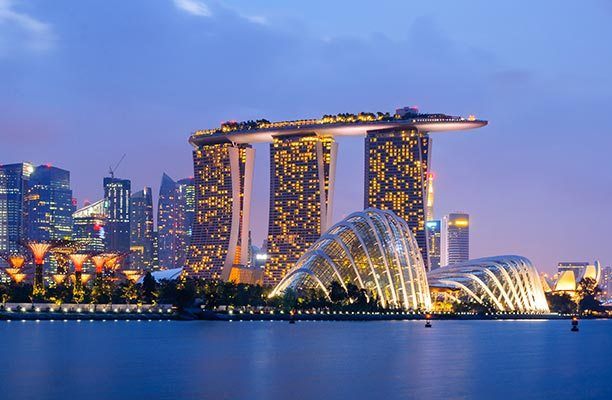
KC and I have been together nearly 23 years. We met in Singapore. We caught each other’s eye in a shopping mall and I wrote my number on a bit of paper and asked if he fancied lunch on Monday. He still has the paper with my phone number in his wallet.
I never had a fear of being out as a gay man. My family was incredibly supportive, as was Herbert Smith when I set up the first LGBT network of any international firm in the City in 2007. We got one of the senior corporate partners, Nigel Farr, to act as a straight ally. The fact that a very senior, straight man in corporate did that was incredibly powerful. I can’t overstate what it meant. It was a defining moment. And it led to a much wider commitment around inclusion at our firm.
We give so much of our lives to our jobs; if you’re coming in and only telling half your story it isn’t good. If you can’t be yourself, it’s limiting. I think it’s cruel not to create an environment where someone can be honest about who they love, who they spend their days and nights with and who they might have children with.
In some ways the world is becoming harder for people who identify as LGBTQ+, so I feel a responsibility, as CEO of one of the world’s leading law firms, to be visible. I think it’s important, a responsibility and a privilege. It’s why we have the named Justin D’Agostino and KC Yeo Pinnacle Foundation Scholarship. These are important, visible symbols of giving back to the community that supported me.
‘We give so much of our lives to our jobs; if you’re coming in and only telling half your story it isn’t good’
I’ve been able to be successful because of the family I had, the school I went to, and the community of friends I have, which includes the LGBTQ+ community. Recognising that, and giving back when you’re in a position to, is such a privilege.
I think this is the most complex and challenging period any of us in leadership have lived through. Geopolitics and how they affect what our clients do and want is one thing. And then there’s AI, which is fundamentally changing the business model of law.
I hope AI will help us find a cure for cancer and dementia and do some amazing things, but it will change a lot about how we live our lives.
Firms that don’t invest in AI and tech – and the requisite talent – will be left behind but the human element is where we can still really differentiate. A client said the best firms will emerge with the best human relationships, the best technical lawyers, the best legal technology (and people trained to use it) and a data strategy which taps into the insights only leading global law firms have.
I could tell you where I’ll be on most days between now and next summer, because we organise the year around the lifecycle of the firm. I like having line of sight (as do my EAs!), because then you can plan long weekends and time off. The hardest part is probably the loneliness of it. You’re on your own a lot in the evenings. KC’s at home with our friends, the cats and the flat, all the structure. When you’re on the road, going from one city to the next, you don’t have that. But I make it work. I have a fabulous family network and so many wonderful colleagues all over the world. I try not to take that for granted. I love what I do.
‘I think this is the most complex and challenging period any of us in leadership have lived through’
I have an amazing job leading a global firm, and I get to travel and work in the best cities in the world. But I try very hard to remember the human side of life and to have a lot of fun along the way. Ballet and music are a passion. As is eating and socialising. I need to do more steps to compensate.
I’ve learned to keep calm (most of the time). I’m also learning that you don’t have to have all the answers; you have to create a system where lots of people help you find them.
It’s important to be kind to people. You can still do that while creating high-performance expectations. In an AI-enabled world, remembering the power of humanity – the superpower only humans have and the technology can’t – will become increasingly important.