

On Tuesday, Latham & Watkins will move to its new City home at One Leadenhall, with the new digs increasing the firm’s office size by more than 50%.
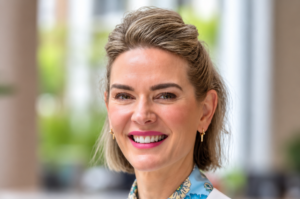
Ahead of the move, which sees the firm leave 99 Bishopsgate after more than 25 years, London managing partner Ed Barnett (pictured) sat down with Legal Business to discuss the firm’s recent lateral hires and what areas are earmarked for further growth.
‘We’ve invested in asset classes that we believe are going to be particularly important,’ Barnett said in reference to a three-partner corporate team focused on technology M&A that the firm brought across from Morrison Foerster in May. ‘Tech M&A is an incredibly important area that is seeing continued growth, investment and deal activity,’ Barnett added.
Despite strong synergies between the firm and the team around SoftBank, a client of Latham’s, Barnett insisted this was not the motivator. ‘They’re very embedded in the tech ecosystem,’ he said of the trio, ‘it’s about their talent and their entrepreneurial zeal.’
In April, Latham released its latest financial results, which saw London surpass the $1bn turnover mark for the first time, with revenue in the City climbing almost 30%. Much of this increase, Barnett said, has been driven by the huge growth in private credit in both London and New York, as well as the proliferation of hybrid capital.
‘We aim for targeted, judicious growth at the top of the market’
However, despite the growth, which is on par with other City firms such as Sidley Austin and Paul Hastings which both grew by around 30% in London, Latham still lags behind its key rival Kirkland in both turnover and profit, with Kirkland also turning over more than $1bn in London.
The recent addition of the MoFo team builds on several notable hires in key areas made by the firm in the first half of the year, which have seen Latham bring in carefully selected teams in specifically earmarked sectors.
At the start of the year, the firm made a three-partner hire from A&O Shearman that included David Oppenheimer, who was the global head of A&O Shearman’s real estate finance practice. ‘As well as real estate becoming an increasingly important asset in and of itself, the boom in data centre work is being captured within this team, which is key,’ Barnett said.
However, while Barnett is focused on growing market share, he is hesitant about broad headcount rises. Under Barnett’s leadership, which began in 2024, the number of fee earners in the office has remained largely static, with 615 lawyers in this year’s Global London table – still the largest international firm in the City by headcount, but a year-on-year increase of just 3.5%.
By contrast, during the tenure of his predecessor, Stephen Kensell, Latham’s London fee earner count rose by 35%, from 448 in the 2020 Global London to 605 in 2024’s table.
Barnett acknowledges there are still pockets where the firm is actively looking for talent, but it is what he called ‘targeted, judicious growth at the top end of the market.’
One of the sectors where Barnett believes the firm still needs bodies is energy and infrastructure, where the firm also hired a four-partner team in Paris this February, from Clifford Chance. ‘We have a very strong global energy infrastructure business with market leaders such as Conrad Anderson,’ said Barnett, citing the London partner who serves as global vice chair of the firm’s energy and infrastructure industry group.
‘We plan to continue growing that team,’ he continued, ‘we see that as a very active space.’
‘London is very dominant in Europe, so tying up with the continent is incredibly important’
Barnett also flags funds as an area where the firm would like to strengthen its offering. The firm last made dedicated funds hires in London in 2023, with the addition of Mateja Maher and Adrian Grocock from Sidley – though finance partners James Smallwood and Franz Ranero, who joined from A&O Shearman last year, also brought funds capabilities.
Looking ahead, Barnett acknowledged that the new office, which spans 300,000 square feet, is a welcome sign of the maturation of the London business.
But he stressed that the firm is ‘never complacent.’
‘The move is also a mark of where we want to go,’ he said, ‘and what we want to continue to build in the City.’
The firm’s hire of a four-partner PE team in Germany is also integral to a broader play. ‘London is very dominant,’ said Barnett. ‘So tying this up with continental Europe is incredibly important, and I see these private equity hires across Germany and Paris as critical to our business, not only in their own market, but in London too.’
Barnett is bullish on the City, too: ‘Whether it’s the global financial crisis, Brexit, Covid or the constant change of governments, London shows itself to be an incredibly robust financial centre. The City is a hub of high excellence in terms of bankers, lawyers, private equity and insurers, an ecosystem which serves not the UK but the global finance community. We remain very bullish about the potential of what we can achieve in London.’