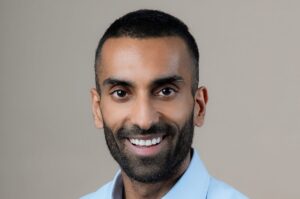

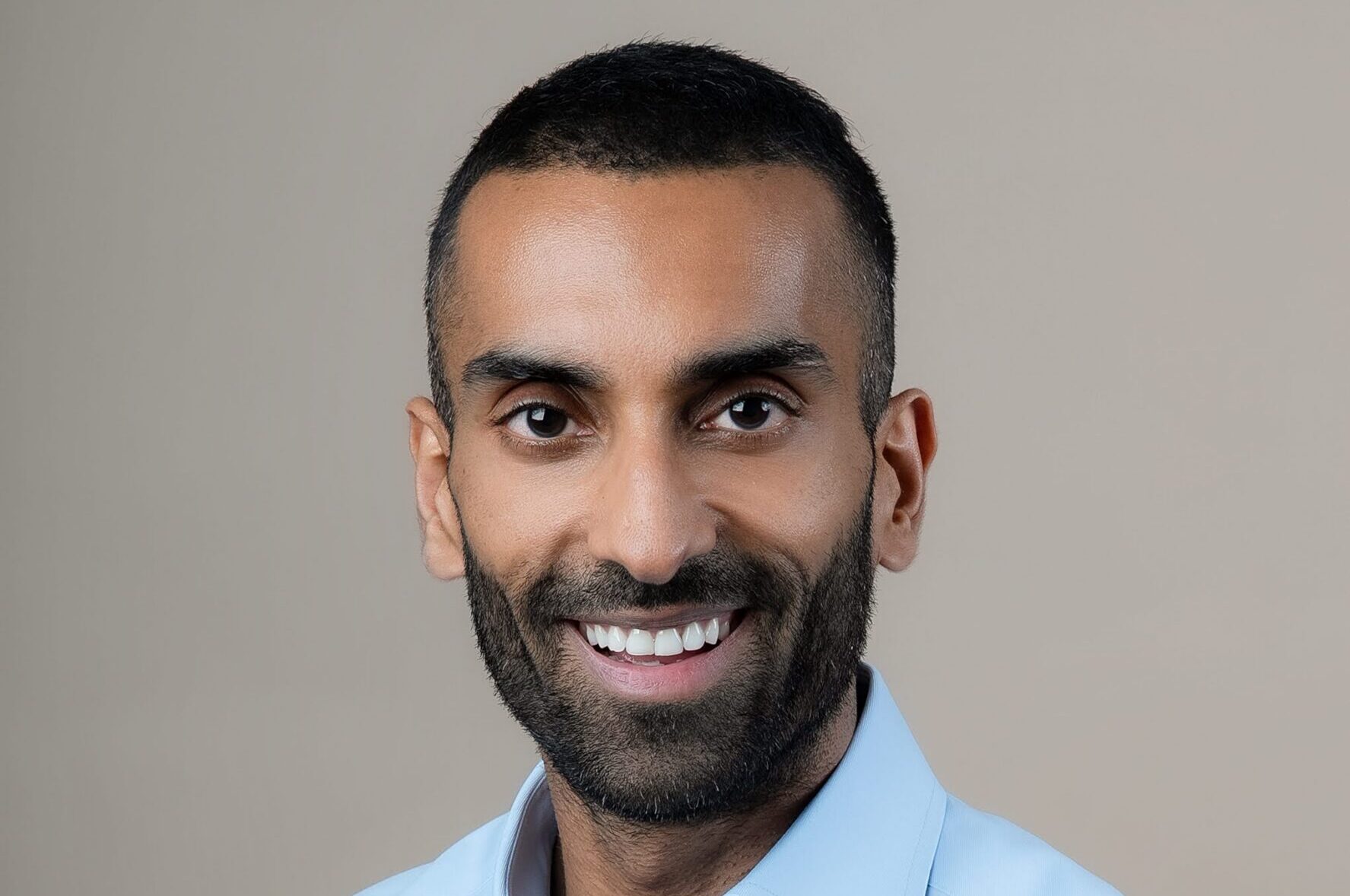
For Unilever’s top lawyer Prakash Kakkad (pictured), the modern GC should be much more than a lawyer sitting on the edge of the business.
‘For me one of the key drivers is legal as part of business – we help it win,’ he says. ‘The strongest legal teams understand the commercial context. We’re present when decisions are made; we’re in the room not just supporting. And we’re also a growth enabler. Legal’s role is to enable the strategy, not to observe it from the sidelines.’
This philosophy has shaped Kakkad’s career, and now sits at the heart of his approach to his new role as chief legal officer at the consumer goods giant.
Appointed CLO in March this year, when Maria Varsellona announced she was leaving for fellow FTSE 100 company Rolls-Royce, Kakkad first joined Unilever in 2023, and in addition to his new leadership role he has also been helping to drive a business transformation. Most recently, he steered the legal team advising on the separation and listing of its ice cream business, now known as The Magnum Ice Cream Company.
His move to Unilever’s top legal job is the latest stage in a career that has taken him from private practice to financial services, mining and now consumer goods. Across those sectors, the consistent thread has been his interest in the role legal can play in the wider enterprise.
‘When I was at school, I didn’t even know what a training contract was. I wrote hundreds of letters to ask for work experience and finally I got a yes’
‘I joined Unilever in 2023 to do corporate and governance work and then I took on wider roles and responsibilities within the legal function,’ he says. ‘That gave me a broad overview of what happens at Unilever and experience working closely with the board. When the opportunity to become Chief Legal Officer and Group Company Secretary came, it felt like a natural next step and a real privilege.’
He continues: ‘It represented the culmination of experiences across governance, transactions, regulation and transformation, but even more importantly it came with the responsibility to support Unilever’s strategy, protect the company and its reputation, and help our people do their best work.’
Kakkad says he knew from a very young age that he wanted to become a lawyer, although at the time his understanding of the profession was far removed from the commercial legal career he would eventually build.
His early inspiration came from his primary school perception of lawyers who ‘stop bad things from happening’ and spend their time ‘going from court to court,’ he says.
‘At that age I didn’t know the commercial world existed.’
The first generation in his family to go to university, Kakkad began looking for work experience in law when he was 16, sending countless letters to high street lawyers.
‘When I was at school, I didn’t even know what a training contract was. I wrote hundreds of letters to ask for work experience from high street lawyers and got a yes. I spent time shadowing barristers; I marshalled with a judge.’
The experience left him with a lasting principle: ‘If you put yourself out there, you can create opportunities.’
After studying law at university, Kakkad joined legacy Herbert Smith as a trainee, working in a broad corporate team across M&A and advisory matters.
‘I was very fortunate to gain exposure to a wide variety of corporate clients. I gained discipline and an understanding of what the client really wants. That broad grounding has been the foundation to what has led to the rest of my career path.’
The breadth of that experience has remained central to his thinking about the GC role.
‘You don’t know what the business will ask you for tomorrow – my role is all about breadth and depth. It isn’t only about vertical progression. That horizontal learning is really important too.’
A secondment to Bank of America Merrill Lynch in 2011 provided his first real insight into what an in-house career could offer. Kakkad realised he was drawn to the opportunity to influence decisions beyond immediate legal questions.
‘I was invested in the idea of an enterprise,’ he says. ‘I liked the idea of the effect a legal function can have on the wider business and the effect that business can have on the wider world.’
He also found the proximity to decision makers in-house compelling.
‘The CEO sits a few doors down – that proximity is unparalleled and speaks to how close in-house lawyers can be to the business. You’re not observing decisions from the sidelines; you’re part of the conversation and helping shape the outcome. There are many fulfilling careers in private practice but being part of all of [the decision making] is really useful to me.’
‘Your credibility doesn’t come from your legal skills only – it comes from understanding the sector, the operating model, the environment. You have to be curious’
In 2017, Kakkad moved in-house at Barclays, taking on roles spanning group corporate, treasury, M&A and strategic transactions. In 2021 he moved to BHP as global head of governance, before joining Unilever two years later.
Each move has exposed him to a different commercial environment and different industries.
‘Each sector is fascinating for different reasons; I have taken something valuable from each of them. Financial services taught me a lot about regulation and what’s happening in the economy; mining about the energy transition, long-term investment and government relations.’
‘In consumer goods I am working with recognisable brands, I have exposure to end-to-end supply chain and people’s everyday lives.’
His breadth of experience has also informed his view of what lawyers need to do to credibly move into new sectors.
‘Your credibility doesn’t come from your legal skills only – it comes from understanding the sector, the operating model, the environment. You must be curious. You also need to have humility – admit that you may not have seen something before and then ask how it differs. Working across sectors means you can take things across; would X work here?’
For Kakkad, understanding the enterprise means understanding more than the legal issues immediately in front of you. He wants his lawyers to understand the economics of the business, its strategy and the environment in which decisions are being made.
‘You can’t just look at ideas in isolation, it’s about the impact on the organisation. I want people to read around subjects and the sector. Unilever has live quarterly reporting; it’s incredibly important for people to understand the business.’
What does this mean for the legal function?
‘Legal earns its seat at the table because its judgement is valued, because we help the business move quickly, responsibly and with confidence.’
‘Before you sign you don’t even know if the deal will happen. There’s a phased approach to what you do and when’
This is particularly relevant during the current strategic change at Unilever. Since Kakkad joined in 2023, the company has pursued M&A in beauty and wellbeing and personal care, while also divesting in foods as it aims to simplify its business.
Of leading the separation and listing of the ice cream business, which is listed on Euronext Amsterdam, the London Stock Exchange and the New York Stock Exchange, Kakkad says: ‘Overseeing the ice cream demerger has been incredible. These projects have big teams involved internally but you have to keep the legal project team tight from a confidentiality perspective.’
He continues: ‘Before you sign you don’t even know if the deal will happen. There is a phased approach to what you do and when.’
This uncertainty is part of the job, he says, particularly as the wider business environment changes.
‘We have to be agile; especially when the macroeconomic environment is changing.’
The proposed combination of Unilever’s foods business with McCormick, announced at the start of this year, is another example of the strategic transactions shaping the business and the matters that legal is involved with.
But Kakkad’s conception of the CLO role extends well beyond M&A. He believes legal should be involved early and deeply in the business rather than simply reacting to decisions once they have been made.
‘If I think about what has changed and what excites me most, it’s the opportunity to look at the priorities of the organisation and make a real impact. Thinking about the company’s reputation, how it’s delivering strategy. Being in my role now gives me greater impact to direct that.’
As Kakkad’s career has evolved, so too has the role of GC and the broader role of legal within the business. On how legal fits within the broader business, Kakkad explains: ‘Its continued evolution is designed to simplify work, create more capacity for higher-value advice, deeper business partnership and earlier engagement on the issues that matter most.’
Technology plays a part in this and will increasingly shape how the team’s work is done. Unilever has been an early adopter of generative AI, and Kakkad sees technology as a means to give lawyers more time for higher-value work.
‘Tech and AI are enablers for better legal work. We continue to look at technology and how it can enhance what lawyers are doing. [Lawyers can] spend more time on judgement and creativity, but that has to be supported by strong governance.’
He says the challenge is not simply adopting AI, but identifying where it can genuinely add value.
‘You can use it well and not so well. It’s finding the right use cases for AI – the pace of change of AI is so rapid.’
‘I always ask my advisers for honest feedback on me, my team, what we could have done better – it’s how we get better, it’s how we evolve’
At the same time, Kakkad does not see technology replacing the human expertise at the centre of the legal function.
‘When you instruct a law firm you’re not going to them as an AI provider, you’re going to them for the work they’ve done with you, their experience etc. What’s really important is the human element of what they give us, pragmatic advice.’
That emphasis on people extends to how Kakkad intends to lead his team.
‘I always ask my advisers for honest feedback on me, my team, what we could have done better – it’s how we get better, it’s how we evolve. It’s important to reflect and ask not only the broadbrush questions but the more detailed.’
For Kakkad, the responsibility of the CLO is ultimately about creating the conditions in which both the business and its lawyers can do their best work, with legal not simply expected to protect the organisation, but to understand it, challenge it and help shape its direction.
Empathy, he says, is an important part of that approach.
‘Leading with empathy is absolutely key, grounded in care for people. I place a lot of value on the different experiences people have. Inclusion is in the everyday experiences we create.’
Prakash Kakkad: career timeline
2009-2011: Trainee solicitor, Herbert Smith
2011-17: Senior associate (corporate), Herbert Smith Freehills
2018-19: VP, group corporate and treasury legal – global, Barclays
2017-21: VP, M&A and Strategic Transactions Legal – global, Barclays
2021-23: Head of governance – global, BHP
2023-24: GC corporate governance and group corporate legal, Unilever
2024-26: GC corporate and deputy group secretary, Unilever
2026-present: Chief legal officer and group company secretary, Unilever
Unilever: key stats
Turnover: €50.5bn (FY 2025)
Employees worldwide: 96,000