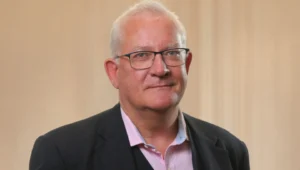


‘Day one as GC, the rules change. Suddenly, the buck stops with you, and you can no longer delegate upwards on legal matters,’ says James Ford, group general counsel at GSK.
Those who reach the top ranks will already have ‘weathered a lot of storms’, as Ford puts it – but, even so, there’s a big shift in both skillset and mindset involved in making the leap from working as part of the legal team to leading the entire function.
From managing crises that seemingly emerge out of nowhere, to building influence with the C-Suite, to restructuring the legal function, here, leading GCs share what they wish they’d known before taking up the top job.
A baptism by fire
Starling Bank GC Monica Risam describes the early days in her first ever GC role at GE Capital as ‘a baptism by fire’, as she navigated the transition from being an individual contributor to a people leader.
Nearly 20 years later, and now speaking with the benefit of hindsight, Risam says she has learnt the importance of staying nimble and, above all, staying calm.
‘As a GC, you are often a firefighter. In my own career, these situations have been as varied as dealing with regulatory investigations, to responding to probing journalist queries. During these stressful times, you must know the facts as best you can but also remain agile and nimble as things are often still evolving. You also have to remain calm and not panic because, in my experience, there’s almost always a solution.’
 Over at GSK, Ford shares similar learnings. ‘Events happen in real time, so what can start off as a calm Monday morning can have morphed into a full-blown 24/7 crisis by Tuesday.’
‘Day one as GC, the rules change. Suddenly, the buck stops with you’
He continues: ‘Being GC is a real learning journey. As GC you quickly learn flexibility, resilience and the importance of keeping calm. It’s never good if the General Counsel is visibly panicked in a crisis. Our job is to facilitate clear and careful thinking and to avoid emotional knee-jerk responses.’
While it may be easier said than done, BP GC Michael Sosso emphasises the need to get comfortable in the grey zone of leadership; when people come to you for answers you may not know you have.
‘In this role, a lot of people come, and they think you need to have all the answers. It’s the exact opposite. You should never try to have all the answers. And if you do, you’re not actually delivering the greatest value.’
Working with the C-suite
A key part of the GC role is interacting with the board, which means suddenly being part of broader strategic discussions around the direction of the business.
‘Under no circumstances was I to stay in a legal or governance swim lane’ recalls Kate Cheetham, now chief legal officer at Lloyds Banking Group of her early experiences in board meetings.
‘I was not just encouraged but expected to participate in all of the discussions and all of the decisions, irrespective of where they were’ explains Cheetham, who sits on the bank’s executive committee.
In practice, this means getting to grips with countless new areas of the business at once and being confident in your ability to contribute to strategic conversations.
‘The biggest change is the breadth of what you’re covering, the breadth of the decisions that you’re making and involved in, and the extent to which you’re using your judgement as opposed to your expert knowledge, and that can be quite uncomfortable, particularly in the early stages,’ she continues.
Mark Maurice-Jones, GC and compliance officer, UK & Ireland at Nestlé echoes Cheetham’s point, emphasising the importance of being confident and sharing an opinion, even if the subject is slightly outside your comfort zone.
‘When you’re in board meetings or in executive committees, a lot of the discussion won’t necessarily be about legal issues at all, and you’ve got to just be part of the conversation.’
 Risam (pictured right) summarises: ‘To be an effective GC, you need to be in the room with the executives.’
‘To be an effective GC, you need to be in the room with the executives’
‘My view has always been that if you’re interested in the business, asking questions, and showing that you want to contribute to the overall growth of the business, rather than being in a legal ivory tower, you are actually knocking on an open door, because then the CEO and CFO will see you as a colleague they want to have in the room to kick ideas around with.’
Building relationships
Sosso, who sits on BP’s global leadership team, says building relationships with the C-suite and being seen as more than a lawyer is the key to success.
He explains: ‘You want to be somebody that the board or executives want to go to, not just the person they need to go to when there’s a legal issue. If they’re only coming to you when there’s a legal issue, you’re missing an opportunity to deliver greater value to the organisation.’
 Lesley Wan (pictured right), the former GC turned founder of female networking forum, the Eagle Club, says one of the biggest pieces of advice she would give those seeking to take the next step in their corporate careers is understanding the dynamics in the boardroom.
‘It’s tough when you first step up because you don’t know the internal politics’
‘It’s quite tough when you first step up because you don’t know the internal politics, and this takes time. What is important to the board directors? Who gets on with who? How do I navigate my way around the personalities without stepping on sensitive issues?’
In practical terms, Wan recommends scheduling regular catch-ups with each board director. ‘You should try to build trust and demonstrate that you are independent, discreet and won’t pass judgement and that you are there as the adviser.’
Beyond building relations with the board, many GCs who spoke to LB emphasised that developing a network with other GCs outside your own company can also provide a huge advantage.
Nicki Schroeder, GC at news group Reach plc, says: ‘One of the ways you can help the business is being able to reach out to other GCs or other senior people that you’ve met across the course of your career, and being able to foster introductions or relationships or just share information in a way that helps you and helps the person that you’re networking with.’
Leading the team and setting the strategy
But of course being a GC isn’t just about learning how to work with the board and get on top of the wider business. Every bit as important, is the internal leadership role – learning how to set a strategy for the legal function and manage the team.

‘You should never try to have all the answers. If you do, you’re not actually delivering the greatest value’
‘The biggest part of my job is to develop my team and understand my team,’ says Sosso. ‘What do they need? What things are getting in their way? Removing those, providing opportunities for them to grow, giving them what they need to be more efficient, more effective on behalf of the group.’
Sosso, who has led BP’s legal function for two years, explains that rather than being a ‘practitioner’ and providing technical expertise himself, he now delivers through his team. ‘Your value is to develop a stronger function and to think strategically about what they need to do for the organisation.’
The other fundamental part of leading the legal function is setting the strategy and selling the vision to the team. As Cheetham explains: ‘You need to set a really clear vision for the function. Your storytelling skills are fundamental here. You need to engage and inspire people around that vision and that strategic plan, and you need to be able to empower everybody in the team to be able to be their best.’
 Part of this should also include making sure the team are aware of their own contribution to the business.
‘Under no circumstances was I to stay in a legal or governance swim lane’
Looking back on her own early GC days, Cheetham (pictured above right ) says: ‘I wish I’d known how transferable my skills were, how intrinsic the things that I’ve done through my legal career are to my ability to contribute on the executive committee. Analysis, judgement, decision making, creativity of thought, coming up with solutions, and thinking about the “what if” and then making a call.’
Risam, who previously served as GC at Lombard International Group and at Aviva before joining Starling reflects: ‘I would have told my younger self to calm down. It doesn’t all have to happen right away. Be patient, take in more input before you reach a decision, and it will all be fine.’
Photo by ISKRA Photography on Unsplash